All about dinosaurs, fossils and prehistoric animals by Everything Dinosaur team members.

Everything Dinosaur team members working in schools, helping museums and other educational bodies. Our work with and in schools.

28 05, 2017

Year 2 Send Thank You Letters to Everything Dinosaur

By |2023-07-23T07:36:52+01:00May 28th, 2017|Categories: Educational Activities, Main Page, Teaching|0 Comments

Year 2 at Great Wood Primary School Say Thanks

Children in Year 2 at Great Wood Primary (Lancashire), had a workshop with Everything Dinosaur back in the spring term when the class was learning all about fossils, dinosaurs and life in the past.  We challenged the children to write to us at our offices, an opportunity for the budding young palaeontologists to practice their handwriting.  Once the term topic had been concluded, the class teacher very kindly sent us a set of letters that had been written by the children.

Year 2 Sent in Thank You Letters to Everything Dinosaur
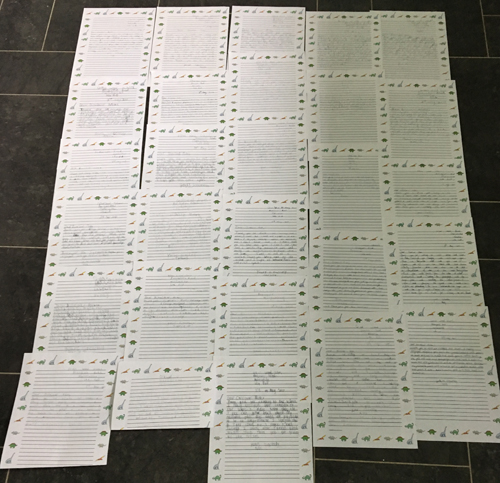
Year two thank you letters.

Thank you letters sent into Everything Dinosaur (Year 2).

Picture credit: Year 2 (Great Wood Primary School)

Our team members carefully laid out the letters on the warehouse floor and took a photograph (see above), before we pinned them up onto our warehouse notice board.  The children had produced some excellent and very well written missives.  Our congratulations to all the children and a special “Iguanodon thumbs up” to those children who demonstrated such lovely cursive handwriting.

For dinosaur themed toys and games: Toys and Gifts from Everything Dinosaur.

Thank You Letters

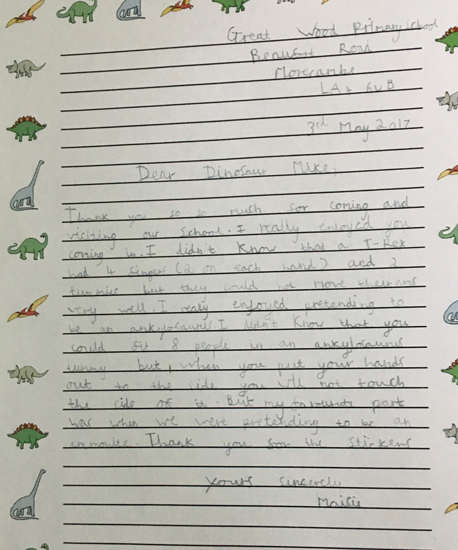
One of the Thank You Letters from Great Wood Primary School (Year 2)
Key Stage 1 - thank you letters.

Thank you letter from Year 2.

Picture credit: Maisie (Great Wood Primary School)

The picture above shows a thank you letter from Maisie.  Maisie’s letter demonstrates some excellent use of grammar and effective sentence construction.  We congratulate Maisie and her classmates on mastering cursive writing.

Dinosaur Term Topic with Key Stage 1

Learning about dinosaurs and other kinds of prehistoric life, provides the teaching team with the opportunity to build in all sorts of cross-curricular teaching activities into this term topic.  During the workshops that we deliver, our dinosaur experts make sure that they build in a number of follow-up and extension activities to support the scheme of work.

This term topic provides lots of opportunities for fiction and non-fiction writing.  The topic also provides plenty of touchstones to develop non-chronological reporting with the class.  A non-chronological report is focused on a single aspect of the wider topic.  It is a piece of writing that is not written in time order.

Non-chronological reports associated with a dinosaur term topic can include:

  • Creating fact sheets about prehistoric animals.
  • Producing information about famous scientists.
  • Writing about a visit to a museum or theme park.
  • Compiling information about the extinction of the non-avian dinosaurs.
  • Building up a science poster that shows how fossils are excavated and prepared for display.

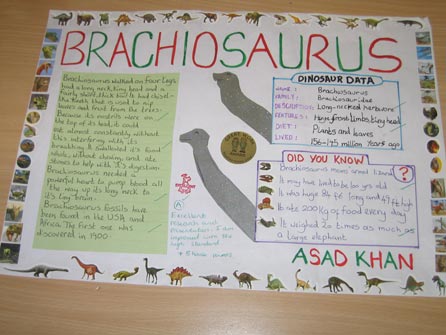
An Example of a Non-chronological Report on Brachiosaurus
Brachiosaurus non-chronological report.

An informative research poster on Brachiosaurus created by Asad.

Picture credit: Year 3 (Asad)

Everything Dinosaur Says Thanks

Once again, we at Everything Dinosaur say a very big thank you to the children at Great Wood Primary School and their teaching team.

For further information about Everything Dinosaur’s dinosaur and fossil themed outreach work: Contact Everything Dinosaur.
27 05, 2017

New Giant Piscivore Pliosaur Discovered

By |2024-05-09T08:28:31+01:00May 27th, 2017|Categories: General Teaching, Key Stage 3/4|Comments Off on New Giant Piscivore Pliosaur Discovered

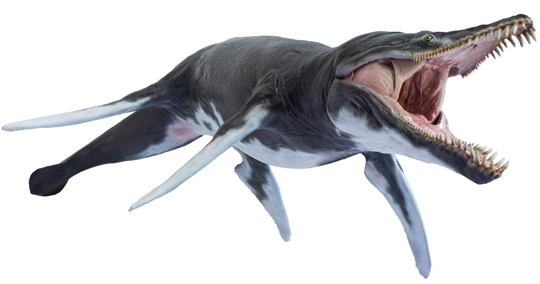
Luskhan itilensis – Giant Pliosaurid from Russia

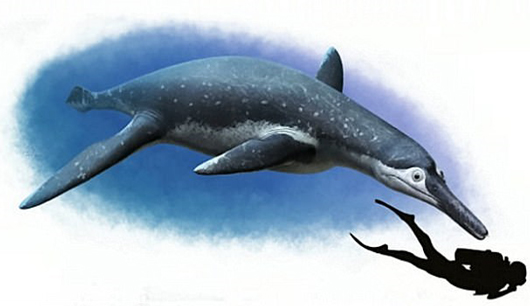
A team of international researchers have announced the discovery of a new species of giant marine reptile, a pliosaur that has been named Luskhan itilensis.  Writing in the academic journal “Current Biology”, the scientists state that the fossils, which represent a single animal, indicate that this Early Cretaceous reptile was huge.  The skull is estimated at 1.5 metres long, suggesting that L. itilensis might have reached lengths in excess of ten metres.

The New Giant Marine Reptile (Luskhan itilensis) Compared to a Frogman

Luskhan itilensis.

An illustration of the pliosaurid Luskhan itilensis from Russia.

Picture credit: Andrey Atuchin

Three-dimensional Fossil Skeleton (Luskhan itilensis)

The fossil material was excavated from a bank on the river Volga, close to the town of Ulyanovsk, in the Volga Federal District of Russia.  It is estimated to be around 130 million years old (Early Cretaceous).  Members of the family known as the Pliosauridae typically have very large skulls, strong, powerful jaws with big teeth.  These marine reptiles, distantly related to the plesiosaurs, “fly” through the water propelled by their large flippers.  Most of these animals are regarded as fearsome, apex predators.  Pliosaurs such as Kronosaurus, Pliosaurus and Liopleurodon represent the top predators within their ecosystems.

A Model of the Apex Predator Kronosaurus (K. queenslandicus)

Swimming into view the PNSO Kronosaurus marine reptile model (Jeff the Kronosaurus)

Swimming into view the PNSO Kronosaurus marine reptile model (Jeff the Kronosaurus).

The model (above) is a PNSO Kronosaurus.

To view the range of PNSO prehistoric animal figures in stock: PNSO Age of Dinosaurs.

A Specialised Fish-eater

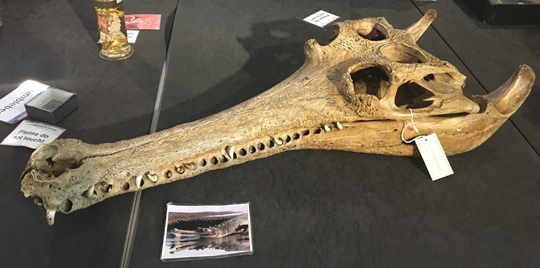
Examination of the snout of this new pliosaurid, the rostrum, suggested to the scientists that this marine reptile may have filled a different niche in ancient marine ecosystems compared to other Pliosaurs.  The long jaws reminded the researchers of the snouts of gavials (gharials), a type of crocodile that is a specialist fish-eater.

A Photograph of a Gharial Skull (Gavial)

The skull of a gharial.

The skull of a gharial from the Grant Museum of Zoology (London).  Picture credit: Everything Dinosaur.

Picture credit: Everything Dinosaur

The research team postulate that Luskhan itilensis was not an apex predator but a specialist fish-eater (piscivore).  This suggests that over the long history of this marine reptile group, the pliosaurs evolved into different forms and occupied a variety of niches in Mesozoic marine ecosystems.

Teaching Extensions

Linking to adaptation and inheritance, ask students to look at pictures of various crocodilians, paying particular attention to the skull and jaws.  What similarities can the students identify?  What differences can the students detect?  A clue – look at jaw shape and teeth.  How does the shape of the jaws and the size of the teeth relate to diet?

For educational themed prehistoric animal toys and games: Educational Prehistoric Animal Toys and Games.

23 05, 2017

New Dinosaurs of China Exhibition Coming to Nottingham

By |2024-05-09T08:26:54+01:00May 23rd, 2017|Categories: Dinosaur and Prehistoric Animal News Stories, Dinosaur Fans, Educational Activities, Main Page, Teaching|0 Comments

Major Feathered Dinosaur Exhibition Coming to Nottingham

An exhibition highlighting the evolution of feathered dinosaurs is coming to the UK.

The idea that dinosaurs are not extinct might ruffle a few feathers.  However, the Dinosauria essentially consists of two parts, avian dinosaurs (birds) and non-avian dinosaurs, iconic prehistoric animals such as Tyrannosaurus rex, Stegosaurus and Triceratops. It is the bird lineage, that is very much still with us today.  No need to get into a flap if this statement confuses, a major dinosaur exhibition starting this summer will provide all the answers.

Dinosaurs of China Exhibition Coming to Nottinghamshire

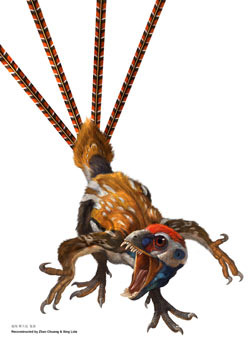
Sinornithosaurus

One of the stars of the “Dinosaurs of China” exhibition – Sinornithosaurus.

Picture credit: Zhao Chuang

A Once-in-a-Lifetime Event

Opening its doors on the 1st of July, the “Dinosaurs of China – Ground Shakers to Feathered Flyers” exhibition will tell the story of how one group of dinosaurs evolved into birds and you can expect to meet an incredible cast of characters on the way.  Located at two venues, (Wollaton Hall and the Nottingham Lakeside Arts Centre), this family-friendly dinosaur exhibition provides a once-in-a-lifetime opportunity to view amazing fossils and skeletons that have never been outside of Asia before.

For models of feathered dinosaurs and other prehistoric animals: Everything Dinosaur and Prehistoric Animal Models.

Ground Shakers and Feathered Dinosaurs

Highlights of the exhibition will include an enormous, rearing long-necked dinosaur Mamenchisaurus that looks down at you from a head height of thirteen metres, that’s twice as high as a giraffe!  If the mighty double-decker-bus-sized Mamenchisaurus doesn’t get your young dinosaur fans roaring with excitement then look out for Sinraptor, a vicious carnivorous dinosaur that once roamed China some 160 million years ago. With a skull almost a metre in length and a set of powerful jaws lined with serrated teeth, Sinraptor was a formidable predator, one that could probably run faster than you!

Had you been around in the Late Jurassic and been unfortunate to meet this hypercarnivore, Sinraptor would very probably have viewed you as potential prey and tried to eat you.

The Fearsome Sinraptor (S. dongi)

PNSO Sinraptor dinosaur model

The stunning PNSO Xinchuan the Sinraptor dinosaur model.

See Sinraptor Fossils

The model shown above is a PNSO Sinraptor.

To view the PNSO range of prehistoric animal models: PNSO Age of Dinosaurs Models and Figures.

If you like meat-eating dinosaurs, take time out to visit the bizarre double-crested Dilophosaurus on display at the Nottingham Lakeside Arts Centre and whilst there, sign up for one of the exciting dinosaur themed activities, all aimed at educating and inspiring the next generation of young palaeontologists.  A comprehensive programme of prehistoric animal arts, crafts, fossil exploration, workshops and story-telling has been designed to run in conjunction with the exhibition.  Booking early is recommended to avoid disappointment.

Running from 1st July through the summer holidays and ending on the 29th October, the “Dinosaurs of China” exhibition provides a rare opportunity to get up close to some of the most astonishing and scientifically important fossil discoveries ever made.

Feathered Flyers and Feathered Dinosaurs

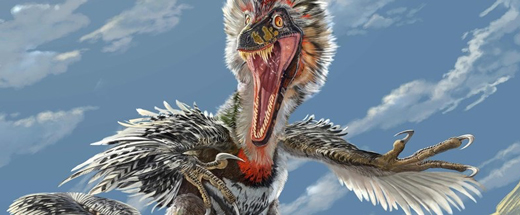
Telling the story of how dinosaurs evolved into birds, the carefully crafted exhibition will entertain, inform and enthral, with visitors getting the chance to meet a dinosaur ensemble including several bizarre members of the Dinosauria.  Take the buck-toothed Epidexipteryx (pronounced epi-decks-ip-ter-icks) for example, a dinosaur that may have lived like a squirrel and winkled grubs out of tree holes like an aye-aye.

Dinosaurs Don’t Get Much Stranger than Epidexipteryx

The dinosaur called Epidexipteryx hui.

Epidexipteryx hui

Picture Credit: Zhao Chuang, Xing Lida/Nature

For further information about this exciting dinosaur exhibition coming to the UK this summer visit the Wollaton Hall website.

Visit Everything Dinosaur’s website: Everything Dinosaur.

14 05, 2017

A New Armoured Dinosaur is Named

By |2023-07-22T18:11:56+01:00May 14th, 2017|Categories: General Teaching, Key Stage 1/2|Comments Off on A New Armoured Dinosaur is Named

Dinosaur Gets “Ghostbusters” Inspired Name

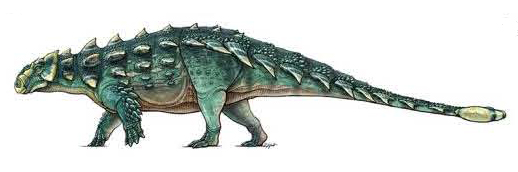
A team of researchers from the Royal Ontario Museum (Canada), have described a new type of Late Cretaceous armoured dinosaur.  The dinosaur has been named Zuul crurivastator after “Zuul the Gatekeeper of Gozer” a horned monster from the 1984 film “Ghostbusters”.

When it comes to researching armoured dinosaurs like Zuul crurivastator, who you gonna call?

 The New Dinosaur (Z. crurivastator)

An ankylosaurid - Zuul crurivastator.

Life restoration of Zuul crurivastator (Danielle Dufault).

Picture credit: Danielle Dufault

The Inspiration Behind Dinosaur Names – Zuul crurivastator

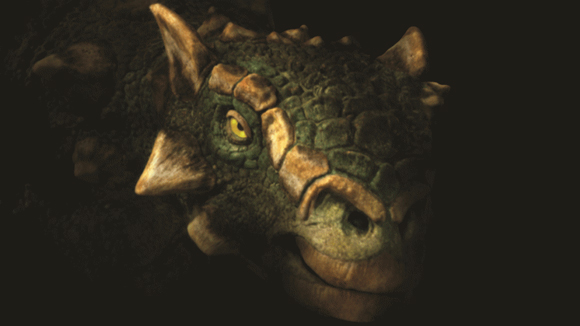
When team members are delivering dinosaur and fossil themed workshops in schools, we set a number of challenges to the children concerning the names of dinosaurs.  There are rules about giving animals names, these rules are set down and governed by the International Commission on Zoological Nomenclature (ICZN).  So long, as an animal’s name meets the criteria, then virtually anything goes and in this case, the two pairs of prominent horns towards the back of the head reminded the researchers of “Zuul the Gatekeeper of Gozer” and that’s how this dinosaur got its name.

An Illustration of the Head of Zuul crurivastator

Zuul crurivastator exhibit opens at the Royal Ontario Museum.

A life reconstruction of the giant armoured dinosaur from Montana Zuul crurivastator.

Picture credit: Danielle Dufault

The nearly complete fossilised remains of this armoured dinosaur, distantly related to the enormous Ankylosaurus, were found in Montana (USA).  This dinosaur lived between approximately 76.2 and 75.2 million years ago (Late Cretaceous).  The specimen represents the most complete Cretaceous armoured dinosaur known from North America.

A Member of the Ankylosaurinae Clade

Budding young palaeontologists will tell you that these kinds of armoured dinosaurs had bony tail clubs.  These clubs were used as weapons to help defend these herbivores from carnivorous dinosaurs.  The species name acknowledges the dangerous club tail of Zuul, it translates as “destroyer of shins”.  The back portion of the tail was stiff and the tip of tail was covered in large, sturdy, bony plates.  Together they formed a sledgehammer which would have made a formidable defensive weapon.  The club may also have been used in disputes between ankylosaurids (intraspecific combat), perhaps fights over territory or mates.

A Model of the Newly Described Dinosaur

Zuul dinosaur model

The Wild Safari Prehistoric World Zuul dinosaur model in lateral view.

The model shown above is the Wild Safari Prehistoric World Zuul.

To view this range of models: Wild Safari Dinosaur Models.

Teaching Extension Ideas

  • Challenge the children to design their own dinosaur, consider what it might have eaten, where might it have lived?  Link this to simple food chains and to adaptation and evolution.
  • Cut out images of characters from recent films – Captain America, Wonder Woman, Buzz Lightyear, Groot etc.  Ask the class to describe the character, to look at their features, can they match these features to an animal they know?
  • Research the dinosaur known as Dracorex hogwartsia – a dinosaur that was named after the Hogwarts school in the Harry Potter books.  Looking at images of Dracorex, is this “dragon king of Hogwarts” a good name for this dinosaur?
  • Why do scientists give animal names using Latin or ancient Greek?  What are the advantages of using this naming system?

Visit the Everything Dinosaur website: Everything Dinosaur.

12 05, 2017

Popular Palaeontologist to Present at Prestigious Science Festival

By |2023-07-22T17:41:37+01:00May 12th, 2017|Categories: Dinosaur Fans, Educational Activities, Main Page, Teaching|0 Comments

Dean Lomax Presenting at Cheltenham Science Festival

Award winning palaeontologist Dean Lomax, an honorary scientist at Manchester University, will be presenting at next month’s prestigious Cheltenham Science Festival.  In what is likely to be one of the highlights of the annual event, Dean will be focusing on British dinosaurs and speaking about some of his research into the Ichthyosauria.

“Jurassic Britain” with Dean Lomax at the Cheltenham Science Festival 2017

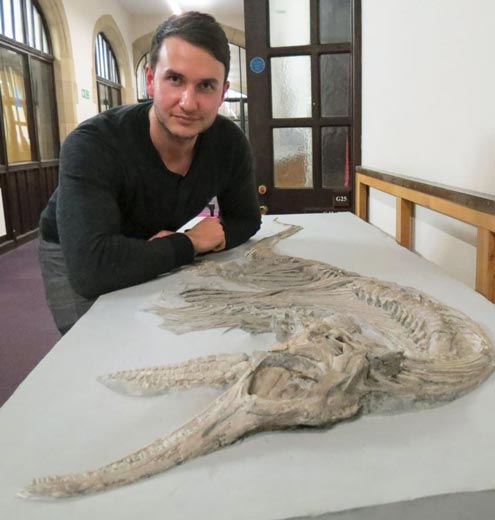
Dean Lomax (palaeontologist) studies Ichthyosaur fossils.

Palaeontologist Dean Lomax with one of the ichthyosaur specimens from the study.

Picture credit: University of Manchester

The event, titled “Jurassic Britain” is scheduled to take place on Sunday June 11th at 5pm.

A Fossil Detective Exploring Deep Time

Dean will expertly guide the audience through the myriad of amazing dinosaur fossil discoveries that sparked the original “dinomania” in Georgian and Victorian times.  From members of the tyrannosaur family that once stalked Gloucestershire, Yorkshire sauropods to huge iguanodonts and armoured monsters that once roamed the Isle of Wight, often referred to as the “dinosaur capital of Europe”, the Doncaster-based scientist will demonstrate the importance of the British Isles when it comes to vertebrate palaeontology.

Dean explained:

“I’m looking forward to sharing with the public the incredible story of British dinosaurs.  When you hear the word dinosaur, most people think about dinosaurs from faraway lands, but it all started right here in Britain and I am going to introduce the public to some of the more incredible finds.”

Visit the website of Dr Dean Lomax: Dr Dean Lomax – British Palaeontologist.

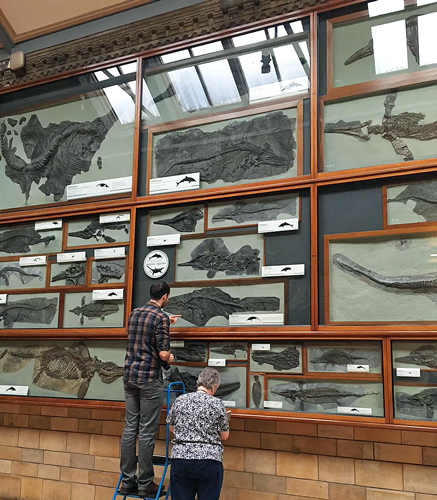
Dean Lomax and Fellow Researcher Judy Massare Studying “Fish Lizards”

Dean Lomax and Judy Massare examining Ichthyosaur specimens.

Dean Lomax and Judy Massare examining Ichthyosaur specimens in the marine reptile gallery at the Natural History Museum (London).

Picture credit: Dean Lomax

“Jurassic Britain” – Dinosaurs and Ichthyosaurs

Before the first dinosaur had been scientifically described, Georgian society was rocked by the discovery of the fossilised remains of bizarre sea creatures.  These fossil finds, such as those made by Mary Anning on the Dorset coast, helped shape the academic approach to the nascent sciences of geology and palaeontology.  In his hour-long lecture, Dean will also provide an insight into some of the latest research on one enigmatic group of marine reptiles – the ichthyosaurs.

Dean added:

“The second part of my talk will focus on my continuing research into British ichthyosaurs.  I’ve been researching these incredible marine reptiles for around eight years and in that time, some astonishing new species have been described.  If you like hearing about how fossils have been rediscovered and identified as something new to science then you should come along!”

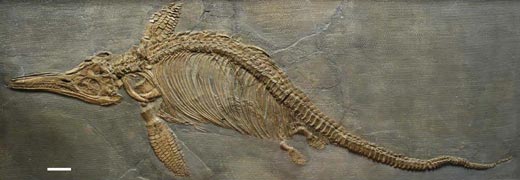
Monster Marine Reptiles from Somerset (I. somersetensis)

Ichthyosaurus somersetensis holotype.

ANSP 15766, holotype specimen of Ichthyosaurus somersetensis.

Picture credit: E. Daeschler Academy of Sciences of Drexel University.

The venue, for what no doubt will be a highly informative and illuminating presentation, is the impressive Crucible building, next to Cheltenham Town Hall, in the centre of this picturesque Gloucestershire town, that just happens to be not too far away from where distant relatives of Tyrannosaurus rex once stalked their prey.

“Jurassic Britain”

“Jurassic Britain” – Sunday 11th June 2017 5pm to 6pm tickets £7 plus booking fee.

Eagle-eyed visitors may even be able to spot some Jurassic marine fossils for themselves.  Many of the town’s municipal buildings are constructed from Cotswold building stone.  These are limestones (Middle Jurassic), that were laid down in a marine environment and a number of small fossil shells and their casts can still be seen in the stonework.  How exciting to have one of the UK’s leading young palaeontologists discussing dinosaurs and marine reptiles in such an appropriate location!

Dean Lomax and “Dinosaurs of the British Isles”

For a general introduction to British dinosaurs, Everything Dinosaur recommends “Dinosaurs of the British Isles” written by Dean Lomax and Nobumichi Tamura.  This book provides a comprehensive account of the dinosaur discoveries from Britain and is aimed at the general reader as well as students and academics.

For further information about “Dinosaurs of the British Isles” and to purchase: Visit Siri Scientific Press.

The Everything Dinosaur website: Everything Dinosaur.

9 05, 2017

Unique Long-necked Dinosaur Drawings

By |2024-05-08T20:14:32+01:00May 9th, 2017|Categories: Early Years Foundation Reception, General Teaching, Key Stage 1/2|Comments Off on Unique Long-necked Dinosaur Drawings

Children Draw Long-necked Dinosaurs

When visiting schools to conduct our dinosaur and fossil themed workshops we often get told about the children’s favourite dinosaurs.  Meat-eaters such as Tyrannosaurus rex, Velociraptor and Spinosaurus tend to be the most popular, but not too far behind come some of the iconic plant-eaters, especially the super-sized, long-necked giants like Apatosaurus, Brontosaurus, Brachiosaurus and Diplodocus.  It is a pleasure to receive pictures from children, who have taken the trouble to send in a drawing of their favourite dinosaur.

A Long-necked Dinosaur Drawing (Reception-aged Child)

Children draw plant-eating dinosaurs.

A long-necked dinosaur with an egg.  Picture credit: Everything Dinosaur.

Picture credit: Everything Dinosaur

Plant-Eating Dinosaurs Inspire Extension Ideas

During our dinosaur and fossil themed workshops, we take the opportunity to develop a number of ideas and activities that can be used as extensions to help support learning.  These extension ideas could involve a numeracy related activity, or have a literacy focus such as helping to develop the children’s vocabulary.  One of our favourites, is to propose a simple drawing activity which entails drawing a big long-necked prehistoric animal.  This dinosaur themed drawing exercise links to the expressive arts and design element of the curriculum, involving children exploring and playing using a wide range of materials and media.

These activities encourage young learners to share their feelings, thoughts and ideas via a variety of art themed exercises.

Dinosaurs Laid Eggs – An Idea Reinforced Through a Drawing Activity

Chinese dinosaur fossils. A fossilised dinosaur egg.

A fossilised dinosaur egg (Theropoda). Picture credit: Everything Dinosaur.

Picture credit: Everything Dinosaur

The picture above shows a fossilised dinosaur egg.  During our dinosaur workshop, we showed the class pieces of fossilised dinosaur eggshell and explained that as far as we know, dinosaurs laid eggs, just like their close relatives the birds.   An extension activity involving a drawing exercise has helped reinforce this aspect of the term topic – that dinosaurs laid eggs.

An Illustration of a Brachiosaurus

Mojo Fun Brachiosaurus dinosaur model.

The new for 2020 Mojo Fun Brachiosaurus dinosaur model measures around 25 cm long and that detailed head stands nearly 18 cm high. Picture credit: Everything Dinosaur.

Picture credit: Everything Dinosaur

The picture (above) shows a Brachiosaurus dinosaur model.  It is from the Mojo Fun model range.

View Mojo Fun dinosaur models: Mojo Fun Dinosaur Models.

Brachiosaurus “Arm Lizard”

Brachiosaurus “arm lizard”, is one of the most popular long-necked dinosaurs.  Children love the idea that a fully grown Brachiosaurus could see into the windows of a three-storey high building.  It’s all those amazing facts and figures, the budding palaeontologists seem to be able to absorb them like a sponge taking up water.

For further information about Everything Dinosaur’s work: Contact Everything Dinosaur.

7 05, 2017

Imaginative Dinosaurs Inspire Children to Create Beautiful Drawings

By |2024-05-08T20:15:17+01:00May 7th, 2017|Categories: Educational Activities, Main Page, Teaching|0 Comments

Children Draw Long-necked Dinosaurs

Time to catch up on our correspondence and to pause between dinosaur workshops and other teaching assignments in what has been a busy start to the summer term.  As part of our service to schools, the dinosaur and fossil themed workshops that we deliver often lead to lots of extension activities, all aimed at supporting the curriculum and the school’s scheme of work.  For example, during a session with Key Stage 1 children and a Reception class, a child asked why did the long-necked dinosaurs grow so big?

Our dinosaur expert provided an explanation (large gut for processing lots of coarse vegetation), as well as touching upon a couple of other relevant points.  This led on to a discussion as to what was the biggest dinosaur of all?

An opportunity to discuss the Titanosauriformes, (simplified language that is age appropriate, of course), even ones that have yet to be officially named and scientifically described.

A Typical Titanosauriform – Saltasaurus

Saltasaurus dinosaur model

“Reptile from Salta Province”.

The dinosaur model (above) is a Saltasaurus.  This figure was manufactured by Safari Ltd.

To view the Safari Ltd range: Wild Safari Prehistoric World Figures.

A Dinosaur Themed Extension Activity

We made a note of the questions that were asked and once the dinosaur and fossil workshops had concluded for the morning, we discussed with the class teachers ways in which we could develop extension activities that relate to the topics raised by the children.  For example, we sent the children a link to an article that featured an as yet, undescribed dinosaur from Argentina that is believed to represent the biggest dinosaur known to science.

Could the children come up with a name for this dinosaur discovery?  We explained to the class teacher how this idea could be developed into a recording of data exercise whereby the class vote for their favourite dinosaur name and calibrate their results using a simple graph or table.

Using Dinosaurs to Explore How to Record and Show Data

Dinosaurs inspire graphs and data representation in schools.

Plotting dinosaur data in class.  Picture credit: Everything Dinosaur.

Picture credit: Everything Dinosaur

An article on the largest dinosaur known to science: Biggest Dinosaur Needs a Name.

Cross Curricular Activities

As well as supporting the numeracy element of the curriculum, our dinosaur expert set the children some “pinkie palaeontologist challenges” as we call them.  Extension ideas that involve both fiction and non-fiction writing and provide an opportunity to compare our bodies to that of a dinosaur.  A simple drawing activity involving drawing an enormous long-necked dinosaur provides a touchstone to expressive arts and design, involving children exploring and playing using a wide range of media and materials.

Encouraging young learners to share their thoughts, ideas and feelings through a variety of art themed activities.

Reception-Age Children Draw a Long-necked Dinosaur (Sauropodomorpha)

Reception child draws a Sauropod.

Long-necked dinosaur by a Reception-aged child.

Picture credit: Everything Dinosaur

To request further information about Everything Dinosaur’s activities in schools including dinosaur and fossil themed workshops: Contact Everything Dinosaur.
We encourage the class teachers to take lots of photographs during our dinosaur and fossil themed workshops.  These are great for recall and recounting activities after the session and the teaching team (with permission of the school), can always post some up onto social media such as Twitter, so parents and guardians can see what the class have been doing that day.

Visit the award-winning Everything Dinosaur website: Everything Dinosaur.
3 05, 2017

Colourful Triceratops Artwork Spotted at a School

By |2023-07-22T15:24:26+01:00May 3rd, 2017|Categories: Key Stage 1/2|Comments Off on Colourful Triceratops Artwork Spotted at a School

A Terrific Triceratops!

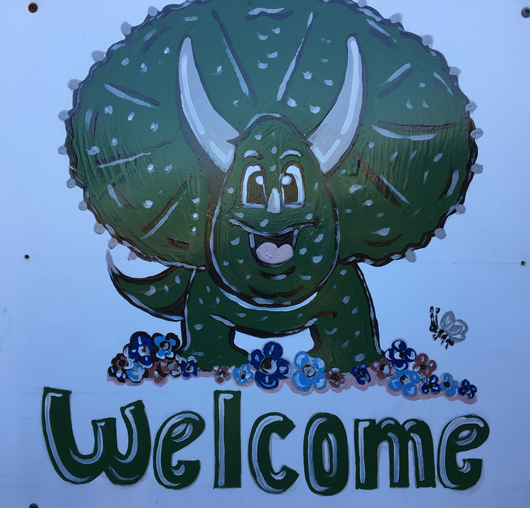
Whilst visiting Thorpe Hesley Primary in south Yorkshire today, one of Everything Dinosaur’s dinosaur experts spotted some very colourful Triceratops artwork.  The very friendly looking horned dinosaur stands guard at one of the school gates and welcomes the children into the school.  Our congratulations to the artist for creating such an attractive piece of dinosaur-themed art.

Triceratops Artwork

Colourful Triceratops Artwork Spotted at the School

Triceratops artwork

A friendly dinosaur is featured in the school artwork. Picture credit: Everything Dinosaur.
Picture credit: Thorpe Hesley Primary/Everything Dinosaur

Flowers and Social Insects

The herbivorous Triceratops is standing amongst some flowers whilst a bee buzzes towards the dinosaur.  Social insects such as bees were present in the Cretaceous, the geological time period in which Triceratops lived.  Fossils of insects preserved inside amber (fossilised tree resin), have given scientists lots of information about the type of insects that existed during the time of the dinosaurs.  In addition, palaeontologists also know that flowers existed on our planet long before the large, horned dinosaurs, such as Triceratops (Chasmosaurinae) evolved.

The sight of a friendly dinosaur welcoming the children fits in well with the Year 1 term topic (dinosaurs and fossils).  Everything Dinosaur was visiting the school to deliver a dinosaur and fossil workshop, a provocation, to help kick-start the term topic and to enthuse the pupils and their teachers.

Visit the Everything Dinosaur website: Everything Dinosaur.
29 04, 2017

Finding Out About the Origins of Millipedes and Crabs

By |2023-06-17T19:11:56+01:00April 29th, 2017|Categories: General Teaching|Comments Off on Finding Out About the Origins of Millipedes and Crabs

Newly Described Canadian Fossil Sheds Light on the Origin of Mandibles

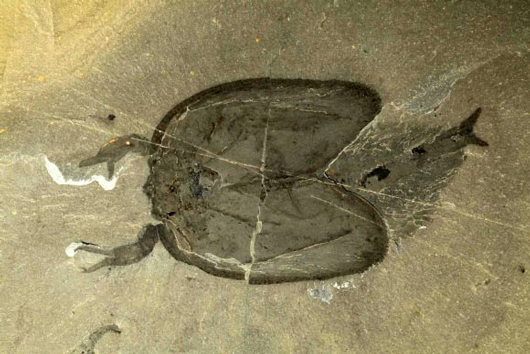
Fossils collected from the famous Burgess Shale deposits in British Columbia (Canada), have shed light on the origins of creepy-crawlies with mandibles (jaws), animals such as millipedes, centipedes, insects, crabs, shrimps and lobsters.  Scientists from the Royal Ontario Museum and the University of Toronto have been studying several beautifully preserved fossils of a newly described Cambrian arthropod which has provided evidence of how this diverse group of animals evolved.

Burgess Shale Fossil

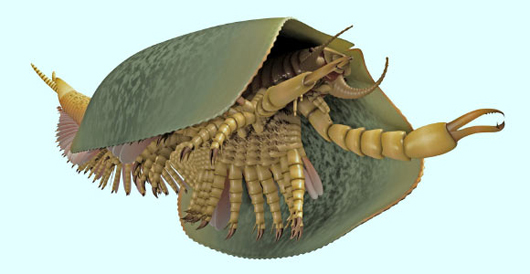
A Computer-Generated Image of the Newly Described Arthropod Tokummia katalepsis

Tokummia katalepsis computer generated image.

A three-dimensional computer generated image of Tokummia katalepsis showing serrated pincers and the pair of mandibles.

Picture credit: Royal Ontario Museum

The fossils date from around 508 million-years-ago and reveal a multi-limbed creature that probably scuttled along the sea floor.  It had a shell-like carapace and two delicate pincers that reminded the researchers of “can openers”.

Serrated Mandibles

Significantly, the fossils show that this ten-centimetre-long predator had a pair of broad, serrated mandibles.  Scientists have concluded that the fossils represent a basal form of Mandibulata, a clade of the phylum Arthropoda that consists of millipedes, centipedes, crustaceans and insects.  Mandibulates are united by having a pair of specialised jaws “mandibles”, which can be used for a variety of purposes such as hunting, biting, cutting food into smaller pieces, digging, carrying items and building nests.

One of the Fossils of the Newly Described Tokummia katalepsis

Tokummia katalepsis fossil.

Dorsal/ventral view of Tokummia katalepsis fossil material.

Picture credit: Royal Ontario Museum

For models and replicas of famous creatures from the fossil record: Everything Dinosaur – Learning.

22 04, 2017

The Tactile Nature of a Schleich Brachiosaurus

By |2023-06-17T10:52:32+01:00April 22nd, 2017|Categories: Dinosaur Fans, Educational Activities, Main Page, Teaching|0 Comments

The Schleich Brachiosaurus and Creative Play

The recently introduced Schleich Brachiosaurus dinosaur model is proving to be a big hit amongst teachers and teaching assistants who work with Foundation Stage children and those children in Year 1.  The model, which measures around thirty-two centimetres in length and stands a fraction under twenty centimetres high is an ideal size for little hands to handle and the dinosaur is sturdy enough to withstand the attentions of even the most enthusiastic, budding palaeontologist during creative play.

The Schleich Brachiosaurus Dinosaur Model

Schleich Brachiosaurus model.

Schleich Brachiosaurus dinosaur model.  Picture credit: Everything Dinosaur.

Picture credit: Everything Dinosaur

Suitable Dinosaur Models for Early Years Foundation Stage

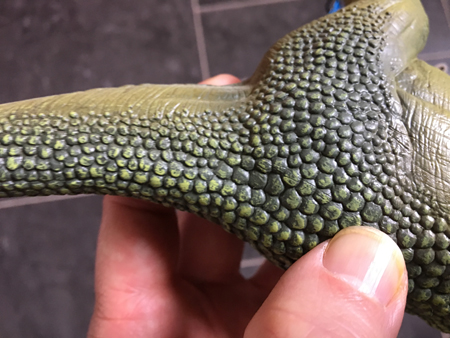
Children in Foundation Stage (Nursery and Reception) will be mostly learning through games and creative play activities, although in Reception classes (Foundation Stage 2), by the beginning of the summer term, many schools will be introducing more structured learning routines to help prepare the children for the greater emphasis on cognitive abilities which comes with Year 1.  One of the key areas of learning is to help children to develop language and communication skills, as well as learning about the properties of materials (understanding the world).  The Schleich Brachiosaurus model has a roughened texture over part of the dinosaur’s body.  Other areas are smooth, as a result, the figure is ideal for exploring how different objects feel.

The Beautiful Texture on the Schleich Brachiosaurus

The texture on the neck and shoulders of the Schleich Brachiosaurus dinosaur model.

The beautiful texture of the Schleich Brachiosaurus is ideal for creative play.  Picture credit: Everything Dinosaur.
Picture credit: Everything Dinosaur

Looking at the Properties of Different Materials

Dinosaur toys and models are a source of fascination for both young boys and girls.  Team members at Everything Dinosaur use an assortment of dinosaur models and figures in their outreach work with children, particularly those children in Year 1 and Foundation Stage.  The tactile, kinaesthetic quality of the Schleich Brachiosaurus dinosaur makes it ideal, as the children feel the model’s rough scales and smooth skin.  We also use this Schleich dinosaur model to help children learn and remember the names for different parts of the body and to compare our bodies to that of a dinosaur.

Can You See His Eyes?  How Many Eyes Does the Dinosaur Have?

The Schleich Brachiosaurus dinosaur model.

The tactile quality of a Schleich Brachiosaurus dinosaur model.  Picture credit: Everything Dinosaur.

Picture credit: Everything Dinosaur

The Schleich Brachiosaurus

The Schleich model is ideal for exploring parts of the body with young children at Foundation Stage and Year 1.  Can they point to the teeth?  Where’s the dinosaur’s tongue?  Can you count the dinosaur’s toes?

To view the range of Schleich prehistoric animal models including the robust, sturdy Schleich Brachiosaurus figure: Schleich Dinosaur Models.

The Schleich Brachiosaurus dinosaur model has a very tactile nature, a result of the carefully moulded scales on various parts of the body.  It is a robust and sturdy dinosaur model, ideal for use when working with EYFS (Early Years Foundation Stage).

Visit the Everything Dinosaur website: Everything Dinosaur.

Go to Top