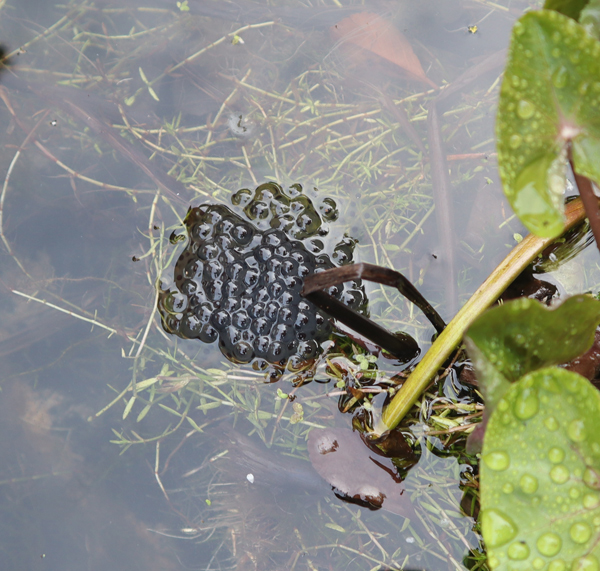
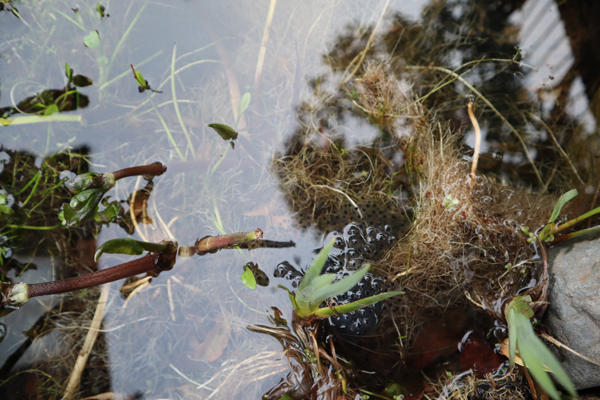
Everything Dinosaur team members have recorded the sixth batch of frogspawn in the office pond. The recent cold snap has ended and the wetter and milder weather may have encouraged more frogs to spawn. A sixth batch of frogspawn was observed early this morning. We suspect that it had been laid last night or in the early hours of the morning.
The sixth batch of frogspawn spotted in the office pond on March 12th 2023. Picture credit: Everything Dinosaur.
Common Frogs
At least one Common frog (Rana temporaria) is still in the pond. The frog has a bright white throat patch so, we suspect that this is a male. Team members will continue to monitor the pond to see if more frogspawn is laid. Frog numbers have declined in recent years. Five years ago, as many as a dozen frogs could be seen in the pond during the spawning season. Hopefully, our small pond will continue to support a frog population, attract other wildlife and provide a bathing area for nesting birds.
The fifth batch of frogspawn has been spotted in the office pond. The fresh spawn was spotted yesterday morning (8th March, 2023). Despite the wintry weather, with air temperatures dropping to near zero the frogs have continued to spawn. The night was cold and a small amount of ice formed over the pond. Team members will continue to monitor the office pond frogspawn.
The frogs (Common frogs), seem undeterred and have continued their spawning.
The 5th batch of frogspawn has been spotted in the Everything Dinosaur office pond. The frogspawn was laid on March 8th. Picture credit: Everything Dinosaur.
Picture credit: Everything Dinosaur
Frogspawn in the Office Pond
The first frogspawn was observed on the morning of the 28th of February. This is the earliest date in the year that we have seen frogspawn. Over the years, the date of the Common frogs (Rana temporaria) spawning has got earlier and earlier. A decade ago, frogspawn was normally observed around the third week of March. In 2022, frogs spawned on the 2nd of March. Our monitoring of the spawning dates suggests that the trend is for the frogs to breed earlier each year. Perhaps this is indicative of climate change and global warming.
A spokesperson from Everything Dinosaur, took a break from packing dinosaur and prehistoric animal themed orders for customers and stated:
“We try not to disturb the pond too much. However, we like to monitor the frogs to make sure all is well. As cold weather is forecast for the next two to three days, we have gently and carefully moved the spawn into deeper water to give the eggs some protection from the forecast cold snap.”
Potentially Delayed Hatching
The unseasonably cold temperatures with widespread snow likely to fall across the north-west of England could delay the hatching of the eggs. Everything Dinosaur team members think that the rate of development of the tadpoles is influenced by the water temperature. The pond water is likely to remain very cold for at least the next few days. This cold weather may slow the rate of hatching.
Team members promise to keep observing and taking steps to make sure that the pond wildlife is safe.
Today, March 8th is International Women’s Day (IWD), a day for celebrating and commemorating the social, economic, cultural, scientific and political achievements of women. This is a global event and many schools and colleges will be highlighting the contribution made by women, including in the field of scientific endeavour and business.
A collection of women scientists part of a poster montage spotted during a school visit. Celebrating International Women’s Day. Female scientists providing role models for the next generation. Picture credit: Everything Dinosaur.
Picture credit: Everything Dinosaur
International Women’s Day
Since the blog started, we have covered some remarkable stories that celebrate the contribution made to Earth Sciences by the next generation of academics and young scientists. We have also taken the opportunity to highlight the contribution to palaeontology and geology made by women who lived in less enlightened times.
For example, over the last few years we have followed the campaign to honour the pioneering early palaeontologist Mary Anning. Inspired by Evie Swire who wanted greater recognition in Lyme Regis of Mary Anning’s contribution to the Earth Sciences, a successful fund raising effort led to the erection of a statue of Mary Anning on the sea front.
A close-view of the statue of Mary Anning which was created by leading artist and sculptress Denise Dutton. Mary is holding an ammonite fossil in her left hand. Picture credit: Mary Anning Rocks.
Picture credit: Mary Anning Rocks
Designed by sculptor Denise Dutton, the bronze figure was unveiled in May 2022.
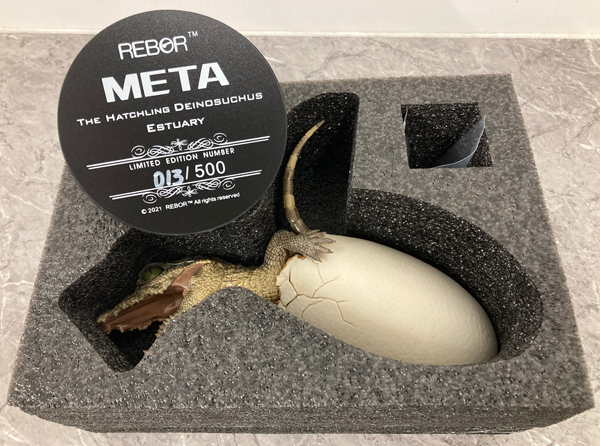
There are just a few, limited-edition Rebor Meta the hatchling Deinosuchus figures in the estuary colour scheme left in stock at Everything Dinosaur. With stocks dwindling Rebor fans and model collectors have a last chance to purchase this increasingly rare figure.
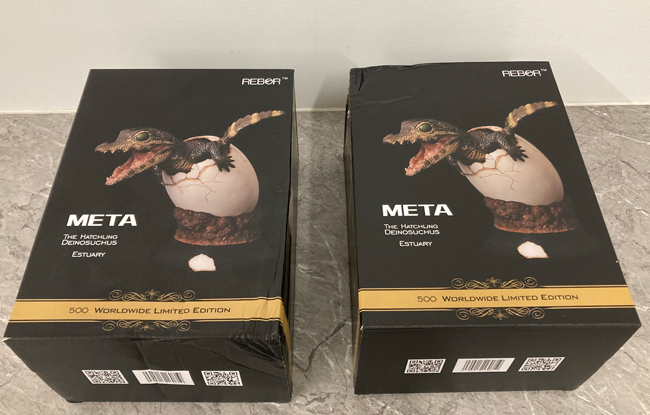
Just two Rebor Meta Hatchling Deinosuchus limited-edition figures left in stock at Everything Dinosaur. Picture credit: Everything Dinosaur.
Limited-edition Collectable Figures
Team members could only find two Meta the hatchling Deinosuchus models in the estuary colour scheme in the warehouse this morning. Only five hundred figures in total were made. The Deinosuchus replicas have proved very popular and just two figures are left. Each figure has its own unique number from one to five hundred. Everything Dinosaur has number thirteen and number forty available.
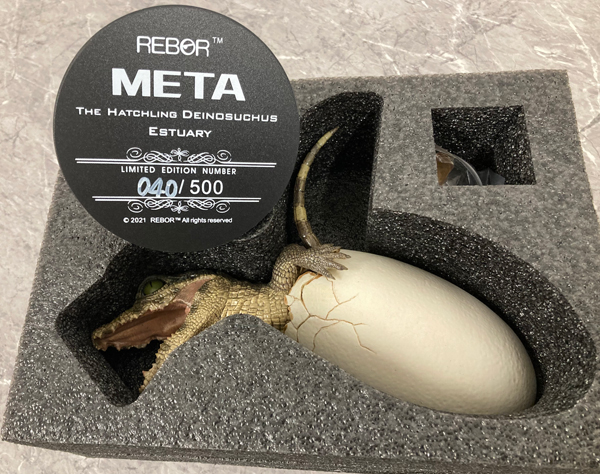
One of just a very few Rebor Meta the Hatchling Deinosuchus figures in the estuary colour scheme left in stock at Everything Dinosaur. Picture credit: Everything Dinosaur.
Hatchling Deinosuchus
With only five hundred of these figures being made, the Rebor Club Selection: Meta the Hatchling Deinosuchus estuary variant has proved to be a popular purchase for collectors and fans of Cretaceous prehistoric animals. The hatchling Deinosuchus stands on a plinth with the limited edition number stated on the underside. There is a small piece of eggshell provided within the box so that the plinth and the figure can be united in a seamless display.
Team members at Everything Dinosaur recommend gluing the Deinosuchus egg in place just in case the replica is knocked and the egg falls. We would not want to have any broken crocodilian eggs as these figures are a limited-edition collectable.
The Rebor Meta the hatchling Deinosuchus in the Estuary colour variant. This is one of the few figures in stock (number 13). Picture credit: Everything Dinosaur.
A spokesperson from Everything Dinosaur stated:
“We could only find two of these figures in our warehouse. We are close to selling out of the estuary colour variant. When these are sold, we will not be able to get anymore. Only five hundred of these figures were made in total.”
To view the range of prehistoric animal model replicas in stock at Everything Dinosaur, including Deinosuchus figures (whilst stocks last): Rebor Replicas and Prehistoric Animal Models.
The spokesperson added, that both boxes were a little crumpled but the models inside were in pristine condition.
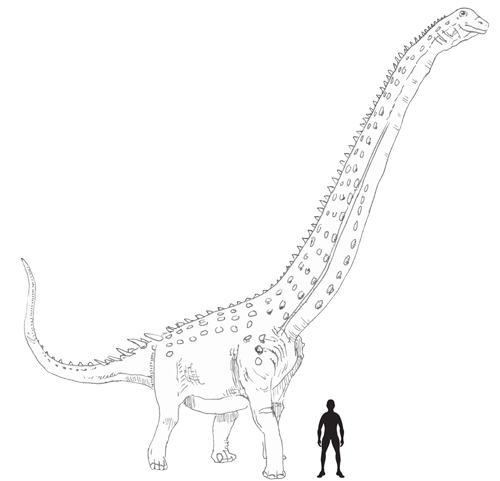
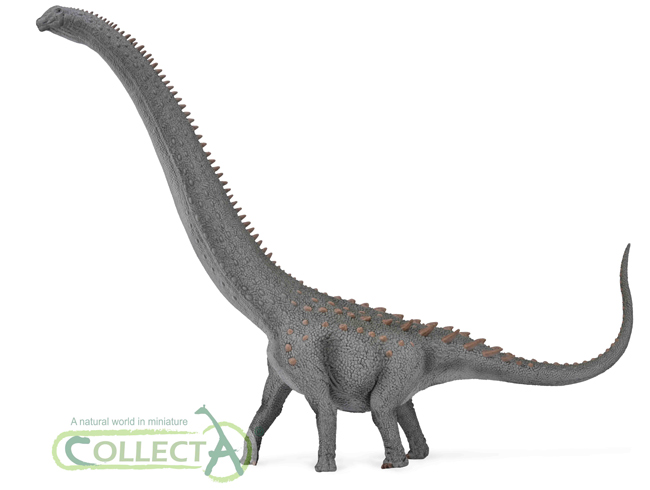
Team members at Everything Dinosaur have prepared a Ruyangosaurus scale drawing for use in the company’s free Ruyangosaurus dinosaur model fact sheet. The new for 2023 CollectA Deluxe Ruyangosaurus figure is due into stock shortly and the fact sheet will be sent out with model purchases.
Ruyangosaurus was formally named and scientifically described in 2009 (Lü et al) in the Geological Bulletin of China. It is regarded as one of the largest Asian dinosaurs known to science. One species has been assigned to the genus (R. giganteus). Size estimates for this Early Cretaceous titanosaur vary, but it has been speculated that Ruyangosaurus was around thirty to thirty-five metres in length.
The new for early 2023 CollectA Deluxe Ruyangosaurus dinosaur model.
A spokesperson from Everything Dinosaur explained that for virtually every named prehistoric animal that the company sells, a fact sheet is prepared. As new for 2023 CollectA models arrive, so fact sheets for Ruyangosaurus, Ceratosuchops, Brighstoneus, Anomalocaris and the marine reptile Shastasaurus have been prepared.
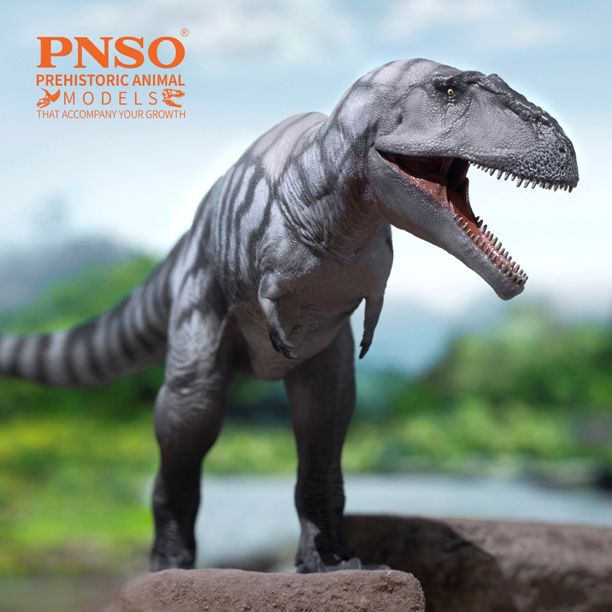
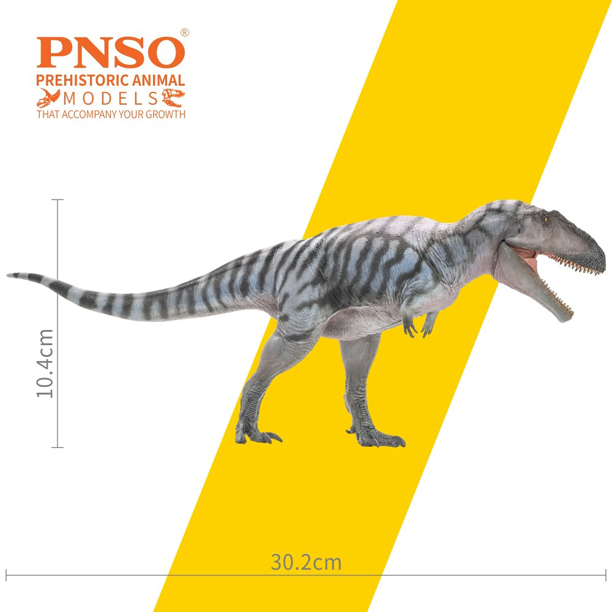
Everything Dinosaur can confirm that it will be stocking the PNSO Mungo the Meraxes dinosaur model. This figure is due in stock later this spring (2023). Mungo the Meraxes was announced earlier this week and whilst we expect the output from PNSO to slow down a little this year, the number of new figures the company has produced recently has been remarkable.
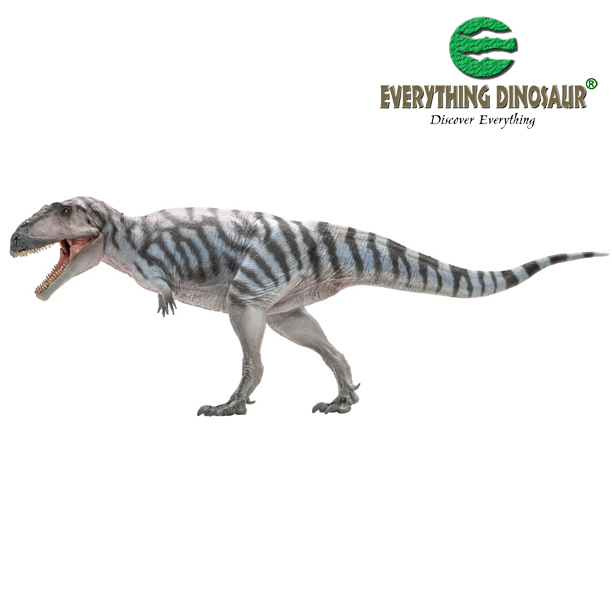
The carcharodontosaurid from the Late Cretaceous of Argentina Meraxes gigas. The PNSO model will be in stock at Everything Dinosaur in the spring (2023).
Meraxes gigas
Meraxes (M. gigas) was formally named and scientifically described in 2012 (Canale et al). It is a member of the Carcharodontosauridae family of theropods and at approximately 11 metres long and weighing 4 Tonnes (estimated 4.26 Tonnes), it was probably the apex predator in its Late Cretaceous environment. Another giant carcharodontosaurid Mapusaurus (M. roseae), is also known from the Huincul Formation of Argentina, but Meraxes fossil material is associated with geologically older strata.
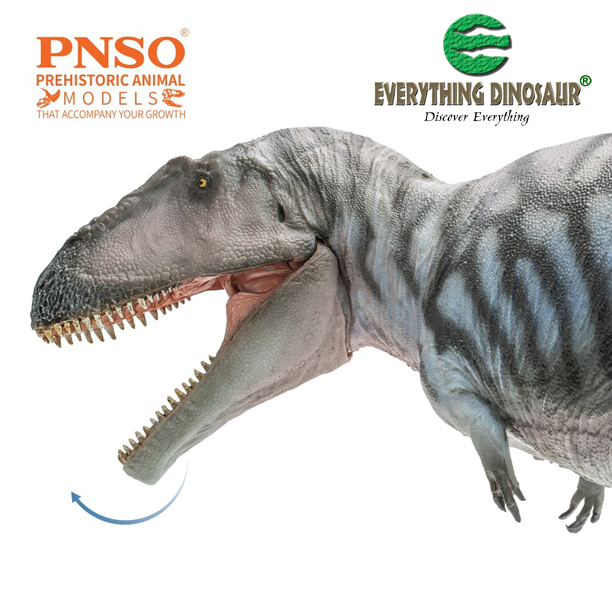
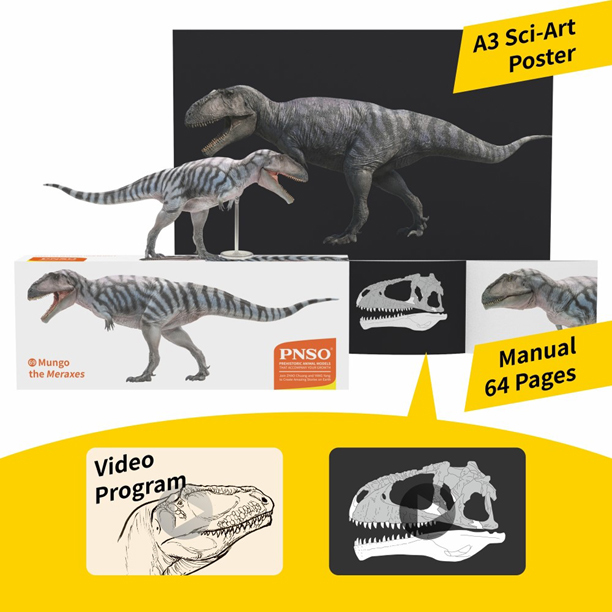
The PNSO Mungo the Meraxes has an articulated lower jaw, and it will be supplied with a clear plastic support stand, a poster and a 64-page, illustrated colour booklet.
The Meraxes model will have an articulated lower jaw.
A Carcharodontosaurid Dinosaur Model
An almost complete right arm is known. The arm is proportionately quite small and suggests that as with the abelisaurids and the later tyrannosaurids reduced forelimb size is an evolutionary trait of the Carcharodontosaurinae.
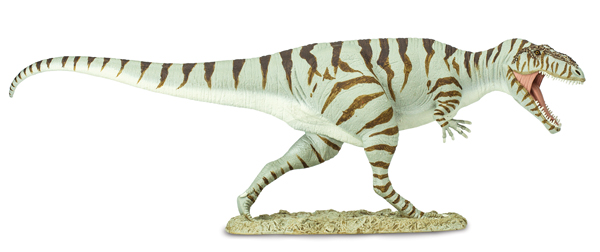
The PNSO model shows the reduced forelimbs and the striking colouration chosen for the figure is reminiscent of the Wild Safari Prehistoric World Giganotosaurus model that was introduced some years previously.
Wild Safari Prehistoric World Giganotosaurus dinosaur model.
Skull material, (Meraxes gigas has one of the best-known craniums of all the Carcharodontosauridae), enabled palaeontologists to estimate the size of other Cretaceous theropods such as Acrocanthosaurus (A. atokensis) and Giganotosaurus carolinii.
The model is supplied with a transparent support base, a poster, a full-colour, 64-page booklet and a QR code on the box provides access to a video showing how the model was made.
Model Measurements
The PNSO Meraxes measures 30.2 cm in length with a head height of 10.4 cm. Although PNSO do not declare a scale for this figure, team members estimate that based on an 11-metre-long animal, the figure is in approximately 1:36 scale.
The Meraxes model measures 30.2 cm long and has a head height of 10.4 cm.
A spokesperson from Everything Dinosaur confirmed that this figure along with the recently announced new version of the PNSO Lucas the Giganotosaurus model would be in stock in the late spring.
The spokesperson added:
“It is great to see PNSO expanding their theropod dinosaur model range.”
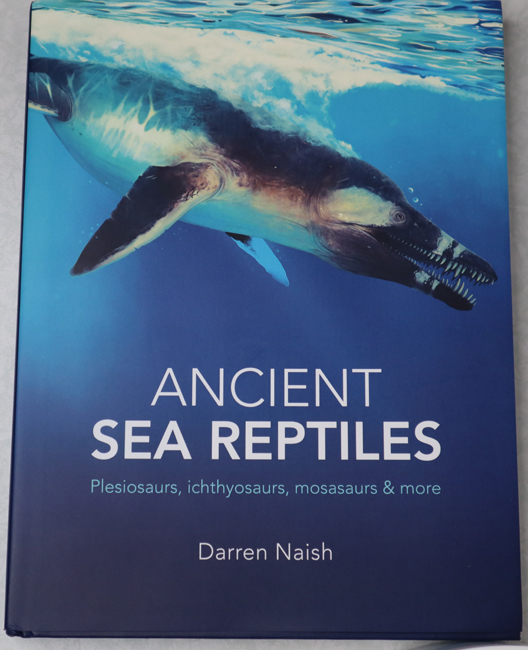
To coincide with World Book Day (2nd March, 2023), here is Everything Dinosaur’s review of “Ancient Sea Reptiles” by Darren Naish. We have had an inspection copy of this eagerly awaited publication for a few weeks, and now that the book is officially available, we thought it an opportune moment to post up our thoughts and comments.
Ancient Sea Reptiles by Dr Darren Naish. Picture credit: Everything Dinosaur.
Ancient Sea Reptiles
Dr Naish provides a comprehensive overview of Mesozoic marine reptiles. These denizens of the deep are in safe hands as the accomplished author guides readers through their evolutionary history before going on to dedicate individual chapters to each of the main marine reptile groups.
The Dinosauria may have dominated terrestrial environments. This carefully crafted and beautifully illustrated book leaves the reader in no doubt as to the majesty and variety of reptiles that thrived in the Mesozoic seas.
A less confident writer might have struggled to provide an overview of the anatomy of this extremely diverse group of marine adapted reptiles. Sea turtles, shark-shaped reptiles, plesiosaurs, thalattosuchians and mosasaurs are all tackled with aplomb, and the evolutionary changes required to adapt to an aquatic lifestyle are reviewed in a single compendious chapter. For example, the function of the plesiosaur’s neck is explained and the likely swimming styles of various body plans is clearly elucidated through the skilful use of descriptive text.
Exquisite Photography
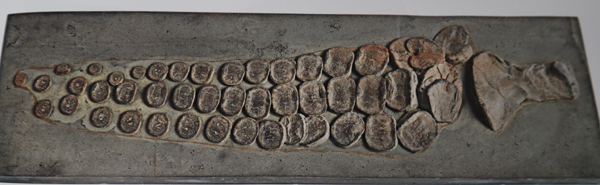
Photographs of important fossil discoveries are included along with detailed and informative notes. A glossary is also provided to assist readers with terminology. Some of the lesser-known Mesozoic marine reptiles such as the Triassic sauropterygians, Cretaceous sea snakes and the mesosaurs – the world’s first aquatic reptiles, have their own dedicated chapter.
The paddle bone of a leptonectid ichthyosaur.
Stunning Artwork and Life Reconstructions
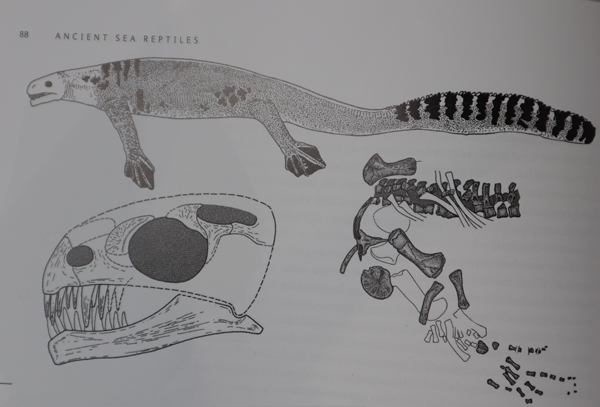
“Ancient Sea Reptiles” is richly illustrated with striking specimens and life reconstructions from many highly respected palaeoartists. The author also contributes to the illustrations providing drawings and cladograms.
The author provides many of the cladograms and prehistoric animal illustrations.
A spokesperson from Everything Dinosaur praised the book and commented:
“This is an extensively researched and most informative volume written in an easy to understand language that will please the academic and general reader alike. Ancient Sea Reptiles is highly recommended.”
To purchase Ancient Sea Reptiles by Darren Naish, visit the publisher’s website and search for either the book title or the author: Visit the Publisher’s Website.
Everything Dinosaur team members were asked by a Radio Two researcher to provide the questions for the “midnight mastermind” slot on the OJ Borg early morning radio show when the subject the presenter was being quizzed upon was dinosaurs!
We were asked to propose six questions from which the researcher would select three to test the knowledge of their colleague.
Questions About Dinosaurs
The word “dinosaur” or to be technically correct the “Dinosauria” was first coined by a British scientist in the early 1840s – who was it?
It was anatomist and biologist Richard Owen, later Sir Richard Owen, a Lancastrian who had been given the task of making sense of the giant reptile fossils that had been found and studied over the preceding couple of decades. Richard Owen named and described several dinosaurs including the first long-necked dinosaur (sauropod) and he went onto help establish what we now know as the London Natural History Museum.
What does the term dinosaur actually mean?
Dinosaur is from the ancient Greek (deinos) which means “terrible” or “fearfully great” and from (sauros) which means lizard, so you have “terrible lizards” or “fearfully great lizards”. However, dinosaurs are not closely related to lizards.
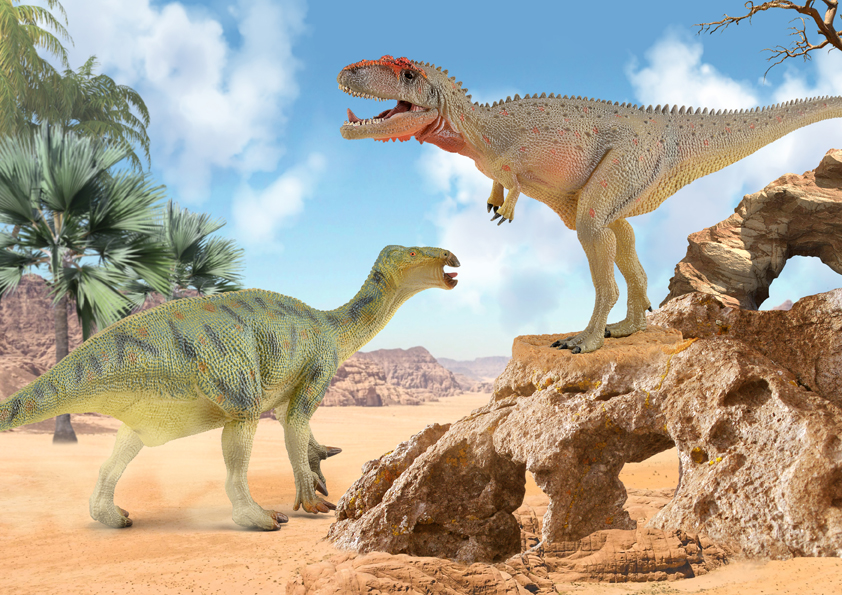
The CollectA 1:40 scale Iguanodon and Mapusaurus dinosaur models. Dinosaurs “fearfully great lizards”.
The radio presenter did really well in a previous “midnight mastermind” in which listener Neil asked questions about the film “Predator”, so we thought it would be a good idea to set him question about a dinosaur which many people believe was the ultimate predator – Tyrannosaurus rex.
Tyrannosaurus rex is perhaps the most famous dinosaur of all, in what year was T. rex formally, scientifically described?
T. rex was first scientifically described back in 1905, by the American palaeontologist Henry Fairfield Osborn. The first T. rex bone was described in 1883 and this was referred to as Monospondylus gigas (giant, thin vertebrae), thankfully scientific convention was overruled and Tyrannosaurus rex became the accepted scientific name.
The Mesozoic
The non-avian dinosaurs died out around 66 million years ago (mya) during a mass extinction event that marked the end of the Mesozoic Era.
Dinosaur fossils are found in rock formations that were laid down during three geological time periods – one of these periods is called the Jurassic – hence the movie “Jurassic Park” but what are the names of the other two geological periods associated with the dinosaurs?
The two other geological time periods associated with the dinosaurs are the Triassic (251 mya – 201 mya) and the Cretaceous (145 mya – 66 mya). The first dinosaurs evolved in the Late Triassic perhaps as early as 235 million years ago. The non-avian dinosaurs became extinct at the end of the Cretaceous 66 mya.
What was the name of the first dinosaur to be scientifically described?
Megalosaurus was the first dinosaur to be scientifically described. It was named in 1824 by an English clergyman and geologist William Buckland. The Reverend William Buckland went on to become Dean of Westminster Abbey. The Megalosaurus fossils that William Buckland studied can be seen today, on display at the Oxford University Museum of Natural History.
Dinosaur Models and Prehistoric Animals
At our company Everything Dinosaur, we specialise in the sale of dinosaur and prehistoric animal scale models.
The world’s first life-size dinosaur models are still in existence, but where in the world would you have to travel to if you wanted to see them?
The first, life-size dinosaur sculptures in the world can be seen in Crystal Palace Park in the London Borough of Bromley. Originally commissioned as part of the Great Exhibition, the statues created by Benjamin Waterhouse Hawkins under the guidance of Sir Richard Owen, went on public display in 1854. The statues have Grade I listed building status and the park is the world’s first dinosaur and prehistoric animal theme park, the original “Jurassic Park”.
Answers About Dinosaurs
The researcher selected the question about the first dinosaur to be scientifically described, the question about Tyrannosaurus rex and finally the question about the Crystal Palace dinosaurs.
The radio presenter scored zero out of three. Not to worry, not everyone is cut out to be a palaeontologist.
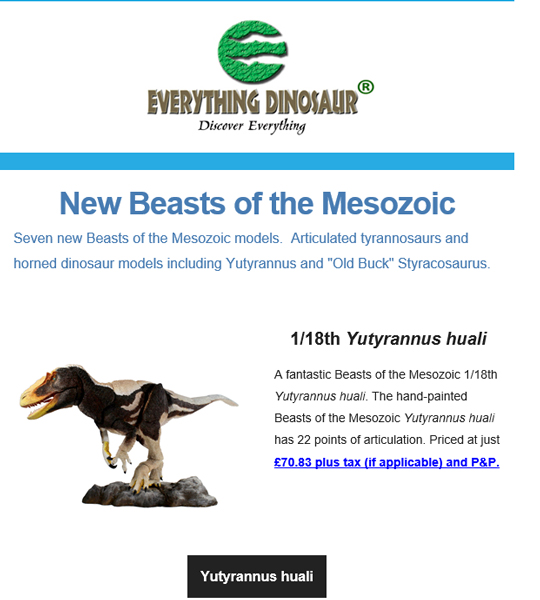
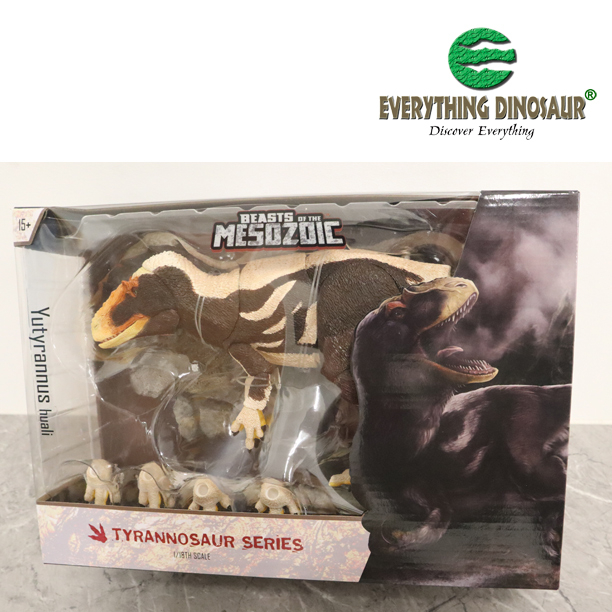
New Beasts of the Mesozoic models (2023) feature in the latest Everything Dinosaur customer newsletter. New ceratopsians and tyrannosauroid replicas to collect. The headline item in the newsletter is the feathered tyrannosauroid Yutyrannus huali in 1:18 scale.
The new for 2023 Beasts of the Mesozoic Yutyrannus huali tyrannosauroid dinosaur model is highlighted in Everything Dinosaur’s latest customer newsletter. Picture credit: Everything Dinosaur.
Beasts of the Mesozoic Models
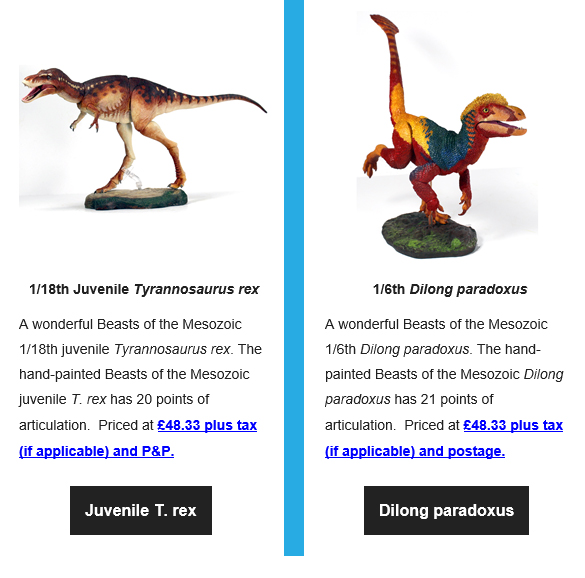
There are seven additions to the popular Beasts of the Mesozoic models range. Four carnivorous dinosaurs and three ceratopsian figures. Part of the new “tyrannosaur” series, a replica of a juvenile T. rex and a 1:6 scale Dilong paradoxus have arrived at Everything Dinosaur’s warehouse.
The juvenile T. rex figure (left) and the 1/6th scale Dilong replica. Picture credit: Everything Dinosaur.
Jurassic and Cretaceous Dinosaur Models
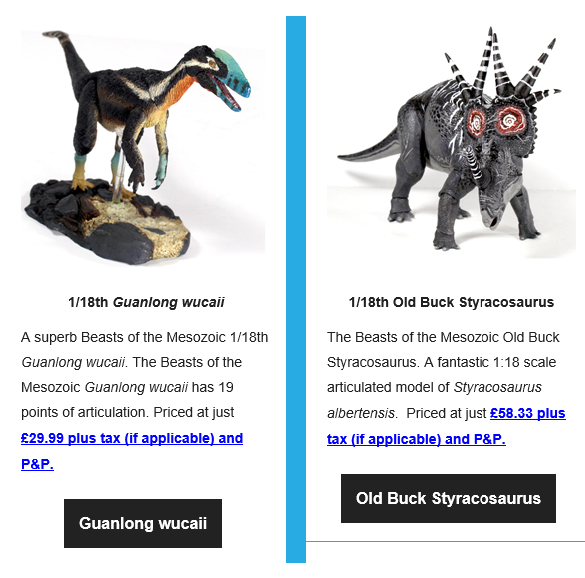
Whilst six of the seven new figures represent Cretaceous dinosaurs, the Guanlong (G. wucaii) is an articulated model of an early tyrannosauroid (proceratosaurid tyrannosauroid) known from the Late Jurassic of China.
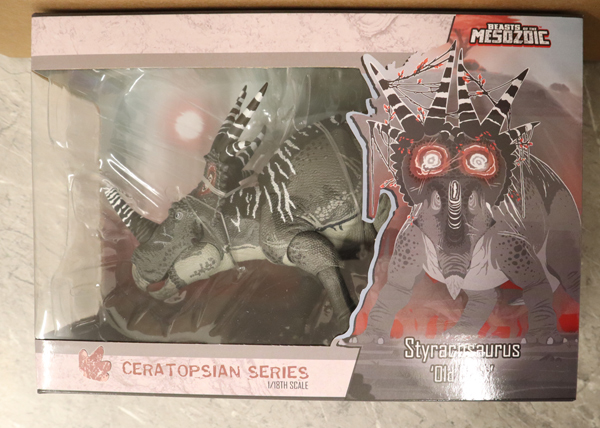
There are two new replicas of Styracosaurus for fans of horned dinosaurs to collect. Both Styracosaurus models are in 1:18 scale and called “Old Buck” as they represent a mature male.
The Late Jurassic tyrannosauroid Guanlong (left) and the Late Cretaceous ceratopsian Styracosaurus (right). Picture credit: Everything Dinosaur.
Old Buck Styracosaurus
One of the “Old Buck” Styracosaurus figures has been painted to reflect injuries it may have sustained in a fight with a tyrannosaur. None of the tyrannosauroids that have just been added to the Beasts of the Mesozoic range were coeval with Styracosaurus. Collectors will have to wait for the tyrannosaurs associated with the Campanian faunal stage such as Albertosaurus and Gorgosaurus to be introduced.
The Beasts of the Mesozoic Styracosaurus dinosaur model. Picture credit: Everything Dinosaur.
Old Buck (Bloody)
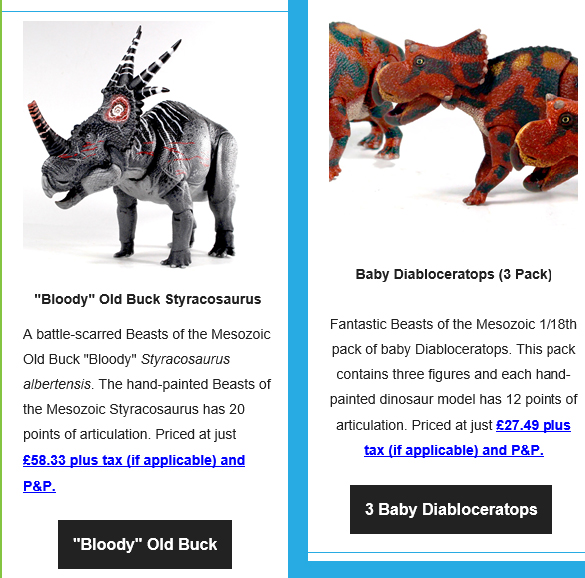
The articulated Styracosaurus with the battle damage is known as “Old Buck Bloody”.
A spokesperson from Everything Dinosaur commented that:
“Along with the two new Styracosaurus models, a trio of articulated baby Diabloceratops models have been added to the Beasts of the Mesozoic range.”
The Old Buck – Bloody (left) and the trio of baby Diabloceratops figures (right). Picture credit: Everything Dinosaur.
Everything Dinosaur team members have been busy packing and despatching the latest Beasts of the Mesozoic fulfilment programme. New tyrannosaur and ceratopsian figures in the Beasts of the Mesozoic range have arrived at the company’s warehouse and Kickstarter orders are in the process of being sent out.
Beasts of the Mesozoic tyrannosaur and ceratopsian model fulfilment by Everything Dinosaur. Parcels awaiting movement to the despatching area. Sue poses with parcels made ready for despatch. Picture credit: Everything Dinosaur.
Beasts of the Mesozoic Fulfilment
Seven new Beasts of the Mesozoic figures have arrived. They include the two new Styracosaurus figures (Old Buck and Old Buck – Bloody), along with the baby Diabloceratops and four tyrannosauroids – Guanlong, Dilong, a juvenile Tyrannosaurus rex and a Yutyrannus huali.
The Beasts of the Mesozoic Yutyrannus huali articulated dinosaur model. Picture credit: Everything Dinosaur.
A spokesperson from Everything Dinosaur commented:
“We have been focusing on getting out the UK orders and those parcels destined for Europe. A sizeable portion of UK orders have already been sent out. Over the weekend we have been concentrating on getting out the Kickstarter orders for customers in the EU.”
Plans are in place to complete the UK fulfilment within a few days and the European orders are scheduled to be sent out by the evening of Thursday 2nd March (2023).