All about dinosaurs, fossils and prehistoric animals by Everything Dinosaur team members.
7 01, 2021

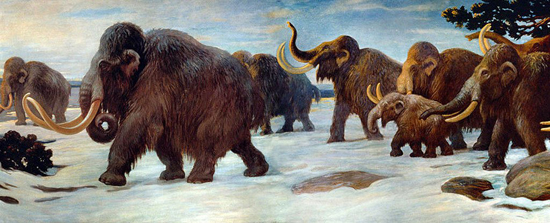
A Herd of Woolly Mammoths (Charles R. Knight)

By |2024-05-18T08:26:00+01:00January 7th, 2021|Categories: Dinosaur and Prehistoric Animal Drawings, Main Page, Photos|0 Comments

A Herd of Woolly Mammoths (Charles R. Knight)

The weather might be decidedly chilly (at least here in the UK), at the moment.  With this in mind, time to post up an iconic Ice Age scene painted by the renowned American palaeoartist Charles Robert Knight, depicting a herd of Woolly Mammoths on the move.  This talented artist might be most famous for his depictions of dinosaurs but he also produced many artworks and illustrations of prehistoric mammals and hominins.

A Herd of Woolly Mammoths a Famous Illustration by the American Artist Charles R. Knight (1874-1953)

The Woolly Mammoth an iconic animal of the Ice Age.

A Woolly Mammoth herd (Charles R. Knight).  An iconic painting of a herd of Mammuthus primigenius.  An ideal illustration given the chilly weather here in the UK.

Picture credit: Charles R. Knight

The artwork, illustrations and murals of Charles R. Knight can be found on display in numerous museums in the United States, such as the National Museum of Natural History (Washington – District of Columbia), the Field Museum (Chicago) and perhaps most famously of all, the American Museum of Natural History (New York).

He also painted many extant animals and several of these illustrations can be found in American Zoos such as the Bronx Zoo (New York) and the National Zoo (Washington – District of Columbia).

His illustration of a herd of mammoths is in keeping with the cold weather we are currently experiencing.  The detailed and beautifully crafted artworks of Charles R. Knight are all the more remarkable given his poor eyesight.  For most of his life, this highly talented and gifted person who has left a legacy of superb artworks, was virtually blind.

2 01, 2021

A Komodo Dragon in the Snow

By |2024-05-18T08:05:30+01:00January 2nd, 2021|Categories: Animal News Stories, Dinosaur and Prehistoric Animal Drawings, Main Page, Photos|0 Comments

A Komodo Dragon in the Snow

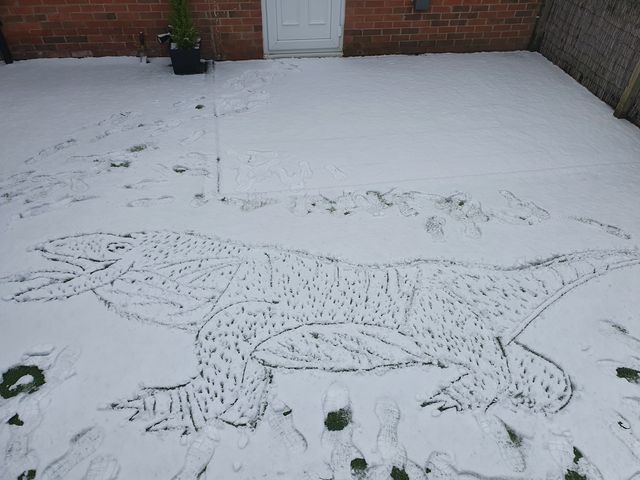
A good artist can turn their hand to using a variety of materials and techniques to express themselves.  Take for instance, this excellent illustration of a Komodo dragon (V. komodoensis), created after a recent snowfall by Caldey.  A fine example of snow art, depicting the largest living lizard, a reptile that would have been very uncomfortable in such a cold environment, however Caldey’s Komodo dragon looks very much at home in her back garden.

A Komodo Dragon in the Snow

Komodo dragon in the snow

Creating a Komodo dragon in the snow.

Picture credit: Caldey

Plotting Proportions and Adding Details

When working on a large project, many professional artists sketch out their design at first and use this as a blueprint for the much larger artwork. By taking this approach, the proportions can be plotted prior to the outline being made and the details added.  We are not sure how Caldey created her lizard, but she has done well to plot the proportions and scale the animal to fit the space that was available.  Our congratulations!  What a clever and innovative piece of work.

Getting Creative in the Snow – Creating a Komodo Dragon

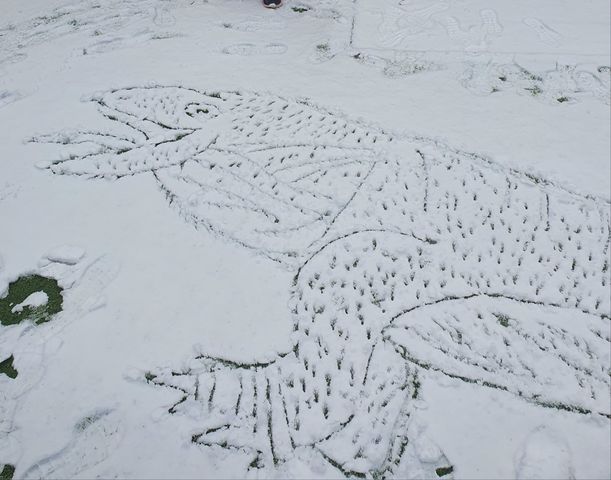
Komodo dragon in the snow.

Getting creative in the snow.  An illustration of a Komodo dragon by Caldey.  A close-up view of the head of the Komodo dragon snow drawing.

Picture credit: Caldey

A spokesperson from Everything Dinosaur commented:

“With the recent snowfalls in the UK, we have seen lots of pictures of snowmen on social media, but we can’t recall ever seeing a Komodo dragon before.  Our congratulations to Caldey for her clever and innovative use of “solid precipitation”.  We suspect there are not many gardens graced with drawings of lizards.”

Sadly, given the vagaries of the British weather, the Komodo dragon will not be on view for very long.

28 12, 2020

Favourite and Popular Blog Posts of 2020 (Part 2)

By |2024-01-02T06:54:20+00:00December 28th, 2020|Categories: Adobe CS5, Dinosaur and Prehistoric Animal News Stories, Dinosaur Fans, Geology, Main Page, Palaeontological articles, Photos, Photos/Pictures of Fossils, Press Releases|0 Comments

Favourite Blog Posts of 2020 (Part 2)

Everything Dinosaur team members conclude their review of their favourite blog articles of 2020 by looking at articles and news stories that were posted up between July and December.  With the best part of 180 posts to choose from selecting our favourite six for this period was quite tricky.  The ones we have selected demonstrate the broad range of topics we cover on the Everything Dinosaur weblog.

To view our earlier article about our favourite posts in the first half of the year: Favourite Blog Posts of 2020 (Part 1).

July – “Lizard Born of Fire”

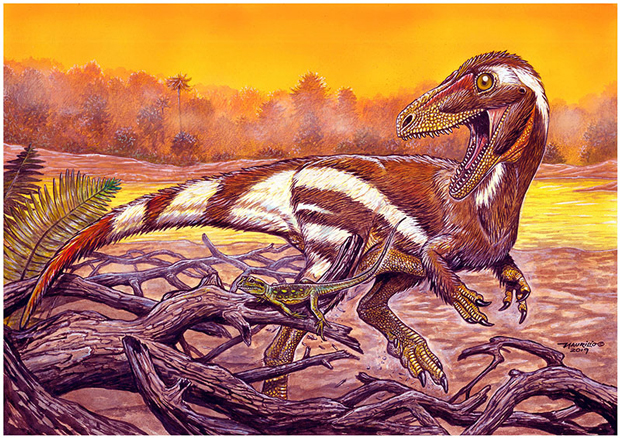
We might have been in the middle of a global pandemic but Everything Dinosaur team members kept up their blogging reporting upon tiny theropod eggs from Japan, a revision of Dilophosaurus and a number of new dinosaurs.  Our favourite post of the month concerned the scientific description of Aratasaurus museunacionali, a basal member of the Coelurosauria from Brazil.  The genus name translates as “lizard born of fire”, a reference to the terrible fire that ripped through the National Museum of Brazil where the fossil specimen was kept.

A Life Reconstruction of the Basal Member of the Coelurosauria Aratasaurus museunacionali

Aratasaurus museonacionali illustration.

Aratasaurus museonacionali life reconstruction.

Picture credit: Museu Nacional

To read more about A. museunacionaliAratasaurus museunacionali A Lizard Born of Fire.

August – Oculudentavis khaungraae Not a Stem Bird

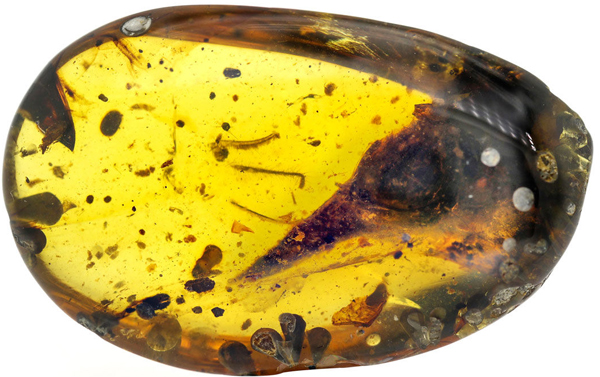
The controversy over the naming of the smallest dinosaur based on a skull preserved in amber from northern Myanmar rumbled on.  In August, a paper was published that refuted claims that the tiny skull of the animal named Oculudentavis khaungraae was that of an archosaur.  A month earlier (July 2020), the original scientific paper describing this remarkable fossil was retracted.

The Tiny Fossil Skull Preserved in Amber from Myanmar – But is it a Dinosaur?

Oculudentavis khaungraae skull in amber.

Tiny fossil skull preserved in amber (Oculudentavis khaungraae).

Picture credit: Lida Xing et al (Nature)

To read more about O. khaungraaeSmallest Dinosaur Preserved in Amber a Lizard.

September: Doctor Who Meets a Trilobite

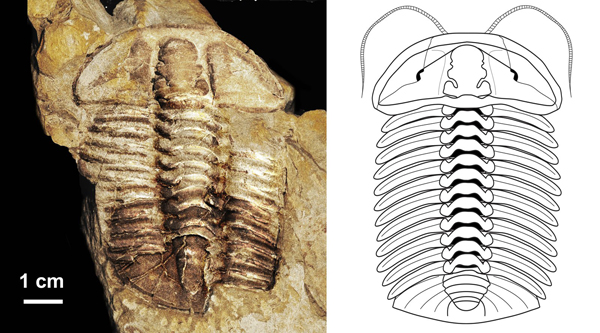
The Oxford University Museum of Natural History celebrated its 160th birthday, the Monsters of the Deep exhibition opened in the midst of the chaos caused by COVID-19 and Euparkeria got a makeover. Our favourite post of September concerned a new species of trilobite (Gravicalymene bakeri) from Tasmanian that was named after Doctor Who actor Tom Baker.

A Photograph of a Gravicalymene bakeri Trilobite Fossil with Line Drawing

Gravicalymene bakeri trilobite fossil.

Gravicalymene bakeri trilobite fossil with line drawing.

Picture credit: Australian Museum

To read more about “Doctor Who and the Trilobites”: Newly Described Species of Trilobite Named after Doctor Who Actor.

October – It’s a Dog’s Life

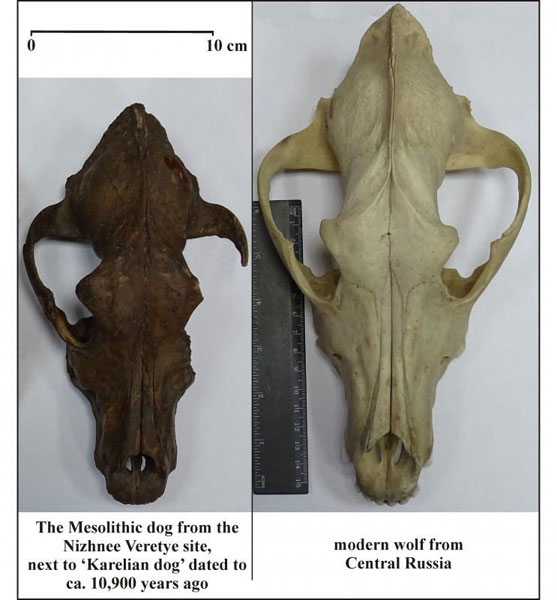
In October we reported on the mapping of the genome of the Scimitar-toothed cat Homotherium latidens, discussed a new species of mosasaur from Morocco and the diet of pterosaurs, but our favourite article concerned the research into ancient dog DNA.  The study suggested that the diversity observed between dogs in different parts of the world today originated when all of mankind were hunters and gatherers.

Mapping Ancient Doggy DNA

Mapping ancient dog DNA.

Mesolithic dog skull (left) compared to wolf skull (right).

Picture credit: E. E. Antipina (Institute of Archaeology of the Russian Academy of Sciences)

To read the article: DNA Study Highlights Ancient Relationship Between Humans and Dogs.

November – Dinosaurs from the Emerald Isle

In November, Everything Dinosaur celebrated publishing its 5,000 blog post, discussed Kholumolumo a dinosaur from an African rubbish dump, looked at seal evolution and got to grips with the earliest Paranthropus robustus skull described to date.

Our favourite post concerned the first dinosaur remains reported from Ireland, not just one dinosaur but two!

First Evidence of Dinosaurs from Ireland

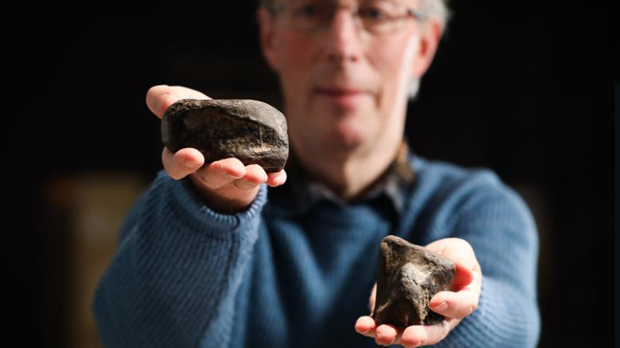
Dr Mike Simms holds the two precious fossils.

Dr Mike Simms (National Museums Northern Ireland) holds the theropod tibia on the left and the thyreophoran femur on the right.

Picture credit: The University of Portsmouth

To learn more about the Irish dinosaurs: The First Dinosaur Remains from Ireland.

For dinosaur and prehistoric animal models: Dinosaur Figures and Prehistoric Animal Models.

December – Thalassodraco etchesi Swims into View

As the year closed, in the final month of 2020 we looked at how interactive “I-books” were helping to explain archaeology, examined a very flashy new dinosaur (U. jubatus), the first sauropod dinosaur from Switzerland (Amanzia greppini) and studied Parasaurolophus pathology.

Our favourite post concerned the establishment of a new species of Late Jurassic ichthyosaur after the discovery of fossil bones by the wonderful Dr Steve Etches MBE, the founder of the amazing Etches Collection museum in Dorset.

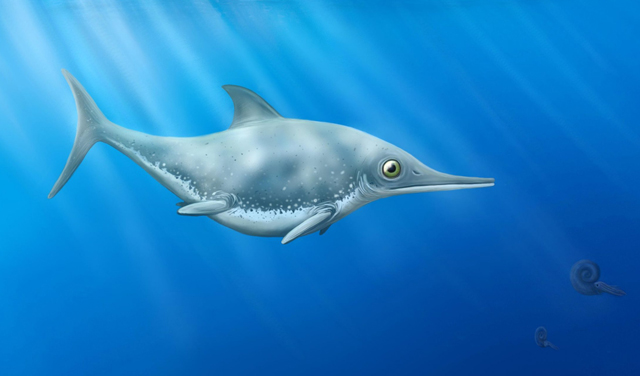
A Life Reconstruction of the Newly Described Thalassodraco etchesi

Thalassodraco etchesi life reconstruction.

A life reconstruction of the newly described Late Jurassic ichthyosaur Thalassodraco etchesi.

Picture credit: Megan Jacobs/University of Portsmouth

To read more about Thalassodraco etchesi: A New Taxon of Late Jurassic Ichthyosaur is Described.

This concludes our review of the blog posts that we have researched and written up over the last twelve months.  Which one is your favourite?

Hopefully, this is your favourite dinosaur website: Everything Dinosaur.

27 12, 2020

Favourite and Popular Blog Posts of 2020 (Part 1)

By |2024-01-02T06:54:49+00:00December 27th, 2020|Categories: Adobe CS5, Dinosaur and Prehistoric Animal News Stories, Dinosaur Fans, Geology, Main Page, Palaeontological articles, Photos, Photos/Pictures of Fossils, Press Releases|0 Comments

Favourite Blog Posts of 2020 (Part 1)

At Everything Dinosaur, we try and post up an article on this blog site every single day.  This can be quite a challenge considering all our other activities and projects.  However, as a result of our work on this weblog we have managed to compile a huge amount of information, articles and features chronicling (for the most part), advances in the Earth sciences and new fossil discoveries along with research into the Dinosauria.

This year, Everything Dinosaur’s blog has passed the 5,000 articles benchmark.  Here is a selection of our own favourite news stories that we have covered in the first six months of 2020 (January to June).

January – A New Allosaurus Taxon

In January, a new species of North American Allosaurus was added to the pantheon of dinosaurs known from the famous Morrison Formation of the western United States.  Allosaurus jimmadseni honours the sadly departed James H. Madsen Jr. Utah’s inaugural state palaeontologist.  The famous Allosaurus specimen MOR 693 “Big Al” was reassigned to this new species.

A Pack of Allosaurus (A. jimmadseni) Attack a Luckless Juvenile Sauropod
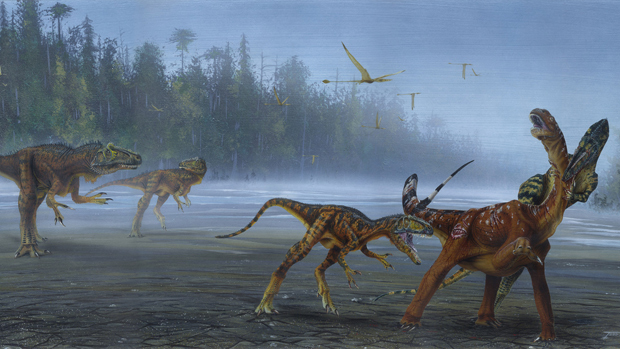
Allosaurus jimmadseni a new Allosaurus taxon is described.

A pack of allosaurs (A. jimmadseni) attacking a juvenile sauropod.

Picture credit: Todd Marshall

The January Allosaurus article: A New Species of Allosaurus.

February – The “Father of Argentinian Palaeontology” – José Bonaparte

On the 18th February José Bonaparte, regarded by many as the most influential vertebrate palaeontologist of the 20th century passed away.  Respected and admired, José helped to develop and train a whole new generation of Earth scientists.  He was also responsible for naming and describing a large number of new dinosaurs including Abelisaurus, hence our illustration of that South American theropod (below).

José Bonaparte and a Drawing of One of the Many Dinosaurs He Named and Described (Abelisaurus comahuensis)
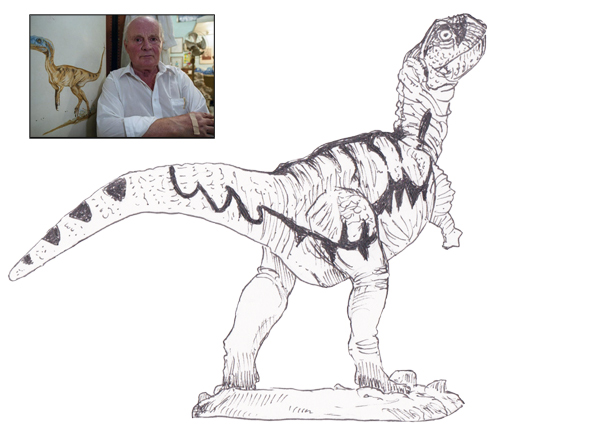
Lamenting the death of José Bonaparte (February 2020).

José Bonaparte (inset) and a drawing of one of the dinosaurs he named in his long and distinguished career Abelisaurus (A. comahuensis).

Picture credit: Télam/Everything Dinosaur

To read more about José Bonaparte: José Bonaparte – The Founding Father of Palaeontology in Argentina.

March – Telling the Time Back in the Cretaceous

As the COVID-19 pandemic took hold, team members at Everything Dinosaur were distracted by some remarkable research undertaken by scientists from the University of Ghent and the Vrije Universiteit Brussel.

A study of the growth rings preserved on the fossilised shells of Cretaceous bivalves permitted the researchers to calculate that 70 million years ago, the day length was approximately thirty minutes shorter and a year on Earth was around a week longer than it is today.

To read this article: Telling the Time Back in the Cretaceous.

April – Homo erectus at Home in Africa

The remarkable Drimolen fossil hominin site in South Africa, provided palaeoanthropologists with likely confirmation that the hominin H. erectus did indeed evolve in Africa and not Asia.  A carefully and painstakingly reconstructed fossil skull (DNH 134), found in this area – regarded as the “Cradle of Humankind”, suggests that Homo erectus existed some 100,000 to 200,000 years earlier than previously realised.

We still have a lot to learn about our own evolution.

Homo erectus Evolved in Africa
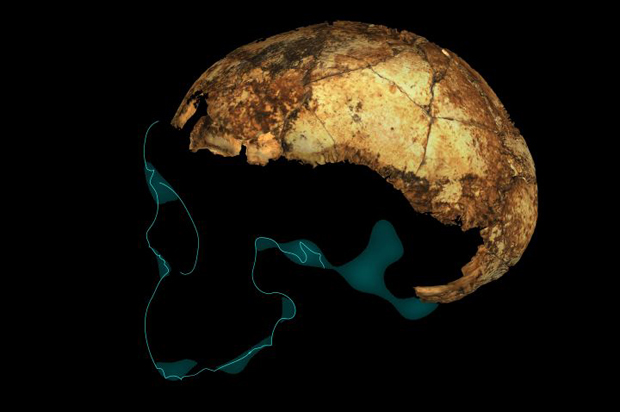
Partial H. erectus cranium from the Drimolen Fossil Hominin site.

The partial H. erectus cranium from the Drimolen Fossil Hominin site.

Picture credit: La Trobe University (Australia)

To learn more about the origins of Homo erectusH. erectus Originated in Africa.

May – Lots of Pterosaurs

A jawbone found on the Isle of Wight was identified as a new species of tapejarid pterosaur.  The flying reptile, named Wightia declivirostris which translates as “slanting beak from the Isle of Wight” was one of several new pterosaur species described in 2020.

A Life Reconstruction of the Early Cretaceous Pterosaur Wightia declivirostris
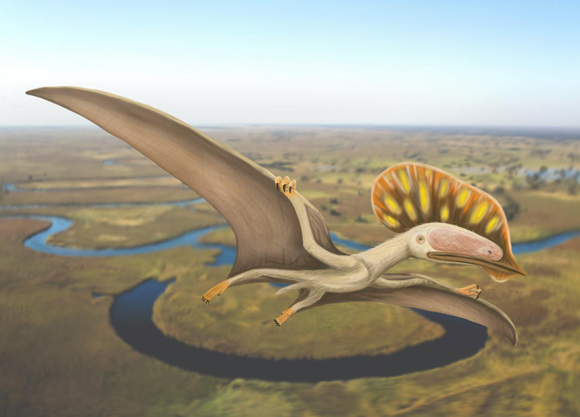
Wightia declivirostris from the Isle of Wight

A life reconstruction of the newly described tapejarid from the Lower Cretaceous of the Isle of Wight (Wightia declivirostris).

Picture credit: Megan Jacobs (University of Portsmouth)

To read more about Wightia declivirostrisA New Terrific Tapejarid.

We have a lot more to learn about the Pterosauria too.

For models and replicas of pterosaurs and other prehistoric animals: Wild Safari Prehistoric World Figures.

June – Fossilised Stick – Provides a Surprise

A fossil discovered more than fifty years ago and regarded as little more than a “fossilised stick” has proved to be a new species of Late Devonian plant and it will help scientists to better understand the flora of the ancient landmass of Gondwana.

The specimen was found by amateur geologist John Irving whilst exploring the banks of the Manilla River in Barraba (New South Wales, Australia).  A study in the open-access journal PeerJ identifies the newly named Keraphyton mawsoniae and proposes that it has a similar structure to primitive horsetails and ferns.  The fossil which looks so unremarkable on the outside, once studied in cross-section, has provided a unique window into the plant life on Earth around 360 million years ago.

Not Much to Look at on the Outside but Inside a Treasure Trove of Information for Palaeobotanists
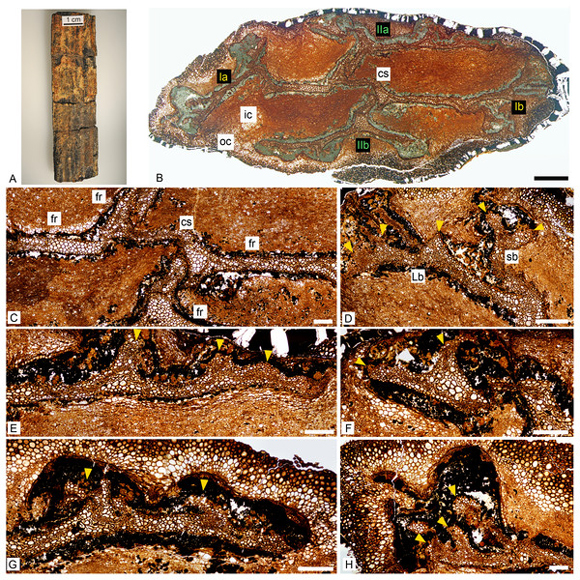
Keraphyton mawsoniae fossil.

The newly described Keraphyton mawsoniae a fern-like land plant from the Late Devonian of Australia.

Picture credit: Champreux et al (PeerJ)

To read more about K. mawsoniaeFossil Stick Proves to be New Species of Ancient Plant.

This selection represents some of our favourite blog posts from the first six months of 2020, which one is your favourite post?

We will conclude this review of the news stories we have covered on this blog in part 2.

In the meantime, visit the Everything Dinosaur website: Everything Dinosaur.

25 12, 2020

Merry Christmas from Everything Dinosaur

By |2023-07-29T11:35:18+01:00December 25th, 2020|Categories: Adobe CS5, Dinosaur Fans, Everything Dinosaur News and Updates, Main Page, Photos, Press Releases|0 Comments

Merry Christmas from Everything Dinosaur

From all of us to all of you, we would just like to wish everyone a very happy Christmas.  This special day seems to come round even quicker each year.  Team members at Everything Dinosaur have been so busy wrapping parcels for customers that we have hardly had time to wrap our own presents and gifts.

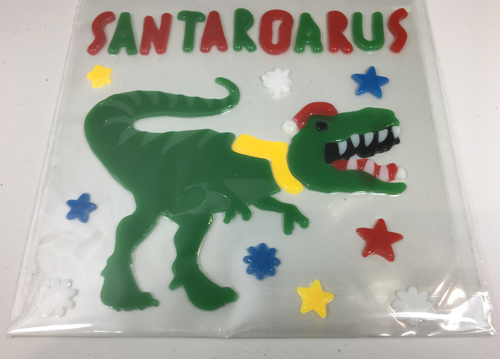
Santaroarus Wishes Everyone a Very Merry Christmas

A seasonal decoration with a dinosaur theme - a festive T. rex.

A seasonal decoration with a dinosaur theme.  This is one of our favourite festive decorations.  Picture credit: Everything Dinosaur.

Picture credit: Everything Dinosaur

For dinosaur and prehistoric animal soft toys: Prehistoric Plush – Dinosaur Soft Toys.

Lots of Exciting Plans

Here’s hoping that all our blog readers and social media followers have a Happy Christmas and a Peaceful and Prosperous New Year.  We have lots of exciting plans for 2021, but before we get there we have perhaps the worst job of the year ahead of us – stock take.  Between now and New Year, we will all be in the warehouse counting the stock, with something like 1,000 product lines it is going to be a “mammoth” task!

Everything Dinosaur Making Changes to the Website

We will also be rolling out some changes to our website, we will be able to offer our customers in Europe a fast, fully tracked postal service with all deliveries duty paid (DDP).  No hidden charges, no carding fees, no administration costs for our customers, just the usual 5-star customer service you have come to expect from Everything Dinosaur.  We might even be nominated for another customer service award as well…

Our stock take might be arduous but we will take it in our stride.  Still, I’m sure someone will bring in some mince pies and Christmas cake and this will keep us going.

On behalf of all the team members at Everything Dinosaur have a Happy Christmas.

Visit the Everything Dinosaur website: Everything Dinosaur.

18 12, 2020

Unique Interactive “I-Book” Provides Readers with Unprecedented Access to Archaeological Sites

By |2024-02-29T07:44:42+00:00December 18th, 2020|Categories: Book Reviews, Educational Activities, Main Page, Photos, Teaching|0 Comments

Interactive “I-Book” Provides Readers with Unprecedented Access to Archaeological Sites

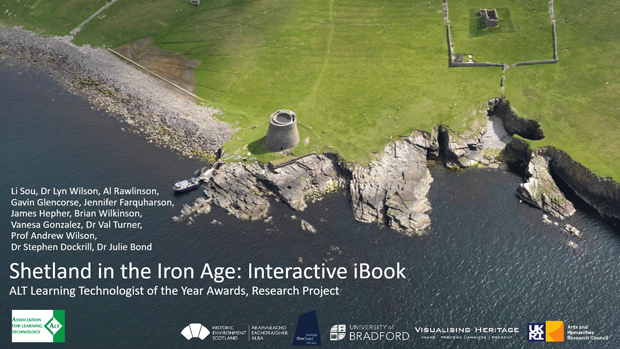
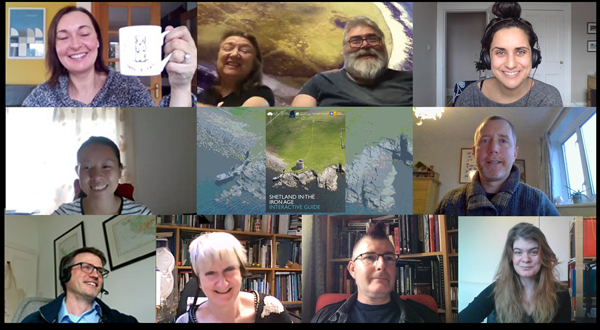
An interactive ‘”I-Book” which allows users to virtually walk around otherwise inaccessible historical sites has been shortlisted as a finalist in a major award.  Entitled “The Shetland in the Iron Age”, this  Interactive “I-Book” gives anyone a VIP pass to three distant archaeological sites and has been highly commended in an industry awards ceremony.

Interactive “I-Book”

The concept of providing virtual access to sites of great historical significance was developed by Archaeological and Forensic Sciences PhD student Li Sou from the University of Bradford.  The “I-Book” offers a no-holds barred tour of three “broch”, Iron Age drystone hollow-walled structures found in the Shetland Islands, Scotland.  The technology is so simple to use, that anyone aged nine or over can use the “I-Book” and visit relatively remote and inaccessible sites.

University of Bradford Student Li Sou Demonstrates the “I-Book”

Archaeological and Forensic Sciences PhD student Li Sou from the University of Bradford.
Archaeological and Forensic Sciences PhD student Li Sou from the University of Bradford demonstrates the new “I-Book”.

Picture credit: University of Bradford

The “I-Book” provides 360° virtual maps of the interiors that users can explore.  Virtual visitors can wander around their inner workings, exploring different buildings, accessing staircases and corridors, as though they were there in the Shetlands themselves.

Providing Lots of Associated Information and Data

The cleverly designed “I-Book” includes clickable information hotspots that link to a wealth of associated data, including historic photographs and videos from experts in the field.  The concept was shortlisted in the Association for Learning Technologists Awards and the “I-Book” was highly commended.  The judges describing it as an “incredibly varied, engaging and accessible digital educational resource.”

Historic Environment Scotland have been developing this technology for use at other historic properties in their care and these will launch in 2021, both on site and freely downloadable online.

An Overhead Photograph of a Broch

An overhead photograph of a broch on the Isle of Shetland.
An aerial shot of a broch.

Picture credit: University of Bradford

The judging panel stated that the project:

“Has excelled in developing a range of versatile digital assets to aid in learning about complicated archaeological and academic themes.”

Commenting after the prestigious award ceremony, student Li Sou exclaimed:

“This is the culmination of a six-month project and brochs are complicated archaeological sites to understand and are not physically accessible to everyone.  The I-Book format is not very well known in the heritage sector, so the project was an excellent opportunity to design a resource that gives readers a chance to explore the sites as if they were there in real life, with integrated accessibility features to make them accessible to all.”

A Useful Resource in the Midst of a Global Pandemic

The use of technology such as this has significant implications for the support of archaeology and general education in the midst of a global pandemic.  The emergence and spread of COVID-19 has curtailed travel and restricted the opening times for heritage monuments.  “I-Books” such as this permit sites that might be closed to the public and otherwise difficult to reach due to the need to restrict travel or to self-isolate, to still be accessible to students, archaeologists and the general public.

“I-Book” Development Team Photo (in an Age of Social Distancing)

Team photo of all those involved in the project
Team photo of all those involved in the “I-Book” project.

Picture dredit: University of Bradford

The interactive “I-Book”  entitled “The Shetland in the Iron Age” was developed in collaboration with the Shetland Amenity Trust with a working group from Historic Environment Scotland, along with the co-operation and assistance of the Visualising Heritage group within the School of Archaeological and Forensic Sciences, University of Bradford.

Implicatioms for Palaeontology Departments

A spokesperson from Everything Dinosaur commented that this type of technology has applications within the Earth sciences.  For example, interactive “I-Books” could be provided to help students and researchers virtually visit remote dig sites and fossil quarries.  It could also be used in other research areas such as allowing observations of fossil collections and other material that would otherwise be very difficult to access.

Everything Dinosaur acknowledges the assistance of a media release from the University of Bradford in the compilation of this article.

Visit the Everything Dinosaur website: Everything Dinosaur.

16 11, 2020

New Study Seals the Fate of Pinniped Evolution

By |2024-03-19T14:32:49+00:00November 16th, 2020|Categories: Dinosaur and Prehistoric Animal News Stories, Main Page, Palaeontological articles, Photos|0 Comments

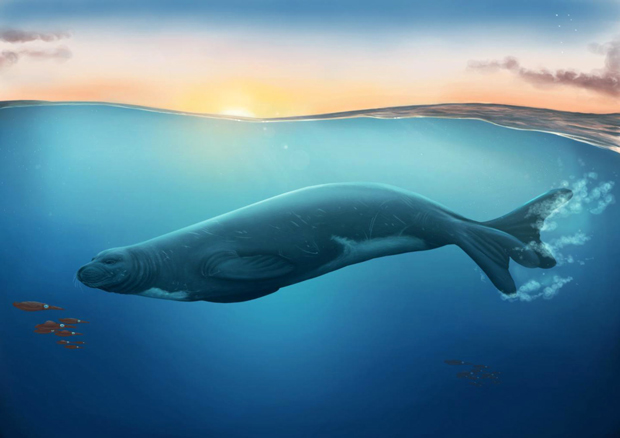
Ancient Seal from New Zealand Eomonachus belegaerensis

A team of researchers from Monash University (Victoria), the Museum of New Zealand Te Papa Tongarewa (Wellington), Canterbury Museum (Christchurch) and Museums Victoria have identified a new species of prehistoric pinniped, an ancient seal, whose discovery is helping to re-write the evolutionary history of these highly successful and diverse marine mammals.

Writing in the academic journal, the Proceedings of the Royal Society B (Biology), the scientists which include Monash University PhD student James Rule, describe a new species of monk seal that swam in the waters around New Zealand some 3 million years ago (Late Pliocene Epoch).  The seal has been named Eomonachus belegaerensis, which means dawn monk seal from Belegaer.  The Belegaer reference relates to the sea of Belegaer or the “Great Sea” that lay to the west of Middle Earth in J.R.R. Tolkien’s fantasy epic “Lord of the Rings”.

A Life Reconstruction of the Newly Described E. belegaerensis

Eomonachus belegaerensis life reconstrustion.
Eomonachus belegaerensis an ancient seal from New Zealand.

Picture credit: Jaime Bran (Museum of New Zealand Te Papa Tongarewa)

Changing Views on Seal Evolution

Fossil specimens including a complete skull found by amateur fossil hunters on the Taranaki beaches (western side of North Island, New Zealand), between 2009 and 2016 led to the erection of this new species.  The research team estimate that E. belegaerensis measured around 2.5 metres in length and weighed approximately 250 kilograms, about the size of an extant crabeater seal (Lobodon carcinophaga), to which Eomonachus was very distantly related.

It had been previously thought that all true seals (phocids), originated in the North Atlantic.  Extant seals are split into two groups, the northern (phocine) and the southern (monachine).  Only two types of monachine seal subsequently crossed the equator to inhabit the Southern Hemisphere.  Those that made this migration consist of elephant seals and the lobodontins, such as the crabeater seal.  The third and most basal monachine, the monk seals, had been regarded as exclusively northern throughout their entire evolutionary history.

Eomonachus belegaerensis

The discovery of the three-million-year-old fossil remains of an ancestral monk seal in New Zealand has led the researchers to conclude that today’s monk, elephant and Antarctic seals, actually evolved in the Southern Hemisphere.

This unexpected discovery reveals that all three monachine tribes once coexisted south of the equator and has led to a profound revision of pinniped evolutionary history.  Rather than primarily diversifying in the North Atlantic, monachines largely evolved in the Southern Hemisphere and from this southern cradle later reinvaded the north.

Commenting on the significance of this discovery, James Rule stated:

“This new species of extinct monk seal is the first of its kind from the Southern Hemisphere.  Its discovery really turns seal evolution on its head.  Until now, we thought that all true seals originated in the Northern Hemisphere, and then crossed the equator just once or twice during their entire evolutionary history.  Instead, many of them appear to have evolved in the southern Pacific, and then criss-crossed the equator up to eight times.”

Everything Dinosaur acknowledges the assistance of a media release from Monash University in the compilation of this article.

The scientific paper: “First monk seal from the Southern Hemisphere rewrites the evolutionary history of true seals” by James P. Rule, Justin W. Adams, Felix G. Marx, Alistair R. Evans, Alan J. D. Tennyson, R. Paul Scofield and Erich M. G. Fitzgerald published in the Proceedings of the Royal Society B.

The Everything Dinosaur website: Dinosaur Gifts and Toys.

10 10, 2020

New Prehistoric Times – Preview

By |2024-03-17T09:33:45+00:00October 10th, 2020|Categories: Dinosaur Fans, Magazine Reviews, Main Page, Photos, Prehistoric Times|0 Comments

Prehistoric Times – Preview

This might be a very strange and distressing year for many people (2020), we might be yearning for a sense of normality or normalcy as they say across the pond.  Mike Fredericks and his team responsible for “Prehistoric Times”, the quarterly magazine for prehistoric animal enthusiasts, palaeoartists and collectors of dinosaur figures and related merchandise have produced another amazing issue and it will soon be in the post.

“Prehistoric Times” Magazine

The artwork that adorns the front cover is a dramatic Pleistocene-inspired scene created by the extremely talented American palaeoartist Mark Hallet.  The artwork depicting a cave bear defending her calf, certainly has impact!

The Front Cover of “Prehistoric Times” Magazine (Issue 135)

Prehistoric Times magazine front cover (issue 135)
The front cover of “Prehistoric Times” magazine issue 135 (autumn 2020).

Picture credit: Mike Fredericks

Front Cover Artwork by Mark Hallett

Inspired by a previous generation of great artists such as Charles R. Knight, Mark has worked with a large number of prestigious publications, museums and other institutions including National Geographic, the Smithsonian and the American Museum of Natural History as well as working with the likes of Steven Spielberg on the Jurassic Park franchise.

A passionate supporter of conservation, Mark continues to create beautiful and dramatic artwork depicting prehistoric scenes and dioramas helping to excite and inspire the next generation of scientists by encouraging them develop a fascination for the natural world.  Inside this edition of the magazine readers will discover two articles penned by the Texas-based artist along with more examples of his exquisite artwork.

Stegosaurus is Featured

The autumn edition of “Prehistoric Times” (issue 135), also features an article written by the American researcher, illustrator and author Gregory S. Paul along with the second part of the perspective on theropod dinosaur artwork of the famous Czech artist Zdeněk Burian in a long-running series researched and written by John Lavas.  Stegosaurus is the featured dinosaur and look out for an article on that survivor of the Permian mass extinction, the herbivorous, heavily-built Lystrosaurus.   It’s great to see a member of the Dicynodontia showcased in the magazine.

Whilst waiting for the magazine to arrive, visit the Everything Dinosaur website: Everything Dinosaur.
In these troubling times, “Prehistoric Times” helps to bring together the prehistoric animal model collecting community.  We are looking forward to receiving the next issue, it should be with us very soon.

Want to subscribe to “Prehistoric Times”?   Click this link for more details: Subscribe to Prehistoric Times.

28 09, 2020

Happy 160th Birthday to the Oxford University Museum of Natural History

By |2024-03-16T06:56:47+00:00September 28th, 2020|Categories: Dinosaur and Prehistoric Animal News Stories, Main Page, Photos, Photos/Pictures of Fossils|0 Comments

Happy 160th Birthday to the Oxford University Museum of Natural History

This year, one of our favourite museums is celebrating its 160th birthday.   The Oxford University Museum of Natural History was opened 160 years ago.  There would have been lots of events to commemorate this, but 2020 has proved to be an exceptionally challenging year for museums.

The Oxford University Museum of Natural History

The Museum Collections are Housed in a Stunning Example of Victorian Neo-gothic Architecture

The Oxford Museum of Natural History.
The imposing main entrance of the Oxford University Museum of Natural History.  The grassy area in front of the main entrance is home to a replica of a theropod dinosaur trackway.  Visitors can take the opportunity to “walk with a dinosaur”.

Picture credit: Oxford University Museum of Natural History

This museum was established back in 1860 to house the various scientific collections that had been built up at Oxford University.  Prior to all the collections being installed, it hosted one of the most significant scientific debates ever recorded, a clash of ideologies when Thomas Huxley debated the concept of natural selection as postulated by Charles Darwin, with the Bishop of Oxford Samuel Wilberforce.

Seven Million Items Including Important Dinosaur Fossils

Over 7 million items our housed in the spectacular Victorian neo-Gothic building with its vaulted arches and beautiful ironwork.  The collection continues to play a prominent role in on-going research with more than 6,000 specimen loans made annually.  It attracts around three-quarters of a million visitors each year, but 2020 has seen it suffering, like so many other institutions, from restrictions imposed due to the COVID-19 pandemic.

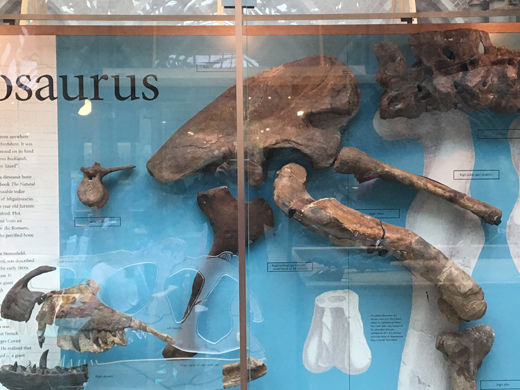
The Megalosaurus bucklandi Display at the Museum

Megalosaurus fossil material on display.
The Megalosaurus display case (Oxford Museum of Natural History).  Picture credit: Everything Dinosaur.

Picture credit: Everything Dinosaur

For models of Megalosaurus and other British dinosaurs: Dinosaurs and Prehistoric Animal Models.

Highlights of the collection include the world-renowned Oxford Dodo specimen, amazingly beautiful trilobite fossils and the remains of the first scientifically described dinosaur Megalosaurus bucklandi.  The Oxford University Museum of Natural History is back open again after the lockdown period.  Admission is free, but visits have to be booked on-line and once in the building social distancing measures have to be followed.

The Spectacular Interior of the Museum

The Oxford University Museum of Natural History (interior).
The spectacular Victorian ironwork of the Oxford University Museum of Natural History.  Picture credit: Everything Dinosaur.

Picture credit: Everything Dinosaur

Happy birthday to the Museum, many happy returns.

The Everything Dinosaur website: Everything Dinosaur.
27 09, 2020

Monsters of the Deep: Science Fact and Fiction

By |2024-03-16T06:40:45+00:00September 27th, 2020|Categories: Animal News Stories, Educational Activities, Main Page, Photos, Press Releases, Teaching|0 Comments

Monsters of the Deep: Science Fact and Fiction at the National Maritime Museum Cornwall (July to 3rd January 2022)

We might be living in a world of track and trace, where everywhere we go and who we meet can be uploaded into a gargantuan database, but there is a part of our planet that remains relatively unknown even in today’s digitally dominated environment.  The deep, dark depths of our oceans harbour some of the most bizarre and amazing creatures to have ever evolved and a recently re-opened exhibition at the National Maritime Museum (Falmouth, Cornwall), permits visitors to meet up with some of nature’s most curious creatures as well as plunging into the depths of our own imagination to explore legendary sea monsters – all without getting our feet wet.

Monsters of the Deep: Science Fact and Fiction

Monsters of the Deep exhibition.
Monsters of the Deep: Science Fact and Fiction at the National Maritime Museum (Cornwall).  Take the plunge!  Encounter myths, legends and real sea monsters. 

Picture credit: Courtesy of the National Maritime Museum Cornwall 

Monsters of the Deep Real and Imagined

Running until January 2022, this carefully crafted exhibition takes visitors on a voyage of discovery from Medieval folklore through cryptozoology and the modern-day monster hunters employing the very latest maritime technology used to explore those parts of planet Earth furthest from our sun.

A Collection of Ocean-dwelling Curiosities

Giant Isopods on display.
Curious crustaceans such as giant isopods with their huge compound eyes stare back at you.  The exhibition permits visitors to closely examine some of the most amazing ocean-dwelling creatures known to science.

Picture credit: Courtesy of the National Maritime Museum Cornwall 

A Collaboration Between Leading Institutions

World class scientific collections from such august bodies as the British Museum, the National Oceanography Centre, the Science Museum, Royal Museums Greenwich and Cambridge University Library have been plundered by modern day buccaneers on a mission to inform, educate and entertain.  Rarely seen specimens, artwork and artefacts all housed under one roof including a large scale reproduction of the Carta Marina, the world’s most famous medieval map of the sea, complete with fanciful monsters and mermaids.

The exhibition highlights the myths associated with early exploration and showcases exquisite illustrations of sea monsters including the strange “mirror creatures”, denizens of the deep that haunted the nightmares of many a seafarer in the age of sail.

In the meantime, visit the Everything Dinosaur website: Everything Dinosaur.
Early Explorers Brought Home Tales of Encounters with Fantastic Sea Creatures

Explorers and sea monsters.
Early explorers brought back fanciful tales of sea serpents, mermaids and monsters.

Picture credit: Courtesy of the National Maritime Museum Cornwall

As Real as Elephants and Giraffes

Prior to the Age of Enlightenment which hastened a revolution in scientific thinking in the 17th century, little was known about the exotic fauna that inhabited our world.  On display at this exhibition is the Hortus sanitatis, the first ever natural history encyclopaedia.  Originally printed in 1491, the year before Christopher Columbus set out on his voyage that led to the discovery of the New World, it represents a significant landmark in our attempts to document and understand the natural world with unicorns and mermaids considered just as real as elephants and giraffes.

A Collection of Books on Cryptozoology on Display

Books about Sea Monsters on Display
A large number of books documenting our fascination with monsters of the deep are on display.

Picture credit: Courtesy of the National Maritime Museum Cornwall

Guest Curators and Leading Specialists

Monsters of the Deep: Science Fact and Fiction has been developed in co-operation with leading specialists and guest curators, including Viktor Wynd, the custodian of the “UnNatural History Museum”, bringing together a collection of curiosities including a mummified feegee mermaid and a skeleton of a unicorn!  This section of the exhibition is dedicated to exploring ideas about what is real and what can be falsified or faked.

A Rearing “Unicorn” on Display at the National Maritime Museum

A rearing unicorn skeleton.
An exhibit from the “UnNatural History Museum” – a rearing unicorn skeleton.

Picture credit: Courtesy of the National Maritime Museum Cornwall 

As well as exploring the theme of sea monsters in popular culture, the exhibition provides an insight into some of the very latest cutting-edge technical developments that have allowed marine biologists rare glimpses of the natural wonders that still exist in the largely unexplored regions of our planet such as the vast abyssal plain.

Combining Myth and Fantasy with Scientific Endeavour and Research

Meet Boaty McBoatface.
The exhibition highlights state-of-the-art technology such as the latest mini submersibles that are transforming our understanding of the world’s oceans.

Picture credit: Courtesy of the National Maritime Museum Cornwall 

To ensure the safety and wellbeing of all visitors and staff, the Museum has implemented a number of new health and safety measures, in line with the latest government advice including timed arrival slots, social distancing measures and on-line only booking.

As half-term approaches, escape your bubble and take the plunge!  Immerse yourself in a world of folklore, fun, facts and fantasy.

Monsters of the Deep: Science Fact and Fiction at the National Maritime Museum Cornwall (July to 3rd January 2022).  For further details: The National Maritime Museum.

Go to Top