All about dinosaurs, fossils and prehistoric animals by Everything Dinosaur team members.

Articles, features and information which have slightly more scientific content with an emphasis on palaeontology, such as updates on academic papers, published papers etc.

13 04, 2013

Oldest Dinosaur Embryos Discovered in China (New Scientific Research)

By |2024-04-29T13:37:14+01:00April 13th, 2013|Categories: Dinosaur and Prehistoric Animal News Stories, Palaeontological articles|0 Comments

Dinosaur Nesting Site May Have Yielded Ancient Organic Material

A dinosaur nesting site that has been dated to the Early Jurassic is providing a team of international scientists with an unprecedented insight into the growth and development of baby dinosaurs.  A scientific paper, published in the academic journal “Nature” and the cover story of this publication’s latest edition, also states that the research team may have discovered traces of organic remains.  If this is the case and the fossils have not been contaminated by more recent organic material, then this discovery marks the earliest known organic remains of a terrestrial vertebrate.

New Research into Baby Dinosaurs
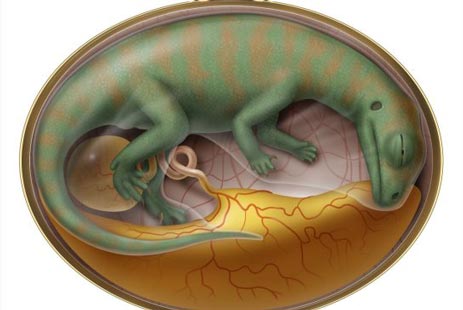
New research into 190 million year old baby dinosaurs.

New research into 190-million-year-old baby dinosaurs.

Picture credit: D Mazierski

The fossil site was discovered by Timothy Huang of the National Chung Hsing University (China) when he was exploring an area of Lower Jurassic aged strata in Yunnan Province (south-western China).  His preliminary investigations led to the discovery of a monotaxic bone bed (an extensive amount of fossil material all assigned to the same species).  The fossils consist of the remains of dinosaur embryos at various stages of development along with the remains of dinosaur egg shell.  The strata represents a dinosaur nesting site.

Fossilised Dinosaur Embryos

Fossilised dinosaur embryos are extremely rare in the fossil record.  The oldest known until the Chinese discovery, are believed to represent the Early Jurassic sauropodomorph of the genus Massospondylus, these fossils were discovered in South Africa, back in 1976.  The South African fossil material was kept in storage for many decades and detailed research into these embryos and their ontogeny (growth rates) was published in 2010.

To read the Massospondylus article: Cracking the Mysteries of the Dinosaur Egg.

The Chinese embryos represent another type of sauropodomorph.  The joint Canadian/Chinese scientific team have assigned these beautifully preserved fossil remains to the genus Lufengosaurus.  This Early Jurassic dinosaur, closely related to the European Plateosaurus of the earlier Triassic Period, is known from more than twenty fossils of individuals. All these fossils have been found in the same geological formation as the newly discovered nesting site (Lufeng Formation).  Lufengosaurus, was a herbivorous dinosaur which may have reached lengths in excess of eight metres.  It was probably one of the largest dinosaurs living in this part of the world in the Early Jurassic (190-197 million years ago).

An Illustration of an Adult Lufengosaurus
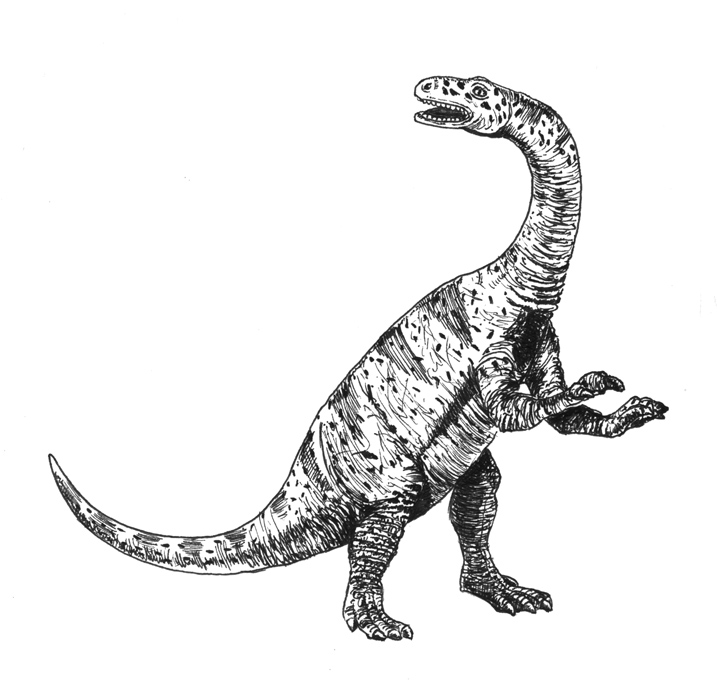
Early Jurassic Sauropodomorph

Early Jurassic sauropodomorph.

Picture credit: Everything Dinosaur

Studying Two Hundred Embryonic Fossil Bones

The initial investigation of the bone bed by Timothy, yielded more than two hundred embryonic fossil bones.  Realising the significance of his discovery he invited Dr Robert Reisz who had worked on the South African embryo fossils to investigate.  Dr Reisz and his team (University of Toronto), working with Chinese colleagues quickly identified that the fossils did not represent a single nest but a number of broods of young, with many at different stages of embryonic development.  This has permitted the team to study the growth and development of a single dinosaur species in great detail.

By comparing the femurs (thigh bones) of baby dinosaurs of different ages the team were able to suggest that these dinosaurs maintained a consistent and rapid rate of growth and development.  For example, the thigh bones of these dinosaurs more than doubled in size whilst still in the egg.  The team’s findings also indicate that sauropodomorphs  had very short incubation times – the embryos grew quickly and hatched fast.

A Stained Cross Section of Embryonic Thigh Bone with Large Pore Spaces Indicating Rapid Growth

This stained sample of a thin cross section of femur suggests rapid growth.

This stained sample of a thin cross section of femur suggests rapid growth.

Picture credit: A. Leblanc

Archosaur Hatching Data

Chickens hatch in about three weeks, whereas crocodile eggs hatch after approximately one hundred days.  The largest living lizard today, the Komodo dragon (Varanus komodoensis) has a much longer incubation period – over eight months.  In addition, tiny muscle scars on the miniature bones indicate that the muscles of these herbivorous dinosaurs were well developed.  This suggests that just like modern birds, baby dinosaurs moved around a lot inside their eggs.  Highly active muscles before hatching suggests that these dinosaurs were far from helpless when they hatched.

It is not known whether these Sauropodomorphs had a precocial habit, the babies being virtually independent from their parents at birth and able to fend for themselves.  Well developed muscles would have helped these young dinosaurs to escape from the nest, to avoid many potential predators and to start to find their own food.

The presence of such large numbers of fossil bones, free from the eggs in which they were formerly contained gave the researchers the opportunity to assess the growth rates of this type of dinosaur from a clade known for its gigantism.  However, the scientists also detected traces of organic remains in the fossil material, astonishing to think that such matter could have possibly survived for 190 million years or so.

Studying Arctic Camels

Back in March, we reported on a joint Canadian and British research project which examined the fossilised remains of prehistoric camels in the High Arctic, although the bone found was extremely fragmentary and represented a tibia (lower leg bone), the research team discovered evidence of collagen present in the fossil.  By extracting a portion of the preserved organic material, scientists from Manchester University were able to prepare a “collagen fingerprint” and when this data was compared to the collagen from extant mammals it was found that the fossil specimen most closely matched the collagen found in camels.  This test helped to confirm that the 3.5 million year old tibia bone was from a prehistoric camel that once roamed high latitudes.

To read about the camel research: Camels of the Arctic.

Dr Reisz and his co-workers claim to have discovered locked deep inside the fossilised bones, evidence of collagen fibres, the main protein constituent of bone.  Organic material usually decomposes very quickly and to find potential evidence of organic material in Early Jurassic vertebrate remains is simply “astonishing” according to some commentators.

The research team hope that they may be able to collect some of this organic material.

He stated:

“We are opening a new window into the lives of dinosaurs.  This is the first time we’ve been able to track the growth of embryonic dinosaurs as they have developed.  The bones of ancient animals are transformed to rock during the fossilisation process, so to find remnants of proteins in the embryos is really remarkable.  If we can extract the collagen, then we can compare it to collagen in living organisms for further studies.  Comparisons can be very valuable in evolutionary studies.”

The potential discovery of such ancient organic material in tiny, delicate fossilised bones of embryos, especially when one considers the porosity of bone material has been described by Dr. Reisz as “mind boggling”.

A “Collagen Fingerprint”

The team hope that if they are able to extract a sample, other researchers such as the University of Manchester research team who analysed the collagen sample from the prehistoric camel, might be able to create a “collagen fingerprint”.  This would allow the prehistoric protein to be compared to the collagen of living vertebrates, perhaps once and for all cementing a link between the Dinosauria and Aves (birds).

The implications for this discovery may indeed be far reaching.  If the remnants of collagen can be found in such an unusual fossil sample, then it might be more common in the fossil record than previously thought.  If small bones could have preserved 190 million year old organic material then much more collagen could be lurking inside other fossil specimens.  This could revolutionise our understanding of the taxonomy of extinct species.

As Dr Reisz commented:

“I suspect that if we start using this methodology elsewhere, we will find it [collagen] more frequently than we think.”

To view models and replicas of prehistoric animals: Prehistoric Animals and Dinosaur Models.

3 04, 2013

Rare Fossilised Feathers Helping to Identify the Colour of Dinosaurs – It’s a Bit of a Blur

By |2024-04-29T06:52:28+01:00April 3rd, 2013|Categories: Dinosaur and Prehistoric Animal News Stories, Palaeontological articles|0 Comments

Shape of Melanosomes and Hence Plumage of Dinosaurs Questioned 

Over the last couple of years or so, a number of scientific institutions have published academic papers revealing evidence of melanosomes preserved in fossil specimens.   As the shape and structure of these microscopic fossil features can provide evidence of the pigmentation and colour of an organism, the geometry of these melanin-loaded specialised elements within a cell, effectively acts as a colour chart for the animal the fossils represent.

Feathered Microraptors – Still Uncertain Regarding Colouration

New research casts doubt over previous colour claims.

New research casts doubt over previous colour claims.

Picture credit: Everything Dinosaur

The Colour of Dinosaurs

Perhaps one of the most famous fossils of all, material ascribed to the Late Jurassic transitional bird/reptile fossil known as Archaeopteryx (Archaeopteryx lithographica) has had melanosome evidence presented.  In this case, a single feather preserved in the fine grained lithographic limestone of the area suggested that the tip of the feather may have been coloured black.  The research was carried out in 2012 and undertaken by a team from Yale University, Brown University, the Carl Zeiss Laboratory (Germany) and the University of Akron (Ohio, United States).

Using extremely high-powered microscopy, the international research team identified the colour of a single fossilised feather, very likely from an Archaeopteryx.  They concluded that the feather, most probably a wing feather was black at the tip.  Their conclusions were based on the geometry (shape) of the remains of melanosome structures that they had observed.

To read more about the Archaeopteryx research: Archaeopteryx – Back in the Black

The Colour of Archaeopteryx Feathers

However, the colour of Archaeopteryx or any other animal in the fossil record with preserved evidence of melanosomes is not quite as “black and white” as it seems.  A new paper, published in the scientific journal “Biology Letters” suggests that over millions of years, the shape and structure of the melanosomes can be distorted under heat and pressure and the fossilised shape may not have much of a resemblance to the structure of these pigmentation organelles when the organism was alive, and in the case of Archaeopteryx, flapping around.

Debate Likely to Continue over the Colour of Archaeopteryx

Wild Safari Dinos Archaeopteryx.

Debate likely to continue over the colour of Archaeopteryx.

To view models and replicas of Archaeopteryx and other prehistoric animals: Wild Safari Prehistoric World Replicas.

Melanosomes Providing a Guide

The theory about melanosomes providing a guide to the colour of an extinct animal is on the surface very simple, but the trick, as with most aspects of palaeontology is the analysis of the data.  Melanosomes contain melanin and these specialised cell structures are present in skin, hair and feather cells.  The colour of the melanosome relates to a specific pigment.

Although the fossilisation process may have degraded all signs of actual colour, the ghostly shapes of the melanosomes themselves are often visible using specific lighting and optical devices such as high powered electron microscopes.  The preserved size, layout and shape can give palaeontologists some suggestions about the original colour in the organism.

Maria McNamara et al (University of Bristol), have published a study which suggests that the properties of melanosomes preserved in such fossils as the remains of dinosaur feathers, could become distorted and therefore provide scientists with misleading clues as to the original colour.  Under Professor Mike Benton (University of Bristol), some of the initial research into the colour of feathered dinosaurs was undertaken.  Professor Benton, in collaboration with Chinese colleagues provided evidence of the first colouration of a member of the Dinosauria back in 2010, when it was announced that the cursorial Chinese Theropod Sinosauropteryx may have been ginger.

To read more about the potential colouration of dinosaurs: Ginger Dinosaurs?

Simulating the Fossilisation Process

Maria and her fellow researchers mimicked the fossilisation process of feathers by simulating burial by placing modern-day bird feathers into an autoclave and then subjecting them to temperatures in excess of 250 degrees Celsius.  The chamber which held the experiment, was pressurised to 250 atmospheres, the intense heat and extreme pressures would be similar to the forces applied to strata and the fossils within them over millions of years.

When the melanosomes were studied under high magnifcation, the structure and shape of many of them had changed.  In effect, they had become distorted and withered.  This could lead to misinterpretations of fossil material if the melanosomes found preserved were taken at face value.

Black Feathers?

Ryan Carney, a research scientist based at Brown University, one of the team members who worked on the Archaeopteryx case study, black feathers and all, commented that shrinkage had been taken into account when he and his co-workers prepared their Archaeopteryx paper.  Their black feather conclusion was based on observations made using hundreds of melanosome structures that the team studied under very high magnification.  Although, the melanosomes may shrink a little during the fossilisation process, their original shape can still be determined by examining an imprint left in the matrix by the organelle (organelle – specialised area of a cell with specific functions).

Referring to the Archaeopteryx study he stated:

“We found that the length and width of melanosomes were significantly smaller compared to those of the imprints, the shrinkage was actually quite similar to that of the McNamara et al experiment”.

McNamara and her team remain confident in the validity of their data and they have provided intriguing evidence which requires careful analysis in the light of the current research.  For example, another important conclusion from this research is that melanosomes survive the heat and pressure of fossilisation even after the destruction of other non-melanin colour traces such as carotenoids (organic pigments, responsible for example for the colour of carrots and apricots).  Carotenoids can create vivid shades of orange, green, yellow, red and blue in feathers, however, in the University of Bristol experiments the multi-coloured feathers tested gave results indicating that they were just black.  This was because their non-melanin organic pigments had been destroyed and only the melanosomes survived to give the false reading of black.

With this conclusion in mind, the discovery of melanosomes in a fossilised feather such as that from a 150 million year old specimen such as Archaeopteryx might not necessarily mean that the original feathers were coloured black, reddish or brown.

McNamara commented:

“The bottom line is that until we understand how the fossilisation process affects these colour-producing chemicals and structures, and until we know how to look for evidence of these in fossils, there’s really no point in attempting to reconstruct colour of feathers based on melanosomes alone.”

Being able to determine the colour of an extinct animal would be very helpful in trying to work out its behaviour or how it reacted to its environment.  Knowing the true colour of a Velociraptor for instance, would enable palaeontologists to assess how it camouflaged itself or used visual signals to communicate with other members of its kind.  If a number of fossil specimens of different aged individuals could be studied, scientists might be able to see how the colouration changed as the animal grew, what differences there may have been between males and females etc.

Examining a Highly Magnified Image Showing Melanosome Structures

Interpretation of melanosomes.

Interpretation of melanosomes.

Picture Credit: Brown University

The Archaeopteryx study also led to some conclusions related to the development of avian flight.  The melanin in the wing feathers may not only have provided colouration but also helped to increased the strength of the feather, very helpful to have strong feathers with core strength if you are trying to evolve into a more active and efficient flier.

There is still so much to learn about fossils, new techniques and new areas of research are providing some astonishing data but we still have a long way to go before we can say definitively what colour a feathered dinosaur may have been.

19 02, 2013

Carboniferous Crinoids Provide Evidence of Oldest Biomolecules Directly Isolated from Fossil Material in New Study

By |2024-04-29T12:23:07+01:00February 19th, 2013|Categories: Dinosaur and Prehistoric Animal News Stories, Palaeontological articles|3 Comments

Study into 350 Million Year Old Echinoderms Reveals Presence of Biomolecules

America some 350  million years ago looked very different than it does today.  For starters, much of the land mass which we now know as the United States formed part of a super-continent called Laurentia, but a considerable portion of the USA was covered by a warm, shallow tropical sea.

Scientists from Ohio State University have been studying an unusual phenomena associated with crinoid fossils from strata deposited in an ancient marine environment in the American Midwest and their research reveals that complex organic molecules may have been preserved.  It had been thought that organic molecules could not survive the fossilisation process and remain present in fossil material after immense periods of time, but a number of recent studies using the most sophisticated analysis techniques ever to be employed in palaeontology are challenging  this assumption.

Ancient Crinoid Fossils

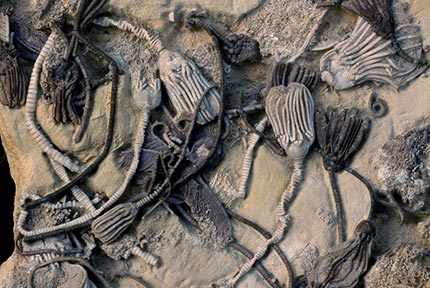
Crinoid fossils preserved in rocks from the American Midwest (specifically Indiana, Ohio and Iowa), the remains of animals that lived during the Mississippian Epoch (Carboniferous), can be preserved in different colours depending on the species.  Different species of crinoid, preserved in the same matrix, the same fossil slab, can be blueish grey, creamy white or even dark grey when observed under natural light.  Scientists had commented on this bizarre phenomenon over a hundred years ago, the fact that the crinoid fossils found in some parts of the Midwest seemed to be colour coded, but it took a team of geologists and scientists from the Ohio State University to get to the bottom of this mystery.

An Example of the Different Coloured Crinoid Fossils Used in this Study

Revealing 350 million year old organic compounds.

Revealing 350 million year old organic compounds.

Picture credit: Professor William Ausich, courtesy of Ohio State University.

Crinoids are members of the ancient Phylum known as Echinodermata (Echinoderms) – starfish, brittle stars, sea urchins and crinoids (sea-lilies).  Their fossil record dates back to the Cambrian.  Crinoids are often referred to as sea-lilies, as they superficially look like plants.  The fossil record for crinoids dates back to the Early Ordovician and there are a number of genera living today, including forms with stems that live attached to the sea-bed filling an ecological niche once filled by the Carboniferous crinoids.

Crinoids Described

Most prehistoric crinoids were attached to the sea-bed by a stem or a stalk, with a root-like holdfast at the bottom.  The mouth and the digestive tract was located in an enclosed cup at the top of the stem.  A series of feathery appendages which were covered in tiny, thin plates (pinnules) acted as a food gathering mechanism.  The sea current brought particles of food which were caught by the pinnules on the arm-like appendages and these food items were than wafted into the mouth.

The hard parts of the animal were formed of calcium carbonate (calcite), extracted from the surrounding sea water.  This calcite was porous and a thin skin of living tissue covered these hard parts.  Calcite is often very well preserved in the fossil record and the calcite plates that make up the flexible stem of these sea creatures are common fossils in Palaeozoic and Mesozoic aged marine, sedimentary deposits.

Dramatic Storms

A series of dramatic storms seem to have devastated the sea-bed where vast colonies of these sea-lilies thrived.  The sea-floor became choked in finely grained mud.  Once these crinoids were buried they were no longer able to feed and vast numbers of them were wiped out.  Being rapidly buried, quickly isolated from scavengers and oxygen to speed up the degradation process the calcite skeletons were preserved in beautiful detail, many of which remain articulated.

The porous calcium carbonate elements of the animal gradually became filled with minerals and preserved as fossils, however it seems that some of the pores that once contained living tissue were sealed so completely that traces of the molecules that made up the living tissue of the organism may have been preserved.

The University based research team were able to extract organic molecules from the individual sea-lily fossils.  They discovered that different species contained different organic molecules.   Some of these ancient sea creatures, that had died during these storm events, although they lay next to other species of crinoid  and had become preserved in the same slab of sedimentary rock: the different species were preserved in different colours – the greys, creams and blue-greys.

The organic molecules, referred to as biomarkers were extracted using a gas chromatograph mass spectrometer.  Tiny samples were taken from the individual fossils, these were then dissolved into a solution.  This liquid and its contents was analysed by the gas chromatograph mass spectrometer and individual molecules were identified based on their mass and their electric charge.  A computer programme was used to sort the data and to find a match in living crinoid species for the organic molecules recovered.

To view models and replicas of iconic invertebrates from the fossil record: CollectA Age of Dinosaurs Models.

The software identified these biomarkers as being similar to quinones found in Echinodermata.  These quinones are aromatic, organic compounds that are found in a number of organisms, they are associated with pigmentation (the colour of an animal) or in the production of toxins and other unpalatable substances that deter predators from attacking.

Professor William Ausich, of the School of Earth Sciences (Ohio State University) and  a co-author of the academic paper that has just been published in the scientific journal “Geology” stated:

“There are lots of fragmented biological molecules—we call them biomarkers—scattered in the rock everywhere.  They’re the remains of ancient plant and animal life, all broken up and mixed together.  But this is the oldest example where anyone has found biomarkers inside a particular complete fossil.  We can say with confidence that these organic molecules came from the individual animals whose remains we tested.”

Christina O’Malley in conjunction with the Ohio State geochemist Yu-Ping Chin, confirmed that the quinone-like molecules occur in fossil crinoids as well as in their extant descendants.  Although different coloured fossils do contain different quinones, the research team stressed that there was no definitive evidence to suggest that the preserved molecules were directly associated with the extinct creatures colouration.

The researchers hope to be able to extract more organic material from the fossils in a bid to find out as much as they can about each individual species.

Explaining that these molecules did not represent genetic material such as DNA, Professor Ausich commented:

“We suspect that there’s some kind of biological signal there, we just need to figure out how specific it is before we can use it as a means to track different species.”

It is truly astonishing that these gregarious, benthic (living on the sea-floor), animals from the Palaeozoic can reveal traces of organic compounds when their fossilised remains are analysed.

The scientific paper: “Isolation and characterization of the earliest taxon-specific organic molecules (Mississippian, Crinoidea)” by Christina E. O’Malley; William I. Ausich and Yu-Ping Chin published in Geology.

9 02, 2013

Cretaceous Mass Extinction Event Most Accurate Date Established in New Research

By |2024-04-29T06:12:17+01:00February 9th, 2013|Categories: Dinosaur and Prehistoric Animal News Stories, Geology, Palaeontological articles|1 Comment

International Team Establish Most Accurate Date Yet for Extraterrestrial Impact

If you were able to travel back in time, one part of Earth’s history that would be best avoided would be 66,038,000 years ago plus or minus 11,000 years, as this period has been identified by a team of international researchers as being the time of the impact of a huge object from space that aided the extinction of the Dinosauria and the demise of about seventy percent of all land animals.

Cretaceous Mass Extinction

Scientists from the Berkeley Geochronology Centre (University of California), in co-operation with colleagues from Glasgow University and Vrije University (Amsterdam, Holland), have concluded that an asteroid, meteorite or possibly even an object such as a comet collided with the Earth approximately 66.038 million years ago.  Although this single event may not have been the cause of the mass extinction, the scientists conclude that if the extraterrestrial impact was not wholly responsible, it would have contributed significantly to the global extinction event.

Based on the dateline evidence that the team established, the impact of a large extraterrestrial object in the Gulf of Mexico area could have proved to have been the final blow that saw off the Dinosauria, marine reptiles and pterosaurs.

Published Research

Commenting on the research, which has just been published in the academic journal “Science”, one of the Californian based authors of the paper stated that the extinction and the impact are synchronous to each other and therefore it is highly probable that the impact played a major role in the mass extinction.  In essence, the impact from outer space and the subsequent environmental and climatic chaos that followed, may have been the “tipping point” for the dinosaurs, finally leading to their extinction.

It was father and son Luis and Walter Alvarez who first published a theory (1980), stating that a thin layer of clay enriched with the rare Earth element iridium found at the boundary between Uppermost Cretaceous strata and younger Cenozoic deposits marked the impact of a large, extraterrestrial object.  It was these two American scientists who first claimed that this was evidence of a meteorite or some other object from outer space colliding with the Earth.

Although the American scientists did not know where the impact actually occurred.  This was resolved when the Chicxulub crater, a geological feature that had been first identified in the 1970s, was more thoroughly examined in the 1990s and it was established that this feature had been created around the time of the end of the Cretaceous.  The object, measuring around ten kilometres in diameter and travelling at around thirty kilometres a second smashed into the Gulf of Mexico, close to what is now the village of Chicxulub on the coast of Mexico’s Yucatan peninsula.

The impact was cataclysmic, some scientists estimate that the collision released energy equivalent to 100 million hydrogen bombs.  A crater was blasted into the Earth more than 100 kilometres wide and up to 12 kilometres deep.  Virtually all life within thousands of miles of the impact zone would have been annihilated almost immediately.  Some 50,000 tonnes of rock was thrown up into the Earth’s atmosphere and huge quantities of sulphur was released, which when mixed with water droplets then fell to Earth as vast amounts of dilute sulphuric acid (acid rain), destroying what vegetation had survived the earthquakes, tsunamis and wildfires.

Dating the Catastrophe

This new research helps to clarify any potential concerns over the timing of this catastrophic event in the history of life on Earth.  This event seems to have taken place at around the time of the mass extinction, not a long time before or indeed after the extinction event.  The impact and the mass extinction seem to be contemporaneous with each other.

Some scientists have argued that there may have been two extraterrestrial impacts at or around 65-66 million years ago, whilst others have provided evidence to suggest that the dinosaurs and other large, land vertebrates lived for approximately 300,000 years after the impact event.  This new research may not end the debate on the Cretaceous mass extinction event but at least it allows scientists an opportunity to build up a more accurate timeline of events at the very end of the Age of Dinosaurs.

Tektites, glassy spheres of molten rock that had been created at the moment of impact and hurled up into the atmosphere to later fall to Earth formed an important element in this new dating study.  If this material along with other elements that make up the famous K-T boundary between Mesozoic aged and Cenozoic aged deposits could be dated accurately then a more precise date for the actual impact could be established.

Part of the scientific team travelled to Haiti to collect tektites whilst other researchers explored the Upper Cretaceous sediments such as volcanic ash laid down in the famous Hell Creek Formation of Montana (United States).  Samples were gathered and analysed in laboratories using a dating technique called “argon to argon dating”.

“Argon to Argon Dating”

The samples were analysed in laboratories in the United States, “argon-argon dating” was used to determine their ages more precisely.  Argon-argon dating is a form of radiometric dating.  Radioactive elements decay and have isotopes which allows scientists to date the formation of certain elements within igneous rocks, thereby making it possibly to establish a chronology of the Earth’s history.  This dating technology uses the fact that naturally radioactive potassium decays into argon at a very regular rate.  Determining the ratio of these two elements in a sample provides a geophysicist with a method of calculating the age of the sample material.

For models and replicas of Upper Cretaceous dinosaurs and other prehistoric creatures: Bullyland Prehistoric Life Models.

University of Glasgow researchers conducted their own independent analysis of the samples and they confirmed the results of the American research team, thus the researchers were able to establish a new, more accurate date for the Yucatan impact.

The team are keen to point out that this single, terrible impact event was not the sole cause of the mass extinction.  Towards the end of the geological period known as the Cretaceous there seems to have been a number of other factors in play all contributing to climate change.  The sustained and immense volcanism which occurred in what was to become India would have had a major impact on the Earth’s climate.  The enormous basaltic lava flows of western and central India – known as the Deccan Traps, indicate that the most violent and devastating eruptions are dated very closely to the mass extinction event.  This geological activity would have had a significant impact on the Earth’s climate and this activity could have been a causal factor in the mass extinction.  The international research team hope to be able to use the argon-argon dating techniques to accurately map and date the Deccan Traps.  In doing this, the team will be helping to build up a more complete picture of the series of events that led to the demise of the dinosaurs.

To read an article that explores the possible range of contributory factors involved in the Cretaceous mass extinction event: Exploring the Cretaceous Mass Extinction.

17 01, 2013

Ichthyostega Gets a Re-think Thanks to New Research

By |2024-04-29T06:03:12+01:00January 17th, 2013|Categories: Dinosaur and Prehistoric Animal News Stories, Palaeontological articles|1 Comment

New Research Suggests Earlier Reconstructions had the Backbones “Back to Front”

The fossils of the early tetrapod Ichthyostega, the first Devonian tetrapod to be discovered, have always puzzled scientists. This one and a half metres long transitional creature between a fish and a land-dwelling amphibian has always courted controversy and a new study suggests previous attempts to model the vertebrae may have been inaccurate.  In effect, the backbone in skeletal reconstructions of this creature may have formerly been “back to front.”

Tetrapods

Tetrapods (the name means “four feet”), are in essence, the limb-bearing vertebrates with four limbs and distinct digits.  Human beings (H.sapiens), are members of the tetrapod group.  Scientists agree that the tetrapods evolved from fish and the first of these creatures evolved during the Devonian geological period but exactly what group of fishes gave rise to the tetrapods and when remains open to some debate.

Ichthyostega had four limbs, in earlier models this animal was pictured as being well suited to life on land with its robust limbs holding the front portion of the body clear of the ground.  It is now thought that the first tetrapods were not so well adapted to a life out of the water and it is likely that if these animals did venture out onto land they would not have been capable of lifting their body weight up, most probably just dragging their bodies along rather than lifting them clear of the land surface.

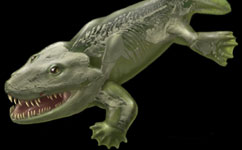
An Early Interpretation of Ichthyostega

An older interpretation of Ichthyostega.

Picture credit: Everything Dinosaur

Professor Jenny Clack (University of Cambridge), a world-authority on early tetrapods in conjunction with her colleague Dr Stephanie Pierce (Royal Veterinary College (London), has published new evidence that provides a fresh insight into the Ichthyostega genus.  These distinguished scientists reaffirm that these animals may not have been that well adapted to terrestrial life after all.  It is known that Ichthyostega and its near relative Acanthostega had large teeth and that they were predators, what is unclear however, is whether these animals hunted on land or in the water.

The European Synchrotron Radiation Facility in Grenoble (France) was employed by the researchers to bombard three fossil specimens of Ichthyostega with very powerful X-rays.  These X-rays once interpreted by sophisticated computer software were able to reveal more details regarding the structure of this tetrapod’s skeleton.  The three-dimensional images of the fossil material the research team was able to produce revealed something very surprising.  It had been thought that the back bones of early tetrapods were comprised of four separate bones arranged with one at the front, one just behind the first one and a pair towards the rear of each element of the vertebrae.  The images, that the team produced showed that in the case of the Ichthyostega fossils, the bones at the back had become fused to the one at the front.  This discovery revealed that the first “anterior ” bone at the front of the four bone series was actually the posterior one (at the back).  The change in the orientation and the relationship between the bones in the spine would change the way in which this early tetrapod could move

Writing in the academic journal “Nature”, Dr Pierce explained:

 “Ichthyostega made us open our minds, stand back and reassess the anatomy of other early tetrapod fossils.  When we did this, it was obvious that the bones of their spines were also in the reverse order than what had previously been described.”

Ichthyostega

In addition, the application of new research techniques has enabled the scientists to spot evidence of a primitive sternum in this Devonian animal.  The sternum consists of a series of bones that are aligned together and run down the centre of Ichthyostega’s chest.  This suggests that the animal’s body weight was supported by the sternum and that the limbs did not hold the body clear of the ground as shown in much earlier illustrations of Ichthyostega, but instead this animal probably moved on land by dragging its body along by moving its front limbs.  This method of locomotion is seen today with the Mudskippers (fish from the family Gobiidae).  These Gobies are able to haul themselves around on land using their sturdy pectoral fins as simple, efficient forelimbs.

The Latest Interpretation of Ichthyostega

Ichthyostega interpreted dragging its body across the ground.

Picture credit: Julia Molner

The research team hope to be able to analyse the vertebrae of other Devonian tetrapods using the European Synchrotron Radiation Facility so that a more detailed understanding of the evolution of terrestrial locomotion can be obtained.

Everything Dinosaur stocks a wide range of models of early tetrapods: Models of Early Tetrapods and Prehistoric Animal Figures.

12 01, 2013

New Three Dimensional Printing Proving Beneficial to Palaeontologists

By |2024-04-29T06:05:14+01:00January 12th, 2013|Categories: Dinosaur and Prehistoric Animal News Stories, Palaeontological articles|0 Comments

Producing Three-Dimensional Fossils Using Resin

Palaeontology may still be very much a case of using your eyes to spot fossils and such fossil prospecting is always going to be an important part of this Earth science but more and more technology is being employed to give palaeontologists an insight into the fossil specimens that they find.  The advent of affordable three-dimensional printers that can produce an object from scanned images is helping scientists to produce copies of the fossils they discover and allowing them to share their discoveries with other museums without having to go to the expense of using conventional casting techniques.

Palaeontology

Palaeontologists working at the museum of Natural History in Rio de Janeiro (Brazil), have invested in a portable CT scanner to help them determine what fossil material may be contained in an individual block of stone that they excavate.  Even locating fossils, has become much easier with ground penetrating radar providing field teams with information about the orientation of any fossil specimen in the ground.  The images this radar can produce thus guides the excavation team and helps with the safe removal of any matrix material, after all, one careless blow with a geological hammer could damage a precious and rare fossil beyond repair.

Once the location and position of a fossil has been calculated, circular saws can cut out a section of rock, the block, which may represent Cretaceous sediments from the famous Santana Formation of eastern Brazil is then subjected to a further aspect of 21st Century technology – three-dimensional CT scans.  Portable CT scans (computerised tomography), permit the block to be penetrated by powerful X-rays which can be analysed by computer to produce information about what fossils are present in the individual block.  This work is usually carried out in the safety and relative comfort of the museum’s preparation lab.

Data from Scans

This data from the 3-D scan can be analysed by one of the new three-dimensional printers and within hours a replica of the object can be printed out using resin.  The scientists can have their own fossil replica to help them study the delicate structures of any fossil that they find.

The combination of CT scans and three-dimensional printers is helping to change the study of ancient animals.  Already the Brazilian team have used this combination of technologies to gain a better understanding of a fossilised snake and a crocodile skull dating from the Late Cretaceous.

Examining the Structures of a Crocodile Skull in Three Dimensions

New technology meets Cretaceous crocodile.

Picture credit: Sergio Azevedo

Commenting on the use of these new techniques, Sergio Azevedo of the Natural History Museum of Rio de Janeiro stated:

“We are developing several research lines in palaeontology using CT and surface 3-D scanning.  These include the nervous system and biomechanics of crocodiles, dinosaurs and other vertebrate fossils.”

This is a non-destructive technique and with prices of three-dimensional printers likely to come down over the next twelve months or so, more museums, universities and even schools can gain access to this technology.  The 21st century is seeing a cross-over of technology from different scientific disciplines providing palaeontologists with the opportunity to create accurate, highly detailed replicas of the fossils they discover.

Visit Everything Dinosaur’s award-winning website: The Website of Everything Dinosaur.

3 01, 2013

Making Unique Palaeontology Predictions for 2013

By |2024-04-24T20:03:08+01:00January 3rd, 2013|Categories: Everything Dinosaur News and Updates, Palaeontological articles, Press Releases|0 Comments

Everything Dinosaur’s Palaeontology Predictions for the Coming Year

This year marks the 100th anniversary of the naming and describing of the genus Styracosaurus along with the small North American ornithopod Thescelosaurus, but what are going to be the other notable events for dinosaur fans and fossil collectors in the next twelve months?  It is that time of the year when team members at Everything Dinosaur put their heads together and try to predict some of the news stories and fossil discoveries that are likely to take place in 2013.

Palaeontology Predictions

Suggestions have been made, they have all been discussed and debated  and we have come up with a list of predictions regarding what we think is going to happen over the coming year.  For people more comfortable with studying the past than with predicting the future, it is worth noting that crystal ball gazing is hardly our strongest suit.  However, we have given it a go and collectively here are our attempts at second guessing what news stories will be covered on this site.

At the end of this year, we will look back and see how we have done.

1).  New Genus of Horned Dinosaur from North America

There have been a number of new genera erected over the last decade or so with ceratopsians such as Xenoceratops, Kosmoceratops and Medusaceratops.  However, Everything Dinosaur team members have predicted that at least one new genus of ceratopsian will be established after fossil discoveries in either the United States or Canada.

Xenoceratops Named in 2012 – What Ceratopsian will be Named this Year?

Xenoceratops scale drawing.

A scale drawing of the horned dinosaur Xenoceratops.

Picture credit: Everything Dinosaur

2).  Jurassic Park in 3-D Inspires a New Generation of Dinosaur Fans

2013 marks the 20th anniversary of the film “Jurassic Park” with its computer generated dinosaurs.  In April, the re-release of this epic, in a three-dimensional cinema format will take place.  We expect this film to be a big commercial success, going on to become the number one film in terms of screenings in the late spring (United Kingdom).  It will inspire a whole new generation of young dinosaur fans – expect team members to be answering endless questions regarding Velociraptor/Deinonychus all over again!

3).  Milestones for Everything Dinosaur – What are We Going to be Doing?

Our on-line presence continues to grow and as part of our predictions (also since personnel reviews, aims and objectives are top of the mind at the moment), we thought it sensible if we nailed our colours to the mast as it were in terms of what we will be achieving as a result of our activities this year.

  • Six hundred and fifty Ezine articles approved and published
  • One Thousand Facebook likes on Everything Dinosaur’s Facebook Page
  • Ezine Challenge completed 365 articles approved and published since February 25th 2012
  • 300,000 Video Views on Everything Dinosaur’s YouTube Channel
  • Everything Dinosaur to join Pinterest with 1,000 re-pins

4).  New Zealand to Hit the Headlines with Prehistoric Animal Fossil Discovery

It is very likely that more dinosaur discoveries will be made in Australia.  However, what about in New Zealand?  To date, there have only been a handful of dinosaur and other Mesozoic reptiles fossil discoveries made in New Zealand.  This landmass was part of the super-continent of Gondwanaland but little of the sedimentary strata dating from the Age of Reptiles is exposed and dinosaur fossil finds in particular have been extremely rare.  What has been discovered has often been a single bone here, a single bone there so it is very difficult to tie down to a genus or even a family of the Dinosauria.  Rather than predict yet more “Aussie dinosaurs” we shall look out for news of a marine reptile or dinosaur discovery from their antipodean neighbours.

Perhaps a New Marine Reptile Genus from New Zealand

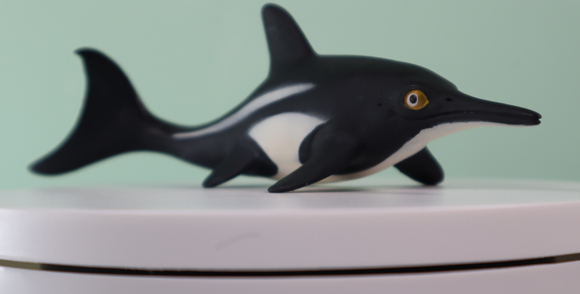
An Ichthyosaurus model

The Ichthyosaurus model (Wild Safari Prehistoric World) ready to take its turn on the Everything Dinosaur turntable.  Perhaps 2013 will bring news of a marine reptile fossil discovery from New Zealand.

Picture credit: Everything Dinosaur

5). Controlled Cull of Saltwater Crocodiles in the Northern Territory of Australia

Not wishing to overlook Australia completely, it is likely that there will be more fatal attacks on people by Saltwater crocodiles in 2013.  As the crocodile population continues to grow, crocodiles will move into areas of human population with the inevitable consequences of attacks by these large reptiles, the heaviest extant reptiles alive today.  Lobby groups have campaigned vigorously for a cull of these dangerous animals, even for the return of “sport” hunting.  Although, the authorities have resisted, a controlled cull of Saltwater crocodiles may be given the go ahead in the Northern Territory of Australia.  Certainly, with the threat of crocodile attacks now very real for some communities, it is likely that local people may take the law into their own hands and kill crocodiles illegally which are perceived to be a threat.

6). New Clothing Range introduced by Everything Dinosaur

Team members have been busy working on a number of new product ideas over the last few months.  Many of the projects that we have undertaken have been inspired by suggestions made by customers and 2013 should see a number of these ideas come to fruition.  One project concerns the design and manufacture of a new range of children’s and adult-sized clothing – all with a dinosaur theme of course.  Look out for a number of new product introductions from Everything Dinosaur in the next few months, including a new range of dinosaur inspired clothing from the company.

 One of the Prototypes from Everything Dinosaur (New Clothing Range)

Everything Dinosaur to introduce a new clothing range in 2013.

Picture credit: Everything Dinosaur

7).  More Evidence of Endothermic Properties in the Dinosauria (Warm-blooded dinosaurs)

The use of ever more sophisticated and advanced technology in the study of fossil material will continue and this will result in some new and exciting insights into aspects of the Dinosauria.  We can expect more evidence to be detected of insulating feathers on a number of dinosaur genera and possibly chemical analysis of once organic compounds revealing more about the potential growth rates of prehistoric animals (ontogeny).

Such research, linking the need to be insulated, growth rates and a speedy metabolism will add greater weight to the theory that the majority of the Dinosauria were in fact warm-blooded like birds and mammals rather than cold-blooded like reptiles.  Cold-blooded reptiles rely on external sources of heat to warm them up so that they can become active, expect more insights into warm-blooded dinosaurs in the year ahead.

8).  The Arab Spring has Surprising Implications for Palaeontology

2012 will be remembered by many for the continuation of the “Arab Spring”, which resulted in a number of North African  countries seeing tremendous political changes.  Although, much of the region is experiencing turmoil, one small, surprising implication for the recent changes may be that scientists such as geologists and palaeontologists from North African centres of learning and research may be given the opportunity to explore areas that previously, had been closed to them.  With the peace settlement in Angola, after years of civil war, one of the outcomes was that as more of the country was explored geologically, a number of new prehistoric animal fossil discoveries were made.

A prediction for 2013 is that following the Arab Spring there will be an exciting new fossil find representing a new genus, made in a country like Libya, Egypt or Tunisia.  Perhaps, a fascinating new type of arthropod or early chordate being discovered in the Nubian sandstone deposits of Libya.

These are our predictions, they are just for fun but it will be interesting to see how near or how far off the mark we are when we come to review what we said at the end of the year.

To view the extensive range of dinosaur and prehistoric animal themed merchandise available from Everything Dinosaur: Everything Dinosaur.

20 12, 2012

Freshwater Mosasaur from a Hungarian Bauxite Mine

By |2023-02-11T07:12:39+00:00December 20th, 2012|Categories: Dinosaur and Prehistoric Animal News Stories, Palaeontological articles|0 Comments

Pannoniasaurus inexpectatus – The Unexpected Mosasaur

A joint team of Hungarian and Canadian scientists have unearthed a new species of mosasaur, one that as far as the known fossil record goes, was unique amongst the Mosasauridae – it lived in freshwater.  It seems that just like some species of extant cetacean (whales and dolphins), one group of mosasaurs adapted to living in a freshwater environment.  There are river dolphins that live in the Amazon and other riverine habitats such as, until recently, the Yangtze river (Yangtze river dolphin believed to be extinct).  Now scientists have the fossilised remains of several freshwater mosasaurs to study, a number of individuals, all of which have been assigned to a new species – Pannoniasaurus inexpectatus.

Freshwater Mosasaur

Mosasaurs are members of the Order Squamata (lizards and snakes), they evolved from terrestrial reptiles but they adapted to marine environments and rapidly diversified with many different genera and something approaching eighty different species being recognised.  Mosasaurs were typically streamlined, with long, narrow jaws, four paddles and possibly a fish like tail, (new evidence suggests that some mosasaurs had tail fins like those found on extinct ichthyosaurs and extant dolphins).  As vertebrates; their backbones became specially adapted to undulate in an up and down motion to aid propulsion through water.  Some of these marine lizards evolved into giant forms such as Tylosaurus and Hainosaurus which could have been as much as fifteen metres in length.

It seems that these reptiles, whose closest living relatives today are thought to be the monitor lizards (Varanus), evolved around ninety million years ago and spread throughout the world’s oceans before dying out approximately around 25 million years later.

Pannoniasaurus inexpectatus

The holotype fossil material, plus over one hundred Pannoniasaurus fossils so far collected from the location come from alluvial (floodplain and channel) deposits which form a section of the  Csehbánya Formation of Cretaceous aged strata.  The fossils which include juveniles and bones from specimens which may have exceeded six metres in length come from various exposures at the Iharkút open-pit bauxite mine in Hungary.

An Illustration of the Skeleton of P. inexpectatus

The mosasaur that lived in freshwater.

Picture credit: PLoS One/Makádi et al

It is thought that this river mosasaur had a similar body shape to other mosasaurs as well as long, narrow, crocodile-like jaws.  Palaeontologists believe that this genus represents a basal member of the Mosasauridae, it may have retained feet with clawed toes that were capable of moving the animal about on land.  However, no lower limb bones have been found to date.  The flattened skull, may have been a useful adaptation for water-level hunting and the ambushing of terrestrial animals such as small dinosaurs that came close to water’s edge.

The research team speculate that more robust limbs with claws may have been retained by these mosasaurs as they could have used their feet and claws to clamber over the bottom of the river just as extant crocodiles do today.  At six metres in length [about the size of a modern-day Nile crocodile (Crocodylus niloticus)], these mosasaurs were the largest predators within this Late Cretaceous river environment.

Virtually all the other known mosasaur fossils have been found in strata which was laid down in marine environments.  Previously, the only exception to this was some fragmentary fossils of the marine, nektonic mosasaur known as Plioplatecarpus which was discovered in non-marine rocks in Western Canada (Alberta).  The Plioplatecarpus remains include teeth and a partial vertebra collected from the a mudstone unit in the middle of the Lethbridge Coal Zone.

These bones could have been re-deposited there after a tsunami or other flood event, or perhaps they represent individuals who went upstream from estuaries in a similar way to modern Bull sharks.

The genus name for this new mosasaur comes from the ancient Roman province of “Pannonia”, which contained this part of Hungary, the specific name “inexpectatus” means unexpected in Latin, a reference to the surprising occurrence of  mosasaur fossils in a non-marine palaeoenvironment.

A More Typical Mosasaur (Marine Reptile Museum Exhibit)

Pannoniasaurus inexpectatus fossils.

Fossil material from the freshwater mosasaur Pannoniasaurus inexpectatus.

Picture credit: PLoS One/Makádi et al

The size of the individual fossil bones collected so far indicate that these bones represent a number of differently-sized creatures.  The smallest seem to have been less than a metre in length, the average overall length would have been around three to four metres.  This suggests that many animals of various sizes and ages were present together living in these prehistoric rivers.

Everything Dinosaur supplies a wide variety of marine reptiles including replicas of mosasaurs: Papo Marine Reptiles, Dinosaurs and Prehistoric Animal Figures.

In the paper, published in the on line scientific journal PLoS One (Public Library of Science), the research team state that their studies suggest no fossilisation bias and that the Pannoniasaurus fossils probably represent the population quite accurately.  This suggests that a population of these reptiles was living in the river system, it is unlikely that the fossils ended up in non-marine strata as mosasaurs migrated upstream to take advantage of seasonal food opportunities or in order to give birth in freshwater rather than in the open sea.

This part of Europe during the Late Cretaceous consisted of a series of tropical islands, other fossils found in the Csehbánya Formation include fish, amphibians, crocodiles, turtles, several dinosaur genera, pterosaurs and birds.

The scientific paper: “The First Freshwater Mosasauroid (Upper Cretaceous, Hungary) and a New Clade of Basal Mosasauroids” by László Makádi, Michael W. Caldwell and Attila Ősi published in PLoS One.

15 12, 2012

Ancient Ostracod from Herefordshire – Reconstructing the Silurian

By |2023-02-09T07:42:03+00:00December 15th, 2012|Categories: Dinosaur and Prehistoric Animal News Stories, Palaeontological articles|0 Comments

Pauline avibella – A new Species of Silurian Ostracod named after Professor’s Wife

It may be difficult to believe, especially after the sub-zero temperatures endured by many people in the United Kingdom over recent days, but once the landmass that was to form England sat much closer to the equator than it does today.  Back in the Silurian, much of the land that we now know as the UK was underwater, part of an extensive, shallow sub-tropical sea that marked the boundary between two landmasses, Laurentia in the west and Baltica in the north.  Scientists from the University of Leicester (East Midlands), have identified a new species of crustacean, an animal that lived in this warm, shallow sea something like 425 million years ago.

Silurian Ostracod

The one centimetre long shelled creature had been found in rocks in Herefordshire, from a site that University of Leicester researchers describe as a “treasure trove” of fossil material.  It seems that part of the sea bed had been covered by a fine layer of volcanic ash as a volcano to the west erupted.  This ash layer buried much of the lifeforms that existed in the area at the time, preserving their bodies and hard shells in exquisite detail.  The fossils have soft tissue and even components such as eyes and mouth parts have been preserved.

Pauline avibella

Professor David Siveter, who led the research, has named the new species Pauline avilbella in honour of his late wife who supported him throughout his career.  Ostracods are relatively abundant in the fossil record.  These primitive shelled arthropods of the Order Crustacea are related to crabs, lobsters, barnacles and shrimps.  The fossils of these tiny creatures first appear in Cambrian rocks and although these creatures first evolved in a marine environment, many modern species can be found in freshwater.  Like all Arthropoda, these animals have bilateral symmetry and their paired body parts are usually enclosed in a hinged, bivalve-like shell made of magnesium calcite.  One piece of the shell structure is normally bigger than the second part of the shell and these shells are commonly preserved in the fossil record, however, being able to identify soft tissue parts in Silurian aged fossils is extremely rare.

A Computer Generated Image of the New Ostracod Species

425 million year old Ostracod with a shell shaped like a “bird’s wing”.

Picture credit: Press Association/University of Leicester

An Important Discovery

Commenting on the new species, Professor Siveter, the lead author of the scientific paper, stated that this was a very important discovery as it represented one of only a handful of fossil Ostracods with the soft-tissues preserved.  The species name “avibella” was chosen as the two piece shell resembles the shape of a bird’s wing.  Most Ostracod shells are kidney or bean shaped, but this particular shallow water species had a shell that was swept back, similar to the shape of the wing of a bird.  The name “avibella” means “beautiful bird”.

The process of extracting the tiny microfossils from the surrounding limestone matrix involves slowly grinding the specimen down, micron by micron with scanning photographs taken at each stage.  When the mechanical process is completed the data is fed into a powerful computer which can produce a detailed three-dimensional image of the organism, including its delicate soft body parts.  With each specimen more than five hundred images were produced, resulting in an extremely detailed picture of the organism – a sort of “virtual fossil”.

Diversity of Marine Fauna During the Silurian

The work of the Leicester University based team is helping scientists to understand the diversity of benthic (animals and plants that live on the sea floor), marine fauna during the Silurian period, an important period in the evolution and diversity of marine organisms as rising sea levels created a number of warm, shallow sea environments and fauna was almost entirely restricted to marine habitats.

For figures and replicas of iconic animals from the fossil record such as famous invertebrates like ammonites and trilobites: Ammonites, Belemnites, Trilobites and Other Prehistoric Animal Models (CollectA).

29 11, 2012

New Research Suggests “Big was Not Always Better” for Feathered Dinosaurs

By |2023-02-08T17:21:49+00:00November 29th, 2012|Categories: Dinosaur and Prehistoric Animal Drawings, Palaeontological articles|2 Comments

American Researchers Study Changes in Body Size for Feathered Dinosaurs who were Facultative Herbivores

A team of researchers from the United States have challenged a theory regarding how the likes of the Oviraptors, ornithomimids and the therizinosaurs evolved over time.  Fossils of these types of dinosaur have been found in Upper Cretaceous aged rocks across the Northern Hemisphere.  Palaeontologists believe that these types of dinosaur, classified as theropods, adapted to a herbivorous diet, or at least became omnivorous, eating less meat.  Oviraptors, ornithomimids and the therizinosaurs were descended from dinosaurs that were carnivores.  However, over time they adapted to eating plants and some of these dinosaurs, those found in Maastrichtian or Campanian aged faunal strata (the very end of the Cretaceous), evolved into giants.

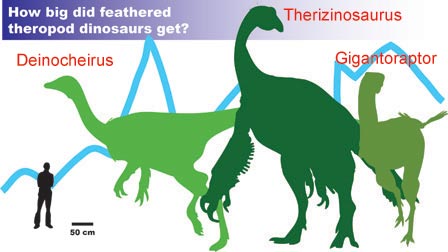
Giant Feathered Dinosaurs – Researching into “Big Birds”

Scale drawings of large members of the dinosaur families studied.

Picture credit: North Carolina State University, with additional annotations by Everything Dinosaur

Feathered Dinosaurs

One of the theories postulated about why some of these dinosaurs grew so big, states that large size was an advantage as this enabled herbivores to evolve larger guts and digestive tracts that would be needed to help them process tough, fibrous plant material efficiently so that nutrients could be extracted.  Some genera did grow big!  For example, the dinosaur known as Gigantoraptor (G. erlianensis), fossils of which were discovered in Inner Mongolia in 2005, was tall enough to look Tyrannosaurus rex in the eye.  This fossil specimen indicates an animal over five metres tall and eight metres long, weighing perhaps as much as one and a half metric tonnes.

To view replicas of feathered dinosaurs: CollectA Deluxe Models – Feathered Dinosaur Figures.

The Chinese scientists who made the discovery, have estimated that this individual was not fully grown so adult Gigantoraptors were probably much bigger.  Gigantoraptor has been classified as a member of the Oviraptoridae.  Most of the other members of the Oviraptor family were much smaller.

Examples of Gigantism

Similar examples of gigantism can be found in the ornithomimids and the therizinosaurids.  Therizinosaurus cheloniformis, also from Mongolia; may have been up to twelve metres in length, many times bigger than other therizinosaurs, or as they are sometimes called segnosaurs.  Amongst the Late Cretaceous members of the Ornithomimosauria, there were also giants.  A pair of 2.6 metre long arms discovered in the Nemegt Formation (Gobi desert of Mongolia) in 1965 have been ascribed to an enormous ornithomimid which was perhaps up to twelve metres in length.  This dinosaur was formally named and described in 1970, the world was introduced to Deinocheirus mirificus (terrible hand).  Despite its terrifying hands, this dinosaur is not thought to have been a carnivore.

Deinocheirus – “Terrible Hands”

“Big Bird” – Deinocheirus.

Picture credit: Everything Dinosaur

Closely Related to Modern Birds

Most species belonging to these three types of dinosaur family possessed a horny, toothless beak and relatively small heads in proportion to the size of their bodies.  A number of fossils found also indicate that these dinosaurs may have been covered in simple, proto-feathers, designed not for flight but to help insulate these active animals and keep them warm.  Palaeontologists think that creatures such as the Oviraptoridae were closely related to today’s modern birds.

The research team from North Carolina, aided by colleagues from the Field Museum in Chicago, mapped out the fossil evidence from these three different types of dinosaur and attempted to model whether as the animals evolved they tended to generally increase in body size.  Statistical analysis was employed to test whether the theory that later forms of these prehistoric animals were indeed larger than their ancestors.

The scientists discovered, that although there were giant forms, there was not a clear linear trend towards gigantism with these types of dinosaur.  The evolution for the trait that makes an animal bigger than its ancestors seems to have been a passive process, there may have been large forms, but at the same time many types of ornithomimids, members of the Oviraptoridae and therizinosaurs remained small.

Published in an Academic Journal

The academic paper detailing the results of this analysis have been published in the scientific journal, the Proceedings of the Royal Society – Biology.   The evidence suggests that just because a dinosaur adapts to a more herbivorous diet does not necessarily mean that they have to evolve into bigger forms to accommodate a larger gut.  The work of these scientists does not rule out diet as affecting the size of animals, but suggests that other factors such as stable environments, the lack of competition and the amount of resources within a habitat play a significant part.

Where resources were plentiful, such as the area that was to form the strata of the  Nemegt Formation of Mongolia, some types of therizinosaur for instance could grow into a giant form (T. cheloniformis), however, in other parts of the world, perhaps where there was more competition from other herbivorous dinosaurs gigantism did not occur.

The conclusions made by the researchers do challenge some of the accepted thinking about these dinosaurs.  There is a problem with this study, one that is acknowledged by the research team.  The fossil record for these prehistoric animals is far from complete and in their study, some uneven sampling of the fossil material may have taken place.  If it is assumed that smaller species tend to be more abundant in an environment than large species and if it is assumed that more specimens of smaller species will be preserved as fossils as a result, then the amount of small dinosaurs known from the fossil record may be an over representation of their actual numbers, whilst larger species the likes of Deinocheirus, Therizinosaurus and Gigantoraptor may be understated.

Go to Top