All about dinosaurs, fossils and prehistoric animals by Everything Dinosaur team members.

Articles, features and information which have slightly more scientific content with an emphasis on palaeontology, such as updates on academic papers, published papers etc.

20 05, 2008

Most complete Dinosaur Fossil ever found in the UK ready to make its Debut

By |2023-02-25T08:18:44+00:00May 20th, 2008|Categories: Dinosaur and Prehistoric Animal News Stories, Main Page, Palaeontological articles|0 Comments

Scelidosaurus – a uniquely British Dinosaur ready to go on Display

The most complete dinosaur skeleton ever found in the UK is about to go on display at Bristol museum.  The dinosaur, identified as a Scelidosaurus was not found in the dinosaur rich sediments of the Isle of Wight, nor was it found in Oxfordshire, another likely place to find dinosaur fossils.  Instead, this dinosaur was found on a beach in Dorset, an area much more associated with fossils of marine reptiles such as plesiosaurs and ichthyosaurs.

Scelidosaurus Fossils

The first pieces were found by professional fossil collector David Sole in 2000.  His keen eye spotted something strange on the beach and decided to investigate further.

“There was a lump of rock about two foot by one foot lodged in fine-shingle sand, and I sensed there was something unusual about it,” he remembers.

Closer examination revealed that the chunk of rock was limestone and that it was packed with fossil bone.  Over the next few months and years, further pieces were found in the area, all coming from what had been one individual dinosaur.

Fossilised Bone

The limestone surrounding the fossilised bone was carefully removed using a dilute acid preparation (acetic acid) which slowly dissolved away the surrounding rock to reveal the fossils within.   The dinosaur was identified as a Scelidosaurus, an early bird-hipped (ornithischian) dinosaur, which lived in the Early Jurassic approximately 195 million years ago.

This acid soaking technique was pioneered by British scientists working at the Natural History museum – London, in the 1960s and first used to help remove the surrounding matrix from another fossil of Scelidosaurus found entombed in limestone (S. harrisoni).  It was this fossil, another near complete specimen found in the late 1850’s that was described and named by Sir Richard Owen in 1863.  At first the fossil was identified as a kind of crocodile, but further analysis proved that this was indeed a dinosaur but one that had been found in marine sediments.

“It has heavy spines all over its body, with two goat-like horns on the back of the skull forming a kind of ruff with its neck armour. This leads to the inference that this specimen was likely to have been a mature male,” explains Dr Tim Ewin of Bristol City Museum and Art Gallery, where this early plant-eating dinosaur will go on display to the public in June.

Up until this particular discovery only a handful of scelidosaur remains had been discovered, all from an outcrop of rock in the Lyme Regis/Charmouth area of Dorset, so all the remains of this armoured dinosaur seem to have been found in rocks that were laid down at the bottom of a shallow sea.  It is rather odd to find such an animal amongst strata more commonly associated with ammonites and belemnites, especially as scientists have never found any evidence that dinosaurs took to a marine existence.  How did the fossils of these dinosaurs end up in these sediments?

The answer may lie in the ancient Early Jurassic landscape that made up what was to become the British Isles.  During this period, the land in the area that was eventually to become the location of the southern part of the UK, consisted of a series of small, low-lying, tropical islands that were surrounded by a warm, shallow sea.  The area resembled the Caribbean of today.  Scelidosaurus could have been endemic to just a few islands, perhaps with each island having its own sub-species (this may help explain some of the different features that have been seen in the different specimens found).

Alternatively, this fossils found to date could be the remains of a small herd, with animals at various ages of maturity within it, this would also explain some of the subtle differences between the fossilised skeletons.

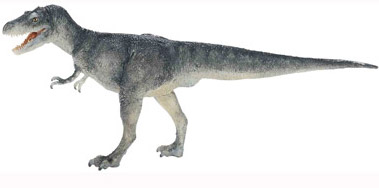
A model of a Scelidosaurus

CollectA Scelidosaurus model.

A model of a Scelidosaurus.  The CollectA Deluxe Scelidosaurus replica.

Picture credit: Everything Dinosaur

An Armoured Dinosaur

Scelidosaurus was an early armoured dinosaur, with an estimated maximum length of around 4 metres.  It was quite a heavy-set dinosaur with bony plates and bumps providing armour-like protection for the back and flanks.  Another specimen of Scelidosaurus has traces of a skin impression, this reveals that the skin had a bumpy texture, being made up of a mosaic of small, rounded scales.

An Illustration of Scelidosaurus harrisoni
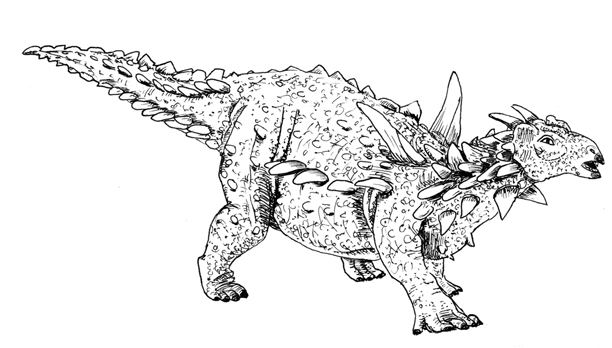
Scelidosaurus

An illustration of the Early Jurassic armoured dinosaur Scelidosaurus.

Picture credit: Everything Dinosaur

The picture of Scelidosaurus was taken from the Everything Dinosaur party model collection of dinosaurs.  Unfortunately, there are very few models of this dinosaur about, perhaps the most famous model was the black Scelidosaurus that was produced by the Invicta company in the 1960s.  This series which was for such a long time the mainstay of the Natural History museum’s model collection has been out of production for some years.  The little Scelidosaurus model (priced at 27 pence when one of our team members bought it in the mid 1970s), can still be seen in one of the Natural History museum’s dinosaur displays.  The Invicta models are highly prized by model collectors, we think the Scelidosaurus model would be worth a lot more than 27p today.

Scelidosaurus

To view range of dinosaur models available at Everything Dinosaur: Dinosaur Toys and Models.

Unusually, the specimen first found by David Sole, is an almost-complete skeleton.  The fossil bones are articulated, meaning that each bone was linked and in its correct place. Equally striking were the long, thin tendons that supported the animal’s huge stomach, which still stretched from the backbone – and the fact that the creature’s gullet contained a discoloured area, with the remains of its last meal.

Commenting on this particular find, a researcher stated: “It could be that Scelidosaurus only lived on one island, a few miles away from Lyme Regis, which would explain why the species has not been reported anywhere else. We began to wonder if we were looking at a family group that was washed off the island by a sudden tsunami, similar to what we saw on Boxing Day 2004.”

Found in Marine Sediments

Alternatively, the reason why scelidosaurs have been found in marine sediments, with many of the fossils in an upside-down orientation could be because these animals were washed out to sea and then slowly sank to the bottom.  If scelidosaurs lived well inland, perhaps in upland areas that were drained by rivers, flash floods could occur drowning individual animals and transporting them down the valleys out to sea.  During decay, the corpse would have become bloated and filled with gas, buoying up the body for some time.  The animal would have floated on its back, with the heavy armour acting like a keel on a ship.  Eventually, the body cavity would have ruptured , the gases escaped and the corpse would sink, settling on the seabed with the belly upwards.

However, these animals came to be found in Dorset remains a bit of a mystery.  A dark patch where the gullet would have been perhaps indicates that this particular animal vomited, this is often seen in animals that are drowning, so maybe this animal was swept out to sea from an island that was hit by a tidal wave.  Interestingly, crocodile teeth have been found in the mouth of this fossil, not evidence of predation but more likely regurgitated up items from the gizzard as this plant-eater may have swallowed hard objects to help it grind up and digest tough plant material.  Certainly, a low-lying island would have few stones suitable for swallowing (assuming a sandy beach), crocodiles shed their teeth regularly and these would have helped with the digestion process once swallowed and provide plenty of calcium to help form the bony armour.

It seems that the fossils of Scelidosaurus can be interpreted in many different ways, perhaps they were upland animals, washed out to sea in a flash flood, or maybe they lived on small islands that were swamped by a tsunami, evidence can be put forward to support each theory.

Ironically, had it not been for the storms that occasionally batter the south coast of England these fossils would never have been eroded out of the rocks allowing them to be found and studied in the first place.

Scelidosaurus Dinosaur Model

The dinosaur model shown in this article is from the CollectA Deluxe Age of Dinosaurs model range, to view this range of scale model prehistoric animals: CollectA Deluxe Prehistoric Life Models.
8 05, 2008

New Interpretation of Evidence from Cretaceous Mass Extinction

By |2023-02-25T08:28:33+00:00May 8th, 2008|Categories: Dinosaur and Prehistoric Animal News Stories, Geology, Main Page, Palaeontological articles|0 Comments

New Zealand led Team shed new light on Dinosaur Extinction

Research published this week in the scientific journal “Geology”, puts a different interpretation on evidence from the famous K-T boundary and the Cretaceous mass extinction event.  This new research which has involved an international team of geologists studying a number of marine and non-marine sites on the Mesozoic/Cenozoic boundary sheds new light on the cause of the forest fires resulting from the asteroid impact on the Yucatan peninsula in Mexico.

Cretaceous Mass Extinction

Around 65 million years ago, a huge extraterrestrial object crashed into the Earth, blasting a crater over 200 kilometres across and throwing huge quantities of material up into the atmosphere.

The research team, headed by New Zealand geologist Mark Harvey has contradicted conventional theory concerning the Chicxulub impact that is believed to have hastened the demise of the dinosaurs.

According to Mr Harvey, the impact itself did cause extensive forest fires that destroyed the planet’s ecosystems.  This new work blames the large carbon deposits in the sediments that were struck.  In this newly published paper it is claimed that the extraterrestrial object smashed into oil or coal deposits with such force that the carbon was liquefied and hurled skywards, forming tiny airborne beads that blanketed the Earth in soot.

Studying the Ash Fall

Up until now, many scientists believed that the carbon resulting from the impact was ash resulting from global forest fires.  The international team, consisting of researchers from the USA, New Zealand, Italy and Britain, found some particles among the soot had formed carbon “cenospheres”, tiny beads similar to ones produced in modern times by intense industrial combustion.

“Carbon cenospheres are a classic indicator of industrial activity,” Mark Harvey, the lead author stated. “The first appearance of the carbon cenospheres defines the onset of the industrial revolution.”

Some burnt vegetation has been found in the layer close to the impact site, but scientists think these fires broke out as molten rock and super-hot ash fell from the sky and on to forests.

Researchers had suggested mass extinctions came as global forest fires pumped enough carbon dioxide into the atmosphere to cause a period of runaway global warming, or they spewed enough soot to block out the sun and kill off the plants that disrupted and destroyed global food chains.

The Chicxulub Crater

Mr Harvey’s team found cenospheres were smaller the further the sample site was from the Chicxulub Crater – consistent with heavier particles produced by the impact falling to earth sooner than lighter particles. It is estimated that 900 billion tonnes of carbon cenospheres were ejected by the collision.

Conventional theory had speculated that soot in the form of charcoal particles found in the strata at the K-T boundary was thought to be evidence for fires that initially swept across the Americas, and then extended world-wide, sparked off by electric storms setting alight to dead and dying vegetation.

Incidentally, the layer, rich in the rare Earth element Iridium called the K-T boundary is so called because the “K” is short for kreide, the German word for chalk vast amounts of chalk were formed during the end of the Cretaceous.  The “T” is short for Tertiary.

Visit Everything Dinosaur’s website: Visit Everything Dinosaur.

26 04, 2008

New Research into DNA Links Dinosaurs to our Feathered Friends. Are you going to call T. rex a Chicken?

By |2024-04-12T18:36:44+01:00April 26th, 2008|Categories: Dinosaur and Prehistoric Animal News Stories, Main Page, Palaeontological articles|0 Comments

Dinosaur DNA linked to Aves.  Are you going to call T. rex a Chicken?

New research using ancient fossilised proteins retrieved from the 68 million year old femur (thigh bone) of a Tyrannosaurus rex has confirmed the long held theory that birds are the closest living relatives of dinosaurs.  This new study, conducted by researchers at Harvard University in association with the Harvard Medical School, also adds extra impetus to the now widely accepted theory that birds are the direct descendants of a particular group of dinosaurs – the theropods.

Dinosaur DNA

These findings are the first molecular evidence indicating that Aves (the birds), are the closest living relatives to Dinosauria, controversial earlier studies from Russian scientists also linked dinosaurs to birds.  In the earlier research, the Russian team studied fossil Triceratops bones at the molecular level and concluded that their work indicated that these ancient horned dinosaurs were closely related to ostriches.  Although much of this previous work was refuted by the scientific community, this new study seems to indicate that the Russians were on the right track.

The American team’s findings are due to be published in this month’s edition of the journal “Science”.

Examining Skeletons

A close examination of the skeletons of theropod dinosaurs and birds reveal a number of similar anatomical features.  In fact you do not have to be a scientist to find evidence of this close anatomical relationship between these two types of animal, a brief study of a roast chicken cooked for Sunday lunch will provide quite a lot of evidence – if you know what to look for.

The link below provides more information on how to dissect your average roast chicken to find evidence of the link between dinosaurs and birds: Christmas Dinner Links Dinosaurs to Birds.

The new research follows a breakthrough study in 2007, scientists reported the recovery and partial molecular sequencing of fossilised Tyrannosaurus rex and Mastodon (a type of elephant) proteins.  Both animal fossil studies (the Tyrannosaurus and the Mastodon) involved collecting and examining samples of collagen, the main protein component of bone.

In fact collagen is the main protein found in connective tissue of animals and the most common protein found in mammals including ourselves- making up around 25% of all the proteins in our bodies.

As well as providing further evidence to support the close evolutionary relationship between Theropod dinosaurs and birds, the study into the Mastodon proteins helps provide information on the evolution of the elephant family.

“This shows that if we can sequence even tiny pieces of fossil protein, we can establish evolutionary relationships,” said co-author John Asara of Harvard Medical School.

T. rex Proteins

The Tyrannosaurus rex proteins were extracted from fossilised soft tissues preserved inside a late Maastrichtian faunal stage fossil femur, estimated to be around 68 million years old.  The discovery of potential protein information inside the femur was reported in 2005.

The Mastodon remains were much younger, dating from the Pleistocene epoch and believed to be between 160,000 and 600,000 years old.

Using a variety of techniques the research team compared the T. rex and Mastodon protein chains with those of 21 extant animals including ostriches, chickens and alligators. 

Such comparisons are commonly used by biologists to construct evolutionary “family trees,” since similar protein structure is an indicator of shared genetic makeup.

Protein Sequences

Until very recently, however, protein sequences have not been available for ancient organisms such as dinosaurs, since most fossils do not yield proteins or DNA.  The problem with genetic analysis is that molecules such as proteins and DNA tend to break down rapidly after death.  The preservation of such delicate material is extremely rare and controversial, despite the claims highlighted by Michael Crichton, the author of the story “Jurassic Park” in which Dinosaurs and Pterosaurs were brought to life by combining amphibian DNA with fossilised DNA extracted from the remains of blood sucking insects preserved in amber.

It was thought (and indeed some scientists still hold this view), that DNA could not survive more than 10,000 years unless the tissue was preserved in some unusual manner such as being rapidly frozen, for example, in the case of the Siberian Mammoths.

Many attempts have been made to extract DNA from insects that had been trapped in amber, recreating the storyline from Mr Crichton’s novel and scenes from the film “Jurassic Park”.  There have been claims for success, but all attempts to replicate the experiments have proved inconclusive; indeed many scientists claim that the experiments may have been contaminated by modern DNA and therefore the results are invalid.

Molecular Analysis

Molecular analysis of extant species (animals living today) have revealed some surprising evolutionary relationships.  For many years, the edentate mammals such as the armadillo had been regarded as the most primitive placentals, but analysis of new molecular data suggests that insectivores such as the hedgehog may be the most primitive.  Fossil evidence for both types of mammal have been uncovered in the Eocene deposits of Messel in Germany.  It is the molecular data from living representatives of these groups that indicates that the insectivores are the more ancient lineage.

Another remarkable mammalian discovery using molecular analysis may be that the lagomorphs (such as rabbits and hares) may be closely related to the primates.  Previously, using just anatomical comparisons this group of mammals had been classified with the rodents (mice, rats, squirrels and such like).

If molecular data become more widely available for dinosaurs, Asara noted, researchers will be able to fill in gaps and overcome possible errors in the existing classification based on physical features.

To illustrate his point, he noted that the shared ancestry of two present-day groups—elephants and shrew-like tenrecs—is known solely from DNA and protein comparisons.

“Nobody could make that connection based on bones,” he noted.

“The amazing part of this study is that we could establish the dinosaur-bird connection using only 89 total amino acids ,the building blocks of proteins,” Asara added.

With only a small amount of sequence data, he continued, “we can take an unidentified or fragmented fossil bone and not only identify the species but also help place it in evolution.”

It remains to be seen whether even small sequences can be extracted from ancient fossils with any regularity, experts say.

Mary Schweitzer of North Carolina State University is a co-author of the new study and made the initial discovery of the Tyrannosaurus rex soft tissue remains.  She has argued that such remains may be relatively common in well-preserved fossils but are often overlooked.   Other scientists have been sceptical, stating that protein preservation over tens of millions of years should not be possible. Some scientists have continued to question whether Asara’s and Schweitzer’s sequences really came from an ancient Tyrannosaur, some other modern biological source could have contaminated the sample that was tested, claim the sceptics.

Defending their work, Asara has countered that the fact that the proteins are most similar to those of birds rather than mammals, the biologists themselves for example, discredits the contamination theory.

The doubters still voice their concerns.  Peggy Ostrom is a biologist at Michigan State University in East Lansing and an expert on fossil proteins., she remains extremely sceptical about the Tyrannosaurus rex protein findings.

Many have remained sceptical about the T. rex protein findings, she said, because of the small size of the sequences.

“They have a very tiny bit of data relative to the size of the collagen molecule,” Ostrom said.

“What’s going to be really convincing is to actually see some more sequences,” she added.

If other fossilised bones are found to contain proteins then further evidence could be gathered.  Ostrom also noted that many recent findings, including the Mastodon remains dated to nearly half a million years ago, have greatly pushed back previously accepted time limits for protein molecule preservation.

“In 2000, there probably wasn’t one biochemist around who would tell you we’d find a protein over 40 thousand years old,” she said.

In truth, the evolutionary relationships amongst certain elements of Dinosauria is still largely unclear.  If biological information could be gathered at the molecular level then this would lead to a more robust Dinosaur family tree, helping to fill in the missing branches and links due to the paucity of the Dinosaur fossil record.

Whatever, the outcomes of further research, scientists are still a long way off recreating the Jurassic Park scenarios as depicted in the Hollywood films.

10 04, 2008

Definition of the Term Lagerstätte

By |2022-11-14T11:35:25+00:00April 10th, 2008|Categories: Geology, Palaeontological articles|0 Comments

The Term Lagerstätte Defined

Readers of books about fossils and dinosaur discoveries may come across the term “Lagerstätte”.  In answer to a number of questions received by Everything Dinosaur blog visitors, team members will briefly outline what the term Lagerstätte means. We will define Lagerstätte.

Lagerstätte

This is a German phrase from the words Lager (which means storage) and Stätte (which means place).  It refers to a deposit of sedimentary strata that contains a lot of fossil material that is exceptionally well preserved.  There are a number of Lagerstätten (plural) known, from the famous Burgess Shale deposits of British Columbia, the Mazon Creek Formation (Carboniferous strata) in Illinois, the Jurassic Solnhofen limestone deposits from southern Germany and the Cretaceous fossil deposits of the Liaoning and Hebei Provinces of north-eastern China.

Typical Fossils from a “Lagerstätte”

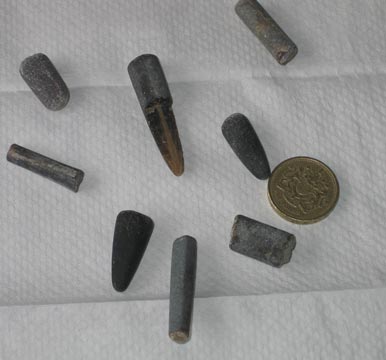
Some belemnite guard fossils, the coin shows scale.

Belemnite guard fossils from the “Jurassic Coast”.

Picture credit: Everything Dinosaur

A Phrase for Every Occasion

The German language seems to have a word for just about everything, a phrase for every occasion. Perhaps, it has more scope and depth than English, we at Everything Dinosaur are probably not best placed to comment as we would not call ourselves experts on European languages. Could English lack certain broad and all-inclusive linguistic qualities that other languages seem to possess? We hope that we don’t sound upset over the inadequacies of our native tongue, no sense of “schadenfreude” from us.

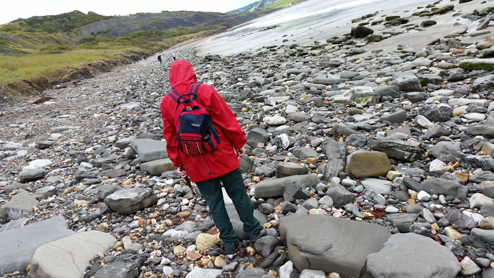
Lyme Regis on the Dorset Coast – An Example of a Lagerstätte

Prospecting for fossils (Lyme Regis) - Lagerstätte.

Looking for fossils at Lyme Regis. The marine deposits date from the Lower Jurassic along this stretch of the Dorset coast and the strata is typical of a Lagerstätte. Picture credit: Everything Dinosaur.

Picture credit: Everything Dinosaur

Everything Dinosaur stocks a range of replicas of iconic fossil animals known from the extensive fossil record of the Dorset “Jurassic Coast”. The range includes models of belemnites, nautiloids and ammonites.

To view this range: Replicas of Fossil Animals Including Dinosaur Teeth.

1 04, 2008

Dinosaur Death Throes – Not what they Seem

By |2022-11-14T07:27:36+00:00April 1st, 2008|Categories: Dinosaur and Prehistoric Animal News Stories, Educational Activities, Main Page, Palaeontological articles|2 Comments

Dinosaur Death Throes – Not what they Seem

One of the questions we were asked recently was why do all meat-eating dinosaurs seem to fossilise in the same way?  A young dinosaur fan had pointed out that a picture in his dinosaur book showed two Coelophysis skeletons one of which had its neck and head curved backwards over the spine with the tail curling back on itself.  In the same book, there was a picture of a Compsognathus fossil with the head and neck also curved over the back.  How could these two dinosaurs have died in the same way?

Dinosaur Death Throes

We are familiar with these exhibits, the Coelophysis probably come from the famous Ghost Ranch deposits of New Mexico, where over 100 individual skeletons of this early Triassic theropod have been discovered.  The Compsognathus example probably relates to the nearly complete Solnhofen specimen from southern Germany.  This fossil was discovered in the lithographic limestone deposits in the same area as the first Archaeopteryx fossils.  Compsognathus was a resident of the Jurassic, Coelophysis the Triassic, how could these two animals separated by millions of years have died in virtually the same posture?  Indeed, when some of the Archaeopteryx fossils are studied, then they too show the head typically arched backwards over the spine.  The tail does not curve round to any real extent, perhaps the tails of these early birds were too ossified to permit such movement, or maybe it is to do with the conditions of fossilisation at the southern German sites.

This phenomenon is not restricted to just some dinosaurs, a large number of articulated theropod (meat-eaters) fossils show this trait.  Such postures are also seen in pterosaur fossils and birds.  As we have driven along on our travels in the USA and elsewhere we have observed birds that have hit car windscreens and been killed.  As the carcase dries out under the hot sun, the neck often adopts a curving posture.

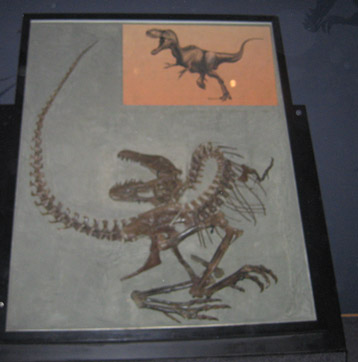
An Exhibit of an Articulated Albertosaurus skeleton (Royal Tyrrell Museum)

Picture credit: Everything Dinosaur

The picture above shows a typical example of an articulated theropod fossil with the head and tail curving towards each other.

Most scientists believe that this common posture is caused by either one or a combination of two factors of post-mortem processes (after death).  The first of these processes involves muscle contractions causing the neck and tail to bend over.  Secondly, the posture could be caused by the the drying out of tendons and ligaments within the body as it remains exposed to the sun.  Whether it is due to rigor mortis or the desiccation of the body, both possibilities indicate that these bodies must have remained intact on the ground for sometime before finally being buried.

Examples from the Natural World

These are valid explanations, borne out from our own observations of roadkill in hot climates, however, having visited Africa on numerous occasions we also note how rare it is for dead animals to lay undisturbed without attracting the attention of scavengers.  One of our colleagues remembers working in the Masai Mara of Kenya when they had the misfortune to come across the body of a mature hippopotamus that had died only a few metres away from a small oasis which was being studied so that local elephant movements could be plotted.

Over the next few days, the pungent aroma of the rotting beast attracted a number of scavengers including hyenas, lions, marabou storks as well as vultures and the resident Nile crocodile.  It was not long before the remains of the hippo and been well and truly taken to pieces.  There were plenty of scavengers around in the Mesozoic, why were many of the bodies of the theropods not disturbed by other animals looking for an easy meal and the remains scattered about?

Another intriguing explanation for this death pose has recently been put forward.  There are certain conditions, most closely associated with warm-blooded animals such as mammals and birds that can lead to this posture.  A posture that is adopted when the animal is very much alive.  One such condition is opisthotonos, this can lead to animals adopting a very rigid posture with the head and tail curving towards each other.  This severe arching is caused by irritation of the membranes surrounding the brain or the spinal cord.  In humans this condition is associated with meningitis in infants.  Opisthotonos can also occur if there is brain damage (most notably the cerebellum), or any form of brain impairment leading to disruption to the nervous system.

There is some evidence of face biting amongst tyrannosaurs (another theropod), could many meat-eaters have suffered brain injuries when competing with other dinosaurs, this might have resulted in the condition that led to the “death pose” posture.

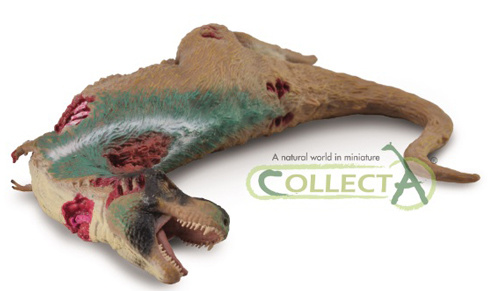
A Model of A T. rex Carcass

Dinosaur death throes

T. rex corpse.  An example of dinosaur death throes.

The picture (above) shows a model of a T. rex carcase, with the figure in the typical “death” position.  This model is part of the CollectA Age of Dinosaurs Popular range: CollectA Age of Dinosaurs Popular Range.

As this disorder is most commonly associated with higher animals (mammals and birds), which are warm-blooded could this theory if true, also lend weight to the hypothesis that dinosaurs, at least the active, hunting, theropods were endothermic?

24 03, 2008

Mass Extinctions – Putting the “Big Five” into Perspective

By |2023-02-25T06:39:44+00:00March 24th, 2008|Categories: Dinosaur and Prehistoric Animal News Stories, Geology, Main Page, Palaeontological articles|0 Comments

Extinction Events are happening all the Time

The mass extinction event that marked the end of the Cretaceous (end of the Mesozoic Era), is perhaps the best known of all the mass extinction events (primarily as this event saw the demise of the dinosaurs); it was not the most severe in terms of the loss of families of organisms, genera and individual species.

The extinction event that marked the end of the Permian (also the end of the Palaeozoic Era), had a far bigger impact on animal life than the extinction event that marked the end of the Cretaceous.

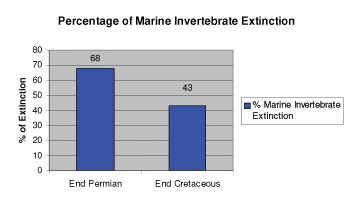
Percentage Marine Invertebrate Extinction (Genera level of Taxon)

Source: Everything Dinosaur

From the graph shown above it can be seen that the extinction event at the end of the Permian resulted in the loss of approximately 68% of all the marine invertebrate genera, whilst the Cretaceous extinction event marked the loss of 43% of marine invertebrate genera.

Mass Extinctions

From time to time major groups of fossils disappear from the geological record.  Many groups of fossils disappear more or less together (roughly at the same point in geological time), the fossils never to be found again in younger strata.  It was partly for this reason that many of the boundaries between geological periods and eras were created by scientists, as they are appropriate points to delineate time.

Species are becoming extinct all the time (this is referred to as background extinction), new species are evolving (speciation), to take advantage of new environmental and climatic circumstances.  There have been a number of major extinctions throughout geological time.  Although, evidence is extremely scarce for extinction events during the Cryptozoic (hidden life Eon – 4.6 bn years to 545 million years ago), it is almost certain that as Precambrian life forms evolved some elements were subjected to extinction events.

The major mass extinctions, known as the “Big Five” have all taken place in the Phanerozoic (visible life Eon).  None of them seemed to have been instantaneous, in most cases it seems to have taken between 500,000 and one million years for the losses to occur.  However, recent evidence regarding the Permian extinction event is that it may have taken place quite rapidly (at least in geological time terms), perhaps taking place over a period of around 100,000 years.

To read more about the mass extinction at the end of the Permian: Can Snails and Oysters provide a clue to Mass Extinctions.

Naturally, the collision with a large extra-terrestrial object such as a comet or an asteroid around 65 million years ago would have had a catastrophic impact on life on Earth but there is evidence to suggest that many land and marine animals were already suffering considerable stress before the Chicxulub event.

To review recent articles published on the Cretaceous mass extinction:

Sulphur linked to Cretaceous extinction event: Sulphur in the Sky linked to Dinosaur Extinction.

To read more about the Chicxulub impact: Geologists get to the Bottom of the Chicxulub Crater.

More information about Chicxulub: End of Dinosaurs set in Motion by Asteroid Collision in Mid Jurassic.

The major extinction events, known as the “Big Five” led to the demise of a number of key animal groups, some went completely extinct such as the dinosaurs at the end of the Cretaceous, some such as the Brachiopods were subjected to a number of mass extinction events.  Although Brachiopods still exist today, they do not have the diversity or abundance as during their Palaeozoic heyday.

A Table Summarising the Main Groups of Animals Affected by Mass Extinctions

Mass Extinction in Summary

Table: Everything Dinosaur

A lot of information is available about current climate and environmental change.  It is difficult to interpret this data sufficiently to estimate the current extinction rate.  Many biologists believe that over the last 200 years or so the extinction rate has been much higher than the normal background rate of extinction.  Conservative estimates of current total extinction rates are 5-50 species of animals and plants per day.  This is an alarming figure, taking the mid range point (25) this would suggest that 600 species have gone extinct so far in March 2008.

Such is the loss of fauna and flora that many scientists have labelled this time as “The Sixth Extinction”.  The fossil record indicates that it takes millions of years for the Earth to regenerate biodiversity and establish rich, robust ecosystems.  Mass extinction events seem to have serious implications for larger animals, particularly those at the top of the food-chain, perhaps it is time for H. sapiens to take note.

Visit Everything Dinosaur’s website: Everything Dinosaur.

9 03, 2008

In Memory of Pioneering Mary – Mary Anning who died on this day in 1847

By |2024-04-12T08:25:20+01:00March 9th, 2008|Categories: Famous Figures, Main Page, Palaeontological articles|0 Comments

In Memory of Mary – Mary Anning (May 21st 1799 to March 9th 1847)

A breakthrough in our understanding of the world around us – a eureka moment in science is a rare thing.  More often than not scientific progress is made in small steps with scientists and researchers building upon the insights and work of others.  Palaeontology like other sciences is no exception, after all, science is driven forward by ignorance, our desire to turn what we don’t know into what we do know.

Our thoughts today turn to Mary Anning, who died on this day in 1847.  Mary was born on May 21st, 1799 in the town of Lyme Regis, Dorset.  Her father was a carpenter.  Although she had no formal education to speak of and she spent most of her life in poverty, Mary was a pioneer in the sciences of geology and palaeontology, her contribution to science is recognised throughout the world and she is one of only two scientists permitted to have a look-a-like walking the hallowed galleries of the Natural History museum in London.

Mary Anning

Mary is credited with the discovery of many ichthyosaurs, plesiosaurs and the first pterodactyl fossils (pterosaurs).  Most of the fossils Mary collected were sold to institutions and private collections, but often no record was kept of her role in discoveries and scientific research.

Although she lacked a substantial formal education, she taught herself anatomy, animal morphology and scientific illustration.  She made an immense contribution to the nascent sciences of palaeontology and geology, but much of her work was plagiarised and she was not given the recognition she deserved in her lifetime.  As a woman and with a poor social status she was never accepted into the male dominated scientific community.

Towards the end of her life it was rumoured that Mary had taken to drink.  Perhaps this was as a result of her struggle for recognition gradually wearing her down, but more likely Mary was drinking to dull the pain of breast cancer.  In the mid 19th century, one of the few pain killers that could be afforded by the poor was alcohol.  Although, weak and very ill, Mary continued to sell her “curiosities” from her fossil depot in Lyme Regis

News of her illness reached members of the Geological Society in London, William Buckland, the Dean of Westminster used his influence to raise a fund to help support her, but there was little he could do to prevent the inevitable outcome.  She died in 1847, just a few weeks before her 48th birthday.

Mary is buried in the little Lyme Regis churchyard, part of which overlooks the bay.  I am sure Mary would have appreciated this, as it was in the bay overlooked by the church that Mary earned her living searching for fossils amongst the land slips and mud slides of the cliffs.

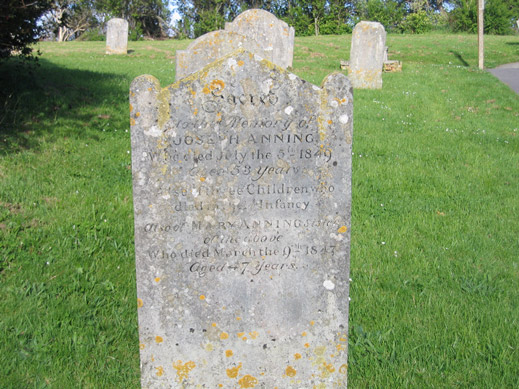
The Grave of Mary Anning and Her Brother Joseph

Mary Anning's grave.

Mary Anning’s grave at St Michael’s Church on the hill overlooking Lyme Regis

Picture credit: Everything Dinosaur

The then President of the Geological Society – Henry de la Beche wrote a eulogy in her honour, a most unusual tribute as she was not a Fellow.

He wrote: “I cannot close this notice of our losses by death without adverting to that of one, who though not placed among even the easier classes of society, but who had to earn her daily bread by her labour, yet contributed by her talents and her untiring researches, in no small degree to our knowledge of the great Enalio-Saurians and other forms of gigantic life entombed in the vicinity of Lyme Regis.

Fellows raised funds for a stained-glass window in her honour at the parish church at Lyme Regis. The window depicts Mary tending the sick and looking after the poor, an inscription underneath reads: “In commemoration of her usefulness in furthering the science of geology, as also of her benevolence of heart and integrity of life”.

Perhaps the last word for now, about Mary should come from a reporter who wrote in a journal published at the time – “the carpenter’s daughter has won a name for herself, and deserved to win it”.

Good on you Mary, we will always remember.

The fossil discoveries made by Mary Anning has inspired the British-designed CollectA range of marine reptile models: CollectA Age of Dinosaurs Popular Models.

4 03, 2008

Long-limbed Albertosaurs – a Clue to Dinosaur Predation

By |2022-11-10T11:32:45+00:00March 4th, 2008|Categories: Everything Dinosaur Products, Main Page, Palaeontological articles|0 Comments

Long-limbed Albertosaurs – possible hints at Dinosaur Hunting Habits

Despite their frequent appearance in monster movies the Tyrannosauridae are perhaps not as well known as many people might think, especially when they are faced with the overwhelming number of tyrannosaur exhibits on display at Natural History museums.  In truth, even the mighty Tyrannosaurus rex has provided less than 40 fossil specimens for palaeontologists to study and the vast majority of these are far from complete.  The popularity of these fierce carnivores is easy to understand, they were certainly impressive beasts but scientists still have a great deal to learn about these animals, their ancestry, social behaviour and morphology.

The likes of Tyrannosaurus rex is synonymous with the Hell Creek Formation of Montana in the north western United States.  The exposed strata  of sandstone, siltstone and mudstone represent sediment laid down towards the very end of the Cretaceous (late Maastrichtian faunal stage).  It was from these beds that the first T. rex fossils were unearthed.  However, a greater number of Tyrannosauridae fossils have been recovered from Canada, specifically areas such as the Dinosaur Provincial Park Formation in Alberta.    The extensive outcrops of Campanian faunal stage strata from deposits termed the Belly River Group and the Judith River Formation have been dated to approximately 75 million years ago.  The Theropod fossils recovered from these sites along with other body and trace fossils have enabled palaeontologists to build up a detailed picture of the eco-system that existed in this area at the end of the Cretaceous.  This has led to some speculation as to the hunting habits and specialisation of the tyrannosaurs in this faunal community.

Late Cretaceous tyrannosaurids of Alberta can be classified into two sub-families, the Albertosaurinae and the Tyrannosaurinae (based on research from Phil Currie et al).  The albertosaurines from the Dinosaur Provincial Park can be split into two genera, Gorgosaurus and Albertosaurus), the Tyrannosaurinae are represented by Daspletosaurus (D. torosus [Russell 1970], D horneri [Carr et al 2017]).  In the 1970s the genus Gorgosaurus was dropped and it was synonymised with Albertosaurus, following a review of existing specimens where no significant characteristics were identified, permitting both genera to be valid.  This viewpoint was overturned in 2003 when following a study by a Canadian led team looking at fossils recovered after the review in the early 1970s, several anatomical differences were identified between Albertosaurus and Gorgosaurus and so both taxa were validated.  The Gorgosaurus genus was reinstated.

Albertosaurus Exhibit – Royal Tyrrell Museum (Alberta in Canada)

Picture credit: Everything Dinosaur

The photograph shows an almost complete and articulated restoration of an Albertosaurus specimen on display at the Royal Tyrrell museum (Alberta, Canada).  The neck and head presented in a curved position over the back and hips is typical of articulated Dinosauria fossils, this effect is believed to occur as ligaments and tendons are desiccated in the carcase and their drying out leads to the head and neck curving over the back of the animal.

The albertosaurs shared their Late Cretaceous world with the likes of Daspletosaurus, (Daspletosaurus means “frightful lizard”).  Both these types of tyrannosaur were apex predators, hypercarnivores and at the top of the food chain, however, examination of their fossils reveals that they may have specialised in different hunting strategies and prey.

Albertosaurs had shorter, lower skulls than many other tyrannosaurs.  Their leg bones, especially the tibia (shin bone) were proportionately longer than equivalent sized tyrannosaurs.  They had longer toes and although the weight of an adult Albertosaurus (A. sarcophagus), has been estimated at 2.5 metric tonnes, these animals were lighter than equivalent sized Tyrannosaurinae.

A 1:40 Scale Model of Albertosaurus (Carnegie Collection Albertosaurus)

Albertosaurus (from the now retired [2014] Carnegie Collectibles range of figures).

Picture credit: Everything Dinosaur

The picture above shows an Albertosaurus dinosaur model, part of the Carnegie Collectibles dinosaur model range (Safari Ltd) which has been retired and is out of production.

To see this model and other tyrannosaurid figures: Visit Everything Dinosaur’s Shop.

The Albertosaurus Genus

It has been speculated that the genus Albertosaurus may represent the fastest large tyrannosaurs around at the end of the Cretaceous.  Models and computer simulations have estimated running speeds of up to 25mph (40kmh), this is up to 50% faster than an equivalent member of the sub-family Tyrannosaurinae.  Putting this into perspective this long-limbed, long-toed carnivore could complete the 100 metres in around about 10 seconds.  Assuming that an Albertosaurus could be given a running start (crossing the start line at approximately full speed), and assuming that this fierce meat-eater did not stop along the way to feast on any athletes, an Albertosaurus could compete for a medal in the sprints at the Beijing Olympics.

Some scientists have speculated that tyrannosaurs began to evolve in different ways, exploiting specific niches within the eco-system.  As Albertosaurus was lighter and faster than equivalent sized Tyrannosaurinae, it could have specialised in catching lighter and faster prey types like hadrosaurs, pachycephalosaurs and ornithomimids.  Indeed, a diorama of an Albertosaurus chasing a group of ostrich-like dinosaurs greets visitors to the Royal Tyrrell museum.  The heavier members of Tyrannosaurinae may have specialised in hunting ceratopsians or possibly titanosaurs.

Lighter and More Gracile Tyrannosaurs

Fossil evidence does indicate that the albertosaurs evolved into lighter and more gracile forms, perhaps indicating that this genus specialised in hunting faster moving animals than the heavier predators.

The fossil evidence is complicated when social behaviour is considered.  Albertosaurus bone-beds have been found in Canada.  Excavations from Royal Tyrrell museum staff have revealed the remains of at least nine variously sized albertosaurs from one fossil site.  Could this be evidence of pack behaviour?

The Safari Carnegie model of Albertosaurus (shown in the picture above) has been designed to replicate much of the latest scientific thinking concerning this particular dinosaur.   Working on the guidance of scientists from the Carnegie museum the model has been sculpted to show the long legs and graceful features of this predator.  The colouration of the model, muted greys and browns would have make this hunter inconspicuous in shadow and the dappled understorey of woodland.  The back, tail and hind quarters of this particular model has darker, stripped markings, again helping to camouflage the animal and break up its outline if it was stalking from cover.  In addition, the stripped markings, particularly those on the tail are a concession towards those scientists that speculate that Albertosaurus may have been a social, pack hunter.  A group of these animals moving towards a potential group of prey animals at speed would have been a confusing site.  Their rapid speed, the dust kicked up and the stripped markings could have disorientated prey, the stripes helping to break up the outline of individual hunters within the pack as they closed in on their unfortunate victims.

26 02, 2008

New Study Links Oxidation of Oceans with Speedy Evolution

By |2023-02-24T22:01:10+00:00February 26th, 2008|Categories: Dinosaur and Prehistoric Animal News Stories, Geology, Main Page, Palaeontological articles|0 Comments

Rises in Oxygen Levels may Explain “Cambrian Explosion”

A new study from a multi-national team of scientists provides evidence of the link between the explosion of early life forms and the oxidation of the deep oceans.  The rise of oxygen levels within the ocean between 635 and 551 million years ago may have helped trigger the increase and rapid diversification of early lifeforms, leading ultimately to the “Cambrian Explosion”.

The “Cambrian Explosion” is a term used by scientists to describe the huge increase in life that occurred around 545 million years ago, at this stage of the history of life on Earth, all life was associated with marine environments.  It was during the Cambrian that most of the major groups of animals that exist today evolved.

Speedy Evolution

Soft bodied animals and the stromatolites (colonies of bacteria) were partly replaced and superseded by the evolution of organisms with hard parts such as exoskeletons and shells.  The first forms of life that could be biomineralised evolved, this meant that the hard parts of their bodies could be preserved as fossils and thus this period of ancient history not only marks the increasing abundance and diversity of organisms but also marks the start of an enriched fossil record, providing palaeonotologists with more evolutionary evidence.

Complex organisms had been in existence prior to the beginning of the Palaeozoic, but the fossil record is extremely poor.  Multi-cellular life forms have been recorded in rocks of approximately 600 million years of age, but these creatures seemed to have lacked any hard parts and as soft-bodied creatures, palaeontologists have only a few tantalising fossils to work with.

A Rise in Oxygen Levels

The rise in oxygen levels and the oxidation of deep oceans in the late Precambrian has been accepted for a number of years.  However, it had been thought that the increase in photosynthetic bacteria such as cyanobacteria (formerly known as blue-green algae), assisted by other non-biological means such as the breakdown of water into hydrogen and oxygen by ultraviolet rays penetrating to the surface of the Earth through the ozone devoid atmosphere had led to the increase.

Now, new research from scientists studying the geochemical structure of the Duoshantuo Formation in southern China reveals that life on Earth may have been influenced by two distinct pulses of oxygen.  The first increase in oxygen predates the “Cambrian Explosion” by a significant amount of time but may have led to an increase in microscopic life forms.  The second burst of oxygen aerating the oceans seemed to have occurred around 550 million years ago and in geological terms immediately pre-dates the increase in life during the Early Cambrian.

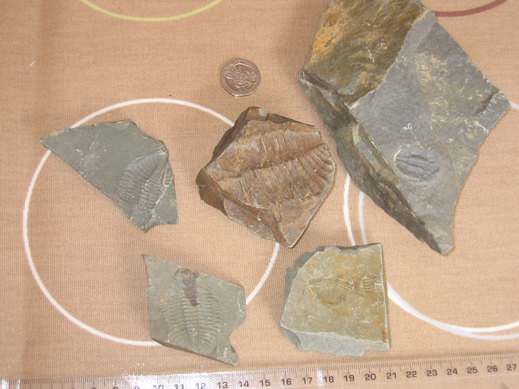
Trilobites Thrived During the Cambrian

A selection of trilobite fossils.

A selection of our trilobite fossils.  These ancient marine creaturs thrived during the Cambrian.

Picture credit: Everything Dinosaur

An international team of scientists from Virginia Tech, the University of Maryland, University of Nevada (Las Vegas) and the Chinese Academy of Sciences set out to test the relationship between the evolution of more complex and diverse life forms and environmental change.  To do this the team needed to find sedimentary strata that pre-dates the Cambrian and a sequence of strata (stratigraphic column) that would show deposition and formation as a timeline, one that had not been altered or changed by other chemical or geological processes.

Finding pristine Precambrian strata is a challenge in itself but such locations are known, one being the Doushantuo Formation in the Yangtze Gorges area, Guizhou Province, southern China.  The strata consists of phosphate and dolomite sequences, laid down at the bottom of a sea.  China at this time was made up of two separate and submerged continental sheets, that lay in shallow, warm tropical waters off the coast of the super-continent Gondwana.  The first part of what was to become China, closest to Gondwana, straddled the Equator, the second part lay across the Tropic of Cancer.

Mapping Oxygen Levels

By mapping the levels of oxygen at various levels in the stratigraphic column, the team could measure the amount of oxygen in the marine environment and then associate this with the biostratigraphic column (fossils used to date and correlate strata), this would provide evidence to support the increase in oxygen leading to a diversity and increase in lifeforms.

To calculate when there was enough oxygen to support animal life in the ocean, the researchers asked, “What kind of geochemical evidence would there be in the rock record?” said Shuhai Xiao, associate professor of geosciences at Virginia Tech.

Scientists hypothesized that there was a lot of dissolved organic carbon in the ocean when oxygen levels were low. If oxygen levels rose, some of this organic carbon would be oxidized into inorganic forms, some of which can be preserved as calcium carbonate (CaCO3 ) in the rock record. “We measured the carbon isotope signatures of organic and inorganic carbon in the ancient rocks to infer oxidation events,” said co-author Ganqing Jiang, assistant professor of geology at the University of Nevada at Las Vegas.

The stratigraphic column exposed during the construction of the dams in the Yangtze Gorges area represents a large slice of ancient geological history.  The researchers carefully took samples from each strata of rock, the deeper the strata, then, unless the strata has been overturned, as can sometimes happen during mountain building processes for example, the older the rocks will be.  This is an important geological principle it is called the “Law of Superposition”.  Many hundreds of different samples were taken, representing marine deposits laid down during the Precambrian and Early Cambrian.

The researchers cleaned and crushed the small samples to powder, which they reacted with acid to release carbon dioxide from carbonate minerals, and then burned the residue to get carbon dioxide from organic matter. “The carbon dioxide that is released was measured with mass spectrometers to gives us the isotopic signature of the carbonate and organic carbon that was present in the rock,” a researcher commented.

“The relative abundances of the carbon-12 and carbon-13 isotopes, which are stable and do not decay with time, provide a snapshot of the environmental processes taking place in the ocean at the different times recorded in the layers of rock”.

The stratigraphic pattern of carbon isotope abundances suggested to these researchers that the ocean, which largely lacked oxygen before animals arrived on the scene, was aerated by two discrete pulses of oxygen.

The first pulse that occured in the Precambrian seemed to have little impact on a large organic carbon reservoir in the deep ocean, but did spark changes in microscopic life.  The second event, which occurred around 550 million years ago, immediately prior to the palaeontological event known as the “Cambrian Explosion”, resulted in the reduction of the organic carbon reservoir.  This indicates that the ocean became fully oxidized just before the evolution and diversification of many of Earth’s earliest animals.  Perhaps this dramatic increase in the level of available oxygen provided the fuel for the rapid burst of evolution.

Certainly, scientists have speculated why all of our sudden around 545 million years ago evolution seems to have pressed the accelerator when for much of the Precambrian  (Cryptozoic), evolution seemed to be progressing at a very slow pace.  You could say that evolution, prior to the second pulse of oxygen had progressed at a snail’s pace but to be fair to the Gastropods (snails) these animals did not really get going until the Early Cambrian.

Photographs show a field of view 0.15 millimetres in diameter of a beautifully preserved eukaryotes fossil from the Doushantuo formation (635-550 million years old).  Eukaryotes are cells with their genetic material enclosed in a cell nucleus.  Eukaryotes are believed to have first appeared in the fossil from strata dated to 2,100 million years ago, but evidence from molecular biology indicates that they may have been present earlier than this but left little or no fossil evidence.

“The Doushantuo Formation has a wonderful fossil record. It allows us to look at major fossil groups, when they appear and when they disappear, and to see a relationship between oxidation events and biological groups”, a researcher commented.

“This study supports the growing view that life and environment co-evolved through this tumultuous period of Earth history,” said geochemist Alan J. Kaufman, a co-author of the study from the University of Maryland.

The triggers for the oxidation events remain elusive, scientists are still not sure what set off these oxidizing events.  Members of the research team have suggested that these two events recorded in marine sediments were probably related to oxygen in the atmosphere reacting with sediments on land as rocks are eroded away.  The lack of biological activity on the land would have resulted in weathered rocks and soils on the continents releasing certain dissolved ions, such as sulphate, into rivers. These would then be transported to the sea where they might be used by bacteria to oxidize the organic carbon pool in the deep oceans.

This article has been adapted from materials published by Virginia Tech, USA.  The full article entitled “Pulsed oxidation and biological evolution in the Ediacaran Doushantuo Formation,” was written by Kathleen A. McFadden; Jing Huang and Xuelei Chu of the Institute of Geology and Geophysics, Chinese Academy of Sciences; Ganqing Jiang; Alan J. Kaufman; Chuanming Zhou and Xunlai Yuan of the Nanjing Institute of Geology and Palaeontology, Chinese Academy of Sciences; and Shuhai Xiao.

It is due to be published in March.

CollectA have recently introduced a range of models of invertebrates reflecting iconic animals from the fossil record including trilobites and members of the Mollusca: Replicas of Iconic Fossil Animals, Models, Toys and Games.

17 02, 2008

Principles of Geology – The Law of Superposition

By |2023-02-24T21:43:43+00:00February 17th, 2008|Categories: Geology, Main Page, Palaeontological articles|0 Comments

A Brief Tribute to Nicolaus Steno – The Law of Superposition

Team members at Everything Dinosaur are already working on a number of events to mark the 200th anniversary of the birth of Darwin in 2009.  However, there were many thinkers, philosophers and educated people who applied scientific processes to try to explain the world around them, long before Darwin.   One such person was the Dane Nicolaus Steno, born 370 years ago who decided at an early age to live by the principle that one should not believe everything they read, but set out to investigate, observe and come to their own conclusions – even if these conclusions challenge the accepted doctrine of the time.

Nicolaus Steno

Nicolaus Steno (sometimes Latinised to Nicolaus Stenonis or referred to in Danish as Niels Stensen), was born in Copenhagen, Denmark in 1638, once he has completed his formal education he travelled extensively in Europe working with a number of notable scientists and thinkers of the time including the likes of Galileo.  His enquiring mind and observational skills led him to improve the understanding of human anatomy and some aspects of medicine, but his fascination with the world around him led him to make some extremely important insights into the age and formation of the Earth.  His published accounts of how layers of rock (strata) are formed, challenged much of the established view on the formation of the Earth and life upon it.

Until Steno and his contemporaries, ideas like the Earth was extremely old and that fossils represented once living organisms were not accepted.  The Biblical view of life and the formation of the Earth dominated, a viewpoint that 200 years later led to Darwin’s delay in the publishing of his theory on evolution and still holds sway with many people today.

The Law of Superposition

For Nicolaus, despite some his research challenging the accepted views of the church and the state, religion still played an important role in his life.  He converted to Catholicism in 1667 and in 1675 became a priest, rising quickly through the hierarchy of the church to become the bishop of north Germany and Scandinavia.  The year before his conversion Nicolaus was presented with the head of a huge shark that had been caught off the coast of Tuscany.  His reputation had permitted him to obtain the patronage of many wealthy families and it was the Grand Duke of Tuscany who had ordered the shark’s head to be sent to Nicolaus for dissection.

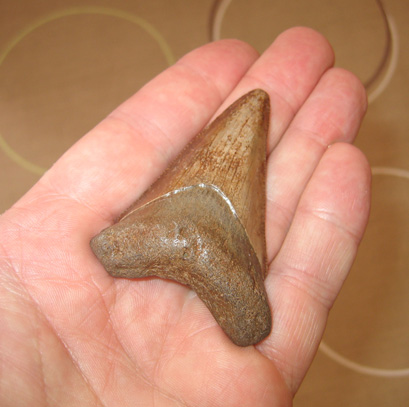
Shark Tooth Fossils

Megalodon fossil tooth

A large fossil tooth from a Otodus megalodon. Picture credit: Everything Dinosaur.

Picture credit: Everything Dinosaur

Whilst studying the shark, Steno noted that the teeth resembled stony objects that had been found embedded in rocks.  These items (now known to be the fossils of shark teeth) were called “Tongue stones”, it was thought at the time that these objects had fallen to Earth from the moon and that they possessed magical properties.  When worn as amulets they warded off danger and if dipped in poison they would render the poison ineffective.

For models and replicas of iconic fossi animals: Prehistoric Life Models (CollectA).

Understanding Fossils

Other scientists at the time, thought that these strange objects along with other items we now know as fossils, simply grew in rock formations.  Nicolaus Steno was not the first person to note the similarity between these permineralized teeth and the teeth of living sharks, but he did develop the current theories at the time and began to explore the physical and chemical processes that may have led to the change in state of these objects and their preservation.

Steno’s work on shark teeth led him to the question of how any solid object could come to be found inside another solid object, such as a rock or a layer of rock. The “solid bodies within solids” that attracted Steno’s interest included not only fossils, as we would define them today, but minerals, crystals, encrustations, veins, and even entire rock layers or geological strata.  Nicolaus theorised that layers of rock formed by deposition – sedimentary rocks laid down in a sequence, the older rocks would be at the bottom with younger rocks on top.  This is a fundamental principle of stratigraphy (the study of strata).

Unless strata has been overturned, which may sometimes happen during mountain building or other geological processes, the deeper the rock layers the older they will be.  Strata could therefore be dated relative to one another.

As Steno stated in his work published in 1669, entitled Dissertationis prodromus:

“at the time when any given stratum was being formed, all the matter resting upon it was fluid, and, therefore, at the time when the lower stratum was being formed, none of the upper strata existed”.

A Fundamental Principle of Geology

This fundamental principle became known as the Law of Superposition – the fact that bottom layers of rock must have been formed first with layers on top being progressively younger in relation to the layers underneath.   Although, other writers had eluded to this in earlier work, it was Nicolaus Stenos who first formulated this law, a cornerstone (no pun intended) of modern geology.  His work was subsequently developed by other writers and thinkers, but his theories were crucial in helping later 18th and 19th Century scientists interpret and understand geology.

So as we plan events to celebrate the 200th anniversary of birth of Darwin we will also be thinking about the other great people who have made and continue to make a contribution to the science of geology and palaeontology, after all 2009 may mark the 200th anniversary of the birth of Darwin but it also marks the 340th anniversary of the publishing of Steno’s Law of Superposition.

Go to Top