All about dinosaurs, fossils and prehistoric animals by Everything Dinosaur team members.

Articles, features and information which have slightly more scientific content with an emphasis on palaeontology, such as updates on academic papers, published papers etc.

16 02, 2008

New Species of Tiny Pterosaur Found in China

By |2022-11-09T12:28:22+00:00February 16th, 2008|Categories: Dinosaur and Prehistoric Animal News Stories, Dinosaur Fans, Main Page, Palaeontological articles|1 Comment

Rare Fossil Find – A Tiny Pterosaur from the Ancient Cretaceous Forests of China

“Flapping about quite at home in its arboreal environment, jumping between bennettitales, cycads and conifers a tiny pterosaur flies upwards and perches safely on the uppermost branches of a ginkgo whilst a dinosaur rumbles by far below.”

Until now scientists, could only speculate as to what sort of pterosaurs lived in forest and jungle environments.  These habitats do not lend themselves easily to fossil preservation and palaeontologists have had to content themselves with the occasional find that provides a glimpse into the dark forest environments of the Mesozoic.  In addition, the light and delicate bones of pterosaurs could easily be damaged and crushed well before burial and fossilisation could take place, so scientists have had to content themselves with a few rare finds from inland ecosystems, concentrating their pterosaur research on those specimens preserved in marine sediments, where generally the chances of fossilisation are higher.  Also, marine environments being relatively open would permit larger organisms and their relatively larger bones would perhaps have  a greater chance of surviving the fossilisation process.

However, thanks to an amazing discovery by a joint Brazilian and Chinese team, scientists have the chance to study the fossils of a tiny, forest pterosaur from the Lower to Middle Cretaceous.  Discovered in western Liaoning the remains of the smallest pterosaur species on record reveal that there were flying reptiles with wingspans no bigger than a garden robin’s sharing the forests with dinosaurs.  Although some of the later pterosaurs evolved into huge animals – Pteranodon and Quetzalcoatlus for example, scientists had speculated that there were many thousands of other species of smaller pterosaurs that filled other ecological niches.

Tiny Pterosaur

This new species, is thought to be the smallest pterosaur yet found.  Only one smaller pterosaur has been found and that was a juvenile that had only just hatched.  The animal has been named Nemicolopterus crypticus, the fossil shows a number of adaptations for a life amongst the trees. For example, the eye sockets are quite large, indicating that this pterosaur could have coped well with low light levels in the understorey of a dense primeval forest.  The four-toed hind feet had sharp claws, which could possibly have been able to grasp branches, giving this tiny flying reptile a good purchase amongst the tree tops.

Artists Impression of Nemicolopterus crypticus
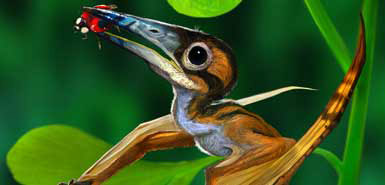
Picture Credit: Lewis Smith

“Nemicolopterus crypticus presents the best adaptations for an arboreal lifestyle found in any pterosaur,” the research team from China and Brazil reported.

Interestingly, all the illustrations of this new discovery show this tiny flying reptile predating on insects. There would have been abundant insects within the forest environment for this little creature to hunt.  However, the remains of the jaws show that this little pterosaur, had no teeth, just like his larger and more illustrious relatives such as Pteranodon.  If it was warm-blooded then insects would have provided a high energy diet to keep the animal active, but it may also be worth considering whether this little chap had another food source, one that would have been virtually exclusive to it – nectar, flowers and fruit

PNSO Nemicolopterus

PNSO have made a range of small, prehistoric animal models including a replica of the pterosaur Nemicolopterus: PNSO Age of Dinosaurs.

Scientists speculate that at around this time the first flowering plants (Angiosperms) were beginning to evolve.  Small pterosaurs could have supplemented their insect diets with flowers, nectar and fruit (all high energy food stuffs).  Perhaps little Nemicolopterus specialised in eating these relatively new plants, the toothless beak could have been ideal for exploiting this new food source.  Unfortunately, the very tip of the beak has been lost in fossilisation so scientists are unsure how the end of the beak looked.  This could have yielded vital clues as the eating preference’s of this tiny flier.  To balance the argument it is worth pointing out that many species of birds thrive on insects and arthropods today and they do not have any teeth in their beaks to help them catch these animals (an adaptation long after the days of Archaeopteryx to help Aves lighten themselves to aid powered flight).

Certainly, there must have been many different types of pterosaur exploiting arboreal niches, the low likelihood of preservation has prevented palaeontologists from studying this particular branch (no pun intended); of the pterosaur family tree.  The birds were evolving and by the end of the Cretaceous only the very large Azhdarchidae type pterosaurs remained.  Perhaps birds out competed pterosaurs for certain ecological niches and this hastened the demise of the pterosaurs.

To read more about whether birds led to the extinction of flying reptiles: Did the birds wipe out the Pterosaurs?

Within the sediments of Liaoning, there may be other fossils waiting to be discovered that can shed more light on the lives of the forest dwelling pterosaurs.
13 02, 2008

The Important Scientific Classification of Fossils – What’s in a Name (please no more T. Rex)

By |2024-04-11T10:35:09+01:00February 13th, 2008|Categories: Main Page, Palaeontological articles|2 Comments

The Classification and Naming of Fossils – Tyrannosaurus rex

Animals, fungi and plants are arranged by scientists into various groupings to assist with the classification of the vast amount of life on this planet.  Extinct organisms are treated in the same way as extant organisms (those which are around today).  All life on Earth belongs to one of three Kingdoms  Animalia, Plantae and another Kingdom for the Fungi, this is the largest grouping of organisms.  Scientists then further sub-divide organisms into other categories, organising creatures, plants and fungi in such a way that common features lead to organisms being associated together until an individual species is defined.  This is the accepted method of classifying life (although cladistics has added a new dimension or two), the principles of this form of classification were laid down by the Swedish botanist Carolus Linnaeus in the 18th century.

The categories of classification from Kingdom down to the species level is referred to as a taxonomic hierarchy.  Organisms should be classified to reflect evolutionary relationships, with each taxon representing organisms that share a common ancestor, very similar to the “Tree of Life” analogy.

A Table Showing the Taxonomy of Tyrannosaurus rex

Taxonomic Hierarchy of Tyrannosaurus rex
Category Taxon Contents of Taxon
Kingdom Animalia All animals
Phylum Chordata All vertebrates (plus some minor groups)
Class Reptilia All reptiles
Order Saurischia All lizard-hipped dinosaurs
Sub-Order Theropoda The “beast footed” dinosaurs mainly carnivores
Family Tyrannosauroidea All Tyrannosaurs and close relatives of Tyrannosaurs
Genus Tyrannosaurus The closest relatives of all to Tyrannosaurus rex
Species Tyrannosaurus rex The individual species known as T. rex

Source: Everything Dinosaur

To be absolutely correct the name of all taxa (the plural for taxon) should begin with a capital letter, except for the individual species name which should always begin with a lower-case letter.  The scientific name for a particular organism consists of two Latin or Latinised words that are always the genus followed by the species classification.  This is termed the binomial.  It ensures that scientists from all over the world can communicate effectively between them when it comes to describing the characteristics of an individual organism.  The genus, such as Tyrannosaurus can be used on its own but the species name i.e. rex without the genus associated with it has no meaning, as some species names apply to more than one genus.  Formerly they should be typed in italics such as Tyrannosaurus rex and indeed this is the method chosen by members of Everything Dinosaur if they were to publish formal papers.  If it is not possible to put the genus and the species in italics (such as in a handwritten report), it is the convention to underline, for example Tyrannosaurus rex.

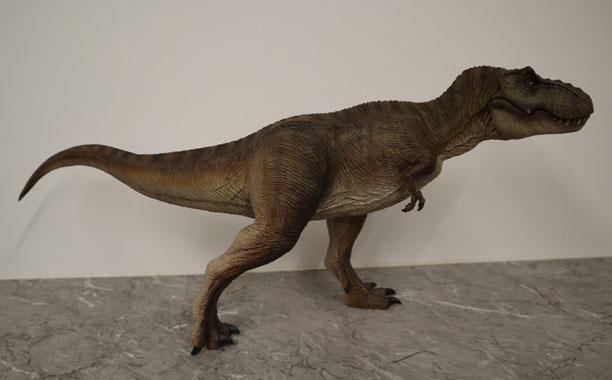
An Example of a Typical Tyrannosaurus rex Model

Nanmu Studio Alpha Tyrannosaurus rex brown in lateral view.

Nanmu Studio Alpha T. rex brown in lateral view.  An example of a typical Tyrannosaurus rex model.

Picture credit: Everything Dinosaur

Everything Dinosaur stocks a huge range of tyrannosaur models and figures including CollectA replicas: CollectA Deluxe Prehistoric Animal Models.

In this way, all scientists, including palaeontologists have a classification framework to use.  However, there are one or two more conventions to consider when classifying and naming animals such as dinosaurs, (or indeed all organisms for that matter).  If a dispute arises as to the naming of an organism then it is convention for the earliest name, the first description, to take precedence.  In this way, the name Brontosaurus was replaced by Apatosaurus.  There have been some notable exceptions to this and T. rex is one of them.

Tyrannosaurus rex

In the late 19th century a good few years before T. rex was named and described by Osborn (1905), the notable American palaeontologist, Edward Drinker Cope described two badly eroded vertebrae as Manospondylus gigas.  This strange honey-combed back bone was different to any other dinosaur fossils found and it was given this name.  One of these bones has since been lost, however, the name stood and if scientific nomenclature was followed, as this bone is believed to represent a Tyrannosaurus rex then T. rex, the “Tyrant Lizard King” should be renamed Manospondylus gigas “Giant Thin Vertebrae” – not quite such an exciting name, I think you will agree.

The debate as to the true name of Tyrannosaurus rex was brought to wider public attention when in 2000 a team from the renowned Black Hills Institute of Geological Research (Pete Larson et al), claimed they had found the original site where Cope had unearthed the weathered fossil bones described as Manospondylus.  Fossils found on this site, presumably from the same specimen that Cope studied almost a Century before turned out to be T. rex so Tyrannosaurus rex should have been renamed based on this evidence.  The International Code of Zoological Nomenclature (ICZN) states that if further remains are found and these are identical to the those of the earlier discovery then the earlier name and description should be used.

This led to much consternation amongst scientists (and amongst Hollywood directors, as Manospondylus sounded nowhere near as cool as Tyrannosaurus rex).  However, in 2000 the ICZN ruled (fourth edition); that T. rex should stay, as the name had been cited in numerous works by many authors and the case of mistaken identity was more than fifty years old.

So it looks like T. rex is going to be able to stay as T. rex.  Now all we have to do is to convince the many authors, designers, artists and manufacturers we work with to use the appropriate scientific guide for stating this animal’s name, stating the species in lower case.  I know we can occasionally have a lapse but really there is no excuse when designing hang tags or packaging of models and other toys.  However, despite our best efforts we will still see Tyrannosaurus Rex printed and written down, when the it is only the genus part of the binomial that should be given a capital letter.

11 02, 2008

The Potential for Preservation – Potential for Fossil Preservation of Species

By |2022-11-09T11:51:34+00:00February 11th, 2008|Categories: Main Page, Palaeontological articles|1 Comment

What are the chances of an Organism becoming a Fossil?

The fossil record only represents a very small proportion of life in the past.  A number of types of animals and plants can leave a substantial amount of material in the fossil record.  Abundant and diverse creatures with hard body parts such as marine molluscs for example, these animals can be readily fossilised and preserved.  The fact that such creatures have been around for a good few hundred million years (hence being found in lots of strata), adds to the chances of Mollusca being well represented in any fossil fan’s collection.

Looking at the Potential for Fossil Preservation

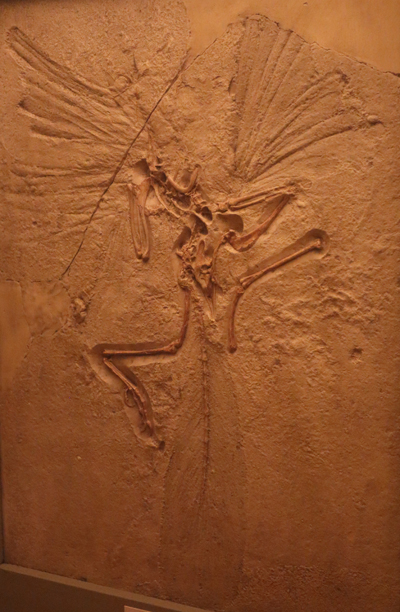
Archaeopteryx fossil cast

Archaeopteryx fossil cast. Picture credit: Everything Dinosaur.

Picture credit: Everything Dinosaur

The chances of some other types of organism being preserved as fossils are much more remote, many soft-bodied organisms such as worms rarely fossilise, although the fossil record provides some evidence of their existence, there are fossils of such creatures in very special sediments such as the Burgess shales in Canada of many marine worm burrows are preserved as trace fossils.

Potential for Fossil Preservation

Some surprising natural processes can favour fossilisation.  For example, plant material caught up in a forest fire has a greater chance of being fossilised than plants which are not.  A portion of the plant material in any fire is not entirely consumed, much may be charred and survive as charcoal.  The plant’s elemental material is effectively “carbonised” and in this state the plant is very unpalatable to herbivores and decay inducing bacteria and fungi.  Think what happens when you put a slice of bread in a toaster, but leave it too long.  The resulting toast is at first browned (water is extracted from the bread leaving a greater degree of the carbon (bread is a source of carbohydrate – made up of carbon and water), then if it is burned, it turns black.  Burnt toast is effectively carbonised bread, you would not want to eat burnt toast and neither would many natural plant eating organisms when faced with partially carbonised semi-charcoal like remains.

This plant material if buried in the appropriate conditions can survive many millions of years, preserving amazing details of the plant cells and tissues.  Electron microscope images of some of the fossilised remains of ancient plants from the Carboniferous (354 million years ago to 290 million years ago), show individual plant cell walls and tissue structures.

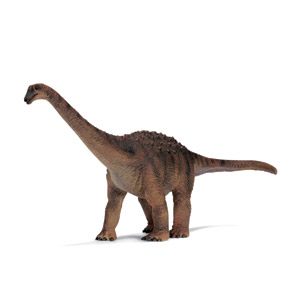
A number of factors can dictate whether an organism is likely to be fossilised or not.  If the organism has hard parts in its skeleton a shell, bones, teeth or an exoskeleton like a trilobite, then there is a much greater chance of the specimen being preserved as a fossil compared to soft-bodied organisms.  Marine organisms or animals living in lakes and other freshwater bodies have a better chance of preservation compared to animals living in drier habitats as the remains have more chance of being covered in sediments, buried and thus preserved.  The actual number of specimens can have an impact on the chances of fossilisation.  As an example, there would be little chance of a Giant Panda’s remains being fossilised as there are only a few hundred left in the wild.  Compare this to a marine snail where there may be millions of individuals representing a species.   Size of the organism can also play apart.  Even a large titanosaur carcase can be broken up by predators and weathering elements.  If the remains of an animal like a Saltasaurus (a relatively modest titanosaur but still weighing more than an African elephant), were to be washed into water by a flood event or such happening then the bones would soon become disarticulated and lost.  It would be unlikely that few parts of the skeleton and other hard elements like the body armour and teeth with this particular creature would be rapidly buried and fossilised.

A model of a Saltasaurus – (Schleich Saltasaurus)

Saltasaurus.

Picture credit: Everything Dinosaur

To view Saltasaurus and other dinosaurs:  Dinosaur and Prehistoric Animal Models.

Compare this large titanosaur to the very much more abundant, tiny micro-fossils such as foraminiferans (shelled, minute protozoans).  Tiny microscopic creatures with hard parts such as shells tend to be much more likely to be preserved.  In terms of the number of individuals preserved the vast majority of the fossil record is made up of micro-fossils.

6 02, 2008

Chirotherium “Hand Beast” – Tracks in the Mud

By |2022-11-09T11:29:40+00:00February 6th, 2008|Categories: Dinosaur Fans, Main Page, Palaeontological articles|0 Comments

Before Dinosaurs – Bizarre Hand-Prints Preserved

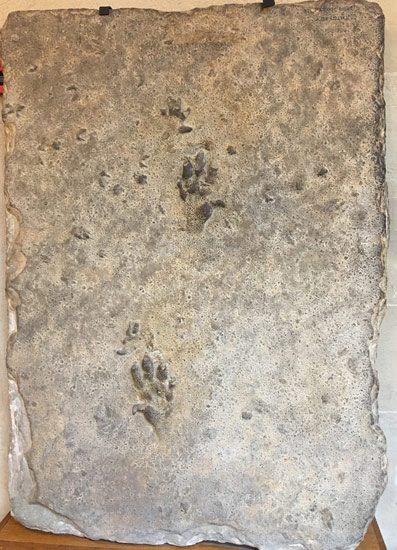
In the Triassic rocks of North America, Europe (including England) and Africa a number of trackways of strange footprints have been uncovered, the first trackway being discovered in Germany in the central state of Thuringia in 1834.  Although, individual footprints and trackways had been known to the scholars of the day for some time, these footprints were remarkable as they resembled the imprint of a human hand.   The footprints had five digits and the fifth digit (which in fact represents the equivalent of our little finger or toe), stuck out sideways and gave the impression of being poseable like our own thumbs.

At the time, the science of geology and the study of fossils were very much in their infancy.  These strange footprints were claimed to the imprints left by those unfortunate people not able to survive the Biblical flood.  Other educated people at the time speculated that they could have been the hand-prints of apes or monkeys.

Chirotherium Fossil Tracks (Oxford Museum of Natural History)

A Chirotheriuim trackway.

Chirotherium tracks on display at the Oxford University Museum of Natural History.  Picture credit: Everything Dinosaur.

Picture credit: Everything Dinosaur

Footprint images, certainly looks like the imprint of a human hand.  The trouble is these trackways have been found in sediments dated to the Early Triassic around 240 million years ago.  Since the prints resembled human hands, scientists named the animal that could have made them Chirotherium “hand beast”.

No actual fossil bones or other remains have been found in association with these trackways.  In spite of this, palaeontologists have been able to provide an impression of what the animal may have looked like.  The hind prints are nearly twice the size of the front prints, the trackways are also narrow indicating an upright gait rather than the more typical sprawling gait of other reptiles.  There is no sign of a tail drag in any of the trackways so ichnologists (scientists who specialise in studying footprints); have deduced that the tail was held well clear of the ground.

Many years later a nearly complete skeleton of another reptile from similarly aged sediments was unearthed. This animal resembled the reconstructions of Chirotherium, it was an archosaur in the region of 2-3 metres long.  This fossil find was named Ticinosuchus.  This fossil helped vindicate those palaeontologists who had depicted Chirotherium (sometimes also known as Cheirotherium) as a predatory ancestor of the dinosaurs with legs positioned directly under the body.

During the Triassic a number of different animal groups evolved and expanded to fill the ecological niches left after the Permian extinction.  As the dinosaurs evolved, they shared the world with other large reptiles such as Batrachotomus, a huge six metre long carnivore.  Similar in general build to the likes of Chirotherium (but much bigger) these fierce animals competed with the dinosaurs for places at the top of the food chain.  Huge “land crocodiles” such as Batrachotomus were very successful and their fossil remains have been found all over Pangaea.

Scale model of Batrachotomus and other figures: Dinosaur and Prehistoric Animal Models.

However, these very large, predominantly quadrupedal predators eventually became extinct around 220 million years ago, perhaps they were no longer able to compete with the rapidly expanding bipedal theropod dinosaurs.

We are grateful to Mike Batty, for pointing out to us that the accepted spelling for the footprints is Chirotherium.  The correct Greek spelling is Cheirotherium, a name we still use round the office, as it was the accepted name for a time; but scientific nomenclature principles state that the first name used as a descriptor should take precedence hence the use of Chirotherium in this instance.

28 01, 2008

Aussie Palaeontologist’s Struggle to Keep up with Fossil Finds

By |2023-02-24T21:48:58+00:00January 28th, 2008|Categories: Dinosaur and Prehistoric Animal News Stories, Main Page, Palaeontological articles|0 Comments

Dinosaur Enthusiasts are Finding more Dig Sites than Museums can Handle

Those Australian dinosaur buffs are difficult to keep out of the headlines.  No sooner do we dedicate January 26th (Australia Day) to celebrating the contribution made to palaeontology by Australian scientist and their dinosaurs from down under then the Australian Associated Press releases a news story about more finds in Queensland.

Aussie Palaeontologists Struggle

Dinosaur enthusiasts in the western Queensland town of Winton claim to have found enough potential dinosaur dig sites to keep them and the local museum staff busy until at least 2058.

Cattle farmer, turned dinosaur fan David Elliott says there are thirty sites waiting to be excavated in the local area.  Winton is rapidly becoming a hot spot for dinosaur finds in Eastern Australia.  A number of important finds have already been documented and excavated from sites such as the nearby Lark Quarry (famous for its trace fossils of dinosaur footprints – the only record of a dinosaur stampede).

We have commented on the importance of the area before, a number of fossil bones have been found, many in association with each other.  These represent important clues in helping palaeontologists understand the fauna and flora of this part of Gondwanaland.

To read more about the work going on at Winton: Putting Aussie Dinosaurs on the Map.

David Elliott commented; “we are finding sites at the moment at the rate of two to three a year and we are digging sites at the moment at the rate of one every two to three years”.

“So there’s the difference, we are finding faster than we can dig it and we are digging them much much faster than we can display and study them.”

Mr Elliott’s fascination with prehistoric creatures has grown exponentially since he discovered the first fossilised bones on his property Belmont in 1995.

He has since located 16 dinosaur sites on Belmont alone and is working with the Queensland Museum to prepare the bones of two sauropods excavated on the property in the past few years.

Dinosaur Bones

The dinosaurs, nicknamed Wade and Matilda, are unique specimens representing new genera, previously unknown to science.

Work is underway to raise about AUS $20 million needed to establish the Australian Age of Dinosaurs Museum of Natural History just outside Winton, north-west of Longreach.

Queensland Premier Anna Bligh visited Winton on Friday, inspecting fossils housed on Mr Elliott’s property before contributing AUS $500,000 of government funds towards the museum.

Mr Elliott hopes the museum will aid excavation work and fossil preparations in order to educate more Australians and tourists to the area about the continent’s natural history.

He also wants to see the fossils remain in the outback, injecting new life into the region through tourism.

“Dinosaur bones out here are going to actually do something good for western Queensland, because it’s really a necessity out here to keep the country viable, to keep the town viable,” he said.

“It is the tip of the iceberg and that’s all it is at the moment. It’s going to become quite massive.”

So hats off to those Australians, their dinosaur fauna may be less well known when compared to the western USA or Europe for example but they do seem to be catching up fast.

For figures and models of Australian prehistoric animals and other extinct creatures: CollectA Prehistoric Animal Figures.

21 01, 2008

Human Kind Origins Traced to Fish – “Meet your next of Fin”

By |2023-02-24T21:55:05+00:00January 21st, 2008|Categories: Dinosaur and Prehistoric Animal News Stories, Main Page, Palaeontological articles|0 Comments

Scientists Trace Humans Fishy Origins

Neil Shubin, professor of Anatomy at Chicago University is due to publish a new book which explores the links between the osteology of humans and links to their ancient ancestors; the first fish and amphibians.

Using evidence related to the evolution of fishes and the first land living vertebrates, Shubin demonstrates that many of the traits associated with H. sapiens, traits thought unique to us, have their origins in animals that lived hundreds of millions of years ago.

Professor Shubin and his team reinforce the believe that the origin of human hands and digits lie in the emergence of the lobe-finned fish in the middle of the Devonian period.  Lobe-finned fish, more precisely described as Sarcopterygians, were so called as their fins sprouted from muscular lobes supported by bone.  Indeed, Shubin heralds Eusthenopteron (means “good strong fin”), a lobe-finned fish of the late Devonian as evidence of the development of upper arm bones such as the humerus.

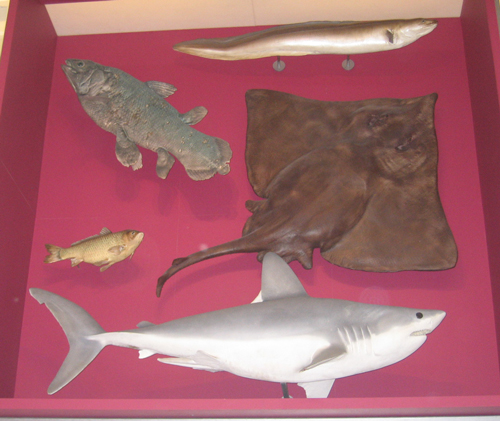
The fish family is very diverse.

A selection of different types of extant fish from an exhibit from the National Museum of Scotland (Edinburgh). Human beings – all tetrapods are highly evolved fish! Picture credit: Everything Dinosaur.

Picture credit: Everything Dinosaur

“Next of Fin”

His team go on to cite a number of examples from the fossil record that indicate that the majority of the human genome (the instructions or blueprint for making a person), evolved millions of years ago.  Study of an ancient sea creature, a Tiktaalik (fossils discovered in the Arctic in 2003), may provide a clue to the origin of our shoulder and arm joints.

Early Tetrapods

Interestingly, many of the early tetrapods such as Acanthostega and Ichthyostega had many more digits than humans.  This may be a legacy of the digits first evolving to help water based creatures clamber over vegetation in the shallows rather than for supporting body weight for movement around on land.

Close study of early amphibian fossilised vertebrae can show evidence of vertebral pegs called zygapophyses.  These helped stiffen the back bone and allowed early tetrapods to carry their bodies off the ground.  Front and rear zygapophyses can still be found in human vertebrae today – another legacy from our fishy origins.

Everything Dinosaur stocks a range of prehistoric fish figures and models of early tetrapods, to view the selection of replicas in stock: Everything Dinosaur Prehistoric Animal Models.

19 01, 2008

Dinosaur Colours and Camouflage Examined in Research

By |2024-04-03T07:39:52+01:00January 19th, 2008|Categories: Dinosaur and Prehistoric Animal News Stories, Everything Dinosaur News and Updates, Everything Dinosaur Products, Main Page, Palaeontological articles|0 Comments

The Bright and Colourful Mesozoic

In the past, many scientists thought that dinosaurs were uniformly grey and drab, perhaps influenced by the relatively plain colouration of large land animals today such as elephants, rhinos and hippopotamuses (although hippos can turn a fetching shade of pink under the African sun).  Today’s experts believe that the dinosaur world may have been a surprisingly colourful place.

Dinosaur Colours and Camouflage

Dinosaurs were around for a long time before the first flowering plants appeared (the angiosperms), their world was dominated by greens and browns and although the few entirely herbivorous reptiles left today such as Iguanas generally tend to be green and brown in colour, many scientists believe that dinosaurs were brightly coloured.  Palaeontologists have cited a number of reasons why many dinosaurs could have been colourful with many skin pigment variations.

Firstly, those fossils that have traces of of skin tissue associated with them indicate that many dinosaurs were covered in scaly skin with some pebble like nodules.  These scales could possibly have contained pigment cells which would have provided many dinosaurs with an assortment of colours, perhaps even allowing them to change colour to express emotions or to provide extra camouflage like many lizards today.

The recently discovered and beautifully preserved “mummified” Hadrosaur from Dakota has actual fossilised skin.  Close examination of the this indicates that this animal may have had stripes along its tail, a suggestion put forward by Dr Phil  Manning of Manchester University who helped study this remarkably well preserved specimen.

To read more about this discovery:

Dinosaur Mummy unlocks Duck-Billed Dinosaur Secrets.

Another reason why dinosaurs may have been brightly coloured is that if they are closely related to birds, then if feathered birds are colourful, why not feathered dinosaurs?  As well as providing insulation; protofeathers could have been used in display, they could indicate which animals were reproductively mature.  Scientists believe that dinosaurs could see in colour (crocodiles and birds can, so why not their close relatives dinosaurs)?

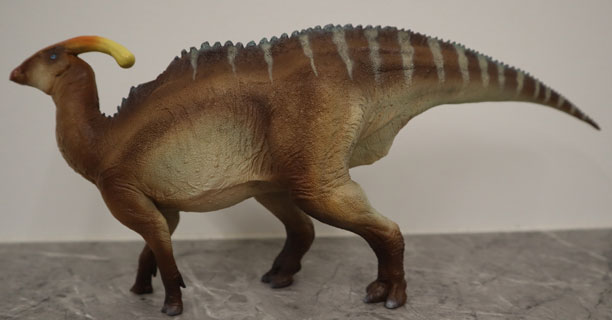
Many herbivorous dinosaurs lived in herds.  The Duck-Billed dinosaurs such as Parasaurolophus could have been stripped in order to make it difficult for a predator to pick out an individual – in the same way that zebras use colours today.

A Model of a Parasaurolophus

PNSO Wyatt the Parasaurolophus dinosaur model in lateral view.

PNSO Wyatt the Parasaurolophus dinosaur model in lateral view, a stunning replica of a Late Cretaceous duck-billed dinosaur.  The stripes will help to camouflage this herbivorous dinosaur.  Picture credit: Everything Dinosaur.

Picture credit: Everything Dinosaur

The picture (above), shows a PNSO Parasaurolophus model: PNSO Age of Dinosaurs.

Communication within the Herd

Also, with animals living in herds there would need to be some way for these creatures to communicate with each other, perhaps colourful crests and patches were used to indicate social status and social order within such herds.

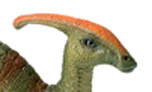
The latest model Parasaurolophus from Bullyland demonstrates this principle.  Scientists believe that the crest of this dinosaur may have varied between males and females.  The males may have had the bigger crests, some of which exceeded 1.8 metres long.  Juvenile Parasaurolophus have little or no crest, perhaps the crest grew as the animals reached maturity.  If this is the case then a large crest would perhaps indicate social dominance and status within the herd.  This would have been emphasised if the crest was a different colour from the rest of the animal, a bright colour for instance, like orange.  This is why the new Bullyland model has been depicted with an orange coloured crest.

The Bullyland Model Parasaurolophus (Orange Crest)

Picture credit: Everything Dinosaur

The model depicts a male Parasaurolophus with a distinctive and large head crest.

A Picture of a scale Model – Parasaurolophus

A crested lambeosaurine hadrosaur.

Picture credit: Everything Dinosaur

To view the model: Dinosaur and Prehistoric Animal Models.

The orange strips may have helped camouflage this animal as it moved through woodland (helping to break up it’s body outline).  Stripped animals moving in a herd are also given a degree of protection as the colour scheme can prevent a predator from selecting an individual to attack.

There are a number of interpretations available regarding the colouration of dinosaurs.  Fossils can reveal a great deal of detail about these ancient creatures but they rarely include any signs of the skin.  The softer body parts usually rot away before preservation and things like colouration do not normally fossilise.  This means that scientists can speculate as to the actual colour of dinosaurs and as a result many variants have been put forward.

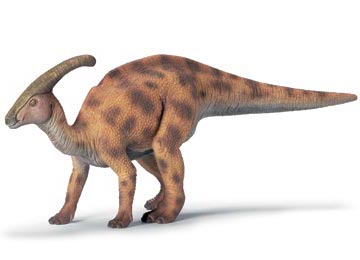
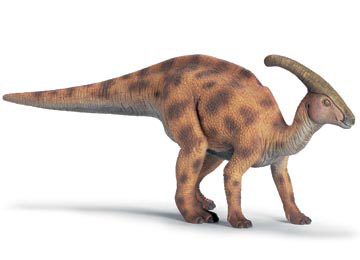
The Parasaurolophus from German model makers Schleich is depicted with a very different colouration.  In this model, a leopard like spotted coat is favoured.  Palaeontologists using evidence from Alberta believe that this animal may have favoured woodland environments.  Spots as well as stripes would have made good camouflage.  Hence in this instance, Parasaurolophus is depicted as having a spotted coat.

Another View of the Parasaurolophus Model from Schleich

Picture credit: Everything Dinosaur

To view the Schleich prehistoric animal range and other models: Dinosaur Models and Toys.

The speculation is likely to continue, what is almost for certain is that the grey, drab models of yesteryear will continue to be replaced by more colourful ones.  Could be this reflects the latest scientific research, or perhaps it is more to do with appealing to collectors and dinosaur fans.

17 01, 2008

Rare and Giant Fossil Rodent Discovered In Uruguay

By |2024-04-03T07:38:17+01:00January 17th, 2008|Categories: Dinosaur and Prehistoric Animal News Stories, Main Page, Palaeontological articles|0 Comments

“Mighty Mouse”or Perhaps more Accurately “Mighty Guinea Pig”

Hidden away in a dark corner of the storage vaults of the Natural History and Anthropology museum in Uruguay, lay the huge skull of a prehistoric mammal that scientists claim belonged to a rodent the size of a bull.

Prehistoric Rodent

The fossil, consisting of the upper portions of a skull, was discovered 20 years ago in the River Plate estuary by a Uruguayan fossil collector.  It was donated to the museum by lay in storage until museum curator Andres Rinderknecht and researcher Ernesto Blanco decided to study it.

Their findings have just been published in the proceedings of the British Royal Society B: Biological Sciences and estimates for this animal give it an approximate length of 3 metres and perhaps a body weight close to 1,000 kilos.  Such estimates have to be treated with a degree of caution, as it can be difficult to determine body size from only partial remains, particularly if there are few extant genera to make a direct comparison with.

Jospehoartigasia monesi

Large animals tend to have disproportionately smaller heads when compared to the body masses of more diminutive creatures so the estimates for this new animal – named Jospehoartigasia monesi are based on scientific deduction.  If other fossils of an adult can be found such as limb bones then perhaps a more accurate assessment can be made.

Pictures that have been circulated depict the rodent skull compared with a typical rodent of today. The parts modelled in grey provide a reconstruction of the entire skull, as can be seen the lower jaw and the incisors are missing.

The fossil has been dated to the Pliocene and is estimated to be around 4 million years old.  The skull is typical of that of a rodent but the animal was of an exceptional size.  Perhaps wandering the grassy plains of South America eating roots, fruit and leaves and sharing the plains with sloths and glyptodonts whilst trying to avoid the predatory “Terror Birds” such as Phorusrhacus.

The Largest Rodent Known to Date

This fossil may well represent the largest rodent known to date, although the rodent Phoberomys pattersoni from the Miocene of Brazil and Venezuela may also have been around the same size but perhaps with a longer tail.

It is not known whether Jospehoartigasia was amphibious, but the fossil was found in an area rich in ancient waterways so this large rodent could have spent some time in the water, safe from land predators, grazing in peace on the lush vegetation.  The jaws may have been relatively weak for such a large animal, this may support the theory that these ancient rodents fed on soft water plants.

This new fossil find has been classified into the Dinomyidae family, effectively close relatives to Guinea Pigs and Capybaras as well as the extinct Phoberomys.

It certainly was a big animal, not the sort of rodent that you would expect to catch with a conventional mouse-trap, more of a “mighty Guinea Pig” rather than  “Mighty Mouse”!

For models and replicas of prehistoric animals: Prehistoric Animal Models and Figures.

15 01, 2008

Research shows that Dinosaurs May have Grown Quickly but Died Young

By |2023-02-14T21:16:29+00:00January 15th, 2008|Categories: Dinosaur and Prehistoric Animal News Stories, Main Page, Palaeontological articles|0 Comments

The Life of a Dinosaur – Short and likely to end Unpleasantly

Although many scientists now believe that dinosaurs are closely related to birds there has been considerable debate about the length of dinosaurs lives, how quickly they grew and when they reached an age when they could reproduce.

Newly Published Research

Dinosaurs Grew Quickly

The finding, Werning said, suggests that dinosaurs were born precocious and suffered high adult mortality, making early reproductive maturity necessary for survival.   It seems that all those monster movies were right when the dinosaurs in the picture end up deceased, with the chances of few dinosaurs living into old age, having the ability to raise a family early makes evolutionary sense.

“This is an exciting finding, because age at reproductive maturity is related to so many things,” said the students’ adviser, Kevin Padian, who is a professor of integrative biology and a curator in UC Berkeley’s Museum of Palaeontology. “It also shows that you can’t use reptiles as a model for dinosaur growth, as many scientists still do.”

Diverse Dinosauria

Unfortunately, dinosaurs are an exceptionally diverse group with huge titans such as Argentinosaurus and Brachiosaurus as well as very much smaller members of the group like Microraptor.  Such very different animals may well have exhibited contrasting growth rates and life spans.  It could be imagined that a small theropod such as Microraptor may have led a short life, with a rapid growth rate to maturity, perhaps similar to the life styles and growth rates in garden birds.  Garden birds such as blackbirds and robins can grow from a hatchling into a fully fledged adult in under a year.

Animals such as the sauropods may have lived for much longer and continued growing throughout their lives, although their growth rates would have decreased once they had reached full maturity.  It has been estimated that a sauropod such as Brachiosaurus could have lived for as much as 150 years.

Pinpointing the age of reproductive maturity “opens up so many complementary avenues of dinosaur research,” Werning commented. “You can talk about dinosaur physiology, lifespan and reproductive strategies”.

The conclusion, reported the week of Jan. 14 in the on line early edition of the journal “Proceedings of the National Academy of Sciences”, comes from an analysis of the only three dinosaur fossils that have been definitively identified as female. Thin slices of these dinosaurs’ fossil bones all show an internal structure similar to tissue found in living female birds – a layer of calcium-rich bone tissue called medullary bone that is deposited in the marrow cavity just before egg-laying as a resource for making eggshells.

Studying Dinosaur Bones and Eggshells

Dinosaurs, which also laid eggs, apparently stored calcium in similar structures prior to ovulation. In their new paper, Werning and Lee report that leg bones from the carnivorous Allosaurus and the plant-eater Tenontosaurus both contained this structure, which means both creatures died shortly before laying eggs. The researchers concluded that these dinosaurs were both mere adolescents, because the Allosaurus was age 10 and the Tenontosaurus age eight at time of death, and prior studies have shown that these types of dinosaurs probably lived up to 30 years.

Werning and Lee also confirmed that a third bone, from a female Tyrannosaurus rex reported by Museum of the Rockies palaeontologist Mary H. Schweitzer in 2005, contained medullary tissue upon the dinosaur’s death at the age of 18. Werning noted that all three dinosaurs might have reached reproductive maturity much earlier.

“We were lucky to find these female fossils,” Werning said. “Medullary bone is only around for three to four weeks in females who are reproductively mature, so you’d have to cut up a lot of dinosaur bones to have a good chance of finding this.”

In the past 10 to 15 years, studies of dinosaur bones have revealed much about the growth strategy of dinosaurs because bone lays down rings much like tree rings. If, as with trees, each ring signifies one year, then dinosaurs grew rapidly after birth and continued to grow over several years until death. Despite the presumed close relationship between dinosaurs and reptiles, dinosaurs grew faster than living reptiles, and their bones had a bigger blood supply.

Among living vertebrates, only birds and mammals exhibit such fast growth, perhaps this is another indication that dinosaurs were indeed warm-blooded like birds and mammals. Birds and small mammals grow quickly to maturity and then become reproductively mature, but large mammals reach maturity just before growth slows.

Attempts to determine when dinosaurs became able to reproduce, and thus whether they more closely resemble birds or mammals, have been difficult because there have been no clear signs of reproductive maturity in dinosaur skeletons.

Medullary Bone

Hence the excitement when Schweitzer discovered medullary bone in a T. rex femur. Though other palaeontologists have searched fruitlessly for similar signs in fossil bones, Werning and Lee found success by focusing on Tenontosaurus (a large hypsilophodontid) and Allosaurus, a predator from the Late Jurassic whose fossils are relatively common (well at least for a carnivorous dinosaur anyway).

Werning was able to obtain many fossil bone slices from the Oklahoma Museum of Natural History. Both a femur (thigh bone) and a tibia (shin bone) from the same fossilised Tenontosaurus showed medullary bone, while growth rings in its bones indicated the pregnant dinosaur was eight years old.

“These were prey dinosaurs, so they were probably taken out when really young and small or when old,” Werning said. “So, if you don’t reproduce early, you lose your chance.”

Lee, on the other hand, focused on Allosaurus fossils from the Cleveland-Lloyd quarry in Utah, where several thousand Allosaurus bones from at least 70 individuals have been discovered. A smaller and older version of T. rex, Allosaurus lived 155 to 145 million years ago in the Late Jurassic. Lee found one tibia with medullary bone from the University of Utah vertebrate palaeontology collection.

The two researchers are continuing to analyse thin slices of fossilised dinosaur bone in hopes of finding more skeletons with medullary bone.

The work was made possible by grants from the Geological Society of America, the Palaeontological Society and the University of Oklahoma Graduate Student Senate to Werning and by grants to Lee from the Jurassic Foundation and UC Berkeley’s Department of Integrative Biology.

This article has been reproduced from press release extracts from the University of California.

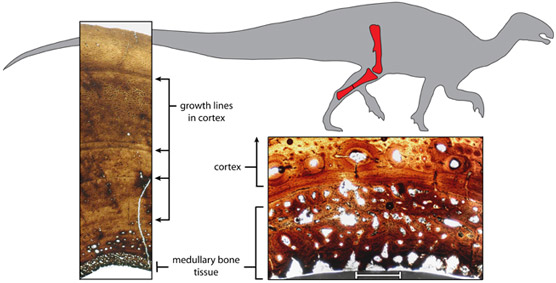
Dinosaur Growth Rates Demonstrated by Tenontosaurus

Ontogeny of dinosaurs.

CAPTION: Cross-sections through the fossilised tibia or shinbone of a 120-million-year-old female Tenontosaurus skeleton, showing growth rings and medullary bone laid down in the marrow cavity just prior to egg laying. This individual died at the age of eight, shortly before she would have laid her eggs.

Picture credit: Sarah Werning/UC Berkeley & Andrew Lee/Ohio University; fossil courtesy of the Oklahoma Museum of Natural History

12 01, 2008

Amazing Armoured Worm Finally Reveals itself to Science

By |2024-04-03T07:29:33+01:00January 12th, 2008|Categories: Dinosaur and Prehistoric Animal News Stories, Main Page, Palaeontological articles|0 Comments

Complete Fossil Helps Palaeontologists Piece Together Worm Evolution

A tiny fossil of an armoured marine worm may not be everyone’s idea of a museum show stopper but for scientists attempting to understand the evolution of annelids in the Palaeozoic era the finding of a complete fossilised animal represents an important breakthrough.

Armoured Worm

Discovered in Morocco by a graduate of the Dutch Ghent University – Peter Van Roy this fossil represents a complete specimen which previously had only been known from fossilised fragments of dermal armour.  The work carried out by Peter, in collaboration with Yale University geologist Derek Briggs and his graduate student, Jakob Vinther will help scientists to better understand annelid evolution.

The annelids are segmented worms; they are represented by the phylum Annelida and include about 15,000 modern species of worms and leeches.  The name Annelida was first applied to this group of worms by the famous French scientist and pioneer of evolutionary theory, Jean-Baptiste de Lamarck in 1809.  The genus to which this fossil belongs had been described back in the 19th century but it was only known from small pieces and up until now scientists could only guess at what the animal looked like.

The worm is believed to be a Machaeridian an armoured segmented worm, with rows of scales on the back and sides of the animal.

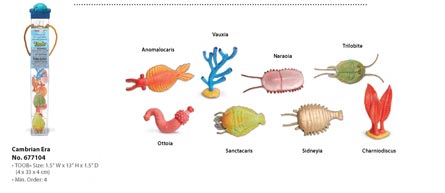
Cambrian Period

Machaeridians evolved during the Cambrian period and survived for around 180 million years before finally becoming extinct during the Carboniferous.  Scientists cannot be sure about when they first appeared as the fossil record for soft-bodied animals is extremely sparse.  Conditions have to be absolutely right to permit the preservation of soft body parts, the carcase has to be buried quickly in fine sediments and mineralisation must start to allow the outline of the body to be preserved before the soft tissue decays.

Safari Ltd introduced a set of small models that depicted some of the bizarre life that existed during the Cambrian.

Cambrian Toob by Safari Ltd

Say hello to Cambrian wildlife.

To view the range of Safari Ltd prehistoric animal models in stock at Everything Dinosaur: Safari Ltd Prehistoric World.

Go to Top