All about dinosaurs, fossils and prehistoric animals by Everything Dinosaur team members.

Drawings of dinosaurs and other prehistoric animals either done by team members or sent into Everything Dinosaur.

4 01, 2018

An Exclusive Estemmenosuchus Scale Drawing

By |2024-05-10T18:12:49+01:00January 4th, 2018|Categories: Dinosaur and Prehistoric Animal Drawings, Everything Dinosaur News and Updates, Everything Dinosaur Products, Main Page|0 Comments

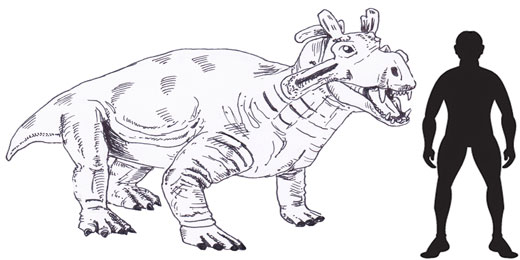
Estemmenosuchus Scale Drawing

One of the new 1:20 scale figures from CollectA for 2018 is a model of the dinocephalian Estemmenosuchus.  We are not expecting this model to arrive in stock until the middle of this year, but we are busy preparing a fact sheet to accompany sales of this Permian herbivore (most scientists state that these animals were plant-eaters).  For virtually every named prehistoric animal model we sell, we include a fact sheet about that animal in with the customer’s order.  Along with the fact sheet, we also provide a handy scale drawing so that readers can see at a glance just how big this prehistoric animal was.

Everything Dinosaur’s Prepared Scale Drawing of Estemmenosuchus (E. mirabilis)
Estemmenosuchus scale drawing.
A scale drawing of the bizarre Dinocephalian Estemmenosuchus (E. mirabilis).  Picture credit: Everything Dinosaur.

Picture credit: Everything Dinosaur

Deciding on Which Species of Estemmenosuchus to Depict

There are currently two species of Estemmenosuchus recognised, Estemmenosuchus mirabilis and the much larger Estemmenosuchus uralensis, but which species does the CollectA Deluxe 1:20 scale figure represent?

The CollectA model is over seventeen centimetres long and at 1:20 scale this represents an animal around 3.5 metres long.  This suggests that the model is getting towards the larger E. uralensis, which measured between 3.5 and 4.5 metres in length.  However, the larger Estemmenosuchus uralensis only had one pair of horny projections on the skull, whilst the smaller of the two recognised species E. mirabilis, had two pairs of horns on the top of the skull.

View the CollectA Deluxe model range: CollectA Deluxe Prehistoric Life Figures.

The CollectA Deluxe Estemmenosuchus Model (New for 2018)
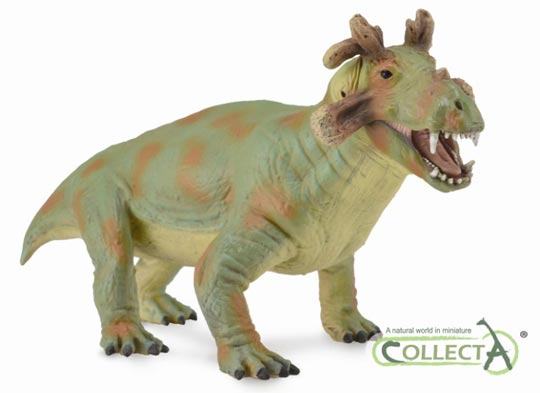
Estemmenosuchus model from CollectA.
A Deluxe 1:20 scale Estemmenosuchus model from CollectA.

CollectA Estemmenosuchus

There are other anatomical differences too.  The skull of the larger species Estemmenosuchus uralensis was up to fifty percent longer.  The muzzle of E. mirabilis is proportionately smaller, but wider towards the front (anterior portion), there are also subtle differences in the morphology of the skulls, although both species show the characteristic thickened bone which is so reminiscent of the estemmenosuchids.  Based on this information, we think that the new for 2018 CollectA Deluxe Estemmenosuchus represents the smaller of the two valid species (E. mirabilis).

Our scale drawing has therefore been prepared based on an animal measuring around three metres in length and weighing an estimated 750 kilograms.

Visit the Everything Dinosaur website: Everything Dinosaur.

15 12, 2017

Updating Dromaeosaurids with an Exclusive Illustration

By |2024-05-10T09:53:03+01:00December 15th, 2017|Categories: Dinosaur and Prehistoric Animal Drawings, Dinosaur Fans, Everything Dinosaur News and Updates, Main Page|0 Comments

Updating Dromaeosaurid Illustrations

Time to update and re-evaluate some of the scale drawings and details within Everything Dinosaur’s range of fact sheets.  The UK-based company has produced hundreds of dinosaur and prehistoric animal data sheets and from time to time, the information and illustrations needs to be updated.  Over the next few weeks our team members will be concentrating on changing some of the information associated with our theropod fact sheets, specifically those associated with maniraptorans.

Preparing Theropod Fact Sheets

Updating Dromaeosaurid Illustrations

A feathered "raptor" drawing.
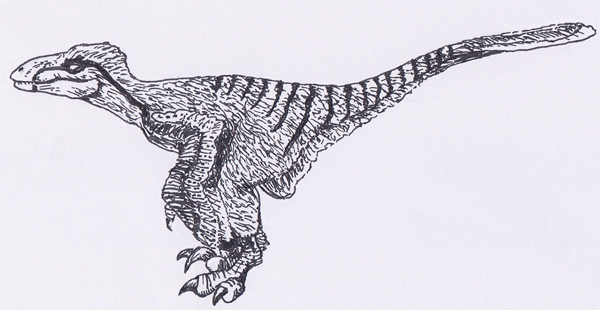
An illustration of Deinonychus (D. antirrhopus).  Picture credit: Everything Dinosaur.

Picture credit: Everything Dinosaur

The picture above shows a picture of Deinonychus, as we prepare to update our fact sheet on this large “raptor”.

Visit the Everything Dinosaur website: Everything Dinosaur.
Maniraptoran Dinosaurs Defined

The Maniraptora is a clade of theropod dinosaurs consisting of those coelurosaurian dinosaurs that are closely related to birds (Aves).  It includes the birds and the non-avian dinosaurs that were more closely related to them than to ornithomimids specifically, the type species Ornithomimus velox.  The theropod dinosaurs that are more closely related to birds are classified into a sub-clade Eumaniraptora.

The Eumaniraptora (it means the “true maniraptorans”), consists of all the types of dinosaur more closely related to birds than to the oviraptorosaurs.  The term Eumaniraptora is often replaced by the term Paraves, although palaeontologists do differ in their views as to the exact composition of Eumaniraptora and Paraves.  Essentially, a dinosaur such as the sickle-toed-clawed Deinonychus (illustrated above), as a member of the Dromaeosauridae family, along with the troodontids and the true birds (Avialae), are components of this sub-clade.

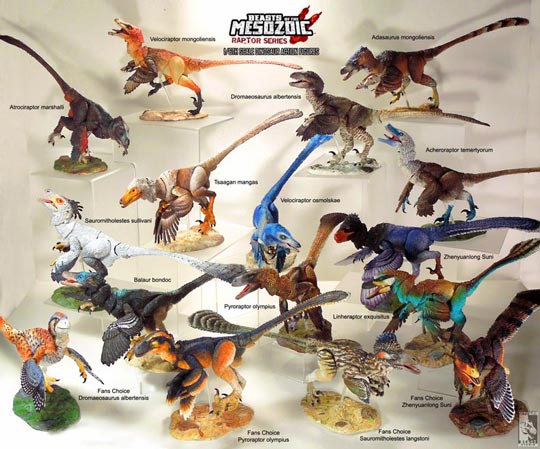
View the dromaeosaurid models available in the Beasts of the Mesozoic model range: Beasts of the Mesozoic Models.

3 12, 2017

A Unique Dromaeosaurid Drawing

By |2024-05-10T06:57:47+01:00December 3rd, 2017|Categories: Dinosaur and Prehistoric Animal Drawings, Dinosaur Fans, Main Page|0 Comments

Dromaeosaurid Drawing

As Everything Dinosaur prepares for the introduction of the Beasts of the Mesozoic 1:6 scale range of model raptors, we are busy compiling fact sheets on all the new figures.  A series of dromaeosaurid and related Maniraptora drawings have been commissioned.  These illustrations will be used to show the approximate size of each of the prehistoric animals represented by a Beasts of the Mesozoic figure.

A Typical Member of the Dromaeosaurids – A Dromaeosaurid Drawing

Maniraptor illustration (dromaeosaurid).
Dromaeosaurid drawing for Everything Dinosaur.  Picture credit: Everything Dinosaur.

Picture credit: Everything Dinosaur

To see the Beasts of the Mesozoic range of articulated models and figures: Beasts of the Mesozoic Articulated Figures.

Feathered Friends – Dromaeosaurid Dinosaur Drawing

We aim to have all the fact sheets finished by the middle of January, in plenty of time for the launch of this range.  The above illustration shows the typical bauplan of a dromaeosaurid, note the addition of a feathery coat and a large fan of feathers on the end of the long tail.  The family Dromaeosauridae is very diverse, geographically widespread and with a wide temporal range.  The term “dromaeosaur” means “running lizard”, all the dromaeosaurids were bipedal and in all likelihood, fast runners.

Distantly related to modern birds, we shall try not to get in a flap as we compile the dozen or so fact sheets that we need.

Coming to Everything Dinosaur in 2018 the “Beasts of the Mesozoic Range”

Beasts of the Mesozoic Deluxe 1:6 scale "Raptors".
The Deluxe Raptors in the Beasts of the Mesozoic range coming to Everything Dinosaur in 2018.

Visit the Everything Dinosaur website: Everything Dinosaur.
31 08, 2017

Siberian Villager Finds Steppe Mammoth Remains

By |2023-08-11T14:19:42+01:00August 31st, 2017|Categories: Dinosaur and Prehistoric Animal Drawings, Dinosaur and Prehistoric Animal News Stories, Main Page|0 Comments

A Mammoth in the Vegetable Patch

Everything Dinosaur has been informed about an article recently published in the “Siberian Times” reporting that a resident of the small and relatively remote village of Oy, in the Sakha Republic of north-eastern Russia, has found the fossilised remains of a Steppe Mammoth (M. trogontherii).  The local man was hoping to plant cabbage and potatoes in their vegetable patch.  Instead the digging uncovered the substantial tusks of a long-extinct member of the elephant family.

The Steppe Mammoth

The newspaper reports that the tusks measure 2.7 metres in length and at their base they are around 50 centimetres in diameter.  Palaeontologists and a regional historian, Prokopiy Nagovitsyn, were called in to assess the villager’s fossil discovery.  Officials are quoted as estimating the tusks at around 400,000-years-old.

A Line Drawing of a Steppe Mammoth (Mammuthus trogontherii)

Steppe Mammoth illustration.

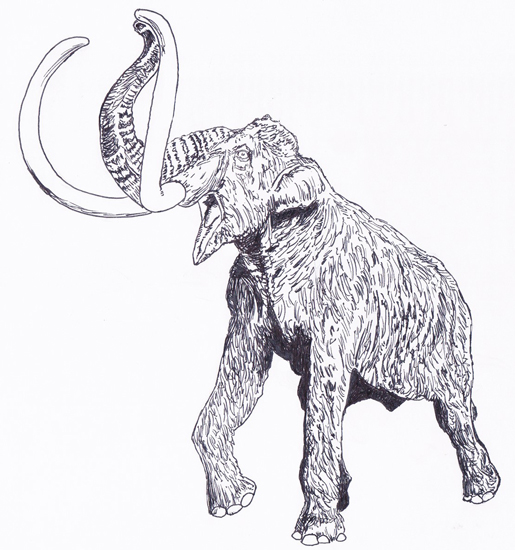
An illustration of a Steppe Mammoth (Mammuthus trogontherii). Picture credit; Everything Dinosaur.

Picture credit: Everything Dinosaur

To view models of prehistoric elephants: Eofauna Scientific Research Models.

Not Revealing the Exact Location of the Fossil Find

The historian (Prokopiy Nagovitsyn), explained that due to “understandable reasons”, the exact location of the fossil find was not being revealed.  If the location was known, this might attract unscrupulous ivory hunters who might attempt to steal the valuable tusks or they might be tempted to start their own excavations.

The vegetable patch discovery is described as “an extraordinary fossil find”.  Numerous Woolly Mammoths (Mammuthus primigenius), specimens are known from the Sakha Republic, the finding of the fossilised remains of a much more ancient Steppe Mammoth is a much rarer event.  Steppe Mammoths predate the Woolly Mammoth by hundreds of thousands of years.  Larger than M. primigenius, probably the largest of the Mammoth family, with adult males estimated to have weighed as much as fifteen tonnes, the Steppe Mammoth roamed Siberia from around 600,00 years ago to as recently as 370,000 years ago.

Everything Dinosaur stocks a large range of Ice Age models.  These models include a variety of prehistoric elephants and other ancient mammals.

To visit the models section of the Everything Dinosaur website: Prehistoric Mammal Models and Ice Age Replicas.

In 2015, an almost complete fossil skeleton of a Steppe Mammoth was discovered in the same region of Russia.  The Steppe Mammoth is believed to have evolved from the southern, ancestral Mammoth (Mammuthus meridionalis).

Visit the Everything Dinosaur website: Everything Dinosaur.
27 08, 2017

A Helpful and Informative Ceratopsian Cladogram

By |2024-05-09T08:41:52+01:00August 27th, 2017|Categories: Dinosaur and Prehistoric Animal Drawings, Dinosaur Fans, Main Page, Press Releases|0 Comments

Piecing Together the Horned Dinosaur Family Tree

Plans are in place at Everything Dinosaur to create a pdf file that highlights the evolution, radiation and diversity of the Ceratopsia.  The aim is to use the numerous illustrations of horned dinosaurs that the company has built up in its extensive database to produce a simplified horned dinosaur family tree.

Dinosaur fans will be aware that over the last two decades, the number of formally described ceratopsid dinosaurs has increased significantly, mostly due to the number of new Late Cretaceous horned dinosaurs named from fossil discoveries in the United States and Canada.  Model collectors will also know that there have been several new horned dinosaur models introduced over the last few years.  This trend is set to continue.  For every named prehistoric animal model that Everything Dinosaur supplies, we send out an accompanying fact sheet with that figure.  In this way, our own image library for the ceratopsids has dramatically increased.

An Illustration of a Recently Described Horned Dinosaur

Scale drawing of the horned dinosaur Nasutoceratops.

A scale drawing of the Late Campanian horned dinosaur called Nasutoceratops. Picture credit: Everything Dinosaur.

Picture credit: Everything Dinosaur

The picture above shows a scale drawing of the centrosaurine Ceratopsian Nasutoceratops (N. titusi) which was named and described in 2013.

To read an article about the discovery and naming of Nasutoceratops: Large Nose Horn Face.

Centrosaurine and Chasmosaurine

Traditionally, whilst the Ceratopsia includes numerous basal horned dinosaurs, the Ceratopsidae family, has been classified into two sub-families based on cranial ornamentation and horn morphology -the Centrosaurinae and the Chasmosaurinae.  The large horned dinosaurs of the Late Cretaceous period, specifically the Ceratopsidae, were all quadrupedal with heavy, armoured heads.  Palaeontologists used a simple method of assigning these types of dinosaurs to a sub-family:

  • Centrosaurines – short neck frill with a large nose horn, bigger than the brow horns.  This very simplistic description does not mean that centrosaurines had short frills.  Most frills were ornamented and in the case of the centrosaurine Styracosaurus – spectacular.

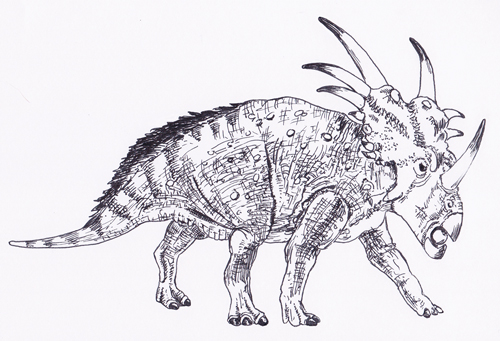
A Drawing of the Spectacular “Short-frilled” Centrosaurine Styracosaurus

Styracosaurus illustrated.

A drawing of the horned dinosaur Styracosaurus. Picture credit: Everything Dinosaur.

Picture credit: Everything Dinosaur

  • Chasmosaurines – long neck frill with long snouts and the brow horns were usually bigger and more prominent than the nasal horn.

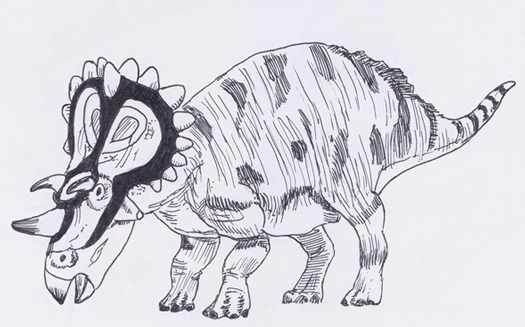
An Illustration of the Recently Described Chasmosaurine Regaliceratops (R. peterhewsi)

Regaliceratops drawing.

A drawing of the horned dinosaur Regaliceratops. Picture credit: Everything Dinosaur.

Picture credit: Everything Dinosaur

To view articulated ceratopsian figures: Beasts of the Mesozoic Figures.

A Ceratopsian Cladogram

As with most things related to palaeontology, the rather simplistic classification of centrosaurines and chasmosaurines has been undermined as new discoveries have been made.  A case in point, is the recently described Regaliceratops (see picture above).  It is for this reason that Everything Dinosaur team members are wanting to create their own cladogram.

We need some more illustrations to complete our data set, but once these have been commissioned we shall post up our own version of the horned dinosaur family tree.  It might be interesting to populate one cladogram using our own dinosaur illustrations, a second, identical phylogenetic analysis can be produced, but this time using the actual models to illustrate the various taxonomic positions.  It’s still a work in progress at the moment, but hopefully, we shall be able to produce something in the near future.

Visit the Everything Dinosaur website: Everything Dinosaur.

26 08, 2017

The Diversity of Early Cretaceous Feathered Theropods

By |2023-08-11T10:42:18+01:00August 26th, 2017|Categories: Dinosaur and Prehistoric Animal Drawings, Dinosaur Fans, Main Page|0 Comments

Wonderful Early Cretaceous Theropod Dinosaur Illustration

Sometimes at Everything Dinosaur, we get asked fascinating questions.  For example, we were emailed this week by a fossil collector asking how many different types of feathered dinosaur were there?  That’s a question, the answer to which, as new fossil discoveries are made, keeps changing.  Since the discovery of Sinosauropteryx in 1996 and its subsequent scientific description, numerous feathered dinosaur fossil discoveries have been made.  In all likelihood, within the Theropoda alone, there were probably hundreds of different types of feathered dinosaur.

Feathered Theropods

The diversity of the feathered theropods is beautifully illustrated in a wonderful image created by Jan Slovak.

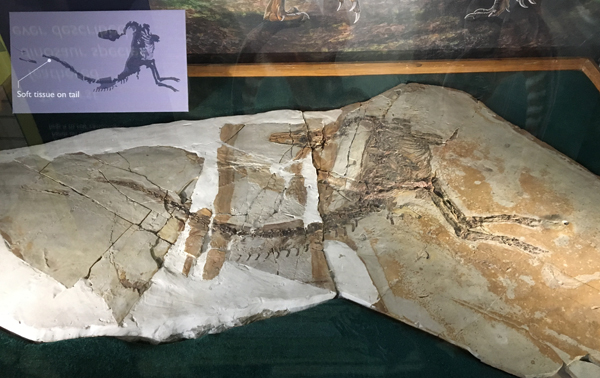
Fossil Remains of a Feathered Theropod (Early Cretaceous China)

Sinosauropteryx fossil material.

Sinosauropteryx on display – the first feathered dinosaur described. Picture credit: Everything Dinosaur.

Picture credit: Everything Dinosaur

The famous Jan Slovak image depicts part of the Liaoning biota of the Early Cretaceous.  The picture illustrates a variety of different types of feathered dinosaurs, (all Coelurosaurian dinosaurs).  A pair of Sinosauropteryx (right), chase a small mammal.  Sinosauropteryx is an example of a compsognathid theropod.  To the left, two Microraptors pursue a dragonfly.  Microraptors come from another branch of the Coelurosauria clade, the dromaeosaurids, sometimes referred to as the “raptors”.

In the background, an ornate couple of dinosaurs are displaying to each other.  They are conducting an intricate courtship display and are oblivious to what is going on around them.  This is a pair of Caudipteryx dinosaurs, complete with beautiful tail plumes.  Caudipteryx is yet another example of a type of feathered theropod.  Caudipteryx is a member of the oviraptorosaurian group.

Feathered Dinosaur Models

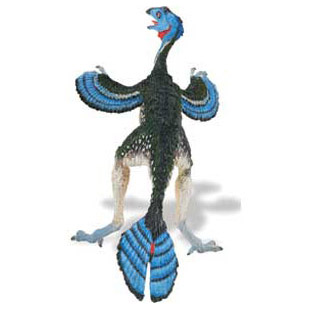
A Model of Caudipteryx

Cauditperyx. Images of feathered dinosaurs.

Included in the limb position study.

The image (above) shows a feathered dinosaur from the Safari Ltd model range:

To view the Safari Ltd range: Safari Ltd. Wild Safari Prehistoric World Models.

Our dedicated team members compiled the information required by our emailer and duly sent it off, along with some links to other articles written by Everything Dinosaur staff that illustrate some of the huge variety of different dinosaurs we listed.

Visit the Everything Dinosaur website: Everything Dinosaur.
25 08, 2017

Chinese Stegosaurs Explored in New Research

By |2024-05-07T15:33:56+01:00August 25th, 2017|Categories: Dinosaur and Prehistoric Animal Drawings, Dinosaur Fans, Everything Dinosaur Products, Photos of Everything Dinosaur Products|0 Comments

Stegosaurs from China

With the addition of the PNSO Age of Dinosaurs model range to the Everything Dinosaur portfolio, we have had to increase the number of Stegosaur illustrations in our database.  The Dashanpu Formation (Sichuan Province, south-western China) has produced a large number of stegosaurian fossil remains and a number of genera have been erected. The majority of the specimens have been found in the Upper Shaximiao Formation, but the Lower Shaximiao Formation has also yielded thyreophorans, notably Huayangosaurus, which led to the establishment of the Huayangosauridae family, to which the later Chungkingosaurus has been assigned.  There are lots of Chinese stegosaurs.

Chinese Stegosaurs

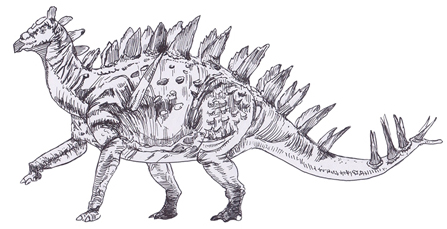
The Illustration of Chungkingosaurus (C. jiangbeiensis) Commissioned by Everything Dinosaur

Chungkinogsaurus illustrated.

An illustration of the Chinese stegosaur Chungkingosaurus.

Picture credit: Everything Dinosaur

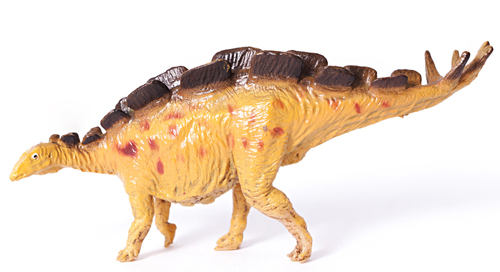
There are members of the Stegosauria clade in the PNSO Age of Dinosaurs large models, an example of which is Chungkingosaurus, illustrated in the line drawing above.  In addition, the smaller models, the PNSO Age of Dinosaurs Toys include a number of armoured dinosaur representatives.  Four of the twenty-four models in this series are Stegosaurs, namely Kentrosaurus, Wuerhosaurus, Miragaia and Tuojiangosaurus, but surprisingly, despite the inclusion of an Ankylosaurus, there is no Stegosaurus, arguably the best-known of all the Stegosauridae, currently in this range (yet).  However, it is good to see Chinese stegosaurs represented.

The PNSO Age of Dinosaur Toys Wuerhosaurus

The PNSO Wuerhosaurus dinosaur model.

PNSO Wuerhosaurus model.

An Asian Origin for Stegosaurs?

Such was the diversity of stegosaur fossil remains from the Sichuan Province (south-western China), that it had been thought that the stegosaurs evolved in Asia.  A review of the fossil material undertaken in 2006* reassessed the seven named genera of stegosaur based on fossil material from the Upper Jurassic of China.  These Chinese fossils represented a diversity of stegosaurs not found anywhere else in the world during the Late Jurassic.  The researchers concluded that only Tuojiangosaurus multispinus, Chungkingosaurus jiangbeiensis and Gigantspinosaurus sichuanensis were valid taxa and therefore, the origin of the Stegosauria remained uncertain.

The Illustration Prepared for the PNSO Age of Dinosaurs Tuojiangosaurus multispinus Model

A drawing of Tuojiangosaurus.

Tuojiangosaurus illustrated.

Picture credit: Everything Dinosaur

A spokesperson from Everything Dinosaur commented:

“It is wonderful to see more stegosaur figures and the PNSO Age of Dinosaurs stegosaurs are in danger of selling out, however, we intend to bring in more stocks soon.  It is refreshing to see some of the lesser-known taxa being represented in an affordable model range.”

The spokesperson went onto state that a number of new illustrations has recently been commissioned and that more drawings would be added to Everything Dinosaur’s database in the near future.  The company receives lots of dinosaur and prehistoric animal drawings from dinosaur fans and they would be particularly interested to receive illustrations of armoured dinosaurs.

To view the PNSO Age of Dinosaurs stegosaur figures and the rest of the PNSO prehistoric animal models: PNSO Age of Dinosaurs.

*The 2006 Paper: “A Review of the Late Jurassic Stegosaurs (Dinosauria, Stegosauria) from the People’s Republic of China” by Maidment, Susannah C.R.; Guangbiao Wei.

Visit the Everything Dinosaur website: Everything Dinosaur.
14 08, 2017

Beautiful Basilosaurus Illustrated

By |2024-05-09T08:39:08+01:00August 14th, 2017|Categories: Dinosaur and Prehistoric Animal Drawings, Dinosaur Fans, Main Page|0 Comments

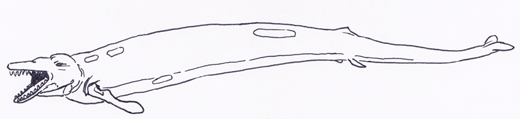
A Drawing of the Early Predatory Whale Basilosaurus

Basilosaurus was one of the first, large whales to evolve.  This animal named “regal reptile”, the first species of which was named and described by Richard Owen (Basilosaurus cetoides), in 1839, has grown in popularity amongst fans of prehistoric animals.

Basilosaurus appeared in an episode of the “Walking with Beasts” television series made by the BBC, (episode two “Whale Killer”).  With CollectA recently introducing a replica of this placental mammal, collectors have the opportunity to add an early cetacean to their model collection.   Everything Dinosaur has commissioned drawings of Basilosaurus.  In the light of the adding of the PNSO range of models to Everything Dinosaur’s huge product portfolio, we have posted up a PNSO inspired Basilosaurus drawing, one that has not been published on this blog that often.

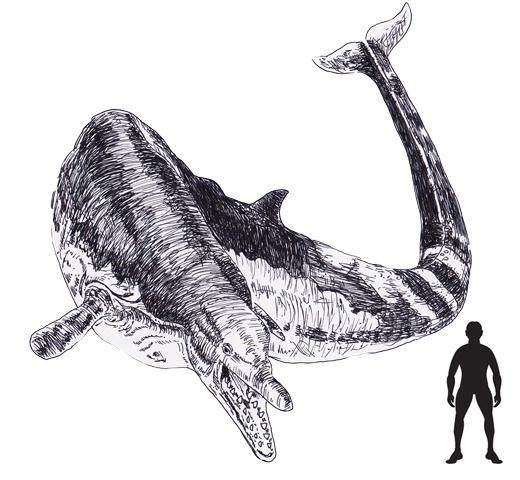
An Illustration of the Giant Prehistoric Whale Basilosaurus

PNSO Basilosaurus illustration.

An illustration of Basilosaurus.  Picture credit: Everything Dinosaur.

Picture credit: Everything Dinosaur

Basilosaurus

Although this fearsome carnivore, superficially resembled the toothed whales that are around today.  Basilosaurus was an evolutionary dead end, when Basilosaurus became extinct some 36 million years ago, towards the end of the Eocene Epoch, it left no descendants.  The drawing above is based on the PNSO Age of Dinosaurs Basilosaurus replica.

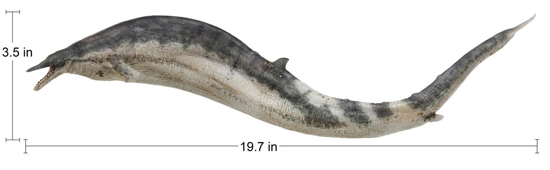
The PNSO Age of Dinosaurs Basilosaurus Replica

The PNSO Basilosaurus replica.

The Basilosaurus replica (PNSO).

In addition to this illustration, Everything Dinosaur also commissioned a line drawing of the CollectA Basilosaurus replica.  Both of these drawings were commissioned to support our work producing data sheets and fact sheets about prehistoric animals.

The picture above shows the PNSO Basilosaurus model.  It is huge.

To view the PNSO range: PNSO Age of Dinosaurs.

The Illustration of the CollectA Basilosaurus Model (Everything Dinosaur)

CollectA Basilosaurus illustration.

The CollectA Basilosaurus model. Picture credit: Everything Dinosaur.

Picture credit: Everything Dinosaur

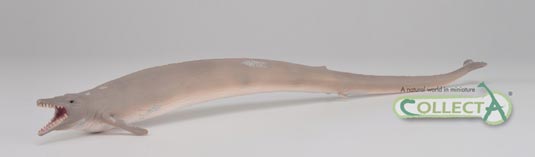
Compare the line drawing of the CollectA Basilosaurus model, with a picture of the actual CollectA Basilosaurus (seen below).

The CollectA Basilosaurus Model

An early whale model - CollectA Basilosaurus

The CollectA Basilosaurus model.

To view the range of CollectA prehistoric animal figures in the not-to-scale Prehistoric Life range: CollectA Prehistoric Life Age of Dinosaurs.

To view the range of CollectA scale models: CollectA Deluxe Prehistoric Animal Figures.

31 07, 2017

A Scale Drawing of the Spinosaurid Suchomimus

By |2023-08-08T14:24:54+01:00July 31st, 2017|Categories: Dinosaur and Prehistoric Animal Drawings, Dinosaur Fans, Main Page|0 Comments

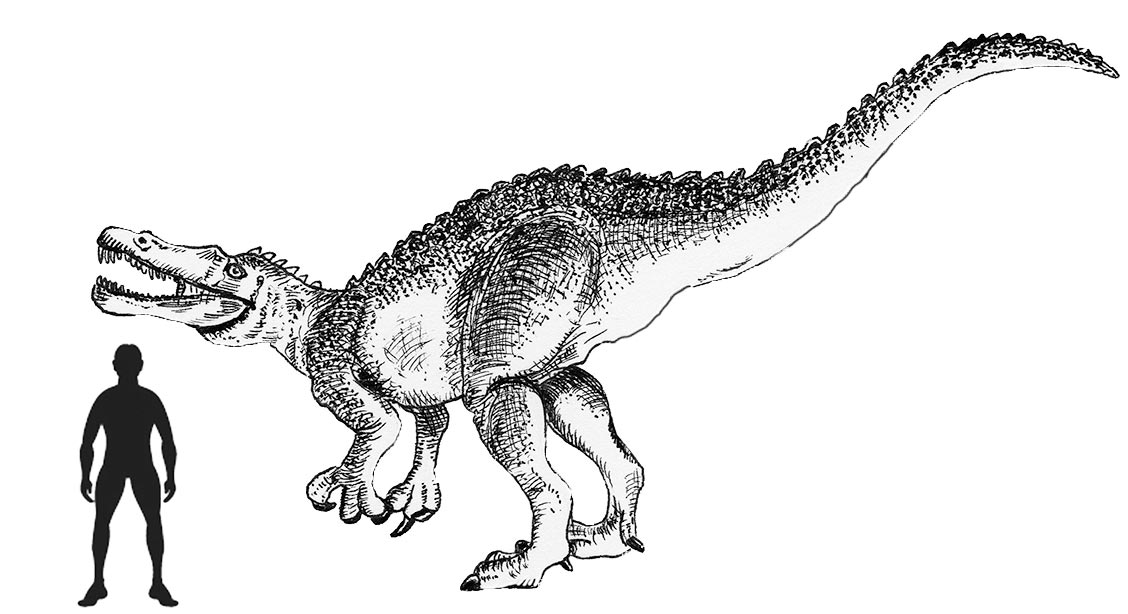
Suchomimus Scale Drawing

Suchomimus (S. tenerensis) fossils were first found in 1973, but at the time, little was known about spinosaurids.  Recent reviews of the fossil material have placed this dinosaur from the Early Cretaceous of Niger within the Spinosauridae, specifically assigned to the Baryonychidae.  Some studies (2002), concluded that the fossil material represented a second species of Baryonyx and proposed the name Baryonyx tenerensis.  Subsequent research established a number of autapomorphies (distinctive features), between the fossils assigned to Baryonyx and Suchomimus, enabling the two genera to be retained.  Suchomimus was probably very closely related to Baryonyx walkeri.

For models and replicas of spinosaurid dinosaurs including Baryonyx and Suchomimus: Safari Ltd Dinosaurs and Prehistoric Animals.

A Scale Drawing of Suchomimus (S. tenerensis)

Suchomimus scale drawing.

A scale drawing of the theropod Suchomimus.  Picture credit: Everything Dinosaur.

Picture credit: Everything Dinosaur

Suchomimus

The hosting rock has been dated to the Late Aptian faunal stage, suggesting that Suchomimus lived many millions of years after Baryonyx.  Like Baryonyx, the first fossil material found was an enlarged thumb claw.  The holotype fossil material of Suchomimus is much bigger than the holotype fossil material of Baryonyx (B. walkeri).  However, as the ages of the individual dinosaurs are not known, direct size comparisons are not relevant.  Based on the Suchomimus material (and that previously assigned to Cristatusaurus lapparenti), Suchomimus could have exceeded eleven metres in length and weighed as much as four tonnes.

Suchomimus translates as “crocodile mimic”, a reference to the long, crocodile-like snout, lined with conical teeth adapted for grasping slippery prey such as fish.

Visit the Everything Dinosaur website: Everything Dinosaur.
20 03, 2017

Taking Uintatherium Out on a Date

By |2023-06-08T14:50:58+01:00March 20th, 2017|Categories: Dinosaur and Prehistoric Animal Drawings, Dinosaur Fans, Everything Dinosaur Products, Main Page, Press Releases|2 Comments

When Did Uintatherium anceps Live?

Everything Dinosaur is preparing for the imminent arrival of the new for 2017 CollectA “Prehistoric Life” models.  The first batch will be arriving at our warehouse very soon, but we are in the process of finalising the fact sheets prior to arrival of other new editions to the CollectA range, due to come into stock later this year.  One of the new fact sheets has left us scratching our collective heads, it concerns an ancient prehistoric mammal that has a reputation for stumping even the most talented and dedicated of palaeontologists.

The beastie is Uintatherium (U. anceps) to be more precise, our team members have been scanning the literature trying to pinpoint the approximate time in geological history that this particular species of “Uintah beast” roamed.

Everything Dinosaur’s Illustration of the CollectA Deluxe Uintatherium Model

Uintatherium anceps drawing.

A scale drawing of the bizarre Uintatherium.

Picture credit: Everything Dinosaur

An Eocene Giant

Uintatherium is one of the more spectacular of a bizarre Order or extinct mammals called the Dinocerata (terrible horns).  Along with the genus Eobasileus, Uintatherium represents one of the largest of this strange Order of mammals, an Order that palaeontologists can’t quite agree where to place amongst the Mammalia.

They are placentals, but their exact position on the mammal family tree and the taxonomic relationship to the other Orders remains controversial.  Scientists such as Earl Manning and Donald R. Prothero have speculated that the simple cheek teeth of these animals might indicate an affinity with the ungulates (mammals with hooves).  Other academics have suggested that the dentition (teeth), most closely resemble the teeth of the Mongolian rabbit relative Pseudictops.  In this is the case, then the Uintatherium could be an example of a “huge horned bunny”!

Uintatheres and the Bone Wars

The role of these Eocene animals in the “Bone Wars” the disputes between the palaeontologists – Leidy, Marsh and Cope has been well documented, but what is not so clear, is when did Uintatherium, specifically U. anceps live?  We have scanned the literature and we have found dates ranging from 53 million years ago to as recently as 37 million years ago.  We doubt whether a single species could have persisted for this long, even in the most stable of environments, so, have you any information of when Uintatherium anceps roamed the Earth?

Fact Sheet Being Prepared for the Arrival of the Deluxe CollectA Uintatherium Model in June

CollectA Deluxe Uintatherium model.

The CollectA Uintatherium model.

Picture credit: Everything Dinosaur

The view the range of CollectA Deluxe scale prehistoric animal models: CollectA Deluxe Prehistoric Animal Replicas.

With a little luck (and a lot more research), we will be able to complete the Uintatherium data, the next fact sheet will have to prepare is a Brontothere.  This “thunder beast” might have superficially resembled Uintatherium, but it was not that close related.  However, the Brontotherium fact sheet is being put together as Everything Dinosaur will be bringing in a new line shortly, but more about that later…

In the meantime, take a look a the Everything Dinosaur website: Everything Dinosaur.
Go to Top