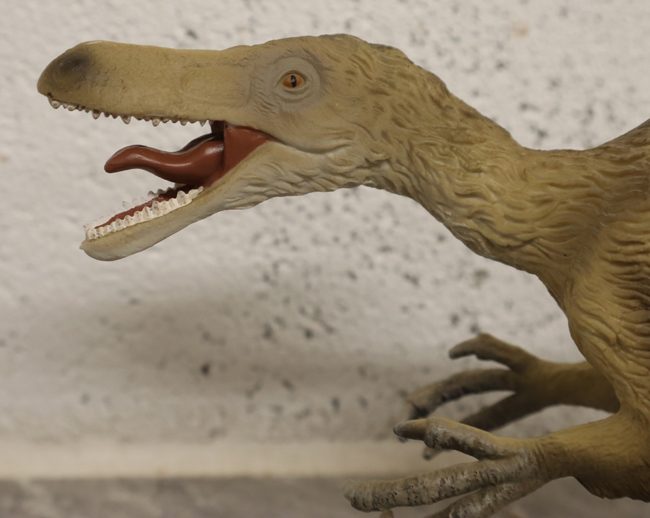
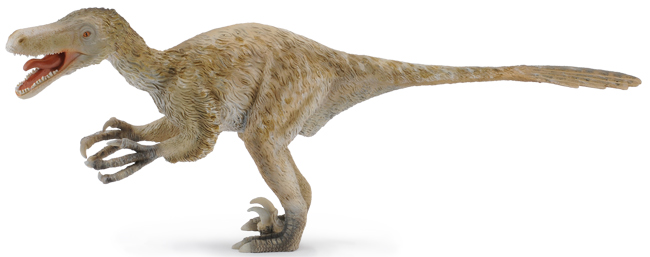
Another Friday and another busy day packing orders for Everything Dinosaur customers. We had been emailed by a customer asking for a photograph of the CollectA Deluxe Velociraptor 1/6th scale model. The customer requested that we confirm that the figure in stock on our website was indeed the genuine article. We were happy to email over some photographs. There was time to take a close-up view of this scale dinosaur model.
A close up view of the CollectA Deluxe Velociraptor figure. Picture credit: Everything Dinosaur.
Picture credit: Everything Dinosaur
One of the first dinosaur models made by CollectA was a small, grey-coloured Velociraptor figure. A Deluxe 1:6 scale Velociraptor was added to the company’s scale model range in 2011. This hand-painted replica measures approximately 32 cm in length. It has a head height of 12 cm. The CollectA Deluxe Velociraptor is supplied with an Everything Dinosaur Velociraptor mongoliensis fact sheet.
Velociraptor is a popular prehistoric animal. It tends to feature in the top five of Everything Dinosaur’s surveys. Its popularity used to be down to its appearances in the “Jurassic Park/Jurassic World” films. However, more recently a feathered, bird-like Velociraptor has been a star of the “Prehistoric Planet” television series (Apple+ TV).
The rare CollectA Deluxe 1:6 scale Velociraptor model. This figure was first introduced in 2011 and is becoming increasingly difficult to find. However, Everything Dinosaur stocks this Velociraptor figure.
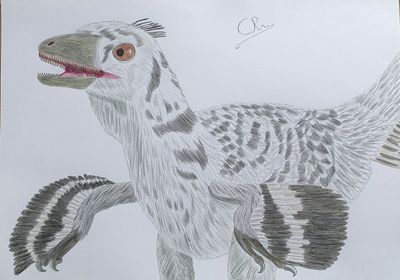
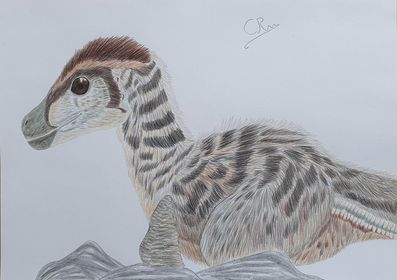
Everything Dinosaur has been sent two additional Prehistoric Planet II inspired dinosaur drawings by young artist Caldey. Both the illustrations feature young theropod dinosaurs. The drawings depict a juvenile Pectinodon and a Velociraptor hatchling. Our thanks to Caldey for sending into Everything Dinosaur her Prehistoric Planet drawings.
Caldey’s illustration of a juvenile Pectinodon. A wonderful drawing. Picture credit: Caldey.
Caldey has captured the animated Pectinodon beautifully. This lithe little dinosaur is depicted chasing after flies whilst an adult Pectinodon is hunting larger game.
Prehistoric Planet Television Series Inspires Young Artists
Everything Dinosaur team members have seen lots of superb illustrations of the prehistoric animals from the television series. Just like season one, Prehistoric Planet II has inspired a whole new generation of dinosaur fans.
A spokesperson from Everything Dinosaur commented:
“Prehistoric Planet and the second series Prehistoric Planet II showed extinct creatures as living animals not movie monsters. The programmes were visually stunning. Our congratulations to all involved for depicting dinosaurs as animals with complex behaviours.”
Caldey’s illustration of a young Velociraptor. The stripes and patterns on the downy coat would help to camouflage this young dromaeosaurid. Picture credit: Caldey.
Caldey has carefully recreated the camouflaged coat of this young dromaeosaurid. This youngster would be vulnerable whilst the adults were away from the nesting site. Its dappled coat would help to keep it safe and hide it from the eyes of a passing predator.
Prehistoric Planet Drawings
A spokesperson from Everything Dinosaur thanked Caldey for sending in her superb illustrations and stated.
“The second series of Prehistoric Planet has provided the inspiration for lots of prehistoric animal illustrations. The programmes introduced viewers to many more Mesozoic creatures. Artists and illustrators have been quick to produce artwork highlighting some of these new and amazing prehistoric animals.”
Our thanks to Caldey for providing the super illustrations.
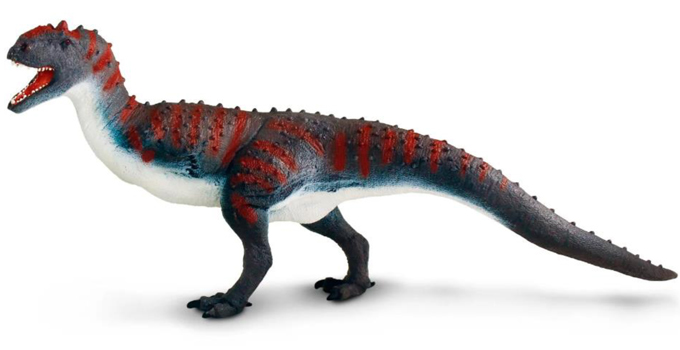
The new for 2023 Wild Safari Prehistoric World Majungasaurus dinosaur model is in stock at Everything Dinosaur. This colourful abelisaurid joins the other recently introduced theropod dinosaur Cryolophosaurus. A spokesperson from Everything Dinosaur welcomed the Majungasaurus into stock and stated:
“Majungasaurus puts Madagascar on the map when it comes to Late Cretaceous theropods”.
The new for 2023 Wild Safari Prehistoric World Majungasaurus available from Everything Dinosaur.
This striking theropod measures over 25 cm (10 inches) in length. The majestic head is approximately 11.4 cm (4.5 inches) off the ground. The dinosaur model will be supplied with an Everything Dinosaur Majungasaurus fact sheet.
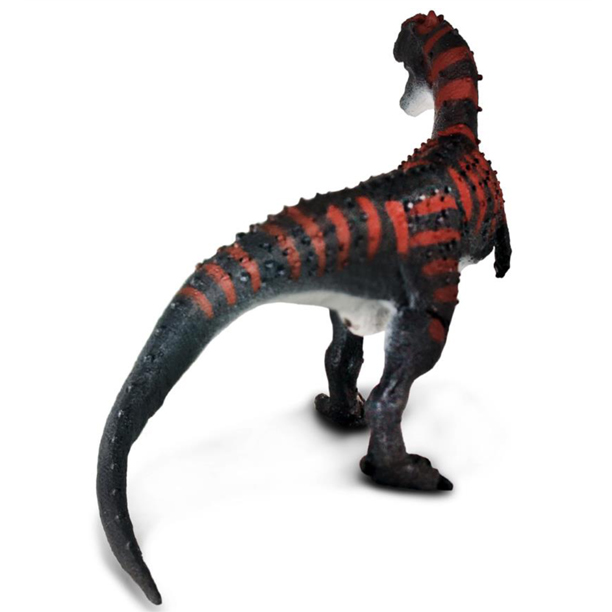
Wild Safari Prehistoric World Majungasaurus in posterior view.
A Prehistoric World Majungasaurus
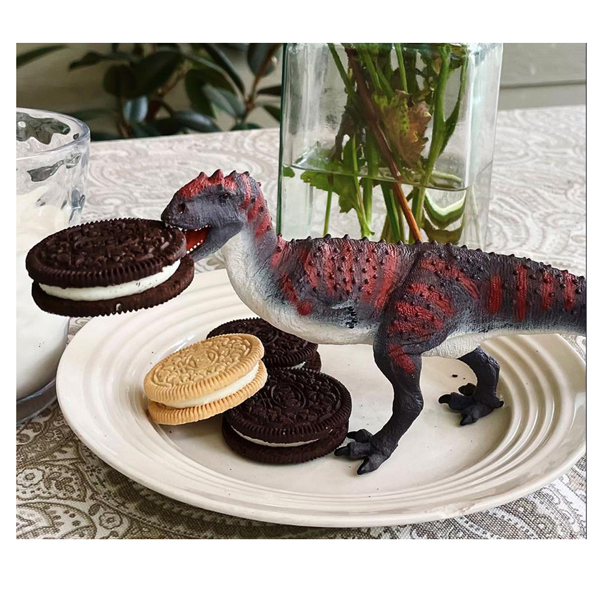
The Everything Dinosaur spokesperson praised Safari Ltd for adding a Majungasaurus to their model range and commented that the American company certainly had a great sense of humour, as one of the images of the model depicted this dinosaur devouring a biscuit.
Tea and biscuits with a Majungasaurus.
The colour scheme chosen depicts counter shading and the red stripes give this dinosaur a fearsome appearance. Majungasaurus was the apex predator in its environment. The model has the tiny arms of a Late Cretaceous abelisaurid. It also has a dimpled skin texture. Everything Dinosaur team members are not sure as to whether skin impressions of Majungasaurus are known.
An analysis of a single bone from the arm of a dinosaur suggests that South African sauropodomorphs were more diverse than previously suspected. In addition, the study published in Royal Society Open Science, proposes that the fossil bone represents a new taxon. As an adult, with a body weight of around seventy-five kilograms, this dinosaur is one of the smallest sauropodomorph taxa known to science and the smallest reported to date from Jurassic sediments.
Not a Juvenile Massospondylus carinatus
The fossil bone, a humerus, was found in 1978. It comes from a dinosaur bonebed (Massospondylus Assemblage Zone) associated with the Elliot Formation of South Africa. It had been thought to represent a juvenile Massospondylus (M. carinatus).
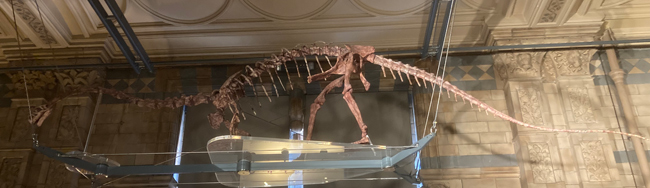
A Massospondylus fossil skeleton replica on display at the London Natural History Museum. Picture credit: Everything Dinosaur.
Picture credit: Everything Dinosaur
Studying the Sauropoda
Sauropodomorph dinosaurs are famously represented by colossal giants like Diplodocus, Patagotitan and Argentinosaurus, reaching body masses up to 70 tonnes. The ancestors of these animals, however, have more humble beginnings.
The first members of the group appear in the Triassic (Carnian period, 233–231 million years ago), with very small sizes (less than 15 kilograms, for example Buriolestes schultzi from Brazil).
As time progressed into the Jurassic (Hettangian period, 200 million years ago), early branching sauropodomorphs evolved a diverse range of body sizes, postures, and ecological adaptations. At this point, sauropodomorphs of less than 1 tonne are rare, although taxa like Massospondylus carinatus (adult body mass of around half a tonne) occur at nearly all dinosaur-bearing localities worldwide and can be locally superabundant.
The Smallest Sauropodomorph
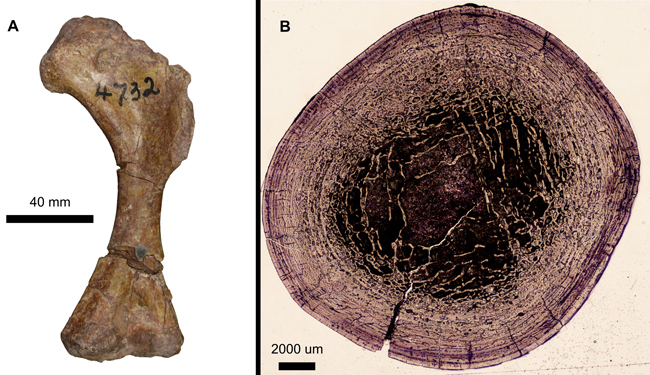
The sauropodomorph fossil humerus BP/1/4732 from the Free State of South Africa was believed to be a juvenile Massospondylus carinatus specimen until now. A recent morphological and osteohistological study found that it was in fact an adult individual of a new species of dinosaur. The latter would have a fully grown body mass of approximately 75 kilograms, making it the smallest known adult sauropodomorph dinosaur from the Jurassic, and the first one weighing less than 100 kilograms.
Left humerus (specimen number BP/1/4732) and stained cross section of bone providing evidence of the dinosaur’s age and maturity. Picture credit: Kimi Chapelle.
Dr Kimberley Chapelle, commented:
“Until now, we were unaware that early sauropodomorphs could reach such small sizes during the Jurassic period, so the smallest skeletons were assumed to belong to juvenile individuals. We can now reassess these skeletons discovered in southern Africa and hopefully find a more complete individual from which we can name a new species.”
Not Possible to Erect a New Genus
With just a single bone it is not possible to erect a new genus. Previously, all sauropodomorph fossils found in that locality were ascribed to Massospondylus. However, more detailed assessments of the fossil material revealed that some of the bones represent different genera. As a PhD student, Kimberley Chapelle worked on a set of fossils that led to the establishment of a new South African sauropodomorph species named Ngwevu intloko.
“Small ornithischian dinosaurs like Lesothosaurus first appeared in southern Africa during the Early Jurassic, and some scientists suggest they might have outcompeted early sauropodomorphs. I think this is unlikely, as many similarly sized mammals share similar niches today. Instead, it’s possible that sauropodomorphs lost the ability to stay this small as part of the evolution of large size, but we just don’t know.”
Everything Dinosaur acknowledges the assistance of a media release from the corresponding author in the compilation of this article.
The scientific paper: “Osteohistology reveals the smallest adult Jurassic sauropodomorph” by Kimberley E. J. Chapelle, Jennifer Botha and Jonah N. Choiniere published in Royal Society Open Science.
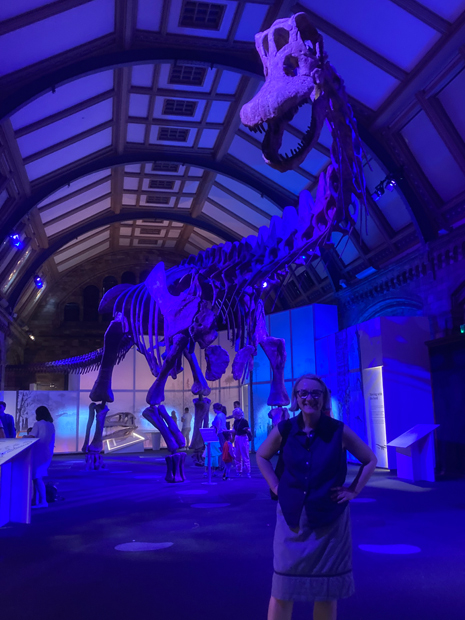
Everything Dinosaur team members recently visited the Natural History Museum in London to see the enormous Patagotitan skeleton on display. This is the first time this titanosaur exhibition has visited Europe. The huge replica skeleton of Patagotitan (P. mayorum) is twelve metres longer than the skeleton of the blue whale (Hope) on display above the Hintze Hall. The exhibition is entitled “Titanosaur: Life as the Biggest Dinosaur”. Patagotitan mayorum may not be the biggest dinosaur described to date, but it does have one of the most complete fossil records of any member of the Titanosauria.
Sue from Everything Dinosaur poses in front of the colossal Patagotitan skeleton which is being exhibited at the Natural History Museum (London). Picture credit: Everything Dinosaur.
Picture credit: Everything Dinosaur
Patagotitan mayorum
Named and described in 2017. Patagotitan fossils were excavated from the Cerro Barcino Formation in Chubut Province, Patagonia in southern Argentina. Size estimates vary for this enormous animal. When first studied, the length of the largest specimen known from the fossil quarry was estimated to be around 37 metres.
Last year (2022) Safari Ltd introduced a beautiful replica of this titanosaur.
The new for 2022 Wild Safari Prehistoric World Patagotitan model. This titanosaur model measures over 38 cm long which effectively makes this figure a 1:100 scale model.
“Enormosaurus”
The first fossils were found (2010) and field excavations were undertaken (2012 to 2015). As the fossil material was excavate, the bones were so big the dinosaur was nicknamed “Enormosaurus”.
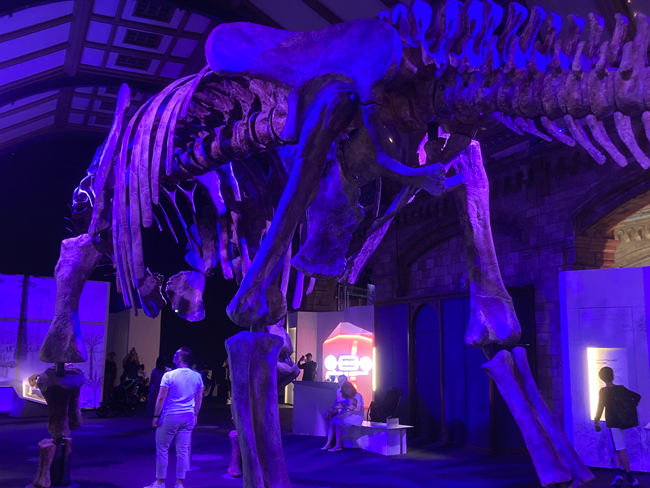
The enormous body of the titanosaur towers over visitors. Picture credit: Everything Dinosaur.
Picture credit: Everything Dinosaur
The exhibition will remain open until January 2024.
The Wild Safari Prehistoric World Cryolophosaurus dinosaur model is coming into stock at Everything Dinosaur. A spokesperson from the UK-based company confirmed that the Cryolophosaurus figure was due to arrive next week.
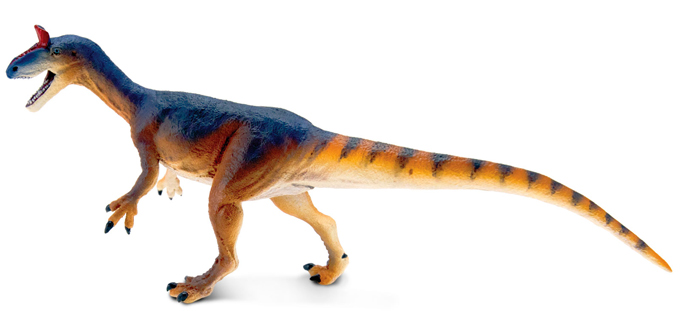
The colourful Wild Safari Prehistoric World Cryolophosaurus dinosaur model is expected in stock at Everything Dinosaur.
Cryolophosaurus Dinosaur Model
Cryolophosaurus “frozen crested lizard”, was named and scientifically described in 1994. At around six metres in length, this theropod is thought to have been the apex predator in the Early Jurassic ecosystem associated with Antarctica. The new for 2023 Safari Ltd Cryolophosaurus sports a crimson crest. This thin crest earned this dinosaur the nickname “Elvisaurus”. The crest probably played a role in visual communication or confirming fitness for breeding.
The Wild Safari Prehistoric World Cryolophosaurus dinosaur model measures twenty centimetres in length. That beautifully sculpted head stands around eight centimetres off the ground. Sales of this dinosaur model will be sent out with a free Cryolophosaurus fact sheet. The fact sheet has been researched and written by Everything Dinosaur team members.
A spokesperson from Everything Dinosaur commented that Safari Ltd, was not releasing details about new models in a single press release. Introductions had been scheduled to take place throughout the year. As a result, Everything Dinosaur team members had been eagerly awaiting the arrival of this colourful theropod figure.
The spokesperson added:
“It is a fantastic model. It’s great to have another dinosaur model representing the fauna of the southern part of Gondwana.”
The first tetrapods (land living animals) were amphibious. It had been thought that the development of an egg with a semi-permeable shell (amniote egg) was a fundamental step in the development of life on land. This adaptation meant that land animals did not have to return to water to breed and spawn. Freed from having to return to the water, early tetrapods could explore new environments and expand into new habitats.
However, a new paper written by researchers from Nanjing University (China) and the University of Bristol challenges this view of evolution.
The researchers conclude that the earliest reptiles, birds and mammals (Amniota), may have borne live young.
What is an Amniote?
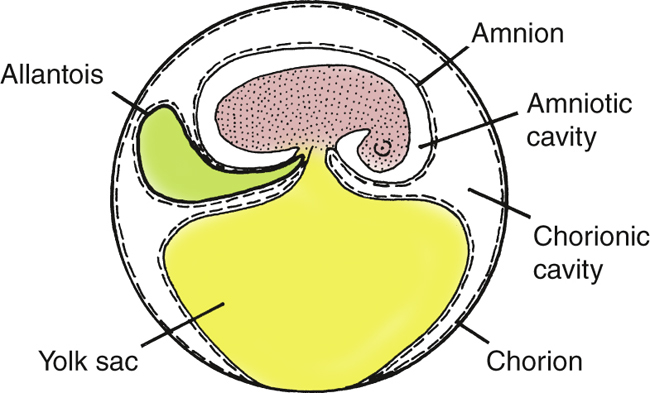
Amniotes lay eggs that have a semi-permeable shell that protects the embryo from drying out. A tough, internal membrane called the amnion surrounds the growing embryo as well as the yolk, the food source. Development of the embryo in a shelled egg meant that for the first time in history, the tetrapods were no longer tied to water to breed. We as mammals are amniotes, along with the birds and reptiles.
The amniotic egg, showing the semipermeable shell and the extraembryonic membranes. Picture credit: M. J. Benton (University of Bristol).
Studying Extinct and Extant Species
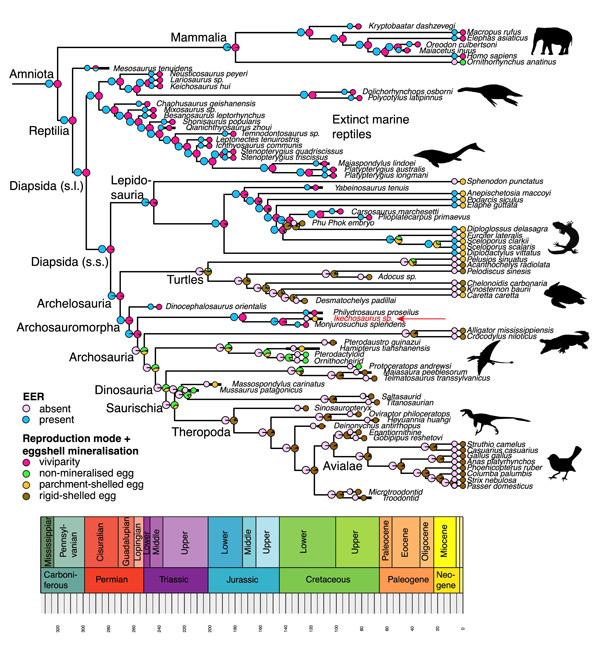
However, a study of 51 fossil species and 29 living species which could be categorised as oviparous (laying hard or soft-shelled eggs) or viviparous (giving birth to live young) suggests that the earliest reptiles, mammals and birds probably were capable of bearing live young.
The findings, published today in the academic journal “Nature Ecology & Evolution”, show that all the great evolutionary branches of the Amniota, the Mammalia, Lepidosauria (lizards and relatives), and the Archosauria (dinosaurs, crocodilians, birds) reveal viviparity and extended embryo retention in their ancestors.
Extended embryo retention (EER) occurs when the young are retained by the mother for a varying amount of time, likely depending on when conditions are best for survival. While the hard-shelled egg (amniote egg), has often been seen as one of the greatest innovations in evolution, this research implies it was extended embryo retention that gave this particular group of animals the ultimate protection.
Professor Michael Benton (School of Earth Sciences at the University of Bristol) explained:
“Before the amniotes, the first tetrapods to evolve limbs from fishy fins were broadly amphibious in habits. They had to live in or near water to feed and breed, as in modern amphibians such as frogs and salamanders.”
Professor Benton added:
“When the amniotes came on the scene 320 million years ago, they were able to break away from the water by evolving waterproof skin and other ways to control water loss. But the amniotic egg was the key. It was said to be a “private pond” in which the developing reptile was protected from drying out in the warm climates and enabled the Amniota to move away from the waterside and dominate terrestrial ecosystems.”
Challenging the Standard View About Amniote Egg Evolution
Project leader and corresponding author Professor Baoyu Jiang (Nanjing University) stated:
“This standard view has been challenged. Biologists had noticed many lizards and snakes display flexible reproductive strategy across oviparity and viviparity. Sometimes, closely related species show both behaviours, and it turns out that live-bearing lizards can flip back to laying eggs much more easily than had been assumed.”
Phylogeny of amniotes, showing known reproduction mode and eggshell mineralization, and EER of 80 modern and extinct species, and the estimated ancestral states for all branching points. The dominant inferred state at the origin of amniotes is viviparity with extended embryo retention (EER). Picture credit: M.J. Benton, University of Bristol.
Many Marine Reptiles were Live-bearers
Co-author Dr Armin Elsler (University of Bristol) commented:
“Also, when we look at fossils, we find that many of them were live-bearers, including the Mesozoic marine reptiles like ichthyosaurs and plesiosaurs. Other fossils, including a choristodere from the Cretaceous of China, described here, show the to-and-fro between oviparity and viviparity happened in other groups, not just in lizards.”
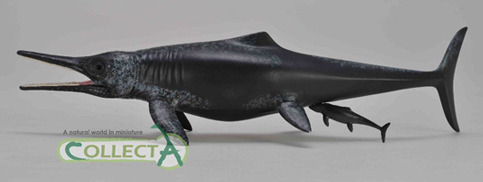
The picture (above) shows the CollectA Age of Dinosaurs Popular Temnodontosaurus model. The ichthyosaur is giving birth, demonstrating viviparity within the Ichthyosauria.
In many types of extant vertebrate extended embryo retention (EER) is quite common. The developing young are retained by the mother for a lesser or greater span of time. The mother delays giving birth until conditions are most favourable to permit the survival of her offspring. The mother deliberately gives birth at the most propitious time.
Co-author of the paper, Dr Joseph Keating commented:
“EER is common and variable in lizards and snakes today. Their young can be released, either inside an egg or as little wrigglers, at different developmental stages, and there appears to be ecological advantages of EER, perhaps allowing the mothers to release their young when temperatures are warm enough and food supplies are rich.”
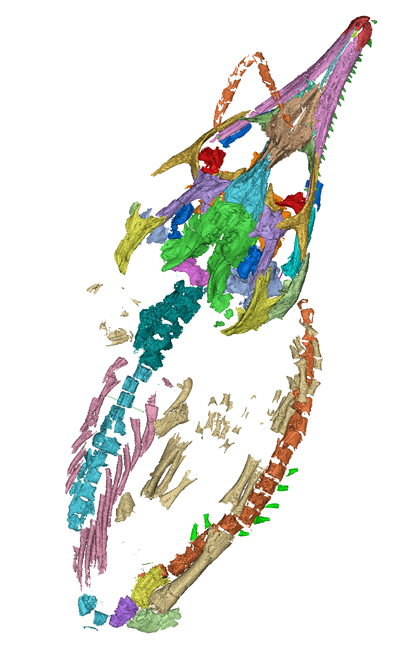
Skeleton of a baby choristodere, Ikechuosaurus, from the Early Cretaceous of China, found curled up inside the remnants of a parchment-shelled egg. Picture credit: Baoyu Jiang (Nanjing University).
Profound Implications for our Understanding of Tetrapod Evolution
Professor Benton summarised the study:
“Our work, and that of many others in recent years, has consigned the classic ‘reptile egg’ model of the textbooks to the wastebasket. The first amniotes had evolved extended embryo retention rather than a hard-shelled egg to protect the developing embryo for a lesser or greater amount of time inside the mother, so birth could be delayed until environments become favourable.”
The professor implied that this study had profound implications for our understanding of tetrapod evolution. He added:
“Whether the first amniote babies were born in parchment eggs or as live, snapping little insect-eaters is unknown, but this adaptive parental protection gave them the advantage over spawning earlier tetrapods.”
Everything Dinosaur acknowledges the assistance of a media release from the University of Bristol in the compilation of this article.
The scientific paper: “Extended embryo retention and viviparity in the first amniotes” by Baoyu Jiang, Yiming He, Armin Elsler, Shengyu Wang, Joseph N. Keating, Junyi Song, Stuart L. Kearns and Michael J. Benton published in Nature Ecology and Evolution.
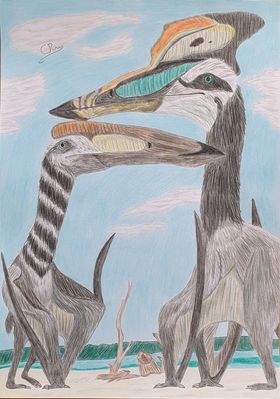
Our thanks to young artist Caldey who sent into Everything Dinosaur her drawing of a pair of azhdarchid pterosaurs. A Hatzegopteryx pair illustrated, a drawing inspired by the recent television series Prehistoric Planet II.
Two Hatzegopteryx pterosaurs illustrated. The drawing inspired by a scene from the recently aired Prehistoric Planet II. Picture credit: Caldey.
A Softer Side to Azhdarchids
Described by the narrator Sir David Attenborough as the apex predator in Europe during the Late Cretaceous, Hatzegopteryx shows a softer side. A male lands on a remote island and builds a display from driftwood in a bid to attract a female. The giant pterosaur is successful and a female lands to inspect his work. The five-metre-tall reptile offers the female a Tethyshadros that he has recently caught.
A second, smaller male arrives and threatens to break up the courtship display. However, the larger male soon deals with the interloper. The female impressed with her partner’s prowess allows herself to be mated. The female leaves and the inference is that the male will play no part in the raising of the young.
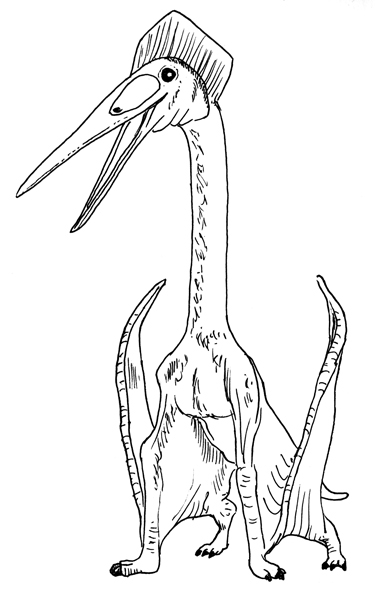
A drawing of the huge pterosaur Hatzegopteryx inspired by the CollectA Prehistoric Life Hatzegopteryx model. Picture credit: Everything Dinosaur.
Picture credit: Everything Dinosaur
The drawing (above) is an illustration of Hatzegopteryx inspired by the CollectA Prehistoric Life Hatzegopteryx figure that was introduced in 2011.
Hatzegopteryx is one of the largest of the Pterosauria. The wingspan of this huge animal is estimated to be in excess of ten metres. The enormous skull was three metres in length.
A spokesperson from Everything Dinosaur thanked Caldey for her drawing and commented:
“Prehistoric Planet has inspired lots of young artists. It is great to see the wonderful drawings. Our thanks to Caldey for sending into us her beautiful and incredibly detailed drawing of the pterosaur pair. We congratulate Caldey on her Hatzegopteryx illustration.”
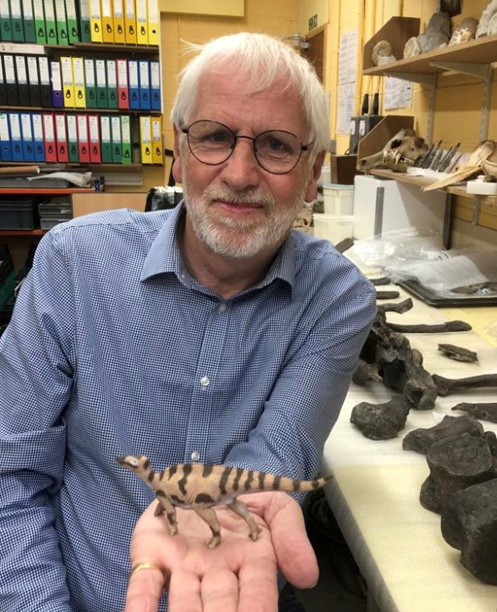
Our thanks to Dr Jeremy Lockwood who sent into Everything Dinosaur a picture of him holding his recently acquired CollectA Brighstoneus model. Dr Lockwood was one of the authors of the scientific paper which named and described this new herbivorous dinosaur from the Isle of Wight.
Dr Jeremy Lockwood holding the CollectA Age of Dinosaurs Brighstoneus figure. What other hadrosauriforms will be described from Isle of Wight fossil material in the future? What other CollectA hadrosauriform figures will be introduced?Picture credit: Dr Jeremy Lockwood.
Picture credit: Dr Jeremy Lockwood
Brighstoneus simmondsi
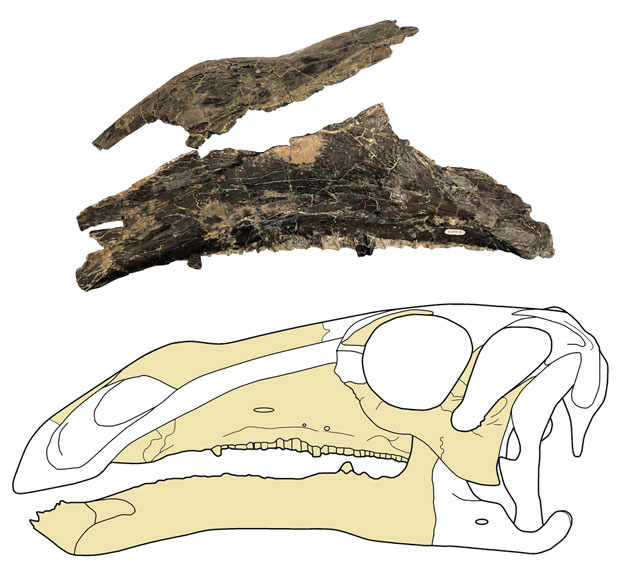
Formally named and scientifically described in November 2021 (Lockwood, Martill and Maidment), Brighstoneus simmondsi demonstrates that these types of dinosaurs were more diverse than previously thought. Prior to this research, Early Cretaceous hadrosauriform fossils associated with the Wealden Group were placed into either the robust Iguanodon genus or the more lightly built Mantellisaurus taxon.
The fossil material had been thought to represent Mantellisaurus. However, Dr Lockwood identified unique traits within the fossils (autapomorphies), that led to the erection of this new hadrosauriform taxon.
The nasal and maxilla bones of Brighstoneus simmondsi with accompanying line drawings. This ornithopod is believed to have had a bulbous snout. Picture credit: Dr Jeremy Lockwood
Picture credit: Dr Jeremy Lockwood
CollectA were quick to start development work on a Brighstoneus dinosaur model. Under the guidance of Anthony Beeson, the figure was designed and created. Sadly, Anthony passed away before his Brighstoneus model could be launched.
Commenting on the CollectA figure, Dr Lockwood stated:
“Thank you for the models. Attached is a photo of me with the model at Dinosaur Isle Museum.”
The CollectA Age of Dinosaurs Popular Brighstoneus dinosaur model. This ornithopod figure was introduced in early 2023.
A spokesperson from Everything Dinosaur commented:
“We had been contacted by a relative of Dr Lockwood, prior to the model’s introduction. We were happy to set aside the figures so that Dr Lockwood could receive a replica of a dinosaur he helped name and describe. It is wonderful to be able to supply these figures to scientists so they can use them to help inform the public and explain important scientific discoveries.”
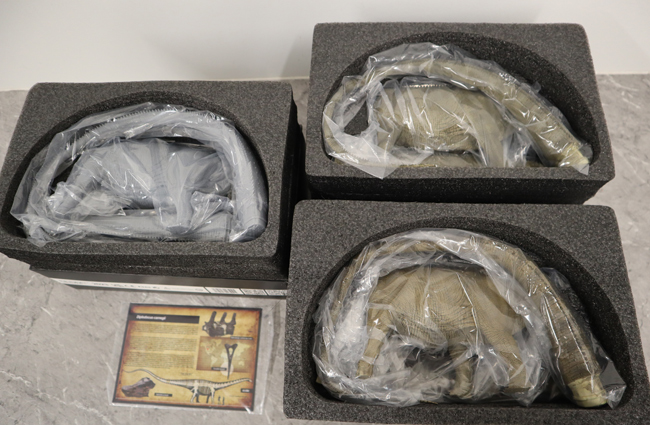
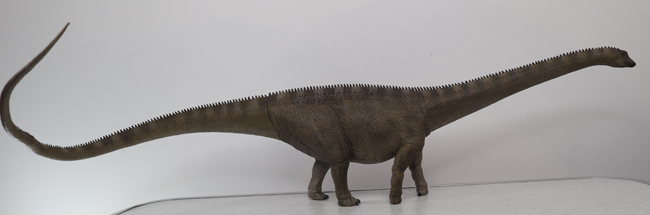
The Rebor Diplodocus models recently arrived at the Everything Dinosaur warehouse. Team members have been busy picking, packing and despatching orders. These Diplodocus carnegii models require assembly. The neck and tail pieces have to be inserted into the body. Here are some helpful tips and advice to help you assemble your Rebor dinosaur model.
The new for 2023 Rebor Diplodocus carnegii dinosaur models are supplied in three parts. Each figure has a neck, and a tail piece and these need to be inserted into the main body. Picture credit: Everything Dinosaur.
Picture credit: Everything Dinosaur
Use Hot Water/Hair Dryer
The white plugs on the end of the neck piece and tail piece can be heated and this will help them to slot into the main body of the Diplodocus. A hairdryer can be used to gently warm up the plastic plug. Heating the plastic makes it more malleable. It should be easier to slot the neck and tail pieces into position.
Alternatively, the plug can be dipped into a cup of boiling water. Quickly dry the plug and then insert it into the body. Please take care when using hot water.
The plug pieces can be difficult to insert. Please take care when inserting the pieces as you might damage the delicate raised scutes that run along the back of the model.
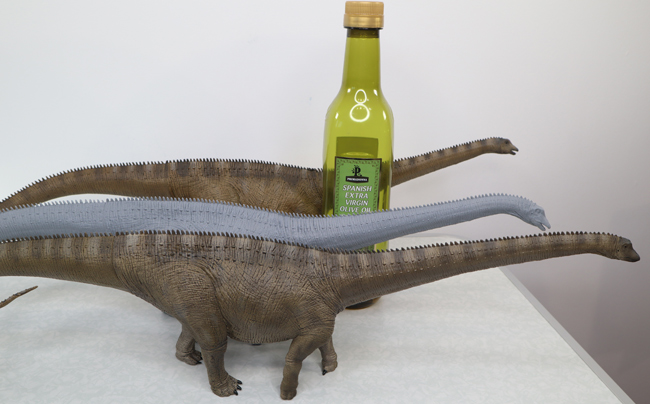
Try not to force the pieces into place. If the hot water treatment or the hairdryer has not helped, try adding a little oil. Adding a drop of vegetable oil to the white plugs will lubricate them and help them slide into place. Only a little oil is needed, excess squeezed out of the joint can be wiped away.
To help ease the neck and the tail into place add a small amount of oil such as vegetable oil to the plug on each piece. This will help these pieces slide into place. Picture credit: Everything Dinosaur.
A spokesperson from Everything Dinosaur commented:
“Sometimes the Rebor models can be tricky to assemble. Try the heating method first, if this does not work, then add a smear of oil to the plugs. Using vegetable oil, olive oil or something similar should do the trick. These are the types of oil used in cooking. You can find them in most kitchens.”