By Mike|2024-05-10T18:17:27+01:00January 19th, 2018|Categories: General Teaching, Key Stage 1/2|Comments Off on Reception and Key Stage 1 Study Dinosaurs and Rare Fossils
Reception and Key Stage 1 Study Dinosaurs
Children at Hanging Heaton CE (VC) Junior and Infant School (West Yorkshire), had an exciting and very special Friday morning. Class 1 and Class 2 are starting a topic all about dinosaurs, fossils and life in the past and to help start the term topic, Everything Dinosaur was invited into the school to deliver two dinosaur and fossil themed workshops. An early morning start, to avoid the worst of the weather and traffic, permitted the Everything Dinosaur team member the chance to admire the tidy classrooms with their display boards ready to be adorned with various prehistoric animal facts, examples of writing and dinosaur inspired artwork.
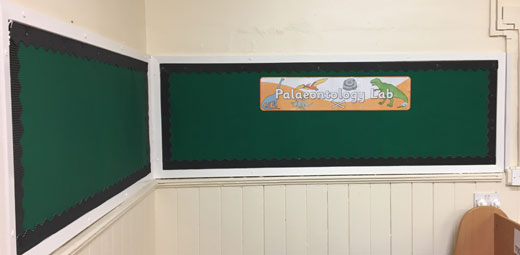
Class 1 (Reception and Year 1) Have a Palaeontology Lab!
The FS2/Year 1 class have a palaeontology laboratory.
Picture credit: Hanging Heaton CE (VC) J & I School/Everything Dinosaur
Spacious and Tidy Classrooms
The spacious and well-appointed classrooms have lots of display boards, so that the children’s topic work can be highlighted. Class 1, which consists of a mixed group of Reception and Year 1 children even have a part of the large classroom designated as a palaeontology lab, just the place to showcase all their dinosaur discoveries.
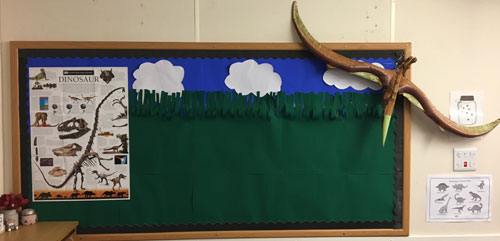
A Display Board in Class 2 Ready for Dinosaur Facts and Figures
Year 1/2 classroom ready for the dinosaurs term topic.
Picture credit: Hanging Heaton CE (VC) J & I School/Everything Dinosaur
Class 2 have a display board all ready to post up their dinosaur themed work. The inflatable pterosaur makes a lovely addition, perhaps the children will learn about flying reptiles as part of their studies. Prior to the two workshops, our dinosaur and fossil expert briefed the enthusiastic teaching team on how to maximise the learning from the sessions. In addition, a number of extension resources were provided.
Over the course of the morning, there were lots of opportunities for the teaching team and the learning support assistants to take plenty of photographs, all very useful when it comes to recalling and recounting activities.
Once back in the office, the dinosaur expert sent over some additional teaching resources to help support the two classes with the scheme of work. A challenge for the children was could they design their own dinosaur? We look forward to seeing the results.
Everything Dinosaur Stocks the New for 2018 Safari Ltd Booklet
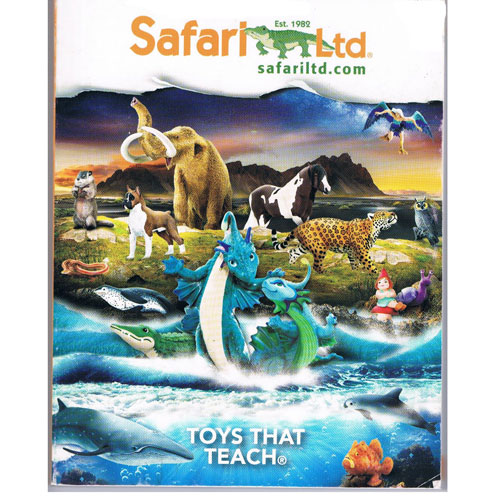
Everything Dinosaur stocks a range of collector booklets and recently the new for 2018 Safari Ltd collectors booklet has arrived. This handy guide enables dinosaur model fans to see the full range of the prehistoric animal models that are currently produced by Safari Ltd, the majority of which are within the “Wild Safari Prehistoric World” portfolio.
The 2018 Safari Ltd collectors booklet is now available from Everything Dinosaur. This handy guide to the Safari model range including the “Wild Safari Prehistoric World” series can be requested from us, or simply when placing an order, add a booklet to your shopping cart, it is free, only the subsidised postage to pay if it is ordered separately.
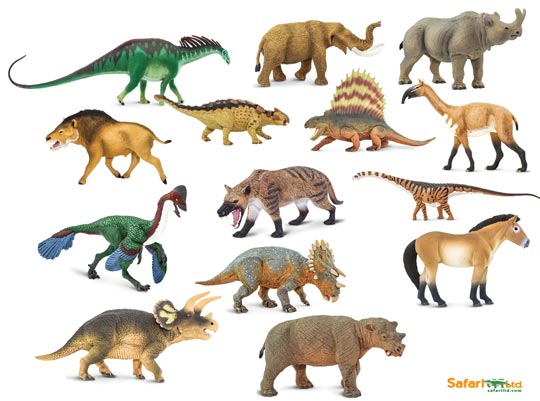
Safari Ltd have something like 850 figures and sets within their huge range. This year, they have added a whopping fourteen new sculpts of prehistoric animals for dinosaur and model fans to collect. This total does include the Przewalski’s horse figure and the beautiful model of the Permian predator Dimetrodon (sail-backed reptile).
Lots of New Models Added to the Range in 2018
New figures from Safari Ltd for 2018 (prehistoric animals).Picture credit: Everything Dinosaur.
Picture credit: Everything Dinosaur
Replacing the Carnegie Collectables Series
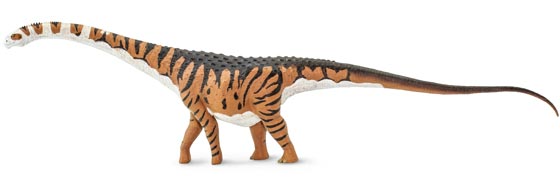
With the retirement of the Carnegie Collectables series of scale models, Safari Ltd have set about replacing some of these figures with new models, hence the introduction of a new Triceratops and Ankylosaurus, for example. It is great to see such a wide range of new for 2018 model introductions. The new figures (illustrated above), include both prehistoric mammals as well as dinosaurs and a substantial temporal range is represented. All credit to Safari Ltd for making models of some lesser known dinosaurs such as Malawisaurus (M. dixeyi). This sauropod heralds from the Sitwe Valley region of northern Malawi and it was first described ninety years ago by the English-born, South African palaeontologist Sidney Henry Haughton.
The New for 2018 Wild Safari Prehistoric World Malawisaurus Dinosaur Model
The Wild Safari Prehistoric World Malawisaurus dinosaur model from Safari Ltd.
A Personal Favourite
We received an email from a collector last week that asked which of the new Safari Ltd models was our personal favourite? It is quite hard to pick a single figure from such an excellent range, however, after a discussion, we agreed that the Macrauchenia replica with its beautiful colour scheme and attention to detail was probably our current favourite. Which of these new models from Safari Ltd is your favourite?
Model collectors and fans of the Safari Ltd product range can peruse at their leisure all the new additions as well as viewing their favourites in the pocket-sized 2018 Safari Ltd collectors booklet.
In Praise of the Papo Pachyrhinosaurus Dinosaur Model
It was sad to hear that the excellent Papo Pachyrhinosaurus dinosaur model was being retired by the French model and figure manufacturer. This horned dinosaur replica is now out of production and dinosaur fans and collectors will find the Pachyrhinosaurus more and more difficult to find in the future. Fortunately, Everything Dinosaur was able to acquire some of the models from the last ever production run and this beautifully sculpted model of a Late Cretaceous herbivorous dinosaur is still available from the UK-based dinosaur company. Everything Dinosaur were able to assist a dinosaur model collector to choose a Papo Pachyrhinosaurus to add to their model collection.
Papo Dinosaur Models
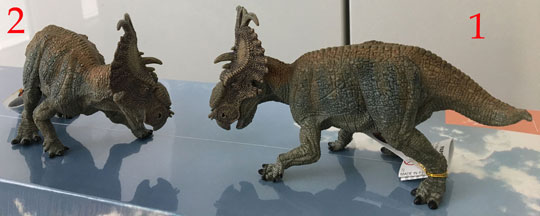
We were asked to take some pictures for a discerning Papo collector so that they could select a replica for us to send to them. Not a problem, one of our team members was happy to personally select a couple of models and to email some photographs so the collector could choose which Pachyrhinosaurus they wanted.
A Pair of Picturesque Papo Pachyrhinosaurus Models
To assist the model collector with their choice, each of the images was labelled so that the two models could be distinguished from each other. In the picture above, it looks like the two dinosaurs are about to challenge each other to a fight. Scientists believe that horned dinosaurs may have used their huge neck frills and horns to display to one another, they may also have indulged in shoving and butting matches, to win mates or perhaps to decide social hierarchy within the herd.
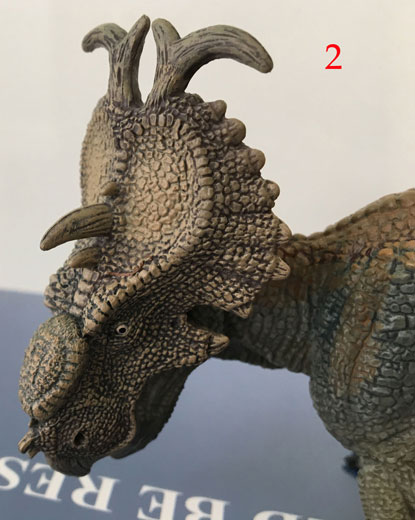
A Close-up View of the Beautiful Head and Neck Frill of the Papo Pachyrhinosaurus Dinosaur Model
The Papo Pachyrhinosaurus dinosaur model was retired in 2017.Picture credit: Everything Dinosaur.
Picture credit: Everything Dinosaur
A Wonderfully Detailed Dinosaur Model
The Papo Pachyrhinosaurus is a wonderfully detailed dinosaur model, the picture above shows a close-up view of the neck frill and the skull. These really are beautiful and very detailed models.
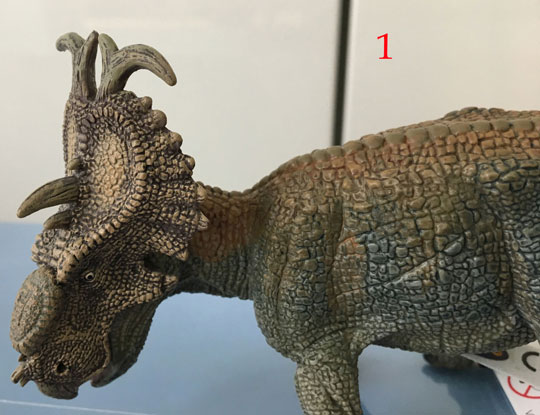
The Model Collector Chose Pachyrhinosaurus Number 1
A Papo horned dinosaur model (Pachyrhinosaurus). Picture credit: Everything Dinosaur.
Picture credit: Everything Dinosaur
It was a difficult decision, but in the end the dinosaur model collector decided on model number 1. This has been set aside and is ready to go out with some other prehistoric animal figures that the collector had ordered. Good job the collector was able to get themselves a Papo Pachyrhinosaurus to add to their collection, after all, this figure is rapidly becoming rare and, just like Pachyrhinosaurus, this model is soon going to be extinct.
Staff at Everything Dinosaur are expecting a shipment of PNSO prehistoric animal models to arrive very soon at the company’s warehouse. These rare and difficult to obtain replicas and figures will soon be back in stock at Everything Dinosaur. The shipment will include PNSO Age of Dinosaurs models such as Shantungosaurus, Megalodon and Huanghetitan. In addition, the company is expecting to receive a number of large PNSO Family Zoo figures including the spectacular African Elephant replica and the White Rhinoceros figure.
Rare PNSO Models Coming Back into Stock at Everything Dinosaur
PNSO box art- Triceratops. Coming into stock at Everything Dinosaur
Many of the models are huge, such as the enormous Basilosaurus prehistoric whale figure, look out also for dinosaurs such as Mandschurosaurus, Euhelopus and the massive Chungkingosaurus coming back into stock. For the PNSO Family Zoo range, we are delighted to welcome back the PNSO Family Zoo White Rhinoceros model.
PNSO Family Zoo Chungkingosaurus is Coming Back into Stock at Everything Dinosaur
PNSO Chungkingosaurus dinosaur model.
Picture credit: Everything Dinosaur
The picture above shows the PNSO Chungkingosaurus replica, which measures fifty-two centimetres long and the head stands nearly twenty centimetres off the ground.
The PNSO Family Zoo range of models consists of twenty animal models, representing living animals, including creatures as diverse as lions, crocodiles, pigs, goats, horses and cheetahs. Each model is beautifully, hand-painted and supplied in its own blister pack.
Not Just Dinosaurs – Prehistoric Mammals and Sharks Too
Although the range is entitled “PNSO Age of Dinosaurs”, there are also two extinct animals featured which are not dinosaurs, in fact both these animals evolved long after the non-avian dinosaurs became extinct. Firstly, there is the amazing Basilosaurus replica, a model of a prehistoric whale that is coming into stock. Joining the PNSO Basilosaurus will be the ultra-rare and very difficult to obtain PNSO Megalodon model, which is now out of production. The future of the entire PNSO model and replica range is in doubt, whether or not Everything Dinosaur will be able to get any more figures is debatable, so we urge all collectors and model fans to grab these when they arrive.
A spokesperson from Everything Dinosaur commented:
“The PNSO models have been very difficult to obtain and we know that the whole future of the product line is in doubt. The Megalodon model is already out of production but we are bringing the very last of these figures with our next shipment. Everything Dinosaur remains committed to helping dinosaur fans and collectors with their prehistoric animal and figure collections.”
By Mike|2023-08-30T08:25:16+01:00January 16th, 2018|Categories: General Teaching, Key Stage 1/2|Comments Off on Dinosaurs a Roaring Success at Barford Primary School
Year 1 Pupils Study Dinosaurs at Barford Primary School
Children in Year 1 classes (1G and 1L) at Barford Primary (Ladywood, Birmingham), are spending part of the spring term learning all about dinosaurs, fossils and life in the past. The enthusiastic teaching team have put together a diverse and challenging scheme of work and they have lots of exciting activities planned for the budding dinosaur experts in Key Stage 1.
Dinosaurs a Roaring Success
The well-maintained school buildings are adorned with amazing artwork, posters and display boards that showcase the children’s talents as well as providing inspiration and celebrating the rich culture and diversity of the local community.
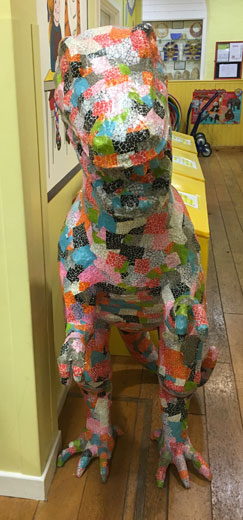
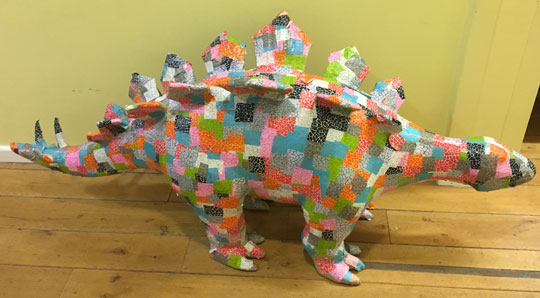
In the small hall, in which Everything Dinosaur conducted their dinosaur themed workshops with the two classes, there stands a pair of prehistoric animal sculptures. On one side of the hall is a colourful Tyrannosaurus rex and by the opposite wall a Stegosaurus can be seen.
The Beautiful Sculpture of a T. rex at Barford Primary School
The culture of the local community is celebrated throughout the school with many inspirational figures depicted on the walls of the corridors linking the classrooms, famous figures from history such as Mary Seacole, Mahatma Gandhi and Martin Luther King. The Tyrannosaurus rex and the Stegosaurus sculptures are not the only animals in the school, there are several beautiful penguins and even a statue of a large deer, all helping to motivate the children.
The Stegosaurus Sculpture on Display at Barford Primary School
According to the last Ofsted inspection letter, more than half of the pupils at the school speak English as an additional language. However, the teaching team with the support of the senior management, have devised effective policies to support these children.
Dinosaurs as a Term Topic
Dinosaurs as a term topic lends itself to all sorts of different learning, we are looking forward to seeing some of the children’s creations inspired by our design a dinosaur extension activity. At the end of the topic, parents and guardians will be invited in to see some of the pupil’s work. These events are very popular with the “grown-ups” eager to see what their charges have been up to. Mary Anning will feature prominently in the term topic and we provided additional teaching resources including a “sea shells tongue twister” for the children to try. Can they create their own poems about dinosaurs?
Diluvicursor pickeringi – Turkey to Rhea-sized Herbivore from the Early Cretaceous
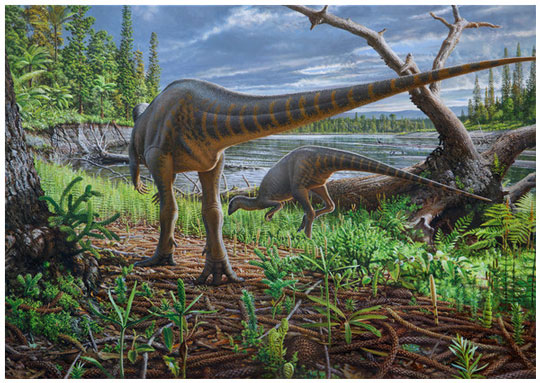
Analysis of the fossilised remains of a little ornithopod have led to the establishment of a new species of dinosaur, one that roamed the Australian-Antarctic rift valley approximately 113 million years ago. Described from an almost complete tail and a partial right hind limb including foot bones, the dinosaur has been named Diluvicursor pickeringi (pronounced di-loovy-cursor pickering-i).
The species name honours David Pickering, (formerly Museums Victoria’s Vertebrate Palaeontology Collections Manager), a scientist who played a key role in the study of Early Cretaceous vertebrate fossils from the Otway and Gippsland Basins of the Australian State of Victoria. David sadly passed away following complications after a serious car accident whilst the fossil material was being prepared and studied.
An Illustration of a Pair of Diluvicursor pickeringi Feeding Near a Fast-flowing River
A pair of Diluvicursor dinosaurs feeding next to a fast running river in the Antarctica/Australia rift valley 113 million years ago.
Picture credit: P. Trusler
A Fossil Discovery in 2005
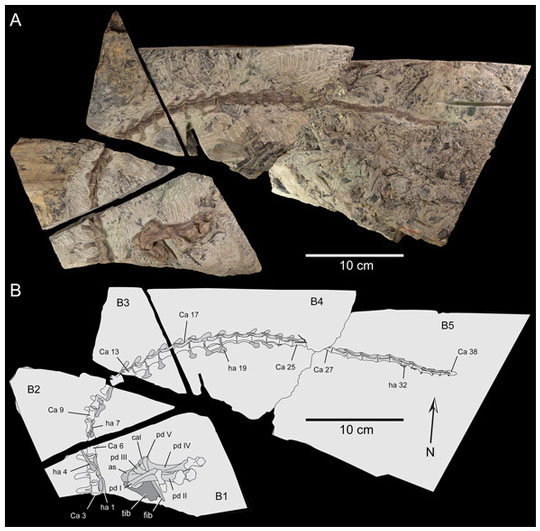
The fossils of this dinosaur described as being about the size of a turkey or a rhea (estimated maximum total body length, including tail at around 2.3 metres), were found on five slabs of rock that form part of a deposit representing a log jam event created in a high-energy (fast-flowing) river. Writing in the academic journal “Peer J”, the authors of the scientific paper state that this newly described herbivorous dinosaur will help to shed new light on the phylogenetic relationships and the diversity of Ornithopoda of the Southern Hemisphere.
Dr Matt Herne (University of Queensland) and the corresponding author for the paper explained the significance of the fossils, which were excavated from a sea platform near Cape Otway.
He stated:
“Diluvicursor shows for the first time that there were at least two distinct body-types among closely related ornithopods , small, two-legged plant-eating dinosaurs in this part of Australia. One called Leaellynasaura was lightly built with an extraordinarily long tail, while the other, Diluvicursor, was more solidly built, with a far shorter tail.”
The Holotype Fossil Material of Diluvicursor pickeringi
The five blocks (B1 to B5) of the holotype fossil of Diluvicursor (NMV P221080) note scale bar 10 cm. A schematic diagram of the fossil material is shown below (scale bar 10 cm).
Picture credit: Peer J
A Fast Running Dinosaur
Analysis of the leg bones suggest that Diluvicursor was a fast running dinosaur. The corpse of this dinosaur, representing a juvenile animal, came to rest mixed up with other debris deposited by a fast-flowing river. The genus name reflects these two conclusions, Diluvicursor translates as “flood runner”.
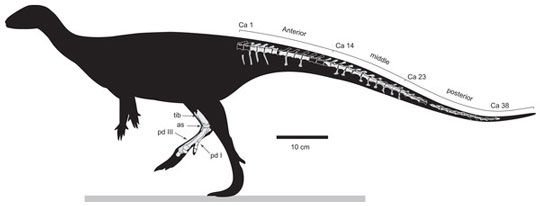
The Proposed Body Shape of Diluvicursor with the Known Fossil Bones in Skeletal Position
Diluvicursor schematic restoration in left lateral view, showing preserved bones (light shading) and incomplete caudal vertebrae (outlined).
Picture credit: Peer J
Volunteer prospector George Caspar discovered the fossil material in 2005 whilst exploring a coastal shore platform which forms part of the Eumeralla Formation of south-eastern Australia. It is likely the carcass became trapped and buried along with flood-transported tree stumps, logs and branches in deep scours at the base of what was once a powerful river.
Dr Herne added:
“The Diluvicursor skeleton was discovered in 2005, but it’s taken this long to fully understand the geology of the area where it was found, and also Diluvicursor’s relationships. Much of the fossil vertebrate material from this site has yet to be described, so we hope to discover further dinosaur species, specimens and other exciting animals there.”
Diluvicursor pickeringi with an Injured Foot
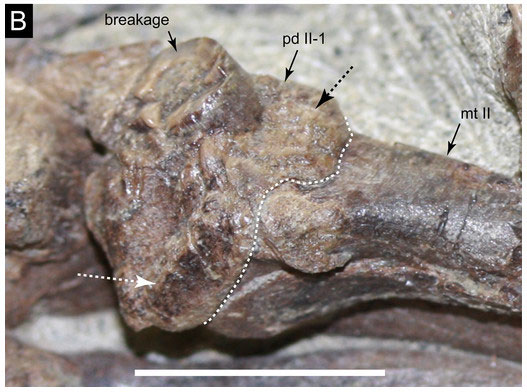
A close examination of the right foot of the Diluvicursor specimen suggest that this dinosaur may have injured its foot some time before it perished. Some of the bones are not aligned correctly and although this could be as a result of taphonomy, preserved roughened bone surfaces, suggest some form of trauma or disease. The scientists conclude that the affected joint in the foot could have been immobilised. The researchers are hopeful that further examination including a scan of the foot using synchrotron radiation X-rays will produce more data.
The Pathology on the Right Foot of the Diluvicursor Specimen
A close up view of the second toe. Dotted line in B indicates rugose bone on the proximal margin of pedal digit IV-1. Dashed arrows in A–B indicate areas of osteophytosis (bone spurs around the damaged joint).
Picture credit: Peer J
There are plans to display the post cranial fossil material at Melbourne Museum and the aim is to build up a much more complete picture of the palaeoenvironment of this part of Gondwana during the Albian faunal stage of the Cretaceous. Other scientists involved in this study include Dr Steven Salisbury, PhD student Jay Nair and Dr Vera Weisbecker (University of Queensland), along with colleagues from Monash University.
The scientific paper: “A New Small-bodied Ornithopod (Dinosauria, Ornithischia) from a Deep, High-energy Early Cretaceous River of the Australian–Antarctic Rift System” by Matthew C. Herne, Alan M. Tait, Vera Weisbecker, Michael Hall, Jay P. Nair, Michael Cleeland and Steven W. Salisbury published in Peer J.
Everything Dinosaur acknowledges the help of the University of Queensland in the compilation of this article.
By Mike|2024-05-10T18:25:50+01:00January 15th, 2018|Categories: Key Stage 1/2|Comments Off on Key Stage 1 Classes Study Famous Scientist Mary Anning
Key Stage 1 Classes Study Mary Anning
Children in Year 1 and Year 2 at St John with St Mark Primary in Bury have been studying dinosaurs and fossils. As part of a provocation to help enthuse the children, the classes were set some homework, could they write some facts about Mary Anning in their work books?
Learning About Mary Anning (Key Stage 1)
Helping children to learn about Mary Anning. Picture credit: Everything Dinosaur.
The teaching team was very impressed with the research that the children had carried out. When Everything Dinosaur’s fossil expert visited the school, he was shown some of the entries in the work books that the children had completed over the weekend. The Key Stage 1 children had found out lots of amazing facts about this Georgian lady who became a famous fossil collector on the Dorset coast.
The dinosaurs and fossils term topic has got off to a fantastic start, well done to all the eager, budding palaeontologists in Year 1, Year 1/2 and Year 2. During the workshops we conducted at the school, our dinosaur and fossil expert made sure to include lots of information about Mary Anning to help support the children’s learning.
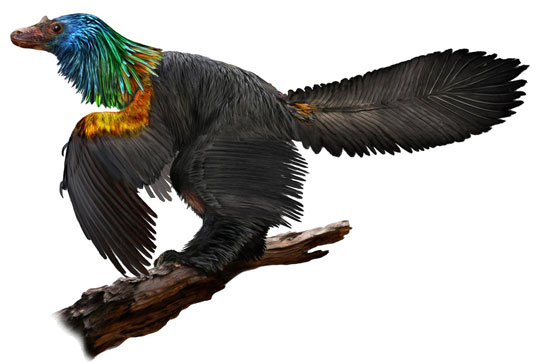
A team of scientists, writing in the journal “Nature Communications”, have described a new species of feathered dinosaur from Jurassic-aged rocks in China. The dinosaur has been named Caihong juji, which means “rainbow with the big crest” in Mandarin. This duck-sized dinosaur sported a bony crest on the top of its snout and its neck feathers may have been iridescent, as brightly coloured as feathers seen on humming birds today.
An Illustration of the Newly Described Feathered Dinosaur Caihong juji
An illustration of the Jurassic feathered dinosaur Caihong juji.
Picture credit: Velizar Simeonovski
Caihong juji A Bird-like Dinosaur
Caihong has been assigned a basal position in the Deinonychosauria, a clade of theropod dinosaurs that includes the dromaeosaurids and the troodontids and it roamed the forests of northern China some 161 million years ago (Oxfordian faunal stage of the Jurassic). Although it was very bird-like, it was very different from its contemporary Anchiornis (A. huxleyi), as it lacked the bird-like triangular skull, however, it did possess proportionately long forearms. C. juji had a long, narrow skull, superficially similar to the skulls of the much later Velociraptorinae.
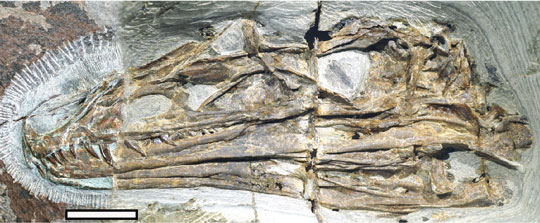
The Fossilised Skull of the Newly Described Basal Deinonychosaur Caihong juji
The skull of the newly described Caihong juji. White scale bar = 1 cm.
Picture credit: Hu et al
A Shaggy Ruff of Rainbow Feathers
Lead author of the study, Professor Dongyu Hu (Shenyang Normal University), in collaboration with scientists from the University of Ghent, the Chinese Academy of Sciences, the University of Texas at Austin and the University of Geosciences (Beijing), subjected the fossil specimen to scanning electron microscope analysis to characterise 2,460 structures associated with the feathers.
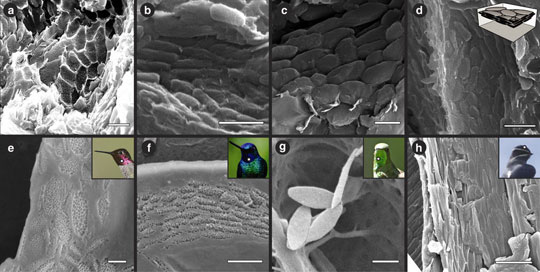
Cross-sectional focused ion beam imaging revealed the presence of melanosomes, which are responsible for pigmentation and colouration. When these fossil structures were compared to extant birds, the scientists were able to determine that Caihong had a shaggy ruff of iridescent, brightly-coloured feathers.
Comparing melanosomes found in the fossil material to extant Aves. All scale bars = 1,000 nm.
Picture credit: Nature Communications/Chao P.C.
The scanning electron microscope images above show platelet-like nanostructures on the fossilised feathers of C. juji (a-d). These structures are then compared with melanosomes found in living birds, (e) Anna’s humming bird (Calypte anna), (f) a white tailed starfrontlet (Coeligena phalerata), a black-tailed trainbearer (Lesbia victoriae) and a moustached treeswift (Hemiprocnemystacea), picture (h).
Commenting on the significance of the discovery, Professor Julia Clarke (University of Texas at Austin) stated:
“Iridescent colouration is well known to be linked to sexual selection and signalling and we report its earliest evidence in dinosaurs. The dinosaur may have a cute nickname in English, Rainbow, but it has serious scientific implications.”
A Combination of Ancient and More Modern Features
The fossil material, consisting of a slab and its counter slab was discovered by a farmer in 2014 at Gangou, Qinglong, (northern Hebei Province). The rocks in this area are associated with the Tiaojishan Formation and exposures are also found in the neighbouring province of Liaoning. Numerous feathered theropods have been found in the compressed volcanic ash layers and other sedimentary rocks associated with this region of northern China.
Caihong possessed a bony crest, a feature associated with earlier theropods from the Triassic and the Early Jurassic, the crest may have played a role in display or perhaps helping to distinguish males from females. The bony crest could have evolved as a result of sexual selection pressure. This ancient theropod feature contrasts with the identification of feathers with iridescence, this is the first time that such a feature has been identified in a non-avian dinosaur.
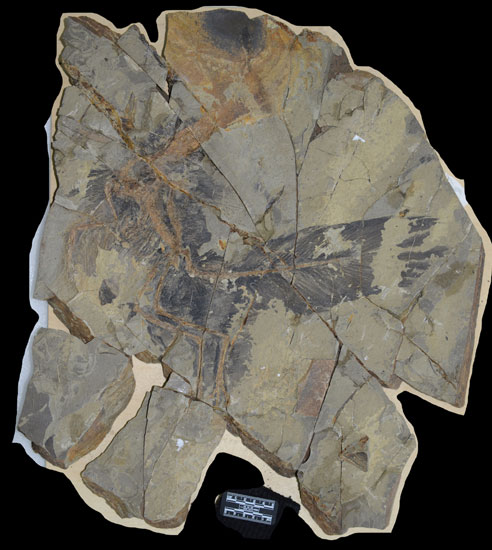
Caihong juji Fossil Material
The crushed and flattened remains of Caihong juji (holotype specimen). The bones are coloured brown, whilst the feather impressions are black.
Caihong is also the earliest known dinosaur to have had asymmetrical feathers, similar in shape and structure to those feathers found on the wings of modern birds that help to control flight. However, unlike extant birds, Caihong’s asymmetrical feathers were on its tail, not its short forelimbs, a discovery that suggests that early birds may have used their tails to help steer or to assist with lift.
Co-author of the research, Xing Xu (Chinese Academy of Sciences) explained:
“The tail feathers are asymmetrical but wing feathers are not, a bizarre feature previously unknown among dinosaurs including birds. This suggests that controlling [flight] might have first evolved with tail feathers during some kind of aerial locomotion.”
Professor Clarke added:
“This combination of traits is unusual. It has a rather Velociraptor-looking low and long skull with this fully feathered, shaggy kind of plumage and a big fan tail. It is really cool… or maybe creepy looking depending on your perspective.”
An examination of the tail feathers associated with the 40 centimetre-long Caihong specimen suggests that the tail feathers would have provided a larger surface area than the famous Archaeopteryx, a theropod capable of powered flight, that lived a few million years later. A spokesperson from Everything Dinosaur explained, that although Caihong could have been arboreal and it may have hopped from branch to branch, it was probably not volant (capable of powered flight).
Evidence of Mosaic Evolution
The combination of ancient and more modern anatomical traits in this basal deinonychosaur is an example of mosaic evolution, whereby, several different traits evolve independently. The team hope to continue their research in a bid to understand how Caihong juji fits into the story of the evolution of flight in the Dinosauria.
The scientific paper: “A Bony-crested Jurassic Dinosaur with Evidence of Iridescent Plumage Highlights Complexity in Early Paravian Evolution” by Dongyu Hu, Julia A. Clarke, Chad M. Eliason, Rui Qiu, Quanguo Li, Matthew D. Shawkey, Cuilin Zhao, Liliana D’Alba, Jinkai Jiang and Xing Xu published in the journal “Nature Communications.”
Everything Dinosaur acknowledges the assistance of a press release from the University of Texas at Austin in the compilation of this article.
A Review of the 1:18 Scale Rebor “Raptor” Called “Gunn” by JurassicCollectables
Those talented people at JurassicCollectables have produced another Rebor “Raptor” review. Following on from their very informative video review of the female Velociraptor “Rose”, JurassicCollectables has focused their attention on Rose’s partner, the formidable “Gunn”, a 1:18 scale replica representing a male in the Velociraptor pairing.
JurassicCollectables Reviews the Rebor 1:18 Scale Figure “Gunn”
Video credit: JurassicCollectables
Wonderful Painting and Amazing Detail
The narrator comments that the Rebor Velociraptor models, especially “Gunn” are very reminiscent of the Velociraptors depicted in the Jurassic Park III film, which came out in 2001. The pose reminded the video presenter of the pouncing Velociraptor scene in which a pack of these dinosaurs try to grab a person who is hanging from a tree branch. In the video, the beautiful paint scheme is discussed, and the narrator comments on the multiple washes and subtle tones that have been used to colour this replica. Whilst the Rebor “Gunn” is being reviewed, viewers are given the chance to see “Gunn” and “Rose” together and what an attractive pair they make.
The JurassicCollectables presenter states that these two Velociraptors “compliment each other really well”. He states that they are “gorgeous looking Raptors”.
During this most informative and helpful video review, the narrator demonstrates that the underside of the feet of “Gunn” are coloured a reddish hue. Rebor certainly make top quality replicas and the attention to detail is amazing. When the model is turned upside down the underside of the feet with their intriguing colouration and fine texture are revealed. The commentator implies that the colouration could have come about as the dinosaur has been standing in the blood and gore from a recent pack kill. At Everything Dinosaur, we are unable to offer an explanation ourselves, but it does give us the opportunity to show the underside of the model revealing the exquisite detail.
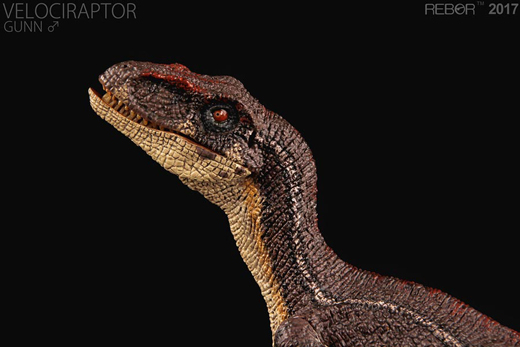
The Colouration of the Feet and Beautiful Skin Texture of the Velociraptor Figure “Gunn”
The underside of the feet and the beautiful skin texture of Rebor “Gunn”.
Picture credit: Everything Dinosaur
Rebor Replicas and Jurassic Park III
The JurassicCollectables video review lasts a little over twelve minutes and it is great to see both Rebor “Gunn” and “Rose” shown together. In addition, the video also compares the earlier Rebor “Winston” with their latest figure “Gunn”. The narrator makes an excellent point about these Rebor figures working well with the classic “Jurassic Park” models.
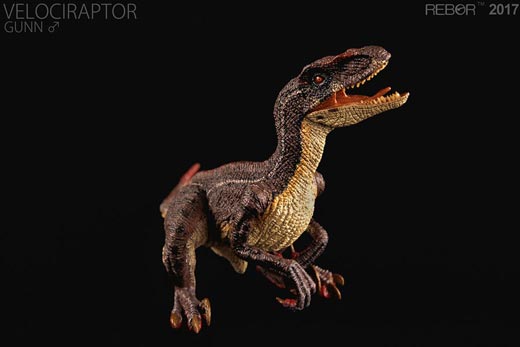
The Rebor 1:18 Scale Velociraptor Replica “Gunn”
The Rebor 1:18 scale Velociraptor model “Gunn”.
Picture credit: Everything Dinosaur
JurassicCollectables has a fantastic YouTube channel. It has lots and lots of brilliant dinosaur themed videos and product reviews and JurassicCollectables has just celebrated reaching the landmark of 60,000 subscribers. Congratulations JurassicCollectables. Visit JurassicCollectables on YouTube and subscribe: JurassicCollectables on YouTube.
Great for Dinosaur Dioramas
Rebor has produced several Velociraptor models over the last eighteen months or so. The video review shows both “Gunn” and “Rose” compared to “off colour Alan”, as well as highlighting the hatching Velociraptor blind box series made by Rebor. The narrator explains that these models with their different, contrasting poses would be great for use in dinosaur dioramas. Fortunately, the JurassicCollectables YouTube channel includes video reviews of all the Rebor “Raptors”, so viewers can see the full range of these Rebor figures.
Rebor “Gunn” Features in a Video Review by JurassicCollectables
By Mike|2024-05-10T07:32:10+01:00January 14th, 2018|Categories: General Teaching, Key Stage 3/4|Comments Off on Giant Burrowing Bat from the Miocene Described in New Study
Giant Burrowing Bat from New Zealand
A team of scientists from the University of South Wales, in collaboration with colleagues from Queensland University, Duke University, Canterbury Museum, and co-workers from the Museum of New Zealand Te Papa Tongarewa and the American Museum of Natural History, have identified a new species of giant, burrowing, Miocene bat. Fossil bones and teeth of the extinct species, which was about three times the size of most extant non-fruit eating bats, were excavated from Miocene-aged deposits near to the town of St Bathans in central Otago (New Zealand, South Island).
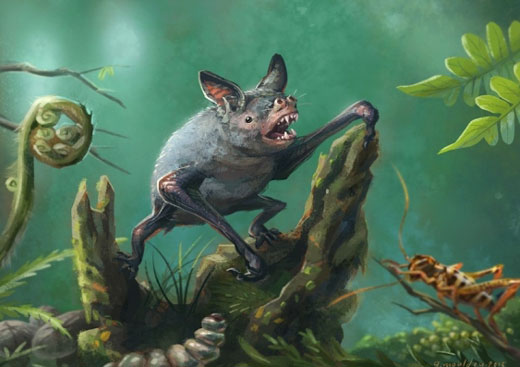
An Artist’s Illustration of the New Species of Giant Burrowing Bat (Vulcanops jennyworthyae)
Vulcanops illustration.
Picture credit: Gavin Mouldey
Writing in the academic journal “Scientific Reports”, the scientists describe the new species, named Vulcanops jennyworthyae, as a cursorial species, as although they could fly, they were very confident on the forest floor, scurrying through the leaf litter searching for insects and other invertebrates. Today, burrowing bats are only found now in New Zealand, but they once also lived in Australia. It is thought that a lack of terrestrial predators in more isolated parts of the antipodes allowed bats to exploit a ground-dwelling niche without having to resort to the high energy requirements of constant flight.
A Giant Bat?
Described as a giant, might make readers think of some nightmarish beast, but with an estimated weight of just forty grammes, although larger than insectivorous bats around today, Vulcanops jennyworthyae weighed less than a golf ball. It would have posed no danger to larger animals or people had they been around some 19 to 16 million years ago when Vulcanops roamed. It is the first new bat species to be added to the list of New Zealand’s Chiroptera (bats) for more than 150 years.
The Miocene species has been named Vulcanops jennyworthyae, after team member Jenny Worthy who found the bat fossils and in recognition of her role in helping to reveal the unique St Bathans Miocene fauna, and after Vulcan, the mythological Roman god of volcanoes and fire.
It is likely that climate change leading to a period of general cooling and drying drove the overall loss in bat diversity in New Zealand, just two bat species today comprise the entire native land mammal fauna. All other modern land mammals in New Zealand have been introduced by people within the last 800 years.