All about dinosaurs, fossils and prehistoric animals by Everything Dinosaur team members.

Articles, features and information which have slightly more scientific content with an emphasis on palaeontology, such as updates on academic papers, published papers etc.

6 06, 2014

Anthracosuchus balrogus Giant Palaeocene Crocodile Named in New Research

By |2024-05-02T06:13:51+01:00June 6th, 2014|Categories: Dinosaur and Prehistoric Animal News Stories, Dinosaur Fans, Main Page, Palaeontological articles|0 Comments

Columbian Giant Crocodile – Anthracosuchus balrogus

Vertebrate fossils from a coal mine in north-eastern Columbia have provided palaeontologists with a fascinating insight into life in the tropics in the first few million years after the Cretaceous mass extinction event.  The dinosaurs may have gone but preserved in the Cerrejón Formation are the remains of giant reptiles who were the apex predators within this rainforest community.  A paper has just been published in the scientific journal “Historical Biology” that reports on the discovery of yet another large crocodile genus from this locality, one that probably preyed upon giant turtles, it in turn may have been hunted by Titanoboa, the largest snake known to science.

“Living Fossils”

Crocodiles may be referred to as “living fossils”, a term that most palaeontologists dislike as it suggests that organisms do not change much over time.  True, the basic body plan (bauplan) of the crocodilians may not have changed much since the early Mesozoic, but the fossil record shows that crocodiles evolved to occupy a vast array of ecological niches.  This new discovery, a crocodile named Anthracosuchus demonstrates this as it had a blunt, short snout, in direct contrast to its long-snouted close relatives.

The new species lived in what was an inland, freshwater environment, an extensive tropical floodplain that was covered in dense jungle and crossed by a number of large rivers which led into the nascent Caribbean Sea.  South America was an island, there was also a substantial marine intrusion to the west of the Cerrejón Formation, this marine environment stretching into what is now central Bolivia.  Reptiles dominated the ecosystem and at 4.8 metres in length Anthracosuchus, with its very powerful jaws was probably a top predator.

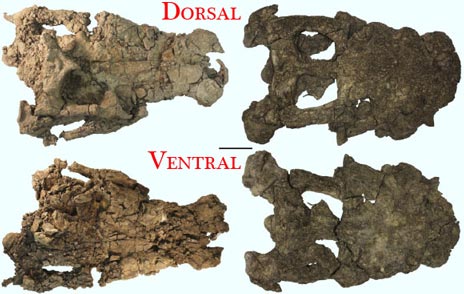
 Views of Skull Material Ascribed to this Genus (A. balrogus)
A crocodile with a blunt, broad snout.

A crocodile with a blunt, broad snout.

Picture credit: Alexander K. Hastings et al

Anthracosuchus balrogus

The picture above shows two of the four fossil skulls assigned to this new genus.  The top images are a view of the skulls looking down onto them, viewing the top (dorsal view), the two images underneath are views of the underside of the skulls (ventral view).  All the fossil material including limb bones, teeth and osteoderms (armoured scales) were excavated from a clay layer immediately below a layer of coal in the Cerrejón mine.

The fossils date from 58-60 million years ago (Palaeocene).  This crocodile has been classed as a member of the dyrosaurid crocodiles, a widely dispersed group of Late Cretaceous/Palaeocene crocodiles that, for the most part are marine and characterised by long, narrow snouts.  Here is a member of the Dyrosauridae, with a very different snout and one from strata laid down inland.  These types of crocodile are now extinct, it is believed an ancestor of the dyrosaurids was the mighty Sarcosuchus whose fossils are associated with Cretaceous aged strata from Niger (Africa).

Discovered in 2005

The first skull of this new dyrosaurid was discovered in 2005, but the skull was missing its front end.  The back of the skull indicated that this type of crocodile probably had a blunt, short snout.  This was confirmed in 2007 when a second skull, this time with its front end intact, was found.  Two more skulls were excavated later on that year, making the total number of individuals known to be at least four.

The new species of crocodile was discovered by a team of University of Florida researchers, led by Jonathan Bloch, Associate Curator of Vertebrate Palaeontology at the Florida Museum of Natural History, Alexander Hastings (Florida Museum of Natural History), assisted by Carlos Jaramillo, a palaeobotanist with the Smithsonian Tropical Research Institute.  All specimens of the new taxon are deposited at the Museo Geológico José Royo y Gómez, Colombian Geological Survey, Bogotá, Colombia.  Casts of these specimens are also deposited at the collections of the Florida Museum of Natural History.

“Coal Crocodile”

Anthracosuchus means “coal crocodile”, a reference to the fossil remains being found adjacent to a coal seam.  The trivial or specific name is derived from “Balrog”, a fiery demon that features in Tolkien’s “Lord of the Rings”.  Balrog inhabited the deep mines of Moria, so since this crocodile’s fossils have been found in a mine, the trivial name is very apt.

A number of crocodile fossils have been found at the Cerrejón site, to read about the discovery of another, related crocodile species: New Crocodile Species in Columbian Mine.

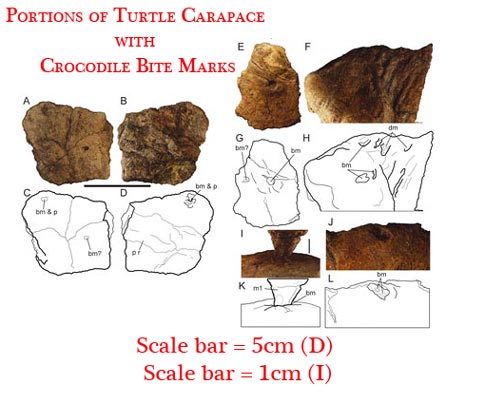
Remains of turtle shells, discovered in close proximity to the crocodile fossils, show signs of damage.  There are scratches, most likely made by teeth and also at least one example of a healed bite mark.  The scratches and bite marks match the profile of the teeth of A. balrogus, this suggests that this crocodile, related to long-snouted dyrosaurids, adapted to an inland habitat and a diet of turtles.

 Fossilised Turtle Carapace Showing Traces of Crocodile Bites
Was this damage caused by a hungry Anthracosuchus?

Was this damage caused by a hungry Anthracosuchus?

Picture Credit: Alexander K. Hastings et al

The picture above shows a fragment of shell (A) and a line drawing (C) viewed from above (dorsal view).  Picture B and the line drawing D, are the same fragment but this time, viewed from below (ventral view).  Potential bite marks (bm) and bone regrowth after a bite (bm&p) are illustrated.

Damage to a Turtle Shell

Picture E and line drawing G are of a fragment of turtle shell viewed from the top that shows further damage, once again bite marks (bm) are indicated.  Picture F and its associated line drawing H show another fragment, bite marks and drag marks (dm) are illustrated.  Picture I and drawing J show a tooth from Anthracosuchus balrogus is analogous to the damage seen on the turtle shell fragments.  Image J and L shows a turtle fragment viewed from the top (dorsal) with bite marks.

Coeval with Titanoboa

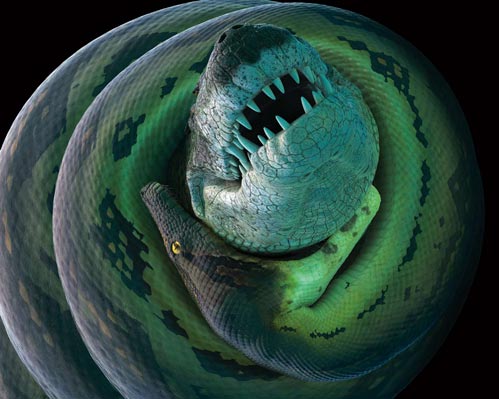
This crocodile certainly had a very powerful bite, however, it shared its environment with the largest snake known to science, the immense Titanoboa (T. cerrejonensis).  At more than three times the size of Anthracosaurus this constrictor may have preyed upon adult crocodiles.  Anthracosaurus in turn, may have hunted and eaten immature Titanoboas.  Battles between these large reptiles would have been a spectacular sight.

Titanoboa Tackles a Large Anthracosuchus
Titanoboa tackles the short-snouted Anthracosuchus.

Titanoboa tackles the short-snouted Anthracosuchus.

Picture credit: Florida Natural History Museum

To read about the discovery of Titanoboa: Titanoboa – Giant Prehistoric Snake of the Palaeocene.

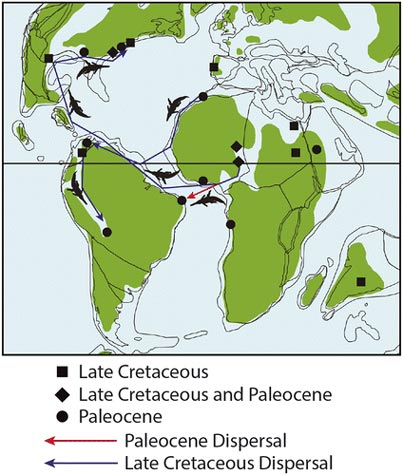
The Dyrosauridae are one of the very few types of large, marine reptile that survived the Cretaceous mass extinction event.  The discovery of a broad-snouted genus in South America will help scientists to identify how these creatures adapted to new environments.  It will also help them to piece together how these crocodiles dispersed across much of the globe from their African origins.  Fossil evidence suggests that during the Cretaceous, when the Atlantic ocean was not as wide as it is today, there were a number of dispersals of marine dyrosaurid crocodiles from Africa to the Americas. This trend seems to have continued into the early Cenozoic, with migrations east to west during the Palaeocene epoch.

Researchers Map the Dispersal of Dryosaurid Crocodiles from Africa
Dispersal and resulting distribution of dyrosaurid crocodiles.

Dispersal and resulting distribution of dyrosaurid crocodiles.

Picture credit: Alexander K. Hastings et al

5 06, 2014

A Remarkable Forty-Six Ichthyosaur Fossils Discovered in Chile

By |2024-05-02T06:14:26+01:00June 5th, 2014|Categories: Dinosaur and Prehistoric Animal News Stories, Geology, Palaeontological articles|1 Comment

Retreating Glacier Reveals Ichthyosaur Graveyard

A team of German and Chilean researchers have just about finished cataloguing, mapping and recording one of the densest assemblies of ichthyosaur fossils ever found.  Scientists from Heidelberg University and the State Museum of Natural History, Karlsruhe, in collaboration with colleagues from a number of scientific institutions in Chile, have identified a total of forty-six, complete or near complete specimens of Early Cretaceous ichthyosaurs (fish-lizards).  The fossils represent at least four species, with juveniles, pregnant females and other adult ichthyosaurs having been identified.

Ichthyosaur Fossils

All the ichthyosaur fossils represent ophthalmosaurids and the site is being heralded as the most important location discovered to date in South America that records a marine ecosystem that existed around 140 to 132 million years ago.

One of the Many Ichthyosaur Fossils Found at the Site

Fossilised remains of Early Cretaceous Ichthyosaur

Fossilised remains of Early Cretaceous ichthyosaur.

Picture credit: W. Stinnesbeck

In the picture above, the geological hammer provides scale and to the left of the picture elements of a limb and the small pebble-like bones that make up a flipper can clearly be seen.  The back-bones and ribs can also be made out.  The ichthyosaur specimen has been identified as Platypterygius hauthali.

Discovered as Glacier Retreated

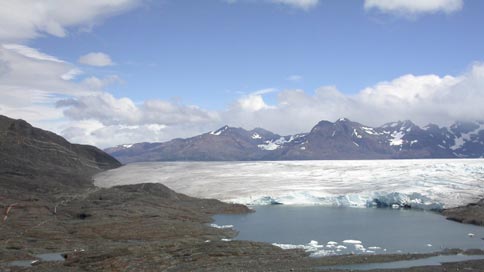
The fossils were found as a glacier retreated in the Torres del Paine National Park, southern Chile.  The retreat of the glacier (Tyndall glacier) revealing the fossils could be a case of global warming providing palaeontologists with benefits, affording them a unique insight into an ancient marine ecosystem.  Some of the ichthyosaurs are so well preserved that skin tissue imprints have been found, along with the remains of embryos within the body cavity of female ichthyosaurs.  Such is the concentration of “fish lizard” remains, that the Tyndall glacier location has been heralded as amongst the prime fossil Lagerstätten for Early Cretaceous marine reptiles worldwide.

The Remote and Beautiful Tyndall Glacier (southern Chile)

Retreating glacier reveals fossil remains.

Retreating glacier reveals fossil remains.

Picture credit: W. Stinnesbeck

Fast-swimming, Predatory Marine Reptiles

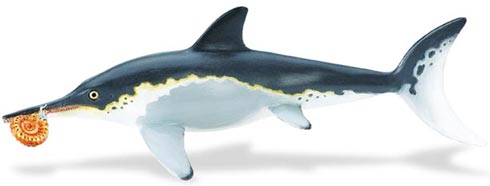
Ichthyosaurs were an Order of fast-swimming, nektonic and predatory marine reptiles with dolphin-shaped bodies.  They evolved in the Early Triassic and survived into the Late Cretaceous, eventually dying out as a group around eighty million years ago.  It is now thought ophthalmosaurid ichthyosaurs like most other ichthyosaurs, were viviparous, that is, the females retained fertilised eggs inside their body, until the embryos were sufficiently well developed to be born directly into the sea.

A Model of a Typical Ichthyosaur

Ichthyosaurus Model (Carnegie Collectibles)

Ichthyosaurus model (Carnegie Collectibles).

Picture credit: Safari Ltd

The first fossils were discovered in 2004 as scientists were mapping the retreat of the glacier.  It has taken a total of three major field expeditions for all the ichthyosaur material exposed at the site to be mapped and catalogued.  An academic paper detailing the research has been published in the scientific journal “The Bulletin of the Geological Society of America”.

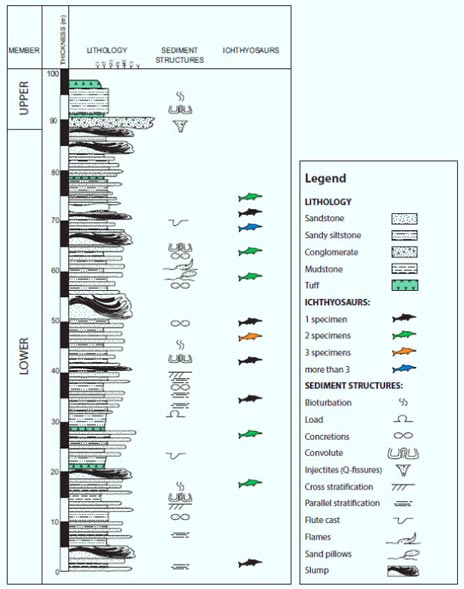
Alongside, the remains of the reptiles, the research team found ammonites, belemnites, bivalves and marine fish fossils.  In addition, there were plant fossils also preserved.  The ichthyosaurs were not found at the same level in the strata, but scattered throughout the Formation Member at several levels indicating mass mortality events occurring in this marine ecosystem from time to time.

A Diagram Representing the Deposition of the Strata and Indicating the Location of Ichthyosaur Fossils

Evidence of mass mortality events in the ecosystem.

Evidence of mass mortality events in the ecosystem.

Picture credit: W. Stinnesbeck

Interpreting the Geology

The joint German and Chilean research team have interpreted the geology of this location thus:

The gregarious ichthyosaurs lived and hunted along the north-eastern edge of a deep sea that then separated the Antarctic continent from the southern tip of South America.  Cold water rising up from the depths of a deep underwater canyon provided nutrients to sustain a large population of primary producers such as plankton.  These were fed upon by large shoals of bony fish and belemnites.  The ichthyosaurs in turn hunted the fish and the cephalopods.

With the rifting of the sea floor as geological forces gradually extended the Atlantic Ocean, there were a great number of earthquakes.  Some of these earthquakes were powerful enough to set off underwater avalanches that swept marine organisms down the steep slopes into the deeper water.  This led to the formation of several “ichthyosaur graveyards”.

Commenting on the significance of this discovery, one of the lead authors of the research paper, Professor Dr Wolfgang Stinnesbeck, Institute of Earth Sciences (Heidelberg University) stated:

“Occasionally, high energy turbiditic mudflows sucked down everything in their reach, including ichthyosaurs.  Inside the suspension flows, the air-breathing reptiles lost orientation and finally drowned.  They were instantly buried in the abyss at the bottom of the canyon.”

The speed of burial and the lack of oxygen in the mud layers permitted the exceptional degree of preservation.

The professor went added:

“The deposit is Early Cretaceous in age [Valanginian to Hauterivian faunal stage] and forms part of a deep water sequence located in the Rocas Verdes Basin, a straight separating Antarctica and South America from Late Jurassic to Early Cretaceous times.

4 06, 2014

American Fossil Dealer Jailed for Dinosaur Smuggling – A Big and Helpful Success for the Authorities

By |2024-04-12T09:10:40+01:00June 4th, 2014|Categories: Dinosaur and Prehistoric Animal News Stories, Main Page, Palaeontological articles|0 Comments

Fossil Smuggler Receives Prison Sentence

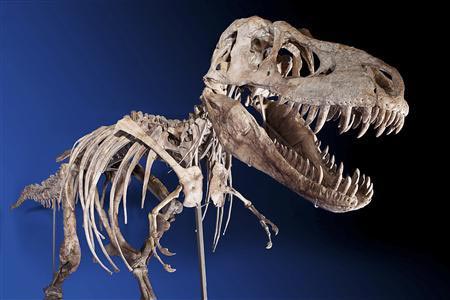
Yesterday, fossil dealer Eric Prokopi was sentenced to three months in a federal prison, plus fifteen months of supervised release for entry of goods by means of false statements, conspiracy and interstate and foreign transportation of goods converted and taken by fraud.  What ended in a Manhattan court room, had begun back on May 20th 2012, in a New York auction house, when a mounted specimen of a fearsome meat-eating dinosaur from the Late Cretaceous was sold.  Everything Dinosaur reported on the sale of the almost complete fossil skeleton of a tyrannosaur known as Tarbosaurus bataar.  The specimen sold for over $1 million USD (£630,000 GBP), but even before the auctioneer brought down the gavel, suspicions had been raised as to the origins of the specimen.

Fossil Dealer

Tarbosaurus, a close relative of the North American Tyrannosaurus rex is known from fossil material excavated from Upper Cretaceous aged sediments found in Mongolia.  Specifically, this predator’s fossil remains are associated with strata making up part of the Nemegt Formation.  It has been against the law in Mongolia to remove from the country fossils or any other artefacts regarded as culturally significant.   This law has been in effect for more than fifty years, it existed even before the formal scientific description and review of the fossilised bones and teeth that led to establishment of the Tarbosaurus genus.

To read more about the New York auction: Tyrannosaurid fossil up for auction.

Seized by the U.S. Customs and Immigration Officials

The mounted fossil was seized by U.S. custom and immigration officials and in May of last year, we reported on this specimen’s safe return to Mongolia, such had been the profile surrounding this Late Cretaceous dinosaur that even the President of Mongolia ( Elbegdorj Tsakhia), had become involved and lobbied for the fossil material to be returned back to the Asian country.

For an article about the return of the fossils: Handing a Dinosaur Over to Mongolian Officials.

The prosecution had claimed that between 2010 and 2012, Mr Prokopi had acquired and subsequently smuggled into the United States a collection of fossilised dinosaur bones, including two specimens of Tarbosaurus bataar, the remains of two duck-billed dinosaurs belonging the the Saurolophus genus, one of which was subsequently sold at auction but confiscated by U.S. customs and the remains of two Oviraptors.  In addition, it was alleged that in 2010 false documentation was used to import from China the remains of a feathered dinosaur.

Mr Prokopi, who had admitted to a number of charges when he appeared in court in December of last year, learned his fate yesterday.  A self-styled “commercial palaeontologist”, referred to by prosecutors as a “one man black market in prehistoric fossils”, Mr Prokopi’s sentence will hopefully act as a deterrent to anyone considering or already engaged in fossil smuggling.

The Tarbosaurus Skeleton Offered for Auction in New York (May 2012)

Back in Mongolia. The mounted skeleton offered for auction.

Back in Mongolia. The mounted skeleton offered for auction.  Picture credit: Reuters/Heritage Auctions.

The defendant stated:

“I sincerely love fossils.  What I did was wrong and I failed to appreciate the gravity of what I have done.”

United States District Judge, Alvin Hellerstein commented that a prison term would send a message to others engaged in the field of commercial palaeontology.  With the high prices that dinosaur fossils fetch on the black market, no one knows for sure the extent of fossil smuggling activities.  However, it has long been suspected that criminal gangs are involved and that the practice of fossil thefts and illegal sales is actually widespread.

In a statement the Judge added:

“He [Eric Prokopi] is clearly not a bad person, but he has done a bad thing.”

The sentence handed down to Mr Prokopi, could have been far worse.  However, the fact that a lot of the fossil material was recovered and that the defendant co-operated with State officials helping with investigations into other suspected cases of fossil smuggling was taken into account when the punishment was decided.  There are currently a number of investigations on going in New York, Wyoming and California.

But what news of the other Tarbosaurus specimen.  Everything Dinosaur team members have been led to believe that this specimen was sold and has ended up in the United Kingdom, however, this fossil has yet to be recovered.  Police in the UK have so far been unable to locate the second Tarbosaurus specimen.  It too would belong to the people of Mongolia and if found it would most likely be confiscated and returned to Asia.

Although the fossils procured by Mr Prokopi fetched high prices when they were sold, he has forfeited all the proceeds that resulted from the criminal activities.  He has also forfeited the fossilised skeletons and any other Mongolian fossil material that entered the United States between 2010 and 2012.

A spokes person for Everything Dinosaur commented:

“Hopefully, the extensive publicity that this case has attracted will deter fossil smugglers and fossil thieves.  Although, given the high prices that such material can make, it is very likely that the illegal sale of ancient artefacts is going to become an ever increasing problem.”

Visit Everything Dinosaur’s website: Everything Dinosaur.

31 05, 2014

New Research Leads Palaeontology Enters the “Metal Age”

By |2024-04-12T09:12:08+01:00May 31st, 2014|Categories: Dinosaur and Prehistoric Animal News Stories, Main Page, Palaeontological articles|0 Comments

Exploring the Metallome of Ancient Leaves Provides Insight into Plant Biochemistry

Readers may be familiar with the term genome, the genetic material that relates to an organism.  The word genome is believed to be derived from the words – gene (the molecular unit of heredity of an organism) and chromosome (the rod-like structures of DNA and protein found in the nuclei of cells that carry the genetic information in the form of genes).   Genome mapping has provided palaeontology with a whole new field of science to explore, plotting the genetic relationships between organisms as well attempts to recover viable organic material from fossils for further study.

This is exciting stuff, for example, last year Everything Dinosaur reported on the work of a team of international researchers who had been able to extract partial genome data from the 700,000-year-old fossils of an ancient horse.

To read more about this research: Ancient Fossil Decodes Horse Evolution.

Exploring the Metallome

However, preserved with fossil material and only accessible to science via the use of some astonishingly sophisticated technology lies another group of substances that can provide researchers with new information on organisms that lived long ago.  These are metallic elements and scientists from the University of Manchester are leading the world in research on the metal constituents of fossil and living organisms, the quest to plot the metallome is on!

Virtually every living organism has metallic elements within it, elements such as Iron, Zinc, Copper and Nickel.   These metals can be used as catalysts for biological processes, as important components of biosynthetic pathways used to produce important molecules, or simply be stored for use in other biological reactions.

Important New Information from the Fossil Record

We might be classed as carbon based life forms (carbon makes up about 18% of the typical biomass of a person) and these metals may be present in very small amounts but a number of metal elements seem to be essential to sustain life.  To a palaeontologist, these metals may be significant as the bonds that they form with organic molecules might be strong enough to permit the preservation of molecular material across deep, geological time.  If these metals can be detected, then important new information can be gleaned from the fossil record.

A case in point was the recently published paper that examined how dinosaurs recovered from injuries.  Metal traces mapped from a 150-million-year-old Allosaurus toe bone gave scientists a new perspective on the lives of the Dinosauria.

To read an article about this research: Those Very Tough Dinosaurs.

University of Manchester scientists have used a synchrotron particle accelerator to bombard fossil leaves with intense X-rays, the diffusion of which, as they penetrate the fossil material permits the research team to work out the chemical composition and hence to map elements as they existed on a fifty-million-year- old leaf.

Metallome Study

By comparing their finding with the metallome of a modern leaf from a similar species, in this case an Acer, the team can be confident that they are mapping the metals within the leaf and not contaminating their sample with other elements that may have entered the leaf through the fossilisation process.  Such is the accuracy of their data, that in one example they have been able to plot the feeding trails left by caterpillars as they fed upon the leaf back in the Palaeogene.

The fossil plant materials are from the famous “Green River Formation” of the western United States.  The strata that makes up this formation consists of finely grained mudstones laid down in depositional sequence that represents approximately six million years or so, 53.5 to 48 million years ago (Eocene Lagerstätte).  Exquisitely preserved fossils can be found in a  number of areas, notably fossil fish and insects with occasionally other vertebrates such as birds.  Plant fossils are relatively abundant with the majority of the plant fossil material consisting of individual leaves that were transported by water to the sites of deposition and fossil formation.

A Beautifully Preserved Fossil Fish (Green River Formation)

Exquisitely preserved fossils from the Green River Formation (USA)

Exquisitely preserved fossils from the Green River Formation (USA).

Picture credit: Everything Dinosaur

Employing a Synchrotron

Researchers from Britain’s University of Manchester, the Diamond Light Source (Didcot, Oxon) and the Stanford Synchrotron Radiation Lightsource in the Unites States, including geochemists and physicists have published their findings in the journal of the Royal Society (Chemistry).  Lead author of the scientific paper Dr Nicholas Edwards (postdoctoral researcher – University of Manchester) stated:

“The synchrotron has already shown its potential in teasing new information from fossils, in particular our group’s previous work on pigmentation in fossil animals.  With this study, we wanted to use the same techniques to see whether we could extract a similar level of biochemical information from a completely different part of the tree of life.  To do this we needed to test the chemistry of the fossil plants to see if the fossil material was derived directly from the living organisms or degraded and replaced by the fossilisation process.”

Fossilised leaves from the Green River Formation excavated from sites in Colorado and Utah were studied.  The results from the synchrotron experiments on the fifty million year old fossil material was then compared to extant similar plant species, in this case a type of Acer (Acer pseudoplatanus).  The comparison helped the researchers to determine which metals they should be scanning for and where in the fossil leaves they were likely to occur.

Dr Edwards added:

“We know that plant chemistry can be preserved over hundreds of millions of years, this preserved chemistry powers our society today in the form of fossil fuels.  However, this is just the ‘combustible’ part; until now no one has completed this type of study of the other biochemical components of fossil plants, such as metals.”

Combining Synchrotron Facilities

By combining the unique capabilities of two synchrotron facilities, the team were able to produce detailed images of where the various elements of the periodic table were located within both living and fossil leaves, as well as being able to show how these elements were combined with other elements.

Distribution of Copper, Zinc and Nickel in Fossil Leaves

Looking at the distribution of metals in fossil leaves.

Looking at the distribution of metals in fossil leaves.

Picture  credit: University of Manchester

The figure above shows optical images with metal elements mapped in an extant species (L. styraciflua), images labelled A-D.  Pictures E-H show the same data but this time in a fossil leaf from the Green River Formation. Copper seems to be at its highest concentration at the serrated tips of the leaves (both extinct and extant) – images B and F.  Black image areas indicate low concentrations of the element, whilst white areas indicate relatively high concentrations.

Examining the Research Data

The research data shows that the distribution of copper, zinc and nickel in the fossil leaves was almost identical to that in modern leaves. Each element was concentrated in distinct biological structures, such as the veins and the edges of the leaves, and the way these trace elements and sulphur were attached to other elements was very similar to that seen in modern leaves and plant matter in soils.

Co-author of the scientific paper, Professor Roy Wogelius, from Manchester’s School of Earth, Atmospheric and Environmental Sciences, commented:

“This type of chemical mapping and the ability to determine the atomic arrangement of biologically important elements, such as copper and sulphur, can only be accomplished by using a synchrotron particle accelerator.

The synchrotron analysis was so sophisticated that in one remarkable specimen, the research team were able to identify the feeding trails of caterpillars in a fossilised leaf.  Elemental maps of the sample clearly showed how the copper in the leaf tissue was recycled by the parasitic insects.  The leaf showed the presence of frass tubes similar to those made by the modern species Catastega aceriella.  The caterpillars of this moth feed on leaf tissue and generate cocoons, or frass tubes, out of their fecal pellets and silk.  High resolution copper maps of the fossil even allowed the research team to see the individual fecal pellets.

Professor Wogelius explained:

“In one beautiful specimen, the leaf has been partially eaten by prehistoric caterpillars,  just as modern caterpillars feed and their feeding tubes are preserved on the leaf.  The chemistry of these fossil tubes remarkably still matches that of the leaf on which the caterpillars fed.”

The Specimen that show evidence of Caterpillars Feeding

The synchrotron analysis reveals how the copper was recycled.

The synchrotron analysis reveals how the copper was recycled.

Picture credit: University of Manchester

The images above (I and J) are an optical image and a false colour image mapping elemental distributions.  Inset images in I and J (Cu) are magnified views of the boxed area showing the extremely fine detailed physical and chemical preservation of the larvae frass tubes and leaf venation.  Importantly, this research has demonstrated that the chemistry of the fossil leaves is not sourced from the surrounding environment, it represents elements laid down in the living leaves.

Manchester palaeontologist and co-author of the paper, Dr Phil Manning said:

“We think that copper may have aided preservation by acting as a ‘natural’ biocide, slowing down the usual microbial breakdown that would destroy delicate leaf tissues.  This property of copper is used today in the same wood preservatives that you paint on your garden fence before winter approaches.”

This work, along with other recent research papers highlights the role of X-ray bombardment via synchrotrons and the new insights that such techniques can provide in terms of data retrieved from the fossil record.

Everything Dinosaur is grateful to the University of Manchester for information used in the compilation of this article.

For replicas of iconic animals from the fossil record: Dinosaur Models and Crafts for Kids.

24 05, 2014

Could Archaeopteryx Fly? That is an Excellent Question!

By |2024-04-12T15:42:36+01:00May 24th, 2014|Categories: Dinosaur and Prehistoric Animal News Stories, Palaeontological articles|2 Comments

Seeing Archaeopteryx in a New Light (Literally) 

A joint team from the European Synchrotron Radiation Facility (Grenoble, France), the Solnhofen Museum (southern Germany), the Paul Scherrer Institute (Switzerland) and the Palacký University (Czech Republic) have been collaborating on a piece of ground-breaking research in order to assess the flight capabilities of Archaeopteryx.  Ever since the first fossil of this ancient, feathered creature were found amongst the finely grained lithographic limestone strata of Solnhofen, scientists have speculated on whether this “dino-bird” could fly.

Archaeopteryx lithographica

Archaeopteryx fossil material is extremely rare, for much of the known history of Archaeopteryx (A. lithographica), its holotype material consisted of the impression of a single feather.   In all, thirteen fossils ascribed to Archaeopteryx have now been found (if you include the feather specimen), they represent material that is regarded by many palaeontologists as some of the most important vertebrate fossils discovered to date.  Archaeopteryx is viewed as a “transitional fossil” it shows anatomical evidence of both dinosaurs and birds.  Here is a dinosaur with feathers or if you prefer, the fossils represent a bird with teeth!

But could it fly?

The Subject of Intense International Study

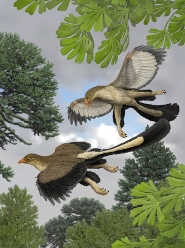
Getting into a flap over Archaeopteryx
Getting into a flap over Archaeopteryx.

Picture credit: Carl Buell

Few Fossils to Study

With so few fossils of Archaeopteryx to study, answering this fundamental question has proved extremely difficult.  Palaeontologists from the Natural History Museum (London), using the “London specimen”, now regarded as the holotype after a ruling in 2011 by the International Commission on Zoological Nomenclature (ICZN), have used X-rays to uncover more information, but the matrix surrounding the fossil has meant that the slabs of limestone in the biggest specimens are too large to be rotated in standard CT scanners.

To read more about the work on Archaeopteryx by the Natural History Museum: Let’s Hear it for Archaeopteryx.

Using a Synchrotron

Other techniques would prove too destructive, so most of the research carried out to date has involved a close up analysis of the surface of the fossil.  However, the use of intense X-ray beams generated by a synchrotron has enabled this European team to probe the depths of Archaeopteryx revealing details of the feathers and vertebrae not seen before.  An X-ray scattering technique employed at the European Synchrotron Radiation Facility (ESRF), has permitted researchers to see images from deep within the rock entombing the 150-million-year-old creature.  A beam of intense light called a slice beam is projected at the fossil, this beam slowly travels down the mounted specimen permitting the X-rays that have been emitted to penetrate deep inside the rock.

As the X-rays are diffused by the substrate and fossil their rate of diffusion can be detected by a camera obscura system, a pin hole within a large sheet of lead, which relays this data to detection software that can produce a computer generated three dimensional image.

A Non-destructive Technique

This is a non-destructive technique that permits scientists to see right inside the fossil and pick up details not revealed on the surface.  This new method of studying life in the past was tried on two specimens of Archaeopteryx, an almost complete specimen known as the Wellnhoferia grandis specimen and an isolated fragment of wing that had not been too distorted or crushed as a result of the fossilisation process.

The Wellnhoferia Archaeopteryx Specimen Used in the Analysis

One of the fossils used in this new study.

Picture credit: Pascal Goetgheluck

Could Archaeopteryx Fly?

The Wellnhoferia Archaeopteryx has had a chequered history.  Originally it had been described as a fossil of the small Jurassic theropod Compsognathus, however, a detailed analysis led to it being declared a new genus of bird and the genus Wellnhoferia (W. grandis) was established.  Further research led to the specimen being referred back to Archaeopteryx, it represents the largest individual known to science with a wingspan of around fifty centimetres.  It is likely to be one of the show piece fossils on display when the Solnhofen museum re-opens today (24th May), after six months of renovation.

One of the Three-Dimensional Images Generated

In the 3-D image feathers on the wings can clearly be made out.

Picture credit: European Radiation Synchrotron Facility

This results of this study will permit scientists to see previously hidden anatomical features of Archaeopteryx which may finally resolve the issue as to whether this creature could fly or not.  It will also contribute significantly to the current knowledge of avian evolution.  It is very likely that other fossil specimens will be analysed using this methodology.

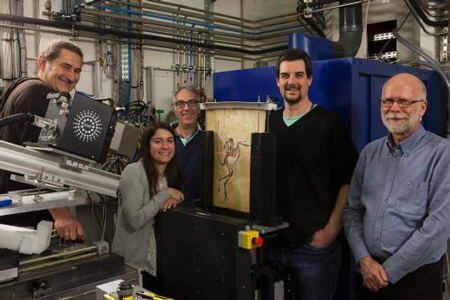
The Research Team Photographed Next to the Wellnhoferia Specimen

Shedding new light on Archaeopteryx.

Picture credit: Pascal Goetgheluck

Papo of France recently introduced a very colourful model of Archaeopteryx (A. lithographica), it has been heralded as one of the best models of this prehistoric animal ever made.

The Papo Archaeopteryx Prehistoric Animal Model

Ready for take off!
Ready for take off!

Picture credit: Everything Dinosaur

To view the Papo range of prehistoric animal models, including theropod dinosaur replicas: Papo Prehistoric Animal Models and Figures.

23 05, 2014

Volunteers Required to Help Protect Scotland’s Unique Fossil Heritage

By |2024-04-12T15:43:03+01:00May 23rd, 2014|Categories: Dinosaur and Prehistoric Animal News Stories, Dinosaur Fans, Geology, Main Page, Palaeontological articles|2 Comments

Action Taken to Safeguard Fossils In Scotland

The Isle of Wight off the coast of southern England might be regarded by some as Britain’s “Dinosaur Isle” but the United Kingdom does in fact have several contenders for this accolade.  Travel north of the border into Scotland to the Inner Hebrides and you might find the residents of the Isle of Skye taking issue with such claims.  However, the island’s rich fossil heritage has been under threat with unscrupulous fossil collectors damaging important scientific sites in their quest to obtain rare vertebrate specimens.

Everything Dinosaur team members reported on the sad case of “fossil vandalism” back in 2011: Important Fossil Site is Vandalised.

Safeguarding Steps

Steps are being taken to help protect Scotland’s fossil heritage and local people on the Inner Hebrides are being asked to volunteer as wardens to help watch over and safeguard sites that are important to geology and palaeontology.  The Isle of Skye may seem like an unlikely place to find dinosaurs and fossils of other Mesozoic vertebrates, but back in the Jurassic, this part of the world was joined up with the land mass that was later to become the western United States.  Rocks laid down in the Middle Jurassic are exposed on the Isle of Skye and in the U.S. States such as Utah, Colorado and Wyoming – parts of America famed for their Jurassic aged dinosaur fossils.

‘To view Everything Dinosaur’s article explaining the importance of the Isle of Skye and its links to the western United States: Question!  What do the Isle of Skye and the State of Wyoming have in Common?

Fossil Heritage

Scotland did introduce a national fossil hunting code back in 2008.  Most fossil hunters and amateur palaeontologists follow this code when collecting fossils, however, there are those who simply see an opportunity to hack into the relatively deserted cliffs and gullies on Scottish islands in a bid to find fossilised bones of vertebrates which then can be sold to private collectors.  A public meeting was held at Portree (Isle of Skye), this week which involved representatives from Scottish National Heritage (SNH), National Museums Scotland, The Hunterian Museum and the Highland Council with the aim of setting up a network of wardens to help record and protect important fossil sites.

With a managed approach to these important fossil sites, it is hoped that more fossil collectors will visit Scotland, especially the Isle of Skye and neighbouring islands, boosting tourism and the local economy.

Important Geology

Skye and the nearby island of Raasay have a rich geological heritage spanning the last three billion years of Earth’s history.  Fossil remains of plants and animals record the evolution of life .  They also record the fascinating journey of the area we now know as Skye and Raasay, as it drifted for hundreds of millions of years across the face of the Earth, from once being part of America to now being part of the western edge of Europe.

Comments on the Plan

Commenting on the plan to form local action groups to protect the beaches, Dr Colin MacFadyen of Scottish National Heritage stated:

“Skye and Raasay have a fantastic fossil heritage, and kids and amateur fossil hunters should be encouraged to collect.  But at the same time something has to be done about irresponsible collecting and to reduce examples where people for whatever reasons damage fossil localities and important fossils.   This is where the local community can get involved and help secure their threatened natural heritage.  Local action may ensure that rare fossil finds are rescued, recorded and saved for the nation.  The public meeting in Portree will encourage local people to play an important part in safeguarding and promoting an internationally significant asset.”

Dr Nick Fraser, Keeper of Natural Sciences at National Museums Scotland commented:

“We are excited by the opportunities to work together to bring Skye’s remarkable fossil heritage into greater prominence.  This is a precious resource which, with support from the wider community, will benefit generations of islanders.”

Everything Dinosaur Comments

A spokes person from Everything Dinosaur explained the importance of the Isle of Skye fossil sites, stating:

“Only a few places in the world have exposed strata dated to the Middle Jurassic that contain vertebrate body and trace fossils preserved within them.  The Isle of Skye is one such location and the fossils found here and on neighbouring islands have helped palaeontologists to understand more about the fauna and flora of our planet around 170 million years ago.  It is vitally important that such fossil bearing sites are protected, whilst at the same time striking a balance to help encourage tourism to boost the economy.”

Everything Dinosaur acknowledges the contribution of a press release from Scottish National Heritage in the compilation of this article.

Visit Everything Dinosaur’s award-winning website: Everything Dinosaur.

21 05, 2014

Google Doodle Celebrates the Amazing Mary Anning

By |2024-04-12T15:43:40+01:00May 21st, 2014|Categories: Dinosaur and Prehistoric Animal News Stories, Dinosaur Fans, Main Page, Palaeontological articles, Press Releases|0 Comments

Happy Birthday to Mary Anning – Google Doodle

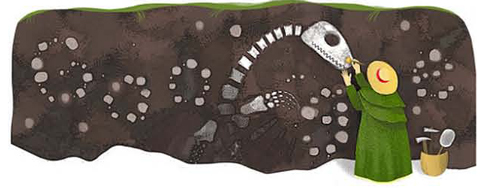
We wonder what Mary Anning would have made of the internet?  Coming from a poor family she may have found access to a personal computer, smart phone or tablet a little beyond her budget.  Perhaps one of those wealthy individuals who benefited from her fossil finds and research might have provided her with a laptop.  Google has marked the birthday of Mary Anning with a Google Doodle to commemorate her birthday on 21st May 1799.

Google Doodle Celebrates the Birthday of Mary Anning

Happy Birthday Mary Anning

Happy Birthday Mary Anning.

Picture credit: Google

Mary’s contribution to the nascent science of palaeontology was immense.  Along with her brother, Joseph, she is credited with finding the first ichthyosaur skeleton that was scientifically studied, the discovery of Plesiosaurus fossils (the fossil depicted in the Google Doodle) and for finding and bringing to the attention of science the first pterosaur fossil to be formally studied outside Germany (Dimorphodon) and only the third to be described in the world.

For models and replicas of ichthyosaurs and other marine reptiles: CollectA Age of Dinosaurs Popular Range.

Mary Anning

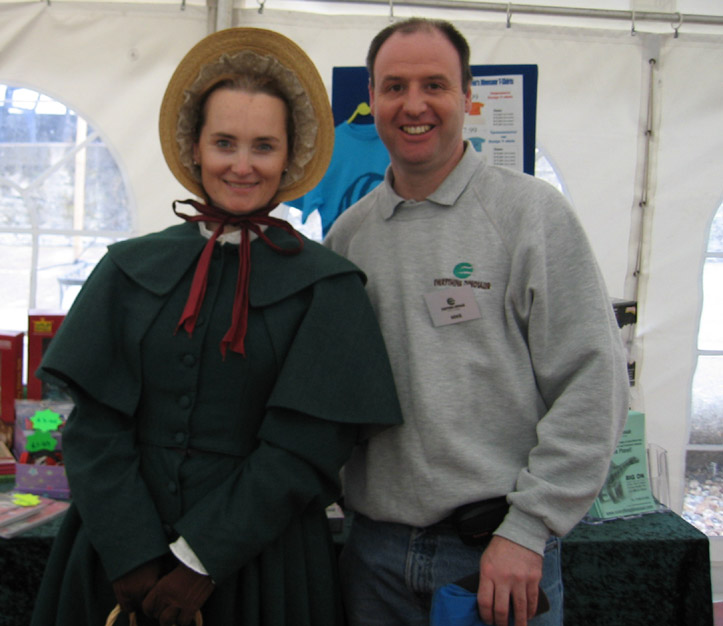
Everything Dinosaur team members were enthusiastic supporters for the life of Mary Anning to be included in the national curriculum of England.  She is one of the designated people who can be studied by school children as part of the science/history scheme of work within the national teaching guidelines.  As a small team, we have done quite a lot to promote science studies in schools and in particular to champion the role of women in science with the aim of encouraging girls to take up science and to develop a career in science disciplines.

Everything Dinosaur with Mary Anning – Helping to Promote Girls into Science

Helping to promote science for girls by dressing up as Mary Anning.

Helping to promote science for girls by dressing up as Mary Anning. Picture credit: Everything Dinosaur.

Picture credit: Everything Dinosaur

A couple of years ago Google created a Google Doodle celebrating the life and works of Mary Leakey, now Mary Anning has been honoured.  Happy Birthday Mary!

For models and replicas of iconic fossils including many from the “Jurassic Coast”: Replicas of Iconic Fossils.

12 05, 2014

“Gluttonous and Filthy” – New Species of Cretaceous Crocodile

By |2023-03-13T09:58:35+00:00May 12th, 2014|Categories: Dinosaur and Prehistoric Animal News Stories, Dinosaur Fans, Palaeontological articles|0 Comments

Aplestosuchus sordidus – Fearsome Late Cretaceous Predator from Brazil

When it comes to naming new species, a candidate for the best and most appropriately named in 2014  has got to be Aplestosuchus sordidus.  Aplestosuchus was a crocodilian that roamed south-central Brazil in the Late Cretaceous.  The name means “gluttonous and filthy crocodile”, for found in the body cavity of this nearly complete specimen was the remains of its last meal – another crocodile.  Direct fossil evidence of interactions between extinct species of crocodiles is extremely rare, but this fossil shows that large crocodyliforms ate smaller crocodyliforms and more importantly, it helps scientists to understand a little more about the food chain that existed in this part of South America around eighty million years ago.

Aplestosuchus sordidus

A scientific paper on the newly described species of crocodile, a distant relative of today’s extant crocodiles, has just been published in the academic journal “PLOS One”.  The fossils were found in a rocky outcrop, close to a small river.  The strata at this location makes up part of the Adamantina Formation which has been tentatively dated to the Turonian to Santonian faunal stages of the Late Cretaceous, although some strata that form the upper layers of this formation may be younger, dating from the Campanian faunal stage.

A number of crocodyliform fossils have been found in the Adamantina Formation. During the Cretaceous, crocodiles occupied many more niches in food chains than they do today.  There were terrestrial forms as well as species more adapted to a semi-aquatic lifestyle.  Some evolved heavy armour and whilst predominately a clade of carnivores, a number of fossils show evidence of herbivory.

Excavating and Preparing the Fossil

This fossil of Aplestosuchus was recovered from two blocks, the first of which contained a nearly complete, although somewhat compressed skull and jaws.  The second block contained most of the rest of the body, just elements from the end of the tail and the hind limbs were missing.

The animal fossil remains measured just over a metre in length and it has been assigned to the Baurusuchidae family of crocodyliforms, terrestrial predator crocodiles in which some species exceeded four metres in size.  Inside the body cavity of this specimen was the remains of a small, not yet fully described species of crocodile, which has been assigned to the Sphagesauridae family.  Sphagesaurid crocodiles, themselves evolved into a variety of forms and are distantly related to the Baurusuchidae.

Cretaceous Crocodile

The scientists who studied the fossilised stomach remains have concluded that given the relative size of the two fossil specimens, it is likely that the larger Aplestosuchus attacked and killed the smaller crocodile.  This is cited as evidence of predator/prey interaction and not a case of A. sordidus scavenging a carcase.

Fossil Crocodiles Showing Evidence of a Predator/Prey Relationship

Skull material seen in top left of the image.

Skull material seen in top left of the image.

Picture credit: PLOS One

The picture shows (A) skull material in one block with the rest of the fossil remains located in a larger adjacent block, scale bar = 10 cm.  Picture B, is a close up of the body cavity showing evidence of predation, scale bar 5 cm.

The illustration (C) shows a drawing of the larger crocodyliform with the prey in its mouth (scale bar = 50 cm).

Examining the Body Cavity

Examination of the abdominal cavity revealed the presence of skull bones and a tooth from the smaller sphagesaurid crocodile.  This location has yielded a number of crocodyliform fossils, something like twenty different species have been identified so far.  It is not known whether this particular part of South America proved to be a locus for extensive crocodyliform radiation, or whether there is a strong bias towards crocodiles within the fossil record at these sites.

A Colour Coded Image Showing a Close Up of the Stomach Contents

A close up of the body cavity showing evidence of predation.

A close up of the body cavity showing evidence of predation.

Picture credit: PLOS One

Photograph A shows the green ribs of A. sordidus, the belly ribs (gastralia) are highlighted in orange.  The remains of the smaller sphagesaurid are shown in yellow, with diagram B providing a key to sphagesaurid fossil bones found: f, frontal; j, jugal; p, parietal; pl, palpebral; t, tooth.

Scale bar = 5 cm.

Formidable Predators

Baurusuchid crocodiles were formidable predators and in the absence of theropod dinosaurs, larger species would have probably occupied the position of apex predators within the terrestrial environments of south-central Brazil during the latter stages of the Cretaceous.  The skull although compressed, indicates that Aplestosuchus sordidus had a formidable bite and the largest teeth in the jaws are over 2 cm in size.

A Lateral (side) View of the Skull of A. sordidus

A strong and powerful skull.

A strong and powerful skull.

Picture credit: PLOS One/Everything Dinosaur

The Adamantina Formation has provided researchers with a wealth of Late Cretaceous fossil material.  As a result, a picture of the fauna that existed has been built up, but until now it was not certain how the food chain relating specifically to crocodyliforms was set up.  This fossil material suggests that, as previously thought, the Baurusuchidae occupied an apex predator position.   Only a handful of theropod dinosaur fossils have been found.

These specimens represent a miscellany of meat-eating dinosaurs and no genera have been successfully ascribed from the fossil evidence.  Teeth fossils along with fragmentary body fossils indicate the presence of large, carnivorous dinosaurs (abelisaurids, carcharodontosaurids, or possible other tetanurans).  As fossils of large herbivorous dinosaurs (titanosaurs) have been found in this formation, it is likely that big theropods co-existed with them but in this instance the fossil evidence suggests that crocodiles made up a significant proportion of the predators within this environment.

Suggested Food Web Reconstruction (Adamantina Formation) South-Central Brazil

Crocodyliforms shaded black.

Crocodyliforms shaded black.

Picture credit: PLOS One

The red arrow indicates the predator/prey relationship between the Baurusuchidae and sphagesaurids.

Key

1, Large theropods (Abelisauridae, Charcarodontosauridae, Megaraptora); 2, Peirosaurids (Montealtosuchus arrudacamposi, Pepesuchus deiseae); 3, Turtles (Bauruemys elegans, Roxochelys wanderleyi); 4-6, Fishes (Teleostei, Lepisosteidae, Dipnoi); 7, Trematochampsids (Barreirosuchus franciscoi); 8, “Notosuchians” (Labidiosuchus amicum, Mariliasuchus amarali, M. robustus, Morrinhosuchus luziae); 9, Baurusuchids (Baurusuchus albertoi, B. pachecoi, B. salgadoensis, Campinasuchus dinizi, Gondwanasuchus scabrosus, Pissarrachampsa sera, Stratiotosuchus maxhetchi); 10, Mammals; 11, Anurans; 12, Adamantinasuchus navae; 13, Sauropods (Adamantisaurus mezzalirai, Aeolosaurus maximus, Gondwatitan faustoi, Maxakalisaurus topai, Nemegtosauridae); 14, Other sphagesaurids (Caipirasuchus paulistanus, Caryonosuchus pricei, Sphagesaurus huenei, S. montealtensis); 15, Unenlagiines; 16, Birds (Enantiornithes); 17, Lizards (Brasiliguana prudentis); 18, Snakes (Anilioidea); 19, Insects (Coleoptera); 20, Armadillosuchus arrudai.

This latest research highlights the significant diversity of crocodiles and it also provides evidence of predator/prey interactions amongst crocodyliforms.  The artwork created by Rodolfo Nogueira which accompanied the PLOS One paper is superb.  As well as demonstrating robust academic vigour, the research team involved in this study have been able to provide a vivid illustration that interprets this fossil evidence.

Aplestosuchus sordidus Preying on a Unknown sphagesaurid

Predator/prey relationship within Late Cretaceous Crocodyliforms.

Predator/prey relationship within Late Cretaceous crocodyliforms.

Picture credit: Rodolfo Nogueira

If the fossil evidence is anything to go by, then Aplestosuchus sordidus “gluttonous and filthy crocodile” has been appropriately named.

11 05, 2014

Those Very Tough and Remarkable Dinosaurs

By |2024-05-02T06:15:08+01:00May 11th, 2014|Categories: Dinosaur Fans, Main Page, Palaeontological articles|0 Comments

New Research Provides Data on How Dinosaurs Recovered from Injuries

It has long been accepted that dinosaurs led tough lives.  A new study by University of Manchester scientists in collaboration with international colleagues, has revealed just how tough the Dinosauria were.  An analysis of a toe bone from a 150-million-year-old meat-eating dinosaur is helping scientists to identify chemical markers of elements that show where bone healing took place.  Research into how dinosaurs bone healed and the identification of chemical markers could help with the development of strategies to assist in the healing and recovery rates when it comes to injuries in other species, including our own.

Disease, Injury and Trauma

The fossil record of vertebrates records many instances of disease, injury or other trauma in the bones.  This is known as pathology and interpreting this pathology permits palaeontologists to gain an insight into the lives and behaviours of long extinct animals.  At Everything Dinosaur, we have a number of pedal phalanges (toe bones) of the dinosaur known as Edmontosaurus (E. regalis) that show signs of arthritis.  Its seems that the Dinosauria suffered from conditions which are very familiar to us.

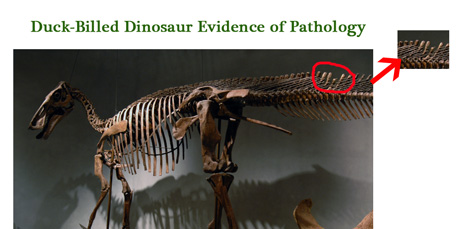
Other fossil specimens show more dramatic signs of injury, such as another duck-billed dinosaur, whose skeleton reveals evidence of a potential attack from a carnivorous dinosaur – a duck-billed dinosaur with a chunk bitten out of its tail.

Evidence of Pathology in a Member of the Saurolophinae

Museum exhibit may show evidence of T. rex attack.

Museum exhibit may show evidence of T. rex attack.

Picture credit: Denver Museum of Nature and Science/Everything Dinosaur

 To read more about the research into this particular specimen: Evidence to suggest an attack by T. rex.

Recovering from Injuries

Some dinosaurs seem to have recovered from injuries that would have proved fatal to us.  It might be a generalisation, but reptiles do seem to be tougher than a lot of mammal species.  Team members have looked at Alligators (A. mississippiensis) that have suffered terrible injuries either in fights with larger Alligators or in collisions with boats.  So long as the animal is able to feed, then missing limbs, lumps out of tails and severely broken bones do not necessarily prove terminal.

The accepted approach to studying the pathology present in the bones of dead animals was to examine the shape of the distorted bone and to take very thin slices from the section of bone under analysis and study its composition and structure.  This is a destructive technique that yields some data, it relies on the fundamental structure of the bone remaining intact to show signs of healing, regrowth and recovery despite permineralisation.

Chemical Analysis

However, it is known that if a chemical analysis could be undertaken then much more information could be obtained.  Different elements and different concentrations of those elements are known to be absorbed and utilised by bone for different physiological purposes such as growth and recovery from traumatic injury.

The problem is, detecting these minute chemical signatures is beyond the capabilities of most laboratory equipment, even sophisticated analytical techniques involving scanning electron microscopy.  Step in to the spotlight (no pun intended as light is very much involved), synchrotron rapid scanning-X-ray fluorescence, otherwise known as SRS-XRF.  A synchrotron light source is made up from electromagnetic radiation that is emitted when charged particles moving at close to the speed of light are forced to change direction by a magnetic field.

Mapping Minute Quantities of Individual Elements

When a specimen is bombarded with these high energy X-rays, their diffusion can be used to map minute quantities of individual elements.  Sophisticated software interprets the resulting data and a picture can be built up to show the density and location of individual elements within the sample.

How Dinosaur Bones Healed

In this study, the toe bone of a Late Jurassic theropod dinosaur (Allosaurus fragilis) was analysed.  A damaged bone from an extant archosaur, a Turkey Vulture (Cathartes aura) was used to provide a comparison.  Bones are complex structures made up fibrous collagen and an inorganic material combining calcium, phosphorous and other material.  Bone can absorb a very wide range of elements and traces of these elements are recorded at elevated levels in those parts of the bone where repair or extension is taking place.

These “sink sites”, as one of our colleagues calls them, can indicate where bones have been broken and mended during a vertebrate’s lifetime.  The histology of bones (growth rate) is dependent on a number of factors such as the amount of food available to the animal, its metabolism and its immune response.

Sophisticated Study of the Toe of an Allosaurus

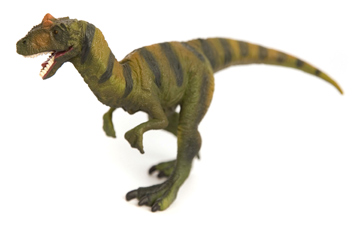
The fearsome Jurassic predator Allosaurus

The fearsome Jurassic predator Allosaurus.

Picture credit: Everything Dinosaur

Commenting on the Study

Commenting on the research findings, Dr Phil Manning (University of Manchester’s School of Earth, Atmospheric and Environmental Sciences) stated:

“Using synchrotron imaging, we were able to detect astoundingly dilute traces of chemical signatures that reveal not only the difference between normal and healed bone, but also how the damaged bone healed.  It seems dinosaurs evolved a splendid suite of defence mechanisms to help regulate the healing and repair of injuries.  The ability to diagnose such processes some 150 million years later might well shed new light on how we can use Jurassic chemistry in the 21st Century.”

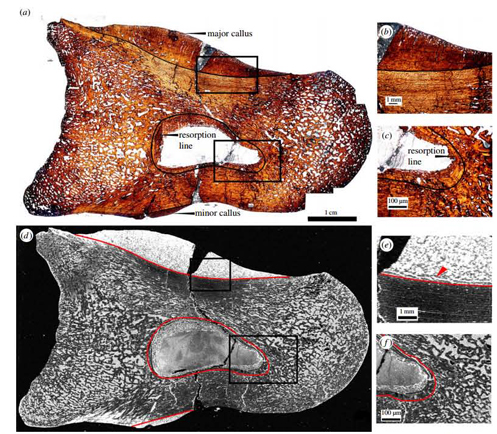
Thin Section of A fragilis pedal phalanx Under Analysis

SRF-XRF helps to show how dinosaurs recovered from injury.

SRF-XRF helps to show how dinosaurs recovered from injury.

Picture credit: Royal Society Journal “Interface”/Manchester University

Studying Allosaurus Fossil Bone

The picture above shows a thin section of A. fragilis fossil bone.  The bone is part of a collection from the Utah Museum of Natural History (specimen number UMNH 6282), it is from the third toe.  It was studied as there are two areas of obvious damage on the fossil, one on the top part of the section (major callus), with a second sign of trauma underneath (minor callus).  The Turkey Vulture bone was chosen as it too shows similar deformities.

Pictures a-c reveal the section under plain polarised light, a large crack can be observed in the bone.  This is not evidence of further pathology, the damage to the bone occurred after the dinosaur died.  Pictures d to f show a grayscale elemental map of the deposition of iron throughout the specimen.  Pictures labelled b, c, e and f are blown up images of areas of greatest interest.

Examining the Data

In figures d, e and f, white shows a high concentration of the element being analysed, black colouration shows a lower concentration of the element.  In figures a and c the boundary between damaged tissue and normal tissue is indicated by a solid black line.  In figures d and e this boundary is marked by a red line.  Traces of different elements were mapped including iron, zinc, lanthanum and strontium.  The levels of these elements and where they were situated indicates where healing and recovery from damage occurred.

Dr Phil Manning went onto add:

“The chemistry of life leaves clues throughout our bodies in the course of our lives that can help us diagnose, treat and heal a multitude of modern-day ailments.  It’s remarkable that the very same chemistry that initiates the healing of bone in humans also seems to have followed a similar pathway in dinosaurs.”

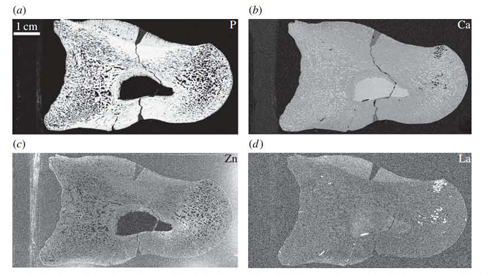
Grayscale Elemental Analysis of the Fossil Bone

Determining the presence and concentration of elements with fossil bone.

Determining the presence and concentration of elements with fossil bone.

Picture credit: Royal Society Journal “Interface”/Manchester University

In the illustration above, software has interpreted the SRS-XRF data to show the location and concentrations of key elements involved in bone composition.

a).  Phosphorous [P]

b).  Calcium [Ca]

c).  Zinc [Zn]

d).  Lanthanum [La]

Research into How Dinosaur Bones Healed

Phosphorous is concentrated in the original tissue.  Calcium is present in a relatively uniform manner in the sample and the Lanthanum is localised, being found mainly in damaged areas.  It is from this mineral evidence that scientists can determine how the bones of extinct dinosaurs reacted to trauma and recovered from injuries.

Fellow author Jennifer Anné (University of Manchester) stated:

“Bone does not form scar tissue, like a scratch to your skin, so the body has to completely reform new bone following the same stages that occurred as the skeleton grew in the first place.  This means we are able to tease out the chemistry of bone development through such pathological studies.  It’s exciting to realise how little we know about bone, even after hundreds of years of research.  The fact that information on how our own skeleton works can be explored using a 150-million-year-old dinosaur just shows how interlaced science can be.”

Professor Roy Wogelius, another co-author from The University of Manchester, added:

“It is a fine line when diagnosing which part of the fossil was emplaced after burial and what was original chemistry to the organism.  It is only through the precise measurements that we undertake at the Diamond Lightsource in the UK (Didcot, Oxfordshire) and the Stanford Synchrotron Lightsource in the US (California), that we were able to make such judgements.”

To read another article on how Manchester University scientists are using synchrotron light rays to reveal more information about fossils: Searching for ghosts in fossils.

Everything Dinosaur acknowledges the contribution of the University of Manchester in the production of this article.

For models and replicas of Allosaurus and other prehistoric animals: PNSO Age of Dinosaurs Figures.

9 05, 2014

Nosing Around Qianzhousaurus sinensis – The Implications

By |2023-03-13T09:18:13+00:00May 9th, 2014|Categories: Dinosaur and Prehistoric Animal News Stories, Dinosaur Fans, Main Page, Palaeontological articles|0 Comments

“Pinocchio rex” Qianzhousaurus sinensis – A new Look for the Tyrannosaurs

Over the last two days or so, there has been a lot of media coverage regarding the discovery of a long-snouted member of the tyrannosaur family, a fearsome, carnivorous dinosaur that has been named Qianzhousaurus sinensis.  The fossil discovery is very significant as it establishes the presence of long-snouted tyrannosaurs nestling somewhere amongst the Tyrannosauridae family.  Quite where they fit is still up for debate as the phylogeny of this group is becoming more and more complicated as new genera are described.  Phylogenetics looks at the evolutionary history of a species or group of organisms, it aims to map out lines of descent and taxonomic relationships.

Qianzhousaurus sinensis

This new tyrannosaur nick-named “Pinocchio rex” due to its long snout, has led to the establishment of a new branch of the tyrannosaur family. Living alongside the bone crushing apex predators that were the deep-skulled tyrannosaurs, there was another closely related group, meat-eaters that probably hunted different sorts of prey and fed in a different way.  This new sub-branch or clade of tyrannosaurs has been named the Alioramini (pronounced Al-ee-oh-ram-min-eye), as for the moment it contains just two genera, Alioramus and the newly described Qianzhousaurus.

Alioramus also had a long, narrow snout.  The genus name translates as “other evolutionary branch”, as ever since Alioramus was discovered, palaeontologists had suspected that there was a sub-branch of the tyrannosaur family tree.  The fossils of Qianzhousaurus go a long way in helping to strengthen this hypothesis.

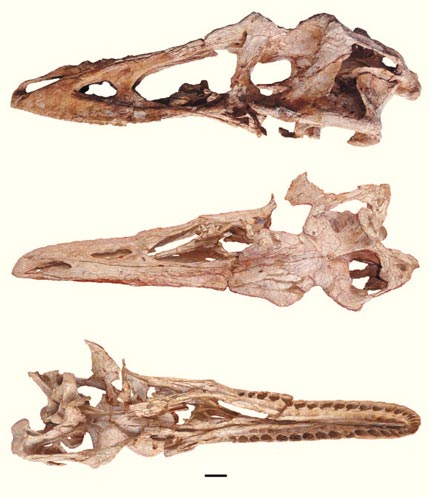
Long-Snouted Fearsome Tyrannosaur – Qianzhousaurus sinensis

New long-snouted Tyrannosaur.

New long-snouted tyrannosaur.

Picture credit: Junchang Lü/Chinese Academy of Geological Sciences

The picture above shows three views of the partial skull and upper jaw of Q. sinensis.  The first picture shows a view from the side (lateral), the second picture shows a view looking down onto the fossil (dorsal) and the third picture shows the view from the underside (ventral).  The scale bar represents five centimetres.

Scientific Paper Published

In a paper published this week in the journal “Nature Communications”,  the authors which include Stephen Brusatte (Chancellor’s Fellow in Vertebrate Palaeontology at the University of Edinburgh) and Junchang Lü (Institute of Geology at the Chinese Academy of Geological Sciences), describe this Theropod as a “remarkable find”.  It is indeed, but the story of this fossil’s discovery is also very remarkable.

Back in the late summer of 2010, construction workers helping to build a new industrial park close to the city of Ganzhou in Jiangxi Province (south-eastern China), uncovered the remains of two dinosaurs.  One was a small oviraptorid, the second and much more spectacular find represented a substantial meat-eater.  The works foreman telephoned a local fossil hunter who visited the site and having examined some of the finds and realised their importance, called in the Ganzhou city Mineral Resources Management Department.  A field team was quickly despatched and within a few hours the vast majority of the exposed fossil material was collected, which in the case of the large theropod represented much of the skull and jaws, vertebrae, parts of the pelvis and limb bones.

Late Cretaceous “Hotbed”

Many different types of dinosaur have been found in the sedimentary rocks that are exposed in and around Ganzhou city, it is often described as a “hotbed” for Late Cretaceous dinosaur discoveries.  The field team had to work fast, as a number of fossil dealers had also heard of the discovery and if they had got to the bones first, then the fossilised remains could have ended up being sold on the black market.

As things turned out, following the speedy collection, the story of Qianzhousaurus slowed down to a snail’s pace.  The fossils which had been bagged up remained with the Mineral Resources Management Department for the best part of eight months, before they were presented to the Ganzhou Natural History Museum.  In August 2012, the museum assembled a team of Chinese scientists and technicians to examine the bones and begin the reconstruction of the specimen.

Close Phylogenetic Relationship with Alioramus

The initial research work was concluded in January of last year and the full significance of the discovery was realised.  Here was an adult tyrannosaur that exhibited skull characteristics that placed it in a close phylogenetic relationship with the tyrannosaur known as Alioramus.  This was proof that the long suspected sub-branch of long-snouted tyrannosaurs had existed.

Further work was undertaken and the formal academic paper published this week.  Say hello to Qianzhousaurus sinensis.  Qianzhousaurus is pronounced Chy-an-shoe-sore-us, the genus name is derived from the old name for the city of Ganzhou (Qianzhou), the species name reflects that this dinosaur was Chinese.

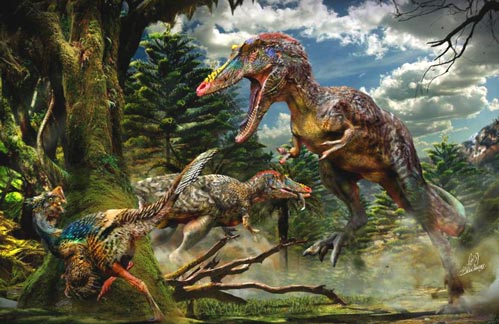
An Illustration of the Late Cretaceous Tyrannosaur Q. sinensis

New Tyrannosaur described - Qianzhousaurus sinensis.

New tyrannosaur described – Qianzhousaurus sinensis.

Picture credit: Chuang Zhao

This dinosaur had a number of small horns or bumps running along its snout.  It is illustrated attacking a feathered oviraptorid dinosaur, as the fossils of Qianzhousaurus sinensis were found in association with the bones of a small member of the Oviraptoridae family.

Dr Brusatte explained:

“This is a different breed of tyrannosaur.  It has the familiar toothy grin of T. rex, but its snout was much longer and it had a row of horns on its nose.  It might have looked a little comical, but it would have been as deadly as any other tyrannosaur, and maybe even a little faster and stealthier.”

This specimen is very significant as the fused skull bones identify it as an adult animal. Qianzhousaurus probably weighed around 1,000 kilogrammes and reached lengths of around 8-9 metres.  Smaller than its deep-skulled tyrannosaur contemporaries, Qianzhousaurus probably occupied a niche in the Late Cretaceous food chain, that of a secondary predator.  Even if it lived in packs, it probably did not specialise in hunting really large herbivorous dinosaurs.  It was nowhere near as powerful as some of the other Upper Cretaceous tyrannosaurs known from Asia, the likes of Tarbosaurus and the recently described Zhuchengtyrannus.

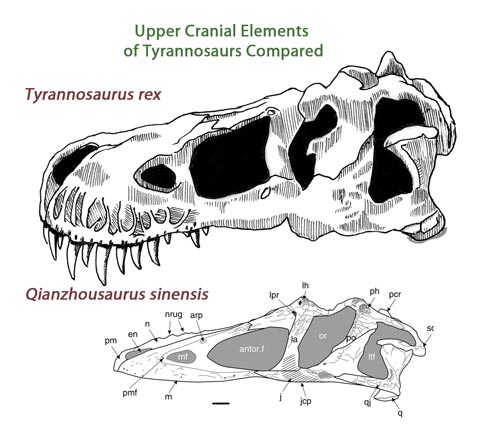
Tyrannosaur Skull Comparisons (T. rex versus Q. sinensis)

Scale bar = 5cm

Scale bar = 5cm

Picture credit: Journal of Nature Communications and Everything Dinosaur

To read an article about Zhuchengtyrannus: New Species of Asian Tyrannosaur Announced.

Studying Tyrannosaurs

The bite force that this predator could generate was nowhere near the bone crushing bite force of Tyrannosaurus rex.  This was a more graceful, agile hunter, perhaps stalking feathered dinosaurs and other reptiles.  Consider Qianzhousaurus as the leopard that shares the same habitat as a lion.

For models and replicas of Qianzhousaurus, numerous tyrannosaurs and other prehistoric animals: PNSO Age of Dinosaurs Models.

This fossil is very important for a number of reasons, firstly there is a substantial amount of fossil material to study, scientists can learn more about the tyrannosaur family as a result.  Secondly, unlike the two known Alioramus specimens which both represent juveniles, this adult animal demonstrates that there were long-snouted forms of Tyrannosauridae.  A sub-branch of tyrannosaurs did exist and the presence of a long-snout in the likes of the Alioramus specimens cannot be attributed to the fact that these not fully grown dinosaur specimens “hadn’t filled out yet” as a colleague puts it.

Thirdly and perhaps most crucially of all, this fossil discovery from south-eastern China was found in Upper Cretaceous deposits located more than two thousand kilometres away from the Upper Cretaceous deposits that yielded the Alioramus material.  It seems that the long-snouted tyrannosaurs were widely distributed in Asia during the last few million years of the Cretaceous period.  This means that there are, very probably a number of other “Pinocchio rex” tyrannosaurs awaiting discovery.

We wonder what Geppetto would have made of it all…

Go to Top