All about dinosaurs, fossils and prehistoric animals by Everything Dinosaur team members.

Fossil finds, new dinosaur discoveries, news and views from the world of palaeontology and other Earth sciences.

28 04, 2022

A New, Giant Megaraptorid from South America is Described

By |2024-12-30T10:01:11+00:00April 28th, 2022|Categories: Adobe CS5, Dinosaur and Prehistoric Animal News Stories, Dinosaur Fans, Main Page, Palaeontological articles, Photos/Pictures of Fossils|0 Comments

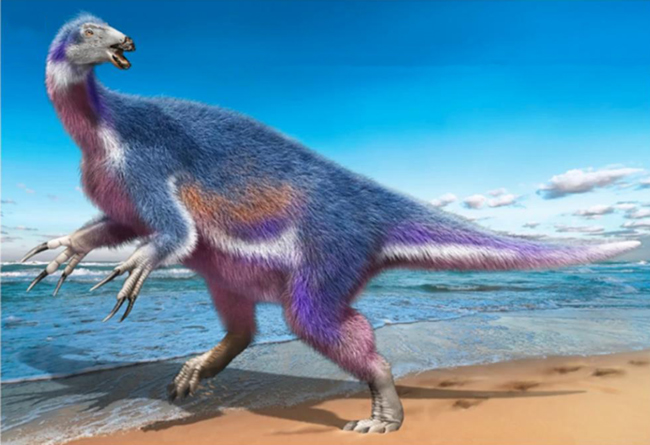
Fragmentary bones excavated from Santa Cruz Province, Patagonia (Argentina), have revealed the presence of a super-sized megaraptorid theropod in the Late Cretaceous (Maastrichtian faunal stage). The new dinosaur, named Maip macrothorax is estimated to have been at least 9.5 metres long. It represents the biggest member of the Megaraptoridae described to date and its discovery lends support to the theory that these types of dinosaurs were not members of the Allosauria clade, but they were coelurosaurs and therefore related to the dinosaur lineage that gave rise to the birds.

Maip macrothorax.

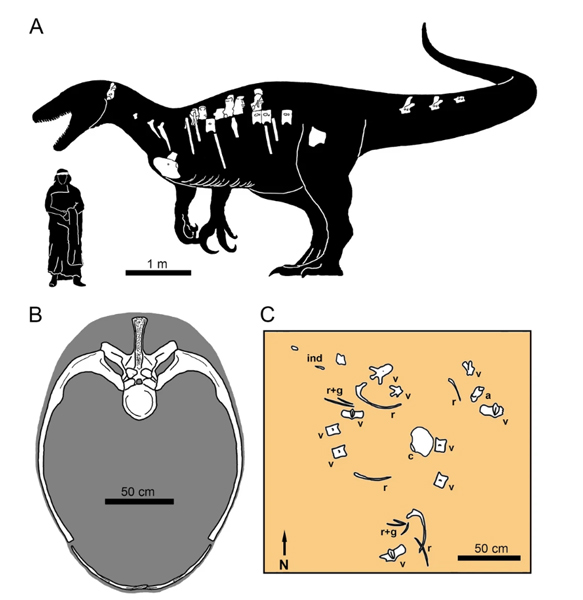
Silhouette of Maip macrothorax showing the preserved bones in white (A). Reconstruction of the thoracic cavity of Maip (B) at the level of dorsal vertebra 6 (D6). Drawing of the excavation of Maip showing the original disposition of the bones (C). Abbreviations: a, axis; c, coracoid; ind, indeterminate bone; g, gastralia; r, rib; v, vertebrae. Picture credit: Rolando et al. Note scale bar in (A) = 1 metre, and (B,C) 50 cm.

Picture credit: Rolando et al

The fossil material was collected from exposures of the Chorrillo Formation approximately eighteen miles southwest of the city of El Calafate (southwestern Santa Cruz Province, Patagonia, Argentina).

The “Shadow of the Death” which “Kills with Cold Wind”

The Megaraptora clade are mostly known from fragmentary and very incomplete specimens. The fossils of Maip macrothorax (pronounced my-eep mac-row-thor-ax), although representing only a small portion of the overall skeleton, consist of a single cervical vertebra (C2 the axis), several dorsal vertebrae, ribs, the left coracoid, a partial toe bone, fragments of the scapula and caudal vertebrae.

By studying these bones the researchers, that included Alexis M. Aranciaga Rolando from the Museo Argentino de Ciencias Naturales “Bernardino Rivadavia” (Buenos Aires, Argentina) and Makoto Manabe from the National Museum of Nature and Science (Japan), postulate that the Megaraptora are not archaic members of the Allosauroidea but members of the Coelurosauria clade, that group of theropods more closely related to birds than they are to other members of the Avetheropoda lineage.

Maip macrothorax

The genus name is from the native Aónikenk people of Patagonia (known as the Tehuelche in western culture). Maip is an evil spirit said to roam the Andes and its name means “the shadow of death” which “kills with cold wind”. The specific name derives from the Latin for big thorax. The rib bones indicate that this dinosaur was deep chested with a large thoracic cavity more than 1.2 metres in width.

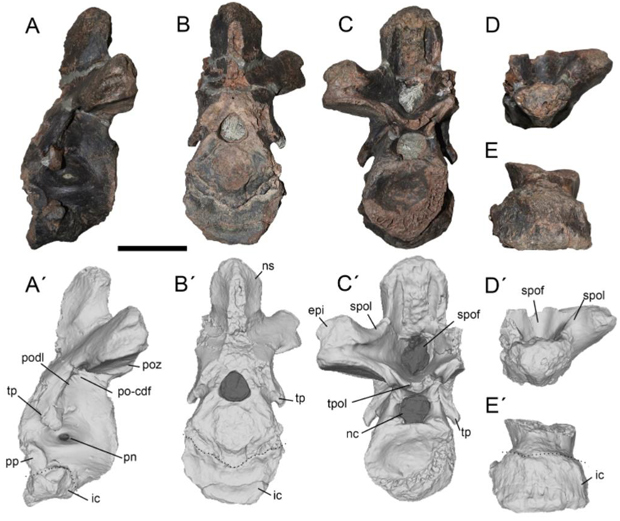
Maip macrothorax axis bone (C2)

The second neck bone of Maip macrothorax (axis – C2) shown in lateral (A), anterior (B), posterior (C) and dorsal (D) with accompanying line drawings. Note scale bar = 5 cm. Picture credit: Rolando et al.

Picture credit: Rolando et al

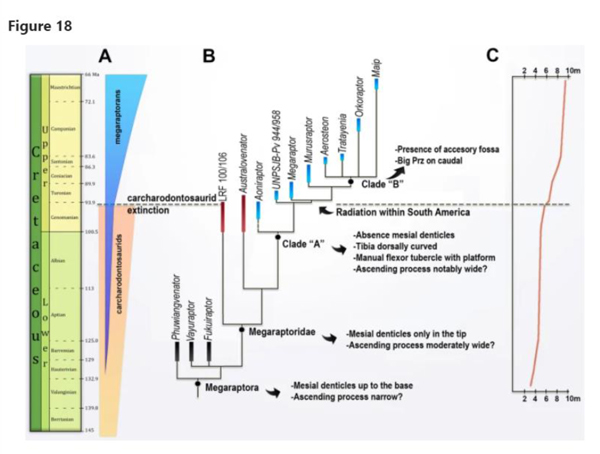
The researchers propose that with the extinction of the carcharodontosaurids, many of which were apex predators on the southern continents, the megaraptorids evolved becoming larger, heavier and more robust, eventually filling the niche of top predator in many parts of the Southern Hemisphere during the Late Cretaceous.

Evolutionary trends of the Megaraptora.

Evolutionary trends of the Megaraptora. Evolutionary trends of Megaraptora. Temporal scale and bars depicting currently known temporal distributions of Megaraptora and Carcharodontosauridae (A). Time-calibrated phylogeny of megaraptoran taxa (B), showing most relevant genera from Asia (black bars), Australia (red bars) and South America (blue bars). Main synapomorphies supporting each node are indicated by arrows. Tree topology follows the results of the present work. Curve showing the increasing in average body size of megaraptorans during Barremian faunal stage through to the Maastrichtian (C). Picture credit: Rolando et al.

Picture credit: Rolando et al

The Rise of the Megaraptorids

Around 94 million years ago (Cenomanian faunal stage of the Late Cretaceous), there was a global extinction event which led to the demise of the Carcharodontosauridae. As far as Everything Dinosaur team members are aware, there are no reliable fossil records for the presence of carcharodontosaurids in South America beyond the Turonian faunal stage (the stage that followed the Cenomanian). An absence of apex predators permitted the megaraptorids and the abelisaurids to evolve to fill this niche in the Southern Hemisphere, whilst the tyrannosaurids become bigger and occupied the apex predator role in Asia and North America.

Maip macrothorax estimated at around 9.5 metres in length, lived some sixteen million years after the next largest megaraptorid (Aerosteon – A. riocoloradense). The body size of megaraptorids during the Early Cretaceous when the carcharodontosaurids still roamed seems to have been limited to around six metres in length, suggesting that these theropods were secondary predators. However, with the extinction of the carcharodontosaurids, body size in the Megaraptoridae increased and by the very end of the Cretaceous (Maastrichtian faunal stage), a body length in excess of ten metres seems plausible.

To read the Everything Dinosaur blog post that reported the discovery of these bones in 2020: Scientists Discover Giant Megaraptor.

Helping to Resolve the Phylogeny of these Enigmatic Theropods

Although the bones only represent a small part of the total skeleton and no cranial material has been identified, Maip macrothorax is the most informative megaraptoran known from the Maastrichtian stage. Phylogenetic analysis has placed this new taxon together with other South American megaraptorans in a monophyletic clade (they shared a single, common ancestor), whereas Australian and Asian members constitute successive stem groups.

Roaming Patagonia 80 million years ago

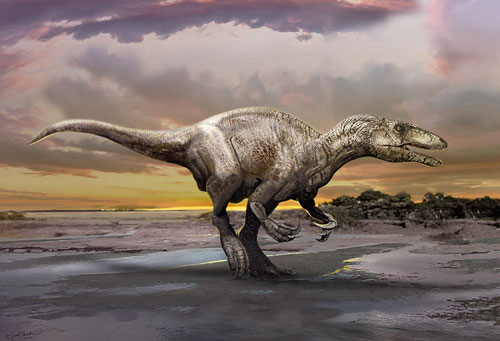
A leggy, Late Cretaceous carnivore (Murusraptor).  Picture credit: Jan Slovak (University of Alberta).

Picture credit: Jan Sovak (University of Alberta).

For models and replicas of theropods and other prehistoric animals: Wild Safari Prehistoric World Models and Figures.

The researchers propose that the South American megaraptorids differ from more basal megaraptorans such as Fukuiraptor from Japan and Australovenator from Queensland, Australia in several anatomical features and the South American lineage evolved into much bigger, more robust and powerful predators.

The scientific paper: “A large Megaraptoridae (Theropoda: Coelurosauria) from Upper Cretaceous (Maastrichtian) of Patagonia, Argentina” by Alexis M. Aranciaga Rolando, Matias J. Motta, Federico L. Agnolín, Makoto Manabe, Takanobu Tsuihiji and Fernando E. Novas published in Scientific Reports.
The Everything Dinosaur website: Dinosaur Toys.

25 04, 2022

Beautiful Mesozoic Metal Monsters

By |2024-12-30T09:26:47+00:00April 25th, 2022|Categories: Adobe CS5, Dinosaur and Prehistoric Animal News Stories, Dinosaur Fans, Main Page, Photos, Press Releases|0 Comments

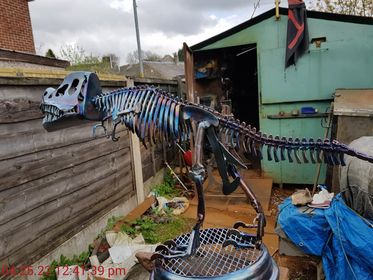
There are so many clever and creative people on the worldwide web. Take for example Joe Dolan a retired welder who spends his time creating metal prehistoric monsters in his workshop. Each hand-crafted sculpture takes dozens of hours to produce, each one is a labour of love, honed by the skills developed over a lifetime as a welder/fabricator.

Joe very kindly contacted Everything Dinosaur and sent us some pictures of his latest creations.

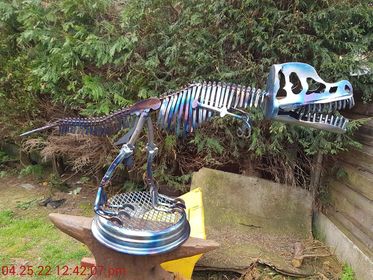
Metallic Tyrannosaurus rex

A completed Tyrannosaurus rex sculpture. Picture credit: Joe Dolan.

Picture credit: Joe Dolan

Making Figures from Metal

With over forty years experience Joe’s skilfully constructed animal figures are a great conversation starter and certainly are statement pieces. All the joints are fully welded, cleaned, deburred and polished. It is great to see Joe still using his engineering and design skills to create such novel, metallic sculptures.

Metal T. rex

An impressive T. rex metal sculpture just out of the workshop. Picture credit: Joe Dolan.

Picture credit: Joe Dolan

The “Detail is Everything”

Joe explains that his hobby has grown into a small business. The figures are made for indoor display as the steel used in the construction would rust if left outside. At first Joe created sculptures for friends and family but soon word of his talent for creating unusual sculptures spread and he began to attract commercial interest from farther afield.

Joe has not restricted himself to dinosaurs, he builds lots of amazing sculptures of other animals too.

He explained how his unusual business started commenting:

“I started some years back, making things for myself and family. Other people started showing interest in my work so I made more, and to me “detail is everything”, plus the figurines are robust and if cared for they will last for years and years.”

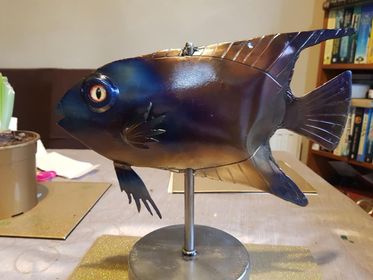
A metallic fish model.

A stunning, metallic fish sculpture. Picture credit: Joe Dolan.

Picture credit: Joe Dolan

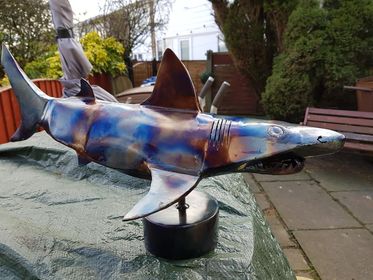
metal shark figure.

A beautiful, burnished shark figure created by talented engineer Joe Dolan.

Picture credit: Joe Dolan

Traditional Skills Given a New Twist

Traditional skills such as metal working are under threat, the models and figures that Joe has created enable him to keep using the techniques that he has honed over a lifetime, bringing pleasure and delight to others.

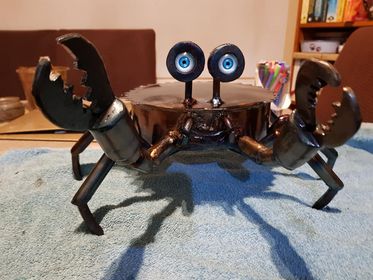
Metallic crab sculpture

A cleverly constructed crab – watch out for those metal claws! Picture credit: Joe Dolan.

Picture credit: Joe Dolan

A spokesperson from Everything Dinosaur commented:

“We are always amazed at how creative and clever people can be. Joe has turned his talents to making some amazing metallic monsters including models of dinosaurs like T. rex and Velociraptors. He also has a flair for fish models and we love the eyes on the metallic crab figure.”

The award-winning Everything Dinosaur website: Dinosaur Toys.

A pack of metallic Velociraptors.

A pack or metallic Velociraptors on the prowl. Picture credit: Joe Dolan.

Picture credit: Joe Dolan

For further information about the sculptures and to contact Joe direct, we suggest you check out his Facebook page: Contact Joe Dolan on Facebook.

21 04, 2022

The Oldest Mineralised Bryozoan? A New Scientific Paper

By |2024-12-30T08:24:49+00:00April 21st, 2022|Categories: Adobe CS5, Dinosaur and Prehistoric Animal News Stories, Main Page, Palaeontological articles, Photos/Pictures of Fossils|0 Comments

Scientists from John Hopkins University (Baltimore, Maryland), Smith College (Northampton, Massachusetts) along with bryozoan expert Paul Taylor of the London Natural History Museum and another collaborator have published a paper in “Science Advances” reporting a possible earliest occurrence of palaeostomate bryozoans.

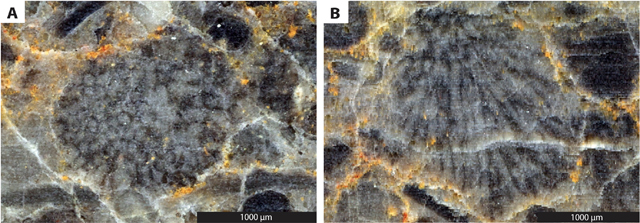
Cut slabs of bryomorph fossils from the Harkless Formation

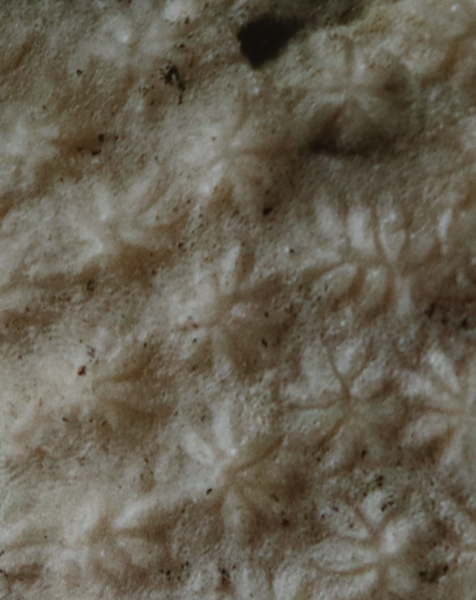
Cut slabs of bryomorph fossils from the Harkless Formation (Gold Point, Nevada). Cross-sectional view showing round individual tubes (A). Longitudinal cut through organism showing growth form (B). Picture credit: Note scale equals 1,000 microns. Pruss et al.

Picture credit: Pruss et al

Fossils from the Harkless Formation (Nevada) – A Mineralised Bryozoan

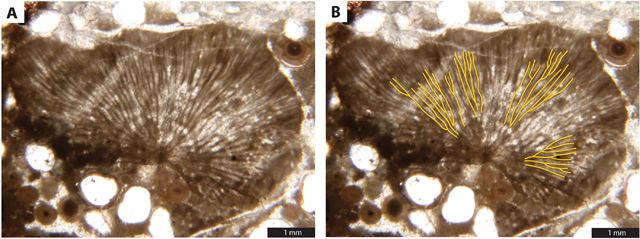
Recently, Everything Dinosaur published a blog post about a scientific paper that came out late last year (October 2021), the study reported upon the identification a soft-bodied bryozoan Protomelission gatehousei from Early Cambrian strata: Early Cambrian Origin for the Bryozoa. The oldest previously accepted skeletal bryozoans occur in Lower Ordovician deposits, however, these researchers suggest that fossils found in strata from the Harkless Formation (Nevada, USA) are also bryozoans. The fossils show a radiating form preserved in limestone deposited during the Cambrian. If these fossils also represent bryozoans, they have a hard, mineralised skeleton.

Thin section images of a single bryomorph organism from the Harkless Formation (Nevada).

Thin section images of a single bryomorph organism from the Harkless Formation (Nevada). General fossil view (A). Sketches of the branching of daughter tubes from parent tubes (B). Note the formation of distinct skeletal walls from the parent during budding. Note scale bar equals 1 mm. Picture credit: Pruss et al.

Picture credit: Pruss et al

All Skeletal Marine Invertebrate Phyla Appeared During the Cambrian Explosion

Previously, it had been thought that all skeletal marine invertebrate phyla appeared during the Cambrian explosion, except for Bryozoa with mineralised skeletons which were known from fossils dating from the Early Ordovician. If the small fossils identified in thin cross sections of Harkless Formation limestone are examples of bryozoans with a hard skeleton, then this evidence, in addition to the recent paper on the soft-bodied Cambrian bryozoan Protomelission (P. gatehousei), suggests an Early Cambrian origin for the Bryozoa and provides evidence to support the hypothesis that all types of skeletal marine invertebrate phyla evolved during the Cambrian.

If the Nevada fossils are confirmed as bryozoans, the appearance of a mineralised skeleton in this phylum would be pushed back by some 30 million years.

The scientific paper: “The oldest mineralized bryozoan? A possible palaeostomate in the lower Cambrian of Nevada, USA” by Sara B. Pruss, Lexie Leeser, Emily F. Smith, Andrey Yu. Zhuravlev and Paul D. Taylor published in Science Advances.

The Everything Dinosaur website:Prehistoric Animal Figures and Models.

20 04, 2022

Branching Feathers and Melanosomes Identified in Pterosaur Fossil

By |2024-12-30T08:05:02+00:00April 20th, 2022|Categories: Adobe CS5, Dinosaur and Prehistoric Animal News Stories, Dinosaur Fans, Main Page, Palaeontological articles|0 Comments

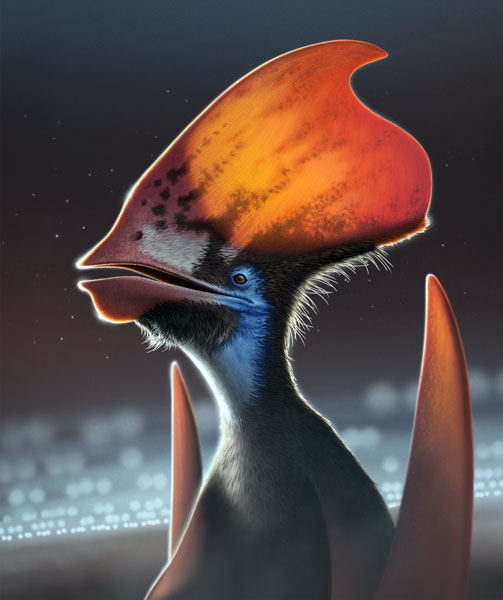
A remarkably well-preserved cranial crest from a pterosaur has provided more evidence that pterosaurs were feathered. Furthermore, analysis of the Tupandactylus specimen (MCT.R.1884), indicates that their bodies were covered with different types of feathers, including branching feathers. The researchers report the presence of different shaped melanosomes associated with the skin and the flying reptile’s feathers. This suggests that pterosaur feathers were not just for thermoregulation, that colouration could be manipulated genetically.

In simple terms, pterosaur feathers probably played a role in visual communication and therefore, visual signalling.

New evidence of branched feathers in pterosaurs.

New evidence of branched feathers in discovered in a Tupandactylus specimen suggests that feathers originated in the avemetatarsalian ancestor of pterosaurs and dinosaurs in the Early Triassic. Picture credit: Bob Nicholls.

Picture credit: Bob Nicholls

Perhaps feathers evolved independently in the Theropoda and Pterosauria (convergent evolution), if this is not the case, then integumentary coverings originated in the avemetatarsalian ancestor of the pterosaurs and dinosaurs.

Marvellous Melanosomes

Writing in the academic journal “Nature”, the researchers that include University College Cork palaeontologists Dr Aude Cincotta, Professor Maria McNamara and Dr Pascal Godefroit from the Royal Belgian Institute of Natural Sciences, conclude that pterosaurs were able to control the colour of their feathers using melanin pigments.

A partial cranium from a Tupandactylus imperator preserved on five limestone slabs from the Lower Cretaceous Crato Formation (Brazil), estimated to be around 115 million years old, was analysed in detail. The scientists discovered that the bottom of the spectacular head crest had a rim of fuzzy feathers, with short wiry hair-like feathers and fluffy branched feathers.

Different types of feathers in pterosaur fossil

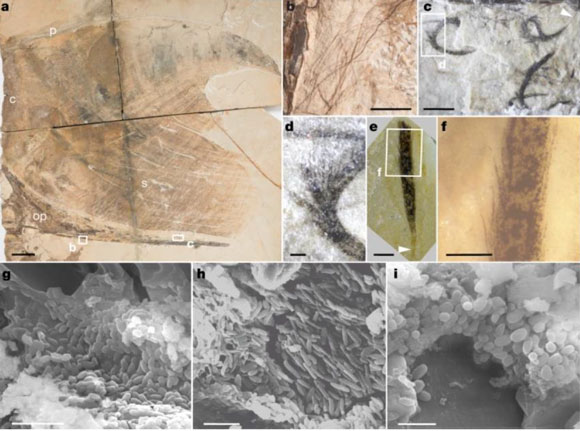
Details of the cranial crest of a new specimen of Tupandactylus cf. imperator (MCT.R.1884) from the Lower Cretaceous Crato Formation, Brazil. Incomplete skull showing soft crest preserved (a). Details of the intgumentary structures associated with the back of the skull (b-f). Monofilaments (b), branched feathers (c) and in close view (d). A straight branched feather (e) with close view (f). The white arrow in (e) highlights the basal calamus (hollow base of the feather that attaches to the skin). Scanning Electron Microscope images (g-i) of melanosomes in MCT.R.1884. Scale bars, 50 mm (a); 5 mm (b); 2 mm (c); 250 μm (d–f); 2 μm (g–i). Picture credit: Cincotta et al.

Picture credit: Cincotta et al

Pterosaur Feather Controversies

Several papers have been published examining integumentary coverings in members of the Pterosauria. It had been established (Yang et al 2018), that flying reptiles had feathery, branched feathers: Are the Feathers About to Fly in the Pterosauria? However, the debate regarding integumentary coverings in pterosaurs is not without controversy.

In 2020, a paper was published that challenged these findings casting doubt on the idea that pterosaurs had an integumentary covering of insulating protofeathers: Naked Pterosaurs – No Feathers Here (Unwin and Martill).

Scanning Electron Microscopes

Soft tissue samples from the cranial crest, simple feathers (monofilaments) and the branching feathers were taken and subjected to scanning electron microscopy. All the samples were found to contain abundant oval-shaped or elongate structures that were interpreted to represent melanosomes. Unexpectedly, the new study shows that the melanosomes in different feather types have different shapes.

Commenting on the significance of this discovery, co-author of the paper, Professor McNamara stated:

“In birds today, feather colour is strongly linked to melanosome shape. Since the pterosaur feather types had different melanosome shapes, these animals must have had the genetic machinery to control the colours of their feathers. This feature is essential for colour patterning and shows that colouration was a critical feature of even the very earliest feathers”.

Tupandactylus illustration.

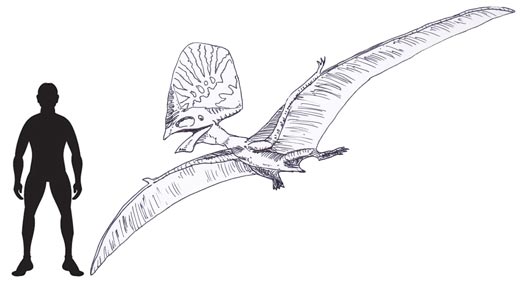
A scale drawing of the tapejarid pterosaur Tupandactylus imperator. A new study suggests that flying reptiles had a variety of feathers and that the presence of different shaped melanosomes in different types of feathers indicates that they possessed the genetic machinery to control the colours of their feathers. Picture credit: Everything Dinosaur.

Picture credit: Everything Dinosaur

For models and replicas of pterosaurs and other prehistoric animals: PNSO Museum Quality Prehistoric Animal Models.

Feathers Use in Visual Signalling has Deep Evolutionary Origins

The Pterosauria and the Dinosauria are members of the Avemetatarsalia, a branch of the Archosauria that includes all archosaurs more closely related to birds than to crocodilians. However, the lineage that led to the flying reptiles diverged from the dinosaurs millions of years before birds and feathered dinosaurs evolved. This study also suggests that the function of feathers in visual communication has deep evolutionary origins.

Fossil Repatriated to Brazil

It is also pleasing to note, that thanks to the efforts of the research team, the authorities and other collaborators, this amazing pterosaur fossil that had been in private ownership has been repatriated to Brazil.

Dr Pascal Godefroit (Royal Belgian Institute of Natural Sciences), explained:

“It is so important that scientifically important fossils such as this are returned to their countries of origin and safely conserved for posterity. These fossils can then be made available to scientists for further study and can inspire future generations of scientists through public exhibitions that celebrate our natural heritage”.

Everything Dinosaur acknowledges the assistance of a press release from the University College Cork in the compilation of this article.

The scientific paper: “Pterosaur melanosomes support signalling functions for early feathers” by Aude Cincotta, Michaël Nicolaï, Hebert Bruno Nascimento Campos, Maria McNamara, Liliana D’Alba, Matthew D. Shawkey, Edio-Ernst Kischlat, Johan Yans, Robert Carleer, François Escuillié and Pascal Godefroit published in the journal Nature.

Visit Everything Dinosaur’s website: Everything Dinosaur.

17 04, 2022

Early Cambrian Origin for the Bryozoa According to New Study

By |2024-12-30T06:35:27+00:00April 17th, 2022|Categories: Adobe CS5, Dinosaur and Prehistoric Animal News Stories, Main Page, Palaeontological articles, Photos/Pictures of Fossils|0 Comments

Bryozoans, also referred to as the Polyzoa, are an ancient phylum of tiny aquatic invertebrate animals that mostly live in colonies. Normally marine, but some species do live in freshwater, they have a protective exoskeleton made from calcium carbonate. They have a special feeding appendage called a lophophore, which resembles a crown of tentacles used for filter feeding.

Bryozoan fossils are abundant and geographically widespread and the presence of six major orders of bryozoans in Lower Ordovician strata strongly indicated that these organisms evolved during the Cambrian, however, fossil evidence was lacking. Late last year (2021), a team of researchers published a paper in the academic journal “Nature” describing a new genus of soft-bodied bryozoan from the Early Cambrian of Australia and southern China. Named Protomelission gatehousei, its fossils confirm a Cambrian origin for these important aquatic organisms.

Bryozoan fossil from the Early Cambrian.

Protomelission gatehousei from the Cambrian Wirrealpa Limestone, South Australia. Picture credit: Zhang et al.

Picture credit: Zhang et al

A Basal Member of the Bryozoa

The researchers from Macquarie University (Sydney, Australia), the Northwest University (Xi’an, China), the London Natural History Museum, the University of Missouri, the Nanjing Institute of Geology and Palaeontology (Nanjing, China) as well as the Swedish Museum of Natural History (Stockholm, Sweden), describe this new genus as a basal member of the order.

The discovery of a stem bryozoan from rocks dating from the Cambrian narrows the origination gap that previously existed between the known fossil record and independent molecular clock estimates. The researchers state that this fossil discovery pushes back the fossil record of the Bryozoa by approximately thirty-five million years.

Protomelission gatehousei confirms that the colonial body plan of the Bryozoa originated in the Early Cambrian. It also reconciles the fossil record with molecular clock estimations of an Early Cambrian origination and subsequent Ordovician radiation of Bryozoa following the acquisition of a carbonate skeleton.

Bryozoan fossil from the Ordovician.

Fossils of a branching bryozoan colony from the Ordovician. The presence of six major orders of bryozoans in lower Ordovician rocks strongly suggests a Cambrian origin for the largest and most diverse lophophorate phylum but the fossil evidence had been lacking. A newly published paper describes Protomelission gatehousei from the Early Cambrian of Australia and southern China and confirms a Cambrian origin for these important aquatic organisms.

Whilst the Cambrian and Ordovician forms are extinct, modern bryozoans are an important constituent of modern-day marine fauna.

The scientific paper: “Fossil evidence unveils an early Cambrian origin for Bryozoa” by Zhiliang Zhang, Zhifei Zhang, Junye Ma, Paul D. Taylor, Luke C. Strotz, Sarah M. Jacquet, Christian B. Skovsted, Feiyang Chen, Jian Han and Glenn A. Brock published in Nature.

16 04, 2022

A Juvenile Diamantinasaurus – Australia’s Smallest Sauropod Found to Date

By |2023-07-04T07:21:38+01:00April 16th, 2022|Categories: Adobe CS5, Dinosaur and Prehistoric Animal News Stories, Dinosaur Fans, Main Page, Palaeontological articles, Photos/Pictures of Fossils|0 Comments

A scientific paper has just been published describing the fossilised remains of a juvenile titanosaur from the Winton Formation of Queensland, Australia. The specimen has been assigned to the Diamantinasaurus taxon (D. matildae) and it represents the smallest sauropod described from fossils found in Australia to date.

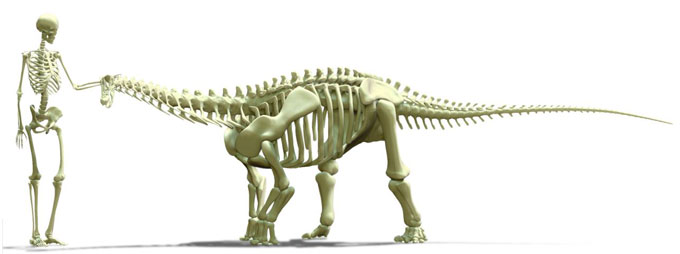
Reconstructed skeleton of the juvenile Diamantinasaurus (D. matildae) compared to a human skeleton.
A model of the reconstructed skeleton of the juvenile Diamantinasaurus (D. matildae) compared to a human skeleton. The young dinosaur is estimated to have weighed around 4.2 Tonnes. Picture credit: Australian Age of Dinosaurs Museum.

About Ten Percent of the Skeleton Recovered

The fossils were discovered on Elderslie Station land which lies some 35 miles northwest of the town of Winton (Queensland). Landowners noticed fragments of a femur and dorsal ribs exposed on the surface (2012). Staff from the Australian Age of Dinosaurs Museum along with volunteers excavated the site and found the remainder of the fossil material representing about 10% of the total skeleton about a metre below the surface.

The postcranial material consists of cervical ribs, three incomplete dorsal vertebrae, sacral vertebrae and limb bones.

Views of the juvenile Diamantinasaurus fossils (AODF 663) a right humerus and right manual ungual with accompanying digital models.
Views of the juvenile Diamantinasaurus fossils (AODF 663) a right humerus and right manual ungual with accompanying digital models. Right humerus photographs in A, dorsal, B, anterior, C, ventral, D, medial, E, posterior, F, lateral views. Right humerus digital models in G, dorsal, H, anterior, I, ventral, J, medial, K, posterior, L, lateral views. The right manual ungual in M, proximal, N, dorsal, O, anterior, P, ventral, Q, posterior views. Right manual ungual digital models in R, proximal, S, dorsal, T, anterior, U, ventral, and V, posterior views. Note scale bar for humerus equals 10 cm and for the manual ungual 5 cm. Picture credit: Rigby et al.

A Young Titanosaur from the Late Cretaceous

Although age estimates for the Winton Formation vary, it has been informally divided into lower and upper members, with the Diamantinasaurus material coming from the “upper” portion which is regarded as Cenomanian to potentially the lowermost Turonian stages of the Late Cretaceous (approximately 95-89 million years ago).

The study of the juvenile titanosaur was led by Museum Research Associate Samantha Rigby who is undertaking a Master of Science (Research) at Swinburne University of Technology (Victoria, Australia), under the supervision of Dr Stephen Poropat who was one of the co-authors of the scientific paper published in the Journal of Vertebrate Palaeontology. Each bone from the specimen was scanned to create three-dimensional models to digitally compare them with other sauropod remains.

This comparison suggests the small specimen belongs to the Diamantinasaurus taxon though with juvenile characteristics, vertebrae which are unfused, minimal muscle scarring on the bones, smooth bone texture and marked proportional bone size differences when compared to adult titanosaur material.

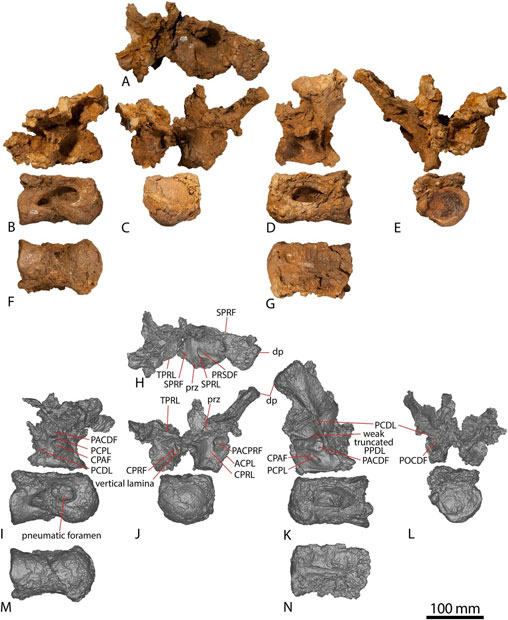
Diamantinasaurus dorsal vertebrae and digital models.
Diamantinasaurus juvenile dorsal vertebrae with digital models. Dorsal vertebra photographs in A, dorsal, B, right lateral, C, anterior, D, left lateral, E, posterior views. Dorsal vertebra digital models in F, dorsal, G, right lateral, H, anterior, I, left lateral, J, posterior views. Note scale bar equals 10 cm. Picture credit: Rigby et al.

Allometric Growth

The fossil specimen (AODF 663) nicknamed “Oliver” is only the third specimen to be referred to the taxon Diamantinasaurus matildae. D. matildae was formally named and described in 2009: A Trio of New Dinosaurs from Down Under. The research team found that the bones of this small titanosaur grew allometrically, meaning that its bones changed shape and different parts of its body grew at different rates.

The limb bones are also narrower in width when compared to other Diamantinasaurus limb bones from older individuals. This suggests that as this titanosaur grew its limb bones became thicker and more robust to help support its enormous bulk.

A Juvenile Diamantinasaurus

Fossils of juvenile titanosaurs are rare and it is hoped that “Oliver” will provide important insights into the ontogeny of titanosaurs.

Everything Dinosaur acknowledges the assistance of a media release from the Australian Age of Dinosaurs Museum in the compilation of this article.

The scientific paper: “A juvenile Diamantinasaurus matildae (Dinosauria: Titanosauria) from the Upper Cretaceous Winton Formation of Queensland, Australia, with implications for sauropod ontogeny” by Samantha L. Rigby, Stephen F. Poropat, Philip D. Mannion, Adele H. Pentland, Trish Sloan, Steven J. Rumbold, Carlin B. Webster and David A. Elliott published in the Journal of Vertebrate Paleontology.

Visit the Everything Dinosaur website: Everything Dinosaur.

15 04, 2022

Juvenile Gorgosaurus Skulls Shed Light on Tyrannosaurid Growth Patterns

By |2024-12-29T22:41:08+00:00April 15th, 2022|Categories: Adobe CS5, Dinosaur and Prehistoric Animal News Stories, Dinosaur Fans, Main Page, Palaeontological articles, Photos/Pictures of Fossils|1 Comment

Researchers have described two beautifully preserved skulls of juvenile Gorgosaurus dinosaurs (G. libratus). The articulated specimens have enabled the scientists to build up a comprehensive picture of how these tyrannosaurids changed as they grew. Gorgosaurus and the much bigger, later tyrannosaurid T. rex exhibit similar changes in their skulls as they grow. This study will help palaeontologists to decipher tyrannosaur material and to determine the identity of previously misidentified specimens. It should also provide more evidence to help resolve the Nanotyrannus/T. rex debate.

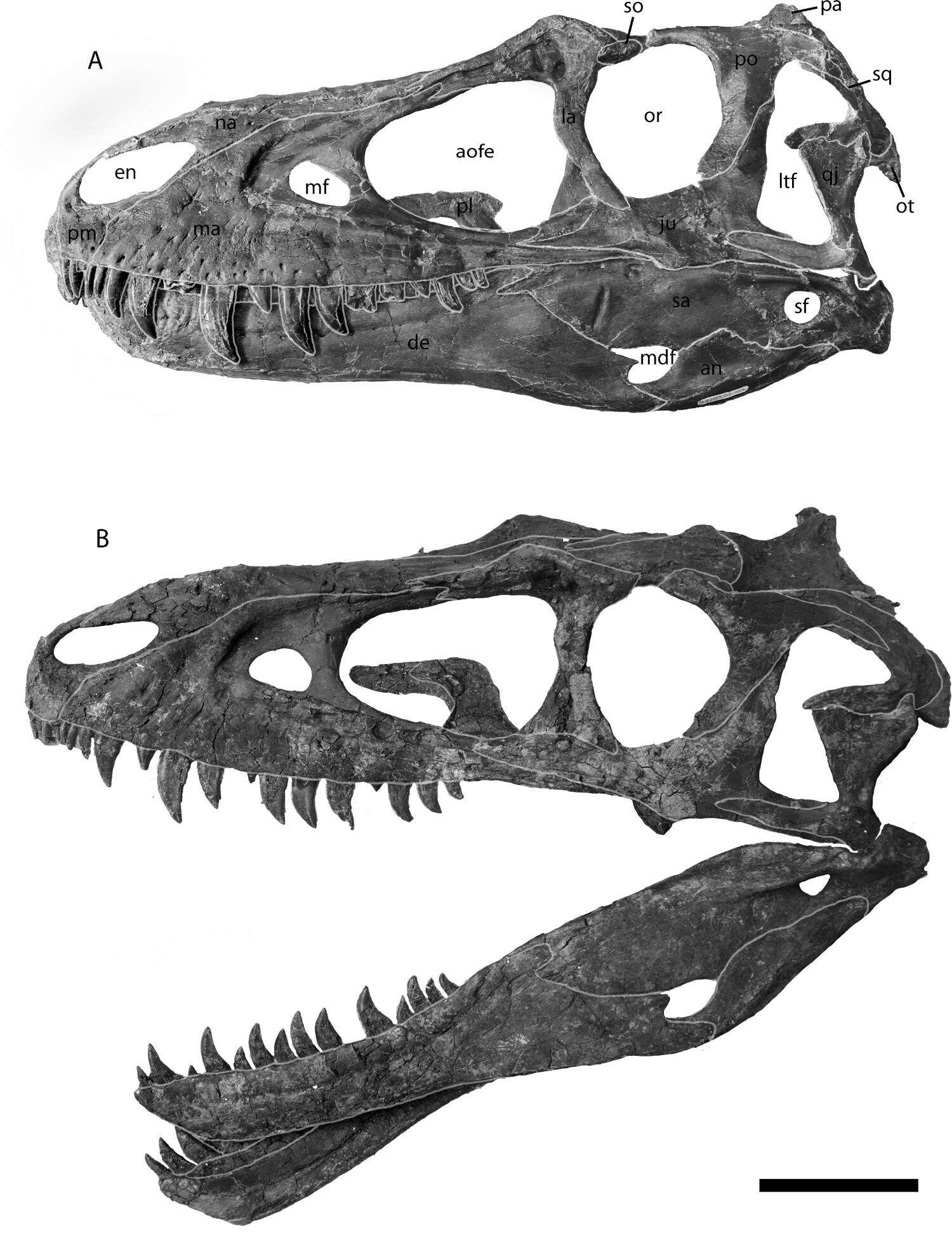
Lateral views of juvenile Gorgosaurus skulls.

Skulls of the two new juvenile Gorgosaurus libratus specimens in lateral view. A, TMP 2009.12.14; B, TMP 2016.14.1. Note scale bar equals 10 cm. Picture credit: Voris et al.

Picture credit: Voris et al

Gorgosaurus libratus

Named and described in 1914 (Lambe), Gorgosaurus is known from dozens of fossil specimens found in the upper Campanian Dinosaur Park Formation of Alberta and Judith River Formation of Montana. It is one of the best sampled and researched of all the Late Cretaceous tyrannosaurs, but juvenile material is rare. The recent discovery of additional juvenile Gorgosaurus libratus specimens from the Dinosaur Park Formation, including two well-preserved skeletons with articulated skulls, provided researchers which include Jared Voris and Darla Zelenitsky (University of Calgary), along with collaborators from the University of Ohio, the University of Alberta and the Royal Tyrrell Museum, an opportunity to develop a map outlining how this dinosaur changed as it grew and matured.

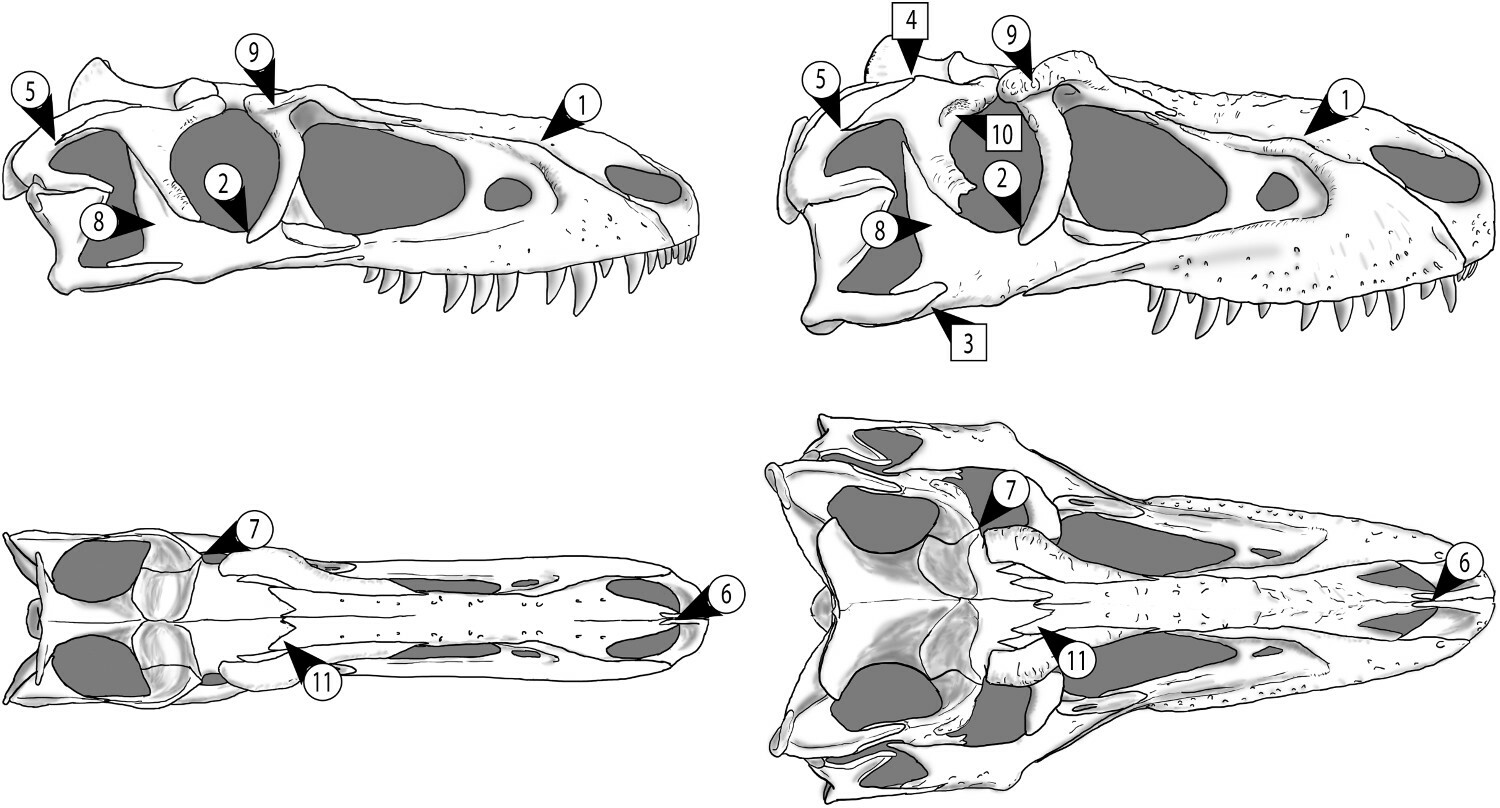
Juvenile and adult Gorgosaurus skulls compared.

Illustrations of juvenile (left) and adult (right) skulls of Gorgosaurus in lateral (top) and dorsal views (bottom). Arrows and numbers indicate ontogenetically invariant autapomorphies of Albertosaurinae and Gorgosaurus as per emended diagnosis. Juvenile illustration based on TMP 2016.14.1 (lateral) and TMP 2009.12.14 (dorsal), adult illustration based on UALVP 10. Picture credit: Voris et al.

Picture credit: Voris et al

Sorting out Daspletosaurus Specimens

The research team, which also included Professor Phil Currie (University of Alberta), found that although the skulls of tyrannosaurs changed dramatically as they grew, several taxonomically informative traits remain present regardless of the age of the animal. This means that palaeontologists can use this information to determine which taxon is represented by juvenile fossil material.

Thanks to this research, two specimens previously identified as examples of immature Daspletosaurus individuals (coeval with Gorgosaurus) are instead confirmed as Gorgosaurus.

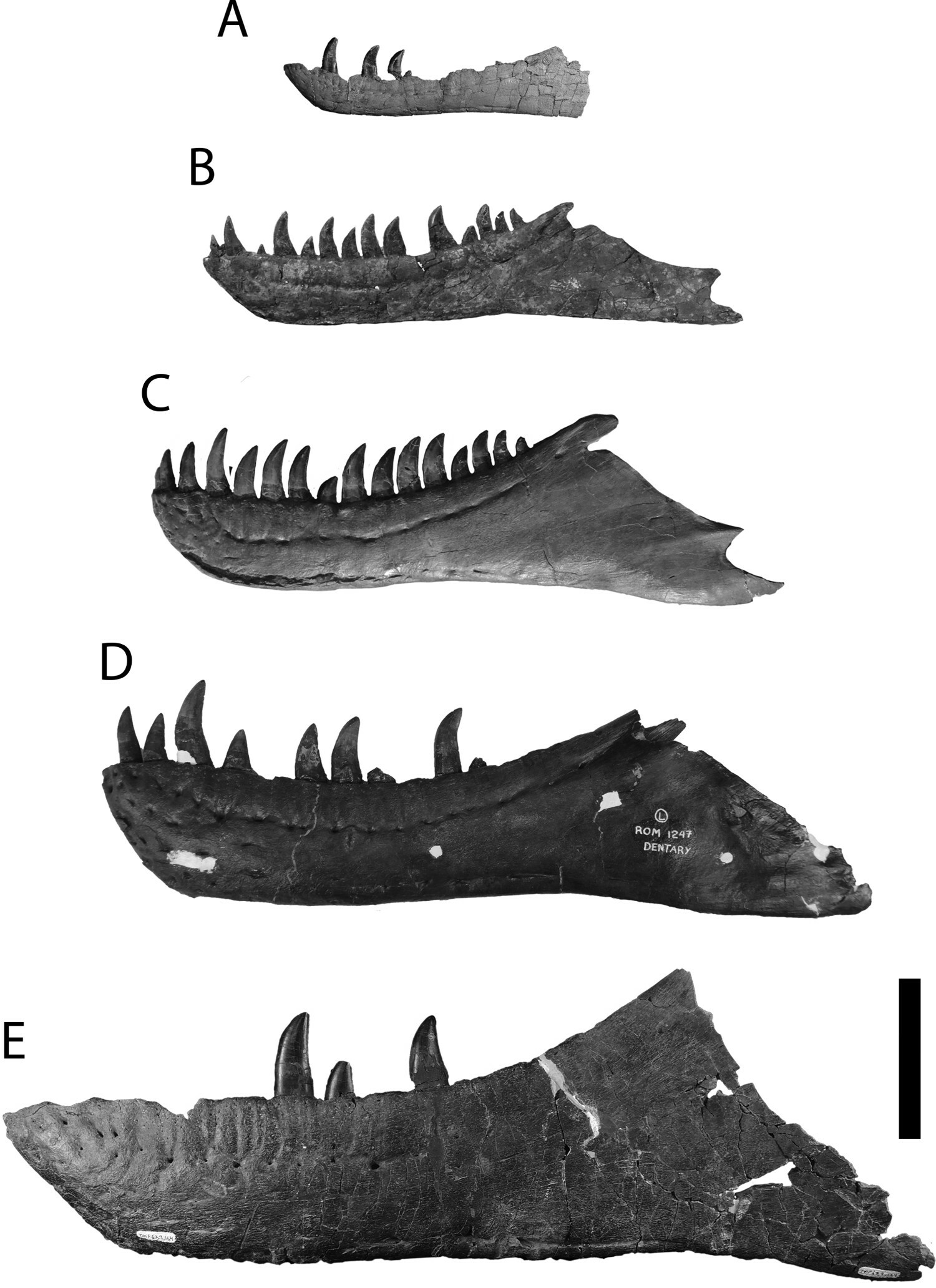
Gorgosaurus dentaries compared

Left dentaries in lateral view of A, small juvenile (TMP 1994.12.155); B, juvenile (TMP 2016.14.1); C, subadult (TMP 1991.36.500); D, young adult (ROM 1247); and E, adult (TMP 1967.9.164) specimens of Gorgosaurus libratus. Note the development of the autapomorphic dorsoventral expansion in the posterior region of the bone through ontogeny. Scale bar equals 10 cm. Picture credit: Voris et al.

Picture credit: Voris et al

Comparisons with Tyrannosaurus rex

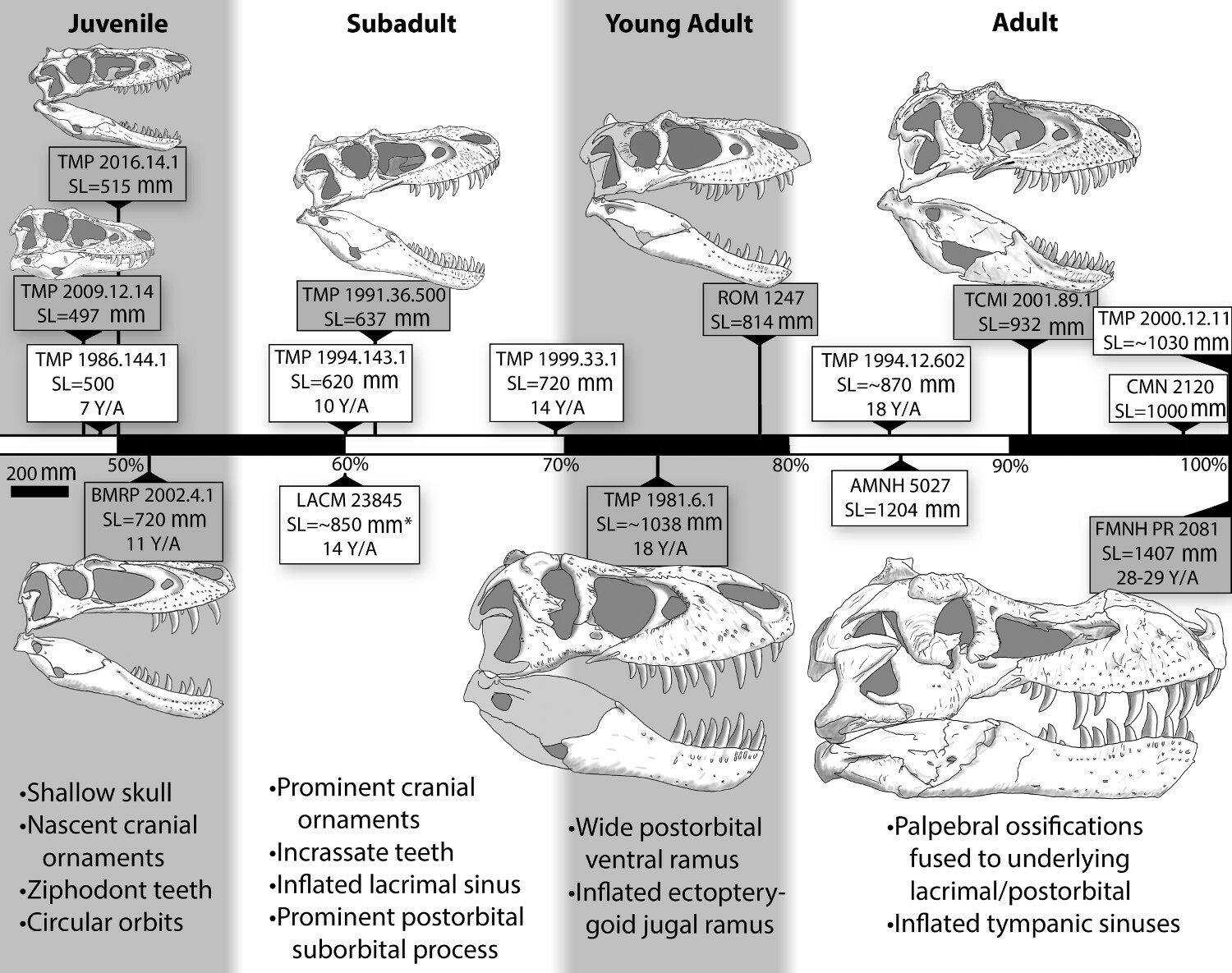
The team also found that both Gorgosaurus and T. rex underwent similar anatomical changes over their lifespans, but at different times. The changes started later in Tyrannosaurus rex and occurred over a longer time interval, resulting in a larger size and longer lifespan for T. rex when compared to Gorgosaurus.

Comparing the growth stages of Gorgosaurus libratus and T. rex.

Comparison of the growth series of Gorgosaurus libratus (top) and Tyrannosaurus rex (bottom), demonstrating similar ontogenetic stages (and morphologies) occurring at similar relative size (percent of largest specimen skull length) but different body sizes and biological ages. Picture credit: Voris et al.

Picture credit: Voris et al

Implications for Nanotyrannus

Having identified a series of anatomical traits that can be relied upon to permit palaeontologists to confidently assign juvenile tyrannosaur skull fossils to a specific taxon, this allows some specimens considered small or “dwarf” forms such as Nanotyrannus (N. lancensis) to be revisited. Some of these specimens may have been misidentified, since key characteristics may not have developed in young individuals before death, but this new data set would allow closer scrutiny of the fossil material.

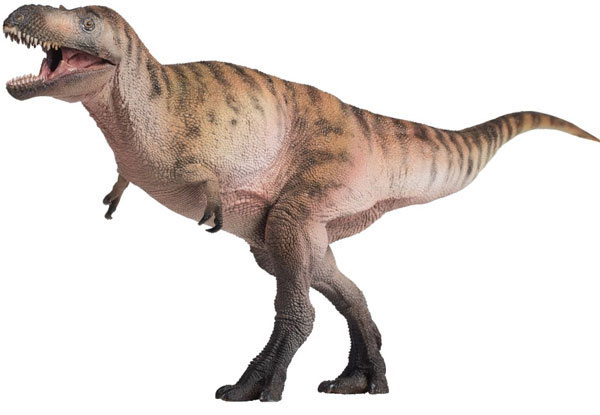
PNSO Nanotyrannus dinosaur model.

The new for 2021 PNSO Nanotyrannus dinosaur model.

The picture (above) shows a model of a Nanotyrannus by PNSO.

To view the range of PNSO prehistoric animal figures in stock: PNSO Prehistoric Animal Models.

The scientific paper: “Two exceptionally preserved juvenile specimens of Gorgosaurus libratus (Tyrannosauridae, Albertosaurinae) provide new insight into the timing of ontogenetic changes in tyrannosaurids” by Jared T. Voris, Darla K. Zelenitsky, François Therrien, Ryan C. Ridgely, Philip J. Currie and Lawrence M. Witmer published in the Journal of Vertebrate Paleontology.

Visit the award-winning Everything Dinosaur website: Dinosaur Toys.

14 04, 2022

An Important Update – Assessment Reports “Minor” Damage to Mill Canyon Track Site

By |2024-12-29T18:33:31+00:00April 14th, 2022|Categories: Adobe CS5, Dinosaur and Prehistoric Animal News Stories, Dinosaur Fans, Main Page, Palaeontological articles, Photos/Pictures of Fossils|0 Comments

An assessment of the Mill Canyon dinosaur track site north of Moab in Grand County, Utah by Bureau of Land Management regional palaeontologist Brent Breithaupt confirms that damage was caused to the Early Cretaceous tracks and trace fossils by a construction crew, but the damage is described as “minor”.

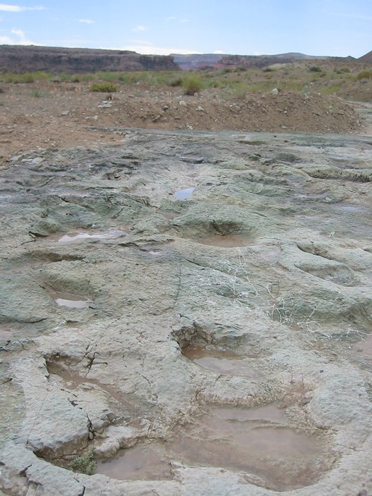
Dinosaur trackway.

Trace fossils (dinosaur footprints) preserved at Moab (Utah). Picture credit: Bureau of Land Management.

Picture credit: Bureau of Land Management

Essential Repairs and Maintenance at an Important Fossil Site

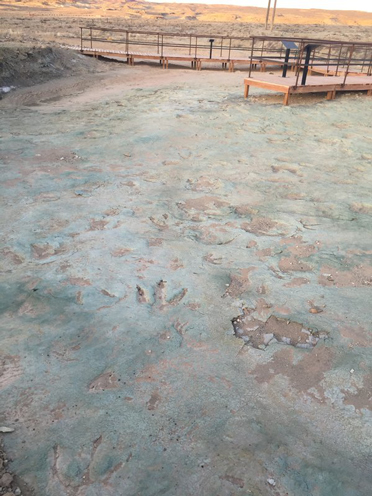
The site, which covers approximately 2.3 acres contains over 200 tracks and other trace fossils recording activity around a body of water at an Early Cretaceous lake (approximately 112 million years ago). A construction crew had been employed to undertake repairs and improvements to the site including the replacement of boardwalks. Members of the public became aware of the maintenance work and reported possible damage to the fossils caused by the construction crew.

Everything Dinosaur published a blog article on reports of the damage caused by Bureau of Land Management contractors: Dinosaur Tracksite Damaged and having had concerns raised about damage to the site, it was decided to conduct an assessment of the area in order to find the best way to protect the fossils whilst still permitting public access.

This Damage to the Track Site Should Not Have Occurred

The assessment concluded that the overall damage was minor. Even so, Brent Breithaupt wrote in the report that:

“This damage should not have occurred”.

The regional palaeontologist added, that if the project had not been stopped:

“It is likely that much greater damage would have occurred with increased construction activities”.

As the Bureau of Land Management failed to consult palaeontologists on the maintenance plans, crews did not know which areas of the site to avoid. The incident was described in the report as “unfortunate” and the damage “could have been avoided”.

Mill Canyon tracksite.

At least six different dinosaur tracks have been deciphered at Moab (Utah). Picture credit: Bureau of Land Management.

After the report was released, the Bureau of Land Management has confirmed that an additional environmental assessment would be undertaken, the public would be consulted and palaeontologists involved in future work at the location to supervise activities. The Bureau of Land Management reported that it “remains committed to protecting plant and animal fossils on our public lands”.

The Everything Dinosaur website: Dinosaur Toys.

12 04, 2022

Ichthyosaurs Had Blubber According to a New Study

By |2024-12-29T18:06:04+00:00April 12th, 2022|Categories: Adobe CS5, Dinosaur and Prehistoric Animal News Stories, Dinosaur Fans, Main Page, Palaeontological articles, Photos/Pictures of Fossils|0 Comments

Researchers from the Smithsonian Institute (Washington), the University of Oslo and the Ludwig Maximilian Universität (Munich), have published a paper that describes two ichthyosaur specimens from the famous Upper Jurassic Solnhofen deposits of southern Germany. The fossils, an almost complete Aegirosaurus (JME-SOS-08369) and a tail (JME-SOS183), reveal extensive soft tissue preservation, analysis of which indicates the presence of blubber in these marine reptiles.

Late Jurassic Aegirosaurus sp. (Solnhofen)

Late Jurassic Aegirosaurus sp. (JME-SOS-08369) shown in (A) in normal light and (B) composite picture in UV light indicating location of further close-up images included in the scientific paper. Interpretative drawing (C). Note scale bar equals 20 cm. Picture credit: Delsett et al.

Picture credit: Delsett et al

These amazing fossil specimens representing marine reptiles that lived around 150 million years ago will help scientists to better understand how soft tissue can be preserved in the carcases of vertebrates deposited on the seafloor.

For models and replicas of ichthyosaurs and other prehistoric animals: Ichthyosaurs and Prehistoric Animal Models (CollectA).

Aegirosaurus

Aegirosaurus is a genus of ichthyosaur within the Ophthalmosauridae family. Its fossils are associated with the Upper Jurassic limestone deposits of Solnhofen in southern Germany. These deposits are famous for their vertebrate fossils, although ichthyosaur material is rare. Fossils ascribed to this genus have also been found in Lower Cretaceous strata in south-eastern France (Fischer et al, 2011). This discovery suggests that most Late Jurassic ichthyosaurs came through the end Jurassic extinction and continued to thrive in the Early Cretaceous.

Aegirosaurus was an active, nektonic pursuit predator, probably feeding on small fish and squid.

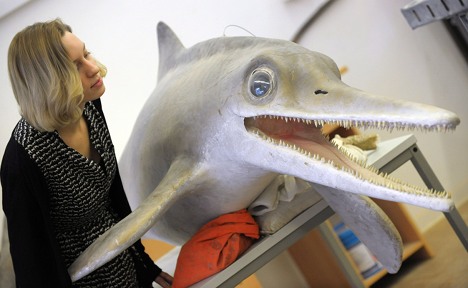
Ophthalomosaurid model

A replica of Ophthalomosaurus, an ichthyosaur similar in body shape to Aegirosaurus.  Picture credit: DPA.

Picture credit: DPA

Evidence for Blubber

The nearly complete ichthyosaur skeleton (JME-SOS-08369) was excavated in 2009, whereas the second specimen involved in this study (the tail), was originally found in 1926, but not formally described. No genus has been assigned to the tail specimen, although the researchers confidently assign it to the Ophthalmosauridae.

Ichthyosaur tail fossil.

The Late Jurassic ichthyosaur tail (specimen number JME-SOS2183) shown in (A) regular light, under ultraviolet light (B) with an interpretative line drawing (C). Note scale bar equals 10 cm. Picture credit: Delsett et al.

Picture credit: Delsett et al

Soft tissue samples were analysed using X-ray diffraction (XRD) and scanning electron microscopy (SEM) coupled with energy dispersive spectroscopy (EDS) analysis. The analyses confirm the presence of the phosphate mineral apatite, with phosphate most likely derived from the body itself. In addition, a yellow-coloured, amorphous substance was identified, the researchers postulate that this substance represents decomposed blubber.

Aegirosaurus fossil skull with interpretative line drawing.

Skull from Late Jurassic Aegirosaurus sp. (JME-SOS-08369) with (A) interpretative drawing and (B) photograph. Note scale bar equals 5 cm. Picture credit: Delsett et al.

Picture credit: Delsett et al

Identifying Adipocere

The researchers conclude that the detailed analysis of the yellowish, amorphous substance indicates that it is adipocere. This is late-stage post-mortem decomposing fatty acids produced by microorganisms under low oxygen conditions. As adipocere is a typical breakdown product of animal blubber, it is postulated that these ichthyosaurs had blubber to help insulate them, just as many extant marine mammals do. The paper does not address any endothermic implications for this conclusion.

Understanding Ichthyosaur Taphonomy

The two ichthyosaur specimens with their extensive soft tissue preservation will help scientists to interpret the taphonomy (how fossils are preserved) of Solnhofen Archipelago vertebrates. Future research will focus on microscopical and geochemical analysis of different parts of the specimens that have the potential to reveal more information about tissue types.

In addition, the beautifully preserved fossils hold the potential for investigations into the locomotion of ophthalmosaurids, helping scientists to better understand how these marine reptiles moved through the water.

The scientific paper: “The soft tissue and skeletal anatomy of two Late Jurassic ichthyosaur specimens from the Solnhofen archipelago” by Lene L. Delsett​, Henrik Friis, Martina Kölbl-Ebert and Jørn H. Hurum published in PeerJ.

The Everything Dinosaur website: Prehistoric Animal Figures.

7 04, 2022

Evidence of Triceratops Fighting Rivals

By |2024-12-29T17:26:42+00:00April 7th, 2022|Categories: Adobe CS5, Dinosaur and Prehistoric Animal News Stories, Dinosaur Fans, Main Page, Photos/Pictures of Fossils|0 Comments

Scientists have analysed a hole in the fossil skull of a large Triceratops and concluded that the injury was caused by another Triceratops. This study suggests that Triceratops engaged in fights with other members of their species (intraspecific combat).

A specimen of Triceratops (T. horridus) referred to as Big John was discovered in 2014 in the Upper Cretaceous Hell Creek Formation (Montana, USA). There is a hole (fenestra), in the right squamosal. The neck shield is perforated and researchers from the University of Chieti-Pescara, the University of Bologna in collaboration with other research institutes conducted detailed tests on the fossilised bone surrounding this perforation.

Evidence of intraspecific combat in Triceratops.

The specimen of Triceratops horridus known as “big John” suggest that an injury to the neck frill was caused by intraspecific combat. Picture credit: Ferrara A., and Briano I.

Chemical Analysis

Extracranial fenestrae in ceratopsian neck frills had been interpreted as evidence of injuries that resulted from intraspecific combat. To evaluate this hypothesis the researchers conducted extensive tests on the fossil bone immediately surrounding the hole in the neck frill. Microscopy analysis revealed newly formed and healing bone, with histological signs typical of the bone remodelling phase associated with recovery from an injury. In addition, chemical analysis revealed typical signatures associated with bone re-growth and healing.

Triceratops Fighting

The picture (below) shows two Triceratops dinosaurs fighting. These are two models from the Eofauna Scientific Research model range. The models are called “Dominant” and “Cryptic”.

To view the Eofauna Scientific Research range: Eofauna Scientific Research Prehistoric Animal Models.

Eofauna Scientific Research Triceratops dinosaur models.

The Eofauna Scientific Research 1:35 scale Triceratops models do battle (Cryptic and Dominant).

The researchers conclude that histological and microanalytical analyses indicate that the squamosal fenestra of Big John is the result of a traumatic event, which might indeed have occurred during a fight with another Triceratops.

The scientific paper: “Histological and chemical diagnosis of a combat lesion in Triceratops” by Ruggero D’Anastasio, Jacopo Cilli, Flavio Bacchia, Federico Fanti, Giacomo Gobbo and Luigi Capasso published in Scientific Reports.
Visit the Everything Dinosaur website: Everything Dinosaur.

Go to Top