All about dinosaurs, fossils and prehistoric animals by Everything Dinosaur team members.
8 05, 2025

Happy Birthday Sir David Attenborough

By |2025-05-08T09:13:11+01:00May 8th, 2025|Categories: Famous Figures|0 Comments

Many happy returns Sir David Attenborough. The acclaimed naturalist and broadcaster celebrates his ninety-ninth birthday today.  Ninety-nine times around the sun, that is something to celebrate.  On this special day for the country, we dedicate today’s blog post to a national treasure.

Sir David Attenborough.

Still enthusing about the natural world and still campaigning and raising awareness about global conservation efforts.

Happy Birthday Sir David Attenborough

Sir David’s energy and enthusiasm for the natural world shows no sign of diminishing despite him being just twelve months short of his centenary.

A regular presenter and contributor to British television programmes since the 1950s, Sir David’s adventures continue to inspire. His insights into our amazing planet and the natural world have inspired generations of wildlife lovers and champions of conservation. He remains one of the most influential campaigners for and advocate of conservation in the world.

Happy birthday Sir David, may you continue to inspire and educate.

7 05, 2025

New Research Supports Asian Origin for Tyrannosaurus rex

By |2025-05-08T17:19:23+01:00May 7th, 2025|Categories: Palaeontological articles|0 Comments

The direct ancestor of the iconic Tyrannosaurus rex came from Asia. Newly published research lends weight to the theory that the direct ancestor of Tyrannosaurus rex dispersed into North America from Asia via an ancient land bridge. Fossils of T. rex are known from Canada and the USA. However, there is some evidence to suggest that this super-predator may also have roamed what is now Mexico.  The origins of this famous dinosaur, more specifically the Tyrannosaurini, have been hotly debated.

Did the ancestors of T. rex come from Asia or did its ancestors evolve in North America (southern Laramidia)?

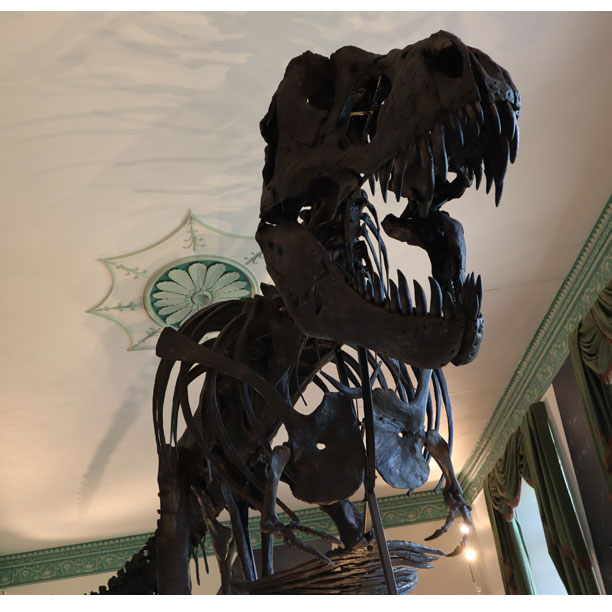
Titus the T.rex exhibit. A T. rex skeleton on display.

The spectacular Titus the T. rex exhibit at Wollaton Hall. A newly published study (May 2025) supports the theory that the ancestors of the iconic Tyrannosaurus rex originated in Asia. Picture credit: Everything Dinosaur.

Picture credit: Everything Dinosaur

The Origins of the Iconic Tyrannosaurus rex

Previous studies had suggested that the ancestors of the iconic Tyrannosaurus rex migrated into North America from Asia. This theory was primarily based on the closer taxonomic relationship that T. rex has with Asian tyrannosaurids such as Zhuchengtyrannus and Tarbosaurus. Tyrannosaurus rex was more distantly related to Laramidian tyrannosaurids such as Daspletosaurus and Teratophoneus. So, based on this evidence, it was thought that the lineage of tyrannosaurs that were direct ancestors of the “Tyrant Lizard King” probably evolved in Asia.

Dalman et al in their scientific description of Tyrannosaurus mcraeensis (2024) proposed that the Tyrannosaurus genus evolved in southern Laramidia. Their theory was underpinned by the Late Campanian–Early Maastrichtian age of the T. mcraeensis holotype. However, doubt has been cast over the exact age of the holotype fossil material.

In this new study, a biogeographical analysis of the Tyrannosauridae family, particularly the tribe Tyrannosaurini suggests that tyrannosaurines diversified in the Late Campanian. This diversification supports the idea of a migration of ancestors of T. rex from Asia into North America.

To read Everything Dinosaur’s blog post about Tyrannosaurus mcraeensis: A New Tyrannosaurus Species is Described.

Tyrannosaurus Genus Likely Endemic to North America

The research team conclude that Tyrannosaurus is likely an endemic, North American genus.  The ancestor of the genus dispersed into North American biotas, where it would give rise to Tyrannosaurus. In addition, gigantism occurred numerous times within the Tyrannosauroidea. It was potentially driven by cooler or cooling climates. This study supports the idea that evolutionary changes within the Dinosauria of the Late Cretaceous was partly in response to climate change. The research illustrates the importance of using climate and ecological data to better understand dinosaurian evolution within wider global climatic shifts.

Shedding Light on the Enigmatic Megaraptoridae

The study also sheds light on the evolution of the enigmatic megaraptors.  The Megaraptoridae are a different family of theropod dinosaurs.  How closely related they were to the tyrannosaurs remains disputed.

Some megaraptors were giants.  They occupied the apex predator niche within many ecosystems.  For example, Maip macrothorax from the Late Cretaceous of Argentina may have measured in excess of ten metres long.  Whilst the Tyrannosaurini evolved massive skulls and powerful jaws to take down prey.  Megaraptorids such as Maip evolved in a different direction.  These predators had powerful forelimbs and grasping digits tipped with huge claws.

The 1:40 scale Maip macrothorax model one of the new for 2025 CollectA Deluxe prehistoric animal models.

The new for 2025 CollectA Deluxe M. macrothorax figure shown in lateral view.

The picture (above) shows a 1:40 scale model of Maip macrothorax.  It is part of the CollectA Deluxe range of prehistoric animal figures.

To view the CollectA Deluxe range of models: CollectA Deluxe Prehistoric Animal Models.

Although the extremely fragmentary nature of the megaraptorid was a limiting factor in this research, the team postulate that the megaraptors most likely diverged from the tyrannosaurs around 170 million years ago in Asia.  The megaraptors spread south into what is now Australia, South America and Antarctica via Europe and Africa.

Megaraptorids evolved into the top predators in areas such as Patagonia and Australia, but elsewhere in the world, such as Asia they were replaced by tyrannosaurs.

The scientists would like to extend their modelling but to do so more early tyrannosaur and megaraptor fossils would be needed to make any analysis robust.

The scientific paper: “Rise of the king: Gondwanan origins and evolution of megaraptoran dinosaurs” by Cassius Morrison, Charlie Roger Scherer, Ezekiel V. O’Callaghan, Collin Layton, Colin Boisvert, Mauro Aranciaga Rolando, Leroy Durrant, Pedro Salas, Steven J. R. Allain and Samuel J. L. Gascoigne published by Royal Society Open Science.

For dinosaur toys and figures visit the Everything Dinosaur website: Everything Dinosaur.

6 05, 2025

A Famous Horned Dinosaur Lived in Herds

By |2025-05-09T18:33:03+01:00May 6th, 2025|Categories: Palaeontological articles|0 Comments

Numerous bonebeds associated with horned dinosaurs are known.  For example, the remains of hundreds of Pachyrhinosaurus lakustai have been excavated from a single site in Alberta, Canada. Fossil sites such as this provide evidence that many horned dinosaurs lived in herds. However, until recently there was very little evidence to support the idea of a herd of Triceratops.  That the most famous horned dinosaur “three horned face” formed large, social groups.

To read about the excavation of a Pachyrhinosaurus skull from a bonebed: Remarkable Horned Dinosaur Skull Excavated from Bonebed.

Researchers from the Naturalis Biodiversity Centre (Leiden, Netherlands) have helped to change our view of Triceratops.  They have identified the remains of a least five individuals that lived and died together.  A decade of careful study of a dinosaur bonebed discovered in Wyoming has revealed that Triceratops too moved around in groups.
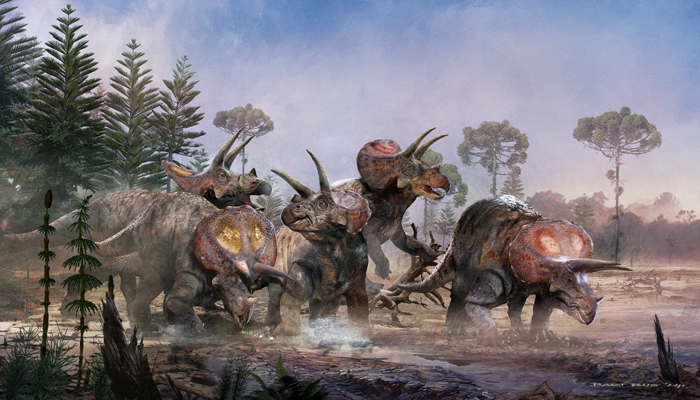
An artist's reconstruction of a herd of Triceratops dinosaurs.

An artist’s reconstruction of a herd of Triceratops dinosaurs. Picture credit: Bart Bus.

Picture credit: Bart Bus

A Fossil Site Reviews a Herd of Triceratops

Ironically, the field team set out to find a T. rex. Nonetheless, what they found in the summer of 2013 has proved to be of much greater value to science than a single theropod specimen.  The research work at the Lance Formation (Maastrichtian) exposures has revealed a large bonebed of Triceratops (T. horridus). Over the last decade, some twelve hundred individual bones have been excavated from the site. Importantly, the abundant postcranial material displays features of both subadult and adults. This fossil locality can shed new light on the ontogeny and possible gregarious behaviour of this iconic dinosaur.
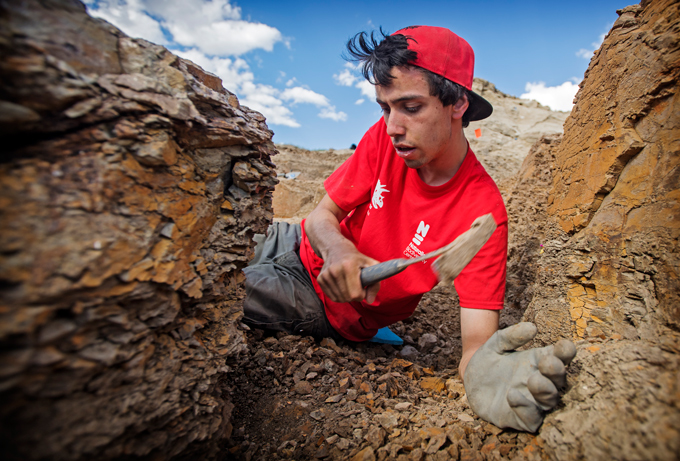
Jimmy de Rooij digging up a Triceratops fossil.

Field team member Jimmy de Rooij digging up a Triceratops fossil. Picture credit: Marten van Dijl (Naturalis Biodiversity Centre).

Picture credit: Marten van Dijl (Naturalis Biodiversity Centre)

A team of palaeontologists and volunteers spent many summers at the site mapping and extracting the precious bones.  One of the researchers Jimmy de Rooij hopes to receive a PhD from Utrecht University for his work on this remarkable bonebed.

He commented:

“The material is of very god quality.  This enabled us to show that these Triceratops grew really slowly for instance.”

It is thought that all these dinosaurs perished together, perhaps mired in a swamp.  The fossils are all contained in a thin layer, without the bones of other species present.
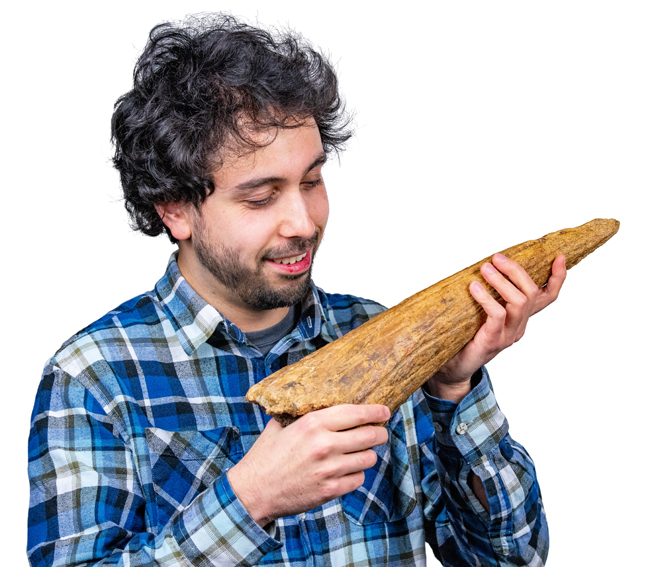
Jimmy de Rooij holding a Triceratops horn. Picture credit: Naturalis Biodiversity Centre.

Jimmy de Rooij holding a Triceratops horn. Picture credit: Naturalis Biodiversity Centre.

Picture credit: Naturalis Biodiversity Centre

Publishing Scientific Papers and Opening an Exhibition

A scientific paper outlining the fossil discoveries and postulating that this was strong evidence to indicate that Triceratops horridus was gregarious was published in 2019.  However, the research into this treasure trove of horned dinosaur bones continues today.  An exhibition telling the story of the Wyoming bonebed and its significance to palaeontology has opened at the Naturalis Biodiversity Centre.
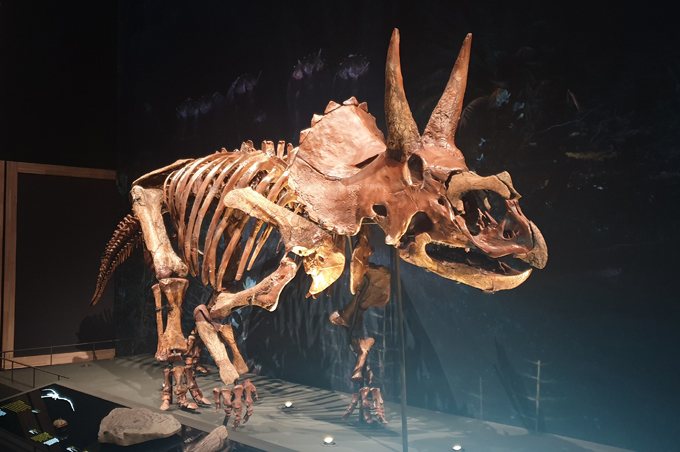
A Triceratops exhibit at the Naturalis Biodiversity Centre.

A sixth Triceratops specimen on display at the Naturalis Biodiversity Centre. Picture credit: Naturalis Biodiversity Centre.

Picture credit: Naturalis Biodiversity Centre

Study of the physical and chemical properties of hundreds of individual bones indicates that Triceratops migrated.  All five Triceratops specimens exhibit the same characteristics.  In other words, this iconic dinosaur species moved around in groups, at least for part of the time.  Visitors to Wyoming at the end of the Cretaceous might have spotted a herd of Triceratops!

A Herd of Triceratops horridus

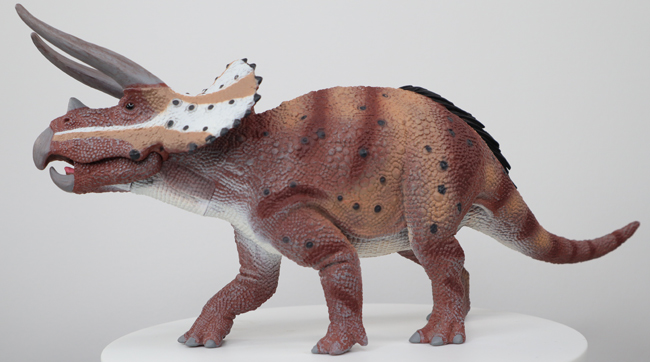
CollectA Triceratops horridus 1:40 scale dinosaur model.

The CollectA T. horridus ceratopsian figure in right lateral view. This Triceratops dinosaur model has an articulated lower jaw. Picture credit: Everything Dinosaur.

Picture credit: Everything Dinosaur

The image (above) shows a 1:40 scale model of Triceratops horridus.  This is the biggest Triceratops species described to date and one of the largest ceratopsids known to science.  The replica is from the CollectA Deluxe range of scale prehistoric animal figures.

To view the CollectA Deluxe range: CollectA Deluxe Age of Dinosaurs Models.

The discovery of what potentially could be a small herd of Triceratops poses some intriguingly questions.  For example, did these herbivores indulge in complex social behaviours?

Professor Anne Schulp (Naturalis Biodiversity Centre/Utrecht University), and De Rooij’s PhD supervisor proudly stated:

“Naturalis, the national natural history museum of the Netherlands, now has the biggest Triceratops find in the world, and Utrecht University has the first Dr Triceratops in the Netherlands. De Rooij’s work didn’t just result in research papers, but also in an exhibition about his findings.”

Mike from Everything Dinosaur commented:

“The exhibition will give dinosaur fans young and old the chance to learn more about Triceratops.  Indeed, visitors will be able to see the five fossil Triceratops specimens together some sixty-seven million years after they lived and died together.”

Visit the Everything Dinosaur website, which is award-winning and customer-friendly: Dinosaur Models and Prehistoric Animal Figures.

Everything Dinosaur acknowledges the assistance of a media release from the Naturalis Biodiversity Centre in the compilation of this article.


5 05, 2025

A Beautiful and Cute Loch Ness Monster

By |2025-05-06T06:43:44+01:00May 5th, 2025|Categories: Dinosaur Fans|0 Comments

A few days ago, we blogged about spotting a Triceratops garden monument.  Dinosaurs and prehistoric animals are extremely popular.  They do seem to be everywhere, or perhaps because of our vocation we are just always on the hunt for them.  Having spotted a Triceratops dinosaur model in a garden centre reminded us of our encounter with a cute Loch Ness monster garden sculpture a few years ago.

To read our earlier blog post about the Triceratops: The Ultimate Triceratops Garden Ornament.

Nessie is thought to lurk in the murky depths of Loch Ness.  Most scientists discount the idea of their being a monster in the Loch. However, there are occasional reports of strange sightings on the surface of the Loch.  Unusual sonar readings are thought by some to be evidence of the monster.

A Nessie garden ornament.

An attractive Nessie garden ornament. The appeal of the Loch Ness monster seems undiminished although most experts contend that Loch Ness is not home to a monster. Picture credit: Everything Dinosaur.

Picture credit: Everything Dinosaur

A Loch Ness Monster Garden Ornament

The beast, affectionately referred to as “Nessie” consists of three carefully sculpted parts. There is the cute head with its big eyes, a hump for a body and the tip of the tail.  The garden ornament gives the impression that the monster has just emerged from the water. There have been many theories put forward as to what “Nessie” might be.  For example, it has been claimed that a monstrous eel lurks in Loch Ness.  Moreover, some believers consider the monster to be a plesiosaur.

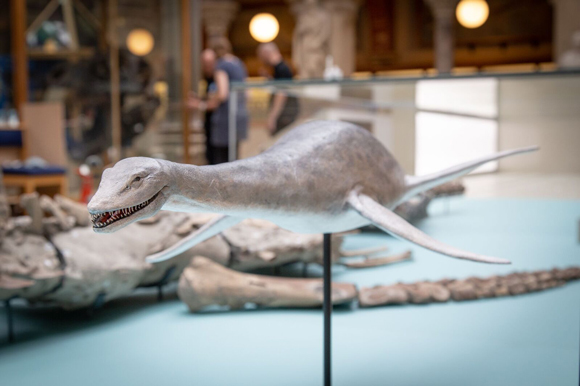
Oxford University Museum of Natural History plesiosaur.

A replica of a long-necked plesiosaur swims into view. Picture credit: Everything Dinosaur.

Picture credit: Everything Dinosaur

Whatever “Nessie” is or is not, the mythical animal provides a good excuse for garden ornament designers to indulge their imaginations.  We are confident that the Loch Ness monster garden ornament will prove to be popular amongst gardeners.  The further north you travel, the closer to Scotland, the more sales there might be.  Not sure what the local wildlife would make of a “Nessie” in the middle of the lawn or emerging out of a flower bed.

Mike from Everything Dinosaur commented:

“It’s strange what you come across on your travels.  The Loch Ness monster garden ornament would make an attractive feature.  However, we have too many prehistoric animals in our warehouse, so, sadly on this occasion we will not bringing this sculpture home with us.”

The award-winning Everything Dinosaur website: Prehistoric Animal Models and Toys.

4 05, 2025

Photographing the Beautiful CollectA Deluxe Placerias Model

By |2025-05-06T06:42:36+01:00May 4th, 2025|Categories: CollectA Deluxe Prehistoric Animal Models|0 Comments

We took advantage of the recent dry weather to photograph the CollectA Deluxe Placerias figure outdoors.  It looks amazing against the background of large, lichen covered pebbles and rocks.  This 1:20 scale prehistoric animal model is one of our favourites.

The CollectA Deluxe Placerias model photographed outside.

The CollectA Deluxe Placerias model photographed outdoors. Picture credit: Everything Dinosaur.

Picture credit: Everything Dinosaur

The CollectA Deluxe Placerias Model

The model measures nearly sixteen centimetres in length.  It is an excellent replica of a dicynodont. Placerias fossils are known from the Chinle Formation of Arizona. The remains of around forty individuals have been excavated from a site southeast of the famous Petrified Forest National Park. It roamed the western United States approximately 215 million years ago. It was thought to be the last of the dicynodonts. However, the discovery of Lisowicia in Poland and Pentasaurus (P. goggai) from South Africa which are thought to be geologically younger, suggests that these animals persisted towards the end of the Triassic.

CollectA Deluxe Placerias model.

The 1:20 scale replica of the Triassic dicynodont Placerias. The CollectA Deluxe Placerias model. Picture credit: Everything Dinosaur.

Picture credit: Everything Dinosaur

The CollectA Deluxe Placerias figure was introduced in 2024.  There had been lots of requests for a Placerias model from collectors. CollectA was happy to grant their wishes and introduce a 1:20 scale replica into the CollectA Deluxe range.

To view the CollectA Deluxe range of figures in stock: CollectA Deluxe Prehistoric Animal Models.

Mike from Everything Dinosaur stated:

“We are model collectors too. Sometimes, if the weather is dry and sunny we like to take a model outdoors and photograph it. By placing the camera below the figure, you can give the impression that the animal is huge. The Placerias replica looks very much at home amongst the rocks.”

To view other Triassic prehistoric animal models and figures visit the award-winning Everything Dinosaur website: Prehistoric Animal Models and Figures.

3 05, 2025

The Ultimate Triceratops Garden Ornament

By |2025-05-05T10:02:01+01:00May 3rd, 2025|Categories: Dinosaur Fans|0 Comments

Dinosaurs are everywhere. For example, on a visit to a garden centre team members from Everything Dinosaur spotted a Triceratops dinosaur model.  The horned dinosaur had inspired a designer to make a garden ornament.  It is quite a hefty piece, too large for many gardens. Perhaps it will appeal to someone trying to create their very own “Jurassic Park”.  Triceratops is an iconic dinosaur.  It captivates imaginations, perhaps because of its impressive size and its distinctive headshield.  Furthermore, with three prominent horns it is instantly recognisable.  Triceratops is popular with both children and adults.

A Triceratops garden ornament.

The Triceratops garden ornament with a Velociraptor figure in the background. Create your own valley of the dinosaurs. Picture credit: Everything Dinosaur.

Picture credit: Everything Dinosaur

We suspect this horned dinosaur model will be popular.

Not the Most Accurate Dinosaur Model

We congratulate the designer for their horned dinosaur.  Although, it is not the most accurate Triceratops dinosaur model that we have encountered.  However, what it lacks in anatomical accuracy it more than makes up with its consumer appeal.  Sadly, this ceratopsian sculpture will not be heading back to the Everything Dinosaur warehouse.  We have enough horned dinosaur figures of our own.

There are more accurate Triceratops models available.  For example, the recently introduced CollectA Deluxe Triceratops model has been praised by serious collectors for its accuracy.

CollectA Triceratops horridus 1:40 scale model. In search of Triceratops.

CollectA Triceratops horridus dinosaur model (left lateral view). Picture credit: Everything Dinosaur.

Picture credit: Everything Dinosaur

To view the CollectA Deluxe range of prehistoric animal scale models: CollectA Deluxe Prehistoric Animal Figures.

Mike from Everything Dinosaur commented:

“Dinosaur models and figures seem to turn up everywhere.  They are ubiquitous.  Even a visit to a garden centre provides an opportunity to view dinosaurs.”

The award-winning Everything Dinosaur website: Dinosaur Toys and Models.

2 05, 2025

The Latest Edition of “Prehistoric Times” is Reviewed

By |2025-05-05T06:46:26+01:00May 2nd, 2025|Categories: Magazine Reviews|0 Comments

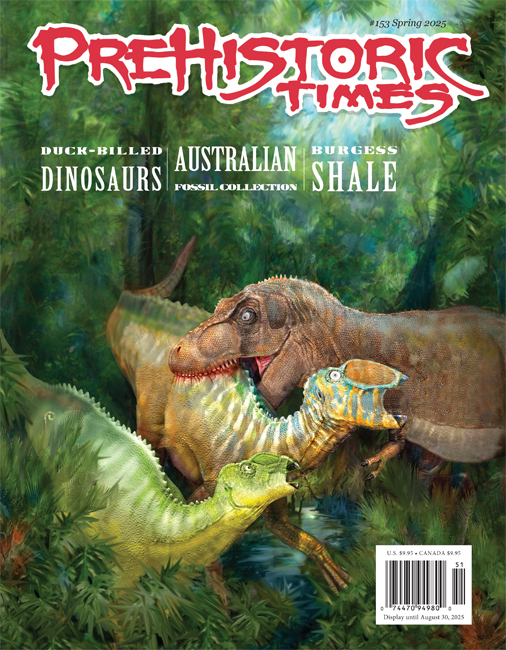
Issue 153 (spring, 2025) of “Prehistoric Times” magazine has arrived.  This edition is packed with lots of fascinating articles and amazing illustrations. Our congratulations to all the contributors. Gryposaurus is one of Phil Hore’s featured animals, and it is on the front cover thanks to some excellent artwork by Chuck Egnaczak. Gryposaurus (G. notabilis) was named by the Canadian palaeontologist Lawrence Lambe (1914).  Palaeontologist Jordan Mallon of the Canadian Museum of Nature discusses this hadrosaur and documents his successful fund raising to restore the grave of Lawrence Lambe.

Issue 153 of "Prehistoric Times" magazine.

The front cover of “Prehistoric Times” magazine issue 153. Picture credit: Mike Fredericks.

Picture credit: Mike Fredericks

There are lots of reader-supplied Gryposaurus illustrations.  Nick Papadimitriou included a drawing of a Gryposaurus skeleton along with a close-up view of the head in his contribution.  Tony Pichler drew a pair of adults accompanied by a juvenile.  Elvind Bovor depicted a group crossing a small stream, whilst front cover artist Chuck Egnaczak chose to illustrate two species (G. latidens and G. notabilis).

Issue 153 of “Prehistoric Times” Magazine

Tracy L. Ford continues his analysis of dinosaur skin by starting a topic concerning the integumentary coverings associated with armoured dinosaurs. In contrast, J.R. Lavas focuses upon three groups of extinct proboscideans in his long-running series documenting the artwork of Zdeněk Burian.  We learn that Hydrodamalis gigas, otherwise known as Steller’s sea cow, is related to proboscideans in the clade Tethyheria.  Phil Hore provides a history lesson documenting the exploration of Alaska and explains how within twenty-seven years of being discovered Steller’s sea cow was extinct.  The article includes some wonderful illustrations.  Congratulations to John Trotter, William Stout, Ethan Martinicky and Mark Hallett for their contributions.  The article even features an excellent sculpture by Jaime Martinez.

There are some excellent photographs of sea cow fossils illustrating the interview of Dr Jonathan Hoffman (Curator of Earth Science at the Santa Barbara Museum of Natural History). The interview was conducted by Krishna García-Martínez.

Comic book fans are treated to an article that discusses the work of illustrator George Wilson and Randy Knol examines sauropodomorph figures in his regular “Dinosaur Collector News” feature.  Editor Mike Fredericks discusses the new CollectA figures, we recognise the illustrations, and he also provides an update on newly published books and other media.  For example, he looks at a new boxed set containing all three “Jurassic Park” and “Jurassic World” films.

Maip macrothorax illustration.

A drawing of the large megaraptorid Maip macrothorax. Picture credit: Mike Fredericks.

Picture credit: Mike Fredericks

Exploring the Burgess Shale and Accessing an Amazing Australian Fossil Collection

Issue 153 includes an interview with Luke Sparke, the director of “Primitive War”, a film adaptation of the multimedia novel series created by Ethan Pettus. How the powerful jaws of some ornithischian dinosaurs could have deterred predators is discussed and Joey Shaffar provides a guided tour of his vast collection of fossils and minerals from Australia. Sean Kotz outlines how he painted a 1:20 scale Styracosaurus and Pat Schaefer returns to discuss the last of the Marx prehistoric playsets.

Dr Andreas Forrer profiles some of the inhabitants of the famous Burgess Shale of British Columbia.  In addition, he explains the importance of the extensive Cambrian fossil collection housed at the Field Museum (Chicago).

The spring edition of “Prehistoric Times” magazine is a triumph. It boasts an extensive and diverse range of fascinating articles complemented beautifully by the impressive reader art submissions

To learn more about the magazine and to subscribe: “Prehistoric Times” Magazine.

1 05, 2025

New Haolonggood Saurolophus Dinosaur Models Coming into Stock

By |2025-05-01T22:16:19+01:00May 1st, 2025|Categories: Haolonggood Prehistoric Animal Models|0 Comments

Everything Dinosaur team members confirm that the company will be stocking the new Haolonggood Saurolophus models. Both colour versions will be stocked.  These duck-billed dinosaur figures will be available in a few weeks.

The two Saurolophus models are:

  • Yue He (the brown Saurolophus figure).
  • Song Qing (the grey Saurolophus figure).
Haolonggood Saurolophus models.

The two new Haolonggood Saurolophus models. Foreground, Yue He (brown) and in the background Song Qing.


The Haolonggood Saurolophus Models

These beautiful figures measure twenty-two centimetres in length.  The head crest stands some seven and a half centimetres high.  These models have a declared scale of 1:35.

To view the range of Haolonggood figures in stock at Everything Dinosaur: Haolonggood Prehistoric Animal Figures.

The two Haolonggood Saurolophus models.

The two Haolonggood Saurolophus dinosaur models. The grey coloured Song Qing (top). The brown coloured Yue He (bottom).

Mike from Everything Dinosaur commented:

“Hadrosaurs tend to be under-represented in most model collections.  It is great to see a pair of Saurolophus models being added to the Haolonggood model range.”

Visit the award-winning Everything Dinosaur website: Dinosaur Toys and Models.

30 04, 2025

A New Dinosaur Book – “The Secret Lives of Dinosaurs”

By |2025-04-29T22:11:49+01:00April 30th, 2025|Categories: Book Reviews|0 Comments

Exciting news for fans of dinosaurs, palaeontology and fossils.  A new book written by the extremely talented Dr Dean Lomax is due to be published later this year.  The book, entitled “The Secret Lives of Dinosaurs: Unearthing the Real Behaviors of Prehistoric Animals” will be available in September (2025).  Published by Columbia University Press, it will be available from all good booksellers, including Amazon, and it can be pre-ordered from the publisher’s website ninety days prior to the publication date.  However, we at Everything Dinosaur have been given access to the front cover image and a sneak preview.

The "Secret Lives of Dinosaurs" by Dr Dean Lomax and illustrated by Bob Nicholls.

The “Secret Lives of Dinosaurs” by Dr Dean Lomax and illustrated by Bob Nicholls. This exciting new book will be published in September (2025). Picture credit: Dr Dean Lomax.

Picture credit: Dr Dean Lomax/Bob Nicholls

“The Secret Lives of Dinosaurs”

This amazing new book is illustrated throughout by the world-renowned palaeoartist Bob Nicholls.  It tells the stories behind some incredible fossil discoveries that focus on direct evidence of behaviours.  How remarkable insights into the lives of prehistoric animals have been captured in deep geological time.  With Dr Lomax acting as your guide, the reader is provided with a forensic, behind-the-scenes examination of some astonishing fossils.  From ammonite eggs to the meals of mosasaurs and a pregnant ichthyosaur that ate a bird.  Each chapter sheds new light on the private lives and intimate moments of animals that once inhabited our planet.  Vivid, full-colour illustrations by Bob Nicholls bring these incredible stories and insights to life.

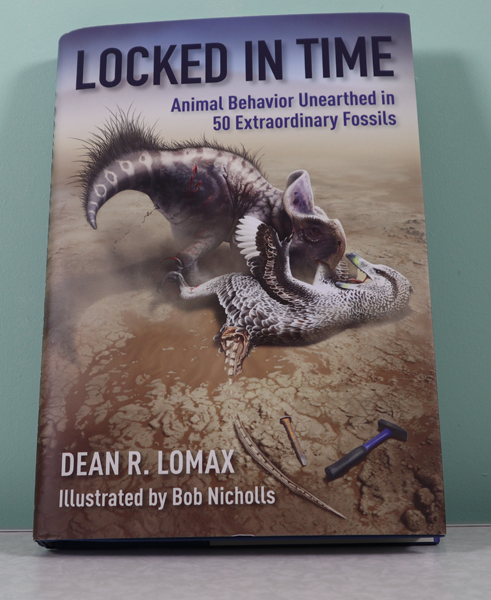
“The Secret Lives of Dinosaurs” builds upon the phenomenally successful and best-seller “Locked in Time”.  This was an earlier collaboration between Dr Lomax and Bob Nicholls (published 2021).  It told the stories of extinct animal’s behaviour perceived from fifty extraordinary fossils.  However, this new book offers an entirely different approach.

To read our review of “Locked in Time”: “Locked in Time” Reviewed.

The book "Locked in Time"

The front cover of the book “Locked in Time – Animal Behaviour Unearthed in 50 Extraordinary Fossils” by Dean Lomax with illustrations by Bob Nicholls. Picture credit: Everything Dinosaur.

Picture credit: Everything Dinosaur

Mammals Feeding on Dinosaurs

Dr Lomax takes readers on a journey through the grand cycle of life.  The scientific explanations are given extra authority and relevance as Dr Lomax writes about his own escapades and adventures.  Of course, this highly enjoyable book is imbued with a dash of dinosaur humour too.

The prehistoric animal behaviours described in “The Secret Life of Dinosaurs” include evidence that dinosaurs were not always the predator.  Our mammalian ancestors more than held their own ground against the “terrible lizards”.  For example, one section of the book outlines how a mammal took down a dinosaur!

We were fascinated by the cover of the book! The two-headed animal is a type of aquatic reptile from the time of the dinosaurs. We asked Dr Lomax about the cover choice and he replied:

“I am thrilled that you love the cover! Believe me, Bob and I spent a lot of time working up many ideas with various animals – mostly dinosaurs – on the cover. In the end, we both agreed, as did the team at Columbia University Press, that this book is so different to anything else in the dinosaur/palaeo book world that the cover should represent that. So, we thought, why not go for one of the most extraordinarily rare fossils – a two-headed reptile. Sure, it’s not a dinosaur, but the book is not entirely dedicated to dinosaurs, hence the subtitle. We’re very proud of the cover and know that people will be blown away by some of the remarkable stories that are featured in this book.”

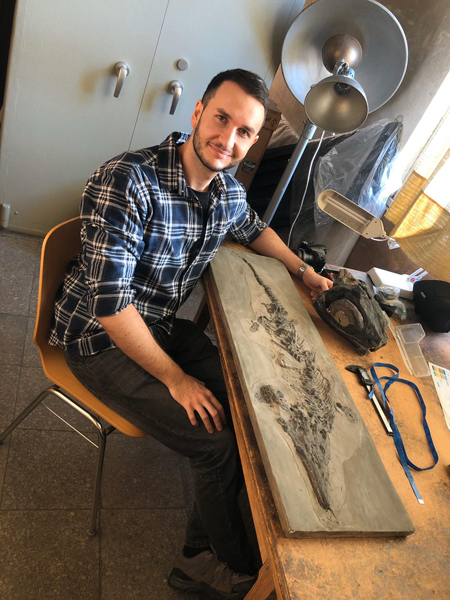
Marine reptile casts - "Proteosaurus" cast from the Natural History Museum (Berlin, Germany)

Dr Dean Lomax working on an ichthyosaur cast from the Natural History Museum (Berlin). This new book features marine reptiles too. Picture credit: Dr Dean Lomax/University of Manchester.

Picture credit: Dr Dean Lomax/University of Manchester

Book Details – “The Secret Lives of Dinosaurs”

Title: “The Secret Lives of Dinosaurs”
Author: Dr Dean Lomax
Illustrator: Bob Nicholls
Publisher: Columbia University Press
Publication Date: September 3rd, 2025
Format: Hardcover
Pages: 312
ISBN: 9780231211307

List Price: $38.95/£32.00

Also available as an E-book

Available from Columbia University Press: More Details/Order “The Secret Life of Dinosaurs”.

29 04, 2025

Haolonggood T. rex Models to be Stocked by Everything Dinosaur

By |2025-04-28T15:17:05+01:00April 29th, 2025|Categories: Haolonggood Prehistoric Animal Models|2 Comments

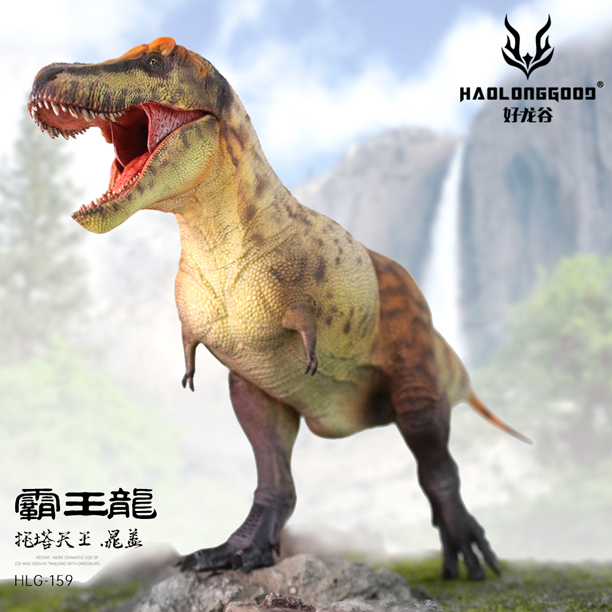
Everything Dinosaur has confirmed that they will be stocking the new Haolonggood T. rex models.  These 1:35 scale tyrannosaur figures are due to be in stock later this spring. Dinosaur model fans can choose from the brown-coloured variant (Chao Gai) or the grey variant (Lu Jun Yi).  Both models measure approximately thirty-three centimetres in length.

Haolonggood T. rex models.

The Haolonggood T. rex models. Lu Jun Yi is left) and the brown coloured variant Chao Gai is on the right.

A spokesperson from Everything Dinosaur confirmed that customers who contacted the company would be added to the priority reserve list for these two figures.

To view the range of Haolonggood models in stock: Haolonggood Dinosaur Models.

Haolonggood T. rex Models

There is one other Late Cretaceous tyrannosaurid dinosaur currently represented in the Haolonggood range.  The company has already produced a replica of Daspletosaurus (D. torosus). The Haolonggood Daspletosaurus models (Lu Zhi Sheng and Wu Song) also have a declared scale of 1:35. However, the new for 2025 Haolonggood Tyrannosaurus rex figures are about four centimetres longer.  This is in keeping with current scientific evidence that indicates that T. rex was larger than the geologically older Daspletosaurus taxon.

The new Haolonggood Tyrannosaurus rex dinosaur model (Chao Gai).

Haolonggood Tyrannosaurus rex dinosaur model (Chao Gai).

The image (above) shows the brown variant (Chao Gai).  This dinosaur figure, just like its counterpart (Lu Jun Yi) shows some amazing detail.

The new Haolonggood Tyrannosaurus rex dinosaur model (Lu Jun Yi).

Haolonggood Tyrannosaurus rex dinosaur model (Lu Jun Yi).

The image (above) shows the grey colour version of Tyrannosaurus rex.  This figure has been named Lu Jun Yi.

Mike from Everything Dinosaur commented:

“We are looking forward to getting these two fine tyrannosaur figures into stock.  Our congratulations to the design team at Haolonggood.”

To visit the multi-award-winning Everything Dinosaur website: Dinosaur Toys.

Go to Top