By Mike|2024-05-11T06:43:29+01:00October 24th, 2018|Categories: General Teaching|Comments Off on An Amazing Dinosaur Beginning with “Z”
A Dinosaur Beginning with “Z” – Zhejiangosaurus
At Everything Dinosaur, we tend to get emails sent in by teachers, teaching assistants and pupils from all over the world. Take for example, a request received in the early hours of yesterday morning from a teacher based in Australia. The children in the teacher’s class had been learning all about dinosaurs and their focus had been on dinosaurs that lived in Australia and Asia. The email requested that we provide some information on Asian and Australian members of the Dinosauria and our helpful team members were happy to oblige.
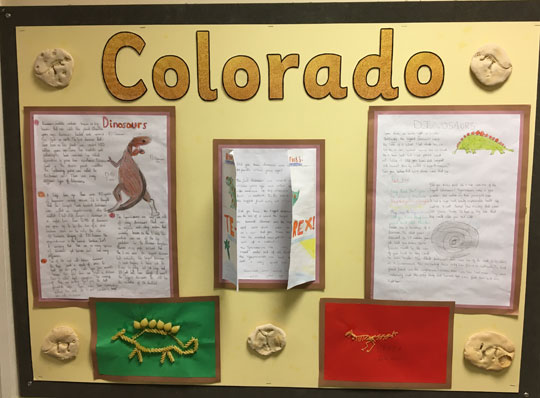
Specifically, we were asked to help furnish the classroom “Wow Wall” with a dinosaur beginning with the letter “Z”, as the teacher could not think of one.
We were able to send out some information and drawings on a number of dinosaurs that begin with the last letter of the alphabet – there are more than you might think!
An Asian Armoured Dinosaur Beginning with the Letter “Z”
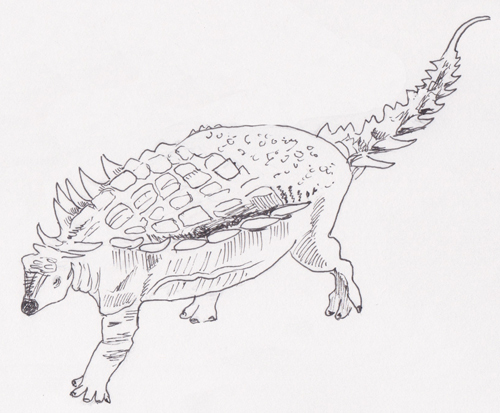
The armoured dinosaur Zhejiangosaurus illusrated.
Zhejiangosaurus
Zhejiangosaurus (pronounced Zay-gee-an-go-sore-us), is an armoured dinosaur from the Late Cretaceous of China. It is known from only fragmentary remains and scientists are not sure just how big this “walking tank” was. It was named and described back in 2007 and it is one of a number of members of the Dinosauria that begin with the letter “Z”.
Our team members were happy to help out the antipodean teaching team. After all, dinosaurs existed all over the world during the Mesozoic, their living relatives, the birds are very widespread today. It looks like children learning about dinosaurs is a global phenomenon too.
By Mike|2023-11-02T07:55:11+00:00October 11th, 2018|Categories: Early Years Foundation Reception|Comments Off on Dinosaur Skeletons and Reception Classes
Reception Classes Create Dinosaur Skeletons
It was a busy morning for the two Reception classes (RC and RH) at St. Mary’s RC Langley (Middleton, Manchester). The children have been learning all about dinosaurs and the eager, young palaeontologists participated in a couple of workshops organised by Everything Dinosaur. Prior to the activities with the children, our dinosaur expert got the chance to visit one of the Reception classes and to admire all the dinosaur themed artwork on display in the well-appointed and tidy classroom.
Dinosaur Skeletons
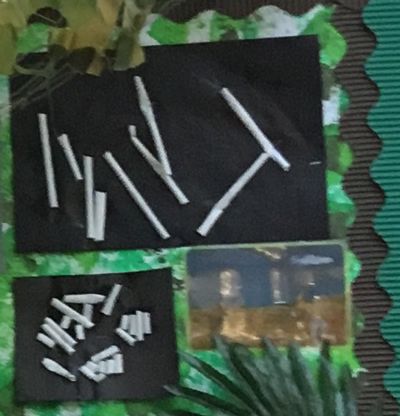
As an extension, the children were challenged to draw their very own dinosaur. This linked in well with an earlier activity that the children had been enthusiastically participating in, the Reception children had been cutting out dinosaur bones and fitting together dinosaur skeletons.
Sticking Dinosaur Skeletons with Reception Children
Using straws to make dinosaur skeletons – shapes and patterns. Picture credit: Everything Dinosaur.
Picture credit: Everything Dinosaur
Labelling Dinosaurs
We asked the children to have a go at labelling the different parts of the dinosaur’s body including the skull. With the help of the teaching assistant, young Christina brought into the spacious hall, where we had been working, her picture of a dinosaur that she had created so that she could show our dinosaur expert her lovely labelling. Some super demonstrations of phonic knowledge to help decode words and write them down. Well done to Christina and to all the busy scientists at St. Mary’s RC Langley.
The children in Year 2 (Owls and Hedgehogs classes), at Spire Nursery and Infant School (Derbyshire), have been learning all about dinosaurs, fossils and prehistoric animals this term. A team member from Everything Dinosaur visited the school last week to conduct some workshops with the children as part of a challenging, diverse and exciting scheme of work that had been devised by the dedicated teaching team.
“Triassic Treats”
Over the last few weeks the children have shared lots of amazing information about dinosaurs and set out what aspects of the lives of dinosaurs that they would like to explore. The eager, young palaeontologists have been learning about when dinosaurs lived, where they lived and what they ate. As part of an exploration of food and dinosaur body shapes the children in Year 2 made some super dinosaur themed cakes and biscuits. We took the opportunity to photograph the children’s “Triassic treats”.
Trays of Dinosaur Inspired Tasty Cakes and Biscuits
Dinosaur chocolate nests and biscuits. A couple of trays of “Triassic treats”.Picture credit: Everything Dinosaur.
Picture credit: Everything Dinosaur
Developing Creativity
Taking part in a baking activity permits the children to practice their measuring and motor skills as well as introducing the idea of following a set of instructions to achieve a desired outcome. Decorating the various dinosaur themed treats certainly brought out the children’s creative flair.
Young Elliott was Very Proud of the Dinosaur Biscuit that he had Made
A dinosaur themed biscuit.Picture credit: Everything Dinosaur.
Over the course of the term topic the children have been learning about simple food webs and what animal’s need to keep them safe and well. During our workshops with the classes our dinosaur expert checked learning by testing the children’s knowledge about herbivores, carnivores and omnivores. One of the role-play areas in a classroom had been turned into a “dinosaur dig site”, permitting the children the opportunity to search for dinosaur bones, allowing the children to experience what it is like to be a real palaeontologist.
After the Everything Dinosaur workshops in the morning, the children were going to have an afternoon of science, creating simple experiments to study the way in which some dinosaurs fed. We hope that the additional resources, experiment ideas and lesson plans we provided helps to support, what is already a diverse and challenging scheme of work.
Whilst in one of the classrooms, our dinosaur expert was able to see some of the excellent dinosaur themed work completed by the children. The classes had been finding out lots of information about dinosaurs from a variety of sources to help them create their own non-fiction book. Lots of dinosaur books were on display, the Year 2 pupils had been exploring different texts, all with a prehistoric animal theme.
Shapes and Numeracy
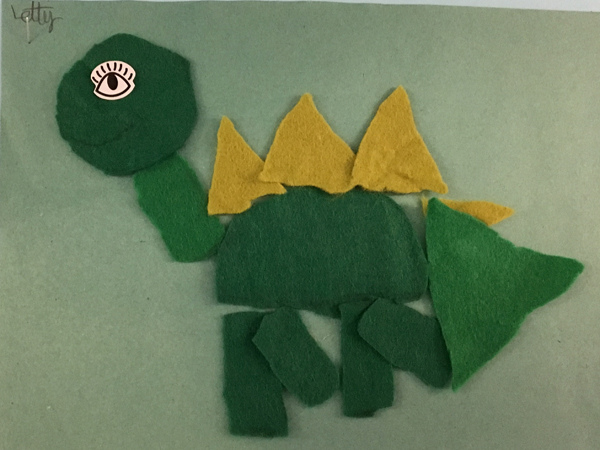
There is a big focus on helping the children gain confidence with numbers. The children have been studying simple addition and subtraction problems, our dinosaur footprint measuring exercise that we provided should help support this area of the curriculum nicely. The enthusiastic teaching team have been using dinosaurs to help children appreciate and learn about different shapes. On the wall outside the Year 2 classrooms, examples of dinosaurs made from different shaped pieces of felt were on display.
Learning About Different Shapes Using Dinosaurs
A felt dinosaur. The children were challenged to use different shaped pieces of felt to build a dinosaur. This is a great way to help develop an understanding of basic geometry.Picture credit: Everything Dinosaur.
By Mike|2024-05-11T16:36:34+01:00October 5th, 2018|Categories: General Teaching|Comments Off on Spotting Beautiful Limestone Outcrops
Touring the Geology of the British Isles
One of the many joys of visiting schools to conduct dinosaur and fossil themed workshops, is travelling through the Great British countryside. Early starts in order to arrive at the school in plenty of time prior to beginning of the school day means that we don’t often see a lot when driving along. Scenic views tend to be obscured at this time of year, especially as many of our trips start at 5am or thereabouts*. However, on the way back can be a different story.
Spotting Limestone Outcrops
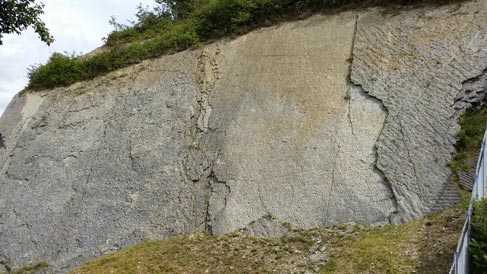
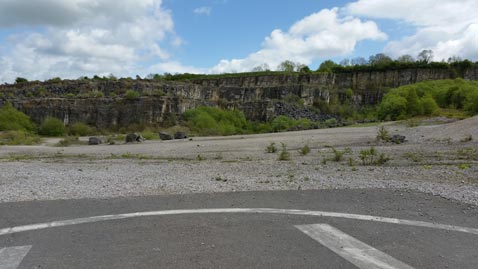
Whilst travelling through Derbyshire we were able to stop and take some photographs of the stunning scenery. We like to take pictures highlighting the geology of an area. The outcrops of limestone we encountered on our route through the stunning Peak District National Park were well worth photographing.
* We do appreciate how busy teachers are and how stressful it can be when a school visitor turns up late. At Everything Dinosaur, we try our best to arrive nice and early at a school. Arriving early will give our dinosaur and fossil expert plenty of opportunity to sign in, meet the teaching/support staff, provide disclosure information, to unload the vehicle and to get settled before too many of the pupils arrive. It also helps, as we can then have a few minutes of the teaching team’s time to be briefed on any additional needs that we ought to be aware of.
A Pleasant Journey Through Amazing Geology of the British Isles
Hall Dale Quarry (Derbyshire). A famous limestone outcrop. Picture credit: Everything Dinosaur.
Picture credit: Everything Dinosaur
It certainly is a real pleasure when visiting schools to take photos of the stunning geology of the British countryside.
By Mike|2023-10-30T11:55:08+00:00September 28th, 2018|Categories: General Teaching|Comments Off on Working Scientifically – A Short Explanation
Explaining the Idea of Working Scientifically
The national school curriculum for England was revised five years ago. This set out the programme of study and expectations for attainment in all subject areas for local-authority-maintained schools. There remained an emphasis on teaching science subjects, but the revised curriculum placed a much greater focus on the concept of “working scientifically”, but what does this all-embracing term actually mean?
Working Scientifically – Practical Tests are Key in Helping Young Learners to Explore Science Subjects
Scientific working demonstrated by Year 6 pupils. Picture credit: Everything Dinosaur.
Picture credit: Everything Dinosaur
Working Scientifically
With Key Stage 1 and 2, the new curriculum places a greater emphasis on working scientifically. Essentially, this involves the children using scientific methods to answer questions about the world around them. The emphasis is on a range of enquiries from using observation over time, identifying patterns and classifying and grouping using common traits and characteristics.
There is still a focus on making comparative and fair tests but the concept of scientific working underpins all the science subject elements. There is a need to learn about a variety of animals and plants which links to a stronger focus on biology and the natural world. Learning about dinosaurs and life in the past helps to link these areas and dove-tails nicely into a Year 3 topic area which is fossils, rocks and soils. Children in Year 6 are expected to grasp the fundamentals of evolution and inheritance, which links strongly into the genetics focus which is prominent in the Year 7 syllabus.
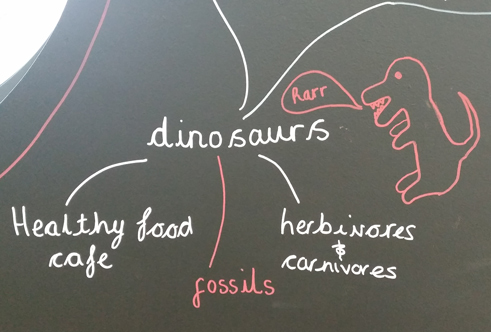
Eureka! Creating a Dinosaur Mind Map
Mind map features dinosaurs. A dinosaur-themed mind map was spotted during a school visit by a team member from Everything Dinosaur. Picture credit: Everything Dinosaur.
Picture credit: Everything Dinosaur
Pupils should be encouraged to seek answers to questions through the collection and analysis of data. How to present findings is also an important topic area. Working scientifically will be further developed as the young learners progress through Key Stages 3 and 4. One of the key requirements of the scheme of work in primary schools is to help pupils to build up an understanding of science so that they can engage meaningfully in more sophisticated and complex areas such as experiment design and control as they progress through their school career. Everything Dinosaur team members have advised teaching teams about working scientifically.
Key Stage 1 Classes at Strawberry Fields Primary Study Dinosaurs
The children in the three Key Stage 1 classes at Strawberry Fields Primary are certainly enjoying their term topic all about dinosaurs, fossils and life in the past. The dedicated teaching team have developed a challenging and varied term topic for the pupils.
Studying Dinosaurs
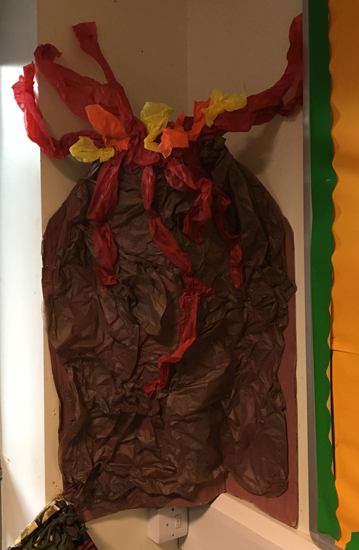
The budding young palaeontologists in Year 1 (class 1MM), have been working out whether “a dinosaur would make a good pet”. Some of the fierce meat-eating dinosaurs we talked about during our school visit, might not make ideal pets, but some of the smaller plant-eaters, (herbivores) might have been better suited. The dinosaurs would certainly have been curious to visit the amazing dinosaur den that had been set up in the classroom, complete with a beautiful crepe paper volcano overlooking it.
A Model of a Volcano on Display in the Classroom
A wonderful representation of a volcano on display in a Year 1 classroom.Picture credit: Everything Dinosaur.
Picture credit: Everything Dinosaur
Bright and Colourful Prehistoric Animal Displays
The children in the three Key Stage 1 classes (1MM, 1/2CE and 2MC), were keen to display their knowledge and explained confidently how the dinosaurs died out. Prior to our workshops, we provided some additional resources and we emailed over to the school a lesson plan that we had devised that examined the question “why do asteroids always land in craters”? This lesson plan and the other materials we provided were aimed at supporting the school’s scheme of work and to engage the children with the concept of “scientific working”.
Lots of Brightly Coloured Prehistoric Animals on Display Around the Spacious Classrooms
A colourful long-necked prehistoric animal window display in Key Stage 1. Picture credit: Everything Dinosaur.
Picture credit: Everything Dinosaur
A Three-dimensional Dinosaur Model
In the tidy and well-appointed classrooms, our dinosaur expert who visited the school spotted lots of excellent examples of the children’s work. There was even a three-dimensional model of the head of a Triceratops looking down on the display boards in one of the classrooms. These display boards were rapidly becoming filled with examples of the children’s non-chronological reports, questions that they had researched about dinosaurs, fact sheets and plenty of colourful prehistoric animal themed artwork.
The Head of a Triceratops Looks Down on the Class Display Boards
A three-dimensional Triceratops head on display in the classroom.Picture credit: Everything Dinosaur.
Picture credit: Everything Dinosaur
Our very best wishes to all the young palaeontologists in Key Stage 1 at Strawberry Fields Primary and also to the hard-working teaching team that had put together such an exciting and challenging term topic for the children.
By Mike|2023-10-30T09:58:56+00:00September 22nd, 2018|Categories: Key Stage 1/2|Comments Off on Strawberry Fields Primary and Dinosaurs
Strawberry Fields Primary and Dinosaurs
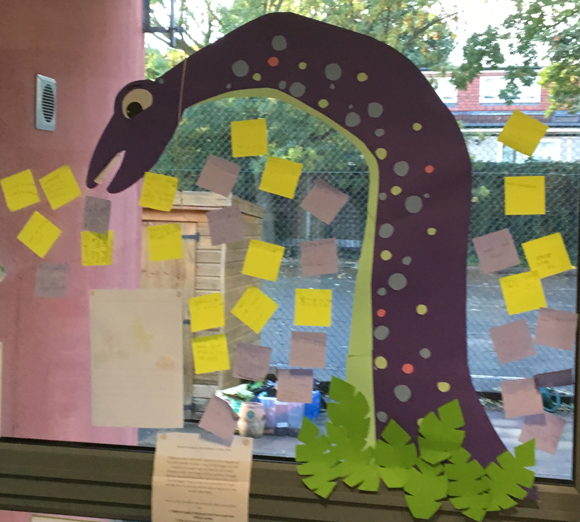
To conclude a busy week for Everything Dinosaur team members there was a trip to Yorkshire to work with the enthusiastic children in Key Stage 1 at Strawberry Fields Primary. A very colourful prehistoric animal themed window display in one of the classrooms (2MC) was spotted. The long-necked, purple-coloured prehistoric animal was surrounded by post-it notes that the children had used to fill with dinosaur and fossil themed facts that they had researched.
A Purple Prehistoric Animal Spotted in the Classroom
A colourful long-necked prehistoric animal window display in Key Stage 1.Picture credit: Everything Dinosaur.
Picture credit: Everything Dinosaur
Prehistoric Animal Spotting – Plesiosaur or Sauropod?
The teachers were not sure whether their purple prehistoric animal was a plesiosaur or a long-necked dinosaur. They thought that it resembled animal like the Loch Ness monster, but there were leaves at the base of the neck, so perhaps this was a land animal. The children had decided that the creature was a marine reptile, a sea monster and therefore not a dinosaur but a plesiosaur.
Pupils were happy to display their knowledge and to explain that plesiosaurs were not related to Tyrannosaurus rex and that Pteranodon was not a dinosaur but a flying reptile.
The well-appointed and tidy classrooms featured lots of displays supporting the term topic “dinosaurs”. The children in Year 1 for example, had created a dinosaur den in their classroom, there was even a crepe paper volcano in the corner. The children confidently explained that an “asteroid had hit the Earth and this killed the dinosaurs.”
Prior to our prehistoric animal workshops with the classes, we provided some additional teaching resources and during our dinosaur workshops we made sure to link to several extension ideas which we were also able to support with extra teaching materials.
Our thanks to the teaching team at Ewloe Green Primary in Wales, who sent us a list of questions that had been compiled by the Year 1 pupils as they studied their dinosaur themed term topic. The enthusiastic, budding palaeontologists have been carrying out a lot of research into prehistoric animals as they prepare for our visit to deliver some dinosaur workshops at the school.
Quite a range of questions had been put together by the children, some of which we hope to address in our workshops with the classes. The questions and our notes have already been incorporated into the lesson plans emailed to the school. However, there are still one or two outstanding enquires, such as the question from Amelia who wanted to know why do some dinosaurs have four legs and some only two?
Why Do Some Dinosaurs Have Four Legs and Some Only Two?
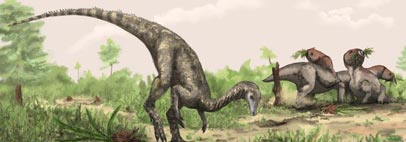
The very first dinosaurs were not giants, they were small, fast-running carnivores that appeared more than 235 million years ago during the Triassic. These dinosaurs were bipeds, this means that they ran around on their hind legs, they did not use their front limbs, their arms for walking around. Humans are bipeds, we walk around on our back legs and use our arms and hands for other things. Human babies learn to crawl and they move around on all fours, but they soon learn to walk upright.
One of the Very First Dinosaurs Nyasasaurus from Africa
Nyasasaurus – believed to be one of the first dinosaurs. It lived some 235 million years ago in the Triassic. It was a fast-running dinosaur – a biped.
Picture credit: M. Witton/NHM
Quadrupeds and Bipeds
From these small, meat-eating ancestors the dinosaurs quickly evolved into lots of different species of different shapes and sizes. As some dinosaurs adapted to eating plants rather than meat, they began to develop bigger bodies to help them cope with digesting tough plant food. As these plant-eating dinosaurs got bigger and heavier, they found it easier to move around on all fours, with all their limbs helping to support their weight. All the very heaviest dinosaurs described so far, the long-necked dinosaurs like Apatosaurus, Brontosaurus and Brachiosaurus, for example, moved around on four legs. Animals that walk on all fours are called quadrupeds.
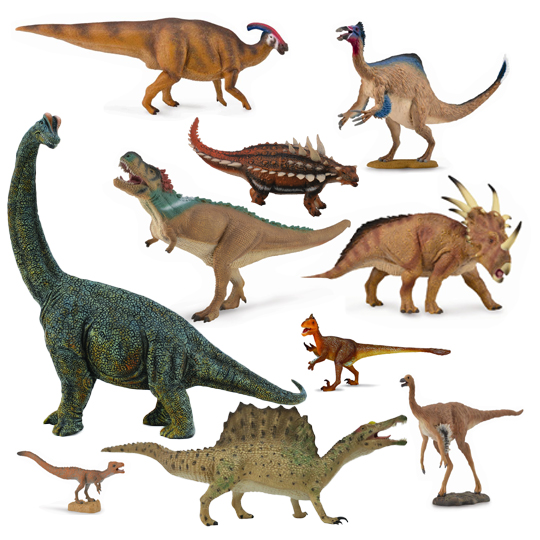
Around 1,200 Different Types of Dinosaur Have Been Described To Date
So many different types of dinosaur. Around 1,200 different types of dinosaur have been scientifically described. Some dinosaurs walked on just their hind legs, some dinosaurs walked on all fours and some dinosaurs could amble around on all fours, but if they needed to run quickly, they could rear up onto their hind legs and run away, changing from being a quadruped to becoming a biped.Picture credit: Everything Dinosaur.
Picture credit: Everything Dinosaur
Prehistoric Animals Term Topic – Supporting the Teacher
Challenge the class to sort dinosaur models into animals that walk on two legs and animals that walk on all fours.
Can the children research animals alive today and classify them into different groups based on how they move?
Why Do Some Dinosaurs Have Horns?
Sorcha wanted to know why do some dinosaurs have horns? Lots of dinosaurs had horns, in fact there is a group of dinosaurs called the “horned dinosaurs” as most of these types had long horns on their faces or heads and all of them had frills of bone at the back of their skulls. Famous horned dinosaurs include Triceratops, Protoceratops and the very spiky Styracosaurus (see picture above).
Scientists think that these horns helped dinosaurs to:
Stay safe – the horns, spikes and frills of bone around their necks helped protect them from attacks from other dinosaurs.
To signal to other dinosaurs in their herd – dinosaurs like Triceratops and Styracosaurus probably lived in large groups (herds), they could have used their big horns and frills to signal to the other group members.
To find a mate – dinosaurs probably had colour vision, as good as ours. They could see colours, just like we can and the horns and frills may have been brightly coloured and used in displays to help these dinosaurs to find a mate. Many birds are brightly coloured and have large feathers which are not helpful when it comes to flying but are used to help these creatures display and show-off – a peacock for example.
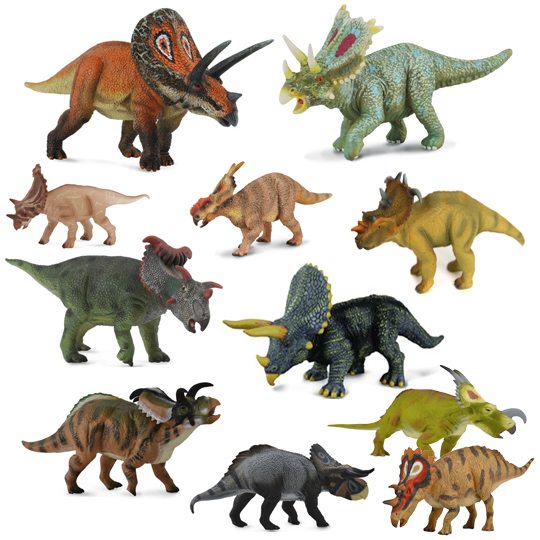
Lots of Different Horned Dinosaurs – How Many Can You Count?
Horned dinosaurs used their horns to help defend themselves from attack, to help signal to other herd members and to help them display.Picture credit: Everything Dinosaur.
Picture credit: Everything Dinosaur
The image (above) shows some of the horned dinosaur models in the CollectA Prehistoric Life range.
Challenge the class to write a fact sheet all about the famous, three-horned dinosaur Triceratops.
Find pictures of horned dinosaurs, can the children group them into two types of horned dinosaur, one group with large nose horns and small horns over their eyes and a second group with small nose horns and large horns over their eyes?
What types of animals have horns today? Can you make a list and work out what these animals use their horns for?
Team members at Everything Dinosaur are busy preparing for a dinosaur workshop at Ewloe Primary in Wales. The children in Year 1 have been researching dinosaurs and finding out lots of facts about prehistoric animals. One of the teachers at the school emailed Everything Dinosaur with a list of questions that the children had compiled.
Year 1 Children Think of Questions About Dinosaurs
Why do dinosaurs have spikes on their backs? Isabelle. Why do some dinosaurs have four legs and some not? Amelia. Why do some dinosaurs have armour? Cora. Why do some have arms? Emily Why do some walk in a clumsy fashion? Lily Why do some have horns? Sorcha Why do some only eat plants? Paige Why do some dinosaurs fly? Emma Why do some run really fast? Harri Why do they fight? Lyla-Brooke Why are some vegetarian? Isaac Why do they have sharp teeth? Riya Why are they all different sizes? Scarlett Why do some have long tails? Jac Why do some have such a long neck? Olly Why do some have arms? Charlotte Why do they leave footprints and how? Noah Why do they have tails? Katelyn Why do they have claws? Leah
Image credit: Everything Dinosaur
Dinosaur Questions
There are quite a lot of questions and our dinosaur expert will endeavour to answer some of them during the school visit to conduct the dinosaur workshops. However, here are a couple of answers that we have prepared.
Why Do Dinosaurs Have Arms?
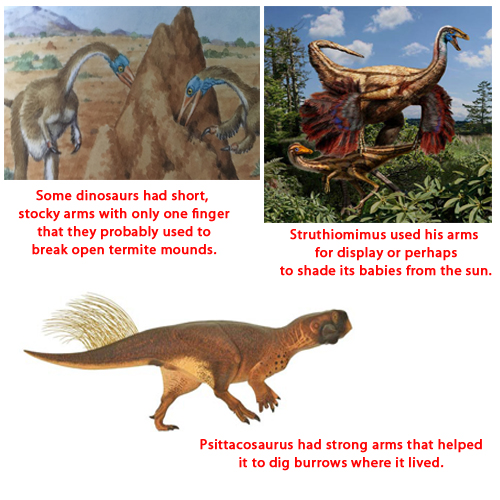
Our thanks to Charlotte and Emily for thinking up this super question. All dinosaurs had arms, a pair of arms just like us in fact. The bones in these arms were very similar to the bones that we have in our arms from the shoulder to the wrist joint (the humerus, sometimes called the funny bone and the ulna and radius bones), but there are differences in our wrists and fingers.
The arms of dinosaurs were adapted to help them to do different things. Some dinosaurs walked on all fours, the arms of these dinosaurs were used for walking. Other dinosaurs walked on two legs and their arms were used in other ways. For example, the ostrich-like Struthiomimus (Strooth-ee-oh-mime-us), had quite long, thin arms which may have had feathers on them. These arms were not wings, this dinosaur was too big to fly, but Struthiomimus may have flapped its arms about to scare off predators, to attract a mate or perhaps to shade its babies from the sun.
Different Dinosaurs with Different Arms
Dinosaur arms and their different functions. Picture credit: Everything Dinosaur.
Picture credit: Everything Dinosaur
Why Do Dinosaurs Leave Footprints and How?
Lots of animals and even people leave footprints, if you walk over something soft like mud or sand your foot will sink in and leave an impression behind. If you walk on something hard, like the concrete paths around your school, you don’t leave footprints, but if you were to walk on the concrete before it had hardened then your feet would sink into the concrete and you would create a footprint. Nice time you go to the beach and you walk on the sand take a look behind you, as you may have left a trail of footprints.
Can You Spot the Dinosaur Footprints?
Lots of dinosaur tracks made in the soft sand as the dinosaurs walked by, as the sand turned into rock so the dinosaur footprints have been preserved as fossils.
Picture credit: Lu Yong
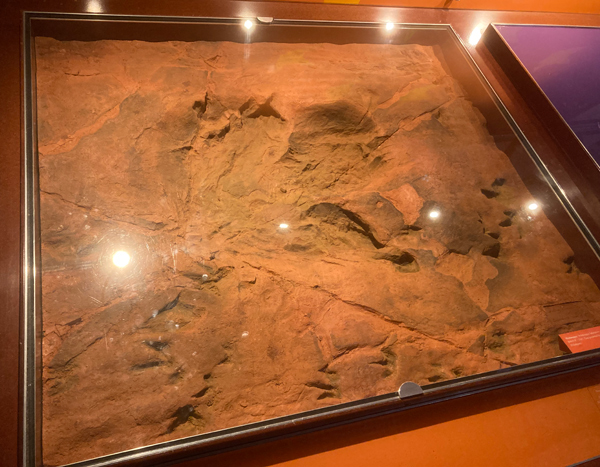
When a dinosaur walked over soft ground such as the mud by a lake or a sandy river bank, they would leave a set of footprints. Sometimes, these tracks would get quickly covered by more sand and mud and over millions of years these layers would harden and turn into stone such as mudstone and sandstone. These rocks might preserve the dinosaur footprints as fossils.
A Dinosaur Steps in Some Mud and Leaves a Footprint
A fossil dinosaur footprint photographed at the London Natural History Museum. The exhibit features a three-toed print from the famous Lark Quarry track site in Australia. Picture credit: Everything Dinosaur.
Picture credit: Everything Dinosaur
The shape and size of the fossil footprint provides palaeontologists with clues as to what sort of dinosaur might have made the track.
For Teacher – Supporting the Dinosaur Questions
Can the children think of six different ways they use their arms? Take photographs of these activities and make a poster for display describing what their arms are being used for. Think through and list the tasks that arms will be asked to do when it comes to putting the posters up on a wall for display. Write down the list of tasks needed to put a poster up on a wall, can a member of the class instruct their classmates correctly to ensure the task is completed?
Using plastic tubs filled with wet sand make a series of impressions using everyday objects found in the classroom, can the children work out what the objects were just from the impressions made? Make salt dough and have the class use various objects to make their own salt down fossils. Press an object into the salt dough to make an impression and then bake the dough to make it hard to preserve the imprint.
By Mike|2024-05-11T16:31:21+01:00September 18th, 2018|Categories: Key Stage 1/2|Comments Off on Amazing Questions About Dinosaurs – Part 1
Questions About Dinosaurs – Part 1
As Everything Dinosaur prepares to visit Ewloe Green Primary in Flintshire, to work with the enthusiastic Year 1 children as they learn about dinosaurs, their teacher arranged to email over a set of questions that the children had prepared.
Questions from the Year 1 Children
Why do dinosaurs have spikes on their backs? Isabelle. Why do some dinosaurs have four legs and some not? Amelia. Why do some dinosaurs have armour? Cora. Why do some have arms? Emily Why do some walk in a clumsy fashion? Lily Why do some have horns? Sorcha Why do some only eat plants? Paige Why do some dinosaurs fly? Emma Why do some run really fast? Harri Why do they fight? Lyla-Brooke Why are some vegetarian? Isaac Why do they have sharp teeth? Riya Why are they all different sizes? Scarlett Why do some have long tails? Jac Why do some have such a long neck? Olly Why do some have arms? Charlotte Why do they leave footprints and how? Noah Why do they have tails? Katelyn Why do they have claws? Leah
Questions About Dinosaurs
That’s a lot of questions for our dinosaur and fossil experts to work through. Some of these questions can be incorporated into our dinosaur workshops that we are preparing for the classes, but we will tackle a couple of questions here, just to help the budding young scientists as they explore life in the past.
Why Do Dinosaurs Have Claws?
Our thanks to Leah for this question. There were lots of different dinosaurs and they all had claws of various shapes and sizes. These claws may have originally come about to help protect the fingers and toes of the dinosaur ancestors as they walked about on land. However, claws soon evolved into different shapes and sizes. Some dinosaurs such as the meat-eaters, developed sharp claws on their toes and hands to help them catch their dinners, whilst other dinosaurs such as some of the plant-eaters had claws like hooves to help them as they walked along.
Even giants like Brontosaurus had a big toe claw, it may have used this claw as a weapon to keep it safe from other dinosaurs, but this claw also helped this dinosaur to walk safely across muddy ground without slipping in the same way that football boots have studs on the bottom.
Different Dinosaurs/Different Claws
A close-up view of the detailed head and those dangerous-looking claws on the PNSO Qingge the Therizinosaurus dinosaur model.
The picture (above) shows the huge claws on the Therizinosaurus model by PNSO.
Cool Fact – Your fingernails are made from the same stuff as dinosaur claws (it is called keratin).
Why Do Dinosaurs Have Tails?
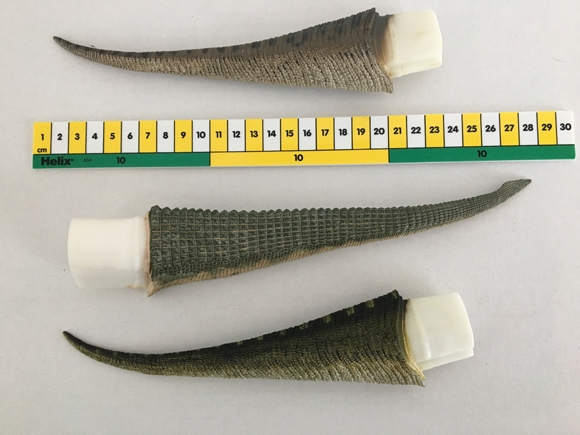
All the dinosaurs discovered so far had tails. The tails of dinosaurs came in all shapes and sizes. Some dinosaurs had very long tails that they might have used as whips to help keep them safe from attacking meat-eaters. Fast running dinosaurs used their tails to help them balance when they sprinted. Other dinosaurs evolved tails with a bony club on the end which they could use as a weapon. Some feathered dinosaurs even had tails that they could use to display and to show-off with, just like the tail of a peacock!
Different Dinosaurs/Different Tails
A trio of Rebor tyrannosaurid dinosaur tails. Picture credit: Everything Dinosaur.
Picture credit: Everything Dinosaur
Cool Fact – Our distant ancestors had tails too. The bump that you can feel at the bottom of your back is your tail bone (it is called the coccyx).
For Teacher
Can you find pictures of dinosaurs with different claws? Can you sort them into groups? What sort of describing words will you use for each group – sharp claws, blunt claws, big claws, small claws?
Look at pictures of animals alive today, can you find examples of different tails? What might these animals use their tails for?