By Mike|2023-11-14T12:01:20+00:00December 25th, 2018|Categories: General Teaching|Comments Off on Merry Christmas from Everything Dinosaur
Merry Christmas from Everything Dinosaur
Just time this morning to wish all teachers, teaching assistants, learning support providers and educationalists the compliments of the season. It has been a long, hard autumn term with lots of teaching assignments undertaken. However, with the end of one term, we then start planning for the next, all the schools with dinosaur and fossil themed workshops booked for January 2019 have been sent proposed lesson plans and information about how to get the most out of a visit from Everything Dinosaur.
Merry Christmas from Everything Dinosaur
Happy Christmas from Everything Dinosaur. Picture credit; Everything Dinosaur.
Picture credit: Everything Dinosaur
The autumn term has certainly been very busy. The start of the academic year is a hectic time for everyone involved in education. However, given all the workshops that we have booked, there will not be any let up over the course of the spring and summer terms. We look forward to meeting lots of eager, young learners in 2019.
By Mike|2023-11-12T07:16:33+00:00December 14th, 2018|Categories: General Teaching|Comments Off on Preparing Free Dinosaur Fact Sheets
Preparing Fact Sheets about Dinosaurs
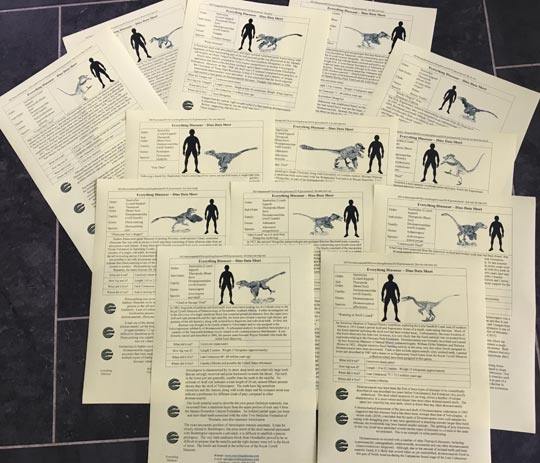
With the end of the autumn term nearly upon us, it is time for Everything Dinosaur team members to undertake a review of all the fact sheets on dinosaurs and other prehistoric animals that the company sends out to schools, home educators, museum staff and young dinosaur fans. For the vast majority of the prehistoric animal models that the UK-based company sells, a fact sheet about that creature is commissioned. Having a fact sheet about a dinosaur for example, is our way of helping to educate and inform people about life in the past.
Prehistoric Animal Fact Sheets from Everything Dinosaur
A collection of Beasts of the Mesozoic fact sheets created by Everything Dinosaur. Picture credit: Everything Dinosaur.
Picture credit: Everything Dinosaur
Dinosaur Fact Sheets – Helping to Educate and Inform
Everything Dinosaur’s fact sheets and other teaching resources are available free on request. Team members are happy to email them out to schools, other institutions and interested parties. Simply, drop us an email stating what you would like and our dedicated staff will do all they can to assist you and supply your needs.
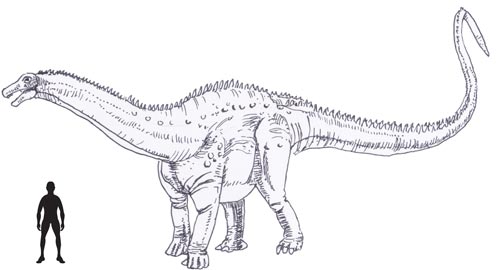
From Acheroraptor to Zuniceratops, Everything Dinosaur has hundreds of prehistoric animal data sheets. Each one has a scale drawing which shows the estimated size of the animal. More fact sheets are added each year, the company has plans to commission another thirty in 2019. Researching, writing and producing these fact sheets is quite an undertaking, fortunately, team members can call upon the expertise of their palaeontologist chums to assist them in their compilation.
All the Fact Sheets Contain Scale Drawings
A scale drawing of Brontosaurus. Picture credit: Everything Dinosaur.
Picture credit: Everything Dinosaur
A spokesperson from Everything Dinosaur commented:
“At the moment, team members are busy compiling prehistoric animal fact sheets to help support the work of schools, home educators and other institutions. It’s our way of helping to educate and inform people about life in the past.”
During our travels visiting schools, we get to meet lots of eager, young, enthusiastic learners and their equally enthusiastic teachers. We are always amazed at the carefully crafted and challenging schemes of work that have been devised for the children. All sorts of learning styles are catered for including visual and kinaesthetic learning styles. Whilst on one visit to a school to deliver a dinosaur and fossil themed workshop to a Reception class, we commented on the use of stencils that had helped the budding, young palaeontologists draw prehistoric animals. One of the members of the senior leadership team arranged for some examples of the children’s work to be posted to our offices.
Drawing Dinosaurs Using Stencils
The children created lots of colourful dinosaur stencil drawings. Picture credit: Everything Dinosaur.
Picture credit: Everything Dinosaur
Colourful Prehistoric Animal Drawings in the Classroom
The large and spacious Foundation Stage 2 classroom had some beautiful dinosaur themed displays. There was even a volcano made from tissue paper on one side of the room. The children were eager to show our dinosaur expert their drawings. The stencils had certainly helped and the pupils demonstrated their learning by confidently naming each dinosaur that the stencils represented. They even told us what each dinosaur ate (herbivore or carnivore) and when the dinosaur lived (Jurassic or Cretaceous).
A Bright, Colourful Volcano
Reception classes learn about volcanoes and dinosaurs. Picture credit: Everything Dinosaur.
Picture credit: Everything Dinosaur
Helping to Develop Motor Skills
Simple art and craft lesson plans can help young learners gain confidence and improve their motor skills. By drawing dinosaurs, children can practice their fine motor skills, essential when it comes to manipulating a pen, aiding the development of confident writers. We even saw some examples of the children’s hand-writing on display.
We hope the tridactyl dinosaur footprints we provided encourage the children to write their own names in the dinosaur track.
Amongst the numerous emails that we receive from schools and schoolchildren every day, we were sent a query by a UK-based, Key Stage 2 teacher, who raised a question surrounding the teaching of natural selection, Darwinism and evolution with her Year 6 class. The teacher had come across the term “background extinction”, but was unsure as to its meaning, could we help?
Bolide Impacts May Have Contributed to Mass Extinctions But What is Background Extinction?
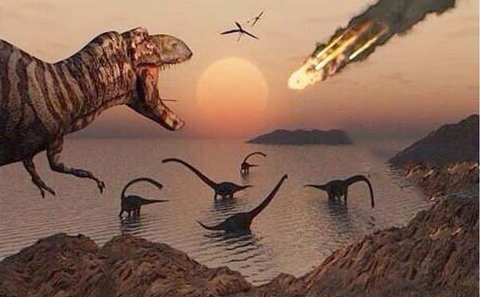
The impact of an extra-terrestrial object such as a comet or asteroid probably contributed to the end-Cretaceous mass extinction event.
Defining Background Extinction
If ideas about natural selection are correct, then organisms in ecosystems are all competing against each other for resources. Such competition for finite resources such as space, water and food will lead to some organisms being more successful than others. Ultimately, those less competitive organisms within a population will not survive to reproduce. The same idea applies on a species level, some species will be more successful than other species.
Eventually, in the face of this competition, some species will die out. These extinctions as a result of the operation of normal competition and natural selection are referred to as “background extinction”. These extinctions are also sometimes referred to as the “standard rate of extinction”.
It is estimated that something like 90% of all extinctions throughout the history of our planet have taken place during times of background extinction.
In order to help the teacher’s scheme of work with the Year 6 class, we set two extension activities linked to the theme of background extinction:
1). Could the school children draw a graph to represent mass extinction events that have occurred but also show on the same graph background extinction?
2). Have the children research The International Union for Conservation of Nature (IUCN), can they produce a non-chronological report on this organisation, its aims, objectives and what current conservation projects are being undertaken? There are plenty of on-line resources available including videos to support this type of independent enquiry and research.
By Mike|2023-11-11T08:01:44+00:00November 13th, 2018|Categories: Early Years Foundation Reception|Comments Off on Reception Children Learn All About Dinosaurs
Class 1 and Class 2 – “Dinosaur Roar”
Children in the Reception classes at The Berkeley Academy (Cheshire), have been learning all about dinosaurs and prehistoric animals this term.
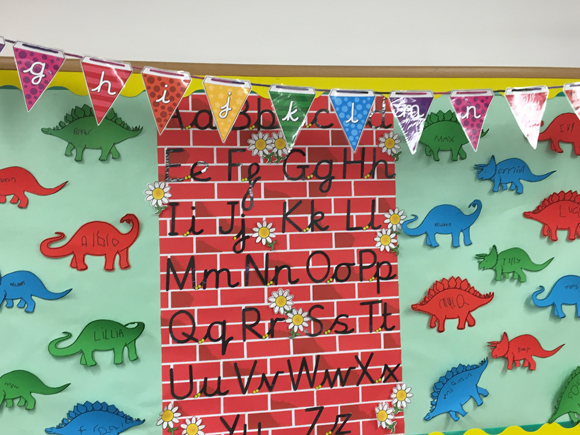
A member of our teaching team was dispatched to deliver two workshops, one for each of the Reception classes (Class 1 and Class 2) and got the opportunity to work in the beautifully clean and well-appointed school hall. The hall at the school has some amazing pictures on display including a set of twenty-six pieces of art, all supporting an alphabet theme. Our dinosaur expert really appreciated the painting of the two skeletons that represented “X for X-rays”. In the two Reception classrooms, there were plenty of examples of Foundation Stage Two artwork, with some amazing dinosaurs made from paper plates.
Reception Classes Make Paper Plate Dinosaurs
Children in Year 5 at Berkeley Academy (Cheshire), helped to decorate the dinosaur den in the Reception class. Picture credit: Everything Dinosaur.
Picture credit: Everything Dinosaur
The enthusiastic teaching team were surprised to learn that there actually was a dinosaur called Plateosaurus!
Dinosaurs and Prehistoric Animals – A Highly Creative Curriculum
The Reception children were certainly enjoying the term topic and during our workshops they were very enthusiastic armoured dinosaurs, moving slowly and quietly through the forest. They also learned how T. rex arms worked and the children demonstrated lots of attentive listening. Young Lucas proved his amazing pre-knowledge by confidently identifying Ankylosaurus. Lucas and his friends know a great deal about prehistoric animals.
Colourful Dinosaurs and Prehistoric Animals
A brightly coloured meat-eating dinosaur created with tissue paper by Year 5 children.Picture credit: Everything Dinosaur.
Picture credit: Everything Dinosaur
The dinosaur and prehistoric animal motif had been used to link with key learning objectives for the Reception children during the autumn term. The eager, young palaeontologists had been gaining confidence with numbers, learning to recognise the value of different numbers and to visualise quantities. A clear and easy to follow dinosaur themed number display had been helping (above).
Creative Play Aids Learning
The spacious and tidy Reception classrooms provided lots of opportunities to display the children’s work. Within the Foundation Stage, there is a clear focus on supporting personal, social and emotional development as well as assisting with physical development and communication skills. Our dinosaur expert spotted a poster inspired by the dinosaur picture book by Paul and Henrietta Stickland, the children had been pretending to be dinosaurs and considering how it might feel to be a prehistoric animal.
Dinosaurs and Prehistoric Animals on Display!
Children in Class 2 (Berkeley Academy) have a dinosaur den in their classroom. Picture credit: Everything Dinosaur.
Picture credit: Everything Dinosaur
We hope that the additional resources we supplied prove useful to the dedicated teaching team, we know that the dinosaur models and super-sized playmat that our dinosaur expert donated to the school will help support the term topic and to continue the theme of learning through creative play.
Last week, was a very busy week for the teaching team at Everything Dinosaur. They have lots of dinosaur and fossil workshops to try to fit in before schools begin preparing for the end of the autumn term. On Friday, one of our teaching staff visited The Berkeley Academy in Cheshire to work with two Reception classes who had been studying life in the past and prehistoric animals. Whilst being given a tour of the school by the dedicated teaching staff, our dinosaur expert spotted several examples of the children’s dinosaur themed arts and crafts on display.
One classroom (Class 2), had even constructed a dinosaur den in a part of their classroom.
Class 2 Children (Reception) Had Created a “Dinosaur Den” in their Classroom
Children in Class 2 (Berkeley Academy) have a dinosaur den in their classroom.Picture credit: Everything Dinosaur.
Picture credit: Everything Dinosaur
Dinosaur and Fossils Workshop
There were lots of fiction and non-fiction prehistoric animal themed books for the children to peruse. The mission statement for the school is “It’s all about doing your best” and some of the Year 5 students had helped with decorating the dinosaur den, creating some very colourful examples of dinosaurs out of pieces of tissue paper. These had been placed alongside some “Plateosaurs” that the Reception children had made.
Tissue Paper Dinosaurs and “Plateosaurs” Decorate the Dinosaur Den
Children in Year 5 at Berkeley Academy (Cheshire), helped to decorate the dinosaur den in the Reception class. Picture credit: Everything Dinosaur.
Berkeley Academy aims to create a learning environment in which all the children can thrive. The eager, young palaeontologists had been developing their knowledge about dinosaurs and during our dinosaur expert’s visit the children were keen to demonstrate their pre-knowledge and they were very confident answering questions and contributing to the workshop.
Year 5 Have Helped to Decorate the Reception Class
A brightly coloured meat-eating dinosaur created with tissue paper by Year 5 children.Picture credit: Everything Dinosaur.
Picture credit: Everything Dinosaur
A Dinosaur Den
The dinosaur den makes a wonderful safe, secure and stimulating environment for the young children to learn about simple food chains, what animals need to keep them happy and to discover famous fossil hunters like Mary Anning.
To help develop hand-to-eye co-ordination and motor skills, the children had been challenged to write their names inside a silhouette of a dinosaur. These dinosaurs were posted up onto a “wow wall”, we hope the dinosaur feet we provided will help to further stimulate the children’s writing skills.
Writing and Dinosaurs Combine to Help Reception Children Improve their Motor Skills
The Reception class children wrote their names on a dinosaur. Picture credit: Everything Dinosaur.
Picture credit: The Berkeley Academy/Everything Dinosaur
For further information about Everything Dinosaur’s work in schools and their dinosaur and fossil resources visit the company’s website: Everything Dinosaur.
Reception Children at Mansfield Green E-ACT Academy Learn About Dinosaurs
The children in the two Reception classes at Mansfield Green E-ACT Academy (Caterpillars and Bees), have had a very busy term learning about fossils and dinosaurs. As part of a rich and diverse scheme of work devised by the hard-working teaching team, a staff member from Everything Dinosaur was invited into the Birmingham-based school to spend a morning delivering two workshops to the eager, young scientists. The enthusiastic learners were keen to demonstrate their knowledge about dinosaurs and other prehistoric animals and our workshops were well received by the children and teachers alike.
Fossils and Dinosaurs
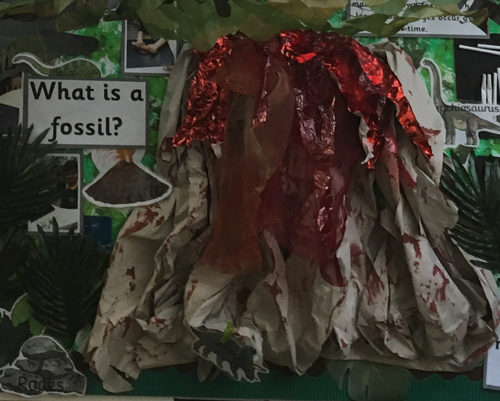
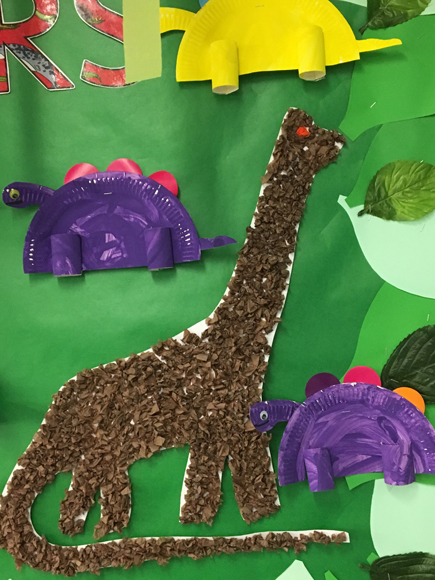
Prior to the start of the school day, our dinosaur expert was given the opportunity to view some of the wide range of activities that the classes had undertaken. Part of one of the well-appointed and very tidy Reception classrooms had been turned into a special “dinosaur” exhibit. The centrepiece of this display was a beautiful volcano that had been made from crumpled brown paper with bright red cellophane making excellent lava.
A Centrepiece of the Dinosaur Display in the Reception Classroom
Reception classes learn about volcanoes and dinosaurs.
Picture credit: Everything Dinosaur/Mansfield Green E-ACT Academy
Lots of Amazing Arts and Crafts on Display
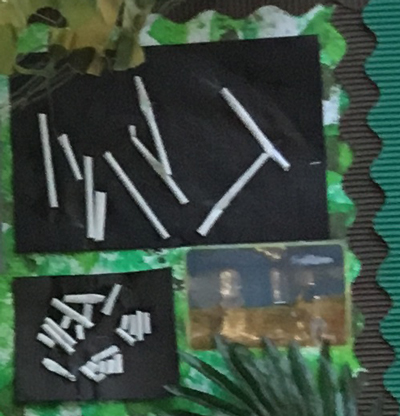
The children had been making their very own fossils out of clay and during our workshop we explored in simple terms how fossils are formed and helped the children to learn about some of their properties (hard/soft, heavy/light, hot/cold). Our dinosaur expert spotted some dinosaur bones made out of straws that the children had used to create shapes and patterns.
Creating Shapes and Patterns Using Straw Dinosaur Bones
Using straws to make dinosaur skeletons – shapes and patterns. A varied term topic learning about fossils and dinosaurs.
Picture credit: Everything Dinosaur/Mansfield Green E-ACT Academy
At Mansfield Green E-ACT Academy, the dedicated staff encourage the children to think big and to push boundaries so as to build their confidence. One of the teachers explained that the children had been making dinosaurs out of paper plates and she was amazed when our dinosaur expert explained that there actually was a dinosaur called Plateosaurus! The young palaeontologists had not just been looking at dinosaurs, their cousins the pterosaurs (flying reptiles), had been studied too.
A beautifully crafted model of a pterosaur had been carefully placed above one of the dinosaur themed areas of the Reception classroom.
Flying High Over the Classroom Dinosaur Display
A beautiful flying reptile flying high over a dinosaur classroom display at Mansfield Green E-ACT Academy.
Picture credit: Everything Dinosaur/Mansfield Green E-ACT Academy
Plant-eaters, Meat-eaters, Habitats and Homes
The Academy had been graded “Outstanding” in all areas following a recent Ofsted (The Office for Standards in Education, Children’s Services and Skills), inspection. There was certainly much to admire in the Foundation Stage part of the school that our dinosaur expert visited. The staff were highly motivated and our team member observed that the school was providing a very creative and exciting curriculum for the pupils. We are confident that the additional resources that we supplied and the lesson plan suggestions would help to augment the challenging and inspirational scheme of work that had been devised for the Reception classes. The children seemed to be enjoying learning about fossils and dinosaurs.
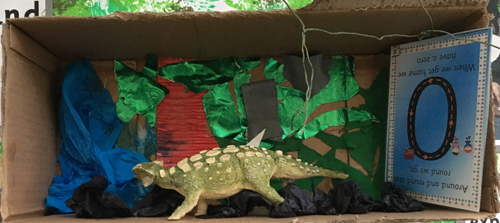
The children in Bees and Caterpillars had been learning about meat-eating and plant-eating dinosaurs along with the sort of conditions a dinosaur needs to be happy and to feel safe. The Reception classes had even built one or two little dinosaur worlds for their dinosaur figures to live in.
An Armoured Dinosaur Finds a Home in the Dinosaur Display
An armoured dinosaur (Ankylosaurus) finds a home at Mansfield Green E-ACT Academy.
Picture credit: Everything Dinosaur/Mansfield Green E-ACT Academy
By Mike|2024-05-11T06:32:00+01:00November 8th, 2018|Categories: Early Years Foundation Reception|Comments Off on Bees and Caterpillars Study Amazing Dinosaurs
Reception Classes at Mansfield Green E-ACT Academy Explore Dinosaurs
The eager young pupils in the two Reception classes (Bees and Caterpillars), at Mansfield Green E-ACT Academy (Birmingham, West Midlands), have been learning all about dinosaurs and life in the past this term. Under the tutelage of the enthusiastic teaching team, the budding palaeontologists have been exploring dinosaurs and using a variety of media to study prehistoric animals and their fossils.
Plenty of space had been set aside in the spacious classrooms to allow the children’s work to be displayed. One corner of a classroom had been turned into a special exhibit showcasing some of the activities.
Dinosaurs on Display in One of the Reception Classrooms
An armoured dinosaur (Ankylosaurus) finds a home at Mansfield Green E-ACT Academy.
Picture credit: Everything Dinosaur
The armoured dinosaur model (above) was made by Safari Ltd.
A team member from Everything Dinosaur had been invited into the school, recently graded as “outstanding” in all areas by Ofsted, to deliver a dinosaur and fossil themed workshop with each class. Part of the school’s ethos is to inspire a passion for lifelong learning and the children were very keen to demonstrate their pre-knowledge and to take part in the various activities that we had prepared for them.
Our dinosaur expert set the children a special challenge, could they draw their very own dinosaur? This extension idea along with the other resources and lesson plan suggestions made by “dinosaur Mike” were well received by the dedicated teaching team.
Dinosaur and Fossil Workshop
There was plenty of good listening in evidence during the workshop, the children are certainly very knowledgeable about dinosaurs and they enthusiastically demonstrated T. rex fingers and T. rex arms. The pronunciation guide we provided should help the teachers when it comes to tackling all those tricky dinosaur names.
At Everything Dinosaur, we have lots of books about prehistoric animals. We were happy to provide a new dinosaur book, an addition to the school’s well-stocked library to help enthuse and inspire the next generation of scientists.
By Mike|2024-05-11T06:32:47+01:00November 7th, 2018|Categories: General Teaching, Key Stage 1/2|Comments Off on New Flip Facts “Dino Record Breakers”
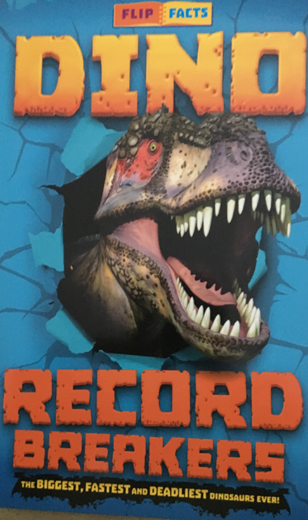
Flip Facts “Dinosaur Record Breakers”
Here’s a great little book all about dinosaurs, the biggest, fastest, most heavily armoured and so forth. The book entitled “Dino Record Breakers”, consists of sixty, tough, wipe clean pages in a flip chart format that provides lots of amazing facts about dinosaurs.
“Dino Record Breakers”
The Front Cover of “Dino Record Breakers”
The front cover of the recently published book “Dinosaur Record Breakers”.
Amazing Dinosaur Facts
Children enjoy learning lots of facts about dinosaurs and prehistoric animals and this little book caters for their needs providing details on the biggest predator, which dinosaur had the strongest bite and which was the “fuzziest” dinosaur. The most popular dinosaurs such as Stegosaurus and Tyrannosaurus rex are featured along with some of the more obscure ones such as Pentaceratops, Edmontonia and Pelecanimimus. Produced by Carlton Books, this publication has been written by the renowned English palaeontologist Darren Naish, so you can expect the information contained therein to be accurate.
The text is written in a child-friendly format with lots of short sentences, interspersed with diagrams, fact files and clever illustrations to help inform and to educate.
The book does not just feature dinosaurs, members of the Pterosauria such as Quetzalcoatlus and the huge marine reptile (Pliosauridae), Liopleurodon are included too.
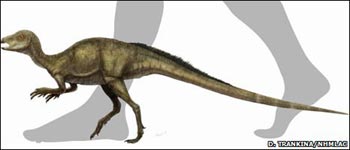
Dinky Dinosaurs – Fruitadens – The Smallest Plant-eater
An illustration of perhaps the smallest dinosaur known Fruitadens.
Picture credit: D. Trankina/NHMLAC
This colourful book makes a great Christmas gift for a budding palaeontologist and a super resource for use in schools to help educate and inform children when it comes to conducting independent research on dinosaurs and compiling non-chronological reports.
Written by the famous English palaeontologist Darren Naish, Flip Facts “Dino Record Breakers” is crammed full of super dinosaur and prehistoric animal facts and information.
By Mike|2024-03-14T09:24:12+00:00November 2nd, 2018|Categories: General Teaching, Key Stage 1/2|Comments Off on A Rare Ammonite Model is in Stock
Ammonite Model is in Stock at Everything Dinosaur
At popular request, Everything Dinosaur has brought back into stock the ammonite model. This robust replica of an ammonite is ideal for schools and it has been used as a teaching resource in topic areas such as Year 3 (fossils, rocks and soils) and learning about Mary Anning (the famous fossil seashell collector from Lyme Regis in Dorset), in a dinosaur and fossil related term topic.
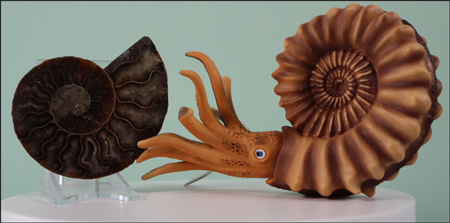
The Ammonite Replica – Model of an Ammonite
The Bullyland ammonite model is often used in museum displays to depict the living animal next to fossil material. Picture credit: Everything Dinosaur.
Ideal for creative play, school or home study, the ammonite model measures 17 cm long from the end of the shell to the tips of the tentacles and the shell has a diameter of 9 cm. The model has been specially designed to be handled by children from three years and upwards. A spokesperson from the teaching team at Everything Dinosaur commented:
“Ironically, models of ammonites tend to be more difficult to find than fossils of ammonites. Children can learn about the fossil shells, but they do not know what the actual animal that lived in the shell looked like. This child-friendly model helps young learners to appreciate that the fossils they are looking at represent the remains of living creatures that once swam in our seas and oceans. The model helps children to understand that whilst ammonites are extinct, they are very similar to animals living in the sea today, creatures like squid, cuttlefish and octopi for example.”
The ammonite model has a 5-star rating on Everything Dinosaur’s website, a typical review for this replica: “Very accurate model, impressive size.”
An Ammonite Model Used in Museum Displays
Everything Dinosaur also supplies this model to museums and other educational institutions. It can often be found in display cases showing a collection of ammonite fossils.
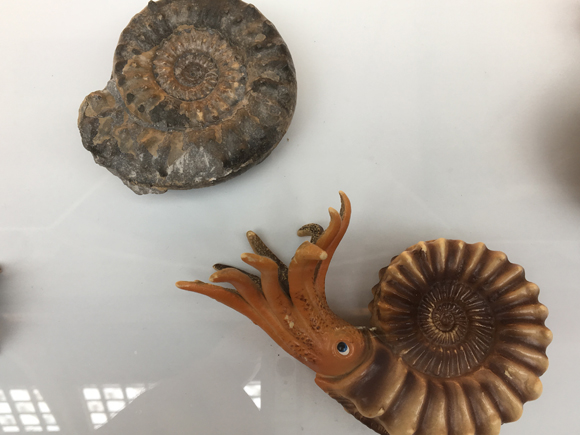
Everything Dinosaur’s Ammonite Model on Display at a Museum
A Bullyland ammonite model is used to help illustrate a display of ammonite fossils. Picture credit: Everything Dinosaur.
Picture credit: Everything Dinosaur
Helping to Bring Science Alive
The picture (above) shows an ammonite model next to a fossil of a Jurassic ammonite on display in a museum. The replica demonstrates what the living creature looked like and helps to bring the study of science alive and brings learning about fossils into context.