All about dinosaurs, fossils and prehistoric animals by Everything Dinosaur team members.

Everything Dinosaur’s press releases and other information.

29 12, 2013

Everything Dinosaur’s Top Ten Important Blog Posts of 2013

By |2024-05-02T06:57:02+01:00December 29th, 2013|Categories: Dinosaur Fans, Everything Dinosaur News and Updates, Press Releases|0 Comments

Everything Dinosaur’s Top Ten Blog Posts of 2013

As we move towards the end of the year, it is time to reflect on all the work put into the writing of this blog by Everything Dinosaur team members.  Over the last twelve months or so, a further 369 articles have been published on this blog and just for a bit of fun we thought it would be interesting to look at the top ten most popular articles posted.

Everything Dinosaur

How we have calculated the most popular web log articles is based on a combination of factors such as total number of comments placed, number of emails received, requests for further information, Facebook likes, Google pluses and of course things like re-pins and the posting up of our work onto other platforms.  Naturally, we have tried our best to remove any bias from the listings.  For example, an article posted up in January has more chance of getting into the list compared to a feature put up much more recently.

The top ten certainly cover a variety of subjects.  Naturally, there was a lot of interest in articles to do with Everything Dinosaur model reviews, or news of 2014 additions to model collections but lots of dinosaur themed and palaeontology based topics get into our top ten list.

Top Ten Most Popular Blog Posts

So without any further fuss, here is the top ten blog articles for 2013.

10).  News of Papo’s new model releases for 2014 just sneaks into our countdown, the article posted up just a few days ago has attracted a great deal of interest as Papo state that an Archaeopteryx, a baby Triceratops and a Dilophosaurus dinosaur model are going to be included in their model range next year.  We at Everything Dinosaur, already knew about these introductions some time ago, we assisted on the pics and we have already committed to stocks.  Next meeting with Papo is in three weeks so we can provide more information after that.  To view the article: New from Papo for 2014.

9).  ‘The discovery of a new dinosaur genus on the island of Madagascar, the first for a number of years, comes in at number nine.  The dinosaur discovered is a member of the abelisaurid, theropod dinosaurs it has been named Dahalokely tokana.  To read the article, which was originally published back in April: New Dinosaur Discovery Made in Madagascar.

8).  We shoot forward to the Miocene for our next entry, a remarkable story of the discovery of a prehistoric lizard preserved in amber.  Insects, pollen yes, but a lizard preserved in fossilised tree resin, this was an amazing discovery, one that generated a lot of interest and emailed comments and requests for more information when we wrote about this astonishing fossil find in July: Miocene Lizard Preserved in Amber.

7).  New research into dinosaurs’ paternal habits and behaviours makes it lucky number seven for the Dinosauria in our top ten.  The article, which postulated that the males may not have played a very significant role in brooding the young was published on the Everything Dinosaur web log in May: Dinosaurs as Devoted Dads?

6).  The latest research into that “Terror Bird” – Gastornis just misses out on our top five articles for 2013.  The article reviewed new data postulating that Gastornis may well have been herbivorous.  The article published in September, builds on earlier research that Everything Dinosaur reported upon back in 2012: Isotope Research suggests that Gastornis was a Herbivore.

5).  Team members get lots of feedback from model collectors and dinosaur fans on their model reviews (both written and the video reviews).  Into our top five goes this very popular review of the Papo Carnotaurus model introduced in February of this year.  The video has had over fifteen thousand video views on Youtube.  You can see the video review of the Papo Carnotaurus dinosaur model below:

Everything Dinosaur’s Review of the Papo Carnotaurus Dinosaur Model

Video credit: Everything Dinosaur

4).  All the way back to January 2013, for our number four, an article on some of the latest research from the Lark Quarry site with its multitude of dinosaur tracks.  This new study suggests that the tracks were not made on land at all, but they were created as the various dinosaurs made their way through a body of water: Dinosaurs not Stampeding but Swimming?

Swimming Dinosaurs Down Under?

Dinosaurs going for a dip!

Dinosaurs going for a dip!

Picture credit: Anthony Romilio

3).  Into our top three and CollectA’s announcement regarding new model releases next year (2014) gets the bronze medal position.  CollectA’s strategy was to make several announcements over many weeks, as Everything Dinosaur has a very close working relationship with this company we were one of the very first to publish information.  Our blog posts got picked up and used in many forums and other sites and we received lots of comments and feedback.  The article in question was published towards the end of November: New Prehistoric Animal Models from CollectA.

Bistahieversor – One of the New Models Coming (Summer 2014)
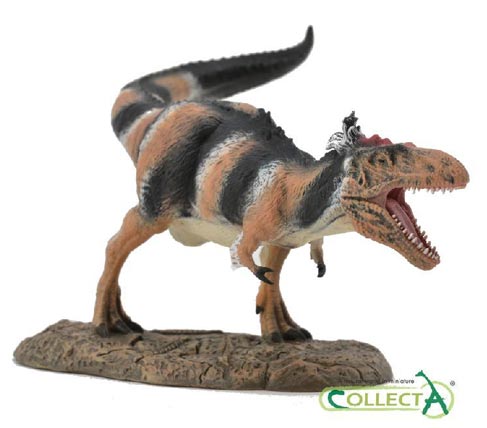
New for Summer 2014

New for Summer 2014.

Picture credit: Everything Dinosaur

2).  Riding high at number two and just being pipped at the post as it were, comes a blog post about new model releases from Safari Ltd, posted in early September.  The article can be viewed here: Safari Ltd Announces a Number of New Model Introductions for 2014.

Our blog post showed pictures of the new Pachyrhinosaurus dinosaur model (see below), as well as images of the very striking theropod dinosaurs Monolophosaurus and Suchomimus.  Looks like dinosaur model collectors are going to have a busy year next year.

New Ceratopsian Dinosaur Model – Pachyrhinosaurus to be Introduced by Safari Ltd Next Year

Horned dinosaur from Safari Ltd new for 2014.

Horned dinosaur from Safari Ltd new for 2014.

Picture credit: Everything Dinosaur/Safari Ltd

1).  So what is the number one, the article that came out on top of our 360 plus articles published on the blog this year?  Ironically, our top post is related to the “Post” as Everything Dinosaur’s work on the Royal Mail stamp set featuring 150 years of British palaeontology and geology takes top spot.

Everything Dinosaur was contacted by Royal Mail to provide technical input into the project.  Our team members furnished Royal Mail with information on the various prehistoric animals featured on the set of first class stamps. The article originally published in October, can be viewed here: Royal Mail Issues New Set of Prehistoric Animal Stamps.

British Prehistoric Animals Celebrated on Royal Mail Stamps

A set of first class stamps.

A set of first class stamps.

Picture credit: Everything Dinosaur/Royal Mail

Everything Dinosaur team members often get asked to help out with dinosaur themed projects, our work with Royal Mail must have been “first class”, as we received lots of comments, feedback and emails about this work.  We even got a set of the special stamps included within a special presentation folder.

So there you have it, our top ten blog posts for 2013, look out for more articles in the next twelve months or so.  No doubt 2014 will provide us with a huge array of dinosaur discoveries, new models, amazing fossil finds, museum exhibitions and so on to write about.

The Everything Dinosaur website: Everything Dinosaur.
23 12, 2013

Free Do-It-Yourself Dinosaur Calendar from Everything Dinosaur

By |2023-03-01T23:52:13+00:00December 23rd, 2013|Categories: Educational Activities, Everything Dinosaur News and Updates, Press Releases|0 Comments

Free 2014 Dinosaur Themed Calendar to Download

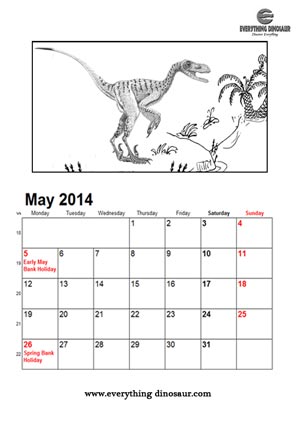
Since the dinosaur experts at Everything Dinosaur created their downloadable calendar for 2014 at the beginning of the month, we have been hard at work emailing all those who requested one.  With 2014 just over a week away (this year seems to have whizzed by, faster than a speeding Struthiomimus), there is still time to get your prehistoric animal themed calendar for the start of the New Year.  Everything Dinosaur has produced a simple, colour in calendar which features various drawings of prehistoric animals and prehistoric scenes.  Each page of the calendar has a month on it and above the dates there is a prehistory inspired picture for young palaeontologists to colour in.

Dinosaur Calendar

Artist friend and fellow dinosaur buff, Mike Fredericks has helped with a lot of the layouts and the prehistoric animals featured include stegosaurs, horned dinosaurs, flying reptiles, plesiosaurs and of course Tyrannosaurus rex.

Everything Dinosaur’s 2014 Dinosaur Calendar to Download for Free

Free dinosaur calendar to download.

Free dinosaur calendar to download.

Picture credit: Everything Dinosaur

To contact Everything Dinosaur: Email Everything Dinosaur.

Once you have the download, it is just a case of simply printing off the pages, (fourteen, one for each month with front and back covers) and your calendar is ready to be stapled together and coloured in.

If you like the way in which Everything Dinosaur tries to encourage  people to learn about prehistoric animals and if you are on Facebook, please look us up (click on the Facebook icon below) and give Everything Dinosaur a “like”.

“Like” Everything Dinosaur on Facebook

Click the logo to visit our Facebook page and to give our page a "like".

Click the logo to visit our Facebook page and to give our page a “like”.

Please visit Everything Dinosaur on Facebook and “like” our page: Click here to visit Everything Dinosaur on Facebook and to “like” our page.

21 12, 2013

Updating on the Christmas Post

By |2023-03-01T23:46:11+00:00December 21st, 2013|Categories: Press Releases|0 Comments

Updates on the Christmas Post

Team members at Everything Dinosaur are in the office today working hard to ensure that all the orders placed Friday evening and Saturday morning get packed and despatched.  All the orders received before 4pm on Friday afternoon have already been despatched, Everything Dinosaur personnel will also be undertaking a special collection service on Saturday morning to make sure that any last minute gifts get sent on their way as quickly as possible.

Everything Dinosaur

Royal Mail have stated that Friday (20th December) was the last recommended day for posting First Class post in time for Christmas.  However, if you are waiting for a gift to arrive, it is worth remembering that there are a number of areas of the UK where extra deliveries are taking place and Royal Mail has also organised Sunday deliveries in many parts of the country.

Postal Deliveries and Collections

On Monday 23rd December there will be a normal delivery and collection service offered by Royal Mail and many couriers will be operating a next day delivery service to ensure parcels sent out Monday get to their destinations across the majority of the UK by Christmas Eve.  Everything Dinosaur staff will be in the office from 7am and it is our intention to work late helping where we can.  On Tuesday, there will be normal Royal Mail deliveries and some collections but full service will not resume until Friday.  Couriers picking up parcels on Christmas Eve and operating under their usual service conditions would expect these items to be delivered Friday 27th.

To view the range of dinosaurs and prehistoric animal models, toys and games available from Everything Dinosaur: The Everything Dinosaur Website.

20 12, 2013

New Prehistoric Animal Models from Papo (2014)

By |2023-03-01T23:43:53+00:00December 20th, 2013|Categories: Dinosaur Fans, Everything Dinosaur Products, Press Releases|1 Comment

Papo Reveals New Additions to Prehistoric Animal Model Range for 2014 – Archaeopteryx, Dilophosaurus and a Baby Triceratops

The wait is over, we can now reveal that Papo will be adding a model of the creature sometimes referred to as the “first bird” Archaeopteryx to their prehistoric animal model range in 2014.  The figure is of Archaeopteryx lithographica and what a marvellous figure it is.  The company will also be bringing out a replica of the fearsome predator Dilophosaurus and a rather cute baby Triceratops to accompany the adult “three horned face” that is already part of the Papo model range.

Prehistoric Animal Models

Papo Takes to the Air in 2014 – Papo Archaeopteryx

New from Papo for 2014 a model of Archaeopteryx.

New from Papo for 2014 a model of Archaeopteryx.

Picture credit: Papo

Formally named and described in 1861, Archaeopteryx with its bird-like and reptile-like features is often described as a transitional fossil.  An animal that represents a sort of half-way house between the Dinosauria and the true Aves (Birds).  The Archaeopteryx fossil material at the Natural History Museum (London), is regarded as the holotype and it has been one of the most closely studied fossil specimens of all.  Everything Dinosaur has reported on a number of academic studies into the fossil material, studies that attempted to provide an insight into this creature’s evolution and Archaeopteryx’s flight capabilities.

Article on Archaeopteryx colouration: Archaeopteryx – Back in Black.

Flight capabilities in the Dinosauria: Study shows Dinosaur Brains Pre-programmed for Flight.

Dilophosaurus Dinosaur Model

The second new addition to Papo range of prehistoric animal models for 2014 is this rather wonderful replica of the fearsome predator Dilophosaurus.

Dilophosaurus Set for Release in 2014

Available in 2014 from Everything Dinosaur.

Available in 2014 from Everything Dinosaur.

Picture credit: Papo

Dimensions for the Archaeopteryx or the Dilophosaurus have not been released yet but as soon as Everything Dinosaur gets briefed we will post them up on this blog and on our Facebook site.

A Papo Baby Triceratops

Last but not least comes this rather cute baby Triceratops.  The model has been designed to reflect what is currently known about the growth rates and appearance of baby ceratopsians.  The model should work well with the adult Triceratops model which is already in the Papo prehistoric animal model range.

Baby Triceratops Model Joins the Papo Range for 2014

Available in 2014 from Everything Dinosaur.

Available in 2014 from Everything Dinosaur.

Picture credit: Papo

The baby Triceratops with its stumpy tail, large eyes and rudimentary horns is an accurate representation of what most palaeontologists think a young Triceratops would look like.  The skin texture looks really realistic too, we have been lucky enough to have seen examples of Triceratops fossilised skin impressions and examine them close up.  When the prototypes are available we will have to count those toes and fingers but all in all this model and the two other new additions to the Papo range look most impressive.

A spokes person from Everything Dinosaur commented:

“Papo have added another three, intriguing models to their prehistoric animal model series.  This company has developed a strong reputation for the quality of its replicas and figures and it is always a pleasure to see new additions to this French company’s portfolio.”

None of these figures will be available before the 1st March next year, when we get more details we will make sure we post them up.

To view Everything Dinosaur’s current Papo prehistoric animal model range: Papo Dinosaurs and Prehistoric Animal Models.

19 12, 2013

The United Kingdom’s Important Contribution to Palaeontology in the 19th and 20th Centuries

By |2024-05-02T06:52:36+01:00December 19th, 2013|Categories: Dinosaur and Prehistoric Animal News Stories, Dinosaur Fans, Educational Activities, Press Releases|1 Comment

What Significant Contributions to Palaeontology has the United Kingdom Made Throughout the 19th and 20th Centuries?

This is not an easy question to answer.  After all, to provide a comprehensive overview of the contribution made in the course of two hundred years by the scientists, academics and indeed laypeople of the British Isles is no easy task.  In short, when the sciences of palaeontology and geology are considered, it could be argued that this little part of western Europe has punched well above its weight in the 19th and 20th centuries and it continues to do so.

Let’s focus our attention on just a few key, pivotal moments in a bid to shed more light on the prehistoric animals depicted in the recently released Royal Mail stamps that aimed to highlight the UK’s contribution to palaeontology.  All the prehistoric animals featured are vertebrates and from the Mesozoic era, so we will restrict ourselves for the time being, to animals with backbones that lived during the “Age of Dinosaurs” as it is often referred to.

Palaeontology

This means that we have to disregard, on this occasion, the work of the likes of Sir Roderick Murchison (1792-1871), a remarkable Scotsman, one who fought in the Napoleonic Wars and later in life, working alongside the Yorkshire born Reverend Adam Sedgwick (1785-1873), helped map, classify and date geological strata in one of the first studies of its kind.  Many of the geological periods before the “Age of Dinosaurs” were named and described by British scientists.  Not surprising really, after all, the age of the rocks that make up the British Isles are extremely varied and we have had a long history of higher education and scientific study.

The Geological Society of London is the oldest geological society in the world, formed in 1807.  In contrast, the Geological Society of America was not founded until 1888 and the Geological Society of China did not come about until 1922.

Confining ourselves to vertebrates of the Mesozoic also prevents us from detailing the contribution of Marie Stopes (1880-1958), perhaps better known as a campaigner for women’s rights and family planning, but also an expert in ancient flora who did much to unravel the mysteries of the evolution of flowering plants (angiosperms), or indeed the work of Professor Jenny Clack who in the last year’s of the 20th century helped to re-write the evolution of the first back-boned animals that evolved adaptations for living on land.  Her analysis of the primitive tetrapod  known as Acanthostega (Ah-can-tho-stay-ga) offered dramatic new insights into how fish made the transition to a life on Terra Firma.

Incidentally, Acanthostega lived during the Devonian, a period of geological time named after that county in south-west England, perhaps better known for its cream teas and sandy beaches.

British Women in the Earth Sciences

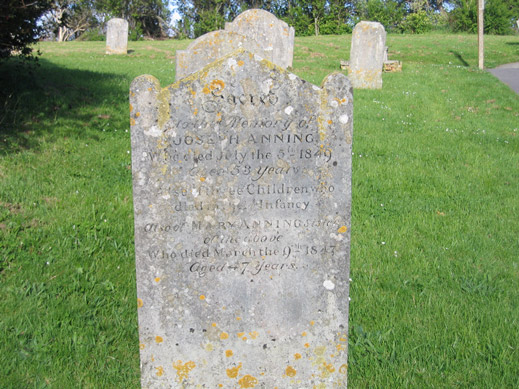
Let us continue to highlight the role of British women in the Earth sciences by focusing on the work of Mary Anning (1799-1847).  Mary was a pioneering, fossil collector born just a few miles to the east of the county of Devon, in the small, seaside town of Lyme Regis (Dorset).  Although lacking any formal scientific training and as a woman, sadly not given full credit for her work until long after her death, a consequence of, thankfully, now outdated Georgian and Victorian attitudes to the role of women in science.  Mary explored the fossil rich, Jurassic aged strata of her Dorset home, she is accredited for finding the first plesiosaur fossils and the first ichthyosaur skeleton to be correctly identified as an ancient, marine reptile.

“Jurassic Coast”

An Ichthyosaurus and a Plesiosaurus both feature in the recent  Royal Mail stamps issue, however, Mary Anning’s links with this stamp set is not restricted to the marine reptiles.  It was Mary who discovered the first Dimorphodon specimens in the Lower Lias of southern England’s famous “Jurassic Coast”.  This flying reptile also features in the Royal Mail series and the first fossils of Dimorphodon link to two other giants of nineteenth century British palaeontology, as Mary passed her pterosaur fossil to the Reverend William Buckland to study.  It was Buckland, who  wrote the first full, scientific description of a dinosaur (Megalosaurus – also featured in the stamp set) and Sir Richard Owen, a Lancastrian, who first coined the term Dinosauria, was responsible for erecting the Dimorphodon genus in 1870.

The Gravestone of Mary Anning and Joseph Anning (brother)

Mary Anning's grave at St Michael's Church on the hill overlooking Lyme Regis

Mary Anning’s grave at St Michael’s Church on the hill overlooking Lyme Regis

Picture credit: Everything Dinosaur

Dinosaurs from Britain

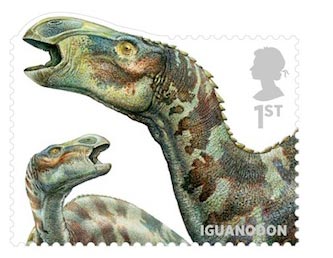
The pair of Iguanodons, beautifully illustrated by John Sibbick on one of the stamps is a reminder of the role played by this country in fundamentally changing scientific thinking about prehistoric life and the history of our planet.  Gideon Mantell, a medical man by training but with a passion for geology and palaeontology, did much to broaden our understanding regarding the prehistoric animals of the Cretaceous.  It was Mantell who first scientifically described Iguanodon and this dinosaur was one of the first to be reconstructed both as a mounted skeleton and as a representation of a living animal.

The United Kingdom has made a significant contribution to the popularising of science, especially the study of prehistoric animals.  Scotsman Bill Swinton (1900-1994) is credited with writing one of the first ever textbooks on dinosaurs.  The book, first published in 1934 with the catchy title “The Dinosaurs: A Short History of the Great Group of Extinct Reptiles”, became a standard text for students of palaeontology all over the world for the next forty years or so.

The Iguanodons that Feature on the Royal Mail Stamps

The Ornithopod Iguanodon on a stamp.

The ornithopod Iguanodon on a stamp.

Life-size replicas of prehistoric animals built by London born Benjamin Waterhouse Hawkins and first put on display in 1854 can still be seen today in south London’s Crystal Palace Park.  These concrete replicas, the first of their kind to be exhibited anywhere in the world now have Grade 1 listed status (the same status as Windsor Castle and Buckingham Palace).  The general public’s fascination for everything dinosaur seems to have continued non-stop and many British academics have been in the vanguard of popularising the study of ancient life and prehistoric ecosystems.

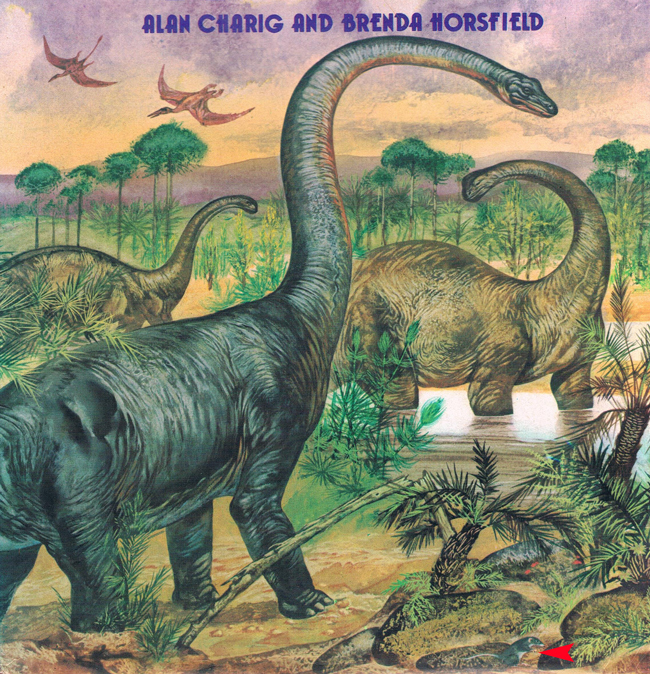
To end our very brief foray into the contribution made to palaeontology and geology in the 19th and 20th centuries by the United Kingdom, it seems fitting to end our short discourse by paying tribute to  Alan Charig (1927-1997), a research scientist who rose to become Curator of Fossil Amphibians, Reptiles and Birds at the Natural History Museum.  Dr Charig did much to popularise the subject of palaeontology in the 1970’s, with the BBC television series “Before the Ark”, the success of which, according to many commentators, paved the way for Sir David Attenborough to make the first of his ground-breaking  natural history programmes (Life on Earth).

The Front Cover of “Before the Ark”

The front cover of "Before the Ark" features a small mammal.

The 1975 BBC book “Before the Ark” depicts a small mammal (arrowed) in a world dominated by dinosaurs and other reptiles.

Picture credit: Everything Dinosaur

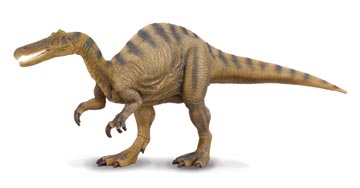
Alan Charig in conjunction with Angela Milner was given the responsibility of studying and scientifically describing a new type of predatory dinosaur unearthed by an amateur fossil hunter whilst exploring a Surrey clay pit in 1983.  Almost seventy percent of the fossilised skeleton was excavated.  This ten-metre-long leviathan was named Baryonyx (Bar-ree-on-niks) and the head and neck of this theropod dinosaur are depicted on one of the stamps in the Royal Mail set, a fitting tribute to the immense contribution made by the people of this country to the study of ancient life and in particular to the Dinosauria.

A Model of Baryonyx (B. walkeri)

Baryonyx "Heavy Claw"

Baryonyx – the name means “heavy claw”

Picture Credit: Everything Dinosaur

It is also worth noting the immense contribution paid to the prehistoric animal model industry by British designers and artists. For example, Anthony Beeson the creative force behind the much admired CollectA prehistoric animal model range.

To view the CollectA model range: CollectA Prehistoric World and Prehistoric Life Models.

14 12, 2013

Wild Safari Dinos and Prehistoric Life Elasmosaurus Model Reviewed

By |2023-03-01T23:22:48+00:00December 14th, 2013|Categories: Dinosaur Fans, Everything Dinosaur Products, Press Releases, Product Reviews|0 Comments

Elasmosaurus Model (Safari Ltd) Under the Spotlight

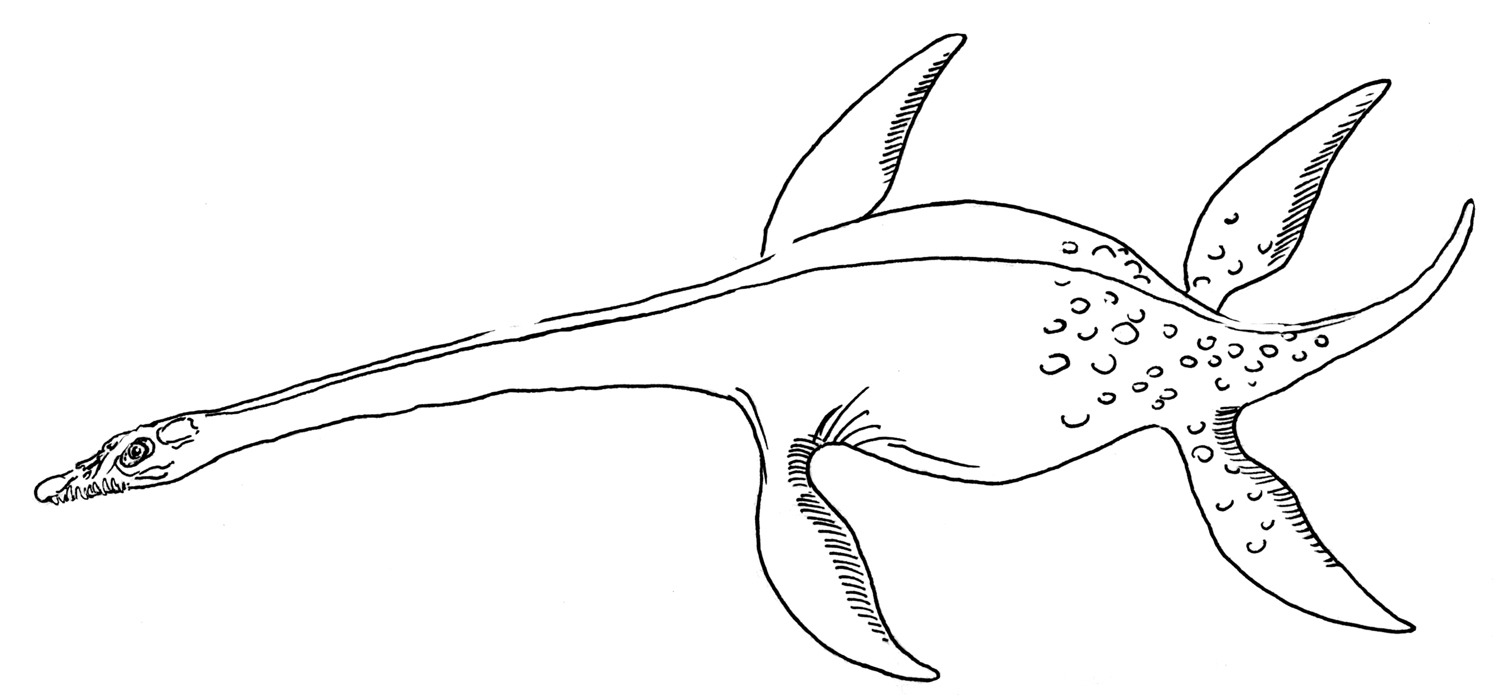
New to the Wild Safari Dinosaurs and Prehistoric Life model series manufactured by Safari Ltd for 2013, is this replica of Elasmosaurus, a member of the plesiosaur group, one of the last types to evolve and a marine reptile with approximately half of its entire body length made up by its extraordinarily long neck.

Elasmosaurus was named and described by the American palaeontologist Edward Drinker Cope from fossils discovered in Wyoming.  He had a preconceived idea that this sort of creature would be propelled through the water by its tail.  This in part, explains why when it came to reconstructing the holotype material,  Cope ended up putting the head on the tail, a mistake that was pointed out to him much to his subsequent embarrassment.  The design team at Safari Ltd have avoided such errors and this model is a very accurate representation of an elasmosaurid.

Elasmosaurus Model

Wild Safari Dinos & Prehistoric Life Model Series Elasmosaurus

Cretaceous Plesiosaur

Cretaceous plesiosaur.

Picture credit: Everything Dinosaur/Safari Ltd

Focusing on the neck, this model is posed with the neck slightly curved, but a swan-like posture has been avoided.  The neck is held out almost horizontally from the body and this reflects the current scientific thinking regarding these Late Cretaceous plesiosaurs.  The small head on the end of that enormous neck could permit Elasmosaurus to approach shoals of fish in order to hunt, without the fish being too alarmed.

There are some wonderful details on the head.  Firstly, the teeth are thin and give the impression of being needle-like.  The teeth in the upper jaw of this model project forward in a very pronounced way, this reflects elasmosaurid teeth very accurately.  Their teeth being perfectly evolved to interlock, trapping any poor unfortunate fish that should have strayed within range.  The jaws themselves give an indication of being very powerful. The back of the skull is widened slightly to give the impression of the presence of strong jaw muscles.  The eyes although small,  are positioned above the mid-line of the skull, which again reflects what is seen in the fossil record.

The Model Reflects the Known Fossil Material Accurately

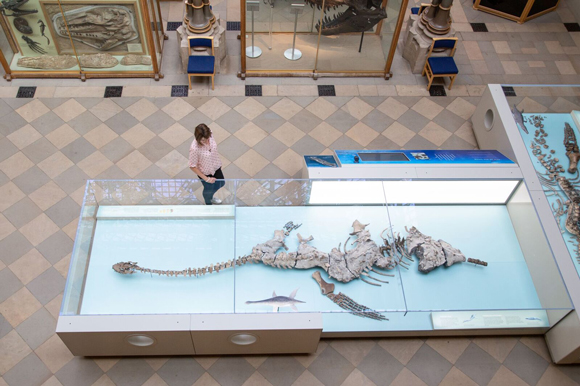
Plesiosaur specimen at the Oxford University Museum of Natural History.

A long-necked plesiosaur fossil specimen.

Picture credit: Everything Dinosaur

The body of the model and those four wing-like paddles give this replica a certain rigidity.  It is likely that Elasmosaurus was a predator of the open ocean, ambushing prey by attacking from below using its strong flippers to provide the burst of speed necessary for an attack.  Compared to the neck, the tail is relatively diminutive, but the model makers have successfully avoided making the tail too stumpy.  The creases and folds in the skin at the base of the tail and also seen halfway up the tail on the other side hint at movement – which is a nice touch.

Muted Colouration

Compared to other Safari Ltd marine reptile models, the colouration is quite muted.  The top of the body is painted a dark green colour, which contrasts nicely with sandy coloured underside. The detailing around the head has been enhanced by careful painting.

The skin itself has a stippled effect and feels quite rough to the touch.  We are not aware of Elasmosaurus skin impressions being preserved within the fossil record.  However, fossilised skin impressions from earlier Jurassic plesiosaurs suggest that the skin was relatively smooth, any scales present may have been extremely small, although on some parts of the body the skin may have been slightly wrinkled.

This Elasmosaurus model from Safari Ltd does reflect the known fossil material well and it represents an extremely good reconstruction of this Late Cretaceous marine reptile.

To view the range of prehistoric animal models available from Everything Dinosaur: Wild Safari Prehistoric World Figures.

7 12, 2013

500,000 Video Views on Everything Dinosaur’s Youtube Channel

By |2023-03-01T15:58:58+00:00December 7th, 2013|Categories: Everything Dinosaur News and Updates, Everything Dinosaur videos, Press Releases|0 Comments

Half a Million Views on Everything Dinosaur’s Youtube Channel

A few days ago we were notified that Everything Dinosaur’s video views had gone through the half a million mark.  A big thank you to everyone who has watched our model reviews and other prehistoric animal inspired videos. Our small team of dedicated dinosaur enthusiasts work really hard when it comes to our social media output and yes, we do respond to all those comments, questions and such like which require a reply.  Back in September we reviewed our progress to date in terms of YouTube video views.  We had originally aimed for about 300,000 video views by the end of this year, but this target had already been exceeded by May.

To read the September update on Everything Dinosaur’s social media activities: September’s update on Everything Dinosaur’s social media activities.

We are really excited and chuffed to have reached this landmark and we shall continue to make prehistoric animal model reviews and other videos, especially for our many, many channel subscribers.

Celebrating Reaching Half a Million Video Reviews

Half a million views on Everything Dinosaur's Youtube channel.

Half a million views on Everything Dinosaur’s YouYube channel.

Picture credit: Everything Dinosaur

A very big thank you to everyone who has watched our videos, we did set a target of 600,000 video views earlier this year and given the number of daily views on our channel it is very likely that we hit this target and go slightly beyond it by the end of this month.

To visit Everything Dinosaur’s YouTube channel: Everything Dinosaur on YouTube.

Everything Dinosaur’s YouTube Channel

The majority of our videos are short (five minute) reviews of prehistoric animal models.  In these reviews we discuss the replica in detail and point out how it reflects the known fossil material.  One of our most popular videos is this brief review of the Schleich World of History T. rex model, like many of our videos it has had tens of thousands of video views.  We may be a small, UK-based supplier of dinosaur models toys and games, but our passion for dinosaurs and palaeontology has enabled us to make these short video reviews and they do seem to be very popular – which is fine by all of us.

The Schleich Tyrannosaurus rex Video Review by Everything Dinosaur

Video credit: Everything Dinosaur

To view Everything Dinosaur’s YouTube channel: Everything Dinosaur on YouTube.

Once again,  a very big thank you to everyone who has viewed and commented on our videos.

For fans of the Schleich prehistoric animal model range, or indeed dinosaur model fans in general, we suggest you take a look at the huge range of figures and replicas available from Everything Dinosaur.

To visit the models section of Everything Dinosaur’s user-friendly and award-winning website: Prehistoric Animal Models and Figures.

2 12, 2013

Manic Monday – Just Another Busy Day for Everything Dinosaur

By |2023-03-01T15:35:44+00:00December 2nd, 2013|Categories: Everything Dinosaur News and Updates, Press Releases|0 Comments

Manic Monday – Business As Usual for Everything Dinosaur

Today, Monday, the 2nd of December has been officially termed “manic Monday” or “mega Monday”.  It is supposed to be the busiest on line shopping day of the year according to retail analysts.  In the UK alone, it has been estimated that something like £20 million GBP will be spent each hour on line with lunchtime being the busiest for sales.  We at Everything Dinosaur are not sure who came up with these figures or indeed why.  The cynics amongst us suspect that it is just another ploy by the big retailers to try to generate as much business as possible.

“Manic Monday”

As for ourselves, today is just another day, following on from just another weekend during which we kept manning the phone lines, packing orders, preparing items for collection and so forth.

We do advise customers to shop early for Christmas.  Whilst we do everything we can to ensure a prompt despatch, this time of year the postal system and couriers are under a lot of pressure.  Leaving purchases too late might lead to disappointment with parcels not arriving in time for the big day.

Back in October, as part of our customer commitment, we posted up details about the last recommended posting dates for Christmas, these dates are worth noting especially when one is considering posting overseas.

To read the article: Recommended Posting Dates for Christmas.

We have reproduced the table below, giving the main deadlines for readers:

Recommended Last Posting Dates for Christmas (Royal Mail Information)

Post early for Christmas

Post early for Christmas.

Picture credit: Royal Mail/Everything Dinosaur

Everything Dinosaur

To be fair to our dedicated team, we had compiled this information and posted it up on our blog site before Royal Mail’s account manager had contacted us.  We do try our best to keep all our customers informed.  In addition, we receive regular updates from Royal Mail and the courier companies with regards to the state of the delivery network.  Should any major issues arise that could affect Christmas deliveries we will do our best to update our customers.  In the meantime, we continue to work as hard as we can on packing, checking and despatching orders to ensure parcels get sent out swiftly.

Dates to note this week:

  • Wednesday 4th of December the last recommended posting date for airmail parcels to Asia (Far East including Japan and New Zealand).
  • Thursday 5th of December the last recommended posting date for airmail parcels to Australia
  • Friday 6th of December the last recommended posting date for airmail to Africa, the Caribbean, Central and South America and the Middle East

For further information and advice over our despatch of orders: Everything Dinosaur Delivery Information.

Or for specific enquiries, feel free to email us and one of our enthusiastic team members will do their best to help: Email Everything Dinosaur.

1 12, 2013

Free 2014 Colour in Dinosaur Calendar Available from Everything Dinosaur

By |2023-03-01T15:33:05+00:00December 1st, 2013|Categories: Dinosaur Fans, Everything Dinosaur News and Updates, Press Releases|0 Comments

Free Prehistoric Animal Calendar Available from Everything Dinosaur

With our dinosaur experts always looking at the past, it is pleasing to see them looking towards the future for a change.  With 2014 just under five weeks away, Everything Dinosaur staff have produced a simple, colour in calendar featuring various drawings of prehistoric animals.  Each page of the calendar has a month on it, and above the dates there is a picture of a prehistoric scene for young dinosaur fans to colour in.  The animals featured are quite an eclectic mix and since the colour of dinosaurs is going to be a hotly debated subject in the next twelve months we thought it appropriate to acknowledge the continuing research by producing this “DIY dinosaur calendar”.

Dinosaur Calendar

Much of the artwork has been produced by our chum Mike Fredericks, an extremely talented artist and since Everything Dinosaur commissions lots of dinosaur drawings, it seemed sensible to offer some of them as part of a free, prehistoric animal scene calendar.

Roaring into 2014 with Everything Dinosaur

Plesiosaurs and other prehistoric animals featured in the calendar.

Plesiosaurs and other prehistoric animals featured in the calendar.

Picture credit: Everything Dinosaur

Featuring Dinosaurs, Pterosaurs and Marine Reptiles

The calendar features pterosaurs, marine reptiles and members of the Dinosauria and for each month there is a prehistoric scene for keen, young dinosaur fans to colour in.  Best of all it’s free, just simply email Everything Dinosaur and we will email you back with the file so that you can print out your own dinosaur themed calendar.

Free to Download from Everything Dinosaur

Once you have the download, simply print off the pages, (fourteen in total, one for each month and a front and back cover) and there you have it, your calendar ready to be stapled together and coloured in by your budding palaeontologist.

On the Front of the 2014 Calendar – Tyrannosaurus rex

Eating Triceratops one chunk at a time.

Front page of the calendar.

 Picture credit: Everything Dinosaur/Mike Fredericks

If you like the way in which Everything Dinosaur tries to help young people learn about prehistoric animals and if you are on Facebook, please look us up (click on the Facebook icon below) and give Everything Dinosaur a “like”.

“Like” Everything Dinosaur on Facebook

Click the logo to visit our Facebook page

Click the logo to visit our Facebook page.

Find Everything Dinosaur on Facebook and give us a “like”: Everything Dinosaur on Facebook.

We are eager to see what dinosaur fans make of the drawings. What colour will the long-necked stegosaur called Miragaia that is featured for February be?  How about Utahceratops and Kosmoceratops which are depicted on the month of August?  If readers want to send in jpg images of the drawings back to us they would be most welcome and our dinosaur experts would love to look at them and see what interpretations our fans have come up with.

To view the huge range of dinosaur themed toys and games also available from Everything Dinosaur: Dinosaur Toys and Gifts.

30 11, 2013

Dinosaurs under the Hammer – Are Auctions of Fossil Materials Good for Science? That’s a Great Question!

By |2024-05-02T06:28:59+01:00November 30th, 2013|Categories: Dinosaur and Prehistoric Animal News Stories, Everything Dinosaur News and Updates, Press Releases|0 Comments

High Prices for Fossils at High Profile Auctions Could Lead to Increased Fossil Thefts and Damage to Fossil Sites

The auction is over, Misty the Diplodocus has been purchased and lots of media outlets have covered the story, after all, a seventeen-metre-long dinosaur skeleton getting sold is quite an unusual event.

However, it is not the £400,000 price tag that sticks in our collective throats, it is the acknowledgement that such sales are going to become more commonplace.  In the pre-auction publicity,  it was reported that, the auction house responsible for the sale of the Wyoming Diplodocus specimen was the first to offer a lot of this nature in Europe.  Not true, we recall a number of specimens being sold on the continent, at auctions held in Paris, for example.

Fossil Auctions

Whichever way you look at it, fossils, are highly sought after and as such, some specimens can fetch very high prices.  High demand equals high prices so more sales either at auction or through other sales platforms are going to occur.

Fossils could be regarded as the ultimate in antiques, although we don’t imagine Victoria Wood penning a soap parody entitled “Acorn Fossils”.  They are rare, for instance, there could be as many as 650 Stradivari instruments in the world today, but less than a dozen or so specimens of that creature often referred to as the “first bird” – Archaeopteryx (A. lithographica) and many vertebrates including some of our ancient hominid ancestors are known from just a handful of fossil fragments.

Dinosaur Fossils for Sale

Dinosaurs in particular are “box office” and as a result, a number of very wealthy individuals have taken to collecting dinosaur fossils.  The film actors Nicholas Cage and Leonardo DiCaprio are believed to be keen devotees and good luck to them.

All this raises concerns for those of us who try to promote the study of Dinosauria and for that matter other vertebrates.  If fossils are worth a lot of money, then certain individuals may well be tempted to steal fossils and other rare artefacts in order to cash in on this bonanza.  Fossils have been stolen from museums.  A few years ago a fossilised dinosaur egg was stolen from a regional museum in New Zealand.  Team members at Everything Dinosaur embarked on a egg hunt with a difference. Fortunately, the fossil was retrieved and duly put back on display.

The Rise in Fossil Thefts

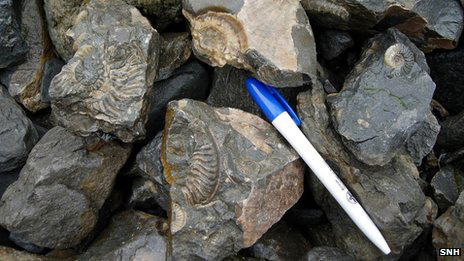
Theft from such institutions is abhorrent, however, a more heinous crime in our opinion, is the deliberate and wilful damage to important geological sites with a view to looting as much fossil material from them as possible.

Fossil Sites Ransacked as the Price of Fossils Soars

"Fossil Vandalism"

“Fossil Vandalism”

Picture credit: Scottish National Heritage.

Incidents in the UK

Such incidents are not limited to the dinosaur rich fossil hunting grounds of North America, unfortunately, there have been a number of shocking occurrences on this side of the Atlantic too.  Back in August of last year, Everything Dinosaur reported on the theft of a set of fossilised dinosaur  footprints from the Vale of Glamorgan.  The slabs containing the fossilised tracks were estimated to be over 200 million years old, but a local fossil collector saw the chance to make a quick profit.

To read more about this theft: Dinosaur Footprints Stolen.

Fortunately, the three-toed (tridactyl) prints were recovered.  It was not long before they were spotted on Ebay.  The fossils were also offered for sale from a fossil dealer located in Lyme Regis.  A man was cautioned by police for the offence of causing damage to a protected site of scientific importance.  However, the fossil prints could not be returned to their former resting place, fear of another theft has meant that these beautiful fossils are now kept under lock and key.  The fossil dealer argued that the fossils had been offered via a legitimate source, so no further action was taken against the dealer.

Auctions of Rare Fossils and Objects

The auction held on November 27th, the one in which Misty was sold, consisted of a large number of lots, collectively entitled “Evolution”.  The Diplodocus may have received star billing, but also on offer were a number of other important and rare fossils, both vertebrates and invertebrates.  In addition, bones from the Dodo including a pelvis were offered for sale.  There was also a number of stuffed animals up for auction, enough to keep the most enthusiastic taxidermist happy, even a specimen of a Tarpan (an extinct horse) was up for grabs.

Whilst we don’t object to such auctions, indeed, many important scientific discoveries have been made by commercial fossil dealers and fossil hunters as they go about their legitimate business.  Our concern is that with such high profile sales, the risk of fossil thefts and damage to locations where fossils can be found becomes that much more likely.

On October 27th 1997, we sat and watched in amazement as “Sue” the huge Tyrannosaurus rex fossil made an astonishing $8.36 million USD when she went under the hammer at Sothebys.  Misty the Diplodocus was sold a couple of days ago, like Sue, the Diplodocus specimen is most probably going to go on public display.  The Diplodocus fossils are still, in all probability, going to made available for further scientific study – that’s good news.  However, we wonder who else may have looked on at the auction, or listened to the news reports with a growing sense of glee.

For models of Diplodocus and other dinosaurs visit Everything Dinosaur’s award-winning website: Everything Dinosaur.

Fossils for Sale

When fossils are up for sale,  it is not just a case of the auctioneer’s gavel being called into action, other unscrupulous persons may be tempted to do some hammering of their own.  Sadly, there are those in our society who will see fossil locations as places where some quick and easy money can be made.  Specimens will be hacked out of rocks and offered for sale either openly or  to that murky underbelly of fossil collecting – the black market.

We must remain vigilant, we all have a role in protecting our fossil heritage.  One thing that has come out of the auction, it has given us the opportunity to write an article about the increased risk of fossil thefts and damage to S.S.S.Is and other important locations.

Go to Top