All about dinosaurs, fossils and prehistoric animals by Everything Dinosaur team members.

Everything Dinosaur’s work with schools and other educational bodies. Articles, features and stories about dinosaurs and their role in education and educating young people.

26 10, 2013

Dinosaur Extinction – Providing Helpful Information Sheets for Schools

By |2024-04-22T14:35:23+01:00October 26th, 2013|Categories: Educational Activities|2 Comments

Helping Primary School Children with Their Dinosaur Studies

Team members at Everything Dinosaur visit lots of school to undertake dinosaur workshops to help with teaching science as part of the UK’s national curriculum.  During our sessions with children aged from 4 years and upwards we get asked some amazing questions by the eager, budding palaeontologists.  We answer the questions as best we can but sometimes we are unable to deal with a specific enquiry during the teaching session itself, but we always follow up and send out further information and other resources to help the teaching staff with extension activities.

After all, taking dinosaurs into a school means that the school children are very excited and keen to learn all about these prehistoric animals as well as to demonstrate applied knowledge.

One of the questions we do get asked a lot concerns the extinction of the Dinosauria, typically we get asked “How and why did the dinosaurs go extinct”.

Everything Dinosaur

To help teachers, Everything Dinosaur has prepared a number of useful information sheets covering different aspects of palaeontology and the study of dinosaurs.

How and why did the Dinosaurs go Extinct?  Typical information sheet prepared for Key Stage 1/2 

The dinosaurs went extinct 65 million years ago, at what we call the end of the Cretaceous (CREE-TAY-SHOUS); this marked the end of the Age of Reptiles and the start of the Age of Mammals.  Not only did the dinosaurs die out but also all the flying reptiles and the large marine reptiles went extinct as well.  Many different types of fish, shelled animals such as the ammonites (AM-MON-NIGHTS) became extinct along with many small animals such as certain kinds of plankton that lived in the sea and a large number of plants.

Something like sixty percent of all life on Earth died out, this type of event is called a mass extinction and these have happened from time to time throughout the history of our planet.

Extinction Events

Scientists cannot be certain as to what exactly happened to the dinosaurs, there have been a lot of theories put forward to explain why the dinosaurs, other animals and plants went extinct.  Each theory has its own set of supporters, scientists that have looked at the evidence in fossils and rocks and come to a conclusion as to what might have happened.

We have listed some of the theories put forward, presenting evidence to support each theory and provided some other information presented by scientists who oppose this point of view.

In your class, weigh up the evidence look at the information presented and see if you can decide what wiped out the dinosaurs.

Your turn to be scientists…

Theory 1 – Death from Outer Space

If you look at a picture of the moon in a book you will see that it is covered in craters.  These have been caused by asteroids and meteorites crashing into the moon over millions and millions of years.  The moon has no weather, no atmosphere, so these craters are not eroded away, they are a permanent reminder that there are lots of chunks of rock and ice whizzing around in space.

Our planet has an atmosphere, it has weather, if an asteroid crashed into Earth, depending on the size of the rock, it could cause a lot of damage, but the crater would eventually get weathered away and any evidence of the impact would be eroded.  The Earth gets hit by lots of debris from space all the time, most of these rocks are very small and burn up in our atmosphere, they form shooting stars that sometimes you can see on a clear night.

However, every once in a while a huge lump of rock crashes into our planet and some scientists think that at least one huge meteorite or asteroid crashed into the Earth around sixty-five million years ago and this led to the demise of the dinosaurs.

Asteroid Impact Theory – Extinction of the Dinosaurs
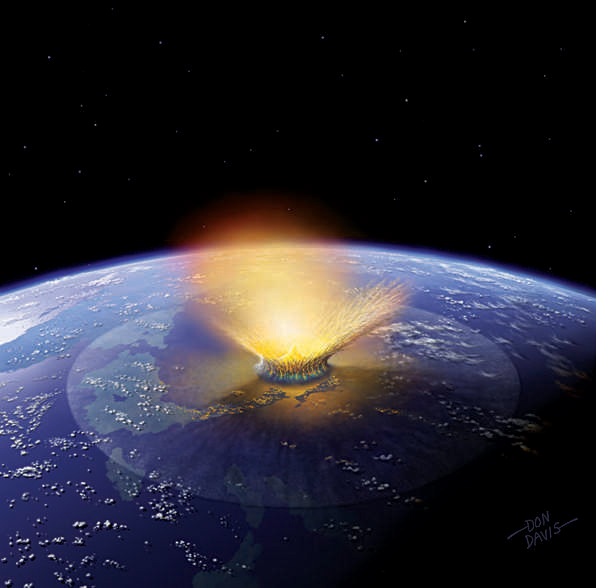
An asteroid hits Earth

An artist’s impression of the impact event which helped to wipe out the non-avian dinosaurs. Picture credit: SwRI and Don Davis.

Space Rock

If a big enough piece of space rock crashed into the Earth then shock waves would be sent around the world, earthquakes would be caused and if the rock hit the sea, massive tidal waves would flood the surrounding land.  The impact would vaporise much of the rock and the ground where it hit.  Huge clouds of smoke, dust and rock would be thrown up into the atmosphere.  The rock would be molten and it would fall down to earth, as showers of red-hot material, causing forest fires that would add even more smoke to the atmosphere.

The fine particles thrown up and the smoke could spread across the whole planet, disrupting weather patterns and ocean currents, the sun could be blocked out and the Earth could enter into a period of world-wide winter, killing off what vegetation remained.  A big enough impact would have resulted in an environmental disaster and this could have led to the death of many different animals and plants.

Acid Rain

Depending on where the meteorite or asteroid hit, the damage done to the Earth could be made much worse if the place where the impact occurred had lots of rock with sulphur in them.  If the impact caused lots of sulphur to get thrown up into the atmosphere then this would have combined with other materials in the air and formed acid rain (sulphuric acid).

Acid rain would have destroyed much of the vegetation and damaged the delicate communities of plankton in the sea which in turn would have led to the collapse of food chains and the demise of lots of animals and plants.

Death from Outer Space – The Evidence

1.  The K-T Boundary (Rare Elements found in sixty-five million year old rocks)

In some parts of the world, the rocks that were laid down at the end of the Cretaceous are separated from the rocks that make up the first deposits of the Tertiary (TER-SHERRY), the Age of Mammals, by a thin layer of red-grey clay.  Scientists have tested the clay deposits (it is called the K-T boundary) and they have discovered that it contains high levels of rare Earth elements such as Iridium.  This element is scarce on Earth but is found in meteorites, could this be evidence of a meteorite impact sixty-five million years ago?

A Clay Deposit Marks the End of the Age of Dinosaurs
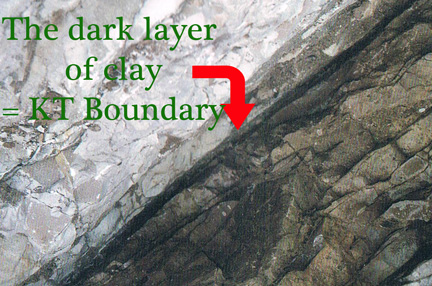
Marking the end of the Cretaceous.

Marking the end of the Cretaceous.

Picture credit: Open University/Everything Dinosaur

2.  The Crater

In 1990, evidence of a huge crater 200 kilometres wide was found off the coast of Mexico.  The asteroid or meteorite that caused this crater must have been at least 10 kilometres wide.  Little evidence of the impact can be found on land but a study of the seabed in the Gulf of Mexico and the rock layers in the area indicates that at around sixty-five million years ago a huge body from outer space crashed into the Earth.

A Disaster for Life on Earth

Such an event would have been disastrous for life on Earth but not all scientists agree with this theory.  Why did the turtles in the sea survive but no other marine reptiles?  How did birds survive and most mammal species?  Some scientists state that only the very smallest land animals were able to survive, a lot of dinosaurs were small, they do not seem to have made it through to the Age of Mammals.  Crocodiles did not go extinct, they have armour on their bodies like turtles and tortoises perhaps this is how they survived, but many dinosaurs like Anklylosaurus (AN-KIE-LOW-SORE-US) had armour as well but these animals went extinct.

Theory 2 – Global Climate Change

Although the age of dinosaurs ended suddenly, in geological timescales suddenly can mean as long as 100,000 years or more.  It is not possible to tell from rocks whether the events that caused the death of the dinosaurs took place over a few years or over a much longer time period.

Could gradual global climate change have caused the extinction of the dinosaurs?

When scientists look at the fossils found in rocks aged between 70-75 million years ago, they find lots of different types of dinosaur.  When scientists examine rocks from some parts of the world that are dated between 70-65 million years ago they find fewer types of dinosaur.  This might indicate that the dinosaurs were slowly dying out.  Scientists studying dinosaur fossils in rocks from 74 million years ago have found the fossils of over thirty different types of dinosaur, in studies of rocks from 67 million years ago, only about nineteen different types of dinosaur are found.

Extinction of the Dinosaurs

Between 70-65 million years ago a rising current of hot, molten rock began bubbling up from the Earth under western India.  This led to huge volcanic eruptions in the region.  These eruptions lasted for millions of years.  So much lava and molten rock was thrown out in volcanic explosions and lava flows that scientists estimate that enough material was ejected to cover 1.5 million square kilometres.

Huge amounts of carbon dioxide gas would have been sent up into the atmosphere.  Lots of carbon dioxide in the atmosphere affects the climate and weather patterns just as we are seeing today.

Climate change could have resulted in the deaths of many different kinds of plants and animals; they were unable to cope with their changing environment.

Global Climate Change – The Evidence

1.  The Gradual Decline in the Number of Certain Types of Fossil Found

Studies of tiny fossils in rocks close to the South Pole indicate that at the end of the Cretaceous period there was a gradual but steady decline in marine life.  Survival was getting difficult for animals and plants living in the polar regions, this indicates that slowly and surely the environment was changing and plants and animals were struggling to cope.

2.  The Deccan Traps

Much of India today is covered in layers of lava now turned into basalt rock.  These are the remains of the huge volcanic eruptions that occurred at the end of the Cretaceous.  In some parts, these volcanic layers of rock are nearly 5,000 metres deep.  This is volcanic activity on a huge scale.

So much carbon dioxide was pumped into the atmosphere it led to global climate change.  Even life in the sea would have been badly affected.  More carbon dioxide in the atmosphere would have become dissolved in the seas this would lead to an increase in acidity levels in oceans.  Many types of plankton cannot survive in water that is slightly acidic; this would have caused the death of the plankton and the collapse of whole marine food chains.

The amount of carbon dioxide pumped out into the atmosphere would have been many times what we are experiencing today.  We know that many animals and plants are endangered by global warming at present, so the animals and plants around at the end of the Cretaceous would also have been threatened with extinction.

Other Theories

There are lots of other theories around; did aliens hunt the dinosaurs to extinction?  Did biting insects spread diseases amongst the dinosaurs and this led to their demise?  Were all the plant-eating dinosaurs killed off by the spread of poisonous flowering plants and this also led to the death of the meat-eaters too?

Everything Dinosaur has put two of the most likely theories to your class; you must weigh up the evidence and decide what you think happened?

1).  Did the mass extinction event take place very suddenly caused by the impact and consequences of a huge meteorite or asteroid hitting the Earth?

2).  Did the mass extinction event take place gradually as a result of global climate change?

3).  Perhaps the extinction of the dinosaurs was caused by a combination of factors.  Global climate change had caused many types of plant and animal to decline and a big impact from outer space finally saw many of them go extinct.

Over to you and your classmates…

Although we have over simplified this subject area, the idea behind the information we have provided is for teachers to use this as part of their lesson plans and scheme of work preparation for a dinosaur themed term topic.

To learn more about the range of dinosaur themed toys and gifts stocked by Everything Dinosaur: Dinosaur Themed Gifts and Toys.
23 10, 2013

Back to the Age of Dinosaurs with Year 1

By |2023-02-28T08:12:31+00:00October 23rd, 2013|Categories: Educational Activities|0 Comments

Children Investigate Dinosaurs and Prehistoric Animals as Part of Their Autumn Term Studies

For Year 1 children (ages 5-6) at Pennyhill Primary, the autumn term topic has been all about dinosaurs, fossils and other prehistoric animals.   Under the enthusiastic tutelage of the school’s teaching team the children have been learning about when dinosaurs lived, what sorts of dinosaurs were there and what dinosaurs ate.

Age of Dinosaurs

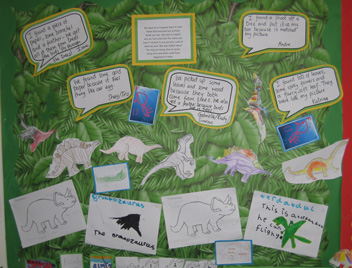
The classrooms were beautifully decorated with lots of examples of artwork, posters and creative writing.  Miss Shuker’s class had been looking at different types of dinosaur and flying reptiles (pterosaurs).  The children had been busy doing lots of independent research and gathering facts about prehistoric animals.

Artwork on Display in Miss Shuker’s Classroom

Colourful dinosaurs and other prehistoric animals on display.

Colourful dinosaurs and other prehistoric animals on display.

Everything Dinosaur

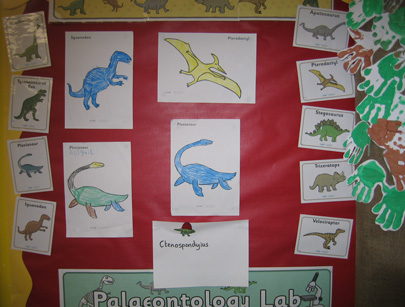
The eager pupils had prepared lots of amazing questions, such as why did some dinosaurs eat meat?  What colour were dinosaurs?  Why were the dinosaurs able to grow so big?  Mr Hayes had converted part of his classroom into a palaeontology laboratory, complete with skeleton models and an assortment of dinosaur facts that the children had collated.  The pupils had even carried out an investigation into why some prehistoric animals had fins and sails on their backs.

One of the prehistoric creatures that the children studied was an animal called Ctenospondylus, not a dinosaur but a sail-backed reptile from a group known as the pelycosaurs.  Under the guidance of Mr Hayes and the teaching assistants the young palaeontologists had produced a series of colourful prehistoric animal drawings with a figure of a Ctenospondylus also included in the exhibit for good measure.

The Palaeontology Laboratory with Ctenospondylus taking Centre Stage

Pupils learn about the shapes and sizes of different prehistoric animals.

Pupils learn about the shapes and sizes of different prehistoric animals.

Dinosaur Workshop

Mrs Heffernan’s class had also been busy preparing questions as well as creating some very decorative dinosaur illustrations using paper plates.  A paper plate folded in half makes a super template for a dinosaur’s body, the children had come up with all sorts of designs.  Ironically, there is a dinosaur genus called Plateosaurus.  This particular dinosaur lived during the Late Triassic geological period, it was a herbivore.

A number of children were eager to explain the differences between herbivores and carnivores as well as to name one or two examples.  One pupil even explained what omnivores ate, fortunately there was a cast of a pachycephalosaur jaw bone on hand to show the children the teeth and beak of a dinosaur that is thought by palaeontologists to have been omnivorous.  Looks like this was a very successful dinosaur workshop in school.

With so many enthusiastic and knowledgeable pupils, it seems that dinosaur research in the future is likely to be in robust health.

To view the range of dinosaur and prehistoric animal themed toys and gifts available from Everything Dinosaur: Dinosaur Themed Toys and Gifts.

14 10, 2013

Stone Age Man Excavation Set Reviewed

By |2023-02-27T13:38:43+00:00October 14th, 2013|Categories: Educational Activities, Everything Dinosaur Products, Product Reviews|0 Comments

Stone Age Man Excavation Kit Reviewed

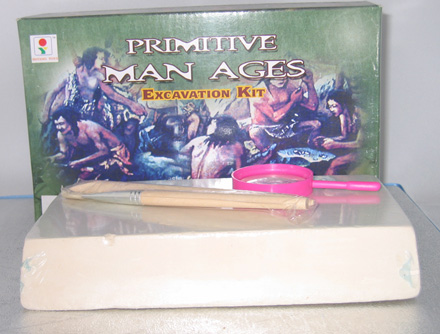
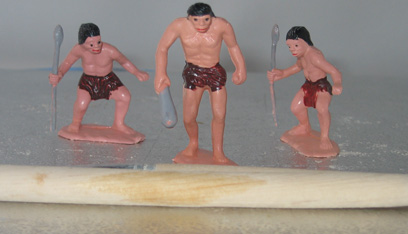
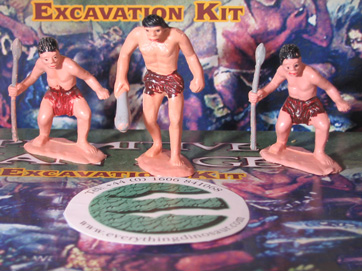
The latest excavation kit has just been added to Everything Dinosaur’s range.  Time to excavate a trio of troglodytes with this new addition to the company’s educational excavation kits.  The “Stone Age Man Excavation Kit” consists of a plaster block in which three models of cavemen have to be found.  Digging tools and a handy magnifying glass are also included.  Most kits of this kind contain objects that once excavated can be put together to form a dinosaur skeleton, but in a twist, this dig kit has hidden cavemen for the young palaeontologist (or should that be young palaeoanthropologist) to excavate.

The Stone Age Man Excavation Kit

Kit includes digging tools and magnifying glass.

Kit includes digging tools and magnifying glass.

Picture credit: Everything Dinosaur

The picture above shows the packaging and the kit’s contents (large plaster block, digging tools including a brush and a magnifying glass).

Stone Age Man Excavation Kit

Our testers put plenty of newspaper down to help minimise the debris left by the enthusiastic excavators, the block is sealed in a plastic cover and once this has been removed the digging tools can be used to chip and scrape away at the soft plaster until a figure is found.  The plaster is quite soft, but some parts are harder than others, fortunately, the wooden digging stick with its pick at one end and scraper at the other is more than capable of breaking up the plaster.

On of our testing teams commented that having a plastic tub close by into which some of the debris from the block could be put was helpful.  From time to time, the block was turned upside down over this tub to permit the bits that had been chipped away to be put straight into this tub before transfer to the bin.

Excavating and searching for the cavemen models was surprisingly therapeutic.  Mums and dads also joined in the hunt too.  The block is quite substantial and it took over an hour to expose the figures.  The children were excited and got very involved with the excavations, they loved scratching around with the digging tool, and brushing off the debris.

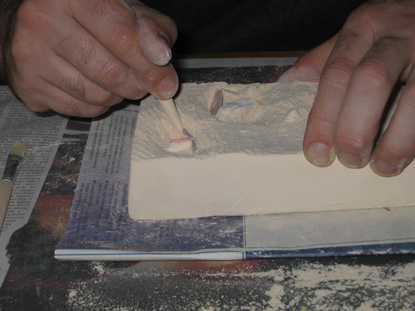
Using the Tools to Dig Around the Plaster 

Digging away.

Digging away.

Picture credit: Everything Dinosaur

Digging out the Models

The picture shows one of the grown-ups helping out by picking away at a piece of plaster close to one of the bases of the cavemen figures.  It is a good idea to put newspaper down or as one tester suggested, to excavate the blocks outside.  Another tester recommended rolling up the children’s sleeves before starting, this ensured that cuffs did not get dusty.

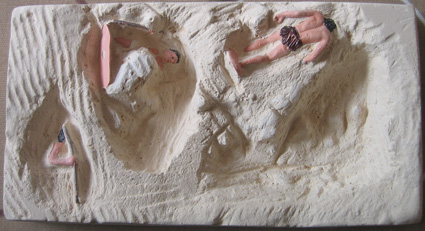
A Part Finished Block with the Models Exposed

Cavemen slowly being revealed.

Cavemen slowly being revealed.

Picture credit: Everything Dinosaur

The models were easy to spot (pink models against an off-white coloured plaster), once spotted, a little bit of care and patience is required to complete the job of digging out the models.  Testers found that once they had located the figures, the block could be turned upside down and excavated from the other side down to where the models were located.  Each block contains three cavemen figures, the contents of the kits does vary and nobody was sure what cavemen they had got until the models had nearly been dug out.

Six Different Figures

A panel on the side of the box shows pictures of the six available figures, which proved to be extremely helpful when trying to identify the replicas and think of where to excavate next.  It took over two hours for the models to be excavated, but the time flew by and the children were so busy concentrating on the job in hand that they did not notice how long (or how quietly) they had been working.  As the plaster is quite brittle and pliable, the children could easy make progress and see where they had been digging.

There was little effort involved although we would recommend that this item is for children from 8 years and upwards.  However, younger children can certainly have a go and many of the Mums and Dads enjoyed helping out as supervisors and extra excavators for the slightly younger children.  The figures have spears and clubs in their hands so care is required to dig around these items, but once a figure is nearly exposed the relevant piece of block can be broken off and then placed in a small bowl of water to allow the last bits of plaster to be washed off.

It is inadvisable to pour the plaster remains down the sink, this could result in a blocked pipe, best thing to do was to use a paper towel to catch the bits of plaster and these could then be safely placed in the bin.

Typical Cavemen Models Excavated from the Kit

A trio of troglodytes (Stone Age Man Figures).

A trio of troglodytes (Stone Age Man Figures).

Picture credit: Everything Dinosaur

Models are Great for Creative Play

The models stand about 5 cm tall and they are great for creative, imaginative play.  The six models show Stone Age people in various poses, one making flint tools, one about to throw a boulder, whilst another depicts a person chipping away at some rock, rather in the same way that we chipped away at the plaster block as one young person pointed out.

To view the range of excavation kits and prehistoric animal themed items available from Everything Dinosaur: Dinosaur Craft Ideas, Toys and Games.

This is an interesting and novel addition to the Everything Dinosaur dig kits range and is a great exercise, with the children using the same tools that real palaeontologists and archaeologists use when they are excavating specimens.

The Results of our Efforts – Three Cavemen Models

The models excavated from one of the kits.

The models excavated from one of the kits.

Picture credit: Everything Dinosaur

It was noted that this kit makes a super addition to a home educator’s set of resources and that project work could be undertaken around the subject of what palaeontologists/archaeologists do, what the Stone Age was like etc. using this excavation kit as a basis for the study.

11 10, 2013

Special Dinosaur Themed Day at Yorkshire School

By |2024-04-22T14:34:34+01:00October 11th, 2013|Categories: Educational Activities, Everything Dinosaur News and Updates|2 Comments

Pupils at Nessfield Primary Learn All About Dinosaurs

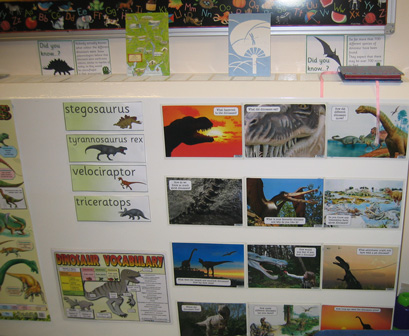
Year 2 pupils at Nessfield Primary have been busy this term studying dinosaurs under the guidance and tutelage of the school’s enthusiastic teaching staff.  A team member at Everything Dinosaur came along to show the children some real fossils and undertook some fossil casting so that the children could have a go at making their very own museum quality replicas.  The classroom was filled with lots of examples of prehistoric animal themed activities, including fact cards, posters, examples of creative writing and lots and lots of colourful dinosaur inspired artwork.

Dinosaur Themed Day

Classroom with its Own Dinosaur Facts Board

Lots of information about dinosaurs on display.

Lots of information about dinosaurs on display.

Picture credit: Nessfield Primary/Everything Dinosaur

Mrs O’Hara and Miss Powney had taken some images of different types of dinosaur and challenged the children to label the body parts accurately.  Megan’s Allosaurus was particularly impressive, as Megan had labelled it correctly and pointed out which parts of the worksheet were captions and headings.

Dinosaur Term Topic

Dinosaurs as a term topic lends itself to all sorts of extension activities helping young minds get to grips with numeracy and literacy.  Thanks to some ammonite fossils, including some exceptionally big ones, the children learned how fossils are formed and they even got to see a model of what scientists think ammonites looked like.

With the assistance of Mrs Hirst and Mrs McNally the children had been exploring dinosaur topic vocabulary, learning about carnivores, herbivores and omnivores, very helpful when it came to looking at different types of dinosaur teeth and helping a long-necked dinosaur to digest its dinner, just one of the experiments the children conducted.

Learning About Dinosaurs

Lots of facts about dinosaurs.

Lots of facts about dinosaurs.

Picture credit: Nessfield Primary/Everything Dinosaur

Challenging the Children

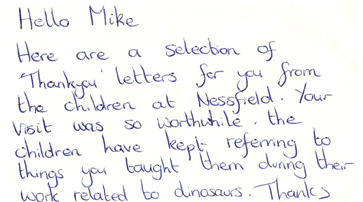
Our dinosaur expert challenged the children to test out their creative writing skills by writing about the things that they had studied on the day.  Under the supervision of Mrs O’Hara the children set about this task with tremendous enthusiasm and some examples of their work were sent to Everything Dinosaur’s office – thanks to Alex, Aidan, Lily, Lewis, Kieran, Emily, Rebecca, Meia and Yasmin for their lovely letters.  Mrs O’Hara even joined in and sent us a short note of thanks for all our hard work in helping to add a new and exciting dimension to the term topic.

Thank You Note From Teacher

Teacher says thanks.

Teacher says thanks.

Picture credit: Everything Dinosaur

Letters, Pictures and Posters

We get sent lots of letters, pictures, posters and other artwork from young dinosaur fans.  Our team members read them all and then they get posted up on the walls of our warehouse.  We will put up further examples of the children’s work on our Facebook page and such like but below are some examples of the letters the children wrote.

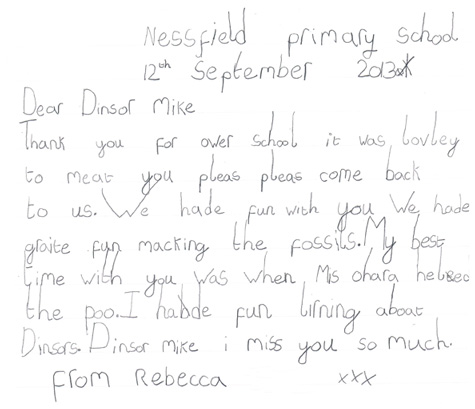
Rebecca Writes a Thank you Letter

Rebecca had fun making the fossils.

Rebecca had fun making the fossils.

Picture credit: Rebecca (Year 2)

Rebecca enjoyed learning about how fossil casts are made and liked it when her teacher got to handle some of the fossils herself and describe them to the children.

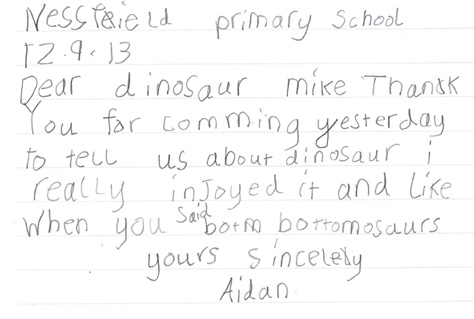
Aidan Recalls His Favourite Bits

Aidan had fun learning about dinosaurs.

Aidan had fun learning about dinosaurs.

Picture credit: Aidan

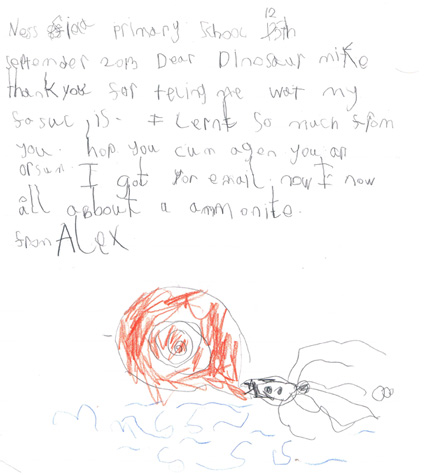
Young Alex, even sent in a drawing of an ammonite in with his thank you letter.  A super cephalopod Aidan, well done!

Alex Now Knows All About Ammonites

Alex likes Ammonites.

Alex likes ammonites.

Picture credit: Alex

That’s a super drawing of a spiral shelled ammonite with its very wiggly tentacles.

With the enthusiastic teaching team of Mrs O’Hara, Miss Powney,  Mrs Hirst and Mrs McNally to assist them the children demonstrated their learning and they were eager to share what they knew with our dinosaur expert, who, in turn did his best to answer all their questions.

To discover more about Everything Dinosaur’s range of dinosaur themed toys and gifts: Dinosaur Themed Toys and Gifts.

6 10, 2013

Text on Dinosaur Themed Products – Misleading (Providing Helpful Advice)

By |2024-04-22T14:34:04+01:00October 6th, 2013|Categories: Educational Activities|0 Comments

Looking at the Accompanying Text on Dinosaur Themed Products

At Everything Dinosaur, our dedicated team members have been organising reviews and testing of various potential new products.  With the help of mums and dads we have been looking at all sorts of games, craft activities and jigsaws, just part of our continuing commitment to live up to our company name.  We come across all to frequently these days, misleading information about prehistoric animals included in many of the items we are testing.  We admit to being far from perfect ourselves, after all mistakes do get made, but every now and then we come across a gem that makes us smile.

Text About Dinosaurs

On the back of a dinosaur model making kit that was on test, we discovered some wonderful text attempting to provide the purchaser with a little more information on the evolution of the Dinosauria.  We admire such well-intentioned efforts from the manufacturer, but sometimes well intentioned efforts such as this can confuse more than they inform.

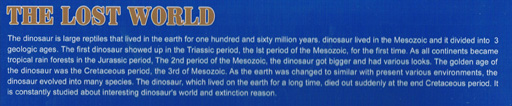
Well Intentioned Text That Misses the Mark

A well-intentioned effort highlights a more serious concern in schools.

A well-intentioned effort highlights a more serious concern in schools.

Picture credit: Everything Dinosaur

Under the heading “The Lost World” the text reads as follows:

“The dinosaur is large reptiles that lived in the earth for one hundred and sixty million years.  dinosaur lived in the Mesozoic and it divided into 3 geologic ages.  The first dinosaur showed up in the Triassic period, the 1st period of the Mesozoic, for the first time.  As all continents became tropical rain forests in the Jurassic period, The 2nd period of the Mesozoic, the dinosaur got bigger and had various looks.  The golden age of the dinosaur was the Cretaceous period, the 3rd of Mesozoic.” 

The text went on:

“As the earth was changed to similar with present various environments, the dinosaur evolved into many species.  The dinosaur, which lived on earth for a long time, died out suddenly at the end of the Cretaceous period.  It is constantly studied about interesting dinosaur’s world and extinction reason.”

Identifying Errors

It is certainly a good try and we suspect that if we were to attempt to translate English into Mandarin or some other such language we would fail miserably, but this text does raise an important issue.  We do find lots of errors on text both grammatical and factual errors.

Very often such well intentioned efforts can be forgiven , but we are finding a lot materials used in school which are also inaccurate.   Teachers and teaching assistants rely on suppliers and third parties to provide resources so that they can teach.  With our school visits, we have come across many instances and examples where resources contain a number of misleading items of information.  This is not the fault of the teaching profession, schools rely on these third parties to provide appropriate teaching materials, sadly, in many cases we see examples of glaring errors and mistakes.

Team Members Try to Help

Naturally, once spotted, our team members are happy to provide supporting materials to schools as free downloads to help address this situation.

We won’t name the manufacturer or indeed the product concerned, it did not make our approved list and therefore it will not be added to Everything Dinosaur’s product range.

To view the range of dinosaur and prehistoric animal themed toys and games in stock at Everything Dinosaur: Visit Everything Dinosaur.

2 10, 2013

Amazing Dinosaurs go to School

By |2024-05-01T14:56:52+01:00October 2nd, 2013|Categories: Educational Activities|0 Comments

Year 1 and Year 2 Pupils Learn All About Dinosaurs

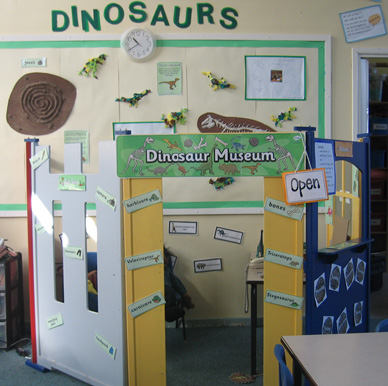
Pupils at Bentley High Street Primary School were visited by a team member from Everything Dinosaur recently as Year 1 and Year 2 were studying all things dinosaur for their autumn term Key Stage One topic.  The children were very knowledgeable and clearly the subject had been a big success with the school boasting a number of young palaeontologists under the tutelage of the enthusiastic teaching team.  The Year 1 pupils, two classes 1H and 1G, had lots of examples of their writing, posters and artwork on display in the classrooms. Mrs Gallacher’s class (1G)  had set up their very own dinosaur museum, full of examples of the work that the children had been doing over the course of the term.

Dinosaurs Go to School

Class Dinosaur Museum

Classroom dinosaur museum.

Classroom dinosaur museum.

Picture credit: Everything Dinosaur

The teaching team had carefully posted up a number of key words and phrases to do with dinosaurs and fossils.  For example, words such as carnivore and herbivore can be explained using dinosaurs such as T. rex and Triceratops respectively.  This ties in nicely with the parameters of the Key Stage One science syllabus learning about animals and habitats.  There were examples of the children’s work, how data can be handled and some applied maths on display all allied to the teaching aims and objectives for children in Year 1 (aged from 5-6).

One of the dinosaur pictures on display within 1G’s classroom was nicknamed “Tissue-oh-saurus” in reference to the clever use of tissue paper to make the bones that represented the skeleton.  Our team members have made simple illustrations such as this and they are great as a teaching aid when helping children to remember parts of the body.

A Lovely “Tissue-oh-saurus” on Display

A "Tissue-oh-saurus"

A “Tissue-oh-saurus”

Picture credit: Everything Dinosaur

Prehistoric animals and fossils as a term topic can lend itself to all sorts of activities, not only creative illustrations such as this but also the subject can encourage children with their writing skills and sentence construction. For example, Miss Headley and class 1H had been studying a storybook about dinosaur poo, there was some fossil poo (coprolite) in one of the boxes that Everything Dinosaur had brought into the school.  In the afternoon whilst Year 2 were treated to a dinosaur workshop, Miss Headley took the fossil into her classroom and showed it to the children.  No doubt she inspired her class to make up some wonderful stories about prehistoric animals.

Dinosaur Workshop

The Year 2 teachers Miss Stafford and Miss Morley, aided by their hard-working support staff  had got lots of examples of the children’s work posted up around the classrooms and in the adjacent corridor.  Paper plates had been used to help some of the Year 2 pupils make dinosaurs and the children were fascinated to learn that actually there was a dinosaur called Plateosaurus.  To check learning, a Plateosaurus fact sheet written by Everything Dinosaur’s experts and drawing materials featuring Plateosaurus was emailed to the school with the challenge for the children to see if they could work out whether Plateosaurus was a herbivore or a carnivore.

Children in Year 2 Create Dinosaurs from Paper Plates

Dinosaurs made from plates, a wall display featuring Plateosaurus!

Dinosaurs made from plates, a wall display featuring Plateosaurus!

Picture credit: Everything Dinosaur

What a colourful collection of “plateosaurs”

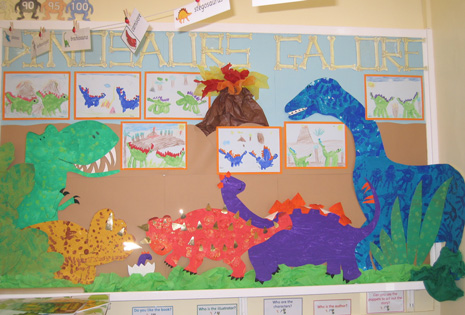
Part of the back wall in 2S’s class displayed a wonderful dinosaur diorama.  Interspersed between the various prehistoric animals were smaller drawings done by individual children.  The display was very bright and cheerful with the big teeth of a Tyrannosaurus rex carefully included in the artwork.

Children from Year 2 and their Dinosaur Wall Display

Colourful prehistoric animals.

Colourful prehistoric animals.

Picture credit: Everything Dinosaur

Everything Dinosaur

Wonderful, colourful dinosaurs, a bright red ankylosaur, a purple Stegosaurus and looking down on the scene a lovely blue coloured sauropod whilst in the background a volcano erupts.  The children asked about how the dinosaurs became extinct and we touched upon the relationship between dinosaurs and birds.  There was even a question asked about how dinosaurs go to sleep.  We tried our best to answer all the questions from the eager young dinosaur fans (even answered one or two questions posed by the HLTAs and LSAs as well).

Visit Everything Dinosaur’s website: Visit Everything Dinosaur’s Website.

20 09, 2013

Real Adventure New Dinosaur Floor Puzzle Reviewed

By |2024-05-01T15:12:16+01:00September 20th, 2013|Categories: Educational Activities, Everything Dinosaur Products, Product Reviews|0 Comments

Colourful Dinosaur Themed Floor Puzzle gets Thumbs Up!

Just in to Everything Dinosaur – a brand new giant dinosaur floor puzzle.

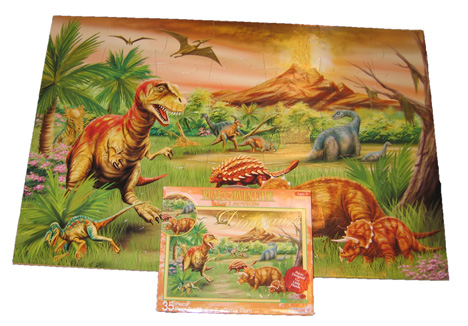
Measuring an enormous 60 cm x 91 cm when complete, with 35 large robust 2″ x 3″ pieces, and its own carrying box with handle, this giant floor puzzle is designed for little hands, and a big floor space.

Dinosaur Floor Puzzle

The new dinosaur jigsaw from the Real Adventure Collection, depicts a bright and colourful prehistoric scene, and is complete with all our favourites.  A fearsome T. rex in the foreground is hungry and on the attack, a mother Triceratops is protecting her baby, the Ankylosaurus is wary, whilst a small theropod dinosaur (with feathers), hides and waits.  A titanosaur and its young seek protection from the predators in the water, whilst the Parasaurolophus stop by the water’s edge to take a drink.  With an exploding volcano in the back drop, and Pteranodon soaring above – this jigsaw really has them all.

Dinosaur Jigsaw Puzzle – Designed for Young Dinosaur Fans

Prehistoric scene as a dinosaur themed jigsaw.

Prehistoric scene as a dinosaur themed jigsaw.

Picture credit: Everything Dinosaur

Ideal for Children

This dinosaur floor puzzle has been specially designed so that little hands can grasp and put together the puzzle pieces.  Completing jigsaws is a great way to help young dinosaur fans develop observational skills, improve hand-eye co-ordination and assist them with their reasoning, all very helpful as mums, dads and other grown ups help to prepare them for their school days.

Suitable for ages 3+, this giant floor puzzle will aid motor skills, and many of our reviewers told us that once the puzzle was complete they got their budding young palaeontologists to count all the prehistoric animals in the scene, could they spot them all?  Look out for the sneaky, camouflaged pachycephalosaur.  In addition, many of the children were asked to name the prehistoric animals and to try to work out which ones were plant-eaters and which animals were the meat-eaters.

Putting together a puzzle such as this does lend itself to lots of other learning orientated extension activities – can your young dinosaur fan make up a story to explain what the picture shows?

To view Everything Dinosaurs extensive range of dinosaur themed puzzles and gifts: Everything Dinosaur – Puzzles, Toys and Gifts.

This new addition to Everything Dinosaur’s range of dinosaur themed jigsaws and puzzles gets a big thumbs up.

13 09, 2013

Squiggle Dinosaurs (New Dinosaur Drawing Game) Reviewed

By |2024-05-01T14:52:45+01:00September 13th, 2013|Categories: Educational Activities, Everything Dinosaur Products, Product Reviews|0 Comments

A Review of Squiggle Dinosaurs

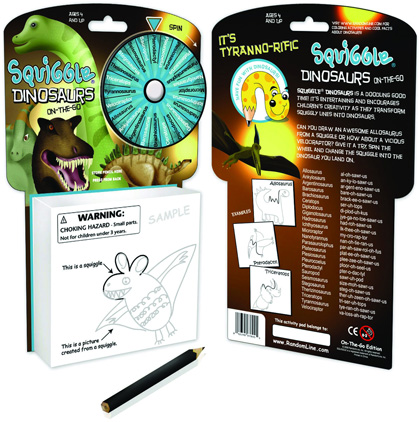
Squiggle dinosaurs is a dinosaur drawing game aimed at young dinosaur fans.  This drawing game has been specially devised to help young children develop their imagination and creativity.  Spin the spinner and select one of twelve dinosaurs listed on the spinning device, then using the squiggle pad with its wavy squiggle, the illustrator has to create a sketch of the named dinosaur.  Lots of favourite dinosaurs to draw such as Triceratops and Tyrannosaurus rex.

 Squiggle Dinosaurs (Dinosaur Drawing Game)

Doodle a dinosaur.

Doodle a dinosaur.

Picture credit: Everything Dinosaur

Dinosaur Drawing Game

Squiggle dinosaurs is a dinosaur game aimed at inspiring your child’s creativity.  It has proved popular with our review team.  Can you draw an awesome Allosaurus from a squiggle?  How about a vicious Velociraptor?  Give it a try, simply spin the wheel and change the squiggle into the dinosaur that you land on.

There are one hundred unique squiggles and the pack is even supplied with a special doodling pencil.  On the back of the game there is a handy pronunciation guide to help grown ups and little ones remember and pronounce the name of the prehistoric animal selected.

Squiggle dinosaurs is recommended for children aged four years and upwards, and it was awarded the Preferred Choice Award (Creative Toy Awards) by Creative Child Magazine.

To view the dinosaur drawing game, squiggle dinosaurs and Everything Dinosaur’s other educational games: Educational Dinosaur Themed Toys and Games.

8 09, 2013

Promoting Fossil Finds – Pocket Sized and Exciting Dinosaur Dig Sets

By |2024-05-01T14:54:15+01:00September 8th, 2013|Categories: Adobe CS5, Educational Activities, Everything Dinosaur Products|0 Comments

Fossil Finds Ever Popular and Great for Schools

Team members at Everything Dinosaur have been busy fulfilling orders for schools and other educational institutions as the autumn term gets under way.  A popular item with teachers and young dinosaur fans is the Fossil Find dig kit.  Young palaeontologists can excavate a prehistoric animal skeleton out of a gypsum block using the digging tools provided in the kit.  These tools, consisting of a small brush and a wooden pick are identical to the tools used by real palaeontologists when they are excavating material that surrounds fossil bone.  Once the pieces of skeleton have been excavated then they can be assembled to form a skeleton of a dinosaur.

Fossil Find Kits

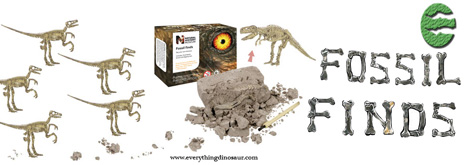
Photoshop is Used to Build to Build a Fossil Finds Banner

Everything Dinosaur creates a banner to promote Fossil Finds.

Everything Dinosaur creates a banner to promote Fossil Finds.

 Picture credit: Everything Dinosaur

In the picture above, a flock of Velociraptor skeletons are confronting a T. rex skeleton, with the T. rex taking shelter behind a pile of rubble that has been excavated.

Everything Dinosaur

There are several different dinosaurs to collect in this series, hours of fun for any budding palaeontologist.  Assemble the pieces and construct your own dinosaur skeleton model you can even build your own mini dinosaur museum.

To view the range of Fossil Find kits and other craft ideas including prehistoric animal themed toys and gifts available from Everything Dinosaur: Everything Dinosaur Toys and Gifts.

7 08, 2013

Back to School with Everything Dinosaur

By |2023-02-21T15:18:15+00:00August 7th, 2013|Categories: Educational Activities, Everything Dinosaur News and Updates, Everything Dinosaur Products, Press Releases|0 Comments

A Month to the Start of the Autumn Term

The countdown has begun to the start of the new school year in the UK,  in just over a month the summer holidays will be over and many school children will have already settled in as the autumn term commences.  It was only a few short weeks ago that team members at Everything Dinosaur were packing away their dinosaur themed teaching resources after finishing their last teaching assignment of the summer term.  Now we can all look forward to the challenges ahead.

Back to School

For grown ups looking to inspire the next generation of palaeontologists, or for those wondering how to motivate and enthuse youngsters when it comes to going back to school, a good place to start is with Everything Dinosaur’s range of prehistoric animal themed school kits, pens, pencils and stationery.

Everything Dinosaur stocks a wide range of back to school items.  Send your young palaeontologists off to school with this fantastic range of dinosaur themed school stationery, pens, pencils and school items.  Take a dinosaur to school or out on your own prehistoric adventures with Everything Dinosaur’s inexpensive range of back to school supplies and back to school stationery.

Everything Dinosaur

Getting Ready for School with Everything Dinosaur

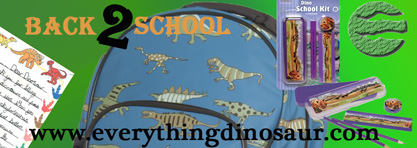
pens, pencils, lunchboxes, pencil cases, school kits all with a dinosaur theme.

Pens, pencils, lunchboxes, pencil cases, school kits all with a dinosaur theme.

Picture credit: Everything Dinosaur

Staff are already working on a number of new palaeontology themed teaching assignments, including creating suitable lesson plans for key stage activities that will relate to teaching about evolution in the new UK curriculum.

In the meantime, check out Everything Dinosaur’s comprehensive range of back to school items by clicking on the “Back 2 School” image above, or simply visit our website: Visit Everything Dinosaur.

Go to Top