All about dinosaurs, fossils and prehistoric animals by Everything Dinosaur team members.

Everything Dinosaur’s work with schools and other educational bodies. Articles, features and stories about dinosaurs and their role in education and educating young people.

15 07, 2013

Two-Headed, Fire Breathing, Water Spraying Monster

By |2023-02-19T07:08:41+00:00July 15th, 2013|Categories: Dinosaur and Prehistoric Animal Drawings, Educational Activities, Photos/Schools, Press Releases|0 Comments

Beacon Museum Announces Competition Winner

One lucky school girl has won the chance for herself and her classmates to visit the new exhibitions at the Beacon Museum which opened this weekend.  Whitehaven in Cumbria is having its very own monster, double-bill with two exhibitions running concurrently at the Beacon Museum, “Ice Age – Life after the Dinosaurs” and “Shark – Myths and Reality”

Monster Drawing Competition

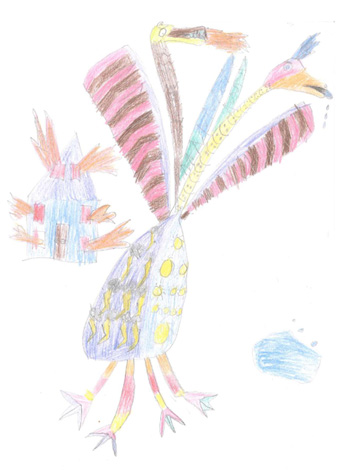
Elle Jenkinson, aged 9, of St Bridget’s RC Primary School in Egremont, won a drawing competition organised by the enthusiastic museum staff, children were invited to design their own prehistoric monster.  Elle’s winning entry was a colourful drawing of a two-headed monster, that could breathe fire and spray water.

Elle Jenkinson’s Monster Drawing
Fire breathing, water spraying monster.
Picture credit: Elle Jenkinson

Highly Commended

Four other entries were highly commended and received prizes.  These were by Tess Cullen of Thwaites School, Dylan Hodgson of Kells Infant School, Jennifer Eve Gillon of Eaglesfield Paddle Primary School and Evan Casson of Moor Row Community School.

Around a hundred primary schoolchildren from West Cumbria entered the competition.  They created their own magnificent monsters and beasts in the hope of winning the chance for their whole class to come face to face with life-size replicas of giant beasts, superb sharks and unbelievable underwater creatures.

The competition was judged by the Mayor and Mayoress of Copeland, Geoff and Sandra Garrity who said:

“The children had obviously had real fun creating these amazing pictures.  The imagination and thought that they had put into their drawings really was wonderful.”

The Beacon Museum

The exhibitions currently on at the Beacon Museum will give visitors the chance  to get up close to some real monsters that once roamed the Earth as well as to learn more about the fascinating world of the shark, some of which, the Whale Shark (Rhincodon typus) for example, can grow to be as long as a bus.  Fortunately, these giants are filter feeders and not likely to attack divers.

A spokesperson from Everything Dinosaur commented:

“It was a great idea for the Beacon Museum to organise a drawing competition.  A chance for school children to imagine strange and bizarre animals, with the prize being a visit to the exhibitions to learn all about some very real and even more strange and bizarre animals that are known to science.”

“Ice Age – Life after the Dinosaurs” and “Shark – Myths and Reality” is on from now until the 5th January 2014.

For models and figures of many of the prehistoric animals that are featured in the exhibition: Everything Dinosaur Models and Figures.

13 07, 2013

School Sets About Creating Their Very Own “Jurassic Park”

By |2023-02-19T06:57:17+00:00July 13th, 2013|Categories: Educational Activities, Everything Dinosaur News and Updates, Teaching|0 Comments

Weston Primary School Studies Dinosaurs

Year 5 and Year 6 pupils at Weston Primary have been busy creating a series of prehistoric animal sculptures as part of their summer term topic on dinosaurs.  All classes have been learning about fossils and prehistoric animals, under the expert tutelage of the teachers and teaching support staff.  A team member at Everything Dinosaur, who visited the school in support of the term’s teaching topic, was given a guided tour of the palaeontology area by Reception/Year 1 children.  A part of their classroom had been set aside so that the children could show the “pieces of dinosaur” that had been excavated from a sand pit, as well as the some of the safety equipment that palaeontologists wear when digging up fossil bones.

School Studies Dinosaurs

In a day of dinosaur themed teaching activities, Year 1/2 pupils learned how to identify fossils, whilst Year 3/4 students discovered that they had all technically eaten dinosaurs, apt as their dinosaur themed workshop concluded shortly before lunch.  During lunchtime, the Everything Dinosaur team member was able to take some pictures of the artwork being created, the lawn area just outside the staff room was beginning to resemble Weston Primary’s own “Jurassic Park”.

Pupils Create Prehistoric Animal Sculptures
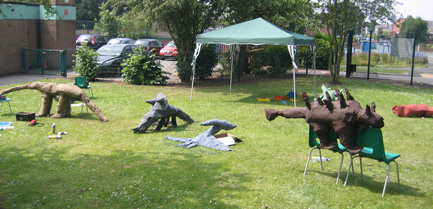
School creates "Jurassic Park"

School creates “Jurassic Park”.

Picture credit: Everything Dinosaur

Prehistoric Animal Themed Artwork

The Year 5/6 pupils under the supervision of Miss Emmison and Mr Kelly had created several pieces of prehistoric animal themed art.  Each sculpture had been carefully created and the children had spent part of the morning painting their Mesozoic monsters.  During their afternoon dinosaur themed teaching workshop, the Everything Dinosaur team member congratulated the pupils on their artistic efforts and although the artwork was not finished, he was able to identify which extinct animal each sculpture represented.

Weston Primary’s Spinosaurus
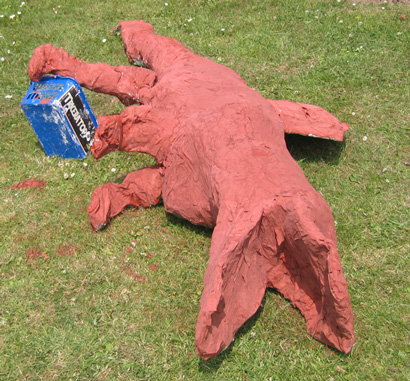
Weston Primary's Spinosaurus

Weston Primary’s Spinosaurus.

Picture credit: Everything Dinosaur

Spinosaurus, with its famous two-metre-high sail lived in North Africa during the Cretaceous.  The arm bones of this huge predator have never been found, yet the pupils have created their replica as a biped (walked on hind legs), most palaeontologists agree, this carnivore probably walked on its two back legs.

Weston Primary’s Armoured Dinosaur
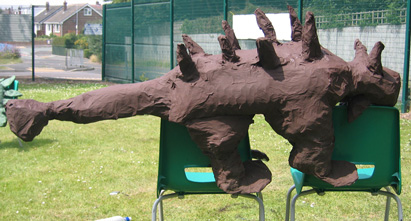
Armoured dinosaur.

Armoured dinosaur.

Picture credit: Everything Dinosaur

Armoured Dinosaurs

The brown coloured, armoured dinosaur has the bony tail club associated with Ankylosaurus, a dinosaur so heavily armoured that even the bone above its eyes was thickened and reinforced.

Weston Primary “Baby Brachiosaurus”
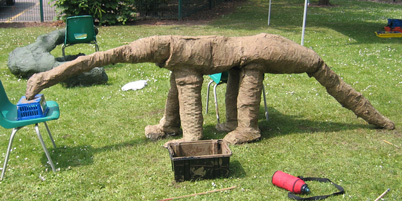
A baby Brachiosaur.

A baby brachiosaur.

Picture credit: Everything Dinosaur

School teacher Miss Emmison explained that a baby Brachiosaurus was created as trying to make a model of an adult, long-necked dinosaur would have probably used up too much newspaper and paint.  The largest dinosaur exhibit in Europe is that of a Brachiosaurus.  The head of the dinosaur skeleton is something like forty-three feet of the ground.

Weston Primary’s Tyrannosaurus rex Sculpture
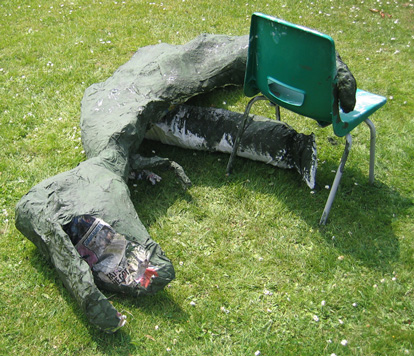
School creates T. rex statue.

School creates T. rex statue.

Picture credit: Everything Dinosaur

No dinosaur theme park would be complete without a sculpture of the most famous dinosaur of all T. rex.  The pupils have opted for a green tyrannosaurus, although the colouration of this dinosaur is not known.  T. rex may even have been covered in feathers.

Weston Primary’s Stegosaurus
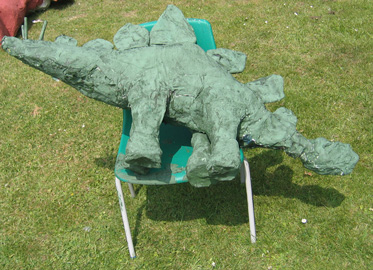
School children create model of "Roof Lizard"

School children create model of “Roof Lizard”.

Picture credit: Everything Dinosaur

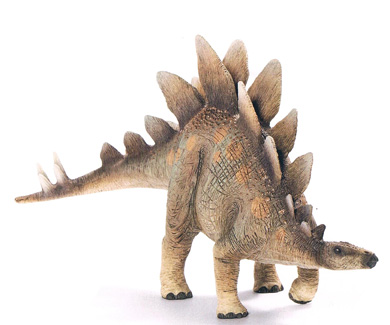
The Stegosaurus model has his plates on his back and spikes on his tail. Stegosaurus was named and described in 1877, the name means “roofed or plated lizard”.

Triceratops Makes an Appearance
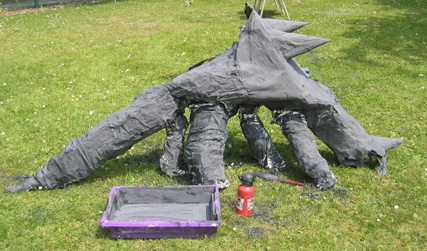
Weston Primary's "Three Horned Face"

Weston Primary’s “Three Horned Face”.

Picture credit: Everything Dinosaur

Triceratops Artwork

In the process of being painted battleship grey, the horned dinosaur model is being prepared by Year 5/6 schoolchildren.  Triceratops was one of the last of the dinosaurs, just four weeks ago, scientists working in the western United States discovered the fossilised remains of three Triceratops, perhaps this is evidence of this type of herbivorous dinosaur living in small, family groups.

To read more about this discovery: More Fossils of Triceratops Discovered.

The schoolchildren at Weston Primary have not just been working on dinosaur sculptures.  The pupils have created a model of a flying reptile, a pterosaur.  Such is the accuracy of the artwork, that the team member at Everything Dinosaur was able to identify the sculpture as being that of a Pteranodon and he had a go at naming the species – Pteranodon longiceps.

Pteranodon Model Under Construction
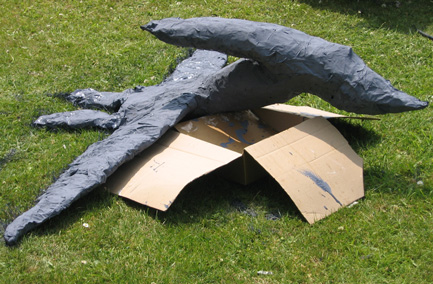
Flying reptile under construction.

Flying reptile under construction.

Picture credit: Everything Dinosaur

The shape of the crest on the back of the head can tell a palaeontologist which species of Pteranodon this is, the long crest indicates P. longiceps.

Once the sculptures have been completed the school will have its very own “Jurassic Park”.

For models and replicas of prehistoric animals including dinosaurs and pterosaurs: Papo Dinosaurs and Prehistoric Animal Figures.

11 07, 2013

Sharks and Ice Age Monsters Invade The Beacon

By |2023-02-19T06:39:46+00:00July 11th, 2013|Categories: Dinosaur and Prehistoric Animal News Stories, Educational Activities, Everything Dinosaur News and Updates, Press Releases|0 Comments

Cumbrian Museum to Play Hosts to Sharks and Woolly Mammoths

Staff at The Beacon, the interactive, family orientated museum at Whitehaven on the Cumbrian coast, are going to have their hands full this summer as not one but two major exhibitions will be taking over their galleries.  Following on from the highly successful “BBC Walking with Dinosaurs Exhibition” in 2011, in which team members at Everything Dinosaur were invited to be the “on the spot dinosaur experts”, the museum will be hosting “Ice Age – Life After Dinosaurs” and “Shark! The Myths and Reality”.

“Ice Age – Life After Dinosaurs” and “Shark! The Myths and Reality”

The Beacon is closed for the next few days as final preparations are made, it is not easy to manipulate life-size replicas of giants such as Woolly Mammoths, Sabre-toothed cats and Great White sharks.  The grand opening is scheduled for this Saturday (13th July), there’s just time for the busy Beacon staff to check all the hands on, educational and fun exhibits before the start of these “monster” exhibitions at 10am Saturday morning.

If you’re looking for ways to entertain your little monsters for the summer holidays, then you don’t have to look too far as visitors to Copeland’s museum will be transported back to a time when the Earth was dominated by a diverse range of magnificent mammals, that our ancestors had to contend with.  The “Ice Age – Life After Dinosaurs”  exhibition features full size replicas of giant prehistoric beasts including the wonderful Woolly Rhino and the savage Smilodon as well as real and replica fossils.

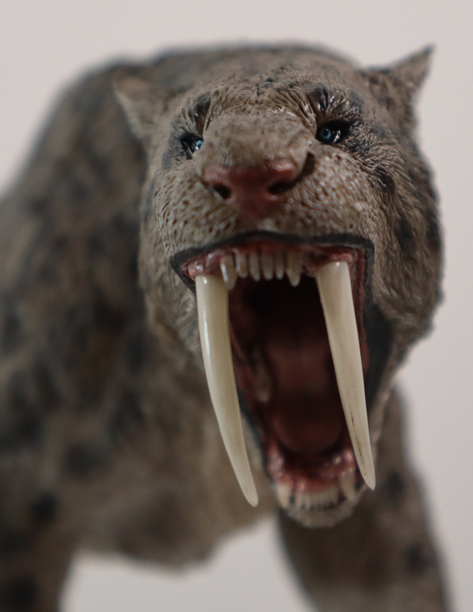
Square up to a Sabre-toothed Cat

Rebor Smilodon model in the Ice Age colour scheme.

A close-up of the head of the Rebor Smilodon populator figure (mouth open head attachment). The exquisite detailing or the teeth and the inside of the mouth can be clearly seen.  Picture credit: Everything Dinosaur.

Commenting on the exhibition, Mike Walley from Everything Dinosaur stated:

“This is the best chance people have had to go eyeball to eyeball with Ice Age monsters in the last 20,000 years”.

Everything Dinosaur

Everything Dinosaur team members who will be running two special weekend events at The Beacon in the summer and October school holidays.  The fossil experts are going to be visiting the exhibitions on Saturday 3rd and Sunday 4th of August, with a second, special appearance scheduled to coincide with the autumn half-term, the weekend of 26th and 27th of October.

Everything Dinosaur is keeping what they intend to bring along from their extensive fossil collection under wraps for the moment, however, visitors to The Beacon on these special weekends can expect to get up close to some super-sized marine predators, ferocious hunters that make “Tyrannosaurus rex look like a pussy cat”.  If you have ever wanted to know how to avoid being gored by the two-metre long horn of a giant rhinoceros or to discover how close scientists are to cloning a Woolly Mammoth then don’t forget to book the weekend of August 3rd and 4th and the last weekend of October into your diary.

The Beacon Museum

“Shark! Myths and Reality” will turn everything you thought you knew about sharks upside down, bringing visitors face to face with life size replicas of these ancient hunters, including the Great White.  This exhibition aims to dispel the many myths about sharks as mindless killing machines.  Built in co-operation with The Shark Trust, it tells the real story of these fascinating underwater creatures.

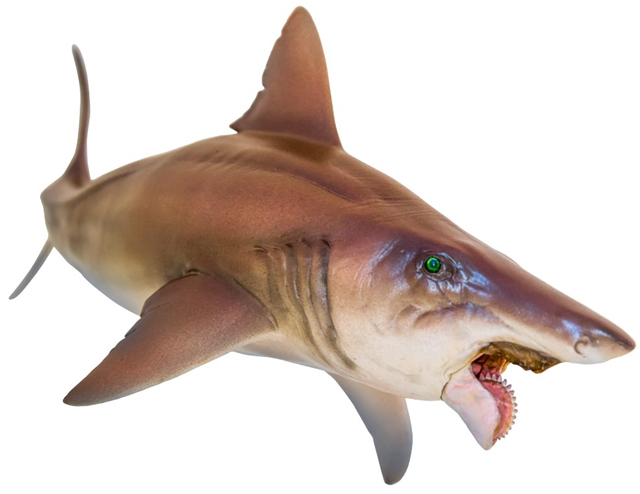
Famous for its Whorl of Teeth – Helicoprion an Extinct Cartilaginous Fish.

PNSO Haylee the Helicoprion anterior view

PNSO Haylee the Helicoprion replica. The stunning emerald eye on the model is reminiscent of the eye of a Chimaera such as the deep water Rabbit Fish (Chimaera monstrosa) to which Helicorprion is distantly related.

For models and replicas of prehistoric animals including Helicoprion (whilst stocks last): PNSO Age of Dinosaurs Models and Figures.

A spokesperson from Everything Dinosaur explained:

“Although sharks have been around for something like 420 million years and there are over 400 species alive today, scientists are still learning  about these incredible creatures.  For example, just this week a new scientific paper has been published that confirms how the Thresher shark uses its amazing tail as a whip to stun its prey.”

Pat Graham, Copeland’s Director of Services added:

“We are proud and delighted that we have managed to again secure a nationally significant exhibition for Whitehaven.  These big events not only attract visitors in the town,  but afford residents  the opportunity to access the best education and fun that museums can offer,  but on our own doorstep.  These are hard times for the Council, and for families, but this is an opportunity for us to celebrate something really great for the town, and we should use this as an opportunity to collectively promote our Borough across the region”.

There will also be weekly drop in family craft days beginning on 31st July.  Be inspired by what you have seen during your visit and create your very own Ice Age creature, shark or other magnificent monster.

But don’t worry if you can’t make it during the summer as both exhibitions will be on display until 5th January.

For more information about the fantastic models in stock at Everything Dinosaur: Dinosaur and Prehistoric Animal Figures.
4 07, 2013

Young Palaeontologists Reconstruct a Beautiful Stegosaurus Skeleton

By |2024-04-29T14:18:53+01:00July 4th, 2013|Categories: Educational Activities, Teaching|0 Comments

Children at West Walton Community Primary School Learn about Dinosaurs

Children in the reception class at West Walton Community Primary have been learning all about dinosaurs and fossils this term, under the enthusiastic tutelage of the teaching and support staff at the school.

The budding young palaeontologists have been excavating dinosaur bones out in the school yard, creating pictures and writing stories about prehistoric animals, they even got the chance to produce some lovely artwork.  Spotted in pride of place on one of the walls of the reception classroom was this beautifully constructed illustration of the skeleton of the dinosaur known as Stegosaurus.  When asked, the children were eager to share their knowledge of dinosaurs, explaining that Stegosaurus was a plant-eater, with plates on his back, spikes on his tail and this dinosaur had a very small brain – no bigger than a walnut.

Stegosaurus Skeleton Artwork

The Stegosaurus Illustration in the Classroom

Young children study dinosaurs.

Young children study dinosaurs.

Picture credit: West Walton Community Primary School

Mrs Hughes, one of the reception class teachers explained that the children had been very keen to study dinosaurs this term and when it came to creating the class’s own Stegosaurus skeleton the children were determined to make it as accurate as they could.  She told a team member at Everything Dinosaur who visited the school, that one little boy even measured the ribs in order to make sure they were the right size.

Stegosaurus Illustration

It is certainly a very commendable effort and Stegosaurus is one of the most iconic of all the members of the Dinosauria.  As for the small brain size, the walnut metaphor seems to be universally accepted and team members at Everything Dinosaur have come across it on many occasions.  It is true that when the brain to body size ratio for a large number of dinosaurs is considered, then in comparison with their huge bulk, a lot of dinosaurs do seem to have possessed very small brains indeed.  Using a walnut to describe the brain size of a dinosaur, seems to date back more than one hundred years.

One of the earliest examples, of the “walnut phrase” being used comes from a illustrated book “Mighty Animals”, first published in 1912.  The description was applied to the Late Jurassic dinosaur Diplodocus, not Stegosaurus.

There is a reference to the eminent American palaeontologist Edwin Colbert describing the Stegosaurus brain as “being not much bigger than a walnut” back in 1945 and within Everything Dinosaur’s extensive reference library, we have come across one description from shortly after the Second World War that describes the brain of Stegosaurus as being “only as big as a prune”.

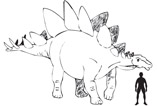
A Scale Drawing of Stegosaurus

An illustration of Stegosaurus (S. stenops).

An illustration of Stegosaurus (S. stenops).

Picture credit: Everything Dinosaur

Knowledge of Neuroanatomy

As our knowledge of neuroanatomy has developed so our interpretation of intelligence has changed.  The crude measure of body size to brain size, does not necessarily give an indication of “intelligence”, as different behaviours in animals can be seen as a form of intelligence.  For example, the brain of the grey squirrel is small, these little rodents that leap about in the trees at the back of Everything Dinosaur’s warehouse, still exhibit remarkable feats of memory far superior to our own when it comes to locating nuts that they have buried.

Another method of estimating relative  intelligence is the Encephalisation Quotient (EQ).  This analysis is based on the principle of comparing the brain volume of the animal being studied to the brain volume of a control animal with approximately the same body weight.  Here too, the assumption is that animals with larger brains to body ratios are more intelligent than animals with smaller brains to body size ratios.

Cold-blooded bony fish such as the Pacific Salmon have a brain size just one tenth of that of a similar sized mammal, yet these fish are capable of navigating thousands of miles and making their way upstream, overcoming all sorts of obstacles and obstructions.

Although, the likes of Stegosaurus had very small brains, these animals were clearly well adapted to their environments and we as a species have much more to learn about when it comes to estimating relative intelligence and defining intelligent behaviours in the rest of the Animal Kingdom.  After all, Homo sapiens has been around as a species for over two hundred thousand years, but the Stegosaurs as a group may have existed for more than thirty-five million years.

Stegosaurus – Well Adapted to its Environment

A remarkable dinosaur.

A remarkable dinosaur.

Picture credit: Everything Dinosaur

Perhaps the budding palaeontologists inspired by the teaching staff at West Walton Community Primary will one day carry out some research the helps improve our understanding and interpretation of intelligent behaviours in the Kingdom Animalia.

To view models of stegosaurs and other other armoured dinosaurs take a look at the PNSO model collection: PNSO Prehistoric Animal Models and Figures.

29 06, 2013

Ocker Hill Junior School Pupils Study Rare Dinosaurs for Special Science Week

By |2024-04-29T14:26:08+01:00June 29th, 2013|Categories: Educational Activities, Press Releases, Teaching|0 Comments

 Journey into the Jurassic for Junior School Pupils

Pupils at Ocker Hill Junior School are getting into all things prehistoric as  they embark on a week-long science themed teaching topic with a focus on the dinosaurs.  Based at Tipton, (West Midlands), just a geologist’s stones’ throw from the Wrens Nest Nature Reserve, the UK’s very first national nature reserve for geology, the staff at the school have been working on all sorts of clever and creative activities to help bring the past to life.

Dinosaurs for Science Week

Looking at different types of dinosaurs and classifying them led to the development of a series of Venn diagrams as pupils under the tutelage of their teachers and support staff explored how best to present data relating to the Dinosauria.  Getting school children to understand the concept of deep time can be a little tricky, but teacher Mr Wilde, armed with some stakes and a hammer set out to provide a scale model of the various geological periods using the school grounds.

Each stake representing a period in geological time was carefully marked and hammered into place to give the budding young palaeontologists an idea of how old the Earth is believed to be.  This is an excellent idea, a very practical demonstration of geological time, one that will help the children to grasp what different types of creatures lived and when.

Everything Dinosaur Team Members Visit School

Team members at Everything Dinosaur were invited in to kick start the week by holding a series of workshops with pupils in years three to six.  The chance to explain what fossils can tell scientists and to explain a little about the science of palaeontology.  Sarah Southall, one of the year three teachers was surprised to learn that there is a dinosaur named “Sarahsaurus, whilst Mrs Brookes (year 5 teacher) and some of her charges discovered just how big or (how small), the arms of Tyrannosaurus rex actually were.

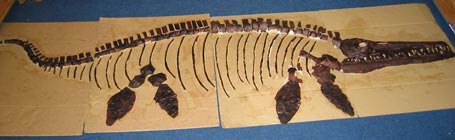
Mr Goodwin (year six), had been helping his class to learn more about marine reptiles.  Under the expert guidance of school artist Darrell Wakelam the pupils had created a wonderful reconstruction of the fossilised skeleton of an Ichthyosaurus.

Bringing the Past to Life

Year six pupils constructed their own Ichthyosaurus fossilised skeleton

Year six pupils constructed their own Ichthyosaurus fossilised skeleton

Picture credit: Ocker Hill Junior School

Coprolite on Show

Everything Dinosaur had some coprolite (fossilised poo) from the body cavity of an ichthyosaur skeleton team members had been working on, the children were delighted when Mr Goodwin got to handle the 180 million year old fossil poo and to demonstrate what the creature had been eating by being able to point out the fish scales still preserved within the specimen.

It is certainly going to be an exciting week for the students.  The enthusiastic teaching team have lots and lots of dinosaur themed maths, science and art activities planned all helping to enthuse and motivate the next generation of scientists.

To view the range of sea monster models including ichthyosaurs available from Everything Dinosaur: Models of Sea Monsters and Other Prehistoric Animals.

26 06, 2013

Dinosaur Fans Show Off Their Wonderful Artistic Talents

By |2024-04-12T08:21:12+01:00June 26th, 2013|Categories: Dinosaur Fans, Educational Activities, Everything Dinosaur News and Updates|0 Comments

Prehistoric Themed Artwork

Whilst examining some pictures of cave paintings from a cave in the Dordogne region of France it reminded us how our ancestors depicted life around them and engaged with the animals that shared their Stone Age world.  Today in schools we involve primary school children in a number of prehistoric animal themed artworks and we are always impressed by their enthusiasm.  We have worked with art students on a number of exciting projects, re-creating dinosaurs and impressive models of flying reptiles and marine reptiles.

Everything Dinosaur

Every day we receive a number of emails from  dinosaur fans and collectors keen to show off their latest creations and artwork, we are grateful for all the letters, pictures and emails that we receive and  we do read them all.

An Example of a Prehistoric Themed Artwork in a School

Even Mary Anning would be impressed!

Even Mary Anning would be impressed!

Picture credit: Ocker Hill School

Ichthyosaur Skeleton

The wonderful skeleton of an ichthyosaur was created by Year 6 school children studying prehistoric animals as part of their term topic.  A super illustration, one that we suspect will take pride of place in one of the school’s corridors.

Some of the artwork we receive is truly amazing.  We are always impressed by the talents of our many customers and we enjoy receiving illustrations, parts of our warehouse walls are simply covered in pictures, we used to have a large notice board where we placed them but this space was outgrown a long time ago.

Polacanthus – A Lovely Illustration of a Member of the Thyreophora (Shield Bearers)

Lovely example of a customer's artwork

Lovely example of a customer’s artwork

Picture credit: Chris

Dinosaur Fans

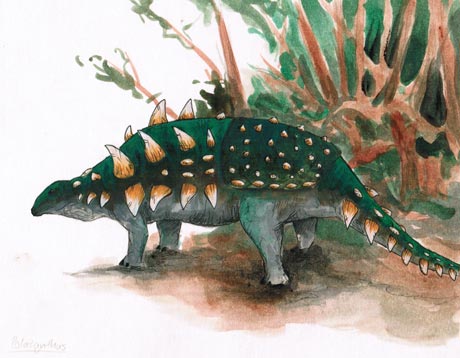
Above is a typical example of the artwork that we get sent in to us.  This is an illustration of the armoured dinosaur known as Polacanthus (P. foxii) , Chris the illustrator, has been careful to reproduce the sacral shield over the hips and to depict the numerous defensive spikes that this dinosaur known mainly from the Wessex and the base of the Vectis Formations.  Polacanthus was formally named and described in 1865, however the first fossils of this dinosaur to be studied were found in 1843, not long after the Dinosauria Order had been established by Owen.

A number of dermal plates (armour) were discovered near to Sandown on the Isle of Wight, however these fossils were lost when they were accidentally left in the back of a Hackney Carriage and to this day, no one has been able to trace these fossils whereabouts.

The colours chosen are wonderful, the rich, verdant green contrasting with the greyish underbelly and the fearsome looking bony projections on the back of this herbivorous dinosaur.  We are always delighted to receive artwork such as this, it helps to brighten up a dull June morning in our offices.

Everything Dinosaur Receives Letters

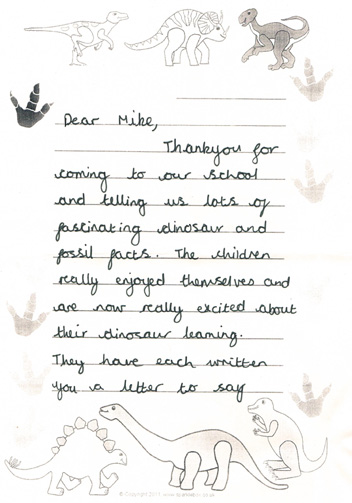
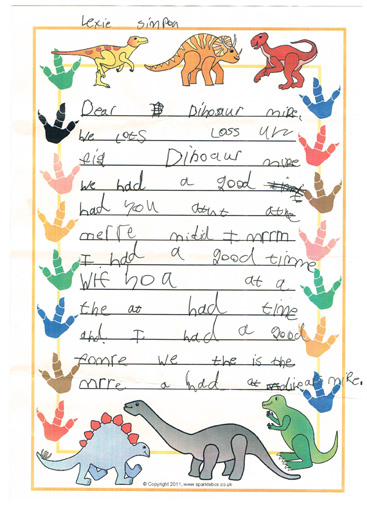
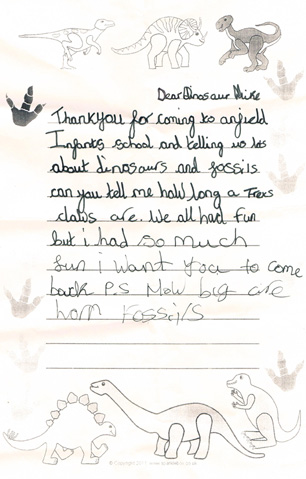
It’s not just pictures that we receive, we get sent letters from children, model collectors and dinosaur fans from all over the world, these too are read by the team, usually during one of our coffee breaks.  We encourage teachers, LSPs, and TAs in schools that we have visited to help Year 1 and Year 2 with their writing by getting them to send in letters to our team.  The children are always eager to do this and share their knowledge of prehistoric animals with us.

A Thank you Letter from Year 2 (7-8 years Old) School Children

Encouraging writing in schools.

Encouraging writing in schools.

These contributions to our very large mail bag always brighten our day and we loved meeting the “Year2asauruses” along with their enthusiastic teachers and teaching support staff.  We are grateful for the artwork and letters that we receive and we look forward to opening today’s mail bag to see what treasures lie in store for us.

To view the range of prehistoric animal themed toys and gifts available from Everything Dinosaur: Visit Everything Dinosaur.

27 05, 2013

Admiring Clay Models Made by School Pupils

By |2023-02-17T14:01:51+00:00May 27th, 2013|Categories: Educational Activities|0 Comments

Reception Aged Children Explore Dinosaurs

The reception classes at Preston Hedges Primary School have been busy studying dinosaurs this term and getting very creative with their dinosaur themed arts and crafts.  The teachers of the two reception classes, Miss White and Mrs Pearce, ably supported by Mrs Luck, Mrs Smith and Mrs Kellingray have been encouraging the budding young palaeontologists to design very colourful dinosaur posters and identify features of their prehistoric animal drawings.

The children are being encouraged to make observations about animals, make comparisons and to use words to describe  different dinosaurs.

Dinosaur Drawings

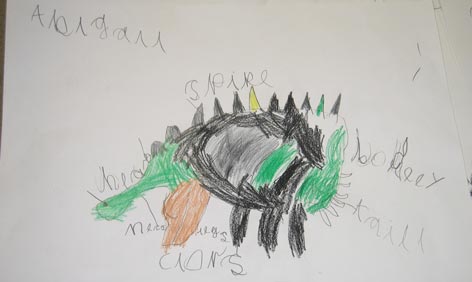
Abigail’s Dinosaur Drawing with its Labels

A spiky dinosaur.

A spiky dinosaur.

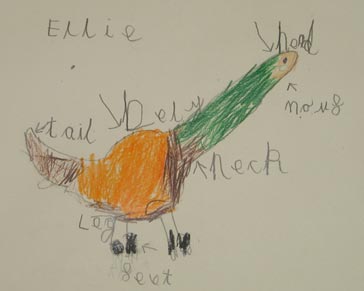
The children clearly enjoyed drawing the prehistoric animals and labelling them, naming features such as claws, head, tail and tummy.  It seemed that long-necked dinosaurs (sauropods) were the most popular type of dinosaur with a lot of the reception-aged children deciding to draw one of these plant-eaters.  The children have already learned about carnivores and herbivores and they were using such terms with confidence.

Ellie Showcases her Dinosaur Drawing Skills

A long-necked dinosaur with a bright orange body.

The stimulating indoor and outdoor classrooms are very well resourced and Alex, the resident dinosaur expert was in his element helping all his classmates learn about dinosaurs.  Harry demonstrated his knowledge of Tyrannosaurus rex teeth by commenting that they were as “big as bananas and shaped like a big banana too” – very impressive.

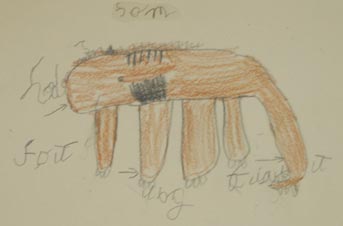
Sam’s Fearsome Dinosaur

A dinosaur that walked on all fours.

Sam opted to draw a four-legged dinosaur and he and his friends were having fun as they learned.  The teaching team have been building a large model of a long-necked dinosaur.  We have been reliably informed that this dinosaur is going to be called Dave and we have been promised a photograph of the school’s prehistoric creation when the model is finished.

Dinosaur Clay Models

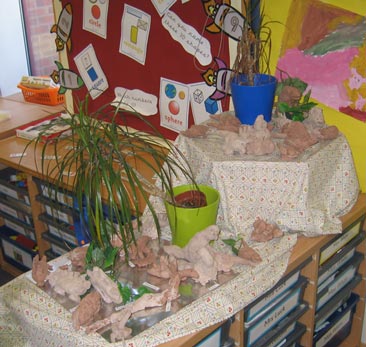
The term topic is certainly proving an excellent framework for developing plenty of numeracy and literacy based learning.  Even aspects of design and technology are being covered.  For example, as well as helping to make the large dinosaur model, the children have sculpted their own clay replica dinosaurs.  This provides the children with the opportunity to explore the properties of different materials and to make comparisons between various types of extinct animals.

The  “Cretaceous Clay Model Collection”

Clay dinosaurs. .

With plenty of guidance, the young palaeontologists have created quite a collection of different clay models, we referred to them as the “Cretaceous Clay Model Collection” and there are some fascinating interpretations of the Dinosauria, that’s for sure.

Getting Up Close to the Clay Models

The "Cretaceous Clay Model Collection"

The term topic is going down well with the two classes and the enthusiastic teaching team have prepared some intriguing schemes of work to help enrich the children’s learning experience and to permit lots of differentiation.  We look forward to receiving some pictures of Dave – a dinosaur mascot for the school.

To view the range of dinosaur toys, fossil replicas and learning materials available from Everything Dinosaur: Educational Dinosaur Themed Toys and Games.

13 05, 2013

Fossil Experts Demonstrating their Skills at Lyme Regis Museum

By |2023-02-17T07:50:24+00:00May 13th, 2013|Categories: Educational Activities, Everything Dinosaur News and Updates, Press Releases|0 Comments

Fossil Polishing Demonstration at Museum

Members of the public have the opportunity to take part in fossil polishing and learn the skills of fossil preparation next weekend (18th and 19th May), as experts will be demonstrating their skills and knowledge at the Lyme Regis Museum (Dorset, southern England).

If you have ever wondered how ammonite fossils are prepared so that all the exquisite details of their internal structures are revealed, then pop down to the Lyme Regis Museum next weekend and meet up with renowned fossil experts Brandon Lennon and Chris Andrew who will be demonstrating how ammonite fossils should be polished.

Fossil Experts

The fossil polishing team, recently attended the Lyme Regis Fossil Festival and over the course of the three day event they managed to prepare and polish in excess of 700 ammonite specimens.  For a small fee, members of the public can have a go at preparing their very own Jurassic specimen and if they are lucky they will be able to purchase part of the amazing legacy of the famous Jurassic coast.

Brandon and Chris Being Kept Very Busy at the Recent Fossil Festival

Brandon Lennon (background) and Chris Andrew (foreground) working with Ammonites.

Brandon Lennon (background) and Chris Andrew (foreground) working with ammonites.

Picture credit: Brandon Lennon

Lyme Regis fossil expert Brandon commented:

“Sometimes members of the public are surprised that there are still fossils to be found, after all, fossils have been collected from this part of the Dorset coast for more than two hundred years.  The reason that we keep discovering fossils along this part of the Jurassic coast is because the cliffs are constantly eroding.  Storms and high tides keep revealing fossils”.

Ammonites and their relatives the goniatites are an extinct group of cephalopods (Mollusca) related to today’s squid and cuttlefish.  Ammonite shells were made of aragonite (a form of calcium carbonate).  They were abundant in the shallow seas of the Mesozoic and diversified into a huge range of different species.  Ammonites are an important group of fossils and help scientists to age rock strata due to their biostratigraphic distribution.

Fossil Preparation Demonstrations

The fossil preparation demonstrations start at 10am and run through to 4pm on Saturday and Sunday (18th and 19th May) and all are welcome to take part in real “hands-on” science.

A spokesperson from Everything Dinosaur stated:

“This is a rare opportunity to pick the brains of local fossil experts in the Lyme Regis area and to learn some of the skills of fossil preparation and fossil identification.”

After a number of recent rock falls, there should be plenty of specimens available, although members of the public are advised to heed the advice of the local authorities when walking close to the cliffs or indeed taking any of the coastal paths.  Many of the cliffs remain unstable and the threat of landslides and rock falls requires visitors to this part of the south coast to take care.

To get the best out of a visit to the Lyme Regis or Charmouth areas Everything Dinosaur recommends taking a guided tour of the beaches with a local fossil expert.

For more information about guided fossil walks: Guided Fossil Walks.

10 05, 2013

Colourful Thank You Letters From Year 2

By |2023-02-16T18:52:28+00:00May 10th, 2013|Categories: Educational Activities, Photos/Schools, Press Releases, Teaching|0 Comments

School Children Studying Dinosaurs Say Thank You

A few days ago Everything Dinosaur received a parcel from a teacher at a primary school we had visited (Great Wood Primary).  The teacher had asked her pupils to compose a thank you letter and to write about some of things they did during our visit to their school.   The parcel contained a set of thank you notes with lots of amazing and very colourful prehistoric animal drawings.  There were many different designs, although long-necked dinosaurs (sauropods), proved a particularly popular subject for the front of the card.

Thank You Letters

Dinosaur Themed Thank You Letters

Drawings of long-necked dinosaurs (Sauropods) proved to be popular.

Drawings of long-necked dinosaurs (sauropods) proved to be popular.

Picture credit: James and Olivia

Ellie drew a flying reptile on the front of her card and she enjoyed learning about Tyrannosaurus rex, whilst Amy chose to illustrate her card with lots of pink dinosaurs and liked learning about Triceratops the best.  Jake drew a very scary looking dinosaur on his thank you card, Lucy illustrated her card with a spiky dinosaur, Matthew (Matthewosaurus) was particularly impressed with the skull of the armoured dinosaur that he saw.

Our mailbag was full of lovely dinosaur cards.

Our mailbag was full of lovely dinosaur cards.

Picture credit: Elliot and Aki

Everything Dinosaur

Leah wrote that she “learned that T. rex had very big teeth“, Josh sent in a card covered with big ticks and asked how did the dinosaurs come alive?  A terrific question Josh, we think that all dinosaurs hatched from eggs, perhaps you can think of animals that are alive today that hatch from eggs, can you and your classmates come up with a list?  We loved the big smiling dinosaur on Toby’s card and Spencer wrote a very long letter, recalling lots of facts about dinosaurs that had come up in our work that day.  Our thanks to Dylan for his wonderful dinosaur drawing, the big bones that were in one of the boxes were part of the leg bones from a Stegosaurus, well spotted Dylan!

Spinosaurus and Spinosaurs by Max

Max drew a multi-coloured Spinosaurus.

Max drew a multi-coloured Spinosaurus.

Picture credit: Max

Lots of Fun!

Lucy said that she had lots of fun and liked handling the fossils, she even drew some bones on the front of her card, Ruby had a great time as well and she liked learning about teeth. Isobel sent in a lovely picture of a dinosaur with a big smile, must be a very friendly dinosaur.

Our thanks to all the pupils for creating such wonderful cards and to their teacher for taking time out of her busy schedule to send them into us.

Our Iguanodon gives Great Wood Primary a big “thumbs up”.

Iguanodon Gives the School Children a Big “Thumbs Up”!

Praise from a dinosaur!

Praise from a dinosaur!

Picture credit: Everything Dinosaur

To view Everything Dinosaur’s wide range of toy dinosaurs and games: Everything Dinosaur – Toys and Gifts.

3 05, 2013

Annual Lyme Regis Fossil Festival Starts Today (A Special Event)

By |2024-04-29T14:07:00+01:00May 3rd, 2013|Categories: Educational Activities, Geology|0 Comments

Celebrating “Our Coastal Treasures” Lyme Regis Fossil Festival Starts

The Lyme Regis Fossil Festival starts in earnest today with a special day set aside for visits from Primary schools.  Lots of events are planned for the Bank Holiday weekend (the Festival runs from Friday 3rd May until Sunday 5th).  This is the eighth event that has taken place since the inaugural fossil festival in 2005.  There are lots of events planned, hands-on science, Jurassic themed art for all the family to have a go at, the chance to meet fossil experts, talks, shows, even a travelling cinema shaped like a pliosaur.

The Lyme Regis Fossil Festival Starts Today

Fossil Festival starts today.

Fossil Festival starts today.

Lyme Regis Fossil Festival

Visitors to the picturesque town of Lyme Regis will be able to learn about fossils from top experts, see amazing stone balancing (we have seen this and it has to be seen to be believed) and hear about some of the latest scientific studies being carried out by top academic institutions.  The main theme for this year’s festival is “Our Coastal Treasures”.  The Fossil Festival will explore the marine habitats that produced the very different types of geological formations seen on the Jurassic coast.

One word of advice, visitors to the beach should avoid the cliff areas as these are exceptionally dangerous at the moment.  The heavy rain last summer, coupled with recent dry weather has left much of the coastline in a fragile state.

There have already been a number of landslides, leaving a considerable amount of debris on the beach.  On Tuesday evening, a twenty metre section of chalk cliff, east of Lyme Regis, at St Oswald’s Bay collapsed into the sea.  The coastguard and Dorset police have warned visitors to the area to “exercise due care, behave responsibly and to observe all warning and diversion notices”.

Wishing all the volunteers who help make this such a super event the very best for the next few days.  Fingers crossed for some decent weather.

For models and replicas of ammonites, belemnites and ichthyosaurs: CollectA Prehistoric Life (Age of Dinosaurs).

Go to Top