All about dinosaurs, fossils and prehistoric animals by Everything Dinosaur team members.

Everything Dinosaur’s work with schools and other educational bodies. Articles, features and stories about dinosaurs and their role in education and educating young people.

28 04, 2015

Plastic Dinosaur Skeleton Models – Great for Creative Play

By |2023-03-26T12:02:26+01:00April 28th, 2015|Categories: Educational Activities, Everything Dinosaur Products, Main Page, Photos of Everything Dinosaur Products, Teaching|0 Comments

Plastic Dinosaur Skeletons from Everything Dinosaur

A term topic on dinosaurs for Early Years Foundation Stage (EYFS) can provide a number of opportunities for young minds to develop through creative play.  Most children are fascinated by dinosaurs and prehistoric animals and Everything Dinosaur team members often get asked by teachers and teaching assistants for ideas on how to stimulate the class when the children have been learning about dinosaurs.  We recommend a wide range of tactile activities to help young learners explore the nature of materials and the wider world.  For example, this set of twelve plastic prehistoric animal skeletons gives the children the chance to play at being a palaeontologist.

Prehistoric Animal Skeleton Set Available from Everything Dinosaur

Dinosaur skeleton

A set of assorted prehistoric animal and dinosaur skeletons.  Picture credit: Everything Dinosaur.

Picture credit: Everything Dinosaur

Dinosaur Skeleton Models

These robust, plastic skeleton models represent a number of very well known dinosaurs.  Prehistoric creatures such as Triceratops, Stegosaurus and Brachiosaurus.  There are even some meat-eating dinosaurs and a pterosaur (Pteranodon), in this twelve figure set.  We bury these models in the sand pit play area at the school and invite the children to excavate their own dinosaur fossils using paint brushes and plastic spades.  This is a fun activity  and the addition of a couple of magnifying glasses so that the children can examine the bones helps the pupils to feel like scientists.

These models can also be used in the wet play area as children explore which objects float.  They are a wonderful resource for Early Years Foundation Stage (EYFS plastic dinosaur skeletons).

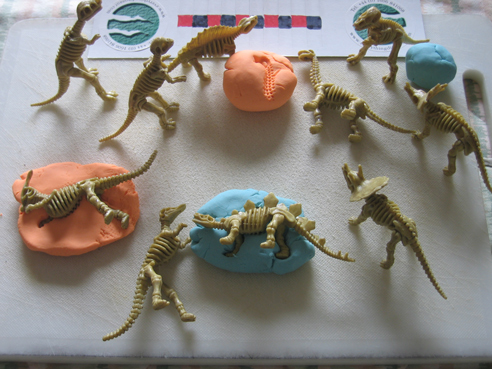
Use the Models to Make Impressions Just Like Fossils

Dinosaur skeleton models.

Showing how fossils form. Picture credit: Everything Dinosaur.

Picture credit: Everything Dinosaur

Creating Fossils

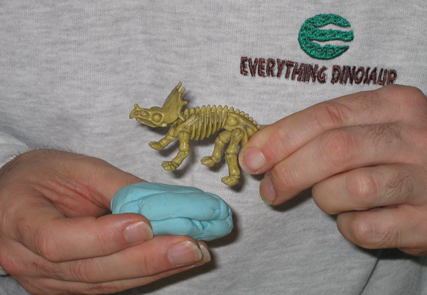
By pressing these study models into modelling clay the children can learn how fossils form and they can have a go at making fossils for themselves.  Each of these little models is around ten centimetres in length and as there are twelve in the series they are very useful when it comes to playing sorting and counting games, for example:

  • Sort out all the skeletons of animals that have horns
  • Group the skeletons into those that walk on four legs and those that walk on just two
  • Split the plant-eaters from the meat-eaters – can you work out which is which?

Remarkable Details

The models have a remarkable level of detail on them, the children can easily work out which model is which.  The other day, a five-year-old pointed out the Dimetrodon (not a dinosaur) to us.  We were most impressed!

To view the range of educational products available from Everything Dinosaur including these skeleton models: Everything Dinosaur Products and Gifts.

We Even Used Our Dinosaur Skeletons to Make Footprints

Dinosaur skeleton footprint exercise.

A cheap but very effective learning resource. Picture credit: Everything Dinosaur.

Picture credit: Everything Dinosaur

To see the full range of educational toys, games and models that Everything Dinosaur offers: Visit Everything Dinosaur.

21 04, 2015

Providing Exclusive Prehistoric Animal Drawing Materials for Foundation Stage 2

By |2024-05-05T10:02:09+01:00April 21st, 2015|Categories: Educational Activities, Teaching|0 Comments

EYFS Create an Underwater Prehistoric Scene

Everything Dinosaur team members despatch prehistoric animal drawing materials to a school to help support a term topic.

A recent trip to a primary school to conduct a dinosaur workshop resulted in a request from one of the teaching assistants.  They had lots of blue crepe paper and they wanted to create a prehistoric scene that could be posted up onto the walls of the corridor outside the classroom for Foundation Stage 2.  However, she had not got any pictures of “sea monsters”, (her words not ours), for the children to colour in to help create the picture.

No worries, amongst all the other extension resources we supplied, we sent over a number of emails with fact sheets and drawings of a vast array of prehistoric creatures which were typical fauna of Jurassic marine environments.

Prehistoric Animal Drawing Materials

Everything Dinosaur stocks a huge array of sea monster models and marine prehistoric animals.  To view the range in stock at Everything Dinosaur: Sea Monster and Marine Reptile Models.

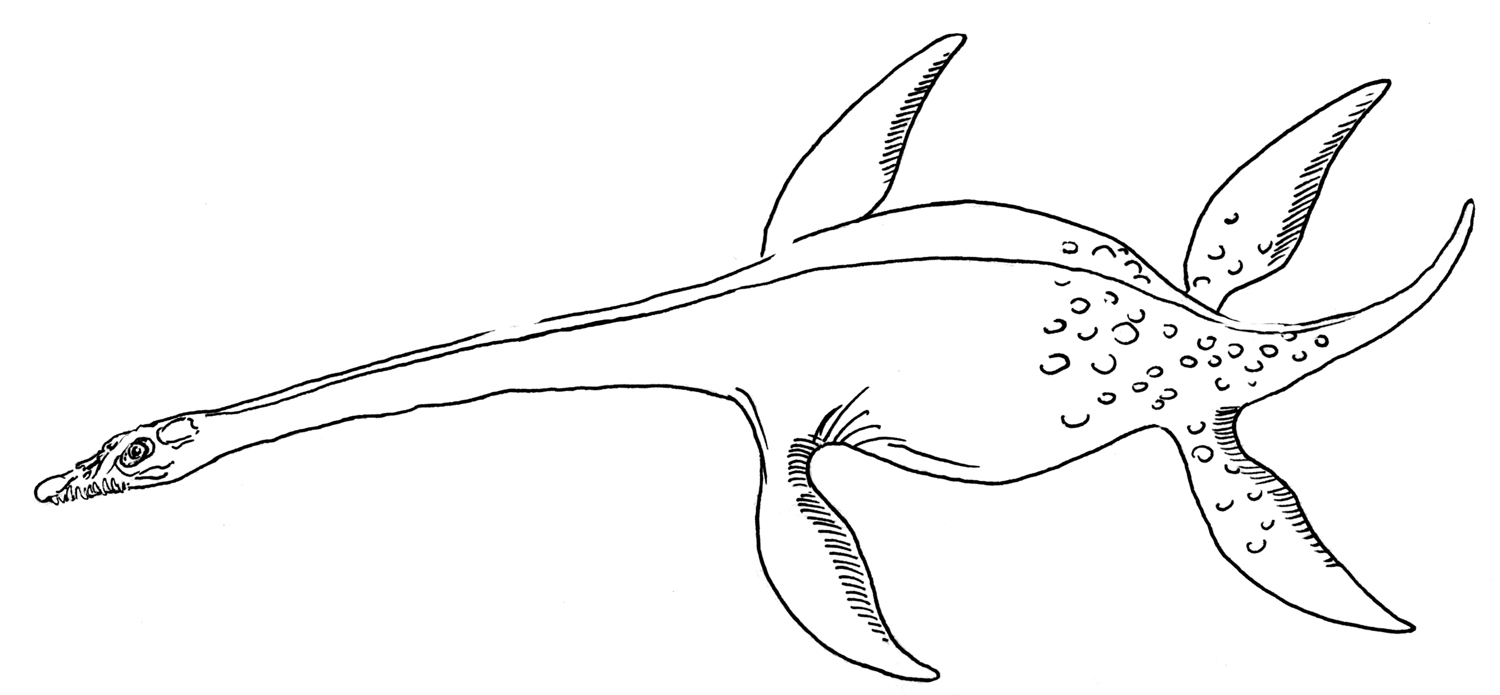
Providing Pictures of the Plesiosauria to Primary Schools

Attenborosaurus conybeari.

Plesiosaurs and other prehistoric animals featured in the picture.

Picture credit: Everything Dinosaur

We sent over pictures which included:

  • Jellyfish
  • Ammonites
  • Belemnites
  • Coelacanth (fish)
  • Ichthyosaurus
  • Mixosaurus (another type of ichthyosaur)
  • Attenborosaurus (pliosaur)
  • Liopleurodon (pliosaur)

Lots of other prehistoric animal pictures were also sent over.  We even supplied the teaching team with an outline of a seascape that could be used as a back drop as the children in Foundation Stage 2 explored a prehistoric, undersea world.

To read a recent blog post about Everything Dinosaur’s visit to the Foundation Stage classes at John Locke Academy: Visiting Foundation Stage Classes.

A spokesperson from the UK-based company stated:

“We were delighted to help the children and their teachers, we look forward to seeing their prehistoric marine animal inspired artwork.”

To learn more about the team members at Everything Dinosaur: About Us.

16 04, 2015

Dinosaurs Help the Focus on Writing at Mead Primary School

By |2023-03-26T10:15:37+01:00April 16th, 2015|Categories: Educational Activities, Teaching|0 Comments

Lions, Zebras and Giraffes Learn All About Dinosaurs – Dinosaur Workshop in School

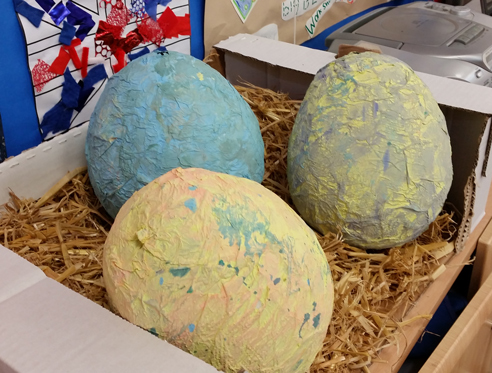
Children in the Reception classes at Mead Primary in Romford (Essex, south-east England), have been learning all about dinosaurs and prehistoric animals this term, their learning was supported by a dinosaur workshop in school.

Dinosaur Workshop in School

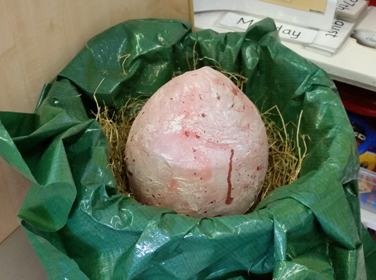
The children discovered a giant egg in each of the three Reception classrooms (Lions, Zebras and Giraffes) and with the support of their enthusiastic teaching team, the children were encouraged to write letters to one of the dinosaur experts at Everything Dinosaur so that these strange objects could be investigated.  The discovery of the eggs is all part of a coordinated approach to help motivate and enthuse the pupils when it comes to writing.  Our dinosaur expert who visited the school, was shown some wonderful examples of the children’s work including some of the invitation letters that were on display.

One of the Eggs Discovered in the Classroom

What will happen when it hatches?

What will happen when it hatches?

Picture credit: Everything Dinosaur

Colourful Dinosaur Displays

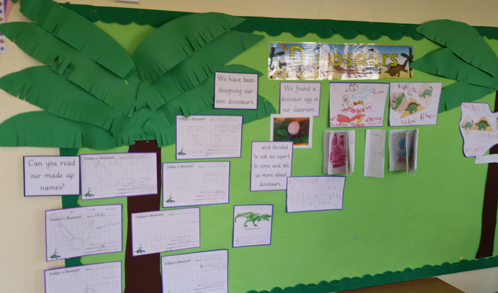
There were lots of colourful dinosaur themed displays in the classrooms and outside in the corridor which links the Key Stage 1 classes to the rest of this, larger than average, primary school.

One of the Bright and Colourful Prehistoric Animal Themed Displays

Lots of different dinosaurs on display.

Lots of different dinosaurs on display.

Picture credit: Everything Dinosaur

Designing Dinosaurs

The children had been designing their own dinosaurs and there were lots of examples of hand-writing too, including some very informative fact books that the pupils had made.  The volcano in the picture had been made using fabric with coloured tissue paper as the lava, this was just one example of the use of lots of different materials and media having been incorporated into the scheme of work.  The dinosaur workshops that were delivered continued the focus on writing and vocabulary development, with the visitor challenging the children to come up with lots of describing words for the fossils and other objects that they handled.

The Foundation Stage Two children certainly knew their dinosaurs and they were keen to demonstrate their acquired knowledge.  Prior to the visit to the school by Everything Dinosaur, the teachers had encouraged the children to think of questions to ask, the budding palaeontologists had come up with a super assortment of queries.  For all those questions not answered on the day, our expert suggested a couple of writing themed extension activities to help support the classes with their enquiries.

Some of the Questions That the Children had Come up With

Questions, questions and even more questions!

Questions, questions and even more questions!

Picture credit: Everything Dinosaur

To help the children understand how most fossils are formed our expert discussed a simple experiment the children could conduct using the water play area.  This extension activity also dove-tailed nicely into an exploration of the properties of materials in which children investigate why some objects float whilst others sink.  Dinosaurs make a great topic for primary school children to study.

Demonstrating Learning

The children clearly enjoyed learning all about prehistoric animals and we look forward to hearing how they got on with the dinosaur footprint measuring exercise we provided.  One of the aims of the teaching scheme of work for next week is to help the children gain a little more confidence in measuring and using numbers, the footprint exercise we provided will help the teaching team to achieve their learning objectives, providing the children with a dinosaur themed activity in support of their numeracy development.

Everything Dinosaur stocks a wide range of prehistoric animal themed toys and games: Dinosaur Toys and Gifts.

Inspiring Displays with Lots of Evidence of Learning

Lots of examples of hand-writing on display.

Lots of examples of hand-writing on display.

Picture credit: Everything Dinosaur

One of the classrooms even had its very own dinosaur museum.   The teachers had been inspired by the topic to come up with some very creative lesson plans and the children were clearly inspired by all things dinosaur!

To request further information on Everything Dinosaur’s educational activities: Email Everything Dinosaur.

13 04, 2015

The Remarkable Achievosaurs – Reinforcing Positive Learning Behaviours

By |2024-05-05T10:24:02+01:00April 13th, 2015|Categories: Dinosaur and Prehistoric Animal News Stories, Dinosaur Fans, Educational Activities, Main Page, Teaching|0 Comments

Soft Toy Dinosaurs Helping Young Children to Learn Life Skills (Achievosaurs)

Using a range of soft toy dinosaurs to help encourage young children to learn life skills and to reinforce positive values in schools is something Everything Dinosaur team members are very familiar with.  Now that the three inch plus dinosaur range known as the Itsy Bitsies are back in production, our team members set out to examine how one teaching concept, the “Achievosaurs,” came into being.

Achievosaurs Dinosaur Soft Toys

We were contacted by retired Bristol school teacher Lori Mitchell who explained to us how her idea for using dinosaur soft toys took shape.

Ms Mitchell explained:

“The idea for the Achievosaurs came after a South Gloucestershire Early Years course “Providing Challenge, Improving Outcomes” in October 2010.  During the day, we were asked to consider how we encourage our children to reflect on their learning, rather than just talk about their activities, and how we can help them develop the skills needed to become life-long learners.  We discussed the learning-focused qualities we wanted to encourage in our children and a colleague shared the “Curious Cat” she used with her class.  One of the Early Years advisors then said something like “you know, dinosaurs would be another idea..you could have a Thinkasaurus”…and that was it…I went home after the course and devised the Achievosaurs!”

The Achievosaurs (Dinosaur Soft Toys) in 2015
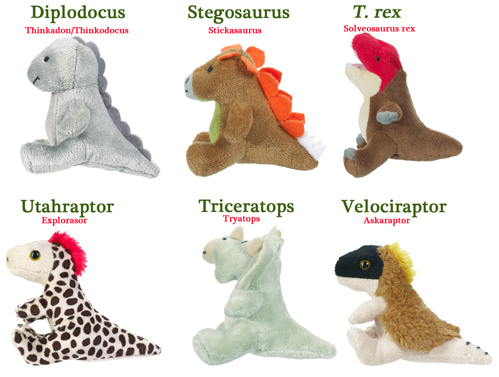
Helping to reinforce life-long learning skills.

Helping to reinforce life-long learning skills.

Picture credit: Everything Dinosaur

To view the dinosaur soft toys in stock at Everything Dinosaur: Dinosaur Soft Toys.

Soft Toys Help with Learning

With the rigours of a new curriculum being rolled out across England, there is a great deal of emphasis placed upon preparing pupils for the opportunities, responsibilities and experiences of later life.  For example, the idea of introducing scientific working and the scientific method underpins a lot of Everything Dinosaur’s teaching activities in schools.  It is essential for those children at the Early Years Foundation Stage to acquire appropriate social skills as well as developing positive behaviours to help them make good progress.

Naming the Achievosaurs

We asked Lori, how the names of the first Achievosaurs came about and she explained that she based her prehistoric animal names on the specific learning qualities that she wanted to encourage in her Reception class (FS2).  For the last seven years of her working career, before taking early retirement, Lori was a teacher at Cadbury Heath Primary School, Warmley, near Bristol, South Gloucestershire (south-west England).  Using her experience, Lori devised a series of dinosaurs (plus one flying reptile), which she could use as props to help reinforce desired behaviours.

The names of Lori’s Achievosaurs were:

  • Exploring ideas and resources: Explorasor
  • Sticking to a task: Stickasaurus
  • Sharing ideas and resources: Shareadactyl
  • Trying their best: Tryatops
  • Asking questions: Askaraptor
  • Working to solve problems: Solveosaurus rex
  • Thinking carefully about tasks: Thinkadon

Over the years we have come across a number of variants, with something like 1,200 different dinosaur genera described to date and a new one being named on average every 20-30 days or so, educationalists certainly have plenty of scope.

When asked about how she came up with her Achievosaur names, Lori said:

“When I first drafted the idea, all the names ended in “asaurus,” but when I found the wonderful collection of Itsy Bitsy dinosaurs at Everything Dinosaur, my 20 year-old son got involved (dinosaurs really are any age child friendly), and selected the dinosaurs and adapted their name to “fit,” so, for example, we took Velociraptor to make “Askaraptor”.

Sharing the Concept with Colleagues

Lori was invited to share her idea with a team of South Gloucestershire assessment co-ordinators and this simple, but very effective teaching aid has been taken up by a number of primary schools and other educational establishments.

Team members at Everything Dinosaur dedicate a lot of time to supporting teaching teams and many EYFS (Early Years Foundation Stage) and Key Stage 1 teachers incorporate a dinosaur themed topic into their scheme of work.

A spokesperson from the Cheshire based company stated that a topic based on prehistoric animals dove-tailed into desired learning outcomes across the curriculum, whether it was using the size and scale of dinosaurs to help build confidence with numbers or having a class imagine what it would be like to have a pet Triceratops in order to lay the foundations for some creative writing.

Dinosaurs as a Term Topic Can Encourage and Motivate Young Learners
Pupils learn about the shapes and sizes of different prehistoric animals.

Pupils learn about the shapes and sizes of different prehistoric animals.

Picture credit: Everything Dinosaur

Everything Dinosaur

For further information on Everything Dinosaur’s extensive product range: Contact Everything Dinosaur.

When asked why the likes of Tyrannosaurus rex and Stegosaurus are so popular with young learners Lori suggested:

“One reason I think is their wonderful names.  They sound fascinating, and what child doesn’t like to impress an adult by knowing long words and being able to pronounce them?  Another is that, although huge and terrifying when they lived, dinosaurs are not around anymore so they can’t get us!”

Dinosaurs enduring popularity with children (quite a few adults as well), is an area that has been explored frequently.  Team member, “Dinosaur Mike”, part of the company’s teaching team was interviewed by the BBC on this subject and he hypothesised:

“Dinosaurs are never really out of the media, so children are exposed to prehistoric animals such as Diplodocus and Tyrannosaurus rex from an early age.  When talking to Mums and Dads we know how proud they are when their son or daughter explains all about their favourite dinosaur.  With so many facts and figures associated with these prehistoric reptiles, they do help sow the seeds for an appreciation of life- long learning.”

To learn more about the Everything Dinosaur team: About Everything Dinosaur.

A Big Success

Her Reception class loved the idea of Achievosaurs right from the start, but we wanted to know which was Lori’s own favourite.  Lori declared that she was very fond of them all as the encouragement these soft toys had given to her charges, getting them to think about learning skills and to develop positive behaviours, was of real benefit.

“It has been fantastic to hear the children identifying what they need to do in order to move their learning on, for example, suggesting they need to be a “Stickasaurus,” which concentrates, in order to learn their letters or a “Solveosaurus rex,” which makes links between ideas, when faced with a problem.  However, if I had to pick one favourite Achievosaur, I think it would be Tryatops”.

Lori explained:

“There is sometimes a perception that learning is just for “clever” children, and I think Tryatops helps to teach children that no matter what the activity or skill level, we can ALL try our best, never give up and in consequence, achieve.”

Tryatops Based on Triceratops

Tryatops – Based on the Horned Dinosaur Triceratops
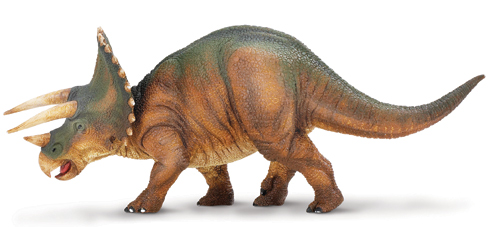
An excellent replica of a Triceratops.

An excellent replica of a Triceratops.

Picture credit: Safari Ltd/Everything Dinosaur

Not being discouraged, even when experimental results don’t quite turn out as expected, is an important aspect of scientific working.  Lessons learned early in life will help pupils face future challenges with more confidence.

In conclusion, we asked Lori if she could design her very own dinosaur what would it be like?

“The Achievosaurs were my first design attempt, with specific characteristics and names, to tie in with the Early Years Characteristics of Effective Learning.  I had a lot of fun inventing and writing about them and I couldn’t be more delighted that other Early Years professionals and schools have found the concept useful.  However, I’ve recently been thinking about the PSE side of things [personal, social and emotional development]: could an Achievosaur help children to take account of one another’s ideas (an Early Learning Goal) or be thoughtful/helpful?  What about a Respectadocus?  Now that the toys are back in production, anything is possible! “

At Everything Dinosaur we have had the privilege of working with a number of dedicated teaching professionals who have adopted and adapted dinosaur soft toys to assist them with their own learning objectives.  As a result, we have come across a large number of different Achievosaurs all aimed at reinforcing appropriate behaviours and encouraging the development of life-long learning.

Thank you Lori for being a wonderful “Shareosaurus” and sharing your story with us.

12 04, 2015

The Unique Times Cheltenham Science Festival

By |2024-05-05T10:23:38+01:00April 12th, 2015|Categories: Dinosaur Fans, Educational Activities, Main Page|0 Comments

Dinosaurs, DeLoreans, Deep Space and Debate

The Times Cheltenham Science Festival (June 2nd to June 7th 2015) returns with a line up bigger and better than ever, with over 165 different events scheduled, including talks from Professor Alice Roberts, Professor Brian Cox and Lord Robert Winston.  Joining a very eminent line up will be a number of leading scientists from the field of palaeontology, plus a seven-metre-long specimen of the fearsome tyrannosaurid Gorgosaurus.

The Cheltenham Science Festival

Over the six days of the festival, visitors will be able to explore, engage with and be entertained by some of the greatest thinkers of our time, with everything from ground-breaking research to debates on the big science conundrums facing our species.  Cheltenham’s pop-up tented Science Village in the Imperial Gardens will be dominated by the Festival’s brand new “DinoZone”.  University of Manchester in a collaboration with the Black Hills Institute of Geological Research (South Dakota) will be highlighting their research on the Gorgosaurus specimen that they have been working on.

Distantly related to Tyrannosaurus rex, Gorgosaurus was a fearsome carnivore more than capable of feasting upon the remains of other tyrannosaurids that shared its Late Cretaceous habitat.

Recently, Everything Dinosaur team members wrote a short article which covered the research carried out on the fossilised skull and jaws of another tyrannosaur (Daspletosaurus), by Dr David Hone (School of Biological and Chemical Sciences, University of London) and Darren Tanke, an expert in vertebrate fossil preparation at the Royal Tyrrell Museum (Drumheller, Alberta, Canada).

Gorgosaurus Specimen

The carcase of the Daspletosaurus was scavenged, the tell-tale postmortem feeding marks on the bones and teeth could have been a case of cannibalism, but it could also have been as a result of a hungry Gorgosaurus feasting.  The 7.4-metre-long specimen of Gorgosaurus on display in the tented Science Village would have been more than capable of making a meal of the Daspletosaurus.

To read more about a potential case of a Gorgosaurus feeding on a tyrannosaurid: Tyrannosaurid Bite Marks on the Remains of Daspletosaurus.

Phil Manning and Victoria Egerton (University of Manchester) will be on hand to discuss some of the latest research and they will be presenting a one hour lecture on Friday 5th June all about their various dinosaur activities and adventures.

Professor Phil Manning Next to the Beautiful Gorgosaurus Dinosaur Display

Gorgosaurus making a guest appearance.

Gorgosaurus making a guest appearance.

Picture credit: University of Manchester

University of Manchester

Everything Dinosaur team members had the pleasure of meeting up with Professor Manning and the University of Manchester team at the Royal Society (London) last summer.  The exhibit is extremely informative and the Dinosauria is one of the main themes of the Festival, where you can learn about mass extinctions, discover what dinosaurs really looked like (expect a few feathers to fly) and stare into the eye sockets of a Triceratops.

The other major themes include “Life”, “the Universe” and “Time Travel”, a DeLorean is even flying in to mark the thirtieth anniversary of the first of the “Back to the Future” films and the question “why don’t we have flying cars today?” will be explored.

To read more about The Times Cheltenham Science Festival: The Times Cheltenham Science Festival.

The extremely talented Pete Larson, will also be attending.  “Paleo Pete”, one of the world’s leading authorities on tyrannosaurs, will be speaking at the EDF Energy arena on June 2nd (6.30pm to 7.30pm), his subject, “T. rex Appeal”, the story of “Sue” perhaps one of the most famous fossils ever found.

A Fantastic Communicator – Pete Larson

A fantastic and generous communicator.

A fantastic and generous communicator.

Picture credit: Everything Dinosaur

For models and replicas of tyrannosaurs and other prehistoric creatures: Wild Safari Prehistoric World Models.

Discussing Tyrannosaurs

American Pete Larson has had a most colourful career, he has an encyclopaedic knowledge of vertebrate fossils and is a wonderful communicator, always patient and prepared to answer questions from dinosaur fans, young and old.

Joining Professor Alice Roberts to explore what dinosaurs may have actually looked like, will be palaeontologist Professor Mike Benton (Bristol University) and the gifted palaeoartist Bob Nicholls,  whose job is to illustrate dinosaurs once the fossil evidence has been interpreted.  Historian Joe Cain will be on hand to guide the audience through nearly two hundred years of dinosaur research.

“Jurassic World”

By the time The Festival comes around, the world premier of the eagerly awaited film “Jurassic World”, will be just ten days away.  As well as being an advisor on the entire “Jurassic Park” movie franchise, dinosaur expert Jack Horner, on whom the film character Dr Alan Grant was partly based, will be talking about his own dinosaur discoveries as well as giving audiences a behind-the-scenes look at “Jurassic World”.

Guest Director, BAFTA award winning Steve Backshall, one of television’s most respected wildlife presenters commented:

“I’m really excited to be Guest Director; it’s a brilliant opportunity for me to share my passion for wildlife and explore everything from giant telescopes to dinosaurs.”

The full Festival line-up is at The Times Cheltenham Science Festival.

Tickets go on sale to Members on Wednesday, April 15 and to the general public on Wednesday, April 22 available at The Festival website or at 0844 880 8094.

2 04, 2015

Dinosaurs and Autism an Important Link

By |2024-05-05T09:42:35+01:00April 2nd, 2015|Categories: Educational Activities, Main Page, Press Releases|2 Comments

World Autism Awareness Day

Today, April 2nd, is World Autism Awareness Day, the culmination of a week of activities and events organised to help raise awareness and support for those people who are on the autistic spectrum.  One of the themes is to show your support by turning things blue, the light it up blue (LIUB) campaign to commemorate the United Nations sanctioned World Autism Awareness Day.  Team members at Everything Dinosaur provide support for teachers who have responsibility for a child with autism in their class.  We also assist many parents, grandparents and guardians by providing free fact sheets, drawing materials and other resources to children on the autism spectrum.

Autism and Dinosaurs

Autism is a condition that affects an estimated 700,000 people in the United Kingdom.  People with autism share certain difficulties but each person may be affected in slightly different ways.  Many children we meet who are on the autistic spectrum, have a variety of issues related to understanding and processing information as well as, in a number of cases, accompanying learning difficulties.  We do our best to assist them and to help their carers and dedicated support providers.

Children on the autistic spectrum can obsess over certain things and one thing that they can get very obsessive over is dinosaurs.  Hence our support and help, as dinosaur experts we are in a good position to offer assistance, especially with so many dinosaur facts and figures at our fingertips.

In Honour of World Autism Awareness Day – Some Blue Dinosaurs

Commemorating World Autism Awareness Day

Commemorating World Autism Awareness Day

Picture credit: Everything Dinosaur

Light it Up Blue – Dinosaurs

We hope you like our LIUB dinosaurs.  Blue is a colour not often found in nature but there may well have been blue feathered dinosaurs.

To learn more about autism and other related conditions such as Asperger syndrome visit: The National Autistic Society

Everything Dinosaur stocks a huge range of dinosaur and prehistoric animal items and we are proud to have helped many children on the autism spectrum.  To visit our website: Everything Dinosaur.

30 03, 2015

Lottie the Fossil Hunter is Great for Imaginative, Creative Play

By |2024-05-05T09:44:36+01:00March 30th, 2015|Categories: Dinosaur Fans, Educational Activities, Everything Dinosaur News and Updates, Everything Dinosaur Products, Teaching|0 Comments

Everything Dinosaur Supports Women In Science

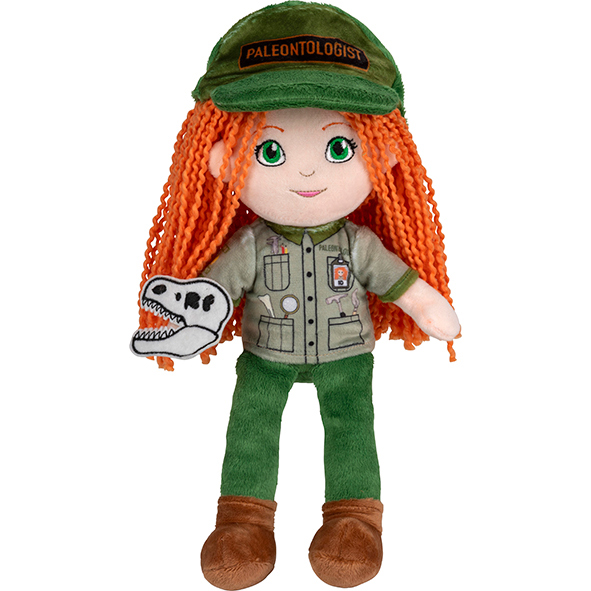
With our school visits to deliver dinosaur and fossil themed workshops, Everything Dinosaur team members are heavily involved in helping to promote geology/palaeontology and careers in science to young people and it is wonderful to introduce a girl palaeontologist rag doll.  We are very aware of the need to promote science to both girls and boys and as we visit a large number of schools we recognise that our team members can make an important contribution.

It’s not just our school visits, we supply lots of helpful teaching resources to teachers and home educationalists and provide advice on all sorts of Earth science related subjects from “Anning to Zuniceratops” as our boss, known as “Tyrannosaurus Sue” likes to say.  This week alone, we have provided free lesson plan advice to a Year 6 teacher as they prepare to teach evolution as a term topic, supported a Key Stage 2 teaching team with their fossils and rocks scheme of work and answered questions from school leavers about the potential roles and vocations within the umbrella of palaeontology.

Fact sheets on Smilodon fatalis and Allosaurus fragilis have been emailed to India and we have supplied ammonite models to help a geologist explain about life in Jurassic marine environments – all this and it is still only Monday.

Dinosaurs and Fossils are Not Just for the Boys!

Encouraging women into the Earth Sciences!

Encouraging women into the Earth Sciences!

Picture credit: Everything Dinosaur

We have been so lucky to have met and worked with some amazing women scientists. That’s why Everything Dinosaur is delighted to introduce a “Girl Palaeontologist Rag Doll” into our extensive product range.

Girl Palaeontologist Rag Doll

Say Hello to a Girl Palaeontologist

Girl palaeontologist rag doll.

A prehistoric themed soft toy, a girl palaeontologist rag doll.

Picture credit: Everything Dinosaur

We first met this young palaeontologist quite a few months ago when she was very much at the prototype stage.  We applaud the efforts of those women behind the campaign to get more girls to study the sciences.  Celebrating the role of women in archaeology, geology and palaeontology who have done amazing work in the past, continue to do so today and will no doubt be at the cutting edge of the Earth Sciences in the future.  Our boss Sue, (volcanism is her thing), only wishes that this soft toy had been around when she was growing up.

To view Rag Doll fossil hunter and other educational soft toys: Prehistoric Animal Soft Toys.

Sue commented:

“There have been some wonderful women who have been pioneers in the development of palaeontology and geology and we are all keen to help encourage girls into science careers.  Sadly, in some quarters those Georgian/early Victorian  attitudes that dogged Mary Anning can still be found, but we are doing all we can to stress that dinosaurs and fossils are not just for boys.”

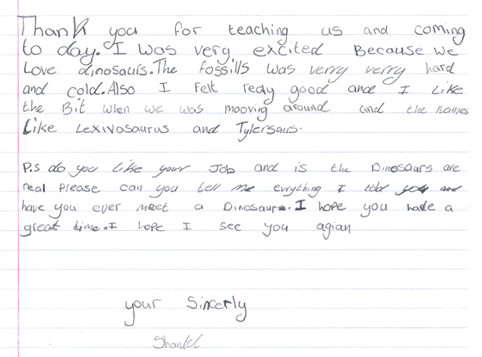
As if to affirm Sue’s comments, we received a letter from Shantel in Year 2 after a dinosaur workshop with her class.  Shantel was delighted that we came to her school as she was “very excited because we love dinosaurs”.

Shantel’s Thank You Letter (Year 2)

Encouraging girls to learn about fossils and life in the past.

Encouraging girls to learn about fossils and life in the past.

Picture credit: Everything Dinosaur

Great writing Shantel and thank you for your kind words, we know that this fossil hunter rag doll will be very impressed.

26 03, 2015

Woolly Mammoth Genes Inserted into Asian Elephant Skin Cells

By |2023-03-25T10:27:46+00:00March 26th, 2015|Categories: Animal News Stories, Dinosaur and Prehistoric Animal News Stories, Educational Activities, Teaching|0 Comments

Potentially One Step Closer to Woolly Mammoth Resurrection (Woolly Mammoth De-extinction)

Researchers at Harvard Medical School led by genetics professor George Church have combined laboratory grown elephant cells with genetic material retrieved from the frozen remains of Siberian Woolly Mammoths.  The genetic material, a total of fourteen genes, was spliced into the skin cells of an Asian elephant (Elephas maximus), the closest living relative to the extinct Woolly Mammoth.  The results are promising with the altered skin cells functioning properly in their petri dish environment, but the scientists stress that cloning a viable Woolly Mammoth is still a very long way off.

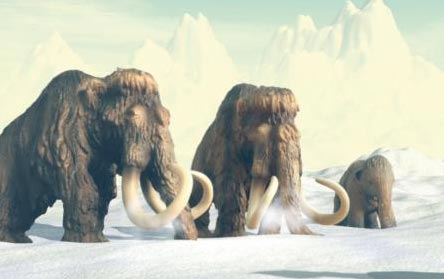
Woolly Mammoth

Investigating the Possibility of a Return for the Woolly Mammoth (Mammuthus primigenius)

Will the Woolly Mammoth return?

Will the Woolly Mammoth return?

Picture credit: Everything Dinosaur

 Scientists from Harvard Medical School are working on a number of genetic projects, including research into the Woolly Mammoth genome.  They are however, competing against a number of other institutes including South Korea’s Sooam Biotech Research Foundation in a bid to extract viable DNA from a long dead animal with a view of investigating the possibility of cloning.

Ancient Genetic Material

The ancient genetic material was inserted into the cells using a complicated cut and splicing technique, an analogy would be to think of a film editor cutting and stitching snippets of film together so as to make a coherent movie.  The system used was CRISPR (clustered regularly interspaced short palindromic repeat).  Although this work has yet to be peer reviewed and no paper has been published describing the research in detail, preliminary findings suggest that the mutated cells are functioning normally.

If this is the case, then this is the first time that Woolly Mammoth genetic material has functioned since the very last of these Ice Age creatures became extinct the best part of 4,000 years ago.

Having a established a thorough understanding of the Mammoth genome, the team focused on identifying and then adding to the elephant skin cells those genes which are responsible for the Mammoth’s adaptations to a cold climate, genes such as those for small ears, long body hair and thick layers of subcutaneous fat.

Mammoth De-extinction

Professor Church pointed out that they were a long way off from “Mammoth de-extinction”, despite some remarkable finds in recent years, including one amazingly well-preserved female Woolly Mammoth carcase, nick-named Buttercup, that was the subject of a number of cloning documentaries that aired recently.

To read more about the Woolly Mammoth called “Buttercup”: To Clone or Not to Clone a Woolly Mammoth.

The genetics laboratory is the largest research facility at Harvard University and the researchers have been responsible for a number of important genome studies in recent years.  Much of the team’s work involves studying the human genome as well as working on how to manipulate the genes of mosquitoes to help fight the spread of malaria and other diseases such as dengue fever.

Professor Church commenting on their success with the combining of elephant cells and Woolly Mammoth genes stated:

“We won’t be seeing Woolly Mammoths prancing around any time soon, because there is more work to do.  But we plan to do so.”

Splicing the DNA into the skin cells of Asian elephants is only the first step in, what will be a very long process.  The next hurdle is to find a way of turning the hybrid cells into specialised tissues, to see if they produce the correct traits and characteristics.  For example, will the genes for small ears, actually produce ears that are small and able to lose less heat.

With animal rights groups preventing the use of elephants as surrogate mothers, hybrid cells will have to be adapt to being grown in an artificial womb.  If a viable embryo is created, then it is a case of being able to bring that embryo to term and to produce a viable offspring.

Using Mammoth DNA

If all this goes to plan and cold-adapted, hybrid elephants are produced then more and more Mammoth DNA can be introduced into subsequent generations to drive out the Asian elephant traits.  The Harvard team hope to genetically engineer an elephant that can survive in inhospitable, sparsely populated habitats, where such creatures would face fewer threats from humans.

A long term aim would be to develop herds of Woolly Mammoths, once more roaming the steppes of the northern hemisphere.

Everything Dinosaur stocks a range of prehistoric mammal models including Woolly Mammoth replicas: Models of Prehistoric Mammals.

Team members at Everything Dinosaur wait to read more about this research and to see the peer reviewed comments, although we have made a wager that by 2045, a viable Woolly Mammoth will be produced somewhere in the world.  Just thirty years to go then.

25 03, 2015

Year 2 Send Thank You Letters to Everything Dinosaur

By |2023-03-25T07:56:13+00:00March 25th, 2015|Categories: Educational Activities, Teaching|0 Comments

Schoolchildren Say Thanks after Dinosaur Workshop

Earlier this month, a team member from Everything Dinosaur visited Southglade Primary School to deliver a dinosaur workshop in support of Year two’s study topic all about dinosaurs.  As part of our follow up support for the teaching team, we discussed extension ideas and emailed over further resources to assist the enthusiastic teachers with their scheme of work.

Dinosaur Workshop

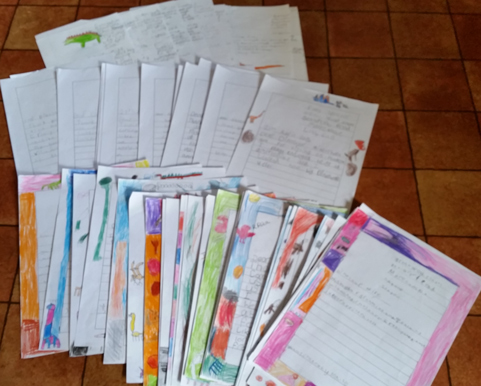
One of the things discussed was to encourage the children with their writing by asking them to write a thank you letter to Everything Dinosaur.  Sure enough, a couple of days ago we received a big envelope  from Mrs Hyland containing a super set of letters.  We have enjoyed reading them all and we have posted them up onto a notice board in our warehouse.

What a Lot of Thank You Letters we Received!

Year 2 pupils send in thank you letters to Everything Dinosaur.

Year 2 pupils send in thank you letters to Everything Dinosaur.

Picture credit: Everything Dinosaur

Thank You Letters

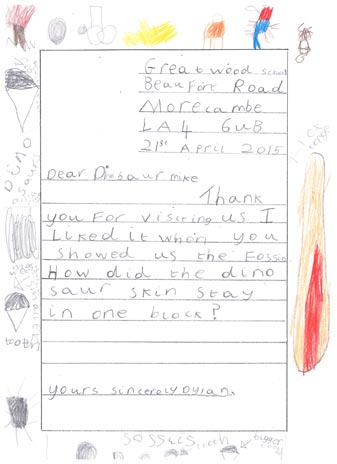
The children had taken great care in how they laid out their letters.  There was lots of proper addressing on display, some super, clear writing as well as effective use of punctuation.  Many of the children had incorporated some amazing vocabulary as well, words like “appreciate” and “sincerely” occasionally trip us up, so to see them used in a letter from a seven year old and spelled correctly too was fantastic!

Lots of Fantastic Letters to Read

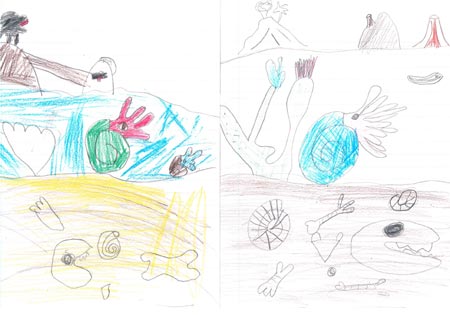
Thank you note from Alina.

Thank you note from Alina.

Picture credit: Everything Dinosaur/Alina

Dinosaur Mike who visited the school to conduct the dinosaur and fossil themed workshop exclaimed:

“We had so many letters from the children that we had to find a big space in our warehouse to lay them all out so we could take a photograph.  My colleagues and I really enjoyed reading them and I was delighted to see just how many facts that Year 2 had remembered.”

Keira, Aiden, Ella, Amr, Joy and Theo liked looking at the fossil teeth best, whilst Jude, Alex, Grace and Ewan enjoyed learning all about Triceratops.  For Tyler and Lexi-Mai they were delighted to hear all about Tylosaurus and Lexivosaurus, prehistoric animals that have names that are like their own.

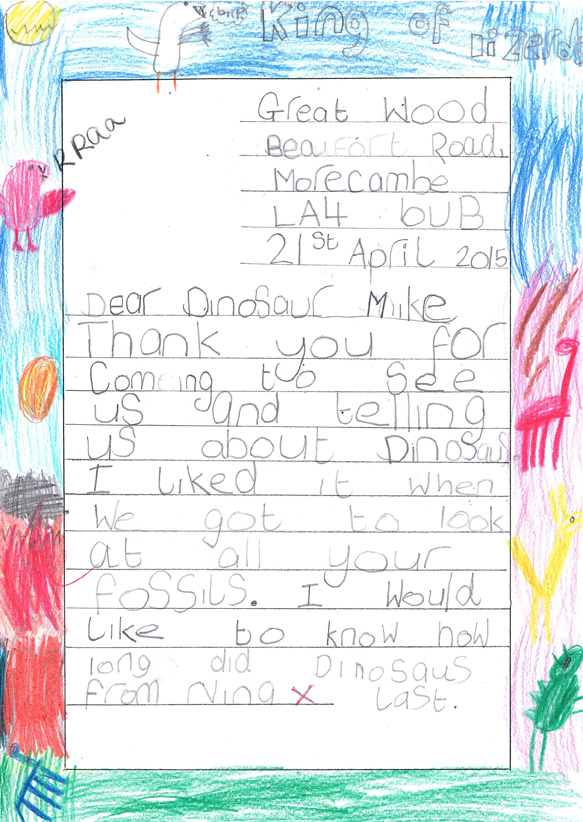
Dinosaur Themed Thank You Letter

A thank you letter from Year 2.

A thank you letter from Year 2.

Picture credit: Everything Dinosaur/Aimee

Jayden, the other little boy called Theo, Milly, Kai and Demi-Lea all wanted to know whether Everything Dinosaur will be coming back to their school to teach about dinosaurs and fossils.

Young Aimee wrote:

“Thank you for travelling to our school from a long way away today.  I was excited because we all love dinosaurs.  The fossils that we touched all felt cold and hard and I liked moving around making gigantic steps just like a dinosaur.”

Ezekiel, Gracie-Jai, Amira and  Shantel asked how our dinosaur expert came to know so much about dinosaurs?  That’s easy, he had a really enthusiastic teacher at school just like the children in Year 2.

Visit Everything Dinosaur’s website: Everything Dinosaur.

20 03, 2015

Heasandford Primary School Year 1 – Dinosaurs

By |2023-03-25T07:29:42+00:00March 20th, 2015|Categories: Educational Activities, Teaching|0 Comments

Lower Key Stage 1 Study Dinosaurs

Year 1 children at Heasandford Primary school in Lancashire have been studying dinosaurs this term and all three classrooms had lots of dinosaur themed displays.  Everything Dinosaur was invited into the school to conduct a series of dinosaur and prehistoric animal workshops with the three classes of Year 1 pupils.  One of the first things seen as we discussed the intended teaching outcomes for the day, was a clever display posted up in one of the classrooms that showed the differences between fiction and non-fiction texts.

Study Dinosaurs

Learning All About Different Types of Books

Helping to learn the difference between fiction and non-fiction texts

Helping to learn the difference between fiction and non-fiction texts.

Picture credit: Everything Dinosaur

Using dinosaurs as a template to help the children to learn about different types of books is very clever.  During the course of the term topic, the Year 1 children were given plenty of opportunities to undertake creative writing.  In addition, the children were challenged to produce their own fact books based on their favourite dinosaurs.

Dinosaur Workshop

Our dinosaur expert spent some time over lunch looking at one of these dinosaur fact books that had been produced.  Allosaurus seems to have been this budding young palaeontologist’s favourite dinosaur, there was even a model of Allosaurus made from green tissue included in the book, along with lots of prehistoric animal facts and dinosaur drawings.  With the aid of one of the enthusiastic teaching assistants, some children had even taken photographs of fossils.  We compared these pictures with some photographs of fossils in a magazine that we just happened to have with us.

Children Produce Non-Fiction Texts All About Dinosaurs

Colourful books all about dinosaurs demonstrate lots of independent learning.

Colourful books all about dinosaurs demonstrate lots of independent learning.

Picture credit: Everything Dinosaur

Dinosaur Toys

Some of the children had even brought dinosaur toys to show our expert.  Some of these proved to be just the job when it came to explaining about different types of dinosaur such as Apatosaurus and Triceratops.  This Burnley based school is one of the largest primary schools in England.  There are twenty-one classes at the moment, and the size and scale of the school enables it to be at the very heart of the local community.

With each Year group being made up of three classes, this sets the dedicated teaching team some challenges but there was plenty of evidence to demonstrate that despite the large numbers of children at the school, there was a really strong cohesion between all the classes.

The teaching teams and their learning support providers co-ordinate schemes of work to ensure that every pupil has the opportunity to learn in a safe, stimulating and enthusiastic environment.  For example, all three classes had produced some wonderful silhouette paintings of different prehistoric animals as the children explored different types of media.  These paintings made very colourful displays.

Colourful Paintings on Display

Effective use of different media.

Effective use of different media.

Picture credit: Everything Dinosaur

Extension Activities

One of the benefits of having an expert from Everything Dinosaur visit, is that there is an opportunity to discuss extension activities to help support learning.  Whilst one class was outside busy calculating the length of a Stegosaurus, we took the chance to explore one of the dinosaur museums that the children had created in the classrooms.  There was lots of evidence on display of the varied and stimulating activities that the children had been undertaking.

One of the Dinosaur Museums in a Classroom

Year 1 classes create their own dinosaur museums.

Year 1 classes create their own dinosaur museums.

Picture credit: Everything Dinosaur

As part of our follow up work with the school we emailed over some further information on the prehistoric animals that the children had learned about over the course of the day.  We even set them one or two of our special “pinkie palaeontologist challenges”, one of which included comparing Tyrannosaurus rex teeth to bananas, a great way to support the numeracy elements of the teaching scheme of work.  Could the children produce a table of their results?  Could they create a graph and plot the data?

Visit Everything Dinosaur’s website: Everything Dinosaur.

Go to Top