All about dinosaurs, fossils and prehistoric animals by Everything Dinosaur team members.

Pictures of fossils, fossil hunting trips, fossil sites and photographs relating to fossil hunting and fossil finds.

1 09, 2018

Remarkable Devon Fossil Links England with Russia

By |2024-05-11T08:09:41+01:00September 1st, 2018|Categories: Dinosaur and Prehistoric Animal News Stories, Dinosaur Fans, Main Page, Palaeontological articles, Photos/Pictures of Fossils|0 Comments

Kapes bentoni Saved by a Scan

The fossilised remains of a little reptile that roamed the land we now know as Devon has helped make links with the prehistoric vertebrate fauna of the Middle Triassic of Russia.  Thanks to the use of computerised tomography (CT) scans, palaeontologists have had the rare opportunity to study the skull and postcranial elements of a procolophonid reptile.  The fossil was found by co-author of the scientific paper, Dr Rob Coram of Swanage in November 2014, from a foreshore exposure of the Pennington Point Member of the Otter Sandstone Formation located close to the town of Sidmouth on the south Devon coast.

The Triassic sandstone deposits in these cliffs, which ironically form part of the famous UNESCO World Heritage site the “Jurassic Coast” contain vertebrate remains, but they are quite rare and often show signs of extensive weathering and transportation prior to burial and fossilisation.

The Fossil Specimen (BRSUG 29950-13) and Two Computer Generated Images
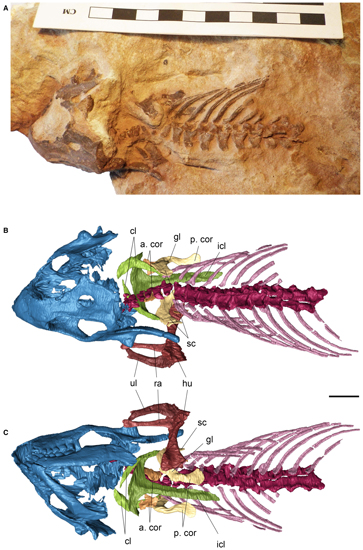
Kapes bentoni fossil and images of the fossil specimen.
Kapes bentoni fossil (top) and two images generated from the CT scans (BRSUG 29950-13).

Picture credit: Bristol University/Papers in Palaeontology

Procolophonid Reptiles (Procolophonidae)

The reptile has been identified as an example of Kapes bentoni, several species are included in this genus, all of which, including the type species K. amaenus, which was named in 1975, come from Russia.  Procolophonids looked superficially like lizards, but they are not closely related to the Squamata.  They are parareptiles, which evolved in the Permian and had a wide distribution during the Triassic, before becoming extinct shortly before the Triassic came to an end.  When Dr Coram tried to clean and prepare the fossil, he found that the fossil material was too fragile and conventional preparation techniques would have resulted in permanent damage to the fossil bones.

Dr Coram commented:

“I tried everything I could.  I have had a lot of experience of removing rock from fossils using a fine needle and working under the microscope, but this was a nightmare.  When I touched it with a needle, small pieces of bone fell off.”

CT Scanning the Devon Fossil

In order to allow the fossil to be studied, Dr Coram contacted colleagues at Bristol University and a CT scan of the small fossil was organised.  The job of interpreting the scans and the resulting computer generated images was given to PhD student Marta Zaher, who was at the Bristol University for a few months, normally she is based in Zagreb (Croatia).  The three-dimensional scans of the skull and postcranial material turned out to be far better than the scientists had hoped.  Even wear facets on the tiny teeth of the Kapes specimen could be discerned and studied.

Once all the scans had been compiled the researchers could examine the procolophonid fossil in great detail.  Most of the procolophonid fossils from England are highly fragmentary, but the scans revealed the presence of a skull, cervical vertebrae, the shoulder girdle, forelimbs and the front half of the torso.

An Illustration of the Skeleton of Kapes bentoni (Lateral and Dorsal Views)
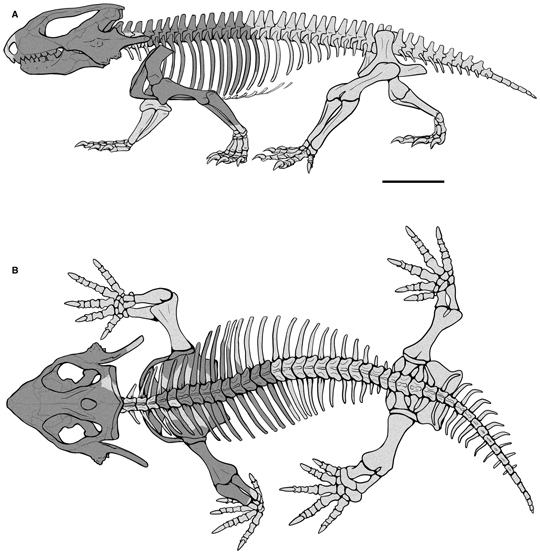
Kapes bentoni skeletal reconstruction.
A skeletal reconstruction of Kapes bentoni. Fossil material from the Sidmouth specimen (BRSUG 29950-13) is shown in grey. Lateral view (A) and dorsal view (B).  Scale bar = 10 mm.

Picture credit: Bristol University/Papers in Palaeontology

Spectacular CT Scans of a Triassic Specimen

Student Marta explained:

“The scans are amazing.  They show every detail of the tiny, five-centimetre (two inch) long skull.  You can see each tooth, and even the wear patterns.  Almost all the tiny bones of the palate and braincase are there.”

She added:

“This identifies the animal without question as a procolophonid.  These lived worldwide at the time, and they were important plant-eaters, with broad teeth fused to their jaws, and which wore down under grinding from the tough plant food.”

Several years ago, less complete specimens of the procolophonid had been found in the Devon rocks, and two academics then at the University of Bristol, Patrick Spencer and Glenn Storrs, had suggested the Devon animal was the same as Kapes from central Russia.

A spokesperson from Everything Dinosaur commented:

“Thanks to the use of computerised tomography, the researchers were able to get an unprecedented insight into the anatomy of an anapsid.  This non-destructive technique has helped scientists to identify that this Devon specimen is very closely related to other reptiles, fossils of which come from the terrestrial red beds of Russia.”

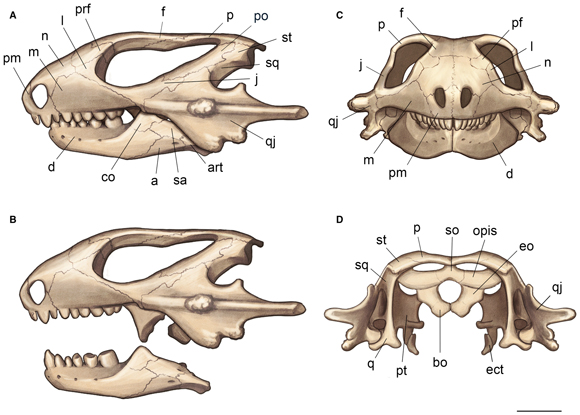
A Diagram of the Skull Produced from the CT Scan Data
Kapes bentoni skull illustration.
An illustration of the skull of Kapes bentoni recreated from the CT scans.  Scale bar = 10 mm.

Picture credit: Bristol University/Papers in Palaeontology

Co-author of the scientific paper published in “Papers in Palaeontology”, Professor Mike Benton (Bristol University) stated:

“The new study confirms that the two animals are very close relatives, two species of the genus Kapes.  This is most unusual, to have evidence of a biogeographic connection over thousands of kilometres.  In the Middle Triassic, there was dry land in the UK and in Russia, but the area in between was filled with the Muschelkalk Sea, covering Germany and much of central Europe.”

Kapes bentoni

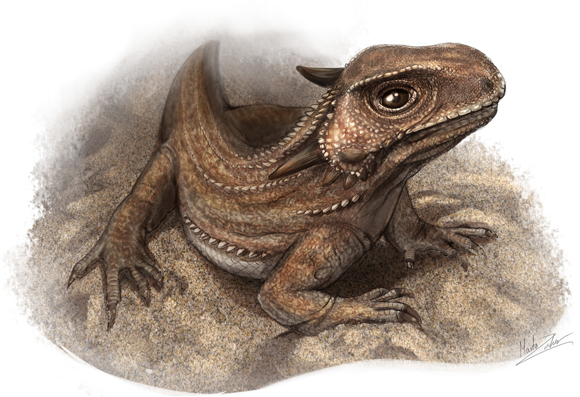
Many of the early procolophonids were insectivorous, however, Kapes bentoni was a plant-eater.  This idea is reinforced by the heavy wear on the teeth as observed in the CT scans from this study.  K. bentoni had a short, stocky body and it may have been fossorial (lived in a burrow).  The spines on the skull have provided the scientists with a bit of a puzzle.  It has been suggested that these spines had a defensive function, making the reptile seem bigger and more intimidating to a potential predator.  The spines would also have obstructed any predator attempting to swallow Kapes head-first.

A Life Reconstruction of the Procolophonid Kapes bentoni
Kapes bentoni illustrated.
An illustration of the procolophonid K. bentoni.

Picture credit: Marta Zaher

The scientific paper: “The Middle Triassic Procolophonid Kapes bentoni: Computed Tomography of the Skull and Skeleton” by Marta Zaher, Robert A. Coram and Michael J. Benton published by Papers in Palaeontology.

Everything Dinosaur acknowledges the assistance of a press release from Bristol University in the compilation of this article.

The award-winning Everything Dinosaur website: Everything Dinosaur.
28 08, 2018

A New Nodosaur from New Mexico

By |2023-10-28T12:21:58+01:00August 28th, 2018|Categories: Dinosaur and Prehistoric Animal News Stories, Dinosaur Fans, Main Page, Photos/Pictures of Fossils|0 Comments

Invictarx zephyri

Scientists from the Western Science Centre, based in California, have announced the discovery of a new species of armoured dinosaur, a member of the Nodosauridae family of dinosaurs.  The dinosaur is the first new species of dinosaur to be named from fossils found in the Menefee Formation of New Mexico. 

This dinosaur fossil discovery suggests that nodosaurids persisted in western North America (Laramidia), throughout the Late Cretaceous, whereas, the closely related ankylosaurids died out in this part of the world as sea levels rose and only became established in Laramidia again millions of years later.   The dinosaur has been named Invictarx zephyri.

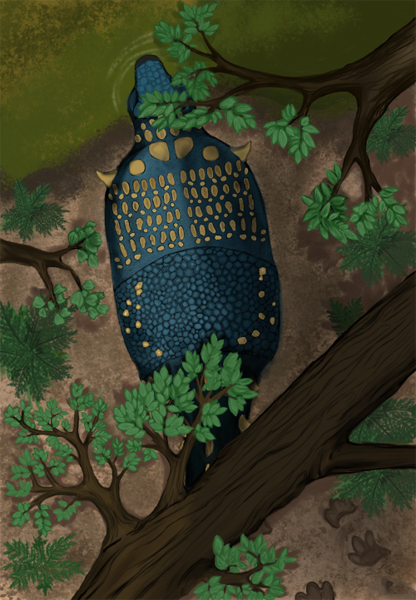
A Life Reconstruction of the New Armoured Dinosaur Invictarx zephyri

Invictaryx life reconstruction.
A life reconstruction of Invictarx zephyri.  The illustration provides a view of this new dinosaur from above so that the probable layout of the osteoderms (armour) can be shown.

Picture credit: Kara Kelley/Western Science Centre

Three Individual Armoured Dinosaur Specimens

A total of three individual dinosaurs were found, the first of which was discovered in 2011.  All the specimens were collected from outcrops of the Juans Lake Beds, the upper part of the Allison Member of the Menefee Formation, located in San Juan County (New Mexico).  A precise date for the strata at this locality is difficult to obtain but ammonite fossils found in the overlying marine sandstones suggest that I. zephyri lived some 80 million years ago.

All three specimens consist of highly fragmentary fossil material, although the shape of the osteoderms (dermal armour), along with the stratigraphical position of the fossil material (Lower Campanian aged strata from the Menefee Formation), enabled the researchers to erect a new genus.  As well as the osteoderms, the fossils include rib fragments, a piece of the left humerus, a partial ulna, dorsal vertebrae, an incomplete toe bone and elements from the radii (arm bones).

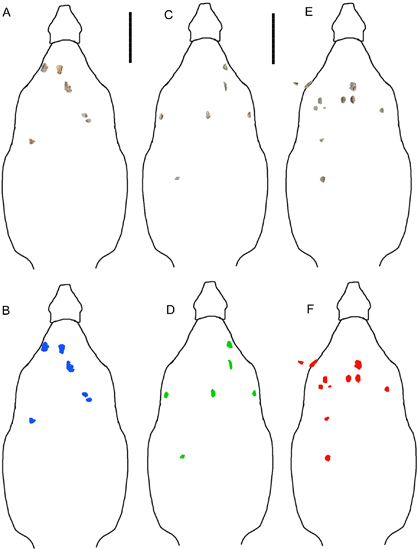
Reconstruction of the Identifiable Osteoderm Elements in the Three Individual Dinosaurs (Invictarx zephyri)

Invictaryx osteoderms placement.
Dorsal view of the location of osteoderms on the three individual Invictarx specimens.  Scale bar = 50 centimetres.

Picture credit: PeerJ

The picture above shows the life position of the identifiable osteoderms associated with the three Invictarx specimens (A,C,E).  The holotype specimen is labelled (A).  The drawings below (B, D, F) provide a colour key.  The body outline of Invictarx is not known, so the researchers have inferred the body shape (the illustration above is based on another nodosaurid Sauropelta edwardsorum).

Evidence of a Sacral Shield

Although the remains are far from complete, the researchers writing in the academic journal “PeerJ”, suggest that this dinosaur had a sacral shield (co-ossified pelvic shield), similar to the sacral shield of Polacanthus and Gastonia.  Amongst the osteoderms, potential components of a bony shield were found.  Several other dinosaur fossils from the Menefee Formation have been identified by the research team, including ornithischian and theropod remains, these are awaiting formal description, but more new dinosaur taxa are likely to be announced in the future.

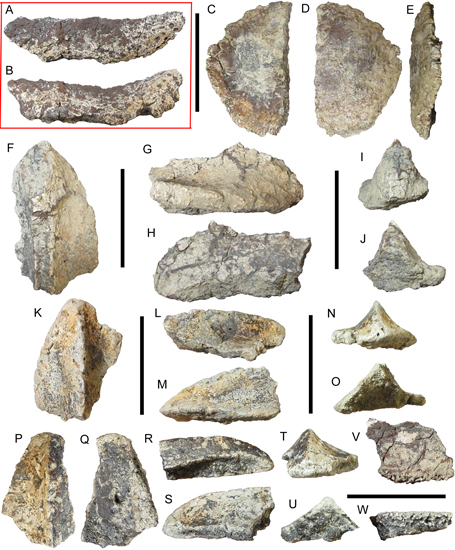
Osteoderms of Invictarx (Specimen Number  UMNH VP 28350)

Invictaryx osteoderms.
Osteoderms associated with Invictarx.

Picture credit: PeerJ

The photograph (above) shows various views of some of the osteoderms associated with Invictarx.  The red box (inset) shows two views of a large piece of armour that probably represents a portion of a broad, rounded plate, an indication that this dinosaur had a sacral shield.

Implications for Nodosaurids and Ankylosaurids in Western North America

Lots of different types of armoured dinosaur have been discovered in North America.  Both nodosaurids and their club-tailed relatives the ankylosaurids are represented.  However, the discovery of an 80-million-year-old nodosaurid in New Mexico, in conjunction with other recent armoured dinosaur finds suggests that whilst the nodosaurs were present in Laramidia during the Late Cretaceous, the related ankylosaurs were absent for several millions of years and only re-populated this part of North America towards the very of the Cretaceous period, most likely by migrating into Laramidia across an Asian land bridge.

The Discovery of the Nodosaur Invictarx zephyri Supports the Idea of Nodosaurids Persisting Whilst Ankylosaurs Suffered a Local  Extinction

Ankylosaurs may have suffered a local extinction event in Laramidia.
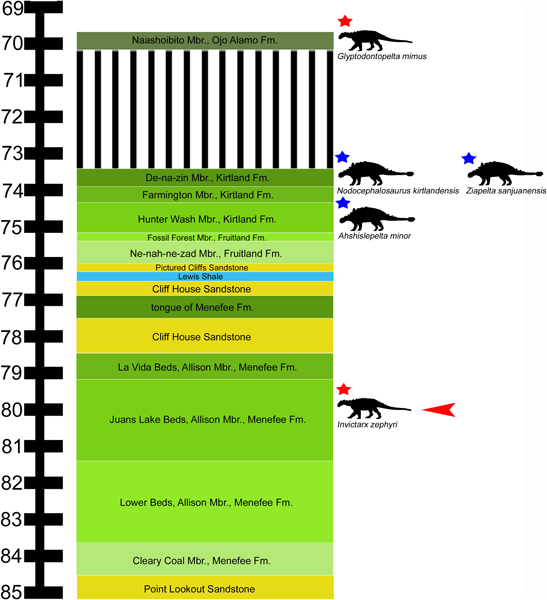
A timeline showing the geological formations and armoured dinosaur fossil finds.  The red arrow shows the position of Invictarx zephyri.  The red stars indicate nodosaurids whilst the blue stars represent ankylosaurids.

Picture credit: PeerJ with additional annotation by Everything Dinosaur

The researchers state that the loss of ankylosaurids from Laramidia coincides with the inundation of the Western Interior Seaway in the Cenomanian faunal stage of the Cretaceous, around 100 million years ago.  Ankylosaurs did not re-populate Laramidia until the Campanian faunal stage around 80 million years ago.

To view models and replicas of armoured dinosaurs and other members of the Dinosauria: PNSO Age of Dinosaurs Models.

The Naming of Invictarx zephyri

The genus and trivial name for this new nodosaurid taxon were inspired by the dinosaur’s armour and the field team’s experience during their first excavation of the fossil material in 2011.  The dig site was situated at the top of a high ridge that was blasted by strong winds.  The name translates from the Latin as the “unconquerable fortress of the western wind”.

Visit the Everything Dinosaur website: Everything Dinosaur.
25 08, 2018

Two New Chinese Dinosaurs Prove Handy

By |2023-10-28T11:35:52+01:00August 25th, 2018|Categories: Dinosaur and Prehistoric Animal News Stories, Dinosaur Fans, Main Page, Palaeontological articles, Photos/Pictures of Fossils|0 Comments

Plotting the Evolution of the Alvarezsauridae with Bannykus and Xiyunykus

A team of international scientists writing in the journal “Current Biology” have published details of two new Chinese alvarezsaurid dinosaurs that will help palaeontologists to better understand the evolution of this group of bizarre theropods.  Some later genera becoming the  prehistoric equivalents of today’s aardvarks and anteaters.  The dinosaurs have been named Bannykus and Xiyunykus and their fossilised bones are proving handy, as palaeontologists seek to understand how the alvarezsaurian dinosaurs reduced and lost most of their digits, except the thumb, which became very large and robust.  These sleek, fast-running and very bird-like dinosaurs seemed to have become very specialised over some ninety million years.

Two Newly Described Chinese Dinosaurs Help to Plug an Evolutionary Gap in the Alvarezsauridae

Chinese fossils shed light on the evolution of the specialised Alvarezsaurian monodactyl hand.
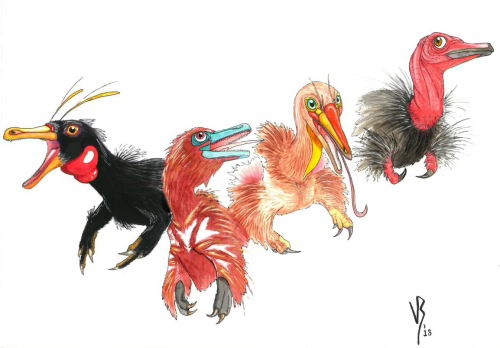
New alvarezsaurid fossils help to shed light on the evolution of the specialised alvarezsaurid hand.  Over millions of years the long forelimbs and three fingered hands evolved into the much reduced limbs with a single digit.

Picture credit: Viktor Radermacher

Chinese Alvarezsaurid Dinosaurs

The Alvarezsauroidea have a long history, basal forms such as Haplocheirus lived in Asia around 160 million years ago and the very last members of the Alvarezsauridae family were present in the Late Cretaceous, a temporal range of at least ninety million years.

The last of these bizarre, very bird-like dinosaurs have been classified into the sub-clade Parvicursorinae and these animals seem to have been very specialised insect eaters, with a strong single thumb digit with an oversized claw, powerful arm and chest muscles (although the length of the arm was much reduced), long snouts, with thin narrow jaws.  It has been speculated that these dinosaurs could rip apart the nests of termites or dig into logs to find insects.  It has even been suggested that they evolved a long tongue to help them lap up their prey in the same way that an extant anteater does.

The earliest alvarezsaurids were not insectivores, dinosaurs like Haplocheirus were probably hunters of small vertebrates.  Haplocheirus (H. sollers), had the teeth of a typical meat-eating theropod and grasping hands to catch prey.  Only later alvarezsaurids had much reduced teeth and evolved a hand with a single, large curved thumb claw.

Digit Reduction in Tetrapods

The loss of fingers and toes has occurred numerous times amongst tetrapods.  Perhaps the most famous example of all, is the evolution of the foot of the horse.  It was the notable American palaeontologist Charles Othniel Marsh, who plotted the evolution of equines by studying the toe bones of ancient horses.  Marsh was able to demonstrate how primitive horses gradually lost their toes evolving into the single-toed, fast running animal we know today.

To read more about the contribution of Marsh and the evolution of horses: The Contribution of Othniel Charles Marsh.

Both Bannykus and the slightly smaller Xiyunykus are important because they show transitional steps in the process of alvarezsaurs adapting to new diets.

Mapping the Evolutionary History of the Alvarezsauroidea

Alvarezsaurid evolution.
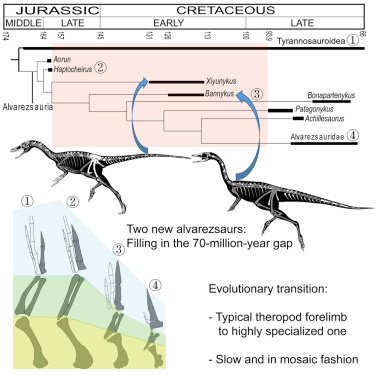
The discovery of two new Chinese alvarezsaurid dinosaurs helps to plug a seventy million year gap in the evolutionary history of the Alvarezsauroidea.

Picture credit: Current Biology

The image (above) shows the temporal position of the two, newly described species.  Both Xiyunykus and Bannykus lived during the Early Cretaceous, their fossils are helping to bridge a seventy million year gap between Late Jurassic basal forms and the advanced and highly specialised Late Cretaceous forms.

Xiyunykus pengi

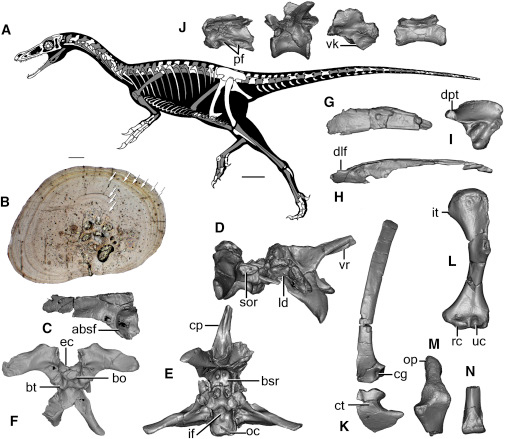
Xiyunykus was the first of these new dinosaurs to be discovered.  Its fossils were found in 2005, by an international expedition to the Junggar Basin (Xinjiang Uyghur Autonomous Region of north-western China).  The fossil remains consist of a partial, disarticulated skeleton and the material has been dated to the Barremian-Aptian faunal stages of the Early Cretaceous.  The researchers, including Xu Xing from the Institute of Vertebrate Palaeontology and Palaeoanthropology (IVPP) have estimated that this dinosaur weighed around fifteen kilograms.

Skeletal Remains of Xiyunykus pengi

Xiyunykus pengi fossils.
Xiyunykus pengi fossil material.  Picture A shows a skeletal outline (scale bar 10 cm), the known fossil material is shaded grey, whilst B, shows a cross-section through the fibula used to give an approximate age for the specimen.  Images C-N show various fossil elements used to identify and define the species.

Picture credit: Current Biology

A cross-sectional analysis of lower leg bone (B) in the image above, indicates that this dinosaur was around nine years of age when it died and probably a sub-adult.  The genus name is from “Xiyu”, the Mandarin for denoting the western regions of Central Asia and from the Greek “onyx” meaning claw.  The trivial name honours Professor Peng Xiling, who has played a significant role in the study of the geology of this region.

 Bannykus wulatensis

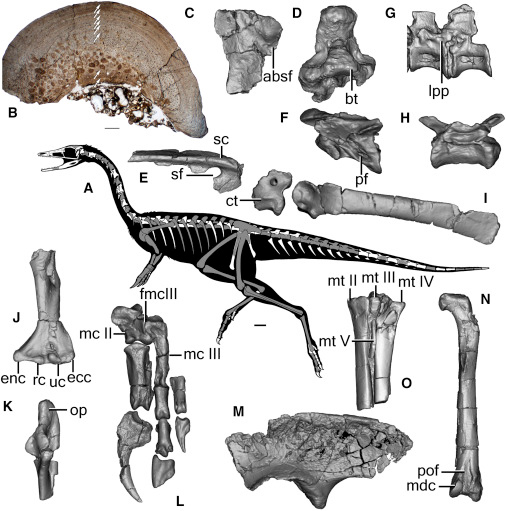
The second alvarezsaurid was discovered in 2009 in western Inner Mongolia.  The fossils come from the Bayingobi Formation  (Aptian faunal stage of the Early Cretaceous).  Histological analysis of a cross-section of bone taken from the fibula indicates that this dinosaur was around eight years of age when it died. It, like the Xiyunykus specimen, was probably a sub-adult.

Skeletal Remains of Bannykus wulatensis

Bannykus wulatensis fossil material and skeletal drawing.
Skeletal remains and a limb bone cross-section with an accompanying line drawing of Bannykus (known fossils shaded grey).  Bannykus wulatensis shown as a skeletal drawing (A), note scale bar equals 10 cm, with (B) showing the cross-section of the fibula.  Images C-O represent elements of the fossil material.

Picture credit: Current Biology

The genus name comes from the Mandarin “Ban” meaning half, a reference to the transitional anatomical features seen in this dinosaur and “onyx”, from the Greek for claw.  The trivial name refers to Wulatehouqi (Wulate Rear Banner), the county-level administrative division in which the type locality is situated.

Long Arms and Grasping Hands to Reduced Arms and Digits

These two newly described Alvarezsaurian dinosaurs have helped to determine that these peculiar Theropods very probably originated in Asia, before migrating to other parts of the world such as North and South America over their long evolutionary history. Bannykus and Xiyunykus are important because they show transitional steps in the process of alvarezsaurs adapting to new ecological niches, Bannykus, which may have lived slightly later than Xiyunykus, is showing signs of that mechanically efficient forearm, a more robust and powerful upper arm and an enlarged thumb.

The Manus (Hand) of Bannykus Showing a Transitional Stage in Alvarezsaurid Evolution

Image of the fossil bones comprising the Bannykus hand.
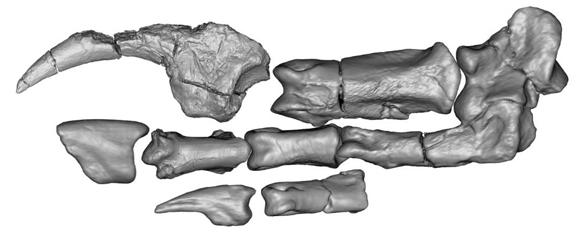
A digital image of the fossil hand of Bannykus.  Note the larger thumb with proportionally bigger bones and a big claw (hypertrophied first digit).

Picture credit: Current Biology

Still a Puzzling Group of Bird-like Dinosaurs

The discovery and scientific description of these new members of the Alvarezsauridae is very significant.  These fossils will help scientists to better understand the evolution of the specialised hand of alvarezsaurids and provide assistance when it comes to phylogenetic placement for group members.

Lead author of the scientific paper, Xu Xing commented on the evolutionary changes that had been highlighted stating:

“This transition plays out in an incremental fashion over more than 50 million years.  It could one day potentially serve as a classic example of macroevolution akin to the ‘horse series’ of North America.”

These dinosaurs are some of the more bizarre and peculiar forms of theropod.  Ancestral forms seemed to have anatomical features quite typical of carnivorous dinosaurs, before evolving much more specialised forms, probably in response to exploiting a particular ecological niche.

Co-author James Clarke (George Washington University), added:

“The fossil record is the best source of information about how anatomical features evolve and like other classic examples of evolution such as the “horse series,” these dinosaurs show us how a lineage can make a major shift in its ecology over time.”

Chinese Alvarezsaurid Dinosaurs – A Puzzle

The alvarezsaurian dinosaurs remain a puzzle.  They may have evolved into specialist insectivores, but they retained their long legs and the ability to run fast throughout their evolutionary history.  The forelimbs, hands and digits may have undergone a radical change, but these dinosaurs always seem to have remained quite graceful and agile animals.

Why these animals retained their ability to run very quickly when their prey was to be found in a termite mound or a rotting log is not clear.  However, it is likely, that the ability to run fast was continued to be selected for in this group as an adaptation to avoiding being eaten by larger predatory dinosaurs.

Palaeontologists Xu Xing and James Clarke Searching for Dinosaur Fossils

Scientists looking for alvarezsaurid fossils.
Xu Xing (IVPP) collecting fossils with James Clark (George Washington University).

Picture credit: Xu Xing

The scientific paper: “Two Early Cretaceous Fossils Document Transitional Stages in Alvarezsaurian Dinosaur Evolution” by Xing Xu, Jonah Choiniere, Qingwei Tan, Roger B.J. Benson, James Clark, Corwin Sullivan, Qi Zhao, Shuo Wang, Hai Xing and Lin Tan published in Current Biology.

Visit the Everything Dinosaur website: Everything Dinosaur.
24 08, 2018

First Diagnosis of Septic Arthritis in a Dinosaur

By |2023-10-28T11:25:46+01:00August 24th, 2018|Categories: Dinosaur and Prehistoric Animal News Stories, Dinosaur Fans, Main Page, Photos/Pictures of Fossils|0 Comments

A Very Poorly Duck-billed Dinosaur

A team of scientists, including a researcher based at the University of Manchester, have identified a case of septic arthritis in a dinosaur bone.  This is the first documented case of this crippling condition to have been identified in the fossilised bones of a dinosaur.  It is likely that the poor, unfortunate dinosaur, a hadrosaurid, struggled with painful joints for some time before it died.

The fossil bones, an ulna and radius (bones from the arm), were found in the Upper Cretaceous deposits of the Navesink Formation (New Jersey, USA).  The strata were laid down in a near shore marine environment and dinosaur bones are exceptionally rare from these sediments, the ulna and radius were found fused together, but they were subsequently separated.

The ulna has a preserved length of 67.5 cm and the radius is slightly smaller at around 53.5 cm.

Bones from a Member of the Hadrosauridae?

The bones were compared to other hadrosaurid forelimb material and based on this analysis they were assigned to the Hadrosauridae (duck-billed dinosaurs), like many of the dinosaur fossil bones from eastern North America (Appalachia), these two bones could not be assigned down to the genus level.  Writing in the open access journal “Royal Society Open Science”, the researchers refer to the specimens as coming from an indeterminate hadrosaurid.

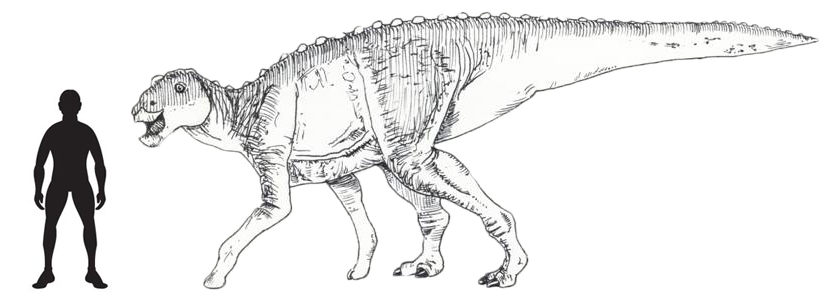
A Drawing of a Hadrosaurid Which May Have Been Similar to the Navesink Formation Specimen (NJSM GP11961)

Gryposaurus scale drawing.
A Gryposaurus scale drawing.  Many of the duck-billed dinosaur fossils from eastern North America are not assigned to any particular taxon.  However, most of the Hadrosauridae fossils found in this area are believed to have come from dinosaurs similar to Gryposaurus or Edmontosaurus in appearance.  Based on the limb measurements (preserved lengths), it is likely that the bones came from a large animal, about the size of the dinosaur depicted in the scale drawing. Picture credit: Everything Dinosaur.

Picture credit: Everything Dinosaur

Non-destructive Method of Viewing the Internal Structure of Fossil Bone

Historically, when palaeontologists have decided to assess the condition of a bone’s interior this has resulted in severe damage to the specimen. Prior to the use of X-ray microtomography (CT scans), the fossil bone would have had to be sectioned in order to reveal details of the inside. However, CT scans and other such non-invasive methods have enabled researchers to assess features inside the fossil in a non-destructive way. In this study, the ulna and radius (NJSM GP11961), were subjected to detailed cross-sectional CT scanning to assess the extent of the pathology present inside the fossil bones.

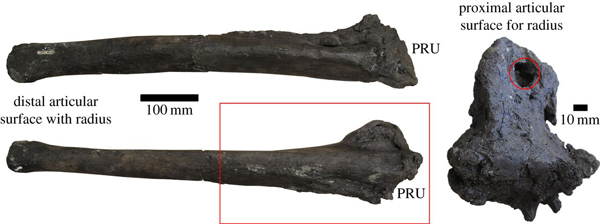
Pathology (Septic Arthritis) Identified in the Hadrosaurid Ulna

Septic arthritis in a hadrosaurid ulna.
Septic arthritis identified in fossil dinosaur bone.

Picture credit: Royal Society Open Science

The picture above shows the hadrosaurid ulna (NJSM GP11961) in several views.  The scientists identified a large area of roughened and remodelled bone towards the proximal articulation with the radius surface (PRU).  Large lesions caused by the condition were found.  The section of dinosaur bone in the red box shows that portion of the fossil that was subjected to X-ray microtomography.

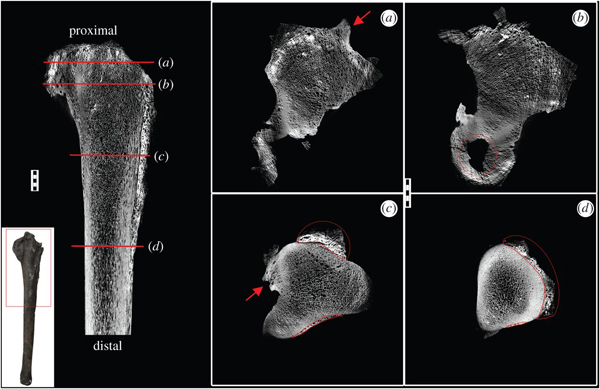
X-ray microtomography Reveals the Extant of the Damage to the Ulna

CT scans show septic arthritis in a dinosaur bone.
X-ray microtomography of the ulna providing a cross-sectional analysis of the pathology.

Picture credit: Royal Society Open Science

Note the scale bar is 1 cm.  The lines labelled a to d in the image on the far left show the transverse sections on the ulna which correspond to the other four images shown.  Abnormal, well-developed bony projections (enthesiophytes), are highlighted by the red arrows (images a and c).  Necrosis (dead bone) is seen in b (circled in red) and remodelled bone growth is shown in both c and d (also outlined in red).

Comparing the Dinosaur’s Condition to Similar Conditions Found in Living Reptiles and Birds

The researchers, which included scientists from the University of Massachusetts and the New Jersey State Museum as well as Manchester University, looked at similar conditions seen in poultry and living reptiles and concluded that the abnormal bone growth, lesions and remodelled bone were likely caused by a form of osteoarthritis (arthritis in the bone).

Diagnosing Dinosaur Bone

Diagnosis was based on the erosion of the joint and highly reactive periosteal bone growth and fusion of the elements.  This condition is caused by the loss of cartilage and it would have been very painful for the animal.  Osteoarthritis in birds and reptiles is usually a consequence of disease, bacterial infection or trauma.  The scientists were not able to state with any certainty how the condition came about, but at some point in this duck-billed dinosaur’s life it either had an accident, was attacked or caught an infection that led to this secondary condition.  What the scientists were able to state was that this dinosaur lived with this painful condition for some time before it died.

Septic Arthritis Identified in the Hadrosaurid Radius

Hadrosaurid radius with septic arthritis.
The hadrosaurid radius showing the septic arthritis.

Picture credit: Royal Society Open Science

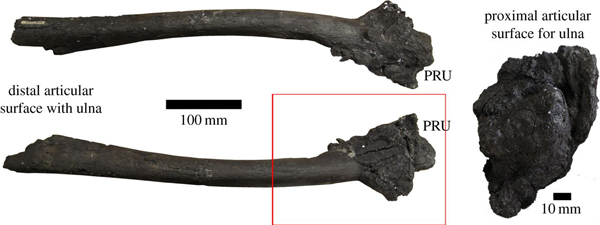
The picture above shows the hadrosaurid radius (NJSM GP11961), the red box indicates the area that was subjected to X-ray microtomography.  The radius shows heavy reactive bone growth on the proximal articulation surfaces.  In the picture, PRU (proximal articulation surface with the ulna), shows extensive pathological bone growth, described by the researchers as having a “cauliflower-like” appearance.  The scientists noted that the distal articular surface with the ulna had eroded, most of the vertebrate fossils from the Navesink Formation tend to consist of isolated fragments, often quite heavily eroded due to taphonomy.

Septic arthritis is usually localised in reptiles, unlike in people, where the condition can spread throughout the body.  However, as only the ulna and radius were found the extent to which the rest of the dinosaur’s body was affected is not known.

Visit the Everything Dinosaur website: Everything Dinosaur.
23 08, 2018

Turtle Evolution Complicated by New Fossil Discovery

By |2024-05-11T08:15:08+01:00August 23rd, 2018|Categories: Dinosaur and Prehistoric Animal News Stories, Dinosaur Fans, Main Page, Palaeontological articles, Photos/Pictures of Fossils|0 Comments

Oldest Turtle with a Beak but No Shell – Eorhynchochelys sinensis

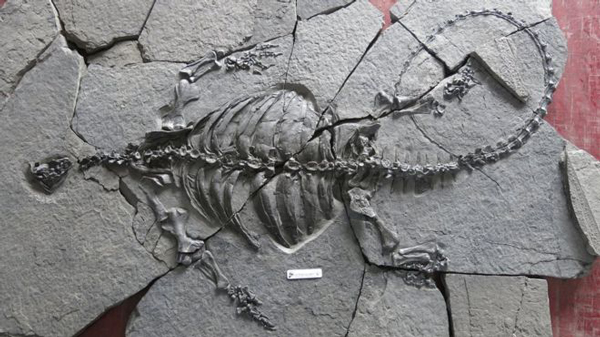
A beautifully preserved and very nearly complete fossilised skeleton of a turtle is helping scientists to unravel the evolutionary story of these ancient reptiles.  Slowly but surely scientists are learning more about turtle evolution.

However, it seems that the evolution of turtles, tortoises and terrapins (the Order Testudines, sometimes referred to as the Chelonii), may be even more complicated than previously thought, just like a large terrapin in a small aquarium, the discovery of this new fossil, might just have muddied the water somewhat.

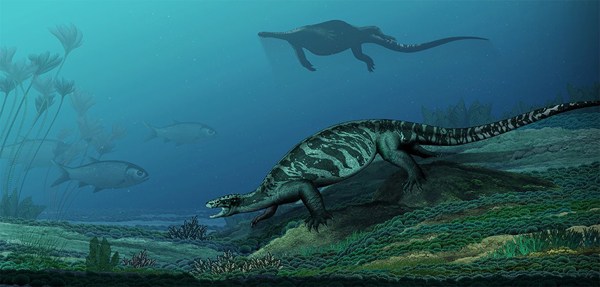
A Life Reconstruction of the Newly Described Late Triassic Turtle Eorhynchochelys sinensis

Eorhynchochelys sinensis life reconstruction.
A life reconstruction of Eorhynchochelys sinensis.

Picture credit: Yu Chen (Institute of Vertebrate Palaeontology and Palaeoanthropology)

Early Turtle From the Late Triassic

The skeleton was excavated from Upper Triassic rocks in Guanling County, (Guizhou Province, south-west China).  It has been named Eorhynchochelys sinensis, the name means “dawn turtle with a beak from China”.  As the scientific name suggests, this is the oldest turtle ever found with a toothless beak.

Its discovery might help to close a gap in the evolutionary history of the Chelonii, as although it did not have a shell (the fossil lacks a carapace or plastron), the skull is very similar to the skull of extant turtles, but the rest of the animal’s skeleton resembles that of an earlier basal turtle that lived some ten million years previously.  Eorhynchochelys was over two metres long and it lived in an estuarine environment, it was most likely amphibious and the presence of strong claws and well-developed forelimbs suggests that this ancient animal may have lived in a burrow.

A View of the Fossil Material E. sinensis

Eorhynchochelys sinensis fossil - an early turtle without a shell.
Eorhynchochelys sinensis fossil (dorsal view).

Picture credit: National Museums of Scotland

Mosaic Evolution

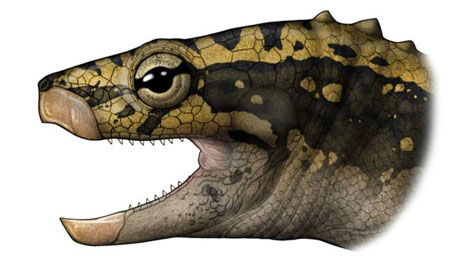
The researchers, which included scientists from the National Museums of Scotland, the Chicago Field Museum, the Canadian Museum of Nature and the Institute of Vertebrate Palaeontology and Palaeoanthropology in Beijing, were intrigued by the modern-looking turtle skull with its characteristic edentulous (toothless) beak.

This feature had not been seen in early fossil turtles before and the dating of  Eorhynchochelys indicates that this trait seems to have disappeared in some lineages and reappeared millions of years later.  This suggests that the evolutionary development of the Chelonii was much more complicated, after all, here was a Late Triassic ancestral turtle with a modern-looking skull but lacking a shell, although the broad, enlarged ribs and other anatomical features of the skeleton indicated that this type of reptile was on the way to evolving such a feature.

The fact that Eorhynchochelys developed a beak before other early turtles but didn’t have a shell is evidence of mosaic evolution, the idea that characteristics can evolve independently from each other and at a different rate and that not every ancestral species has the same combination of these traits.  All living turtles have both shells and toothless beaks, the evolutionary path that led to these traits was not a simple linear progression.

Turtle Evolution

Some ancient turtles evolved partial shells, whilst others evolved beaks, eventually the genetic mutations and natural selection that allowed these traits to develop became unifying characteristics of the group as a whole.

A Life Reconstruction of the Head of Eorhynchochelys

Eorhynchochelys sinensis with its beak.
An illustration showing the head of Eorhynchochelys sinensis with its beak.

Picture credit: Institute of Vertebrate Palaeontology and Palaeoanthropology

Family Links

Although the discovery of Eorhynchochelys sinensis helps to provide further information on the evolution of turtle traits, it does not resolve a long-standing argument about where in the Class Reptilia the Testudines (Chelonii), should be placed.  However and whenever these reptiles evolved their characteristic features might be complicated, but it seems that by around 210 million years ago, the turtle body plan with its carapace, plastron and beak had come about and this group have remained relatively unchanged since.

The Testudines seem to lack a feature that is common in most other reptiles, a pair of holes (fenestrae), in their skulls behind the eyes.  For many years, turtles were thought to be anapsids (members of the  Anapsidae), a very primitive subclass of the Reptilia.  Genetic studies have suggested that turtles, tortoises and terrapins are closely related to diapsid reptiles and their close relatives, archosaurs such as crocodilians, dinosaurs and birds.  However, other studies have concluded that turtles and their kind might actually, be more closely related to snakes and lizards (Squamata).

Eorhynchochelys had a single pair of holes behind its eye sockets, this might suggest an anapsid origin or it might indicate that Eorhynchochelys is a transitional form that evolved from diapsid ancestors.

Chinese Fossil Discovery

Commenting on the taxonomic position of the Chelonii in the light of this new Chinese fossil discovery, co-author of the research, Xiao-Chun Wu (Canadian Museum of Nature), explained that when the physical characteristics of Eorhynchochelys were considered in an analysis with other fossilised reptiles, it is likely that turtles are not closely related to either the Archosauria or the Squamata, but it is more likely that they are an offshoot from earlier, more primitive reptiles.

In the absence of more fossils, this debate is not going to be resolved anytime soon.

To read an article from 2013 looking at research into the evolution of Chelonians: How the Turtle Got Its Shell.

For an article that discusses the discovery of Pappochelys rosinae a basal turtle that lived some 20 million years earlier than Eorhynchochelys, that has been classified as a diapsid but had the beginnings of a plastron: Pappochelys – The Grandfather of the Chelonii.

Visit the Everything Dinosaur website: Everything Dinosaur.
21 08, 2018

Dinosaur Footprints Discovered on the Scottish Mainland

By |2023-10-28T08:38:32+01:00August 21st, 2018|Categories: Dinosaur and Prehistoric Animal News Stories, Dinosaur Fans, Main Page, Photos/Pictures of Fossils|0 Comments

Dinosaur Footprints Discovered Near Inverness

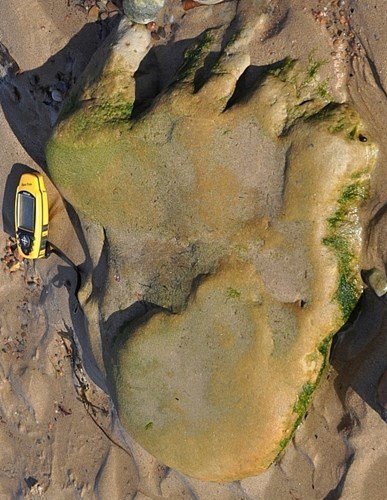
The Isle of Skye might be famous for its dinosaur footprints, but it had been thought that dinosaur trace fossils such as trackways were absent from the Scottish mainland.  However, Dr Neil Clark (Vice President of the Geological Society of Glasgow and Curator of Palaeontology at the Hunterian Museum, Glasgow University), has published a report on the first evidence of dinosaur tracks to have been found on the Scottish mainland.  Dr Clark and his colleagues are trying to raise funds so that they can continue to map and study this evidence of Scottish dinosaurs.

Dinosaur Tracks

One of the Sauropod Tracks from the Scottish Mainland

Footprint of a Middle Jurassic Sauropod.
Sauropod footprint from the Scottish mainland.

Picture credit: Dr Neil Clark

Sauropod and Theropod Tracks Dating from the Middle Jurassic

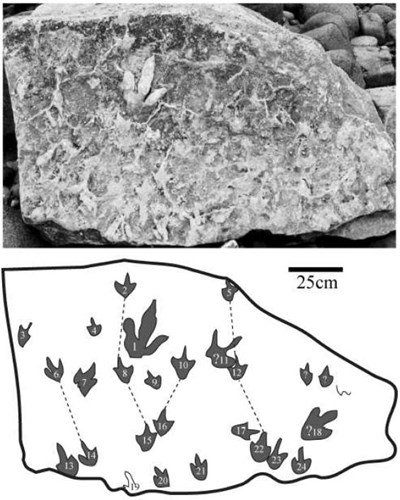
The footprints, preserved in sandstone represent three-toed theropod dinosaurs and the larger prints were very probably made by long-necked herbivores (sauropods).  The exact location of the trace fossils has not been reported, a precaution in order to protect these extremely important fossils from any would-be fossil hunters, keen to remove a footprint.

Commenting on the significance of this discovery, Dr Clark stated:

“The footprints are the first evidence of dinosaurs found on the Scottish mainland.  All the other discoveries are from the Hebrides Basin and in particular the Isle of Skye.”

To read Everything Dinosaur’s 2015 article about the discovery of sauropod trackways on the Isle of Skye: Isle of Skye Sauropods and their Water World.

To read Everything Dinosaur’s article from April 2018 reporting on more dinosaur tracks discovered on the Isle of Skye: The Isle of Skye Steps into the Jurassic Spotlight.

Rare Evidence of Middle Jurassic Dinosaur Biota

Fossils of dinosaurs dating from the Middle Jurassic are exceptionally rare.  Very few parts of the world have rocks exposed dating from this period in Earth’s history, so any new information about prehistoric animals from this period is extremely important.

A Record of Theropods from the Scottish Mainland

Theropod tracks from the Scottish mainland.
Theropod tracks with an accompanying line drawing.

Picture credit: Dr Neil Clark

For models and replicas of sauroped and theropod dinosaurs: Dinosaur and Prehistoric Animal Models.

Dr Clark added:

“The interesting thing about the discovery is that these are the first from the Moray Basin to the east of Scotland and help to build a clearer picture of dinosaurs living here during the Middle Jurassic.  Middle Jurassic dinosaurs are scarce worldwide and Scotland is one of the top few localities despite the poor exposure of rocks of that age.”

As these fossils are from a completely new part of Scotland for dinosaurs they will add significantly to our understanding of dinosaurs of that age in Britain.

Crowdfunding to Map the Locality

Dr Clark has set up a crowdfunding page in order to undertake a project to map the prints using a drone and to take measurements of the effects of erosion on the footprints by stormy seas.  The Scottish mainland tracks are approximately the same age as the trackways identified from the Isle of Skye – around 170 million years old.

The appeal target is £5,000 GBP, which is required to cover travel, materials and accommodation costs as well as the expenditure on the drone.  In addition to Neil, the researchers include members of Edinburgh University’s School of Geosciences and students.

Update

The crowdfunding appeal was successful, a total of £5,200 was raised to permit the mapping of the site to go ahead.

Visit the award-winning Everything Dinosaur website: Everything Dinosaur.
20 08, 2018

The Amazing Pachycephalosaurus wyomingensis

By |2024-05-11T08:06:52+01:00August 20th, 2018|Categories: Dinosaur Fans, Main Page, Photos/Pictures of Fossils|0 Comments

Pachycephalosaurus wyomingensis

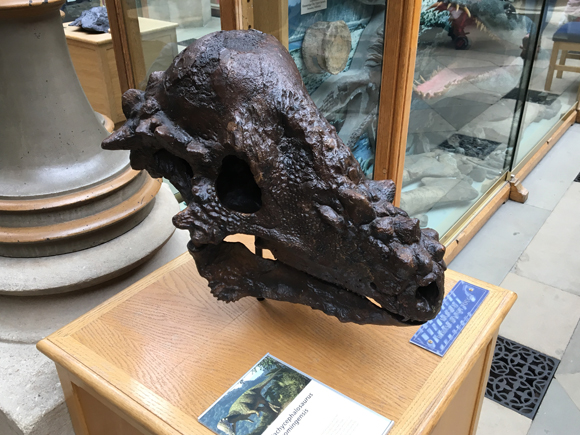
Whilst on a recent visit to the Oxford University Museum of Natural History, a team member from Everything Dinosaur took the opportunity to admire a replica skull of the North American member of the Pachycephalosauridae – Pachycephalosaurus wyomingensis.

A Replica Skull of the Late Cretaceous Dinosaur Pachycephalosaurus wyomingensis

A replica skull of Pachycephalosaurus wyomingensis.
Pachycephalosaurus wyomingensis replica skull.  Picture credit:  Everything Dinosaur.

Picture credit: Everything Dinosaur

For models and replicas of Pachycephalosaurus and other dinosaurs: Dinosaur and Prehistoric Animal Models.

Pachycephalosaurus wyomingensis – A Very Tactile Experience

This exhibit permits visitors to feel a replica skull of a Pachycephalosaurus.  It is great to see such sensory engagement in a museum.  Feeling the skull of such a strange dinosaur is quite a tactile experience.  The first fossils assigned to this genus were found in Montana eighty years ago.

Although the picture that accompanies the replica skull shows a Pachycephalosaurus charging with its head down, the amazing ornamentation, all those bumps, horns and that extraordinary skull remain a mystery.  The exact function and purpose of the skull is still debated.  Although the dome of bone that sits on top of the head is very thick, research suggests that the cranium would not have stood up to the force of any impacts all that well.

Visitors to the museum can see the large orbit (eye-socket) and the sizeable nostrils.  Studies have shown that pachycephalosaurs probably had excellent eyesight and a good sense of smell.

Visit the Everything Dinosaur website: Everything Dinosaur.
18 08, 2018

Safari Ltd Models Help With Scientific Research

By |2023-10-27T14:48:10+01:00August 18th, 2018|Categories: Dinosaur and Prehistoric Animal News Stories, Everything Dinosaur Products, Main Page, Photos of Everything Dinosaur Products, Photos/Pictures of Fossils|0 Comments

Cambrian Toob Models Help Scientists

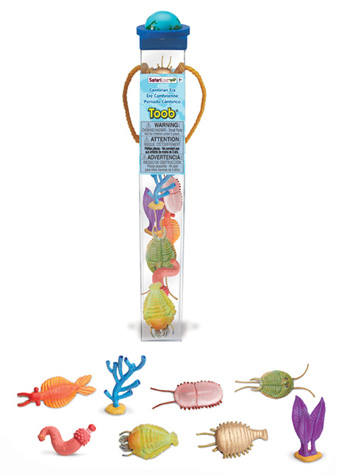
Safari Ltd introduced into their range of prehistoric animal models a tube (toob) of Cambrian lifeforms, a set of eight figures that represent different types of creature that existed more than 500 million years ago.  This skilfully crafted and well-designed range of replicas has proved to be extremely useful for researchers as they study the enigmatic animals that existed during the Cambrian and the preceding geological age, the Ediacaran.

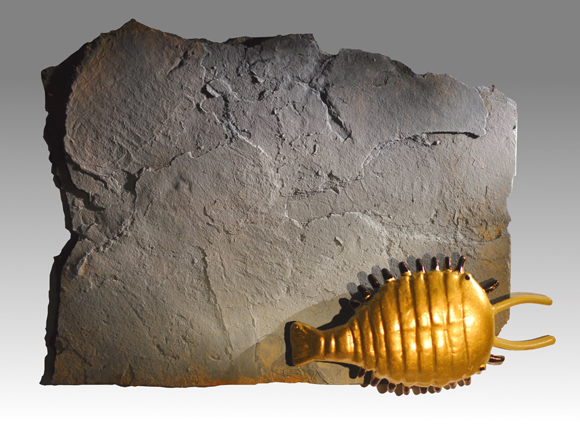
Sometimes it can be challenging for scientists to illustrate their fossil finds.  Many fossil specimens can be difficult to make out to the untrained eye and a model of the animal placed in close proximity to the fossil, can help to demonstrate what sort of creature the fossil represents.  A few days ago, Everything Dinosaur supplied a Safari Ltd Cambrian Toob to a researcher at Bristol University who wanted to use one of the models in this set for just such a purpose – to illustrate the ancient Cambrian arthropod Sidneyia.

The Cambrian Fossils Next to a Model of Sidneyia

Wild Safari Prehistoric World Cambrian Toob models used to illustrate fossils.
Fossil arthropods preserved in a 520 million-year-old rock with a model of one of the creatures – Sidneyia.

Picture credit: Bristol University/Everything Dinosaur

Ancient Fossils from the Far North of Greenland

The slab of rock (above) comes from northern Greenland, it contains a preserved impression of the Cambrian arthropod known as Sidneyia.  At around six centimetres in length, the Wild Safari Prehistoric World Sidneyia replica provides a useful scale.  The scientist explained to Everything Dinosaur that the rock comes from a locality called  Sirius Passet and it was collected on a recent expedition to this remote part of the world during the summer.

The fossil site was discovered in 1984 by a field team from the Geological Survey of Greenland.  Several thousand specimens have been collected over the years, the Sirius Passet locality is a Cambrian Lagerstätte, a very fossil rich area that preserves marine fauna from the, as yet, not formally defined “Stage 3” of the Cambrian geological period.  The Sirius Passet biota is often compared to the biota associated with the Burgess Shale deposits of British Columbia, but the Greenland rocks are at least ten million years older and therefore more comparable in age to the Maotianshan shales from Chengjiang, from Yunnan Province in south-western China.

The Safari Ltd Cambrian Toob Models

Cambrian Toob (Safari Ltd)
Examples of the Cambrian biota.

Safari Ltd Cambrian Toob Contents

The eight colourful figures in the Safari Ltd Cambrian Toob represent a variety of different marine organisms, including the nektonic predator Anomalocaris, Vauxia (a sponge) and the bizarre worm-like creature Ottoia.  Several arthropods are featured too, including Sanctacaris, Sidneyia, Naraoia and a Trilobite (Tricrepicephalus).

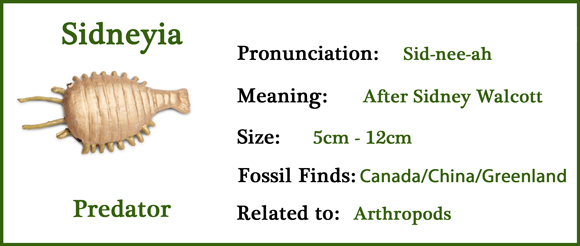
Sidneyia from the Safari Ltd Cambrian Toob

Sideyia details.
Details about the Cambrian arthropod Sidneyia. Picture credit: Everything Dinosaur.

Picture credit: Everything Dinosaur

Believed to have been a predator feeding on molluscs and other hard-shelled creatures, Sidneyia probably scuttled along the sea floor (benthic).  It was named after Sidney Walcott, the eldest son of Charles Walcott, the American scientist who discovered the Burgess Shale deposits in 1909.  The scientist who requested the Safari Ltd Cambrian Toob wrote to say that the rock slab contains three arthropods, a well-preserved Sidneyia, a well-preserved, undescribed arthropod that they were working on and another indeterminate arthropod.

To view the Safari Ltd Cambrian Toob and the other figures in this range: Safari Ltd: Wild Safari Prehistoric World.

17 08, 2018

Desmostylian Discourse and a Rare Fossil Bone

By |2024-05-11T08:07:51+01:00August 17th, 2018|Categories: Dinosaur and Prehistoric Animal News Stories, Main Page, Photos/Pictures of Fossils|0 Comments

“Dinosaur” Bone Identified as Desmostylian

A fossil bone, a partial femur, found in the 1950s and originally regarded as “dinosaur” bone has been reassessed and confirmed as coming from a bizarre marine mammal, a member of the Desmostylia Order, a group of mysterious animals that looked like a cross between a sea-going hippopotamus and a sealion with hooves.  Writing in the open access journal of the Royal Society (Royal Society Open Science), the research team were able to track down the fossil site using the original hand-written note kept with the fossil in combination with interviews of relatives of construction workers who were involved in the original fossil find.

Views of the Fossil Femur – The “Dinosaur” Bone

Views of the fossil thigh bone - Desmostylia.
Views of the Desmostylia femur with a taxonomic illustration in the form of a line drawing.

Picture credit: Kumiko Matsui et al./Royal Society

The picture above shows the fossil femur (top) with an accompanying line drawing (bottom).    Cranial view (A), interior view (B), caudal view (C) with an exterior view (D).  Note the scale bar is ten centimetres.

Scientists Turn into Detectives

Yuri Kimura, the Curator of Vertebrate Palaeontology at the National Museum of Nature and Science (Tokyo) and one of the co-authors of the scientific paper, found an old wooden box when exploring the archives of the University of Tsukuba last year.  The box contained the proximal end of a right femur.  The scientist then set about identifying the location of the fossil find.  Yuri and the other collaborators on this project, a combination of anatomical assessment, taphonomy and detective work, learned that the fossil was discovered during construction of a debris flow barrier and that it was recognised as a “dinosaur” bone among the locals and displayed in a village hall until the town experienced a fire disaster in 1954.

During the research, one of the interviewees confirmed that the bone had been described as coming from a member of the Desmostylia, but if it had been examined by a scientist/palaeontologist, it had not been reported or the find officially documented.

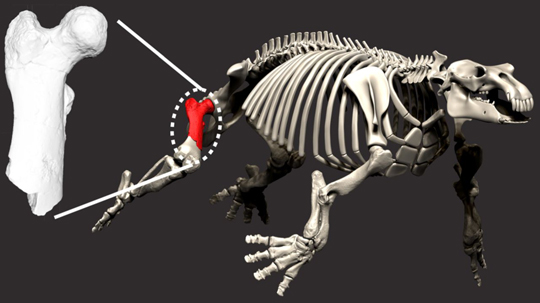
A Skeletal Drawing of Paleoparadoxia (Desmostylia) Showing the Anatomical Position of the Bone

Paleoparadoxia skeleton showing the location of the fossil bone.
A skeleton of Paleoparadoxia showing the location of the fossil bone (in red).

Picture credit: Kumiko Matsui et al./Royal Society

Paleoparadoxia (Desmostylia)

Comparisons undertaken with other fossil specimens, led the research team to conclude that the right femur was from the Paleoparadoxia genus, a member of the Desmostylia, an extinct Order believed to be distantly related to Sea Cows.

This study provides an excellent example of historical and scientific information being extracted from long-forgotten and uncatalogued specimens so long as the original information is retained with the specimens.

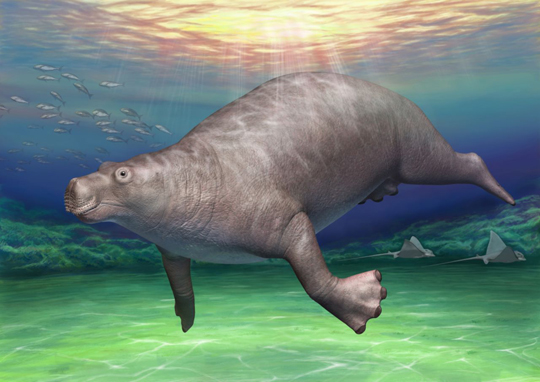
A Life Reconstruction of Paleoparadoxia

Paleoparadoxia - life reconstruction.
A life reconstruction of the bizarre Miocene mammal Paleoparadoxia.

Picture credit: Kumiko Matsui et al./Royal Society

Visit the Everything Dinosaur website: Everything Dinosaur.
13 08, 2018

Rare Silurian Fossil “Worm” from a Herefordshire Hotspot

By |2023-10-27T10:25:37+01:00August 13th, 2018|Categories: Dinosaur and Prehistoric Animal News Stories, Main Page, Palaeontological articles, Photos/Pictures of Fossils|0 Comments

A New Species of Lobopodian from Herefordshire

Fossil worm excites palaeontologists. Three-dimensionally preserved lobopodian from Herefordshire.

A team of international researchers including scientists from the Oxford University Natural History Museum, Imperial College London, Manchester and Leicester Universities and the Yale Peabody Museum of Natural History, have identified a new species of lobopodian, a bizarre segmented worm-like creature, in 430 million-year-old rocks in Herefordshire (England).  Digital technology has been utilised to reconstruct a three-dimensional model of this exceptional fossil, an ancient ancestor of the modern, enigmatic Velvet worm.

The Research Team Produced Three-dimensional Images of the Fossil Lobopodian

Thanahita distos - digital reconstruction.
Three-dimensional digital images of the fossil lobopodian from Herefordshire.

Picture credit: University of Leicester

Soft-bodied, Worm-like Creatures with Legs

Lead author of the study, Derek Siveter, (Professor Emeritus of Earth Sciences at Oxford University and Honorary Research Associate at Oxford University Museum of Natural History), commented:

“Lobopodians are extremely rare in the fossil record, except in the Cambrian Period.  Worm-like creatures with legs, they are an ancestral marine relative of modern-day velvet worms, or onychophorans – predators that live in vegetation, mainly in southern latitudes.”

The Velvet Worm (Peripatus Genus)

Velvet worm - Peripatus.
Peripatus a genus within the  Onychophora – creatures like this may have been the first to walk on land.

Picture credit: BBC

The Evolution of the Arthropods

Palaeontologists have puzzled for decades over the evolution of groups of modern animals such as the Arthropoda, the largest phylum of animals which includes the trilobites, insects, crustaceans, spiders, scorpions, mites and so forth.  Studies of the exotic Ediacaran and Cambrian biota has helped scientists to better understand the evolutionary relationships between living groups of animals today and their ancient invertebrate ancestors, but many soft-bodied groups are severely underrepresented in the fossil record.

Thanahita distos

It is still extremely difficult to pin down which type of organism preserved within the remarkable Cambrian-aged Burgess Shale deposits for example, is an ancestor of modern groups of animals alive today.  This newly described fossil specimen, named Thanahita distos represents an example of a member of the Lobopodia, an extremely ancient group of invertebrates that might be a basal member of the panarthropods – a clade that includes today’s arthropods, as well as Velvet Worms (Onychophora) and the Water Bears (tardigrades).

The Silurian-aged deposits in Herefordshire, consist of finely grained volcanic ash layers that settled on a seabed some 430 to 425 million years ago.  These sediments have preserved in exquisite detail many of the marine organisms that roamed across the sea floor.  Writing in the Royal Society Open Science journal, the researchers describe T. distos and note that it is the first lobopodian to be formally described from rocks from the Silurian and it is one of only eight known three-dimensionally preserved lobopodian or onychophoran fossil specimens known to science.

Professor Siveter explained how the team were able to build up a picture of the ancient sea creature:

“We have been able to digitally reconstruct the creature using a technique called physical-optical tomography.  This involves taking images of the fossil at a fraction of a millimetre apart, then “stitching” together the images to form a “virtual fossil” that can be investigated on screen.”

Herefordshire Lagerstätte

The Herefordshire Lagerstätte has provided scientists with numerous exceptionally preserved invertebrate fossils.   Everything Dinosaur has reported on several of these, very significant fossil discoveries on this blog, including one Herefordshire fossil which was named in honour of Sir David Attenborough:

Silurian Fossil Discovery Honours Sir David Attenborough.

Professor Siveter outlined how delicate creatures like Thanahita distos became preserved, he stated:

“Thanahita distos and the other animals that became fossilised here likely lived 100 to 200 metres down, possibly below the depth to which much light penetrates.  We deduce this because we found no vestiges of photosynthetic algae, which are common in contemporaneous rocks laid down at shallower points on the seafloor to the east.

Professor Siveter added:

Some special circumstances allowed for their remarkable preservation.  The first was the immediate precipitation of clay minerals around the dead organisms, which decayed over time, leaving empty spaces behind.  The mineral calcite – a form of calcium carbonate – then filled these natural moulds, replicating the shape of the animals.  Almost at the same time, hard concretions began to form, being cemented by calcite.  Thanks to the early hardening of these Silurian time capsules in this way, the fossils were not squashed as the ash layer slowly compacted.”

Fossil Worm Related to the Enigmatic Hallucigenia

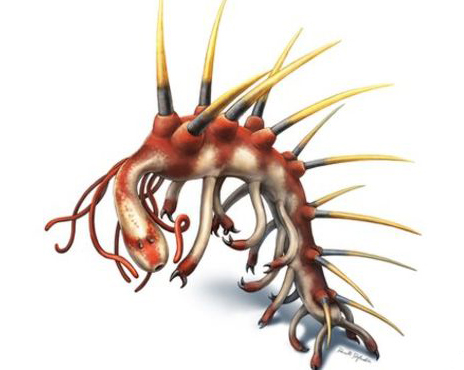
A phylogenetic analysis undertaken by the researchers placed T. distos, together with all the described Hallucigenia species, in a sister-clade to crown-group the panarthropods.  Its placement in a redefined Hallucigeniidae, an iconic Cambrian clade, indicates the survival of these types of creatures into Silurian times.

The Newly Described Thanahita distos is Placed Within the Enigmatic Hallucigeniidae

An illustration of Hallucigenia.
Scientists have classified the newly described T. distos as a relative of the bizarre Cambrian Hallucigenia from the Burgess Shale of British Columbia.

Picture credit: Danielle Dufault

The professor stated:

“Some lobopodians lie in a position on the tree of life which foreshadows that of the terrestrial velvet worms, while others are precursors of the arthropods: the “king crabs”, spiders, crustaceans and related forms.  Since its discovery, the Herefordshire Lagerstätte has yielded a diversity of arthropods that have contributed much to our understanding of the palaeobiology and early history of this very important invertebrate group.  The lobopodian Thanahita distos belongs to an extended, panarthropod grouping.”

A Spectacular Herefordshire Specimen (Fossil Worm)

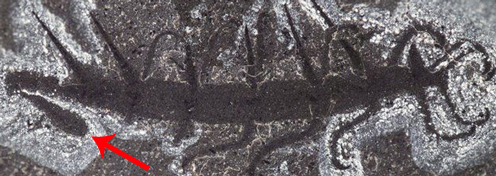
The discovery of the Herefordshire specimen and its subsequent phylogenetic analysis indicates that the lobopodian group, which is associated with Late Cambrian strata, persisted into the Silurian, thus demonstrating that these creatures survived for at least 100 million years.

A Fossil of Hallucigenia Specimen from the Late Cambrian Rocks of British Columbia

A Hallucigenia specimen (Burgess Shale).
A Hallucigenia specimen (Royal Ontario Museum) from the Late Cambrian deposits of British Columbia.  The red arrow is highlighting a droplet-like structure, once thought to represent the head but now regarded as probable gut contents.

Picture credit: Royal Ontario Museum/Dr Jean Bernard Caron

The scientific paper: “A Three-dimensionally Preserved Lobopodian from the Herefordshire (Silurian) Lagerstätte, UK” by Derek J. Siveter, Derek E. G. Briggs, David J. Siveter, Mark D. Sutton and David Legg published by the Royal Society Open Science

Visit the award-winning Everything Dinosaur website: Everything Dinosaur.
Go to Top