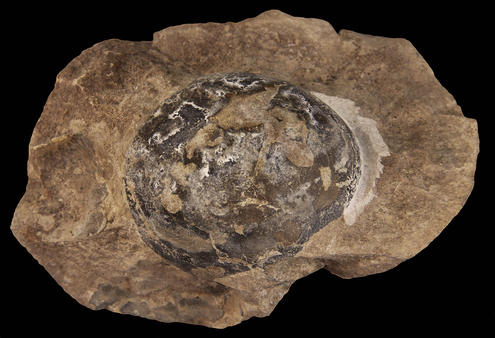
One of the terms that you might come across when reading about different types of dinosaur dentition (their teeth) is the term foliodont. Foliodont is from the Latin and it translates as “leaf tooth”, the term is used to describe teeth that have a leaf-shaped crown. For example, armoured dinosaurs (Thyreophora), have leaf-shaped teeth.
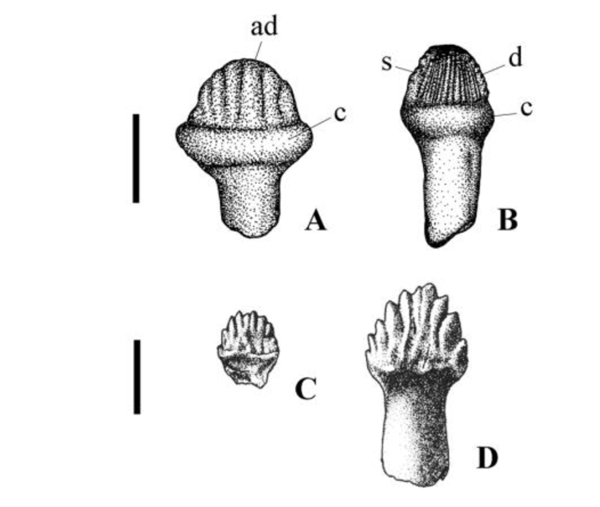
The diagram below, shows typical stegosaur teeth (A and B) and typical ankylosaur teeth (C, D) from Maidment et al (2008).
Examples of thyreophoran teeth. Teeth of stegosaurs (A, B) and ankylosaurs (C, D) showing typical foliodont characteristics. The leaf-shaped teeth come from (A) Paranthodon, an Early Cretaceous stegosaur from South Africa, whilst B is from Stegosaurus armatus from the Morrison Formation of the western USA. The ankylosaur tooth (C) is from Sauropelta edwardsorum from the Cloverly Formation of the USA and (D) is from Edmontonia rugosidens from the Upper Cretaceous deposits of the Horseshoe Canyon Formation (Canada). Scale bar for (A, B) equals 0.5 cm, whilst scale bar for (C, D) equal 1 cm. Picture credit: Maidment et al.
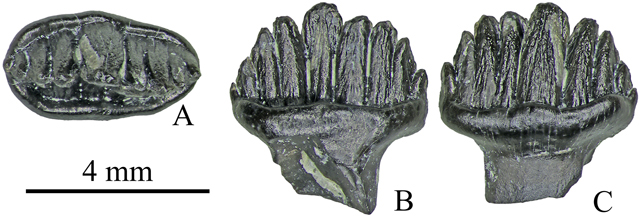
Small, relatively unworn tooth of an indeterminate stegosaur from the Teete locality in (A) occlusal, (B) labial and (C) lingual views. These teeth in labial and lingual view can be described as foliodont. Picture credit: Skutschas et al
Beware of Wear
Unfortunately, perfectly preserved and entire teeth are exceptionally rare. Worn, broken teeth are much more common, either as a result of the shedding of teeth when the thyreophoran was alive or as a result of distortion during the fossilisation process (taphonomy). This can lead to difficulties when trying to assign isolated teeth fossils to a particular family or genus.
Whilst general characteristics of tooth morphology can be discerned from a fragmentary, partial specimen and some idea of diet can be surmised, identifying the taxon represented is extremely difficult.
For example, worn teeth discovered in the Arctic circle indicate that stegosaurs were present in Siberia during the Early Cretaceous, at what was a high palaeolatitude, but in the absence of more substantial fossil material little more about the dinosaurs present can be discerned.
This month has seen another new species of sauropodomorph named and described. Issi saaneq (pronounced is-y sa-ah-neq), roamed what is now eastern Greenland around 214 million years ago (Late Triassic), this new dinosaur has been named based on two fossil skulls believed to represent one juvenile and one older animal possibly a sub-adult. Ascribed to the Plateosauridae family and showing affinities to South American sauropodomorphs I. saaneq helps to extend our understanding of the evolution and development of these important early dinosaurs.
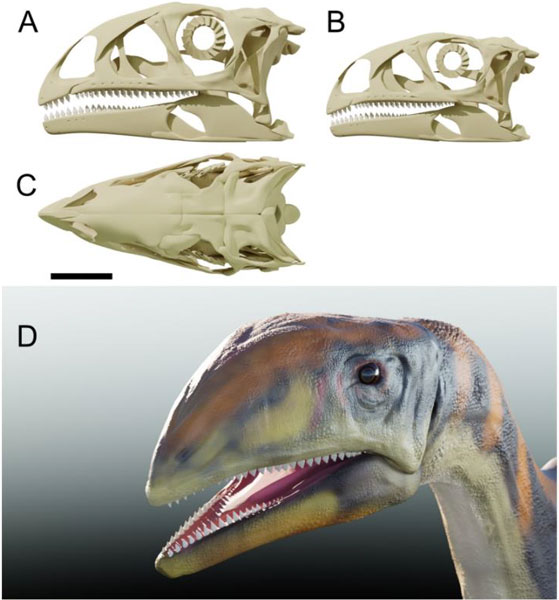
A image showing digital interpretative reconstruction of the skulls NHMD 164741 and NHMD 164758 and living representation of Issi saaneq. A digital interpretative reconstruction of the skull NHMD 164741 in left lateral view (A). Digital interpretative reconstruction of the smaller skull NHMD 164758 in left lateral view (B). Digital interpretative reconstruction of skull NHMD 164741 in dorsal view (C). Living representation of Issi saaneq (D). Scale bar = 50 mm.
Originally Assigned to Plateosaurus
The skull fossils were found in the early 1990s, during excavations of sediments representing lake shore deposits that make up part of the of the Malmros Klint Formation in Jameson Land, Greenland. The larger skull was found in 1991, the smaller skull, now believed to represent the same species was found subsequently along with numerous other fossils including skull material that has yet to be catalogued and described.
The two skulls (specimen numbers NHMD 164741 and NHMD 164758), are now part of the vertebrate fossil collection of the Natural History Museum of Denmark. Postcranial material was also found in association with the smaller skull (NHMD 164758) and this could have come from the same animal, but these bones have also not yet been examined in detail.
When first found, it was thought that these fossils were examples of Plateosaurus (P. engelhardt which is now regarded as nomen dubium with fossil material assigned to P. trossingensis). As several new sauropodomorphs had been described in recent years, the researchers were able to tap into the wealth of new fossil data and confidently assign the skulls to a new genus.
Commenting on the significance of the find, lead author of the scientific paper, published in the journal “Diversity”, Doctor Victor Beccari (Universidade Nova de Lisboa), stated:
“The anatomy of the two skulls is unique in many respects, for example in the shape and proportions of the bones. These specimens certainly belong to a new species.”
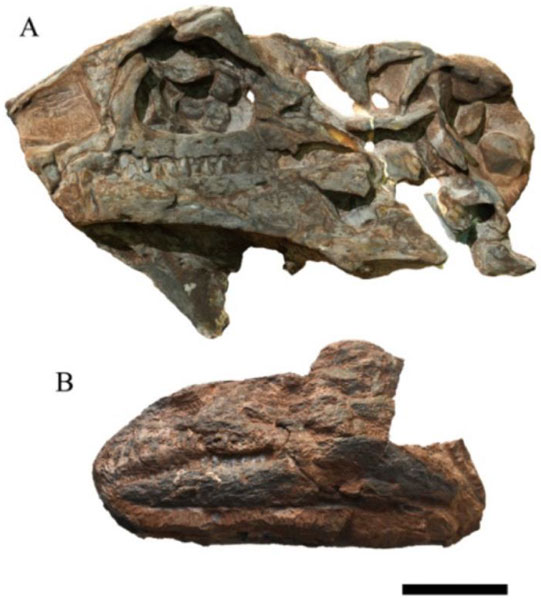
Photograph of the skulls NHMD 164741 and NHMD 164758 (A) NHMD 164741 in left lateral view and (B) NHMD 164758 in left lateral view. The smaller skull (NHMD 164758) represents a juvenile, whilst the larger skull (NHMD 164741) represents an older juvenile or a young adult. Picture credit: Beccari et al.
“Cold Bone” – Issi saaneq
Issi saaneq is the first non-avian dinosaur to be named from fossils found in Greenland. The name comes from the local Inuit language, with “issi” meaning cold and “saaneq” meaning bone. This is a reference to the harsh and very unpleasant weather conditions associated with the fossil site. The bones of this dinosaur were cold to the touch and the field team were often “frozen to the bone” as they worked in the extremely chilly conditions.
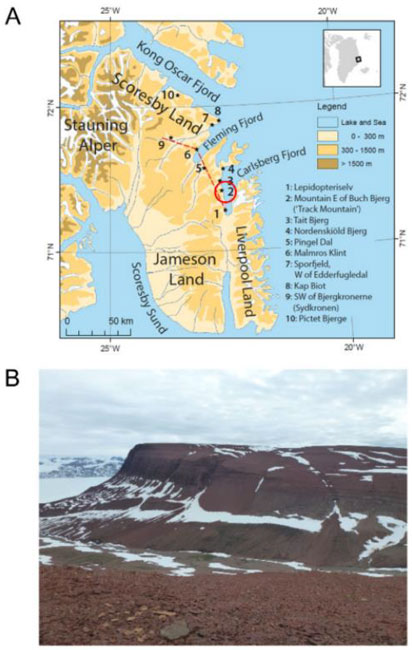
Location map of Jameson Land, central east Greenland (A), the Issi saaneq quarry is circled in red and indicated by the number 2. Photograph of the outcrop from which the fossil material was excavated (B). The conditions endured by the various field teams were extremely challenging and harsh.
Affinities with South American Sauropodomorphs as well as Plateosaurus
Phylogenetic assessment indicates that Issi saaneq has affinities to Brazilian plateosaurids such as Macrocollum (M. itaquii) and the European Plateosaurus, being recovered as the sister clade of Plateosaurus in this study. It is the northernmost record of a Late Triassic sauropodomorph.
The discovery of Issi saaneq expands the known geographical range of these dinosaurs and broadens our knowledge about the evolution of the Sauropodomorpha.
The scientific paper: “A New Sauropodomorph Dinosaur from the Late Triassic (Norian) of Jameson Land, Central East Greenland” by Victor Beccari, Octávio Mateus, Oliver Wings, Jesper Milàn and Lars B. Clemmensen published in Diversity.
Hot on the heels of the announcement of two new spinosaurids* from the Isle of Wight, a scientific paper has been published today (11th November 2021), that announces the discovery of a new genus of iguanodontid from the same stretch of coastline on the island.
The dinosaur has been named Brighstoneus simmondsi and it suggests that there are probably several different iguanodontids still awaiting discovery in the Wealden Group strata. The genus Iguanodon had been regarded as a taxonomic waste basket, extensive revision has taken place and several new genera have been erected, but in general terms, Wealden Group iguanodontian fossil material was classed into the gracile, lightly built Mantellisaurus (M. atherfieldensis) and more robust fossil bones usually classified as Iguanodon (I. bernissartensis), although other genera such as Barilium dawsoni and Hypselospinus fittoni are also known from southern England.
Analysis of fossils originally found near the village of Brighstone on the Isle of Wight in 1978 have proved sufficiently different from other iguanodontid fossil material to warrant the establishment of a new genus.
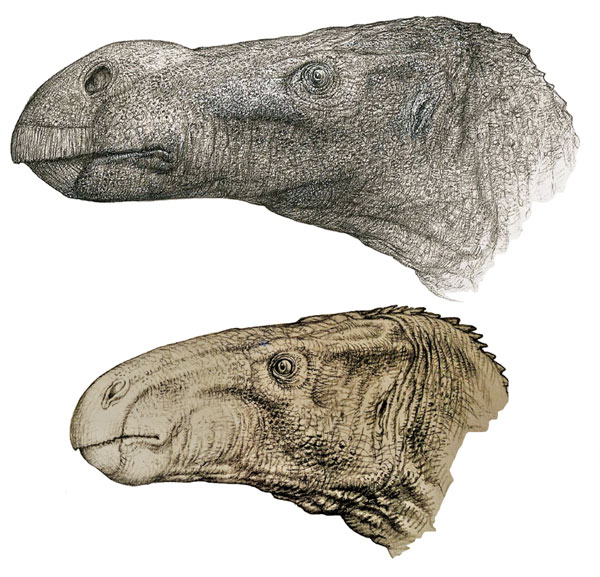
Brighstoneus (top) with its more bulbous snout compared to Mantellisaurus (below). Picture credit: John Sibbick.
A Collaboration between the London Natural History Museum and the University of Portsmouth
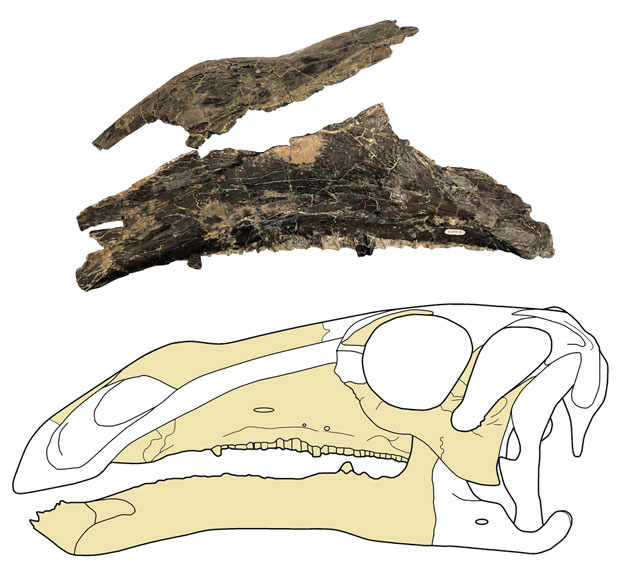
Writing in the academic publication the Journal of Systematic Palaeontology, researchers from the London Natural History Museum in collaboration with the University of Portsmouth describe this new species of ornithopod and highlight the unique anatomical traits that merited the erection of a new dinosaur genus. An assessment of the dentition, including a count of the teeth present in the jaws indicated that these fossils represented something new. Careful analysis of the nasal bone by Dr Jeremy Lockwood (University of Portsmouth) and one of the authors of the scientific paper, revealed that Brighstoneus probably had a prominent, bulbous snout.
The nasal and maxilla bones of Brighstoneus simmondsi with accompanying line drawings. The shape of the nasal bone suggests that this iguanodontid had a bulbous snout. Picture credit: Dr Jeremy Lockwood.
Explaining why the fossils represent a new dinosaur species, Dr Jeremy Lockwood stated:
“For me, the number of teeth was a sign. Mantellisaurus [M. atherfieldensis] has 23 or 24, but this has 28. It also had a bulbous nose, whereas the other species have very straight noses. Altogether, these and other small differences made it very obviously a new species.”
Honouring Brighstone Village and the Finder of the Fossils
Estimated to have measured around 8 metres in length and weighing around 900 kilograms, Brighstoneus simmondsi can be regarded as a mid-sized iguanodontid. The genus name honours the village of Brighstone, close to where the fossils were found and the species name is in tribute to Mr Keith Simmonds who found the fossils back in 1978.
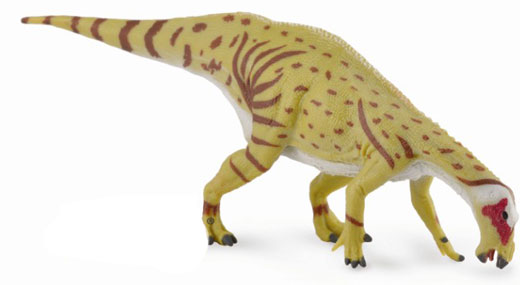
The CollectA drinking Mantellisaurus modified to resemble Brighstoneus simmondsi with its more bulbous snout.
The discovery of this new species following a reassessment of previously described fossil material suggests that there were far more iguanodontian dinosaurs in the Early Cretaceous of the UK than previously thought, and that simply assigning specimens from this period to either Iguanodon or Mantellisaurus is over simplified.
Dr Lockwood added:
“We’re looking at six, maybe seven million years of deposits, and I think the genus lengths have been overestimated in the past. If that’s the case on the island, we could be seeing many more new species. It seems so unlikely to just have two animals being exactly the same for millions of years without change.”
Co-author of the paper, Dr Susannah Maidment (London Natural History Museum), stated:
“The describing of this new species shows that there is clearly a greater diversity of iguanodontian dinosaurs in the Early Cretaceous of the UK than previously realised. It’s also showing that the century-old paradigm that gracile iguanodontian bones found on the island belong to Mantellisaurus and large elements belong to Iguanodon can no longer be substantiated.”
Fossil Bones Showing Unusual Pathology
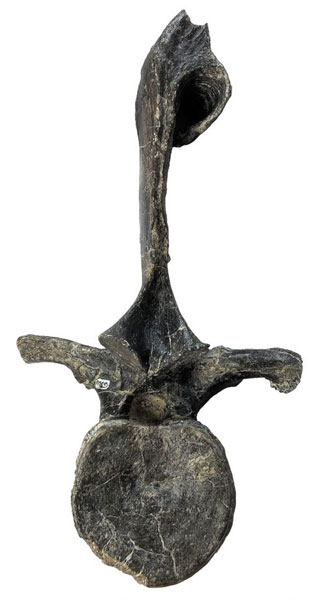
A dorsal bone, which Everything Dinosaur team members believe was previously ascribed to Mantellisaurus but now assigned to this new genus shows some unusual pathology. The top of the neural spine is deformed and twisted over. It is not known how this trauma occurred but analysis of the bone surrounding the injury suggests that this dinosaur lived for some time after this injury took place.
Brighstoneus simmondsi dorsal vertebra showing pathology on the neural spine. Picture credit: Dr Jeremy Lockwood.
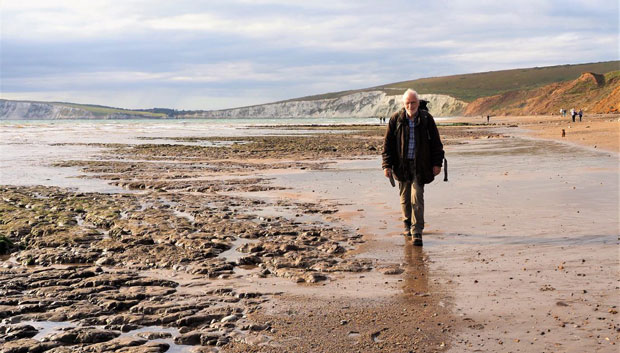
Highlighting the significance of the Isle of Wight in terms of vertebrate palaeontology, Dr Lockwood commented that there were probably many more dinosaur discoveries going to be made in southern England.
Dr Jeremy Lockwood walking along the beach at Compton Bay. Picture credit: Dr Jeremy Lockwood.
The scientific paper: “A new hadrosauriform dinosaur from the Wessex Formation, Wealden Group (Early Cretaceous), of the Isle of Wight, Southern England” is published in the Journal of Systematic Palaeontology.
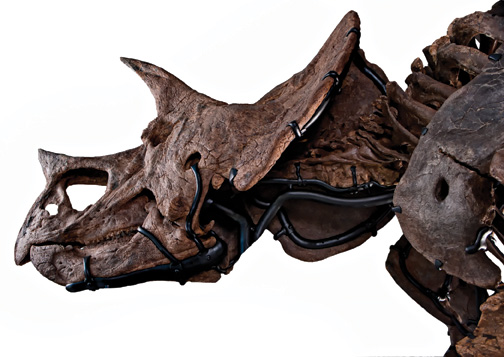
Triceratops might be one of the most recognisable of all the dinosaur genera, but we still have a lot to learn about this Late Cretaceous ornithischian and perennial favourite amongst dinosaur fans. Several musuems have a Triceratops skeleton on display. It might be a famous resident of the Hell Creek Formation, but Triceratops remains have also been reported from other North American geological formations too, all of which date from the very last faunal stage of the Cretaceous – the Maastrichtian.
A cast of a Triceratops skeleton on display at the Naturmuseum Senckenberg (Natural History Museum – Frankfurt). On the left, a wall mounted example of a Plateosaurus can be seen. Picture credit: Everything Dinosaur.
Where Have Triceratops Fossils Been Reported From?
Team members at Everything Dinosaur have tried to compile a list of the geological formations, other than the famous Hell Creek Formation, from which Triceratops fossil material has been excavated.
“Three-horned face” Part of an exhibit at the Natural History Museum of Los Angeles County (USA).
Two Formally Recognised Species
Scientifically described and named back in 1889 (T. horridus – Marsh), several species have been assigned to the Triceratops genus over the years, many of which were based on highly fragmentary and poorly preserved fossil remains. Today, only two species are formally recognised, Triceratops horridus and the geologically younger Triceratops prorsus.
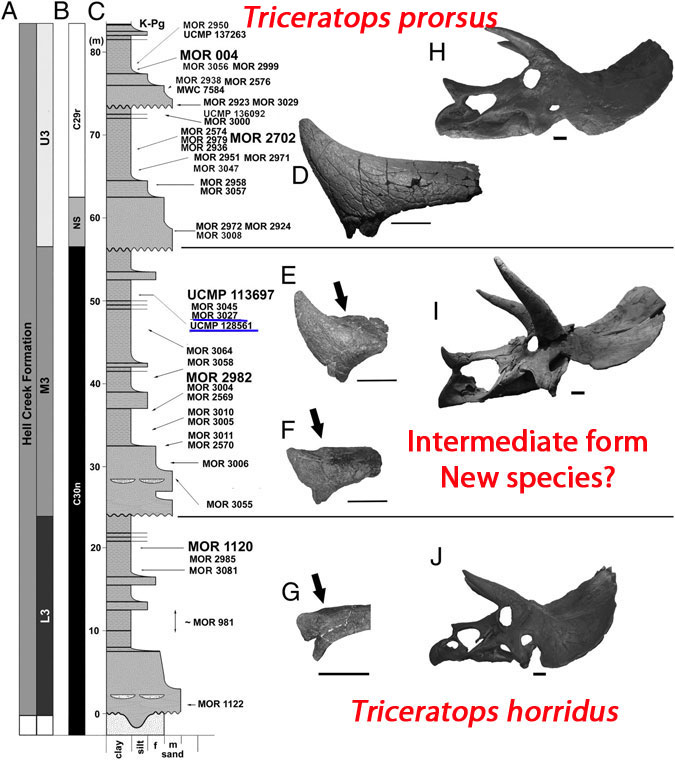
Intriguingly, fossils from the Hell Creek Formation suggest that there are probably other species of Triceratops awaiting formal recognition. Triceratops horridus is known from the lower portion of the Hell Creek Formation and T. prorsus from the upper portion, there is a distinct, transitional, intermediate form of Triceratops reported form the middle portion of this geological formation. The fossils associated with these strata probably represent an as yet, unnamed and undescribed new species of “three-horned face”.
Stratigraphic placement of Hell Creek Formation Triceratops reveals trends in cranial morphology, helping to confirm species. Picture credit: Scannella et al.
For an article that looks at the evolutionary relationship between the two, formally recognised species of Triceratops: How Triceratops Got its Horns and Beak.
To read Everything Dinosaur’s blog post from 2018, that examines the ceratopsian family tree and looks at the taxonomic relationship between the Triceratops genus and other Late Cretaceous horned dinosaurs: A Horned Dinosaur Family Tree.
The COP26 conference continues to dominate the news. Countries are striving to find the commitments required to limit global warming to 1.5 degrees Celsius to mitigate the worst effects of global warming. Could the humble beetle provide a clue as to the consequences if the world’s leaders can’t find agreement?
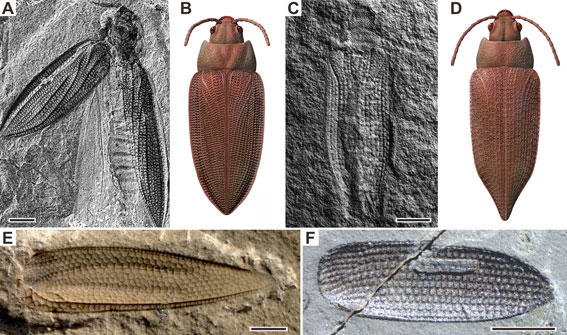
A new study published in eLife this week, looked at beetle fossils, specifically those wood-eating (xylophagous) beetles, it seems the mass extinction event that took place around 252 million years ago devastated these insects. If the huge and diverse Coleoptera are not invulnerable to global climate change, then what chance does the last line of hominins have in the current climate crisis?
Examples of Permian beetles including fossilised wings and carapaces with (B and D) life reconstructions. Picture credit: Nanjing Institute of Geology and Palaeontology of the Chinese Academy of Sciences (NIGPAS).
The Mass Extinction Event at the End of the Permian
The end-Permian mass extinction event, led to the collapse of global marine and terrestrial ecosystems. It has been estimated that around 95 percent of all life on Earth died out. The ecological response of insects (Insecta), to this catastrophe is poorly understand. A team of scientists have reviewed the fossil record of wood-eating beetles associated with the Permian and Triassic and they have concluded that the collapse of forest ecosystems led to a dramatic decline in these beetles. Furthermore, xylophagous beetles may have been responsible for the decrease of oxygen concentrations in the Permian.
Dominated by Xylophagous Beetles
The fossil record may show some bias towards wood-eating beetles when compared to the preserved remains of other types of beetle with different diets, but in this new study the research team, which included scientists from Nanjing Institute of Geology and Palaeontology and Centre for Excellence in Life and Palaeoenvironment, the University of California and the London Natural History Museum, discovered that xylophagous beetles dominated the Coleoptera during the Early Permian.
Studying Permian Beetles
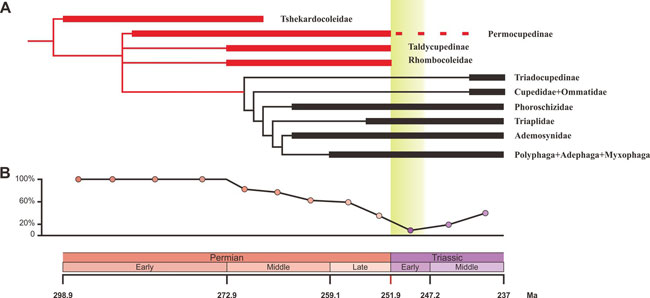
As different types of beetle evolved, their dominance declined until the end-Permian mass extinction event when the number of species collapsed. The lack of coal seams dating from around 252-247 million years ago, are a testament to the loss of forest habitats. New xylophagous beetles appeared widely in the early Middle Triassic, which is consistent with the restoration of forest ecosystems
Simplified phylogeny of Coleoptera (A) from the Early Permian to Middle Triassic. Thick lines indicate the known extent of the fossil record. The branches representing stem groups are shown in red. The ‘dead clade walking’ pattern is symbolised by the dashed line. Genus percentage of wood-eating groups from the Early Permian to Middle Triassic (B). Yellow graded band represents the “coal gap” a time when forest ecosystems collapsed. Picture credit: Zhao et al.
A Decrease in Atmospheric Oxygen
The concentration of oxygen in the atmosphere, peaked during the Carboniferous, but began to decline during the Permian. It is thought that the evolution of Permian terrestrial herbivores including wood-consuming beetles may have limited the transport and long-term burial of terrestrial organic compounds in marine sediments, resulting in less organic carbon burial and attendant declines in atmospheric oxygen.
Today, we are seeing a dramatic fall in the number of different types of insect. The loss of pollinators on world food supply has been well documented, however, xylophagous insects have been largely neglected in studies of the current extinction crisis. This research may help scientists to better understand future changes in insect diversity and abundance and the consequences of such developments as the world faces global environmental change.
Everything Dinosaur acknowledges the assistance of a media release from the Chinese Academy of Sciences in the compilation of this article.
The scientific paper: “Early evolution of beetles regulated by the end-Permian deforestation” by Xianye Zhao, Yilun Yu, Matthew E Clapham, Evgeny Yan, Jun Chen, Edmund A Jarzembowski, Xiangdong Zhao and Bo Wang published in eLife.
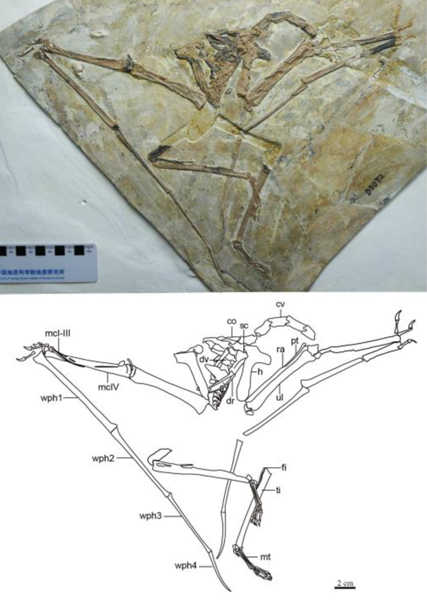
A headless pterosaur fossil has provided palaeontologists with a blueprint to workout which flying reptile fossils represent juveniles and which fossils represent fully-grown adults. The specimen which consists of partially articulated, postcranial material was collected privately before coming into the vertebrate fossil collection of the Dalian Natural History Museum, Liaoning Province (China). Partially fused bones indicate that the specimen represents a juvenile of the tapejarid pterosaur species Sinopterus dongi. As such, it provides a fantastic comparator enabling scientists to differentiate between pterosaur fossils representing animals at different growth stages as well as helping to determine which pterosaur fossils should be attributed to different species.
Specimen D3072 (Sinopterus dongi) view of the fossil (A) and accompanying line drawing (B). Note scale bar in (B) equals 2 cm. Picture credit: Shen et al.
Picture credit: Shen et al
Nemicolopterus – Unravelling the Jehol Biota
It is very likely that the fossil came from a location close to Chaoyang City (Liaoning), from rocks belonging to the Jiufotang Formation. Fossils from the Jiufotang Formation (early Aptian age), together with those associated with the underlying Yixian Formation (Barremian to early Aptian) and the Barremian-aged Huajiying Formation of the Sichakou-Senjitu Basin form the Jehol biota.
Several different types of pterosaur are associated with these strata and tapejarids are the most abundant. To date, there have been ten described specimens and dozens still awaiting formal study. Classifying the fossils and identifying genera and species has proved problematic.
For example, the tiny pterosaur Nemicolopterus heralds from the Jiufotang Formation and there is some debate whether the fossil specimen is a distinct species, or whether the fossil represents a very young Sinopterus.
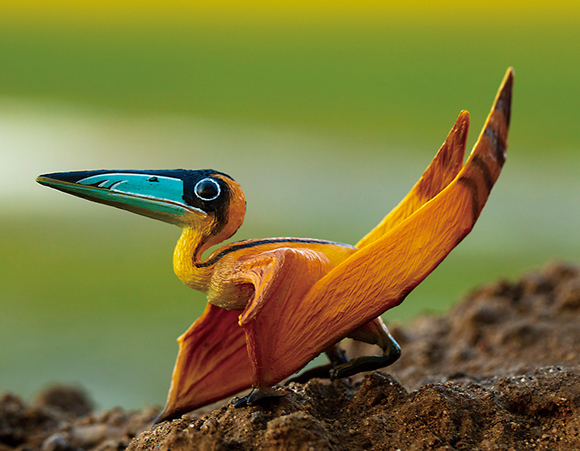
The PNSO Nemicolopterus pterosaur model.
The newly studied specimen (D3072), might be missing its skull, but a detailed analysis reveals partially fused bones indicating that this is a juvenile. The fossil has been assigned to the tapejarid species Sinopterus dongi. Specimen number D3072 is so complete and well-preserved (some parts of the skeleton are in better condition than other parts), it has provided the research team with valuable information on the anatomical characteristics of young tapejarid pterosaurs.
A spokesperson from Everything Dinosaur explained:
“Specimen number D3072 is like the Rosetta stone that archaeologists were able to use to decipher Egyptian hieroglyphics. The fossil provides valuable information on the anatomy of juvenile tapejarids and it will help palaeontologists to work out which pterosaur fossils represent juveniles of already named species and which fossils may represent entirely new species.”
The research team have proposed that D3072 becomes the type specimen for Sinopterus dongi and they are confident that it will help shed new light on the osteology of the Sinopterus genus. It will provide a blueprint, playing a significant role in future comparative studies and helping to resolve taxonomic issues.
The scientific paper: “A new specimen of Sinopterus dongi (Pterosauria, Tapejaridae) from the Jiufotang Formation (Early Cretaceous, China)” by Caizhi Shen, Rodrigo V. Pêgas, Chunling Gao, Martin Kundrát, Lijun Zhang, Xuefang Wei and Xuanyu Zhou published in PeerJ.
Fossilised dinosaur footprints dating from the Late Triassic that were once thought to represent a large, predatory dinosaur have been re-examined and are now thought to have been made by a mainly vegetarian sauropodomorph. A series of fossilised footprints preserved on the ceiling of a gallery in a coal mine close to the suburb of Dinmore (Queensland, Australia), had been assigned to the ichnogenus Eubrontes. The three-toed tracks, discovered in 1964, were thought to represent a track made by a large theropod dinosaur. They were regarded as the earliest known evidence for the presence of big meat-eating dinosaurs, however, the tracks have been reassessed and are now thought to represent a basal sauropodomorph.
A life reconstruction of a basal sauropodomorph. Picture credit: Anthony Romilio and Kamil Porembinski, CC by-SA2.0.
Walking on the Ceiling?
University of Queensland palaeontologist, Dr Anthony Romilio, lead author of the scientific paper published in the journal “Historical Biology”, commented:
“It must have been quite a sight for the first miners in the 1960s to see big bird-like footprints jutting down from the ceiling”.
Around 220 million years ago, dinosaurs walked across water-sodden layers of plant debris and these tracks were later filled in by fine silt and sand. Over millions of years the plant material turned into coal and this was removed by the miners, leaving a ceiling of siltstone and sandstone in the excavated galleries complete with the preserved natural casts of the dinosaur tracks.
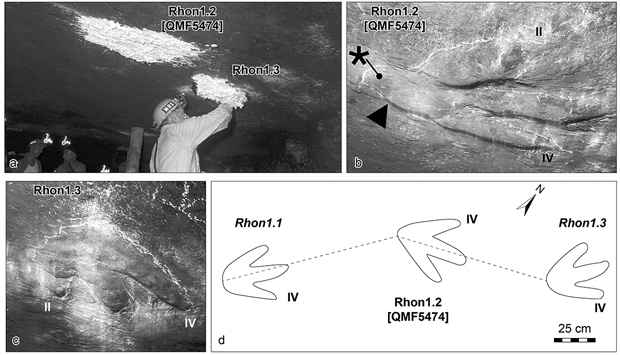
Historical photographs of dinosaur footprints from the Striped Bacon coal seam mine ceiling, Rhondda colliery, Dinmore, Upper Triassic (Norian) Blackstone Formation. Taking plaster casts of the fossils in situ (A). Close-up view of track Rhon1.2 (B) and close-up view of track Rhon1.3 (C). Schematic drawing of the coalmine ceiling trackway (D). Picture credit: Queensland Museum.
The First and Only Evidence of an Australian Basal Sauropodomorph
The coalmine has been closed down, but the original photographs, drawings and plaster casts made in the 1960’s were available for study and under close scrutiny, the research team recognised that the tracks shared characteristics with the sauropodomorph ichnogenus Evazoum.
The Sauropodomorpha is a sister clade to the Theropoda within the lizard-hipped dinosaurs (Saurischia), the first sauropodomorphs evolved around 230 million years ago and these, large-bodied, long-necked herbivores were the ancestors of the huge sauropods that were to dominate many terrestrial ecosystems in the Jurassic. If the research team’s interpretation of the ceiling tracks is correct, these prints provide the first and only evidence of basal sauropodomorph dinosaurs from Australia.
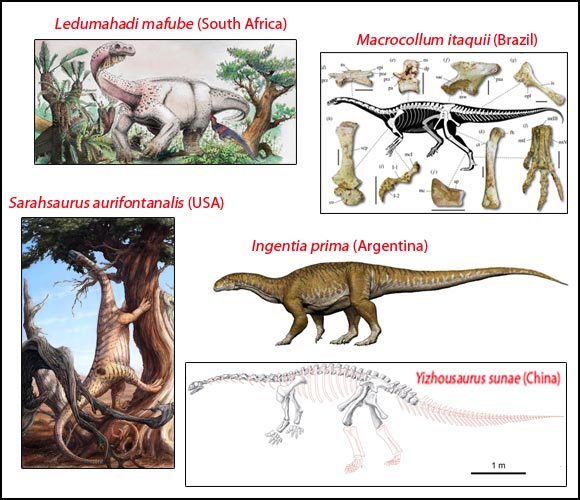
Over recent years, a number of Late Triassic/Early Jurassic sauropodomorph dinosaurs from around the world have been scientifically described.
The coalmine ceiling tracks suggest that the sauropodomorph that made them was around six metres long.
Analysis of a track from the coalmine ceiling (Rhon1.2) and scale drawing of the hypothetical trackmaker. Plaster cast of Rhon1.2 (specimen number QMF5474), with (A) orthographic image, (B) ambient occlusion view, (C) elevation map and (D) contour map. Life reconstruction compared with a person for scale (E). Picture credit: Romilio et al.
Everything Dinosaur acknowledges the assistance of a media release from the University of Queensland in the compilation of this article.
The scientific paper: “Saurischian dinosaur tracks from the Upper Triassic of southern Queensland: possible evidence for Australia’s earliest sauropodomorph trackmaker” by Anthony Romilio, Hendrik Klein, Andréas Jannel and Steven W. Salisbury published in Historical Biology.
Paul Barrett of the Department of Earth Sciences at the University of Oregon, has put the prehistoric “cats” amongst the prehistoric pigeons with the publishing of a new scientific paper that reassesses the evolution of the “false-sabre tooths”, the Nimravidae. Previous studies had focused on the remarkable, over-sized canines of these placental predators. The paper, published in the journal “Scientific Research”, examined non-sabre-tooth anatomical features and as a result, a different hypothesis on the evolution of nimravids has been proposed.
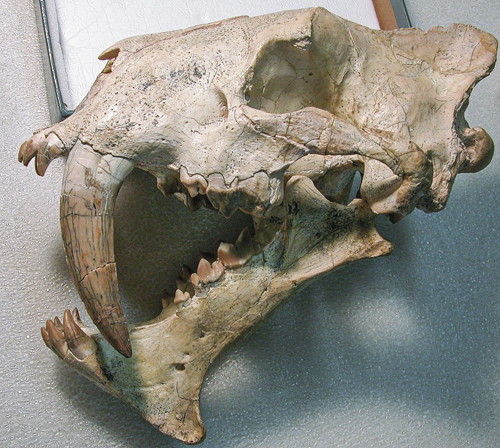
A view of the skull of the “false Sabre-tooth” Hoplophoneus (a member of the Nimravidae). Nimravids such as Hoplophoneus and Eusmilus adelos (which is the subject of the scientific paper published this week), are not true cats (felids) they are not closely related to members of the Felidae such as Smilodon, but they did evolve large, scimitar-like canines – an example of convergent evolution. Picture credit: R. Prothero.
An Over Emphasis on the Teeth and Skulls
Previous studies attempting to map the evolutionary history of the Nimravidae from their origins in the Middle Eocene Epoch to their extinction in the Late Miocene, had focused on examining the shape of the skull and the dentition (teeth). This over reliance on anatomical characters associated with the teeth and the necessary cranial adaptations to wield the enlarged canines led to palaeontologists thinking that these predators evolved in a relatively narrow, restricted way – that there was a gradual evolution of more specialised sabre-tooth features.
This new research based on sophisticated Bayesian analysis looking at a much broader suite of characters and traits suggests that the Nimravidae split, relatively early on in their evolution, into two distinct clusters. One branch (Hopliphoninae) became sabre-toothed hunters, whilst the second branch (Nimravinae) evolved traits reminiscent of extant big cats.
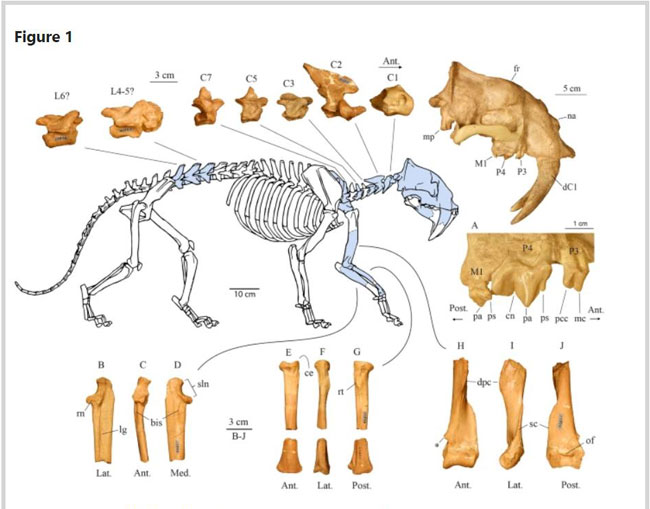
The partial skeleton of Eusmilus adelos (USNM 12820) with known fossil elements shaded light blue. E. adelos is estimated to around the same size as an African lion (P. leo). Skeletal reconstruction by Dhruv Franklin, picture credit: Paul Barrett (University of Oregon).
Eusmilus adelos
In addition to the reassessment of the evolutionary direction of the nimravids, PhD student Paul also examined the fossilised remains of a lion-sized specimen found in Wyoming (White River Formation). This has led to the erection of a new species Eusmilus adelos. Regarded as the biggest member of the Hopliphoninae described to date, it is suggested that a large predator such as E. adelos specialised in hunting prey bigger than itself. Eusmilus adelos may have tackled tapirs, rhinoceratids and large anthracotheriids (an extinct family of hooved, even-toed ungulates distantly related to hippos).
Studying False Sabre-tooths
Coeval hoplophonines were smaller and the author suggests these predators specialised in tackling much smaller prey. This niche partitioning (avoiding of competition by focusing on different resources), would have reflected what is seen on the plains of Africa today amongst extant felids. Large predators such as lions specialising in prey bigger than themselves, whilst smaller felids such as the caracal (Caracal caracal) and the leopard (Panthera pardus) tend to hunt prey smaller than themselves.
To read a related article from Everything Dinosaur that focuses on a study into the evolution of sabre-toothed predators across deep geological time, that suggests that these superficially similar animals evolved very different hunting strategies: Sabre-toothed Predators Evolved Different Hunting Styles.
The scientific paper: “The largest hoplophonine and a complex new hypothesis of nimravid evolution” by Paul Zachary Barrett published in Scientific Reports.
The autumn weather is definitely with us and as the nights draw in and cold winds begin to bite, we can be comforted by the fact that bad weather, particularly storms around the coast of the British Isles will expose more fossils for collectors to find.
With the tourist season in the UK ending (Covid-19 restrictions preventing many people from travelling to holiday destinations), local fossil collectors will have the deserted beaches to themselves. Hopefully, the storms this autumn will bring lots of material out from the cliffs and down to the foreshore, enabling eagle-eyed fossil hunters to discover a few choice specimens to add to their collection.
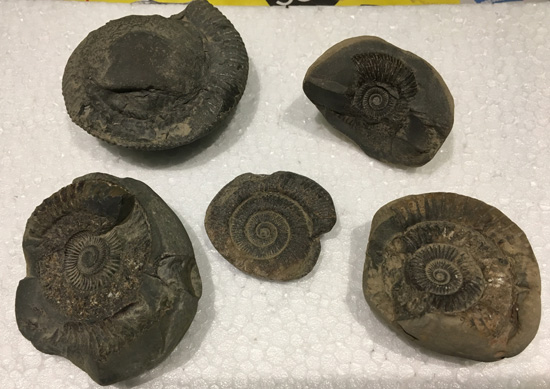
Some fine examples of ammonite fossils – a successful fossil hunt! The ammonite fossils are Dactylioceras – a common ammonite from strata dating from the Lower Jurassic. Picture credit: Everything Dinosaur.
Picture credit: Everything Dinosaur
Stay Safe When Collecting Fossils
Storms and bad weather can make cliffs even more dangerous than usual. The cliffs could become saturated with water and this can cause mud slips and landslides. Falling rocks are also a hazard. We urge all fossil collectors to take extreme care when out fossil hunting on beaches and to avoid getting too close to the cliffs.
We advise that fossil hunters make themselves aware of the fossil collecting code, full details of which can be found on an earlier Everything Dinosaur blog post here: The Fossil Collecting Code.
Fossil hunting is an enjoyable and rewarding hobby, however, we urge all fossil hunters to consider their safety and the safety of the others in their group if they intend to take advantage of recent bad weather to go fossil collecting.
Researchers studying an extensive dinosaur nesting site associated with the Early Jurassic sauropodomorph Mussaurus patagonicus have suggested that these dinosaurs migrated to preferred colonial nesting areas and indulged in complex social behaviours. Articulated skeletons grouped in clusters of individuals of approximately the same age indicate the presence of social cohesion throughout life and age-segregation within a herd structure. This is the earliest evidence found to date of complex behaviours within the Dinosauria and the researchers postulate that their social behaviour may have been a key factor in their rise to dominance.
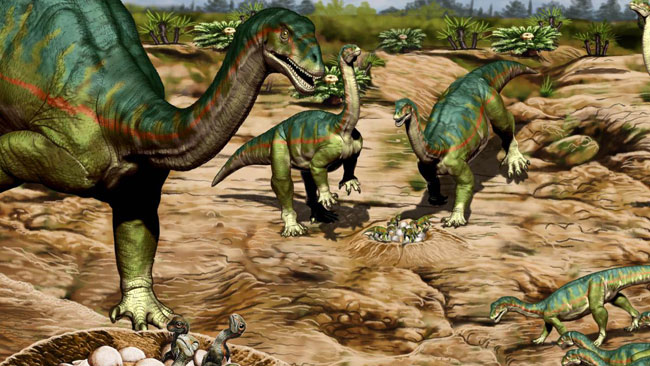
New research on an extensive dinosaur nesting site in Patagonia suggests that early dinosaurs were highly social and lived in herds. A life reconstruction of the Mussaurus patagonicus nesting site. Picture credit: Jorge Gonzalez.
Dinosaurs Living in Herds
Substantial evidence has been uncovered to demonstrate that different types of herbivorous dinosaurs lived in herds. There are extensive trackways and substantial hadrosaur and ceratopsian bonebeds dating from the Late Cretaceous, there has also been some evidence, albeit controversial, to suggest that some meat-eating dinosaurs lived in packs or family groups, but when did this sort of behaviour evolve in the Dinosauria? A team of international researchers studying a 192-million-year-old nesting ground located in southern Argentina (Santa Cruz Province), have demonstrated that complex social behaviours existed in sauropodomorphs.
The site, which covers an area of approximately 1,000 square metres, the locality representing river and lake deposits part of the Laguna Colorada Formation, has yielded over 100 fossil eggs in various degrees of association, from individual finds to entire clutches and over 80 specimens of Mussaurus patagonicus, at very stages of growth from embryos to fully grown adults.
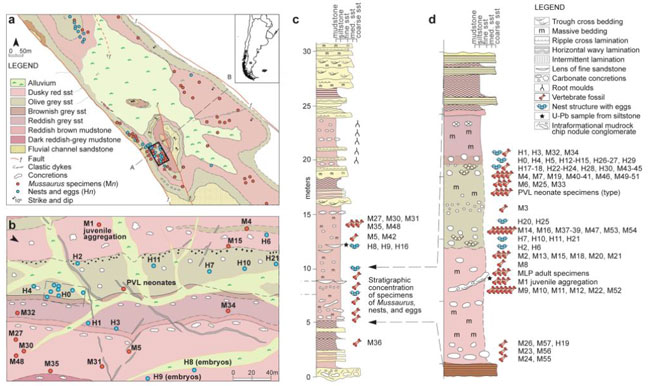
Locality map and stratigraphic section of the Laguna Colorada type locality. (a) general map of fossil findings at the locality (red dots represent skeletal remains of M. patagonicus and blue dots represents eggs or nests, (b) detailed map of area with high fossil density (including associated juveniles, neonates, and nests). General stratigraphic section of the type locality (c) showing the position of skeletal remains and eggs/nests of M. patagonicus; (d) detailed stratigraphic section of the 3 m-thick interval with the highest concentration of Mussaurus skeletons and eggs. Picture credit: Pol et al.
The European Synchrotron Radiation Facility (ESRF)
Thirty fossil eggs were selected to take the trip to the European Synchrotron Radiation Facility (ESRF) in Grenoble, France for further, detailed study. Once at the facility, the eggs were bombarded with powerful, high-intensity X-rays so that their contents could be revealed. This non-destructive technique permitted the research team, which was led by Diego Pol, a palaeontologist at CONICET (Consejo Nacional de Investigaciones Científicas y Técnicas), the Government agency that fosters science and technology in Argentina, to confirm that the eggs were those of Mussaurus patagonicus. The high-resolution computed tomography revealed fossilised embryos of Mussaurus within some of the eggs and showed all these fossils belong to a communal breeding site of a single dinosaur species.
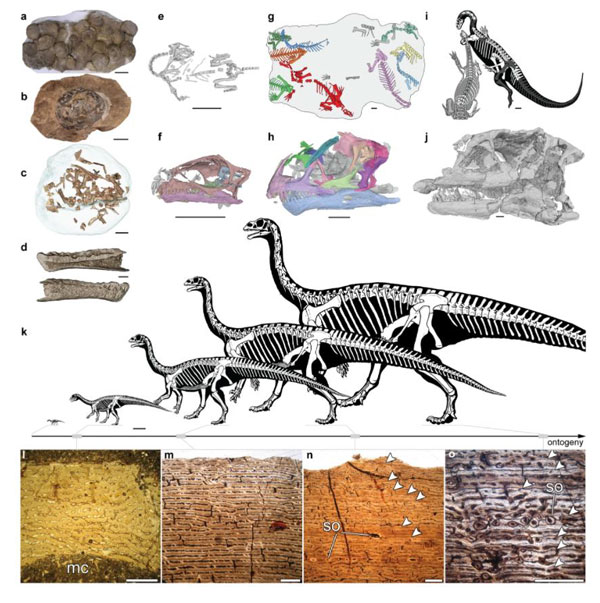
Fossil specimens from the nesting colony (a) nest, (b) single egg, (c) egg with embryo, jaw of embryo (d) with a line drawing of an embryo (e). Skull anatomy compared (f) embryo, skull of juvenile (h), skull of adult (j). Associated skeletons of juveniles (g) and associated skeletons of two adults (i) with (k) growth series for Mussaurus patagonicus and bone histology indicating ages (l-o). Picture credit: Pol et al.
An Organised and Regimented Herd Structure
Field work revealed that the Mussaurus skeletons were not randomly scattered across the site. They were clustered together according to their age. Babies were found in close proximity to the nests as would have been expected. However, the remains of one-year-olds were found closely associated with each other, including a group of eleven skeletons all preserved in the same resting pose. This suggests that Mussaurus youngsters stayed together, probably for protection against predators.
Intriguingly, the fossilised remains of adults and sub-adults were frequently found alone or in pairs. Perhaps the pair represented a male and female, which had got together for the breeding season.
The team which included Vincent Fernandez, a palaeontologist at the London Natural History Museum and former ESRF scientist, undertook histological analysis of thin sections of fossil bone so that they could observe the lines of arrested growth (LAGs) and calculate the age of the dinosaur.
Lead author Diego Pol explained:
“The bones of these dinosaurs grew in annual cycles, much as the tree rings, so by counting the growth cycles we could infer the age of the dinosaur”.
Social Behaviour – Key to the Success of the Dinosauria?
The location had proved difficult to date. Previous studies had suggested the site was much older, the deposits thought to have been laid down in the Late Triassic, but the team were able to accurately date the fossil site by plotting the decay of uranium to lead in zircon crystals found in siltstones in a fossil bearing layer (U–Pb zircon geochronology). The results prove that the Mussaurus nesting colonies were formed around 192 million years ago (Sinemurian faunal stage of the Early Jurassic). As fossil bones were found at several distinct layers, this suggests that these dinosaurs returned to this favoured nesting site year after year.
The researchers conclude that Mussaurus lived in well-organised herds and this is the first time these complex behaviours have been recorded in an early dinosaur. It pre-dates other records of dinosaur social behaviour by more than 40 million years. Furthermore, by studying colonial nesting in the similarly aged early sauropodomorphs Lufengosaurus from China and Massospondylus from South Africa, the team suggest that complex nesting behaviours and organised herd structures emerged very early in dinosaur evolution.
The fossilised remains of a Mussaurus preserved inside an egg. Thirty eggs from the site were analysed using computed tomography confirming that this was a nest site occupied by a single dinosaur species. Picture credit: Diego Pol (CONICET).
Living in herds, exhibiting complex social behaviours and breeding in colonies at preferred nesting locations may have contributed to the success of these early dinosaurs, which enabled sauropodomorphs to become a mainstay of terrestrial ecosystems, laying the foundation for the success of the Sauropoda for most of the Mesozoic.
The scientific paper: “Earliest evidence of herd-living and age segregation amongst dinosaurs” by Diego Pol, Adriana C. Mancuso, Roger M. H. Smith, Claudia A. Marsicano, Jahandar Ramezani, Ignacio A. Cerda, Alejandro Otero and Vincent Fernandez published in Scientific Reports.
For models of early dinosaurs and other prehistoric animal figures: Dinosaur Toys.