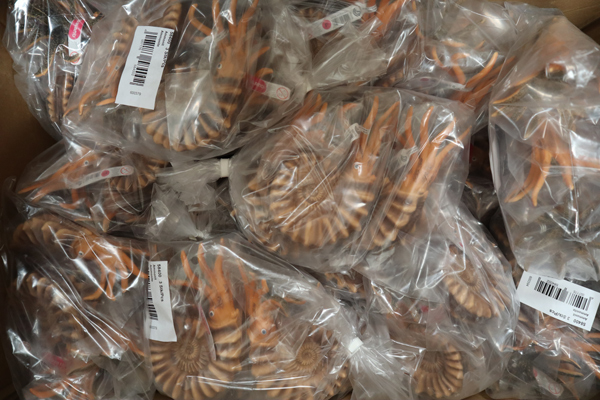
Everything Dinosaur has been able to source a small stock of the Bullyland ammonite model. This cephalopod replica is popular, but becoming increasingly rare. For example, earlier in the year Everything Dinosaur was informed by Bullyland that this model was no longer available.
Some of the Bullyland ammonite models in stock at Everything Dinosaur. A rare and difficult to obtain ammonite replica. Picture credit: Everything Dinosaur.
Picture credit: Everything Dinosaur
A Collection of Cephalopod Replicas
Everything Dinosaur has been able to source the Bullyland ammonite. The company has lots of contacts around the world and has built a formidable reputation in the model supply industry. It is because of our contacts that we were able to bring some of these popular figures into stock. The ammonite figure has been a mainstay of the Bullyland “Dinosaur Park” range. However, Bullyland has reduced their production of prehistoric animal models and many figures have been retired.
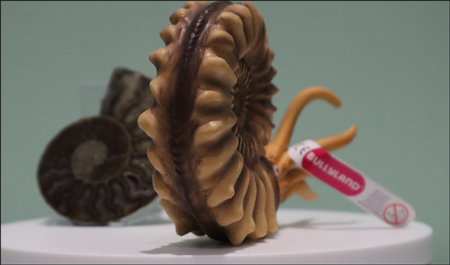
The strongly ribbed shell and the obvious keel of the Bullyland ammonite replica. Picture credit: Everything Dinosaur.
Picture credit: Everything Dinosaur
The Bullyland Ammonite Model
A spokesperson from Everything Dinosaur explained that the company was committed to helping prehistoric animal model fans complete their collections. Invertebrate figures were not stocked by other companies. Instead, these businesses tend to focus on the much more popular figures such as T. rex and Triceratops. One of Everything Dinosaur’s unique selling points is to offer models that other companies would not stock.
The spokesperson added:
“By stocking replicas of ammonites this shows our commitment to model collectors but also to companies like Bullyland. We are prepared to bring in figures that other firms might not.”
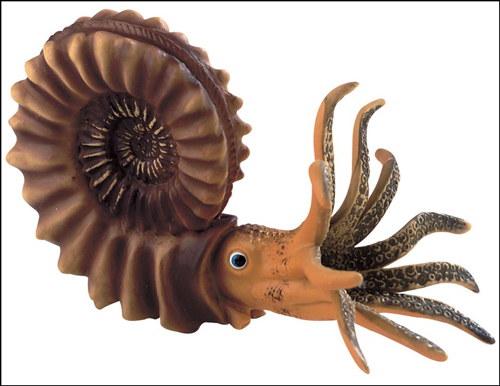
The Bullyland replica ammonite model.
To view the Bullyland ammonite model (whilst stocks last) and the rest of the Bullyland range of prehistoric animal figures: Bullyland Prehistoric Animal Models.
The Wyoming Dinosaur Centre (WDC) located in East Thermopolis, (Wyoming) will be hosting their first-ever “Jurassic Fest – Passion for the Past” event towards the end of June this year. This amazing dinosaur museum is putting on a special two-day event for dinosaur fans of all ages. Headlining the dinosaur extravaganza is British palaeontologist, celebrated author and television presenter Dr Dean Lomax.
The museum is highly respected and regarded as one of the most family-friendly tourist locations in the western United States. Opened in 1995, the museum has world-class dinosaur fossil exhibits and also takes visitors out on active dinosaur fossil dig sites.
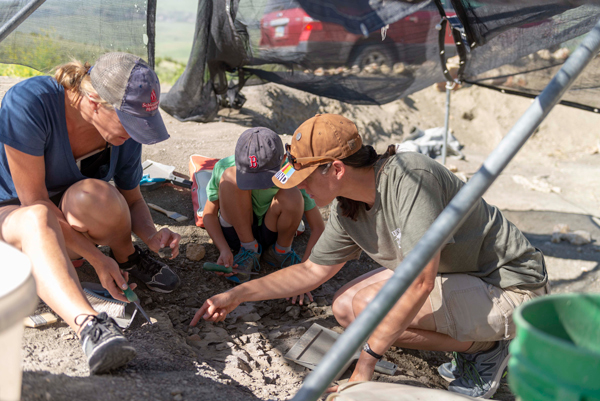
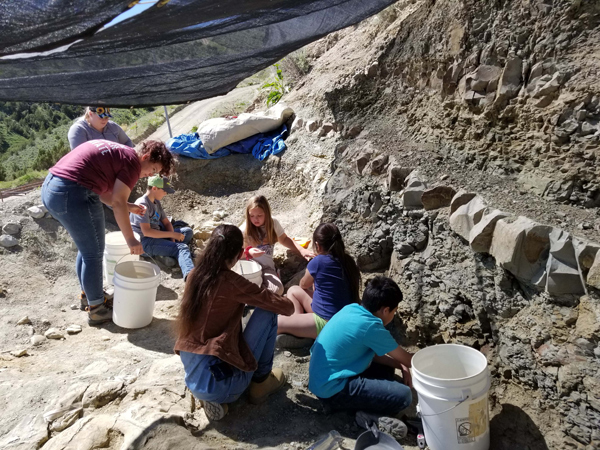
A family digging for dinosaur fossils at the Wyoming Dinosaur Centre. Picture credit: (c) WDC.
Dr Dean Lomax
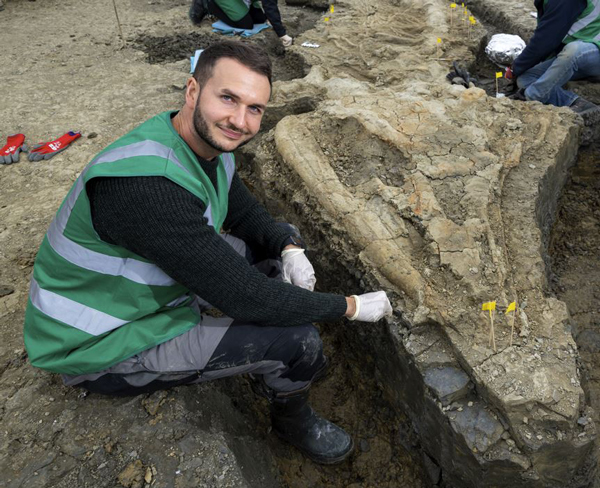
Dr Dean Lomax recently made international headlines when he led the excavation of one of the greatest discoveries in British paleontological history, the huge “Rutland Sea Dragon”, the largest and most complete ichthyosaur fossil ever found in the UK.
Dr Dean Lomax working on the skull of the Rutland ichthyosaur, the largest and most complete ichthyosaur fossil ever found in the UK. Picture credit: Matthew Power.
Dr Lomax will be returning to Wyoming after first visiting in 2008, then just an 18-year-old teenager straight out of high school. Growing up in the town of Doncaster in Yorkshire, England, Lomax did not have the grades or finances to initially go to university and even failed science in high school. When the Wyoming Dinosaur Center offered Dean the chance of a lifetime to volunteer and follow his dreams, he jumped at this opportunity and even sold his possessions (including his childhood Star Wars collection) to fund the trip.
Fifteen years later, Dr Lomax is an award-winning palaeontologist who has discovered and named multiple new species, written best-selling books and appeared on several television programmes. An affiliated scientist at the University of Manchester, Dean’s unconventional journey into the Earth Sciences was begun in Wyoming.
His success epitomises a “can do” attitude and the importance of never letting go your dreams.
Dr Dean Lomax commented:
“I wouldn’t be the person I am today if it wasn’t for the opportunity I was given to come to Wyoming and volunteer at the WDC in 2008. The WDC provided me with the vital experience I needed to get my foot on the ladder and work out how to make it in such a competitive field.”
Why Dinosaurs?
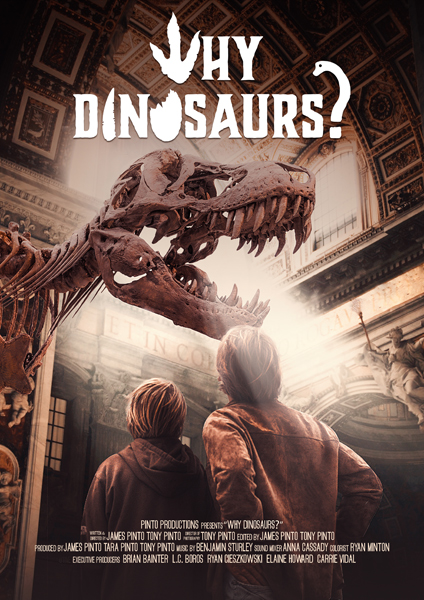
“Jurassic Fest – Passion for the Past” will also feature a special preview of “Why Dinosaurs?”, an intriguing dinosaur-themed documentary which examines the appeal of the Dinosauria. Directed, filmed and edited by father and son Tony and James Pinto, the film has taken five years to create and explores various themes concerning the popularity of dinosaurs.
The poster for “Why Dinosaurs?” Picture credit: Tony Pinto, Why Dinosaurs
The Wyoming Dinosaur Centre
Angie Guyon, the Wyoming Dinosaur Centre’s director explained that the staff were proud to have helped launch Dean’s career. Team members were looking forward to seeing the British palaeontologist again and learning more about his adventures.
The Wyoming Dinosaur Centre is committed to teaching the importance of palaeontology and every year staff see the impact on individuals and families as the Centre provides exciting, personal educational experiences to both adults and young people.
The director added:
“Jurassic Fest will provide an opportunity to listen and learn from renowned fossil experts and get your hands dirty.”
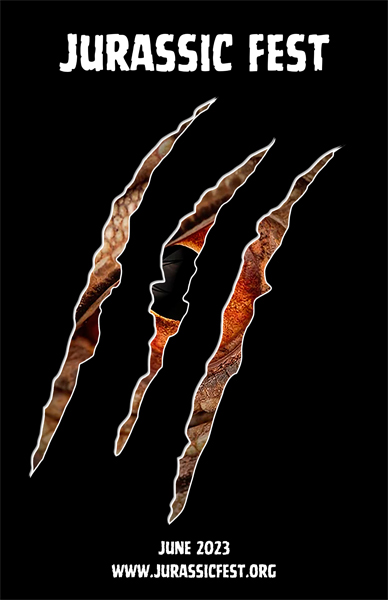
The Jurassic Fest poster. Picture credit: (c) Wyoming Dinosaur Centre.
Wyoming Dinosaur Centre “Jurassic Fest – Passion for the Past”
“Jurassic Fest – Passion for the Past” will give prehistoric animal fans of all ages the chance to dig up dinosaurs with Dr Lomax, to hunt for new dinosaur sites and to explore the fossil-rich formations that surround the Wyoming Dinosaur Centre.
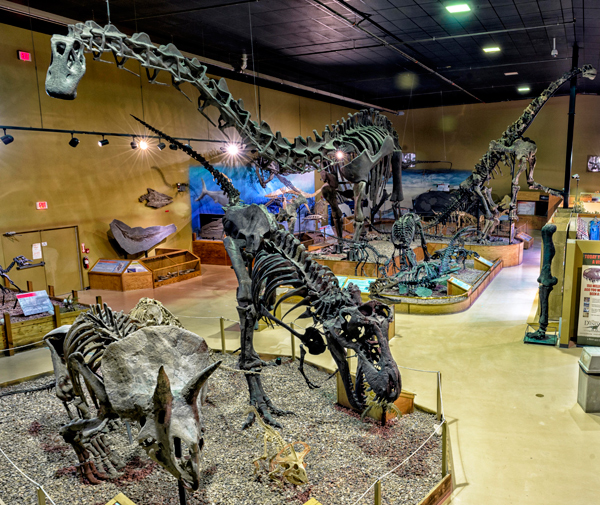
The rocks in the area preserve the remains of some of the most iconic dinosaurs from the Late Jurassic, giants like Diplodocus and apex predators such as Allosaurus. Visitors can meet many of these dinosaurs in the famous Dinosaur Hall at the Wyoming Dinosaur Centre.
The amazing Dinosaur Hall at the Wyoming Dinosaur Centre. Picture credit: (c) WDC.
Exciting Speakers
A stellar line-up of exciting speakers will also be sharing their passion for the past, each with a strong connection to the Centre, including Jimmy Waldron of the hit podcast “Dinosaurs Will Always Be Awesome”, author of “Passion in the Bones” Elaine Howard from Florida, Dr Laura Vietti from the University of Wyoming and Dr Brandon Drake from the University of New Mexico.
Families digging up dinosaur bones. Picture credit: (c) WDC.
Behind the Scenes Tour and Cleaning Fossil Bones
As part of the planned activities for “Jurassic Fest” visitors will be offered special behind-the-scenes tours of the museum and given the opportunity to clean dinosaur bones and to converse with leading scientists.
Angie Guyon hopes that Jurassic Fest will deliver an educational, fun, and inspiring two-day event that will highlight the fascinating work of palaeontologists and science communicators which will help to capture the global importance of Wyoming’s prehistoric history.
Angie explained:
“The variety of hands-on activities will provide the public with an opportunity to gain first-hand experience, listen to a series of inspirational lectures and discover more about the research and excavation of local dinosaur finds from the Morrison Formation. This is not to be missed.”
The two-day “Jurassic Fest – Passion for the Past” extravaganza will take place on June 23-24, 2023. Tickets and more information can be found at the following address: “Jurassic Fest – Passion for the Past”.
Everything Dinosaur acknowledges the assistance of Dr Dean Lomax in the compilation of this article.
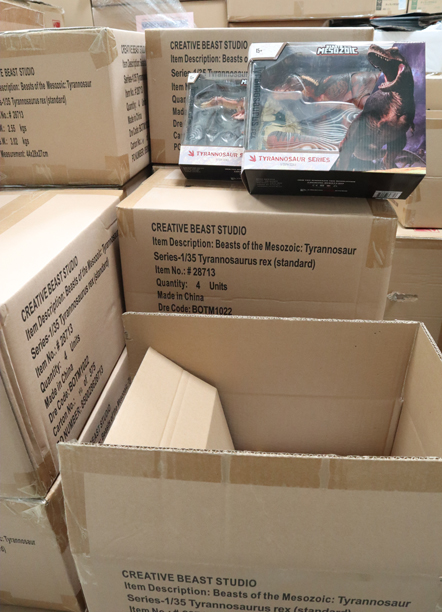
A shipment of Beasts of the Mesozoic models has arrived at Everything Dinosaur’s warehouse. Team members have been busy unpacking and checking all the articulated figures. Once the shipment has been booked in, the next job is to contact all the customers who requested a model.
We will be despatching emails to customers as quickly as we can. Then, it is a question of despatching all the orders that we receive as quickly as we can too!
A shipment of Beasts of the Mesozoic articulated figures has arrived at Everything Dinosaur. More “raptors”, ceratopsians and tyrannosaurs. Picture credit: Everything Dinosaur.
Picture credit: Everything Dinosaur
Beasts of the Mesozoic Models
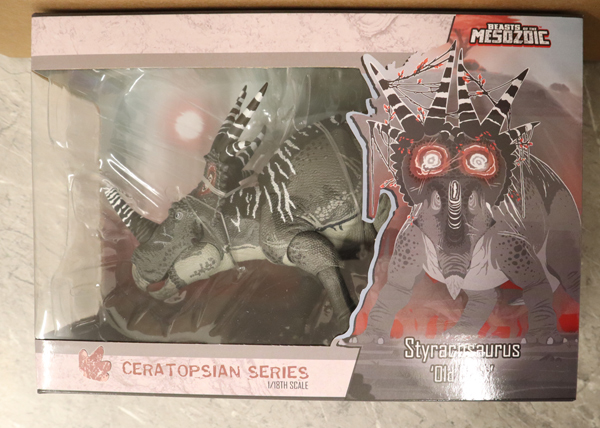
The shipment contains more of the dromaeosaurid figures. In addition, the popular 1:18 scale mini models are back in stock along with more horned dinosaurs, such as Centrosaurus, Torosaurus and the “Old Buck” Styracosaurus.
The Beasts of the Mesozoic Styracosaurus dinosaur model. Picture credit: Everything Dinosaur.
Picture credit: Everything Dinosaur
Tyrannosaur Articulated Figures Too
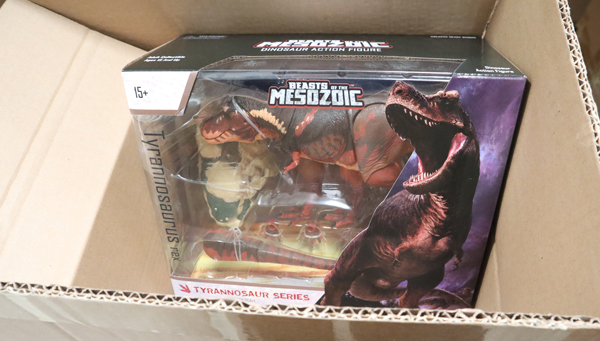
The new arrivals include tyrannosaur articulated figures too. The impressive, super-sized 1:18 scale Tyrannosaurus rex has been unpacked and team members will be putting the T. rex juvenile and 1:35 scale figures into their allotted places in our warehouse.
Unpacking the Beasts of the Mesozoic 1:35 scale Tyrannosaurus rex figure. Picture credit: Everything Dinosaur.
Picture credit: Everything Dinosaur
A spokesperson from Everything Dinosaur commented:
“It’s all hands on deck at the moment. We are working as hard as we can to get all the dinosaur figures, checked and booked into stock. Once this is done, we then have to email customers who requested to be informed about this shipment.”
Getting to grips with the Beasts of the Mesozoic 1:18 scale Velociraptor mongoliensis model.
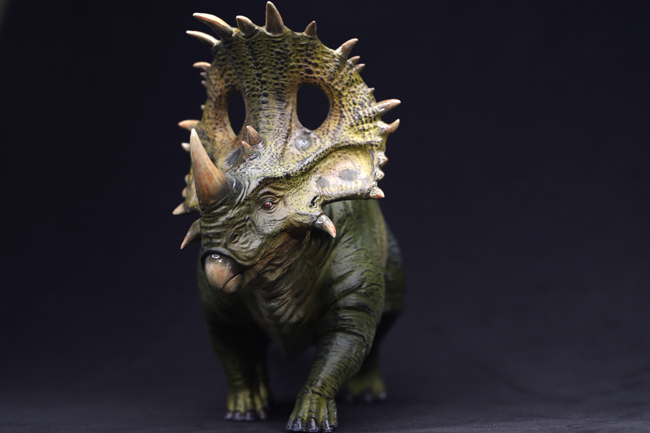
Our thanks to dinosaur model collector Chaitanya who sent into Everything Dinosaur some wonderful pictures of Nanmu Studio prehistoric animal models. Our team members have got to know numerous discerning dinosaur model collectors and it is wonderful to see more Nanmu Studio figures in India.
A view of the spectacular head shield of the Nanmu Studio Sinoceratops figure (Towershield). Picture credit: Chaitanya.
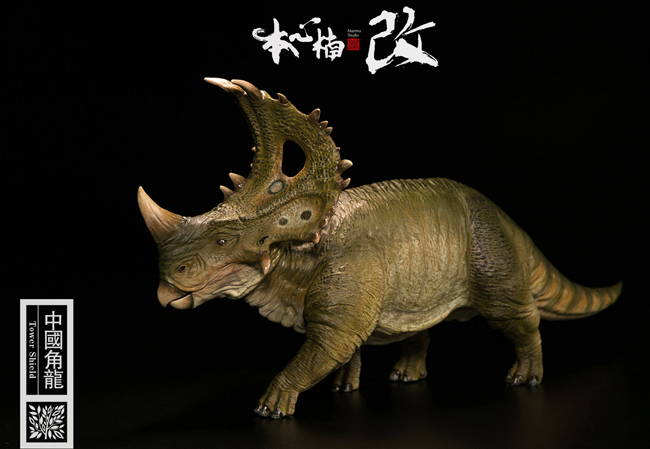
Sinoceratops “Towershield” – Nanmu Studio Figures
Nanmu Studio figures are proving very popular with discerning dinosaur model collectors and fans of prehistoric animals in India. These stunning figures are beautiful additions to prehistoric animal collections. Thanks to Everything Dinosaur’s reliable and subsidised shipping options, fans of dinosaurs in India too can access the Nanmu Studio Jurassic series range.
The picture (above) shows Chaitanya’s spectacular Nanmu Studio Sinoceratops figure.
A spokesperson from Everything Dinosaur commented:
“Thank you for sending in the superb photograph. It is a fantastic picture with highly effective use of lighting to bring out the detail in the Sinoceratops model. Our congratulations to the photographer.”
The Nanmu Studio Jurassic Series Sinoceratops (Towershield) – the green colour variant.
Prehistoric Animal Model Fans in India
Everything Dinosaur has built up a formidable reputation for customer service. The UK-based company now supplies lots of dinosaur and prehistoric animal figures to collectors who are based in India.
The Everything Dinosaur spokesperson added:
“It is great to see the images of Nanmu Studio figures sent into us by one of our many customers in India. We enjoy viewing all the photographs of prehistoric animals that we get sent.”
Our thanks to Chaitanya for taking the time and trouble to send Everything Dinosaur the photographs.
The new for 2023 PNSO Mila the Mapusaurus dinosaur model is soon to arrive at the Everything Dinosaur warehouse. Team members expect delivery in a week or so.
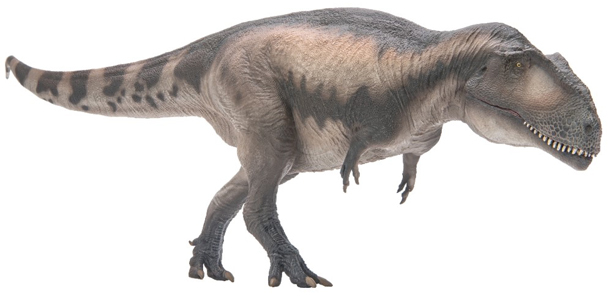
The PNSO Mila the Mapusaurus dinosaur model.
Mapusaurus roseae
Mapusaurus is known from fossil material excavated from fluvial deposits associated with the Huincul Formation of Argentina. This large theropod was formally named and scientifically described in 2006 (Coria and Currie). Mapusaurus (M. roseae) was coeval with the super-sized titanosaur Argentinosaurus.
Palaeontologists have proposed that this carcharodontosaurid specialised in hunting sauropods. Large groups of Mapusaurus could have harassed a herd of titanosaurs and separated an individual. This animal might have been mobbed and attacked by several of the much smaller predators in a largely uncoordinated attack. The meat-eaters could have bitten off chunks of flesh that weakened their victim. The enormous Argentinosaurus could have eventually succumbed to its wounds.
The carcase of a large Argentinosaurus could have fed carnivorous dinosaurs for several weeks. The corpse would have probably attracted a huge number of scavengers.
An apex predator – the Mapusaurus dinosaur model from PNSO.
Mila the Mapusaurus
The PNSO Mila the Mapusaurus dinosaur model is supplied with a sci-art poster, a clear, plastic support stand and a full-colour, illustrated Mapusaurus booklet. A QR code on the product packaging provides dinosaur fans access to a short video that explains how the model was created.
The new for 2023 PNSO Mila the Mapusaurus figure is supplied with a transparent support stand, a sci-art poster and a full-colour, sixty-four-page booklet.
Dinosaur Model with an Articulated Lower Jaw
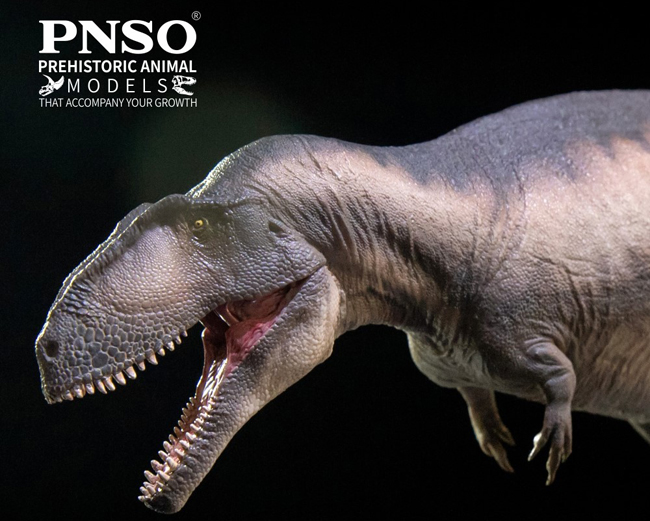
The stunning Mapusaurus model has incredible details and has already attracted many positive comments from dinosaur fans and model collectors. It measures 36 cm in length and the figure stands a fraction under 11 cm high. Mila the Mapusaurus dinosaur model has an articulated lower jaw.
The new PNSO carcharodontosaurid dinosaur model (Mapusaurus) has an articulated lower jaw.
A spokesperson from Everything Dinosaur praised the PNSO design team and commented:
“We are really pleased to see a Mapusaurus model being introduced by the highly respected team at PNSO.”
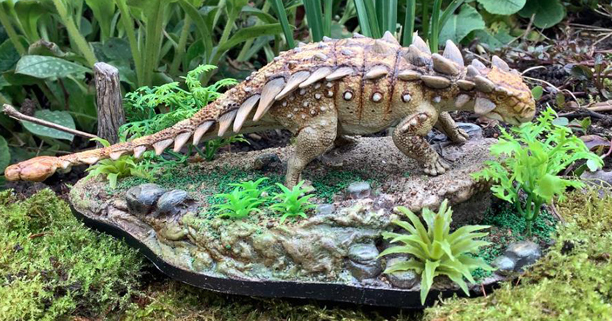
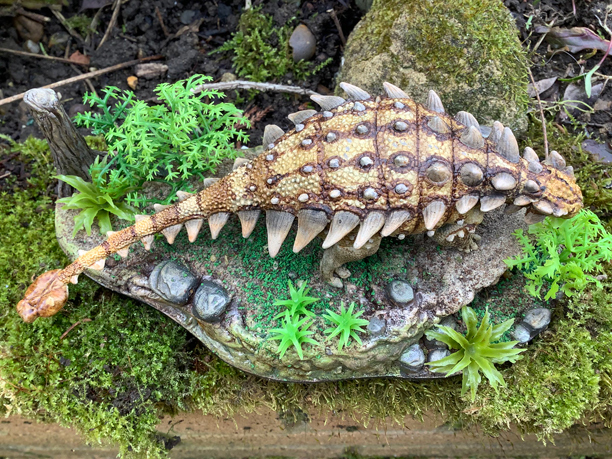
Our thanks to model collector Elizabeth who gave Everything Dinosaur access to some images of her customised Dino Dan Zuul dinosaur model. The armoured dinosaur figure has been repainted by the very talented Martin Garratt. The British model maker also gave Zuul a skilfully crafted display base.
The Dino Dana Zuul model adapted by Martin Garratt and placed on a bespoke display base. Picture credit: Elizabeth.
The Dino Dana Zuul Dinosaur Model
The recently introduced Dino Dana Zuul dinosaur model, is part of the Safari Ltd range of prehistoric animal figures. This armoured dinosaur figure, a representation of Zuul crurivastator, has been praised by model collectors. The standard figure is predominantly green. Martin has chosen to give the dinosaur a different colour scheme.
The Wild Safari Prehistoric World Zuul dinosaur model in lateral view.
When this ankylosaurid from the Judith Formation of Montana was announced, Danielle Dufault was commissioned to provide an illustration which accompanied the media release. The Canadian illustrator painted her Zuul green. This motif was reflected in the colour scheme chosen by Safari Ltd for the figure.
To read Everything Dinosaur’s blog post about the discovery of this armoured dinosaur and to learn about its connection to a film that was released in 1984: Zuul – the Destroyer of Shins.
Adding a Display Base
Martin Garratt has placed the figure on a display base which is in proportion to the armoured dinosaur model. In her email to Everything Dinosaur, Elizabeth explained that she wanted the base to have an element of height. The elevation would off-set the relatively squat appearance of Zuul. Elizabeth also requested that the display base should have plenty of plants to keep this herbivore happy. Zuul has been displayed in a lush environment. The verdant colours of the plants that Martin has added contrast nicely with the colouration of the model.
The beautifully painted Zuul figure. Picture credit: Elizabeth.
The presence of the large, sloping boulder on the base provides the element of height the collector was after.
A spokesperson from Everything Dinosaur commented:
“Our thanks to Elizabeth for permitting us access to the photographs. Martin has produced another little masterpiece. The colour scheme he has chosen makes the spectacular armour on this dinosaur stand out.”
A dorsal view of the customised Zuul figure showing the care and attention taken to depict the armour. Picture credit: Elizabeth.
We thank Elizabeth for permitting access to the images of her latest, spectacular addition to her model collection.
A few years ago, Everything Dinosaur visited Sandbrook Community Primary. Team members had been contracted to deliver some dinosaur themed workshops with the Reception classes as a provocation for the start of the term topic. As part of the teaching team’s scheme of work, a large strip of white paper had been laid out on the floor and children had been challenged to create some dinosaur footprints on it.
Using a foam cut which had been dipped in paint, the children were able to walk along a strip of paper and produce some super dinosaur tracks.
Dinosaur footprints created by Reception children. Picture credit: Everything Dinosaur.
Picture credit: Everything Dinosaur
Dinosaur Footprints
During the lunch break one of our dinosaur and fossil experts was allowed to return to the classroom to take some pictures of the children’s work whilst the children were either on lunch or playing outside. We praised the teaching team for their innovative scheme of work. We also praised the teachers for managing to keep the classroom floor so clean!
Team members were soon back to work delivering the afternoon workshops. The young palaeontologists in the Reception class had a wonderful time, some of the Nursery school staff came in to take a look at the activities. The Nursery school staff were due to have an inspection that week and they wanted to pick up some ideas on lesson plans.
As part of our follow-up work, we set the children a few challenges. Could they produce a dinosaur drawing? Could they count all the green dinosaur feet on the floor? How would they get on with the dinosaur hokey-cokey song we supplied?
A teacher enquired about soft toy dinosaurs helping to reinforce learning. We were happy to supply further information and advice.
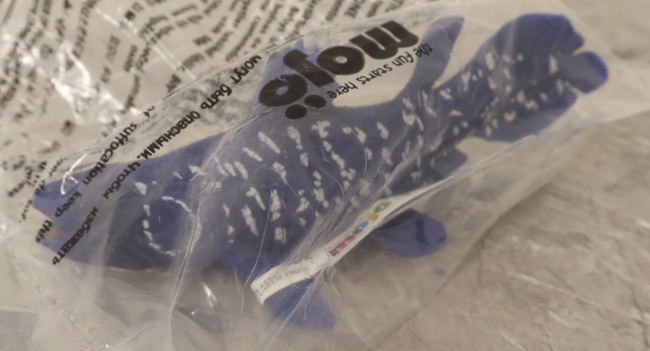
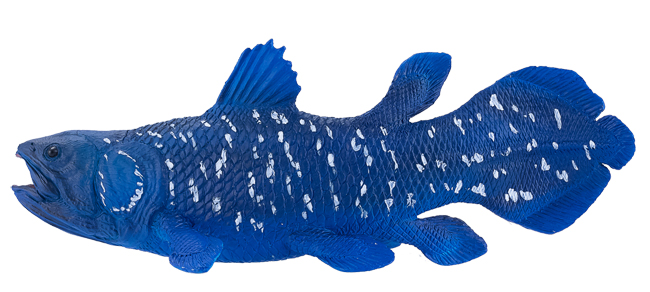
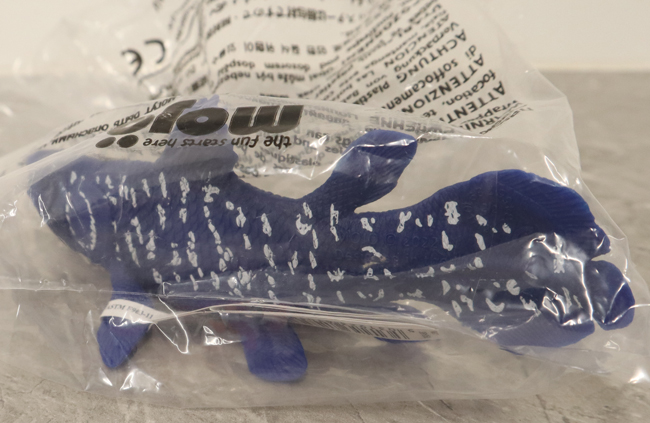
The Mojo Fun Coelacanth model is in stock at Everything Dinosaur. This replica of a “living fossil” is an excellent example of a Coelacanth figure. Team members were keen to bring in this figure. It is a vivid blue colour and website sales of this model will be accompanied by an Everything Dinosaur Coelacanth fact sheet.
The Coelacanth figure that team members have nicknamed “Bluey”. Picture credit: Everything Dinosaur.
Picture credit: Everything Dinosaur
Coelacanth
Thought to have died out at around the same time as the non-avian dinosaurs. Naturalists and palaeontologists were shocked when a Coelacanth specimen was caught in a shark gill net at the mouth of the Chalumna River on the east coast of South Africa in 1938. Two living species are known Latimeria chalumnae from the Indian Ocean and Latimeria menadoensis, which is known from Indonesian waters. Although these fish are assigned to the same genus, an analysis of DNA suggests that the two populations have been separated from each other for several million years.
The beautifully painted and very blue Mojo Fun Coelacanth replica.
Mojo Fun Coelacanth Model
The Mojo Fun Coelacanth model depicts the rostral pores on the top the snout. These openings lead to a jelly filled cavity in the centre of the animal’s head. It is thought that this organ plays a role in prey detection by sensing the weak electrical signals produced by prey.
A very bright and colourful Mojo Fun Coelacanth model. Picture credit: Everything Dinosaur.
Picture credit: Everything Dinosaur
The Coelacanth has a remarkably small brain. A fish measuring around 1.5 metres long and weighing more than fifty kilograms may have a brain weighing only a few grammes. No known living vertebrate has so small a brain in relation to its body size.
A virtually complete titanosaur skull has been found in Queensland. The fossil discovery is Australia’s most complete sauropod skull found to date. It supports the hypothesis that Australian sauropods originated in South America. The titanosaur skull has been assigned to Diamantinasaurus matildae.
A view of the Diamantinasaurus skull bones in approximate life position: Picture credit: Australian Age of Dinosaurs.
Diamantinasaurus matildae
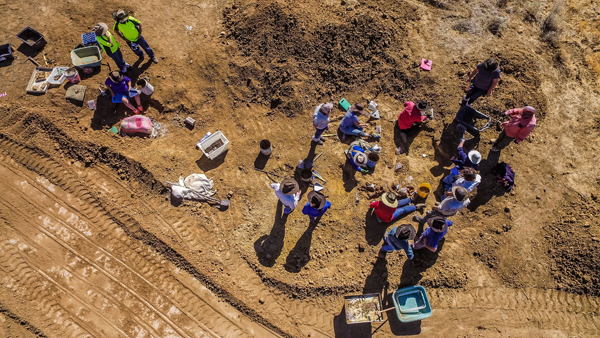
Australian Age of Dinosaurs Museum researchers in collaboration with Curtin University (Perth) despatched a media release announcing the discovery of the stunning sauropod skull. The fossil specimen, nicknamed “Ann” was excavated in 2018 at a dig site located at Elderslie Station, near Winton (Queensland).
Field team members working at the “Ann” dig site. Picture credit: Australian Age of Dinosaurs.
The fossil specimen is believed to be between 98-95 million years old (Cenomanian faunal stage of the Late Cretaceous). It is the fourth specimen of Diamantinasaurus matildae to have been discovered by Australian Age of Dinosaurs Museum staff.
Studying the Skull
Research on the titanosaur skull was led by Museum Research Associate Dr Stephen Poropat, a Postdoctoral Research Fellow at Curtin University.
Dr Poropat stated:
“This skull gives us a rare glimpse into the anatomy of this enormous sauropod that lived in northeast Australia almost 100 million years ago.”
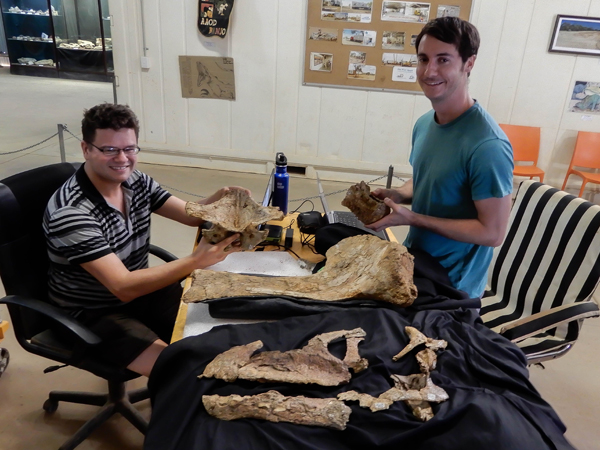
Dr Stephen Poropat (left) and right, Dr Phil Mannion (University College London) examining the “Ann” site fossil material including the Diamantinasaurus skull bones, the Oliver scapula and vertebra two. Picture credit: Australian Age of Dinosaurs.
Implications for Titanosaur Evolution
The researchers identified similarities between “Ann” and the skull of another titanosaur Sarmientosaurus musacchioi. S. musacchioi fossils come from southern Argentina, from rocks which are roughly contemporaneous with the Winton Formation strata. The braincases of these two titanosaurs were similar, along with the dentition (teeth). Similar anatomical characteristics were also identified in the quadratojugal (a bone from the back of the skull near the posterior of the lower jaw).
Dr Poropat commented that their findings support previous theories that sauropods were using Antarctica as a migratory pathway between South America and Australia between 100 and 95 million years ago.
The doctor added:
“Our research suggests that Diamantinasaurus was one of the most ‘primitive’ titanosaurs. Gaining a better understanding of this species might explain why titanosaurs were so successful, across so much of the world, right until the end of the Age of Dinosaurs.”
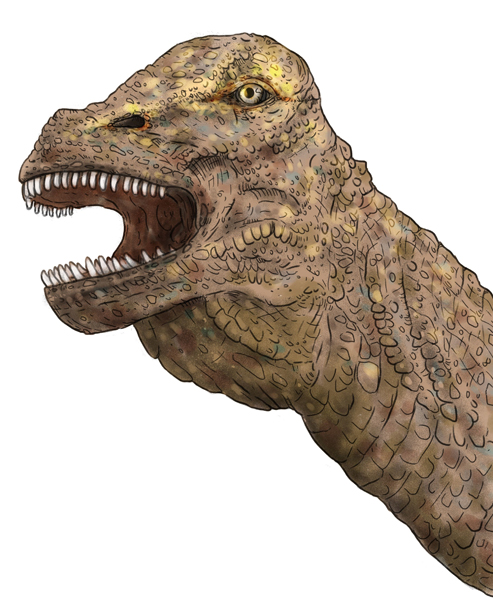
A life reconstruction of the titanosaur Diamantinasaurus. Picture credit: Australian Age of Dinosaurs.
Titanosaur Skull Links Australian Dinosaurs to Antarctica and South America
At the beginning of the Late Cretaceous (100 to 95 million years ago), the Earth was much warmer than it is today. Antarctica which was located approximately where it is today, was ice free. Australia was much further south and closely associated with the Antarctic landmass. The huge conifer forests of Antarctica might have been an attractive habitat for migratory sauropods. The similarities between “Ann” and Sarmientosaurus skull matieral lends weight to the theory that titanosaurs used Antarctica as a pathway to Australia.
The Diamantinasaurus skull fossils are currently on display at the Australian Age of Dinosaurs Museum.
Everything Dinosaur acknowledges the assistance of a media release from the Australian Age of Dinosaurs Museum in the compilation of this article.
The scientific paper: “A nearly complete skull of the sauropod dinosaur Diamantinasaurus matildae from the Upper Cretaceous Winton Formation of Australia and implications for the early evolution of titanosaurs” by Stephen F. Poropat, Philip D. Mannion, Samantha L. Rigby, Ruairidh J. Duncan, Adele H. Pentland, Joseph J. Bevitt, Trish Sloan and David A. Elliott published by Royal Society Open Science.
A new study suggests that the key to the evolutionary success of the early mammals, was to stay small, eat insects and to reduce the number of bones in their skull. The reduction of mammalian skull bones led to a more efficient absorption of bite forces and this adaptation helped mammals to diversify and to ultimately dominate modern ecosystems.
The study, published in the academic journal “Communications Biology” contrasts the skulls of other vertebrates and mammalian ancestors with mammals known from the Jurassic and Cretaceous. In many vertebrate groups such as reptiles and fishes, the skull and lower jaw are composed of numerous bones. This configuration was also seen in the earliest ancestors of modern mammals that lived over 300 million years ago (Cynodontia). However, during evolution the number of bones in the skull was reduced.
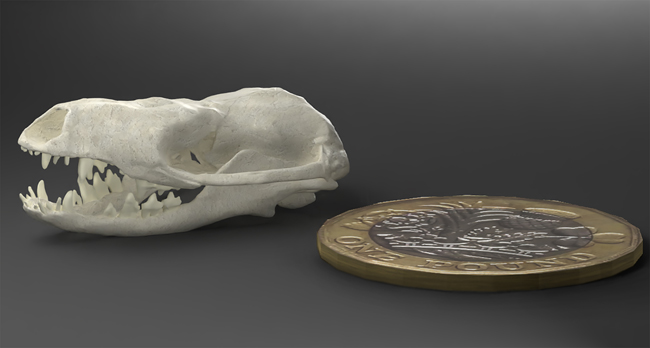
Digital skull model of the small-sized Jurassic mammal ancestor Hadrocodium wui with coin providing scale. Picture credit: Dr Stephan Lautenschlager, University of Birmingham.
A Reduction in Mammalian Skull Bones
Computer simulations based on three-dimensional skull models permitted the research team to examine bite forces and skull stresses. Their research demonstrates that reducing the number of skull bones did not lead to higher bite forces or increased skull strength as postulated previously.
Instead, the researchers, found that the skull shape of these early mammals redirected stresses during feeding in a more efficient way.
Lead author for the study, Dr Stephan Lautenschlager, Senior Lecturer for Palaeobiology (University of Birmingham) explained:
“Reducing the number of bones led to a redistribution of stresses in the skull of early mammals. Stress was redirected from the part of the skull housing the brain to the margins of the skull during feeding, which may have allowed for an increase in brain size.”
Switching Diets
The study, which also involved scientists from the University of Hull, Bristol University, the University of Chicago and the London Natural History Museum, demonstrated that alongside the reduction of skull bones, early mammals also became a lot smaller. Some Mammaliaformes for example, had skulls around 1 cm in length.
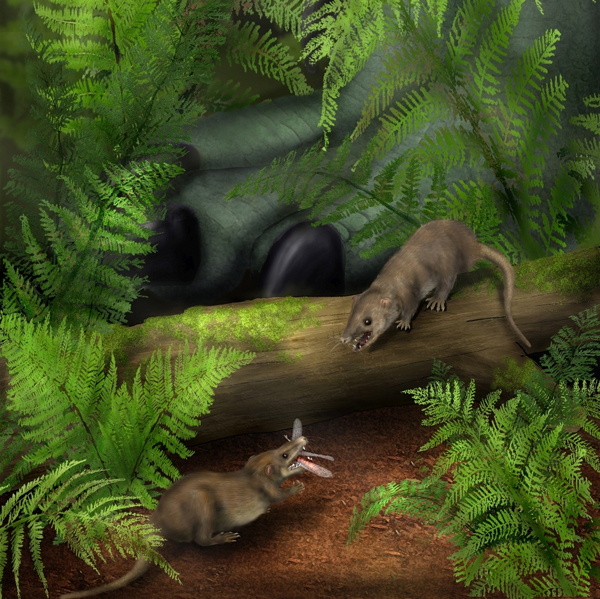
This miniaturisation considerably restricted the available food sources and early mammals adapted to feeding mostly on insects.
Dr Lautenschlager added:
“Changes to skull structure combined with mammals becoming smaller are linked with a dietary switch to consuming insects – allowing the subsequent diversification of mammals which led to development of the wide-range of creatures that we see around us today.”
Life reconstruction of Hadrocodium wui. This Jurassic mammal is depicted hunting insects, illustrating how the adoption of an insectivorous diet and miniaturisation played a significant role in mammal evolution. Picture credit: Dr Stephan Lautenschlager, University of Birmingham.
Hadrocodium wui
One of the mammaliaforms used in the study, is Hadrocodium wui fossils of which are known from the Early Jurassic (Sinemurian faunal stage) of China. At around ten centimetres long, this tiny animal was a very small and inconsequential member of the Lufeng Formation biota, which was dominated by dinosaurs such as Lufengosaurus.
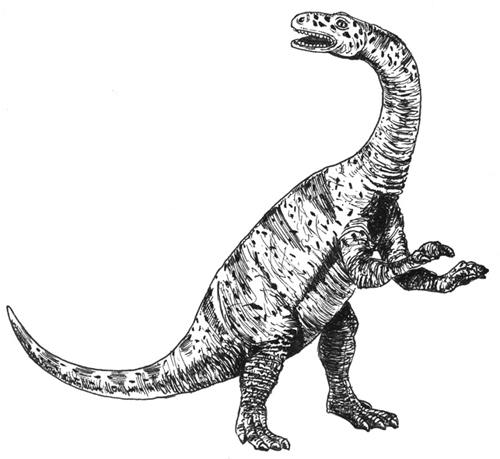
An illustration of Lufengosaurus. Picture credit: Everything Dinosaur.
Picture credit: Everything Dinosaur
The image (above) is a drawing of the Early Jurassic sauropodomorph Lufengosaurus.
The research team concludes that miniaturisation and staying small, combined with a reduction in skull bones and a switch to an insectivorous diet allowed the ancestors of modern mammals to thrive in the shadows of the Dinosauria. Having nocturnal habits may also have permitted these animals to carve out their own ecological niches in dinosaur dominated ecosystems.
It was not until dinosaurs became extinct at the end of the Cretaceous, some 66 million years ago, that mammals had a chance to further diversify and reach the large range of body sizes seen in many extant mammals today.
Everything Dinosaur acknowledges the assistance of a media release from the University of Birmingham in the compilation of this article.
The scientific paper: “Functional reorganisation of the cranial skeleton during the cynodont–mammaliaform transition” by Stephan Lautenschlager, Michael J. Fagan, Zhe-Xi Luo, Charlotte M. Bird, Pamela Gill and Emily J. Rayfield published in Communications Biology.