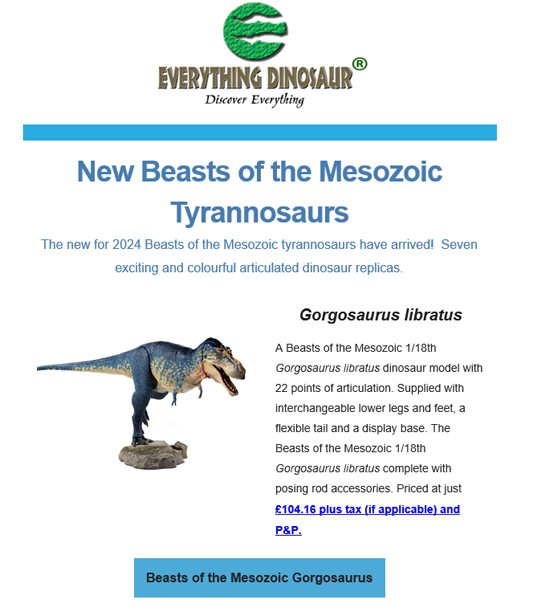
The seven, new for 2024 Beast of the Mesozoic tyrannosaurs are featured in the latest Everything Dinosaur customer newsletter. The latest Beasts of the Mesozoic tyrannosaur shipment arrived late last week. Team members at Everything Dinosaur have been busy contacting all those customers who wanted to be informed.
A newsletter was also emailed to the company’s subscriber list.
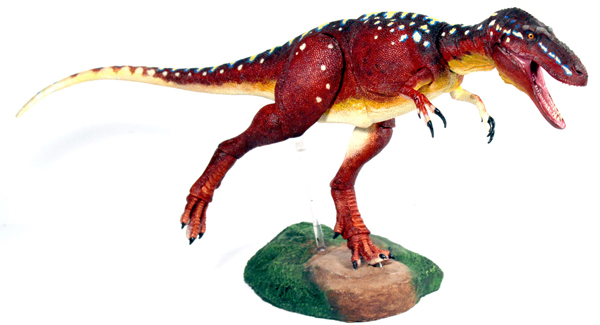
The Beasts of the Mesozoic Gorgosaurus figure features in the latest Everything Dinosaur customer newsletter. Picture credit: Everything Dinosaur.
Picture credit: Everything Dinosaur
New Beasts of the Mesozoic Tyrannosaurs
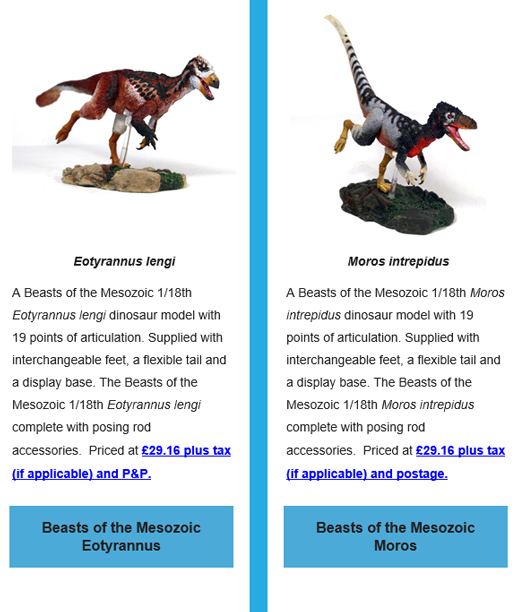
The new articulated figures feature different members of the Tyrannosauroidea superfamily. The model representing the geologically oldest theropod is the Eotyrannus figure (Eotyrannus lengi). Eotyrannus fossils are associated with Lower Cretaceous deposits. All six of the other new tyrannosaur figures represent dinosaurs from the Late Cretaceous.
The two new Beasts of the Mesozoic tyrannosauroid figures Eotyrannus and Moros intrepidus. Picture credit: Everything Dinosaur.
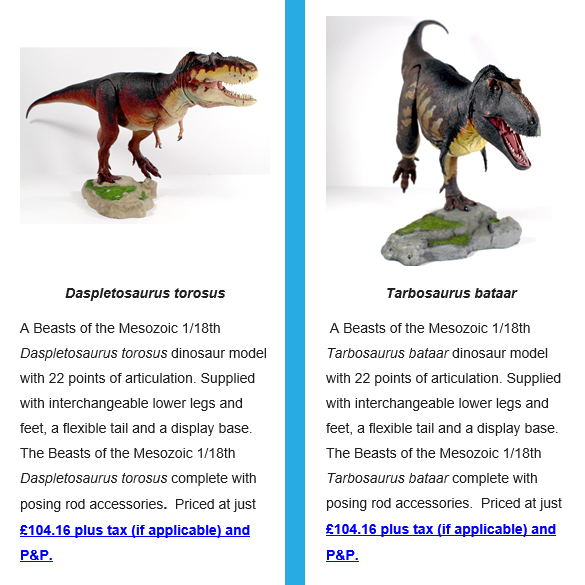
The majority of the new tyrannosaur figures represent predators from either the Maastrichtian or Campanian faunal stages of the Late Cretaceous. Perhaps, one of the geologically youngest tyrannosaurs in this new wave of models would be Tarbosaurus (T. bataar). This Asian tyrannosaur is thought to have lived around seventy million years ago.
The Late Cretaceous Daspletosaurus and the geologically younger Tarbosaurus (Beasts of the Mesozoic tyrannosaurs). Picture credit: Everything Dinosaur.
Picture credit: Everything Dinosaur
Alectrosaurus and Albertosaurus
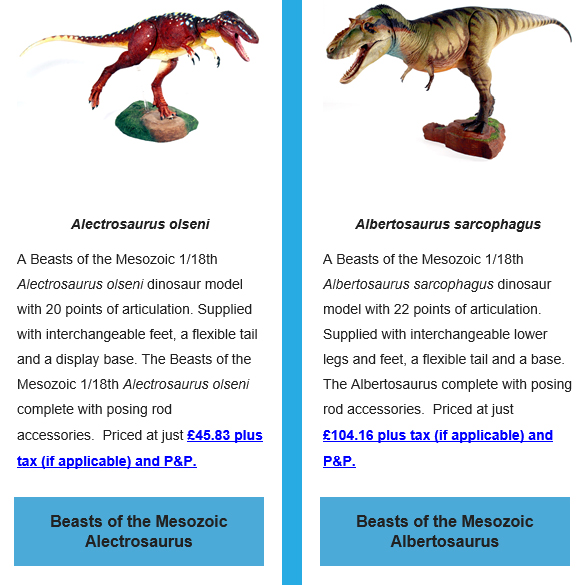
The latest Everything Dinosaur customer newsletter highlighted two other new theropod figures. Alectrosaurus (A. olseni) fossils come from the Iren Dabasu Formation of Inner Mongolia. The date of this formation remains controversial. Some palaeontologists have suggested that this fast-running tyrannosaur may have roamed China approximately ninety million years ago.
In contrast, Albertosaurus (A. sarcophagus) fossils roamed Canada many millions of years later. The fossils of Albertosaurus sarcophagus seem to be confined to the Canadian province of Alberta. A second potential and coeval Albertosaurus may have been present further south (Mexico).
The Beasts of the Mesozoic Alectrosaurus (left) and the Albertosaurus (right). Picture credit: Everything Dinosaur.
Contact Everything Dinosaur to request subscription to the company’s free newsletter: Email Everything Dinosaur.
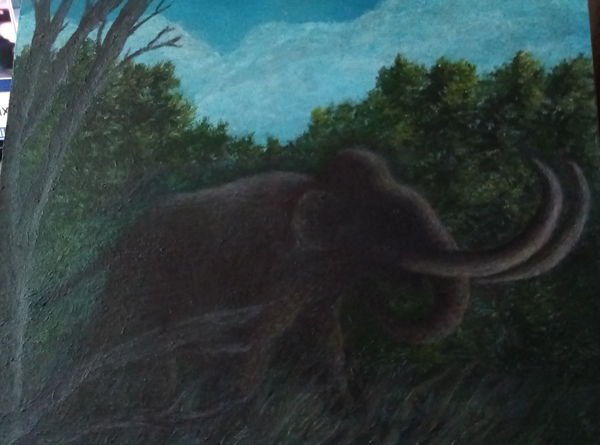
Everything Dinosaur would like to thank talented young artist James who sent into Everything Dinosaur a stunning illustration of a Columbian mammoth that he had painted.
Our thanks to talented artist James who produced this excellent illustration of a Columbian mammoth.
Picture credit: James
The prehistoric elephant is shown in lateral view as it moves through a woodland in North America during the Pleistocene Epoch. James has chosen to depict a mature animal given the impressive size of the tusks on this prehistoric elephant.
Columbian Mammoth Artwork
The Columbian mammoth (Mammuthus columbi) was among the last mammoth species to evolve. It was also one of the largest with some fossil specimens indicating mature bulls some 4.2 metres high at the shoulders. Body weights of the biggest individuals have been estimated at more than twelve tonnes. The last of these amazing creatures are thought to have become extinct around 12,000 years ago.
A spokesperson from Everything Dinosaur thanked James for sending in the image of his Columbian mammoth artwork and exclaimed:
“We do get sent drawings and paintings of Woolly Mammoths, but we don’t receive many illustrations of Columbian mammoths. Our thanks to James for sending in an image of his superb artwork”.
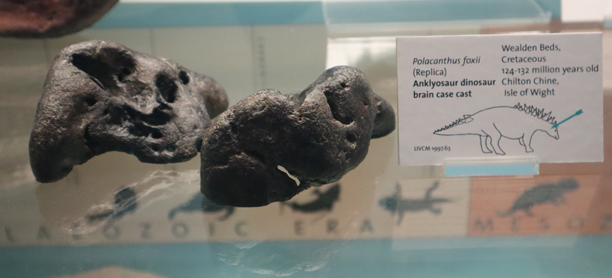
In the Liverpool World Museum there are several exhibits that feature dinosaur fossils. One display case includes two, worn fossils which are described as Polacanthus foxii fossil material. The fossil material has a rounded appearance. According to the display label these fossils are from the Wealden Beds exposed at Chilton Chine on the Isle of Wight. They are described as casts (copies) of a Polacanthus braincase. The actual fossils probably came out of the cliffs and were exposed on the beach for some time prior to their discovery. These fossils were rolled around the beach and attrition caused their rounded and weathered appearance.
However, these fossils, or their copies may not represent Polacanthus foxii.
Casts of Polacanthus fossils. Fragmentary and eroded replica armoured dinosaur fossils on display at Liverpool Museum. These fossils have been assigned to Polacanthus foxii. Picture credit: Everything Dinosaur.
Picture credit: Everything Dinosaur
Labelling Polacanthus Fossils
The Wealden Group covers several million years of deposition. To date, armoured dinosaurs named and scientifically described from the Wealden Group include Hylaeosaurus, the recently named Vectipelta and Polacanthus.
The fossils, although labelled as Polacanthus, may not represent that taxon. Fossils from the Isle of Wight attributed to Polacanthus may actually represent multiple, as yet unnamed taxa.
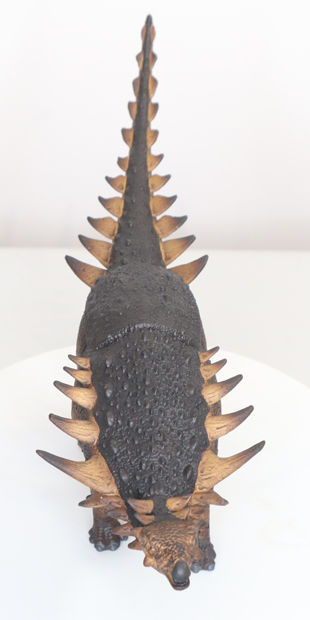
The picture (above) shows the new for 2024 CollectA Deluxe Polacanthus model. This figure is based on the Polacanthus foxii holotype material. It is a modern interpretation of the known fossil material.
Vectipelta for example, is only distantly related to both Hylaeosaurus and Polacanthus foxii.
It is unlikely that all the fossil material ascribed to the Polacanthus taxon displayed in museums actually represents P. foxii, or indeed any other possible species as yet unassigned to the Polacanthus genus.
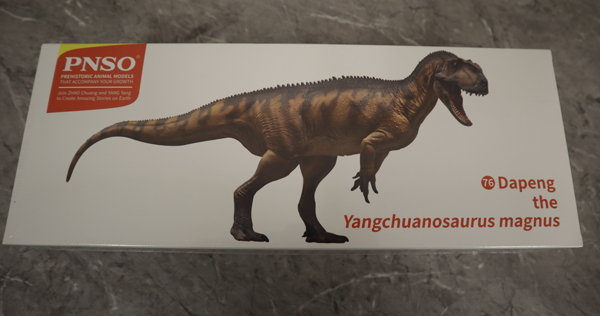
Our thanks to a dinosaur model fan who sent in a review of the recently introduced PNSO Yangchuanosaurus “Dapeng” into Everything Dinosaur. William emailed to praise this new PNSO theropod figure and explained that this was the second Yangchuanosaurus figure from PNSO. This replica represents the enormous species Y. magnus.
The packaging of the recently introduced PNSO Yangchuanosaurus model “Dapeng”. Picture credit: Everything Dinosaur.
Picture credit: Everything Dinosaur
PNSO Yangchuanosaurus “Dapeng”
The reviewer described this new PNSO figure as “truly a Jurassic terror of China’s ancient past.”
The genus was first erected in 1978 (Dong Zhiming et al). A large theropod skeleton had been discovered during the construction of a dam in Sichuan Province. This dinosaur was estimated to have measured around eight metres long. It was named Yangchuanosaurus shangyouensis. In 1983, a second, considerably larger specimen was uncovered (specimen number CV 00216). It was initially thought to represent a new species and the taxon Yangchuanosaurus magus was erected. Further analysis revealed that the anatomical differences observed in the two skeletons were the result of ontogenetic variation. This larger skeleton is now thought to represent and older, more mature Yangchuanosaurus shangyouensis.
The Yangchuanosaurus dinosaur model (Dapeng) from PNSO.
Two PNSO Yangchuanosaurus Figures
The reviewer summed up the two PNSO Yangchuanosaurus figures stated that “Dapeng” represented the larger species Y. magnus or to put it another way the “old man” of “Dayong”.
William expressed his delight at being able to purchase this figure and commented:
“It is privilege to add this great beast to my collection.”
William concluded his Yangchuanosaurus “Dapeng” review by thanking Everything Dinosaur team members for their assistance. He highlighted the company’s excellent customer service and provided an example. Last year, William ordered a pair of PNSO Megalosaurus models, he was emailed by Everything Dinosaur just to make sure he did want the two figures. Team members were concerned in case William had ordered an extra Megalosaurus model by mistake. Once the order had been checked and verified it was despatched without delay.
Our thanks to William for his PNSO Yangchuanosaurus model review.
The recently introduced PNSO Yangchuanosaurus “Dayong” dinosaur model has been reviewed by a dinosaur model collector. William emailed Everything Dinosaur and explained he was a big fan of the PNSO theropod dinosaur figures. He kindly sent a short review of the PNSO Yangchuanosaurus shangyouensis model referred to as “Dayong”.
Yangchuanosaurus in the landscape.
The PNSO Yangchuanosaurus “Dayong”
William explained that “Dayong” was the first of a pair of Yangchuanosaurus figures introduced by PNSO. This replica represents the smaller species (Y. shangyouensis), or a subadult of Y. magus (depending on which reference you read).
The reviewer stated that although the model was slightly smaller than other PNSO theropods, it was:
“Top of the line and a worthy figure to add to your collection.”
William went onto add that the PNSO Yangchuanosaurus “Dayong” is a marvellous sculpt.
“It is robust, and I love his long, boxy face and the lips. He has a wonderful set of teeth in his articulated mouth.”
The PNSO Yangchuanosaurus dinosaur model has an articulated jaw. The reviewer praised this feature of the figure.
William thanked Everything Dinosaur for their ability to provide access to new prehistoric animal models. In addition, the reviewer congratulated the company on their recent, well-deserved Feefo Platinum Trusted Service Award.
A student from the University of Bristol has confirmed the presence of Kuehneosaurs in the Late Triassic of southwestern England. These gliding reptiles were part of a rich reptile dominated fauna that lived on a series of sub-tropical islands, part of an ancient archipelago. The biggest island extended from Frome in the east to Weston-super-Mare in the west. It was around eighteen miles (thirty kilometres long). It is referred to as the Mendip Palaeo-island.
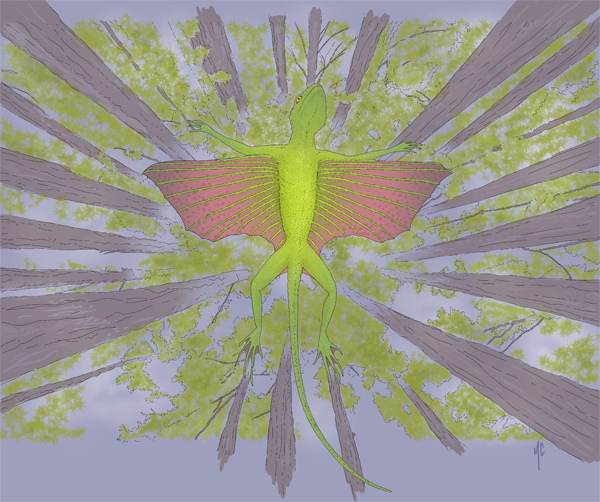
An artist’s impression of a gliding reptile Kuehneosaurus. Picture credit: Mike Cawthorne.
Picture credit: Mike Cawthorne
Kuehneosaurs on Sub-tropical Islands
Kuehneosaurs superficially resemble lizards. However, they were more closely related to the ancestors of crocodilians and dinosaurs. They were small animals, which could fit neatly on the palm of a hand, and there were two species present. One species had extensive wing flaps, the second species had much shorter wings. These wings consisted of skin stretched over elongated ribs. Powered flight was beyond them, but they probably were very competent gliders.
Kuehneosaurs probably occupied a niche in the ecosystem similar to the extant flying lizard Draco from southeast Asia. They most likely wandered about on the ground and climbed trees in search of insects and other small invertebrates. To escape from predators, or to make rapid progress through the trees, they could launch themselves into the air and glide for several metres.
The discovery of Kuehneosaurs in the Late Triassic ecosystem was made by University of Bristol Masters student Mike Cawthorne. He had been examining numerous reptile fossils collected from limestone quarries, which represent deposits associated with the Mendip Palaeo-island.
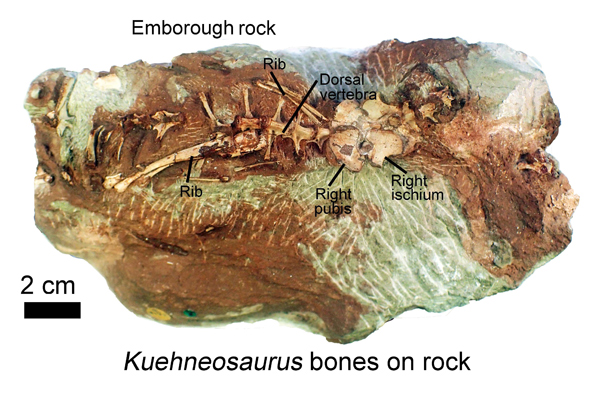
Image showing partial skeleton of gliding reptile Kuehneosaurus on rock from Emborough. Picture credit: David Whiteside.
Picture credit: David Whiteside
No Dinosaur Fossils Found but They Were Probably Present
The research, published in the “Proceedings of the Geologists’ Association”, also records the presence of reptiles with complex teeth, the trilophosaur Variodens and the aquatic Pachystropheus that probably lived a bit like a modern-day otter likely eating shrimps and small fish. However, no dinosaur bones were found. These animals either fell or their bones were washed into caves and cracks in the limestone. This led to their preservation and the development of a fossil assemblage.
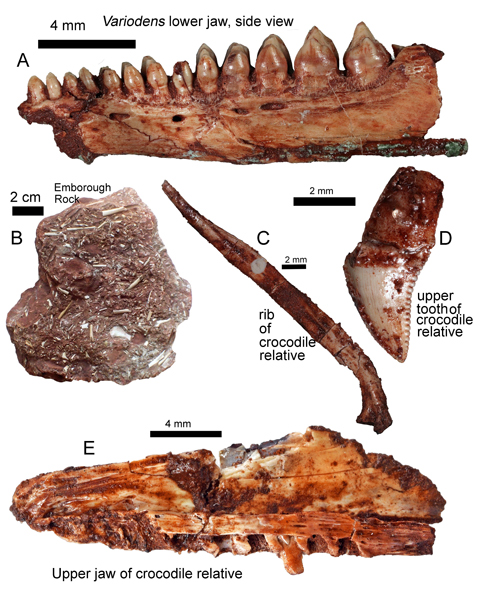
A jawbone of unusual Triassic reptile Variodens first named from Emborough. B) Typical Emborough rock with many bones. C, D and E) bones from land-living relatives of crocodiles. Picture credit: David Whiteside.
Picture credit: David Whiteside
Masters student Mike Cawthorne commented:
“All the beasts were small. I had hoped to find some dinosaur bones, or even their isolated teeth, but in fact I found everything else but dinosaurs. The collections I studied had been made in the 1940s and 1950s when the quarries were still active, and palaeontologists were able to visit and see fresh rock faces and speak to the quarrymen.”
A Home for a Diverse Assemblage of Small Reptiles including Kuehneosaurs
Professor Mike Benton from Bristol University’s School of Earth Sciences added:
“It took a lot of work identifying the fossil bones, most of which were separate and not in a skeleton. However, we have a lot of comparative material, and Mike Cawthorne was able to compare the isolated jaws and other bones with more complete specimens from the other sites around Bristol. He has shown that the Mendip Palaeo-island, which extended from Frome in the east to Weston-super-Mare in the west, nearly 30 km long, was home to diverse small reptiles feeding on the plants and insects. He didn’t find any dinosaur bones, but it’s likely that they were there because we have found dinosaur bones in other locations of the same geological age around Bristol.”
Paying Tribute to the Fossil Collectors
Dr David Whiteside (University of Bristol) praised the work of the amateur fossil collectors and academics who found the fossils stating:
“The bones were collected by some great fossil finders in the 1940s and 1950s including Tom Fry, an amateur collector working for Bristol University and who generally cycled to the quarries and returned laden with heavy bags of rocks. The other collectors were the gifted researchers Walter Kühne, a German who was imprisoned in Great Britain in the second world war, and Pamela L. Robinson from University College London. They gave their specimens to the Natural History Museum in London and the Geological collections of the University of Bristol.”
Everything Dinosaur acknowledges the assistance of a media release from the University of Bristol in the compilation of this article.
The scientific paper: “Latest Triassic terrestrial microvertebrate assemblages from caves on the Mendip palaeoisland, S.W. England, at Emborough, Batscombe and Highcroft Quarries” by M. Cawthorne, D. I. Whiteside, and M. J. Benton published in the Proceedings of the Geologists’ Association.
Team members at Everything Dinosaur are busy preparing for the arrival of the new Beasts of the Mesozoic figures. They are wave three of the tyrannosaur series and the new figures will include the Asian tyrannosaur Alectrosaurus (Alectrosaurus olseni).
The new tyrannosaur figures include:
Eotyrannus lengi
Moros intrepidus
Albertosaurus sarcophagus
Gorgosaurus libratus
Daspletosaurus torosus
Tarbosaurus bataar
Alectrosaurus olseni
The new for 2024 Beasts of the Mesozoic articulated tyrannosaur figure Alectrosaurus olseni in right lateral view.
Alectrosaurus is known from hindlimb fossils and fragmentary elements of the hips. Much of the ascribed fossil material was discovered during the Third Asiatic Expedition to Inner Mongolia (China), by the American Museum of Natural History. It was formally described in 1933 (Gilmore).
The fossil material came from deposits associated with the Iren Dabasu Formation. The age of the strata remains uncertain. Relative dating using the abundant ostracod fossils suggest a Late Campanian to Maastrichtian age. However, the vertebrate assemblage represents fauna that indicate that the deposits are much older perhaps dating from the Turonian faunal stage. This would suggest that Alectrosaurus lived around 90 mya (million years ago).
The size of Alectrosaurus olseni is unknown. Its body length has been estimated at between five and six metres. Analysis of the limb bones and their ratios (femur to tibia), indicate that this dinosaur was a fast runner. It was probably a pursuit predator. The weight of A. olseni has been estimated to be around six hundred kilograms.
An Everything Dinosaur Scale Drawing
As part of our preparations for the arrival of the new Beasts of the Mesozoic tyrannosaurs, we have commissioned an Alectrosaurus scale drawing. This illustration will be incorporated into the free fact sheet that we will send out with the Alectrosaurus olseni model.
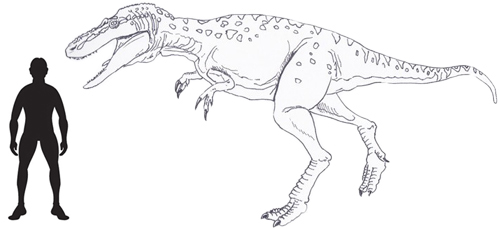
The Alectrosaurus (A. olseni) scale drawing prepared by Everything Dinosaur for the new tyrannosaur fact sheet. Picture credit: Everything Dinosaur.
Picture credit: Everything Dinosaur
A spokesperson from Everything Dinosaur explained that they were looking forward to the arrival of these new articulated figures.
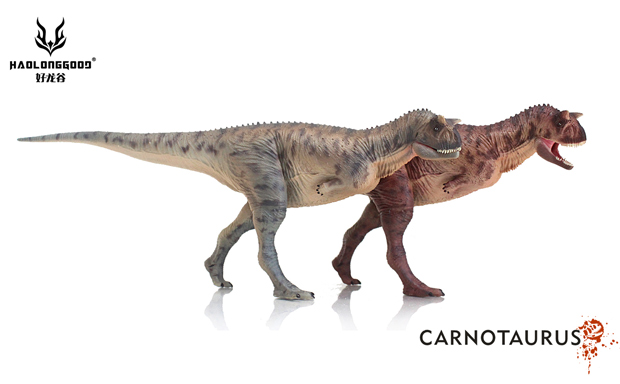
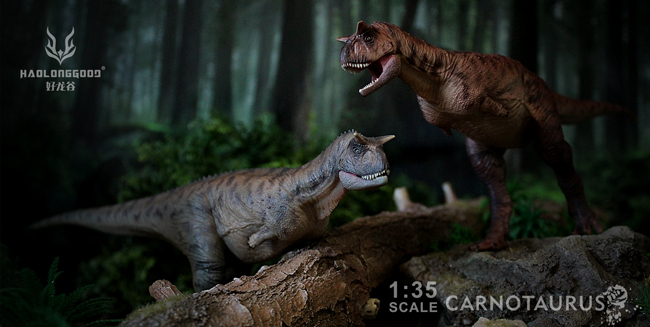
Two new Haolonggood Carnotaurus models are coming to Everything Dinosaur. The two figures are part of a shipment that will be arriving in the UK soon. Both theropod models have articulated lower jaws.
The grey Haolonggood Carnotaurus figure Zhou Tong is forward/left whilst Li Zhong, the brown coloured model is to the rear and right.
Haolonggood Carnotaurus Models
These beautiful figures have been painted in stunning colours. Each model has a declared scale of 1:35. The Haolonggood Carnotaurus models measure 22.5 cm long and stand around 9.5 cm tall. They are spectacular models of the famous South American abelisaurid.
Two new Haolonggood Carnotaurus models are coming into stock at Everything Dinosaur. Each model measures approximately 22.5 cm in length.
As with the vast majority of the prehistoric animals supplied by Everything Dinosaur. Each Carnotaurus model will be supplied with a unique Carnotaurus (C. sastrei) fact sheet.
Models of Carnotaurus sastrei
Named and described in 1985 (Bonaparte), Carnotaurus is known from an exceptional specimen. The only known fossil material consists of much of the anterior portion of the skeleton including the skull. It is thought to have been one of the largest of the Abelisauridae. Palaeontologists estimate that Carnotaurus may have measured around eight metres in length. However, it has been speculated that this predator could have grown much larger.
Commenting on the imminent arrival of these two Carnotaurus sastrei figures, a spokesperson from Everything Dinosaur stated:
“The two Haolonggood Carnotaurus models are named Li Zhong and Zhou Tong. They are essentially the same sculpt, only the colour schemes are different. They are both exceptional models and each has an articulated jaw. We are looking forward to receiving this pair of dinosaur models into stock.”
To view the award-winning and extremely customer friendly Everything Dinosaur website: Visit Everything Dinosaur.
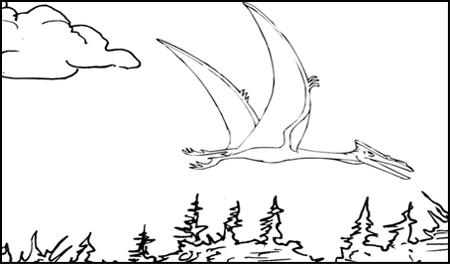
Ten years ago team members at Everything Dinosaur created a series of illustrations of prehistoric animals to help schoolchildren in a project. A total of twelve different drawings were produced illustrating life on Earth in prehistoric times. These drawings were then made into a calendar. The children could colour in or paint these illustrations to create their own unique prehistoric scene. The January 2014 artwork featured a Quetzalcoatlus drawing.
An illustration created ten years ago to help support some schoolchildren studying dinosaurs and prehistoric animals. Picture credit: Everything Dinosaur.
Picture credit: Everything Dinosaur
The Quetzalcoatlus Drawing
The huge Quetzalcoatlus is pictured flying over a dense conifer forest. Despite the emergence of angiosperms, conifers still made up a substantial proportion of the trees to be found on the landmass of Laramidia. These drawings were created to help the children with their Key Stage 2 term topic. The term topic focused on dinosaurs and fossils, however, giant pterosaurs featured too. The scheme of work also involved looking at the career of a famous palaeontologist and introduced the children to the work of Mary Anning.
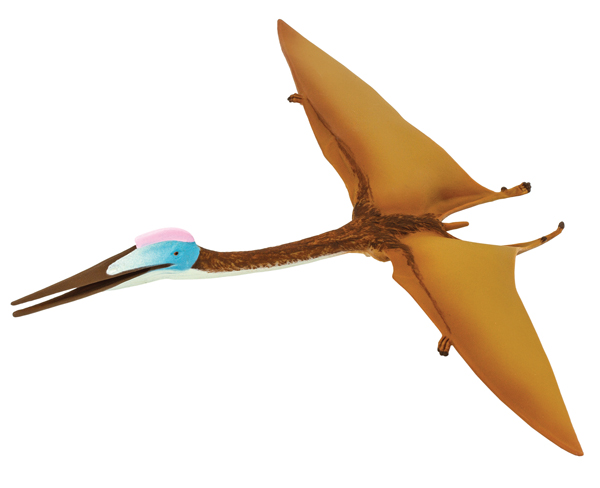
A model of the giant pterosaur Quetzalcoatlus.
The model (above) is a Quetzalcoatlus figure from the Wild Safari Prehistoric World range. It has been praised by collectors for providing an excellent representation of an azhdarchid pterosaur.
A spokesperson from Everything Dinosaur recalled the time and effort that went into the term topic and praised the teaching team for constructing such an innovative scheme of work for the children.
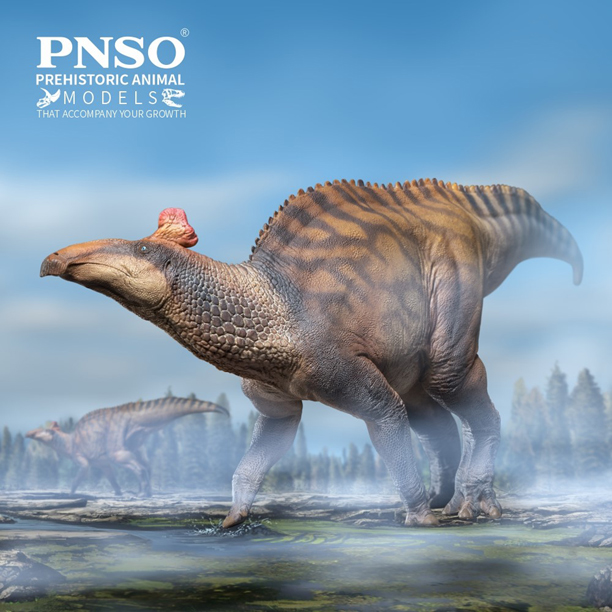
The new for 2024 PNSO Edmontosaurus dinosaur model is coming into stock soon at Everything Dinosaur. The shipment is already on the way and Zabad the Edmontosaurus will arrive shortly. It is on the same vessel as the new PNSO Spinosaurus figure (Aymen).
A new for 2024 Edmontosaurus dinosaur model.
PNSO Edmontosaurus Dinosaur Model
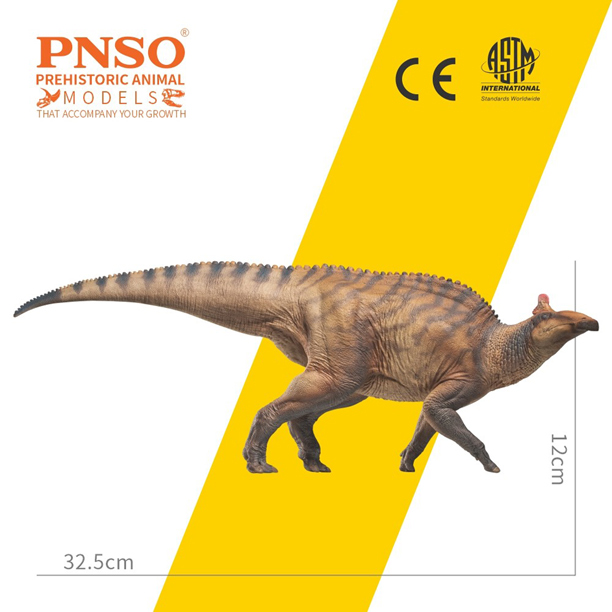
The new Edmontosaurus figure measures 32.5 cm in length. It is a very detailed duck-billed dinosaur. It sports a soft comb crest, and the skin texture looks terrific. We shall wait and see if it has a scientifically accurate manus.
The impressive figure stands 12 cm high, and it has stunning colouration.
The new PNSO Edmontosaurus model measures around 32.5 cm in length.
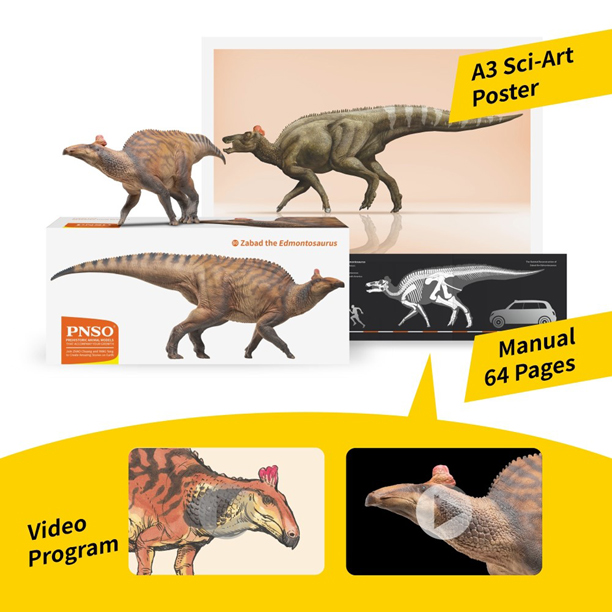
This attractive hadrosaur figure displays Edmontosaurus in a quadrupedal pose. The dinosaur model is supplied with an A3 Sci-Art poster and a sixty-four-page, colour booklet.
The PNSO Zabad the Edmontosaurus figure is supplied with a Sci-Art poster and a full-colour booklet.
A spokesperson for Everything Dinosaur confirmed that the PNSO Zabad the Edmontosaurus would be in stock in a few weeks.