All about dinosaurs, fossils and prehistoric animals by Everything Dinosaur team members.

Book reviews and information on dinosaur books by Everything Dinosaur team members.

14 10, 2012

New “Knowledge Masters – Dinosaurs” Book Reviewed

By |2024-04-24T16:45:34+01:00October 14th, 2012|Categories: Book Reviews, Product Reviews|0 Comments

“Knowledge Masters – Dinosaurs” Book Reviewed

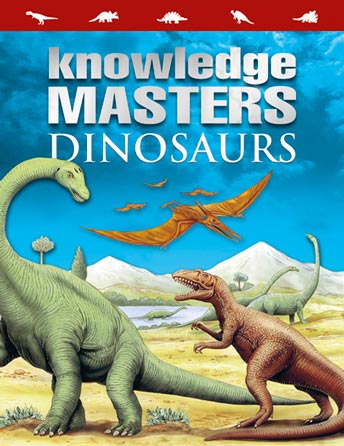
Designed with children from five years old and upwards in mind ,the book entitled “Knowledge Masters – Dinosaurs” is packed full of fascinating facts and snippets of information about dinosaurs and other prehistoric animals from the Age of Reptiles.  This hardback book has been written in a large font size enabling young people to read it very easily.  The information is broken down into bite-size paragraphs and they are laid out in such a way as to encourage young people to go through the book page by page, thus helping to develop  their reading skills.

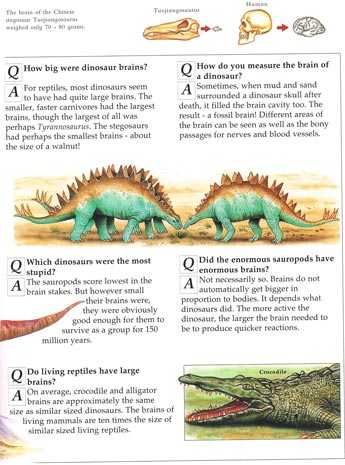
“Knowledge Masters – Dinosaurs”

Knowledge Masters – Dinosaurs Book

"Knowledge Masters - Dinosaurs"

Children’s reference book about dinosaurs.

Picture credit: Everything Dinosaur

Illustrations and Drawings of Dinosaurs

The thirty-two pages contain a large number of illustrations and drawings of dinosaurs, marine reptiles and flying reptiles (pterosaurs) and each section is written in a question and answer format  A question is presented in bold text and immediately below it an answer paragraph has been provided.  Running along the top of each page is a mural-like section that provides more information about the animals featured on that specific page.

This book contains questions such as what did dinosaurs eat, are there any fossil birds, did dinosaurs have babies and what colour were the eyes of dinosaurs?  These are the sort of questions that children from four years and upwards ask and this book provides them with a ready source of answers .

The demise of the Dinosauria is particularly well covered.  In the last part of the book the extinction of the Dinosauria and other animals at the end of the Cretaceous geological period is discussed.  A number of possible theories for the mass extinction are put forward and the evidence for an extraterrestrial impact such as an asteroid strike is explained in child-friendly, simple terms.  There is even a handy dinosaur and prehistoric animal index presented on the last page, although it would have been helpful to have had a name pronunciation guide provided as well to help young readers tackle the long and often complicated dinosaur names.

Packed full of Questions and Answers about Prehistoric Animals

Lots of Information on prehistoric animals.

Picture credit: Everything Dinosaur

Fourteen Chapters

Each of the fourteen chapters in this children’s reference is packed full of questions with their answers and facts and figures about dinosaurs and other prehistoric creatures that lived during the Mesozoic Era.    This book would make an excellent addition to a school library or a young dinosaur fan’s book collection.  It is well written, contains lots of colour illustrations and it is jam-packed full of fascinating facts and details related to dinosaurs and other prehistoric animals.

To view Everything Dinosaur’s wide range of prehistoric animal themed toys and gifts: Visit Everything Dinosaur.

8 10, 2012

The Great Book of Dinosaurs Reviewed

By |2023-02-06T08:33:37+00:00October 8th, 2012|Categories: Book Reviews, Product Reviews|3 Comments

A Review of the “Great Book of Dinosaurs”

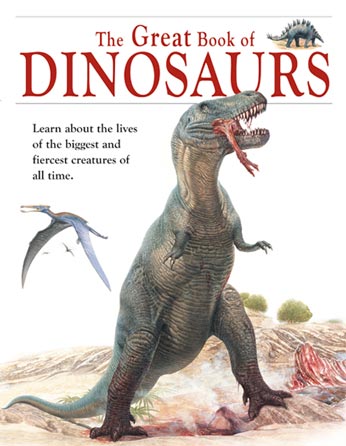
Young dinosaur fans aged from five years and upwards will enjoy this fact-filled, hardback dinosaur book entitled the “Great Book of Dinosaurs”, which contains over two hundred illustrations.  Written in a nice, big font, this colourful dinosaur and prehistoric animal book will help encourage young readers, the 124 pages are well-laid out and the text consists of lots of short, clear paragraphs aimed at encouraging young people with their reading skills.

The Front Cover of the “Great Book of Dinosaurs”

Aimed at young readers.

Picture credit: Everything Dinosaur

“Great Book of Dinosaurs”

The contents are set out in six chapters, the first of which introduces the dinosaurs and explains how these reptiles first evolved.  There is also a comprehensive “family tree” that shows the taxonomic relationships between the various different types of creatures that make up the Dinosauria.  Despite the book’s title, flying reptiles (pterosaurs) are extensively covered as well as dinosaurs and there is a handy timeline that explains how the main types of pterosaur evolved and when they lived.  The second chapter covers the evolution of the sauropods, dinosaurs such as Apatosaurus, Camarasaurus and Brachiosaurus.  Other chapters are entitled “Fearsome Hunters”, “Armoured Plant-eaters” and “Two-Legged Runners”.  The pterosaurs are covered in a chapter towards the end of this book in a section called “Monster Fliers”.

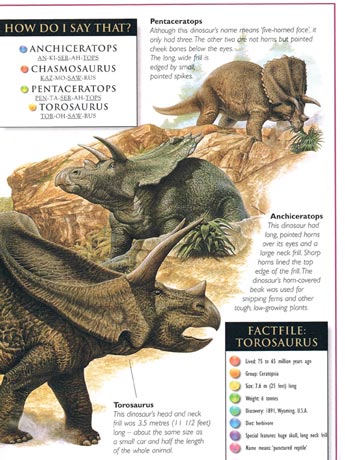
More than two hundred well-crafted illustrations really bring the Mesozoic Era to life and there is lots of information about dinosaur discoveries and palaeontology.  Diagrams of skeletons highlight the main differences between the major groups of dinosaurs and there is a handy “How do I say that” section which spells the names of these prehistoric creatures phonetically, thus helping with pronunciation.  This guide will prove especially helpful to those parents, grandparents and guardians who read this book with their young charges.

An Informative and Enjoyable Read

Packed full of facts and figures.

Picture credit: Everything Dinosaur

Unique Fact File Layout

The best-known dinosaurs are given a unique fact file that explains when these animals lived, how big they were and what  they ate.  For those readers who want to use this as a reference book, there is a clearly laid out index at the back.  The pterosaurs are certainly featured and there is plenty of information on different types of flying reptile, creatures such as the spectacular Phobetor, Pteranodon and perhaps the largest pterosaur of all – Quetzalcoatlus.

Key words and phrases are explained very well using simple language and this hardback will prove to be very popular with children.  It was pleasing to see that maps had been included which show where the fossils of certain dinosaurs were found.  There is even a double page spread that displays a pair of tyrannosaurs feeding – T. rex illustrated in glorious, gory colour.

To view Everything Dinosaur’s range of dinosaur models and gifts: Everything Dinosaur.

A well-written and cleverly illustrated dinosaur book that helps readers learn about the lives of some of the biggest and fiercest creatures known to science.

1 10, 2012

The Little Book of Dinosaurs Reviewed

By |2023-02-06T07:54:38+00:00October 1st, 2012|Categories: Book Reviews, Dinosaur Fans, Product Reviews|0 Comments

A Review of the Little Book of Dinosaurs

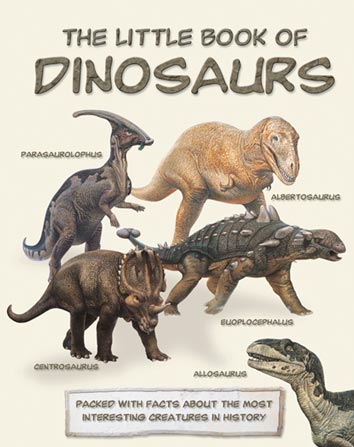
An ideal stocking filler for young dinosaur fans this Christmas is the pocket-sized “Little Book of Dinosaurs”, packed with facts and figures about some of the most fascinating creatures that lived in prehistoric times.  Without much of a preamble, this little book launches straight into descriptions with well-crafted illustrations of various dinosaurs.

The Little Book of Dinosaurs

A pocket-sized guide to dinosaurs,

Picture credit: Everything Dinosaur

Aimed at young readers from five years and upwards, this little book contains information on something like sixty different dinosaurs.

The writers have created sixty-four pages which are jammed full of information about the Dinosauria.  The contents are split into twenty-nine sections which describe these prehistoric creatures, with the last section, number thirty being dedicated to a quick quiz  to see if those young palaeontologists the book is aimed at have absorbed the information the book contains.  The quiz answers are provided which will be a big relief to those parents, grandparents and guardians who will be tasked with helping their charges to read through the text.

The Little Book of Dinosaurs has been designed to help young children with their reading.  The text is large and there are lots of sections in a bold font to help children develop their reading skills.  Most dinosaurs are described on a single page, although some animals are given a double page spread.  With short snippets of information with headings such as “Terrible Tyrants”, “Big Brains” and “Dagger Thumbs” there is much to appeal to young fans of these extinct reptiles.

There are colour illustrations throughout, although the lack of pictures of feathered dinosaurs makes some of the interpretations of dinosaurs such as the troodontids and psittacosaurs look a little dated.  This book does permit young readers to enter the fascinating world of these Mesozoic animals and there are certainly a great range of the Dinosauria covered, from the turkey-sized Velociraptors up to the mighty tyrannosaurs such as T. rex and Albertosaurus.

To view Everything Dinosaur’s selection of dinosaur themed toys and gifts: Dinosaur and Prehistoric Animal Toys and Gifts.

One particularly informative section deals with the concept of some, small predatory dinosaurs such as the dromaeosaurs living in small packs and adopting a pack hunting behaviour.  Using the American dinosaur Deinonychus (D. antirrhopus), as an example, the authors speculate on how this type of predatory dinosaur hunted.  Under the heading “Pack Hunters” how this dinosaur may have attacked prey is outlined and this section is illustrated with a series of black and white drawings showing how Deinonychus may have hunted the herbivorous Tenontosaurus.

An Example of the Text and Images

Well-crafted text for young readers.

Picture credit: Everything Dinosaur

With the likes of Parasaurolophus, Centrosaurus, Allosaurus and the big sauropods such as Diplodocus and Apatosaurus included, this pocket-sized guide to dinosaurs makes an ideal Christmas gift for young dinosaur fans.

26 09, 2012

The New Dinosaur Dictionary (Book) Reviewed

By |2024-04-24T16:35:48+01:00September 26th, 2012|Categories: Book Reviews, Product Reviews|0 Comments

A Review of the Dinosaur Dictionary (Book Review)

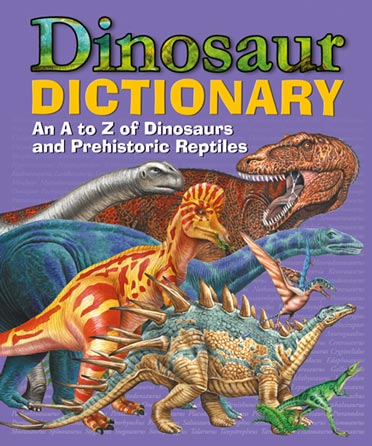
Many parents and guardians are keen to encourage reading and one way to motivate a child to read more is to provide them with books that they enjoy about subjects they are interested in.  Within the United Kingdom many primary schools are moving towards a more creative curriculum and dinosaurs are becoming increasingly popular with teachers and teaching assistants as a term topic.  Finding suitable reading materials to encourage young children to learn about science as well as to help develop their reading skills can be difficult.  However, with the advent of this child-friendly dinosaur dictionary we think this book is certainly a step in the right direction.

Dinosaur Dictionary

The Dinosaur Dictionary is aimed at children from four years and upwards and provides young palaeontologists with a handy dinosaur A-Z!  It is a colourful, child’s dictionary complete with a well thought out pronunciation guide to help children (and their parents), to pronounce the many complicated and lengthy prehistoric animal names contained in the sixty four pages of this book.

Dinosaur Dictionary – A Child-Friendly Dinosauria A-Z

Suitable for children aged 4 and over.

Picture credit: Everything Dinosaur

There are over one hundred prehistoric animals and dinosaurs featured in the book, the vast majority from the Mesozoic Epoch, which is generally regarded as the “Age of Reptiles”.

The dictionary starts with the Late Cretaceous titanosaur known as Alamosaurus.  This long-necked dinosaur that lived at the same time as Tyrannosaurus rex could well turn out to be one of the largest land living animals of all time, if recent fossil finds prove conclusive regarding this huge, herbivore’s size.  The dictionary provides a brief description of this dinosaur, and in common with all the other entries there is a colourful illustration of the creature and a black and white scale drawing showing size.  Each entry has plenty of facts about the particular animal being discussed and all the famous dinosaurs as well as some of the more unusual reptiles that shared their prehistoric world are included.

To view Everything Dinosaur’s range of dinosaur themed toys and gifts: Dinosaur and Prehistoric Animal Toys and Gifts.

Zephyrosaurus

The last dinosaur listed is Zephyrosaurus (hypsilophodontid dinosaur), one of the lesser known dinosaurs from the North American Cretaceous.  The book also includes a handy glossary and an short chapter introducing the Dinosauria, outlining when they lived and how they evolved.  The text is large and has been carefully compiled to enable young children to read the facts and figures about these prehistoric creatures with ease, there might be the odd scientific errata but the text and design of this book is aimed at delighting young dinosaur fans and helping them with their reading and it is likely that this publication will achieve these aims.

This young persons book is an excellent prehistoric animal A-Z!  A colourful dinosaur dictionary, complete with pronunciation guide, making sixty-four pages From Alamosaurus to Zephyrosaurus.  In summary,  a handy, well-illustrated guide to over one hundred dinosaurs and other prehistoric animals.

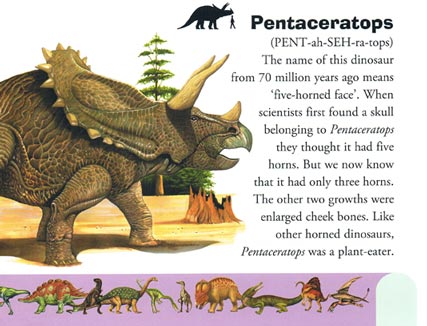
One of the Horned Dinosaurs Illustrated in this Dinosaur Book

Encouraging young people with their reading.

Picture credit: Everything Dinosaur

A typical entry from the Dinosaur Dictionary is shown above, the text is large and encourages reading in young people, there are lots of facts and each prehistoric animal featured is illustrated.

Fun Fact!

There are more prehistoric animals represented under the letter “C” than under any other letter in the Dinosaur Dictionary.

26 08, 2012

Our Favourite, Fantastic Dinosaur Books (Part 2)

By |2024-01-02T06:57:57+00:00August 26th, 2012|Categories: Book Reviews, Dinosaur and Prehistoric Animal Drawings, Dinosaur Fans, Everything Dinosaur News and Updates|5 Comments

Dinosaurs and Other Prehistoric Reptiles (Jane Werner Watson)

Continuing the discussion amongst team members at Everything Dinosaur about favourite dinosaur books, it would be remiss of us if we did not include the beautifully illustrated “Dinosaurs and Other Prehistoric Reptiles”.  This hardback dinosaur book was first published in 1966 (we think), our office copy dates from 1973 and is the sixth re-print of this wonderful children’s dinosaur book.  Sub-titled “Mighty Monsters of the Past”, this book was written by Jane Werner Watson and illustrated by the fantastically talented Rudolph F. Zallinger.

Favourite Dinosaur Books

The Front Cover of this Favourite Dinosaur Book

Beautiful dinosaur book.

Picture credit: Everything Dinosaur

The book provides a brief preamble discussing life before the dinosaurs starting with the move onto land by certain species of fish, the lush forests of the Carboniferous before moving onto depict life in the Age of Reptiles (Triassic to Cretaceous).  The text is easy to read for a young child and inserts facts about the prehistoric animals covered within a narrative that explains what is going on in the superbly illustrated pictures by Rudolph F. Zallinger.  The artwork is simply amazing, and the award winning Zallinger depicts his subjects in a series of lively dioramas with many of the prehistoric animals depicted as highly colourful creatures.  For example, a red and blue Allosaurus or a blue and purple Plateosaurus.

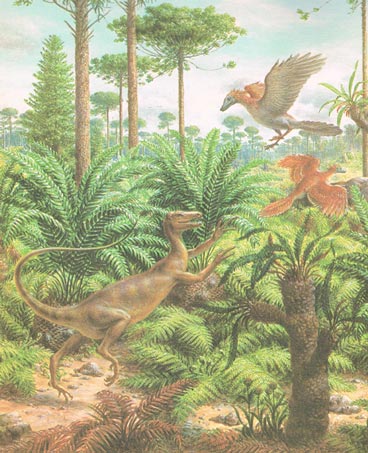
Ornitholestes and Archaeopteryx Illustrated by Zallinger

Beautiful and detailed drawings.

Picture credit: Rudolph F. Zallinger

In the above illustration, an Ornitholestes (theropod dinosaur) is pursuing early birds such as Archaeopteryx.  This illustration draws heavily on the work of another great dinosaur illustrator Charles Knight.  Zallinger’s attention to detail and desire to show such terrific backgrounds is perhaps what makes the artwork in this book so outstanding.  Although a lot of the illustrations within this book are now outdated in terms of our knowledge about the Dinosauria, for instance sauropods are depicted as aquatic, swamp-dwelling creatures the pictures are simply wonderful to behold.

Running through the book is a timeline starting with the emergence of mankind and then slowly travelling backwards in time to 293 million years ago (when the timeline suddenly runs out).  The last animal featured is the Eusthenopteron,

The Timeline at the Foot of Each Page

Travelling backwards in time.

Picture credit: Everything Dinosaur

In the timeline, a Styracosaurus is seen preceding the emergence of Triceratops towards the end of the Cretaceous geological period.

The Beasts of the Mesozoic series contains articulated figures of both Triceratops and Styracosaurus (whilst stocks last): Articulated Dinosaurs – Beasts of the Mesozoic.

The book may be outdated, but it still provokes many happy childhood memories for team members at Everything Dinosaur.

14 08, 2012

A Review of Deposits Magazine (New Issue 31)

By |2024-04-24T16:29:02+01:00August 14th, 2012|Categories: Geology, Magazine Reviews|0 Comments

Deposits Magazine Reviewed

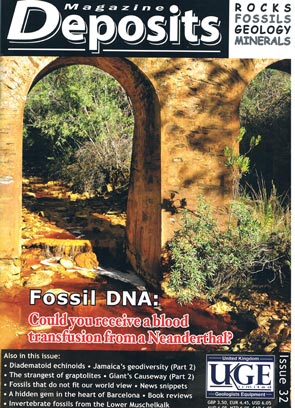
Chance to review the latest issue of Deposits magazine (issue 31), our copy has been in the office for a few weeks, all the team members have been through it but now we have time to write a proper review at this popular magazine aimed at fossil hunters and geologists.

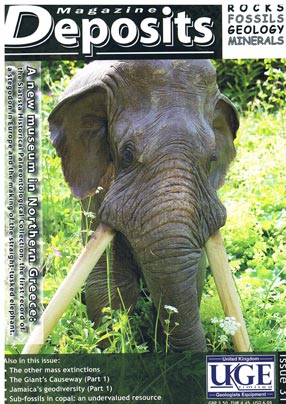
Once again this edition of the quarterly magazine features a wide range of topics, everything from trilobites from Portugal to straight-tusked elephants from northern Greece.  It is the elephant that features on the front cover, it is a spectacular life-size model, at first glance it looks like the animal is alive, but inside there is a highly informative article all about the Siatista Historical Palaeontological Collection and its collection of important elephant fossils.

Deposits Magazine

Elephas antiquus (Straight-tusked Elephant) at the Museum

Superb model made for new Greek Museum.

Picture credit: Everything Dinosaur

Dr Neale Monks contributes with an intriguing look at the mass extinction events that have been recorded in the geological record.  The article also provides information on those types of organisms that have survived extinction events, ferns, lungfish and the chelonians for example.

One of the regular features in the magazine is the news snippets section.  This provides a brief synopsis of stories that have appeared in the media over the last three months or so.  There is also a handy glossary of terms which provides a useful reference.  Dr David Penney and Dr David Green have written a fascinating piece about the sub-fossils in copal.  This is illustrated by some amazing photographs showing some of the creatures that have been trapped in this precursor of amber.

There is even a feature on the geology of the Giant’s Causeway in Northern Ireland, the first part of what promises to be  very detailed tour of the geology of this part of the world.  The dromaeosaur Utahaptor is given a make-over, fossil collectors finds are displayed, the geo-diversity of Jamaica is explored and there is an informative review of the book which provides a guide to the geology of Dorset – so much in the news recently due to the number of landslides that have occurred in that part of the south coast.

Visit Everything Dinosaur’s award-winning website: Everything Dinosaur.

31 01, 2012

New Deposits Magazine (Issue 29) Reviewed

By |2024-04-22T14:06:12+01:00January 31st, 2012|Categories: Geology, Magazine Reviews, Palaeontological articles|0 Comments

Deposits Magazine (Winter Edition) in Review

Finally, managed to persuade my colleagues in the office to let me have the latest copy of Deposits magazine for a review.  It arrived at Everything Dinosaur’s offices about ten days ago, but since then the team members have been avidly reading it and up until now I have not been able to get my hands on it.

Deposits Magazine

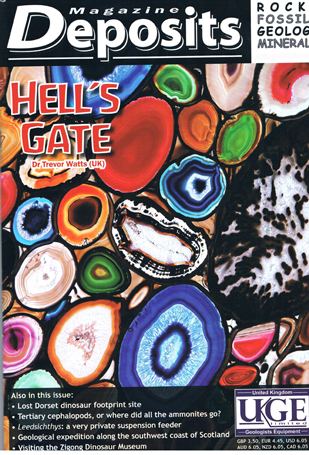
As always the latest edition, is jam packed full of interesting articles covering geology, palaeontology and of course mineralogy.  Must not forget the mineralogists, sometimes we overlook their contribution, pleasing to see the front cover is adorned with some artwork created from slices of colourful polished agate from around the world.

Front Cover of Deposits Magazine

Colourful agates adorn the front cover.

Picture credit: Everything Dinosaur

One of the good things about this magazine is that it does not limit itself to UK locations, in this issue readers are transported to far flung places such as Morocco, Kenya as well as Poland and our own Dorset coast.  Amongst the usual updates on fossil finds, book reviews, (great to see a review of the excellent publication “English Wealden Fossils”, edited by David Batten), directories of societies and so on, there is a fascinating article on one of our favourite prehistoric animals, the enigmatic Leedsichthys.  The article, written by Dr Jeff Liston documents some of the difficulties in excavating the delicate fossils associated with this huge pachycormid.  As always, the article is well illustrated with lots of photographs and some stunning artwork created by our chum Bob Nicholls of Paleocreations.com.

We looked on enviously at the pictures of recent finds from readers as well as the feature on the Zigong Dinosaur Museum, located at Dashanpu, at the heart of China’s Sichuan Province.  We regard this part of China as the “unofficial dinosaur capital of the world”, due to the amazing amount of dinosaur fossil material discovered in this area over recent years.

As guest editor, Dick Mol of he Natural History Museum (Rotterdam, The Netherlands) states:

“Deposits is an extremely attractive publication, – large sized magazine with an eye-catching layout.”

Check out issue 29, it is well worth reading.

For dinosaur and prehistoric models and figures: Dinosaur and Prehistoric Animal Models.

16 01, 2012

A Review of Deposits Magazine (New Issue 28)

By |2024-04-22T14:28:54+01:00January 16th, 2012|Categories: Magazine Reviews|0 Comments

Deposits Magazine- the International Rock and Fossil Magazine

As subscribers to the Deposits magazine we thought it high time that we wrote a brief review on this quarterly bulletin which concerns itself with all things related to geology, palaeontology and fossil collecting.  Team members at Everything Dinosaur have been readers for some time but as yet we have not put anything down in print with regards to this particular publication.  However, with the threat to the foreshore at Bracklesham Bay (West Sussex) we could effectively “kill two birds with one stone” as it were, combining a review with a bit of publicity concerning the campaign to save the Bracklesham Bay site as a location for family fossil hunts.

Deposits Magazine

First the review of Deposits.  This is a full colour glossy, fifty-two page high quality Earth science magazine.  It is aimed at both beginners, enthusiasts and professionals.  The magazine has gained a strong reputation worldwide, for its superb quality of articles in topical areas.   Certainly, each issue does cover a great deal of ground (no pun intended).  Take for example issue 28 (Autumn 2011) which ever since its arrival before Christmas, it has been in residence in our board room available for all the staff to read.  In this particular edition, topics covered include an insight into the working day of a North Sea wellsite geologist, Palaeozoic fossils to be found in the southern Alps of Austria, ammonites from New Guinea and the last part of a highly informative overview of the geology of Barbados.

The Front Cover of Deposits Magazine

Issue 28 – Deposits Magazine.

Picture credit: UKGE

Aimed at the General Reader

One of the great benefits of this magazine, is that it is written for the general reader.  Technical areas of geology are discussed using terms and concepts that everyone including casual fossil collectors can understand.  Scientific papers are summarised in such a way that much of the technical language is removed thus permitting all readers to learn about new discoveries and such like.  We at Everything Dinosaur, try to do the same for aspects of vertebrate palaeontology within this humble web log, so we greatly appreciated the efforts of the editorial team behind this excellent publication.

An example of this would be the article on the fossils of the Carpathian Basin (a substantial and highly fossiliferous region of eastern Europe covering Hungary, Romania, Slovakia, Ukraine, Slovenia, the Czech Republic and portions of Austria).  The authors of what will be a series of articles about the Carpathian Basin (Gareth Dyke and Istvan Fozy), have provided a well-written and hugely enjoyable article and we look forward to reading more about this fascinating area of eastern Europe in future issues of the magazine.

Now for the plea for help.  The foreshore at Bracklesham Bay running to Selsey in West Sussex is under threat and could potentially be closed to fossil collectors.  The local district council intends to close the beach to families, visitors and fossil collectors to the east of the Bracklesham car park, as they want to designate this area as a kite surfing zone.

Bracklesham Bay

We know the Bracklesham Bay area very well, although it has been a few years since we visited this site whilst in the Chichester area.  It is a beautiful part of the world and a very popular location for fossil collectors as the foreshore has abundant fossils, bivalves, sharks teeth, teeth from rays, gastropods etc. all dating from the Palaeogene Period (50-45 million years ago).  The site has easy access and fossils can simply be picked up off the beach, it is a great location for families and many a young fossil collector has started their collection and fired their enthusiasm for geology after a visit to this part of West Sussex.  Proposed changes to sea defences are already threatening the site, but if the Bracklesham Bay site is closed to fossil collectors this would be a great shame.

Whilst we accept that this location is also very popular with wind surfers and surfers, it remains one of the most family friendly fossil hunting locations in the whole of southern England and as such if this site or part of it were to be closed to families, then this would be extremely sad.

For models and replicas of iconic animals from the fossil record including belemnites and ammonites: Replicas of Iconic Fossil Animals and Models.

6 01, 2012

100th Edition of Prehistoric Times Magazine – Here we Go!

By |2023-01-25T13:40:42+00:00January 6th, 2012|Categories: Dinosaur Fans, Magazine Reviews|0 Comments

Expecting our Anniversary Edition of “Prehistoric Times” Any Day Now

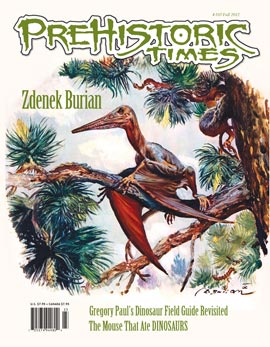
One of the most exciting events of the Holocene epoch is nearly upon us, the long awaited, highly anticipated arrival of the 100th edition of “Prehistoric Times”.  To mark this special occasion the team behind the U.S. based magazine will be printing it with two centenary front covers.  As Mike Fredericks, the editor of “Prehistoric Times”, (otherwise known as PT) states:

“I am very proud to announce that the 100th issue of Prehistoric Times magazine is being printed now and will start shipping next week.  The issue features Albertosaurus and Dimetrodon, has an interview with the amazingly talented artist Peter Schouten, a behind the scenes look at the Terra Nova TV show, plus Steve Brusatte lists the top Paleo News of 2011 and on and on!”

When asked about to describe the two special front covers that have been chosen for this landmark publication, Mike added:

“The issue sports two different awesome Albertosaurus front covers. One by Fabio Pastori and the other by Raul Martin.  It is because of our loyal readers that I get to continue to have the time of my life producing this magazine.  I can’t thank you enough.”

Which Cover will you Get?

All Albertosaurus but which one will you get?

Picture credit: Everything Dinosaur/Prehistoric Times

We are looking forward to receiving our copy and to writing a review of this very special publication.

To purchase models and replicas of prehistoric animals including Albertosaurus: Dinosaur Figures and Prehistoric Animal Models.

17 11, 2011

Guinness World Records Day – Our Favourite Entry 2012

By |2023-01-23T21:47:04+00:00November 17th, 2011|Categories: Book Reviews, Everything Dinosaur News and Updates|0 Comments

Whales in the Sahara

Today, is the Guinness World Records Day – not too sure why it should be November 17th, other than the fact that it enables Guinness to promote their book in the run up to Christmas.  However, we were asked to review the 2012 edition and it is absolutely bursting with amazing facts and feats.

Guinness World Records Day

During our coffee break we again discussed what the most interesting fact/record is in the latest edition of the World Records book.  This is quite a difficult task as there are so many to chose from.  There were several votes for the plant section (pages 64 and 65), especially for the fact that in the average life time 158,000 new plant species will be discovered that is about thirty-five per week.  The were a few votes for the human endeavours and the universe sections but in the end we chose the fact about whales in the Sahara desert (page 40).  The Sahara is not the world’s largest desert, read the book to find out the record holder for this, it is in there we promise, but it is an unusual place to find the fossilised bones of ancient whales.

The highest density of Eocene whale fossils are to be found in the Wadi Al-Hitan in Egypt’s Western Desert – a fact that is of particular importance to us at the moment as we have been researching dinosaur discoveries in Egypt.  Since 1905, some 379 fossil whales from the Eocene era have been discovered.

Read our review of the Guinness Book of Records 2012 edition: Book Review.

Visit Everything Dinosaur’s award-winning website: Everything Dinosaur.

Go to Top