Currently much of the UK is experiencing severe weather conditions. Snow and icy conditions are affecting much of Scotland, East Anglia, Yorkshire, the Pennines, north-eastern England, the south-west and south-eastern England. This prolonged period of cold weather has led to the cancellation of many trains and the road network, including several major roads, has been very badly disrupted. Driving conditions are described as treacherous for many parts of the United Kingdom and we at Everything Dinosaur are aware that the weather has caused widespread transport chaos.
Deep Snow Covers Much of the UK and More Snow is Forecast
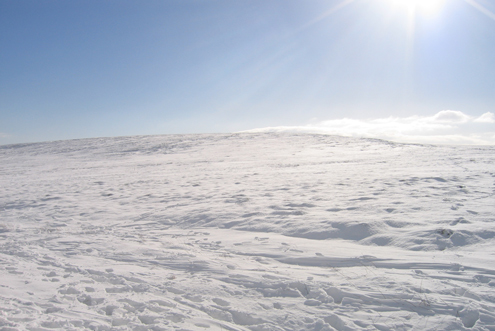
Heavy snow falls across much of the UK causing disruption.Picture credit: Everything Dinosaur.
Picture credit: Everything Dinosaur
The Impact on Deliveries/Collections
The severe weather is having a deleterious effect on parcel deliveries and collection services. Everything Dinosaur has been informed that courier services in parts of the country are likely to be very badly affected with a temporary suspension of some deliveries and collections. The safety of the drivers is paramount and whilst we are aware that the courier companies will do their best to operate as normal, we do appreciate that due to the bad weather, some services such as next day delivery may not be possible in parts of the UK for the time being.
Dinosaur Deliveries in the Snow Can Be Difficult
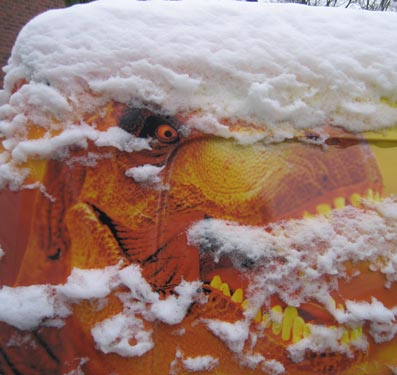
A dinosaur van covered in snow.Picture credit: Everything Dinosaur.
A spokesperson from Everything Dinosaur commented:
“Whilst our dedicated team members continue to pack and process orders as quickly as they can, we do appreciate that delivery delays are likely to occur. We advise all our customers to allow extra time for deliveries, purchasing a couple of days early can make all the difference.”
International Deliveries Affected
Several international airports such as Glasgow and Dublin have been closed due to heavy snow. This has affected flights and as such, our international customers may find delays in deliveries too. Everything Dinosaur has implemented contingency plans to help minimise the disruption to our packing and despatch of orders. We have put in place arrangements to assist with the prompt collection of parcels from our premises and team members have ensured that orders placed by 2.30pm yesterday afternoon for first class or second class delivery by Royal Mail, have already been sent out.
The Arrival of Stock at the Everything Dinosaur Warehouse
The Everything Dinosaur warehouse remains open, but there may be delays in shipments/deliveries reaching our warehouse due to the severe weather. Contingency plans are in place to help minimise the impact of this period of very bad weather on deliveries into our own warehouse.
Everything Dinosaur team members urge customers to try and place orders early to help give delivery companies more time in the current severe weather conditions.
We will continue to monitor the situation and update you as and when necessary.
“The Rise and Fall of the Dinosaurs” – The Story of the Dinosauria
At Everything Dinosaur, we get sent quite a lot of books from publishers for our team members to review and comment upon. There is certainly a wealth of publications dedicated to the science of palaeontology and the Dinosauria in particular. Every once in a while, we discover a real gem, one that has been well-written and manages to tread that careful line between providing enough academic detail but still managing to retain an appeal to the general reader. The forthcoming “The Rise and Fall of the Dinosaurs” by Steve Brusatte is a case in point.
“The Rise and Fall of the Dinosaurs” by Dr Steve Brusatte
Going on Sale in Early May “The Rise and Fall of the Dinosaurs”
“The Rise and Fall of the Dinosaurs” by Steve Brusatte.
Picture credit: Pan Macmillan
Dr Brusatte has skilfully crafted the story of the evolution of the dinosaurs and their ultimate demise, interweaving his own reminiscences about his early career as a palaeontologist and introducing a diverse cast of characters that have illuminated dinosaur research and done much to change our perception of the “terrible lizards”.
Around One Hundred Academic Papers
Now in his early thirties, Steve has managed to cram a lot into the last decade or so. The Everything Dinosaur blog has written numerous articles featuring his research and discoveries, several of which are discussed at length in this, what is likely to be a bestseller, when “The Rise and Fall of the Dinosaurs” goes on sale on May 3rd (2018).
As an author of somewhere around one hundred academic papers and having undertaken fieldwork in places as far afield as China, New Mexico, Portugal and Poland, Dr Brusatte is ideally placed to provide an overview of the latest research into the Dinosauria. In this informative and immensely enjoyable book, Stephen Brusatte chronicles the evolution of the first dinosaurs and plots their gradual rise to dominance over other Archosaurian contemporaries. He charts their progress through the End Triassic extinction event and their emergence as the dominant terrestrial mega fauna on our planet.
Fieldwork in New Mexico, Mapping Late Cretaceous/Early Palaeocene Mammalian Fauna
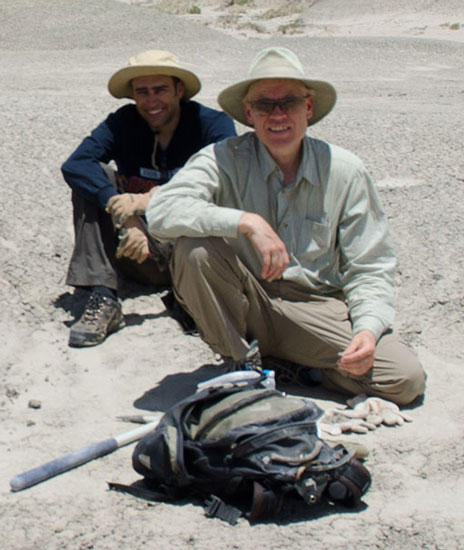
Stephen Brusatte (back) with Ross Secord (University of Nebraska-Lincoln) during field work in New Mexico looking for mammal fossils.
Picture credit: Thomas Williamson/Reuters
Tyrannosaurus rex and Feathers in the Spotlight
As well as documenting the rise and eventual demise of the Dinosauria, Steve dedicates a couple of chapters to the tyrannosaurids, providing a useful update on his research into the family tree of the Tyrannosauridae as well as introducing recent additions to this great dinosaur dynasty, the long-snouted Qianzhousaurus sinensis, affectionately nick-named “Pinocchio rex” and Timurlengia euotica which roamed Uzbekistan some 90 million years ago. Dr Brusatte has played a prominent role in the scientific study of these two large theropods, so far, this American palaeontologist now based at the University of Edinburgh, has named ten new dinosaur species.
Timurlengia euotica – A Recently Described (2016) Late Cretaceous Tyrannosaur
The tyrannosaurid Timurlengia wandering its flood plain home.
Picture credit: Todd Marshall
Recommended Reading
With March 1st being World Book Day, an annual event celebrating authors, illustrators and the joy of reading, it seems appropriate to dedicate today’s blog post to promote “The Rise and Fall of the Dinosaurs”, written by one of the leading palaeontologists of the 21st century. Highly recommended.
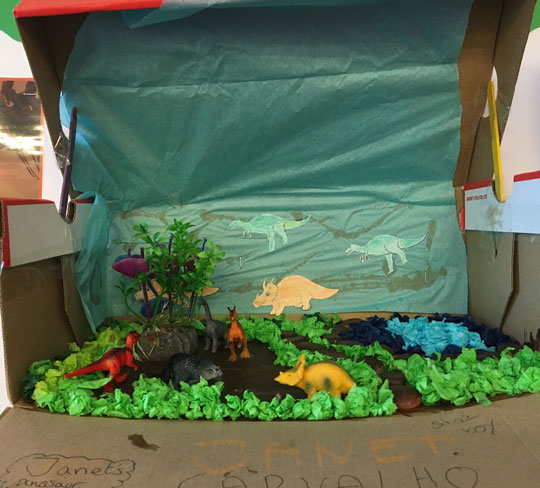
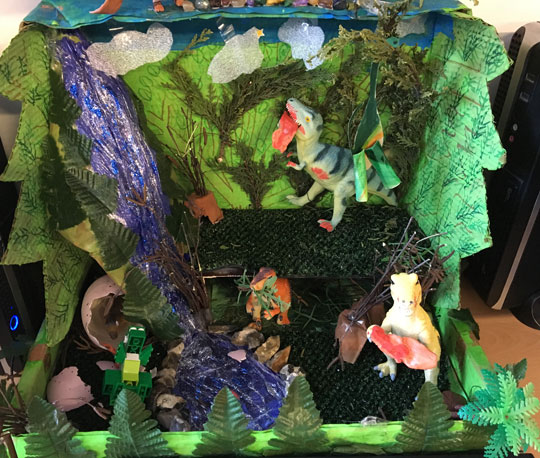
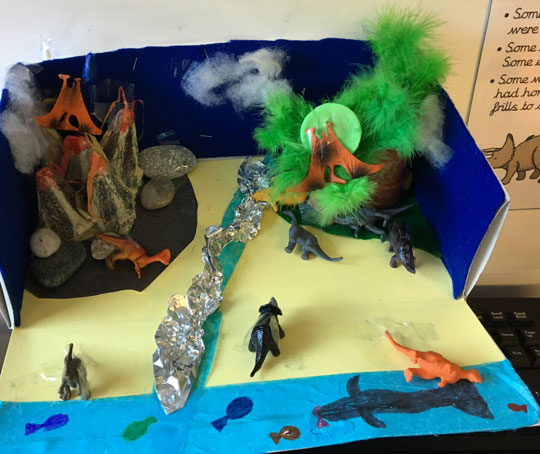
The children in Year 4 at Langley Hall Primary Academy have begun their topic for the second half of the Spring Term. The four classes are studying dinosaurs, fossils and life in the past. The enthusiastic young scientists have been creating mini dinosaur worlds depicting prehistoric scenes and what a fantastic display of dinosaur dioramas they make!
Dinosaur Landscapes
Children in Year 4 at Langley Hall Primary Academy Have Made Mini Dinosaur Dioramas
A collection of dinosaur dioramas created by children in Year 4 at Langley Hall Primary Academy.
Picture credit: Langley Hall Primary Academy/Everything Dinosaur
The four classes have been named after famous artists. There is Matisse, Degas, Klee and O’Keeffe classes, clearly the children have been inspired by these artists as they made their very own prehistoric scenes.
A Range of Materials Have Been Used to Create the Prehistoric Landscapes
Dinosaur dioramas created by children in Year 4 at Langley Hall Primary Academy.
Picture credit: Langley Hall Primary Academy/Everything Dinosaur
Using Different Materials to Create Prehistoric Scenes
Lots of different materials have been used to create prehistoric scenes. For example, some of the children made plants out of pieces of coloured tissue paper, whilst one pupil collected moss to provide flora for their dinosaur diorama. The prehistoric animal models have plenty of different textures to explore, some children used small pieces of gravel in their scenes, whilst one innovative young scientists used couscous to make a sand effect. Can you spot the chicken egg in the photograph below? During the workshops that Everything Dinosaur conducted with the children over the course of a day, the pupils discovered that chickens are dinosaurs (avian dinosaurs).
Can You Find the Dinosaur Egg?
Dinosaur worlds created by children in Year 4 at Langley Hall Primary Academy.
Picture credit: Langley Hall Primary Academy/Everything Dinosaur
One of the Year 4 classes is named after Georgia O’Keeffe. Georgia O’Keeffe was an American painter, best-known for her modernist approach to her subject matter. Many of her paintings feature the atmospheric landscapes of the Ghost Ranch region of New Mexico. The sandstones, siltstones and mudstones of this region date from the Triassic geological period and Ghost Ranch is famous for its dinosaur fossils. Fossils of freshwater Coelacanths are also associated with the region (Chinle Formation). Our dinosaur expert challenged the children to research the story of the Coelacanth and its rediscovery as part of several extension activities that were suggested during the workshops.
A Variety of Ecosystems and Habitats
Dinosaurs as a term topic permits lots of cross-curricular activities. Everything Dinosaur provided some numeracy-based as well as literacy-based extension activities and the dioramas can be used to help explore and reinforce learning about food chains and different habitats. For instance, in the prehistoric scene (below), the Year 4 pupil has used a range of materials to depict different environments. They have even included some aquatic animals in their prehistoric scene. Could add a drawing of a Coelacanth to their diorama?
A Prehistoric Scene Using Various Materials to Create Different Habitats
Prehistoric landscapes created by children in Year 4 at Langley Hall Primary Academy.
Picture credit: Langley Hall Primary Academy/Everything Dinosaur
Recently, Everything Dinosaur posted up pictures on the company’s Facebook page of the new prehistoric animal models to be introduced by Schleich in July 2018. As well as new model introductions for this year (a total of eight figures), Schleich are also retiring several replicas. Today, we list Schleich dinosaur retirements.
Comings and Goings from the Schleich Dinosaur Model Range
Schleich dinosaurs logo. There are numerous changes to the German company’s prehistoric animal model range.
Picture credit: Everything Dinosaur/Schleich
Listing Schleich Dinosaur Retirements – Goodbye to the Mini Dinosaurs
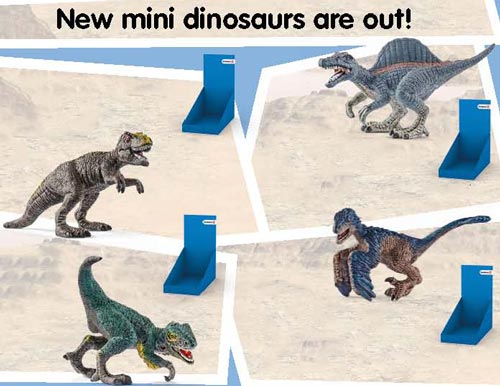
All the Schleich mini dinosaur models have been retired. The Schleich mini dinosaur model range was introduced in early 2015. It consisted of eight very collectable prehistoric animal figures, seven dinosaurs and one pterosaur (Quetzalcoatlus). Ranging in size from 5.5 centimetres to a fraction under 7 centimetres in length, these colourful models were ideal for representing juvenile animals in dioramas. Last year, four new additions to this series, were introduced. However, the decision has been taken to end production of all the mini prehistoric animal figures.
In Early 2017, New Models were Added to the Schleich Mini Dinosaurs Model Range
New mini dinosaurs from Schleich first introduced in early 2017.
Picture credit: Everything Dinosaur
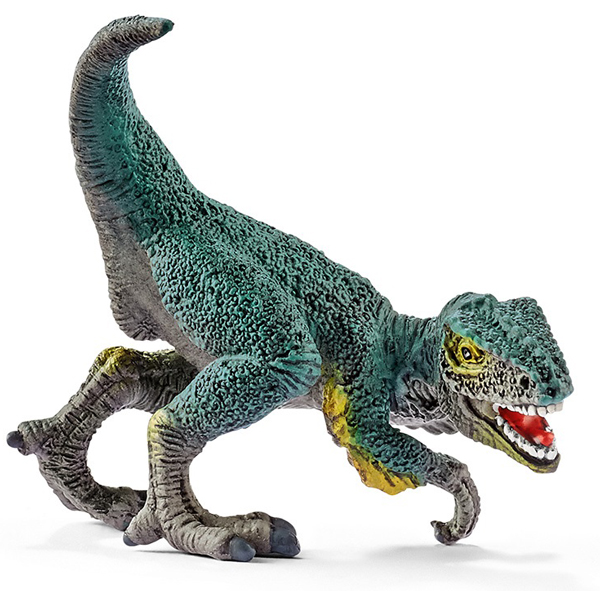
Everything Dinosaur has been able to secure some of the very last stock of these hand-painted figures, including the highly sought after Schleich mini dinosaurs Velociraptor (ocean blue). It is our policy not to exploit the rarity of models, these carefully crafted figures are being offered for sale at the same price as when this range was first introduced three years ago.
The Schleich Mini Dinosaurs Velociraptor (Ocean Blue)
The Schleich mini Velociraptor (ocean blue).
Picture credit: Everything Dinosaur/Schleich
Large Schleich Dinosaurs Out of Production Too
Several of the larger dinosaur models in the Schleich range have been retired too. One of the casualties is the Schleich Therizinosaurus model (orange and blue colouration). This model has been replaced by black/red painted replica, a prelude to the introduction of a juvenile Therizinosaurus figure later this year.
The Schleich Therizinosaurus Figure (Orange/Blue Colouration) is Out of Production
Now out of production the original Schleich Therizinosaurus replica.
Picture credit: Schleich
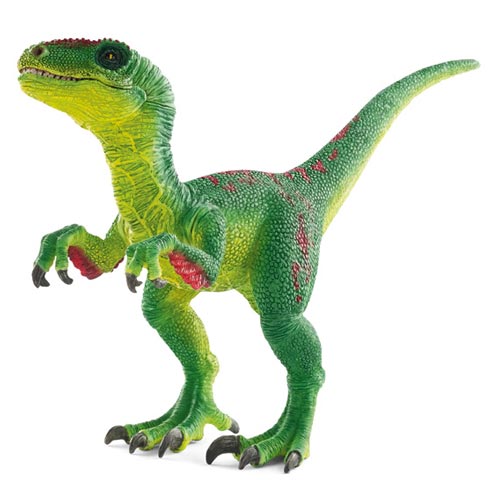
A Velociraptor figure introduced in 2014 has been discontinued. The Schleich Styracosaurus and the red Carnotaurus models were withdrawn last autumn. Also retired is the Schleich Green Velociraptor replica. However, once again, Everything Dinosaur has been able to secure some remaining stock, giving collectors the opportunity to complete their Schleich model collections.
The Schleich Green Velociraptor Model Has Been Retired
Green terror! The Schleich Velociraptor dinosaur model.
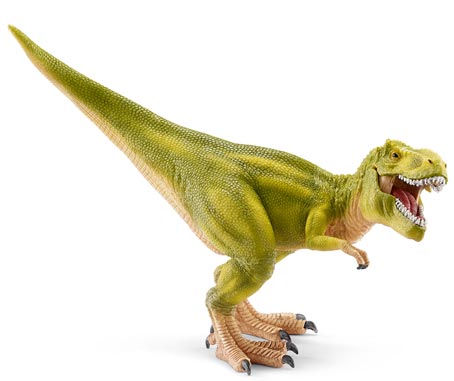
The Demise of the Light Green T. rex Dinosaur Model
Another victim of the cull is the light green Tyrannosaurus rex model. This figure was introduced in the early summer of 2014 and although no official explanation for its withdrawal has been received by Everything Dinosaur team members, it is likely, that with the introduction of the more recent T. rex models, plus the imminent arrival of a juvenile Tyrannosaurus rex model in the summer, Schleich may have thought that they simply had one T. rex too many.
The Schleich Light Green T. rex Dinosaur Model has been Retired
The Schleich range of prehistoric animal models has undergone some significant changes in the last few months. As well as the retirement of several large models, the smaller dinosaur line remains limited and the mini figures have been withdrawn. In addition, the 2016 model and jigsaw sets (marshland, waterhole, lava field and discovery) have also been taken out of production. We shall have to see what happens in 2019, whether Schleich continues to reduce the number of dinosaur figures it makes, or whether the company brings out a similar number of new figures to this year (8 figures in total), helping to increase the variety within the range.
Eofauna Scientific Research has some exciting times ahead. The company is soon to release details of the next model in its 1:40 scale replica series and when Everything Dinosaur has permission to do so, we will be telling our blog readers all about it and showing pictures. In the meantime, team members from Everything Dinosaur recently met up with staff from Eofauna Scientific Research as the two organisations work together to help introduce new prehistoric animal figures.
Eofauna Scientific Research
Eofauna Scientific Research consists of a team of dedicated researchers, creatives and specialists in prehistoric fauna. With a broad background in the fields of palaeontology, biology, design and model making the organisation is ideally placed to develop a range of highly realistic, scientifically accurate prehistoric animal figures.
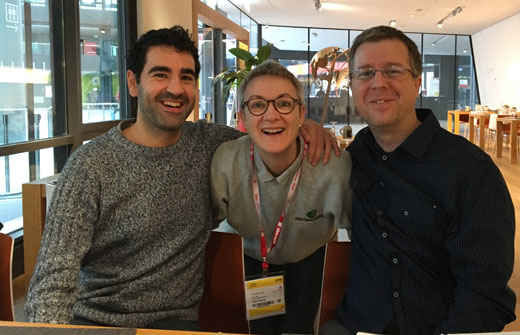
Everything Dinosaur Team Members Met with Eofauna Scientific Research Staff Recently
Eofauna Scientific Research team members met up with Everything Dinosaur recently. Picture credit: Everything Dinosaur.
Picture credit: Everything Dinosaur
Working Closely with Model Makers
At Everything Dinosaur, we work very closely with model makers and designers. Our aim is to bring to our customers the very best prehistoric animal and dinosaur figures available. Sue, (Finance Director at Everything Dinosaur), held very positive talks with Asier and Joseba of Eofauna Scientific Research, in a statement following her recent meeting Sue said:
“We have been working with Eofauna for some time. They are a very dedicated team and share our goal in being able to provide highly detailed, sculpted figurines based on anatomically correct, accurate reconstructions from the fossil record. The company has some very exciting plans and we are looking forward to continuing our close working relationship.”
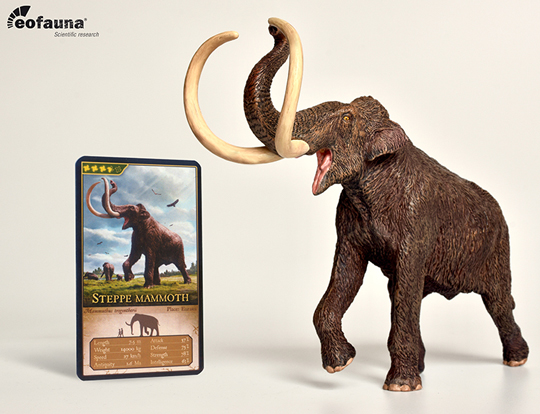
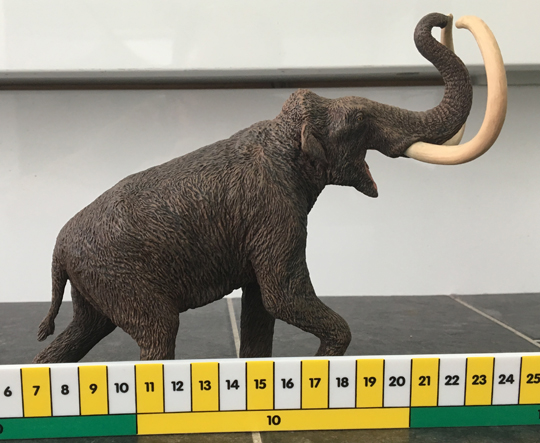
In October 2017, Everything Dinosaur took in stocks of the first model in the range, a replica of a Steppe Mammoth (Mammuthus trogontherii), a beautiful scale model which is based on real fossils of this Pleistocene-aged animal.
The Eofauna Scientific Research Steppe Mammoth Figure
The Eofauna Scientific research Steppe Mammoth model comes complete with a bonus collector’s card.
Picture credit: Eofauna Scientific Research
Rave Reviews from Model Collectors
The first PVC figure to be produced in this series has received rave reviews from model collectors. Since, its introduction into the Everything Dinosaur range, the figure has received 5-star reviews (FEEFO independent data).
The review of Everything Dinosaur customer “Paleo collector” is typical:
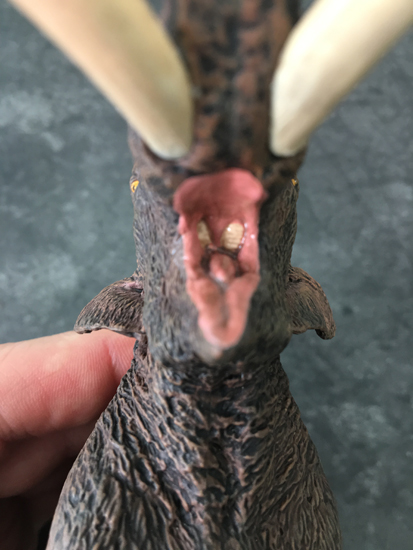
“This is a skilfully sculpted figure with close attention paid to anatomy and posing, the molars can even be seen in the open mouth. The delicate fur pattern and muscle definition underneath make this mammoth a museum quality piece. The model is solid PVC and comes with a collectors’ card along with an info tag. This is one of the most accurately sculpted mammoth figures I’ve ever seen and highly recommended for collectors of prehistoric models or elephants/mammoths in general.”
A Close-up View Showing Details in the Mouth of the 1:40 Scale Replica
A close-up view of the mouth of the Steppe Mammoth.Picture credit: Everything Dinosaur.
A Beautiful Replica the Eofauna Steppe Mammoth (Mammuthus trogontherii)
The beautiful Eofauna Scientific Research Steppe Mammoth model.Picture credit: Everything Dinosaur.
Picture credit: Everything Dinosaur
Blog readers and visitors to Everything Dinosaur’s social media pages can rest assured, we will be posting up details of the next model in the fantastic Eofauna Scientific Research range shortly.
By Mike|2023-09-16T17:34:05+01:00February 25th, 2018|Categories: Early Years Foundation Reception|Comments Off on Understanding and Exploring Feelings (PSHE)
Understanding and Exploring Feelings PSHE with EYFS
Dinosaurs can help young children explore their feelings.
A key aspect of teaching for the Early Years Foundation Stage (EYFS) is to help the children develop key life skills, one of the principle frameworks for achieving this is through the PSHE (Personal, Social and Health Education), portion of the curriculum.
Learning About Dinosaurs
In many schools, a topic involving learning about dinosaurs forms part of the scheme of work for Nursery and Reception. Children as young as three years of age can show remarkable pre-knowledge when it comes to dinosaurs and prehistoric animals and with giants like Tyrannosaurus rex and Triceratops to study, the children tend to be very enthusiastic learners. Dinosaurs as a topic can help children to build strong relationships and to manage their emotions, a dinosaur drawing can prove an effective teaching resource, assisting in the exploration of ideas such as your feelings, the feelings of others and exploring empathy.
Learning About Feelings/Thinking of Others
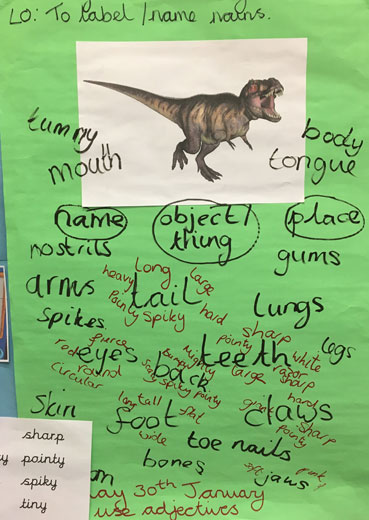
A dinosaur themed exercise helping children to develop their use of adjectives. Picture credit: Everything Dinosaur.
Picture credit: Everything Dinosaur
Dinosaur Workshops
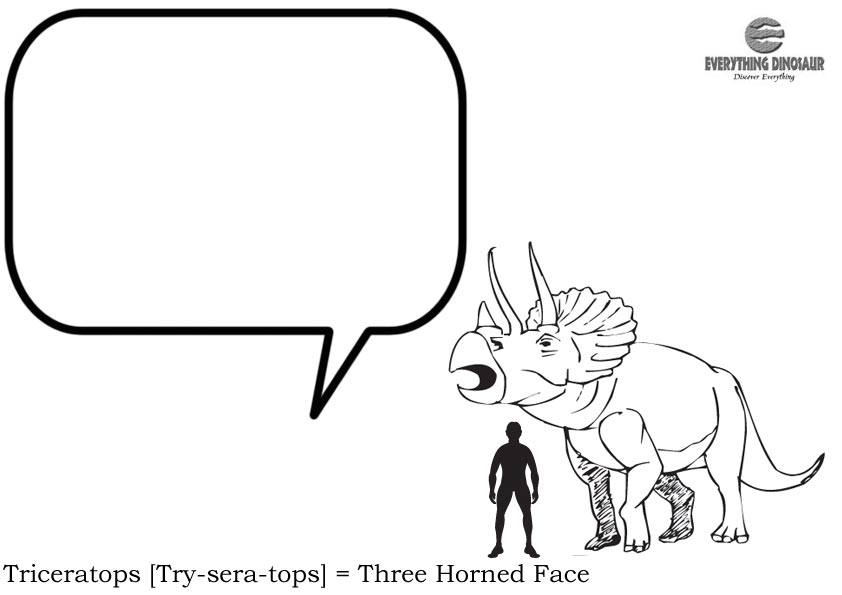
When delivering dinosaur workshops to Foundation Stage children, our experts provide a number of additional resources. For example, the picture above shows a Triceratops with a speech bubble. The children are asked to see if they can work out what the dinosaur might be saying. This exercise provides valuable hand to eye co-ordination when it comes to holding a pencil and tests motor skills. It also helps the child to think about the feelings of others.
What Might Triceratops be Saying?
Exploring emotions and helping to construct sentences. Picture credit: Everything Dinosaur.
Picture credit: Everything Dinosaur
These simple sheets that we provide utilise some of our detailed dinosaur illustrations and permit the teaching team to explore feelings using topic appropriate resources. At Foundation Stage, the teaching team are tasked with a number of responsibilities towards ongoing provision to support personal and emotional development.
A dinosaur topic provides, numerous opportunities for children to explore and understand their feelings and the feelings of others. The teacher or teaching assistant can explore ideas such as is the dinosaur happy/sad? What would it say if it was sad? How might you (the child), act to help the dinosaur to stop from feeling sad?
These resources along with the other extension materials provided by Everything Dinosaur enable the Foundation Stage teaching team to develop clear, planned aspects of the curriculum that allow the children to explore feelings and emotions.
The talented palaeoartist Zhao Chuang might be renowned for his stunning colour landscapes depicting various prehistoric animals but the Chinese-based artist has also produced a number of line drawings too. Today, we showcase one of his lesser known illustrations, a black and white study of the large, Mongolian dromaeosaurid Achillobator (Achillobator giganticus).
Deadly, Dangerous Dinosaurs – A Trio a Achillobators on the Prowl
An illustration of a flock of Achillobator dinosaurs by Zhao Chuang.
Picture credit: Zhao Chuang
Achillobator giganticus
Fossils found in 1983, were formally described in 1999 and the genus name – Achillobator was erected. The name translates as “giant Achilles hero”, this five to six-metre-long dinosaur getting its name because the foot bones show evidence of particularly robust Achilles tendons. Known from fragmentary fossil material, which includes part of the upper jaw, this dinosaur would have been a very formidable predator. Although Zhao Chuang has chosen not to add feathers in his illustration, he has managed to convey an impression of danger and ferocity in his artwork. Achillobator would have been an apex predator within its environment and a pack of these hungry super-sized “raptors” would have been a blood curdling sight.
Exploring the Ancient Landscape Under the Irish Sea
A team of international scientists are setting out to map and explore the extensive submerged prehistoric landscape that lies under the Irish Sea. The research team includes members of the Irish Marine Institute and the Institute of Technology Sligo and the University College Cork and they aim to explore the prehistoric landscape and search for evidence of human activity and habitation.
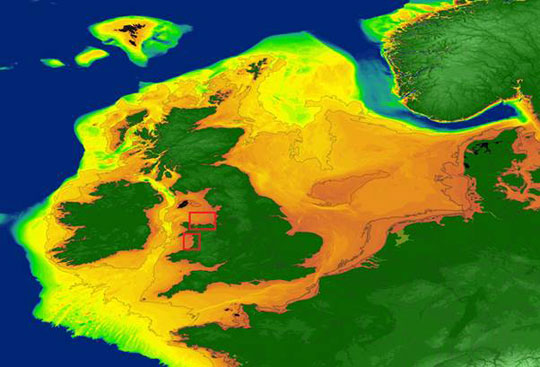
At the end of the last Ice Age, huge areas of habitable land in Europe were flooded as sea levels rose. Scientists estimate that the water rose by around 120 metres, (as a guide, St Paul’s Cathedral is around 111 metres tall), beneath the waves lies a virtually unknown palaeolandscape of plains, hills, marshlands and river valleys.
A Map Showing the Maximum Extent of the Marine Palaeolandscapes
Approximate maximum extent of marine palaeolandscapes off the Irish and British coasts (survey areas in red).
Picture credit: University of Bradford
A Prehistoric Landscape Similar to Doggerland
The researchers are confident that the palaeolandscape between Great Britain and Ireland will be similar to that of Doggerland, an area of the southern North Sea and currently the best-known example of a palaeolandscape in Europe. Doggerland has been extensively researched by Professor Vince Gaffney from the University of Bradford, Principal Investigator of the “Europe’s Lost Frontiers” Project.
The “Last Frontiers” Project
Lost Frontiers is an ERC-funded Advanced Grant project based at Bradford University (West Yorkshire). The purpose is to better understand the transition between nomadic, hunter gathering populations to sedentary farming communities in north-western Europe. The “Lost Frontiers” team are studying the evidence for inundated palaeolandscapes around the British coast using seismic reflectance data sets to generate topographical maps of these hidden landscapes.
Environmental data from these areas is then being used to reconstruct and simulate the palaeoenvironments of these areas using ancient DNA extracted directly from sediment cores as well as traditional environmental data.
Professor Gaffney commented:
“Research by the project team has also provided accurate maps for the submerged lands that lie between Ireland and Britain and these are suspected to hold crucial information regarding the first settlers of Ireland and adjacent lands along the Atlantic corridor.”
Drilling Sediment Cores to Explore an Ancient Submerged Landscape
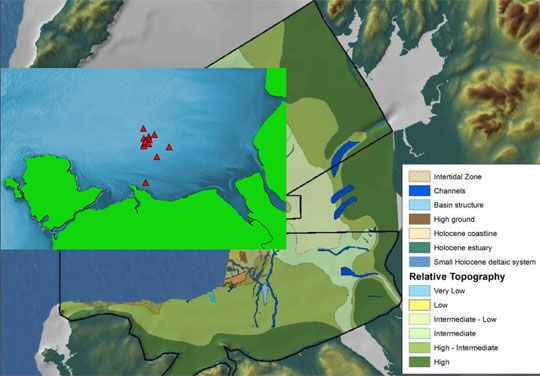
Around sixty sediment cores are going to be drilled at twenty carefully selected sites in Liverpool and Cardigan Bays, these cores will then be analysed by the research team in order to build up a picture of how the landscape changed over time. Analysis of plant spores and pollen will help to establish the type of landscape that once existed under the waves, from this and using Doggerland research as a benchmark, the existence of different types of megafauna can be inferred.
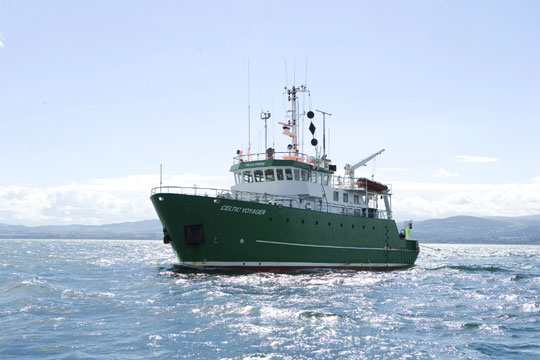
The Coastal Vessel RV Celtic Voyager Will be the Base of Operations
The coastal vessel RV Celtic Voyager will be the base of operations for the research team and core drilling staff.
Picture credit: Bradford University
Commenting on the significance of this research Dr James Bonsall (Institute of Technology Sligo), stated:
“It is very exciting, as we’re using cutting-edge technology to retrieve the first evidence for life within landscapes that were inundated by rising sea levels thousands of years ago. This is the first time that this range of techniques has been employed on submerged landscapes under the Irish Sea. Today, we perceive the Irish Sea as a large body of water, a sea that separates us from Britain and mainland Europe, a sea that gives us an identity as a proud island nation.”
Dr Bonsall added:
“But 18,000 years ago, Ireland, Britain and Europe were part of a single landmass that gradually flooded over thousands of years, forming the islands that we know today. We’re going to find out where, when, why and how people lived on a landscape that today is located beneath the waves.”
Reconstructing Ancient Landscapes
The researchers hope to reconstruct and simulate the palaeoenvironments of the Irish Sea, using ancient DNA, analysed in the laboratories at the University of Warwick, and palaeoenvironmental data extracted from the sediment cores. This information will help the team to build up a picture of the lives of the people who once lived on the land between what is now Ireland and Great Britain.
Mapping the Palaeolandscapes of the Irish Sea
Geology of the survey area and core sampling sites (red triangles).
Picture credit: Bradford University
Dr Martin Bates (University of Wales) added:
“This is a very exciting opportunity as the cores we are collecting are the first drilled in the Cardigan Bay sea bed since perhaps the 1970s. They are going to provide us with material that will really help us to understand how Cardigan Bay changed as the sea flooded across the landscape during the time that people were coming back to Wales after the last glaciation.”
Everything Dinosaur acknowledges the help of a press release from the University of Bradford in the compilation of this article.
The image of the Neanderthal (Homo neanderthalensis), has changed radically over the last few decades. Gone are the images of a brutish, “ape-man” as depicted by 20th century artists such as Burian and Charles Knight. A lot of evidence has emerged in recent years that supports the idea that Neanderthals, our closest cousins, were as sophisticated as us with a rich and diverse culture.
A new study, published in the journal “Science”, proposes that Iberian Neanderthals, created cave paintings as early as 64,000 years ago and that these paintings were as complex as those associated with our own species. Neanderthal artists used symbolism, geometric shapes and linear signs just as complicated as those drawn by H. sapiens.
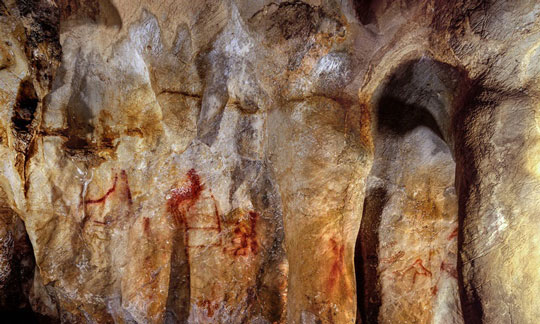
Abstract and Symbolic Cave Art Created by Neanderthals
La Pasiega, section C, cave wall with paintings. The ladder shape composed of red horizontal and vertical lines (centre left) dates to older than 64,000 years and was made by Neanderthals.
Picture credit: P. Saura
What Does it Mean to be Human?
Defining what it means to be human (Homo sapiens), has just become a little more complicated. It was once thought that our ability to create abstract art, to use symbols and to develop a culture was a defining characteristic that elevated our species above all the other hominins.
Lead author of the new research, Dirk Hoffmann of the Max Planck Institute for Evolutionary Anthropology (Leipzig, Germany) explained:
“The emergence of symbolic material culture represents a fundamental threshold in the evolution of humankind. It is one of the main pillars of what makes us human. Artefacts whose functional value lies not so much in their practical but rather in their symbolic use are proxies for fundamental aspects of human cognition as we know it.”
Homo neanderthalensis Had a Culture Too
Early symbolic artefacts, like pigment-coloured shells that possibly served as body ornamentation, are documented for the Middle Stone Age in North and South Africa. These have been dated to approximately 70,000 years ago (middle Tarantian stage of the Pleistocene Epoch) and are associated with anatomically and behaviourally modern humans. There is evidence in Europe for cave art, sculpted figures, decorated bone tools and jewellery made of bone, tooth, ivory, shell or stone that dates back to the so-called “Upper Palaeolithic Revolution” around 40,000 years ago. These artefacts, researchers concluded, must have been created by modern humans who were spreading all over Europe after their arrival from Africa.
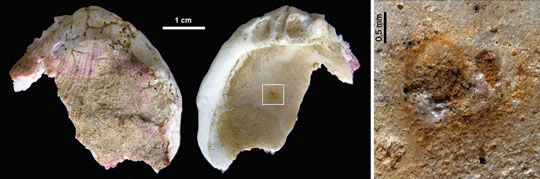
A Shell with Traces of Pigmentation – An Object Dating from at Least 115,000 Years Ago
A shell with remnants of pigments found in sediments in Cueva de los Aviones (Spain). It dates to between 115,000 and 120,000 years of age.
Picture credit: João Zilhão (Catalan Institution for Research and Advanced Studies
Cave Art Previously Only Associated with Homo sapiens
Cave paintings are a particularly impressive statement of culture and the use of symbolic behaviour. To date, cave art and paintings have only been attributed to modern humans. A lack of precise dating has hindered attempts to prove that Homo neanderthalensis painted on cave walls too. The perpetrators of cave art cannot usually be identified directly, the age of the paintings is the only determinant, providing indirect evidence of who created the paintings based on their geological age. However, a new advanced dating technique has permitted more precise dating and this research suggests that Neanderthals were just as artistic as ourselves.
Post-doctoral researcher Hoffmann added:
“Dating cave art accurately and precisely, but without destroying it, has so far been difficult to accomplish. Thanks to recent technical developments we can now obtain a minimum age for cave art using Uranium-Thorium (U-Th) dating of carbonate crusts overlying the pigments.”
Uranium-Thorium Dating
Uranium-Thorium dating is very precise and it relies on the radioactive decay of uranium isotopes into thorium, this methodology can accurately date calcium carbonate deposits and formations associated with cave art and it can determine the age of calcium carbonate which is up to half a million years old – more than enough scope to chronologically test all forms of cave painting.
Dating Cave Art Using Uranium-Thorium Analysis
Calcite crust on top of the red ladder shape sign. The U-Th method dates the formation of the crust which gives a minimum age for the underlying painting.
Picture credit: João Zilhão (Catalan Institution for Research and Advanced Studies
The international team of researchers, which included scientists from the University of Southampton, analysed more than sixty carbonate samples from three different cave sites in Spain: La Pasiega in north-eastern Spain, Ardales in southern Spain and Maltravieso in the western part of the country. All three sites contain paintings mostly in red, sometimes in black, that show groups of animals, dots and geometric signs, hand stencils, hand prints and engravings.
Commenting on the team’s findings Alistair Pike (Southampton University), stated:
“Our dating results show that the cave art at these three sites in Spain is much older than previously thought. With an age in excess of 64,000 years it predates the earliest traces of modern humans in Europe by more than 20,000 years. The cave art must thus have been created by Neanderthals.”
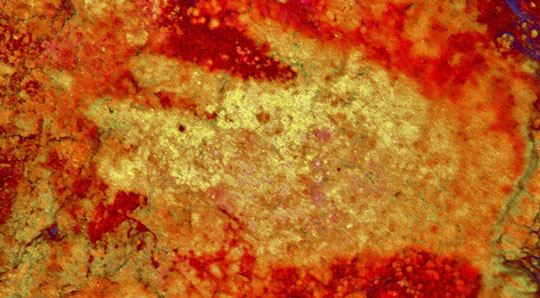
Stencil of a Neanderthal hand on a cave wall in Maltravieso (colour enhanced), almost completely covered with calcite. It is older than 66,000 years
Picture credit: H. Collado (Quaternary-Prehistory Research Group, Spain)
Evidence of a Complex Thought Process
The early cave paintings created in red pigments comprise of dots, lines, discs and hand stencils. The hand prints were made by the artist blowing red paint over the hand, using it as a form of stencil. To create such intricate artwork, the perpetrator would have had to plan their work, provide a suitable light source and mix pigments. Choice of location was essential too.
Cave art specialist and co-author Paul Pettitt (University of Durham) asserted:
“Neanderthals created meaningful symbols in meaningful places.”
The research team concludes that Neanderthals possessed a much more rich and complex symbolic behaviour than previously assumed. This new research will help to change the long-held prejudices against the intelligence and intellectual abilities of these hominins that are so closely related to ourselves.
The Sophisticated Homo neanderthalensis
Fellow author João Zilhão (Catalan Institution for Research and Advanced Studies), explained the implications of this and other research that reveals a more sophisticated Neanderthal. It can be concluded that modern humans and Neanderthals shared symbolic thinking and must have been “cognitively indistinguishable”.
Research Professor Zilhão commented:
“On our search for the origins of language and advanced human cognition we must therefore look much farther back in time, more than half a million years ago, to the common ancestor of Neanderthals and modern humans.”
As the weekend approaches, why don’t you take time out to create some artwork, harness your inner Neanderthal…
The scientific paper: “U-Th Dating of Carbonate Crusts Reveals Neandertal Origin of Iberian Cave Art” by D. L. Hoffmann, C. D. Standish, M. García-Diez, P. B. Pettitt, J. A. Milton, J. Zilhão, J. J. Alcolea-González, P. Cantalejo-Duarte, H. Collado, R. de Balbín, M. Lorblanchet, J. Ramos-Muñoz G.-Ch. Weniger, A. W. G. Pike published in the journal “Science”.
Everything Dinosaur acknowledges the help of a press release from the Max Planck Institute for Evolutionary Anthropology in the compilation of this article.
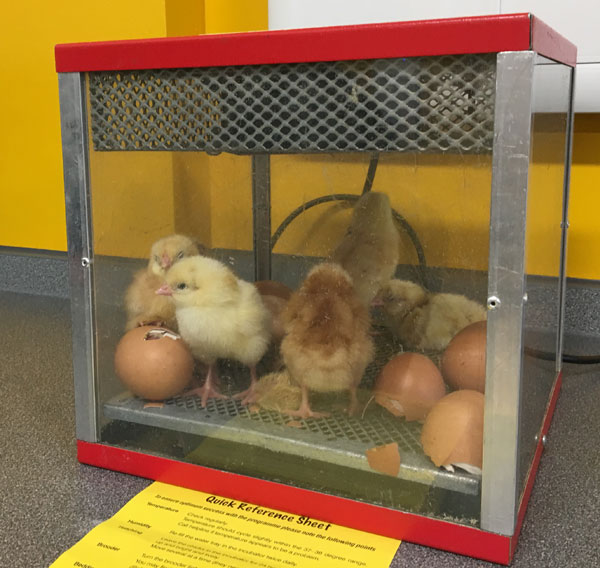
Whilst delivering a series of tactile and kinaesthetic dinosaur themed workshops with children in Early Years Foundation Stage (EYFS), we were joined by some very special visitors to the school. As part of a rich, diverse and highly creative curriculum, the Foundation Stage children had the opportunity to watch hatching chicks. The incubator had been placed on a unit top allowing the children a perfect view, permitting them to observe the chicks hatching.
Special School Visitors – Hatching Chicks
Hatching chicks in the classroom. Picture credit: Everything Dinosaur.
Picture credit: Everything Dinosaur
Birds are Dinosaurs
Our dinosaur expert explained that birds were actually dinosaurs and that the Dinosauria was classified into two groups, the non-avian dinosaurs such as Triceratops, Stegosaurus and Apatosaurus and the avian dinosaurs which includes all birds (Aves) living today. Some of the children even got to hold a cast of Tyrannosaurus rex toe bones and have their picture taken by the incubator.
Incorporating the Hatching Chicks into the Lesson Plan
The Everything Dinosaur team member explained how birds are very similar to dinosaurs and like T. rex, most birds walk on three toes. The similarities between the chicks and Tyrannosaurus rex were explained and highlighted, the photographs that had been taken by the teaching team would help to prompt the children’s thinking in a follow up activity. Can the children remember the similarities between dinosaurs and birds? What are the differences?