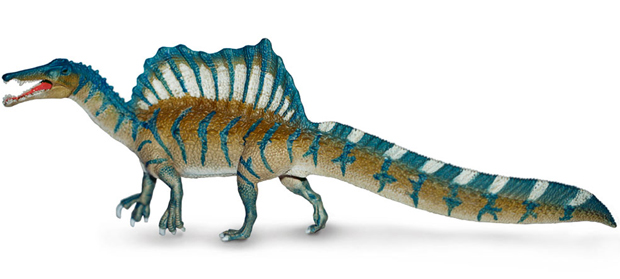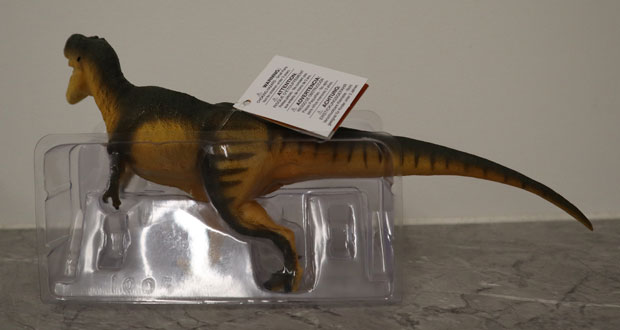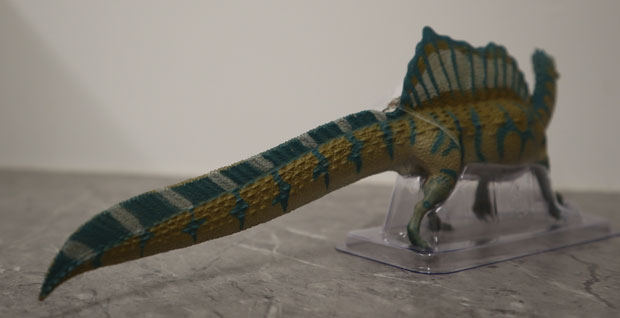
All about dinosaurs, fossils and prehistoric animals by Everything Dinosaur team members.
2 06, 2021

Reinterpreting the Burgess Shale Deposits

By |2024-05-26T21:18:03+01:00June 2nd, 2021|Categories: Dinosaur and Prehistoric Animal News Stories, Geology, Main Page, Palaeontological articles, Photos/Pictures of Fossils|1 Comment

New research suggests that the remarkable Burgess Shale deposits may not preserve the remains of a single, complex Cambrian marine ecosystem but the animals that were to become preserved as fossils may have been transported to this location from much further away.

A New Research Paper Focusing on the Burgess Shale Deposits

Researchers led by Dr Nicholas Minter and Dr Orla Bath Enright (University of Portsmouth), writing in the academic journal “Communications Earth & Environment” postulate that the amazing biota associated with the Walcott Quarry could have undergone substantial transport prior to deposition. They suggest that this aggregation of fossils of primitive marine creatures might not represent the remains of a single, rich and diverse ecosystem but the accumulated remains of several prehistoric communities.
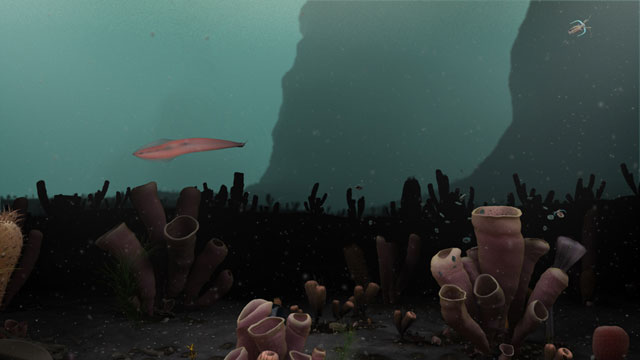
The Burgess Shale Marine community
The rich and diverse Cambrian biota associated with the Walcott Quarry (British Columbia). Picture credit: Phlesch Bubble/Royal Ontario Museum.

Ancient Lifeforms Moved by Mudflows

In late August 1909, American palaeontologist Charles Walcott was exploring an area of shale deposits exposed in the mountains of British Columbia close to Mount Burgess. He discovered a profusion of fossils in the shales, many of which had their soft parts preserved. The strata consist of fine mud which were laid down between 510 and 505 million years ago and the location, now known as Walcott Quarry, was declared a UNESCO World Heritage site in 1984.

More than 65,000 fossil specimens have been collected representing more than 120 species. This fossil assemblage helped to support the theory of the “Cambrian explosion”, that towards the middle of the Cambrian there was a sudden burst of evolutionary activity leading to the evolution of the Phyla we have today. It had been thought that this Lagerstätte had been formed when catastrophic mudflows buried the ecosystem but the researchers, using flume experiments were able to demonstrate that the remains of delicate animals were capable of being transported tens of kilometres.
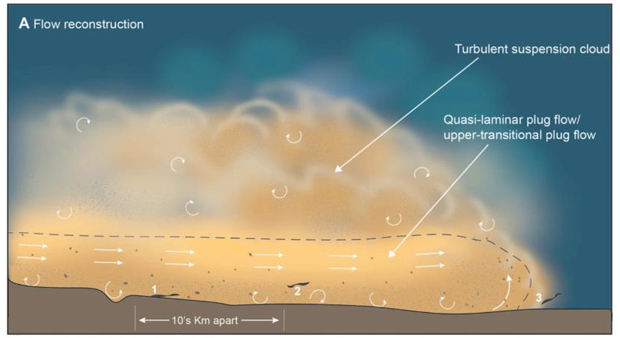
Mudflows Transporting Specimens Leading to the Burgess Shale Lagerstätte
The research team were able to plot the movement of delicate animal remains in mudflows and they concluded that they would not have deteriorated further despite significant transport. Picture credit: Orla Bath Enright et al.

Taphonomic Assessment and Analysis of the Burgess Shale Deposits

The researchers used a combination of measurements and assessments at the Walcott Quarry site with flume tank laboratory tests to mimic the mudflows and the deposition. They concluded that the delicate bodies of certain creatures could have been moved over tens of kilometres without damage, creating the illusion of this Lagerstätte representing a single prehistoric community.

Field work at the Walcott Quarry (Burgess Shale).
Field work being carried out at the Walcott Quarry located in the Burgess Shale of British Columbia. Picture credit: Orla Bath Enright.

The Deterioration of the Remains of Polychaete Worms

The University of Portsmouth was assisted in this research by scientists from University of Saskatchewan and Southampton University. They looked at one particular species of polychaete worm (Alitta virens) present in the shales, classified the degree of preservation for fossil specimens from entire/complete to degraded with just jaws and setae (bristle-like structures) left. They concluded that transport of the carcasses of these delicate animals did not significantly damage the remains further beyond what has already occurred due to normal decay processes.

Increasing states of polychaete degradation (Alitta virens)
Increasing states of polychaete degradation (Alitta virens). The researchers examined the fossilised remains of one species of polychaete worm and grouped the remains into categories related to the pristine state of the fossil material. It was concluded that the remains of soft-bodied, delicate animals could have been transported considerable distances and thus the Burgess Shale Lagerstätte might represent the preserved remains of more than one marine community. Picture credit: Orla Bath Enright et al.

Commenting on the implications this study might have Dr Bath Enright stated:

“We don’t know over what kind of overall time frame these many flows happened, but we know each one produced an ‘event bed’ that we see today stacked up on top of one another. These flows could pick up animals from multiple places as they moved across the seafloor and then dropped them all together in one place”.
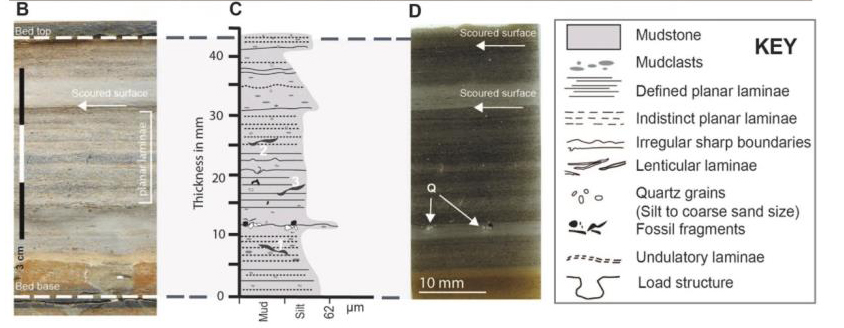
Stratigraphy and interpretative line drawings from sediments associated with the Walcott Quarry
Stratigraphy and interpretative line drawings from sediments associated with the Walcott Quarry. The image (B) shows Bed A from the Greater Phyllopod Bed of the Walcott Quarry, whilst (C) shows a line drawing of the sedimentation of Bed A. Soft-bodied organisms (1, 2, and 3) from the proposed mud flows will become mixed in the deposit. Picture (D) shows a thin-section scan from Bed A showing parallel laminae, erosive, scoured bases, and “floating” quartz grains (Q). White arrows indicate transitional cohesive flow deposits. Picture credit: Orla Bath Enright et al.

A Cautionary Note

This research indicates that the transportation of the remains of soft-bodied creatures does not unduly affect their degradation. Fossils found in a single layer of sediment and assumed to represent animals living together in a single ecosystem, could actually represent the accumulation of remains that have been gathered together and that these animals may have lived far apart. The study provides a cautionary note on how palaeontologists develop views on ancient ecosystems based on the fossilised remains of the creatures they study.

Intriguingly, for what appears to be such a rich and specious community, dominated by benthic organisms (living on the seafloor), there is very little evidence of trackways, burrows or bioturbation associated with this famous fossil site. The lack of these trace fossils suggests a predominantly low oxygen or anoxic habitat and this lends weight to the idea that the sediments in which the fossils were found do not represent the habitat of these creatures.
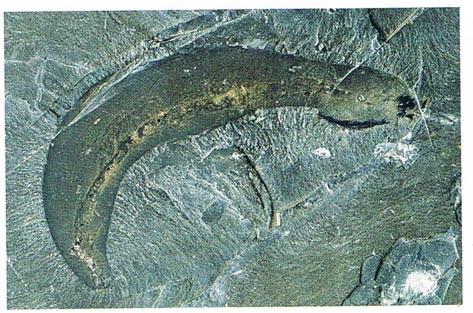
An Ottoia fossil from the famous Burgess Shale.
An Ottoia fossil (Burgess Shale). Many different types of worm are associated with the Burgess Shale deposits but very few trace fossils such as burrows have been preserved. This lends weight to the idea that the remains of these animals were transported to the site from elsewhere.

What Caused the Mudflows?

It is not known precisely what caused the mudflows which buried and transported the animals which became fossilised, but the area was subject to multiple flows, causing well-preserved fossils to be found at numerous different levels in the shale.

Dr Bath Enright added:

“When we see multiple species accumulated together it can give the illusion we are seeing a single community. But we argue that an individual ‘event bed’ could be the product of several communities of animals being picked up from multiple places by a mudflow and then deposited together to give what looks like a much more complicated single community of animals”.

The scientific paper: “Flume experiments reveal flows in the Burgess Shale can sample and transport organisms across substantial distances” by Orla G. Bath Enright, Nicholas J. Minter, Esther J. Sumner, M. Gabriela Mángano and Luis A. Buatois published in Communications Earth & Environment.

The Everything Dinosaur website: Prehistoric Animal Models.
1 06, 2021

“Locked in Time” Book Competition

By |2024-05-26T21:12:23+01:00June 1st, 2021|Categories: Adobe CS5, Book Reviews, Dinosaur Fans, Everything Dinosaur videos, Main Page, Press Releases|3 Comments

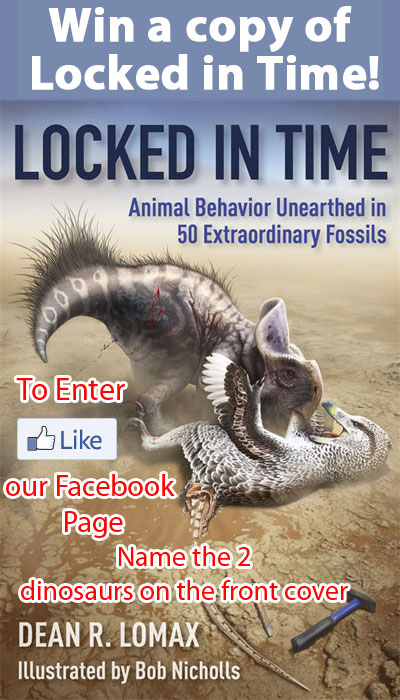
To celebrate the publication of the amazing book “Locked in Time” by award-winning palaeontologist Dean Lomax with illustrations by renowned palaeoartist Bob Nicholls, Everything Dinosaur is giving you the chance to win a copy in our free to enter Facebook competition.

Please note this competition has now closed.

We even created a short YouTube video briefly reviewing the book and explaining how you can enter our contest.

https://youtu.be/g4LIA6AzTHc
Win a Copy of “Locked in Time” thanks to Everything Dinosaur (Please note this competition closes at midnight (BST) on June 17th 2021).

Visit the website of Dr Dean Lomax: British Palaeontologist Dr Dean Lomax.

A Fabulous New Book Describing Behaviour Inferred from Fossils

Let’s give the book its full title – “Locked in Time – Animal Behaviour Unearthed in 50 Extraordinary Fossils”, it has taken Dr Dean Lomax ten years to research and write. He has teamed up with Bob Nicholls a well-known, British palaeoartist who has used his extensive knowledge of the living world to vividly reproduce moments captured in deep, geological time by the fossil discoveries.

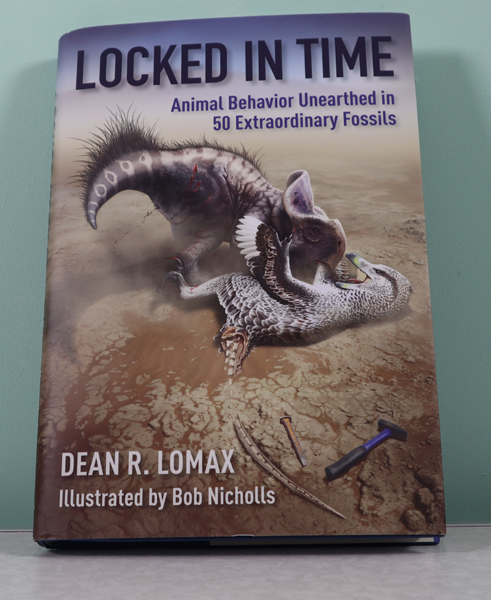
The book "Locked in Time"
The front cover of the book “Locked in Time – Animal Behaviour Unearthed in 50 Extraordinary Fossils” by Dean Lomax with illustrations by Bob Nicholls.  Picture credit: Everything Dinosaur.

Picture credit: Everything Dinosaur

Visit Everything Dinosaur’s website: Visit Everything Dinosaur.

Win a Copy of the Book

The Everything Dinosaur “Locked in Time” book competition is free to enter. All you have to do is visit Everything Dinosaur on Facebook: Everything Dinosaur’s Facebook Page and on the “Locked in Time” competition post at the top of the page, name the two fighting dinosaurs that feature on the front cover, leaving your answer in the comments section below the post.

At midnight (BST) June 17th (2021), the competition closes and shortly afterwards Everything Dinosaur will randomly select a commentator from the list and that lucky person will be sent a copy of this fantastic book.

Please note this competition has now closed.

It would be greatly appreciated if you could give the Everything Dinosaur Facebook page a “like”.

Hurry, the competition closes at midnight (British Summer Time on Thursday 17th June 2021).

Win a copy of the fantastic book "Locked in time"
Your chance to win a copy of “Locked in Time” by Dean Lomax illustrated by Bob Nicholls. Simply, like our Facebook page and leave a comment naming the two dinosaurs featured on the front cover.

A spokesperson from Everything Dinosaur praised the publication, commenting that this book provided some remarkable insights into modern palaeontology and highlighted some incredible fossil discoveries.

Please note this competition has now closed.

Buy this Book!

You are most welcome to enter the Everything Dinosaur Facebook competition. One lucky entrant is going to win a copy of “Locked in Time”, however, if you can’t wait, then you can pick up this exciting publication at Columbia University Press here: Buy “Locked in Time” here just type the word “Lomax” into the website search box and you will be taken to the area of the site that features the books written by Dr Lomax.

Everything Dinosaur on YouTube

The Everything Dinosaur YouTube channel features hundreds of videos of dinosaurs and prehistoric animals. It provides news of forthcoming model releases, competitions, updates on research, fossil discoveries and allows dinosaur fans and model collectors to influence production runs and new figures.

Subscribe to Everything Dinosaur on YouTube: Visit Everything Dinosaur on YouTube.

31 05, 2021

Exciting Jurassic June Approaches

By |2024-05-26T11:21:58+01:00May 31st, 2021|Categories: Dinosaur Fans, Everything Dinosaur News and Updates, Main Page, Photos/Pictures of Fossils|0 Comments

Tomorrow, June 1st, marks the official start of summer in the UK. The weather for a change is behaving itself and #JurassicJune is trending on social media. Everything Dinosaur is expecting stock of Beasts of the Mesozoic Wave 1 ceratopsians and more Beasts of the Mesozoic “raptors” to be delivered to their warehouse along with more Rebor figures and possibly some new PNSO models too.

It is going to be a busy few weeks for team members, but perhaps there will be a little time to plan some fossil collecting expeditions. COVID-19 restrictions in England could be revised with some restrictions being lifted in June. This could permit group fossil hunting trips.

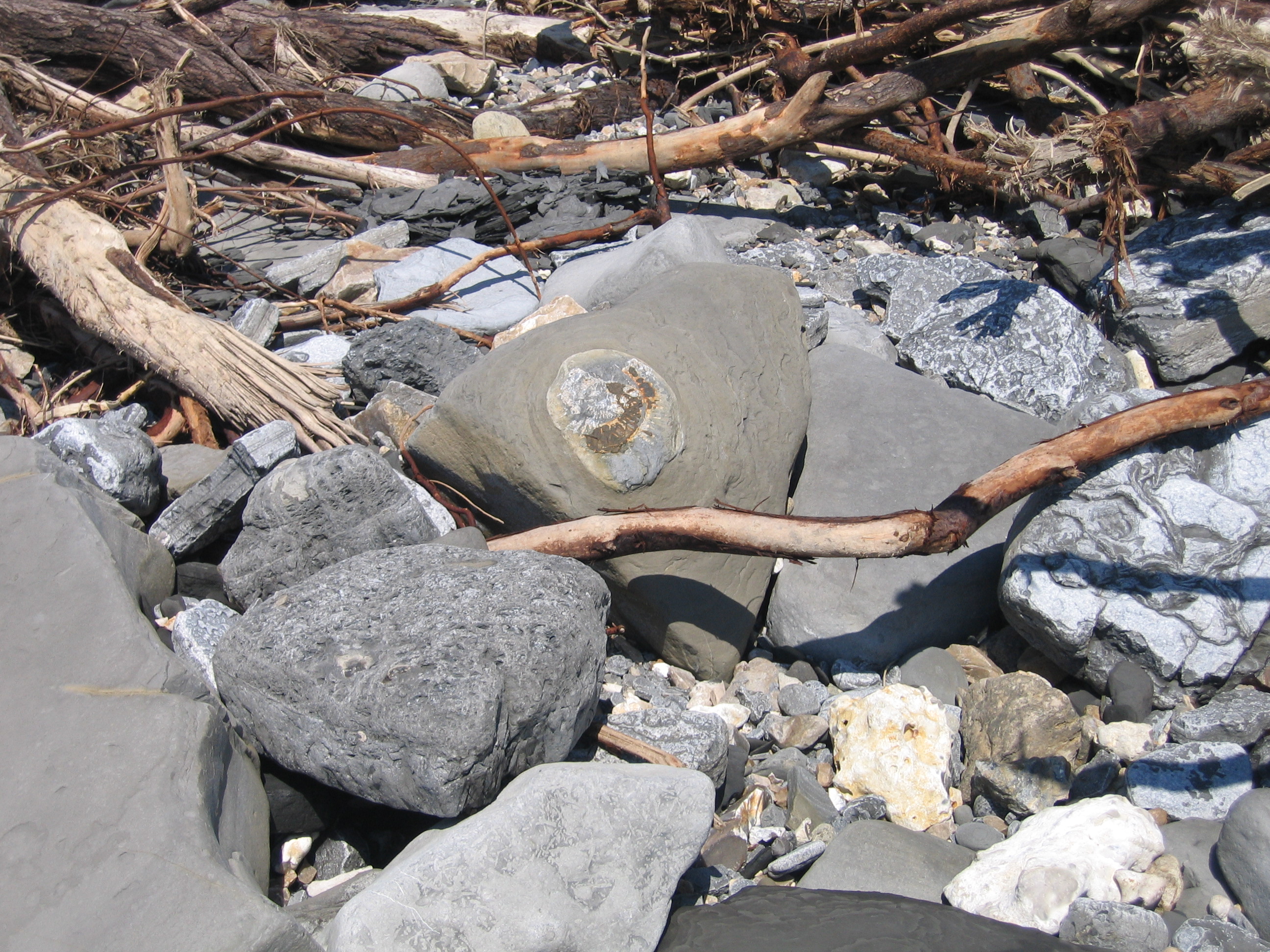
Fossil hunting at Monmouth Beach
Will you find a fossil at Lyme Regis? The warmer weather and the possibility of COVID-19 restrictions being lifted in England could permit lots of fossil hunting trips including fossil hunting on the famous “Jurassic Coast” of southern England. The photograph was taken at Monmouth Beach which lies to the west of the Dorset town of Lyme Regis.  Picture credit: Everything Dinosaur.

Picture credit: Everything Dinosaur

Fossil Hunting Trips – Some Safety Tips

If you are planning to visit the coast and to do some fossil hunting, here are some safety tips:

  • Always stay away from the cliffs, rock falls can be common.
  • Do not climb on the cliffs or any recent landslips/mudflows.
  • Tell a responsible person where you are going and when you will return.
  • Have a mobile phone handy in case of emergencies.
  • Beware of the threat of landslides, especially after the recent heavy rain.
  • Note the tide times particularly high tide and take the advice of the local coastguard etc.
  • Aim to collect fossils on a falling tide, be aware of the incoming tide especially around headlands where you could easily get cut off and stranded.
  • In rough weather, be aware of strong winds and high waves and the fact that the footing underneath might be slippery.
  • Wear suitable clothing and shoes, sunscreen might prove very sensible too.
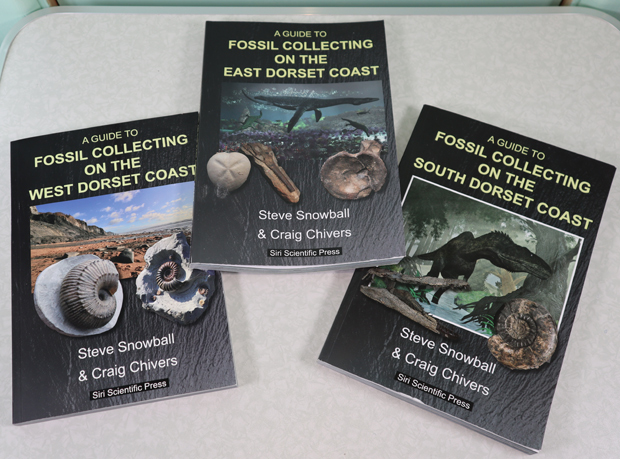
Fossil Collecting on the Dorset Coast
Three excellent guides have been published about fossil hunting on the Dorset coast. Titles by Steve Snowball and Craig Chivers. Books such as these published by Siri Scientific Press are essential reading for the serious fossil collector.  Picture credit: Everything Dinosaur.

Picture credit: Everything Dinosaur

If you are looking to acquire some books about fossil hunting, then check out the range of publications from Siri Scientific Press: Books About Fossils and Fossil Hunting.

Some Advice When Collecting Fossils

  • Do not collect or hammer into the cliffs, rocky ledges or other geological features.
  • The best and safest place to find fossils is on the beach where the sea has washed away soft clay and mud – let nature do some work for you.
  • Take a fossil hunting guide with you, such as one of the books in the photograph (above).
  • Keep collecting to a minimum, don’t be greedy, perhaps select a few specimens at the end of the session to take home.
  • Avoid removing “in situ” material be content with a photograph, leave the fossils where they are for someone else to enjoy.
  • Do not collect from buildings or walls.  Take care not to undermine fences, bridges stone walls etc.
  • Take your litter and other rubbish home with you.
  • Observe all notices and signs, some land is privately owned and fossil collecting is not permitted without prior approval.

With the start of official summer time here in the UK, there are going to be a lot of people planning trips to the seaside and perhaps they will go on a fossil hunt or two. Hopefully, these tips will help them to keep safe and allow the hobby of fossil collecting to continue without causing harm to others or the environment.

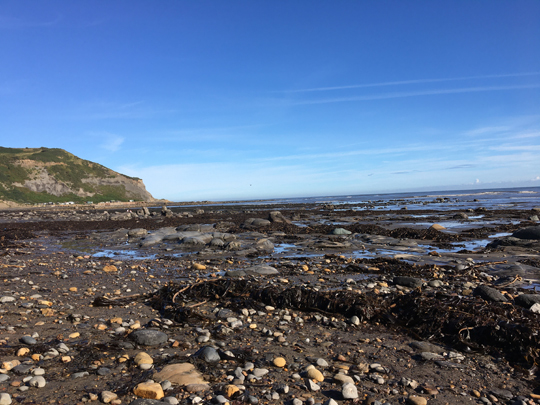
A trip to the coast to collect fossils.

A visit to the North Yorkshire coast on fossil collecting expedition. Picture credit: Everything Dinosaur.

Picture credit: Everything Dinosaur

Visit the award-winning Everything Dinosaur website: Prehistoric Animal Models and Toys.

30 05, 2021

Praising Pinacosaurus A Very Special Dinosaur Model

By |2024-05-26T11:14:36+01:00May 30th, 2021|Categories: Adobe CS5, Dinosaur Fans, Everything Dinosaur Products, Main Page, Photos of Everything Dinosaur Products|0 Comments

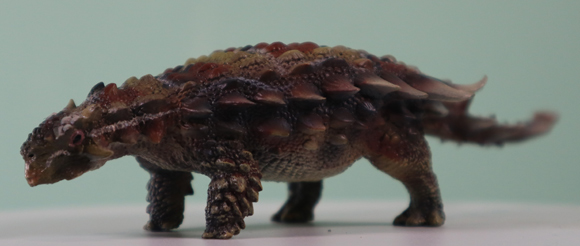
There have been so many new model announcements made by PNSO in the last few weeks that model collectors can be forgiven for overlooking some of the recently introduced figures from this Chinese manufacturer. Take for example, Bart the Pinacosaurus. Pinacosaurus (P. grangeri) might not be the most famous member of the Ankylosauridae family, but Pinacosaurus is well-known in China, it has featured in the illustrations of prehistoric life by Zhao Chuang and PNSO introduced a model of this armoured dinosaur in early 2021.

PNSO Bart the Pinacosaurus dinosaur model
A wonderful model of an armoured dinosaur. The recently introduced Bart the Pinacosaurus.  Picture credit: Everything Dinosaur.

Picture credit: Everything Dinosaur

Why Bart?

PNSO have given their prehistoric animals in their rapidly expanding mid-size model range nicknames. This is a trend that they have followed since their very first replicas came out. Team members are not sure whether there is actually any logic applied when it comes to naming their figures, after all, we have recently announced “Jeff” the Kronosaurus: PNSO to Add “Jeff” the Kronosaurus.

As for Bart, we don’t know why the Pinacosaurus figure was given this moniker, we thought that “Granger” would have been more suitable in honour of the American palaeontologist Walter Wallis Granger, who discovered the first fossils of Pinacosaurus in 1923.

The Everything Dinosaur website: Prehistoric Animal Models and Dinosaur Figures.

PNSO Bart the Pinacosaurus (left lateral)
The PNSO Pinacosaurus in lateral view.  Picture credit: Everything Dinosaur.

Picture credit: Everything Dinosaur

A Photogenic Ankylosaur

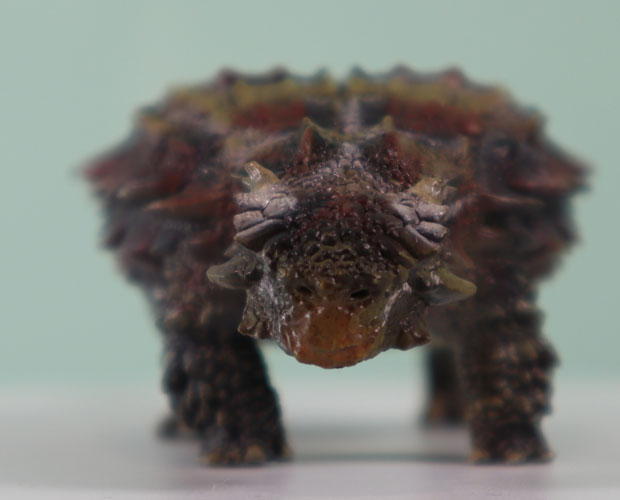
The Pinacosaurus replica is beautifully sculpted and typifies the quality associated with this mid-size model line. Whilst working in the studio, we took the opportunity to take some more photographs of this dinosaur model, the colouration of which reminds us of the Mountain Devil lizard from Australia.

PNSO Bart the Pinacosaurus (anterior view)
A close view of the front of the Pinacosaurus from PNSO (Bart the Pinacosaurus).  Picture credit: Everything Dinosaur.

Picture credit: Everything Dinosaur

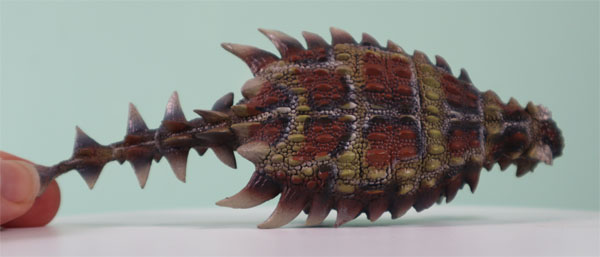
We were able to take several pictures of the figure, including in dorsal view so the chosen colour scheme could be clearly seen.

PNSO Bart the Pinacosaurus dinosaur model in dorsal view

Dorsal view – PNSO Bart the Pinacosaurus dinosaur model. Picture credit: Everything Dinosaur.

Picture credit: Everything Dinosaur

An Upside-Down Dinosaur

As well as dorsal views, we wanted to depict the underside of the figure, complete with that very important CE mark (conformité européenne). After all, to a discerning dinosaur model collector it matters what a dinosaur’s undercarriage looks like.

PNSO Bart the Pinacosaurus dinosaur model
PNSO Bart the Pinacosaurus dinosaur model (ventral view).  Picture credit: Everything Dinosaur.

Picture credit: Everything Dinosaur

A spokesperson from Everything Dinosaur praised the Pinacosaurus figure and congratulated PNSO for wanting to add figures of more obscure prehistoric animals to their range.

To purchase the PNSO Pinacosaurus or any other PNSO prehistoric animal figure in stock at Everything Dinosaur: PNSO Age of Dinosaurs Models and Figures.

29 05, 2021

A New, Giant Moroccan Mosasaur – Pluridens serpentis

By |2024-05-26T11:01:09+01:00May 29th, 2021|Categories: Adobe CS5, Dinosaur and Prehistoric Animal News Stories, Dinosaur Fans, Main Page, Palaeontological articles, Photos/Pictures of Fossils|0 Comments

This month (May 2021), has seen yet another scientific paper published describing a new species of mosasaur from the Late Cretaceous of Morocco. The newly described Pluridens serpentis reminds us that these whale-sized animals were related to snakes and lizards (Squamata). It may have sensed its marine environment in a similar way to extant sea snakes.

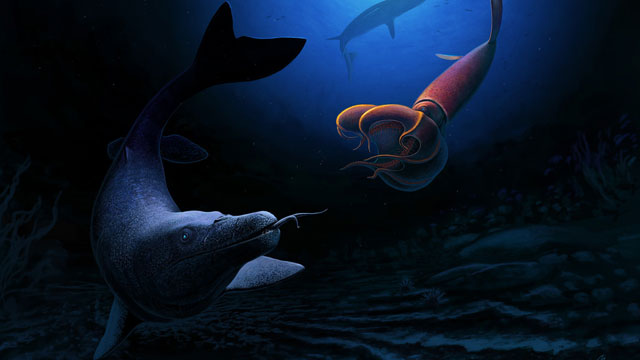
A life reconstruction of Pluridens serpentis
A life reconstruction of the Moroccan mosasaur Pluridens serpentis. The orbits (eye sockets), were disproportionately small when compared to other mosasaurs, it also had very sensitive jaws that were capable of helping it to make sense of its environment (as indicated by numerous neurovascular foramina on the premaxillae). It may have specialised in hunting prey in deep water, or in poorly lit habitats. Picture credit: Andrey Atuchin.

Morocco a Hot Bed of Late Cretaceous Mosasaurs

Mosasaurs were the last, great group of marine reptiles to evolve. They originated in the early Late Cretaceous and they were around for about 20 million years, a much shorter temporal range than other marine reptiles from the Mesozoic such as the ichthyosaurs and plesiosaurs. However, they were extremely successful and globally widespread with more than 40 different genera described.

The extensive phosphate beds of the Ouled Abdoun Basin in northern Morocco have proved to be a hot bed of mosasaur fossil remains. Thirteen mosasaur genera have been named and described from these Upper Cretaceous (Maastrichtian) deposits to date. For example, Everything Dinosaur wrote about the discovery of the specialised piscivore Gavialimimus almaghribensis in October 2020: Another New Species of Mosasaur from Morocco.

Based on Two Complete Skulls and Referred Jaw Material

Writing in the academic journal “Cretaceous Research”, scientists including Dr Nick Longrich (University of Bath), describe P. serpentis based on two complete skulls and referred jaw material. The skulls imply a total body length of around 6 to 8 metres, but the jaw material found indicates that Pluridens could have grown much larger, perhaps as big as 10 metres in length.

It had long, slender jaws lined with over a hundred tiny snake-like teeth which were well-adapted to grabbing small fish and squid. When compared to other mosasaurs, Pluridens had relatively small eyes, suggesting it had poor vision. It probably relied on other senses to understand its environment and to hunt. The upper snout (premaxilla), had dozens of openings for nerves (neurovascular foramina), hinting at the ability to hunt by sensing water movements and changes in pressure. These nerves may have been sensitive to tiny variations in water pressure, an adaptation seen in sea snakes.

The prepared skull of the newly described Moroccan mosasaur Pluridens serpentis
The prepared skull of the newly described Moroccan mosasaur Pluridens serpentis. Picture credit: Dr Nick Longrich.

Lead author of the study, Dr Longrich, (senior lecturer at the Milner Centre for Evolution, University of Bath), commented:

“Typically, when animals evolve small eyes, it’s because they’re relying more heavily on other senses. If it wasn’t using the eyes, then it’s very likely that it was using the tongue to hunt, like a snake. Many aquatic snakes and lizards – sea snakes and water monitors flick their forked tongues underwater, using chemical cues to track their prey. Mosasaurs would have resembled whales and dolphins, so it’s tempting to assume they lived like them. But they’re very different beasts – they’re huge lizards – so they probably acted like them.”

Thick, Robust and Heavy Jawbones

The researchers, who include scientists from the Natural History Museum of Sorbonne University (France), the University Cadi Ayyad in Marrakech and the OCP Group S. A. (both in Morocco), noted that the dentary (lower jaw bone) becomes massive and robust in the largest individuals, suggesting sexual selection and perhaps sexual dimorphism. In some species of extant beaked whales, the males use their jaws in combat (intraspecific combat). It is postulated that male Pluridens behaved in a similar way with the mandibles possibly functioning for combat as in modern beaked whales and some lizards such as Komodo dragons.

A close-up view of the jaw of Pluridens serpentis
A close-up view of the jaws of Pluridens showing the fang-like teeth and small holes in the jaw bones (foramina) – openings for nerves, hinting at the ability to hunt by sensing water movements and changes in pressure. Picture credit: Dr Nick Longrich.

Pluridens serpentis

The newly described Pluridens serpentis lends weight to the theory that mosasaurs were continuing to specialise and diversify until the very end of the Cretaceous. It is the thirteenth species of mosasaur to be identified from Morocco and very probably not the last. Team members at Everything Dinosaur are looking forward to the publication of future scientific papers, once again highlighting the remarkable diversity of North African mosasaurs during the Maastrichtian faunal stage of the Cretaceous.

The scientific paper: “Pluridens serpentis, a new mosasaurid (Mosasauridae: Halisaurinae) from the Maastrichtian of Morocco and implications for mosasaur diversity” by Nicholas R. Longrich, Nathalie Bardet, Fatima Khaldoune, Oussama Khadiri Yazami and Nour-Eddine Jalil published in Cretaceous Research.

The Everything Dinosaur website: Prehistoric Animal Figures and Models.

28 05, 2021

PNSO to Add a New Kronosaurus Model

By |2024-05-26T10:58:31+01:00May 28th, 2021|Categories: Adobe CS5, Dinosaur Fans, Everything Dinosaur News and Updates, Everything Dinosaur Products, Main Page, Photos of Everything Dinosaur Products, Press Releases|0 Comments

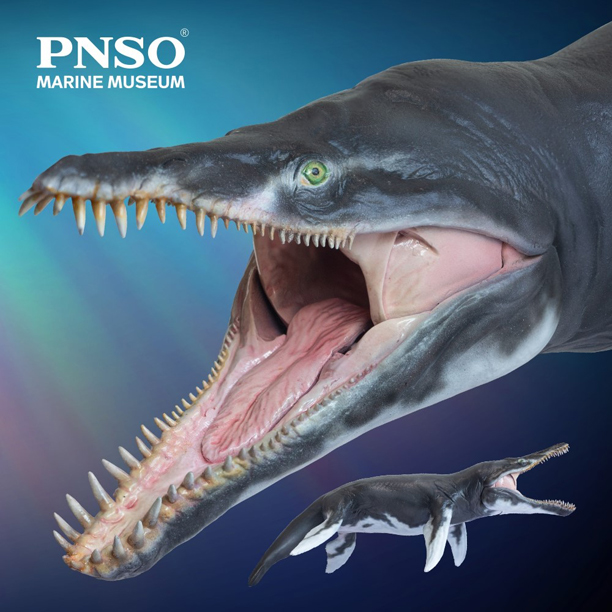
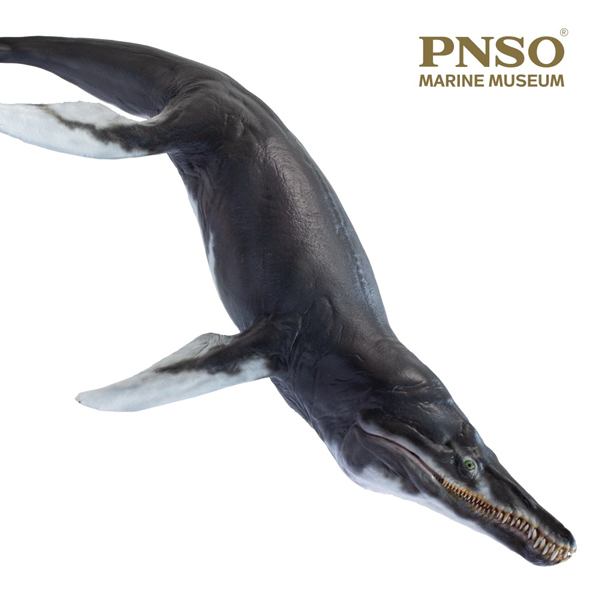
PNSO will add a 1:35 scale model of a Kronosaurus to their scientific art range of figures. The marine reptile figure entitled Jeff the Kronosaurus will be in stock at Everything Dinosaur later in the summer (2021).

PNSO Jeff the Kronosaurus marine reptile model
PNSO Jeff the Kronosaurus – a close-up view of the mouth and a full body shot showing the new for 2021 marine reptile model.

Two Distinctive Kronosaurus Species

This monstrous short-necked pliosaur measured around ten metres in length. It was a fearsome, apex predator of Early Cretaceous seas (Aptian to Albian faunal stages of the Early Cretaceous) and two species have been named. Kronosaurus queenslandicus was formally named and described in 1924 and this Australian species was joined by Kronosaurus boyacensis from Columbia which was named in 1992.

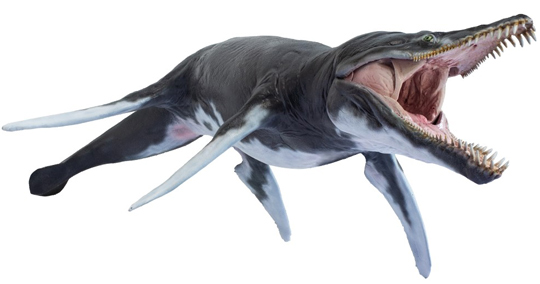
Swimming into view the PNSO Kronosaurus marine reptile model (Jeff the Kronosaurus)

Colouration of a Killer Whale

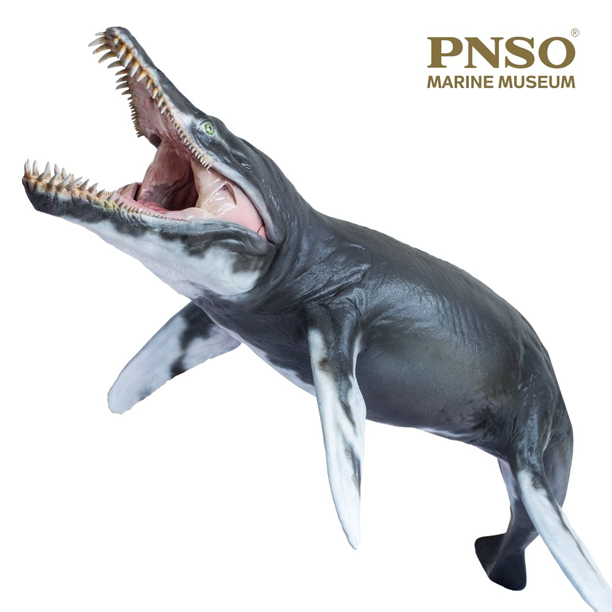
The new for 2021 Jeff the Kronosaurus model has a dark topside and a contrasting lighter, almost white shading underneath. Like extant Orcas (Orcinius orca), this colouration would help to break-up this predator’s outline in the water. The lighter underside would have been difficult to spot when viewed from below against a sunlit water surface. The dark markings on the top of the body, would have camouflaged Kronosaurus and made it difficult to pick out from the murky depths when viewed from above in the water column.

The colouration of Kronosaurus is unknown, but team members at Everything Dinosaur recognise that the design team at PNSO have been influenced by living marine animals when it came to Jeff’s colouration.

Coming in for the attack, the PNSO Kronosaurus marine reptile model.
The new for 2021 PNSO Kronosaurus marine reptile model.

Kronosaurus Model Measurements

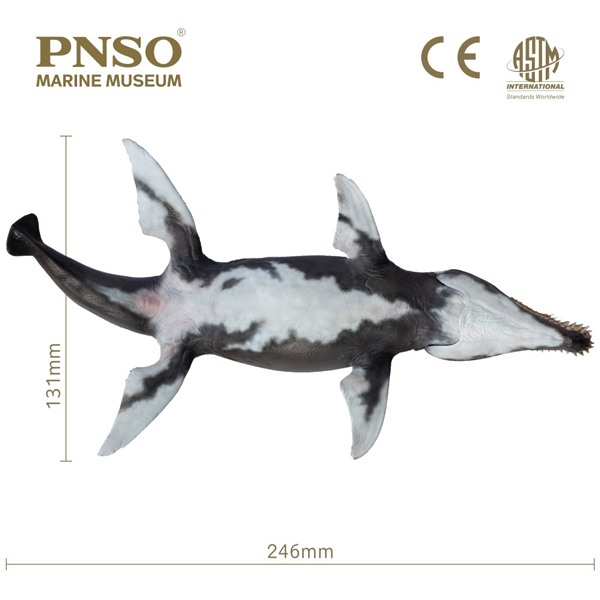
The Kronosaurus model measures 24.6 cm in length and it is 13.1 cm wide across the rear flippers. Although the figure is stated as being in 1:35 scale, based on these measurements, the PNSO model represents and animal around 8.6 metres in length.

PNSO Jeff the Kronosaurus in ventral view
PNSO Jeff the Kronosaurus (ventral view). In a ventral view the stunning counter shading on the model can be clearly seen.

In Stock at Everything Dinosaur in the Summer of 2021

A spokesperson from Everything Dinosaur commented that PNSO intended to bring out a lot of prehistoric animal figures in 2021. Jeff the Kronosaurus will likely be in stock at Everything Dinosaur in the summer.

Visit the award-winning and user friendly Everything Dinosaur website: Prehistoric Animal Models and Toys.

PNSO Jeff the Kronosaurus model
PNSO Jeff the Kronosaurus model takes a dive.

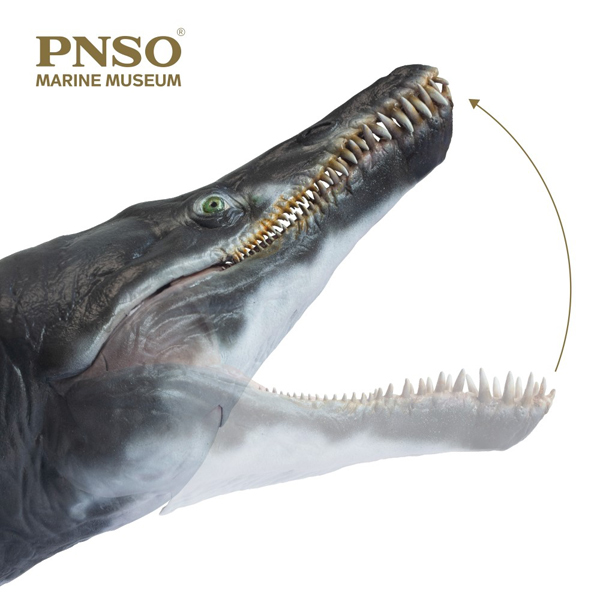
This new PNSO figure joins Levy the Eurhinosaurus and Paulwin the Dakosaurus marine reptile figures that were introduced by PNSO in 2019. As with the Dakosaurus figure, Jeff the PNSO Kronosaurus has an articulated jaw.

PNSO Jeff the Kronosaurus (articulated jaw)
The new for 2021 Kronosaurus model will have an articulated lower jaw.
PNSO Jeff the Kronosaurus Product Packaging
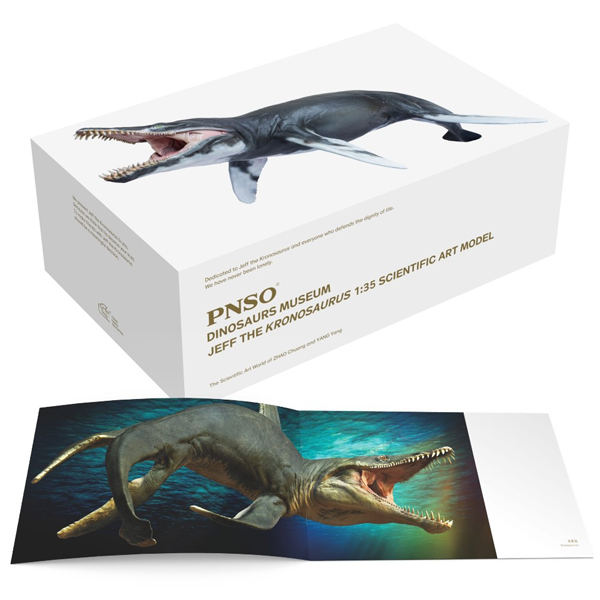
The product packaging for the PNSO Kronosaurus figure. Beautiful artwork from Zhao Chuang.

Expected to be in stock at Everything Dinosaur in the summer of 2021, Jeff the Kronosaurus marine reptile model is a fantastic addition to the PNSO model range. To view the PNSO models and figures available from Everything Dinosaur: PNSO Age of Dinosaurs.

27 05, 2021

Win with Everything Dinosaur in a Free to Enter Competition

By |2024-05-26T10:55:05+01:00May 27th, 2021|Categories: Adobe CS5, Book Reviews, Dinosaur Fans, Everything Dinosaur News and Updates, Main Page, Press Releases|17 Comments

Everything Dinosaur has another fantastic, prehistoric animal themed giveaway. We have a copy of the new book “Locked in Time” by palaeontologist Dr Dean Lomax with illustrations by Bob Nicholls and we are giving you the chance to win it.

Please note this competition has now closed.

Win a copy of the fantastic book "Locked in time"
Your chance to win a copy of “Locked in Time” by Dean Lomax illustrated by Bob Nicholls. Simply, like our Facebook page and leave a comment naming the two dinosaurs featured on the front cover.

Win a Copy of “Locked in Time”

The internationally recognised, award-winning palaeontologist Dean Lomax has spent a decade researching and writing “Locked in Time” which looks at prehistoric animal behaviour that can be discerned from extraordinary fossil evidence. This fantastic publication is illustrated by the very talented Bob Nicholls and Everything Dinosaur is giving you the chance to win a copy in our free to enter competition.

Visit the website of Dr Dean Lomax: British Palaeontologist Dr Dean Lomax.

All you have to do to enter is visit Everything Dinosaur on Facebook “Like” our page, then leave a comment on the competition post naming the two dinosaurs illustrated by Bob Nicholls that feature on the front cover.

Like Everything Dinosaur on /Facebook
Like our Facebook page and enter the competition.

Visit Everything Dinosaur on Facebook: Our Facebook Page.

Or, if you are not on Facebook, just leave a comment on this blog post to enter.

Please note this competition has now closed.

On our Facebook “Locked in Time” competition post leave a comment naming the two dinosaurs on the book’s front cover. For example, if you think that they are Triceratops and T. rex put these answers in a comment under the post.

Win a copy of "Locked in Time"
Win a copy of “Locked in Time” in Everything Dinosaur’s free to enter competition.

Don’t forget to name the two dinosaurs and to “Like” our Facebook Page: Everything Dinosaur on Facebook.

We will draw our lucky winner at random and the “Locked in Time” competition closes at midnight (BST) on Thursday 17th June. Good luck!

Please note this competition has now closed.

Terms and Conditions of the “Locked in Time” Dinosaur Book Competition

Automated entries are not permitted and will be excluded from the draw.

Only one entry per person.

The prize is non-transferable and no cash alternative will be offered.

The Everything Dinosaur “Locked in Time” runs until midnight Thursday 17th June 2021.

Winner will be notified by private message on Facebook or the Everything Dinosaur Blog.

Prize includes postage and packing.

For full terms and conditions contact: Email Everything Dinosaur.

Missed out on the competiton? Not to worry pick up a bargain at: Everything Dinosaur.

26 05, 2021

New Rebor Oddities Specimen: G-2016 Embryos (Resinite, Epoxide and Bakelite)

By |2024-05-26T10:52:04+01:00May 26th, 2021|Categories: Adobe CS5, Dinosaur Fans, Everything Dinosaur News and Updates, Everything Dinosaur Products, Main Page, Photos of Everything Dinosaur Products|0 Comments

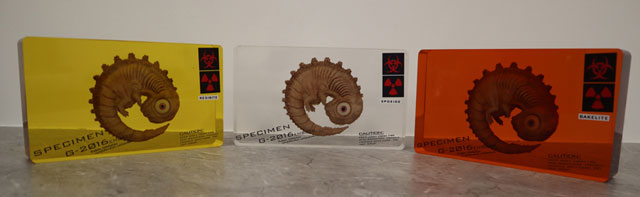
Everything Dinosaur received an email from a potential customer asking for some more information and pictures on the recently introduced Rebor, limited edition specimens G-2016 embryos. We were happy to oblige and to send more photographs of the actual figures and to answer the queries.

Rebor Oddities Specimens G-2016

Our packing rooms might be very busy with all the parcels being prepared for despatch but we found a quiet work bench, set up the figures and took several photographs of these remarkable Rebor replicas.

The images and information were emailed to the person who had enquired and a few hours later a parcel was despatched containing the G-2016 embryo selected.

For prehistoric animal models and replicas: Buy Prehistoric Animal Models.
Rebor Oddities Specimen: G-2016 Embryos (Resinite, Epoxide and Bakelite)
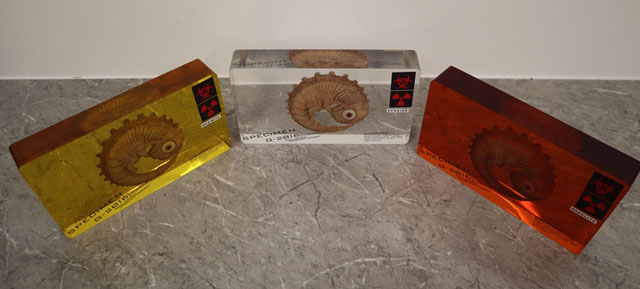
The three, stunning Rebor Oddities specimens – bakelite (right), epoxide (centre) and resinite (left). Special limited edition science-fiction replicas from Rebor. Picture credit: Everything Dinosaur.

Picture credit: Everything Dinosaur

Model Measurements

Each block measures 18.5 cm long and stands 10.6 cm tall. The width of each block is 3 cm. They are imposing science-fiction/fantasy figures and Rebor has been praised for producing such innovative and intriguing models. These are radical departments from their usual dinosaur and other prehistoric animal replicas.

As the Rebor Oddities Specimen G-2016 are so unusual, team members at Everything Dinosaur have received a lot of enquiries about them from collectors. We have been happy to take extra photographs of these figures and to email these images and respond to specific questions.

Rebor Oddities Specimen: G-2016 Embryos (resinite, epoxide and bakelite)
Very creative and innovative designs. The Rebor Oddities G-2016 specimens resinite (left), epoxide (centre) and bakelite (right). Limited edition figures from Rebor. Team members at Everything Dinosaur took several photographs of the different replicas to help potential customers with their enquiries. Picture credit: Everything Dinosaur.

Picture credit: Everything Dinosaur

Limited Edition Figures

The Rebor Oddities G-2016 figures (epoxide, bakelite and resinite) are limited edition items, only a few hundred of each have been produced.

To view these models (whilst stocks last) and to see the rest of the spectacular Rebor range: Rebor Replicas Models and Figures.

25 05, 2021

Rare Dinosaur Bones from Western Queensland

By |2024-05-26T10:47:51+01:00May 25th, 2021|Categories: Adobe CS5, Dinosaur and Prehistoric Animal News Stories, Dinosaur Fans, Main Page, Photos/Pictures of Fossils|0 Comments

Team members at Everything Dinosaur have received reports from Australian media sources that dinosaur bones have been discovered at Eromanga in western Queensland. The fossil bones believed to be cervical vertebrae (neck bones) represent the remains of a titanosaur. A field team from the Eromanga Natural History Museum has begun excavations and they suspect that the fossils, representing a titanosaur will end up being described as a new species.

The director of the Eromanga Natural History Museum holds a fossil bone.
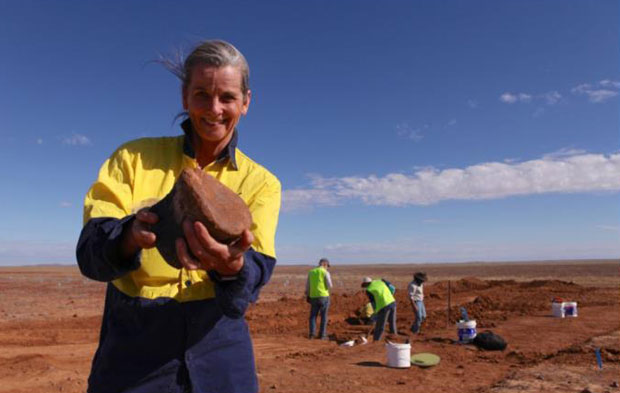
Robyn Mackenzie, Director and palaeontologist for the Eromanga Natural History Museum, holds one of the recently excavated dinosaur bones. Picture credit: Dan Llewellyn/Eromanga Natural History Museum).

Land of Giant Titanosaurs

Several dinosaurs have already been named and described from fossil remains found in this region. The sandstones, mudstones and silts represent deposits from an ancient river network. Given the depth of the formation (the Winton Formation), that exceeds 400 metres deep at some locations, palaeontologists have postulated that this part of Australia around 98-95 million years ago was home to a huge river comparable to the Mississippi today.

Palaeontologist and director of the Eromanga Natural History Museum, Robyn Mackenzie explained that the excavations were looking promising and that she was optimistic that more elements from the skeleton of the large herbivore would be found.

In 2015, Everything Dinosaur reported on the fossilised bones of Australia’s largest dinosaur going on public display for the first time. These fossils were found in the same region and represent an animal around thirty metres in length. The dinosaur was nicknamed “Cooper”.

To read more about the titanosaur nicknamed “Cooper”: A super-duper titanosaur called “Cooper”.

A scale drawing of an Australian Titanosaur.
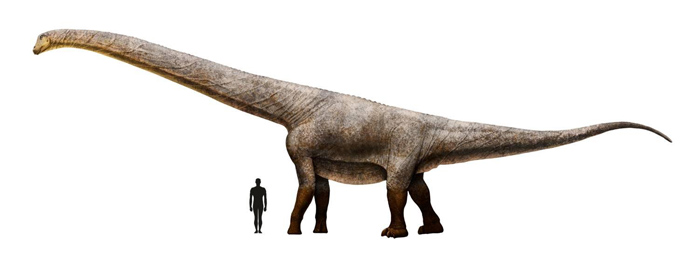
Scale drawing of “Cooper”. This titanosaur, whose bones were found in 2007 and went on display in 2015 has yet to be formally scientifically described and named.

Fossils Found by Director’s Son

The site was first discovered in 2018 by Robyn Mackenzie’s son and daughter-in-law. Whilst out rounding up cattle dinosaur vertebrae were spotted exposed on the surface of the red clay soil.

Dinosaur Bones Exposed on the Surface
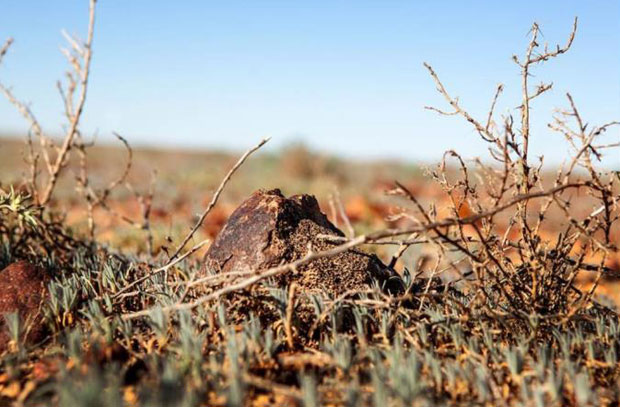
Dinosaur bones exposed on the surface.  Picture credit: Eromanga Natural History Museum.

A spokesperson from Everything Dinosaur stated that dinosaur bones from the early Late Cretaceous were relatively rare globally and the fossils from this part of western Australia are helping palaeontologists to better understand the dinosaur biota of southern Gondwana.

The Everything Dinosaur website: Dinosaur Models and Toys.

24 05, 2021

Spinosaurus and Daspletosaurus Models in Stock

By |2024-05-26T10:42:14+01:00May 24th, 2021|Categories: Adobe CS5, Dinosaur Fans, Everything Dinosaur Products, Main Page, Photos of Everything Dinosaur Products, Product Reviews|0 Comments

The new for 2021 Wild Safari Prehistoric World Spinosaurus and Daspletosaurus dinosaur models are in stock at Everything Dinosaur. These are the last of five new prehistoric animal models that were introduced by Safari Ltd this year, after the armoured T. rex and Triceratops and the Baryonyx figures that came into stock at Everything Dinosaur earlier in 2021.

Wild Safari Prehistoric World Daspletosaurus dinosaur model.
The new for 2021 Wild Safari Prehistoric World Daspletosaurus dinosaur model. This figure is now available from Everything Dinosaur (May 2021).
Wild Safari Prehistoric World Spinosaurus dinosaur model.
The 2021 Wild Safari Prehistoric World Spinosaurus dinosaur model available from Everything Dinosaur.

Two New Dinosaur Figures

Safari Ltd may have reduced the number of new prehistoric animal models they have introduced this year compared to 2020, (nine prehistoric animal models were introduced in 2020), but there is no denying the quality of these new additions. Each model is beautifully painted and reflect the very latest scientific thinking. It is wonderful to see a new model of a tyrannosaur introduced into a product range, a refreshing change from the ubiquitous T. rex models.

Wild Safari Prehistoric World Daspletosaurus dinosaur model
The new for 2021 Wild Safari Prehistoric World Daspletosaurus dinosaur model. The Daspletosaurus figure measures approximately 23 cm in length and that impressive head with jaws wide open stands around 11 cm high.  Picture credit: Everything Dinosaur.

Picture credit: Everything Dinosaur

The Spinosaurus Tail

Last year (2020), a team of international scientists including researchers from the University of Portsmouth, the University of Detroit Mercy and Leicester University published a paper in the journal “Nature” that concluded that Spinosaurus was indeed an aquatic dinosaur. A review of fossil tail bones (caudal vertebrae), revealed that it had a wide and flexible tail which was very fin-like. The tail of Spinosaurus was well adapted to propelling this huge predator through the water.

The design team at Safari Ltd have worked hard to incorporate this research into their model. The tail of the Wild Safari Prehistoric World Spinosaurus, is broad and accounts for around half the model’s entire length. It seems ideally suited to propelling this dinosaur through the rivers and lakes of early Late Cretaceous North Africa.

The deep tail on the Wild Safari Prehistoric World Spinosaurus dinosaur model
The deep and powerful tail of the Wild Safari Prehistoric World Spinosaurus.  Picture credit: Everything Dinosaur.

Picture credit: Everything Dinosaur

The Everything Dinosaur website: Buy Dinosaur Toys and Models.
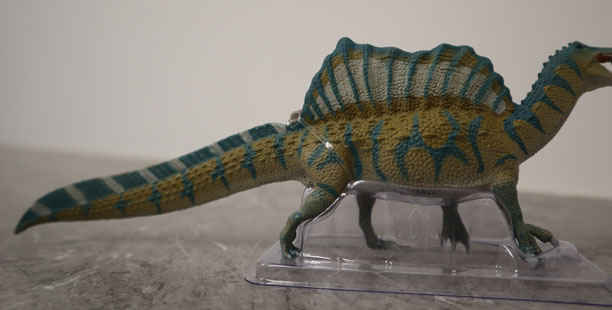
Attractive Markings

Collectors have contacted Everything Dinosaur and commented on the beautiful markings and colouration. The Spinosaurus figure has attracted praise for its striking paintwork.

Wild Safari Prehistoric World Spinosaurus dinosaur model
The beautiful markings on the Wild Safari Prehistoric World Spinosaurus dinosaur model. Collectors and fans of dinosaur models have praised the colour scheme. Picture credit: Everything Dinosaur.

Picture credit: Everything Dinosaur

The new for 2021 Wild Safari Prehistoric World Daspletosaurus and Spinosaurus figures along with the rest of the prehistoric animal models in this range can be found here: Wild Safari Prehistoric World.

Go to Top