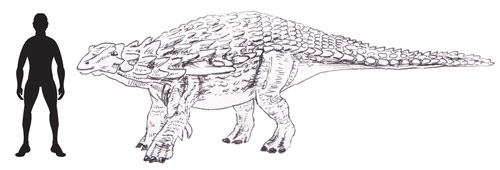
In a few weeks’ time, the first of the 2019 CollectA prehistoric animal models will be coming into stock at Everything Dinosaur. One of the first figures expected to arrive is the Age of Dinosaurs Borealopelta figure, a fifteen centimetre long replica of a nodosaurid that roamed north-western Alberta around 112 million years ago. The fact sheet for this new dinosaur model is being prepared and a scale drawing of Borealopelta (B. markmitchelli) has been produced.
The Scale Drawing of Borealopelta (B. markmitchelli)Prepared for the Everything Dinosaur Fact Sheet
A scale drawing of the armoured dinosaur Borealopelta from north-eastern Alberta (Canada). Picture credit: Everything Dinosaur.
Picture credit: Everything Dinosaur
Heavily Armoured with Countershading
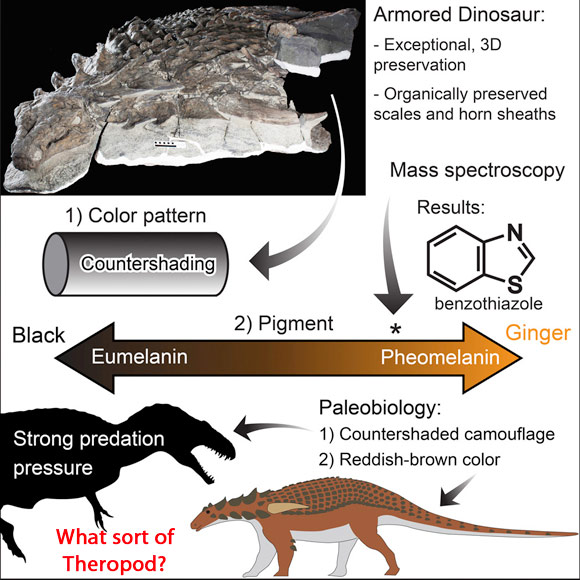
The exquisite state of preservation has permitted palaeontologists to gain a great deal of information about the position of the osteoderms and scutes that covered the dinosaur’s body. When the scientific paper providing the formal description of Borealopelta was published in 2017, the research team described how chemical analysis of organic compounds in the armour and skin permitted the research team to infer the armoured dinosaur’s pigmentation.
It was discovered that Borealopelta possessed countershading, with a reddish-brown top half contrasting with a much paler underside. In extant animals, countershading helps to provide camouflage against predators, but most large animals today, such as rhinos, elephants and hippos, don’t have countershading.
The CollectA Age of Dinosaurs Borealopelta Dinosaur Model
The Age of Dinosaurs Popular – CollectA Borealopelta. Note the paler underside of the animal – an example of countershading.
Borealopelta markmitchelli
At more than five metres long and with such strong armour, it seems surprising that this armoured dinosaur would evolve countershading to help it avoid detection. Such a large and powerfully built dinosaur would have presented a formidable opponent for most theropod dinosaurs, but apparently it paid Borealopelta to try to maintain a low profile.
It is not known what sort of meat-eating dinosaurs Borealopelta tried to hide from but three-toed prints, some measuring in excess of 90 cm long and ascribed to the ichnogenus Irenesauripis indicate that they may have been some 12-metre-plus carnivores in the ecosystem that were best avoided.
As to what sort of theropods could have predated Borealopelta, we can only speculate. However, it has been postulated that the super-sized carnivores that Borealopelta was trying to avoid were probably carcharodontosaurids or allosaurids. This armoured dinosaur is estimated to have weighed more than 1.3 Tonnes, it is much larger than animals alive today that have evolved countershading, therefore, the assumption is that there must have been super-sized, hypercarnivores that Borealopelta was trying to avoid.
Summarising the Research into the Armoured Dinosaur Borealopelta
Summarising the research into Borealopelta.
Picture credit: Brown et al, published in Current Biology with additional annotation from Everything Dinosaur
The scientific paper: “An Exceptionally Preserved Three-Dimensional Armored Dinosaur Reveals Insights into Coloration and Cretaceous Predator-Prey Dynamics” by Caleb M. Brown, Donald M. Henderson, Jakob Vinther, Ian Fletcher, Ainara Sistiaga, Jorsua Herrera and Roger E. Summons published in Current Biology.
The county of Cheshire in north-west England has some fascinating geology, but from a palaeontological point of view, fossils are few and far between. However, there are some notable exceptions, the sandstone quarries that once operated around the picturesque village of Lymm have provided evidence that before the dinosaurs evolved, this part of rural Cheshire was stalked by a powerful, three-metre-long predator – Chirotherium.
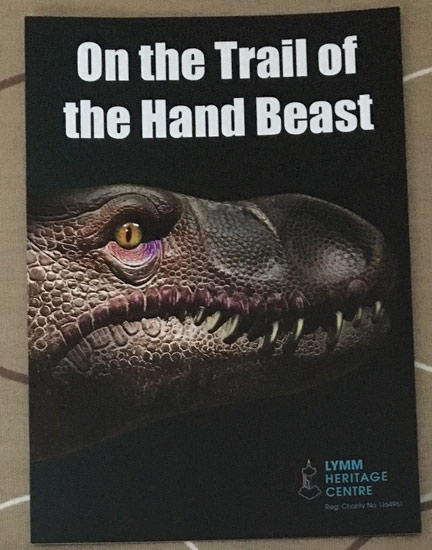
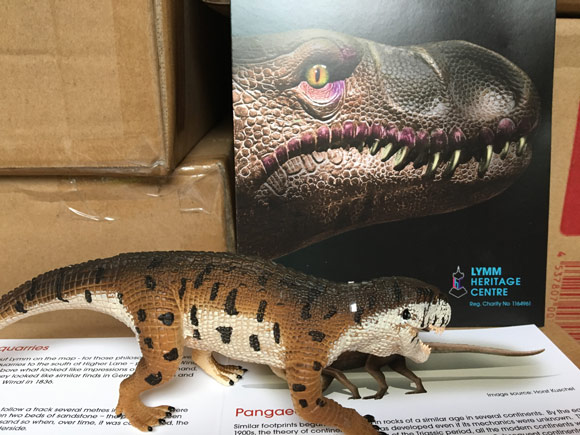
A new exhibition at the Lymm Heritage Centre, tells the story of Chirotherium and highlights the scientific importance of the trackways that revealed its existence. Visitors will be able to get up close to this distant relative of today’s crocodiles, meeting “Kerry”, Lymm Heritage Centre’s resident archosaur (ruling reptile) as well as embarking on the trail of the “Hand Beast”.
On the Trail of the “Hand Beast” – Chirotherium
On the trail of the “Hand Beast” – Chirotherium (Lymm Heritage Centre).
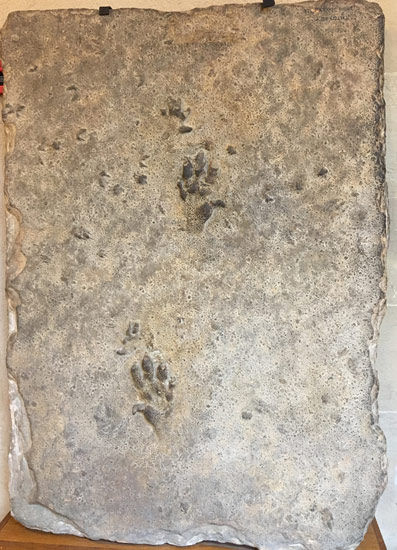
Strange, five-fingered tracks had been discovered in Triassic sandstones in Germany in the early 1830s. More tracks were uncovered at Storeton on the Wirral in 1836. As the demand for building materials grew, a number of sandstone quarries in the Lymm area were opened up and more footprints were found.
These trace fossils are preserved in the Tarporley Siltstones Formation, which was deposited in the early Middle Triassic. Lymm was located on the super-continent of Pangaea and the rocks deposited in this region portray a dry, arid Triassic landscape, dominated by sand dunes and salt lakes which were close to the sea. In areas, where freshwater was present, such as river valleys and oases, there was abundant life, but the animals and plants would have been very unfamiliar to us. The land was ruled by reptiles and one of the biggest and most dangerous was Chirotherium.
Tracks Assigned to the Ichnogenus Chirotherium on Display at Oxford University Natural History Museum
Chirotherium tracks on display at the Oxford University Museum of Natural History. Note the five-fingered tracks (pentadactyle).Picture credit: Everything Dinosaur.
Picture credit: Everything Dinosaur
Face to Face with Chirotherium
This new exhibition at the Lymm Heritage Centre brings you face to face with the “Hand Beast” and the hard-working, dedicated team behind this informative, interactive exhibition have created lots of family-orientated activities to support learning. You can go on your own fossil hunt, make prehistoric footprints and follow Lymm’s bespoke geology trail.
Further information about this new attraction, which officially opens tomorrow (January 12th), can be found here: On the Trail of the “Hand Beast”.
The exhibition is open from from 12 noon until 4pm Thursday to Sunday.
Everything Dinosaur team members have been involved in this project, many of the fossils have been supplied by our team members and visitors will be able to pick up a model of a Prestosuchus, a prehistoric animal that closely resembles the Chirotherium ichnogenus.
Unpacking and Displaying the Limited-edition Rebor Club Selection Hatching Baryonyx “Hurricane”
This week has seen the arrival of the eagerly anticipated Rebor Club Selection hatching Baryonyx figure “Hurricane”. Team members at Everything Dinosaur have been busy contacting all those customers who took advantage of our offer to reserve one of these limited-edition dinosaur replicas. The first of these highly collectable prehistoric animal models have already been despatched, however, we did take time away from our packing duties to post up a quick guide to unpacking and displaying this beautiful dinosaur model.
Hints and Tips when Unpacking and Displaying the Rebor Club Selection Hatching Baryonyx “Hurricane”
Video credit: Everything Dinosaur
Only 1,000 Figures Made
The total production run is only 1,000 figures. Each figure has a unique number on the base, so this Rebor hatching Baryonyx is a real piece for collectors. In our short video, (just over a minute in length), we show how to unpack the model from its protective foam packaging. We also provide some advice on how to secure the dinosaur egg to the special display stand, after all, with such a limited-edition Rebor replica, you don’t want the dinosaur model falling over and potentially getting damaged.
The Limited-edition Rebor Club Selection Hatching Baryonyx Figure
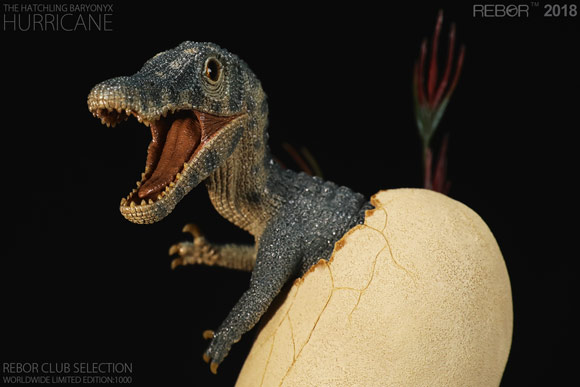
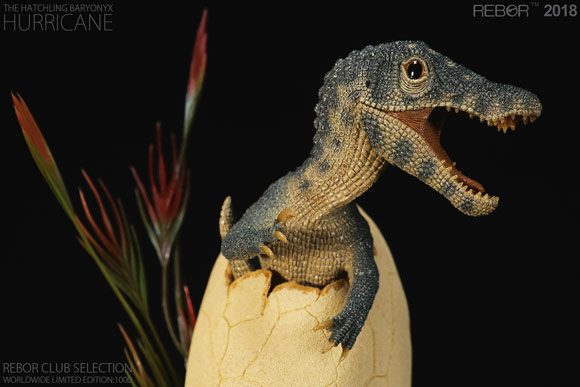
The limited-edition hatching Baryonyx figure “Hurricane” by Rebor. Everything Dinosaur has produced a short, helpful video to help customers display their figure.
Baryonyx (B. walkeri), is famous for its super-sized thumb claws. We are advising customers to take great care when first removing the figure from the protective foam packaging. The claws can be broken off, if care is not taken to remove the figure from the foam. In addition, Rebor has modelled an elongate-shaped egg for their theropod dinosaur. This is entirely in keeping with the shape of theropod dinosaur eggs.
Lots of different dinosaur eggs have been classified (classified by shape, pore structure and size), there is actually an oogenus (the term used when classifying an organism from eggs), called Elongatoolithus – ee-long-gah-two-lith-us which describes theropod eggs. The elongate egg needs to be carefully placed on its display base. If customers are not careful then the egg could topple over and there is a danger that the figure might be damaged.
Hopefully, a short, instructional video will help. Everything Dinosaur recommends that customers use double-sided tabs to secure their model when on display. Alternatively, something like reusable, sticky putty can be utilised just to help the elongate egg sit securely on its display base.
Rebor Club Selection Limited-edition Baryonyx “Hurricane”
Team members at Everything Dinosaur are busy making plans for the imminent arrival of the latest figure in the Rebor Club Selection range – a hatching Baryonyx nicknamed “Hurricane”. Only 1,000 of these highly collectable replicas have been produced and like the hatching Triceratops (Jolly) and the T. rex (Rudy), the Baryonyx replica is likely to sell out quickly.
New for 2019, the Rebor Club Selection Limited Edition Baryonyx Figure
The Rebor Club Selection limited-edition Hatching Baryonyx figure.
Inspired by a Footballer – Harry Kane
Baryonyx is known from Lower Cretaceous strata from Europe, most notably the Upper Weald Clay Formation in Surrey, from which the holotype specimen was excavated in 1983. This theropod is associated with southern England and the Isle of Wight, but isolated teeth and other material from Portugal and further afield suggest that Baryonyx (or closely related species/ancestral forms) may have had a wider distribution.
Both the Weald Clay Formation and the Wessex Formation of the Isle of Wight, which has also yielded Baryonyx walkeri fossil material, represent palaeoenvironments that would have been subjected to tropical storms so the moniker “Hurricane” is scientifically appropriate. However, it was the 2018 renaissance of the English football team captained by Harry Kane that proved the inspiration for the name “Hurricane”.
Baryonyx and the World Cup
In 2018, the England football team reached the semi-finals of the World Cup in Russia and in the inaugural UEFA Nations League, England have qualified for the semi-finals. England’s semi-final against Holland in June 2019, will be played in Portugal, highly appropriate as fossil material ascribed to the Baryonyx genus has also been described from that country.
The Rebor Hatching Baryonyx – “Hurricane” (Harry Kane)
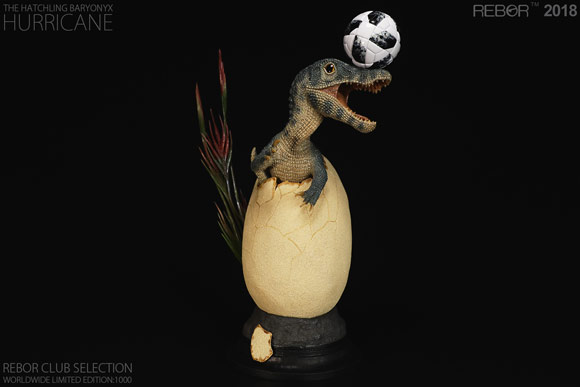
Rebor “Hurricane” limited-edition hatching Baryonyx dinosaur model. The football reaffirms the connection with the England soccer team.
Baryonyx walkeri
When the field team from the British Museum (London Natural History Museum), had finished excavating the fossil remains from the Smokejacks Brickworks in Ockley (Dorking, Surrey) in 1983, some 70% of the skeleton of an individual meat-eating dinosaur had been recovered. This makes this fossil material one of the most complete, large theropod dinosaur remains to have been found in Europe. The Smokejacks Brickworks material represents a sub-adult animal, so estimating the size of Baryonyx walkeri is difficult. However, most vertebrate palaeontologists estimate that this theropod reached an adult size of between 7.5 to 10 metres in length, but like all dinosaurs, this giant hatched from an egg.
The Limited-edition Rebor Hatching Baryonyx Dinosaur Figure “Hurricane”
The limited-edition hatching Baryonyx figure “Hurricane” by Rebor.
A Hand-painted Rebor Replica
The hand-painted, highly detailed figure has been beautifully sculpted and the dinosaur can be displayed with or without the football accessory. Note also the care taken to sculpt that enlarged, curved thumb claw, an anatomical feature that first drew the attention of the world’s media to the fossil discovery back in 1983.
A spokesperson from Everything Dinosaur commented:
“We are excited and can’t wait to take delivery of this limited-edition dinosaur figure. The stock is due to arrive at our warehouse in the next few days and then we shall be emailing all those collectors who have asked us to reserve a Club Selection replica hatching Baryonyx for them. We suspect that when “Hurricane” arrives it will create a bit of storm amongst fans of dinosaur models.”
Beasts of the Mesozoic Velociraptor osmolskae Figure (Limited Edition)
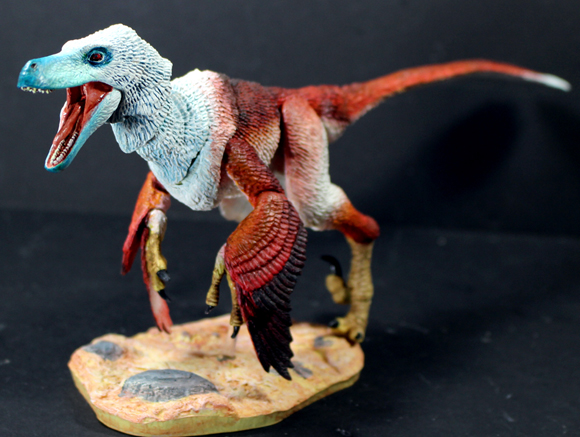
Plans are progressing well at Everything Dinosaur with regards to new additions to the very popular Beasts of the Mesozoic collectable “raptor” figures. New lines will be coming into stock in the spring and we have featured the new additions in a previous blog post and a customer e-newsletter. Today, we focus on one of these new replicas, the limited-edition Beasts of the Mesozoic Velociraptor osmolskae figure, that will only be available for sale in Europe from Everything Dinosaur.
New for 2019 – A Limited Edition Beast of the Mesozoic Velociraptor osmolskae Figure
Limited edition Beasts of the Mesozoic Velociraptor osmolskae figure.
The first batch of Beasts of the Mesozoic figures will focus on the “raptors”. However, there are plans to launch articulated ceratopsians and tyrannosaurs.
Superb Quality Articulated Figures
The Beasts of the Mesozoic range consist of superb quality, articulated figures. They are the brainchild of the highly talented and respected artist David Silva. Everything Dinosaur team members are eagerly looking forward to the arrival of the new “raptors” including the limited-edition Velociraptor osmolskae figure, the second species to be named in the Velociraptor genus (named in 2008, whereas V. mongoliensis was formally named and described back in 1924).
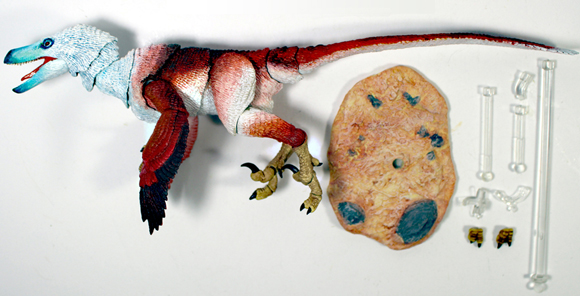
The Limited-edition Beasts of the Mesozoic Velociraptor osmolskae Box Contents
Box contents – the limited-edition Velociraptor osmolskae figure (Beasts of the Mesozoic).
A spokesperson from Everything Dinosaur commented:
“It is fitting to see a Velociraptor named after a Polish scientist – Halszka Osmólska, and one first described by researchers led by a Belgian palaeontologist – Pascal Godefroit, coming to Europe. It has been eleven years since this ground dwelling carnivore was formally named and described and more than ninety years since the genus Velociraptor was erected, it is great to see a Velociraptor osmolskae figure added to our inventory.”
To view the range of Beasts of the Mesozoic articulated figures offered by Everything Dinosaur: Beasts of the Mesozoic Figures.
Beautiful Artwork
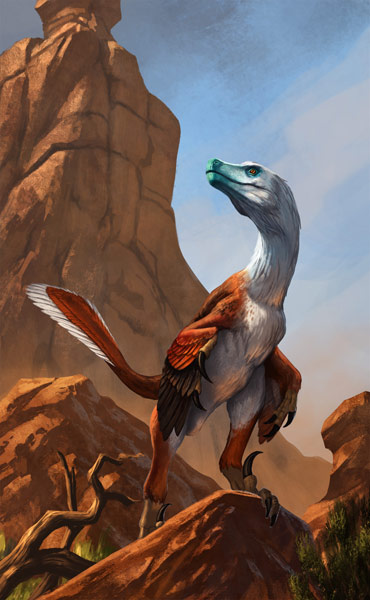
One of the features of this highly collectable range of prehistoric animals is the beautiful box art. The Velociraptor osmolskae illustration on the box is from renowned artist Raul Ramos. Raul will be the package illustrator for the ceratopsian themed articulated figure series which will be the next range of models to be launched.
The Stunning Velociraptor osmolskae Package Art
The original artwork of the Velociraptor osmolskae will feature on the box for the new for 2019 Beasts of the Mesozoic V. osmolskae replica.
Picture credit: Raul Ramos
In the beautiful illustration by Raul Ramos, the Velociraptor is depicted in a dry, arid environment. The type fossil specimen for this species comes from the Bayan Mandahu Formation of China, strata that represents a desert habitat, so the backdrop chosen by the artist is entirely appropriate.
Just a brief note to wish all our weblog readers, social media followers and customers a happy New Year. We wish everyone a peaceful, prosperous 2019. Team members at Everything Dinosaur have lots of exciting plans for the next twelve months, including adding numerous new prehistoric animal models to our range. We estimate that by the end of this year (2019), we will have added around fifty new prehistoric animal models to our inventory.
Happy New Year from Everything Dinosaur
We will also be updating our website and making some improvements to further aid navigation and enhance the website visitor experience.
Everything Dinosaur Team Members Wish Everyone a Happy New Year
Happy New Year from Everything Dinosaur. Picture credit: Everything Dinosaur.
Time to stick our collective necks out to see if we can predict the sort of news stories that we are going to feature on this blog next year (2019). We took a break from making predictions in 2018, after all, just like fossil collecting, attempting to foresee some of the scientific discoveries that will be covered in the next twelve months can be a bit of a hit and miss affair to say the least. However, with our trusty geological hammers tucked into our rucksack next to our crystal ball, here are our suggestions as to the fossil finds and palaeontology themed stories that 2019 will bring.
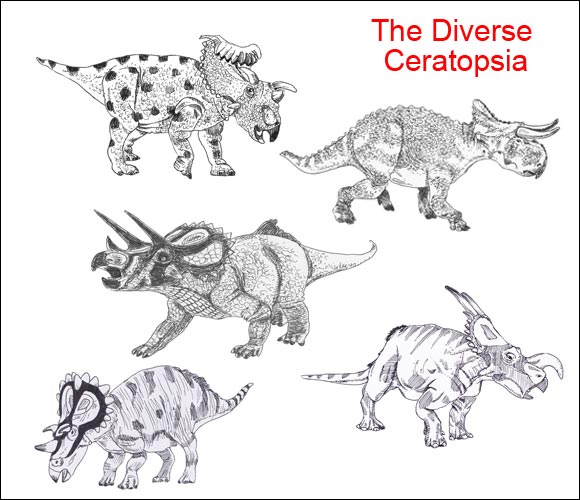
1). Bring on the Horned Dinosaurs – More Ceratopsians to be Named and Described from America
After the dearth of new horned dinosaurs named and described this year (only one – Crittenceratops krzyzanowskii), we expect the Marginocephalia clade, specifically the North American Ceratopsia to be increased substantially again next year. Team members at Everything Dinosaur predict that at least four new horned dinosaurs from the United States will be named and described in 2019.
The Diverse Ceratopsia – Likely to be More Diverse by the end of 2019
Diversity in the horned dinosaurs. Everything Dinosaur team members predict that there will be another four new Ceratopsia taxa from the United States described in 2019.Picture credit: Everything Dinosaur.
Picture credit: Everything Dinosaur
2). Herefordshire Lagerstätte To Make Its Mark Again
In recent years, we have featured a number of amazing fossil finds from the Silurian-aged deposits from the secret Lagerstätte in the county of Herefordshire. These fossils represent an ancient marine biota that was covered in fine volcanic ash some 425 million years ago. Such is the exquisite nature of their taphonomy that even the finest soft tissues have been preserved. We predict that British-based scientists will utilise high-resolution computed tomography in conjunction with computer-generated three-dimensional modelling to reveal a new species of Silurian marine invertebrate.
3). A New Dinosaur from India
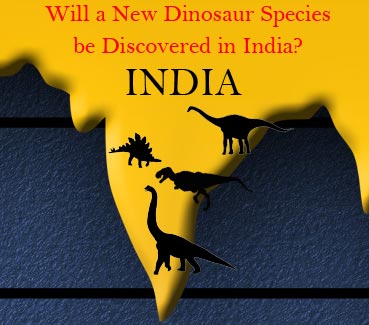
More Chinese dinosaur fossil discoveries are going to be made in 2019. We also expect fresh insights into the Cretaceous flora and fauna entombed in amber from Myanmar. However, amongst the twenty or so new species of dinosaur described in the next twelve months, we predict that one of these new-to-science specimens will be found in India. Many parts of the world (Africa and Asia) for example, are being opened up to geological and fossil exploration. Several different types of dinosaur are already known from the sub-continent and we predict that there will be a new addition to the dinosaur fauna described from India.
Will a New Dinosaur Species be Discovered in India?
Will a new dinosaur species be discovered in India?Picture credit: Everything Dinosaur.
Picture credit: Everything Dinosaur
4). Everything Dinosaur – A New Look to the Website
As well as writing about what other people have been doing, we expect our blog site to update readers on how Everything Dinosaur itself is evolving and changing. Our core values of customer service and finding the very best quality prehistoric animal products are not going to change, but visitors to: Everything Dinosaur can expect to see some changes next year – all aimed at improving our service and helping our customers. The number of different types of prehistoric animal models that we offer is also going to increase, but by how many? Let’s predict another fifty new models to be made available on our website in 2019.
5). More Fossils Reveal Melanosomes
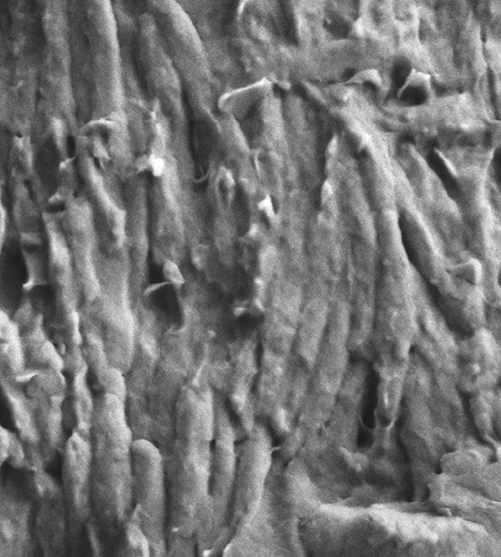
With more and more sophisticated and sensitive devices being made available to palaeontologists to aid their research, 2019 will see further developments in the study of fossil specimens on the molecular level. There have already been some remarkable papers published on the presence of fossilised microscopic structures containing the colour pigment melanin (melanosomes) and we confidently predict that this trend will continue. We predict that further evidence will emerge next year concerning the colour of members of the Dinosauria.
The Hunt is on for More Melanosome Structures in Fossil Material
Sausage-shapes – potential melanosomes. Research is likely to continue into prehistoric animal colouration in 2019.
Picture credit: Lund University (Johan Lindgren)
6). Giant Azhdarchid Pterosaurs
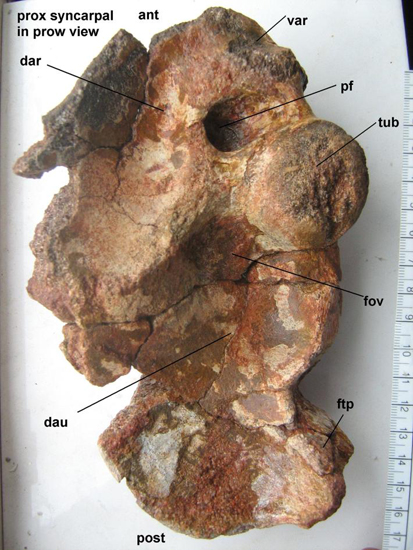
Recent fossil discoveries have indicated that the Pterosauria were more diverse than previously thought towards the very end of the Cretaceous (Campanian to Maastrichtian faunal stages). Everything Dinosaur has reported on the discovery of several fossil fragments from Europe and Africa in recent years and we predict that a new species of large, very probably azhdarchid, pterosaur will be described in 2019. The fossil find could come from northern Africa or perhaps from the famous Hateg Basin deposits of Romania.
An Azhdarchid Pterosaur Wrist Bone (Hateg Island) – Will a New Species of Azhdarchid Pterosaur be Described in 2019?
Azhdarchid pterosaur wrist bone. What surprises lie in wait for flying reptile researchers in 2019?
Picture credit: Mátyás Vremir
7). New Tyrannosaurids from the United States
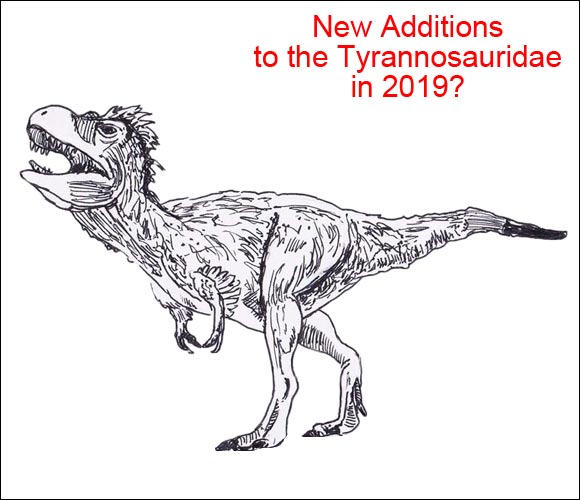
We began our predictions by stating that we thought it was likely that at least four new horned dinosaur taxa from the USA will be named next year. With all these herbivores being named and described, it would not surprise us if some more, large theropod dinosaurs were formally described from fossil material found in the United States next year as well. Let us conclude our crystal ball gazing by suggesting that two new species of Late Cretaceous tyrannosaurid will be identified from fossil finds from the southern USA (southern parts of Laramidia).
Will New Members be Added to the Tyrannosauridae Family in 2019?
Will new Tyrannosauridae taxa be described in 2019?Picture credit: Everything Dinosaur.
Picture credit: Everything Dinosaur
This time next year, as we approach the end of 2019, we will review our predictions and see how we got on.
Everything Dinosaur’s Top Blog Posts of 2018 (Part 2)
Today, we conclude our look at our most memorable blog posts of 2018, with a review of blog posts from July through to December. Since we try to post something up every day, there are certainly a lot of articles to choose from, in our previous posting covering the first six months of the year, we certainly came up with an eclectic mix: Top Blog Posts of 2018 (Part 1), part two is very much cut from the same cloth, with a wide range of scientific subjects covered.
July – Pink Life’s First Colour
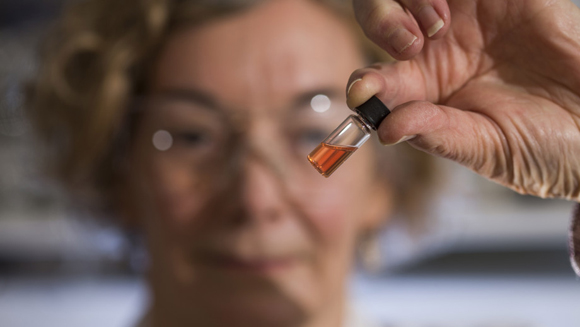
July featured marine crocodile evolution, a dinosaur discovery from Northern China (Lingwulong shenqi) that defied logic, Utah’s latest armoured dinosaur, Spanish plesiosaurs and French gomphotheres. However, we were “tickled pink” to be able to write about the analysis of 1.1 billion-year-old cyanobacteria that led to the extraction of pink coloured pigments from ancient marine shales. The world’s oldest biological colour turns out to be pink: In the Pink! The First Colour of Life.
A Team of International Scientists Have Isolated the Oldest Known Biological Colour
The oldest colours found to date.
Picture credit: Australian National University
August – DIY Taphonomy – (Make Your Own Fossils)
The beautiful summer weather continued into August and much of the UK faced drought conditions. However, fossil finds and prehistoric animal news stories did not dry up. Team members wrote about marine reptile discoveries in Queensland, a new nodosaurid from Mexico, Chinese alvarezsaurids, a challenge to the idea of aquatic spinosaurids, Scottish sauropods and toothy pterosaurs from the Late Triassic. It was an article on how a team of scientists had learned to mimic the fossilisation process, compressing millions of years into just 24-hours that really got our attention. After all, having a better understanding of how fossils form (taphonomy), will help to improve fossil interpretation: Do It Yourself Taphonomy!
September – Dickinsonia Definitely an Animal
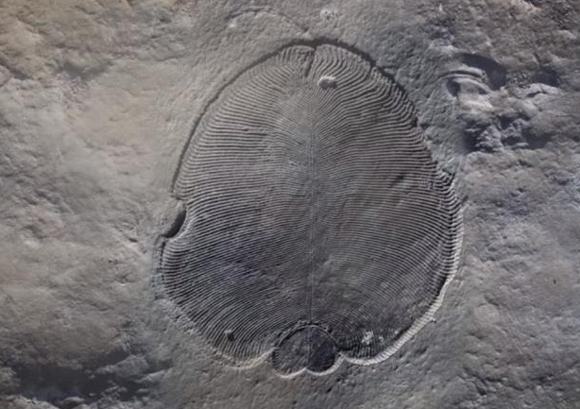
September turned the spotlight on the ediacaran fauna and one of the most puzzling of all the bizarre life forms to have ever existed – Dickinsonia. A research paper finally put to rest (most probably), a long-standing argument about this disc-shaped organism. It was an animal. What sort of animal? This remains an area of some debate, but the 550-million-year-old Dickinsonia is now in the same Kingdom as ourselves (Animalia). Here is our article: Mysterious Dickinsonia Classified as an Animal.
A Fossil of the Enigmatic Dickinsonia – Finally Classified and Placed in the Animalia
A beautifully preserved 558 million-year-old fossil of Dickinsonia, now classified as an animal (Metazoan).
Picture credit: Australian National University
October – A Better Understanding of the Sauropodomorpha (Sarahsaurus et al)
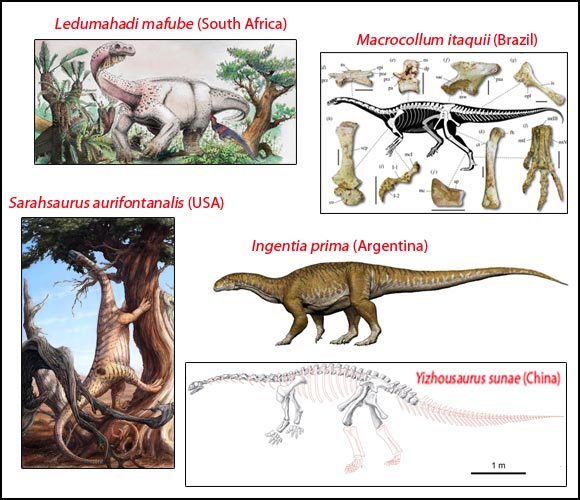
This year, we have seen numerous scientific papers published relating to the evolution and dispersal of the Sauropodomorpha (the sauropods and their ancestral forms). For example, researchers from the University of Texas concluded that ancestors of North American, Early Jurassic sauropodomorphs, such as Sarahsaurus were essentially migrants. In China, a study of Yizhousaurus fossil material yielded new data on the evolution of long-necked dinosaurs. The announcement of the discovery of a monstrous Late Triassic sauropodomorph from Argentina (Ingentia prima), demonstrated that gigantism in the Dinosauria occurred earlier than previously thought.
Amongst all these amazing sauropodiform/Sauropodomorpha articles, we even managed to publish a feature on the oldest, long-necked dinosaur described to date – Macrocollum itaquii. October like much of the year, was dominated by the sauropods: The Ancestors of Sarahsaurus Probably Did Not Originate in North America.
Great Strides in Our Understanding of the Sauropodomorpha in 2018
2018 will be remembered as the year that featured a lot of Sauropodomorpha fossil discoveries and research.
Picture credit: Viktor Radermacher (Witwatersrand University), R T Müller et al, Jorge A. González, Brian Engh, Xiao-Cong Guo and Everything Dinosaur
2018 is likely to be remembered by many vertebrate palaeontologists as the year in which the evolution of the Sauropodomorpha began to make more sense.
November – Fresh Insight into the “Siberian Unicorn”
Our blog posts in November were dominated by news of new models and figures for 2019.
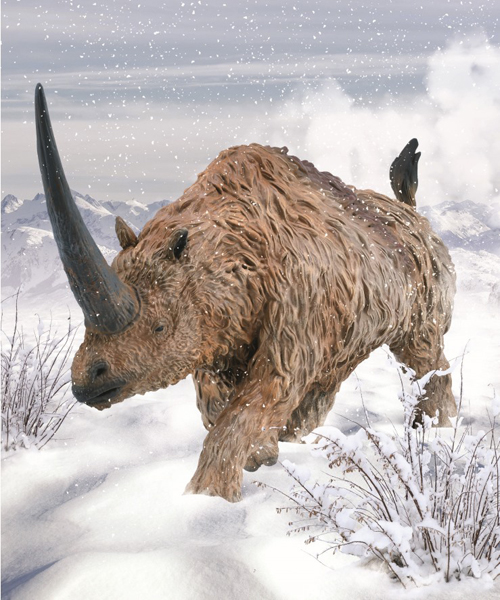
The weblog also covered elephant-sized Triassic dicynodonts, Oregon ornithopods, enantiornithine birds from Utah, ornithischian dental batteries, a new rebbachisaurid (Lavocatisaurus agrioensis), from Argentina and our work in schools. However, it was a feature on the enigmatic Elasmotherium, sometimes referred to as the “Siberian Unicorn” that stood out for us. A scientific paper published in November, revealed that the enormous Elasmotherium probably survived until as recently as 36,000 years ago. It was climate change that ultimately led to the demise of this beast, the paper on the relatively recent extinction of a member of the Rhinoceros family puts into focus the current plight of the remaining members of this once diverse and extensive family of hoofed mammals.
All extant members of the Rhinocerotidae face a very uncertain future.
An Illustration of the “Siberian Unicorn” – Elasmotherium
The CollectA Deluxe Elasmotherium model. A replica of the recently extinct Elasmotherium sibiricum.
Picture credit: Everything Dinosaur
December – Fuzzy Feathered Pterosaurs and the First New Ceratopsian of 2018
As the year drew to a close, the breadth and scope of the topic areas we attempted to cover did not diminish. Over the course of December lost Australian dinosaur toe bones, a new, dog-sized dinosaur from down-under (Weewarrasaurus pobeni), ichthyosaur blubber, new models and replica retirements all featured.
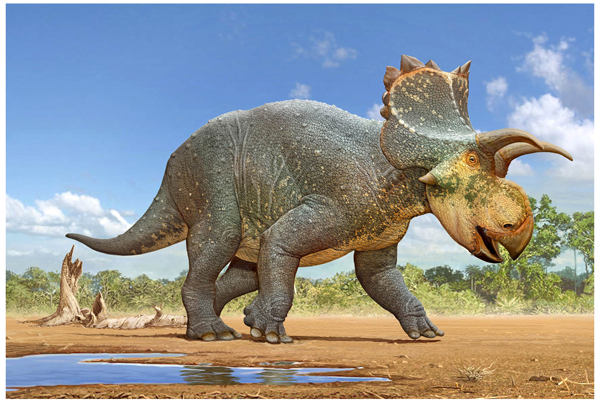
This month, we also wrote articles about a new Russian dinosaur (Volgatitan simbirskiensis) and featured a paper that demonstrated that the first flowering plants probably evolved at least fifty million years earlier than previously thought. Two articles we published stand out for us, firstly, on December 14th we produced an article on the ceratopsian Crittendenceratops krzyzanowskii, a new species of centrosaurine from Arizona. In the last twenty years or so, there have been an astonishing number of new horned dinosaurs described and named. Ironically, Crittendenceratops is the first (and only), new horned dinosaur to be named in 2018: A New Horned Dinosaur Species from Late Cretaceous Arizona.
A Life Reconstruction of Crittendenceratops krzyzanowskii
A life reconstruction of the newly described Ceratopsian Crittendenceratops (2018).
Picture credit: Sergey Krasovskiy
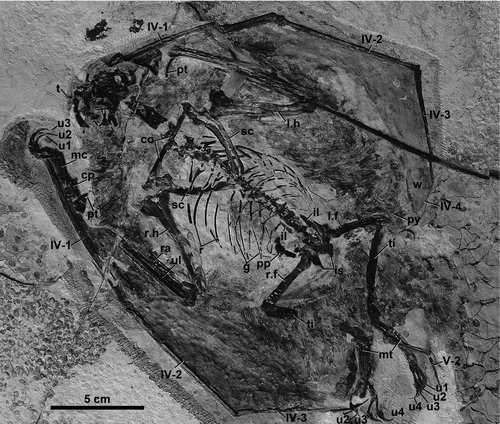
Secondly, our blog post from December 17th, featured the work of an international team of scientists who had identified four kinds of feather-like filaments on the fossils of pterosaurs: Are the Feathers About to Fly in the Pterosauria? If they are correct, then this suggests that either the Pterosauria evolved feathers as a form of convergent evolution separate from the Dinosauria, or, that feathers evolved many millions of years earlier than previously thought – in a common ancestor of the Dinosauria and the Pterosauria clades. Interesting times ahead for those palaeontologists that study flying reptiles.
Four Types of Feather-like Structures Identified in Chinese Pterosaurs
Pterosaur material. A study published in December 2018 suggests that flying reptiles had feathers.
Picture credit: Chinese Academy of Sciences/Journal of Vertebrate Palaeontology
Everything Dinosaur’s Top Blog Posts of 2018 (Part 1)
As we approach the end of 2018, we have time to reflect on all the blog articles that we published over the last twelve months. At Everything Dinosaur, we try to publish a blog article for every day of the year, this means of course that we have thousands of articles on our weblog so, providing a review of what we have published in 2018 is quite a mammoth task. Here is a selection of articles that were added over the course of January through to June 2018.
January – Rainbow Coloured Dinosaur (Caihong juji)
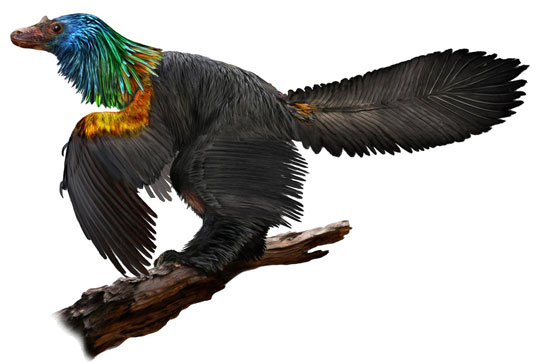
In January, we wrote articles on the discovery of a new, speedy ornithopod from Australia (Diluvicursor pickeringi), explained how drill cores from northern Germany pushed back the evolution of butterflies and moths by some seventy million years and discussed the naming of Mansourasaurus shahinae, the first, nearly complete dinosaur skeleton from Upper Cretaceous rocks in Africa. However, arguably the most “colourful” story covered was that of Caihong juji from Middle Jurassic rocks of China, a small theropod that may have had iridescent feathers.
Colourful Caihong – A Rainbow Coloured Dinosaur
An illustration of the Jurassic feathered dinosaur Caihong juji.
February-March Early Plants and Early Armoured Dinosaurs
As we moved into the spring, this blog site dealt with bipedal lizard tracks from the Cretaceous, how Neanderthals used their brains, new megaraptoran dinosaurs and celebrated publishing our 4,000th article. Perhaps, two of the most memorable articles featured new research indicating that plants may have evolved millions of years earlier than previously thought and the naming of a basal member of the Ankylosauridae from China called Jinyunpelta sinensis.
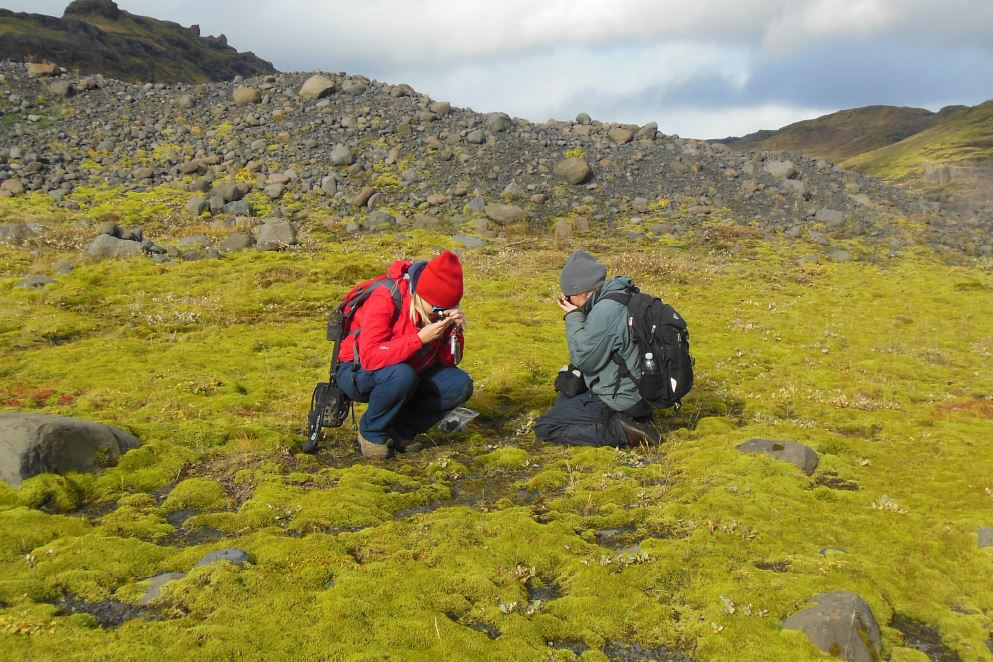
When Did the First Plants Evolve?
Early land plants would have resembled the flora found in this Icelandic lava field.
Picture credit: Paul Kenrick (Natural History Museum, London)
It has certainly been a big year for the Kingdom Plantae, new evidence has emerged that flowering plants (Angiosperms), may have evolved in the Jurassic!
April-May Human Migration and News about Spinosaurs
In April and May, we featured theropod feeding methods, clever Cretaceous lacewings and turtle evolution missing links. Wounded lufengosaurs made an appearance along with Uruguay’s first ever pterosaur, dinosaur dandruff, nesting behaviour and lots more flying reptiles, including an article on the largest pterosaur mandible ever found. Two posts that stand out for us, was one written on April 10th that documented the finding of a single human finger bone that indicates that Homo sapiens migrated out of Africa earlier: Finger Bone Points at Early H. sapiens Migration.
The second post concerned the discovery of a fragment of spinosaurid leg bone that provided an insight into how these theropod dinosaurs may have adapted to an aquatic lifestyle. Furthermore, the piece of bone hinted that spinosaurids in excess of ten metres long inhabited South America.
Adapting to an Aquatic Life – Spinosaurids
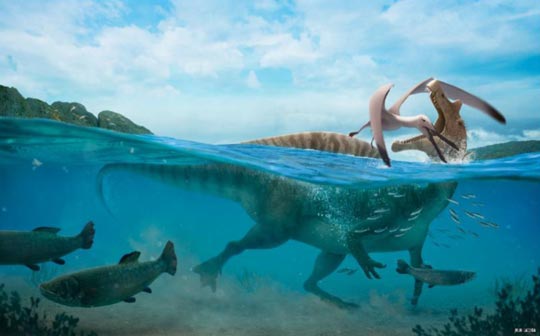
An illustration of a South American spinosaur attacking a pterosaur.
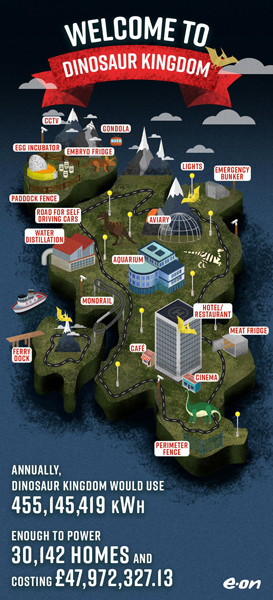
June was the start of a record breaking summer in the UK, in between basking ourselves and applying copious amounts of sun-tan lotion we tackled, rare Japanese dinosaurs, fossil fungi, stem mammals from the Early Cretaceous, tiny frogs preserved in amber and flocks of eumaniraptoran dinosaurs. With the premier of the latest film in the “Jurassic Park” franchise in cinemas, “Jurassic World – Fallen Kingdom”, rather than review the film, we chose to feature the work of some physicists from Imperial College London who calculated just how much energy would be required to run a real “Jurassic Park”.
The Running Costs of a Real “Jurassic Park”
The energy costs involved in running a “Prehistoric Park”.
Thus, ends our overview of the first six months of blog articles that we have written, tomorrow we shall look at the last six months of the year and feature the first colour to evolve along with DIY fossils and conclude a remarkable year for the Sauropodomorpha.
Everything Dinosaur Wishes Everyone a Happy Christmas
The great day has finally arrived! Christmas has come and Everything Dinosaur staff, are roaring and swishing their tails with excitement. We have a busy couple of days ahead of us, what with the start of our annual stock take, but there is still time to wish all our blog readers, customers, Facebook fans, Twitter and Instagram followers along with everyone else for that matter, the compliments of the season.
Everything Dinosaur Wishes Everyone a Happy Christmas
Happy Christmas from Everything Dinosaur. Compliments of the season to you!Picture credit: Everything Dinosaur.
Picture credit: Everything Dinosaur
November and December have been frantic, with lots and lots of orders to pack and despatch. We can’t believe that it has been a whole year since we were wishing everybody a Happy Christmas 2017! Doesn’t time fly when you are having fun.
We have some amazing plans in place for 2019, we are going to be busier than ever. However, for the time being we are going to tuck into a representative of the Theropoda – a turkey.