All about dinosaurs, fossils and prehistoric animals by Everything Dinosaur team members.

Pictures of fossils, fossil hunting trips, fossil sites and photographs relating to fossil hunting and fossil finds.

11 04, 2019

A New Species of Early Human from the Philippines

By |2023-12-03T07:03:18+00:00April 11th, 2019|Categories: Dinosaur and Prehistoric Animal News Stories, Main Page, Photos/Pictures of Fossils|0 Comments

Another Branch on the Hominin Family Tree – Homo luzonensis

Over the last thirty years or so, our understanding of the evolution of the human family tree has moved on considerably.  Ironically, it is not so much the discovery of new fossils that have helped to fill in the significant gaps in our knowledge, although recent discoveries, most notably in South Africa have helped to improve our understanding.

Advances in our understanding of the genome of our own and closely related species such as the Neanderthal can perhaps be cited as having the greatest impact.  However, our family tree is far from understood and a new paper, published in the journal “Nature” this week, only demonstrates how much more we have to learn.  Indeed, the human family tree has another branch, step forward Homo luzonensis from Luzon Island in the Philippines.  This hominin may have been small in stature, but this is big news for anthropologists.

One of the Co-authors of the Scientific Paper (Professor Philip Piper) Holding a Cast of a Toe Bone
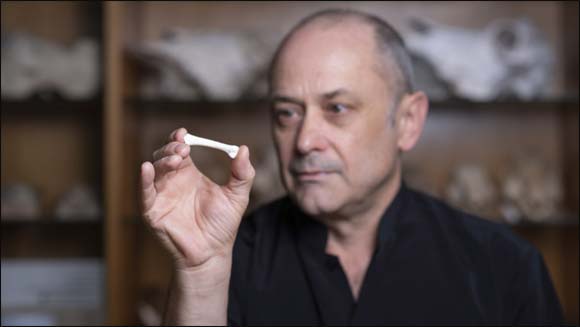
A cast of the toe bone of Homo luzonensis.
Professor Piper (Australian National University), holding a cast of a toe bone assigned to H. luzonensis.

Picture credit: Lannon Harley (Australian National University)

The picture (above) shows Professor Philip Piper (School of Archaeology and Anthropology, Australian National University), holding the cast of a hominin third metatarsal (toe bone).  The fossil was found in 2007 in the Callao Cave system (northern Luzon, Philippines) and dated to 67,000 years ago.  Ascribed to the genus Homo, it provided the earliest direct evidence of a human presence in the Philippines archipelago, but to which species did this toe bone belong?

Homo luzonensis – A New Species of Human

Researchers from the National Museum of Natural History (Paris), Bordeaux University and the University of Poitiers, along with colleagues from the Griffith University and the Australian National University were led by Dr Armand Mijares (University of the Philippines).  During the excavations at the Callao Cave site, a total of thirteen fossil specimens were found relating to humans, teeth, foot, finger and hand bones as well as a partial femur.  The scientists have concluded that the material represents at least three individuals.

The finger and toe bones are curved, suggesting that climbing was still an important activity for this human species.

Curved Toe and Finger Bones Indicate that Tree Climbing was Important for Homo luzonensis
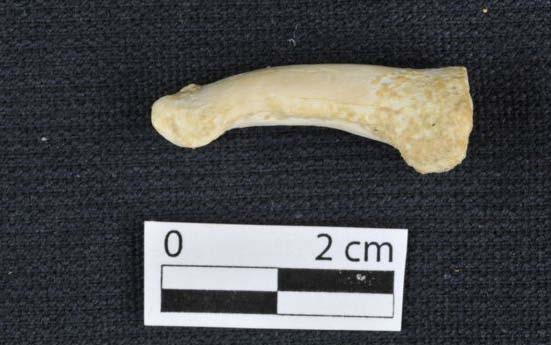
The curved pedal (toe bone) of H. luzonensis.
Homo luzonensis fossil digits and toes indicate that tree climbing was very important to this human species.

Picture credit: Florent Détroit (Natural History Museum, Paris)

Commenting on the importance of these fossils, Professor Piper stated that this discovery represents a major breakthrough in our understanding of human evolution across south-eastern Asia.

A Relatively Small Hominin

Professor Piper explained:

“The size of the teeth generally, though not always, reflect the overall body-size of a mammal.  So, we think Homo luzonensis was probably relatively small.  Exactly how small we don’t know yet.  We would need to find some skeletal elements from which we could measure body-size more precisely.”

The researchers conclude that the hands and feet are reminiscent of the hands and feet of Australopithecines.  The Australopithecines are considered to be the ancestors of the Homo genus, which includes our own species – H. sapiens.

Posing Difficult Questions

The latest branch to the human family tree is posing a number of intriguing questions to palaeoanthropologists.  Did these primitive anatomical features result in this species of hominin due to adapting to an island life, after all Luzon was heavily forested, or are these traits resulting from primitive African hominins migrating to south-east Asia?

Summarising the situation, Professor Piper stated:

“So, the question is whether some of these features evolved as adaptations to island life, or whether they are anatomical traits passed down to Homo luzonensis from their ancestors over the preceding two million years.”

The Callao Cave System Has Been the Focus of a Number of Archaeological Excavations
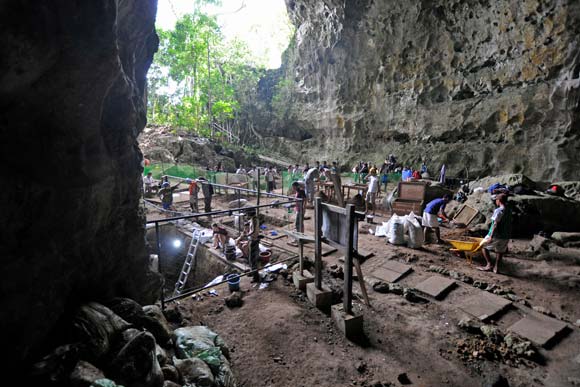
The Callao Cave complex (Luzon Island).
Excavations at the Callao Cave complex.

Picture credit: Callao Cave Archaeology Project

The Origins of Homo luzonensis

Recent excavations near the Callao Cave complex have produced evidence of a butchered rhinoceros and many types of stone stool, some of which have been dated to around 700,000 years ago.

Professor Piper said:

“No hominin fossils were recovered, but this does provide a timeframe for a hominin presence on Luzon.  Whether it was H. luzonensis butchering and eating the rhinoceros remains to be seen.”

Fossil Teeth of Homo luzonensis
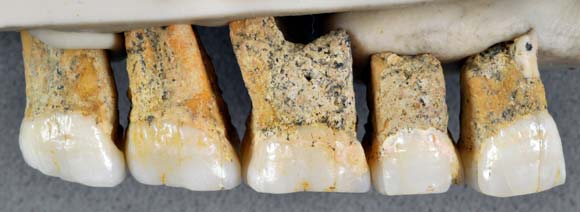
Homo luzonensis teeth.
The teeth are quite small and helped to support the erection of a new species.

Picture credit: Florent Détroit (Natural History Museum, Paris)

The Significance of South-east Asia

The identification of a new species of human in the Philippines makes the whole of south-east Asia very significant.  The Philippines is made up of many thousands of islands, it is possible that other islands may have had hominin populations that could be described as a new species, indeed, within the archipelago there could be evidence for several species of hominin.  For example, stone tools dating to around 200,000 years ago have been found on the Indonesian island of Sulawesi.   This suggests that ancient members of the human family tree may have inhabited many of the larger islands in south-east Asia.

Homo floresiensis and the Denisovans

Scientists are aware that south-eastern Asia was home to another species of human, the enigmatic Denisovans, which are known from just a handful of fossil bones found in the mountains of Siberia, but DNA studies have revealed that the Denisovans interbred with early modern humans in this region.  No fossil remains relating to the Denisovans have been found in south-eastern Asia thus far.

In addition, the Indonesian island of Flores was home to a hominin species (Homo floresiensis).  These diminutive people, nicknamed Hobbits because the scientific paper was published at the height of the interest in the “Lord of the Rings” film trilogy, are thought to have lived as recently as 50,000 years ago.

An article on Homo floresiensisDid Modern Humans Drive the Hobbit (H. floresiensis) to extinction?

Intriguingly, anthropologists have argued that H. floresiensis exhibits physical features that are reminiscent of those found in Australopithecines.   However, other researchers have argued that the Hobbits were descended from Homo erectus but that some of their anatomy reverted to a more primitive state, perhaps as a result of living on an island with limited resources.

For an article that discusses the significance of south-east Asia in human evolution: Did Humans Evolve Independently in Asia?

Visit the Everything Dinosaur website: Everything Dinosaur.
7 04, 2019

The First Alaskan Lambeosaurine Dinosaur Identified

By |2023-12-02T16:41:09+00:00April 7th, 2019|Categories: Dinosaur and Prehistoric Animal News Stories, Dinosaur Fans, Main Page, Photos/Pictures of Fossils|0 Comments

Lambeosaurine Reported from the Liscomb Bonebed (Alaska)

The first fossil evidence of a lambeosaurine duck-billed dinosaur has been reported from the Liscomb Bonebed (Prince Creek Formation) of Alaska.  Part of the top of a skull, a bone called the supraoccipital (it forms part of the braincase), has been found during field work on the famous Alaskan fossil site on the banks of the Colville River.  This discovery demonstrates that both lambeosaurine and hadrosaurine dinosaurs lived in the high Arctic during the Late Cretaceous.  It also suggests that the crested lambeosaurines may have preferred inland environments, whilst their cousins, the hadrosaurines dominated the ecosystem in coastal and low-lying, near shore environments.

Evidence to Indicate that Lambeosaurines Lived in the Arctic During the Late Cretaceous

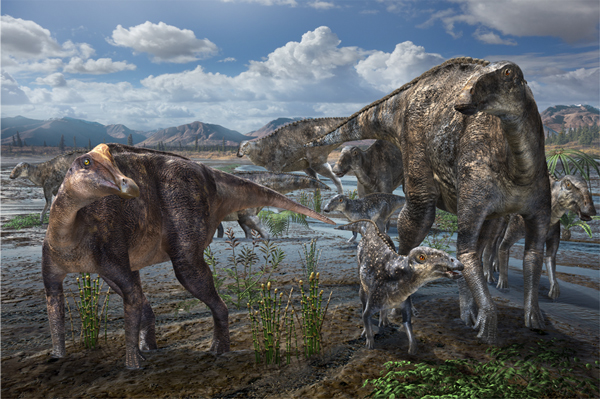
Co-existing lambeosaurines and hadrosaurines (Liscomb Bonebed).
Hadrosaurines and lambeosaurines co-existed in low-lying, coastal areas of the Late Cretaceous of Alaska.

Picture credit: Masato Hattori

Lambeosaurine Skull Bone

Writing in the on-line, academic journal “Scientific Reports”, researchers from Hokkaido University (Japan) and the Perot Museum of Nature and Science (Dallas, Texas), confirm the discovery of a skull bone associated with a lambeosaurine (crested duck-billed dinosaur) in the hadrosaurine dominated Liscomb Bonebed, a site that has to date, yielded some 6,000 dinosaur bones.  The fossils exposed on the banks of the Colville River in a region of Alaska known as the North Slope, represent one of the most important Maastrichtian-aged dinosaur fossil sites in the world.  It has provided evidence of a high latitude Late Cretaceous dinosaur dominated ecosystem.

The bonebed is described as a monodominant, multitaxic unit as although 98.5% of all the fossils found represent just one species – the hadrosaurine Edmontosaurus* other types of dinosaur including three theropods have been identified from fossils found at this site too.  The supraoccipital confirms the presence of lambeosaurines at this location as well, although, based on the ratio of hadrosaurine to lambeosaurine fossils found, crested duck-billed dinosaurs probably only made up a tiny portion of the entire plant-eating dinosaur community.

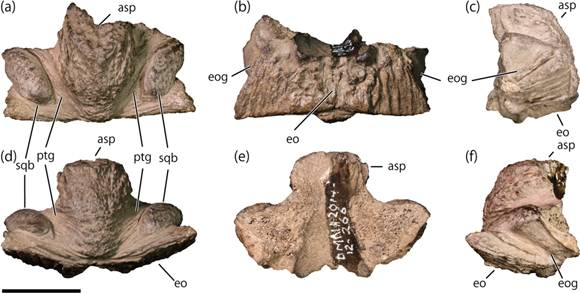
Views of the Single Skull Bone (Supraoccipital) Identified as Lambeosaurine

Lambeosaurine supraoccipital (DMNH 2014-12-266) from the Liscomb Bonebed.
Lambeosaurine supraoccipital (DMNH 2014-12-266) from the Liscomb Bonebed (a) dorsal view, (b) ventral view, (c) left lateral view, (d) posterior view, (e) anterior view and (f) right lateral view.  Note scale bar = 2 cm.  The dorsal (a) and posterior views (d) show the two, prominent bumps (squamosal bosses) that helps to identify this bone as lambeosaurine material.  Abbreviation sqb = squamosal bosses.

Picture credit: Scientific Reports

The newly described supraoccipital differs from those of hadrosaurines as it has large, prominent bumps towards the back of the bone (squamosal bosses).  It is also a different shape when compared to supraoccipital bones associated with members of the Hadrosaurinae such as Edmontosaurus.  For example, it is proportionally shorter in length (when measured from the front to the back of the bone – anterior to posterior).

Lambeosaurine and Hadrosaurine

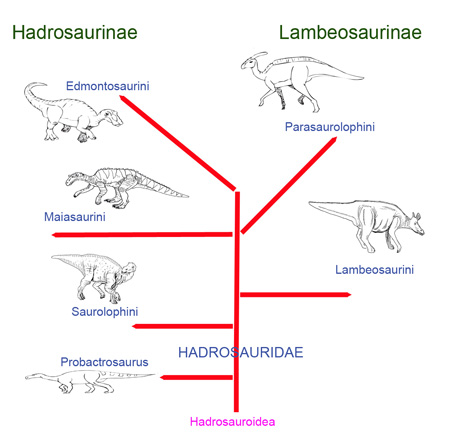
The dinosaur family known as the Hadrosauridae is split into two main, but closely related lineages, the Lambeosaurinae and the Hadrosaurinae.  Traditionally, these two groups have been distinguished by their skulls, lambeosaurines having hollow crested skull crests, whilst the hadrosaurines lack bony crests.  This assessment might prove too simplistic, but for the time being, the general classification of Hadrosaurs into these two sister lineages remains the consensus.

Classifying the Hadrosauridae (Duck-billed Dinosaurs)

The evolution of the duck-billed dinosaurs.
Tracing the Evolution of Duck-billed Dinosaurs.  Two distinct but sister lineages are recognised the non-crested Hadrosaurinae and the hollow crested Lambeosaurinae. Picture credit: Everything Dinosaur.

Picture credit: Everything Dinosaur

Co-author of the scientific paper, Dr Anthony Fiorillo (Perot Museum of Nature and Science) stated:

“This first definitive evidence of a crested hadrosaur in the Cretaceous Arctic tells us that we still have much to learn about the biodiversity and the biologically productive environments of the ancient north and that the story these fossils tell us is continually evolving.”

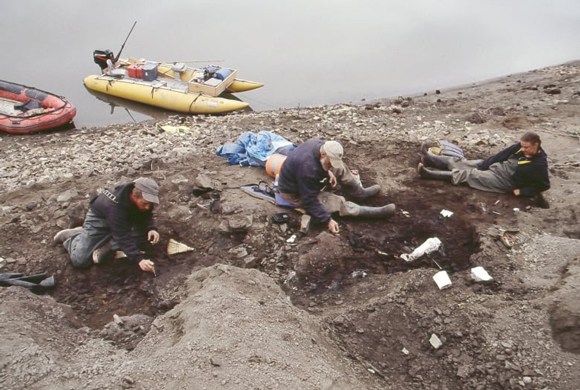
Field Team Members Excavating Part of the Liscomb Bonebed on the Banks of the Colville River (Alaska)

Excavating the Liscomb Bonebed.
Field team members excavating the Liscomb Bonebed.

Picture credit: Dr Anthony Fiorillo (Perot Museum of Nature and Science)

A Link Between the Lambeosaurines of North America and Asia

The single fossil bone might not be sufficient to erect a new genus of lambeosaurine dinosaur, but the discovery is extremely significant as it links the dinosaur biota of the most northerly portions of North America to dinosaur faunas from the Late Cretaceous of northern Asia.  For example, Nipponosaurus (N. sachalinensis) from the North Pacific island of Sakhalin, is also a lambeosaurine.

Commenting on the connection between Arctic dinosaur faunas and those of the North Pacific, co-author Ryuji Takasaki (Hokkaido University) said:

“This new discovery illustrates the geographic link between lambeosaurines of North America and the Far East.  Hopefully, further work in Alaska will reveal how closely the dinosaurs of Asia and North America are connected.”

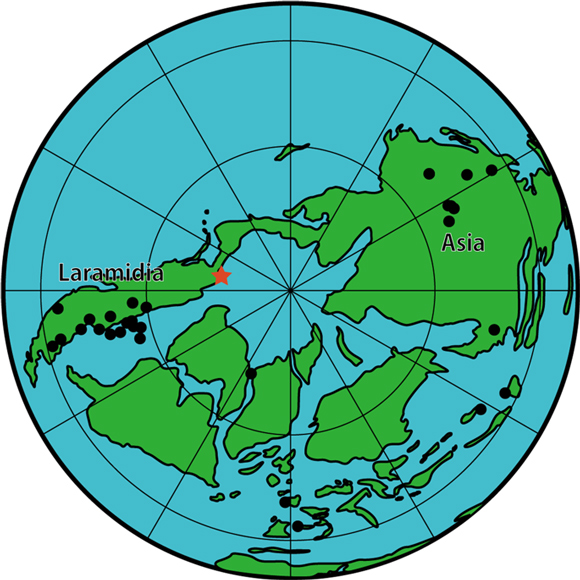
Known Geographical Distribution of Lambeosaurine Dinosaurs in the Late Cretaceous

The known distribution of lambeosaurines during the Late Cretaceous
Palaeogeographical records of lambeosaurines during the Late Cretaceous.  The red star represents the Liscomb lambeosaurine fossil find.

Picture credit: Scientific Reports

Lambeosaurines and Hadrosaurines Had Different Habitat Preferences

The Liscomb Bonebed might be dominated by fossil material assigned to the Hadrosaurinae, but the discovery of a single fossil bone indicates the presence of lambeosaurines.  This site is representative of a coastal, near-shore environment and it differs from the lambeosaurine dominant structures of localities in Russia and China interpreted as inland environments.  The researchers postulate that crested duck-billed dinosaurs (lambeosaurines), preferred inland habitats, whilst the non-crested duck-bills (hadrosaurines), favoured coastal habitats.   Different habitat preferences might have been a strategy to avoid excessive competition between these two groups of closely related dinosaurs.

Lambeosaurine and Hadrosaurine Habitats (Inferred from the Liscomb Bonebed)

Differential habitat preference between hadrosaurines and lambeosaurines.
Hadrosaurines (grey) may have preferred lowland coastal habitats whilst the lambeosaurines (black) may have dominated faunal ecosystems further inland.

Picture credit: Scientific Reports

Note: Edmontosaurus*

Things are never that straight forward in vertebrate palaeontology.  In 2015, a new taxon of hadrosaurine was erected based on the Liscomb duck-billed dinosaur bones.  The new species was named Ugrunaaluk kuukpikensis and although it was believed to be closely related to Edmontosaurus, it was established as a separate taxon.  However, in 2017 subsequent analysis challenged this conclusion.

Ugrunaaluk had been erected based on the study of fossil bones from immature individuals of various growth stages.  The hadrosaurine bones from the Liscomb Bonebed overwhelmingly represent the remains of juveniles.  The establishment of a unique duck-billed dinosaur taxon for northern Alaska remains controversial.  Many palaeontologists now consider Ugrunaaluk to be nomen dubium (not a valid genus).

To read Everything Dinosaur’s 2015 article about Ugrunaaluk kuukpikensisAlaska’s Latest Dinosaur Ugrunaaluk kuukpikensis.

The scientific paper: “The First Definite Lambeosaurine Bone From the Liscomb Bonebed of the Upper Cretaceous Prince Creek Formation, Alaska, United States” by Ryuji Takasaki, Anthony R. Fiorillo, Yoshitsugu Kobayashi, Ronald S. Tykoski and Paul J. McCarthy published in Scientific Reports.

Visit the Everything Dinosaur website: Everything Dinosaur.
5 04, 2019

Four-Legged Whale Ancestor from the Eocene of Peru

By |2023-12-01T07:59:25+00:00April 5th, 2019|Categories: Dinosaur and Prehistoric Animal News Stories, Main Page, Palaeontological articles, Photos/Pictures of Fossils|0 Comments

Peregocetus pacificus – The Travelling Whale that Reached the Pacific

A team of international researchers including scientists from Peru, France, Belgium, Italy and Holland have announced the discovery of an ancient four-legged whale from Peru.  The fossil discovery suggests that early whales crossed the South Atlantic more than 42.6 million years ago (Lutetian faunal stage of the Eocene).  The fossil material comes from the Playa Media Luna, in Peru’s desert-like Pisco Basin.  It is the oldest fossil of a whale found to date in the New World.

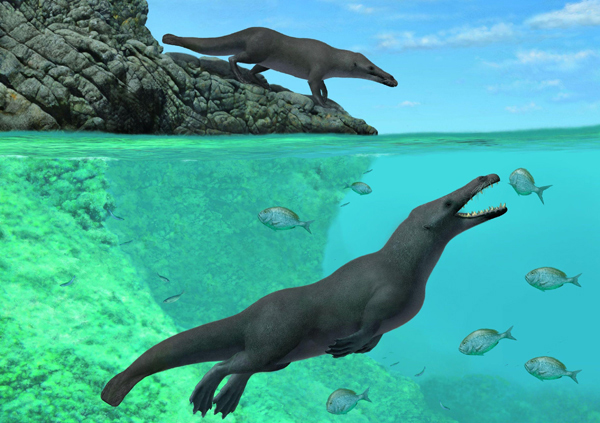
A Life Reconstruction of the Newly Described Early Cetacean – Peregocetus pacificus

Peregocetus pacificus life reconstruction.
Life reconstruction Peregocetus pacificus.  Note: the tail fluke is speculative.

Picture credit: A Gennari/Royal Belgian Institute of Natural Sciences

Peregocetus pacificus

In 2011, an international team of palaeontologists excavated a well-preserved skeleton of a four-legged whale ancestor.  Writing in the academic journal, “Current Biology”, the scientists conclude that P. pacificus illustrates a key phase in the evolution and dispersal of early whales.  It represents the first record of an amphibious whale for the whole Pacific Ocean and its discovery supports the hypothesis for an early dispersal of primitive cetaceans to the New World across the South Atlantic.

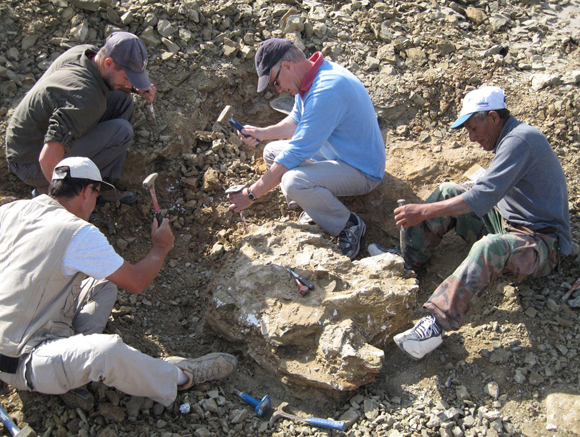
Field Team Members Working on a Block of Fossil Bones

Peregocetus pacificus fossil excavation.
Field team members working on a block of bones (Peregocetus pacificus).

Picture credit: Christian de Muizon (Natural History Museum – Paris)

A Quadruped with a Powerful Tail to Assist with Swimming

The first whales are believed to have evolved around fifty million years ago, from terrestrial, hoofed, quadrupeds such as Indohyus from Kashmir.  To read an article about Indohyus: Deer-like Fossil Confuses Whale Evolution.  The discovery of  Peregocetus pacificus will help to fill in some of the gaps in the fossil record of early members of the Cetacea.  Dr Olivier Lambert of the Royal Belgian Institute of Natural Sciences and a co-author of the scientific paper stated:

“This is the most complete specimen ever found for a four-legged whale outside of India and Pakistan.”

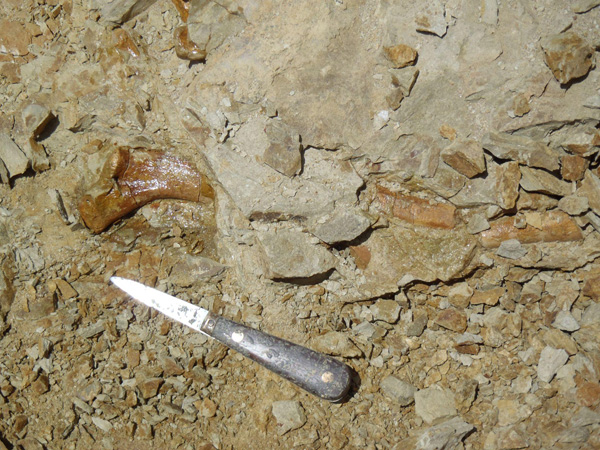
A View of a Fossilised Rib of Peregocetus pacificus

Peregocetus pacificus rib bone (in situ).
Peregocetus pacificus rib bone partially excavated at the dig site.

Picture credit: G. Bianucci (University of Pisa)

The Oldest Four-legged Whale of the New World

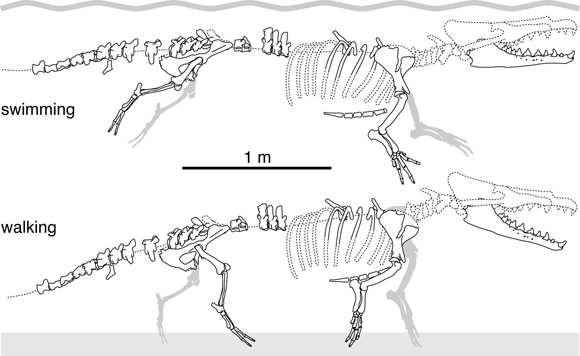
Peregocetus combines terrestrial locomotion abilities and use of the tail for swimming, although the presence of a partial tail fluke as seen in the above illustration is speculative.  Measuring between 3.4 to 4 metres in length, it probably resembled a large otter and like extant otters, it most likely hunted in the water and preyed on fish.  The scientific name translates as “the travelling whale that reached the Pacific Ocean”, a reflection of this being the oldest New World whale fossil discovered to date.  Although, not a complete skeleton, the fossil material represents the most complete skeleton of a four-legged whale outside India and Pakistan.

Olivier Lambert added:

“The animal could carry its own weight and crawl about on land.  We can see this, among other things, because the pelvis is firmly attached to the sacrum and the front and hind legs are very similar to those of Peregocetus’s ancestors from India and Pakistan.  You can even see marks of small hooves on the toes and fingers.”

Line Drawings Illustrating the Known Skeletal Material of Peregocetus in Swimming and Terrestrial Positions

Peregocetus pacificus line drawings (swimming and on land).
Preserved parts of the skeleton showing proposed terrestrial and swimming positions.

Picture credit: Olivier Lambert (Royal Belgian Institute of Natural Sciences)

The picture (above), shows schematic drawings of the skeleton of Peregocetus in a swimming (top) and a walking stance (bottom), showing the main preserved bones.  Stippled lines indicate reconstructed parts.

Like a Giant Otter

The researchers are confident that Peregocetus was an accomplished swimmer, perfectly at home in the water.  The last few tail bones (caudal vertebrae), have not been found, so it is not possible to state whether this early whale had a tail fluke, but Lambert observed:

“The anatomy of the first vertebrae of the tail resembles that of amphibious mammals such as otters and beavers.  So, we think the animal propelled itself through the water by wave-like movements of the posterior part of the body, including the tail, and by moving its large feet and long toes that were most likely webbed.”

Cranial and Postcranial Material (Peregocetus pacificus)

The lower jaw and postcranial fossil bones of Peregocetus pacificus.
Mandible and postcranial bones of Peregocetus pacificus.

Picture credit: G. Bianucci (University of Pisa)

A Very Long Journey

The scientists suggest that the ancestors of Peregocetus crossed the Atlantic Ocean between North Africa and the northernmost portion of South America.  During the Eocene, the Atlantic Ocean was only half as wide as it is today and the prevailing surface currents from Africa to South America would have helped the ancestors of Peregocetus to reach the other side.  Once on the eastern coast of South America, the population gradually moved further northwards and populations were eventually established on the western (Peruvian) coast of South America.  Later, relatives of Peregocetus would spread further north, to the east coast of North America.

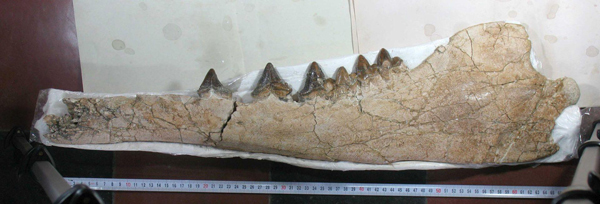
The Prepared Lower Jaw of P. pacificus

Peregocetus pacificus lower jaw.
The left mandible (lower jaw) of Peregocetus pacificus.

Picture credit: Olivier Lambert (Royal Belgian Institute of Natural Sciences)

The Pisco Basin in Peru is proving to be hot-spot for whale fossils.  In 2017, the international team with Olivier Lambert found, 200 metres away from the spot where Peregocetus pacificus was excavated, a 36.4 million-year-old descendant of the basilosaurids, identified as the oldest known member of the mysticete group – Mystacodon selenensis.  Basilosaurids were fully aquatic and mainly used their tail fluke to propel themselves.  Their front limbs had evolved into paddles and the rear legs were much reduced and vestigial.

There are two main types of whale alive today.  Firstly, there is the Odontoceti (toothed whales), such as sperm whales, dolphins and porpoises.   Secondly, there is the Mysticeti, the baleen whales such as the blue, humpback and gray whale.

Everything Dinosaur acknowledges the assistance of a press release from the Royal Belgian Institute of Natural Sciences in the compilation of this article.

Visit the Everything Dinosaur website: Everything Dinosaur.
2 04, 2019

A New Species of Mastodon Hinding in Plain Sight

By |2023-11-30T21:56:31+00:00April 2nd, 2019|Categories: Dinosaur and Prehistoric Animal News Stories, Main Page, Photos/Pictures of Fossils|0 Comments

Mammut pacificus – A Newly Recognised Species of Mastodon

A new species of the iconic North American Ice Age prehistoric elephant (Mastodon) has been recognised.  Writing in the academic journal PeerJ, scientists including researchers from the Western Science Centre, California State University, the U.S. Geological Survey and the Department of Earth and Environmental Sciences (Vanderbilt University), in collaboration with other institutions have named Mammut pacificus based on Californian fossil material and specimens from southern Idaho.

This is the first new North American Mastodon species to have been reported in fifty years, ironically, this new Ice Age giant was hiding in plain sight for several decades.

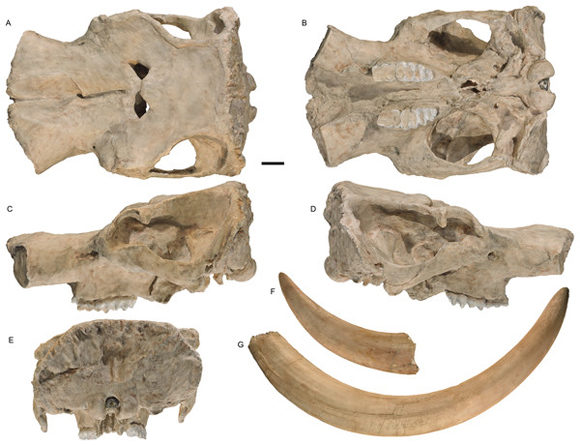
The Holotype Skull and Tusks (M. pacificus)

M. pacificus cranial fossil material and tusks (holotype).
Mammut pacificus cranial fossil material.  Cranium in: (A) dorsal, (B) ventral, (C) left lateral, (D) right lateral, (E) posterior, (F) distal end of left tusk (I1), lateral, and (G) right tusk (I1), lateral view.  Scale equals 10 cm.

Picture credit: PeerJ/Western Science Centre

Diamond Valley Lake Fossil Finds

The Californian fossil material was excavated from the Diamond Valley Lake site in the 1990s.  A huge reservoir was being constructed and during the building work in Riverside County, more than 700 Mastodon fossil bones, representing over 100 individuals were discovered.  In total, more than 100,000 skeletal fossils were unearthed during the reservoir project, providing palaeontologists with an insight into the Pleistocene fauna of the western United States.  This material, in conjunction with further Mastodon fossil finds from the construction of the Ziegler Reservoir in Snowmass Village (Colorado), have enabled scientists to build up a much bigger dataset of western North American Mastodon fossils.

For an article that outlines the fossil excavation work carried out during the Ziegler Reservoir project: North American Ice Age Fossil Finds.

Concluding the Snowmass dig: Fossil Excavations at Snowmass Village Come to an End.

With more Mastodon fossils to study, palaeontologists have been able to identify subtle differences in bone and tooth morphology that cannot be put down to individual variation within a species.

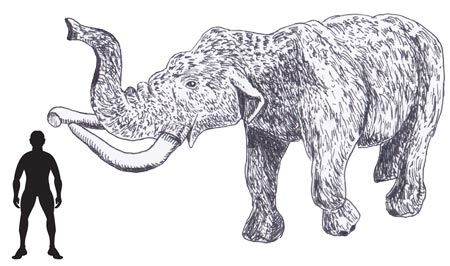
An Illustration of a Typical Mastodon (Scale Drawing of M. americanum)

Scale Drawing American Mastodon.
American Mastodon scale drawing – (Mammut americanum). Picture credit: Everything Dinosaur.

Picture credit: Everything Dinosaur

Safari Ltd have a number of prehistoric elephants in their model range.

To view this range: Wild Safari Prehistoric World.

Different from Mammut americanum

In the scientific paper, the scientists note a number of physical differences between their proposed new taxon and Mammut americanumM. pacificus is described as having more vertebrae within the pelvic region (six sacral vertebrae), a lack of any lower tusk in the jaw and a different shaped femur (thigh bone).  The mid-shaft diameter of the femur is proportionately greater in the Californian specimens.  In addition, the molars are smaller and narrower, even when ontogenetic characters are accounted for.

The Holotype Pelvis (M. pacificus)

Holotype pelvis of M. pacificus (dorsal view).
WSC 18743, M. pacificus holotype pelvis.  Pelvis in dorsal view.  Orthographic view of photogrammetric model.  Scale = 10 cm.

Picture credit: PeerJ/Western Science Centre with additional annotation by Everything Dinosaur

Mammut pacificus

The researchers claim that the cumulative evidence strongly points to the discovery of a new species.  Furthermore, all known Pleistocene Mammut remains from California are consistent with their diagnosis of M. pacificus.  This suggests that M. americanum was not present in California.  The Californian population may have been isolated from the rest of the Mastodon population for thousands of years, giving rise to a new species.

The scientific paper: “Mammut pacificus sp. nov.  A Newly Recognised Species of Mastodon from the Pleistocene of Western North America” by Alton C. Dooley Jr​, Eric Scott, Jeremy Green, Kathleen B. Springer, Brett S. Dooley and Gregory James Smith published in PeerJ.

Visit the award-winning Everything Dinosaur website: Everything Dinosaur.
1 04, 2019

Amazing Fossils Depict End Cretaceous Mass Extinction Event

By |2023-11-30T18:44:09+00:00April 1st, 2019|Categories: Dinosaur and Prehistoric Animal News Stories, Dinosaur Fans, Geology, Main Page, Palaeontological articles, Photos/Pictures of Fossils|0 Comments

Fossil Discovery Offers Detailed View Minutes After Chicxulub Impact

A paper published in the PNAS (Proceedings of the National Academy of Sciences – USA), provides a detailed snapshot of a terrible natural disaster linked to the Chicxulub bolide impact event.  A site (Tanis), in North Dakota’s Upper Cretaceous Hell Creek Formation, records the devastation caused by a massive surge of water which occurred as seismic shockwaves reverberated around the Earth as a result of the huge extra-terrestrial impact in what is now the Gulf of Mexico.

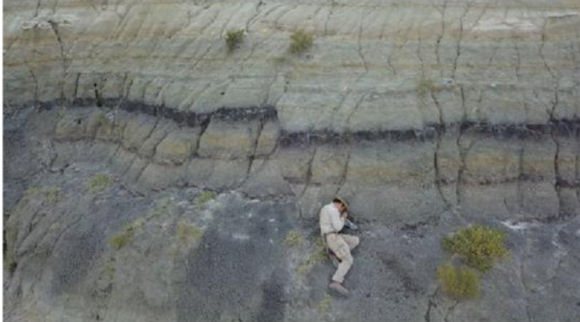
Examining Rock Layers Looking for Evidence

Exploring sediments, looking for fossils.
Identifying the K-T boundary at the margins of  Upper Cretaceous sediments.

Picture credit: Robert DePalma (University of Kansas)

Tanis Fossil Site – A “Motherlode” of Fossils

A team of palaeontologists, including researchers from the University of Kansas, the Black Hills Institute and Manchester University, in collaboration with a number of other academic institutions report on what has been described as a “motherlode of exquisitely-preserved plant, animal and fish fossils”, the remains of a river ecosystem which flowed into the Western Interior Seaway, which was wrecked within minutes of the extra-terrestrial impact event.

The site is described as a “rapidly emplaced high-energy onshore surge deposit” along the KT boundary that contains associated ejecta and iridium impactite associated with the End Cretaceous extinction event that resulted in the loss of many groups of terrestrial vertebrates including the pterosaurs and the dinosaurs as well as the extinction of a wide variety of marine organisms.

Lead author of the scientific paper, Robert DePalma (University of Kansas), described the Tanis fossil site as:

“A tangle mass of freshwater fish, terrestrial vertebrates, trees, branches, logs, marine ammonites and other marine creatures was all packed into this layer by the inland-directed surge”.

One of the Plaster Jackets from the Site Reveals the Devastation

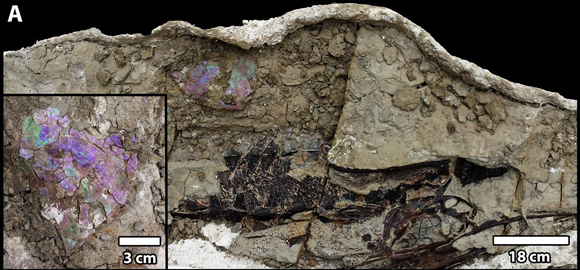
The Tanis Konservat-Lagerstätte
The Tanis Konservat-Lagerstätte.  Plaster field jacket  (A) with partially prepared (freshwater) acipenseriform fish next to a fragment from an ammonite shell (inset).

Picture credit: PNAS

The doctoral student went onto add:

“Timing of the incoming ejecta spherules matched the calculated arrival times of seismic waves from the impact, suggesting that the impact could very well have triggered the surge.”

Devastation Occurred Within Minutes of the Impact

The researchers conclude that the fossil site does not record a tsunami.  Tanis is more than 2,000 miles from the bolide impact site in the Gulf of Mexico, a tsunami would have taken at least seventeen hours to reach North Dakota, but seismic waves and a subsequent water surge would have occurred within minutes of the collision.

DePalma and his colleagues describe the rushing wave that shattered the Tanis site as a “seiche.”

What is a Seiche?

A seiche (pronounced “saysh”), relates to a standing wave in an enclosed or part-enclosed body of water.  This term was first used widely by the Swiss scientist François-Alphonse Forel (1841-1912), who pioneered the study of inland water ecosystems.  It is believed the etymology derives from the Swiss/French dialect meaning “swaying back and forth”, a reference to observations of water level changes in alpine lakes.  This phenomenon can have many causes, but seismic activity is known to lead to water surges.

DePalma explained:

“As the 2011 Tohoku earthquake in Japan showed us, seismic shaking can cause surges far from the epicentre.  In the Tohoku example, surges were triggered nearly 5,000 miles away in Norway just 30 minutes after impact.  So, the KT impact could have caused similar surges in the right-sized bodies of water worldwide, giving the first rapid “bloody nose” to those areas before any other form of aftermath could have reached them.”

According to Kansas University researchers, even before the surge arrived, acipenseriform fish (sturgeon) found at the site already had inhaled tiny spherules ejected from the Chicxulub impact.

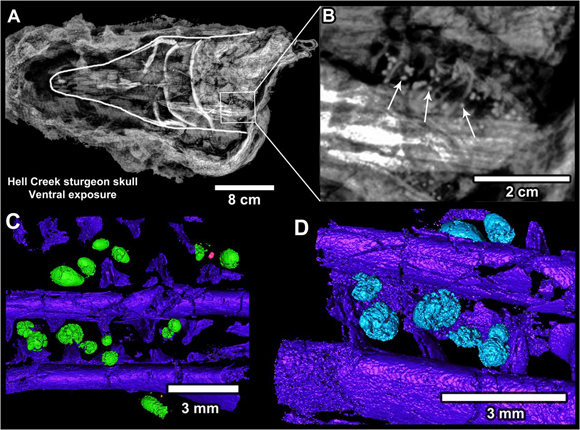
Fish Fossils Show Evidence of Microtektites Embedded in Their Gills

Microtektites from the Chicxulub impact recorded in fossil fish.
Fish Fossils from the Tanis fossil site show evidence of microtektites embedded in their gills.

Picture credit: PNAS

Microtektites Embedded in Gills

The picture above shows acipenseriform fish with ejecta clustered in the gill region.  Image (A) an X-ray of a fossil sturgeon head (outlined, pointing left; FAU.DGS.ND.161.115.T).  Magnified image (B) of the X-ray in (A) showing numerous ejecta spherules clustered within the gill region (arrows).  Images C and D are micro-CT images of another fish specimen (paddlefish), with microtektites embedded between the gill rakers in the same fashion.

Co-author David Burnham (Kansas University) stated:

“The fish were buried quickly, but not so quickly they didn’t have time to breathe the ejecta that was raining down to the river.  These fish weren’t bottom feeders, they breathed these in while swimming in the water column.  We’re finding little pieces of ejecta in the gill rakers of these fish, the bony supports for the gills.  We don’t know if some were killed by breathing this ejecta, too.”

One of the co-authors of the paper is Californian geologist Walter Alvarez, who, along with is his father Luis, postulated the theory of an impact event playing a role in the End Cretaceous extinction (1980).  They identified a layer of sediment in the strata marking the Cretaceous/Palaeogene boundary (KPg), that was enriched with the rare Earth element iridium and they concluded that an extra-terrestrial object must have collided with the Earth.

Described as a Lagerstätte of the KT Event

The number and quality of preservation of the fossils at Tanis are such that Burnham dubs it the “lagerstätte” of the KT event.  A lagerstätte, comes from the German “storage place”, it describes a sedimentary deposit that contains a large number of very well preserved fossils.  For example, the Tanis site preserves numerous acipenseriform fish, which are cartilaginous and not bony and therefore less likely to become fossils.

David Burnham added:

“The sedimentation happened so quickly everything is preserved in three dimensions, they’re not crushed.  It’s like an avalanche that collapses almost like a liquid, then sets like concrete.  They were killed pretty suddenly because of the violence of that water.  We have one fish that hit a tree and was broken in half.”

Indeed, the Tanis location contains many hundreds of articulated ancient fossil fish killed by the Chicxulub impact’s consequences and is remarkable for the biodiversity it reveals alone.

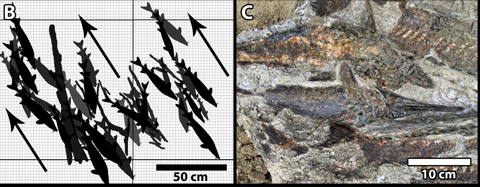
Mapping the Direction of the Surge and Examining the Fish Fossils

Carcasses orientated by flow and mass mortality deposit.
A site map (left) showing the flow of water indicated by the orientation of the material and a mass deposit of fish from the site.

Picture credit: PNAS

Several New Species

The scientists conclude that there are likely to be several new species of fish named as a result of this discovery.  In addition, some specimens are the best known examples of their genus found to date.  It was quickly realised that the surrounding matrix was deposited by a sudden, violent rush of water, a surge that was directed inland away from the Western Interior Seaway.  Impact debris including shocked minerals and ejecta spherules were found in the sediment and a compact layer of KT boundary clay overlies the deposit.

Tanis provides a post impact “snapshot,” including ejecta accretion and faunal mass death, advancing our understanding of the immediate effects of the Chicxulub impact.

According to Burnham, this site will advance our understanding of the Chicxulub impact significantly, describing Tanis as “smoking-gun evidence” of the aftermath.

Everything Dinosaur acknowledges the assistance of a press release from the University of Kansas in the compilation of this article.

The scientific paper: “A Seismically Induced Onshore Surge Deposit at the KPg Boundary, North Dakota” by Robert A. DePalma, Jan Smit, David A. Burnham, Klaudia Kuiper, Phillip L. Manning, Anton Oleinik, Peter Larson, Florentin J. Maurrasse, Johan Vellekoop, Mark A. Richards, Loren Gurche, and Walter Alvarez published in the PNAS.

Visit the award-winning Everything Dinosaur website: Everything Dinosaur.
30 03, 2019

New Research into Juvenile Tyrannosaurus rex Feeding Traces

By |2023-11-30T14:32:45+00:00March 30th, 2019|Categories: Dinosaur and Prehistoric Animal News Stories, Dinosaur Fans, Main Page, Photos/Pictures of Fossils|0 Comments

Juvenile Tyrannosaurs Fed on Large Hadrosaurs Too

Scientists have identified tooth marks preserved in the tail bone of a duck-billed dinosaur as having been made by a sub-adult Tyrannosaurus rex.  The researchers conclude that late-stage juvenile and subadult tyrannosaurs were already feeding on the same types of large-bodied prey as adult animals, despite lacking the bone crushing jaws typical of a fully-grown, mature T. rex.

Writing in the academic journal PeerJ, the researchers Joseph E. Peterson and Karsen N. Daus (University of Wisconsin), suggest that this study helps scientists to better understand the diets of tyrannosaurs and the ecological role they played as predators in Late Cretaceous ecosystems.  Biostratigraphically, the victim’s fossils relate to sediments were Edmontosaurus fossils are found, so the prey has been tentatively identified as an Edmontosaurus.

Evidence of a Subadult T. rex Feeding on a Hadrosaur (Edmontosaurus)

Punctured caudal vertebra suggests feeding by a sub-adult T. rex
The punctured tail bone indicating feeding by a sub-adult T. rex.

Picture credit: PeerJ

The picture above shows views of the punctured tail bone (BMR P2007.4.1.) in (A) anterior view, (B) posterior view and (C) ventral view.  Images (D and E) are close-up views of the punctures identified on the bottom portion of the caudal vertebra.

Theropod Feeding Traces

Palaeontologists have identified numerous examples of theropod dinosaur feeding traces and tooth marks.  Such evidence provides information on predator/prey interactions, feeding behaviours and direct evidence of cannibalism in the Dinosauria.  However, in order to determine the meat-eating dinosaur that fed, causing the marks, it is important that the biostratigraphy is known and the approximate likely growth stage of the animal feeding.  The researchers state that currently, most recorded theropod feeding traces and bite marks are attributed to fully-grown, adult animals, but in this study, the bite marks were compared to various jaws of different aged T. rex specimens and it was concluded that the best fit for the feeding traces came from the maxilla of a late-stage juvenile T. rex estimated to be around 11-12 years old.  The dimensions and spacings on the caudal vertebra best matched the maxillary teeth of specimen number BMR P2002.4.1, a late-stage juvenile T. rex.

A Computer Generated Image Mapping the Feeding Traces

Juvenile T. rex feeding on the tail bone of a duck-billed dinosaur.
Identifying the bite marks on the tail bone of a hadrosaur.  The dimensions and spacings on the tail bone best matched the maxillary teeth (upper jaw) of BMR P2002.4.1, a late-stage juvenile Tyrannosaurus rex.

 Picture credit: PeerJ

A Tyrannosaur Hunting or Scavenging?

While bite marks resulting from active predation cannot easily be distinguished from post-mortem feeding traces, the position of the punctures in the hadrosaur tail bone suggest that the duck-billed dinosaur was already lying on its side and therefore it can be concluded that the traces come from post-mortem consumption.  The researchers propose that further identification of tyrannosaur feeding traces coupled with experimental studies of the biomechanics of tyrannosaur bite forces from younger ontogenetic stages may reveal dynamic dietary trends and ecological roles of Tyrannosaurus rex throughout the animal’s life cycle.

Furthermore, this evidence suggests that late-stage juvenile tyrannosaurs, at least in part, had a similar diet to the adult animals.

The scientific paper: “Feeding Traces Attributable to Juvenile Tyrannosaurus rex Offer Insight into Ontogenetic Dietary Trends” by Joseph E. Peterson and Karsen N. Daus published in the journal PeerJ.

For models of tyrannosaurs, hadrosaurs and other prehistoric animals: CollectA Prehistoric Animal Models.

29 03, 2019

The Biggest T. rex Known to Science – the Remarkable “Scotty”

By |2024-05-11T16:53:11+01:00March 29th, 2019|Categories: Dinosaur and Prehistoric Animal News Stories, Dinosaur Fans, Main Page, Photos/Pictures of Fossils|0 Comments

“Scotty” – The World’s Biggest T. rex

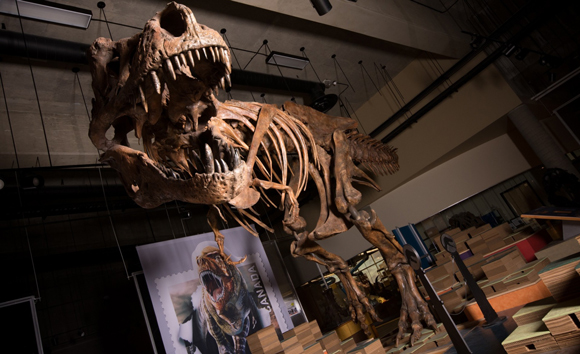
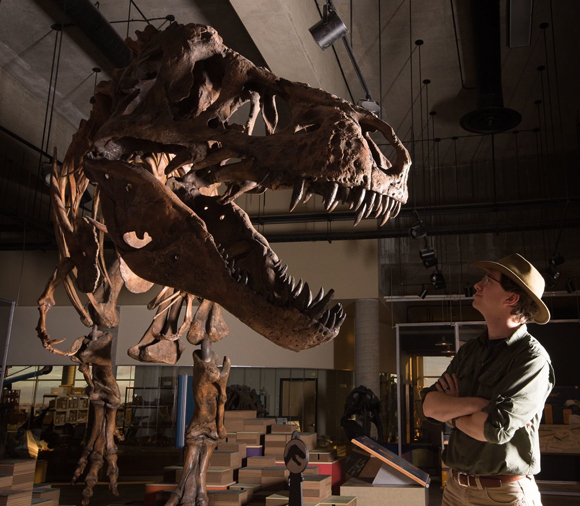
A scientific paper on what is regarded by many scientists as the world’s biggest Tyrannosaurus rex has been published.  It is time for the “T. rex” specimen nicknamed “Scotty” to step into the spotlight.  It measures around thirteen metres in length and represents an individual more than thirty years of age, remarkably old for a tyrannosaur.  Based on the diameter of the leg bones and other measurements, the body weight of this formidable carnivore has been estimated at 8.8 Tonnes.  It has been suggested that this specimen (RSM P2523.8), is a little longer and heavier than “Sue” (BHI2033), which resides in the Evolving Planet exhibit at the Field Museum in Chicago.

The “Scotty” T. rex Exhibit Preparing to Make Its Debut at the Royal Saskatchewan Museum

"Scotty" the Tyrannosaurus rex.

A reconstruction of the skeleton of “Scotty” the T. rex

Picture credit: Amanda Kelley

Gracile and Robust T. rex Forms

On August 16th, 1991, Robert Gebhardt, a high school teacher by profession but also a keen fossil hunter, was working with Tim Tokaryk (palaeontologist at the Eastend Fossil Research Station).  They were exploring the strata exposed along the Frenchman River Valley in Saskatchewan Province, for Robert this was an opportunity to learn more about field work.  However, within a few hours, Robert had found the base of a heavily worn tyrannosaur tooth, along with a caudal vertebra, the sort of discoveries that seasoned palaeontologists dream about.  Robert had discovered the oldest individual T. rex specimen.

For models and replicas of tyrannosaurs and an extensive range of related theropod dinosaurs: Dinosaur and Prehistoric Animal Figures.

Excavation Work Begins

It was not until June 1994, that the excavation work began on this new T. rex specimen in earnest.  The dig site became a visitor attraction in its own right with several thousand people coming to see how the huge bones representing about sixty-five percent of the skeleton were being excavated.  Unfortunately, the sandstone matrix surrounding the fossil bones and teeth was extremely hard, extracting the fossils from their 66-million-year-old rock tomb has proved to be one of the most challenging large theropod fossil preparations so far undertaken.

Scientists are aware that there seem to be two main types of Tyrannosaurus rex adult body plan – a robust form and a gracile form.  It is not known what these two different body types represent, one could be male, the other female, however, “Scotty”, so named after a celebratory drink of scotch after the initial fossil discovery, is a very robust Tyrannosaurus rex.

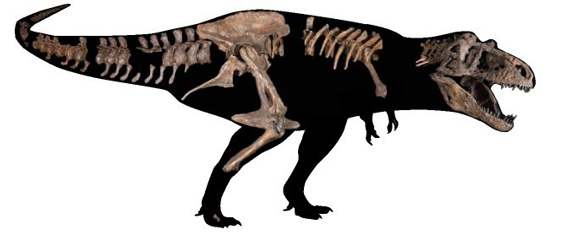
A Silhouette Showing the Fossil Material Associated with RSM P2523.8

The skeleton of "Scotty" the T. rex.

A silhouette outline showing the anatomical position of the known skeletal material of “Scotty”.

Picture credit: University of Alberta, via Agence France-Presse – Getty Images

Scott Persons, (University of Alberta) and one of the authors of the scientific paper published in The Anatomical Record, explained:

“This is the rex of rexes!”

There is considerable size variability among Tyrannosaurus.  Some individuals were lankier than others and some were more robust.  Scotty exemplifies the robust.  He comes out a bit heftier than other T. rex specimens.

Indeterminate Growth

Multiple measurements (including those of the skull, hip, and limbs) show that this was a robust individual with an estimated body mass exceeding all other known T. rex specimens and representatives of all other gigantic terrestrial theropods.  A histological analysis of the fibula (lower leg bone), indicates that Scotty was a mature, adult animal that was over thirty years of age when it died.

“Scotty” T. rex

Dinosaurs exhibit indeterminate growth, as opposed to most other extant tetrapods that have determinate growth.  Simply put, this means that a dinosaur grows rapidly when young (T. rex growth spurts in the teenage years for example), but when fully mature, the animal keeps growing albeit at a much reduced pace.  Therefore, a very old individual such as RSM P2523.8, could be larger than other tyrannosaurs, such as T. rex “Sue”, which is believed to have been around twenty-years of age when it died.

Persons stated:

“Scotty is the oldest T. rex known.  By which I mean, it would have had the most candles on its last birthday cake.  You can get an idea of how old a dinosaur is by cutting into its bones and studying its grown patterns.  Scotty is all old growth.”

Evidence of Pathology – Signs of a Violent Life

Although the fossil material is not as complete as the Field Museum T. rex, just like Sue, the fossilised bones of Scotty show plenty of pathology (evidence of injury or disease).  This dinosaur may have had a long life, but it was a tough life too.  A number of caudal vertebrae are damaged, it has been suggested that this pathology was caused by a bite from another T. rex.  As with many theropod specimens ribs show evidence of having been broken and subsequently healed and the jaw shows signs of an infection.

Palaeontologist Scott Persons Stares into the Jaws of “Scotty”

Palaeontologist Scott Persons with the cast of the T. rex "Scotty".

Scott Persons stares into the jaws of “Scotty”.

Picture credit: University of Alberta,  Amanda Kelley via Agence France-Presse – Getty Images

Cranial Armour?

Intriguingly, the skull exhibits a number of lumps and bumps which suggests that T. rex could have had armoured skin, a feature not seen in other T. rex cranial material.   A cast of the fossils will help to form a new mounted Tyrannosaurus rex display, part of an exhibit that is due to open at the Royal Saskatchewan Museum in May 2019.

Scott Persons added:

“I think there will always be bigger discoveries to be made, but as of right now, this particular Tyrannosaurus is the largest terrestrial predator known to science.”

Bigger Specimens Awaiting Discovery

The big, robust bones of this Tyrannosaurus rex probably represent the largest of this species so far described.  To most scientists and academics, which dinosaur was the biggest does not really matter, after all, the mass estimates for tyrannosaurs vary considerably.  However, the authors of the scientific paper, which include Phil Currie and Gregory Erickson, propose that RSM P2523.8 adds weight to the prior hypothesis that there is a sampling bias throughout the Dinosauria.  “Scotty” with its mature, thick-set bones indicates that many other dinosaur taxa grew to significantly greater sizes than currently recognised.

This means, that there are likely to be even bigger dinosaur specimens awaiting discovery…

For the time being, the Royal Saskatchewan Museum can claim that they are putting on display a cast of the heaviest T. rex known to science, a claim that they can make, at least for now.

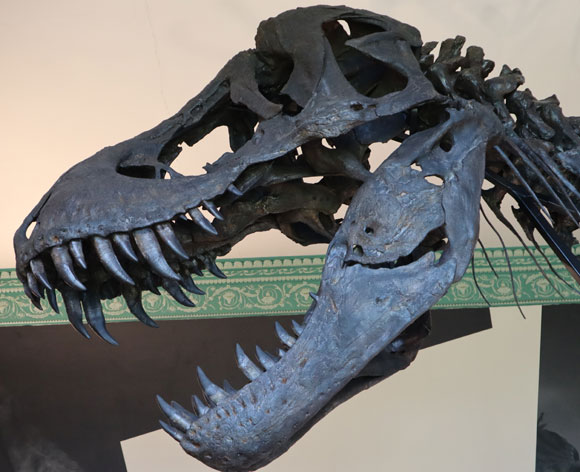
The Fossilised Remains of Even Older and Larger Specimens Probably Await Discovery

Titus the T. rex Skull and Jaws. Dinosaur extinction.

The skull of the T. rex exhibit on display at Wollaton Hall until August 2022.  Picture credit: Everything Dinosaur.

Picture credit: Everything Dinosaur

The scientific paper: “An Older and Exceptionally Large Adult Specimen of Tyrannosaurus rex” by W. Scott Persons IV, Philip J. Currie, Gregory M. Erickson published in the journal The Anatomical Record.

Visit Everything Dinosaur’s award-winning website: Everything Dinosaur.

25 03, 2019

Scientists Collaborate to Explore the Morrison Formation

By |2023-11-30T09:56:48+00:00March 25th, 2019|Categories: Dinosaur and Prehistoric Animal News Stories, Dinosaur Fans, Main Page, Palaeontological articles, Photos/Pictures of Fossils|0 Comments

Manchester University, the Morrison Formation and the “Jurassic Mile”

Scientists at Manchester University have joined forces with a major American Museum and European partners to map and explore an extraordinary Jurassic dinosaur site in the Badlands of Wyoming (USA).  The University of Manchester will act as the academic leaders on this newly announced £20 million ($27.5 USD) research project to examine and eventually exhibit fossils excavated from a recently discovered palaeontological site nicknamed the “Jurassic Mile”. The “Jurassic Mile” represents deposits from the famous Upper Jurassic Morrison Formation.

Exploring the Morrison Formation in Collaboration with the Children’s Museum of Indianapolis

The University of Manchester’s Professor Phil Manning and Dr Victoria Egerton will be collaborating with scientists from the Children’s Museum of Indianapolis.  Also involved are researchers from the Natural History Museum in London and the Naturalis Biodiversity Centre in Leiden (Netherlands).  In total, more than a hundred scientists and academics from three countries will join forces to work at a dig site representing Upper Jurassic strata from the Morrison Formation of Wyoming.  They hope to uncover new data to help explain the extraordinary diversity of the dinosaur biota known from this part of Laurasia in the Late Jurassic.

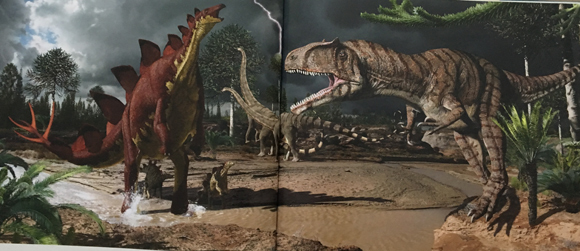
Life in the Late Jurassic – An Illustration of Morrison Formation Biota

Morrison Formation biota.
Life in the Late Jurassic (Morrison Formation biota).  An illustration of life in the Late Jurassic (Morrison Formation) by Julius Csotonyi.  A mother Stegosaurus defends her family from a marauding Allosaurus whilst a pair of diplodocids browse in the background.

Picture credit: Julius Csotonyi

The “Jurassic Mile”

Professor Manning, Dr Egerton and the team are calling the fossil-rich, mile-square plot of land, the “Jurassic Mile.”  There are four main quarries within the multi-level, 640-acre site that offer a diverse assemblage of Morrison Formation articulated and semi-articulated dinosaurs that has also yielded associated animals and fossil plants.  In addition, trace fossils in the form of dinosaur trackways have been identified, such tracks are rare in this part of the world.

Commenting on the significance of this collaborative field work, Professor Manning stated:

“It is splendid that such an important site has been discovered at just the right time, as the science of palaeontology is adapting existing and new imaging techniques to unpick the fossil remains of extinct life.  The imaging work that we undertake at Manchester is already world-leading and this is a great opportunity to develop this research with other world-class institutions.”

A Remarkable Fossil Assemblage

Nearly six hundred specimens, weighing more than six tons, have already been collected from this site over the past two years, despite the fact that only a fraction of the area has been explored.  Fossil bones found to date include the remains of an 20-metre plus brachiosaur and a 27-metre-long diplodocid.  Giant sauropods had giant bones, one of the recent discoveries is a 2-metre-long brachiosaur scapula (shoulder bone), numerous plaster-coated burlap jackets containing articulated bones are the reward for the researchers after a successful field season.

At a press conference, held today, the discovery of an extremely well-preserved 1.5-metre-long sauropod femur (thigh bone), was announced.

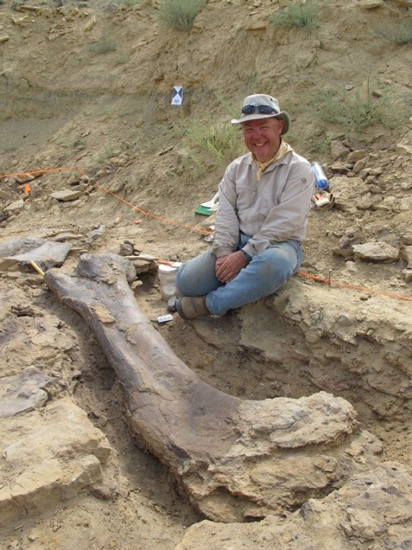
Professor Phil Manning (The University of Manchester) with the Sauropod Femur

Professor Phil Manning and the diplodocid femur.
Professor Phil Manning (The University of Manchester), poses next to the diplodocid femur.

Picture credit: The University of Manchester

Dr Jeffrey H. Patchen, President and CEO of The Children’s Museum of Indianapolis commented:

“We are bringing together an extraordinary international team for the first time that will critically analyse portions of the Morrison Formation in new ways.  This project reflects a natural synergy between three world-renowned museums, their research scientists and highly-respected research universities, each providing unique elements to complete one of the most interesting chapters in the evolution of Earth.”

Prehistoric Flora and Fauna

Dr Egerton from the Department of Earth and Environmental Science (Manchester University), explained:

“The preservation quality and sheer amount of plants at the Jurassic Mile is extraordinary.  During this period, there were no flowering plants and this site provides significant insight to what these giant animals ate and how they may have grown to be so large.”

The Jurassic Mile project is already utilising cutting-edge science from the international team.  The University of Manchester scientists will employ the Stanford Synchrotron particle accelerator along with some of the most powerful computers on the planet, to help resurrect the Jurassic and unearth the lost world and forgotten lives of some of the most remarkable terrestrial animals that have ever lived.

Everything Dinosaur acknowledges the assistance of a press release from Manchester University in the compilation of this article.

For models and replicas of prehistoric animals from the Morrison Formation: Dinosaur and Prehistoric Animal Models.

Visit the Everything Dinosaur website: Everything Dinosaur.

17 03, 2019

New Study “Cracks” Dinosaur Egg Mystery

By |2023-11-30T07:21:09+00:00March 17th, 2019|Categories: Dinosaur and Prehistoric Animal News Stories, Dinosaur Fans, Main Page, Palaeontological articles, Photos/Pictures of Fossils|2 Comments

Dinosaurs Innovated When it Came to Egg Production

Many museums include the fossilised remains of dinosaur eggs amongst their natural history collections and palaeontologists are aware that reptiles were laying eggs on land long before the dinosaurs evolved, but what we know about the evolution of reptile eggs (amniotic eggs in general), is largely based on inference and conjecture.  The problem is, for the first 100 million years or so of amniote evolution, there is very little fossil data related to reptile reproduction to study.  What we do know, is based on Middle Jurassic to Late Cretaceous fossils.

Although, dinosaur eggs are rare, the examples we do have, such as those associated with Asian oviraptorids demonstrate that dinosaur eggs had thick, hardened shells.  However, a new study suggests that it was not always like this and that the three main Sub-orders of the Dinosauria probably evolved thick, tough eggs independently.

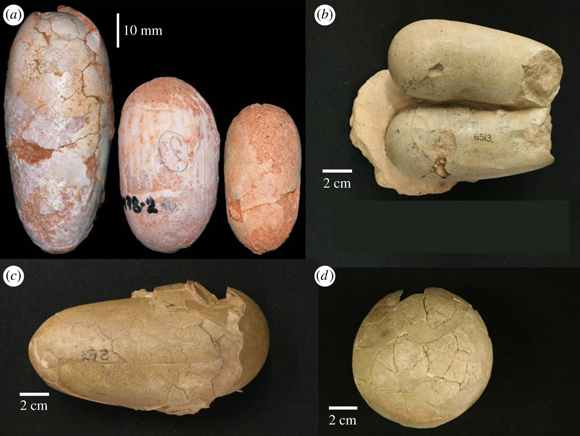
Examples of Eggs from Different Archosaurs (Avian and Non-avian Dinosaurs)

Examples of fossil Archosaur eggs.
Examples of whole or partial fossilised eggs.

Picture credit: Royal Society Open Science

Studying Some of the World’s Oldest Dinosaur Eggs Reveals New Information

Writing in the on-line, open access journal “Scientific Reports”, a team of scientists, including Robert Reisz (University of Toronto Mississauga) and Koen Stein (Royal Belgian Institute of Natural Sciences, Brussels), have examined some of the oldest examples of dinosaur eggs known and revealed new information about the evolution of dinosaur reproduction.

The researchers examined the eggs and eggshells of three coeval, but geographically widely distributed Early Jurassic basal sauropodomorph dinosaurs (Sinemurian faunal stage).  These fossils came from Argentina, China and South Africa and include the eggs of Massospondylus and Lufengosaurus.  Their analysis showed that the basal sauropodomorph eggs all had the basic structure, they had a thin calcareous layer less than 100 microns thick.  This thin shell layer contrasts strongly with the much thicker calcareous shells associated with Late Jurassic and later dinosaur eggs.

At approximately 195 million years old, they are the earliest known eggs in the fossil record, and they were all laid by similar, herbivorous dinosaurs that ranged in size from four to eight metres in length and were the most common and widely spread dinosaurs of their time.  These types of plant-eating dinosaur were the forerunners of the giant sauropods of the Jurassic, dinosaurs such as Brontosaurus, Diplodocus and Brachiosaurus.

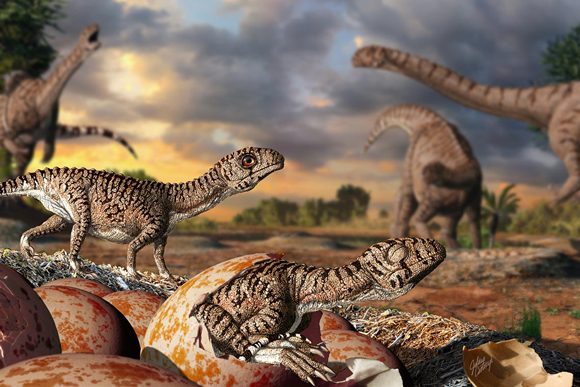
A Massospondylus Nesting Site (Life Reconstruction)

Massospondylus nesting site - life reconstruction.
Massospondylus (basal Sauropodomorpha) nesting site. Massospondylus fossil eggs from South Africa were used in the study.

Picture credit: Julius Csotonyi

Putting the Dinosaur Egg Research into Context

Putting the research into context Professor Reisz explained:

“Reptile and mammal precursors appear as skeletons in the fossil record starting 316 million years ago, yet we know nothing of their eggs and eggshells until 120 million years later.  It’s a great mystery that eggs suddenly show up at this point, but not earlier.”

The researchers concluded that these Early Jurassic eggs represented a step in the evolution of dinosaur reproduction, their shells were paper-thin and brittle, proportionately much thinner than the eggs of extant birds.  However, thicker, tougher eggshells in the Dinosauria were to evolve across all three Sub-orders later.  The much thicker eggshells associated with sauropods, ornithischian dinosaurs and the Theropoda must have evolved independently.

Professor Reisz added:

“We know that these early eggs had hard shells because during fossilisation they cracked and broke, but the shell pieces retained their original curvature.”

Other authors of the scientific paper include Edina Prondvai and Jean-Marc Baele.  Shell thickness was analysed along with membrane thickness, mineral content and distribution of pores, looking for clues about why these early eggs might have developed hard shells.  The scientists concluded that hard-shelled eggs evolved early in dinosaur evolution, with thickening of the calcareous layer (greater than 150 microns), occurring independently in several groups, but a few million years later other reptiles also developed hard-shelled eggs.  One possibility is that hard and eventually thicker shells may have evolved to shield dinosaur embryos and other reptiles from predators.

Professor Reisz commented:

“The hard shells would protect the embryos from invertebrates that could burrow into the buried egg nests and destroy them.”

Linked to Increased Oxygen in the Atmosphere

Advanced mineralisation of amniote eggshell including those of dinosaurs (≥150 microns in thickness), in general occurred not earlier than the Middle Jurassic and may correspond with a global trend of an increase in atmospheric oxygen.  If there were higher levels of atmospheric oxygen, then this would facilitate more efficient gaseous exchange through the porous eggshell and across the egg membranes.  More efficient diffusion would permit the evolution of thicker eggshells, which in turn would offer greater resistance to damage and more protection from predators.

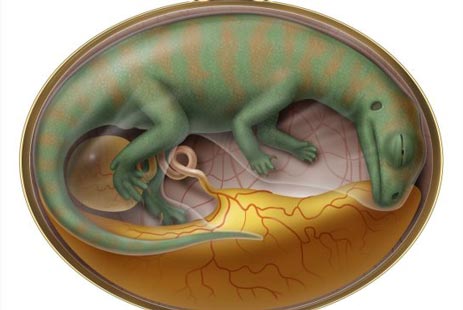
A Lufengosaurus Embryo

The embryo of a Lufengosaurus
New research into 195 million-year-old baby dinosaurs and their eggs.

Picture credit: D. Mazierski

Raising Further Questions About Mesozoic Reproduction Strategies

The study raises some intriguing questions that may well lead to further research projects.  For example, palaeontologists are aware that many types of marine reptile evolved viviparity (live birth), whilst the fossil evidence for the terrestrial Dinosauria seems to indicate that they continued to rely on egg laying.  Why didn’t the highly diverse dinosaurs evolve different reproductive strategies over their 160 million years of existence?

Everything Dinosaur acknowledges the assistance of a press release from the University of Toronto in the compilation of this article.

The scientific paper: “Structure and Evolutionary Implications of the Earliest (Sinemurian, Early Jurassic) Dinosaur Eggs and Eggshells” by Koen Stein, Edina Prondvai, Timothy Huang, Jean-Marc Baele, P. Martin Sander and Robert Reisz published in Scientific Reports.

Visit the award-winning Everything Dinosaur website: Everything Dinosaur.
13 03, 2019

New Giant Pliosaur From the Early Cretaceous of Colombia

By |2023-11-25T09:26:49+00:00March 13th, 2019|Categories: Dinosaur and Prehistoric Animal News Stories, Dinosaur Fans, Main Page, Photos/Pictures of Fossils|2 Comments

Sachicasaurus vitae – Brings a Whole Town to Life

A team of scientists from the Universidad Nacional de Colombia (Colombia), have announced the discovery of a new species of giant brachauchenine pliosaurid from Lower Cretaceous-aged beds in central Colombia.  The monster marine reptile, estimated to have measured around ten metres in length has been named Sachicasaurus vitae and is the largest of the three pliosaurid genera discovered to date from Colombian sediments.

Ironically, the species epithet for this formidable predator is Latin for “life”, a reference to the huge impact this discovery has had on the village of  Sáchica where the fossil was found.  It seems that the normally quiet village has had a considerable upsurge in visitors and commercial trade as the excavations of the huge specimen progressed.

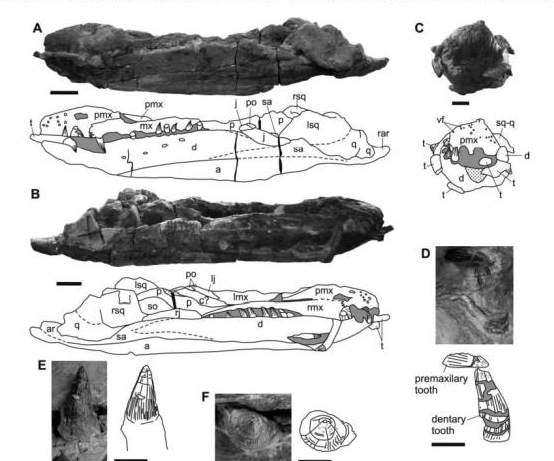
A Photograph of the Holotype Specimen and Accompanying Line Drawing

New pliosaurid Sachicasaurus from Columbia.
Sachicasaurus vitae photograph of fossils and skeletal line drawing.

Picture credit: Universidad Nacional de Colombia

The photograph (above), shows a dorsal view of the holotype (MP111209-1).  The dotted lines represent parts of the skeleton found separate from the main body fossil deposit.  The scale bar located below the photograph of the fossil indicates fifty centimetres.  The skull is more than two metres long.  The fossils come from Lower Cretaceous deposits located at Sáchica (the genus name honours the village).

Partially Articulated Specimen and Still Growing

The specimen was discovered in an articulated state and is estimated to have been around 9.9 metres long, but the researchers have concluded that the fossil remains represent a sub-adult animal so the maximum size for this marine reptile is unknown.  Pliosaurs are an extinct clade of short-necked plesiosaurs that were both temporally and geographically widespread.  Many pliosaurs were apex predators within Jurassic and Early Cretaceous marine environments.

Sachicasaurus Jaw Bones and Associated Teeth

Sachicasaurus jaws and teeth.
Sachicasaurus vitae photographs and interpretative drawings of the jaws and teeth.

Picture credit: Universidad Nacional de Colombia

The Most Complete Pliosaur Discovered in Columbia

Sachicasaurus vitae represents the most complete pliosaurid fossil specimen found to date in Colombia, it is also the largest pliosaur known from this part of the world.   It lived approximately 125 million years ago (Barremian faunal stage of the Early Cretaceous).  For such a large animal the front flippers seem particularly small, this suggests that it might have had a different form of propulsion, perhaps being more reliant on the rear flippers and powerful strokes of its tail (assuming the presence of tail fluke).  Although the phylogeny of this marine reptile is uncertain, as it possessed a mix of primitive and more advanced anatomical traits, it has been placed within the Brachaucheninae and it may have been closely related to Kronosaurus.

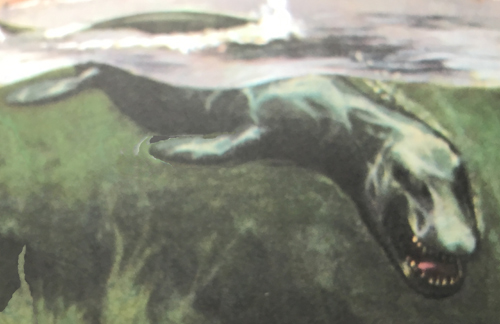
An Illustration of a Typical Pliosaur Marine Reptile

Pliosaur illustration.
An illustration of a typical pliosaurid marine reptile.

Picture credit: Everything Dinosaur

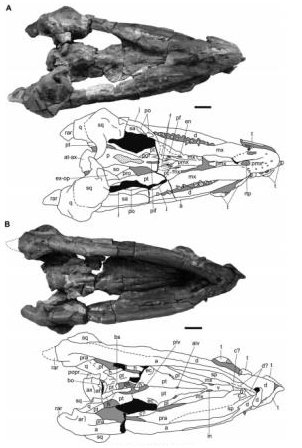
The Powerful Skull of Sachicasaurus vitae

Sachicasaurus vitae skull and line drawings.
Photographs and interpretive drawings of the skull in (A) dorsal view and (B) ventral views.

Picture credit: Universidad Nacional de Colombia

The Diversity of Coumbian Pliosaurids in the Early Cretaceous

The discovery of S. vitae highlights the diversity of pliosaurs known from the Early Cretaceous of Colombia.  Two other pliosaurs have been recorded from this part of South America, both of which are smaller than Sachicasaurus.  The occurrence of different genera of pliosaurids in the Barremian beds of Colombian suggests that the environmental conditions of the Colombian sea during the Early Cretaceous facilitated the development of sufficient marine life to sustain a diverse group of predators.

The other pliosaurs known from the Early Cretaceous of Colombia:

  • Stenorhynchosaurus (S. munozi) named in 2016.  It had a more elongated snout and may have been a specialised piscivore.
  • Acostasaurus (A. pavachoquensis) named in 2017.  It had a robust snout but was approximately half the size of Sachicasaurus.

Visit the award-winning Everything Dinosaur website: Everything Dinosaur.
Go to Top