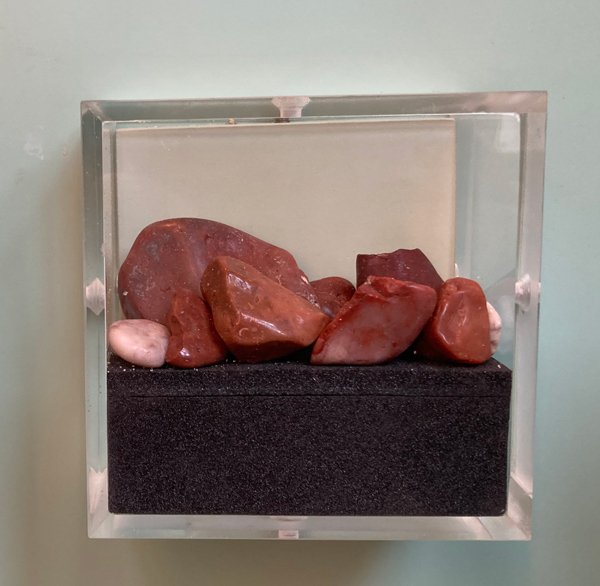
A return visit to the Manchester Museum permitted Everything Dinosaur team members to take a photograph of the Tenontosaurus gastroliths that form part of a new dinosaur exhibit at the Museum. The gastroliths (stomach stones) were found in the body cavity of a Tenontosaurus tilletti specimen discovered in Montana in 1994.
The gastroliths associated with “April” the Tenontosaurus specimen on display at the Manchester Museum. Picture credit: Everything Dinosaur.
Picture credit: Everything Dinosaur
The specimen (MANCH LL.12275) was acquired by the Manchester Museum in 1999 and a recently opened exhibit has permitted the fossil bones of this dinosaur to be displayed. The fossil material represents one of the best-preserved and most complete examples of Tenontosaurus tilletti known to science.
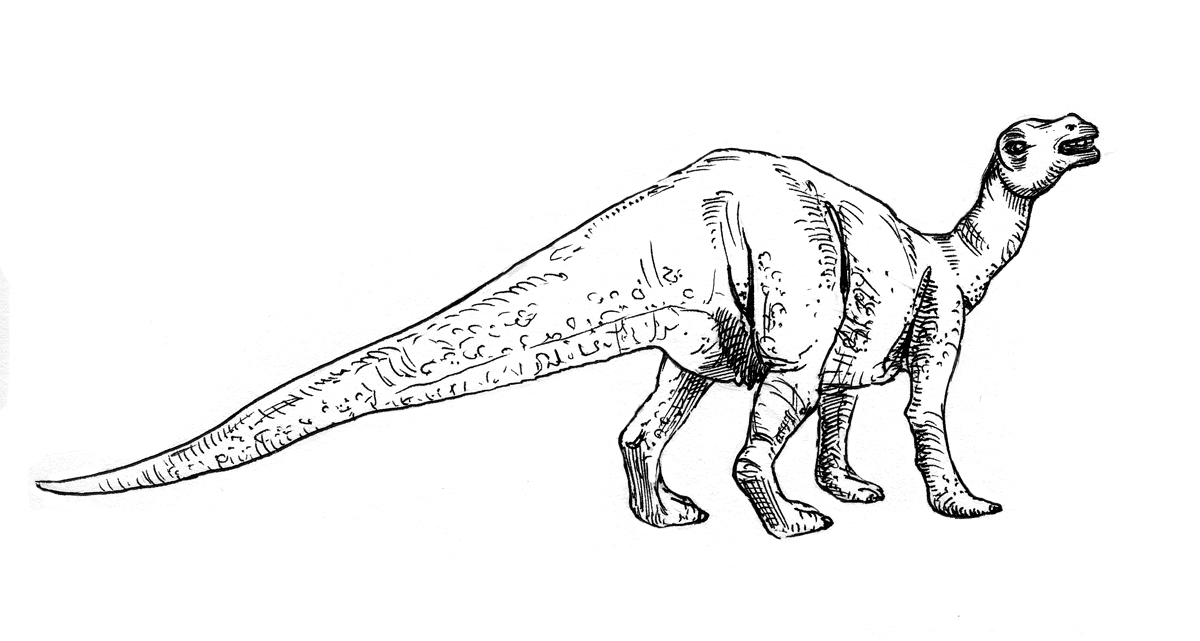
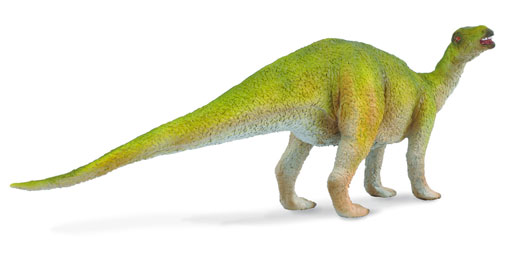
Tenontosaurus drawing. An illustration of the Early Cretaceous iguanodontidTenontosaurus tilletti. Picture credit: Everything Dinosaur
Picture credit: Everything Dinosaur
The Tenontosaurus illustration (above) is based on the CollectA Age of Dinosaurs Popular Tenontosaurus model.
This amazing dinosaur fossil was nicknamed “April” after the wife of Barry James who cleaned and prepared the fossils for exhibition. Gastroliths (stomach stones) were found in the body cavity of this dinosaur. Some dinosaurs swallowed stones to help them grind up tough plants and aid digestion. These stones were held in a gizzard and helped to break down plant-material and assisted in the extraction of nutrients.
Only a handful of examples of stomach stones associated with ornithopods have been recorded. “April” the Tenontosaurus is the largest ornithopod dinosaur known to science associated with gastroliths.
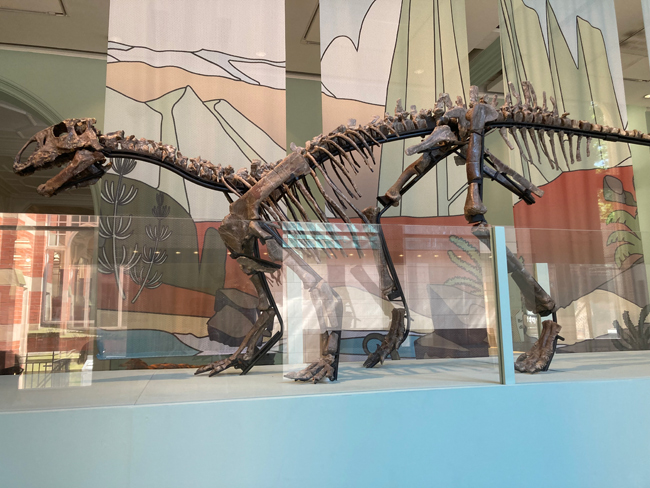
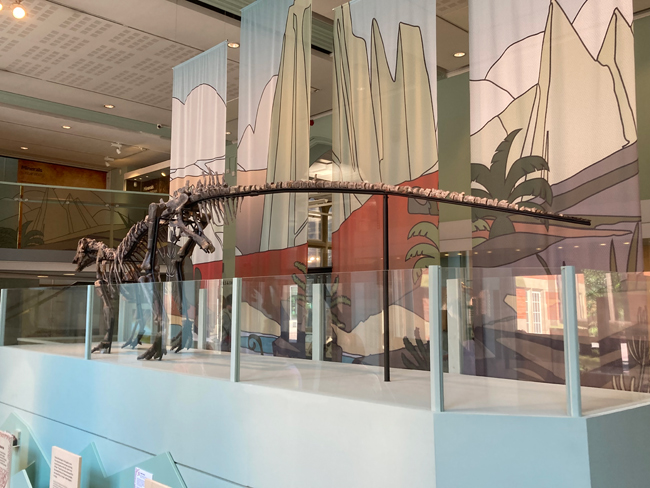
“April” the Tenontosaurus on display at the Manchester Museum. Picture credit: Everything Dinosaur.
Picture credit: Everything Dinosaur
“April” the Tenontosaurus is part of a new, permanent display highlighting research conducted by Manchester University scientists into the Dinosauria.
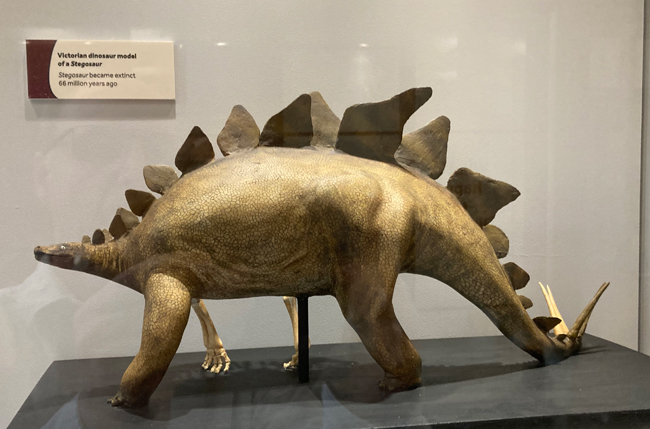
A team member from Everything Dinosaur spotted an unusual stegosaur replica on display at the Manchester Museum. The label next to the armoured dinosaur figure stated that this was a Victorian stegosaur model. The model must indeed be old, as stegosaurs such as Stegosaurus stenops are viewed very differently by palaeontologists today.
A model of a stegosaur in a display cabinet in the fossils and dinosaurs gallery at the Manchester Museum. Picture credit: Everything Dinosaur.
Picture credit: Everything Dinosaur
Stegosaurus stenops
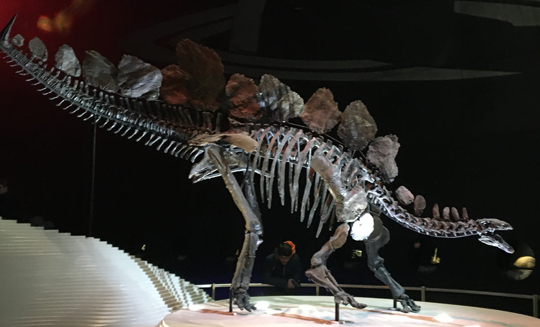
The fossilised remains of an immature Stegosaurus stenops is on display at the Natural History Museum in London. The dinosaur, nicknamed Sophie comes from Wyoming and the fossil material represents one of the most complete stegosaur fossils known to science. The skeleton consists of more than three hundred bones.
The London Natural History Museum exhibit shows a modern interpretation of this iconic herbivorous dinosaur.
Everything Dinosaur stocks a large number of armoured dinosaur figures and models.
Sophie the Stegosaurus (S. stenops), a star exhibit at the London Natural History Museum. This is a modern interpretation of this iconic armoured dinosaur. Picture credit: Everything Dinosaur.
The Victorian Stegosaur Model
The Victorian stegosaur model provides a reminder to visitors about how are views of the Dinosauria have changed. The side of the figure facing the public has been fleshed out, whilst the side which is not visible shows the animal’s skeleton. Note the bones of the lower portions of the limbs on the right side which are visible in the photograph.
A spokesperson from Everything Dinosaur commented:
“This Victorian dinosaur model is not an accurate representation of a Stegosaurus. However, it does remind us how dinosaurs used to be depicted. It acts as bellwether informing visitors about how our views regarding dinosaurs such as Stegosaurus have changed over time.”
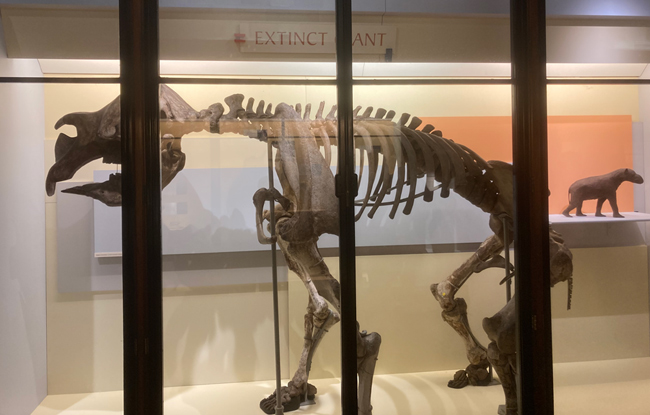
Whilst on a short visit to the London Natural History Museum Everything Dinosaur team members took some photographs of the Diprotodon fossils on display. Diprotodon (D. optatum) is the largest marsupial known to science. Males measured around 1.8 metres high at the shoulder. Their body length was approximately 4 metres, and the largest specimens are thought to have weighed up to 3,500 kilograms. Females were smaller than males.
An extinct giant. The fossil skeleton of Diprotodon the largest marsupial known to science. Picture credit: Everything Dinosaur.
Picture credit: Everything Dinosaur
Diprotodon Fossils
Diprotodon (pronounced dip-pro-toe-don) was part of the Australian “megafauna” of the Pleistocene. The genus name is from the ancient Greek meaning “two protruding front teeth”. It is thought that this rhino-sized marsupial became extinct 40,000 years ago. At this time, Australia’s climate changed. It became much more arid. This climate change is thought to have been the main cause for their extinction. However, hunting from the first Aboriginal Australians cannot be ruled out.
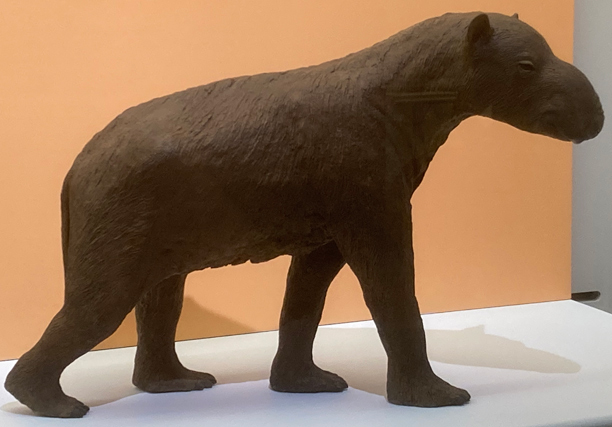
A replica of the largest marsupial known to science Diprotodon on display at the London Natural History Museum. Picture credit: Everything Dinosaur.
Picture credit: Everything Dinosaur
The picture (above) shows a replica of Diprotodon on display alongside Diprotodon fossils at the London Natural History Museum. There are very few Diprotodon models/toys available. It is rare for examples of ancient marsupials to made into replicas by mainstream model manufacturers.
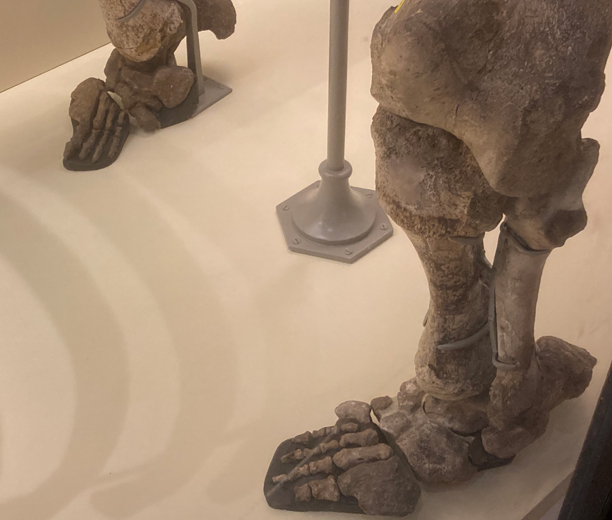
Diprotodon is part of the Order Diprotodontia, which includes, wombats, kangaroos, koalas and possums. Syndactylous feet are a trait of the extant Diprotodontia and also assumed to be present in Diprotodon. The second and third toes are fused together. It is thought that Diprotodon also had fused second and third toes.
The toes on the robust feet of Diprotodon curve inwards. This is thought to have been an evolutionary trait passed onto these huge animals from their fossorial ancestors. The second and third toes were probably fused (syndactylous feet). Picture credit: Everything Dinosaur.
Everything Dinosaur took a break from picking and packing orders to visit the recently refurbished Manchester Museum. One of the new exhibits is “April” the Tenontosaurus dinosaur fossil. The display includes actual fossil bones of a Tenontosaurus, and the exhibit depicts this ornithischian dinosaur as a quadruped.
“April” the Tenontosaurus on display at the Manchester Museum. Picture credit: Everything Dinosaur.
Picture credit: Everything Dinosaur
An Important Dinosaur Fossil Specimen
The fossils were discovered on private land in Montana, USA back in 1994 and acquired by the University of Manchester in 1999. The fossils (specimen number MANCH LL.12275) represent one of the best-preserved and most complete Tenontosaurus tilletti known to science. The specimen was originally displayed as a biped. The dinosaur was posed rearing up on its hind legs. During the conservation work to prepare the fossils for display, researchers demonstrated that this dinosaur spent most of its time walking on all fours.
It was named “April” after the wife of Barry James who originally prepared this stunning fossil dinosaur for exhibition.
The CollectA Age of Dinosaurs Tenontosaurus model.
The picture (above) shows a CollectA Tenontosaurus dinosaur model. To view the range of CollectA not-to-scale prehistoric animal models: CollectA Prehistoric Life Models.
Gastroliths
Gastroliths (stomach stones) were found in the body cavity of this dinosaur. Some types of dinosaur swallowed stones to help them grind up tough plants and aid digestion. These stones were held in a gizzard and helped to break down plant-material and assisted in the extraction of nutrients.
Only a handful of examples of gastroliths being associated with ornithopods have been reported. “April” the Tenontosaurus is the largest ornithopod dinosaur known to science associated with gastroliths.
“April” the Tenontosaurus dinosaur fossil has been granted her own special display area. There are plenty of information panels informing visitors about the dinosaur and highlighting important areas of research. The gastroliths are on display too. It is only when visitors get close to the fossils that they can appreciate the impressive length of the dinosaur’s tail.
Whilst the dinosaur might be nicknamed “April”, Everything Dinosaur team members are uncertain as to whether there has been any research to identify whether the bones do indeed represent a female.
The length of the tail of Tenontosaurus can be appreciated. The Tenontosaurus known as “April” exhibited at the Manchester Museum. Picture credit: Everything Dinosaur.
Picture credit: Everything Dinosaur
A spokesperson from Everything Dinosaur praised the Manchester Museum for its excellent Tenontosaurus dinosaur fossil display and commented on the friendliness of the staff.
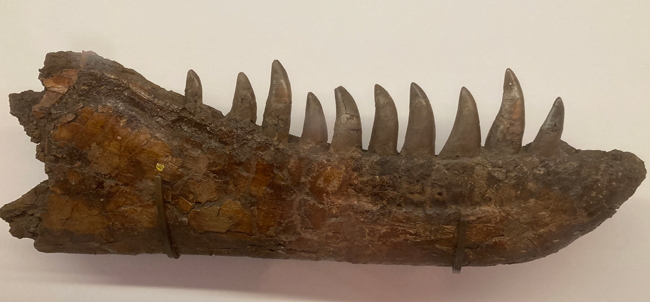
Dinosaur fans will know that there were many different tyrannosaur taxa. Whilst on a visit to a museum, an Everything Dinosaur team member spotted a tyrannosaur dentary. The theropod jawbone was located away from the Tyrannosaurus rex exhibit. The fossil represents a member of the Tyrannosauridae family. The fossil is from a Daspletosaurus. The accompanying information did not state the species.
A Daspletosaurus dentary on display at a museum (Natural History Museum London). Picture credit: Everything Dinosaur.
Daspletosaurus
Daspletosaurus roamed western North America (Laramidia) during the Late Cretaceous (Campanian faunal stage). Several species have been assigned to this genus. The genus was erected in 1970 (D. torosus). Subsequently, other species have been assigned including Daspletosaurus horneri in 2017 and Daspletosaurus wilsoni (2022).
The tyrannosaur jawbone (right dentary) depicts the typical D-shaped crowns associated with these theropods. A total of ten teeth can be viewed in the jawbone (buccal view). The buccal view shows the side of the jaw that is adjacent to the cheek.
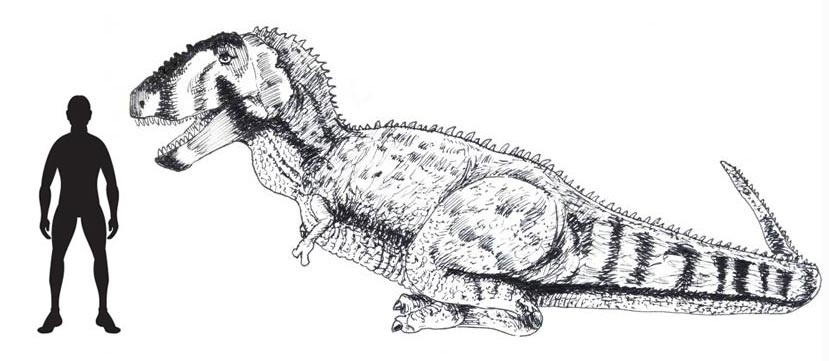
Although Daspletosaurus was a large and powerful hunter, the lower jaw is less robust than the fossils associated with Tyrannosaurus rex.
A spokesperson from Everything Dinosaur commented:
“The dentary is in an exceptional state of preservation. Museum visitors could easily overlook this excellent tyrannosaur dentary. However, fossils such as these can tell palaeontologists a lot about the Daspletosaurus genus and theropod dinosaurs in general.”
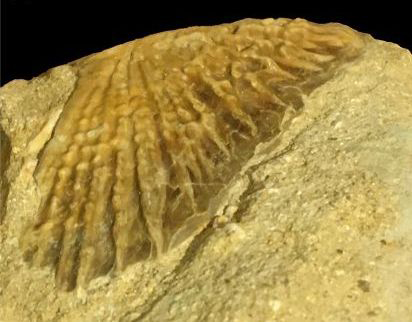
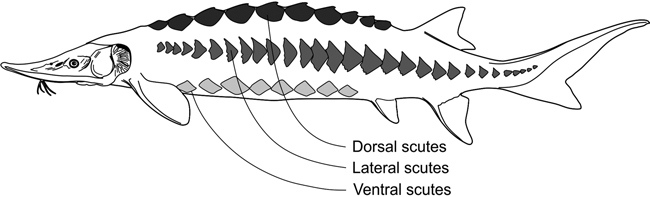
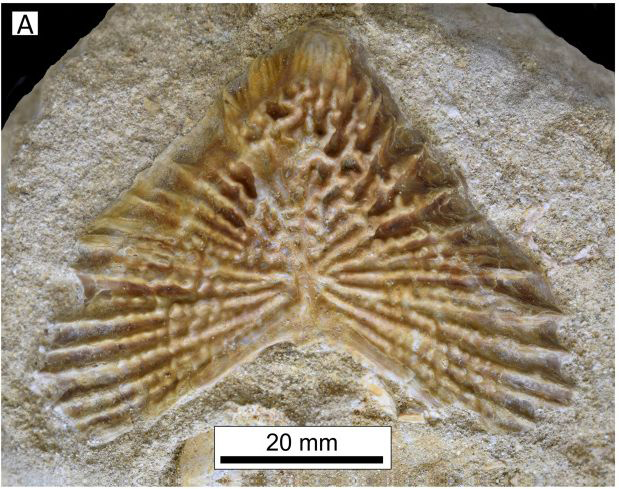
The discovery of a fossil sturgeon scute demonstrates that these “royal fish” were present in North Africa during the Late Cretaceous. The single, fossil scute is the first ever sturgeon fossil to have been found in Africa. The scute is a bony plate embedded into the sturgeon’s skin. Scutes provided a form of dermal armour that evolved to help protect these very ancient fish.
A digital photo of the sturgeon scute (also called buckler) specimen. Picture credit: University of Portsmouth.
A Significant Fossil Discovery
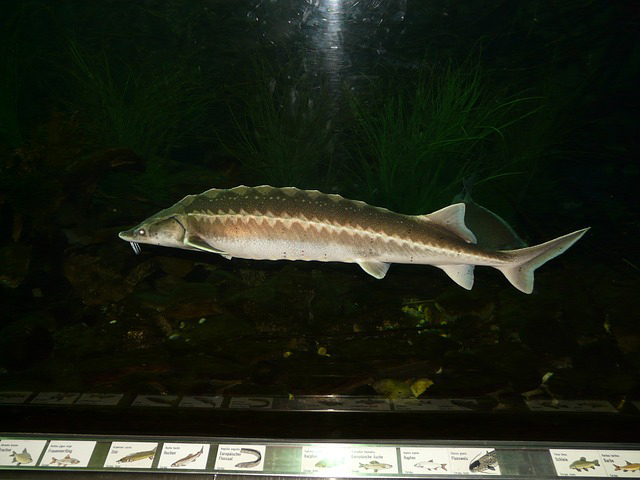
The sturgeon (there are more than two dozen extant species), belongs to the Acipenseriformes Order, which probably originated in the Late Triassic. Sturgeon fossils which are very similar to extant species, are known from Upper Cretaceous strata. Historically, they are associated with cooler waters of the Northern Hemisphere. The specimen was discovered by Professor David Martill (University of Portsmouth). It proves that these magnificent fish were present in Africa.
Sturgeons were more widespread in the Cretaceous than previously thought.
An extant European sturgeon. Picture credit: University of Portsmouth.
Professor Martill was exploring a well-known Moroccan fossil site during a field trip last November. He spotted a row of bony plates (bucklers) on a piece of rock and instinctively recognised the fossils represented the scutes from a sturgeon.
Discussing this significant fossil find, the Professor commented:
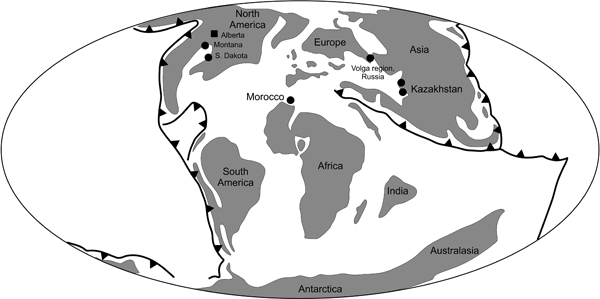
“It was a surprising discovery because all sturgeon species have been exclusively found in the Northern Hemisphere in the past. They’ve been located in North America, Europe, Russian Asia, Chinese Asia, but never in South America, Australia, Africa or India, which are the land masses that made up Gondwana, a supercontinent that existed around 336 million years ago and began breaking up around 150 million years ago.”
A drawing showing an extant sturgeon in lateral view. The different scutes are highlighted. Picture credit: University of Portsmouth.
A “Royal Fish”
The sturgeon has long been prized for its meat and for its roe (eggs). The roe is commonly referred to as caviar. King Edward II of England declared that all sturgeon from the waters of Wales and England belong to the monarch. This declaration was made in the early 14th century. Since then, these fish have been regarded as “royal fish”.
Sadly, due to overfishing and pollution, many species of extant sturgeon are close to extinction.
Commenting on his African fossil discovery Professor Martill stated:
“Russian beluga caviar is one of the most expensive in the world. Little did we know that at one time an extremely rare African sturgeon could have been a source of this delicacy!”
A digital photo of the dorsal surface of the fossil. Note the scale bar of 20 mm. Picture credit: University of Portsmouth.
Fossil Sturgeon Scute
Sturgeon are thought of as being “living fossils”, for they seem to have remained relatively unchanged since the time of Tyrannosaurus rex and Triceratops. Records from the 18th and 19th centuries indicate specimens reaching more than seven metres in length and weighing over 1.5 tonnes, but fish of this size are exceedingly rare today.
Professor Martill added:
“The very first sturgeons appear in the fossil record in the Late Triassic period in China. But the oldest true sturgeon ever discovered is probably a specimen in the Steve Etches collection from Dorset’s Jurassic Coast in England, which is mentioned in a book Steve and I wrote about fossils in the Kimmeridge Clay Formation.”
The discovery of a sturgeon fossil in Morocco complicates models of the geographical distribution of these fish during the Late Cretaceous.
A map of the continents at the end of the Cretaceous (66 million years ago). Sturgeon fossil localities are marked by solid black circles. Picture credit: University of Portsmouth
The fossil specimen is now in the collection of the University King Hassan II, Casablanca.
Everything Dinosaur acknowledges the assistance of a media release from the University of Portsmouth in the compilation of this article.
The scientific paper: “A sturgeon (Actinopterygii, Acipenseriformes) from the Upper Cretaceous of Africa” by David M. Martill published in Cretaceous Research.
Our thanks to fossil collector and dinosaur model fan Robert who sent Everything Dinosaur a coelacanth fossil to add to our collection. The specimen is an example of Whiteia woodwardi, which is known from Triassic strata. The genus was both geographically and temporally widespread. Whiteia fossils are known from Madagascar (where this specimen comes from), as well as Indonesia and British Columbia (Canada).
The Canadian and Madagascan fossils are associated with Lower Triassic strata, whereas the Indonesian material (Whiteia oishii) is associated with Upper Triassic deposits (Norian faunal stage).
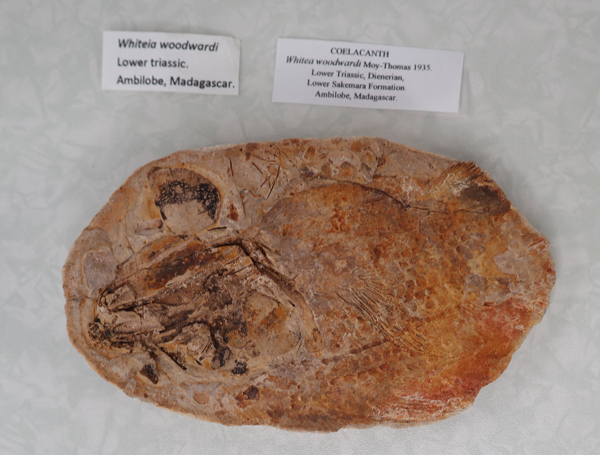
The Coelacanth fossil (Whiteia woodwardi) from the Lower Triassic of Madagascar. Picture credit: Everything Dinosaur.
Picture credit: Everything Dinosaur
A Coelacanth Fossil
The fish remains were preserved inside a concretion. When this nodule was split open the fossilised fish was revealed. The skull is present (to the left of the photograph), and scales can be observed. The impression of a fleshy pectoral fin can be seen.
Coelacanths are an ancient group of lobe-finned fish (Sarcopterygii). It is thought that these fish first evolved in the Early Devonian, around 410 million years ago. Two species are known today, in the genus Latimeria.
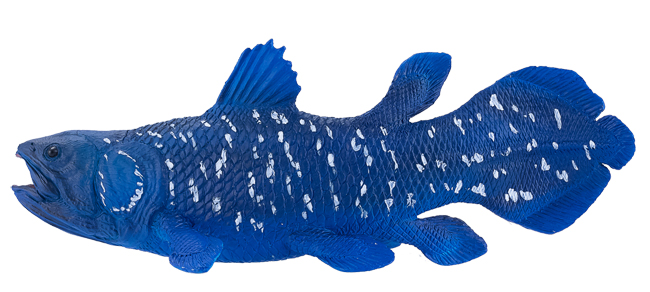
The beautifully painted and very blue Mojo Fun Coelacanth replica.
The picture (above) shows a model of a Coelacanth. This figure is from the Mojo Fun model series.
A spokesperson from Everything Dinosaur commented:
“We would like to thank Robert for his most generous gift. We did not have a Coelacanth specimen in our fossil collection. Thanks to Robert’s generosity we have this wonderful specimen, and we are looking forward to putting it into one of our fossil display cabinets.”
The spokesperson added:
“The Coelacanth fossil can be used in some of our outreach work. We highlight threats to animals today such as global warming and climate change and the Coelacanth, with its long fossil record helps us to explain about extinction and deep geological time.”
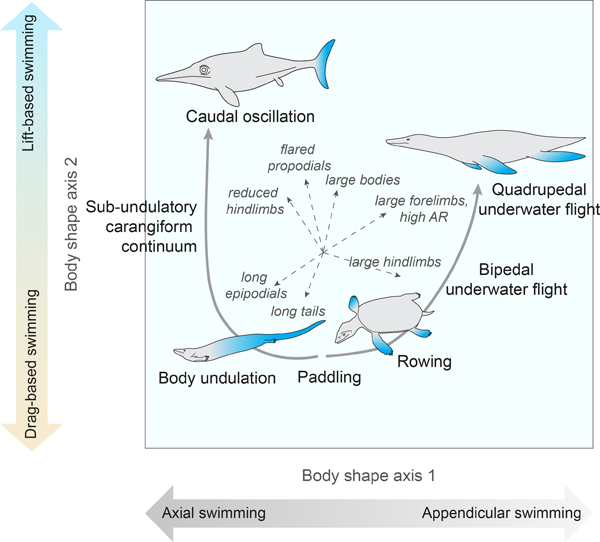
Whilst the Dinosauria dominated terrestrial environments during the Mesozoic the seas and oceans of the world were home to a diverse assemblage of marine reptiles. Many different types of marine reptile evolved, and the diverse swimming techniques employed by these ancient animals have been revealed in a recently published scientific paper.
The swimming secrets of Mesozoic marine reptiles have been decoded thanks to a research team from the University of Bristol.
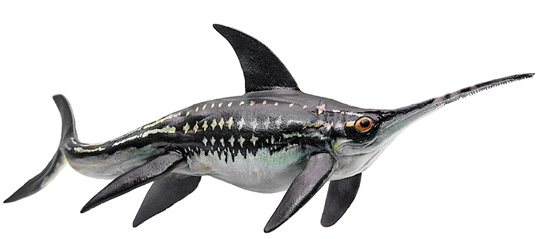
A replica of the ichthyosaur Eurhinosaurus (PNSO). During the Mesozoic, many different types of marine reptile evolved. Scientists from the University of Bristol have unlocked the swimming secrets of ancient marine reptiles.
The image (above) shows a replica of an Eurhinosaurus. An ichthyosaur (Leptonectidae family) that lived during the Early Jurassic (approximately 180 million years ago).
During the Mesozoic, which lasted from approximately 252 million years ago to the end-Cretaceous mass extinction event around 66 million years ago, many different types of marine reptile evolved. There were placodonts, turtles, the first ichthyosaurs and nothosaurs during the Triassic and these were replaced by marine crocodiles, derived ichthyosaurs, long-necked plesiosaurs and pliosaurs. During the Cretaceous the mosasaurs evolved.
In the new paper, published in the academic journal “Palaeontology”, the research team report on the use of cutting-edge statistical methods used to undertake a substantial quantitative study. This research, the first of its kind, provides a fresh perspective on the locomotion of Mesozoic marine reptiles.
Examining 125 Skeletons
In total, 125 marine reptile skeletons were studied. The research team mapped the changes in swimming styles within the different lineages over time. There was no explosive radiation at the beginning of the Triassic, but a gradual diversification of swimming styles. This diversity peaked during the Cretaceous.
Marine reptiles from the Mesozoic Era evolved a great diversity of body forms and sizes. Changes in their body and limb anatomy throughout evolution are associated with swimming adaptations. The variety of locomotory modes in Mesozoic marine reptiles is illustrated by (bottom-to-top) an early mosasauroid, a placodont, a plesiosaur and a fish-shaped ichthyosaur. Picture credit: Dr Susana Gutarra.
Dr Susana Gutarra (School of Earth Sciences at the University of Bristol), lead author of the paper commented:
“Changes in anatomy in land-to-sea transitions are intimately linked to the evolution of swimming. For example, sea lions’ flippers have relatively short forearm and large hands, very different from the walking legs of their ancestors. The rich fossil record of Mesozoic marine reptiles provided great opportunity to study these transitions at a large scale.”
The End-Permian Mass Extinction Event
At the end of the Permian, the Earth experienced a catastrophic mass extinction event. Life on Earth was devastated. It has been estimated that 50% of all marine families and over 80% of all marine genera died out (Raup and Sepkoski).
Remarkably, marine environments recovered relatively quickly. Various groups of reptiles became aquatic hunters.
To read an article from 2010 that documents a remarkable fossil site in China that provides evidence of how marine food webs recovered from the end-Permian mass extinction event: Ancient Ecosystem Revealed.
To test the validity of the statistical analysis, measurements from extant aquatic animals were included in the study.
Co-author Beatrice Heighton (University of Bristol), explained:
“We included measurements from living aquatic animals, such as otters, seals and turtles, of which we know their swimming behaviour. This is very important to provide a functional reference for the ancient species, with unknown swimming modes.”
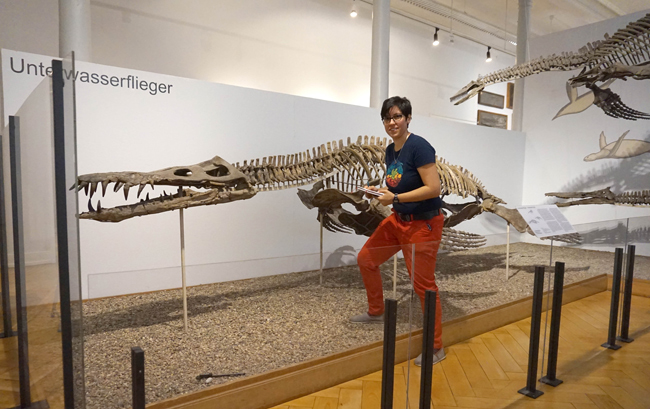
Palaeobiologist Dr Susana Gutarra taking measurements from a very complete specimen of Liopleurodon, a pliosaur from the Middle-Late Jurassic of Germany (Museum of Palaeontology in Tübingen). Picture credit: Dr Susana Gutarra.
A Gradual Diversity of Swimming Styles
Co-author Dr Tom Stubbs (University of Bristol) added:
After this devastating event, there was a gradual diversification of locomotory modes, which contrasts with the rapid radiation described previously for feeding strategies. This is fascinating because it suggests a ‘head-first’ pattern of evolution in certain lineages.”
The scientific paper sheds light into the swimming styles of specific groups of marine reptile.
Dr Ben Moon (University of Bristol) explained the significance of this study, stating:
“Ichthyosaurs were highly specialised for aquatic locomotion from very early in their evolution. This includes their close relatives, the hupehsuchians, which had a morphology unlike any other known aquatic tetrapod. Further, we see overlap between mosasaurs and ichthyosaurs, which is indicative that mosasaurs evolved a swimming mode by oscillating flukes, different from the eel-like body undulation suggested in the past.”
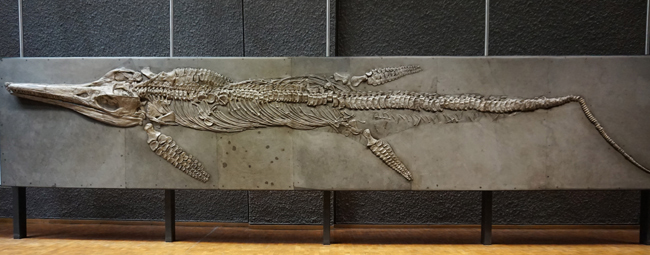
An almost 8m-long specimen of Temnodontosaurus, an ichthyosaur from the Early Jurassic of Germany (State Museum of Natural History of Stuttgart, Germany), is one of the fossils included in this study. Picture credit: Dr Susana Gutarra.
Dr Moon of Bristol University’s School of Earth Science went onto add:
“In contrast, we don’t find evidence of convergence between ichthyosaurs and metriorhynchids (the highly aquatic crocodyliform thalattosuchians). This group retained quite primitive-looking hindlimbs, which seems incompatible with swimming by fluke oscillation.”
Examining the Evolution of Size
This comprehensive study also examined the evolution of size, a feature related to locomotion, animal physiology and ocean productivity.
The University of Bristol’s Professor Mike Benton, a co-author of the research paper commented:
“We know that transition to life in water is usually accompanied by an increase in body mass, as seen in cetaceans, and one of our previous studies shows that large sizes benefit aquatic animals in reducing the mass-specific costs of drag. Thus, it was essential to explore this trait in the wider ensemble of Mesozoic marine reptiles.”
Dr Gutarra explained that body mass follows a similar trend to the diversification of locomotory modes. The widest spread of body size also occurred in the Cretaceous. This confirms a strong correlation between the evolution of diverse swimming styles and changes in body mass.
Dr Gutarra added:
“The rate of increase and the maximum limits to body size seems to vary a lot between groups. This is a fascinating observation. We need to explore further what factors influence and limit the increase in body mass in each group.”
Everything Dinosaur acknowledges the assistance of a media release from the University of Bristol in the compilation of this article.
The scientific paper: “The locomotor ecomorphology of Mesozoic marine reptiles” by Susana Gutarra, Thomas L. Stubbs, Benjamin C. Moon, Beatrice H. Heighton and Michael J. Benton published in Palaeontology.
A virtually complete titanosaur skull has been found in Queensland. The fossil discovery is Australia’s most complete sauropod skull found to date. It supports the hypothesis that Australian sauropods originated in South America. The titanosaur skull has been assigned to Diamantinasaurus matildae.
A view of the Diamantinasaurus skull bones in approximate life position: Picture credit: Australian Age of Dinosaurs.
Diamantinasaurus matildae
Australian Age of Dinosaurs Museum researchers in collaboration with Curtin University (Perth) despatched a media release announcing the discovery of the stunning sauropod skull. The fossil specimen, nicknamed “Ann” was excavated in 2018 at a dig site located at Elderslie Station, near Winton (Queensland).
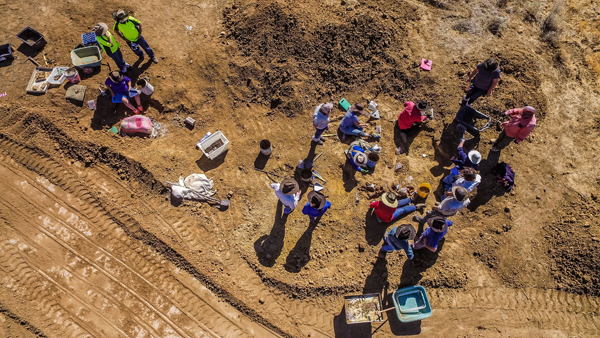
Field team members working at the “Ann” dig site. Picture credit: Australian Age of Dinosaurs.
The fossil specimen is believed to be between 98-95 million years old (Cenomanian faunal stage of the Late Cretaceous). It is the fourth specimen of Diamantinasaurus matildae to have been discovered by Australian Age of Dinosaurs Museum staff.
Studying the Skull
Research on the titanosaur skull was led by Museum Research Associate Dr Stephen Poropat, a Postdoctoral Research Fellow at Curtin University.
Dr Poropat stated:
“This skull gives us a rare glimpse into the anatomy of this enormous sauropod that lived in northeast Australia almost 100 million years ago.”
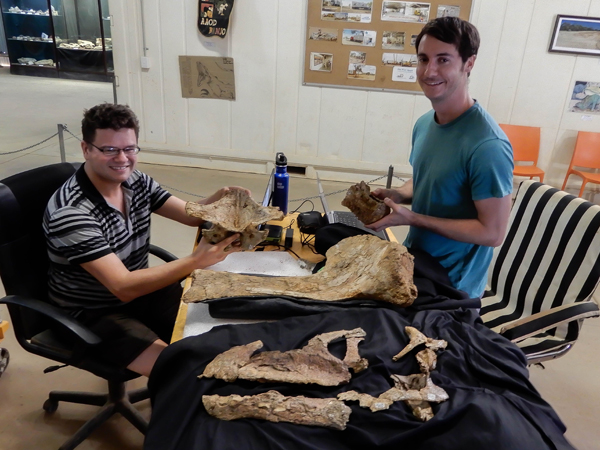
Dr Stephen Poropat (left) and right, Dr Phil Mannion (University College London) examining the “Ann” site fossil material including the Diamantinasaurus skull bones, the Oliver scapula and vertebra two. Picture credit: Australian Age of Dinosaurs.
Implications for Titanosaur Evolution
The researchers identified similarities between “Ann” and the skull of another titanosaur Sarmientosaurus musacchioi. S. musacchioi fossils come from southern Argentina, from rocks which are roughly contemporaneous with the Winton Formation strata. The braincases of these two titanosaurs were similar, along with the dentition (teeth). Similar anatomical characteristics were also identified in the quadratojugal (a bone from the back of the skull near the posterior of the lower jaw).
Dr Poropat commented that their findings support previous theories that sauropods were using Antarctica as a migratory pathway between South America and Australia between 100 and 95 million years ago.
The doctor added:
“Our research suggests that Diamantinasaurus was one of the most ‘primitive’ titanosaurs. Gaining a better understanding of this species might explain why titanosaurs were so successful, across so much of the world, right until the end of the Age of Dinosaurs.”
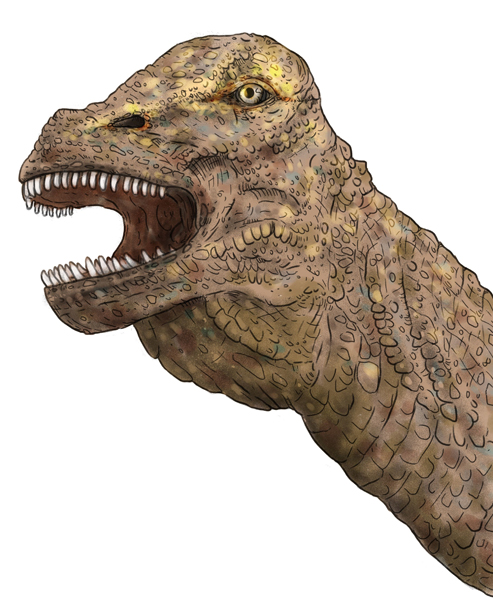
A life reconstruction of the titanosaur Diamantinasaurus. Picture credit: Australian Age of Dinosaurs.
Titanosaur Skull Links Australian Dinosaurs to Antarctica and South America
At the beginning of the Late Cretaceous (100 to 95 million years ago), the Earth was much warmer than it is today. Antarctica which was located approximately where it is today, was ice free. Australia was much further south and closely associated with the Antarctic landmass. The huge conifer forests of Antarctica might have been an attractive habitat for migratory sauropods. The similarities between “Ann” and Sarmientosaurus skull matieral lends weight to the theory that titanosaurs used Antarctica as a pathway to Australia.
The Diamantinasaurus skull fossils are currently on display at the Australian Age of Dinosaurs Museum.
Everything Dinosaur acknowledges the assistance of a media release from the Australian Age of Dinosaurs Museum in the compilation of this article.
The scientific paper: “A nearly complete skull of the sauropod dinosaur Diamantinasaurus matildae from the Upper Cretaceous Winton Formation of Australia and implications for the early evolution of titanosaurs” by Stephen F. Poropat, Philip D. Mannion, Samantha L. Rigby, Ruairidh J. Duncan, Adele H. Pentland, Joseph J. Bevitt, Trish Sloan and David A. Elliott published by Royal Society Open Science.
A new study suggests that the key to the evolutionary success of the early mammals, was to stay small, eat insects and to reduce the number of bones in their skull. The reduction of mammalian skull bones led to a more efficient absorption of bite forces and this adaptation helped mammals to diversify and to ultimately dominate modern ecosystems.
The study, published in the academic journal “Communications Biology” contrasts the skulls of other vertebrates and mammalian ancestors with mammals known from the Jurassic and Cretaceous. In many vertebrate groups such as reptiles and fishes, the skull and lower jaw are composed of numerous bones. This configuration was also seen in the earliest ancestors of modern mammals that lived over 300 million years ago (Cynodontia). However, during evolution the number of bones in the skull was reduced.
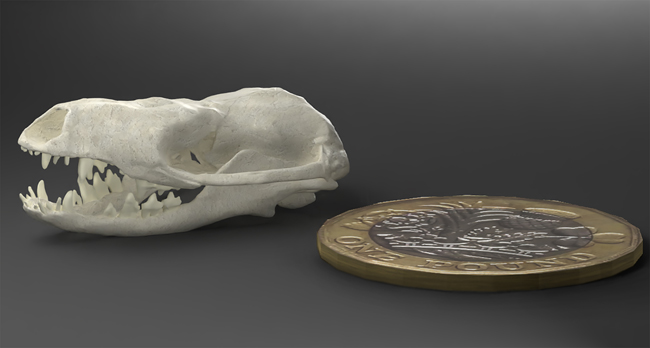
Digital skull model of the small-sized Jurassic mammal ancestor Hadrocodium wui with coin providing scale. Picture credit: Dr Stephan Lautenschlager, University of Birmingham.
A Reduction in Mammalian Skull Bones
Computer simulations based on three-dimensional skull models permitted the research team to examine bite forces and skull stresses. Their research demonstrates that reducing the number of skull bones did not lead to higher bite forces or increased skull strength as postulated previously.
Instead, the researchers, found that the skull shape of these early mammals redirected stresses during feeding in a more efficient way.
Lead author for the study, Dr Stephan Lautenschlager, Senior Lecturer for Palaeobiology (University of Birmingham) explained:
“Reducing the number of bones led to a redistribution of stresses in the skull of early mammals. Stress was redirected from the part of the skull housing the brain to the margins of the skull during feeding, which may have allowed for an increase in brain size.”
Switching Diets
The study, which also involved scientists from the University of Hull, Bristol University, the University of Chicago and the London Natural History Museum, demonstrated that alongside the reduction of skull bones, early mammals also became a lot smaller. Some Mammaliaformes for example, had skulls around 1 cm in length.
This miniaturisation considerably restricted the available food sources and early mammals adapted to feeding mostly on insects.
Dr Lautenschlager added:
“Changes to skull structure combined with mammals becoming smaller are linked with a dietary switch to consuming insects – allowing the subsequent diversification of mammals which led to development of the wide-range of creatures that we see around us today.”
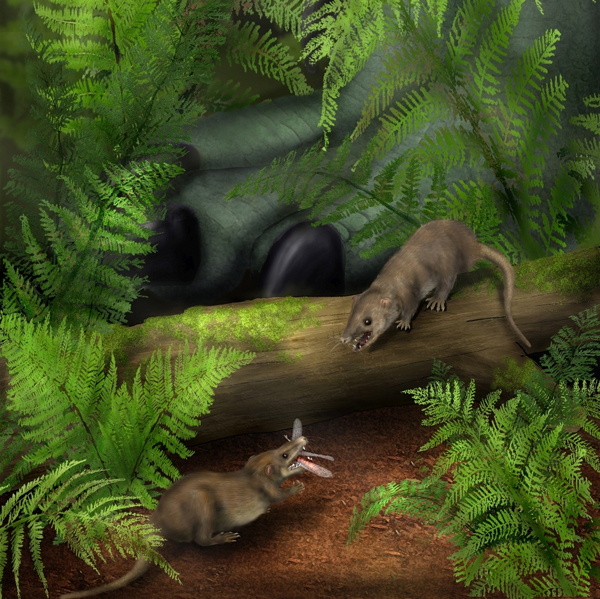
Life reconstruction of Hadrocodium wui. This Jurassic mammal is depicted hunting insects, illustrating how the adoption of an insectivorous diet and miniaturisation played a significant role in mammal evolution. Picture credit: Dr Stephan Lautenschlager, University of Birmingham.
Hadrocodium wui
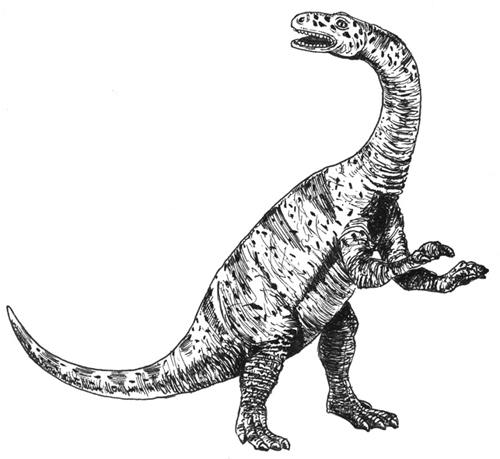
One of the mammaliaforms used in the study, is Hadrocodium wui fossils of which are known from the Early Jurassic (Sinemurian faunal stage) of China. At around ten centimetres long, this tiny animal was a very small and inconsequential member of the Lufeng Formation biota, which was dominated by dinosaurs such as Lufengosaurus.
An illustration of Lufengosaurus. Picture credit: Everything Dinosaur.
Picture credit: Everything Dinosaur
The image (above) is a drawing of the Early Jurassic sauropodomorph Lufengosaurus.
The research team concludes that miniaturisation and staying small, combined with a reduction in skull bones and a switch to an insectivorous diet allowed the ancestors of modern mammals to thrive in the shadows of the Dinosauria. Having nocturnal habits may also have permitted these animals to carve out their own ecological niches in dinosaur dominated ecosystems.
It was not until dinosaurs became extinct at the end of the Cretaceous, some 66 million years ago, that mammals had a chance to further diversify and reach the large range of body sizes seen in many extant mammals today.
Everything Dinosaur acknowledges the assistance of a media release from the University of Birmingham in the compilation of this article.
The scientific paper: “Functional reorganisation of the cranial skeleton during the cynodont–mammaliaform transition” by Stephan Lautenschlager, Michael J. Fagan, Zhe-Xi Luo, Charlotte M. Bird, Pamela Gill and Emily J. Rayfield published in Communications Biology.