Visitors to the Berlin Naturkundemuseum (Germany) will be able to see an amazing Triceratops skull on display as part of an exhibition entitled “Dinosaurs! Age of the Giant Lizards”.
The impressive cranium, complete with horns and an imposing head shield measures two metres long and it was found in Lance Creek Formation deposits (Wyoming, USA) back in 2020. The fossil was discovered by an amateur fossil hunter and after preparation in Canada, the current owner Lars Fjeldsoe-Nielsen has lent the stunning specimen to the Museum für Naturkunde in Berlin.
The magnificent Triceratops skull on display in the “Dinosaurs! Age of the Giant Lizards” gallery at the Berlin Naturkundemuseum. Picture credit: Lukasz Papierak.
Horned Dinosaur Skull
The Triceratops specimen has been nick-named “Amalie” after the daughter of the owner. It is not known whether the skull fossil is from a female or male Triceratops. Both males and females sported neck frills and horns.
Numerous ornithischian dinosaurs are known from the Lance (Creek) Formation. The strata were deposited during the Maastrichtian faunal stage of the Late Cretaceous (69-66 million years ago). The fossils found in these rocks represent a diverse dinosaur dominated terrestrial fauna that thrived prior to the mass extinction event that saw the demise of the non-avian dinosaurs, including ceratopsians like Triceratops.
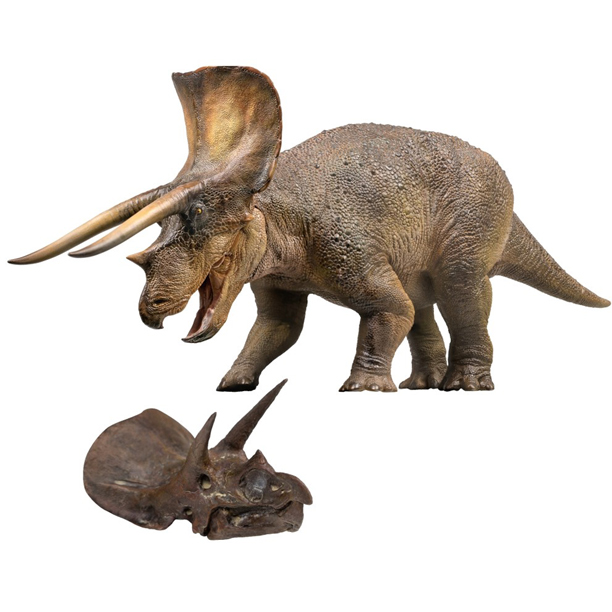
The new for 2022 PNSO Doyle the Triceratops 1:35 scale model comes complete with a scale model of a Triceratops skull.
The picture above shows a Triceratops model and skull, which is part of the PNSO Age of Dinosaurs series.
A spokesperson from Everything Dinosaur commented that they were unsure as to the Triceratops species that “Amalie” represented. They explained that both Triceratops horridus and an as yet, not fully described Triceratops species are associated with the Lance Formation.
Johannes Vogel, Director General of the Museum für Naturkunde Berlin thanked the owner for lending this wonderful specimen and stated:
“The Museum für Naturkunde Berlin would like to express its sincere thanks to Mr Fjeldsoe-Nielsen for this further generous loan. This will enable research museums like ours to get visitors excited about nature and explore the objects.”
The exhibition “Dinosaurs! Age of the Giant Lizards” is due to run until the end of the year.
Everything Dinosaur acknowledges the assistance of a media release from the Museum für Naturkunde Berlin in the compilation of this article.
Everything Dinosaur team members were sent a question by a young dinosaur fan who wanted to know how big was the brain of T. rex? We put our own brains trust to work on this intriguing question.
Having a large brain does not necessarily indicate intelligence, how that organ is configured, and its complexity can provide neuroscientists with an insight into the intelligence of organisms.
Ironically, a controversial study published earlier this year, postulated that Tyrannosaurus rex might have been as smart as a primate, it may have possessed a comparable number of brain cells to that of a monkey.
An endocast of the brain of T. rex derived from internal moulds of the brain case. Picture credit: Everything Dinosaur.
Picture credit: Everything Dinosaur
How Big was the Brain of T. rex?
CAT scans of theropod skulls have enabled palaeontologists to trace nerve pathways and to build up a picture of what some brains of dinosaurs might have looked like. The Tyrannosaurus rex fossil material known as Stan (BHI3033), has provided researchers with a detailed understanding of T. rex brain function. For example, fifty percent of the brain volume was dedicated to analysing smells. Hence the assertion that the sense of smell was extremely important to this carnivore.
As for brain size, estimates vary, but a recent paper published in the Journal of Comparative Neurology estimated the T. rex brain to have weighed around 350 grammes, and endowed this predator with considerable intelligence, putting the “King of the Tyrant Lizards” on a par with extant monkeys.
To read an article from 2013 that looks at research that indicated that dinosaurs had complex brains and postulated that they were capable of sophisticated behaviours similar to modern birds and mammals: Scientists Create a Detailed Map of a Dinosaur’s Brain.
Capable of Tool Use?
Author of the recently published paper, Dr Suzana Herculano-Houzel from the Department of Psychology at Vanderbilt University (Tennessee), postulates that Tyrannosaurus rex had approximately 3 billion cerebral neurons, a greater number than found in baboons.
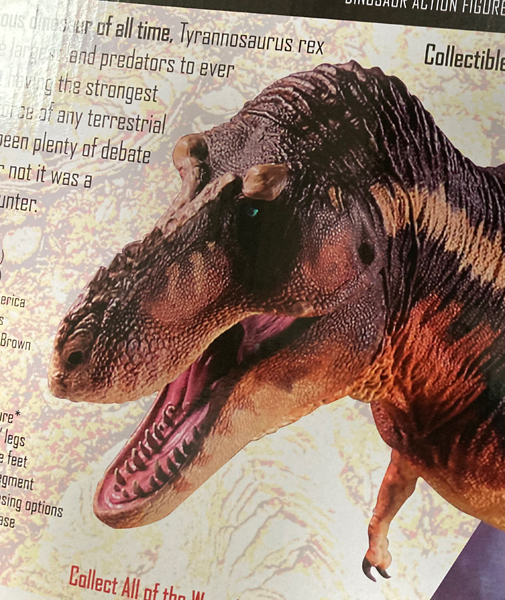
The image of the Beasts of the Mesozoic Tyrannosaurus rex model in 1:18 scale that features on the back of the product packaging. A recent research paper has suggested T. rex was as clever as a monkey. Picture credit: Everything Dinosaur.
The picture (above) shows an image of an articulated Tyrannosaurus rex from the Beasts of the Mesozoic range. To view this range of prehistoric animal figures: Beasts of the Mesozoic Models and Figures.
Using data on living birds and reptiles, Dr Herculano-Houzel inferred the number of neurons extinct creatures had based on calculations of brain mass, including many theropods such as Allosaurus, Archaeopteryx and T. rex.
Writing in the “Journal of Comparative Neurology”, a publication edited by Dr Herculano-Houzel, the doctor extrapolated how many brain cells T. rex possessed in its cerebrum (telencephalon), the most highly advanced part of the brain associated with higher cognitive functions.
Dr Herculano-Houzel postulates that Tyrannosaurus rex would have matured rapidly, lived to about forty years of age and was smart enough to use tools and to pass on acquired knowledge to offspring.
Controversial Ideas
Summarising her research, the doctor concludes:
“That theropods such as Tyrannosaurus and Allosaurus were endotherms with baboon and monkey-like numbers of telencephalic neurons, respectively, which would make these animals not only giant but also long-lived and endowed with flexible cognition, and thus even more magnificent predators than previously thought.”
T. rex brain endocast. Was T. rex really smart? Picture credit: Everything Dinosaur.
As Clever as a Primate!
The paper has attracted scepticism from palaeontologists and other researchers. Gaining an understanding of the neuronal composition of the brains of dinosaurs would provide fundamental insights into their behavioural and cognitive capabilities.
However, brain tissue is rarely fossilised and to achieve her calculations Dr Herculano-Houzel assumed that the entire volume of the braincase was filled by brain tissue. This may not have been so. Perhaps, less than fifty percent of the braincase of T. rex was filled with brain tissue. Dinosaur brains could have been considerably smaller than the size postulated in the scientific paper.
In addition, how the brain is configured, its composition, if you like how it is “wired”, will have a significant impact on an organism’s intelligence.
Claiming that theropods such as Tyrannosaurus and Allosaurus were “the primates of their times”, is exceptionally difficult to substantiate in the absence of a living animal to study.
To read an article from October 2016 about the remarkable discovery of a preserved partial iguanodontid brain: Dinosaur Brain from Southern England.
Bird Brains
Assessing intelligence is challenging, even in living creatures. Pigeons for example, would perhaps not be regarded by many people as being particularly smart, but these avian dinosaurs are capable of remarkable feats of navigation. Many birds demonstrate advanced cognitive abilities such as corvids (crows and their relatives) using tools. Crows have much smaller brains than most monkeys, they have far fewer cerebral neurons but they can outperform some primates when it comes to cognitive assessment tasks.
Dr Herculano-Houzel argues that estimating neuron counts from brain mass is a method that has been applied to hundreds of mammal, bird, and non-avian dinosaur species, the methodology is robust.
However, claiming that T. rex was a smart as a monkey is quite a leap.
The Dinosaur Renaissance
A spokesperson from Everything Dinosaur commented:
“The research paper is free to access, so readers can make up their own minds. Whilst it is extremely challenging to try to work out how intelligent an extinct animal was, the days of regarding dinosaurs as creatures so stupid that they were an evolutionary dead end are long gone.”
The spokesperson added:
“Since the 1960s and the work of palaeontologist John Ostrom, the view of the Dinosauria has fundamentally changed. These animals were perfectly adapted to their environments and they were capable of complex behaviours just like mammals and their close relatives the birds. Just how smart T. rex was is difficult to quantify and validate with scientific evidence. Along with other theropods such as the dromaeosaurids and the oviraptorids these predators might have demonstrated very complex behaviours derived from their cognitive abilities.”
Unfortunately, as we are unlikely to ever observe a living non-avian dinosaur, assessments regarding dinosaur intelligence remain speculative.
How Big was the Brain of T. rex? Something to Ponder
However, the idea of a smart, 7 tonne carnivore measuring in excess of 12 metres long, it makes you think…
The scientific paper: “Theropod dinosaurs had primate-like numbers of telencephalic neurons” by Suzana Herculano-Houzel published in the Journal of Comparative Neurology.
Today, March 18th, we at Everything Dinosaur commemorate the life of the American palaeontologist Othniel Charles Marsh. The eminent professor and president of the prestigious National Academy of Sciences passed away on this day in 1899.
Othniel Charles Marsh
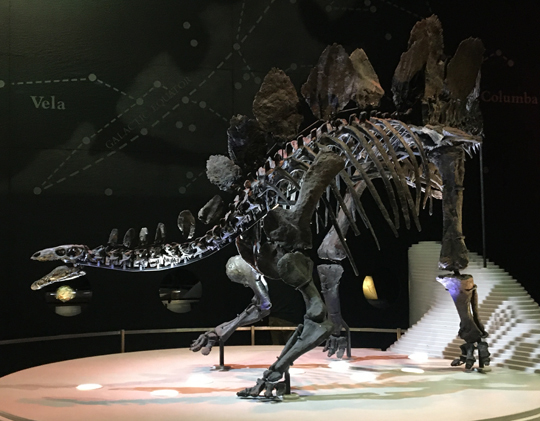
Regarded as one of the great pioneers of American palaeontology he described more than a dozen new genera of dinosaurs, based on fossils excavated from the Western United States. He was responsible for naming and scientifically describing many of the most famous of all the Dinosauria. Brontosaurus, Apatosaurus, Triceratops and Stegosaurus were all named by Marsh.
A view of the anterior of “Sophie” the Stegosaurus stenops specimen on display at the London Natural History Museum. Othniel Charles Marsh named and described the first Stegosaurus species in 1877. Picture credit: Everything Dinosaur.
Theropod Dinosaurs, Prehistoric Birds and Pterosaurs
Marsh also named and described the theropod dinosaur Allosaurus (1878), named and described toothed-birds, early horses and studied the first pterosaur fossils known from the USA.
For all his academic and scientific achievements, perhaps O. C. Marsh is best remembered for his bitter rivalry with his fellow American scientist Edward Drinker Cope. A rivalry that became known as the “Bone Wars”.
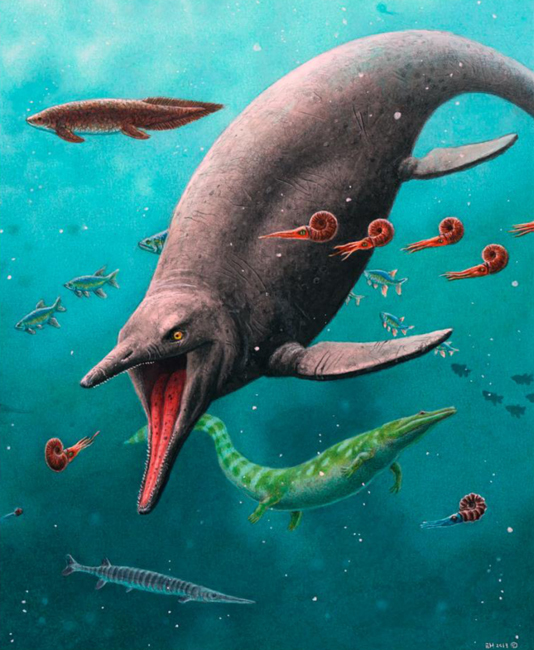
The earliest ichthyosaur fossil specimen discovered to date has been found on the Arctic island of Spitsbergen. The fossil represents a marine reptile that lived around 252 million years ago. The bones indicate that this animal was not a transitional form, but a fully adapted marine reptile.
Reconstruction of the earliest ichthyosaur and the 250-million-year-old ecosystem found on Spitsbergen. Picture credit: Esther van Hulsen.
Picture credit: Esther van Hulsen
Ichthyosaur Evolution
The evolutionary history of the ichthyosaurs remains contentious. No transitional forms representing land-dwelling tetrapods adapting to a marine habit have been found. However, small, basal ichthyosauriforms are known from the Lower Triassic of China, and the fossils of at least one, primitive Early Triassic, dolphin-shaped member of the Ichthyopterygia has already been described from Spitsbergen (Grippia longirostris).
Thanks to the work of a joint team of Swedish and Norwegian palaeontologists a fresh perspective on the origins of the “fish lizards” is provided by these newly described fossil bones.
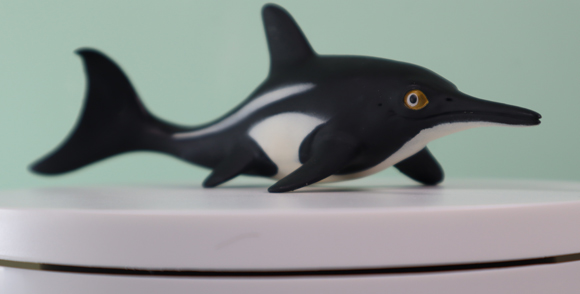
An Ichthyosaurus model, typical of the dolphin-like, streamlined forms that existed during the Early Jurassic. Picture credit: Everything Dinosaur.
Ichthyosaurs were a highly successful, globally distributed group of marine reptiles. The evolved, a “dolphin-like” streamlined body and were active, nektonic predators surviving into the Late Cretaceous.
The first marine reptiles, such as the mesosaurs evolved during the Early Permian. The end-Permian mass extinction event devasted both terrestrial and marine faunas. The cataclysmic event was thought to have led to an evolutionary reset which permitted animals such as the Ichthyosauria to evolve, exploiting niches vacated after the extinction event.
Tetrapods (land-based vertebrates), invaded shallow coastal environments to take advantage of marine predator niches that were left vacant after the mass extinction event. Over millions of years, these early amphibious reptiles became more efficient at swimming and eventually modified their limbs into flippers, developed a ” dolphin-like” body plan, and started giving birth to live young (viviparity). With the evolution of viviparity, there was no need to come ashore in order to lay eggs, so the last ties these creatures had with a terrestrial existence was lost.
The newly described fossil material from Spitsbergen is helping to revise and re-write this previous hypothesis.
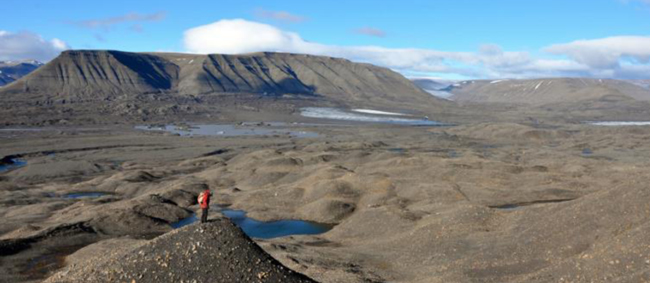
Fossil-bearing rocks on Spitsbergen that produced the earliest ichthyosaur remains. Picture credit: Benjamin Kear.
Picture credit: Benjamin Kear
Flower’s Valley Fossils
On western Spitsbergen a valley (Flower’s Valley), cuts deep into the surrounding mountains and provides access to Lower Triassic marine sediments, approximately 250 million years old. The rocks represent mud deposited at the bottom of an ancient sea and snow melt has gradually eroded the mudstone exposing rounded limestone boulders known as concretions. These objects are formed from limey sediments that coalesced around decomposing animal remains, subsequently preserving them in amazing, three-dimensional detail.
In 2014, the field team removed a number of concretions from the Flower’s Valley site. The rocks were taken back to the Natural History Museum at the University of Oslo for further study.
Scientists from The Museum of Evolution at Uppsala University have identified bony fish remains and bizarre “crocodile-like” amphibian bones, together with 11 articulated caudal vertebrae from an ichthyosaur.
Found in Rocks Thought to be Too Old for Ichthyosaur Fossils
Surprisingly, these tail bones occurred within rocks that were supposedly too old for ichthyosaurs. Also, the fossil bones do not represent a transitional form, but they show characteristics associated with geologically younger ichthyosaurs.
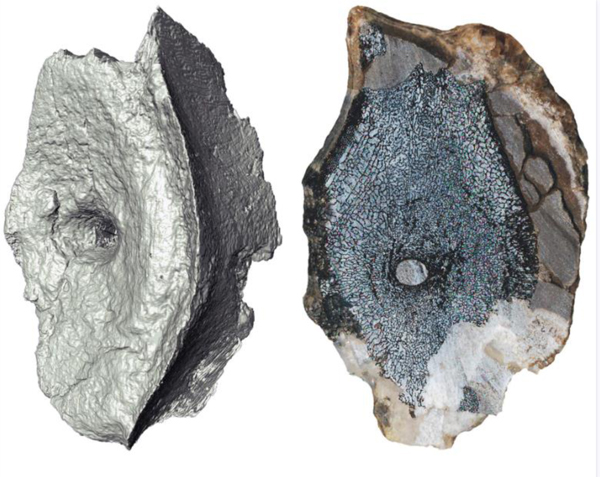
The vertebrae are identical to those of geologically much younger, larger-bodied ichthyosaurs, and even preserve internal bone microstructure showing adaptive hallmarks of fast growth, elevated metabolism and a fully oceanic lifestyle.
Computed tomography image and cross-section showing internal bone structure of vertebrae from the earliest ichthyosaur. Picture credit: Øyvind Hammer and Jørn Hurum.
Picture credit: Øyvind Hammer and Jørn Hurum
Dating the Surrounding Rock (Geochemical Testing)
Geochemical testing of the surrounding matrix dated the age of the fossils at approximately two million years after the end-Permian mass extinction. When the estimated timescale of marine reptile evolution is considered, this suggests the origins and early diversification of the Ichthyosauria took place during the Permian and prior to the Mesozoic Era.
These fossils suggest that the popular hypothesis of ichthyosaurs evolving to exploit niches vacated as a result of the end-Permian mass extinction is incorrect. Ichthyosaurs were present prior to the end of the Permian.
The discovery of the oldest ichthyosaur rewrites the popular vision of Age of Dinosaurs (Mesozoic Era), as the emergence timeframe of major reptile lineages. It now seems that at least some groups predated this landmark interval, with fossils of their most ancient ancestors still awaiting discovery in even older rocks on Spitsbergen and elsewhere in the world.
Everything Dinosaur acknowledges the assistance of a media release from the Uppsala University in the compilation of this article.
The scientific paper: “Earliest Triassic ichthyosaur fossils push back oceanic reptile origins” by Kear, B.P., Engelschiøn, V.S., Hammer, Ø., Roberts, A.J. and Hurum, J.H. published in Current Biology.
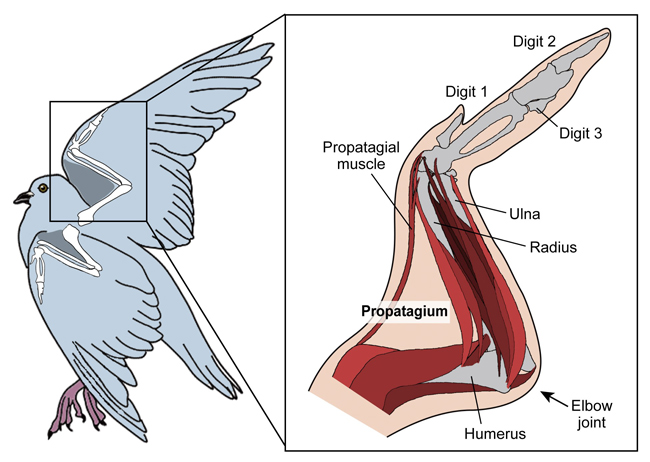
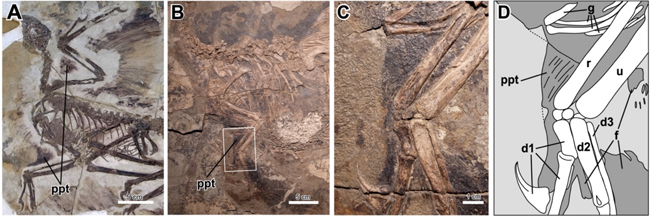
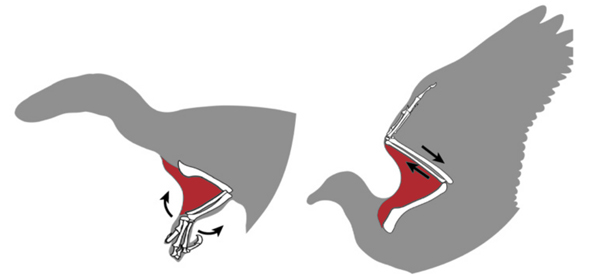
New research suggests maniraptoran theropod dinosaurs possessed a propatagium. The propatagium (pronounced pro-pah-ta-gee-um), is a soft tissue structure that joins the wrists and shoulders of volant birds. It helps with the wing flapping motion and provides a leading edge to the wing. Without this structure, birds could not fly.
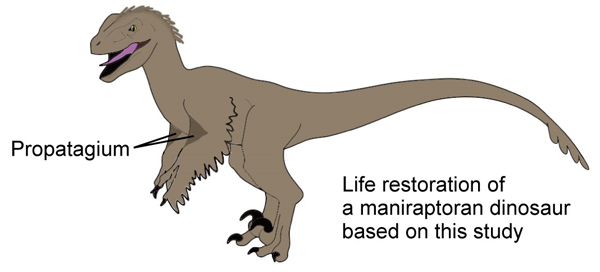
If members of the Maniraptora, such as Therizinosaurus, Velociraptor, Oviraptor and troodontids had a propatagium on each arm, this would change how these dinosaurs are depicted. Many existing models and replicas would not be accurate and these figures would require updating.
Modern volant birds have a propatagium. A specialised wing structure, without which they would not be able to fly. The evolutionary origins of the propatagium remain uncertain, but new research led by scientists at the University of Tokyo (Japan), is helping to fill some of the gaps. By conducting a statistical analysis of the arm joints associated with the fossilised remains of some dinosaurs, the researchers have concluded that a propatagium was present in certain theropod dinosaurs on the dinosaur/bird evolutionary lineage.
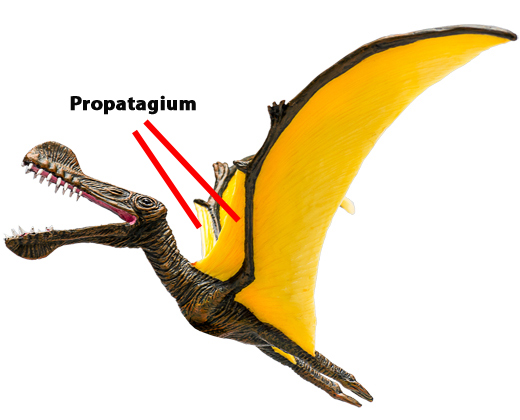
Propatagia are also known in other volant vertebrates – the bats and pterosaurs. These structures are examples of convergent evolution. Anatomical traits arising as animals adapt in similar ways to similar selective pressures.
A Tropeognathus pterosaur model with the propatagia highlighted.
Birds Evolved from Dinosaurs
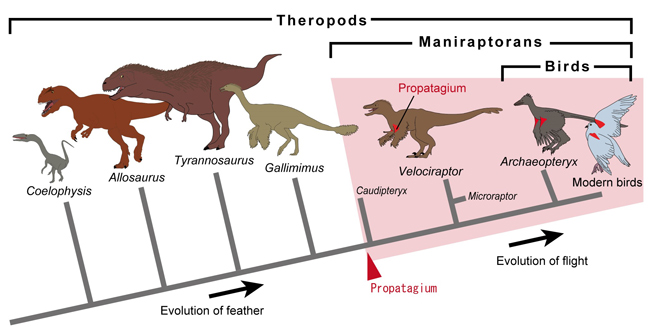
Most scientists agree that birds evolved from maniraptoran dinosaurs. It therefore seems appropriate to look for avian traits within the Dinosauria, such as the presence of feathers, strong but light bones, and inner ears that help with balance and spatial awareness.
The University of Tokyo’s Department of Earth and Planetary Science wanted to try to see if evidence for the propatagium could be found in the non-avian dinosaur fossil record. The propatagium contains a muscle which connects the wrist to the shoulder and the research team set about trying to find evidence for this soft tissue structure in the fossilised remains of maniraptoran dinosaurs.
Co-author of the paper, published in the journal “Zoological Letters”, Associate Professor Tatsuya Hirasawa explained:
“It [the propatagium] is not found in other vertebrates, and it’s also found to have disappeared or lost its function in flightless birds, one of the reasons we know it’s essential for flight. So, in order to understand how flight evolved in birds, we must know how the propatagium evolved. This is what prompted us to explore some distant ancestors of modern birds, theropod dinosaurs.”
Theropod dinosaurs such as Giganotosaurus, Tyrannosaurus rex and Velociraptor had arms, not wings, although some theropods such as the dromaeosaurid Microraptor were capable of flight. If the researchers could find evidence of early examples of the propatagium within non-avian dinosaurs, they would gain a better understanding of how some Dinosauria gradually transitioned from having arms to evolving wings.
Unfortunately, a soft tissue structure such as a propatagium would only be preserved in exceptional circumstances. Hard, mineralised parts of the body such as bones have a far greater fossilisation potential. Perhaps the bones of fossilised dinosaurs could provide a clue?
Co-author of the study, Yurika Uno (University of Tokyo) explained:
“The solution we came up with to assess the presence of a propatagium was to collect data about the angles of joints along the arm, or wing, of a dinosaur or bird.”
Studying Joint Angles
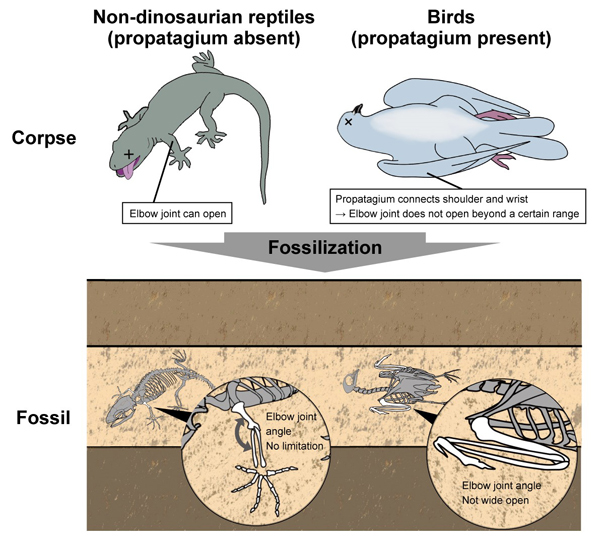
The presence or lack of a propatagium could be inferred by examining the angles of the joints in the arm in articulated fossil specimens. The way arm joints are articulated in fossils gives away the presence or absence of the propatagium structure. Thus the researchers could provide indirect evidence demonstrating the evolution of the avian wing structure.
The graduate student added:
“In modern birds, the wings cannot fully extend due to the propatagium, constraining the range of angles possible between connecting sections. If we could find a similarly specific set of angles between joints in dinosaur specimens, we can be fairly sure they too possessed a propatagium. And through quantitative analyses of the fossilised postures of birds and nondinosaurs, we found the tell-tale ranges of joint angles we hoped to.”
The researchers postulate that the propatagium likely evolved in a group of dinosaurs known as the maniraptoran theropods. The Maniraptora clade is composed of coelurosaurian dinosaurs and is defined as including all birds and the non-avian dinosaurs that were more closely related to birds than they were to Ornithomimus velox.
Close examination of the fossilised remains of the oviraptorosaurian Caudipteryx and the winged dromaeosaurian Microraptor indicate the presence of propatagia. The researchers suggest that they have found evidence for the presence of a propatagium in dinosaurs that existed prior to the evolution of flight in the maniraptoran lineage.
If maniraptoran dinosaurs had propatagia prior to the evolution of powered flight, then this raises an intriguing question. Why did the propatagium evolve? Why did these particular theropods evolve such a structure?
The University of Tokyo researchers are optimistic that by studying more fossils as well as embryonic development within extant vertebrates they might be able to provide some answers.
The team thinks some theropods might have evolved the propatagium not because of any pressure to learn to fly, as their forelimbs were made for grasping objects and not for flying. The propatagium originally had another purpose. It could be speculated that this “leading edge” of the arm evolved to help amplify visual intraspecific communication. Perhaps it evolved as a soft tissue structure used in display to demonstrate fitness for breeding and to win mates.
An enlarged surface area of the forelimb might have played a role in helping to shade eggs or perhaps play some other role in the brooding process.
Finding fossil evidence to support these suggestions is likely to prove difficult. However, if further studies demonstrate the presence of propatagia in the Maniraptora, it will change the way these types of dinosaurs are depicted.
Everything Dinosaur acknowledges the assistance of a media release from the University of Tokyo in the compilation of this article.
The scientific paper “Origin of the propatagium in non-avian dinosaurs” by Yurika Uno and Tatsuya Hirasawa published in Zoological Letters
A team of scientists have been studying a Pinacosaurus larynx and have concluded that this armoured dinosaur was probably capable of producing a variety of sounds and calls.
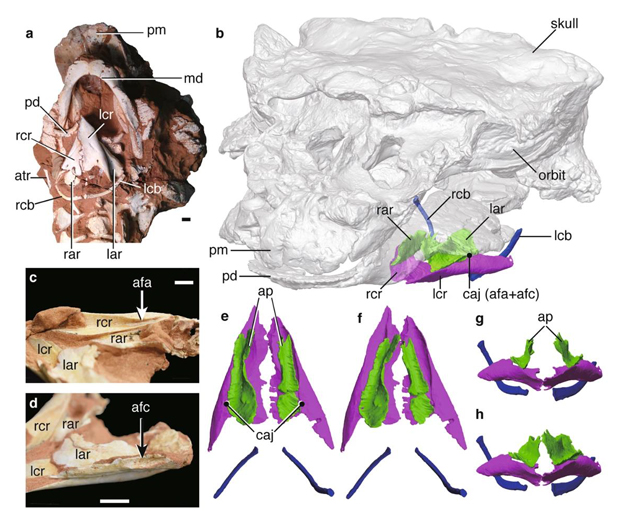
A juvenile specimen of Pinacosaurus (P. grangeri), specimen number IGM100/3186, preserves a hyoid and two laryngeal elements (cricoids and arytenoids) in almost life articulation. From these remains the researchers have concluded that just like crocodilians and birds, Pinacosaurus was capable of producing a range of vocalisations. The calls may have had several functions, to alert others of a predator approaching, to threaten a predator, to define territory or to search for a mate. The sounds made by this ornithischian dinosaur may have been related to courtship, or perhaps helped to call offspring to their side.
Skull in ventral view (a) photograph by Michael D’ Emic and edited by Junki Yoshida. A 3-D reconstruction of the skull, jaws and hyolaryngeal apparatus in left oblique view (b). Crico-aryteniod joint of right cricoid in medial view (c). The joint of left arytenoid in dorsolateral view (d). Arytenoid position in glottal opening (e) and glottal closing in anterior views (f). Arytenoid position in glottal opening (g) and glottal closing in dorsal views (h). Abbreviations: afa, articular facet for arytenoid; afc, articular facet for cricoid; ap, arytenoid process; atr, atlas rib; caj, crico-arytenoid joint; lcb, left ceratobranchial; lcr, left cricoid; md, mandible; pm, premaxilla; pd, predentary; rar, right arytenoid; rcb, right ceratobranchial; rcr, right cricoid. Scale bars equal 1 cm. Picture credit Yoshida et al.
Pinacosaurus grangeri
Pinacosaurus (P. grangeri) is regarded as a basal member of the Ankylosaurinae subfamily of ankylosaurs. It is known from copious fossil material, and it is one of the most extensively studied of all the Late Cretaceous Thyreophora. Fossils are known from the Mongolia and China (Djadokhta Formation and the geologically older Alagteeg Formation).
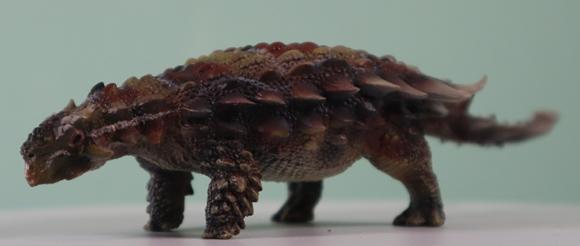
A Pinacosaurus dinosaur model (PNSO). A study into their vocalisation has been published. Picture credit: Everything Dinosaur.
The image (above) shows a not-to-scale replica of Pinacosaurus (PNSO).
In tetrapods the voice box (larynx) has several functions. It plays a role in respiration, protects the airway to prevent food items becoming lodged and it has a function in vocalisation. Fossil preservation of the larynx in archosaurs is extremely rare. The Pinacosaurus fossil material (IGM100/3186) represents the oldest voice box known to science. It provides scientists with an opportunity to better understand the evolution of the larynx in non-avian dinosaurs.
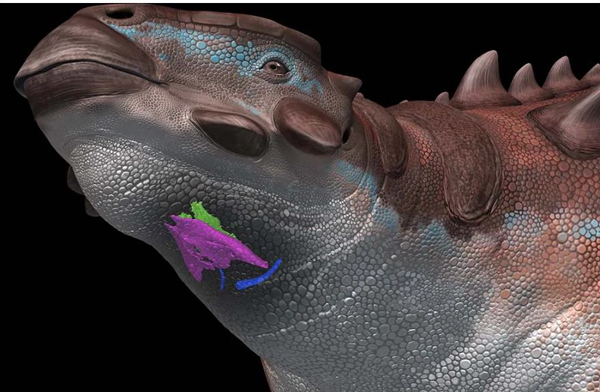
The Pinacosaurus hyolaryngeal apparatus (tongue and voice box) in situ. A life reconstruction. Cricoid (purple), arytenoid (green), and ceratobranchial (blue) are depicted. Artwork by Tatsuya Shinmura.
Vocal Armoured Dinosaurs
Ossification of the cricoid and arytenoid is confirmed in Pinacosaurus, and it has been reported in Saichania, another Asian ankylosaurine. This configuration is also found in extant birds. The complex arrangement of the hyolaryngeal apparatus led the researchers to conclude that it did not simply function as a barrier to preventing food entering the trachea (airway protection). It was specialised for opening the glottis and possibly acting as a sound modifier.
The voice box of modern birds and crocodilians differs. In crocodiles and their close relatives it is the larynx that produces sounds. In birds, the larynx forms part of the vocal tract but they have a specialised organ (syrinx) located at the base of the trachea (wind pipe), that produces sounds.
Pinacosaurus – Shared Anatomical Characteristics
The researchers suggest that Pinacosaurus retained the same hyolaryngeal elements as found in crocodilians. However, Pinacosaurus shows many shared characters with birds in the arrangement and morphology of the larynx.
The authors of the scientific paper, which was published this month in “Communications Biology” (Junki Yoshida, Yoshitsugu Kobayashi and Mark Norell), propose that Pinacosaurus did not use the larynx as a sound source like non-avian reptiles. The larynx probably worked as a sound modifier as found in birds
Furthermore, the authors postulate that bird-like vocalisation likely appeared in non-avian dinosaurs before the evolution of the Aves (birds).
Article sourced from the open-access paper in Communications Biology.
The scientific paper: “An ankylosaur larynx provides insights for bird-like vocalization in non-avian dinosaurs” by Junki Yoshida, Yoshitsugu Kobayashi, Mark A. Norell published in Communications Biology.
A team of international scientists including researchers from the University of Birmingham have published a paper on the brain and cranial nerves of fish that lived approximately 319 million years ago. The team’s findings are shedding light on vertebrate brain evolution.
The Late Carboniferous (early Pennsylvanian subperiod), fish fossil was discovered in a layer of soapstone adjacent to a coal seam at the Mountain Fourfoot coal mine in Lancashire and the specimen was first scientifically described in 1925. The fish, named Coccocephalus wildi, would have measured around 20 cm in length and it lived in what was an ancient estuary. It is only known from this single fossil and only the skull and jaws were recovered.
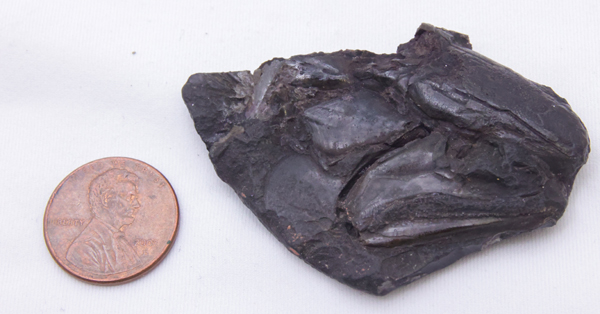
The fossilised skull of Coccocephalus wildi. The fish is facing to the right, with the jaws visible in the lower right portion of the fossil. The eye socket is the circular, bumpy feature above the jaws. Picture credit: Jeremy Marble, University of Michigan News.
Vertebrate Brain Evolution
Coccocephalus was a member of the Class Actinopterygii, also known as the ray-finned fishes. The skull fossil was sent on loan from Manchester Museum to the University of Michigan and subsequent CT scans of the skull revealed the surprising discovery of the intact brain and associated nerves.
Senior author Sam Giles, (University of Birmingham), commented:
“This unexpected find of a three-dimensionally preserved vertebrate brain gives us a startling insight into the neural anatomy of ray-finned fish. It tells us a more complicated pattern of brain evolution than suggested by living species alone, allowing us to better define how and when present day bony fishes evolved.”
University of Michigan palaeontologist Matt Friedman examines CT scan images of an exceptionally preserved, brain of the Late Carboniferous ray-finned fish Coccocephalus wildi. Picture credit: Jeremy Marble, University of Michigan News.
Rapidly Buried
When the fish died, it was probably buried rapidly in sediment containing very little oxygen. The lack of oxygen prevented the soft brain tissue from decaying. Whilst brain cases can reveal the shape and structure of vertebrate brains, this remarkable fossil preserved the brain tissue of a prehistoric fish.
Soft tissues such as the brain normally decay quickly and very rarely fossilise. But when this fish died, the soft tissues of its brain and cranial nerves were replaced during the fossilisation process with a dense mineral that preserved, in astonishing detail, their three-dimensional structure.
This discovery provides palaeontologists with a window into the evolution and development of the brains of ray-finned fishes, a highly successful group of back-boned animals estimated to represent more than fifty percent of all living vertebrate species.
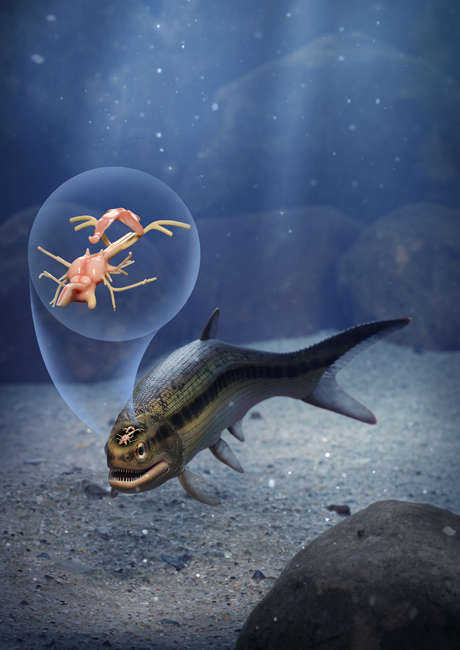
Life reconstruction of the ray-finned fish Coccocephalus wildi showing location and shape of brain and cranial nerves. Picture credit: Márcio L. Castro.
A study of the jaws and teeth of C. wildi suggest that it was carnivorous, likely feeding on small invertebrates. The CT scans revealed that the brain had bilateral symmetry, like the brains of modern ray-finned fishes, but significantly, the brain of Coccocephalus folds inward, unlike in all living ray-finned fishes, in which the brain folds outward.
The fossil captures a time before a signature feature of ray-finned fish brains evolved, providing an indication of when this trait evolved.
Co-author of the paper, published in the journal “Nature”, Matt Friedman (University of Michigan) explained:
“An important conclusion is that these kinds of soft parts can be preserved, and they may be preserved in fossils that we’ve had for a long time—this is a fossil that’s been known for over 100 years.”
Everything Dinosaur acknowledges the assistance of a media release from the University of Birmingham in the compilation of this article.
The scientific paper: “Exceptional fossil preservation and evolution of the ray-finned fish brain” by Rodrigo T. Figueroa, Danielle Goodvin, Matthew A. Kolmann, Michael I. Coates, Abigail M. Caron, Matt Friedman and Sam Giles published in Nature.
A new pterosaur species has been described based on a superbly preserved specimen found in Upper Jurassic limestone deposits in Bavaria (southern Germany). The fully articulated specimen displays a unique dentition that suggests this flying reptile fed like a modern-day flamingo, sieving water through its jaws to trap small invertebrates as it waded or possibly swam in a shallow lagoon.
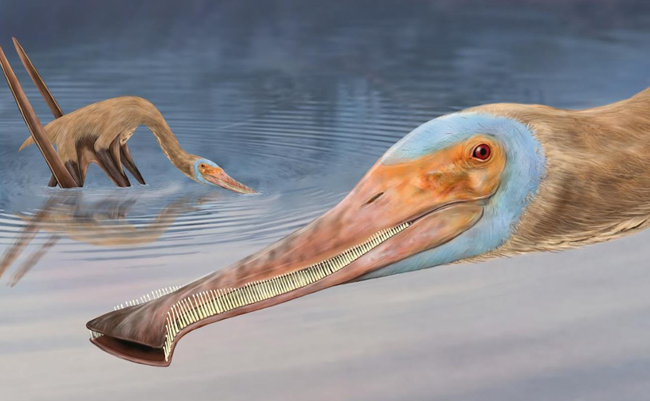
A life reconstruction of the newly described pterosaur Balaenognathus maeuseri. Picture credit: Megan Jacobs
Picture credit: Megan Jacobs
Balaenognathus maeuseri
The pterosaur has been classified as a ctenochasmatid, a group of short-tailed pterodactyloids characterised by specialised teeth adapted for filter feeding. Fossils of these relatively small flying reptiles (most with wingspans less than 3 metres), have been found in Europe, America and China, in rocks dating from the Upper Jurassic to the Early Cretaceous. The new pterosaur has been named Balaenognathus maeuseri, the genus name derives from the scientific name for the Bowhead whale (Balaena mysticetus) and the Latin for jaw, as it is thought that these two unrelated species shared a common feeding strategy. The specific epithet honours a co-author of the paper Matthias Mäuser who sadly passed away before publication.
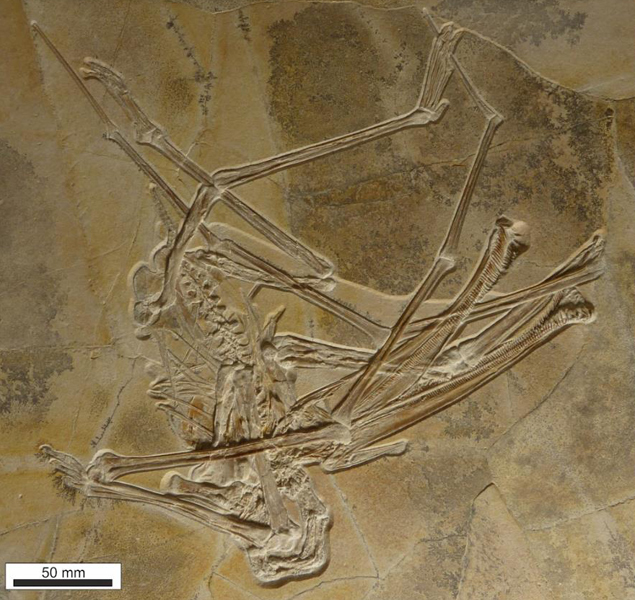
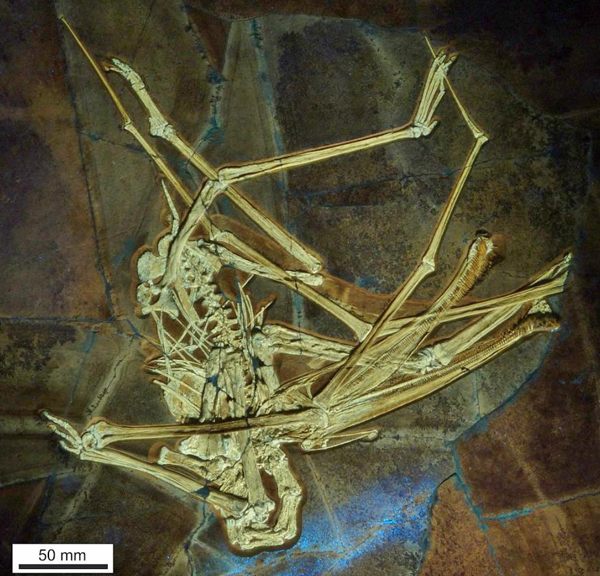
The fossilised bones of Balaenognathus maeuseri found in the slab of limestone (Upper Jurassic laminated limestones at Wattendorf, Bavaria in Southern Germany). Picture credit: PalZ.
Lead author of the study, published in Paläontologische Zeitschrift (PalZ), Professor David Martill from the University of Portsmouth School of the Environment, Geography and Geosciences commented:
“The nearly complete skeleton was found in a very finely layered limestone that preserves fossils beautifully.”
Unique Pterosaur Dentition
The fossil (specimen number NKMB P2011-63), is remarkable for its completeness, unusual dentition and hints of the preservation of soft tissues, including wing membranes. The delicate jaws contain at least 480 fine teeth.”
Professor Martill added:
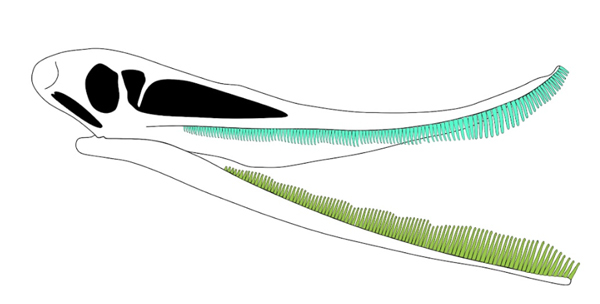
“The jaws of this pterosaur are really long and lined with small fine, hooked teeth, with tiny spaces between them like a nit comb. The long jaw is curved upwards like an avocet and at the end it flares out like a spoonbill. There are no teeth at the end of its mouth, but there are teeth all the way along both jaws right to the back of its smile.”
Tentative line reconstruction of the skull. Picture credit: PalZ
Bizarre Hook-like Tooth Crown
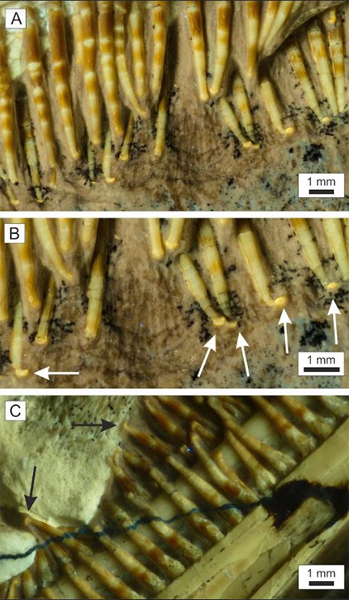
The tips of the jaw are devoid of teeth, which would have permitted plankton and invertebrate-rich water to rush into the long jaw. The hundreds of teeth would have acted as a sieve helping to strain out food. Many of the teeth have a hook-like expansion on the tip of the crown, a bizarre and unique tooth morphology.
Explaining the significance of these strange teeth, Professor Martill stated:
“What’s even more remarkable is some of the teeth have a hook on the end, which we’ve never seen before in a pterosaur ever. These small hooks would have been used to catch the tiny shrimp the pterosaur likely fed on – making sure they went down its throat and weren’t squeezed between the teeth.”
Fig 7 shows UV images of the teeth (A) teeth close to the tip of the jaw (B) close-up of the crown tips of the teeth of the left jaw showing the hook-like teeth with the hooks highlighted by white arrows. Image (C) the middle teeth. Picture credit: PalZ.
A New Pterosaur
The discovery was made accidentally while scientists were excavating a large block of limestone containing crocodilian fossil remains.
Professor Martill explained:
“This was a rather serendipitous find of a well-preserved skeleton with near perfect articulation, which suggests the carcass must have been at a very early stage of decay with all joints, including their ligaments, still viable. It must have been buried in sediment almost as soon as it had died.”
Most members of the Ctenochasmatidae family seem to have been the pterosaur equivalent of wading shore birds, although some genera were perhaps adapted to habitats further inland and have truly bizarre shaped jaws leaving palaeontologists perplexed as to what they ate.
Only one other known pterosaur had more teeth than Balaenognathus. It is another ctenochasmatid and it is called Pterodaustro guinazui and its fossils are known from the Lower Cretaceous of Argentina. Both Pterodaustro and Balaenognathus were likely filter feeders although the arrangement of their teeth differs. Balaenognathus had teeth in the upper and lower jaw which are the mirror image of each other, whilst P. guinazui had very reduced teeth in the upper jaw and up to a 1,000 densely packed, bristle-like teeth in the lower jaw.
The Balaenognathus maeuseri specimen viewed under UV (ultra violet) light. Picture credit: PalZ.
New Pterosaur Species – Unique Feeding Mechanism
The teeth of Balaenognathus suggest a feeding strategy that involved the animal either wading through water or swimming, using its spoon-shaped beak to funnel water into its mouth, this water was then strained through its teeth to trap prey. The researchers propose that Balaenognathus fed on shrimps and copepods filling a similar ecological niche as extant ducks, shorebirds and flamingos.
Commenting on the sad passing of Matthias Mäuser, Professor Martill said:
“Matthias was a friendly and warm-hearted colleague of a kind that can be scarcely found. In order to preserve his memory, we named the pterosaur in his honour.”
Everything Dinosaur acknowledges the assistance of a media release from the University of Portsmouth in the compilation of this article.
The scientific paper:
The scientific paper: “A new pterodactyloid pterosaur with a unique filter‑feeding apparatus from the Late Jurassic of Germany” by David M. Martill, Eberhard Frey, Helmut Tischlinger, Matthias Mäuser, Héctor E. Rivera‑Sylva and Steven U. Vidovic published in Paläontologische Zeitschrift (PalZ).
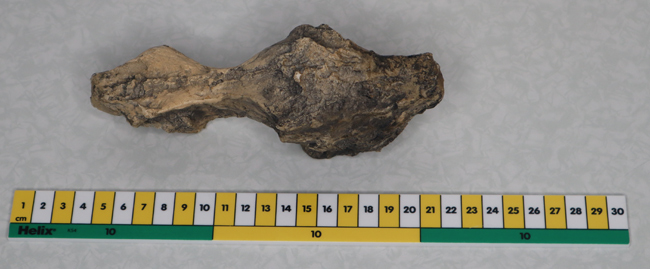
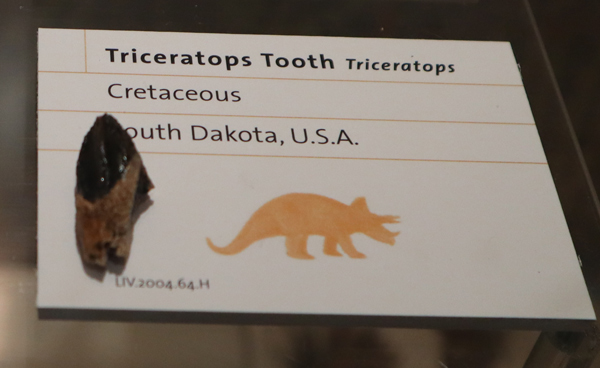
Some dinosaur fossils might be regarded as spectacular, the enormous casts of sauropod skeletons or perhaps a Tyrannosaurus rex articulated mount. However, it is often the smaller specimens that provide palaeontologists with a wealth of data. For example, whilst walking through a museum after a meeting, an Everything Dinosaur team member spotted a Triceratops fossil tooth on display.
Fossil teeth provide palaeontologists with an understanding of the animal’s diet. Wear patterns can indicate the method of feeding and in some animals such as elephants for example, detailed analysis of the teeth can not only provide information on diet, but the age of the proboscidean can also be determined.
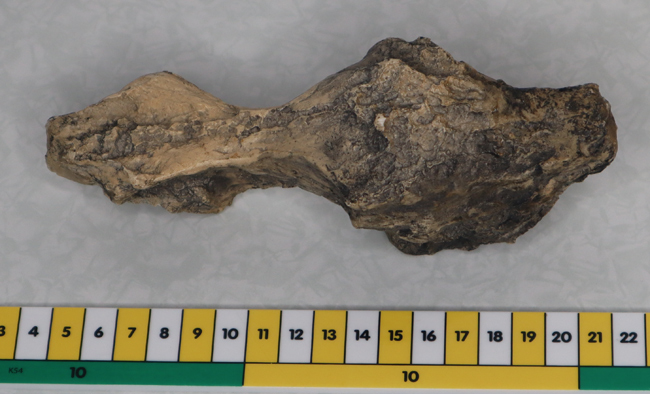
A Triceratops fossil tooth. Picture credit: Everything Dinosaur.
If the internal structure of the tusk of a Woolly Mammoth is examined, then seasonal variations in growth can be determined and even times when the prehistoric elephant suffered from poor health.
Triceratops Fossil Tooth
A single tooth from a ceratopsian can change perspectives and lead to a revision of our understanding of the Dinosauria. In 2017, Everything Dinosaur team members wrote an article about a scientific paper that confirmed the discovery of a single tooth from a horned dinosaur. This fossil tooth demonstrated that ceratopsids existed in eastern America (Appalachia). This was the first recorded evidence of this group of ornithischian dinosaurs on that part of the American Cretaceous land mass.
Sometimes it can be the smallest fossils that provide the greatest amount of information. Palaeontologists still have a lot to learn about the Dinosauria, even a famous dinosaur such at Triceratops horridus probably hides a few secrets still.
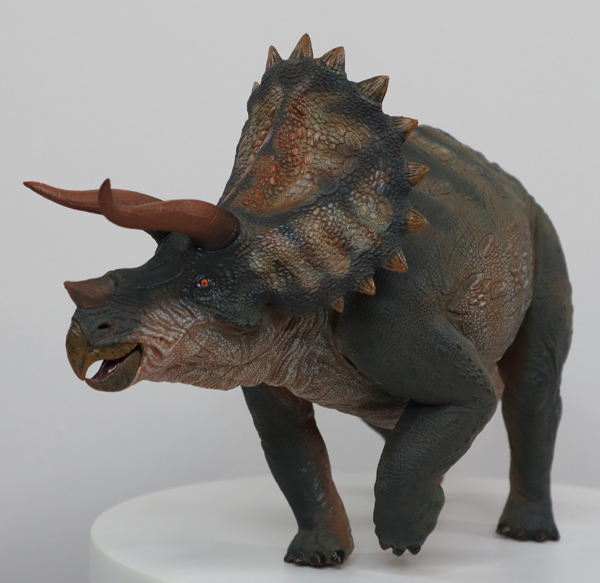
The Triceratops model (Heavy Lance – Tricolor) in anterior view. Picture credit: Everything Dinosaur.
Picture credit: Everything Dinosaur
The picture (above) is one of the Nanmu Studio Jurassic Series Triceratops colour variants (Tricolor).
Carboniferous chimaeras were suction feeders unlike their modern relatives such as the rat fish which are durophagous (feed on hard-shelled prey such as crabs, snails and molluscs). That is the conclusion of new research published this week in the academic journal The Proceedings of the National Academy of Sciences (PNAS).
An Exceptional Three-dimensional Fossil
The research led by the Muséum national d’histoire naturelle (MNHN) located in Paris, and the University of Birmingham has shown that an ancient relative of chimaeras, jawed vertebrates that are related to cartilaginous fishes (sharks and rays), fed by sucking in prey animals underwater.
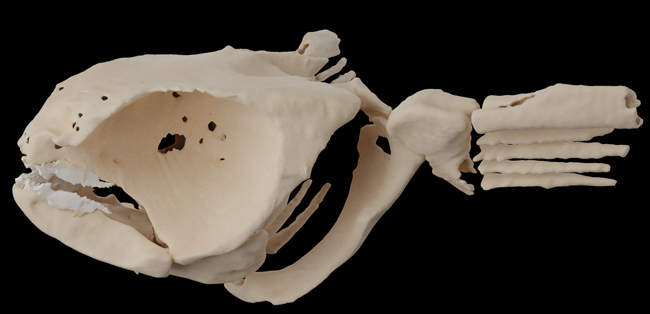
An exceptional three-dimensional fossil of an ancient chimaera (Iniopera genus), has revealed new clues about the diversity of these creatures during the Carboniferous period.
The three-dimensional cast of the Carboniferous chimaera fossil (Iniopera) which helped the researchers to determine feeding strategy. Picture credit: University of Birmingham.
Carboniferous Chimaera
The fossil, from a genus called Iniopera, is the only suction feeder to be identified among chimaeras, and quite different from living chimaeras, which generally feed by crushing molluscs and other hard-shelled prey between their teeth.
Chimaeriformes are an ancient order of cartilaginous fish (Chondrichthyes) that are thought to have evolved in the Devonian. Most extant species are found at depths greater than two hundred metres, and some chimaera fish are restricted to extremely deep water (Bathypelagic Zone).
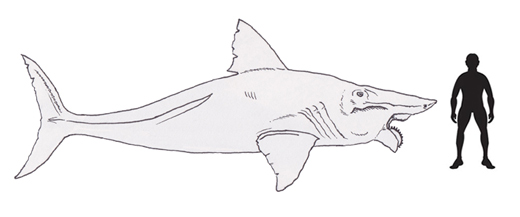
Most fossil and extant chimaeras are quite small, very few specimens exceed one metre in length. However, other prehistoric, cartilaginous fish that were distantly related to Iniopera grew much larger. For example, the Permian genus Helicoprion with its bizarre tooth-whorl jaw, which has been estimated to have grown to around eight metres in length.
As Everything Dinosaur prepares for the arrival of Haylee the Helicoprion model from PNSO a scale drawing of this Permian fish has been commissioned. Picture credit: Everything Dinosaur.
Picture credit: Everything Dinosaur
Although models of prehistoric fish from the Chondrichthyes Class are rare, PNSO have included two prehistoric shark figures (O. megalodon and Cretoxyrhina) and a replica of Helicoprion.
Commenting on the significance of this study, lead researcher Dr Richard Dearden (University of Birmingham) stated:
“Being able to identify Iniopera as a suction feeder sheds light on the diverse role of chimaeras in these early ecosystems. In particular, it suggests that in their early evolutionary history, some chimaeras were inhabiting ecological niches that are now monopolised by ray finned fishes – a far cry from their modern life as specialised shell-crushers.”
The cartilage skeleton of these fish are rarely fossilised and the Chondrichthyes tend to be underrepresented in the fossil record. The skeletons that are preserved tend to be crushed flat and distorted so interpreting them is notoriously difficult. However, by studying the tooth shapes and diverse body plans, palaeontologists were already aware that extinct forms were far more varied than their living counterparts.
3-D Imaging Techniques
Using advanced 3-D imaging techniques, the researchers reconstructed the head, shoulder and throat skeleton of the Iniopera fossil. They then estimated the location of major muscles and found the anatomy was poorly suited to durophagous feeding. Instead, the researchers believe the animal was more likely to have used the muscle arrangement to expand the throat to take in water and a forward-pointing mouth to orient towards prey.
Suction feeding is a technique used by many animals that live underwater. It involves generating low pressures in the throat to pull in water and prey. To do this effectively, the animal needs to be able to rapidly expand its throat, and point its mouth forward towards prey items. Numerous different aquatic jawed vertebrates, such as ray-finned fishes and some turtles have evolved specialised anatomies to help them feed in this manner more effectively.
The suction feeding theory is also supported by fossilised Chimaeriformes that have preserved stomach contents. Small arthropods have been found in association with the body cavity of several specimens and their relatively entire state suggests suction feeding as the method of prey capture.
Everything Dinosaur acknowledges the assistance of a media release from the University of Birmingham in the compilation of this article.