All about dinosaurs, fossils and prehistoric animals by Everything Dinosaur team members.

Important and influential figures in science or from other related areas concerning dinosaurs and prehistoric animals.

10 11, 2009

Remembering the Great Gideon Mantell 03.02.1790 – 10.11.1852

By |2024-04-18T07:32:12+01:00November 10th, 2009|Categories: Dinosaur and Prehistoric Animal News Stories, Dinosaur Fans, Educational Activities, Everything Dinosaur News and Updates, Famous Figures, Main Page|0 Comments

Gideon Mantell – Died this day in 1852

The son of a shoe maker, Gideon Mantell rose from humble origins to become one of the most influential and respected scientists in the early years of palaeontology. Despised by the likes of Sir Richard Owen, who did much to destroy Mantell and his reputation, the passing of time has shown that this physician had a far greater insight into the Dinosauria than many of his contemporaries, including Owen himself.

Gideon Algernon Mantell

Gideon Algernon Mantell, was born in 1790 and died this day in 1852.  He is perhaps best remembered as the discoverer and describer of the first ornithischian dinosaur to be scientifically named and described – Iguanodon.  This was only the second dinosaur to be formerly studied and along with Megalosaurus (the first) and Hylaeosaurus it was included in the Order Dinosauria by Richard Owen.

The story of how Mantell came to name and describe Iguanodon, is shrouded in mystery.  His wife Mary Ann, often accompanied Mantell on visits to patients.  The possibly apocryphal story suggests that it was Mary Ann who found a strange tooth in a pile of stones placed on the road by workmen, as she waited for her husband.  This is believed to have taken place sometime in 1822.  A number of researchers have claimed that this story is nothing more than Georgian romantic make believe, but others have claimed that this version of the events may well turn out to be accurate.  Either way, Mantell went on to describe this tooth and others as well as a number of fossil bones found in the Tilgate Forest strata of the Weald of Sussex.

Remembering Gideon Mantell

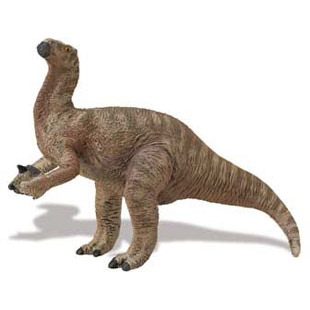
Mantell was highly influential in the early years of the study of dinosaurs and other prehistoric animals, writing several books on geology and palaeontology.  Although, despised by the vindictive Owen, Mantell is remembered by scientists and a number of Lower Cretaceous fossil species are named after him.  He even has a species of Iguanodon named in his honour Iguanodon mantelli.  Recently, an iguanodontid from the Isle of Wight, formerly named I. atherfieldensis, a lightly built, Early Cretaceous member of the Iguanodontid family, was re-named by some scientists in Mantell’s honour.  This new dinosaur name is Mantellisaurus.

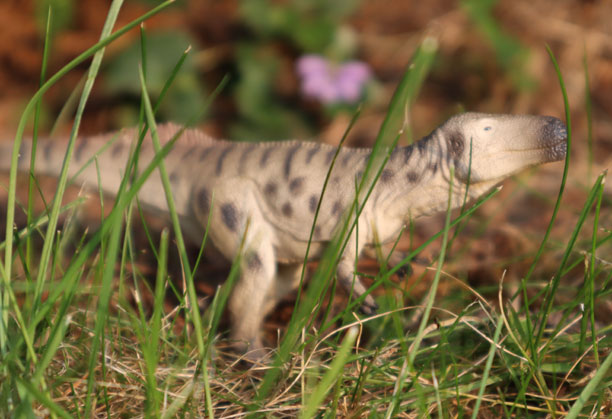
A Model of a Mantellisaurus Dinosaur

CollectA Mantellisaurus dinosaur model.

CollectA Mantellisaurus drinking.

To view a model of an Iguanodon. a Mantellisaurus and other ornithischian dinosaurs, take a look at the CollectA Age of Dinosaurs model range: CollectA Age of Dinosaurs Prehistoric Life Models.
18 09, 2009

Hats Off to the Fantastic Sir David Attenborough

By |2024-04-17T13:40:05+01:00September 18th, 2009|Categories: Dinosaur Fans, Famous Figures, Main Page|0 Comments

Hats Off to Sir David Attenborough

Sir David Attenborough is a real national treasure.  How we have enjoyed listening to his life stories broadcast on Radio 4.  These radio programmes are a series of short monologues with Sir David Attenborough narrating a number anecdotes from his long career in making natural history programmes.  His enthusiasm and love for the natural world comes across, as does his considerable knowledge about this subject.

Sir David Attenborough

He is a keen fossil hunter and has since childhood had a fascination for prehistoric animals such as ammonites and trilobites.  I believe he has gathered together over the years, quite a large collection.  Good luck to him we say, and how we enjoyed listening to his latest broadcast when he spoke eloquently about how important trace fossils are.  In his brief monologue on the subject of trackways; he discussed the remarkably well preserved fossils of Solnhofen.  The amazing fossil of a king crab trackway with the trackway preserved in the lithographic limestone and at the end of the trail, the fossilised remains of the arthropod that made them.

Sir David Attenborough also discussed some other trackways from Solnhofen, the mini-motorbike like tracks made by ammonite shells as they were washed along the bottom of the lagoon by currents.  We have not seen any of these particular trace fossils, but they way in which Sir David described them was quite mesmerising.

The Wonders of Trace Fossils

To end his segue into the wonders of trace fossils, he discussed the Laetoli footprints.  These hominid footprints (two adults and a juvenile) were discovered in 1978 by Mary Leakey.  These footprints have been dated to around 3.6 million years ago and are believed to have been made by Australopithecus afarensis.  Very few broadcasters can cover such a range and breadth of subject material, especially in a short ten minute programme.  However, Sir David is a very rare and special broadcaster indeed, listening to him talking about fossils, animals and other aspects of nature is a real pleasure.

Visit Everything Dinosaur’s user-friendly website: Everything Dinosaur.

14 08, 2009

Marking the Anniversary of the Death of the Famous Reverend William Buckland

By |2024-04-17T13:43:03+01:00August 14th, 2009|Categories: Famous Figures|0 Comments

The Reverend William Buckland Died this Day in 1856

The Reverend William Buckland, English clergyman, academic, naturalist and passionate geologist died this day in 1856.  It was Buckland who was given the task of scientifically describing the first species of dinosaur to be recognised as an extinct reptile.  The dinosaur was Megalosaurus and the description took place in 1824.  The full species name for Megalosaurus is Meglosaurus bucklandii (after Buckland).

The Reverend Buckland was given the task of examining a fossilised piece of lower jaw, although the name had already been given to the animal by another scientist – James Parkinson two years earlier.  Although regarded as eccentric (mainly because he kept wild animals such as bears at his home), William Buckland went on to become Dean of Westminster Abbey.

Reverend William Buckland

He dedicated himself to working on scientific studies of the make up and landscape of the British Isles and his work became standard texts for other academics in Late Georgian and Early Victorian England.  His most influential work, attempted to link the increasing amount of fossil evidence to accepted religious beliefs.  Three editions of “Observations on the Organic Remains contained in caves, fissures, and diluvial gravel attesting the Action of a Universal Deluge” were produced during his lifetime.

He was appointed Dean of Westminster Abbey in 1845, one of our favourite “Buckland snippets”, pieces of trivia concerning this scientist, is that, he had engraved onto his umbrella the words “Stolen from Dean Buckland”.

Megalosaurus bucklandii

Buckland’s Megalosaurus (M. bucklandii) has inspired model makers to produce lots of replicas of this iconic dinosaur.  It remains one of the most popular of the “English dinosaurs”.

CollectA Age of Dinosaurs Popular Megalosaurus in Ambush

The CollectA Age of Dinosaurs Popular Megalosaurus in Ambush dinosaur model. It looks like it has a smug expression on its face – a “Mona Lisa Megalosaurus”. Picture credit: Everything Dinosaur.

Picture credit: Everything Dinosaur

The dinosaur model shown above is the CollectA Age of Dinosaurs Popular Megalosaurus in ambush figure, to view the CollectA range of not-to-scale models: CollectA Age of Dinosaurs Popular Models.

2 05, 2009

Remarkable Coincidence Amongst Fossil Detectives

By |2024-04-15T14:39:05+01:00May 2nd, 2009|Categories: Dinosaur Fans, Famous Figures|0 Comments

Cuckfield and the Iguanodon Coincidence

Dr Hermione Cockburn the presenter of the BBC television series “The Fossil Detectives” which aired on BBC television channels back in 2008,  heralds from the village of Cuckfield in West Sussex.  What of it, you might say?  Well, Dr Cockburn, who has a PhD in geomorphology from the University of Edinburgh and is well-known for her television roles on educational programmes such as “Coast” and “What the Ancients Did for Us”, can lay claim to having a link to one of the most important places related to early palaeontology.

Iguanodon

The fossilised remains of a giant, prehistoric animal, later identified as an Iguanodon were discovered in a quarry close to the village of Cuckfield, the place were Hermione spent part of her childhood.  It was from these fossils that Gideon Mantell was able to describe the second member of the Dinosauria Order.  There is a monument to Gideon Mantell located not far from the village centre.

A Model of an Iguanodontid Dinosaur

A model of an Iguanodon.

A typical iguanodontid dinosaur.

The large village of Cuckfield is synonymous with early fossil discoveries from the Wealden Formation of Lower Cretaceous aged strata.  A number of Iguanodon fossil discoveries have been made in nearby quarries.

Visit Everything Dinosaur’s award-winning website: Everything Dinosaur.

12 03, 2009

Paying a Special Tribute to CollectA’s Fabulous Anthony Beeson

By |2024-04-15T14:28:18+01:00March 12th, 2009|Categories: Dinosaur Fans, Everything Dinosaur Products, Famous Figures|1 Comment

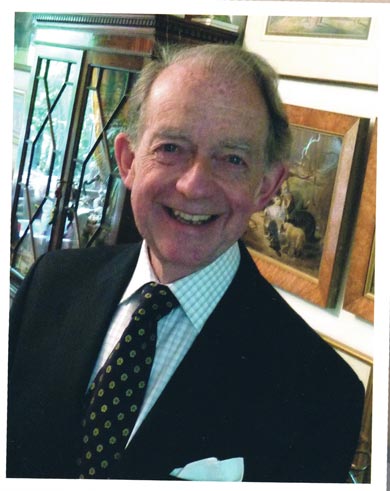
Anthony Beeson The Designer Behind Collecta Prehistoric Animal Models

CollectA might make a number of model ranges, after all they don’t just make dinosaur models, they have a “Sea Life” collection, “Farm Life” and a “Woodlands” collection as well.  However, for us at Everything Dinosaur, it is the company’s “Prehistoric Life” model series that most appeals.  This particular part of CollectA’s portfolio has expanded rapidly over the last couple of years or so and today we pay tribute to Anthony Beeson one of the leading lights behind the design of the CollectA prehistoric animal models.

Anthony  Beeson – Expert in Palaeo-imagery

Anthony Beeson

Anthony Beeson.

Picture credit: Everything Dinosaur/CollectA

Anthony Beeson

Each prehistoric figure sculpture is approved by Anthony, a highly regarded expert in palaeo-imagery.  Anthony has many strings to his bow, not just model making.  He is a well-respected librarian, archaeologist and collector.  He is based in the historical city of Bristol (south-west England).  CollectA currently manufacturers two ranges of prehistoric animal models, the deluxe scale model series and a more numerous not-to-scale model range.

To see Everything Dinosaur’s range of CollectA scale model dinosaurs: CollectA Deluxe Prehistoric Life.

We look forward to hearing about CollectA’s plans for new additions to their growing model ranges.

As Anthony himself says, when it comes to these dinosaur models:

“Wishing you all a happy and educational year of play and collecting.”

9 03, 2009

Anniversary of the Death of Mary Anning

By |2023-02-28T16:41:24+00:00March 9th, 2009|Categories: Dinosaur and Prehistoric Animal News Stories, Everything Dinosaur News and Updates, Famous Figures, Main Page|0 Comments

Marking the Date of Mary Anning’s Death

This year, marks the 200th anniversary of the birth of the great English scientist and naturalist Charles Darwin.  There are numerous events, public exhibitions and programmes dedicated to him and his work on the theory of evolution.

The work of Darwin is extremely significant in science, the theory of the origin of species by means of natural selection has been claimed to be one of the most important and far reaching scientific theories in human history.   The implications effect not only science, but religion and politics.  However, on this particular day, March 9th, our thoughts turn to another pioneer within science, a person highly respected by palaeontologists today but during her lifetime, it was a different story.

Mary Anning

On March 9th 1847, Mary Anning died.  She was a pioneering, English fossil collector and self-taught scientist who did much to aid the development of the early science of palaeontology.  With her father and brothers, Mary collected fossils along the Dorset coast, in the Charmouth and Lyme Regis areas.  She has been credited with discovering the first nearly complete fossils of a Jurassic Ichthyosaur in England and the first Plesiosaur and flying reptile (Pterosaur) a few years later.

Most of the fossils collected by Mary were sold to private collectors or scientific institutions (some of her specimens can be seen in the Natural History museum for example).  Unfortunately, as a woman and of low social standing she was unable to gain the recognition her work deserved.  Often relying on charity and parish funds; she had an extremely difficult and arduous life.  She died on this day in 1847, aged just forty-seven.  She is buried in the churchyard at Lyme Regis overlooking the cliffs where Mary searched for fossils.

The author of “The French Lieutenant’s Woman” a book made into a film starring Meryl Streep and partly shot in Lyme Regis (the famous Cobb scene); commented on the way in which the scientific community failed to recognise the work of Mary Anning during her lifetime.  Although revered by many scientists today, it is only in the last few years that her role in the early days of palaeontology has become fully recognised.

John Fowles (author) stated:

“One of the meanest disgraces of British palaeontology is that though many scientists of the day gratefully used her finds to establish their own reputations, not one native type bears the name anningii”.

Recognising the Contribution Made by Mary Anning

Sir Richard Owen, did little to recognise her work, whilst the Swiss-American naturalist Douglas Agassiz did honour her and we believe he did name a number of species of prehistoric fish after her, a mark of respect for a woman who did so much to help the scientific community.

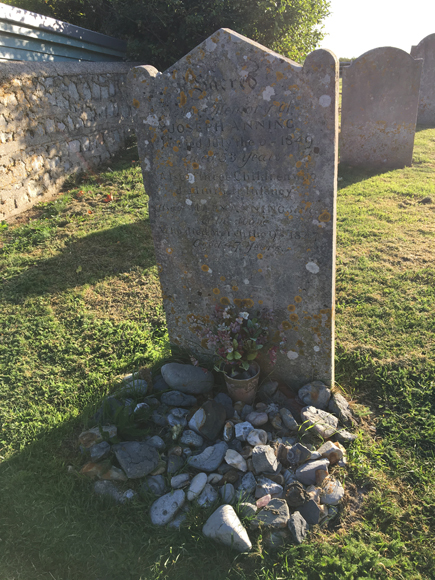
The Grave of Mary and Her Brother Joseph

Remembering Mary Anning.

The grave of Mary and Joseph Anning. Picture credit: Everything Dinosaur.

Picture credit: Everything Dinosaur

Everything Dinosaur stocks a range of replicas and models of prehistoric animals that Mary Anning would have been familiar with as she studied their fossils. To view this range (CollectA Age of Dinosaurs Popular): CollectA Age of Dinosaurs Popular Figures.

12 02, 2009

Happy Birthday Charles Darwin Many Happy Returns!

By |2024-04-15T13:47:58+01:00February 12th, 2009|Categories: Dinosaur and Prehistoric Animal News Stories, Educational Activities, Famous Figures, Main Page, Palaeontological articles|0 Comments

200th Anniversary of the Birth of Charles Darwin

Today, February 12th marks the 200th Anniversary of the birth of Charles Darwin, the English naturalist and scientist who influenced scientific thinking through his theories on natural selection and evolution.

Charles Darwin

Darwin’s theories although not universally accepted, are the cornerstone of palaeontological research.  Although he is credited with coming up with the theory of natural selection, other researchers, scientists and thinkers had expressed similar ideas before Darwin.   In the early 19th century, how animals changed from one species to another was not properly understood but it was referred to as “transmutation”.

Indeed, Darwin was eventually forced into publishing his theory as a second English scientist, A. R. Wallace who had been working in the Far East; was about to publish a similar paper on the origins of species.  Darwin being the meticulous man he was had gathered together a vast amount of evidence to support his theory, so much so that when the book “The Origin of Species” was published, he described it as briefing paper as he had to leave out so much of the evidence to support his theory on natural selection.  A modern edition of the book still has over 450 pages.

The Origin of Species

With the publication of his revolutionary and ground breaking work in 1859, Charles Darwin established a view of the world that challenged the long held beliefs about Divine Creation and the development of life.  He challenged the notion that all animals were created at the same time and that they remain fixed, not changing over time.  His work has far reaching implications for humanity and remains one of the most hotly contended issues in science today.  Ironically, Darwin had no knowledge of genetics or DNA so the mechanism for evolution could not be explained.  It was to be another 30 years after his death before the work of the likes of Gregor Mendel came to be recognised and another 70 years or so before the nature of DNA began to be understood.

To read more about the publication of the “Origin of Species”:

Anniversary of the Publication of the “Origin of Species”.

The work and insight of Charles Darwin has made a lasting contribution to science and philosophy, a number of events are planned this year to mark the 200th anniversary of his birth.  The events are grouped under the collective term “Darwin 200” and include documentaries on television, a season of radio programmes exploring the impact of his work, as well as events, presentations and fossil festivals.

Happy Birthday Charles Darwin.

Visit Everything Dinosaur’s award-winning website: Everything Dinosaur.

24 01, 2009

The Application of Science – Louis Pasteur

By |2023-02-26T09:51:06+00:00January 24th, 2009|Categories: Famous Figures|0 Comments

Great Quotation About Science and Scientific Enquiry

In an address given at the inauguration of the Faculty of Science at the University of Lille in 1854, Louis Pasteur (1822-1895) stated:

“Dans les champs de l’observation le hasard ne favorise que les espirits prepares.”

He was making the point about how vital it is to observe and show discipline when it comes to scientific enquiry.  In the Earth sciences such as palaeontology, observation is extremely important.  We advise amateur fossil hunters to draw and sketch their fossil finds as well as photograph them as we believe it is only through careful observation, such as that needed to produce a facsimile of an object, can one really understand a fossil.

Translated, Pasteur’s quotation is:

“Where observation is concerned chance only favours the prepared mind.”

In our view Pasteur was emphasising the importance of being disciplined and the need to observe carefully.  This is a founding principle of scientific enquiry.

For dinosaur and fossil themed toys and games: Everything Dinosaur Toys and Games.

17 11, 2008

Mary Anning a Famous Formal Portrait

By |2024-04-15T13:25:17+01:00November 17th, 2008|Categories: Famous Figures, Geology, Teaching|0 Comments

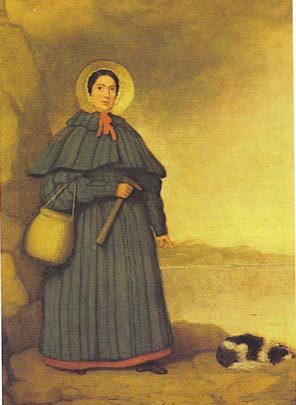
Mary Anning a Formal Portrait

Pioneering fossil collector Mary Anning was famous for finding fossils along the coast of the Lyme Regis area in Dorset (southern England).  With her little dog to keep her company (dog sadly killed in a landslide), Mary spent many hours each day between the tides exploring the cliffs and foreshore looking for fossils from the Lower Lias sediments.

Mary Anning 1799-1847

Mary Anning 1799-1847.

Mary came from a family of professional fossil collectors.  The family excavated fossils of many marine reptiles such as ichthyosaurs and plesiosaurs along with a number of prehistoric fish.  She helped discover the first pterosaur fossils to be formally studied in England and she was pivotal in helping to build up the fossil record of Lower Jurassic specimens.

6 11, 2008

Famous Jurassic Park Author Dies – Death of Michael Crichton Announced

By |2024-04-15T13:23:45+01:00November 6th, 2008|Categories: Dinosaur and Prehistoric Animal News Stories, Famous Figures, Main Page|0 Comments

Michael Crichton (23.10.1942 – 04.11.2008)

Michael Crichton, the best-selling author behind a number of science fiction novels and thrillers, and the long-running television series ER, has passed away.  In a statement released by the Crichton family, Michael passed away after a “courageous and private battle against cancer”.

Michael Crichton

Although he trained as a doctor, Michael’s writing to help fund his medical school fees soon took over his life and he went on to write a number of highly acclaimed novels, many of which such as Westworld, the Andromeda Strain and Jurassic Park went on to be made into very successful films.

He wrote the novel Jurassic Park, a story about dinosaurs being brought back to life using genetic engineering and created the screenplay for the film.  Jurassic Park is one of the most successful films of all time, grossing something like $900 million dollars, spawning two sequels (rumours of a fourth film) and it was awarded three Oscars.  Jurassic Park was directed by Steven Spielberg and showcased the new generation of CGI techniques that enabled long extinct animals to be brought to life.  The film relied on the advice of top palaeontologists to assist with the lifelike creations of dinosaurs such as Brachiosaurus, Tyrannosaurus rex and Triceratops.

Larger than Life Velociraptors

Controversially, the film depicted larger than life Velociraptors with a strong social hierarchy and venomous dilophosaurs.  It is very difficult to find fossil evidence to substantiate these traits depicted in the film but they are a testament to Michael’s imagination and the film’s ability to blend science with a creative interpretation of scientific evidence.

“Jurassic Park”

“Michael’s talent out-scaled even his own dinosaurs of Jurassic Park,” the film director Steven Spielberg said yesterday.  “He was the greatest at blending science with big theatrical concepts, which is what gave credibility to dinosaurs again walking the Earth… Michael was a gentle soul who reserved his flamboyant side for his novels.  There is no one in the wings that will ever take his place.”

Whilst discussing the novel Jurassic Park with colleagues at Everything Dinosaur, I recall the excitement I felt when reading the part in the book when the scientists discover that something is wrong.  A count of the dinosaurs on the island is enacted expecting to find 300 animals and when more are recorded, the team get their first inkling that something must be going out of control.

Crichton’s books combined the latest scientific theories with fast-paced narratives, and his background of training to be a doctor meant that he was able to make unbelievable plots seem credible and realistic. By the time of his death, his books had sold more than 150 million copies worldwide.

A Long-running Hospital Drama

Michael Crichton used his medical knowledge and experiences to help create the long running hospital drama ER.  This television series has been very successful and the programme has been sold around the world.  Crichton won an Emmy for ER in 1996.

The author campaigned passionately about the threat of global warming, being sceptical about the scientific evidence behind the concept of climate change.  He wrote a book called State of Fear, which echoed some of his own concerns – a scientist discovers that there is a conspiracy behind the concept of climate change.

During a speech he gave in Washington in 2005, the author said: “In my view, our approach to global warming exemplifies everything that is wrong with our approach to the environment.  We are basing our decisions on speculation, not evidence.”

Entertained and Enthralled a Generation

Michael Crichton’s books entertained and enthralled a generation.  His imaginative writing combined with credible scientific plots made him famous and helped bring important scientific issues to the attention of a huge audience.

In a statement released by Michael’s family, his contribution is summed up succinctly.

Through his books, Michael Crichton served as an inspiration to students of all ages, challenged scientists in many fields and illuminated the mysteries of the world in a way we could all understand” – Crichton family statement.

Go to Top