All about dinosaurs, fossils and prehistoric animals by Everything Dinosaur team members.

Fossil finds, new dinosaur discoveries, news and views from the world of palaeontology and other Earth sciences.

6 03, 2016

A Remarkable Window into the Mesozoic

By |2023-04-13T21:52:32+01:00March 6th, 2016|Categories: Dinosaur and Prehistoric Animal News Stories, Main Page, Palaeontological articles|0 Comments

Major Jurassic and Early Cretaceous Fossil Site Announced

A team of scientists have announced the discovery of an enormous area of fossil-rich land in the highlands of southern Patagonia (Argentina), the site, which has yet to be fully explored, may extend for some sixty thousand square kilometres and as such, this location may prove to be the greatest single concentration of fossils (Lagerstätten) yet found anywhere in the world.  Lead author of the research paper published in the on line, bi-monthly, scientific journal “Ameghiniana”, Juan Garcia Massini, concludes that this huge site could provide an unprecedented amount of fossil material and provide an unparalleled view of life on Earth between 160 million and 140 million years ago.

Fossil Site

The discovery was made back in 2012, but it has taken nearly four years for the Argentinian research team to map and plot the area and to gain an appreciation of the astonishing array of organisms preserved.

A Map of the Southern Highlands of Patagonia Showing the Hot Spring Fossil Locations

The hot spring deposits identified to date are shown in red.

The hot spring deposits identified to date are shown in red.

Picture credit: Regional Centre for Scientific Research and Technology Transfer

For Juan Garcia Massini (Regional Centre for Scientific Research and Technology Transfer, known s CRILAR), the site is truly remarkable, he stated:

“No other place in the world contains the same amount of diversity of Jurassic fossils.”

Volcanic Hot Springs Preserve Fossils in Exquisite Detail

This region of southern Argentina was once very geologically active.  There were volcanoes and hot springs, resembling the sort of springs found in Yosemite National Park (in the Sierra Nevada mountains of California), from time to time these hot springs went into overdrive and large amounts of silica-rich, hot water erupted, covering the land.  This petrified the local fauna and flora that was not mobile enough to get out of the way.  The organisms were preserved in situ and almost instantaneously trapped as fossils.  This led to an amazing degree of preservation.  Plant remains, fungi, nematodes, insects and other Arthropods have been preserved, providing scientists with a unique window into life in the Late Jurassic and Early Cretaceous.

Dr Massini explained:

“You can see the landscape as it appeared in the Jurassic—how thermal waters, lakes and streams as well as plants and other parts of the ecosystem were distributed.”

The Fossilised Compound Eye of an Insect

A beautifully preserved compound eye from an insect.

A beautifully preserved compound eye from an insect.

Picture credit: Regional Centre for Scientific Research and Technology Transfer

The exquisite fossilised eye was found in an area of the Patagonian Highlands called La Bajada, just one of several areas identified so far to have particularly high concentrations of fossils.  By slicing the silicate rocks and polishing the exposed surface, very small fossils of the micro fauna and flora can be observed.

The area has been slowly eroded exposing the highly fossiliferous layers, providing the scientists with an almost pristine “in situ” Jurassic and Early Cretaceous landscape to study.

A Piece from a Conifer and a Nematode Worm

The remains of a sprig of a conifer (left) and a nemotode worm (right)

The remains of a sprig of a conifer (left) and a nematode worm (right).

Picture credit: Regional Centre for Scientific Research and Technology Transfer

A Large Number of Specimens from the Fossil Site

A large number of fossils are remarkably well preserved, the speed of petrification may have caused this, with the scientists suggesting that significant areas may have been covered by the hot springs in less than a day, preserving the area as a time capsule providing a unique window into life in the Mesozoic.

Dr Massini added:

“You can see how fungi, cyanobacteria and worms moved when they were alive.”

The slow erosion of the layers of rock that covered the sites in the Deseado Massif mountain range has contributed to the phenomenal level of preservation.  The region has been compared to the famous Rhynie Chert sedimentary deposits of eastern Scotland, named after the nearby village of Rhynie (Aberdeenshire).  This site preserves the flora and fauna of a Devonian ecosystem that was also preserved due to the influx of hot springs inundated with silica.    These fossils are much older, dating from approximately 410 million years ago (Pragian faunal stage of the Early Devonian).  The Rhynie Lagerstätten preserves evidence of some of the very first terrestrial inhabitants, including the first land plants.

The silica-rich sediments are referred to as cherts and when sliced very thinly and studied under powerful microscopes they reveal their fossil content.  The preparation, cutting and polishing of the material will take time, the field team expect to be working on the Deseado Massif for decades as they gradually build up an extremely detailed and unique picture of life in the Mesozoic.

5 03, 2016

Lizards Preserved in Amber

By |2023-04-13T21:49:42+01:00March 5th, 2016|Categories: Dinosaur and Prehistoric Animal News Stories, Dinosaur Fans, Main Page|0 Comments

Lizards in Amber – A Window into a “Lost World”

Whilst much attention is focused on the Dinosauria when it comes to the fauna and flora of the Mesozoic, many scientists are busy piecing together the evolutionary relationships of a number of smaller reptiles, those creatures such as lizards that shared the world of the dinosaurs but so very little fossil evidence to indicate their existence has been preserved.  Thanks to a new study of amber from Myanmar (Burma), undertaken by researchers based in the United States and Germany, a glimpse into a “lost world” has been permitted.

Amber from Myanmar

Mid Cretaceous Amber Preserves the Lizard Remains

Affording a rare insight into small creatures of the Cretaceous.

Affording a rare insight into small creatures of the Cretaceous.

Picture credit: Science Advances

The picture above shows some of the beautifully preserved lizard fossils in the Burmese amber (known as burmite). The fossil collection has been collated, some from American museums, many other pieces from private collections and they provide a record of the fauna and flora of a sub-tropical forest some 99 million years ago.

Key

(A) Lizard (body cavity empty, epidermis translucent)

(B) Lizard (epidermis translucent, hind leg preserved with bones)

(C) Lizard (intact specimen, with some tissue preserved)

(D) Lizard (skin and scales with some internal organs and bones)

(E)  Stem Gekkota (ancestral to modern Geckos, hind legs, pelvic area and tail base preserved

(F) Stem Gekkota (manus including bones and impressions of toe pads)

(G) Stem Gekkota (skull material and spine with disarticulated limb and pelvic bones)

(H) Agamidae (left hind leg, including epidermis)

(I) Agamidae (translucent epidermis, pelvic with elements of the left limb and pes)

(J) Lacertoidea (skeletal elements preserved as internal casts and integument)

(K) Stem Chamaeleonidae (ancestral Chameleon with most of the skeleton preserved

Scale bar 1 cm for all photographs except (F) which has a scale bar of 0.1 mm and (I) with a scale bar of 1 mm.

 Lizards Preserved in Amber

Writing in the open access journal “Science Advances” the scientists from Sam Houston State University (Texas), the American Museum of Natural History (New York), the Florida Museum of Natural History along with researchers from the California Academy of Sciences and the Bavarian State Collection of Zoology (Munich, Germany), have shed fresh light on the evolution and radiation of the Squamata.  Ancestral forms of the Chameleon and Gecko families have been identified along with other lizard specimens that relate to the agamids.

Commenting on the study, one of the researchers, Dr Edward Stanley (Florida Museum of Natural History) stated:

“The fossilised amber provides a view into a lost world, revealing that the tropics of the Mid-Cretaceous contained a diverse lizard fauna.”

Oldest Lizard Assemblage Preserved in Amber

It is rare for such small creatures to be preserved as fossils.  The specimens represent the oldest lizard assemblage preserved in amber known.  In all, the twelve fossils preserve fine details of soft tissue and bone, allowing the scientists to gain a better understanding of how unique adaptations such as the sucker-like feet of the Gecko evolved.  The fossil material was all collected from northern Myanmar (Kachin Province) and zircon crystals recovered from sediments in the Burmese amber outcrops that have been radiometrically dated indicate an age of around 99 million years.  This places the age of the amber very close to the boundary between the Early and the Late Cretaceous (Albian-Cenomanian stage boundary).

Such is the degree of preservation that the scientists were able to obtain a great deal of information from the amber nodules.

Professor Juan Daza (Sam Houston State University) explained:

“We can pretty much see how the animals looked when they were alive.  They [the fossils] provide a really nice snapshot of the past.  To me it is like going back in time and doing a lizard collecting trip when we can see what these animals looked like.”

CT Scans and High Resolution Images Reveal Remarkable Detail

Exquisite detail.

Exquisite detail.

Picture credit: Science Advances

Fossilised Tree Resin

The amber (fossilised tree resin), provides a fascinating insight into some of the smaller organisms that lived alongside the dinosaurs during the Cretaceous.  Fungi, plant remains including pollen and fern spores plus many different types of invertebrate remains have been identified from burmite.

For example, last year Everything Dinosaur reported on the discovery of a remarkably well preserved Cretaceous cockroach found in amber from northern Myanmar.

To read about this discovery: Cretaceous Cockroach – Deadly Nocturnal Predator.

Detailed Preservation

The detailed preservation of the lizard fossils permits scientists to identify characteristics helping to define and reassess the phylogenetic relationships between different groups.  It has also given the researchers a surprise.  The highly sophisticated projectile tongue, a characteristic of Chameleons has been identified in one of the specimens (K).  The lizard in question, has been assigned to a basal position in the Chameleon family, the presence of the highly modified tongue suggests that this anatomical feature evolved very early on in these lizards, whereas, the absence in the fossil of those modified tree-grasping fused toes, indicates that the fused toes evolved much later.

4 03, 2016

Partial Femur Hints at Large, New Abelisaurid

By |2024-05-05T18:58:44+01:00March 4th, 2016|Categories: Dinosaur and Prehistoric Animal News Stories, Dinosaur Fans, Main Page|0 Comments

Massive Abelisaurid from Morocco

A partial femur (thigh bone) found in Morocco has provided palaeontologists with yet more evidence of the amazing diversity of theropod dinosaurs that flourished in North Africa during the Middle Cretaceous.  The fossil, measuring around 33 centimetres in length has been identified as coming from a large abelisaurid.  Based on thigh bone comparisons with better known Abelisauridae, dinosaurs such as Carnotaurus and Ekrixinatosaurus (both from the Late Cretaceous of Argentina), scientists have estimated that this meat-eating dinosaur measured around nine metres in length and may have weighed as much as two tonnes.

A Large Abelisaurid

The Partial Femur of the New Dinosaur

Various view of a abelisaurid dinosaur femur from Morocco.

Various view of a abelisaurid dinosaur femur from Morocco.

Picture credit: PeerJ.com

The picture above shows various views of the partial dinosaur thigh bone.

Key

(A) a proximal view, that portion of the femur that would articulate with the hip region.

(B) an anterior view, the view of the front side of the bone.

(C) in medial view.

(D) a posterior view, a view of the rear side of the bone.

(E) the lateral view.

(F) a distal view, the part of the thigh bone that would be furthest away from the trunk of the animal, that part of the bone closest to the lower leg bones.  Please note, the scale is different for picture (F).

The scale bar (white bar) is five centimetres.  Abbreviations gt, greater trochanter; iMie, insertion for the Musculus iliofemoralis externus (a muscle and subsequent muscle scar); fn, femoral neck; s, shallow sulcus.

From the Geological Museum in Palermo

The fossil is part of the collection at the Geological Museum in Palermo (Italy) and a paper on the femur has just been published in the on line, open access journal (PeerJ).  The scientific paper has been co-authored by PhD student Andrea Cau of Bologna University and fellow PhD student Alfio Alessandro Chiarenza (Department of Earth Science and Engineering, Imperial College London).

An Illustration of a Typical Abelisaurid Theropod Dinosaur

A scale drawing of a typical abelisaur (Rugops)

A scale drawing of a typical abelisaur (Rugops primus)

Picture credit: Everything Dinosaur

For models of abelisaurids and other theropods: CollectA Age of Dinosaurs Popular Models.

Stromer’s Riddle

The fossil is from the Kem Kem Formation of Morocco, that part of the deposit that has been dated to the Cenomanian faunal stage or the Cretaceous (Cenomanian faunal stage around  100 million to 93.5 million years ago approximately).  The beginning of the Cenomanian marks the start of the Late Cretaceous as defined by the International Commission on Stratigraphy.  The scientific paper concludes that the abelisaurids had indeed reached their largest body size by the “Middle Cretaceous” and that abelisaurs did co-exist with a number of other gigantic Theropods in Africa during this time.

Different Types of Meat-eating Dinosaur were Coeval

The number of different types of meat-eating dinosaur all living together in Africa during this part of the Cretaceous has posed a puzzle for palaeontologists.  The puzzle is named after Ernst Freiherr Stromer von Reichenbach, the German palaeontologist who first brought North African dinosaurs to prominence.  Spinosaurids, members of the Ceratosauria clade (Deltadromeus), Carcharodontosauridae dinosaurs and abelisaurids all seem to have been present in this part of the world.

The researchers examine this phenomenon and using comparisons with theropod lineages from South America, they deduce that these large super-predators probably did not overlap, with a number occupying different niches in the food chain, or living in different habitats.  Niche partitioning did very probably occur, however, studies of the skulls and teeth between abelisaurids and the carcharodontosaurids such as the mighty Carcharodontosaurus iguidensis indicates that these types of dinosaurs did probably compete directly for resources.

Further fossil finds and more research will need to be undertaken before a better understanding of the interactions between these theropods can be achieved.

27 02, 2016

Rare Doedicurus DNA Solves Glyptodont Puzzle

By |2024-05-05T19:01:44+01:00February 27th, 2016|Categories: Dinosaur and Prehistoric Animal News Stories, Main Page, Palaeontological articles|0 Comments

Ancient DNA Puts Glyptodonts Firmly in the Armadillo Family Tree

It has proved more difficult to trace than the pattern of osteoderms on the giant, armoured back of Glyptodon but thanks to a new study published in the journal “Current Biology” scientists have been able to establish that glyptodonts nestle well and truly within the family tree of modern armadillos.  It had long been suspected that these heavily armoured animals, many of which possessed fearsome, spiky tail clubs, were closely related to extant armadillos, but this new research, based on the analysis of 12,000 year old mitochondrial DNA extracted from a Doedicurus fossil, identifies them as a subfamily with the armadillos.

Doedicurus

Placing the Glyptodonts in the Armadillo Family

Good old "pestle tail" has a home.

Good old “pestle tail” has a home.

Picture credit: Safari Ltd

The picture above shows a model of the glyptodont called Doedicurus (D. clavicaudatus), by Safari Ltd.  Doedicurus was one of the larger representatives of this group of strange prehistoric animals that originated in South America.  At over three metres in length and weighing in at approximately 1,400 kilogrammes, this herbivore was around the size of a Volkswagen Beetle car.

Earlier studies based on the shape of fossil bones indicated that the glyptodonts were members of the Xenarthra Order.  A group of mammals that includes anteaters, sloths and armadillos, but there were considerable anatomical differences between members of this Order, which led to confusion as to how closely related to the armadillos the extinct glyptodonts were.

The Key is the Carapace

That large, dome-shaped shell, (carapace) certainly resembles that seen in modern armadillos, but it lacks the articulation.  However, it was a fragment of fossilised carapace, believed to come from a Doedicurus that roamed some 12,000 years ago that has unlocked this mystery.  Scientists from the National Centre of Scientific Research (CNRS) and Montpellier University in France in collaboration with colleagues from McMaster University (Ontario, Canada), were able to reconstruct the entire mitochondrial genome based on computer modelling that could predict likely mitochondrial DNA sequences.

Studying Glyptodonts

The researchers had to develop RNA probes capable of identifying potential genetic material from the target species from within the heavily contaminated fossil sample.  Possible ancestral sequences were plotted against the genomes of present-day Xenarthra (sloths, anteaters and armadillos) and slowly and surely the composition of the mitochondrial genome of Doedicurus was pieced together.

The Family Tree of the Armadillos (Cingulata)

Phylogenetic analysis places the glyptodonts firmly in the Armadillo family.

Phylogenetic analysis places the glyptodonts firmly in the Armadillo family.

Picture credit: Current Biology

The picture above shows a phylogeny and molecular timescale of extant armadillos including the extinct glyptodont Doedicurus sp. (in red).

DrcFrederic Delsuc, one of the authors of the scientific paper explained:

“Glyptodonts should probably be considered a subfamily of gigantic armadillos.”

The resulting phylogenetic analysis places the Glyptodontinae as a subfamily but a distinct lineage within the Cingulata (armadillos).  The closest living relative to the giant glyptodonts according to this new research, is the Pichiciego, otherwise known as the Dwarf Pink Fairy Armadillo (Chlamyphorus truncatus) an inhabitant of the grasslands of central Argentina.  Ironically, the Pichiciego, is the smallest species of Armadillo alive today, with adults rarely measuring in excess of twelve centimetres long and weighing around 120 grammes, that’s around 1,160 times lighter than the giant Doedicurus!

Implications for this Study

This research has wider implications when it comes to piecing together the evolutionary relationships between long extinct animals and their modern relatives.  This ancient DNA identification and mapping technique pioneered in this research  can help unlock and reconstruct a range of other ancient genomes, allowing scientists a much better understanding of the diversification, evolution and radiation of vertebrate species.

To view the range of prehistoric animals made by Safari Ltd including that splendid Doedicurus replica: Wild Safari Prehistoric World Figures.

23 02, 2016

Prestigious and Exclusive Feathered Dinosaur Exhibition Coming to Nottingham

By |2024-05-05T18:54:57+01:00February 23rd, 2016|Categories: Dinosaur and Prehistoric Animal News Stories, Dinosaur Fans|0 Comments

Exciting Dinosaur Exhibition Coming to Nottingham (Summer 2017)

Feathered dinosaurs turn 21 years old next year and to mark this event, a major dinosaur exhibition is coming to Nottingham (East Midlands of England), in 2017.  Although, the concept of feathered dinosaurs is now very well established, it was just twenty years ago, back in 1996, that the first, non-avian dinosaur species with evidence of fuzzy feathers was described.  Named Sinosauropteryx this lithe meat-eater literally “rocked” scientists as the long-awaited proof of feathered dinosaurs was revealed to the world.

A fossil of Sinosauropteryx Showing the Fuzzy Covering

Sinosauropteryx fossils showing "fuzzy" covering.

Sinosauropteryx fossils showing “fuzzy” covering.

Picture credit: University of California Museum of Palaeontology

The feathers, little more than a fuzzy integumental covering were too short to allow Sinosauropteryx to fly, they very probably helped to keep this little Chinese dinosaur warm.  Whatever, the role, this was the ground-breaking discovery that helped change how the dinosaurs were viewed.

Unearthing the Feathered Dragons

The dinosaur exhibition coming to Nottingham will be hosted at Wollaton Hall, (Wollaton Park, Nottingham), with a satellite display at Nottingham Lakeside Arts.  The exhibit will tell the story of the evolutionary relationship between theropod dinosaurs and modern birds, you might think differently about the feathered friends in your own garden, after all, that Starling sitting on the bird table is a distant relative of Tyrannosaurus rex!

Spectacular Feathered Dinosaurs Coming to the UK

Adult and juvenile feathered dinosaurs

Adult and juvenile feathered dinosaurs (Similicaudipteryx)

Picture credit: Xing Lida and Song Qijin

Meet the Largest Feathered Animal Known to Science

One of the highlights amongst the extensive fossil collection on display will be the massive Gigantoraptor (Gigantoraptor erlianensis), regarded as the biggest feathered animal known to science.  Gigantoraptor was as tall as a giraffe!

Gigantic Gigantoraptor Will Be Part of the Exhibition

Feathers used for display and courtship.

Feathers used for display and courtship.

Picture credit: BBC (Planet Dinosaur television series)

The beautifully preserved and spectacular fossils will be on loan from the Palaeozoological Museum of China, Shandong TianYu Museum and from the Dinosaur Museum of Erlianhaote (Inner Mongolia).  In addition, to the feathered dinosaurs, there will also be specimens of other Asian dinosaurs in the touring exhibit, all organised in a three-way partnership between the University of Nottingham, Nottingham City Council and the Institute of Palaeontology and Palaeoanthropology based in Beijing.  Other dinosaurs to feature will include the flying dinosaur Microraptor and other close relatives of the fearsome Velociraptor.

Commenting on this announcement a spokesperson from Everything Dinosaur stated:

“This is fantastic news!  Some of the best preserved dinosaur fossils ever found are coming to Nottinghamshire.  Many of these specimens have only recently been scientifically named and described.  This is a fabulous way to mark the 21st anniversary of the naming of the first, non-avian dinosaur species discovered with feathers and this exhibition will provide a wonderful opportunity to showcase how our knowledge about dinosaurs and their relationship with birds has developed over the last two decades.”

Dinosaurs that Learned How to Fly

Dr Adam Smith, curator and palaeontologist at the Nottingham Natural History Museum, Wollaton Hall, said:

“This spectacular exhibition will provide an opportunity for visitors to experience some of the most important fossils in the world, including new discoveries that have revolutionised our understanding of dinosaurs and the origin of birds.  They are helping scientists to understand the origin of birds and feathers – birds are literally dinosaurs.  Dinosaurs that learned how to fly!”

Dr George Baxter, Director of Business Engagement and Innovation Services at The University of Nottingham, added:

“Bringing this dinosaur exhibition to Nottingham from China is an enormous coup for the city.  Due to the links the University has established with the Institute of Vertebrate of Palaeontology and Palaeoanthropology, we now have a unique opportunity to host a natural history exhibition of international significance in Nottingham, which would be a tremendous boost to tourism and the local economy.”

Councillor Dave Trimble, Portfolio Holder for Leisure and Culture at Nottingham City Council, acknowledged the significance of this announcement:

“We are absolutely thrilled Nottingham has been chosen to host this remarkable exhibition when it comes to Europe for the first time.”

A Rare Opportunity

This is a rare opportunity to view dinosaur fossils that do not travel outside of China that often.  In the Chinese calendar, 2017 will be the year of the Rooster, which is highly appropriate considering the subject area being covered in this exhibition.  We would advise all dinosaur fans not to “chicken out” but to make a date in their diary to see the feathered dinosaurs up close.  What a great way to celebrate a 21st birthday!

Everything Dinosaur stocks a huge range of feathered dinosaur models: Dinosaurs Including Feathered Dinosaur Models.

21 02, 2016

Titanosaur Tumours Identified in New Research

By |2024-05-05T18:55:26+01:00February 21st, 2016|Categories: Dinosaur and Prehistoric Animal News Stories, Dinosaur Fans, Main Page|0 Comments

Titanosaur Caudal Vertebra Reveals Two Tumours

A study of a titanosaur tail bone, found in Brazil’s southern state of  São Paulo has provided scientists with a rare glimpse of dinosaur disease.  The caudal vertebra reveals not one but two tumours in the bone of a huge herbivorous dinosaur that roamed this part of South America around 90 million years ago.  One tumour has been identified as a homoplastic osteoma, a bone overgrowth, growing over another piece of bone.  The second tumour, only revealed when the homoplastic osteoma was subjected to a CT scan, is a hemangioma, a vascular tumour most likely caused by an abnormal collection of blood vessels.

Tumours Identified in 90-Million-Year-Old Dinosaur Bone

Tumours identified in dinosaur tail bone.

Tumours identified in dinosaur tail bone.

Picture credit: Federal University of Rio de Janeiro (UFRJ)

The picture on the left shows the partial centrum of the titanosaur vertebra.  The black circle shows the location of the tumour and the central picture is a highly magnified image of this part of the tail bone showing the structure of the homoplastic osteoma.  The CT scan image (top right) reveals the location of the second tumour a hemangioma.  It is rare to find evidence of such pathology in dinosaur bone, finding two different types of tumour in the same bone is exceptional.

Dinosaur Disease

This is the first documented case of a tumour being found in a dinosaur that is not a hadrosaur.  Both tumours were likely to be non-cancerous and benign, the plant-eating dinosaur was probably unaware of them.

Commenting on the discovery, Fernando Barbosa, a doctoral student of geology at the Federal University of Rio de Janeiro stated:

“Finding any disease in fossils is rare.  Cancer still is most rare because the majority of them do not leave signals in the bones.”

A number of fossil specimens reveal signs of injury or trauma, the University of Manchester has been undertaking extensive research to examine how dinosaurs recovered from injury.  This research has revealed how tough the lives of some dinosaurs were.

To read more about the University of Manchester’s work: Those Very Tough Dinosaurs.

Finding evidence of disease within fossils of dinosaurs is rare, although back in 2009, Everything Dinosaur reported on a study of tyrannosaur fossil bones that revealed evidence of a parasitic infection.

To read more about this: Parasitic Infection in the Tyrannosauridae.

The paper detailing the work carried out on the seventeen centimetre long fossil bone is due to be published in the scientific journal “Cretaceous Research” in the summer.  The homoplastic osteoma was discovered when a visual assessment of the bone made by Barbosa and his colleagues identified a small bump in the middle of the centrum.  The bump measures just 8.6 mm by 7.5 mm and is described as a “small, bony, button-shaped protuberance.”

Student Fernando Barbosa added:

“We were very lucky finding this because we didn’t have any evidence of the hemangioma.  It was diagnosed by the CT scan, which was only possible because we were investigating the radiological appearance of the osteoma.”

Titanosaurs

The Titanosauridae family are members of the Sauropoda, the group of long-necked herbivorous dinosaurs.  They were the last type of sauropod to evolve.  Likely to have been related to the Jurassic brachiosaurids, they tended to have broader hips than other members of the Sauropoda (hence the wide-gauge reference to titanosaur tracks).  With a world-wide distribution, some genera are believed to have been the largest terrestrial animals that ever lived.  Estimates of maximum body size vary but weights in excess of seventy-five tonnes and body lengths exceeding thirty metres have been suggested for some exceptionally large individuals.

An Illustration of a Typical Titanosaur

Australia's giants.

Some titanosaurs were giants.

Such bone growths and pathology can provide scientists with a valuable insight into the lives of individual animals, whose remains have been preserved in the fossil record.  A few years ago, Everything Dinosaur reported on the discovery of the partial fossilised remains of a huge marine reptile that suffered from arthritis.

To read more about this fossil find: The Westbury Pliosaur – 8 Metres Long Monster with Arthritis.

20 02, 2016

An Update on the Evolutionary History of the Tyrannosaurs

By |2023-04-13T17:41:56+01:00February 20th, 2016|Categories: Dinosaur and Prehistoric Animal News Stories, Dinosaur Fans, Main Page|0 Comments

New Analysis Throws Light on T. rex Family Tree

The Tyrannosaurs are perhaps the best known clade of dinosaur.  However, despite their popularity and the fact that dinosaurs such as Tyrannosaurus rex seem to be a source of endless fascination for most people, children especially, how these meat-eaters evolved into the giants of the Late Cretaceous remains a controversial area for most palaeontologists.  In the light of new fossil finds, Dr Steve Brusatte from the School of GeoSciences (Edinburgh University) and Associate Professor of Biology at Carthage College (Wisconsin), Thomas Carr, have re-assessed their earlier 2010 study and produced a new family tree that plots the evolution of the tyrannosaurs.

Tyrannosaurs

The Phylogenetic Analysis of the Tyrannosauroidea

Plotting the T. rex family tree.

Plotting the T. rex family tree.

Picture credit: Scientific Reports with additional annotation by Everything Dinosaur

Evolutionary History of the Tyrannosaurs

More than half of all the tyrannosaurs known to science have been identified in the last ten years or so.  Everything Dinosaur has reported on many of these exciting discoveries within this blog for example, in 2011 we featured the discovery of Zhuchengtyrannus and in 2013 we discussed the implications of the discovery of Lythronax from western North America.  In 2014, we wrote an article about a very peculiar member of the Late Cretaceous tyrannosaur family – Qianzhousaurus sinensis.

To read more about the discovery of Zhuchengtyrannus: New Species of Tyrannosaur Announced.

For an article about Lythronax: The “King of Gore”.

To read the article on Qianzhousaurus: Nosing Around Qianzhousaurus.

With new tyrannosaurs to include in the study, the researchers re-examined their tyrannosaur family tree that had been constructed using a dataset of morphological characteristics (parsimony analysis).  In addition, a new technique of assessing the probability of phylogenetic relationships between genera was applied, the first time such an analysis had been conducted on the Tyrannosauroidea – Baysian analysis.

This form of statistical analysis was first outlined by the 18th century English statistician Thomas Bayes (circa 1701 to 1761).  It involves a complex mathematical application that updates the probability of a relationship between characteristics based on the amount of evidence to support that inference available.

Baysian Analysis and Parsimony Analysis – Basically Produce the Same Result

The diagram above illustrates the result of the parsimonious study.  The Baysian analysis produced a very similar result.  These two techniques reinforce the conclusions made by each.  In the scientific paper, the scientists argue that these methods provide a robust framework for interpreting the evolutionary history of the tyrannosaur family.  They conclude that the bauplan of the Late Cretaceous tyrannosaurs, those apex predators with their massive bodies, and huge heads, evolved in a piecemeal manner.  They also support the idea that Tyrannosaurus rex may have been an Asian migrant to Laramidia.

The most famous dinosaur of all, probably came from Asia, the ancestral line leading to the “tyrant lizard king” was not home grown in North America.

T. rex was an Immigrant from Asia – Chinese Takeaway Anyone?

1:40 scale model of a feathered T. rex.

1:40 scale model of a feathered T. rex.

Picture credit: Everything Dinosaur

The T. rex replica (above) is a feathered tyrannosaur figure from the: CollectA Deluxe Prehistoric World Range.

In addition, this study suggests that the tyrannosaur family had a global distribution early in their evolutionary history and from the dataset, it seems that three distinct clusters of tyrannosaurs can be identified (numbers 1, 2 and 3 in the parsimonious analysis above).

1.   A basal clade of Proceratosauridae members – mostly small-bodied genera with elaborate cranial crests and a diverse global distribution in the Middle Jurassic to the Early Cretaceous.

2.  An intermediate cluster of mostly small to mid-sized genera, predominately from Asia, but with representatives in Europe and the United States (Late Jurassic to Early Cretaceous).

3.  A cluster of the large, apex, super-predators from the very Late Cretaceous that includes the Tyrannosauridae family and their closest relatives.

Filling in the Gaps in the Fossil Record

In addition, to providing an in-depth study of the existing fossil record, the paper’s authors reaffirm a fundamental problem restricting our understanding of the evolution of the most famous dinosaurs of all.  There are three distinct gaps in the Tyrannosauroidea fossil record.  If these three, very significant gaps get filled as more fossils are found then this would represent a huge step forward in our knowledge regarding the evolution of these dinosaurs.  They even may provide an opportunity to speculate more accurately on how this clade may have evolved should they have been fortunate to escape the end Cretaceous mass extinction event.

Where are the Three Gaps?

Oh for more from Appalachia!  Despite the wealth of tyrannosaur fossil material recovered from the land mass to the west of the Western Interior Seaway (Laramidia), very little is known about the tyrannosaurs that roamed the much larger landmass of Appalachia that lay to the east of this seaway.  Only two taxa have been described to date – Dryptosaurus and Appalachiosaurus.  It is very likely that many more different types of tyrannosaur roamed Appalachia, but questions remain unanswered.

Specifically, did the super-sized, tyrannosaurids only evolve on Laramidia and not Appalachia as well?  Did Appalachia become a sort of “lost world” a refuge for the more primitive tyrannosauroids such as Dryptosaurus and Appalachiosaurus?  In the absence of fossils, little is known about the meat-eating dinosaurs from Appalachia.

Secondly, there is a huge gap of at least 20 million years (perhaps 45 million years), between the intermediate second cluster which for the moment ends with Xiongguanlong and the large-bodied, later tyrannosaurs that were to dominate food chains in the Late Cretaceous and become the apex predators.

Xiongguanlong – A Big Gap in our Knowledge

An agile, fearsome dinosaur.

An agile, fearsome dinosaur.

Picture credit: Everything Dinosaur

Xiongguanlong baimoensisa

Xiongguanlong baimoensisa was a lightly-built, agile predator some five metres in length.  Its fossils are known from northern China (Gansu Province) but the strata from which the fossil material comes from has proved to be exceptionally difficult to date.

The model pictured above is from the: CollectA Prehistoric World Models.

Thirdly, current thinking suggests that there were many more tyrannosauroids from Late Cretaceous Asia than have been identified to date.  North America shows a high Campanian faunal stage diversity of tyrannosaurs, but in Asia all but one taxon is from the later Maastrichtian faunal stage.  It is very likely that there was a rich assemblage of Campanian tyrannosaurs in Asia too, but the fossil evidence has yet to be found.

Hopefully, in the next decade or so, more tyrannosaur fossil discoveries will be made, allowing scientists to “plug the gaps” when it comes to Tyrannosaurus rex and its relatives.

This article has been compiled from the following paper:

Brusatte, S. L. and Carr, T. D. The phylogeny and evolutionary history of tyrannosauroid dinosaurs. Sci. Rep. 6, 20252; doi: 10.1038/srep20252 (2016).

19 02, 2016

Swimming or Walking Sauropods? That’s a Great Question

By |2024-05-05T18:56:23+01:00February 19th, 2016|Categories: Dinosaur and Prehistoric Animal News Stories, Dinosaur Fans, Main Page|1 Comment

A New Examination of Sauropod Trackways – No Swimming Here

A number of rather strange sets of sauropod tracks are known from numerous locations.  The tracks, trace fossils of these extremely large, herbivorous dinosaurs don’t show the typical template of front feet and hind feet, but in a number of cases these quadrupeds have left tracks where only two of the feet have left prints behind.  Could these dinosaurs have walked on their hind legs?

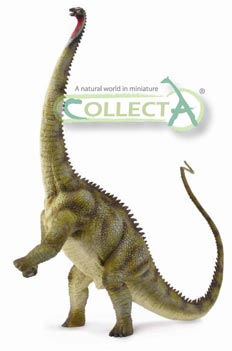
A Rearing Diplodocus (CollectA Dinosaur Model)

Model was introduced in 2013.

Model was introduced in 2013.

Picture credit: Everything Dinosaur

For models and replicas of sauropods and other prehistoric animals: CollectA Prehistoric Life Figures.

Certainly, there is some suggestion that these dinosaurs could rear up onto their hind legs, a number of palaeontologists have speculated that very young sauropods may have had the ability to run short distances on their hind legs only, perhaps to escape predation, but the idea of the Sauropoda being facultative bipeds – surely not?  However, we still have to try to explain these mysterious tracks where only hind feet (pes) or hand prints (manus) tend to be preserved.   If the hand prints only have been preserved does this mean Camarasaurus performing cartwheels – surely not!

Could Sauropods Swim?

Up until very recently the idea that sauropods, the likes of Brontosaurus, Apatosaurus, Diplodocus et al were aquatic animals held sway in palaeontological circles.  It was assumed therefore that these herbivores could swim and that they would have been very much at home in such environments, with the water helping to support their huge body weights.

A number of fossilised trackways were cited as evidence of an aquatic lifestyle for these dinosaurs.  For example, the American palaeontologist Roland T. Bird proposed that a trackway that consisted almost exclusively of the hand prints of sauropods from the Cretaceous of Texas was evidence of “swimming sauropods”, the herd “punting” off the bottom with their forelimbs, whilst the rear legs floated clear of the lake or river bed.

Swimming Sauropods – A Herd of Sauropods “Punting” Along

Suggested explanation for trackways - Sauropods "punting" along.

Suggested explanation for trackways – sauropods “punting” along.

Picture credit: Giovani Caselli

A Trace Fossil Preservation Phenomenon

Light may have been shed on these puzzling prints.  An international team of scientists from the China University of Geosciences in collaboration with researchers from the Royal Veterinary College and the University of Bristol have concluded that the two print tracks of quadrupeds may not be preserving swimming behaviour, or indeed any peculiar walking behaviour for that matter.  It is the substrate over which the creatures were walking that has caused this phenomena.

Writing in the journal “Scientific Reports”, the research team analysed a number of trackways preserved in Lower Cretaceous rocks in the Hekou Group of Yongjing County (Yanguoxia), Gansu Province (northern China) .  Quadrupedal tracks of Sauropods are known from the same location, but one set of tracks is characterised by the preservation of the hind feet only, notably just traces of the hind claws.

Sauropod Tracks from the Site

An outcrop showing a Sauropod trackway (Yanguoxia site, China).

An outcrop showing a sauropod trackway (Yanguoxia site, China).

Picture credit: Scientific Reports

An Ichnogenus

The picture above shows a set of typical sauropod tracks, note the rounded, roughly circular prints and the “narrow gauge” of the tracks – left and right prints close together.  These prints would have come from a sauropod, but which one (or which ichnogenus), we at Everything Dinosaur don’t know.

However, other tracks show just the hind feet claws.

Lead author of the paper, Lida Xing (School of the Earth Sciences and Resources, China University of Geosciences) stated:

“Nobody would say these huge dinosaurs could stagger along on their hind legs alone – they would fall over.  However, we can prove they were walking because the prints are the same as in more usual tracks consisting of all four feet, it’s just that here, we don’t see the hand prints.  If they had been swimming, with the hind legs dangling down, some of the foot prints would be scratch marks, as the foot scrabbled backwards.”

The strange prints are interpreted as having been caused by the substrate the animals were walking over.  The combination of soft mud and silt led to the claws being pushed deeper into the ground to get more grip as the animals moved along.  These traces were preserved as registrations in an underlying layer of sand.  As most of the sauropod’s weight was to the rear of the animal, the hind legs pressed down deeper and thus only the rear prints or partial rear prints were preserved.

A Map Showing the Digit Only Impressions Left in the Sediment (Yanguoxia site 2)

Digit only Sauropod tracks - evidence of swimming Sauropods?

Digit only sauropod tracks – evidence of swimming sauropods?

Picture credit: Scientific Reports

Quadrupedal Sauropod Tracks

In the locality, quadrupedal sauropod tracks are preserved.  These are interpreted as having probably been made slightly earlier on relatively firm substrates prior to the deposition of the soft mud and silt.

A Photograph (A) and a Line Drawing (B) of the Best Preserved Sauropod Print from the Trackway

Photograph (A) and line drawing (B) of best preserved Sauropod print in association with Sauropod manus and a print from an indeterminate Ornithopod.

Photograph (A) and line drawing (B) of best preserved sauropod print in association with sauropod manus and a print from an indeterminate ornithopod.

Picture credit: Scientific Reports

The picture above shows a sauropod left pes print (YSII-SS1-LP1) from the site.  Immediately behind the print is a partial left hand print from a sauropod (YSII-S1-LM1).  Underlying these prints is the track of an ornithopod (YS11-O1_RP3) that crossed this substrate some time earlier.  The Gansu Province locality is well-known for its dinosaur footprints and tracks.  Something like two hundred tracks and individual prints have been found to date.  They represent a rich fossil assemblage with theropod, ornithopod as well as sauropod tracks being recorded.

No Evidence of Swimming Sauropods

The scientists conclude that there is no convincing evidence of sauropods swimming.  The trackways do not provide clear evidence of sauropods going for a swim.  All is not lost for those who believe that these animals were at home in the water.

Co-author of the study, Professor Mike Benton (Bristol University) explained:

“This is not to say that sauropods did not swim.  We are simply suggesting that a closer study of the details of fossil footprints and the sediments can suggest a rather less romantic idea.  The loss of hand prints is down to sedimentology, not dinosaur behaviour.”

Everything Dinosaur Comments

A spokesperson from Everything Dinosaur commented:

“When one considers the appetites of such dinosaurs, it is likely that they had to migrate large distances to find food.  Indeed, there is plenty of evidence in the fossil record to indicate that sauropods tended to live in herds and that they did travel far and wide to find enough plant material to fill their vast guts and to visit suitable breeding sites and nesting locations.”

The spokesperson added:

“If this is the case, then it can be assumed that from time to time these herds had to cross waterways, so it is very probable that, just like most vertebrates today, they could swim.  After all, elephants are known to take to the water and have even been recorded swimming considerable distances in the sea.”

18 02, 2016

Rare Raptor Tracks from Colorado

By |2024-05-05T18:56:42+01:00February 18th, 2016|Categories: Dinosaur and Prehistoric Animal News Stories, Dinosaur Fans, Main Page|0 Comments

Dinosaur Ridge Reveals Evidence of Dromaeosaurs

Welsh palaeontologist Dr Martin Lockley of the University of Colorado Denver, has identified the tell-tale, two-toed tracks of dromaeosaurid dinosaurs from strata from the eastern side of the famous Dinosaur Ridge location to the west of the “mile high city”.  This is the first time dromaeosaurid tracks have been found in the State, only sixteen other dromaeosaurid trackways have been documented to date, most of these come from China or South Korea.  There has only ever been one other two-toed trackway discovered in the whole of North America.

Cedar Mountain Formation

This site from the Cedar Mountain Formation of eastern Utah (the Mill Canyon Dinosaur Tracksite), has preserved didactyl tracks that have been given the ichnogenus Dromaeopodus.  Dr Lockley played a key role in the study of the eastern Utah fossils.  These trace fossils like the Colorado material, date from the Cretaceous, however, the Dinosaur Ridge tracks are a little younger having been made some 105 million years ago, whereas, the Mill Canyon strata (from the Ruby Ranch Member of the Cedar Mountain Formation), are believed to date from around 112-115 million years ago.

Dromaeosaurid Track and Illustration (Dinosaur Ridge Location)

The two-toed track and an illustration showing how the footprint was made.

The two-toed track and an illustration showing how the footprint was made.

Picture credit: University of Colorado Denver (photograph), Matt Celeskey illustration with additional annotation by Everything Dinosaur

Raptor Tracks

The picture above shows one of the tracks identified by the research team as dromaeosaurid.  In these types of dinosaurs, also referred to as the “raptors”, the second toe possessed a huge sickle-like claw which was held off the ground.  In essence, these dinosaurs moved around on just two toes (toes III and IV), hence, only two toe impressions can be seen in the footprint.

Films like “Jurassic Park” and “Jurassic World” have popularised the “raptors”, dinosaurs like Velociraptor and Utahraptor for example.  The illustration above by Matt Celeskey is based on Utahraptor, the largest dromaeosaurid known, although recently Everything Dinosaur reported on the discovery of fossils from another huge “raptor”, but one that lived much later in the Cretaceous – Dakotaraptor.

To read an article about the discovery of Dakotaraptor: Dakotaraptor – A Giant Raptor.

An Model of a Typical Dromaeosaurid

The Papo feathered Velociraptor model.

The Papo feathered Velociraptor model.

Picture credit: Everything Dinosaur

Agile Dinosaurs

It is believed that these agile dinosaurs were covered in shaggy coats of proto-feathers and that they may have been pack hunters.  Dromaeosaurids ranged in size from about as big as chickens to giants that were as long as Saltwater crocodiles.

To read about the discovery of a new species of dromaeosaur from Canada that Everything Dinosaur reported on last year: Sniffing Out a New Dinosaur Species.

Dr Martin Lockley Holding a Cast of a Footprint

Two toes can be clearly seen

Two toes can be clearly seen

Picture Credit: University of Colorado Denver/Channel 9 News

Dr Lockley’s thumb marks the place where the sickle-toed claw would have been, but it has left no impression as it was raised off the ground, only the pes prior to the claw itself has left an impression.  The track represents a left foot.  A paper detailing the discovery is due to be published in the academic journal “Cretaceous Research”.

A Significant Fossil Discovery

Most of the tracks and footprints found in the Cretaceous portion of the Dinosaur Ridge strata represent a wet, lowland, coastal landscape.  However, the dromaeosaurid tracks are located in a bed which is around five million years older than the majority of the footprints and tracks found at this locality.

Commenting on the significance of this Dr Lockley stated:

“A few million years is a long time in evolution and plenty of time for changes in the ancient environment and ecosystem.  The discovery of these raptor tracks demonstrate the substantial changes in the Cretaceous landscapes in North America over time.”

17 02, 2016

Ancient Gene Flow Between Modern Humans and Neanderthals Described in New Paper

By |2024-05-05T18:57:06+01:00February 17th, 2016|Categories: Dinosaur and Prehistoric Animal News Stories, Main Page|0 Comments

Humans and Neanderthals Interbred “100,000” Years Ago

Previous research has demonstrated that modern humans (Homo sapiens) interbred with Neanderthals outside Africa from between 65,000 and 47,000 years ago.  As a result, many of us “modern people”, especially those from Europe and Asia, contain a little bit of ancient Neanderthal DNA in our genome.  However, in a new study, published in the journal “Nature” the genomes of a Neanderthal woman and a third species of ancient hominin, a Denisovan, obtained from fragmentary fossil material found in the remote Altai Mountains of Siberia, suggests that interbreeding between Neanderthals and our species took place much earlier than previously thought.  No modern human genetic mixing was detected in the Denisovan genome.

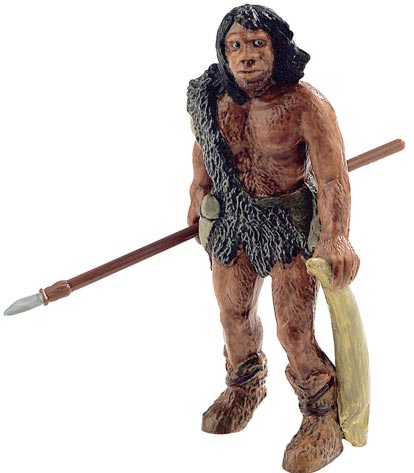
A Neanderthal – Interbreeding Between the Species 100,000 Years Ago

Model of a Neanderthal man.

Early resident of Croatia.  A model of a Neanderthal man.

For models and replicas of ancient hominins and other figures: Wild Safari Prehistoric World Figures.

Encountering Neanderthals

It had been suggested that our species first began encountering Neanderthals (Homo neanderthalensis) as modern humans began to migrate out of northern Africa into the Middle East and Europe sometime around 65,000 years ago.  This new study suggests “hanky-panky” took place between these species much earlier, as the genetic fingerprints don’t lie, it seems that a few of our African ancestors must have left their homelands a lot earlier, some 35,000 years earlier to be exact.  Or did some Neanderthals move into Africa and encounter humans, interbreed and then these descendants migrated out into Asia?

The lack of Neanderthal tool technology and fossil evidence casts doubt on this particular idea, it seems more likely that modern humans migrated out of their African homelands much earlier than previous research had indicated.

Examining Fossil Remains

The international team of researchers, which included scientists from the Max Planck Institute for Evolutionary Anthropology (Leipzig, Germany) sequenced the Siberian fossil remains and compared them to the sequences of chromosome 21 from two Neanderthal specimens, one from Spain, the other from Croatia.  This new study finds that a population that diverged early from other modern humans in Africa contributed genetically to the ancestors of Neanderthals from the Altai Mountains some 100,000 years ago.  No genetic contribution was detected in the two European Neanderthals or indeed within the Denisovan genome.  This research indicates that in addition to later interbreeding events, the ancestors of Neanderthals from the Altai Mountains and early modern humans mingled and interbred, possibly in the Near East.

Commenting on the importance of this discovery and its implications for our own evolution, Dr. Sergi Castellano (Max Planck Institute for Evolutionary Anthropology) stated:

“It is significant for understanding the history of modern humans and Neanderthals.”

Earlier Human Migration Out of Africa

The genetic evidence suggests that early modern humans must have migrated out of Africa in significant numbers much earlier than 65,000 years ago.  It is not clear what impact the genetic contribution of our species had on the Neanderthals.  If interbreeding was taking place it can be assumed that there must have been other forms of contact between these two species, perhaps simple bartering and the exchange of ideas, or perhaps one group raided the other and stole females away.  This sort of behaviour has been recorded in hunter-gather populations and within chimpanzee populations.

Scientists Working in the Remote Cave where the Denisovan Material was Found

Excavation work in the cave.

Excavation work in the cave.

Picture credit:  Bence Viola

Professor Chris Stringer, an expert in the evolution of hominins, based at the London History Museum explained:

“I think that anywhere in southern Asia could theoretically have been the location of this early interbreeding, since we really don’t know how widespread Neanderthals and early modern humans might have been in the regions between Arabia and China at this time.”

The professor added:  “May be one group adopted the abandoned or orphaned babies of the other.  Eventually, geneticists should be able to show if the transfer of DNA in either direction was mainly via males, females, or about equal in proportion, but it will need a lot more data before that becomes possible.”

Go to Top