All about dinosaurs, fossils and prehistoric animals by Everything Dinosaur team members.

Fossil finds, new dinosaur discoveries, news and views from the world of palaeontology and other Earth sciences.

16 02, 2016

Don’t Climb a Tree to Avoid a Marsupial Lion

By |2023-04-12T21:56:19+01:00February 16th, 2016|Categories: Dinosaur and Prehistoric Animal News Stories, Dinosaur Fans, Main Page|0 Comments

Thylacoleo carnifex Behaviour Deduced from Cave Claw Mark Study

Don’t climb a tree in a bid to avoid an attack from a Marsupial Lion (Thylacoleo carnifex).  That might have proved very good advice to the first inhabitants of Australia who set foot on the continent some 50,000 years ago.  These early explorers would have encountered a bizarre and unique fauna dominated by giant monitor lizards, flightless birds and strange mammals, the like of which existed nowhere else on Earth.

Thylacoleo carnifex

One of the more peculiar creatures, and an animal probably best given a wide berth, was the leopard sized Marsupial Lion (T. carnifex).  The name “Marsupial Lion” for an animal about the size of a male African leopard (Panthera pardus pardus), albeit slightly heavier, may sound like a bit of a misnomer, but from a palaeontological perspective this is just one of the peculiarities surrounding this enigmatic creature.

Thylacoleo carnifex – Study Suggests These Marsupials were Capable Climbers
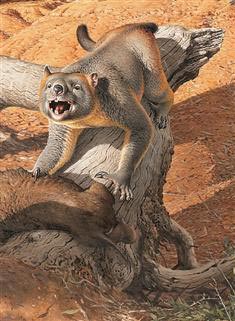
Capable of climbing trees.

Capable of climbing trees.

Picture credit: Peter Trusler/Australian Post

However, a new study assessing scratches and claw marks left in the main cavern of Tight Entrance Cave, located in south-western Australia, has provided fresh insights into the likely behaviour and habits of these prehistoric animals.  This new research suggests that Thylacoleo carnifex was an able climber and that it probably raised its young in caves.

A Chequered History

The habits and diet of the Marsupial Lion has puzzled scientists, almost since the initial scientific description by Richard Owen (later Sir Richard Owen), in 1859.  At first, this animal was thought to be a carnivore, but as a member of the Order Diprotodontia along with kangaroos, it was then suggested to have been herbivorous.

Anatomical analysis reveals Thylacoleo to be a robust animal with strong back legs and powerful shoulders, not particularly adept at running.  It had been thought that this animal filled the ecological niche occupied by bears outside Australia.  Recently, the idea that the Marsupial Lion was an apex predator that could drag prey up into trees became popularised.  Thylacoleo as a sort of Aussie version of a leopard was even illustrated on the front cover the prestigious magazine Prehistoric Times.

Prehistoric Times Featured Thylacoleo (Issue 85)
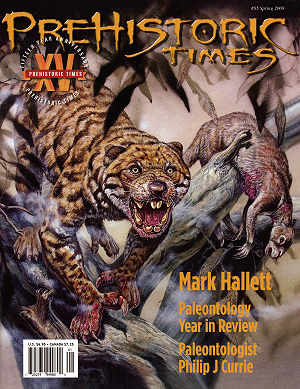
The front cover features a Marsupial Lion.

The front cover features a Marsupial Lion.

Picture credit: Prehistoric Times

A Tree Climber?

Scientists from Flinders University (South Australia) analysed the scratch marks left on the walls of the main chamber in the Tight Entrance Cave.  The majority of these marks were clustered on a near-vertical rock face that led up towards an exit to the surface.  That exit may be blocked today, but clearly this way out of the cave was a preferred route for many Marsupial Lions rather than using a circuitous path with a lesser gradient.

This suggests that these animals were confident and assured climbers and remarkably agile.  In addition, the study indicates that the scratches were mostly made by juveniles, this suggests that Marsupial Lions may have reared their young inside caves.

One of the authors of the research, published in the open access journal “Scientific Reports”, Associate Professor Gavin Prideaux (School of Biological Sciences, Flinders University) commented:

“Our findings indicate the Marsupial Lions were running up and down these rock piles to get out of the cave, and they weren’t using the lower-gradient, longer route.  We can be confident now and say that they could climb and if they could climb really well in the dark, underground, there’s no reason they couldn’t climb trees.”

Marks Made by Juvenile Marsupial Lions

In order to confirm that the scratches were most probably made by juvenile Marsupial Lions, co-author Samuel Arman, established a list of seven potential candidates, composed of both living and extinct species.  A model was made of a Thylacoleo paw to test how the digit and claw configuration matched against the scratch marks from the cave.  To assess the sort of claw marks made by extant animals included in the study (possums, wombats and Tasmanian devils), scratch pads were given to zoos so that they could be placed inside the enclosures where these animals were housed.  Any claw markings were examined and cross referenced against the trace fossils from the cave.

Examples of Scratch Marks from the Cave
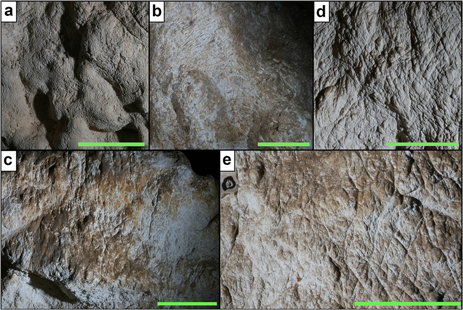
Claw marks from the cave made (most probably) by juvenile Marsupial Lions.

Claw marks from the cave made (most probably) by juvenile Marsupial Lions.

Picture credit: Flinders University/Scientific Reports

The picture above shows (a) cave wall south, (b) marks from a central rock pile to the west, (c) marks from a central rock pile from the south sub-region of the main cavern, (d and e) scratches from the boulder sub-region.  Scale bar = 10 cm.

Based on this research, it seems that climbing a tree to avoid the attentions of Thylacoleo would not have been a very good idea.

The Ubiquitous Marsupial

The various eclectic theories regarding the habits of T. carnifex that have been proposed may have had something to do with the wealth of fossil material available to study.  More complete or partial skeletons of Marsupial Lions are known from cave sites than for any other extinct Pleistocene species.  Thylacoleo carnifex is amongst the best represented large carnivores known from Pleistocene fossil bearing sites.

For models and replicas of prehistoric mammals: CollectA Deluxe Prehistoric Life.
15 02, 2016

More Dinosaur Fossils from Western India

By |2023-04-12T21:52:22+01:00February 15th, 2016|Categories: Dinosaur and Prehistoric Animal News Stories, Dinosaur Fans, Main Page|2 Comments

Rich Fossil Pickings from Gujarat State

Since the turn of the year, Everything Dinosaur has been receiving reports circulated by various Indian universities of further dinosaur fossil discoveries from Kutch district from the state of Gujarat (western India).  In a collaboration with German scientists from the Friedrich-Alexander University of Erlangen-Nürnberg, Bavaria (southern Germany), field team members from the Department of Geology (Kutch University, Gujarat) and Rajasthan University have uncovered the fragmentary remains of a number of dinosaurs and they have identified around 150 sites which may yield yet more fossil data.

Dinosaur Fossils

The latest discovery includes cranial material, excavated from a location close to Lodai village (Kas Hill).  Lodai village itself is located around fifteen miles north-east of the large town of Bhuj

On January 19th, field team members uncovered fragments from the hip bones of a substantial plant-eating dinosaur.  In addition, a partial leg bone was discovered.  The pieces of bone have been tentatively assigned to the Camarasaurus genus and they may represent some of the oldest dinosaur fossils ever found in India.    The fossil material has been dispatched to the Friedrich-Alexander University so that the specimens can undergo radiocarbon dating in a bid to determine an accurate age of the fossils.  Preliminary dating work suggests that the bones are at least 135 million years old (Valanginian faunal stage of the Early Cretaceous).

Sauropod Dinosaur Fossils

Estimating that these bones came from a sauropod (long-necked) dinosaur measuring around fifteen metres in length, Dr Dhirendra Pandey (University of Rajasthan), explained that such fossils provided information on the mega fauna that inhabited this part of the giant, super-continent of Gondwana.  Most of the dinosaur fossils from Gujarat State come rock strata that is actually much younger, dating from the Late Cretaceous.

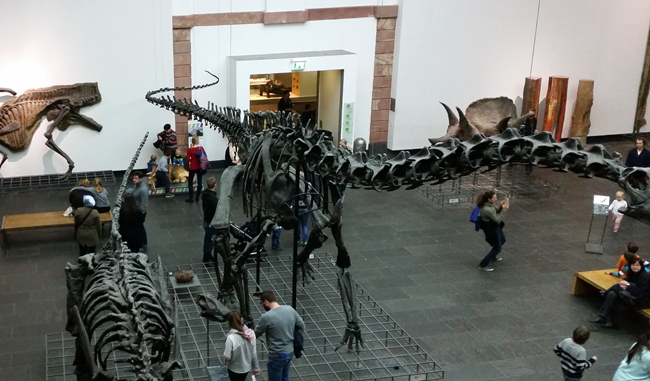
A Sauropod Dinosaur Exhibit in a Museum

Sauropod skeleton (cast) on display.

A sauropod (diplodocid) skeleton exhibit on display at the Frankfurt Natural History Museum (Naturmuseum Senckenberg). Picture credit: Everything Dinosaur.

Picture credit: Everything Dinosaur

For models and replicas of sauropods and other dinosaurs: Mojo Fun Prehistoric and Extinct Figures.

Commenting on the new discovery, Gaurav Chauhan, from the Geology Department of Kutch University stated:

“The new fossils include skull, jaw and some teeth of a dinosaur.  We still have to excavate a lot of material in order to get the fossils out.”

Hopeful to Find More Fossil Material

The team are hopeful that more fossil material may be found at this location and that the fossils may represent a new species.

A number of important dinosaur fossil finds have already been reported from this part of India.  For example, back in 2010, Everything Dinosaur reported on the remarkable discovery of a titanosaur nest site, which included the remains of a primitive snake that had died whilst attempting to raid a nest.

To read an article about this remarkable fossil find: Baby Dinosaurs Attacked by Snake.

13 02, 2016

Toe Bone Suggests Gastornis Roamed the High Arctic

By |2023-04-12T21:41:40+01:00February 13th, 2016|Categories: Dinosaur and Prehistoric Animal News Stories, Main Page|0 Comments

Ellesmere Island Fossil Suggests Giant Birds Wandered Northern Canada

Fossils found in the 1970s on the remote Ellesmere Island, in the high Arctic suggest that giant, flightless birds roamed this part of the world during the Eocene.  In a new study, published this week in the open access scientific journal “Scientific Reports” a single toe bone is described that indicates that Gastornis lived this far north around 52 to 53 million years ago.

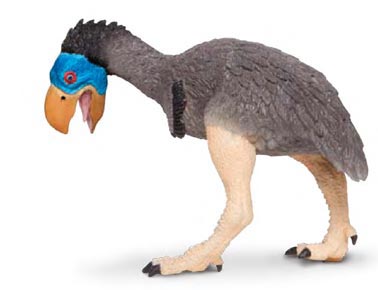
Gastornis Roamed the Arctic During the Eocene

Model of a giant, flightless bird from Safari Ltd.

Model of a giant, flightless bird from Safari Ltd.

Picture credit: Everything Dinosaur

Researchers from the Chinese Academy of Sciences in collaboration with colleagues from the University of Colorado Boulder, describe a single toe bone, which suggests this two-metre-tall bird lived this far north.  This fossil along with a partial humerus (upper arm bone) which as been identified as belonging to a member of the Presbyornithidae clade of waterfowl, also found in the same area, represent the oldest Cenozoic avian fossils found in the Arctic to date.

A Toe Bone Points to Gastornis

The toe bone is almost an identical match to Gastornis toe bones excavated from Wyoming from similar aged Eocene sediments.  Scientists have speculated that Gastornis was likely to be an all year round resident of Ellesmere Island, although during the Eocene the Arctic was much warmer than it is today, this giant bird would still have had to endure harsh winters and almost four months of total darkness (the polar night).

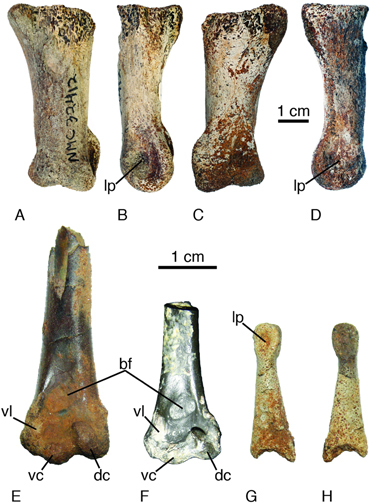
The Gastornis Toe Bone (Several Views) and Presbyornis  Humeri

Gastornis toe bone (above)

Gastornis toe bone (above).

 Picture credit: Scientific Reports

The picture above shows the probable left phalanx (toe bone) of digit IV from a Gastornis (A) viewed from the top, (B) lateral, view, (C) view from underneath posterior/plantar view and (D) medial view.  The other pictures show the a distal partial humerus (E) recovered from the Margaret Formation of Ellesmere Island (Canadian territory of Nunavut) compared to a Presbyornis specimen (F) from the University of California Museum of Palaeontology.  The fossil bone (pictures G and H) represents an indeterminate pedal phalanx, probably from digit III on the left side.  This specimen also comes from the Ellesmere Island locality.

Key

  • bf = brachial fossa
  • dc = dorsal condyle
  • lp = collateral ligament pit
  • vc = ventral condyle
  • vl =facet for the ventral collateral ligament on the ventral supracondylar tubercle.

Specimen (E) the distal humerus assigned to the Presbyornithidae, is much larger than the Californian specimen.  The extensive pitting of the bone is not regarded as sign that this is from a juvenile individual.  Lack of further fossil evidence precludes any significant calculations as to the size of the Arctic Presbyornis in relation to its contemporaries from more southerly latitudes.

Gastornis

The fact that Gastornis (also referred to as Diatryma), fossil evidence has been found on Ellesmere Island has been discussed before, this flightless bird appears on a few faunal lists, but this is the first time that the bone has been closely examined and described in detail.

Very Rare Fossil Find

One of the researchers, co-author of the paper Jaelyn Eberle (Associate Professor in Geological Sciences at the University of Colorado Boulder) stated:

“We knew there were a few bird fossils from up there, but we also knew they were extremely rare.”

Around 53 million years ago the environment of Ellesmere Island was very different from that of today.  It was much warmer and wetter with a significant portion of the island forming a swamp dominated by Cypress trees.  Living alongside Gastornis and Presbyornis were turtles, crocodilians, primates and large mammals such as tapirs.

Originally thought to be a fearsome carnivore, recent research indicates Gastornis probably was a vegan, using its huge beak to tear at foliage, nuts, seeds and hard fruit.

To read an article about our changing perceptions of Gastornis: Was the “Terror Bird” Gastornis a Herbivore?

The second Ellesmere Island prehistoric bird described in the paper is Presbyornis, a member of the duck family but with much longer legs.  The research team compared fossils from Wyoming to the Ellesmere Island specimen and they could not find any significant differences, even though the fossils were 2,500 miles apart.  This might indicate that these types of birds migrated up to the Arctic, perhaps to breed, in a similar fashion to a number of North American duck and goose species today.  Alternatively, Presbyornis might have been a year round resident of Ellesmere Island.

A New Analysis of Eocene Avian Fauna

This new analysis of Eocene avian fauna from the high Arctic has implications for the rapidly warming Arctic climate of today.

Associate Professor Eberle explained:

“Permanent Arctic ice, which has been around for millennia, is on track to disappear.  I’m not suggesting there will be a return of alligators and giant tortoises to Ellesmere Island any time soon.  But what we know about past warm intervals in the Arctic can give us a much better idea about what to expect in terms of changing plant and animal populations there in the future.”  

The CollectA range of scale figures contains a number of replicas of Eocene animals and a model of a flightless bird (Kelenken). To view this range: CollectA Deluxe Prehistoric Life.

10 02, 2016

Amazing Cretaceous “Big Mouths” Identified in New Study

By |2024-05-05T18:34:42+01:00February 10th, 2016|Categories: Dinosaur and Prehistoric Animal News Stories, Main Page|0 Comments

Cretaceous Fish with Gigantic Mouths

The oceans of the Cretaceous had some very strange inhabitants, sadly the fossil record only hints at the remarkable diversity of vertebrates, particularly fish.  That’s why when scientists announce the discovery of not one but two new species of Cretaceous plankton-feeding fish, such stories tend to make extensive ripples in palaeontological circles.  An international team of researchers have announced a tripling of the known fish species that make up the genus called Rhinconichthys (pronounced rink-oh-nik-thees).  New fossil discoveries from the United States and Japan extend the known distribution of these Cretaceous fish and it is likely that these types of animals had a global distribution during the Late Cretaceous.

Cretaceous Fish

An Illustration of a Pair of Rhinconichthys Fish Feeding

Large filter-feeding fish of the Cretaceous.

Large filter-feeding fish of the Cretaceous.

Picture credit: Bob Nicholls

One of the lead authors of the study, published in the academic journal “Cretaceous Research” Kenshu Shimada, explained that fossils of these types of fish are exceptionally rare.  Previously, only one species was known Rhinconichthys taylori, and only two specimens had been described, both from England (dating from the Cenomanian faunal stage of the Cretaceous).  However, a new skull from Colorado, along with the re-examination of another skull found in Japan have extended the known palaeogeographical range along with the number of species.

Only Skull Fossils Found

Only the skulls have been found, the cartilaginous skeletons of these fish have a poor fossil preservation potential, a problem that has plagued scientists as they strive to piece together the history of plankton feeding fish.  For example, giants are known from the Jurassic such as Leedsichthys and it is very likely that a myriad of forms existed during the Mesozoic, but little fossil evidence has been found with regards to these creatures (Pachycormiformes).

To read more about research into ancient members of the Pachycormidae: Filling a 100 Million Year Wide Gap.

The Colorado fossil was found by Bruce A. Schumacher (United States Forest Service), this species has been named Rhinconichthys purgatoirensis.  It dates from later in the Cretaceous when compared to the English fossils (middle Turonian faunal stage of the Cretaceous).  R. purgatoirensis swam in the Western Interior Seaway around 89 million years ago, whereas Rhinconichthys taylori lived at least five million years earlier.  The Japanese specimen found on the island of Hokkaido, dates from around the same time as the English fossils.  It has been named Rhinconichthys uyenoi.

Kenshu Shimada (Department of Environmental Science and Studies, DePaul University, Chicago) stated:

“I was in a team that named Rhinconichthys in 2010, which was based on a single species from England, but we had no idea back then that the genus was so diverse and so globally distributed.”

Rhinconichthys spp.

Rhinconichthys spp. are estimated to have ranged in size from 2 metres to more than 2.7 metres in length.  They had a highly specialised jaw with a pair of bones (called hyomanidbulae) that formed a huge oar-shaped lever that enabled the jaws to open extremely wide, a little like the opening mechanism for a parachute.  This enabled them to capture even more plankton as they swam.  This type of anatomical feature is also found in many types of filter feeding shark today, an example of convergent evolution.

A Picture of the Colorado Specimen Showing Jaw Bones with Explanatory Diagram

Able to open the jaws really wide.

Able to open the jaws really wide.

Picture credit: DePaul University

Many More Suspension Feeders Existed

Feeding on plankton, being planktivorous, also known as suspension-feeding is seen in a number of specialised aquatic vertebrates today, including the largest animal known to science the Blue Whale (Balaenoptera musculus) and the largest extant fish the Whale Shark (Rhincodon typus).  Indeed, the genus name Rhinconichthys means “fish like a whale shark”.

Professor Shimada concluded:

“Based on our new study, we now have three different species of Rhinconichthys from three separate regions of the globe, each represented by a single skull.  This tells just how little we still know about the biodiversity of organisms through the Earth’s history.  It’s really mindboggling.”

Visit Everything Dinosaur’s award-winning website: Everything Dinosaur.

8 02, 2016

Australopithecus sediba – Jaw Study Suggests a More Delicate Bite

By |2023-04-12T20:46:33+01:00February 8th, 2016|Categories: Dinosaur and Prehistoric Animal News Stories, Main Page, Palaeontological articles|0 Comments

Australopithecus sediba – Bio-mechanical Study Hints at Diet

South Africa might be regarded by many as the “cradle of humanity”, thanks to the wealth of Australopithecus and early hominin fossils found in that part of the world.  Thanks to a collaborative research effort involving a bio-mechanical study of skull strength and bite forces, it seems that further light is being shed on the diet of one of southern Africa’s most famous early residents Australopithecus sediba.  This new research may help palaeoanthropologists to further refine the evolutionary position A. sediba in relation to the hominins and ultimately this Australopith’s relationship to our own species.

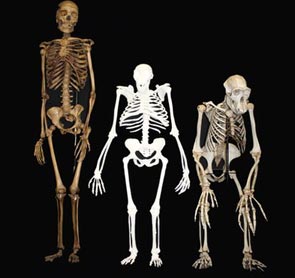
H. sapiens Compared to A. sediba and Pan troglodytes (Chimpanzee)

A. sediba is in the middle, the human to the left of the picture with the chimp skeleton on the right.

A. sediba is in the middle, the human to the left of the picture with the chimp skeleton on the right.

Picture credit: University of Witwatersrand

Fossils Found in 2008

Fossils which came to be known as A. sediba were discovered in 2008 at the famous dig site of Malapa in the Cradle of Humankind World Heritage Site, located around thirty miles north-west of the city of Johannesburg.  Research published in 2012 suggested that this gracile, possible early human ancestor, had lived on a eclectic woodland diet including hard foods mixed with tree bark, fruit, leaves and other plants.  Other research, reported upon by Everything Dinosaur in 2013, provided further insight into the dietary habits of early hominins.

To see the article on research into early hominin diets: From a Forest Diet to a Savannah Smorgasbord.

To read an article explaining how A. sediba came to be named: South African “Cradle Fossil” Named.

This new study carried out by an international team of researchers, including Professors Lee Berger and Kristian Carlson from the Evolutionary Studies Institute (ESI) at the University of the Witwatersrand, now shows that Australopithecus sediba did not have the jaw and tooth structure necessary to exist on a steady diet of hard foods.  This may have important implications on how this species of australopith is viewed in terms of its evolutionary link to that line of hominins that eventually led to our own kind.

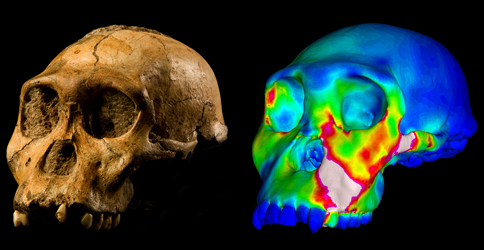
Bio-mechanical Study Indicates that A. sediba Did Not Have “Nutcracker Jaws”

Bite Force Study on A. sediba cranium.

Bite force study on A. sediba cranium.

Picture credit: Image of MH1 by Brett Eloff provided courtesy of Lee Berger (University of the Witwatersrand).

Finite Element Modelling

The picture above show the fossilised skull of A. sediba (specimen number MH1) and a finite element model of the skull depicting strains experienced during a simulated bite on the its back teeth (premolars).  “Warm” colours indicate high mechanical strain, whilst “cool” colours indicate areas of low strain on the skull.

Commenting on the research, published today in the scientific journal “Nature Communications”, Professor David Strait (Washington University, St Louis, USA) stated:

“Most australopiths had amazing adaptations in their jaws, teeth and faces that allowed them to process foods that were difficult to chew or crack open.  Among other things, they were able to efficiently bite down on foods with very high forces.”

Co-author Dr Justin Ledogar, researcher at the University of New England in Australia added:

“Australopithecus sediba is thought by some researchers to lie near the ancestry of Homo, the group to which our species belongs, yet we find that A. sediba had an important limitation on its ability to bite powerfully; if it had bitten as hard as possible on its molar teeth using the full force of its chewing muscles, it would have dislocated its jaw.”

Not Bitting Off More Than It Could Chew

Bio-mechanical modelling based on a computer generated replica of the fossil skull material does not provide conclusive evidence that Australopithecus sediba was on the direct evolutionary line towards Homo, but it does indicate that dietary changes were shaping the evolutionary paths of early human species.  The data acquired from the bio-mechanical analysis does not dispute the possibility that A. sediba occasionally ate hard foods such as nuts and bark.  However, limitations on the amount of bite force that the skull could withstand suggests that hard foods needing to be processed with high bite forces were not an important component of the diet of this species.

About Australopithecus sediba

Australopithecus sediba, a diminutive pre-human species that lived about two million years ago in southern Africa, has been heralded as a possible ancestor or close relative of Homo, our own family.  Australopiths appear in the fossil record about four million years ago, and although they have some human traits such as the ability to walk upright on two legs, most of them lack other characteristically human features such as a large brain, flat faces with small jaws and teeth, and advanced use of tools.  Humans, members of the genus Homo, are almost certainly descended from an Australopith ancestor, and A. sediba is a candidate to be either that ancestor or something similar to it.

Dr Justin Ledogar explained:

“Humans also have this limitation on biting forcefully and we suspect that early Homo had it as well, yet the other Australopiths that we have examined are not nearly as limited in this regard.  This means that whereas some Australopith populations were evolving adaptations to maximise their ability to bite powerfully, others (including A. sediba) were evolving in the opposite direction.”

Foods that were important to the survival of Australopithecus sediba probably could have been eaten relatively easy without the need for high bite forces.

Everything Dinosaur acknowledges the support of the University of Witwatersrand in the compilation of this article.

Visit Everything Dinosaur’s award-winning website: Everything Dinosaur.

7 02, 2016

The Wildebeest and Lambeosaurine Connection?

By |2023-04-12T20:42:58+01:00February 7th, 2016|Categories: Animal News Stories, Dinosaur and Prehistoric Animal News Stories, Main Page|0 Comments

Ancient Beast “Honked Like a Hadrosaur”

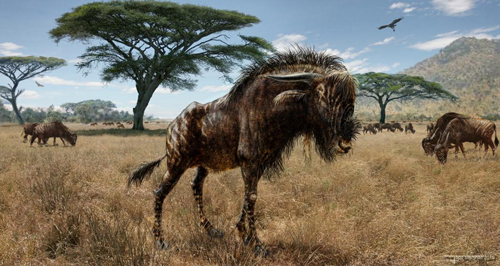
Convergent evolution throws up strange bedfellows from time to time.  Scientists studying an ancient bone bed have uncovered extensive fossil material from an ancient wildebeest that shows that this hoofed mammal had a raised nasal dome, reminiscent of a hollow crested duck-billed dinosaur.  Researchers have suggested that the bizarre anatomical structures helped these herd animals communicate more effectively.  It’s a question of what evolution did for the likes of Corythosaurus some 75 million years ago has been repeated in a Pleistocene bovine from around 75,000 years ago.

A Trumpeting Wildebeest – Rusingoryx atopocranion

Honking to communicate in the hot savannah.

Honking to communicate in the hot savannah.

Picture credit: Todd Marshall

The ancient ungulate (hoofed mammal), was poorly known until a bone bed containing the remains of at least twenty-four individuals was discovered on Kenya’s Rusinga Island.  The fossilised remains, which includes juveniles as well as adult animals, has enabled scientists to piece together a much more comprehensive picture of the anatomy of this grazing mammal, part of a diverse African bovine fauna that flourished on the hot, dry savannah of southern Africa during the Pleistocene Epoch.

Stone tool marks on the bones indicate that these animals were butchered and it has been suggested that Middle Stone Age people had driven the animals into a river and ambushed them, or perhaps, a tribe benefited from a chance discovery of a group of these creatures who had recently drowned in a flood event.

Hollowed-out Headgear

The wildebeest is known as Rusingoryx atopocranion, but until now it had only been known from partial remains, including incomplete skulls.  The Rusinga excavation, supported by the National Geographic Society’s Committee for Research and Exploration has uncovered a total of six skulls, most of them complete.  Thanks to these fossils, scientists have a much better idea of what these animals actually looked like.

Commenting on the new evidence, lead author of the study, Haley O’Brien (Ohio University) stated:

“The first time I saw them my jaw completely dropped”.

Previous studies based on much less complete fossil material had speculated that Rusingoryx possessed a proboscis, but the new skulls discount this idea.  Instead, they reveal that R. atopocranion had a high nasal dome in front of its eyes, a sort of “cow with a Roman nose”.  The raised naris was hollow, encasing a winding, circuitous nasal passage.

The Skull of Rusingoryx (R. atopocranion)

The dome shaped skull (raised nasal bones).

The dome shaped skull (raised nasal bones).

Picture credit: Haley O’Brien

Strange Nasal Apparatus

PhD student Haley explained:

“There aren’t any living animals with a nasal apparatus like this, but there are some fossil ones.  Outside and in, the nose of Rusingoryx resembles the hollow crests of the “duck-billed” dinosaurs, animals like Corythosaurus and Lambeosaurus, which lived about 75 million years earlier.  Both groups essentially push the nasal part of their airway into the crest and they’re using similar suites of bones to form the crest itself.”

The Skull of the Mexican Lambeosaurine Velafrons (Velafrons coahuilensis)

Raised nasals - an example of convergent evolution.

Raised nasals – an example of convergent evolution.

Picture credit: Paul Fraughton/Salt Lake Tribune

Commenting on the similarities between Rusingoryx and Late Cretaceous duck-billed dinosaurs, palaeontologist David Evans (Royal Ontario Museum, Toronto), stated that he was “blown away” by the skulls of Rusingoryx, he added:

“The resemblance between Rusingoryx and some hollow-crested dinosaurs in the form of the nasal structures is truly striking.”

Convergent Evolution

The dome shaped nasal area of Rusingoryx is an example of convergent evolution, whereby unrelated organisms evolve independently similar features, such as the streamlined bodies and tail flukes of dolphins and ichthyosaurs.  These are adaptations to similar habitats or ecological niches.

However, faced (no pun intended), with this strange-faced wildebeest, the big question is what sort of function did these domed noses have?

A number of ideas have been put forward:

  • The expanded naris played a role in cooling or warming incoming air

The large nose of Rusingoryx may certainly have been able to undertake this function and all mammals have some ability to do this, thanks to scroll-like bones called turbinates that increase the surface area of the nose.  As Rusingoryx lived in a very hot, dry environment this theory is plausible, but the dome’s internal anatomy did not support this conclusion.

  • The raised domes were used in ritual combat

A number of bovines use their skulls as battering rams to settle disputes and as defensive weapons.  However, the skull bones of Rusingoryx are very thin, much thinner than those of extant Artiodactyls (even-toed hoofed mammals) that indulge in such behaviour.

  • The nasal area acted as a resonating chamber for sound

A Resonating Chamber?

Social, hoofed, herd-dwelling herbivores tend to be quite vocal.  They have ways to modulate their vocal tracts to increase the variety and range of sounds that they can make.  The skull anatomy suggests that the big dome-faced wildebeest used this structure to vocalise.

Student O’Brien explained:

“We calculated a frequency of between 250 and 750 hertz, which is not only pretty low, it also overlaps with the sonic frequencies of a vuvuzela.  Rusingoryx could very likely make a low trumpeting sound but there’s a good chance it could also vocalise in stealth mode.”

Being able to communicate at a low frequency making it difficult for some predators to hear, has a distinct evolutionary advantage, human hunters for example would have had difficulty picking up these sounds.  In addition, a herd of these animals would have been capable of making a lot of noise, much like a stadium full of South African football fans waving their vuvuzelas.

Everything Dinosaur stocks a range of duck-billed dinosaur models and replicas including many lambeosaurines.  To view the model’s section of the company’s award-winning website: Dinosaur and Prehistoric Animal Replicas.

5 02, 2016

Small Abelisaurid from Argentina as New Dinosaur Described

By |2024-05-05T18:30:23+01:00February 5th, 2016|Categories: Dinosaur and Prehistoric Animal News Stories, Dinosaur Fans, Geology, Main Page|0 Comments

Not all of Argentina’s Dinosaurs were Giants

Last month Everything Dinosaur published details of a new super-sized titanosaur from Argentina.  An enormous animal that was to be featured in a special BBC television documentary “Attenborough and the Giant Dinosaur”.  However, not all of Argentina’s dinosaurs were huge, scientists writing in the journal “Science Direct” have reported the discovery of fossil meat-eating dinosaur bones that may represent one of the smallest abelisaurids known from South America.

To read about the new giant dinosaur: “Sir David Attenborough and the Giant Dinosaur”.

Not All South American Abelisauridae were the Size of Carnotaurus

"Meat-eating Bull" from Papo.

“Meat-eating Bull” from Papo.

Picture credit: Everything Dinosaur

Researchers from a number of Argentinian institutions operating under the collective umbrella of CONICET – The National Scientific and Technical Research Council, the country’s main academic body responsible for the promotion of science and technology, have reported finding the partial and fragmentary remains of a new abelisaurid dinosaur from north-west Patagonia.

The Rich Fossil Assemblage of the Candeleros Formation

Field work exploring the sandstone strata of the Candeleros Formation (Neuquén Province), has uncovered a partial femur, ribs, toe bones, a fragmentary pelvis, two fused sacral centra (from the vertebrae fused to the hip region) and a small piece of skull bone, identified as a frontal.  Although a histological analysis reveals that the animal was fully mature when it died, perhaps around fourteen years old, it is estimated to have been a little over four metres long and to have weighed about 240 kilogrammes.  That’s about half the length of Carnotaurus and around one quarter of the body weight.

A Small Abelisaurid

This dinosaur is one of the smallest abelisaurids known and a study of the bone fibres indicates that this dinosaur had a relatively lower growth rate when compared to other abelisaurids such as the much larger Aucasaurus garridoi, whose fossils also come from Argentina but from younger deposits.  Aucasaurus roamed Argentina around 85 million years ago, whereas this as yet, unnamed member of the Abelisauridae lived some eight million years earlier.

This new type of meat-eating dinosaur extends the theropod fauna of the Candeleros Formation.  As well as a number of abelisaurids, the Candeleros Formation is associated with carcharodontosaurids, a dromaeosaurid and alvarezsaurids.

CollectA have created a range of theropod dinosaur models including abelisaurids and carcharodontosaurids in their scale model range: CollectA Deluxe Prehistoric World Models.

2 02, 2016

New Duck-Billed Dinosaurs – Sweet Home Alabama!

By |2024-05-05T18:30:44+01:00February 2nd, 2016|Categories: Dinosaur and Prehistoric Animal News Stories, Dinosaur Fans, Main Page|2 Comments

Alabama Fossil Sheds Light on the Origins of Duck-Billed Dinosaurs

The duck-billed dinosaurs, or to be more precise, the Hadrosauroidea were a super-family of plant-eating, bird-hipped dinosaurs that dominated Late Cretaceous ecosystems throughout most of the northern latitudes.  The fossils of these large dinosaurs, some of which evolved into the biggest facultative bipeds known to science, can be seen in museums throughout the world, but little is known about the evolutionary origins of this very successful part of the Dinosauria.  However, a remarkable fossil find from Alabama (south-eastern United States), is helping to shed new light on the origins of the duck-billed dinosaurs.

The Fossils of Eotrachodon orientalis Laid Out

The skull and jaw bones including the predentary are nearest the camera.

The skull and jaw bones including the predentary are nearest the camera.

Picture credit: Jun Ebersole, McWane Science Centre

The beautifully preserved fossils were found by amateur fossil hunters exploring a creek in Montgomery County, Alabama, when they come across one of the bones eroding out of the soft marine sediment.  Thanks to the efforts of an international team of researchers, the fossil material has been carefully prepared and it has been confirmed that these bones and the few teeth (see bottom right hand corner of the photograph), represent a new species of primitive duck-billed dinosaur.

Eotrachodon orientalis

The dinosaur has been named Eotrachodon orientalis (dawn rough tooth from the east).  It is the most complete primitive hadrosaurid dinosaur ever to be found in the eastern United States.

An Illustration and Scale Drawing of E. orientalis

The orange shaded area indicate fossils found.

The orange shaded area indicate fossils found.

Picture credit: Florida State University with additional annotation by Everything Dinosaur

In Honour of Trachodon

Lead author of the scientific paper, published this week in the “Journal of Vertebrate  Palaeontology”, Albert Prieto-Marquez, stated that the genus name honours Trachodon, a name that would be very well known to fans of dinosaurs.

Trachodon is the genus erected in 1856 by Joseph Leidy as a result of fragmentary bones and teeth having been excavated from the Upper Cretaceous rocks (Judith River Formation) of Montana.  It was one of the very first American dinosaurs described, the first duck-billed dinosaur to be named (although some of the teeth used to describe it were later identified as ceratopsian), and although the name is now regarded as a nomen dubium (not a valid genus), Trachodon appeared in countless books about dinosaurs for the best part of 120 years.  The popularity of Trachodon was helped by wonderful illustrations produced by palaeoartists such as Zdenek Burian (Trachodon and Tyrannosaurus rex).

Trachodon Became the Archetypal Duck-Billed Dinosaur

An illustration of Trachodon.

An illustration of Trachodon.

Picture credit: Everything Dinosaur

Now Trachodon has been honoured with a valid genus (Eotrachodon).  At perhaps, nine metres long, Eotrachodon orientalis was certainly not the biggest, but the fossil find is extremely significant none-the-less.  Firstly dinosaur fossil finds are rare from the south-eastern United States.  To read an article about which U.S. States have dinosaur fossils: 37th U.S. State with A Dinosaur Fossil.

Commenting on the significance of the discovery, one of the authors of the scientific paper, Gregory Erickson (Florida State University) explained:

“This is a really important animal in telling us how they came to be and how they spread all over the world.”

Did the Hadrosaurs Originate in Appalachia?

Whilst the specimen was being prepared at the McWane Science Centre (Birmingham, Alabama), the scientists were able to piece together the skull bones and identify a modified nasal area of the skull that had, until now been regarded as a characteristic associated with saurolophine hadrosaurids (solid-crested and crestless forms).  Dating the fossil to the Late Santonian faunal stage (83 million years ago), it suggests that the duck-billed dinosaurs originated on the continental landmass known as Appalachia.

During the Late Cretaceous, North America was split by into two by a wide sea (the Western Interior Seaway), Laramidia lay to the west, whilst the larger landmass of Appalachia lay to the east.  Phylogenetic analysis indicates that Eotrachodon is a basal member of the hadrosaurids and thus, it can be postulated that this group of dinosaurs evolved on Appalachia.  Land bridges formed as the Western Interior Seaway permitted these dinosaurs to migrate off this continental landmass and to spread to other parts of the Late Cretaceous world.

Reseracher Jun Ebersole, (McWane Science Centre), stated:

“For roughly 100 million years, the dinosaurs were not able to cross this barrier.  The discovery of Eotrachodon suggests that duck-billed dinosaurs originated in Appalachia and dispersed to other parts of the world at some point after the seaway lowered, opening a land corridor to western North America.”

Fossil Find Suggests Hadrosaurids Originated from Appalachia

Sweet Home Alabama.

Sweet Home Alabama!

Picture credit: Everything Dinosaur

A View of the Left Lateral Side of the Skull

Scale bar = 5cm

Scale bar = 5cm

Picture credit: Albert Prieto-Marquez et al

Safari Ltd have produced several duck-billed dinosaur models. To view the Wild Safari Prehistoric World range of figures: Safari Ltd. Wild Safari Prehistoric World Figures.

25 01, 2016

Cambridge Plesiosaur Donated to Oxford Could Be New Species

By |2023-04-12T09:48:38+01:00January 25th, 2016|Categories: Dinosaur and Prehistoric Animal News Stories, Dinosaur Fans, Main Page|0 Comments

Potential New Plesiosaur Species

A nearly complete plesiosaur skeleton that came to rest in marine sediments now located in northern Cambridgeshire might just prove to be a new species.  The fossilised remains were excavated out of a layer of rock discovered in a fenland quarry in November 2014, by archaeologists from the Oxford Clay Working Group.

The Cambridge Plesiosaur

A nearly complete plesiosaur skeleton that came to rest in marine sediments now located in northern Cambridgeshire might just prove to be a new species.  Over the next four days the team were able to excavate and remove nearly 600 bone fragments that represent a considerable portion of the entire skeleton.  Only some limb elements are missing.  The fossil, nick-named Eve, represents an individual around five and a half metres in length, early indications are that the bones show similarities with another plesiosaur known from the Peterborough area, called Picrocleidus.

Visit Everything Dinosaur’s award-winning website: Everything Dinosaur.

However, Picrocleidus is believed to have been much smaller, at less than half the length of this new discovery, and its fossils are associated with much younger Jurassic strata (Callovian faunal stage), whilst “Eve” was found in rocks dating from about 165 million years ago (Bathonian faunal stage of the Jurassic).

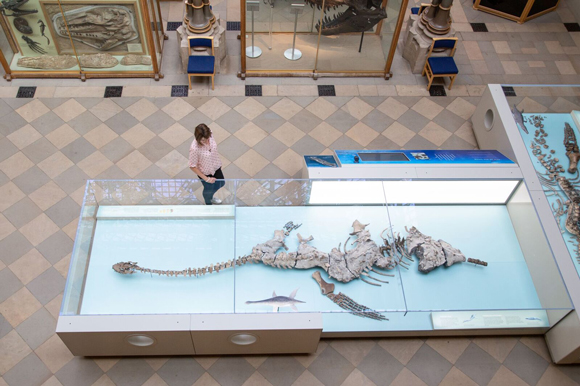
A Plesiosaur Specimen on Display

Plesiosaur specimen at the Oxford University Museum of Natural History.

A long-necked plesiosaur fossil specimen.  A plesiosaur fossil specimen on display at the Oxford University Natural History Museum.

Picture credit: Everything Dinosaur

The Oxford Clay Working Group

Dr Carl Harrington, a member of the Oxford Clay Working Group, was the first person to find bones of this new sea monster.  Describing the find as “fantastic”, Dr Harrington recalled the moment he first uncovered the delicate skull bones:

It was one of those absolute “wow” moments.  I was the first human to come face-to-face with this reptile.”

The quarry is owned by building supplies company Forterra and this part of Cambridgeshire has become very well known for its Jurassic vertebrate fossil finds.  For example, the first fossils of the giant prehistoric fish Leedsichthys  (L. problematicus) were also found in the Peterborough area.  Forterra have donated the specimen to the Oxford University Museum of Natural History, where the fossilised remains are currently being prepared and studied in more detail with a view to determining whether or not this is a new species of marine reptile.

An Artist’s Interpretation of the New Marine Reptile (Plesiosaur)

Scale bar = 1 metre.

Scale bar = 1 metre.

Picture credit: Nobomichi Tamura with additional annotation by Everything Dinosaur

For models and replicas of plesiosaurs and other marine reptiles: CollectA Deluxe Prehistoric Life Models.

Plesiosaurs had two pairs of  oar-like paddles which they used to propel themselves through the water, recent studies suggest that, just like extant penguins, these marine reptiles, some of whom could reach lengths in excess of fifteen metres, actually “flew” through the water.

To read more about this research into plesiosaur propulsion: Computer simulations and marine reptile underwater flight.

Nice to see that Cambridge is prepared to donate a pair of oars to Oxford, their bitter rowing rivals.

21 01, 2016

Quarry Site Might Reveal Remarkable Evidence of Cretaceous Mass Extinction

By |2024-05-05T18:33:09+01:00January 21st, 2016|Categories: Dinosaur and Prehistoric Animal News Stories, Dinosaur Fans, Geology, Main Page|0 Comments

Potential to Map End Cretaceous Extinction Event in New Jersey Quarry

The eastern part of the United States might be regarded as something of a “poor relation” to the western side of the country when it comes to dinosaur bones.  True, eastern USA dinosaur fossils are much rarer than from locations such as Wyoming, Utah, Arizona, Colorado and Montana in the west, but the State of New Jersey might just have one very special “Lagerstätte”, that tops those vertebrate fossil bearing rocks known elsewhere in America.  A disused quarry located close to the township of Mantua might provide palaeontologists with unique insights into the End Cretaceous mass extinction event that wiped out the non-avian dinosaurs.

A New Jersey Quarry Provides Window into the Cretaceous

Around sixty-five million years ago, this site was at the bottom of a shallow sea, close to the landmass known as Appalachia.  In one layer of rock, about fourteen metres below the level of today’s land surface, scientists have found a treasure trove of marine fossils.  Professor Kenneth J. Lacovara, a professor of palaeontology and geology at the nearby Rowan University describes this particular bed as a “mass death assemblage”.  Could all these animals have perished as a result of a single catastrophic event, such as an extra-terrestrial impact event?

A Mass Death Assemblage

If this is the case, then this quarry, which sits behind a shopping mall, could be the only site in the world where animal remains can be found that date from the End Cretaceous mass extinction event.  Fossils are found in a number of rock layers in the quarry, but a vast assemblage is confined and concentrated to one bed in the strata.  The rocks have been dated to around 65 million to 66 million years old, but further radiometric and biostratigraphic analysis is required before the link with the mass extinction event can be given more validity.  If a connection is established, then this location could provide an unparalleled window into a pivotal moment in the history of life on Earth.

Iridium Found at the Location

Elevated amounts of the rare Earth element iridium found in close proximity to the richest fossil bearing layer, indicate that these animals lived at a time extremely close to what is believed to have been an asteroid impact, one that played a major role in the extinction of about 75% of all terrestrial species.

Last year, Rowan University entered into an agreement to purchase the sixty-five acre site.  The University intends to turn the quarry into a world-class educational resource.  A number of open days have already been organised and it has been estimated that some 8,000 local people have already taken part in fossil digs.

Huge Number of Fossils Found

Fossils found include a vast array of marine invertebrates, animals like brachiopods, bivalves and molluscs.  In addition, shark teeth are relatively common and fossils from ancient crocodiles and turtles have also been discovered.  Occasionally, the fossilised remains of a mosasaur (marine reptile) are found.  Bones and other remains from once living organisms such as teeth and shells can pile up as underwater currents relocate them on the seabed, concentrating them into one area, perhaps where the current dies away.

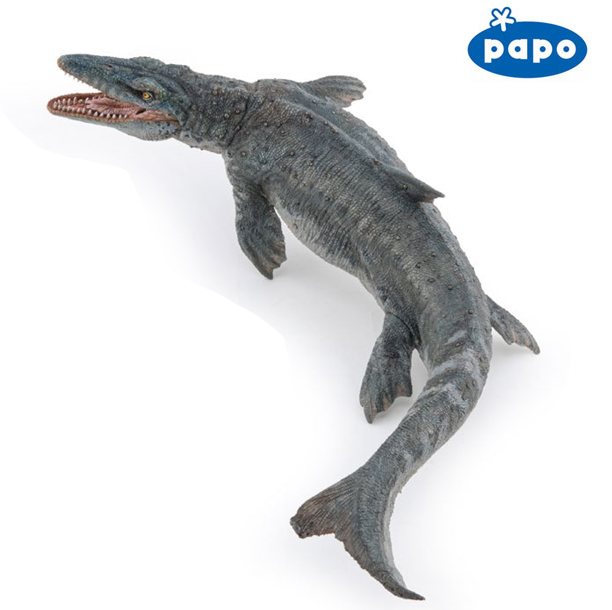
A Replica of a Mosasaurus (Papo Model)

Papo Mosasaurus model

The new for 2022 Papo Mosasaurus model, complete with its dorsal fin. We think that this figure is reminiscent of the giant mosasaur seen in the “Jurassic World” film franchise.

The picture (above) shows a Papo Mosasaurus model, to view the Papo prehistoric animal model range: Papo Prehistoric Animal Models.

However, at this location, one bed reveals skeletons of larger animals have remained relatively intact.  This suggests that these animals all died at approximately the same time and then settled gently on the sea bottom.  Initial dating assessments, puts this fossil layer tantalisingly close to the extra-terrestrial impact event that took place in the Yucatan peninsula (Mexico).

Now that the future of this rather special site has been secured, scientists hope to undertake a much more extensive study of the palaeogeography of the area and to establish this location’s potentially unique relationship to the extinction event that wiped out the non-avian dinosaurs as well as the Pterosauria and most of the marine reptiles.

Go to Top