All about dinosaurs, fossils and prehistoric animals by Everything Dinosaur team members.
27 07, 2024

Which are the Best Prehistoric Animal Models?

By |2024-07-23T14:32:14+01:00July 27th, 2024|Categories: Dinosaur and Prehistoric Animal Models|0 Comments

At Everything Dinosaur, we get sent lots of questions by dinosaur fans.  We try our best to reply to them all.  Sometimes the questions we receive relate to a new dinosaur discovery.  We get enquiries about the latest research and fossil finds.  In addition, our email inbox is populated with enquiries about prehistoric animal figures.  Some of these questions involve us providing information about a single model.  For example, recently we received lots of enquiries about the new Eofauna T. rex 1/35th scale model. However, we also receive more general questions, such as which are the best prehistoric animal models?   This is a tricky question to answer.  After all, an appreciation of dinosaur and prehistoric animal models is extremely subjective.
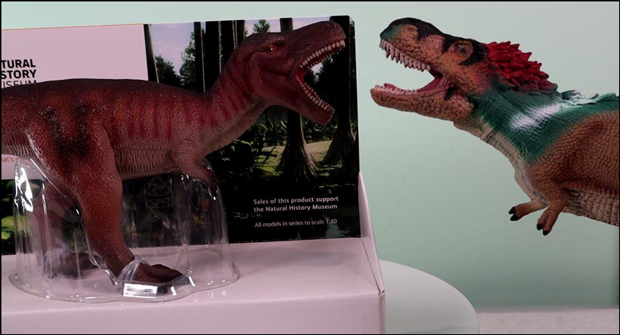
Comparing dinosaur models.

Comparing T. rex dinosaur models. The Natural History Museum figure compared to a CollectA 1:40 scale Tyrannosaurus.  Which prehistoric animal is best?  That’s a subjective question.  Picture credit: Everything Dinosaur.

Picture credit: Everything Dinosaur

The image (above) features two prehistoric animal dinosaur models.  The Natural History Museum Tyrannosaurus rex is on the left, whilst a CollectA Deluxe T. rex is shown (right).

To view the CollectA Deluxe model range: CollectA Deluxe Models.

The Everything Dinosaur article about the new Eofauna T. rex figure: The New Eofauna Scientific Research Theropod Figure.

The Best Prehistoric Animal Models?

Prehistoric animals and extinct creatures have long captivated the imagination of children and adults alike. The most popular museums tend to be ones that focus on natural history. The most popular galleries in these museums are often the ones containing prehistoric animal fossils. From the fearsome Tyrannosaurus rex, to the majestic mammoth (Mammuthus), these animals drive curiosity and a thirst for knowledge. Moreover, for those seeking to bring the past to life, high-quality animal replicas can be an invaluable resource.  Whether used for educational purposes, creative storytelling, or simply as display pieces in museums, prehistoric animal models offer a tangible connection to ancient ecosystems.
Papo running T. rex

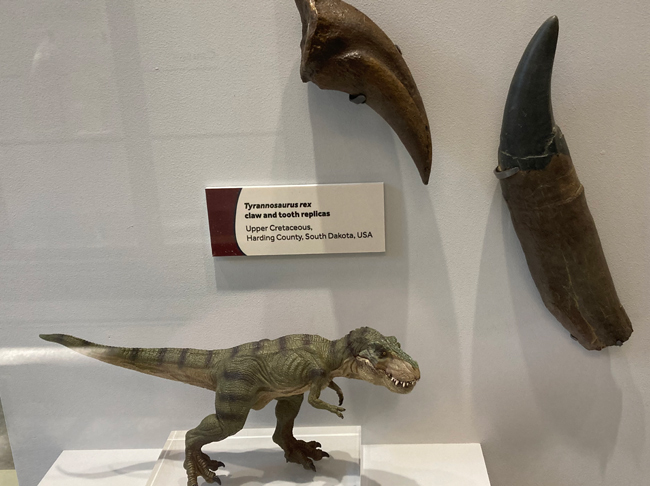
A Papo green running Tyrannosaurus rex model on display next to a replica of a T. rex tooth and a T. rex claw. An exhibit at the Manchester Museum of Natural History.  Papo models and figures may not be the most accurate replicas on the market.  However, they are used to illustrate dinosaur fossil displays. Picture credit: Everything Dinosaur.

Picture credit: Everything Dinosaur

The picture (above) shows the popular Papo running T. rex figure in a museum exhibit featuring tyrannosaur material.  Papo prehistoric animals may not be the most scientifically accurate models, but these figures have been spotted being used in museums.

To view the range of Papo dinosaurs and other figures available: Papo Dinosaurs and Prehistoric Animals.

Scientific Accuracy or Play Value?

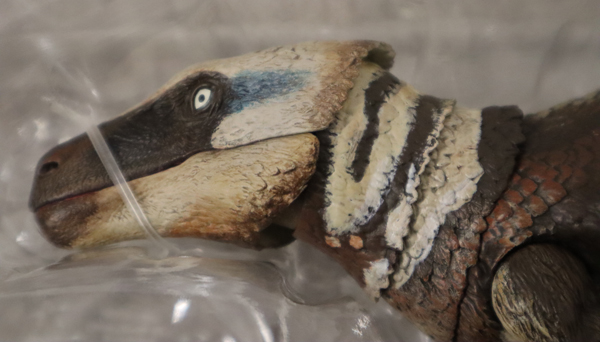
Arguably, the best prehistoric animal models not only capture the unique physical characteristics of their subjects, but also their sense of power and presence. Many also feature articulated joints, allowing for dynamic posing and creative play.  So, when considering which are the best prehistoric animal models what factors should we prioritise?  Do we focus on scientific accuracy or play value?  For example, the Beasts of the Mesozoic figures are essentially for display.  However, their stunning paintwork along with their myriad of articulated joints can attract younger dinosaur fans to this model range.
A close-up view of the Beasts of the Mesozoic Utahraptor model.

A close-up view of the stunning Beasts of the Mesozoic Utahraptor figure. This dinosaur model has an articulated lower jaw and numerous points of articulation.  Is this a collectable or does it lend itself to imaginative play?  Picture credit: Everything Dinosaur.

Picture credit: Everything Dinosaur

Additionally, there are personal preferences to consider.  For Everything Dinosaur team members, it is not possible for us to answer the question about “the best prehistoric animal models”.  Any answers would be difficult to quantify and extremely subjective.  Ultimately, it is a case of “beauty being in the eye of the beholder” and there are probably no right or wrong answers to this question.

Happy model collecting.

To visit the user friendly and award-winning Everything Dinosaur website: Dinosaur Toys and Models.

26 07, 2024

A New Dinosaur Book for the Festive Season

By |2024-07-26T14:59:42+01:00July 26th, 2024|Categories: Book Reviews|0 Comments

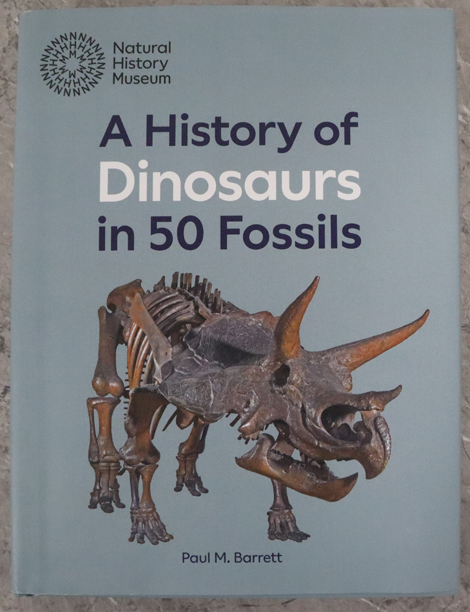
The extremely talented Professor Paul M. Barrett of the London Natural History Museum has written a new book all about the Dinosauria.  Entitled “A History of Dinosaurs in 50 Fossils”, this publication explains the evolution of the dinosaurs as outlined by fifty remarkable fossil specimens.  Many of these fossils are to be found within the Natural History Museum’s vertebrate fossil collection.

Published by the Natural History Museum, the book is likely to be available in time for the festive season.

We wanted to highlight this excellent book, so we created a YouTube short about it.

Video credit: Everything Dinosaur

“A History of Dinosaurs in 50 Fossils”

The book is split into three general sections.  It also includes a helpful cladogram and an inventory of the fossil specimens featured.  In addition, this new dinosaur book incorporates some stunning dinosaur themed artwork.  The first section sets the scene.  The Dinosauria are defined, and their evolutionary origins outlined.  Fittingly, the first dinosaur to be discussed in detail is Megalosaurus (M. bucklandii).  Megalosaurus was the first dinosaur to be scientifically described (1824).  The evolution of the Theropoda and the sauropods are reviewed.  Furthermore, the origins of the first entirely herbivorous dinosaurs are highlighted.  Also, there are extensive notes on Lesothesaurus, Massospondylus and Herrerasaurus.

Megalosaurus bucklandii fossils.

A view of the skull and jaw material associated with the first dinosaur to be scientifically described (Megalosaurus). Megalosaurus bucklandii is the first dinosaur to feature in a new book written by Professor Paul M. Barrett. Picture credit: Everything Dinosaur.

Picture credit: Everything Dinosaur

Part two of this well-written volume examines the huge variety of different types of dinosaur to evolve.  This astonishing variety is highlighted by beautiful photographs of fossil material. The dinosaurs featured include Mamenchisaurus, Allosaurus, Stegosaurus and Giraffatitan.  It is pleasing to note that many dinosaurs from the British Isles are included, although it is hard for us to imagine Hypsilophodon as “Mesozoic cows”.

To read a blog post from 2023 about the describing of a new species of Wessex Formation hypsilophodontid: Vectidromeus – A New Hypsilophodontid from the Isle of Wight.

Furthermore, this section delves into the evolution of powered flight amongst members of the Maniraptora and there are numerous, splendid photographs of feathered dinosaur fossils.  Naturally, look out for the text dedicated to the iconic Archaeopteryx lithographica.

A History of Dinosaurs in 50 fossils by Professor Paul M. Barrett.

The front cover of the book features a mounted skeleton of Triceratops. Picture credit: Everything Dinosaur.

Picture credit: Everything Dinosaur

Locomotion, Diet, Breathing and Enormous Titanosaurs

The third and final section highlights dinosaur biology.  Topics covered include diet, locomotion, breathing, ontogeny and the endothermic versus ectothermic debate.  Of particular note was the “life at the extremes” segment.  This discussed the remarkable titanosaur Patagotitan, one of the largest terrestrial vertebrates known to science.  Perhaps, Professor Barrett was inspired by the recent Patagotitan exhibition held at the museum.

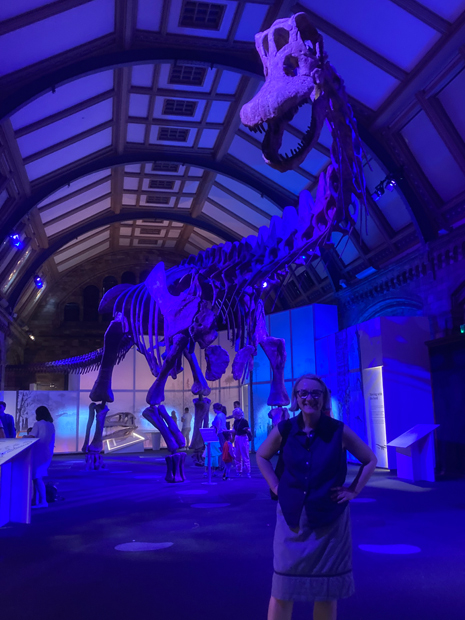
Patagotitan skeleton on display.

Sue from Everything Dinosaur poses in front of the colossal Patagotitan skeleton which is being exhibited at the Natural History Museum (London). Picture credit: Everything Dinosaur.

Picture credit: Everything Dinosaur

“A History of Dinosaurs in 50 Fossils” by Professor Paul M. Barrett is published by the London Natural History Museum (ISBN: 9780565095338).

We expect it to be out in all good book stores in the autumn and, we highly recommend this new dinosaur book!

25 07, 2024

New Brachiopod Study Sheds Light on Biodiversity

By |2024-07-25T10:04:11+01:00July 25th, 2024|Categories: Palaeontological articles|0 Comments

Research into a living fossil has provided scientists with a fresh perspective on animal evolution.  A new brachiopod study, involving the careful analysis of over a thousand genera, indicates these ancient creatures were diversifying and evolving but this did not result in many new species.  The research published in the journal “Nature Ecology & Evolution”, challenges some of the core principles of evolution.

Let’s hear it for the humble brachiopod!

What is a Brachiopod?

Brachiopods (Brachiopoda) are shelled animals that originated during the Cambrian.  Many resemble Roman oil lamps, hence their common name “lamp-shells”.  Their shells consist of two parts (valves), with one part larger than the other.  They are entirely marine and benthic.  These filter feeders have shells around two to five centimetres in diameter, although some genera grew much larger.  Although superficially similar to molluscs such as clams, mussels and oysters, they are not closely related.

New brachiopod study sheds light on biodiversity.

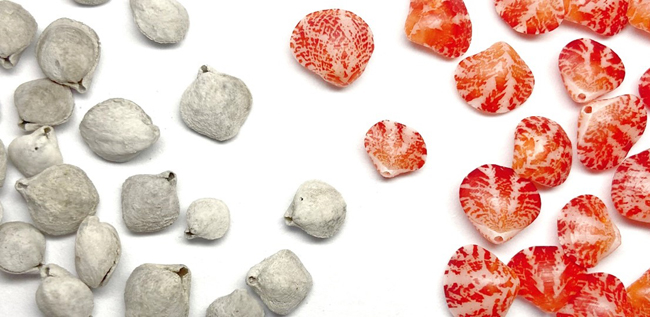
Triassic brachiopod fossils (left), recent brachiopod shells (right). Picture credit: Zhen Guo.

Picture credit: Zhen Guo

In many species of brachiopod, the animal is attached to the sea floor by a fleshy stalk (pedicle).  The presence of a pedicle is indicated by the hole located on the larger of the valves (see picture above).  They were abundant in the Palaeozoic and Mesozoic and are often the most common fossil found in Palaeozoic marine deposits.  These ancient creatures are still around today but most species are confined to deep water.  Some 12,000 fossil species have been named.  In contrast, it has been estimated that there are less than 500 extant species.

More than 700 different fossils found at Wren's Nest

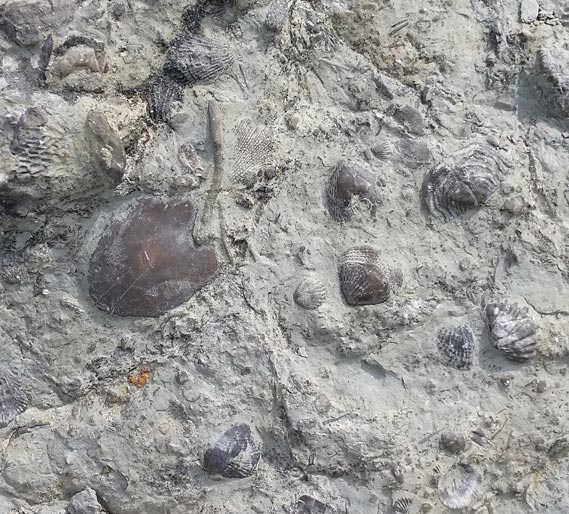
Lots of brachiopod and coral fossils to find at Wren’s Nest.  The strata were deposited during the Silurian, a time when the Brachiopoda were abundant. Picture credit: Everything Dinosaur.

Picture credit: Everything Dinosaur

New Brachiopod Study

This new brachiopod study is a collaboration between the University of Bristol, the China University of Geosciences and the Open University.  The team found that following the end-Permian mass extinction event, the Brachiopoda were evolving in new directions, but this did not lead to many new species.  In comparison, the Mollusca became increasingly dominant.  Today, the Mollusca is an amazingly diverse phylum with more than 50,000 species. The Brachiopoda currently contains just 394 known species.  The research team found that brachiopods were evolving new shell shapes and ecological behaviours following the end-Permian mass extinction, but their diversity did not grow.

Lead author Dr Zhen Guo (China University of Geosciences) explained:

“In the Palaeozoic, from 540 to 250 million years ago, brachiopods ruled the seabed.  Most of them are quite small–you could hold twenty of them in your hands; but others were big and thick-shelled and lived a long time. Their shells were anything from circular to widely stretched and they had either smooth shells or carried deep ridges and troughs.”

Professor Michael Benton (University of Bristol), a co-author of the new brachiopod study, commented:

“The brachiopods were hit very hard by the end-Permian mass extinction 252 million years ago.  The group could have disappeared completely, and indeed from that point, molluscs just became more and more successful. For a long time, it was thought that the brachiopods remained rare because the survivors were stuck in just a few modes of life.”

Studying Over 1,000 Brachiopod Genera

This new research involved the analysis of a vast brachiopod database.  More than 1,000 genera were studied.  This database was comprised of brachiopods that lived after the Permian.  For each genus, the analysts recorded dozens of measurements of the overall shape of the shells, their external sculpture, and internal anatomy. These features were analysed together to provide measurements of overall diversity of shapes for each major brachiopod group at each point in geological time. This measure of “diversity of shape”, is referred to in biology as “disparity”.  An understanding of shape innovations and changes over time could then be plotted.

These Mesozoic-Cenozoic brachiopods were adapting to different modes of life, but there were fewer species evolving than expected.

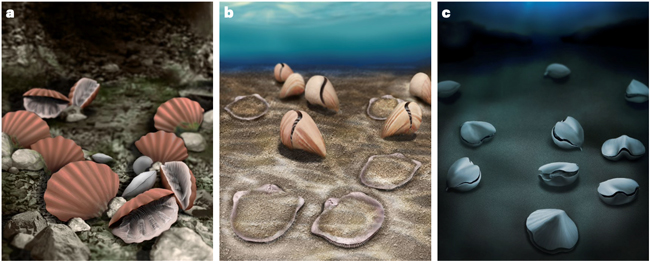
Brachiopods showing adaptations to different environments.

Reconstructions of some Mesozoic-Cenozoic brachiopods, showing adaptations to certain environments. Picture credit: Shunyi Shi.

Picture credit: Shunyi Shi

The co-author from the Open University, Dr Tom Stubbs added:

“In fact, the post-extinction brachiopods were innovating and trying new modes of life. One group, the terebratulids, were diversifying their body shapes and ecological functions from the end of the Permian to the present day, but their diversity did not increase.”

To read about an earlier, related brachiopod study conducted by University of Bristol researchers: Brachiopods and Bivalves (Mollusca) Faunal Turnover Study.

Unexpected Results

Fellow researcher Professor Zhong-Qiang Chen of the China University of Geosciences said:

“This was quite unexpected. Brachiopods were far from failures after the end-Permian extinction. They were evolving in new directions and exploring new modes of life, just as the molluscs were at the same time. But this did not turn into evolutionary success in terms of the numbers of species. Despite their bursts of evolution in form and function, they could not spread widely, and the exact reason remains unclear.”

Modern brachiopods represent the tip of the ecological iceberg for this once immensely abundant phylum.  Extant species do not provide scientists with an understanding of their extremely successful lineage, but we don’t know why these marine creatures did not become super-abundant again after the Permian.

Dr Zhen Guo explained the importance of this research.  This new brachiopod study suggests that disparity and diversity are effectively decoupled, at least as far as the Brachiopoda after the Permian are concerned.

Dr Zhen Guo concluded:

“It’s important to understand modern biodiversity in terms of the processes that lie behind it.”

Everything Dinosaur acknowledges the assistance of a media release from the University of Bristol in the compilation of this article.

The scientific paper: “Morphological innovation did not drive diversification in Mesozoic–Cenozoic brachiopods” by Zhen Guo, Michael J. Benton, Thomas L. Stubbs, and Zhong-Qiang Chen published in Nature Ecology & Evolution.

The Everything Dinosaur website: Prehistoric Animal Toys.

24 07, 2024

Rare Jurassic Mammaliaform Fossils Reveal Details About Ontogeny

By |2024-07-26T12:27:57+01:00July 24th, 2024|Categories: Palaeontological articles|0 Comments

A research paper published this week in the journal “Nature” has revealed that early mammals may have lived much longer than their modern-day counterparts.  The study describes two Krusatodon kirtlingtonensis fossil specimens.  These mouse-sized mammals lived approximately 166 million years ago (Bathonian faunal stage of the Middle Jurassic).  The fossils come from the remarkable Jurassic strata found on the Isle of Skye.

The research led by National Museums Scotland describes the fossilised remains of one adult and one juvenile.  The adult K. kirtlingtonensis is thought to have been around seven years old when it perished.  The juvenile is thought to have been between seven to twenty-four months old when it died.  It was still in the process of replacing its deciduous dentition (milk teeth) with its final, adult set of teeth.

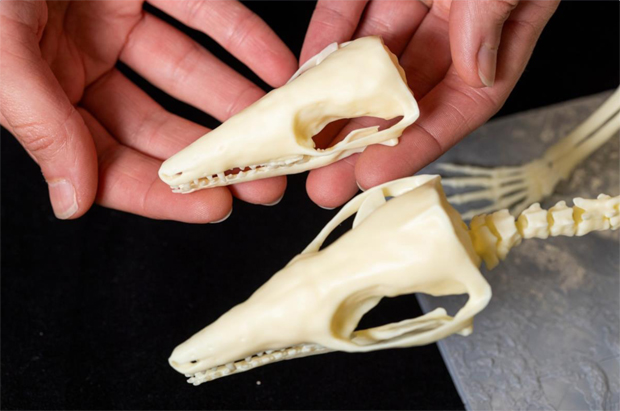
Dr Elsa Panciroli with enlarged, 3D printed models of Krusatodon kirtlingtonensis.

National Museums Scotland’s Dr Elsa Panciroli with enlarged, 3D printed models of Krusatodon kirtlingtonensis skeletons. Picture credit: Duncan Mc Glynn.

Picture credit: Duncan Mc Glynn

The scientists conclude that early diverging mammaliaforms did not experience the same life histories as extant small-bodied mammals. Furthermore, the fundamental shift to faster growth over a shorter lifespan may not have taken place in mammaliaforms until during or after the Middle Jurassic.

Two Krusatodon kirtlingtonensis Fossil Specimens

These two Krusatodon kirtlingtonensis fossils are extremely significant.  The adult specimen represents one of the earliest fossil discoveries from the Isle of Skye.  It was found in the 1970s.  This specimen is one of the most complete Jurassic mammaliaform skeletons known to science.  The juvenile fossil was found more recently (2016).  It is the only known skeleton of an immature Jurassic mammaliaform. Indeed, there is no other record of an adult and juvenile from the same Jurassic mammaliaform taxon.

The Isle of Skye is one of the most important locations in the world for Middle Jurassic fossils.  Vertebrate body and trace fossils confirm the presence of a rich biota of dinosaurs, pterosaurs and early mammals. This new study focusing on K. kirtlingtonensis underscores the significance of the Scottish island to palaeontology.

An article about the discovery of a large, new species of pterosaur (Dearc sgiathanach): Fantastic Pterosaur from the Isle of Skye.

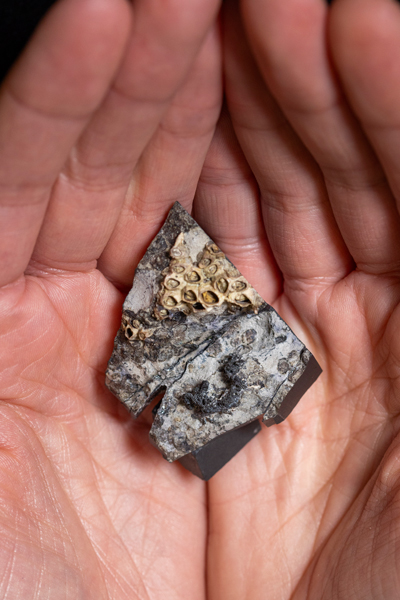
Krusatodon kirtlingtonensis skull fossil material held in the hand.

Dr Elsa Panciroli examines the barnacle encrusted fossil which contained Krusatodon kirtlingtonensis material. Picture credit: Duncan Mc Glynn.

Picture credit: Duncan Mc Glynn

X-ray Computed Tomography Employed

The discovery of a juvenile and adult of the same species of Jurassic mammaliaform is unique.  As a result, a ground-breaking comparative analysis into their growth and life history (ontogeny) was undertaken. The ages of the specimens at death were determined using X-ray imaging to count the growth rings in their teeth.  Therefore, the age of each animal at the time they died could be established.  The X-ray computed tomography was carried out in several laboratories, including the European Synchrotron (ESRF) located in Grenoble, France.

Extant small mammals have much shorter lifespans.  Many live for less than a year.  They mature quickly, losing their milk teeth and weaning within months of birth.  In addition, most small mammals living today rapidly reach sexual maturity and breeding age. The Krusatodon fossils reveal for the first time that the earliest mammals didn’t finish replacing their milk teeth until well into their second year of life, possibly later.  The researchers conclude that mammals grew more slowly in the Jurassic than they do today.  This suggests a fundamental shift in the growth patterns and life expectancy of mammals must have taken place during or after the Middle Jurassic.

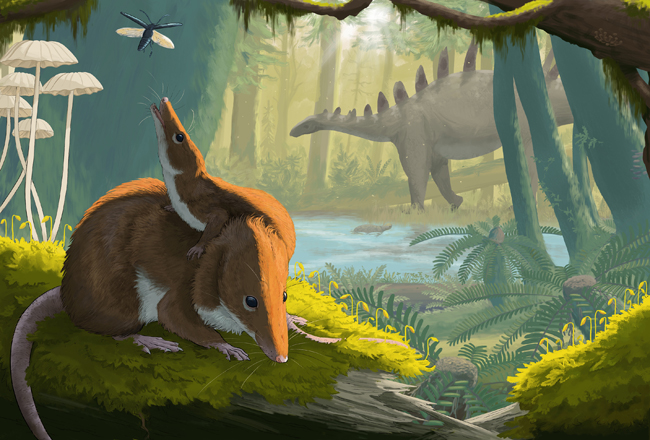
Krusatodon kirtlingtonensis life reconstruction.

An adult and young Krusatodon kirtlingtonensis life reconstruction. A stegosaur can be seen in the background. Fossilised tracks found on the Isle of Skye indicate the presence of stegosaurs in the ecosystem.  Picture credit Maija Karala.

Picture credit: Maija Karala

Dr Elsa Panciroli, lead author and Associate Researcher of Palaeobiology at National Museums Scotland, commented:

“These fossils are among the most complete mammals from this time period in the world. They give us unprecedented insights into the lives of the first mammals in the time of dinosaurs. Although on the outside Krusatodon looked like a shrew or mouse, on the inside it was quite different; it grew more slowly and lived much longer than small mammals do today. As a result, it probably had quite a different physiology and life history as well. Skye’s fossils are really putting Scotland firmly on the map when it comes to understanding mammal evolution. This is just the tip of the iceberg in terms of what they can tell us.”

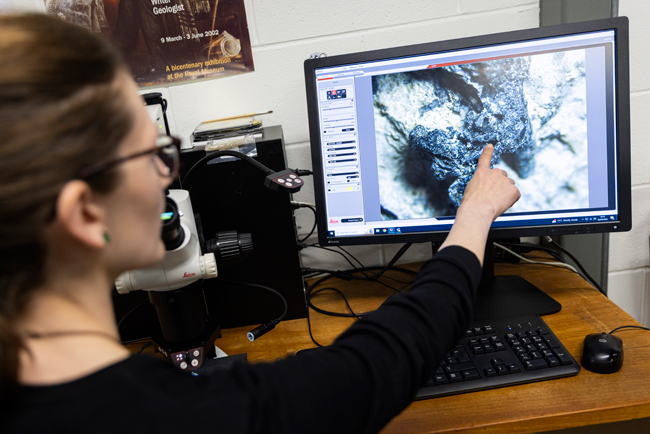
Dr Elsa Panciroli examines two Krusatodon kirtlingtonensis fossils.

National Museums Scotland’s Dr Elsa Panciroli pointing out details on a high-resolution scan of the Krusatodon kirtlingtonensis fossils. Picture credit: Duncan Mc Glynn.

Picture credit: Duncan Mc Glynn

Analysis of Teeth Growth Patterns Yields Surprising Results

Co-author Dr Elis Newham, a Postdoctoral Research Associate at Queen Mary University of London explained:

“Our study benefited greatly from a new technique we developed using synchrotron X-ray technology. This allowed us to analyse growth patterns in the teeth of these fossils, much like counting tree rings. It was surprising to discover that Krusatodon, while showing a similar development pattern to modern mammals, grew much slower and lived longer. This research emphasises the value of studying juvenile fossils, and the X-ray cementochronology technique offers a powerful tool for unlocking these secrets from the past.”

Dr Stig Walsh, Senior Curator of Vertebrate Palaeobiology at National Museums Scotland and fellow co-author on the research, said:

“Even in the context of the amazing palaeontological finds on Skye in recent years, these fossils are remarkable. Mammal fossils of this age are exceptionally rare worldwide, and most are just single teeth found by sieving sediment. To find two such rare fossil skeletons of the same species at different growth stages has rewritten our understanding of the lives of the very earliest mammals. We’re thrilled they are both now part of Scotland’s National Collection, an important part of the global fossil record, and will be preserved for generations of researchers to come.”

National Museums Scotland's Dr Elsa Panciroli examines two Krusatodon kirtlingtonensis fossils.

National Museums Scotland’s Dr Elsa Panciroli examines two Krusatodon kirtlingtonensis fossils. Picture credit: Duncan Mc Glynn.

Picture credit: Duncan Mc Glynn

International Collaboration

In addition to National Museums Scotland, the study also involved researchers from the American Museum of Natural History (New York), the University of Chicago, the European Synchrotron Radiation Facility, and Queen Mary University of London.

Co-author Professor Roger Benson (American Museum of Natural History), described the juvenile fossil material:

“When we found the tiny juvenile skull, I didn’t realise what we’d found right away. The part of the fossil that was sticking out of the rock was blasted by erosion, surrounded by barnacles, and looked just like a piece of ash. I used micro-CT scanning, a form of 3D X-ray imaging, and was very surprised to see a whole skull in the rock. For science, it’s really remarkable to have this fossil and it told us a lot about growth and life history in some of the earliest mammals.”

To read a blog post from 2019 about greater legal protection for Scottish fossil sites: Legal Protection for Isle of Skye Fossils.

Everything Dinosaur acknowledges the assistance of a media release from National Museums Scotland in the compilation of this article.

The scientific paper: “Jurassic fossil juvenile reveals prolonged life history in early mammals” by Elsa Panciroli, Roger B. J. Benson, Vincent Fernandez, Nicholas C. Fraser, Matt Humpage, Zhe-Xi Luo, Elis Newham and Stig Walsh published in the journal Nature.

The Everything Dinosaur website: Prehistoric Animal Models and Toys.

23 07, 2024

Retired or Rare Models Category Added to Website

By |2024-07-24T17:49:10+01:00July 23rd, 2024|Categories: Everything Dinosaur News and Updates|0 Comments

Everything Dinosaur team members have added a new category to the company website.  The new category is entitled “Retired or Rare” and it will list retired or rare models.  The new category has been incorporated into the site in response to requests from customers. Fans of prehistoric animal models want to be notified when a figure becomes rare or goes out of production. Indeed, it can be frustrating for collectors to miss out on prehistoric animal models just because they have been retired.  This new category will provide a helpful resource to enable dinosaur model fans to complete their collections.  In addition, it will help to keep fans up to date with changes to product ranges.

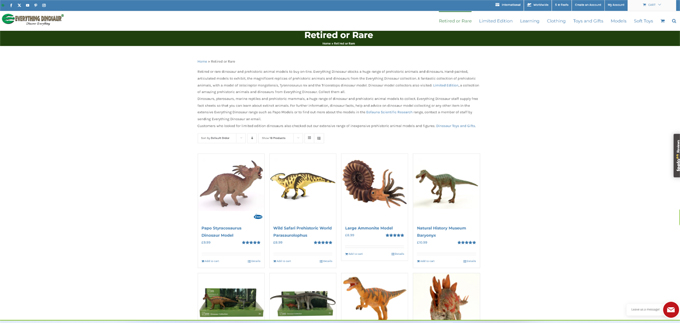
Retired or rare models available from Everything Dinosaur.

The retired or rare models section of the company website lists difficult to find prehistoric animal figures. Picture credit: Everything Dinosaur.

Picture credit: Everything Dinosaur

The Retired or Rare Models Category

This strategic move aims to cater to the growing demand from dinosaur model enthusiasts seeking unique and often hard to find items. By adding this new section, Everything Dinosaur continues to support the site user experience. Furthermore, it solidifies the company’s position as a premier destination for dinosaur-related products.  The retired and rare models category will feature discontinued items and those figures which are increasingly difficult to stock. These models, often produced in small quantities, hold immense value for dedicated collectors and provide a sense of rarity and exclusivity. Team members work diligently to source these rare figures. We aim to offer as diverse a range of prehistoric animal models as possible.

To visit the “Retired or Rare” section of the website: Retired or Rare Prehistoric Animal Models.

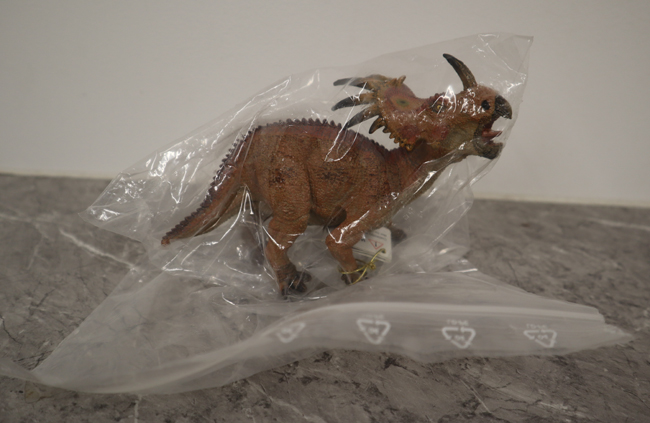
Papo red Styracosaurus in its plastic bag.

The Papo red Styracosaurus in its plastic bag. The model is out of production but Everything Dinosaur has been able to obtain a small quantity. Please note as the models are rare, they are supplied in special plastic bags, which can be re-used if required.  This figure can be found (whilst stocks last) in the retired or rare section of the company website. Picture credit: Everything Dinosaur.

Picture credit: Everything Dinosaur

Catering to the Growing Demand for Rare Models

Everything Dinosaur is a global supplier of prehistoric animal models and figures. The company is aware of the growing demand for unique, or rare models. By creating this new section of our website, we can assist collectors, helping them to find what they want. Naturally, just because a model is rare or retired, we have no intention of charging exorbitant prices. Moreover, we will continue to subsidise postage and shipping costs, a service we try to offer across our entire inventory.

Visit the award-winning and now even more user-friendly Everything Dinosaur website: Dinosaur Figures and Models.

22 07, 2024

New Eofauna T. rex Model is Reviewed

By |2024-07-21T18:46:55+01:00July 22nd, 2024|Categories: Eofauna Scientific Research Models|0 Comments

Our thanks to dinosaur model fan William who supplied a review of the Eofauna T. rex model.  William has been collecting prehistoric animals for quite a while and he explained that this figure had been two years in development, but it was well worth the wait.  He commented that it was wonderful to have an accurate sculpt of “Sue”, otherwise known as FMNH PR 2081.

The review began by focusing on the head of the figure.  The head is described as “fantastic” with glorious textured lips and inquisitive eyes.  It was explained that Eofauna were thinking outside the box when they devised this figure and created a novel fixture for the articulated jaw.  The seam is obvious on the figure, but the reviewer hoped that this approach to articulation had been patented.

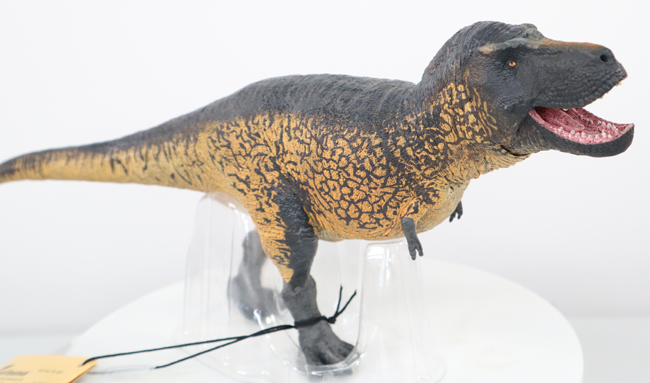
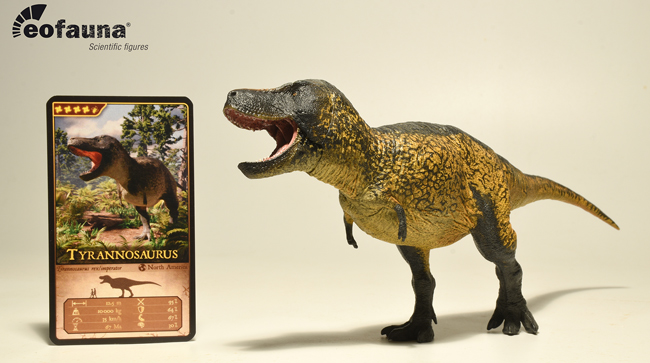
Eofauna T. rex model.

The Eofauna T. rex dinosaur model in the Everything Dinosaur photography studio. Picture credit: Everything Dinosaur.

Picture credit: Everything Dinosaur

To view the Eofauna Scientific Research model range: Eofauna Scientific Research Models.

The Eofauna T. rex Main Body

The trunk of the figure is described as being accurate and the muscular tail is praised.  The figure has a declared scale of 1:35. The tiny arms and hands ending in their two digits with claws are highlighted as being particularly well done.  William commented that the powerful hind limbs had been crafted with skill.  He also highlighted the textured pads on the underside of the feet.

When describing the chosen colour scheme for the figure, William exclaimed:

“The colour and texture of the figure are a banquet for the eyes.  The model may have been inspired by the Mexican beaded lizard’s colouration.  It has superbly sculpted skin integument from the lips to the tip of the tail.”

In concluding his review, William explained that the figure comes in a sealed plastic bag, and it is supplied with an informative picture trading card.

This is the first Eofauna figure to be supplied with a display base.  The reviewer highlighted the Eofauna T. rex model base and stated that it should prevent toppling issues.

The new for 2024 Eofauna Tyrannosaurus rex model.

The Eofauna T. rex figure is supplied with a Tyrannosaurus rex fact card.

The reviewer congratulated Eofauna Scientific Research and added:

“We all now own the most accurate, scientific Tyrannosaurus rex figure to exist.”

To read Everything Dinosaur’s blog post about this new T. rex figure: Eofauna “Sue” is Coming into Stock.

Thank You Everything Dinosaur

The final part of the Eofauna T. rex model review was reserved for the Everything Dinosaur team members.  William thanked Mike and Sue for providing dinosaur fans and model collectors with assistance.  During these uncertain times, even through the pandemic team members were available to provide advice and support.  The company’s commitment to sourcing leading brands and obtaining new stock was praised.

In summarising the range of models offered and the variety of product prices, William stated:

“It is a very good price range for children up to the adult collector who either wants the latest Beasts of the Mesozoic Yutyrannus huali figure to the latest releases from PNSO”.

William added that purchasing from Everything Dinosaur was safe and secure and that the company offered excellent customer service.  He thanked the company for their kindness and consideration.

Our thanks to William for his kind words and for his Eofauna T. rex model review.

The Everything Dinosaur website: Dinosaur Toys and Models.
21 07, 2024

Bullyland Ichthyosaurus Figures New into Stock

By |2024-07-24T16:35:58+01:00July 21st, 2024|Categories: Bullyland Prehistoric Animal Figures|0 Comments

The rare Bullyland Ichthyosaurus figures are back into stock at Everything Dinosaur. These marine reptile models have been in and out of production for the best part of a decade.  We know how keen model collectors are to obtain rare figures, so we do our best to stock these difficult to find models.

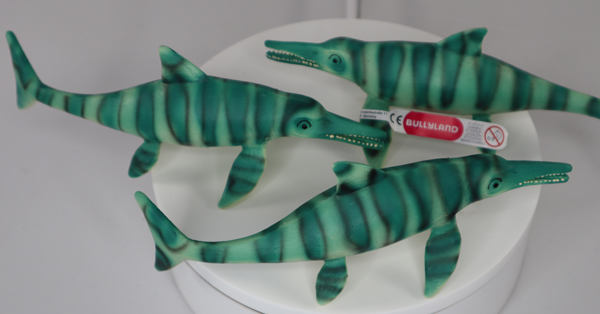
Bullyland Ichthyosaurus figures.

A trio of Bullyland Ichthyosaurus figures. These models are from the Bullyland “Dinosaur Park” theme world. However, Ichthyosaurus was not a dinosaur, but a marine reptile, a member of the Ichthyosauria. Picture credit: Everything Dinosaur.

Picture credit: Everything Dinosaur

Bullyland was formed in 1973. The company originated from the small town of Spraitbach near Stuttgart in Germany. The proximity to the Stuttgart Natural History Museum (Staatliche Museum für Naturkunde), led to a collaboration between the company and palaeontologists on a range of prehistoric animal figures.  Bullyland is perhaps more famous for its movie figures.  However, the company has always manufactured a small range of prehistoric animal models.

To view the range of Bullyland prehistoric animals in stock at Everything Dinosaur: Bullyland Prehistoric Animal Models.

Bullyland Ichthyosaurus Figures

The Bullyland Ichthyosaurus figures arrived last week (July 2024).  The models measure 21.5 cm in length and the manufacturer has declared a scale of 1:60.  In the Bullyland range, there are several articulated figures.  However, the Ichthyosaurus figure has no points of articulation.  Many of the prehistoric animals in this range are hand-painted and the Bullyland Ichthyosaurus has been praised for its colour scheme.

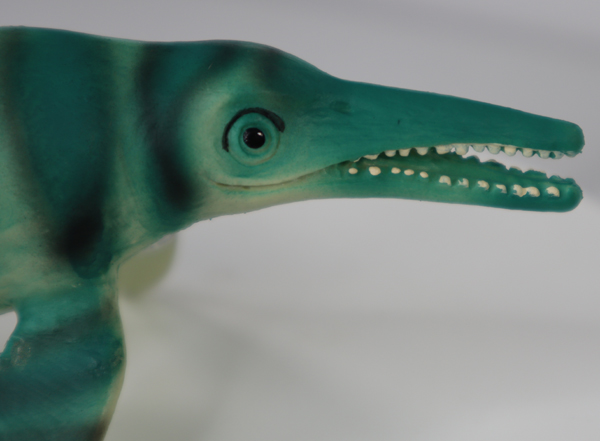
A close view of the head of the Bullyland Ichthyosaurus figure.

A close-up view of the head of the Bullyland Ichthyosaurus figure. Picture credit: Everything Dinosaur.

Picture credit: Everything Dinosaur

Models of Marine Reptiles

A spokesperson from Everything Dinosaur welcomed the Bullyland Ichthyosaurus figures back into stock. The spokesperson added:

“It is always a pleasure to bring into stock rare or difficult to obtain figures.  We know how keen collectors are to get every model in a range and the Bullyland Ichthyosaurus has been hard to find.  At Everything Dinosaur, we listened to our customers, and we have set about bringing this figure back and making it available.”

It was explained that the Bullyland range included other marine reptile models.  Currently, a Liopleurodon and an Elasmosaurus were part of this German range of figures.

To visit the Everything Dinosaur website: Prehistoric Animal Models and Toys.

20 07, 2024

Free Software to Help Enhance Website Accessibility

By |2024-07-02T10:46:50+01:00July 20th, 2024|Categories: Everything Dinosaur News and Updates|0 Comments

In today’s digital landscape, ensuring website accessibility is crucial for businesses aiming to be inclusive and reach the widest possible audience. Search engines such as Google are rumoured to be placing greater emphasis on rating web content based on how accessible it is to individuals with disabilities.  Everything Dinosaur team members are aware of the need to enhance website accessibility.

For many businesses the thought of having to redesign an on-line presence can be daunting.  Where do you start?  How do you ensure that you are following best practice?

How to Enhance Website Accessibility

Making a website more inclusive and accessible can be a challenge.  However, Everything Dinosaur team members are keen to enhance website accessibility and they want to make Everything Dinosaur. more user friendly and inclusive.

Many of our customers have additional needs and we wanted to make our web presence more accessible especially for those customers who might have a visual impairment.  A key aspect of website accessibility is maintaining sufficient contrast between the font colour and the background. Poor colour contrast can make text difficult to read, especially for individuals with visual impairments or other accessibility needs.

Fortunately, there is plenty of help on hand and team members at Everything Dinosaur have been utilising free software developed by the Utah State University to conduct a detailed audit of their website and to formulate easy to implement changes to enhance usability, make the site more inclusive and to improve accessibility.

Free Software

The software is known as WAVE and it can provide guidance to help businesses large and small to make their websites more inclusive.

Through the use of this free accessibility evaluation tools.  Team members were quickly able to identify those website elements such as images without alt text. Once corrected, this made the site much more user friendly for those visitors that rely on screen readers.

Nanmu Studio Parasaurolophus (green)

The new for 2022 Nanmu Studio Nutcracker Parasaurolophus dinosaur model in the green colour variant. It is important for all images to have alt text.  This enables users of screen readers and screen browsers to access all parts of the website.  Picture credit: Everything Dinosaur.

Picture credit: Everything Dinosaur

The image (above) shows a team member holding a hand-painted dinosaur model from the Nanmu Studio range.

To view this range of dinosaur and prehistoric animal figures: Nanmu Studio Models.

Changing the Site Contrast to Enhance Website Accessibility

The contrast ratio between the white font and the pale blue background of the Everything Dinosaur website was analysed, and the decision was made to change the background colour to a dark green.

This seemingly small change has had a significant impact on the user experience. The increased contrast allows site visitors, including those with visual impairments or other accessibility challenges, to easily read and engage with Everything Dinosaur’s content. By addressing this key accessibility factor, the company has taken an important step towards creating a more inclusive on-line presence.

Improving website accessibility

The background of Everything Dinosaur’s website has been changed to improve the contrast and therefore make the site easier to use for people with visual impairments.  Picture credit: Everything Dinosaur.

Picture credit: Everything Dinosaur

Following Best Practice

Making sure that you are following best practice is essential.  Fortunately, the Utah State University software incorporates Web Content Accessibility Guidelines (WCAG).  Users of this free tool can be confident that any changes made conform to the latest protocols.

Mike from Everything Dinosaur explained that considering the requirements of customers, especially those with additional needs does not have to be that daunting.

He added:

“Improving website accessibility benefits all site visitors.  Content that is easy to perceive and navigate is better for everyone. Removing barriers to access means that our website will be more inclusive and welcoming.  Some small changes can make a big difference.”

Everything Dinosaur’s focus on website accessibility demonstrates a dedication to inclusivity and a recognition of the importance of reaching all potential customers and stakeholders. By making these small but significant changes the company hopes to set an example for other businesses to follow, fostering a more inclusive and accessible on-line landscape.

Visit the award-winning and user friendly Everything Dinosaur website: Dinosaur Toys.

19 07, 2024

Remarkable Stegosaurus Skeleton Sells for a Record Amount ($44.6 million USD)

By |2024-07-21T11:52:03+01:00July 19th, 2024|Categories: Palaeontological articles|0 Comments

And so, the hammer came down and bidding ended on a remarkable Stegosaurus fossil skeleton that had been offered for sale at the auction house Sotheby’s (New York).  The Stegosaurus specimen, nicknamed “Apex” sold for a whopping $44.6 million USD (£34.5 million GBP).  This is a world record amount for a dinosaur fossil.  It had an estimated value of between $4 million and $6 million USD.  However, as the bidding started this was soon exceeded.

Seven bidders wanted this Stegosaurus, and they were prepared to pay big bucks to get it.  After fifteen minutes of frantic excitement lot thirteen was sold.  Unsurprisingly, given the sums involved, the Stegosaurus fossil skeleton was purchased by an anonymous bidder.  The buyer is believed to be a billionaire hedge fund owner (Kenneth Griffin).

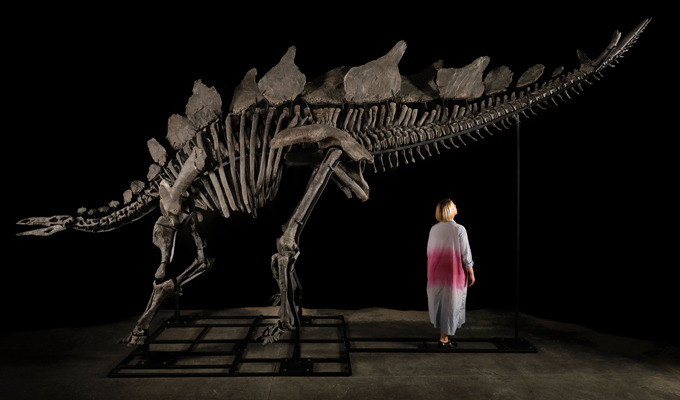
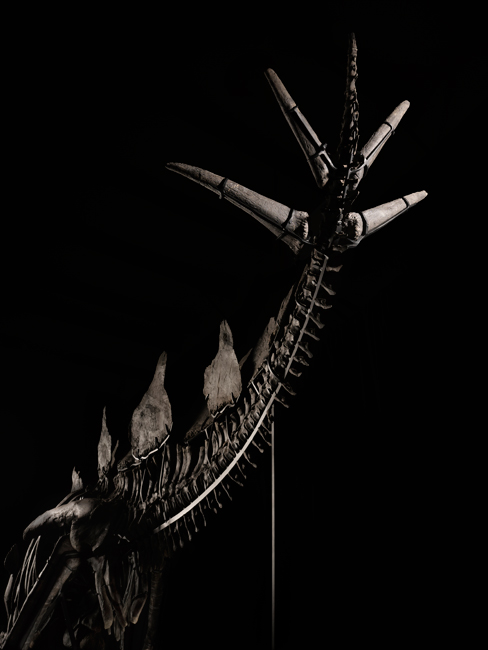
"Apex" the Stegosaurus fossil skeleton.

The stunning Stegosaurus skeleton “Apex” sold for a world record amount of $44.6 million USD at Sotheby’s New York. Picture credit: Matthew Sherman.

Picture credit: Matthew Sherman

“Apex” A Stunning Stegosaurus Fossil Skeleton

“Apex” was discovered on privately owned land in Moffat County, Colorado.  The land is owned by a commercial palaeontologist called Jason Cooper.  It is ironic, that the dig site was close to the small town of Dinosaur. The material, representing a single animal, consists of 254 fossil bones. This represents nearly eighty percent of the entire skeleton. The estimated number of bones in a Stegosaurus skeleton is 319, give or take the odd chevron.

Not only is it one of the most complete large dinosaur skeletons discovered, the bones bear witness to some remarkable pathology that helps tell the tale of this iconic Late Jurassic herbivore. The mounted skeleton measures over 8.2 metres long.

The impressive "thagomizer" on "Apex" the Stegosaurus fossil skeleton.

The impressive “thagomizer” on “Apex” the Stegosaurus fossil skeleton. Picture credit: Matthew Sherman.

Picture credit: Matthew Sherman

Auction House and Commercial Palaeontologist Co-operating Closely

Cassandra Hatton, Sotheby’s Global Head of Science & Popular Culture worked closely with Jason Cooper from the day of discovery onwards.  The fossils were carefully documented and excavated.  The material was prepared and mounted and at each stage the highest standards of transparency were adhered to.  The aim being to preserve as much information about the fossils as possible.  Skin impressions were noted and three, tiny ossicles representing throat armour were carefully extracted from the Morrison Formation matrix.  These also ended up as part of the Stegosaurus lot.

This is the first time an auction house has been so intimately involved with a dinosaur skeleton.

Cassandra stated:

“This sale has been years in the making, and at every turn, we have worked closely with Jason Cooper, from the moment of its discovery in Dinosaur, Colorado, to its sale in New York.  I am thrilled that such an important specimen has now taken its place in history, some 150 million years since it roamed the planet.  This remarkable result underscores our unwavering commitment to preserving these ancient treasures.”

Following the sale, the anonymous buyer is believed to have remarked:

“Apex was born in America and is going to stay in America!”

An Amazing Specimen

The fossil was preserved in hard sandstone and the black colour is typical of Morrison Formation specimens.  The fossils represent a fully-grown, robust adult and the fossilisation is described as “superb”, with little or no distortion.  Along with the skin impressions, fragile cervical plates and elements of the pebbly throat armour have been preserved.  Some fossil bones indicate the presence of arthritis.  This suggests “Apex” lived to an old age.  There are no signs of combat injuries or trauma on the bones.  In addition, there is no evidence of post-mortem scavenging by theropod dinosaurs.

A spokesperson from Everything Dinosaur commented that it was hoped that this remarkable Stegosaurus fossil skeleton would be made available to science for further study.

The spokesperson added:

“Commercial palaeontologists play an important role as they excavate specimens that could have been lost to science through erosion and weathering.  To excavate, clean and prepare such a remarkable specimen would have probably cost hundreds of thousands of dollars. Whilst we understand the importance of financial gain in these situations, and we suspect a portion of the money will be reinvested in further field work and research, hopefully, this specimen will be made available to the scientific community for further analysis and study.”

Sotheby’s Natural History Auction

The auction featured numerous amazing fossil specimens as well as meteorites, minerals, gogottes and for the first time, Palaeolithic tools including tools made by Neanderthals.  The Neanderthal tools sold for $22,800 USD, much higher than the pre-auction estimate.  A large iridescent ammonite fetched an eye-watering $72,000 USD.

Other fossils in the auction included mass mortality trilobite fossils from Morocco, Megalodon otodus teeth, fossil eurypterids from New York and beautiful fossilised fish. The natural history themed auction also featured meteorites and rare minerals including a large lapiz lazuli tower from Afghanistan.

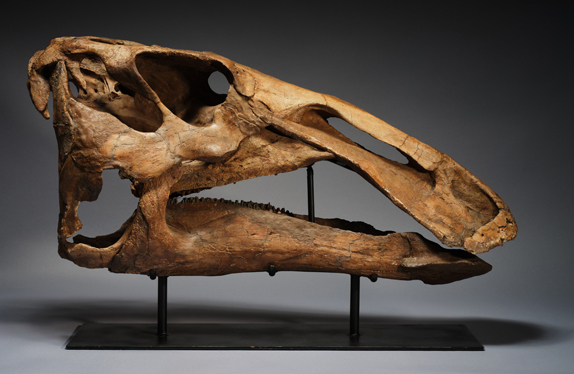
The auction also included numerous dinosaur fossils such as a Tyrannosaurus rex femur, two T. rex teeth and an Edmontosaurus (E. annectens) skull.

Edmontosaurus skull in Sotheby's auction.

Lot 26 the Edmontosaurus skull with an estimated value of between $40,000 and $60,000 USD. Picture credit: Sotheby’s New York.

Picture credit: Sotheby’s New York

Auctions of fossils and other rare objects can be controversial.  For example, Everything Dinosaur has previously reported upon the seizure of a Tarbosaurus specimen after evidence emerged that it had been illegally smuggled out of Mongolia.

To read more about this: Tyrannosaur Skeleton Smuggled out of Mongolia.

Sadly, there is a lot of illegal fossil collecting taking place. Many of these specimens are sold on the black market and find their way into Europe and America.  However, the authorities in many countries are cracking down on this illegal trade and some perpetrators have been jailed.

Fossil dealer incarcerated: American Fossil Dealer is Jailed.

The spokesperson from Everything Dinosaur commented:

“It is worrying to read of other rare items being offered for auction, particularly the Palaeolithic tools.  The large sums of money these lots are sold for could incentivise unscrupulous parties to exploit archaeological sites as well as fossil quarries.  Let us hope that sales such as this leads to closer regulation and greater co-operation between countries.”

Everything Dinosaur acknowledges the assistance of a media release from Sotheby’s New York “The most valuable fossil ever sold at auction “apex” achieves $44.6m at Sotheby’s”.  This media release was available to download from the Sotheby’s New York website on 18th July 2024.

18 07, 2024

The New Everything Dinosaur Homepage is Revealed

By |2024-07-19T07:19:44+01:00July 18th, 2024|Categories: Everything Dinosaur News and Updates|0 Comments

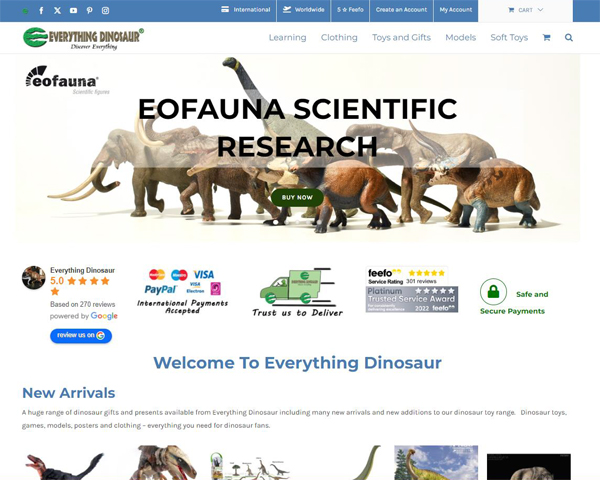
The Everything Dinosaur homepage has been upgraded and improved.  The new layout provides customers with more reassurance about the company’s ability to handle deliveries outside of the UK.  In addition, the new format highlights the huge number of 5-star customer reviews that have been received.  The homepage revamp is part of on-going improvements aimed at providing a better user experience.

The new Everything Dinosaur homepage.

The new Everything Dinosaur homepage includes several new features that emphasis the company’s ability to deliver parcels overseas. Picture credit: Everything Dinosaur.

Picture credit: Everything Dinosaur

A New Everything Dinosaur Homepage

Team members have been working to improve site access for those in the community that have a visual impairment or use screen readers.  Font colours and background colours have been changed to make them easier to read.  Furthermore, the new homepage emphasises the company’s international credentials.  New pages have been created that provide information on international payment options, international deliveries and site security.

Visit the award-winning and now even more user friendly Everything Dinosaur website: Dinosaur Models and Toys.

Mike from Everything Dinosaur confirmed that these new updates were part of an on-going process involving changes to the website to improve the experience of site visitors.

He added:

“We value the feedback we receive from our customers.  With so many five-star customer reviews we wanted to highlight them.  In addition, we felt the need to provide greater reassurance to customers overseas about our ability to handle international orders.”

Outlining the new features of the Everything Dinosaur homepage.

Outlining the new features of the Everything Dinosaur homepage. Demonstrating trust by highlighting the huge number of 5-star customer reviews on both Google and Feefo. Picture credit: Everything Dinosaur.

Picture credit: Everything Dinosaur

Website Additions and Improvements

New features on the homepage include more visible social media buttons and specific pages providing more information on worldwide delivery.  The customer account links remain, but there are new links to Feefo customer feedback and a link to provide a Google review.  The homepage slider has been refreshed with new slides added.  These slides feature Eofauna Scientific Research models as well as Rebor, PNSO and Haolonggood.

Further changes are planned.  They are all aimed at improving the experience of the user.

For more information or to contact Everything Dinosaur about the website’s contents: Email Everything Dinosaur.

Go to Top