A few years ago, Everything Dinosaur visited Sandbrook Community Primary. Team members had been contracted to deliver some dinosaur themed workshops with the Reception classes as a provocation for the start of the term topic. As part of the teaching team’s scheme of work, a large strip of white paper had been laid out on the floor and children had been challenged to create some dinosaur footprints on it.
Using a foam cut which had been dipped in paint, the children were able to walk along a strip of paper and produce some super dinosaur tracks.
Dinosaur footprints created by Reception children. Picture credit: Everything Dinosaur.
Picture credit: Everything Dinosaur
Dinosaur Footprints
During the lunch break one of our dinosaur and fossil experts was allowed to return to the classroom to take some pictures of the children’s work whilst the children were either on lunch or playing outside. We praised the teaching team for their innovative scheme of work. We also praised the teachers for managing to keep the classroom floor so clean!
Team members were soon back to work delivering the afternoon workshops. The young palaeontologists in the Reception class had a wonderful time, some of the Nursery school staff came in to take a look at the activities. The Nursery school staff were due to have an inspection that week and they wanted to pick up some ideas on lesson plans.
As part of our follow-up work, we set the children a few challenges. Could they produce a dinosaur drawing? Could they count all the green dinosaur feet on the floor? How would they get on with the dinosaur hokey-cokey song we supplied?
A teacher enquired about soft toy dinosaurs helping to reinforce learning. We were happy to supply further information and advice.
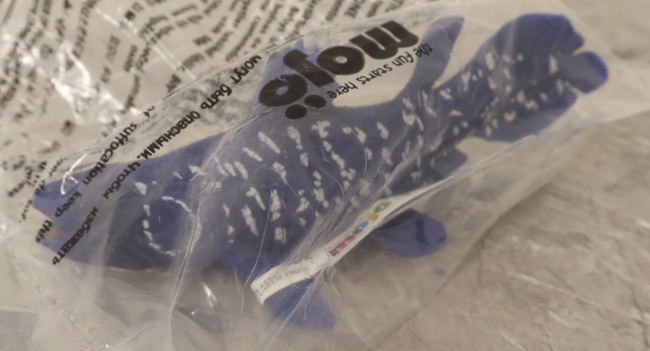
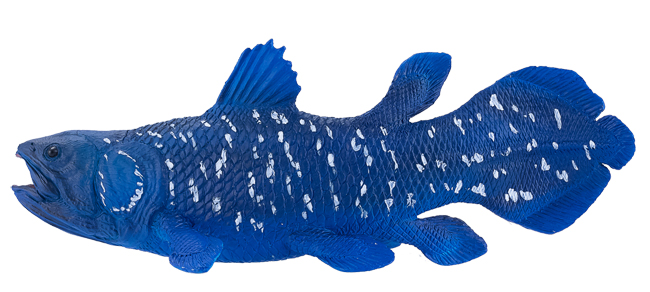
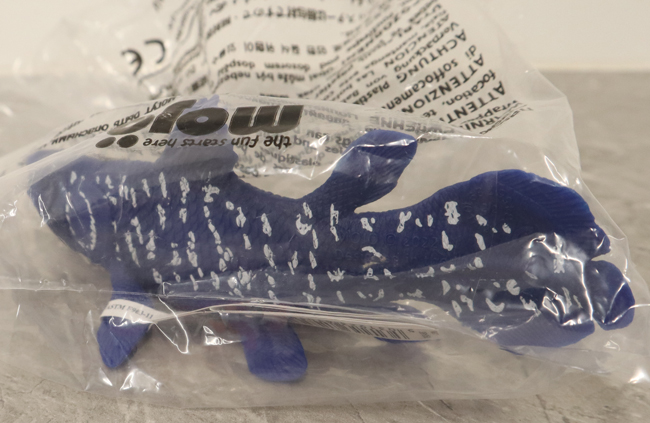
The Mojo Fun Coelacanth model is in stock at Everything Dinosaur. This replica of a “living fossil” is an excellent example of a Coelacanth figure. Team members were keen to bring in this figure. It is a vivid blue colour and website sales of this model will be accompanied by an Everything Dinosaur Coelacanth fact sheet.
The Coelacanth figure that team members have nicknamed “Bluey”. Picture credit: Everything Dinosaur.
Picture credit: Everything Dinosaur
Coelacanth
Thought to have died out at around the same time as the non-avian dinosaurs. Naturalists and palaeontologists were shocked when a Coelacanth specimen was caught in a shark gill net at the mouth of the Chalumna River on the east coast of South Africa in 1938. Two living species are known Latimeria chalumnae from the Indian Ocean and Latimeria menadoensis, which is known from Indonesian waters. Although these fish are assigned to the same genus, an analysis of DNA suggests that the two populations have been separated from each other for several million years.
The beautifully painted and very blue Mojo Fun Coelacanth replica.
Mojo Fun Coelacanth Model
The Mojo Fun Coelacanth model depicts the rostral pores on the top the snout. These openings lead to a jelly filled cavity in the centre of the animal’s head. It is thought that this organ plays a role in prey detection by sensing the weak electrical signals produced by prey.
A very bright and colourful Mojo Fun Coelacanth model. Picture credit: Everything Dinosaur.
Picture credit: Everything Dinosaur
The Coelacanth has a remarkably small brain. A fish measuring around 1.5 metres long and weighing more than fifty kilograms may have a brain weighing only a few grammes. No known living vertebrate has so small a brain in relation to its body size.
A virtually complete titanosaur skull has been found in Queensland. The fossil discovery is Australia’s most complete sauropod skull found to date. It supports the hypothesis that Australian sauropods originated in South America. The titanosaur skull has been assigned to Diamantinasaurus matildae.
A view of the Diamantinasaurus skull bones in approximate life position: Picture credit: Australian Age of Dinosaurs.
Diamantinasaurus matildae
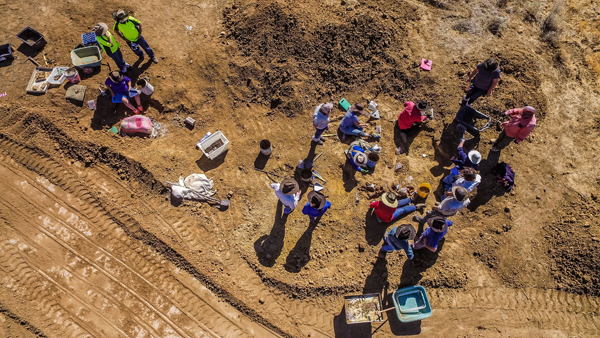
Australian Age of Dinosaurs Museum researchers in collaboration with Curtin University (Perth) despatched a media release announcing the discovery of the stunning sauropod skull. The fossil specimen, nicknamed “Ann” was excavated in 2018 at a dig site located at Elderslie Station, near Winton (Queensland).
Field team members working at the “Ann” dig site. Picture credit: Australian Age of Dinosaurs.
The fossil specimen is believed to be between 98-95 million years old (Cenomanian faunal stage of the Late Cretaceous). It is the fourth specimen of Diamantinasaurus matildae to have been discovered by Australian Age of Dinosaurs Museum staff.
Studying the Skull
Research on the titanosaur skull was led by Museum Research Associate Dr Stephen Poropat, a Postdoctoral Research Fellow at Curtin University.
Dr Poropat stated:
“This skull gives us a rare glimpse into the anatomy of this enormous sauropod that lived in northeast Australia almost 100 million years ago.”
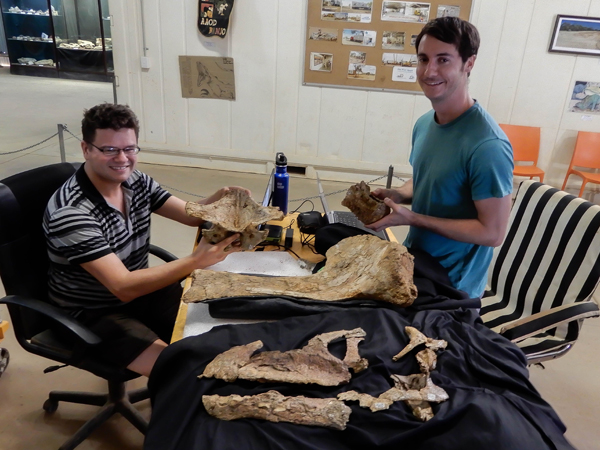
Dr Stephen Poropat (left) and right, Dr Phil Mannion (University College London) examining the “Ann” site fossil material including the Diamantinasaurus skull bones, the Oliver scapula and vertebra two. Picture credit: Australian Age of Dinosaurs.
Implications for Titanosaur Evolution
The researchers identified similarities between “Ann” and the skull of another titanosaur Sarmientosaurus musacchioi. S. musacchioi fossils come from southern Argentina, from rocks which are roughly contemporaneous with the Winton Formation strata. The braincases of these two titanosaurs were similar, along with the dentition (teeth). Similar anatomical characteristics were also identified in the quadratojugal (a bone from the back of the skull near the posterior of the lower jaw).
Dr Poropat commented that their findings support previous theories that sauropods were using Antarctica as a migratory pathway between South America and Australia between 100 and 95 million years ago.
The doctor added:
“Our research suggests that Diamantinasaurus was one of the most ‘primitive’ titanosaurs. Gaining a better understanding of this species might explain why titanosaurs were so successful, across so much of the world, right until the end of the Age of Dinosaurs.”
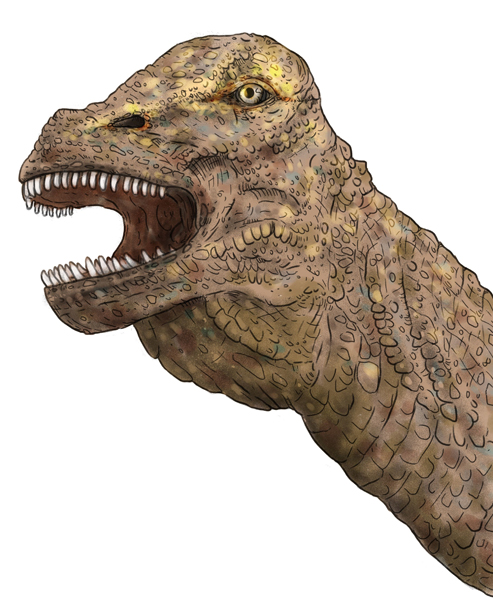
A life reconstruction of the titanosaur Diamantinasaurus. Picture credit: Australian Age of Dinosaurs.
Titanosaur Skull Links Australian Dinosaurs to Antarctica and South America
At the beginning of the Late Cretaceous (100 to 95 million years ago), the Earth was much warmer than it is today. Antarctica which was located approximately where it is today, was ice free. Australia was much further south and closely associated with the Antarctic landmass. The huge conifer forests of Antarctica might have been an attractive habitat for migratory sauropods. The similarities between “Ann” and Sarmientosaurus skull matieral lends weight to the theory that titanosaurs used Antarctica as a pathway to Australia.
The Diamantinasaurus skull fossils are currently on display at the Australian Age of Dinosaurs Museum.
Everything Dinosaur acknowledges the assistance of a media release from the Australian Age of Dinosaurs Museum in the compilation of this article.
The scientific paper: “A nearly complete skull of the sauropod dinosaur Diamantinasaurus matildae from the Upper Cretaceous Winton Formation of Australia and implications for the early evolution of titanosaurs” by Stephen F. Poropat, Philip D. Mannion, Samantha L. Rigby, Ruairidh J. Duncan, Adele H. Pentland, Joseph J. Bevitt, Trish Sloan and David A. Elliott published by Royal Society Open Science.
A new study suggests that the key to the evolutionary success of the early mammals, was to stay small, eat insects and to reduce the number of bones in their skull. The reduction of mammalian skull bones led to a more efficient absorption of bite forces and this adaptation helped mammals to diversify and to ultimately dominate modern ecosystems.
The study, published in the academic journal “Communications Biology” contrasts the skulls of other vertebrates and mammalian ancestors with mammals known from the Jurassic and Cretaceous. In many vertebrate groups such as reptiles and fishes, the skull and lower jaw are composed of numerous bones. This configuration was also seen in the earliest ancestors of modern mammals that lived over 300 million years ago (Cynodontia). However, during evolution the number of bones in the skull was reduced.
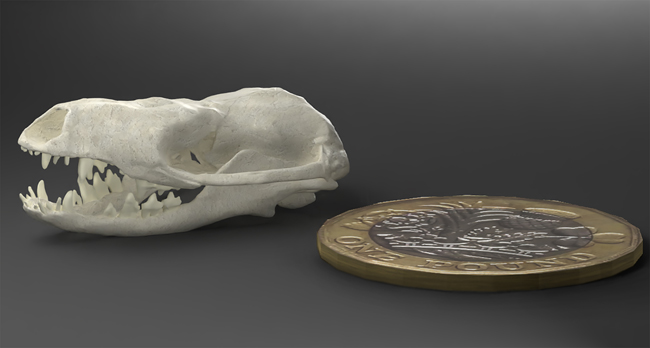
Digital skull model of the small-sized Jurassic mammal ancestor Hadrocodium wui with coin providing scale. Picture credit: Dr Stephan Lautenschlager, University of Birmingham.
A Reduction in Mammalian Skull Bones
Computer simulations based on three-dimensional skull models permitted the research team to examine bite forces and skull stresses. Their research demonstrates that reducing the number of skull bones did not lead to higher bite forces or increased skull strength as postulated previously.
Instead, the researchers, found that the skull shape of these early mammals redirected stresses during feeding in a more efficient way.
Lead author for the study, Dr Stephan Lautenschlager, Senior Lecturer for Palaeobiology (University of Birmingham) explained:
“Reducing the number of bones led to a redistribution of stresses in the skull of early mammals. Stress was redirected from the part of the skull housing the brain to the margins of the skull during feeding, which may have allowed for an increase in brain size.”
Switching Diets
The study, which also involved scientists from the University of Hull, Bristol University, the University of Chicago and the London Natural History Museum, demonstrated that alongside the reduction of skull bones, early mammals also became a lot smaller. Some Mammaliaformes for example, had skulls around 1 cm in length.
This miniaturisation considerably restricted the available food sources and early mammals adapted to feeding mostly on insects.
Dr Lautenschlager added:
“Changes to skull structure combined with mammals becoming smaller are linked with a dietary switch to consuming insects – allowing the subsequent diversification of mammals which led to development of the wide-range of creatures that we see around us today.”
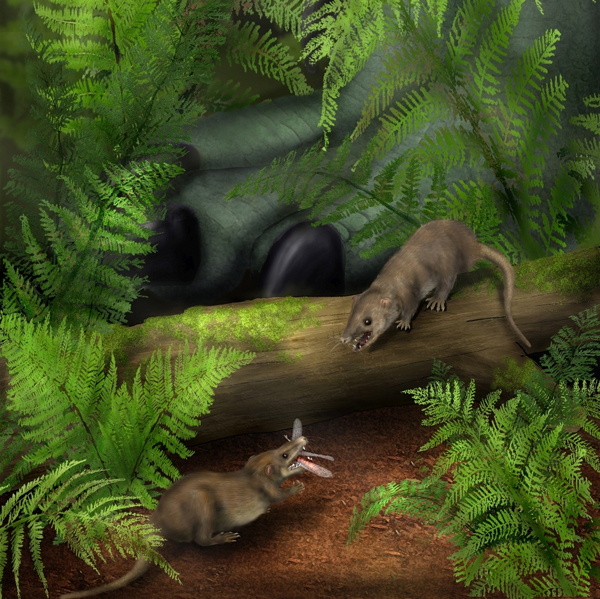
Life reconstruction of Hadrocodium wui. This Jurassic mammal is depicted hunting insects, illustrating how the adoption of an insectivorous diet and miniaturisation played a significant role in mammal evolution. Picture credit: Dr Stephan Lautenschlager, University of Birmingham.
Hadrocodium wui
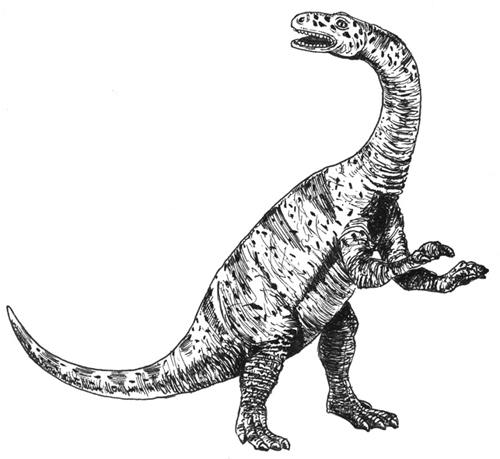
One of the mammaliaforms used in the study, is Hadrocodium wui fossils of which are known from the Early Jurassic (Sinemurian faunal stage) of China. At around ten centimetres long, this tiny animal was a very small and inconsequential member of the Lufeng Formation biota, which was dominated by dinosaurs such as Lufengosaurus.
An illustration of Lufengosaurus. Picture credit: Everything Dinosaur.
Picture credit: Everything Dinosaur
The image (above) is a drawing of the Early Jurassic sauropodomorph Lufengosaurus.
The research team concludes that miniaturisation and staying small, combined with a reduction in skull bones and a switch to an insectivorous diet allowed the ancestors of modern mammals to thrive in the shadows of the Dinosauria. Having nocturnal habits may also have permitted these animals to carve out their own ecological niches in dinosaur dominated ecosystems.
It was not until dinosaurs became extinct at the end of the Cretaceous, some 66 million years ago, that mammals had a chance to further diversify and reach the large range of body sizes seen in many extant mammals today.
Everything Dinosaur acknowledges the assistance of a media release from the University of Birmingham in the compilation of this article.
The scientific paper: “Functional reorganisation of the cranial skeleton during the cynodont–mammaliaform transition” by Stephan Lautenschlager, Michael J. Fagan, Zhe-Xi Luo, Charlotte M. Bird, Pamela Gill and Emily J. Rayfield published in Communications Biology.
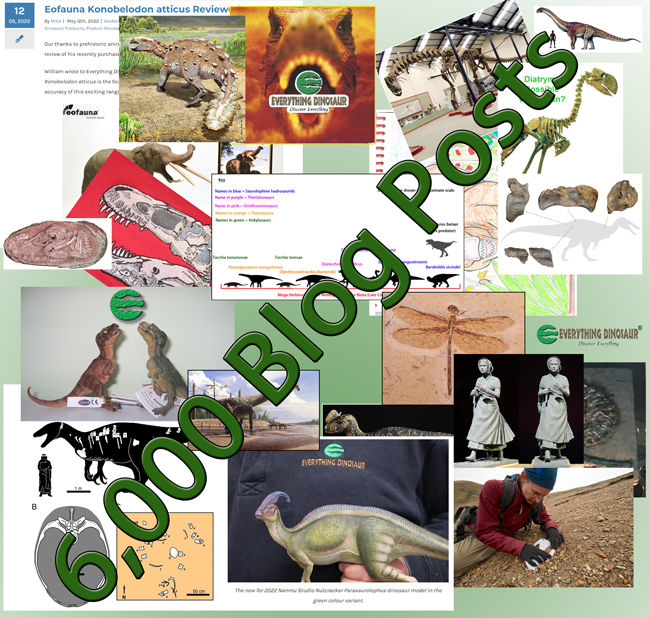
Everything Dinosaur team members have been busy giving the company blog a spring clean. Articles have been checked, information updated and links verified. The blog consists of over six thousand articles, and it provides a useful resource for fans of dinosaurs. The weblog is also read by palaeontologists, academics and students. It provides help and advice to teachers too.
Everything Dinosaur celebrates posting up 6,000 articles on its blog site. In 2022, Everything Dinosaur celebrated publishing their 6,000th web post.
Picture credit: Everything Dinosaur
The Everything Dinosaur Blog
One of Everything Dinosaur’s objectives is to provide updates on palaeontology and the Earth sciences but in a way that minimises the technical terms and use of difficult to understand phrases. We try to write articles that can be read by those who don’t have a formal scientific training but share our interest in all things related to fossils and ancient life. Articles that can be used by fellow teachers and teaching assistants. Also, articles that showcase the work of others, blog posts that aim to inform, inspire and to educate.
A spokesperson from the award-winning company explained:
“We try and post up a new article every day. With so many blog posts to manage and look after, this is a challenge, however, we get lots of positive feedback about our work.”
The current work is part of more extensive revisions taking place in the background. Each article is being checked and updates are being made. Readers of the blog and visitors to the site will not notice any disruption. The changes are being co-ordinated in such a way as to provide a seamless service for site visitors.
The company aims to publish article number 7,000 in the autumn of 2025. The Everything Dinosaur blog was started in May 2007.
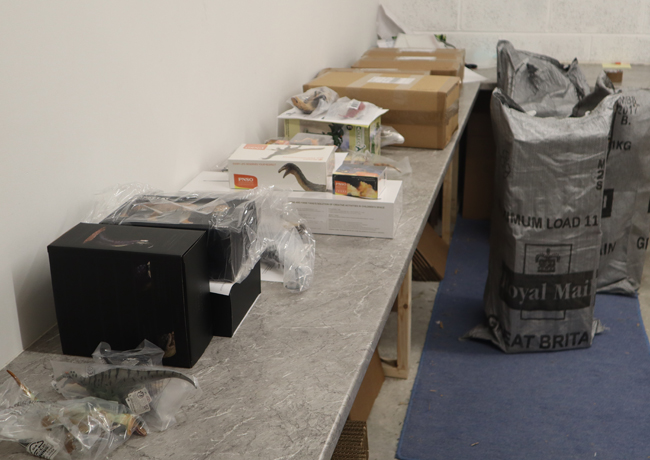
It might be a holiday for many people at the moment, but this morning for Everything Dinosaur’s Mike and Sue it is Bank Holiday working. Whilst for many today, Bank Holiday Monday, might provide an opportunity for a lie in, Everything Dinosaur team members have come into work to pick, prepare and pack parcels for customers.
It might be a holiday for much of the rest of the world, but Everything Dinosaur has been working today packing orders to ensure a swift despatch tomorrow (Tuesday). Picture credit: Everything Dinosaur.
Picture credit: Everything Dinosaur
Supporting Our Customers
A spokesperson from Everything Dinosaur explained that with the recent arrival of the first of the new CollectA prehistoric animal figures, a lot of orders had been placed. Mike and Sue wanted to keep up with the orders and ensure a swift despatch of parcels. By coming into the warehouse today, they can ensure that orders can be sent out as early as possible. Most orders placed last Friday and over the weekend will be on their way to customers by Tuesday afternoon. Orders destined for customers in the European Union will have their parcels despatched later this week, as the international European courier network starts up again.
“I told Sue that there were some Easter eggs hidden in the warehouse. She could not wait to get into work!”
He went onto add:
“During these difficult and challenging times, we do appreciate how eagerly our customers await new model arrivals. We want to do all we can to support them, and we are happy to spend a few hours on a national holiday getting parcels ready for customers.”
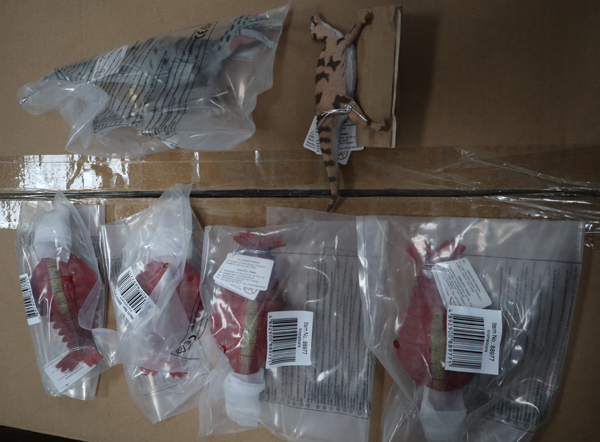
Sorting and checking new for 2023 CollectA Age of Dinosaurs Popular models for customers. Picture credit: Everything Dinosaur.
As well as despatching orders, there have been Feefo feedback from customers to respond to. Today, another twenty-three Feefo feedback emails have been despatched to customers.
It certainly has been a busy few days for Everything Dinosaur. Not that we are complaining, we like to help customers.
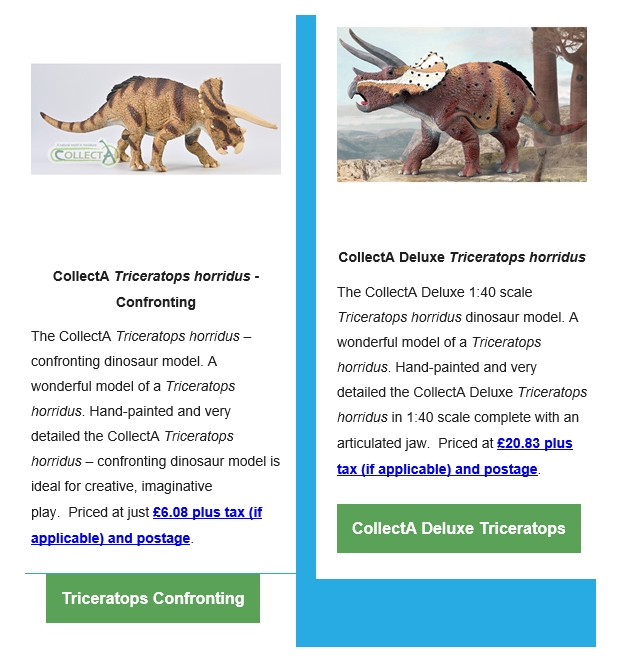
Two CollectA Triceratops horridus figures are featured in the latest edition of the Everything Dinosaur newsletter. The superb, 1:40 scale CollectA Deluxe T. horridus is joined by the recently introduced CollectA Age of Dinosaurs Popular Triceratops horridus – confronting model.
A pair of CollectA Triceratops horridus are also included in the latest Everything Dinosaur customer newsletter. The new CollectA Age of Dinosaurs Popular Triceratops horridus – confronting is alongside the 2022 CollectA Deluxe 1:40 scale T. horridus.
The Everything Dinosaur Customer Newsletter
The Everything Dinosaur customer newsletter is sent out to subscribers. It provides updates on new prehistoric animal figures, free to enter competitions and informs model collectors and dinosaur fans about rare figures and product retirements.
The customer newsletter is sent out periodically and helps to keep customers informed and up to date with industry and product developments.
CollectA Triceratops horridus Figures
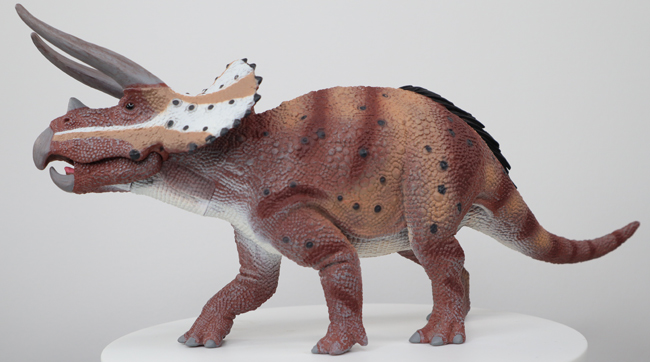
The CollectA Deluxe Triceratops horridus model was introduced in 2022. It provided collectors with the opportunity to acquire a large Triceratops figure which reflected some of the latest research into this famous ceratopsian. The skin texture of the replica for example, mimics what has been observed in Triceratops skin impressions currently being studied in the United States.
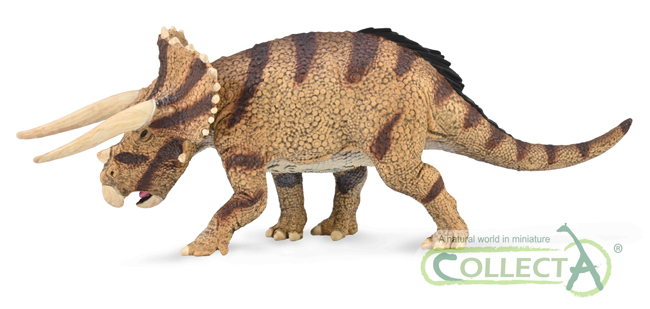
One of eight new CollectA figures, the Triceratops horridus – confronting model is part of the not-to-scale CollectA Age of Dinosaurs Popular figures. Since Triceratops was formally named and described (Marsh 1889), numerous species have been erected. However, must scientists only recognise two T. horridus and the geologically younger T. prorsus. An intermediate species probably exists but this has yet to formally named and described by palaeontologists.
The new for 2022 CollectA Age of Dinosaurs Popular Triceratops horridus – confronting dinosaur model.
A spokesperson from Everything Dinosaur commented:
“Perhaps the introduction of a second, smaller T. horridus figure marks a trend. CollectA may add more figures based on the full, binomial scientific name. The 2024 range introductions may reflect this trend. We shall have to wait and see.”
Everything Dinosaur team members have produced numerous blog posts documenting fossil discoveries and research into human evolution. Scientists are gradually gaining a better understanding of the evolution of our own species (Homo sapiens). Readers may have noticed a change in the use of the terms that describe members of the Homo genus, related genera and their ancestors.
For example, the terms “hominid” and “hominin”. In the past, these terms were interchangeable. Both hominid and hominin referred to the group of apes consisting of modern humans, extinct humans and all our immediate ancestors. The definition of these terms has changed. This change can lead to confusion, so, Everything Dinosaur thought it might be helpful to explain what “hominid” and “hominin” now refer to.
Hominid (Hominidae Family)
The term “hominid” has been given a wider definition, encompassing all the Great Apes. It now encompasses all modern and extinct Great Apes (humans, chimpanzees, including the bonobos, gorillas, orangutans and their immediate ancestors.
The Great Apes – extant and extinct (humans, gorillas, orangutans, chimpanzees, bonobos and all their immediate ancestors) – defining hominids (Hominidae Family).
Hominin Defined
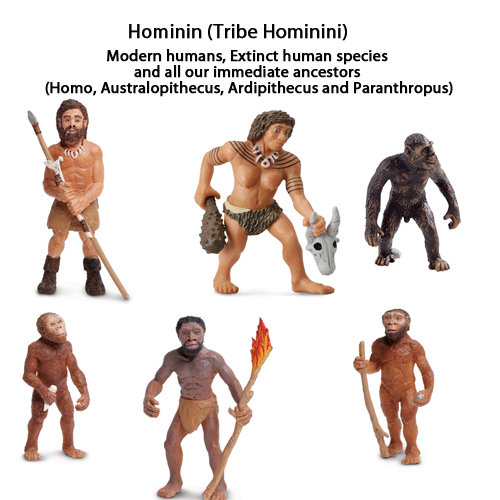
The term “hominin” now refers to a narrower group. This group consists of modern humans, extinct human species and all our immediate ancestors (including members of the genera Homo, Australopithecus, Paranthropus and Ardipithecus).
The term hominin defined: modern humans, extinct human species and all our immediate ancestors (including members of the genera Homo, Australopithecus, Ardipithecus and Paranthropus).
Hominid or Hominin?
The change in definition has occurred as palaeoanthropologists have altered the way that apes are classified. In the previous taxonomy, humans were distinct and separate from all other apes. They were placed into their own, unique family the Hominidae or hominids, one of three families classifying the apes.
Scientists have revised their classifications to develop more up-to-date evolutionary trees. The revision has reduced the number of families recognised to just two. All the Great Apes (including humans) are placed into the same family, the Hominidae or hominids. The next branching of this evolutionary tree divides the orangutans into one subfamily and all the remaining Great Apes into another subfamily. Then at the tribe level, gorillas, chimpanzees and humans separate onto different branches of the evolutionary tree with humans in the Hominini or hominin branch.
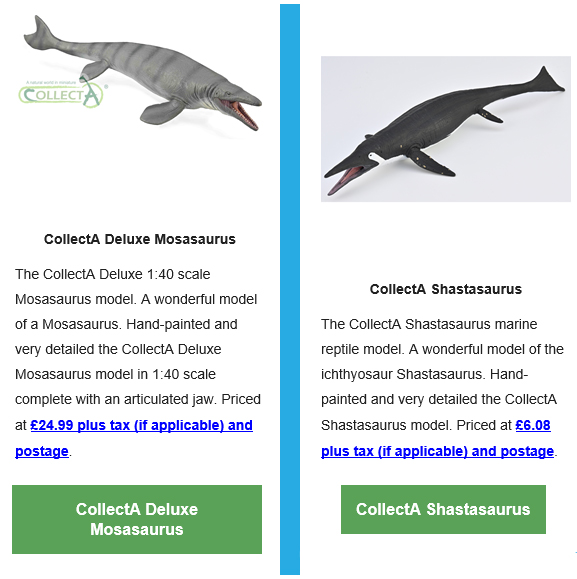
The first batch of new for 2023 CollectA models feature in the latest Everything Dinosaur newsletter. The Collect Deluxe 1:40 scale Mosasaurus has arrived along with Shastasaurus, a replica of a Triassic ichthyosaur. The Cambrian is represented by the arrival of the Anomalocaris figure. It is great to see CollectA introducing more figures of Palaeozoic invertebrates.
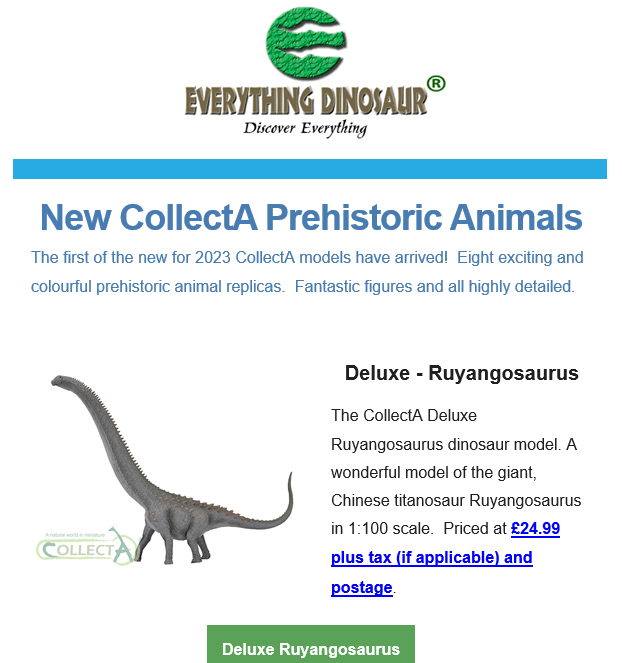
The biggest model to be introduced in 2023 is the 1:100 scale replica of the giant Asian sauropod Ruyangosaurus. This spectacular figure is the headline attraction in Everything Dinosaur’s latest newsletter.
The new, 1:100 scale CollectA Ruyangosaurus figure headlines the latest Everything Dinosaur customer newsletter.
Ornithischian Dinosaurs
Ornithischian dinosaurs are represented by Hadrosaurus and Brighstoneus. Hadrosaurus (H. foulkii), was the first duck-billed dinosaur to be scientifically described that is still recognised by scientists today. Brighstoneus in contrast, was named and described much more recently (2021).
The new for 2023 CollectA Hadrosaurus (H. foulkii) and the Brighstoneus (B. simmondsi) feature in the latest Everything Dinosaur company newsletter.
CollectA Models
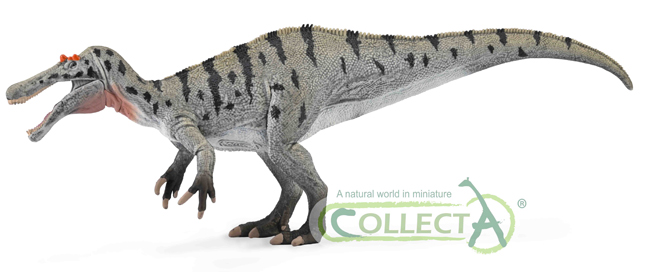
Another dinosaur that was recently described Ceratosuchops (C. inferodios), also has its own CollectA model. The CollectA Ceratosuchops is depicted in a fishing pose. This dinosaur, known from fossils from the Isle of Wight, is thought to have been a piscivore.
The new for 2022 CollectA Ceratosuchops fishing with moveable jaw.
Marine Reptiles
The latest Everything Dinosaur customer newsletter also highlighted the two new CollectA marine reptile models. A replica of the primitive Triassic ichthyosaur Shastasaurus was accompanied by the larger, 1:40 scale Mosasaurus model.
The new 1:40 scale Mosasaurus, complete with an articulated lower jaw features in the new Everything Dinosaur newsletter. It is alongside the new ichthyosaur replica Shastasaurus.
CollectA Anomalocaris Model
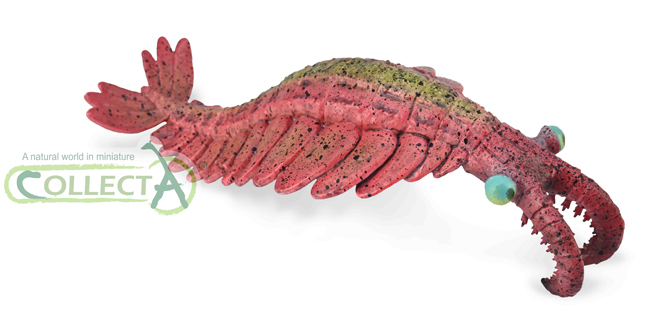
The newsletter also featured the CollectA Anomalocaris model. A fantastic replica of what is thought to be one of the world’s first apex predators.
The CollectA Anomalocaris model. A fantastic replica of an early apex predator. The CollectA Anomalocaris (Other Prehistoric Animal Models).
Last but not least, subscribers to Everything Dinosaur’s regular emailed newsletter also received news about the arrival of the Triceratops horridus – confronting model.
To contact Everything Dinosaur to request to subscribe to the free newsletter: Email Everything Dinosaur.
The Wide Range of CollectA Models
CollectA have added a further eight prehistoric animal figures to their model range. The Koolasuchus in 1:20 scale and the armoured dinosaur Stegouros are due out later in the year.
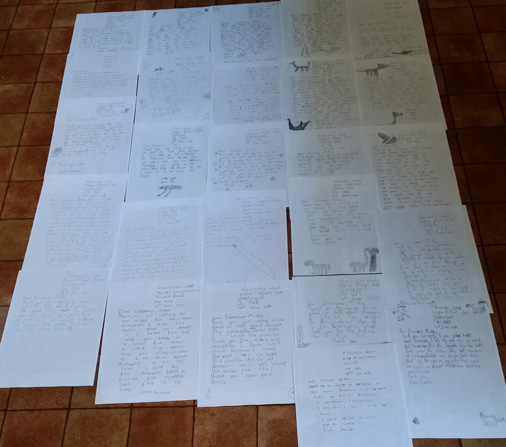
Whilst tidying up some files on the Everything Dinosaur database, an old photograph of a set of thank you letters sent into the UK-based mail order company was discovered. When team members conducted school visits lots of pupils sent in thank you letters. The letters from each class were grouped together and photographed. Often a picture of the children’s letters would have been pinned to our office notice board.
Pupils sent in thank you letters to Everything Dinosaur. A school class sent in thank you letters to Everything Dinosaur after a dinosaur workshop at their school. Picture credit: Everything Dinosaur.
Dinosaur Workshops in School
A spokesperson from Everything Dinosaur stated:
“In the past, the company visited schools to conduct dinosaur workshops. Over the years we must have worked with thousands of schoolchildren. We enjoyed our school visits, and the dinosaur workshops were an enormous success. The company has received hundreds of thank you letters from pupils. It was always a pleasure to read these notes.”
Asking the class to produce a thank you letter was a popular extension activity encouraged by Everything Dinosaur team members. These thank you letters helped the children practice their handwriting and helped build confidence with sentence construction, punctuation and grammar.
The spokesperson from Everything Dinosaur explained that the company did not visit schools at present. This service was stopped during the COVID-19 pandemic and other projects have prevented this popular service from resuming.
For educational, dinosaur and prehistoric themed toys, models and crafts: Dinosaur Toys and Gifts.
As team members tidy up files and archive more photographs, happy memories will be triggered as old school photographs are seen once more. The archiving and cataloguing of these files are part of Everything Dinosaur’s commitment to GDPR. The General Data Protection Regulations (GDPR) and the UK Data Protection legislation help to protect customer’s data.