All about dinosaurs, fossils and prehistoric animals by Everything Dinosaur team members.
12 10, 2022

New Study into Stegoceras Muscles

By |2024-03-09T19:10:12+00:00October 12th, 2022|Categories: Adobe CS5, Dinosaur and Prehistoric Animal News Stories, Dinosaur Fans, Main Page, Palaeontological articles|0 Comments

Researchers have examined the musculature of a bone-headed dinosaur in a bid to better understand hypothesised intraspecific, head-butting combat. Pachycephalosaurs are a group of Late Cretaceous, bipedal ornithischian dinosaurs known from Asia and North America. They are characterised by their thickened skulls, which are sometimes adorned with lumps, bumps and spikes.

The skulls, some of which can be up to 20 cm thick have been the focus of a lot of research. It has been suggested that these thickened skull domes evolved as these dinosaurs indulged in intraspecific head-butting contests, either head-to-head impacts or using their heads to butt the flanks of their opponents.
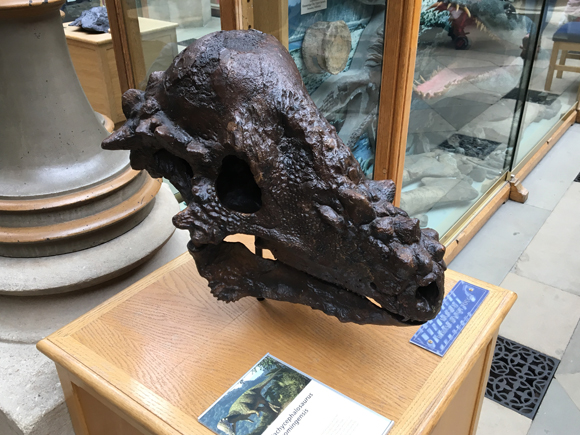
A replica skull of Pachycephalosaurus wyomingensis.
Pachycephalosaurus wyomingensis replica skull. The thickened skull domes, which in some specimens of P. wyomingensis were up to 20 cm thick are thought to have evolved as these dinosaurs participated in intraspecific head-butting combat. Picture credit: Everything Dinosaur.

To read a blog post from 2011 looking at the evidence for head-butting combat in pachycephalosaurs: Study Supports Theory of Pachycephalosaur Intraspecific Combat (Head-butting).

Stegoceras Muscle Study

Writing in the open-access, on-line journal PLoS One, researchers from Carleton University, Ottawa in collaboration with Professor Phil Currie (University of Alberta) have examined the postcranial skeleton of a specimen of the pachycephalosaur Stegoceras validum to gain a better understanding of the musculature of the limbs, hips and the base of the tail. The specimen (UALVP 2) is one of the best preserved pachycephalosaur postcranial skeletons discovered to date and the best preserved pachycephalosaur discovered in Canada. The limb bones preserve muscle scars and other surface textures which enabled the research team to accurately construct the muscles associated with the forelimbs, hindlimbs and the pelvic region.
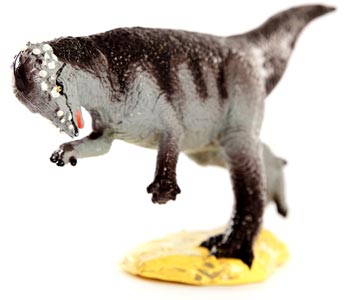
Pachycepahlosaurus indulging in head-butting combat.  Reporting upon a Stegoceras muscle study.
A charging Pachycephalosaurus.

Focusing on Muscles Not Bones

Unlike most studies relating to the Dinosauria, the fossil bones were not the central focus of this research. The scientists who include Professor Phil Currie (University of Alberta) and PhD student Bryan Moore (Carleton University), examined the bones to determine the layout, shape and size of the muscles that were attached to them. The team were interested in mapping the *myology of the back end of a pachycephalosaur so that they could assess how the postcranial skeleton would have assisted with the hypothesised head-butting contests.

The term *myology refers to the study of the shape, structure and arrangement of muscles.
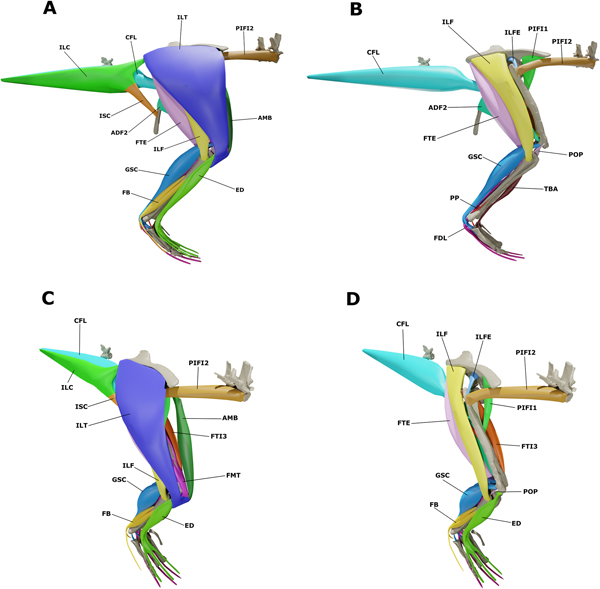
Stegoceras muscle study.
Pelvic and hind limb muscular reconstruction of Stegoceras validum. Superficial musculature in lateral view (A). Deep musculature in lateral view (B). Superficial musculature in anterodorsolateral view (C) and (D) deep musculature in anterodorsolateral view. Picture credit: Moore et al/PLoS One.

Strong Legs and a Wide Pelvis

The study of specimen number UALVP 2 demonstrated that the forelimbs of Stegoceras validum were not especially robust and strong, particularly in comparison to early, lizard-hipped bipeds such as the Triassic theropod Tawa hallae. However, in contrast, in Stegoceras the hind limbs and pelvic area were more robust with large, powerful muscles associated with the pelvis, the thighs and the base of the tail. These larger muscles, in combination with the wide pelvis and stout hind limbs, produced a stronger, more stable pelvic structure that would have proved advantageous during hypothesised intraspecific head-butting contests.
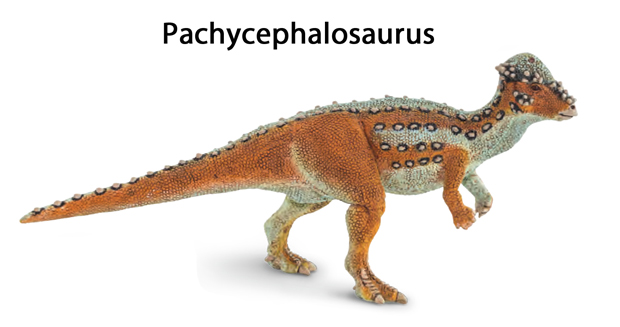
The new for 2020 Wild Safari Prehistoric World Pachycephalosaurus dinosaur model.
The new for 2020 Wild Safari Prehistoric World Pachycephalosaurus model. The model has a large dent in its skull dome, suggesting damage resulting from a headbutting contest with a rival.

The picture above shows a Pachycephalosaurus dinosaur model from the Wild Safari Prehistoric World range, to view this range of figures in stock at Everything Dinosaur: Safari Ltd Dinosaur Models.

The research team concludes that the hind quarters of Stegoceras evolved to help this small dinosaur deliver and absorb impact forces associated with the proposed head-butting behaviour. The scientists suggest that more research is needed to examine the potential velocity at which the thickened skull could be propelled forward during such contests. They propose additional research assessing the postcranial properties of other pachycephalosaurs and comparing their bauplan with similar sized dinosaurs such as Thescelosaurus (T. neglectus).

The scientific paper: “The appendicular myology of Stegoceras validum (Ornithischia: Pachycephalosauridae) and implications for the head-butting hypothesis” by Bryan R. S. Moore, Mathew J. Roloson, Philip J. Currie, Michael J. Ryan, R. Timothy Patterson and Jordan C. Mallon published in PLoS One.

The Everything Dinosaur website: Everything Dinosaur.
11 10, 2022

Fossils and Rocks with Year 3

By |2022-10-16T17:16:09+01:00October 11th, 2022|Categories: Educational Activities, General Teaching, Key Stage 1/2, Main Page, Photos/Schools, Teaching|0 Comments

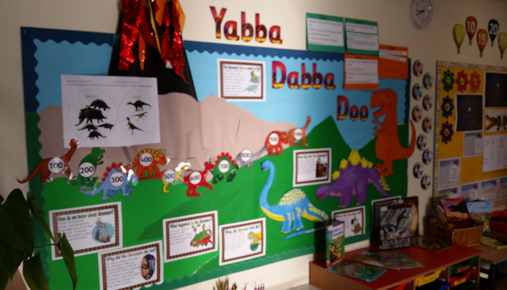
Whilst examining some old files on the Everything Dinosaur database, team members came across a picture of a wonderful dinosaur themed wall display at Pebble Brook Primary, when Everything Dinosaur visited to conduct a workshop all about dinosaurs, fossils and rocks.

The children had been studying soils, rocks and fossils as part of their work during the autumn term and to start the topic with an event, a team member was invited to the school to lead a series of dinosaur and fossil themed workshops for the day.

During a pause in the busy schedule, a photograph of a very colourful wall display created by the children was taken.

A Delightful and Colourful Dinosaur Wall Display

Fossils and rocks studied by Year 3 pupils.
Year 3 children learn about dinosaurs, fossils, rocks and volcanoes in a term topic entitled “Dinosaurs Yabba Dabba Doo”! Picture credit: Everything Dinosaur/Pebble Brook Primary.

Picture credit: Everything Dinosaur/Pebble Brook Primary

Exploring Fossils and Rocks

The children investigated how fossils form, how they feel and what they can tell us about animals that lived in the past and extinction. For the science element of the term topic, the class have been examining numerous types of rock, exploring the school grounds and the buildings to identify different types of stone and rock.

A spokesperson from Everything Dinosaur commented:

“We remember visiting the school on a couple of occasions to work with different classes and enrich their curriculum. The classrooms were full of colourful artwork and delightful wall displays. We all had a great time”

Everything Dinosaur stocks a wide range of prehistoric animal themed crafts and art materials as well as replicas of dinosaurs and famous animals such as trilobites, belemnites and ammonites from the fossil record. All the items that the UK-based mail order company stocks have been tested and approved by the company’s teaching team.

To view the range of products available, visit Everything Dinosaur’s award-winning website: Dinosaur Crafts for Kids.

10 10, 2022

Wild Safari Prehistoric World Citipati

By |2022-10-13T14:54:40+01:00October 10th, 2022|Categories: Adobe CS5, Dinosaur Fans, Everything Dinosaur Products, Main Page, Photos of Everything Dinosaur Products|0 Comments

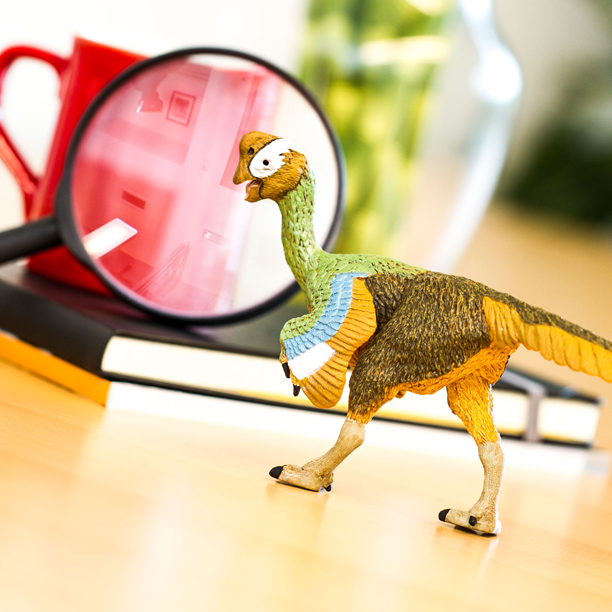
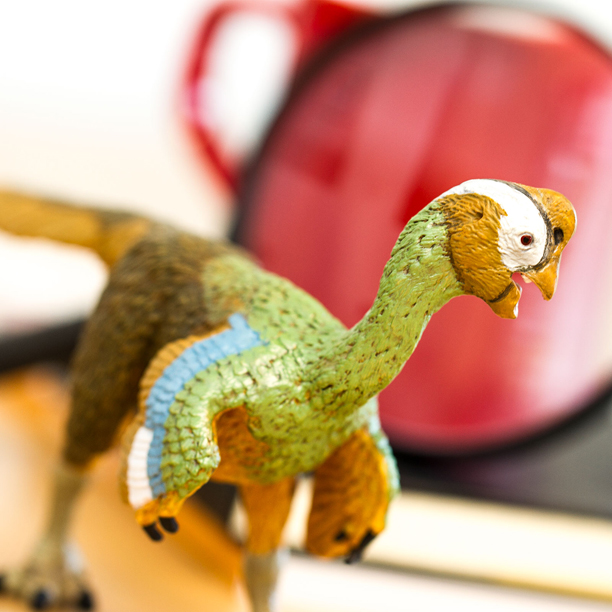
Time for Everything Dinosaur team members to take a look at the Wild Safari Prehistoric World Citipati dinosaur model, after the manufacturer (Safari Ltd) sent Everything Dinosaur some extra pictures of this popular feathered replica.

Wild Safari Prehistoric World Citipati dinosaur model.
Under the magnifying glass! Safari Limited’s Wild Safari Prehistoric World feathered Citipati replica.

Wild Safari Prehistoric World Citipati

Originally introduced in 2019, into Safari Limited’s Wild Safari Prehistoric World series, this colourful replica has swiftly become a firm favourite with dinosaur fans and collectors of prehistoric animal models.

The manufacturing and distribution of this dinosaur figure was prescient. Production of the model was underway when a new scientific paper was published proposing that additional specimens should be added to the Citipati genus. The genus name for this three-metre-long theropod comes from the Sanskrit for “funeral pyre lord”, a reference to a tale from Buddhist folklore about two religious disciples that were beheaded by a thief. The beautifully preserved Citipati specimens were excavated from the red sandstone deposits of the Djadokhta Formation. The species name is in honour of the Polish palaeontologist Halszka Osmólska (1930 – 2008), who pioneered research into Asian dinosaurs and made a substantial contribution to our understanding of the diversity of the Theropoda from the Upper Cretaceous deposits of Mongolia.

Wild Safari Prehistoric World Citipati.
Home on the range – the Wild Safari Prehistoric World Citipati dinosaur figure, a wonderful replica of a Late Cretaceous feathered theropod dinosaur.

Accurate and Detailed Prehistoric Animal Models

Safari Ltd has built up a strong reputation for the production of accurate and detailed prehistoric animal models. The Citipati figure is just one of a series of feathered theropod models in the Wild Safari Prehistoric World range. To view this range: Feathered Dinosaurs and Prehistoric Animal Models (Safari Ltd).

Wild Safari Prehistoric World Citipati dinosaur figure.
Citipati dinosaur model. One of a selection of Citipati images sent to Everything Dinosaur team members by our chums at Safari Ltd.
9 10, 2022

Travels with Trilobites A New Book Review

By |2024-03-09T17:06:48+00:00October 9th, 2022|Categories: Book Reviews, Dinosaur Fans, Main Page, Photos/Pictures of Fossils|1 Comment

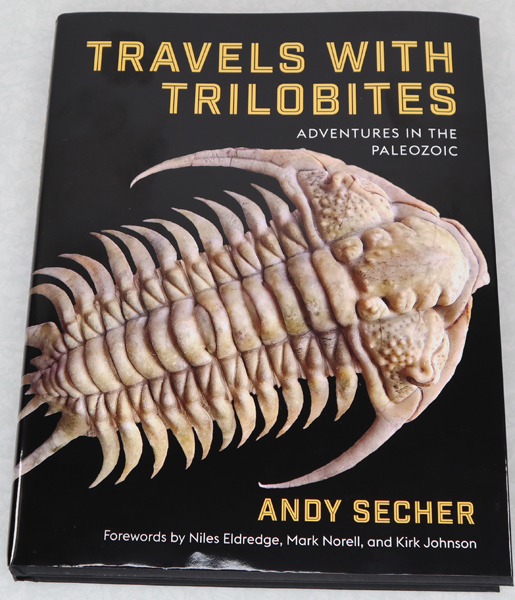
Everything Dinosaur team members have had the opportunity to review a new book that documents the evolutionary history of the enigmatic Trilobita. Trilobites evolved during the Cambrian, they are arguably one of the most successful types of animal to have ever lived, with more than 25,000 species named and described to date. Life-long trilobite devotee Andy Secher (American Museum of Natural History, New York), has compiled a comprehensive, and beautifully illustrated book that tells their story, outlines their origins and looks at their amazing variety.

Front cover of "Travels with Trilobites".
The front cover of the beautifully illustrated “Travels with Trilobites” by Andy Secher published by Columbia University Press.

Travels with Trilobites

With forewords by Niles Eldredge, Kirk Johnson and Mark Norell, this book provides a detailed examination of the different genera of trilobites that existed in each geological period, starting with the Class’s evolutionary origins in the Early Cambrian to their eventual demise at the end of the Permian, more than 250 million years later.

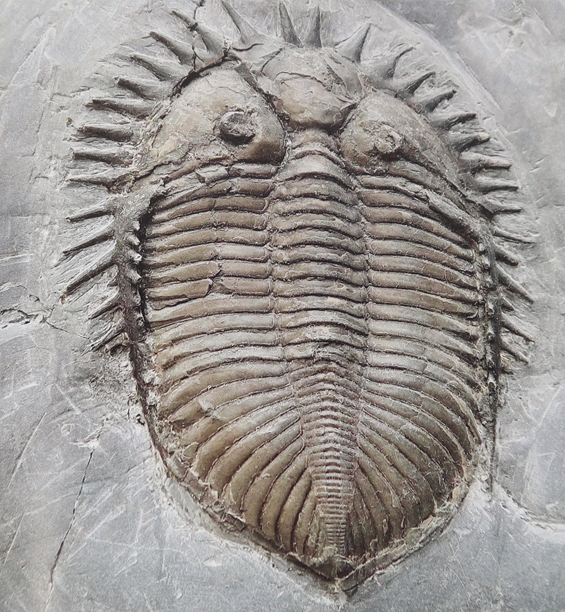
Senticucullus elegans fossil.
One of the hundreds of stunning colour photographs from the book “Travels with Trilobites”, many fossils are from the author’s own collection. This beautiful fossil is an example of Senticucullus elegans from the Lower Silurian, Xiushan Formation (Hunan Province, China).

Feeding, Moulting and Reproduction

The author, who is also a co-editor of the American Museum of Natural History’s dedicated trilobite website, explores some of the world’s most famous Palaeozoic Lagerstätten including Kangaroo Island off the coast of South Australia, the Burgess Shale (British Columbia), the Chengjiang biota (Yunnan Province, China) and the Valongo Formation of Portugal. He documents the trilobites associated with each of these significant fossil locations and also embellishes the history of the Trilobita by including numerous “rapid reports” from other fossiliferous locations.

Travels with Trilobites examines the biology of these remarkable arthropods with the author outlining the development of trilobite eyes, how they breathed, their moulting behaviour, feeding and reproduction. There is even a small section looking at the trilobite fossils associated with the Site of Special Scientific Interest (SSSI) at Wren’s Nest (Dudley, Birmingham, England).

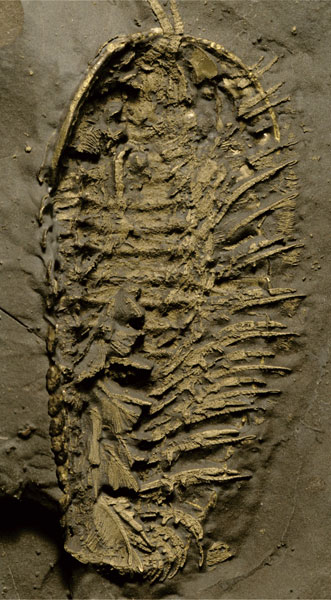
Trilobite Gill Fossil
One of the exceptionally rare trilobite specimens preserved in iron pyrite (fool’s gold) that led to the gill discovery. Research into the enigmatic Trilobita continues. Picture Credit: Jin-bo Hou/University of California Riverside.

Published by Columbia University Press

Published by Columbia University Press, Travels with Trilobites is an exquisite book and we at Everything Dinosaur recommend it. This book would make an ideal gift for the amateur fossil hunter.

The last section of this enjoyable book, deals with such varied topics as how to spot fake fossils, preparing trilobite fossils, fossil shows around the world and provides an insight into the motivations of specialist trilobite fossil collectors.

Travels with Trilobites – ISBN number: 978-0-231-20096-7 (hardback book)

Total number of pages – 416

Expect to be able to pick up this superb volume for around £30.00 ($40.00 USD)

Visit the Columbia University Press website and search for either the author (Andy Secher) or “Travels with Trilobites”: Columbia University Website.

8 10, 2022

Meeting Some Old Friends – A Special Trip to a Museum

By |2024-03-09T17:07:17+00:00October 8th, 2022|Categories: Adobe CS5, Dinosaur Fans, Main Page, Photos|0 Comments

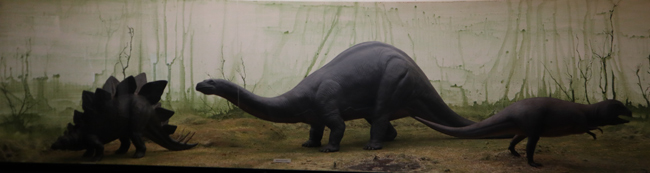
Whilst on a trip to Liverpool team members at Everything Dinosaur took the opportunity to briefly visit the fabulous Liverpool World Museum and meet up with some old friends. On the fourth floor in the dinosaur gallery there are some cases that display dinosaur replicas, typical examples of the fauna associated with a geological period, although our visit was short, we were able to take a photograph of the Jurassic dinosaur models that were on display.

Liverpool World Museum Jurassic dinosaurs.
An exhibit at Liverpool World Museum showcasing typical Jurassic dinosaurs. Picture credit: Everything Dinosaur.
Jurassic Dinosaur Models

The display case shows a Stegosaurus (left), a sauropod (centre) and a replica of a theropod dinosaur (right). Everything Dinosaur does not know when the models were commissioned or installed but the exhibit could have been first set up in the 1970s. This display case has been a part of the Museum’s Earth Gallery for as long as we can remember.

The models, although carefully crafted, provide what is now a very outdated view of typical members of the Dinosauria. There is a certain nostalgia for exhibits such as this. Whilst it is acknowledged that this is not a modern depiction, over the years, we have grown rather fond of this trio of dinosaurs and others like them that adorn the display cabinets.

When visiting the fourth floor of the Liverpool World Museum to view the collection of fossils and the casts of dinosaurs on display, it is always a highlight of our visit to take a moment or two to reacquaint ourselves with some old friends.

7 10, 2022

A Fantastic Dilophosaurus Drawing by George

By |2024-03-19T16:47:05+00:00October 7th, 2022|Categories: Dinosaur and Prehistoric Animal Drawings, Dinosaur Fans, Educational Activities, Main Page|0 Comments

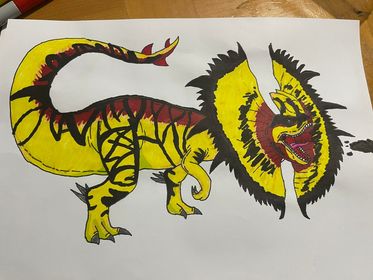
Earlier this week a young fan of dinosaurs came to visit us, we challenged our visitor to send us an illustration of their favourite dinosaur and we have received a Dilophosaurus drawing by George.

What a dramatic and imaginative illustration of this Early Jurassic, carnivorous dinosaur.

Dilophosaurus illustrated. A Dilophosaurus drawing by George
A very colourful and dramatic illustration of one of George’s favourite dinosaurs. A Dilophosaurus drawing influenced by the “Jurassic Park/Jurassic World” franchise. Picture credit: George.

Dilophosaurus Dinosaur Drawing

George is nine (nearly ten) and he is obsessed with dinosaurs. His favourite film is “Jurassic Park” and Audra and Richard, the grown-ups who came along with George for a tour of our warehouse, explained that George watches the “Jurassic Park/Jurassic World” movies over and over again. The Dilophosaurus drawing that George kindly provided is heavily influenced by the depiction of Dilophosaurus as a “frilled dinosaur that spits venom” from the film franchise.

George’s Dilophosaurus is very brightly coloured and the dinosaur has been given a spiked tail, sharp claws and spikes on the posterior portion of its hind legs. It looks a very formidable and dangerous dinosaur!

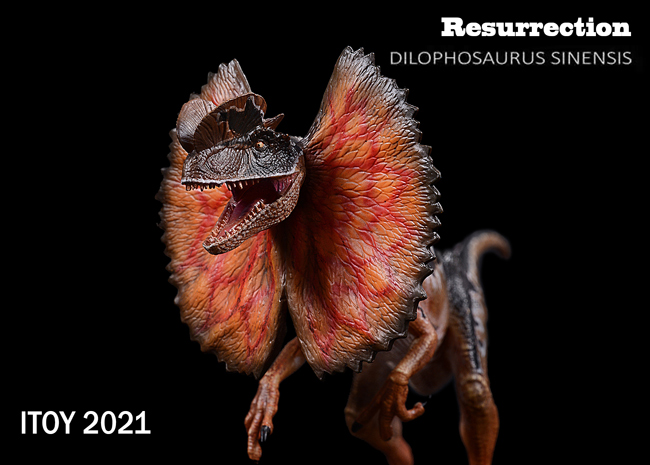
He is not alone in being influenced by the cinema recreations of dinosaurs. Back in 2021, team members at Everything Dinosaur were involved in product testing and certification of a frilled Dilophosaurus display piece created by our chums at ITOY Studio.

We think George’s drawing is equally dramatic and impressive.

ITOY Studio Dilophosaurus dinosaur model (2021)
A view of the superb crest on the new for 2021 ITOY Studio Dilophosaurus dinosaur model.

To read a blog post on the frilled Dilophosaurus model and our short YouTube video about this replica: ITOY Studio Dilophosaurus Testing and Model Video Review.

Dilophosaurus Drawing by George

George is a big fan of the CollectA model range and spoke at length about some of his favourite models. He likes Ceratosaurus and was fascinated to hear that when this dinosaur was first discovered the fossils of the tail (caudal vertebrae) reminded scientists of the tail of a crocodile. This led them to conclude that Ceratosaurus was aquatic.

Audra and Richard commented that they would have liked to visit Lyme Regis with George so that he could go fossil hunting. Fortunately, we happened to have some ammonite and belemnite fossils from the “Jurassic Coast” of Dorset which we were happy to give to George. He was also delighted to receive some crocodile osteoderms and some small pieces of dinosaur bone to take home.

Thank you George for your wonderful dinosaur drawing.

Our thanks to mum Kay, for giving us permission to post up George’s artwork.

6 10, 2022

Spotting A Rare Hadrosaur Fossil

By |2024-03-19T16:47:25+00:00October 6th, 2022|Categories: Dinosaur and Prehistoric Animal News Stories, Dinosaur Fans, Main Page, Palaeontological articles, Photos/Pictures of Fossils|0 Comments

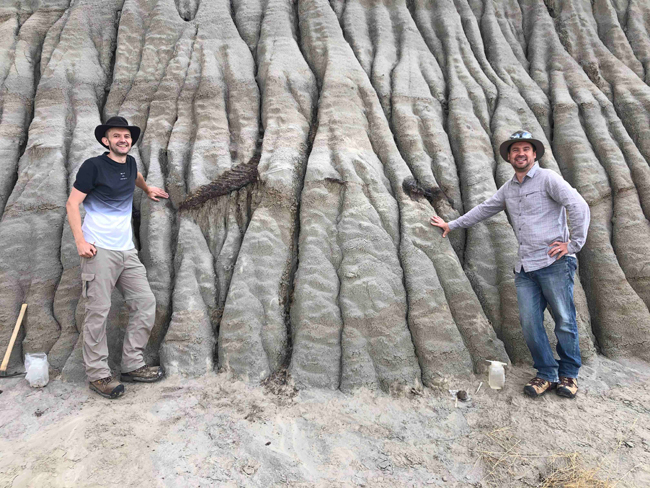
Sometimes serendipity and palaeontology combine, for example, a sharp-eyed field team member spotting a hadrosaur fossil specimen eroding out of a small hill in the Dinosaur Provincial Park (Alberta, Canada). The fossils could represent a rare skeleton of a juvenile and there is evidence that skin impressions have been preserved.

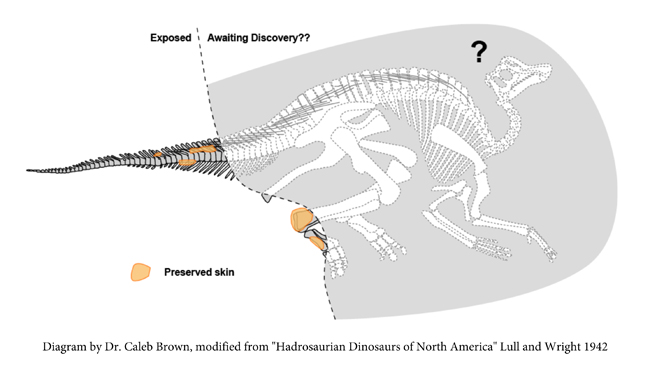
Whilst hadrosaur fossils are relatively common in this part of southern Alberta, the animal’s tail and right hind foot are orientated in the hillside to suggest that the entire skeleton may still be preserved within the rapidly eroding mudstone.

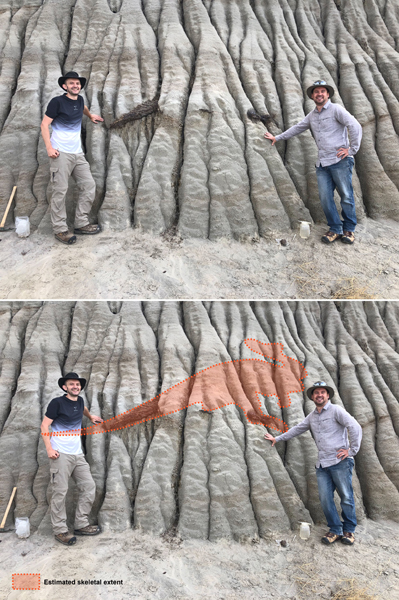
Standing next to the exposed hadrosaur skeleton.
Brian Pickles (left) and Caleb Brown (right) stand next to the exposed skeleton. Picture credit: Melissa Dergousoff/University of Reading.

Potentially a Very Significant Fossil Discovery

Whole dinosaur skeletons are extremely rare, this specimen tentatively referred to as a “dinosaur mummy” could provide important new information on juvenile hadrosaurs and the ontogeny of duck-billed dinosaurs.

Diagram of potential hadrosaur specimen
A diagram of the potential hadrosaur skeleton showing exposed parts with skin impressions and the potential orientation of the rest of the skeleton. Picture credit: Caleb Brown.

Spotting a Hadrosaur

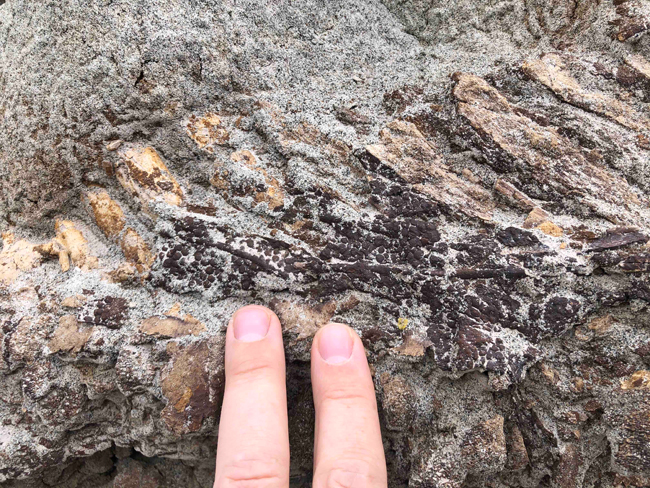
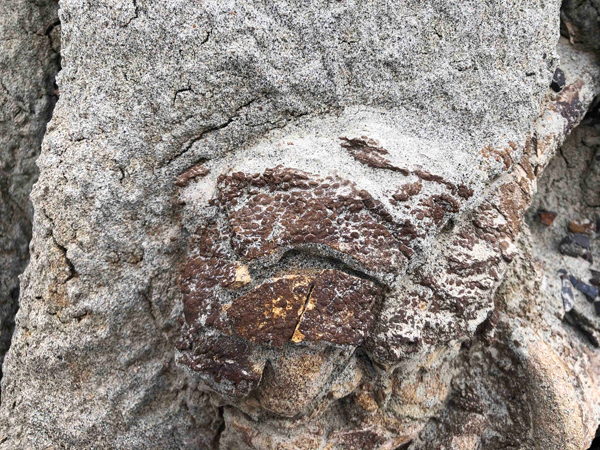
The exposed caudal vertebrae (tail bones) show preserved skin impressions as does the exposed right ankle. The size of the bones and the distance between the tail and the astragalus (ankle) suggest that these are the fossilised remains of a young hadrosaur.

Close-up view of the exposed caudal vertebrae with preserved skin impressions.
A close-up view of the exposed caudal vertebrae with preserved skin impressions. Picture credit: Royal Tyrrell Museum of Palaeontology.
View of the exposed ankle bones with skin impressions.
A view of the exposed ankle bones with skin impressions. Picture credit: Royal Tyrrell Museum of Palaeontology.

Discovering a Duck-billed Dinosaur

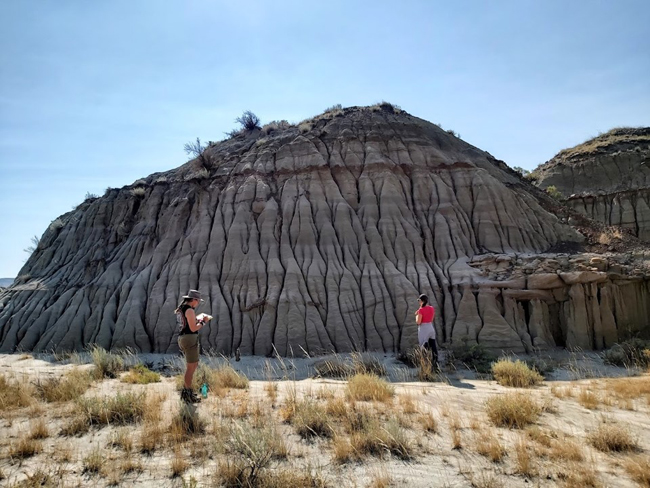
During a field school scouting visit in 2021 to look for possible excavation sites, Dr Brian Pickles (University of Reading) was leading a small team examining one location when volunteer crew member Teri Kaskie spotted the fossil skeleton protruding from the hillside.

The "Hadrosaur Hill"
Teri Kaskie (right) and (left) Melissa Dergousoff stand next to the hill containing the hadrosaur skeleton. Picture credit: Brian Pickles University of Reading.

The first international palaeontology field school is taking place, involving academics and students from the University of Reading and the University of New England in Australia. In collaboration with researchers from the Royal Tyrrell Museum (Drumheller, Alberta), the team are working together to excavate the skeleton and ensure the material that remains in the hill is protected from the elements.

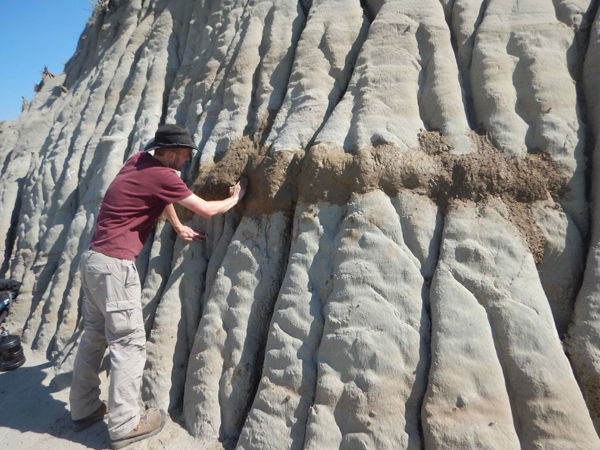
The first part of the conservation work involves coating the fossil site in a thick layer of mud, to help conserve the delicate fossils and to prevent erosion.

Covering the exposed fossils with mud
Covering the exposed fossils with mud to provide protection. Picture credit: Royal Tyrrell Museum of Palaeontology.

An Exciting Fossil Discovery

Commenting on the significance of this hadrosaur fossil find, Dr Pickles stated:

“This is a very exciting discovery, and we hope to complete the excavation over the next two field seasons. Based on the small size of the tail and foot, this is likely to be a juvenile. Although adult duck-billed dinosaurs are well represented in the fossil record, younger animals are far less common. This means the find could help palaeontologists to understand how hadrosaurs grew and developed.”

Vertebrate palaeontologist from the Royal Tyrrell Museum, Dr Caleb Brown added:

“Hadrosaur fossils are relatively common in this part of the world but another thing that makes this find unique is the fact that large areas of the exposed skeleton are covered in fossilised skin. This suggests that there may be even more preserved skin within the rock, which can give us further insight into what the hadrosaur looked like.”

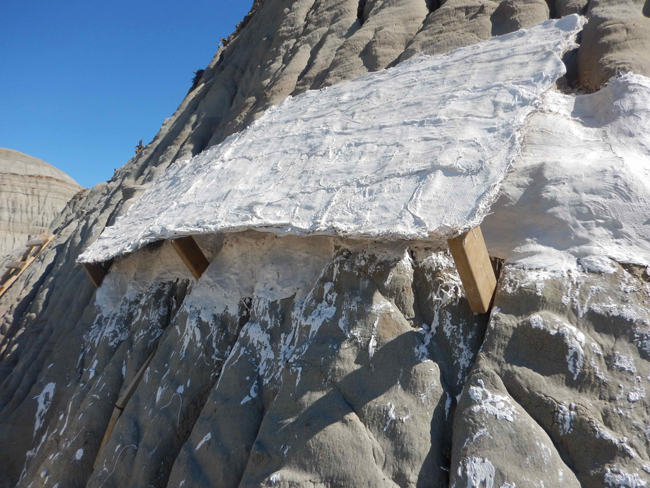
Protecting the exposed hadrosaur fossils
The burlap screen erected over the exposed fossils to help protect the material from erosion. Picture credit: Royal Tyrrell Museum of Palaeontology.

A Substantial Project

Collecting the entire skeleton is going to take many months and the site will have to be closed down and secured as the weather worsens towards winter. It may take several field seasons to complete this work. Once the specimen has been removed from the field, it will be delivered to the Royal Tyrrell Museum’s Preparation Laboratory, where skilled technicians will work to uncover and conserve the fossilised bones.

At this time, the scientists are unsure as to how complete the specimen is and which genus the fossils represent. Species identification will only be possible if a substantial proportion of the skeleton, including skull material can be recovered.

Exposed hadrosaur skeletal material in the Dinosaur Provincial Park Formation
Brian Pickles and Caleb Brown stand next to the exposed skeleton with an illustration showing estimated skeleton size and potential position. Picture credit: Melissa Dergousoff University of Reading with diagram by Caleb Brown.

Which Hadrosaur?

Several different types of hadrosaur are known from the Dinosaur Provincial Park Formation (Campanian faunal stage). Lambeosaurines are represented by Corythosaurus, Parasaurolophus and Lambeosaurus whilst members of the Saurolophinae subfamily represented include Gryposaurus and Prosaurolophus. As more of the skeleton is prepared, the researchers are hopeful that they will be able to confirm the species.

Everything Dinosaur acknowledges the assistance of a media release from Reading University in the compilation of this article.

5 10, 2022

Unravelling the Ancestry of the Pterosauria

By |2022-10-05T16:05:15+01:00October 5th, 2022|Categories: Dinosaur and Prehistoric Animal News Stories, Dinosaur Fans, Main Page, Palaeontological articles, Photos/Pictures of Fossils|0 Comments

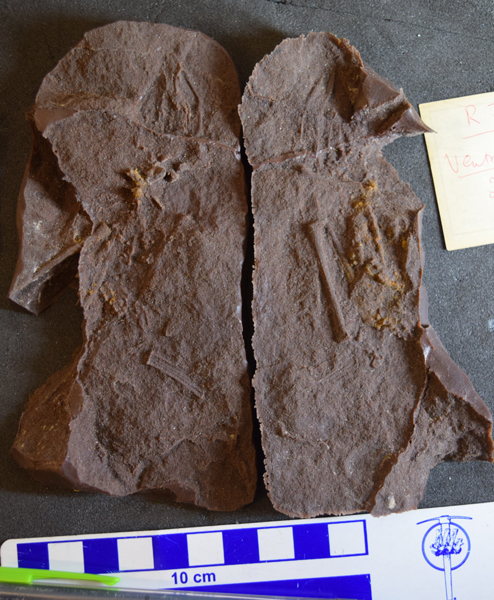
A fossil specimen found in Scotland more than 100 years ago is helping to unravel the ancestry of the Pterosauria. A new study of tiny and difficult to interpret fossils representing a reptile named Scleromochlus taylori has provided palaeontologists with a fresh perspective on the evolution of the pterosaurs.

The research, published in the academic journal “Nature”, was undertaken by scientists led by Dr Davide Foffa, a Research Associate at National Museums Scotland, and now a Research Fellow at the University of Birmingham. The study, which involved analysis of the fossils using Computed Tomography (CT scans), has enabled the first, accurate skeletal reconstruction of Scleromochlus taylori.

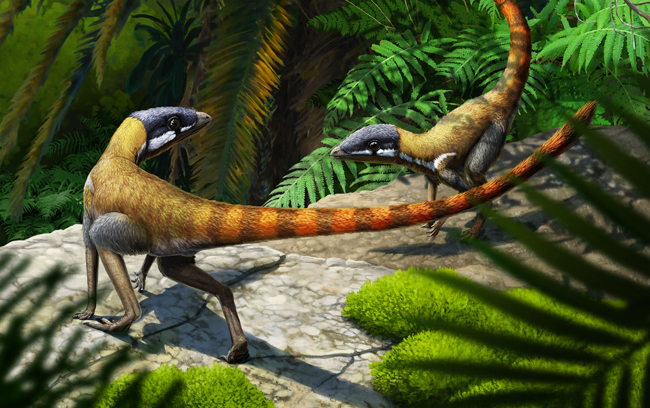
An early ancestor of the Pterosauria
A tiny reptile measuring approximately 20 cm in length, Scleromochlus is now thought to be an early ancestor of the Pterosauria. Picture credit: Gabriel Ugueto.

Anatomical Details Reveal Link with the Pterosauromorpha

The CT scans revealed new anatomical details that conclusively identify the Scleromochlus genus as a close pterosaur relative. Phylogenetic assessment places this small, agile reptile within a group known as Pterosauromorpha. The Pterosauromorpha comprises pterosaurs and their close relatives the lagerpetid reptiles.

Scleromochlus fossil casts (ancestry of the Pterosauria).
Scleromochlus fossil Casts (NHMUK-PV-R3557). Casts created enabled the scientists to reconstruct the skeleton. Picture credit: London Natural History Museum/University of Birmingham.

Identifying the Ancestry of the Pterosauria (Lagerpetonidae)

Geographically widespread in the Late Triassic, the Lagerpetonidae were typically small and fleet-footed reptiles, classified as basal avemetatarsalians, the branch of the Archosauria leading to birds, dinosaurs and the Pterosauria. Previously thought to be close to the evolutionary tree of the Dinosauria, more recent research, including this newly published paper suggests that the lagerpetids were closer to the pterosaurs (members of the Pterosauromorpha).

Most lagerpetids are described as being about the size of cat or small dog, however, Scleromochlus was smaller, with an estimated body length of around 20 cm.

This new study supports the hypothesis that the first flying reptiles (pterosaurs) evolved from small, likely bipedal ancestors. The placement of the lagerpetids within the avemetatarsalians had caused extensive debate. This paper argues that Scleromochlus, represented an evolutionary step in the direction of pterosaurs.

Poorly Preserved Fossils – the Elgin Reptiles

Analysis of the Scleromochlus fossil material using more traditional methods is extremely difficult. The non-destructive CT scans enabled the research team to examine the fossilised bones in exquisite detail and revealed new anatomical details that had not been observed before.

The sandstone block containing the bones come from Morayshire in north-eastern Scotland, near to the town Elgin. Collectively fossils of vertebrates from these deposits are known as the Elgin Reptiles. The fossils are held mostly in the collections of National Museums Scotland, Elgin Museum and the Natural History Museum. The latter holds Scleromochlus, which was originally found at Lossiemouth.

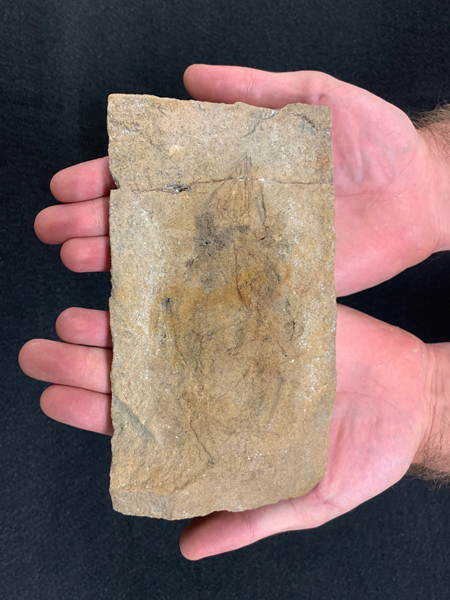
Scleromochlus fossil (ancestry of the Pterosauria).
A Scleromochlus fossil. Picture credit: Professor Paul Barrett London Natural History Museum/University of Birmingham.

Ancestry of the Pterosauria

Commenting on the significance of the research, Dr Foffa stated:

“It’s exciting to be able to resolve a debate that’s been going on for over a century, but it is far more amazing to be able to see and understand an animal which lived 230 million years ago and its relationship with the first animals ever to have flown. This is another discovery which highlights Scotland’s important place in the global fossil record, and also the importance of museum collections that preserve such specimens, allowing us to use new techniques and technologies to continue to learn from them long after their discovery.”

Professor Paul Barrett at the Natural History Museum added:

“The Elgin reptiles aren’t preserved as the pristine, complete skeletons that we often see in museum displays. They’re mainly represented by natural moulds of their bone in sandstone and – until fairly recently – the only way to study them was to use wax or latex to fill these moulds and make casts of the bones that once occupied them. However, the use of CT scanning has revolutionized the study of these difficult specimens and has enabled us to produce far more detailed, accurate and useful reconstructions of these animals from our deep past.

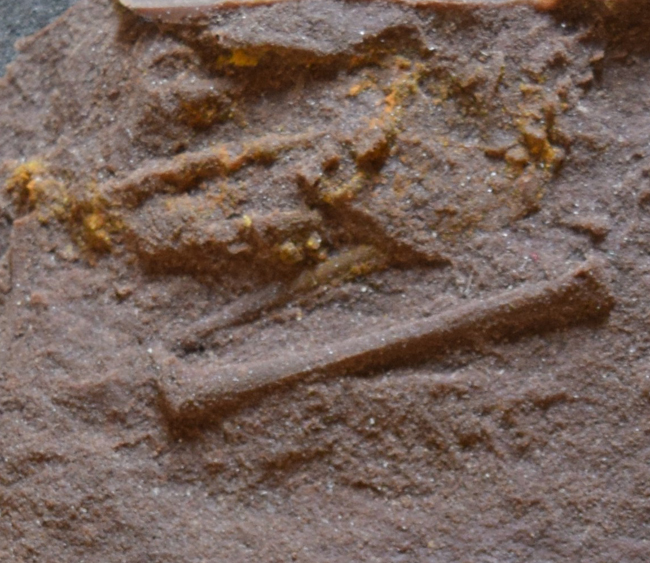
Scleromochlus fossil casts (close view)
A close-up view of a cast of NHMUK-PV-R3557 with clearly defined Scleromochus fossil bones. Picture credit: London Natural History Museum/University of Birmingham.

The First Vertebrates to Evolve Powered Flight

Co-author of the scientific paper, professor Sterling Nesbitt (Virgina Tech) commented:

“Pterosaurs were the first vertebrates to evolve powered flight and for nearly two centuries, we did not know their closest relatives. Now we can start filling in their evolutionary history with the discovery of tiny close relatives that enhance our knowledge about how they lived and where they came from.”

Everything Dinosaur acknowledges the assistance of a media release from the University of Birmingham in the compilation of this article.

The scientific paper: “Scleromochlus and the early evolution of the Pterosauromorpha” by Davide Foffa, Emma M. Dunne, Sterling J. Nesbitt, Richard J. Butler, Nicholas C. Fraser, Stephen L. Brusatte, Alexander Farnsworth, Daniel J. Lunt, Paul J. Valdes, Stig Walsh and Paul M. Barrett published in Nature.”

4 10, 2022

Sue in Front of the Cameras

By |2022-10-05T18:45:58+01:00October 4th, 2022|Categories: Dinosaur Fans, Everything Dinosaur News and Updates, Main Page, Photos, Press Releases|0 Comments

Everything Dinosaur co-owner Sue in front of the cameras. Sue was asked by the BBC for an interview recently and although reluctant at first, she was persuaded to appear in front of the cameras. The interview was part of a package being developed for the BBC news channel. The interviewer praised Sue and commented that she was easy to interview and that her contribution to the piece was greatly appreciated.

Sue from Everything Dinosaur being filmed and interviewed in our warehouse
Sue from Everything Dinosaur being filmed and interviewed in our warehouse. Picture credit: Everything Dinosaur.
Nerve wracking in Front of the Cameras

Being interviewed and filmed can be quite nerve wracking. Sue admits that she is gradually gaining more confidence in front of the cameras, but it is still quite a stressful experience. She is much happier dealing with customer queries over the telephone, working on the accounts or packing orders, but sometimes media companies make requests, and we do our best to accommodate them.

Over the years, Everything Dinosaur has been involved in a number of media events and related activities, even working with film production companies. When media outlets are looking to feature a small business, one that sells dinosaurs and prehistoric animal models and toys, tends to stand out on the page.

However, the allure of the bright lights has not taken Sue away from her day-to-day duties. She is not off to Hollywood anytime soon. I don’t think we will have need to book a hotel room near Elstree Studios in the near future.

Sue in Front of the Cameras

Sue herself states:

“Although I am reluctant to be interviewed, I do get asked and I try my best. Often, I am told by the person supervising the filming or conducting the interview that they want to hear about women working in commerce. I suppose as our business is a little unusual, after all, we sell dinosaurs and prehistoric animals, media companies tend to migrate towards those business that are a little different and Everything Dinosaur is certainly different.”

Everything Dinosaur logo with trade mark stated.
Everything Dinosaur logo with ® trademark. Team members are interviewed by the media. Picture credit: Everything Dinosaur.
Dinosaur Toys and Games

The UK-based mail order business has built up a worldwide customer base with dinosaur toys, models and games being despatched to over 100 countries. Purchases are made on the company’s award-winning website.

To see the range of prehistoric animal themed toys, models and games available from Everything Dinosaur: Visit Everything Dinosaur.
3 10, 2022

The Rare Papo Red Styracosaurus

By |2024-03-19T16:47:47+00:00October 3rd, 2022|Categories: Dinosaur Fans, Everything Dinosaur News and Updates, Everything Dinosaur Products, Main Page, Photos of Everything Dinosaur Products|0 Comments

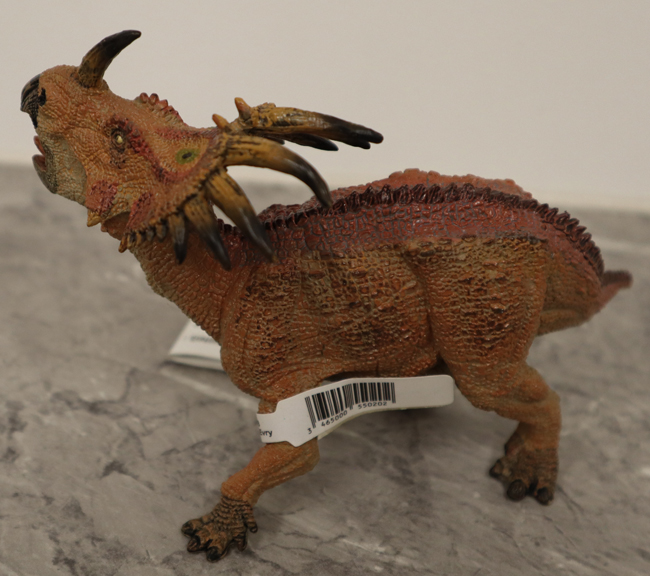
Everything Dinosaur still has some models of the recently retired Papo red Styracosaurus dinosaur replica in stock. This popular Papo horned dinosaur figure has been out of production for some time, but team members at Everything Dinosaur were able to source a small number of these figures.

Papo red Styracosaurus in left lateral view.
The Papo red Styracosaurus in left lateral view. This rare and recently retired Papo dinosaur model from the “Les Dinosaures” range is still available from Everything Dinosaur (whilst stocks last). Picture credit: Everything Dinosaur.
Papo “Les Dinosaures”

Papo’s range of dinosaur and prehistoric animal figures entitled “Les Dinosaures” has continued to expand since the inception of this series. There are around fifty figures in “Les Dinosaures” and although dinosaur models dominate, the series includes marine reptiles, prehistoric mammals, two pterosaurs (Pteranodon and Quetzalcoatlus) and even a replica of a caveman holding a club and a flint-tipped spear.

As the range has expanded, then inevitably some figures end up being retired and moving out of production. Everything Dinosaur is able to source, via its connections at Papo some of the more difficult to obtain figures and models, including the now retired Papo red Styracosaurus.

Papo red Styracosaurus (anterior view).
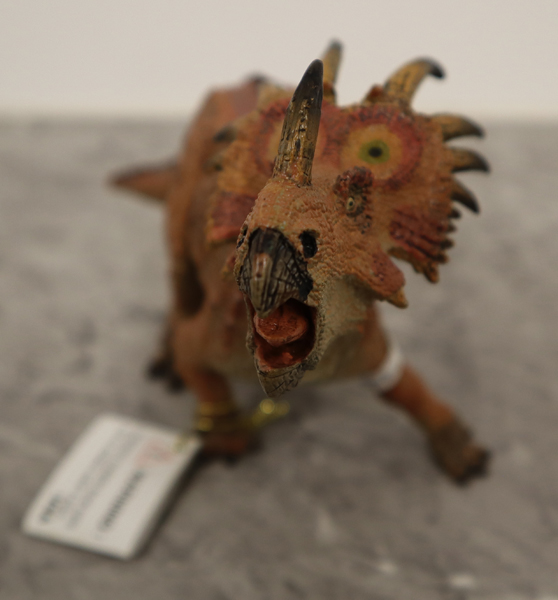
Papo red Styracosaurus in anterior view. Will this rare model be heading your way? Picture credit: Everything Dinosaur.

The Papo Red Styracosaurus Dinosaur Model

The replica is a representation of Styracosaurus albertensis, a ceratopsian that was formally named and scientifically described in 1913 (Lawrence Lambe).

A spokesperson from Everything Dinosaur commented:

“We know how disappointed collectors get when they are unable to complete their model collection as a figure has been retired. We do understand this and we work hard to ensure that figures that are unobtainable elsewhere are still available from our website. It’s all part of our customer service, we try to help where we can.”

To view the Papo Styracosaurus (whilst stocks last) and to see the rest of the Papo “Les Dinosaures” range available from Everything Dinosaur: Papo Prehistoric Animal Models Available from Everything Dinosaur.

Go to Top