The new for 2022 CollectA prehistoric animal models are now in stock at Everything Dinosaur. Team members have been busy contacting all those customers that requested that they be informed when the CollectA prehistoric animal model delivery arrived.
The new for 2022 CollectA prehistoric animals have arrived at Everything Dinosaur. Team members have been busy contacting all those customers who requested an email alert. There are seven figures in the photograph, can you name them all?
New Dinosaurs, Pterosaurs, a Prehistoric Mammal, a Nautiloid and ?
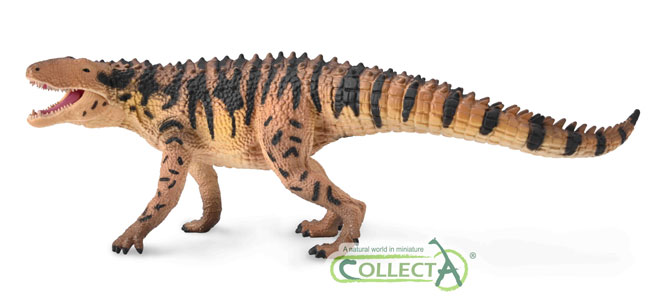
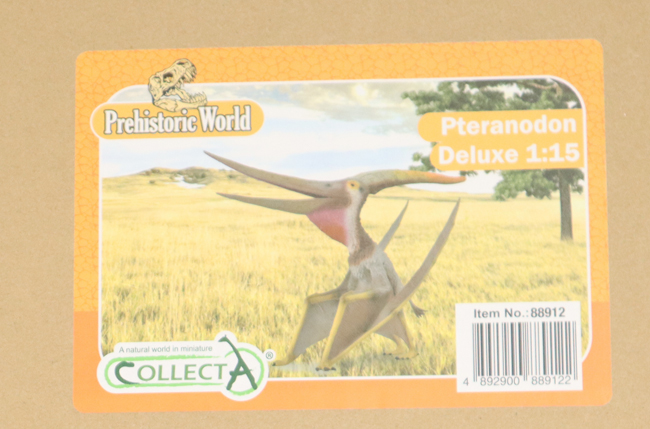
The new figures include dinosaurs, two pterosaurs (the 1:15 scale P. longiceps figure having been held over from 2021), a stunning nautiloid and an updated Paraceratherium replica. In addition, a model of the enigmatic Late Triassic predator Smok (S. wawelski) is also in stock. This Polish carnivore is classified as an archosaur, but its exact taxonomic placement remains ambiguous.
The new for 2022 CollectA Deluxe Smok wawelski replica reflects the view that this large Late Triassic predator was not a theropod dinosaur. Classified as a member of the Archosauria, its exact taxonomy remains unknown. Fossil bones reveal anatomical characteristics associated with the Dinosauria (Theropoda), but also show traits that indicate an affinity to the Pseudosuchia – the crocodile lineage of archosaurs. To further confuse the taxonomy of this carnivore, analysis of the fossil bones also identified features associated with very primitive archosaurs.
A spokesperson from Everything Dinosaur commented:
“We have been looking forward to getting these new CollectA prehistoric animal figures into our warehouse. The shipment contained over a hundred different types of models including fresh stock of the award-winning Doedicurus and the 1:15 scale Pteranodon longiceps figure that we were unable to bring into the UK last year. We know that many collectors have been patiently waiting for these figures, now their wait is over.”
The front of the CollectA Prehistoric Life Deluxe Pteranodon longiceps model. This figure is now in stock at Everything Dinosaur.
The fossils of an ancient amphibian found on the Isle of Skye (Scotland), are helping scientists to better understand the evolutionary development of salamanders. Writing in the academic journal “The Proceedings of the National Academy of Sciences” (PNAS), the researchers suggest that the fossils represent the oldest salamander fossil found to date in Europe.
A Scottish Stem Salamander
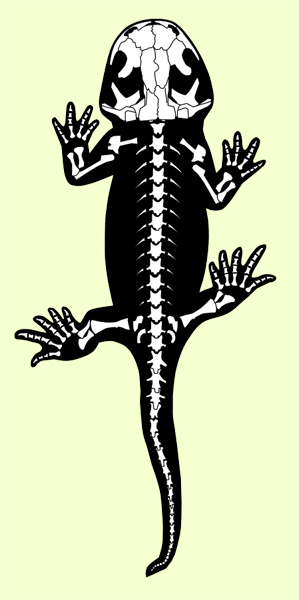
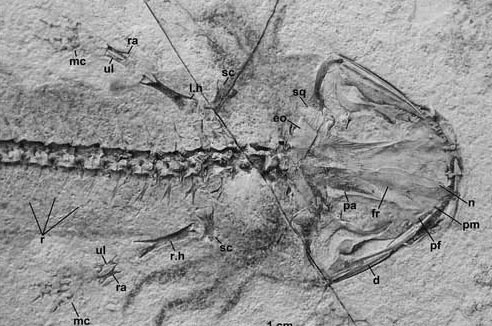
A skeletal reconstruction of the stem salamander Marmorerpeton wakei (dorsal view). Picture credit: Jones et al.
Marmorerpeton wakei
The stem Salamander genus Marmorerpeton was named and described in 1988, but detailed analysis of the Isle of Skye fossil material, including CT scans demonstrated that this was a new species, which has been named Marmorerpeton wakei. The species name honours the late Professor David Wake, who was a world-renowned authority on early salamander evolution.
Lead author of the study, Dr Marc Jones (University College London, Cell and Developmental Biology), commented:
“The fossil is definitely a salamander but unlike anything alive today. It highlights the importance of the fossil record for preserving combinations of anatomical features that do not exist in any living animal.”
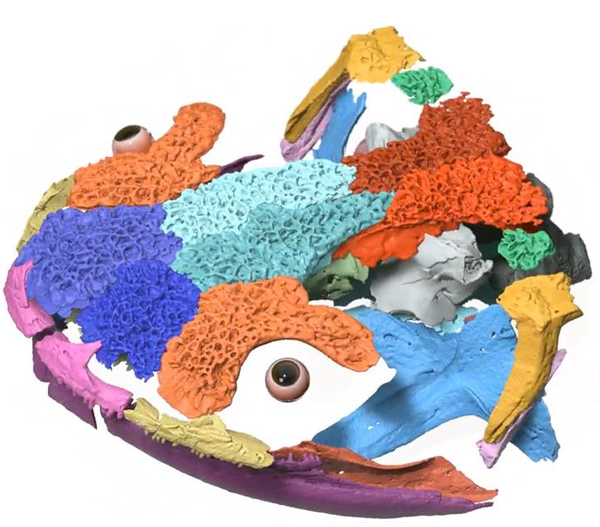
The anatomical features of the new Scottish fossils of Marmorerpeton wakei were only revealed thanks to the detailed CT scans and subsequent computer-generated models. This scanning technology provides a powerful and non-destructive tool for revealing fine details on fossil bones. One specimen, collected in 2016, was found to be part of a specimen collected in 1971 but left undescribed until now.
A three-dimensional image showing the skull bones of Marmorerpeton wakei. Following detailed CT scans of the fossil material a computer programme was used to interpret the data and reconstruct the skull. Picture credit: Jones et al.
Middle Jurassic Salamander
The fossils are thought to be around 166 million years old (Middle Jurassic) and although the Marmorerpeton genus was first described over 30 years ago, the material analysed in this new paper has permitted the researchers to build up a more complete picture of this 20-centimetre-long amphibian.
Marmorerpeton wakei had a wide but shallow frog-like head with powerful jaws and distinctive, prominent, bony projections behind its eyes. The skull roof bones show that it was ornamented like that of a crocodile or a temnospondyl, distinguishing it from extant salamanders. The limb bones and deep tail of Marmorerpeton wakei suggest this animal was aquatic, perhaps using its wide jaws to catch prey by suction feeding, similar to the lifestyle seen in the modern Hellbender salamander (Cryptobranchus alleganiensis) of North America.
The bony bumps behind the orbit are unusual and Dr Jones commented:
“The big bony projections behind the eye were a bit unexpected but smaller projections do exist in fossil salamanders from slightly younger rocks. Their purpose remains unknown.”
The early evolution of salamanders is poorly understood, their small and delicate bones are rarely preserved as fossils. This research also included a detailed survey of modern salamander anatomy which informed the subsequent analyses.
The Karaurus Genus
Several previous studies of Mesozoic salamanders have relied on fossils from the Late Jurassic, found in Kazakhstan, assigned to the genus Karaurus. As the Marmorerpeton fossils are older, they help to provide an improved understanding of how early salamanders evolved.
Even the fine gills have been preserved, a delicate salamander fossil from China. Picture credit: Chinese Academy of Sciences/Journal of Vertebrate Palaeontology.
Senior-author Professor Susan Evans (University College London Cell and Developmental Biology), who first described Marmorerpeton in 1988 explained:
“The origin and early history of modern amphibian groups remains mysterious and new fossils like this one are key to developing a better understanding of amphibian evolution. In theory, the Skye salamander should give us a clue as to what the ancestors of modern salamanders looked like. However, it could be that they are a highly specialised off-shoot.”
The scientific paper: “Middle Jurassic fossils document an early stage in salamander evolution” by Marc E. H. Jones, Roger B. J. Benson, Pavel Skutschas, Lucy Hill, Elsa Panciroli, Armin D. Schmitt, Stig A. Walsh and Susan E. Evans published in The Proceedings of the National Academy of Sciences (PNAS).
New PNSO models, the Torosaurus pair, Fergus the Acrocanthosaurus and Xinchuan the Sinraptor all feature in the latest Everything Dinosaur customer newsletter. In addition, fresh stocks of the PNSO Olorotitan, Tsintaosaurus and Harvey the Iguanodon have arrived, and these ornithischians also feature in the latest customer newsletter.
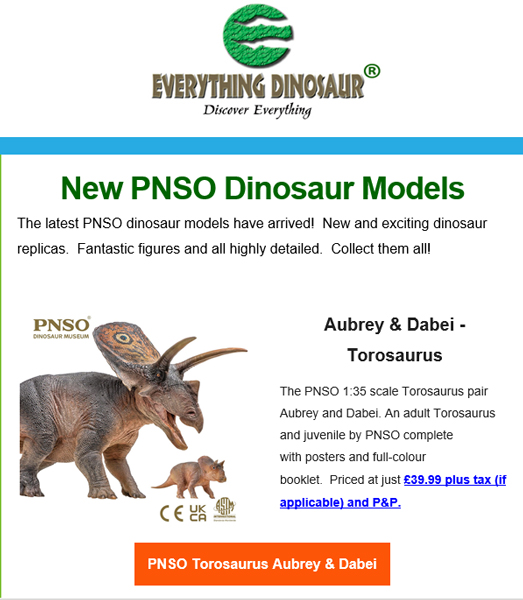
The Torosaurus adult and juvenile pair (Aubrey and Dabei) are featured in Everything Dinosaur’s latest customer newsletter.
Torosaurus Pair and a Pair of Theropod Dinosaurs
The new for 2022 Torosaurus adult and juvenile (Aubrey and Dabei) have arrived in stock. A pair of Torosaurus dinosaur models in 1:35 scale complete with posters and a full-colour information booklet.
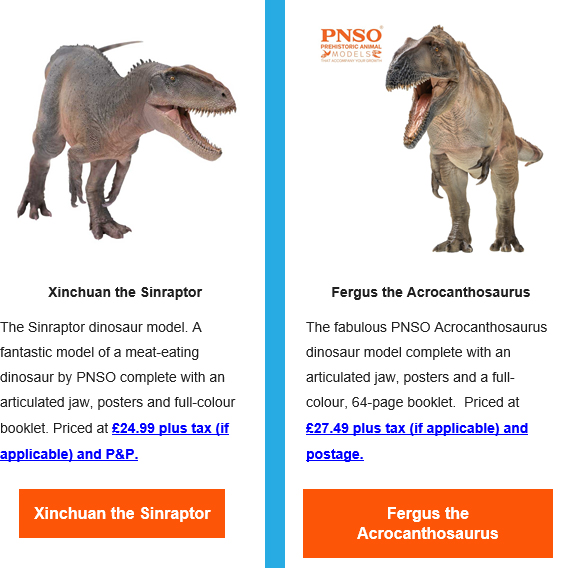
Two new PNSO theropods also feature, namely Xinchuan the Sinraptor and the eagerly awaited Fergus the Acrocanthosaurus dinosaur model.
Two theropod dinosaurs, the PNSO Xinchuan the Sinraptor and Fergus the Acrocanthosaurus dinosaur models feature in Everything Dinosaur’s latest customer newsletter.
PNSO Dinosaurs
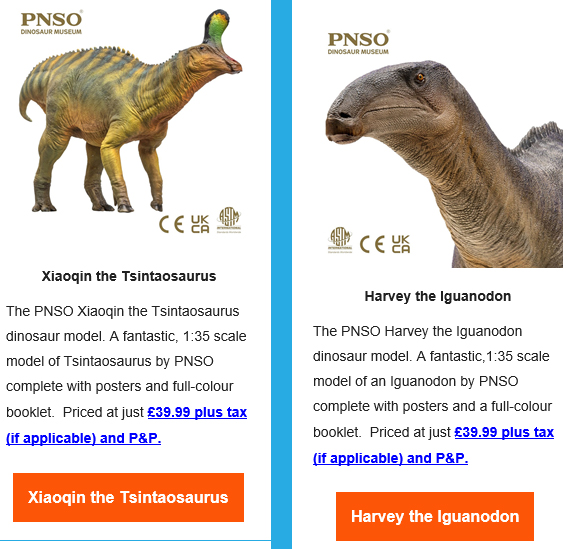
Not to be outdone, there are some plant-eating dinosaurs too showcased amongst the theropod duo. The Everything Dinosaur newsletter also features the 1:35 scale PNSO Xiaoqin the Tsintaosaurus which comes complete with full-colour booklet and posters. The newsletter also highlights Harvey the Iguanodon, another splendid plant-eating dinosaur model in 1/35th scale.
The stunning PNSO Xiaoqin the Tsintaosaurus and the amazing PNSO Harvey the Iguanodon are back in stock at Everything Dinosaur. Both these members of the Ornithischia feature in Everything Dinosaur’s latest customer newsletter.
Olorotitan and Celebrating Everything Dinosaur’s Blog
The latest issue of the newsletter also features the return into stock of the greatly admired PNSO Ivan the Olorotitan model. This plant-eating dinosaur figure was introduced in late 2021, it has been a top-seller ever since. The PNSO Ivan the Olorotitan is a beautifully detailed scale model.
The PNSO Ivan the Olorotitan is back in stock, and we celebrate posting up our 6,000th blog article.
The newsletter also included a short section on Everything Dinosaur’s free to access blog. The company recently celebrated posting up their 6,000th blog post. For the last fifteen years a new post has been uploaded every day! The Everything Dinosaur blog contains news about dinosaurs, the latest research, articles about model collecting, updates on fossil finds and lots and lots of helpful information and dinosaur facts.
The Everything Dinosaur newsletter is sent out periodically to subscribers, it contains updates on new products, competitions, exclusive information and support.
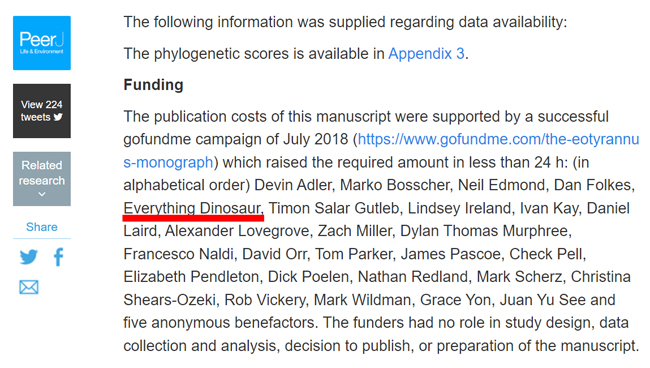
On July 7th (2022), a new scientific paper providing a review of the Early Cretaceous Eotyrannus lengi was published. Everything Dinosaur helped to fund the publication of this research. The authors, Dr Darren Naish (School of Biological Sciences, Faculty of Environment and Life Sciences, University of Southampton) and Andrea Cau (Parma, Italy) concluded that E. lengi was a valid tyrannosauroid taxon from the Barremian Wessex Formation of the Isle of Wight.
In order to make a new study into the dinosaur Eotyrannus open access, so that everyone could view this research, the authors set up a GoFundMe campaign. Everything Dinosaur helped to fund this study. We are happy to support this excellent paper and we are helping to make such studies possible. Your purchases from Everything Dinosaur genuinely help science.
Team members at Everything Dinosaur were happy to assist with funding a newly published paper on the early tyrannosauroid Eotyrannus lengi.
The publication costs of this manuscript were supported by a successful gofundme campaign (July 2018). The fund target was reached in less than 24-hours and Everything Dinosaur was happy to make a substantial contribution to ensure that this research could be published allowing free access.
Our congratulations to all the other funders, who helped make this possible.
We hope to produce an article on this excellent scientific paper in the very near future, after all, it sheds light on an amazing dinosaur dominated ecosystem. The researchers conclude that Eotyrannus was a mid-size predator with much larger megalosauroid or allosauroid apex predators present. There were certainly many different types of theropod in the environment including carcharodontosaurian allosauroids, baryonychine spinosaurids as well as probable compsognathids and members of the Maniraptora.
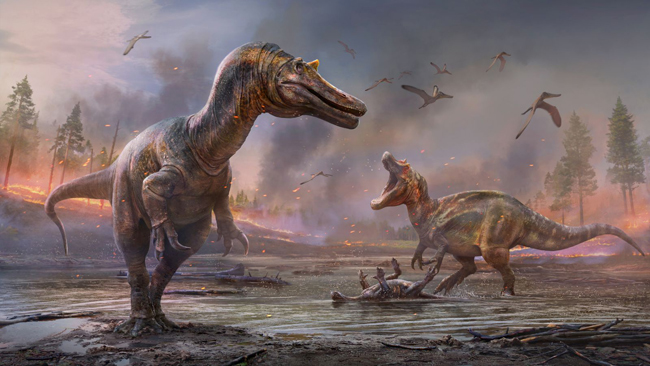
Two new species of spinosaurids described from the Isle of Wight Ceratosuchops inferodios (foreground) challenges a Riparovenator milnerae (background) over the carcase of an iguanodont. Picture credit: Anthony Hutchings
The scientific paper: “The osteology and affinities of Eotyrannus lengi, a tyrannosauroid theropod from the Wealden Supergroup of southern England” by Darren Naish and Andrea Cau published in PeerJ.
PNSO have announced that their next dinosaur model will be a sauropod. The PNSO Chuanchuan the Lingwulong dinosaur model will be in stock at Everything Dinosaur in just a few weeks.
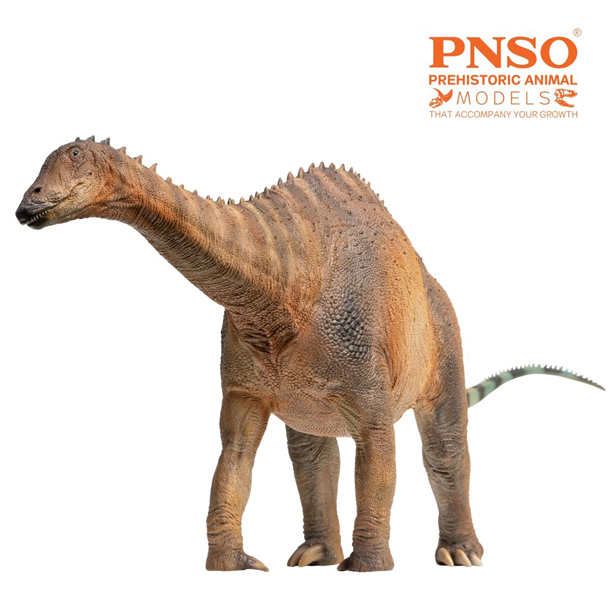
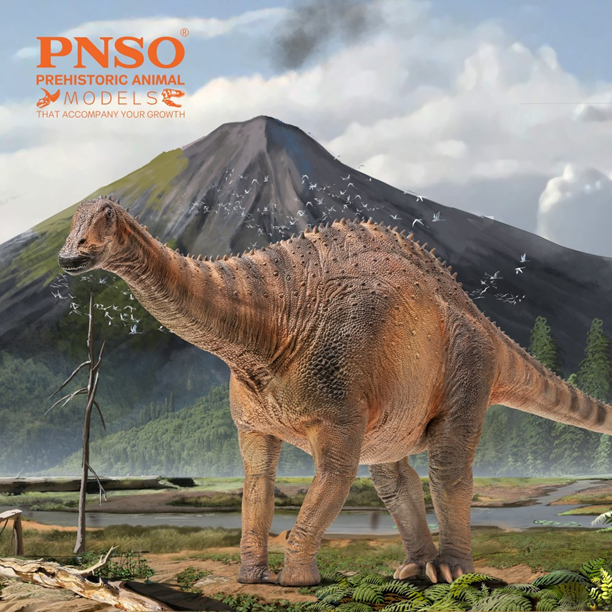
Chuanchuan the Lingwulong. This exciting new for 2022 dinosaur model is a replica of a long-necked, plant-eating dinosaur from the Middle Jurassic of China.
PNSO Chuanchuan the Lingwulong
Named and described in 2018 (Xu et al), from numerous fossils representing several individuals collected from Yanan Formation deposits in the Ningxia Hui Autonomous Region of China, Lingwulong (L. shenqi), is the earliest known diplodocoid sauropod. Its discovery suggests that the Sauropoda dispersed and diversified much earlier than palaeontologists had previously thought. Lingwulong demonstrates that diplodocoids were present in eastern Asia and it is wonderful to see PNSO adding a model of such a significant Chinese dinosaur to their model range.
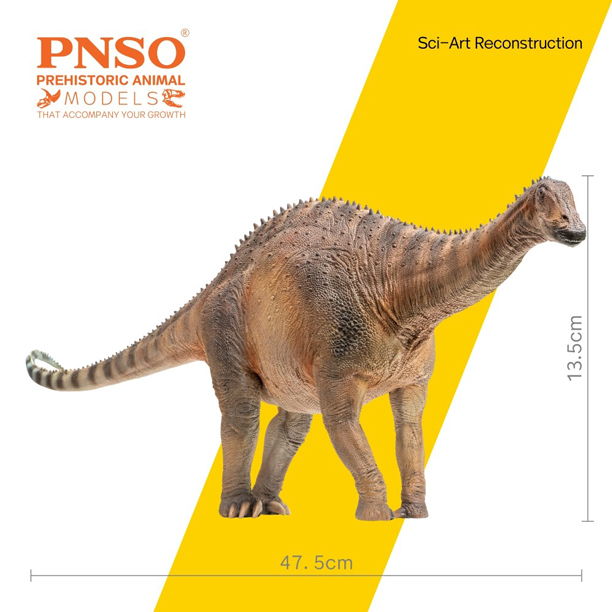
The PNSO Chuanchuan the Lingwulong model measures around 47.5 cm in length and has a head height of 13.5 cm. PNSO have not declared a scale for this dinosaur model, but this dinosaur is thought to have reached lengths in excess of 17 metres, perhaps as much as 20 metres. Based on these measurements, team members at Everything Dinosaur propose a scale of around 1:36 to 1:42.
The PNSO Chuanchuan the Lingwulong model measurements.
A spokesperson from Everything Dinosaur commented:
“We have known about Chuanchuan the Lingwulong dinosaur model for some time. It is already on the water and heading into the UK on our next shipment of PNSO models and figures. We are looking forward to receiving this sauropod figure, one of the largest models that PNSO have made for some time.”
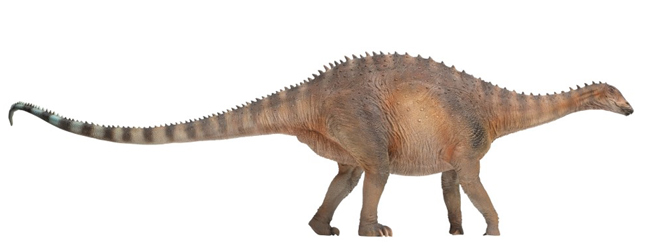
PNSO Chuanchuan the Lingwulong in lateral view. This sauropod model is one of the largest figures that PNSO intend to produce this year (2022).
Posters and Full-colour Booklet
Continuing the trend to add value to the figures that the company produces, Chuanchuan the Lingwulong will be supplied with a sci-art poster inspired by the work of the famous Chinese artist Zhao Chuang and a 64-page, full-colour booklet. A QR code, which once scanned, provides access to a short video that explains how the figure was created.
Posters and booklet for the PNSO Chuanchuan the Lingwulong dinosaur model.
The PNSO Chuanchuan the Lingwulong dinosaur model is expected in stock at Everything Dinosaur in a few weeks. To view the current range of PNSO dinosaur and prehistoric animal models in stock at Everything Dinosaur: PNSO Age of Dinosaurs Models and Figures.
A reviewer of dinosaur models praises Everything Dinosaur for their customer service and quality of products.
As part of two recent PNSO dinosaur reviews sent into Everything Dinosaur by model collector William. The reviewer praised Everything Dinosaur commenting that without Everything Dinosaur there would not be great model collections.
Everything Dinosaur is a Trusted Service Awards winner! A model reviewer praises the award-winning Everything Dinosaur.
Dinosaur Fan Praises Everything Dinosaur
William emailed Everything Dinosaur and commented that for the legion of palaeo-figure collectors Everything Dinosaur is truly valued for all it does for model collectors and dinosaur fans especially during a challenging global pandemic.
He wrote:
“From searching the leading brands to all the tireless efforts to get the stock from suppliers to your warehouse to the front doors of customers. They offer a very good range for children as well as catering for the adult collector.”
Everything Dinosaur’s certificate confirming the Platinum Trusted Service Award.The company is praised by a model collector and dinosaur fan.
Everything Dinosaur on YouTube, Blogs and Social Media Platforms
William added that he appreciated the time and effort that team members put in to making YouTube videos, as well as blogging about the latest dinosaur discoveries and new fossil finds.
When commenting on the delivery of orders, he added:
“The level and quality of packaging and the dedication to deliveries byyour company is what the big guys of the web and the high street should be aspiring to. Parcels are well protected, strong and secure with clear address labelling and the models are protected with plenty of bubble wrap.”
A Great Range of Delivery Options
The customer commented that Everything Dinosaur offers a great range of delivery options all of them are fairly priced, with many parcels being delivered within 24-hours.
Our work in helping to educate the next generation of palaeontologists was also praised and William commented: “Who knows, one day we could see a new Mikeceratops or a Sueposeidonsaurus all due to your primary school visits.”
Our thanks to William for his most generous and kind words.
A new giant, Late Cretaceous predatory dinosaur has been named based on fossils found in Argentina. The dinosaur, assigned to the Carcharodontosauridae has been named Meraxes gigas and its fossilised remains represent the most complete carcharodontosaurid specimen found to date in the Southern Hemisphere.
The giant, South American predatory dinosaur Giganotosaurus which featured in the latest instalment of the “Jurassic Park/Jurassic World” movie franchise is just one of a poorly known group of theropod dinosaurs that were the apex predators in many terrestrial environments during the Cretaceous. Although, most dinosaur fans can name many carcharodontosaurids, these meat-eaters remain enigmatic and most genera have been described based on fragmentary remains. All that has changed with the publication of a scientific paper describing Meraxes gigas from the Upper Cretaceous Huincul Formation of northern Patagonia (Argentina).
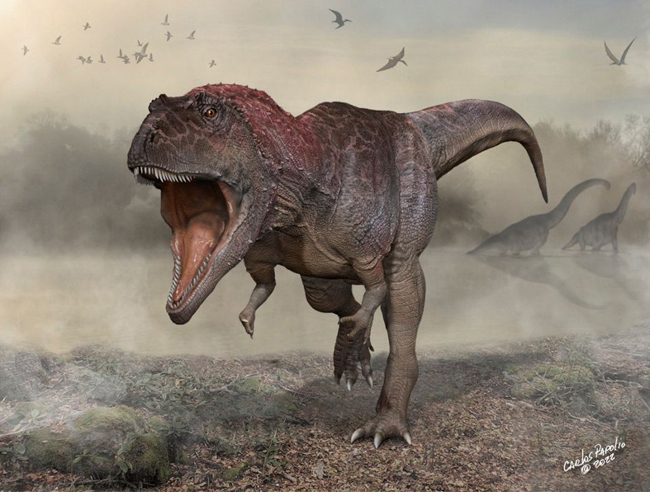
A life reconstruction of the giant carcharodontosaurid from Patagonia Meraxes gigas. Picture credit: Carlos Papolio.
A Giant Predator with Short Arms
Writing in the scientific journal “Current Biology” the researchers who include Juan Canale (Universidad Nacional de Río Negro, Argentina), suggest that M. gigas was around eleven metres long and weighed around four tonnes (estimated 4.26 tonnes). The skull bones, which represent one of the most complete large theropod skulls ever found, indicate a skull length of 1.27 metres, but its arms were disproportionately small. Like other Cretaceous apex predators, the tyrannosaurs and the abelisaurids, this dinosaur had very short arms. Arms so short that they could not reach its own mouth.
Lead author Juan Canale commented:
“I’m convinced that those proportionally tiny arms had some sort of function. The skeleton shows large muscle insertions and fully developed pectoral girdles, so the arm had strong muscles. They may have used the arms for reproductive behaviour such as holding the female during mating or support themselves to stand back up after a break or a fall.”
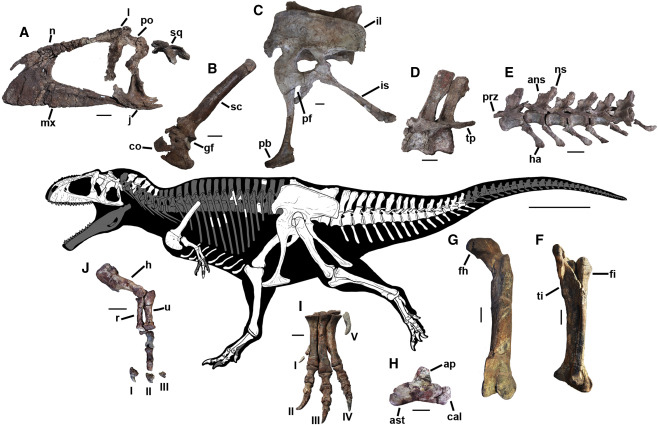
Meraxes gigas MMCh-PV 65 and skeleton reconstruction. The white materials represent known bones. Meraxes is the most complete carcharodontosaurid yet from the Southern Hemisphere. Picture credit: Canale et al.
The fossils found in Huincul Formation exposures (late Cenomanian to Turonian) in Las Campanas Canyon some 14 miles southwest of Villa El Chocón, (Neuquén Province, Argentina), also include an almost complete right arm (j, in the image above). This limb, one of the most complete of any derived carcharodontosaurid described to date, is comparatively short and provides evidence to support the idea that many carcharodontosaurids had reduced forelimbs similar to those observed in abelisaurids such as Carnotaurus and most famously in Tyrannosaurus rex.
The researchers propose that forelimb reduction among three lineages of large-bodied predators is an example of convergent evolution, whereby not closely related organisms evolve the same traits. The fossils of Meraxes gigas show a remarkable degree of parallelism between latest-diverging tyrannosaurids and carcharodontosaurids.
Articulated right arm in medial view (I to III, hand digits first to third) top right and left foot in medial view (I to IV, pedal digits first to fourth) bottom Scale bars = 10 cm. Picture credit: Canale et al.
Helping to Define the Size of Giganotosaurus (G. carolinii)
Meraxes has the most complete cranium of any Carcharodontosaurinae, with a total skull length estimated at 1.27 metres which is comparable to the most complete specimen of Acrocanthosaurus (A. atokensis) with a skull size of 1.23 metres. Giganotosaurus has the next most complete skull among carcharodontosaurids, but it is missing part of the maxilla and several other bones, so estimating its total length has been problematical. Although the head of Meraxes was not as wide as the head of Giganotosaurus, the cranium of Meraxes is sufficiently similar to G. carolinii to permit an estimate for the length of the Giganotosaurus skull to be made. Based on this comparison, the skull of the largest Giganotosaurus specimen would have been around 1.62 metres long, making it one of the longest theropod skulls known to science.
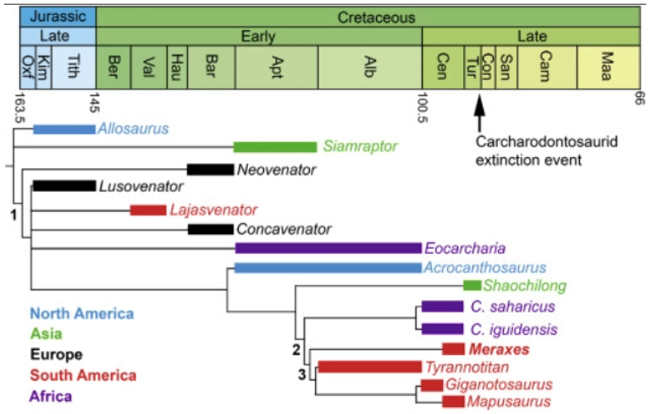
Cladogram depicting the temporal and geographical distribution of the Carcharodontosauridae family of theropod dinosaurs. At the time of their extinction these meat-eating dinosaurs seem to have been at their peak diversity. Picture credit: Canale et al.
The discovery of yet another super-sized carcharodontosaurid from Argentina demonstrates the high diversity of these theropods shortly before their extinction. Parallels can be drawn between the diversity of South American carcharodontosaurids and tyrannosaurs known from the Campanian faunal stage in western North America.
There are no reliable records of carcharodontosaurids in South America beyond the end of the Turonian stage of the Late Cretaceous, this great clade of theropods are believed to have become extinct around 90 million years ago.
The genus name (Meraxes) is named after a female dragon from the Song of Ice and Fire series of books by George R. R. Martin, upon which the hugely successful television series “Game of Thrones” was based. The species name (gigas) comes from the Greek meaning giant.
The scientific paper: “New giant carnivorous dinosaur reveals convergent evolutionary trends in theropod arm reduction” by Juan I. Canale, Sebastián Apesteguía, Pablo A. Gallina, Jonathan Mitchell, Nathan D. Smith, Thomas M. Cullen, Akiko Shinya, Alejandro Haluza, Federico A. Gianechini and Peter J. Makovicky published in Current Biology.
Our thanks to dinosaur model collector William who sent into Everything Dinosaur his detailed review of the PNSO Sinraptor dinosaur model. In his comprehensive review, William states that Sinraptor is one of the more obscure members of the Metriacanthosauridae family, although the exact phylogeny of this theropod has yet to be resolved.
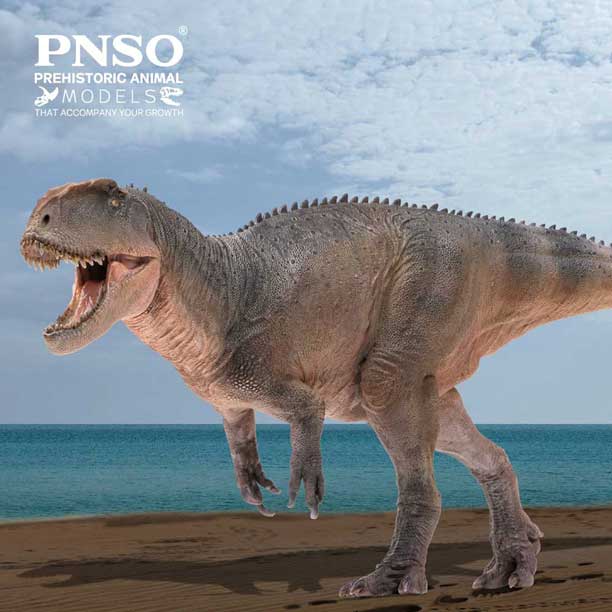
The stunning PNSO Xinchuan the Sinraptor dinosaur model.
A Clear Winner
Describing Xinchuan as a “clear winner”, William comments that there are so many traits and characteristics of the figure to admire including the pugnacious, robust head. PNSO have depicted Sinraptor as a “do or die type of theropod, ready to hunt or as easily plunder a kill”.
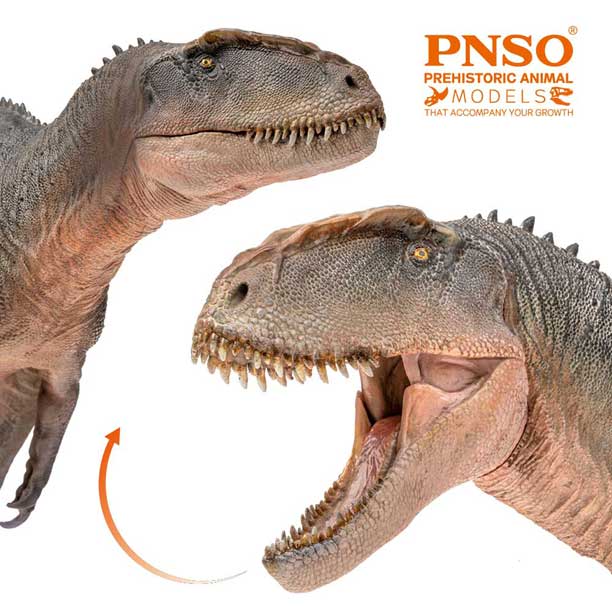
Beginning with the head, William describes it commenting on the very fine skin texturing and smooth appearance of the skull, with no shrink wrapping of the model detected. The perfect eye orbits and subtle ear apertures are praised.
The lacrimal crests progress upwards from above the nostrils high over the eye sockets before tapering off just behind the orbits. The fully articulated jaw with no lips is highlighted. The opening and closing of the jaw is described as having a smooth, fluid action. William praises the design team behind this dinosaur figure.
Sinraptor has been classified as a member of the allosauroid group of theropod dinosaurs, specifically it has been classified as a member of the Metriacanthosauridae. The PNSO Xinchuan Sinraptor model has an articulated lower jaw.
Reviewing the Body of the Figure
A deep keel bone is the anchor point of a powerful rib cage which can be seen just under the skin and William suggests the thigh muscles on this figure look even more powerful than the recently introduced PNSO Allosaurus model. He also reports that the replica has an accurate and detailed cloaca.
The tail is described as being a little shorter than expected, but the length could be deceptive as it bends.
William adds:
“It is truly a pleasure to add this bruiser to my collection.”
William highlights the robust forelimbs and comments that they are longer than those of the PNSO Allosaurus figure and give the impression of great strength and power.
Sinraptor dongi was formally named and described in 1994. The species name is in honour of the eminent Professor Dong Zhiming, one of China’s most celebrated palaeontologists.
Colour and Texture
The colour scheme is described as being not just a pink and grey object but a highly painted figure with subtle mixtures of rosy pinks and elephantine greys. The colouration of the underside of the model is praised, as are the details depicted around the eyes. William comments that the stained and discoloured teeth are great and states:
“Such a nicely executed colour scheme plus superb skin sculpture.”
QR code with a link to a short, informative video.
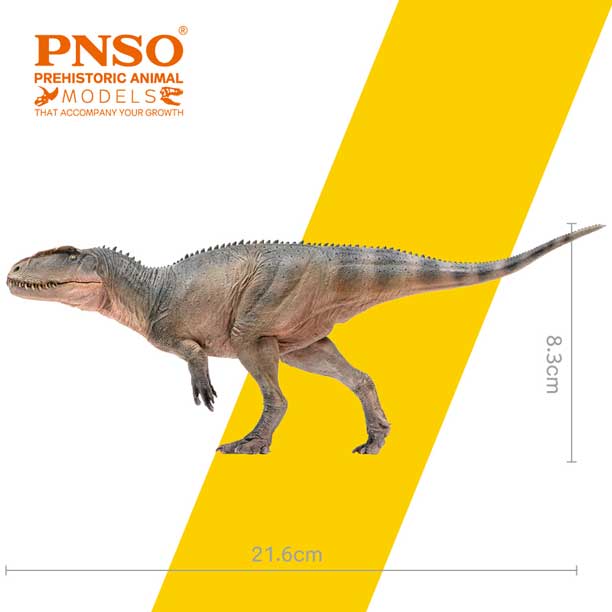
Xinchuan the Sinraptor model measures 21.6 cm long and the figure stands around 8.3 cm high.
Sinraptor Facts and Figures
As in previous reviews of prehistoric animal models by William, he provides some information on Sinraptor, choosing to focus on the second species named in this genus S. hepingensis. Sinraptor hepingensis was erected in 1992, based on fossils formerly ascribed to Yangchuanosaurus, some palaeontologists have challenged the validity of this taxon.
Time Period: Temporal range: Middle Jurassic (169-142 million years ago). Location: North-western China.
William also commented on the second Sinraptor species to be erected stating that a second species was named in 1992 (Gao). Originally named Yangchuanosaurus hepingensis this specimen was later reclassified as Sinraptor hepingensis. The holotype Sinraptor hepingensis fossil is now on public exhibit in Zigong, China at the Zigong Dinosaur Museum in Sichuan Provence.
In completing his PNSO Xinchuan Sinraptor review William described the palaeoenvironment, stating that Sinraptor lived in a dinosaur dominated sub-tropical environment.
Our thanks to William for sending into Everything Dinosaur his PNSO Sinraptor review.
To view the range of PNSO models and figures in stock at Everything Dinosaur: PNSO Age of Dinosaurs.
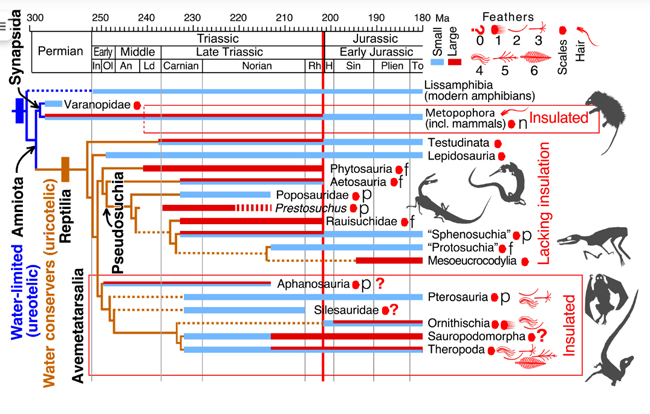
Scientists propose that cold snaps killed off the competitors of the dinosaurs and pterosaurs at the end of the Triassic opening the door for a dinosaur dominated Jurassic. The researchers propose that dinosaurs and pterosaurs with their integumentary coverings including primitive feathers, were insulated from the cold, whereas many other types of reptile co-existing with them just had scales. It was the body coverings that permitted the Dinosauria and the Pterosauria to thrive in cold conditions, whereas many of the other reptiles became extinct.
A beautiful feathered Compsognathus catches its lunch (artwork by Chuang Zhao). Fossil evidence suggests that many types of dinosaur were feathered, there is also growing evidence to suggest that pterosaurs too had insulating coats. A new theory proposes that these insulating coverings helped the Dinosauria and the Pterosauria to endure cold climates the onset of which led to a mass extinction event.
Ice-rafted Debris Discovered in Lakebed Deposits
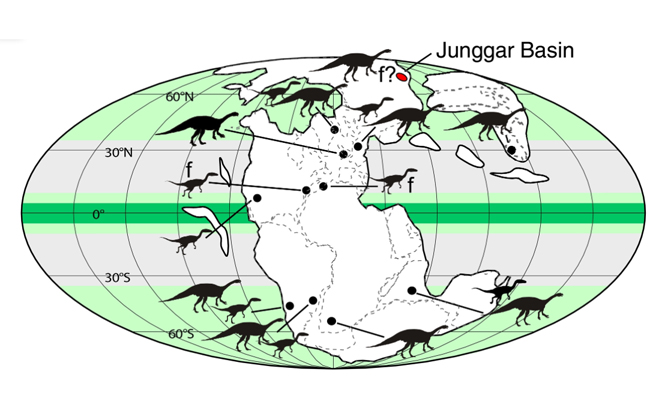
The research team which included Paul Olsen, lead author of the study (Lamont-Doherty Earth Observatory at Columbia University), examined sandstone and siltstone formations formed in lakebeds in China’s Junggar Basin. These deposits are Upper Triassic in age and at this time this part of China had a palaeolatitude of around 71 degrees north. It was well above the Arctic Circle. Footprints found by the researchers indicate the presence of dinosaurs. In addition, the lake sediments contained abundant small pebbles, and it was concluded that these pebbles represent ice-rafted debris deposits.
Map of Pangaea in the Late Triassic. The Junggar Basin is highlighted in red. Silhouettes show location and type of dinosaur known. Most dinosaurs were confined to higher latitudes and f signifies the presence of dinosaur tracks indicating their presence in the palaeoenvironment of the Junggar Basin. Picture credit: Olsen et al.
The Small Pebbles are Significant
The numerous small pebbles found amongst the fine siltstones and sandstones were probably deposited by melting blocks of ice. The research team, who included scientists from the Chinese Academy of Sciences, suggest that in the winter when the lake waters froze over, pebbles were picked up by the ice from the rocky lake shores. As the warm weather returned, the ice sheets would melt and chunks of ice would float away over the lake, gradually melting and as they did, they would drop the pebbles and other material.
Survival of the Fluffiest
The ice-rafted debris suggest freezing winters endured by dinosaurs. Around 201.6 million years ago, extensive volcanism which ejected millions of tonnes of debris into the Earth’s atmosphere lowered light levels and led to global climate change. Our planet endured a prolonged period of cold.
The cold decimated all medium-to large-sized non-dinosaurian, non-insulated continental reptiles. As they were adapted to cold climates, the Dinosauria and their cousins the Pterosauria were well placed to dominate terrestrial habitats as world temperatures plummeted.
The scientists concluded that many large reptiles that lacked thermal insulation that would have been provided by an integumentary covering died out during the End-Triassic extinction event. In contrast, pterosaurs and dinosaurs with their insulating coats were able to cope much better and survived this extinction event. The unoccupied niches in the ecosystem were soon filled as these archosaurs diversified in the Early Jurassic. Picture credit: Olsen et al.
Cold Climate
Lead author of the study Paul Olsen commented:
“They were [dinosaurs and pterosaurs] fundamentally cold-adapted animals. When it got cold everywhere, they were ready, and other animals were not.”
The scientific paper: “Arctic ice and the ecological rise of the dinosaurs” by Paul Olsen, Jingeng Sha, Yanan Fang, Clara Chang, Jessica H. Whiteside, Sean Kinney, Hans-Dieter Sues, Dennis Kent, Morgan Schaller and Vivi Vajda published in Science Advances.
Our thanks to dinosaur fan and model collector Nick from Greece, who is so excited about the forthcoming Beasts of the Mesozoic tyrannosaur series that he sent in an illustration of Gorgosaurus inspired by one of the models.
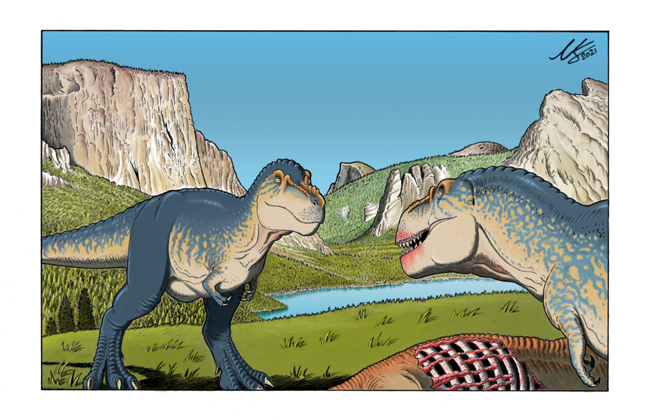
A Gorgosaurus confrontation. Inspired by the forthcoming Beasts of the Mesozoic tyrannosaur series (wave 1), Nick from Greece has chosen to illustrate Gorgosaurus. The Gorgosaurus figure will be in the third wave of model introductions scheduled for quarter 3 of 2023. Picture credit: Nick.
Beasts of the Mesozoic Tyrannosaurs
The tyrannosaur series is the third line of articulated prehistoric animal models, following the highly successful “raptors” and the ceratopsians. A total of twenty-four replicas of dinosaurs from within the Tyrannosauroidea superfamily will be featured, including a Gorgosaurus, which inspired Nick’s superb illustration.
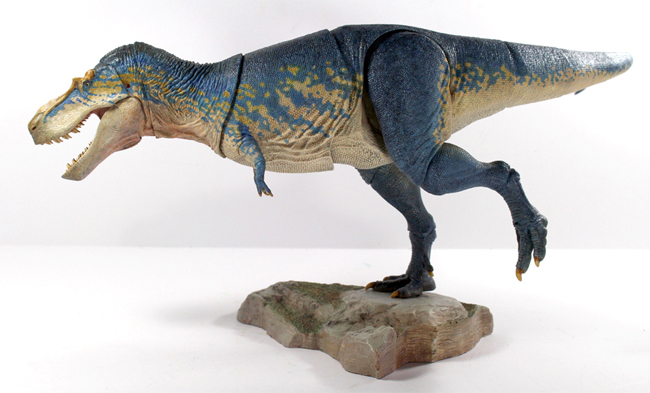
The Beasts of the Mesozoic Gorgosaurus libratus articulated figure inspired the illustration. The Gorgosaurus figure is scheduled to be part of the third wave of these tyrannosaur figures (September 2023).
Beasts of the Mesozoic Gorgosaurus libratus
The Beasts of the Mesozoic Gorgosaurus libratus figure will have twenty-two points of articulation and it will measure around 50 cm in length (1:18 scale model). The Gorgosaurus model is part of wave three of this series and it is expected to be introduced around quarter three of 2023.
In his email to Everything Dinosaur, the artist wrote:
“I am very grateful for your services, without your dedicated work it would be too difficult and expensive for us to purchase many of the dinosaur figures that you’re retailing. In my case the Beasts of the Mesozoic line. I am sending you this illustration as a gift for your contribution to our joyful hobby! It’s an illustration I’ve done last November (for the Dinovember art challenge) and it is inspired by the upcoming Beasts of the Mesozoic Gorgosaurus figure. I hope you like it!”
Responding to Customer’s Requests
We do our best to respond to all our customer’s requests, questions and queries. Building up a relationship with your customer base is very important. Sometimes we get sent little gifts in appreciation of our efforts. Our thanks to Nick from Greece who sent us a wonderful dinosaur (Gorgosaurus libratus) illustration he had created.
Glad to know we are doing something right in these tough times.
To view the range of Beasts of the Mesozoic figures in stock at Everything Dinosaur: Beasts of the Mesozoic.