The test report commissioned by Everything Dinosaur into the Dino Hazard Irritator challengeri dinosaur model has been received. Before a dinosaur model can be legally sold, an importer such as Everything Dinosaur has to ensure that it meets defined safety standards.
Team members have produced a short video and posted it up on the company’s YouTube channel explaining why product safety tests are conducted and revealing the result of the report by Eurofins into the Dino Hazard Irritator challengeri 1:20 scale figure.
The test results are in! In Everything Dinosaur’s short YouTube video (duration 5:12), we explain why product safety tests are carried out and reveal the results of the independent product safety tests carried out by Eurofins on the YvY Figures Dino Hazard Irritator challengeri dinosaur model.
The Importance of Product Safety
Product safety is very important. Customer safety is paramount and if Everything Dinosaur is going to bring a new model into stock, it is vital to make sure that it is safe and fit for purpose. Indeed, as a company that sources products from all over the world, we are obliged under international law to undertake certain actions to ensure that what we purchase and intend to “place on the market” is safe.
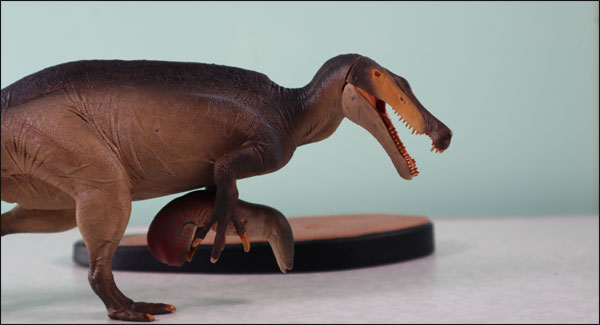
The Dino Hazard Irritator challengeri dinosaur model. Everything Dinosaur commissioned independent product safety tests prior to entering into negotiations to bring this model into the UK. Picture credit: Everything Dinosaur.
As such, when offered the opportunity to bring in the Dino Hazard Irritator challengeri figure, one of the first things we must do is to establish what product safety tests, if any, have been undertaken. Hence our decision to get a sample sent into us and to ask the independent testing company Eurofins to conduct tests under the General Product Safety Directive.
Test Results
The Regulatory Manager at Eurofins responsible for the tests concluded:
“I am of the opinion that the product was reasonably safe under normal conditions of use and is fit for its intended purpose”
However…
In order for this dinosaur model to receive a favourable report, Everything Dinosaur team members had to make changes to the product packaging, the labelling and the customer information that is provided with this figure. As far as we are aware, no other product safety tests have been carried out and as such, Everything Dinosaur is the only company to have commissioned tests and taken sensible steps to modify the product offering to help it to get a favourable report from an independent testing company.
An Everything Dinosaur team member holds the Dino Hazard Irritator challengeri dinosaur model, which in turn is holding in its claws the replica of a lungfish (Equinoxiodus alcantarensis) which is supplied as an accessory with this dinosaur figure. After negotiating with the manufacturer, Everything Dinosaur plans to introduce this model in the late summer of 2021. Picture credit: Everything Dinosaur.
Picture credit: Everything Dinosaur
Successful Negotiations
After concluding successful negotiations with the manufacturer the Irritator challengeri 1:20 scale dinosaur model is expected in stock at Everything Dinosaur in the late summer of 2021.
To enquire about the Dino Hazard range or to reserve an Irritator dinosaur model: Email Everything Dinosaur.
Palaeontologists can examine the behaviours of animals alive today to gain an insight into the potential behaviours of closely related extinct animals. However, for many types of prehistoric animal, there really isn’t a living analogy and it is challenging to determine how some types of extinct creatures moved around and kept themselves safe from predators.
Ammonites
For example, earlier this month a scientific paper was published in PeerJ that looked at how straight-shelled ammonites might have escaped predation. The ammonite that was studied is known as Baculites and it was geographically widespread during the Late Cretaceous. The fossil record shows that many different types of straight-shelled cephalopods evolved repeatedly through time, but how these molluscs moved and how they avoided being eaten has puzzled scientists and the lack of a modern-day analogue made research more challenging.
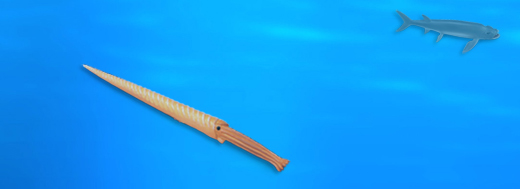
The heteromorphic ammonite Baculites compressus swims in a Late Cretaceous ocean whilst in the background a large Xiphactinus swims slowly by in the background.
Three-dimensional Models and a Water Tank
Three-dimensional models of the heteromorphic ammonite Baculites compressus were created and placed in a water tank in order to test how these molluscs moved. The regularly coiled ammonite is well-known to fossil collectors and the general public, however these types of ammonite underwent a steady decline in diversity through the Cretaceous. The heteromorphs, those ammonites that did not have regularly coiled shells, continually produced new and often bizarre species indicating a certain level of success at occupying new ecological niches.
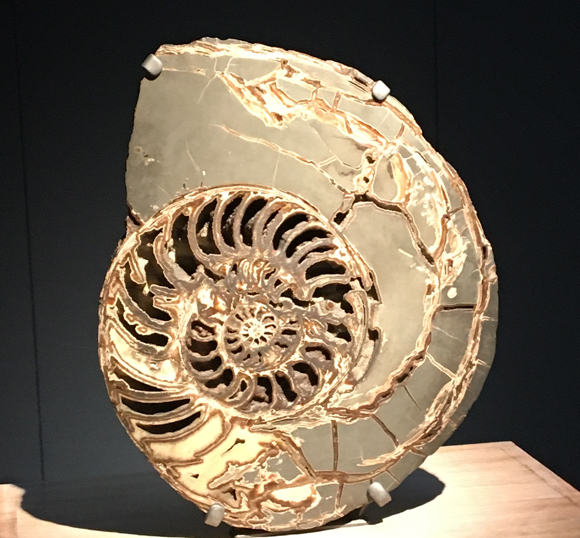
A stunning fossil of a Jurassic ammonite on display at the London Natural History Museum. These ammonites with their regularly coiled shells went into decline in the Cretaceous and many more bizarre forms evolved with heteromorphic shells. Picture credit: Everything Dinosaur.
Picture credit: Everything Dinosaur
Vertical Propulsion
Ammonites played an important role in Mesozoic marine food chains, filling a variety of ecological niches. Throughout the long evolutionary history of the cephalopods, orthoconic conchs (straight shells) have evolved in a wide variety of families not just the Ammonoidea. For example, prior to the evolution of the ammonites, during the Ordovician nautiloid cephalopods were extremely numerous and some genera were giants, such as Cameroceras.
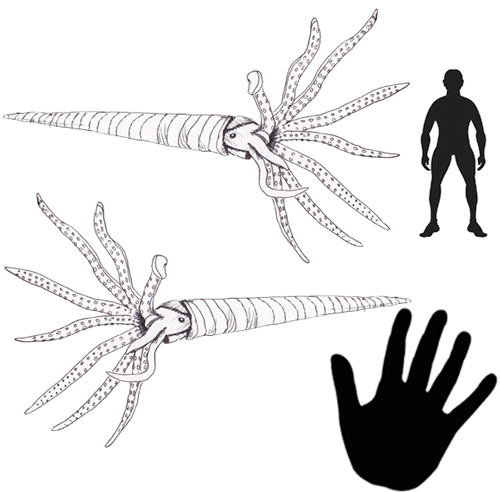
An early scale drawing design for the Orthoceras/orthocone fact sheet produced by Everything Dinosaur. During the Ordovician numerous types of straight-shelled nautiloid cephalopod evolved. Picture credit: Everything Dinosaur.
Picture credit: Everything Dinosaur
CollectA includes a number of ammonite and nautiloid replicas as well as an orthocone (Orthoceras) in its prehistoric life model range: CollectA Prehistoric Life Models.
The models tested in the water tanks revealed that orthocones required very little energy to be exerted for rapid movements and increase in velocity. These molluscs could dart vertically in the water column at a very low metabolic cost.
This suggests that avoid predation these types of cephalopod were able to make sudden vertical movements under rapid acceleration that would have permitted them to avoid the lunge of a marine predator such as a mosasaur.
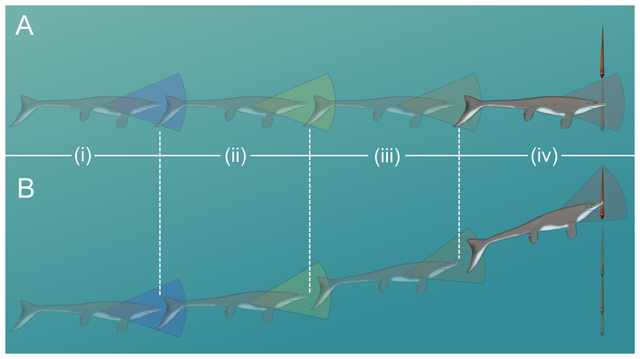
The cruising mosasaur first notices the prey (i), then begins to accelerate (ii). After closing in (iii), the predator makes its final lunge for the prey (iv). Cones surrounding the predator indicate hypothetical turning radiuses. For a successful dodge, the orthocone cephalopod must wait until the last possible moment or else the incoming predator could adjust its vertical trajectory.
In the tests, the models were able to move more than two body lengths upwards in less than a second. Whilst these cephalopods likely assumed low energy lifestyles day-to-day, they may have had a fighting chance to escape from larger, faster predators by performing quick, upward dodges.
The researchers concluded that these experiments suggest that orthocones sacrificed horizontal mobility and manoeuvrability in exchange for highly streamlined, vertically-stable, upwardly-mobile shells.
The scientific paper: “Vertical escape tactics and movement potential of orthoconic cephalopods” by David J. Peterman and Kathleen A. Ritterbush and published in PeerJ.
Scientists have reported the discovery of a hadrosaur pedal ungual (the bone on the end of a toe that supported the keratin claw or hoof), that shows a series of small bite marks made by a theropod dinosaur. The toe claw seems to have been bitten repeatedly and although scrapes and scratches on fossil bones that are incidental feeding traces left by meat-eating dinosaurs have been well documented, these bite marks might represent something very different.
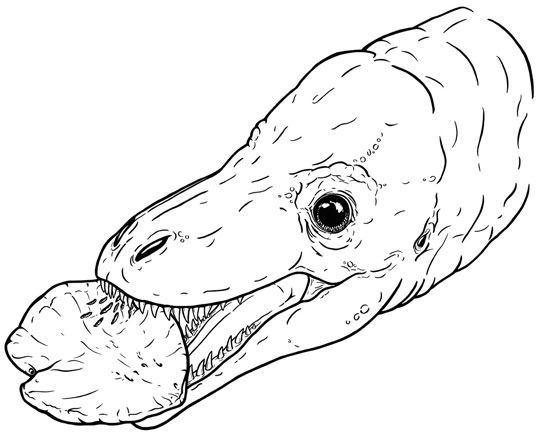
Did a baby tyrannosaur or possibly a dromaeosaurid gnaw on the toe bone of a dead duck-billed dinosaur?
A life reconstruction of a juvenile tyrannosaur biting down on the hadrosaur pedal ungual causing the bite marks that have been preserved in the fossil (TMP 2018.012.0123). Picture credit: Joshua Doyon.
Gnawing Behaviour
Gnawing behaviour is synonymous with many types of mammals, specifically members of the Carnivora and rodents (Rodentia), but it is not commonly associated with the Dinosauria. Coprolites thought to have come from tyrannosaurs contain a lot of bone fragments, tests demonstrate that large tyrannosaurids were capable of crushing bone and it had been thought that coprolite bone content came about as bones were ingested through general consumption.
However, a trio of scientists – Caleb Brown and Darren Tanke from the Royal Tyrrell Museum of Palaeontology (Alberta) in collaboration with Dr David Hone, Senior Lecturer in Zoology at the University of London, have recently published a paper in PeerJ, that suggests that the unusual bite marks on the hadrosaur pedal ungual might represent dinosaur gnawing behaviour.
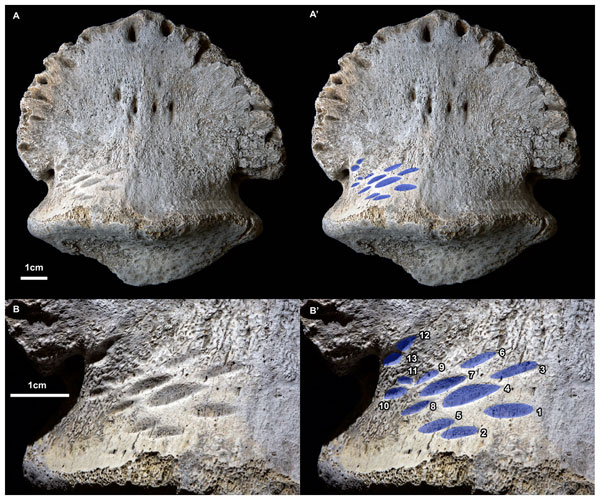
Ammonium chloride powder coated photographs of the hadrosaurid pedal showing bite marks (viewed from the bottom – ventral/plantar view). (A) View of TMP 2018.012.0123 (A), with marks highlighted in blue (A’). Close-up of the bitten region (B), with marks highlighted in blue and numbered in Arabic numerals (B’). Note scale bars = 1 cm.
Documenting Unusual Dinosaur Behaviour
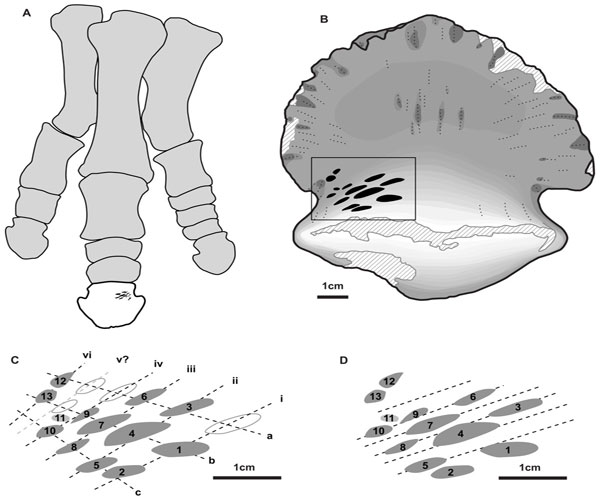
The fossil toe claw bone (specimen number TMP 2018.012.0123), comes from a bonebed (bonebed 50) that contains the disarticulated remains of several different types of duck-billed dinosaur including Corythosaurus. Although the bone came from an adult, it is not possible to confirm the dinosaur species. Thirteen, distinct and highly localised tooth marks have been identified. Their pattern suggests that a small, meat-eating dinosaur delivered up to six repeated, powerful bites to the claw bone. There would have been very little meat on this part of the hadrosaur’s body, gnawing on the pedal ungual represents an unusual and rare form of behaviour.
The researchers reviewed pedal unguals of duck-billed dinosaurs from the Dinosaur Park Formation. They identified tooth marks and feeding traces on four other toe claw bones, but this represents less than 1% of all the hadrosaur toe bones found and feeding traces were much more common on other bones.
Right articulated hadrosaurid pes in dorsal view (A), with ungual of digit three highlighted (white) and the position of the tooth marks (ventral side) indicated in black. Shaded line drawing of the ventral view of the ungual (B), showing the position of the bite marks (black). Close-up view of bite mark size (C) and (D) Close-up view of bite marks showing potential alignment of tooth row parallel with the long axes of the tooth marks. Hollow fills in C indicate potential bite marks missing from rows/columns. Note scale bars = 1 cm.
Dromaeosaur or Tyrannosaur?
The tracemaker cannot be definitively identified but the researchers rule out crocodilians, small mammal feeding traces and snake bites, leaving a theropod dinosaur as the likely tracemaker whose unusual behaviour has been recorded in the fossil. The number of theropods capable of causing such marks and known from the Dinosaur Park Formation is relatively small. The scientists considered dromaeosaurids and their close relatives the Troodontidae, as the tooth marks could have been made by a large troodontid such as Latenivenatrix. The team also considered whether the tracemaker was a young tyrannosaurid.
Given the lack of evidence of denticle spacing present on the bite marks, and that both Tyrannosauridae and Dromaeosauridae were capable of delivering bites resulting in deep furrows and pits to the bone surface, the team speculated that either a dromaeosaur (such as Dromaeosaurus or Saurornitholestes), caused the damage or perhaps the marks were made by a very young tyrannosaurid. Two genera of tyrannosaur are known from the Dinosaur Park Formation, namely Gorgosaurus and Daspletosaurus.
Perhaps, a very young Gorgosaurus, the lowest ranked animal in the pack was left to pull at and gnaw on the toe of the hadrosaur, whilst the rest pack gorged themselves on the more attractive, nutrient rich parts of the carcase.
Can Dogs Provide an Answer?
Anyone who has kept horses and dogs will tell you that when the horse’s hooves are trimmed dogs love to eat the trimmings. The hooves are made from keratin, the same protein responsible for the toe claw on the hadrosaur. Dogs can get very excited when the farrier starts to tidy up the hooves, they seem to crave the soft, recently trimmed parts of the hoof.
Many dog treats are made from horse’s hooves. Could your pet dog provide an insight into dinosaur feeding behaviour?
Could a tyrannosaur similarly have craved the taste of the toe claw of a duck-billed dinosaur?
The scientific paper: “Rare evidence for ‘gnawing-like’ behavior in a small-bodied theropod dinosaur” by Caleb M. Brown, Darren H. Tanke and David W. E. Hone published in PeerJ.
Visit the Everything Dinosaur website for models of theropod dinosaurs: Everything Dinosaur.
Today, July 16th 2021, new EU regulations come into force which will have a profound effect on sales of dinosaur and prehistoric animal figures. These new regulations are entitled (EU) 2019/1020 – if you are in the European Union, if you buy dinosaur models from websites be warned, unless the seller or someone else in the distribution chain has taken steps to ensure compliance, that dinosaur model you purchased – you may never see it!
Under the new (EU) 2019/1020 regulations dinosaur models may not be offered for sale to EU consumers without an Economic Operator established in the EU. Picture credit: Everything Dinosaur.
Picture credit: Everything Dinosaur
Market Surveillance Regulations (EU) 2019/1020
It’s not just sales of dinosaur models that will be affected. These new regulations cover about 70 EU directives including the EU Toy Safety Directive – 2009/48/EC. Most dinosaur models are tested under this directive and therefore come within the scope of these new rules. Also, collectable figures such as Nanmu Studio, Rebor, W-Dragon, ITOY Studio models – they too come under these regulations.
Why (EU) 2009/1020?
Ecommerce has boomed, you can buy virtually anything from anyone from anywhere. This has led to new product safety challenges and issues in this global market. As a result, pressure has increased to strengthen enforcement measures.
The increasing number of illegal and non-compliant products from on-line shops has created a number of problems in the European market, disrupting competition among traditional businesses and potentially putting consumers at risk.
Put simply – these new regulations are about making sure that whatever you purchase, the product conforms to the relevant tests, certificates and safety standards.
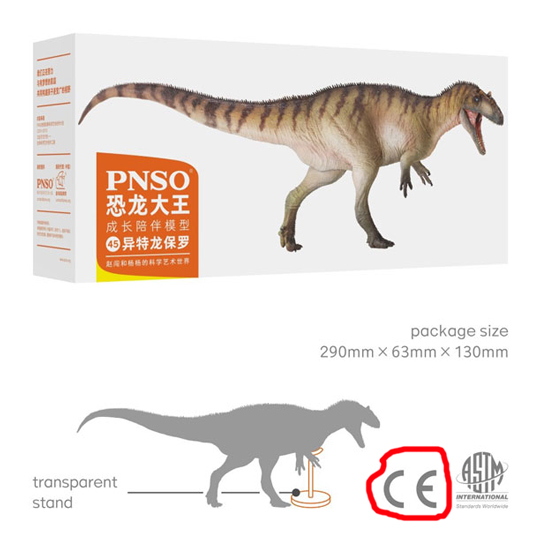
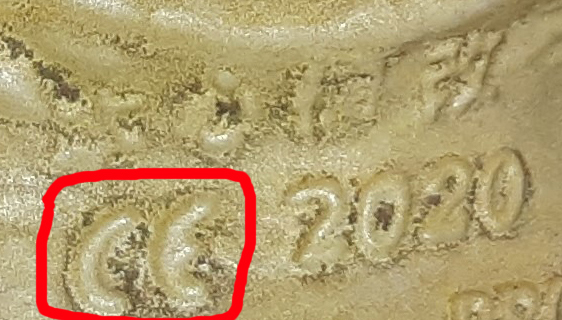
Whether on the model or on the packaging the CE mark provides assurances about how this item was manufactured. The international ASTM symbol is next to the EU CE mark. The ASTM symbol indicates that this model has been made to approved technical standards.
The EU CE mark imprinted on the underside of a dinosaur model. Picture credit: Everything Dinosaur.
Picture credit: Everything Dinosaur
What This Means
This regulation aims to protect customers’ health and safety, the environment and other public interests by improving and modernising market surveillance regulations.
It establishes controls on products imported into the EU. So, if you are buying a dinosaur model and you are based in the EU, then these new rules will apply to your purchases.
Key Points
Products may not be offered for sale to EU consumers without an Economic Operator established in the EU. This element will have a significant impact on on-line marketplaces and e-commerce sites located outside the EU. Unless these non-EU third-party retail companies have economic operators within the EU, they will not be eligible to sell their products in the region.
Until now, economic operators have been divided into four groups: manufacturers, authorised representatives, importers and distributors. The new regulation introduces a new role in the value chain, the Fulfilment Service Provider. The Fulfilment Service Provider is an economic operator, or any natural or legal person performing, in the course of commercial activity, at least two of the following services: warehousing, packaging, addressing and dispatching, without having ownership of the products involved. By outlining this new economic operator role, owners and operators of ecommerce sites will likely bear some of the liability in relation to product compliance and conformity, in the same way as the four existing roles currently do. This means Amazon and eBay sales platforms are covered by these new regulations too!
The Fulfilment Service Provider will be required to take on some of the responsibilities with regards to ensuring that products comply to safety regulations.
How Does this Affect Dinosaur Model Sales?
If you make a purchase from China, USA, the UK or any other country outside the EU for delivery into the EU, than unless someone in the supply chain has taken steps to ensure compliance to (EU) 2019/1020 it is likely that you will not receive your parcel. Getting your money back from the seller is likely to be a challenge too.
Customers of Everything Dinosaur can be assured that the prehistoric animal models and figures supplied by them are compliant with the new regulations. Our parcels will carry the appropriate information to ensure that they are delivered to customers.
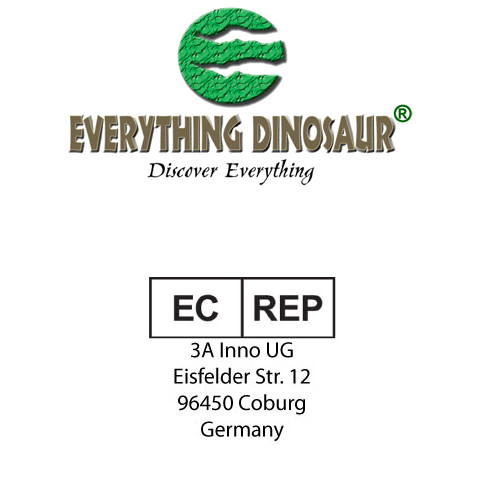
Parcels containing products that we have taken responsible for under these new regulations will carry the contact details of our economic operator within the EU.
Everything Dinosaur ensuring compliance with EU 2019/1020. Picture credit: Everything Dinosaur.
Picture credit: Everything Dinosaur
Everything Dinosaur has registered:
PNSO
Nanmu Studio
ITOY Studio
YvY Figures (Dino Hazard)
GR Toys/Musee
W-Dragon
Beasts of the Mesozoic
Customers can still continue to purchase from Everything Dinosaur – the products Everything Dinosaur sells including those listed above are covered. We are not able to comment on what steps if any, other suppliers have made.
Whilst the UK has not adopted (EU) 2019/1020 this market is governed by the Regulation on Accreditation and Market Surveillance (765/2008) or GB RAMS for short. This regulation comes under the jurisdiction of the UK Govt Office for Product Safety & Standards and it sets out to ensure that any product placed on the market is compliant with safety provisions.
Greater emphasis is being placed on the monitoring of ecommerce sites and more regulations are in place to help protect consumers. When purchasing prehistoric animal models from other companies – be warned. Unless steps have been taken to ensure compliance you may well end up not receiving your model and losing your money.
New research examining the number of different types of non-avian dinosaur roaming the planet 66 million years ago, suggests that these dinosaurs were in decline long before the extra-terrestrial impact that led to their ultimate extinction.
Researchers including Professor Michael Benton (Bristol University), Fabien Condamine and Guillaume Guinot (Université de Montpellier) along with Phil Currie (University of Alberta), compiled an extensive list of dinosaur fossils associated with the last few million years of the Mesozoic. They then subjected the data to sophisticated statistical analysis and concluded that across the six main types of dinosaur studied (three herbivorous groups and three carnivorous groups), the non-avian dinosaurs were in general decline.
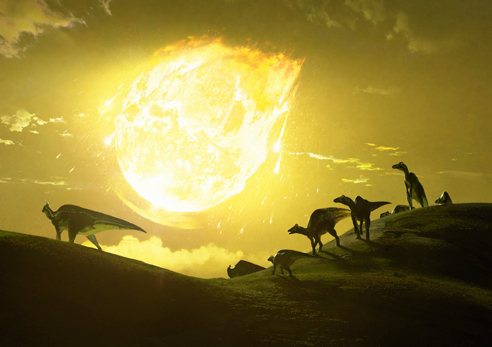
An artist’s impression of the bolide about to impact with the Gulf of Mexico 66 million years ago. New research suggests that the non-avian dinosaurs were in decline long before the extra-terrestrial impact. Picture credit: Chase Stone.
Speciation-extinction Dynamics
The six different types of non-avian dinosaur studied were:
Tyrannosauridae (big meat-eaters such as Tyrannosaurus rex, Gorgosaurus and Daspletosaurus.
Dromaeosauridae – swift predators such as Velociraptor, Zhenyuanlong and Dromaeosaurus.
Troodontidae closely related to the dromaeosaurs – dinosaurs such as Stenonychosaurus and Latenivenatrix.
Ceratopsidae horned dinosaurs such as Triceratops and Pachyrhinosaurus.
Ankylosauridae the club-tailed, armoured dinosaurs such as Euoplocephalus, Scolosaurus and Ankylosaurus.
Hadrosauridae the duck-billed dinosaurs such as Edmontosaurus, Hadrosaurus and Corythosaurus.
The statistical analysis comparing speciation rates to extinction rates revealed that the number of dinosaur species was in steep decline from around 10 million years before the extra-terrestrial impact event.
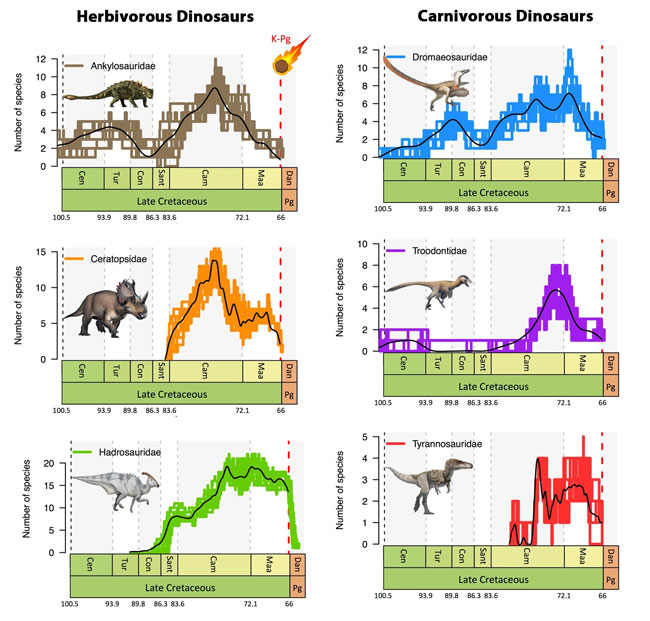
Speciation plotted against extinction rates for six dinosaur families. Dinosaurs were in decline prior to the impact event. Picture credit: Condamine et al.
Global Climate Cooling and the Success of the Hadrosaurs
The sophisticated Bayesian analysis indicates that both herbivorous and carnivorous dinosaurs declined and that this was a world-wide phenomenon. Some types of dinosaur declined sharply towards the end of the Cretaceous, for example the Ankylosauridae and the horned dinosaurs (Ceratopsidae). Of the six families studied, only one family, the Troodontidae shows a very small decline. This decline took place in the last five million years of the Cretaceous.
The team also found a link between the decline of herbivores and the decline of the carnivores. Plant-eaters declined first and this led shortly afterwards to a decline in the genera of meat-eating dinosaurs. It is presumed that the reduction in prey led to the demise of carnivorous dinosaurs.
The reduction in the number of armoured and horned dinosaurs might be linked to the number of hadrosaur species identified. Duck-billed dinosaurs could have outcompeted other herbivores leading to a decline in the total number of herbivore types present in an ecosystem.
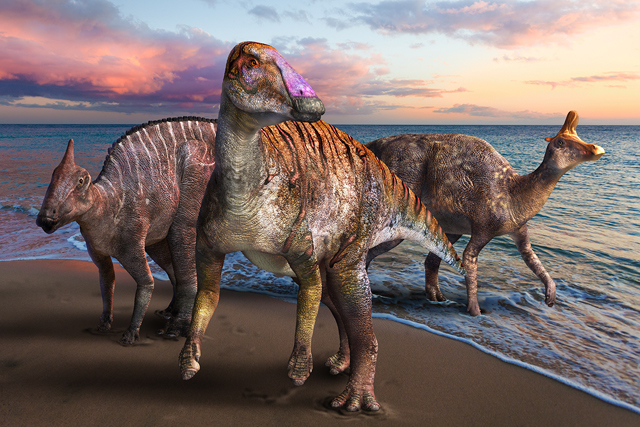
Recent studies indicate that the hadrosaurs evolved in Asia. This group of herbivorous dinosaurs became very speciose and geographically widespread during the Late Cretaceous. It has been suggested that the duck-billed dinosaurs dominated terrestrial ecosystems and outcompeted other types of herbivorous dinosaur. Picture credit: Masato Hattori.
The research team continued conducting a statistical analysis to test theories as to why this decline occurred. They concluded that global cooling could have been a major factor in the extinction of many different types of dinosaur and the reduction in the number of new species evolving to re-populate ecosystems. The Earth cooled by around 7-8 degrees Celsius at the end of the Cretaceous. In contrast, periods of sustained global warming in the Early Cretaceous led to a rise in the diversity of the Dinosauria.
The research showed that all six dinosaur families declined in the number of species in the last few million years before the end of the Mesozoic. Only the Troodontidae showed a marginal decline, but this became more pronounced in the last 5 million years of the Cretaceous. Picture credit: Condamine et al.
The scientific paper: “Dinosaur biodiversity declined well before the asteroid impact, influenced by ecological and environmental pressures” by Fabien L. Condamine, Guillaume Guinot, Michael J. Benton and Philip J. Currie published in Nature Communications.
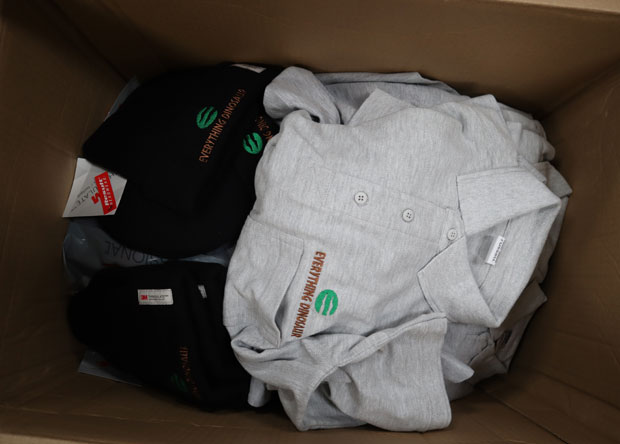
The move into our bespoke offices and warehousing has prompted us to revamp and revise our corporate clothing. Although, very pleasant and cool in the summer, a characteristic of our premises much appreciated by all the couriers and delivery people who visit us, our offices and warehouse are very chilly in winter. When the offices and other facilities were being built in February and March it was noticed that it was very cold. Several layers were required. In the light of this, we have invested in new corporate clothing including beanie hats for team members.
The new Everything Dinosaur beanie hats are proving to be very popular. Picture credit: Everything Dinosaur.
Picture credit: Everything Dinosaur
Incorporating the Everything Dinosaur Logo
The practical workwear includes sweatshirts, polo shirts, shorts and waterproof jackets, all of which will prominently display the Everything Dinosaur logo. We work very long hours and weekends, so we might as well be comfortable and warm especially when picking orders prior to sorting them in the packing room and preparing them for despatch.
Some of the new corporate clothing that arrived at Everything Dinosaur. The range includes polo shirts, shorts, sweatshirts, jackets and beanie hats. Picture credit: Everything Dinosaur.
Picture credit: Everything Dinosaur
Sue from Everything Dinosaur commented that the new clothing was quite smart, practical and sensible and would also prove beneficial when going out fossil hunting. Even the polo shirts had been given pockets – a handy place to store a small fossil if one was spotted whilst walking in a quarry or along a beach.
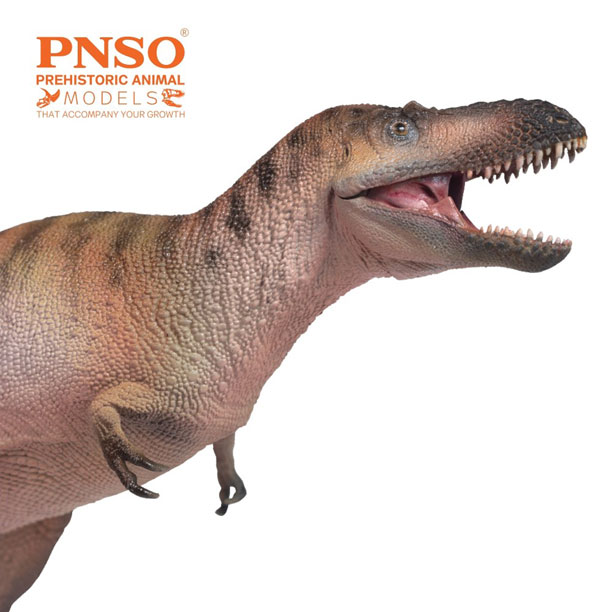
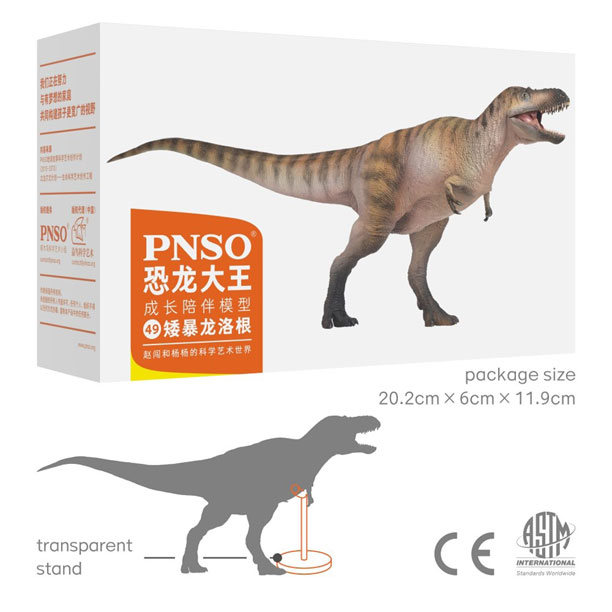
Everything Dinosaur can confirm that PNSO will add a replica of the controversial tyrannosaur Nanotyrannus to their mid-size model range. Logan the Nanotyrannus should be available from Everything Dinosaur in the late summer.
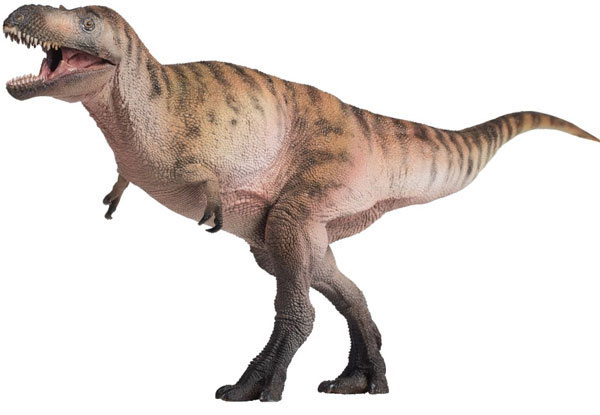
The new for 2021 PNSO Nanotyrannus dinosaur model.
The Controversy over Nanotyrannus
Nanotyrannus lancensis is a disputed taxon, attributed to fossil skeletal and skull specimens that overlapped in time and space with Tyrannosaurus rex. The shape of the skull that was constructed based on the disputed Nanotyrannus material is very different from that of T. rex, but palaeontologists now know that the body shape and skull morphology of the “king of the tyrant lizards” changed dramatically as this predator grew and matured.
PNSO Nanotyrannus
Named and described in 1988 (Bakker et al), based on a slender skull (CMNH 7541) from Lance Formation exposures in Montana, at the time the researchers concluded that the skull represented an adult animal, but this has been refuted by a number of authors since publication.
Like most of the other mid-size PNSO theropod figures, Logan the Nanotyrannus has an articulated lower jaw. The long and slender snout of Nanotyrannus on the PNSO model. Named and described in 1988, fossils assigned to N. lancensis are now believed to represent juvenile specimens of T. rex.
Nanotyrannus Model Measurements
The new for 2021 Nanotyrannus is the latest tyrannosauroid to be added to the PNSO mid-size model range following the introduction of the introduction of A-Shu the Qianzhousaurus and the recent announcements concerning Chuanzi the Tarbosaurus and Yinqi the Yutyrannus which are due to be in stock at Everything Dinosaur very soon (summer 2021).
The model measures 17 cm long and although PNSO does not propose a scale for their mid-size models, team members speculate that based on the original holotype material associated with Nanotyrannus which suggests an animal around 5.2 metres in length, the figure is in approximately 1:30 scale.
PNSO Logan the Nanotyrannus model measurements. The dinosaur figure is approximately 17 cm long with a head height of 6.5 cm.
It Could Represent a Model of a Juvenile T. rex
A spokesperson from Everything Dinosaur stated:
“Whilst this taxon remains is dispute, model collectors and dinosaur fans will be delighted to see a replica of Nanotyrannus come into the PNSO model series. Recently, PNSO has focused on showcasing some of the remarkable fauna associated with the Late Cretaceous of North America and Logan the Nanotyrannus will be a welcome addition. It will no doubt foster a debate about whether Nanotyrannus is a valid genus but after all, this figure could always represent a juvenile T. rex and as such it will work well with the other Tyrannosaurus rex models that PNSO offers”.
A close view of the stunning head, neck and torso of the new for 2021 Nanotyrannus dinosaur model.
Supplied with a Transparent Support Stand
Logan the PNSO Nanotyrannus is supplied with a handy, transparent support stand to aid the replica’s stability when it is on display.
The new PNSO mid-size range Nanotyrannus is supplied with a clear support stand.
The PNSO Logan the Nanotyrannus dinosaur model is expected to be in stock at Everything Dinosaur in the late summer (summer 2021), to view the range of PNSO figures in models currently in stock: PNSO Age of Dinosaurs.
A new study into those bizarre theropods the alvarezsauroids, indicates that they became much smaller in the Late Cretaceous. Newly published research in “Current Biology” suggests that these dinosaurs reduced in size about 95 million years ago when they became specialised insectivores.
The research team, which included PhD student Zichuan Qin and Professor Michael Benton (Bristol University), along with researchers from the Chinese Academy of Sciences, George Washington University (USA) and Jonah N Choiniere from the University of Witwatersrand (South Africa), conclude that the miniaturisation of the alvarezsauroids probably coincided with adaptations to feeding on termites and ants. It has been a busy week for Professor Choiniere, as Everything Dinosaur recently published an article summarising a study of Heterodontosaurus that Professor Choiniere had co-authored: Breathing Life into the Dinosauria.
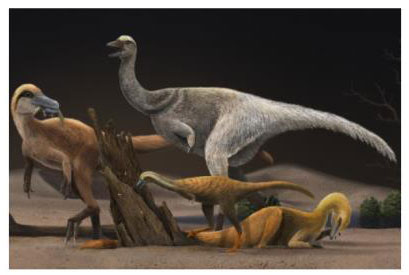
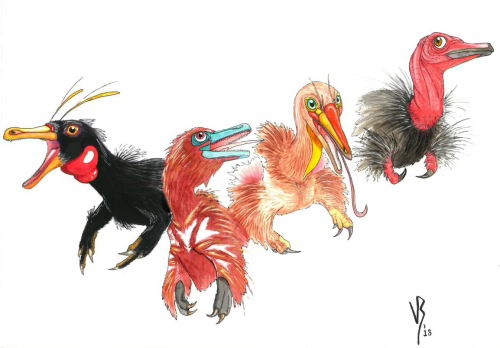
Life reconstruction of four representative alvarezsauroids, Haplocheirus sollers (left), Patagonykus puertai (upper middle), Linhenykus monodactylus (lower middle) and Bannykus wulatensis (lower right), illustrating the body size and dieting change in alvarezsauroid dinosaurs. Picture credit: Zhixin Han.
Miniaturisation in the Dinosauria is Very Rare
The research team define sustained miniaturisation within a group of animals as a drop in body size of at least two orders of magnitude from ancestors to descendants. This trait has been recorded many times in terrestrial vertebrates such as dwarf hippos and elephants, diminutive chameleons and tiny frogs. Miniaturisation is often associated with animals living in environments with limited resources such as islands and as such dwarf forms of dinosaurs associated with “island dwarfism” are known. However, in general terms miniaturisation within the Dinosauria is rare.
Miniaturisation is recorded twice within the Dinosauria:
Once in the avialan theropods as powered flight evolved (the lineage leading to birds).
Once in the Alvarezsauroidea -a bizarre group of dinosaurs nested within the Maniraptora.
Known mainly from China, although fossils have been found in the Americas and Europe, the Alvarezsauroidea had bird-like skeletons with many derived species having significantly reduced front limbs and digits. The oldest and most primitive alvarezsauroids are known from the early Late Jurassic Shishugou Formation of north-western China. Picture credit: Viktor Radermacher.
Measuring Alvarezsaurs and Calculating their Age
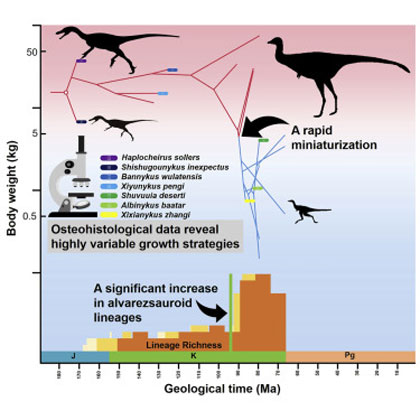
The scientists measured the fossilised remains of dozens of these dinosaurs and assessed bone histology to separate juvenile, not fully grown specimens from adult fossil remains. They demonstrated that alvarezsaurs ranged in size from about 10 kilograms up to 70 kilograms for most of their evolutionary history, but from about 95 million years ago, very much smaller, chicken-sized forms, weighing less than 5 kilograms evolved. This miniaturisation coincided with these dinosaurs adopting a more specialised diet, that of consuming ants and termites.
Study shows a rapid Late Cretaceous alvarezsauroid miniaturisation and radiation. Picture credit: Bristol University.
Professor Michael Benton commented:
“Perhaps competition with other dinosaurs intensified through the Cretaceous. The Cretaceous was a time of rapidly evolving ecosystems and the biggest change was the gradual takeover by flowering plants. Flowering plants changed the nature of the landscape completely, and yet dinosaurs mostly did not feed on these new plants. But they led to an explosion of new types of insects, including ants and termites”.
The Cretaceous Terrestrial Revolution
The rapid evolution of flowering plants (angiosperms), led to a dramatic change in ecosystems with modern-looking woodlands and forests evolving with a diverse flora and fauna, including an enormous increase in insects that specialised on feeding on the leaves, nectar, petals and pollen of the flowering plants. This restructuring of ecosystems has been called the Cretaceous Terrestrial Revolution.
Whilst most other types of dinosaurs got bigger as they evolved, the alvarezsaurs seem to be the exception. When the first of these bizarre theropods evolved some of them were ostrich-sized, such as Haplocheirus, with sharp teeth and strong, flexible forelimbs suggesting a mixed and varied diet. However, from about 95 million years ago, body size plummeted and claw shapes changed from grabbing and tearing types to more robust forms. Arms became reduced as did the number of digits.
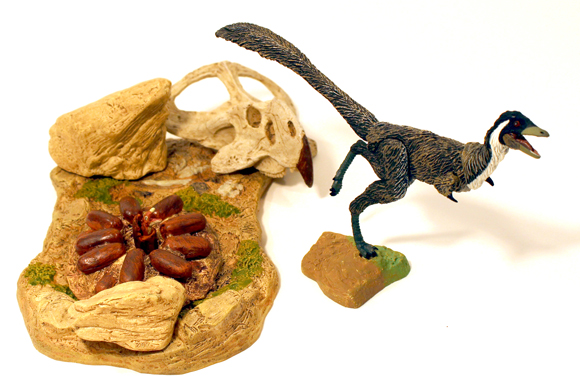
Mononykus (M. olecranus) typifies the Late Cretaceous alvarezsaurids. It roamed southern Mongolia around 70 million years ago and it measured about a metre in length and weighed around 3.5 kilograms. The forelimbs of Mononykus were tiny and they terminated in a hand that had just one digit topped with a very robust probe-like claw. This claw seems ideally suited to punching holes in termite mounds.
The assembled Beasts of the Mesozoic Desert Accessory Pack featuring Mononykus.
The image (above) shows the Beasts of the Mesozoic Desert set which features Mononykus.
The Second Case of Miniaturisation within the Dinosauria
Whilst most scientists accept the link between getting smaller and the evolution of powered flight within the branch of the Dinosauria leading to the evolution of birds, not much research had been undertaken into alvarezsauroid miniaturisation.
Professor Xing Xu (Chinese Academy of Sciences), a co-author of the study added:
“This is a very strange result, but it seems to be true. All other dinosaurs were getting bigger and bigger, but one group of flesh-eaters miniaturised and this was associated with living in trees and flying. They eventually became birds. We’ve identified a second miniaturisation event – but it wasn’t for flight, but to accommodate a completely new diet, switching from flesh to termites.”
The scientific paper: “Growth and miniaturization among alvarezsauroid dinosaurs” by Zichuan Qin, Qi Zhao, Jonah N. Choiniere, James M. Clark, Michael J. Benton and Xing Xu published in Current Biology.
A beautifully preserved and almost complete fossil specimen of the early ornithischian Heterodontosaurus (H. tucki) has provided palaeontologists with a fresh perspective on how bird-hipped dinosaurs breathed.
An international team of scientists including Richard Butler, a professor of palaeobiology at the University of Birmingham, Jonah Choiniere, a professor of comparative palaeobiology at the University of the Witwatersrand, South Africa, Kimberley Chapelle, a postdoctoral fellow at the American Museum of Natural History (New York), subjected the 200-million-year-old fossil to a series of extremely powerful X-rays courtesy of the European Synchrotron Radiation Facility (ESRF) in Grenoble, (France).
The data from these scans permitted the researchers to construct computer models reassembling the skeleton in unprecedented detail and to learn how this dinosaur breathed.
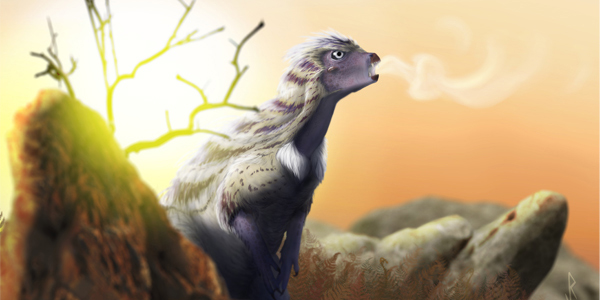
A life reconstruction of the early ornithischian Heterodontosaurus – its breath shows as a vapour trail in the early morning light. Picture credit: University of Witwatersrand.
Getting to Understand the Unique Ornithischian Dinosaurs
Vertebrates like reptiles, birds and mammals all move air through their lungs in different ways. Mammals like us have a diaphragm, whilst lizards use rib movements to help them move air through their lungs. Birds have another, very different respiratory system which is more efficient than our own. Birds have thin-walled air sacs connected to their lungs. These air sacs fill a considerable portion of the body cavity. They are not involved directly in gas exchange but function as bellows to direct airflow through the lungs in one direction, from back to front. This increases lung efficiency. To read an article from 2007 that examines how non-avian dinosaurs might have breathed: Dinosaur Breathing Study.
This study showed that Heterodontosaurus was using its oddly shaped ribs connected to its sternum to breathe, but that it also showed the first steps towards a muscle attached to the hips that would inflate the lung – similar to how crocodiles breathe.
Each of the blocks making up the Heterodontosaurus fossil material (AM 4766) were scanned by the synchrotron and then the skeleton was digitally recreated with a focus on the trunk. Gastralia ribs are shown in blue. Picture credit: Viktor Radermacher.
Lead author of the scientific study published in the journal eLife, Viktor Radermacher (PhD student in the University of Minnesota’s Department of Earth and Environmental Sciences), commented:
“This specimen represents a turning point in understanding how dinosaurs evolved”.
Heterodontosaurus Fossil Discovered in 2009
The specimen, representing a sub-adult Heterodontosaurus was discovered in 2009, eroding out of a riverbed. It is the most complete Heterodontosaurus fossil known to science. The surrounding matrix is very hard, so removal of the individual bones was not possible, but employing extremely powerful X-rays allows the scientists to peer inside the matrix and reconstruct the anatomy of this dinosaur.
In 2016, the fossil of the turkey-sized dinosaur was transported to the ESRF for a week-long study. Huge amounts of data on this early member of the Ornithischia were compiled: Heterodontosaurus visits the European Synchrotron.
The Distinctive and Successful Ornithischia
Described in 1962, Heterodontosaurus is thought to one of the most primitive members of the Ornithischia (bird-hipped dinosaurs), although the exact taxonomic placement of the Heterodontosauridae is still debated and their early evolution remains obscure. Ornithischian dinosaurs include the armoured dinosaurs, pachycephalosaurs, ceratopsians and the ornithopods – which encompasses such well-known dinosaurs as Iguanodon and the duck-billed dinosaurs.
Research team member Richard Butler (Birmingham University), explained the importance of this study:
“We’ve long known that the skeletons of ornithischian dinosaurs were radically different from those of other dinosaurs. This amazing new fossil helps us understand why ornithischians were so distinctive and successful”.
Not All Dinosaurs Breathed in the Same Way
The research revealed that Heterodontosaurus possessed numerous gastralia (belly ribs), the first time this anatomical feature has been found in an ornithischian and several other, unique autapomorphies (characteristics), that are unknown in other bird-hipped dinosaurs. For example, it had paddle-shaped sternal ribs and a forward projecting sternum. The team concluded that this suite of anatomical features enabled Heterodontosaurus to breathe in a different way when compared to other members of the Dinosauria. Heterodontosaurus forced air into its lungs by expanding both its belly and chest.
Lead author Viktor Radermacher stated:
“We have actually never known how these ornithischians breathed. The interesting thing is that Heterodontosaurus is the ancestor of this group and it has these [newly discovered] pieces of anatomy, but its descendants don’t. What that means is that Heterodontosaurus is a missing link between the ancestors of dinosaurs and the bigger, charismatic species we know. This gives us a whole bunch of information and fills in some pretty glaring gaps in our knowledge of the biology of these dinosaurs.”
Lead author of the research, University of Minnesota PhD student Viktor Radermacher, poses next to some skull casts and dinosaur models that represent suborders of the Ornithischia. Picture credit: Sebastian Alfonzo.
Different Solutions to the Need to Breathe
Viktor Radermacher explained that this research demonstrates that there is still a lot to learn about the Dinosauria and that many different types of tetrapod evolved different solutions when it came to getting oxygen to their muscles.
He added:
“The takeaway message is that there are many ways to breathe. The really interesting thing about life on Earth is that we all have different strategies to do the same thing, and we’ve just identified a new strategy of breathing. This shows that utilising dinosaurs and palaeontology, we can learn more about the diversity of animals on Earth and how they breathe.”
The scientific paper: “A new Heterodontosaurus specimen elucidates the unique ventilatory macroevolution of ornithischian dinosaurs” by Viktor J Radermacher, Vincent Fernandez, Emma R Schachner, Richard J Butler, Emese M Bordy, Michael Naylor Hudgins, William J de Klerk, Kimberley E J Chapelle and Jonah N Choiniere published in eLife.
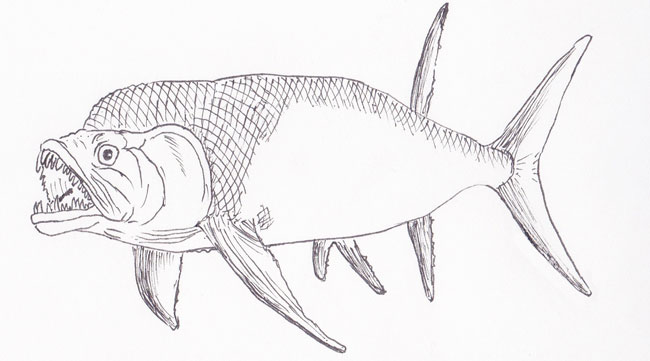
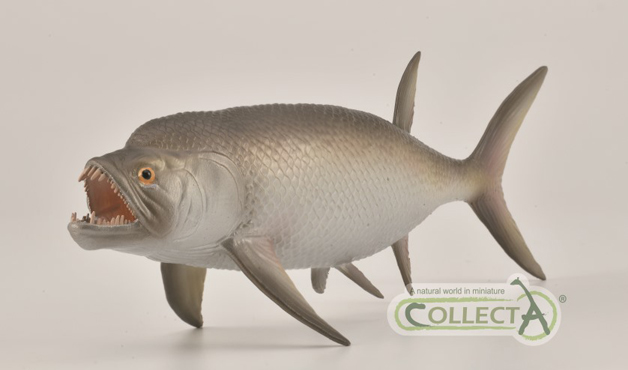
A few days ago, Everything Dinosaur published a drawing of the marine reptile Elasmosaurus that we had commissioned. Today, we publish an illustration of the monstrous prehistoric fish that was a contemporary of Elasmosaurus, another resident of “Hell’s Aquarium” otherwise known as the Western Interior Seaway. The fish is Xiphactinus and we have commissioned an illustration of this predator as we prepare for the arrival of the 1:40 scale CollectA Deluxe Xiphactinus replica in a few weeks’ time.
The Xiphactinus drawing that was commissioned by Everything Dinosaur as the company prepares for the arrival of the CollectA Deluxe Xiphactinus 1:40 scale replica. Picture credit: Everything Dinosaur.
Picture credit: Everything Dinosaur
Xiphactinus “Sword Ray”
Xiphactinus was a large, bony fish that was both geographically and temporally widespread. The genus name is from the Latin and Greek and translates as “sword ray”, with some specimens over six metres in length, this was one very voracious predator and prehistoric animal model collectors have been keen to get a figure of Xiphactinus introduced into a mainstream model series.
The CollectA Deluxe 1:40 scale Xiphactinus prehistoric fish model. A fantastic replica of a very formidable marine predator.
A spokesperson from Everything Dinosaur commented that this prehistoric fish figure, along with the other remaining new for 2021 CollectA prehistoric animal figures should be in stock at Everything Dinosaur in August or thereabouts.
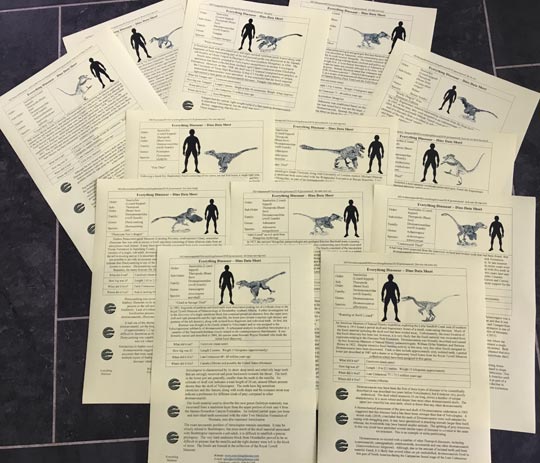
The spokesperson went onto explain that the Xiphactinus (pronounced Zee-fak-tin-us), drawing would be used in a fact sheet that would be sent out with purchases of this CollectA model.
A collection of fact sheets created by Everything Dinosaur. These fact sheets are sent out free of charge to accompany sales of prehistoric animal models and figures. Picture credit: Everything Dinosaur.
Picture credit: Everything Dinosaur
Xiphactinus and Elasmosaurus
As well as being contemporaries in the marine biota of the Western Interior Seaway, Everything Dinosaur expects these two models to arrive at their UK warehouse at the same time. These figures will no doubt provide double delight for fans of marine monsters.