All about dinosaurs, fossils and prehistoric animals by Everything Dinosaur team members.

Pictures of fossils, fossil hunting trips, fossil sites and photographs relating to fossil hunting and fossil finds.

25 07, 2022

New Research Identifies Earliest Known Animal Predator

By |2024-03-09T14:34:55+00:00July 25th, 2022|Categories: Adobe CS5, Dinosaur and Prehistoric Animal News Stories, Main Page, Palaeontological articles, Photos/Pictures of Fossils|0 Comments

Scientists have announced the discovery of what might possibly be the earliest known animal predator. The fossils discovered in Charnwood Forest (Leicester, England), are estimated to be around 560 million years old and the animal has been named Auroralumina attenboroughii in honour of Sir David Attenborough.

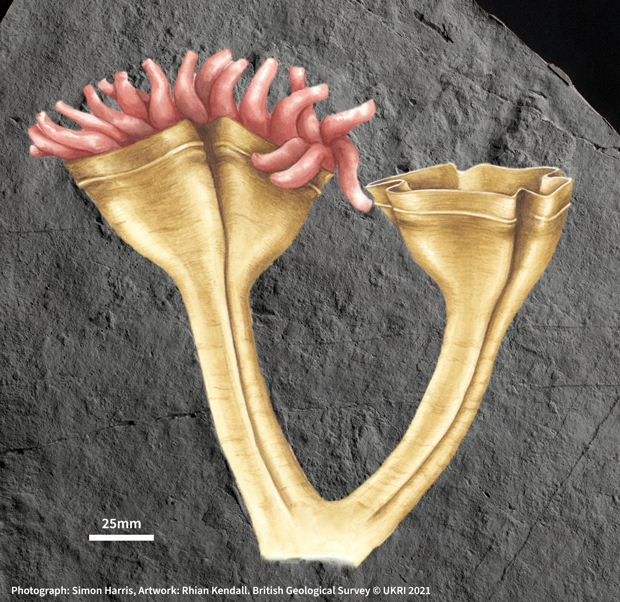
A life reconstruction of Auroralumina attenboroughii
A life reconstruction of Auroralumina attenboroughii superimposed on the fossil material. Picture credit: BGS @ UKRI.

Attenborough’s Dawn Lantern

As a boy, Sir David Attenborough used to collect fossils from various locations close to his Leicestershire home. However, he never went to Charnwood Forest to hunt for fossils as the rocks exposed in that area were thought to be too old to contain signs of life.

In the late 1950s, another young boy, Roger Mason found a strange frond-like impression in a rock. Researchers identified this as the fossilised remains of a bizarre organism, later named Charnia masoni, which forms part of an ancient ecosystem that existed prior to the Cambrian.

This newly described organism Auroralumina attenboroughii honours Sir David Attenborough. The first part of its name is Latin for “dawn lantern”, in recognition of its great age and the organism’s resemblance to a burning torch.

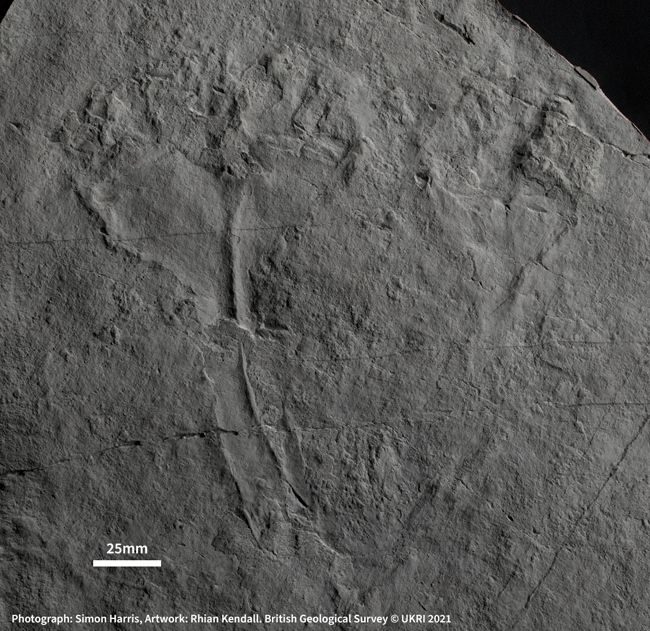
Auroralumina attenboroughii fossil.
Auroralumina attenboroughii fossil imprint preserved in the rock. Picture credit: BGS @ UKRI.

Related to Corals, Jellyfish and Anemones

The geological period known as the Ediacaran precedes the Cambrian. The Ediacaran spans an immense amount of deep time, from approximately 635 million years ago, to the beginning of the Cambrian around 540 million years ago. In some parts of the world, notably the Mistaken Point Ecological Reserve on the south-eastern coast of Newfoundland, Namibia, Guizhou Province (China), Charnwood Forest and the Flinders Ranges of South Australia, ancient sedimentary rocks preserve the remains of the oldest, complex multi-cellular organisms known to science.

Most of the Ediacaran biota bears little resemblance to fossils associated with younger Cambrian-aged strata, A. attenboroughii is an exception, the research team postulate that the fossils represent an ancestor of today’s corals, jellyfish and anemones – the Cnidaria phylum.

Auroralumina attenboroughii line drawing.
The fossil imprint of the newly described Auroralumina attenboroughii with a line drawing on the matrix to show features. Picture credit: BGS @ UKRI.

“Truly Delighted”

Naturalist, campaigner and broadcaster Sir David Attenborough stated that he was “truly delighted” with his ancient namesake.

He added:

“When I was at school in Leicester, I was an ardent fossil hunter. The rocks in which Auroralumina has now been discovered were then considered to be so ancient that they dated from long before life began on the planet. So, I never looked for fossils there.

A few years later a boy from my school found one [Roger Mason] and proved the experts wrong. He was rewarded by his name being given to his discovery. Now I have – almost – caught up with him and I am truly delighted.”

The scientific paper has been published in the journal “Nature Ecology & Evolution”. This discovery challenges perceptions as to when modern groups of animals, or their direct ancestors first evolved.

Commenting on the significance of this fossil find, one of the authors of the paper, Dr Phil Wilby (palaeontology leader at the British Geological Survey), explained:

“It’s generally held that modern animal groups like jellyfish appeared 540 million years ago in the Cambrian explosion. But this predator predates that by 20 million years. It’s the earliest creature we know of to have a skeleton. So far we’ve only found one, but it’s massively exciting to know there must be others out there, holding the key to when complex life began on Earth.”

A Geological Spring Clean

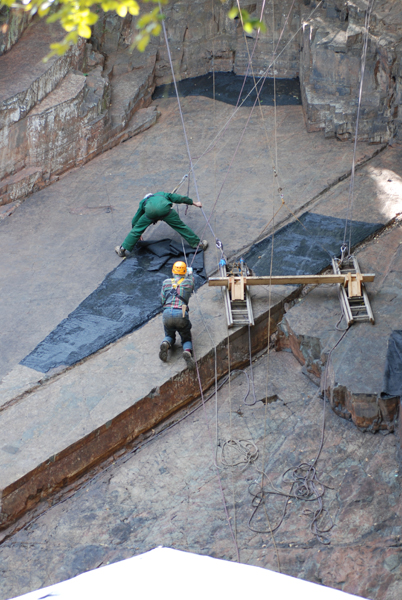
In 2007, Dr Wilby and his colleagues spent over a week carefully cleaning a 100 square metres of a rock surface exposed in the Forest. A variety of tools including pressure hoses and toothbrushes were used to spring clean deposits that were laid down at the bottom of a deep sea more than half a billion years ago.

A rubber mould of the whole surface was then taken, capturing the preserved impressions of more than a thousand fossils.

Geologists at work.
Geologists cleaning and mapping the rockface in the Charnwood Forest (Leicester, England). Picture credit: BGS @ UKRI.

One Fossil Specimen Stood Out

Co-author of the scientific paper, Dr Frankie Dunn (Oxford University Museum of Natural History), explained that one fossil impression stood out from the rest, commenting that it looked very different from the other Ediacaran fossils (Charnia masoni and Bradgatia linfordensis) preserved on the same bedding plane.

Dr Dunn commented that Auroralumina:

“Is very different to the other fossils in Charnwood Forest and around the world. Most other fossils from this time have extinct body plans and it’s not clear how they are related to living animals. This one clearly has a skeleton, with densely-packed tentacles that would have waved around in the water capturing passing food, much like corals and sea anemones do today. It’s nothing like anything else we’ve found in the fossil record at the time.”

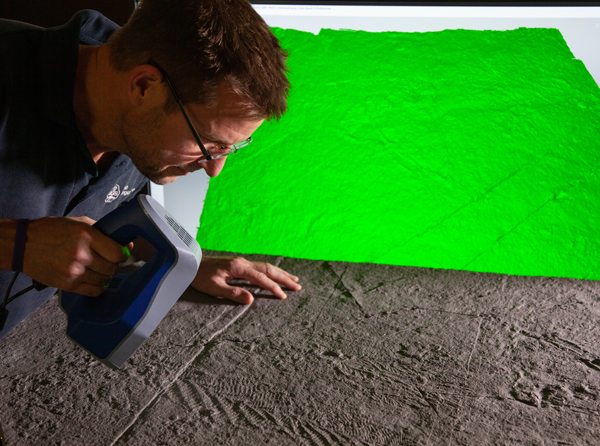
Dr Wilby scans the fossil.
Palaeontologist Dr Phil Wilby using a 3D laser scanner to create a detailed record of the fossil. Picture credit: BGS @ UKRI.

A Lonely Fossil

Dr Dunn calls the single Auroralumina specimen a “lonely little fossil” and suggest it probably inhabited much shallower marine environments compared to rest of the Charnwood Forest biota.

She added:

“The ancient rocks in Charnwood closely resemble ones deposited in the deep ocean on the flanks of volcanic islands, much like at the base of Montserrat in the Caribbean today. All of the fossils on the cleaned rock surface were anchored to the seafloor and were knocked over in the same direction by a deluge of volcanic ash sweeping down the submerged foot of the volcano, except one, A. attenboroughii. It lies at an odd angle and has lost its base, so appears to have been swept down the slope in the deluge.”

Zircon minerals associated with the volcanic deposits permitted the researchers to accurately age the fossil based on radioactive decay measurements relating to uranium/lead ratios.

Potentially the Earliest Known Animal Predator

Dr Frankie Dunn said:

“The Cambrian Explosion was remarkable. It’s known as the time when the anatomy of living animal groups was fixed for the next half a billion years. Our discovery shows that the body plan of the cnidarians was fixed at least 20 million years before this, so it’s hugely exciting and raises many more questions.”

Nonagenarian Sir David Attenborough has been honoured on numerous occasions by having newly described extinct creatures named after him. However, arguably the lonely, little Auroralumina attenboroughii may represent the most significant, as it challenges existing perceptions about when animal body plans still found today, first evolved.

Everything Dinosaur acknowledges the assistance of a media release received via email on 26th July in the compilation of this article.

Visit Everything Dinosaur’s website: Everything Dinosaur.

The scientific paper: “A crown-group cnidarian from the Ediacaran of Charnwood Forest, UK” by F. S. Dunn, C. G. Kenchington, L. A. Parry, J. W. Clark, R. S. Kendall and P. R. Wilby published in Nature Ecology & Evolution.

22 07, 2022

Australia’s First Vulture – Hiding in Plain Sight

By |2023-02-07T12:55:44+00:00July 22nd, 2022|Categories: Adobe CS5, Dinosaur and Prehistoric Animal News Stories, Main Page, Palaeontological articles, Photos/Pictures of Fossils|0 Comments

Today, Australia has no vultures, but in the Pleistocene Epoch it did. Researchers have reclassified fossil remains and identified Australia’s first fossil vulture. The bird, which probably stood around one metre tall, has been named Cryptogyps lacertosus. The scientific name translates as “powerful hidden vulture”, reflecting the fact that its fossils had been hiding in plain sight for more than a hundred years.

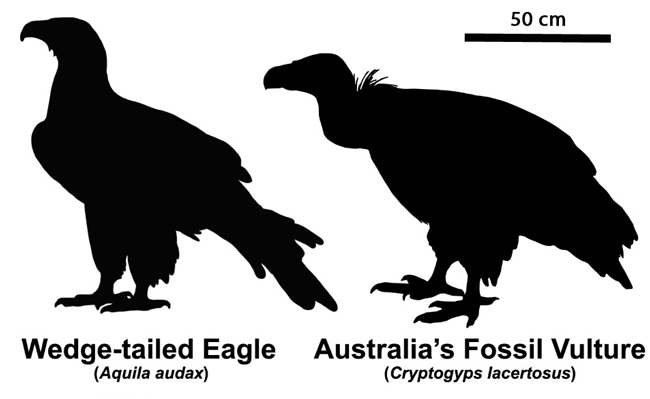
Vulture Cryptogyps compared to Aquila audax.
A silhouette of the newly described Australian vulture Cryptogyps lacertosus which lived in Australia until around 50,000 years ago. C. lacertosus (right) is compared to Aquila audax, the Wedge-tailed eagle which is Australia’s largest extant bird of prey. Wedge-tailed eagles often scavenge carcasses and are frequently observed feeding on kangaroo corpses and other animals killed in roadside collisions. The Wedge-tailed eagle is filling the ecological niche once filled by the extinct C. lacertosus. Picture credit: Ellen Mather, Flinders University Palaeontology Lab with additional annotation by Everything Dinosaur.

Fossil Vulture Hiding in Plain Sight

Researchers from Flinders University and the South Australian Museum writing in the academic journal “Zootaxa” have reassessed fossil material first described by the English ornithologist Charles Walter de Vis in 1905 and named as “Taphaetus lacertosus”. The ornithologist thought the partial humerus and fragmentary skull bones found in north-eastern South Australia represented an ancient eagle and he named the bird “powerful grave eagle”.

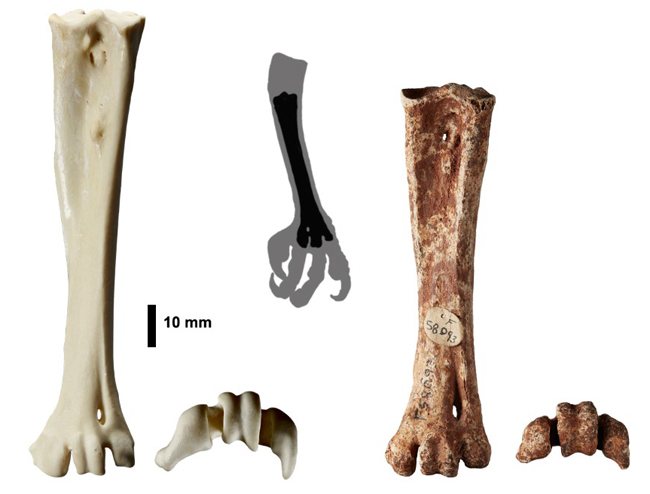
The scientists were able to study fossils from the Wellington Caves of New South Wales and material recovered from the Nullarbor Plain of Western Australia including a lower leg bone (tarsometatarsus), which when compared to the lower leg bones of living birds of prey, it became clear that the fossil tarsometatarsus did not support the musculature required to despatch prey.

Eagle lower leg bone compared to fossil vulture.
Comparisons of the tarsometatarsi of wedge-tailed eagle (lower right) and Cryptogyps (lower left), with position of tarsometatarsi shown in the leg (centre, based on illustration by Jollie, 1977). Picture credit: Dr Ellen Mather (Flinders University Palaeontology Lab.

Lead author of the paper, Dr Ellen Mather (Flinders University) commented:

“We compared the fossil material to birds of prey from around the world, and it became clear right away that this bird was not adapted to being a hunter, and so it was not a hawk or an eagle.”

A Phylogenetic Analysis

A phylogenetic analysis placed C. lacertosus within the subfamily Aegypiinae, making it an Old World Vulture related to extant birds found in Africa, Asia and Europe. The identification of Cryptogyps lacertosus as an Old World Vulture significantly expands the palaeogeographical range of the Old World vultures, previously unknown in Australia and indeed, there are no vultures in Australia today.

Given the megafauna that existed on the continent until very recently, giant kangaroos, flightless thunder birds, huge wombats such as Diprotodon and the enormous monitor lizard Megalania, the presence of vultures in the Pleistocene ecosystem had been predicted.

Everything Dinosaur acknowledges the assistance of a media release from Flinders University in the compilation of this article.

The scientific paper: “A new look at an old Australian raptor places “Taphaetus” lacertosus de Vis 1905 in the Old World vultures (Accipitridae: Aegypiinae)” by Ellen K. Mather, Michael S. Y. Lee and Trevor H. Worthy published in Zootaxa.

18 07, 2022

The Eotyrannus Monograph – A New Scientific Paper

By |2024-04-13T08:05:18+01:00July 18th, 2022|Categories: Adobe CS5, Dinosaur and Prehistoric Animal News Stories, Dinosaur Fans, Main Page, Palaeontological articles, Photos/Pictures of Fossils|0 Comments

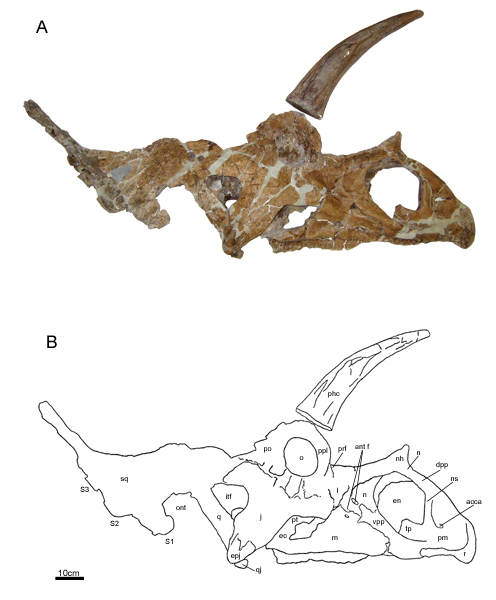
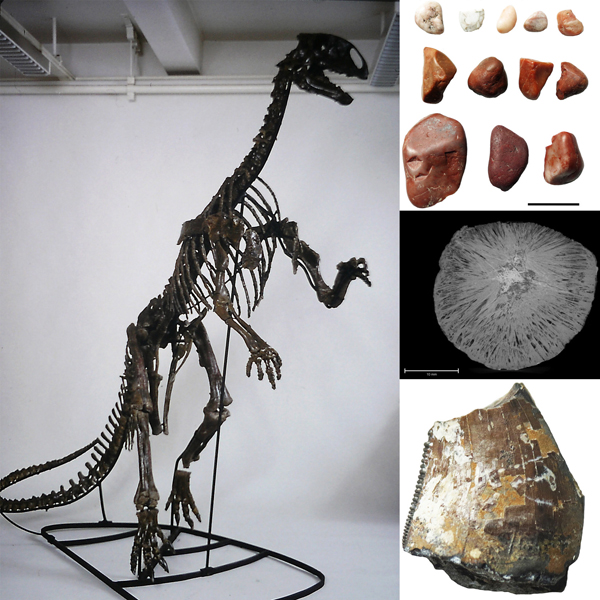
A new scientific paper on the Early Cretaceous tyrannosauroid Eotyrannus lengi has been published. It is confirmed as a valid genus and the phylogenetic assessment places the enigmatic Megaraptora clade within the Tyrannosauroidea superfamily.

First named and scientifically described back in 2001 (Hutt et al), Eotyrannus is helping to provide significant insights into the early evolution of tyrannosauroids as well as potentially redefining how enigmatic “megaraptors” such as Australovenator, Megaraptor and the recently described Maip macrothorax fit within the Theropoda.

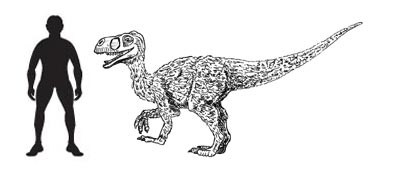
Eotyrannus scale drawing.
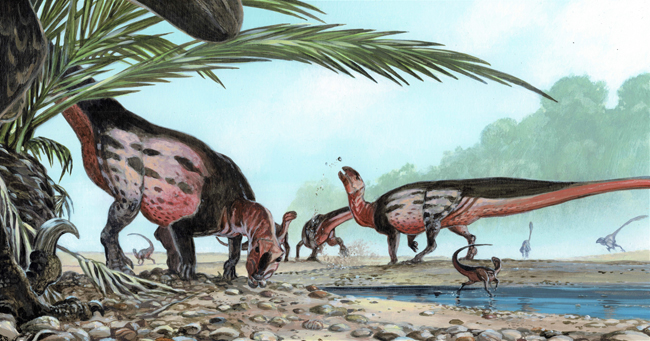
Isle of Wight tyrannosauroid (E. lengi). The recently published monograph (Naish and Cau) supports the earlier hypothesis that this dinosaur had proportionately long arms and a rectangular snout. The holotype specimen (IWCMS: 1997.550) indicates an animal around 4.5 metres in length. However, these fossils represent a sub-adult and the fully-grown, adult size of this Early Cretaceous predator remains undetermined.

The Carnivorous Dinosaurs of the Wessex Formation

Since the first fossils of Eotyrannus were found (1997), this theropod has attracted a lot of scientific interest. It is one of numerous carnivorous dinosaurs associated with the Wessex Formation (part of the Wealden Supergroup), indeed, back in 2021 we blogged about two new members of the Baryonychinae named and described from fossil remains found on the Isle of Wight (Wessex Formation). Last month, we wrote about an even bigger predator, an as yet, unnamed spinosaurid known as the “White Rock spinosaurid”.

For the article on the recently described baryonychids Ceratosuchops inferodios and Riparovenator milnerae: Two New Spinosaurids from the Isle of Wight.

To read about the Isle of Wight “White Rock spinosaurid”: Super-sized Isle of Wight Carnivorous Dinosaur.

The newly published paper provides further information on Eotyrannus autapomorphies (characteristic traits) that help to distinguish it from the often, fragmentary remains of other theropods associated with the Wessex Formation.

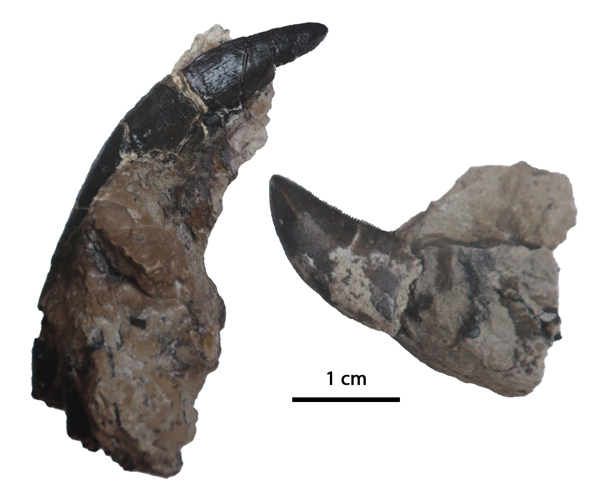
Eotyrannus teeth.
Isolated Eotyrannus teeth from the Wessex Formation.

Deciphering the Fossil Evidence

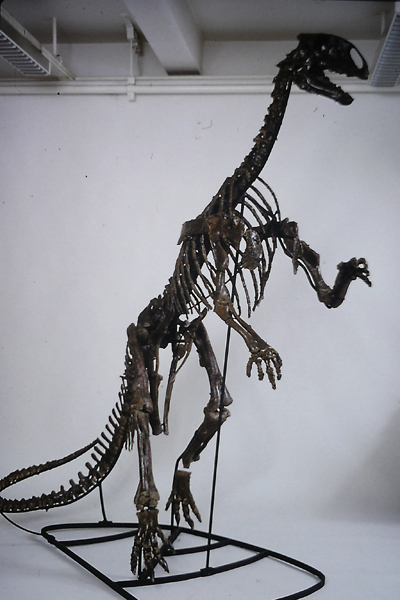
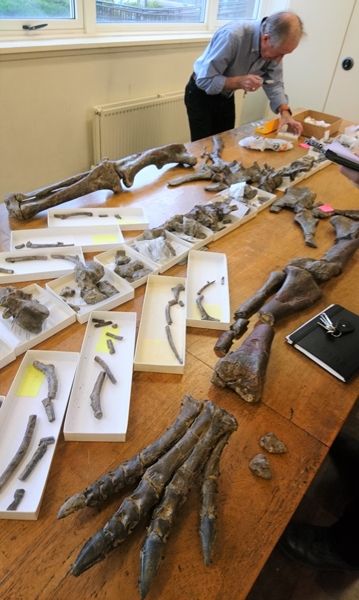
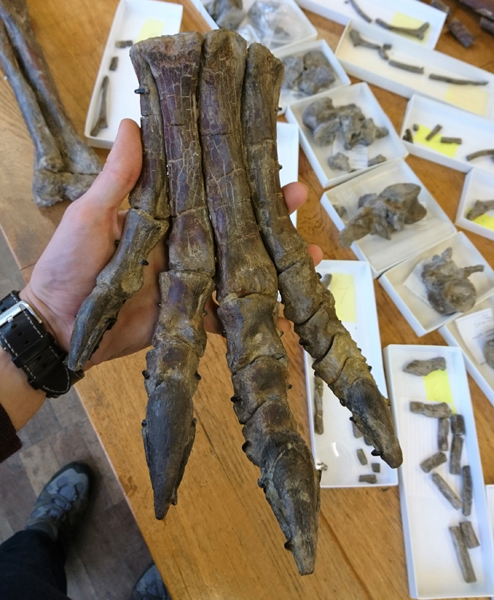
Many of the fossil bones associated with the Eotyrannus genus remain entombed in their concrete-like matrix. Anatomical traits helping to define and classify this dinosaur are only beginning to emerge and there is a substantial amount of further preparation work required to permit a comprehensive analysis.

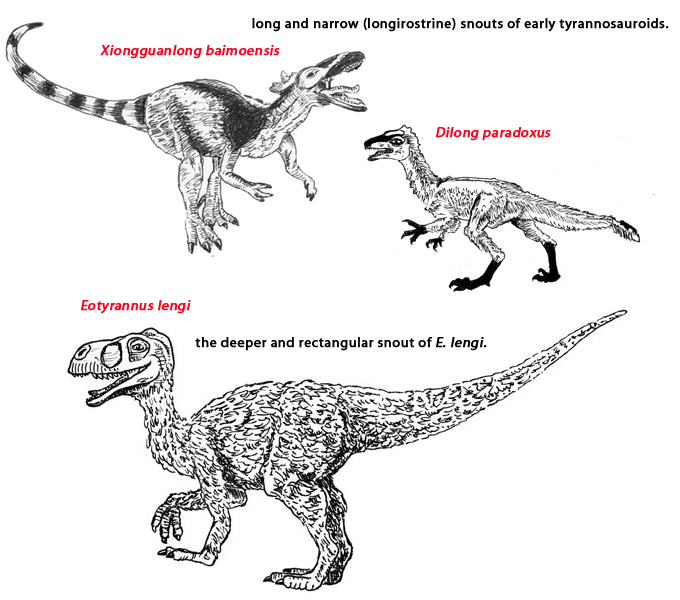
However, by combining all the new data since the formal description, the authors (Darren Naish and Andrea Cau) were able to produce a new skeletal reconstruction. The maxilla is confirmed as being quite rectangular in shape. Eotyrannus did not have the long, narrow snout (longirostrine) as seen in other early tyrannosauroids such as Dilong and Xiongguanlong from the Early Cretaceous of China. This suggests that longirostry evolved several times within the Tyrannosauroidea, perhaps in response to adaptations to permit these theropods to exploit a particular predatory niche.

Longirostry in Early Members of the Superfamily Tyrannosauroidea
Longirostry (having a long, narrow snout) in early members of the Tyrannosauroidea. Eotyrannus is confirmed as not exhibiting longirostry.

Where do the Megaraptora Fit?

The scientific paper also incorporated a revised phylogenetic analysis of Eotyrannus. No significant support was found for Eotyrannus having a close evolutionary relationship to Juratyrant (J. langhami), known from the Late Jurassic of Dorset or indeed to the Late Jurassic early tyrannosauroid Stokesosaurus (S. clevelandi) from the western United States.

Instead, it is grouped with gracile, mid-sized tyrannosauroids that represent a more derived state than proceratosaurids, stokesosaurs and Juratyrant.

If megaraptoran dinosaurs are tyrannosauroids and therefore coelurosaurs, then this challenges long-held views on Theropoda classification and suggests that after the Early Cretaceous most of the hypercarnivore niches within dinosaur dominated ecosystems were increasingly occupied by coelurosaurs. It also suggests that tyrannosauroids were much more diverse and widespread during the Cretaceous than previously thought.

Eotyrannus remains a fascinating dinosaur, a genus that has led to new insights into the evolution and radiation of the Theropoda. It offers a tantalising glimpse into the ecology represented by the Wessex Formation deposits and how a mid-sized theropod co-existed with other, larger members of the ever-widening collection of Wessex Formation meat-eating dinosaurs.

Everything Dinosaur Helping to Fund Research

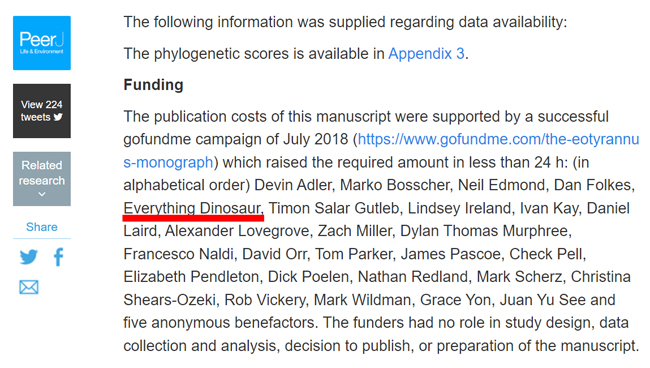
The authors wanted to make their paper available to everyone. To do this they set up a GoFundMe campaign to cover publishing costs. Everything Dinosaur assisted with the funding.

A spokesperson from Everything Dinosaur stated:

“We were happy to support this excellent paper and we helped to make such studies possible. Your purchases from Everything Dinosaur genuinely help science”.

Everything Dinosaur helping to fund research.
Team members at Everything Dinosaur were happy to assist with funding a newly published paper on the early tyrannosauroid Eotyrannus lengi.

The scientific paper: “The osteology and affinities of Eotyrannus lengi, a tyrannosauroid theropod from the Wealden Supergroup of southern England” by Darren Naish and Andrea Cau published in PeerJ.

8 07, 2022

Meraxes gigas – New Giant Carcharodontosaurid from Argentina

By |2022-10-20T12:45:06+01:00July 8th, 2022|Categories: Adobe CS5, Dinosaur and Prehistoric Animal News Stories, Dinosaur Fans, Main Page, Palaeontological articles, Photos/Pictures of Fossils|0 Comments

A new giant, Late Cretaceous predatory dinosaur has been named based on fossils found in Argentina. The dinosaur, assigned to the Carcharodontosauridae has been named Meraxes gigas and its fossilised remains represent the most complete carcharodontosaurid specimen found to date in the Southern Hemisphere.

The giant, South American predatory dinosaur Giganotosaurus which featured in the latest instalment of the “Jurassic Park/Jurassic World” movie franchise is just one of a poorly known group of theropod dinosaurs that were the apex predators in many terrestrial environments during the Cretaceous. Although, most dinosaur fans can name many carcharodontosaurids, these meat-eaters remain enigmatic and most genera have been described based on fragmentary remains. All that has changed with the publication of a scientific paper describing Meraxes gigas from the Upper Cretaceous Huincul Formation of northern Patagonia (Argentina).

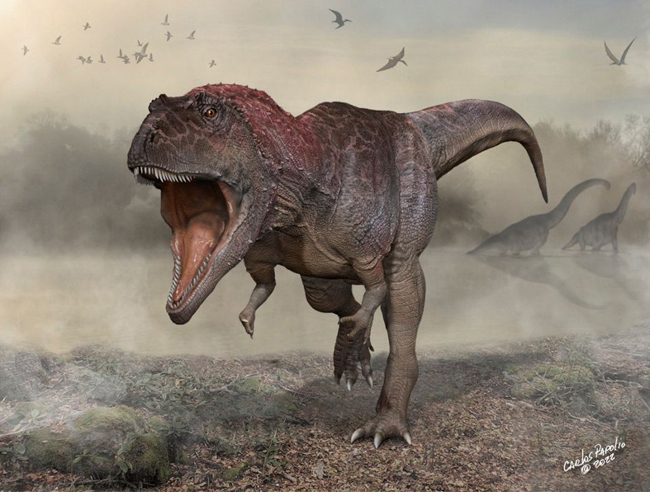
Meraxes gigas life reconstruction.
A life reconstruction of the giant carcharodontosaurid from Patagonia Meraxes gigas. Picture credit: Carlos Papolio.

A Giant Predator with Short Arms

Writing in the scientific journal “Current Biology” the researchers who include Juan Canale (Universidad Nacional de Río Negro, Argentina), suggest that M. gigas was around eleven metres long and weighed around four tonnes (estimated 4.26 tonnes). The skull bones, which represent one of the most complete large theropod skulls ever found, indicate a skull length of 1.27 metres, but its arms were disproportionately small. Like other Cretaceous apex predators, the tyrannosaurs and the abelisaurids, this dinosaur had very short arms. Arms so short that they could not reach its own mouth.

Lead author Juan Canale commented:

“I’m convinced that those proportionally tiny arms had some sort of function. The skeleton shows large muscle insertions and fully developed pectoral girdles, so the arm had strong muscles. They may have used the arms for reproductive behaviour such as holding the female during mating or support themselves to stand back up after a break or a fall.”

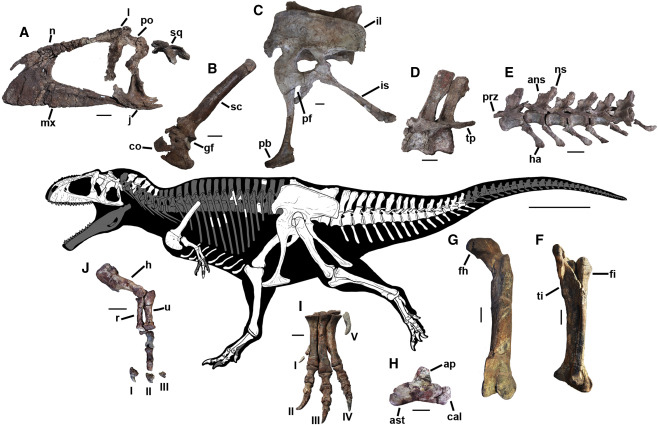
Meraxes gigas fossil bones and skeleton.
Meraxes gigas MMCh-PV 65 and skeleton reconstruction. The white materials represent known bones. Meraxes is the most complete carcharodontosaurid yet from the Southern Hemisphere. Picture credit: Canale et al.

The fossils found in Huincul Formation exposures (late Cenomanian to Turonian) in Las Campanas Canyon some 14 miles southwest of Villa El Chocón, (Neuquén Province, Argentina), also include an almost complete right arm (j, in the image above). This limb, one of the most complete of any derived carcharodontosaurid described to date, is comparatively short and provides evidence to support the idea that many carcharodontosaurids had reduced forelimbs similar to those observed in abelisaurids such as Carnotaurus and most famously in Tyrannosaurus rex.

The researchers propose that forelimb reduction among three lineages of large-bodied predators is an example of convergent evolution, whereby not closely related organisms evolve the same traits. The fossils of Meraxes gigas show a remarkable degree of parallelism between latest-diverging tyrannosaurids and carcharodontosaurids.

Meraxes gigas limb bones.
Articulated right arm in medial view (I to III, hand digits first to third) top right and left foot in medial view (I to IV, pedal digits first to fourth) bottom Scale bars = 10 cm. Picture credit: Canale et al.

Helping to Define the Size of Giganotosaurus (G. carolinii)

Meraxes has the most complete cranium of any Carcharodontosaurinae, with a total skull length estimated at 1.27 metres which is comparable to the most complete specimen of Acrocanthosaurus (A. atokensis) with a skull size of 1.23 metres. Giganotosaurus has the next most complete skull among carcharodontosaurids, but it is missing part of the maxilla and several other bones, so estimating its total length has been problematical. Although the head of Meraxes was not as wide as the head of Giganotosaurus, the cranium of Meraxes is sufficiently similar to G. carolinii to permit an estimate for the length of the Giganotosaurus skull to be made. Based on this comparison, the skull of the largest Giganotosaurus specimen would have been around 1.62 metres long, making it one of the longest theropod skulls known to science.

Meraxes gigas Timeline
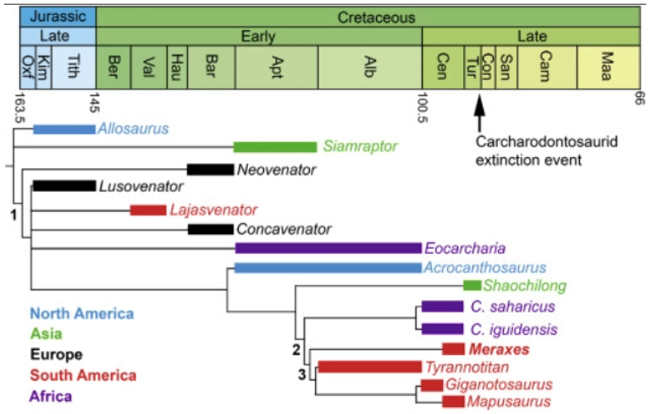
Cladogram depicting the temporal and geographical distribution of the Carcharodontosauridae family of theropod dinosaurs. At the time of their extinction these meat-eating dinosaurs seem to have been at their peak diversity. Picture credit: Canale et al.

The discovery of yet another super-sized carcharodontosaurid from Argentina demonstrates the high diversity of these theropods shortly before their extinction. Parallels can be drawn between the diversity of South American carcharodontosaurids and tyrannosaurs known from the Campanian faunal stage in western North America.

There are no reliable records of carcharodontosaurids in South America beyond the end of the Turonian stage of the Late Cretaceous, this great clade of theropods are believed to have become extinct around 90 million years ago.

To read a related article about another South American theropod with reduced forelimbs and fingers like a T. rex: Gualicho Sticks Two Fingers up at T. rex.

What’s in a Name

The genus name (Meraxes) is named after a female dragon from the Song of Ice and Fire series of books by George R. R. Martin, upon which the hugely successful television series “Game of Thrones” was based. The species name (gigas) comes from the Greek meaning giant.

The scientific paper: “New giant carnivorous dinosaur reveals convergent evolutionary trends in theropod arm reduction” by Juan I. Canale, Sebastián Apesteguía, Pablo A. Gallina, Jonathan Mitchell, Nathan D. Smith, Thomas M. Cullen, Akiko Shinya, Alejandro Haluza, Federico A. Gianechini and Peter J. Makovicky published in Current Biology.

3 07, 2022

Robust Roo from Papua New Guinea

By |2023-04-25T06:39:05+01:00July 3rd, 2022|Categories: Adobe CS5, Dinosaur and Prehistoric Animal News Stories, Main Page, Palaeontological articles, Photos/Pictures of Fossils|0 Comments

Scientists have described a new genus of robust kangaroo from fossils found in late Pleistocene deposits in Papua New Guinea. Analysis suggests that it was not closely related to kangaroos found today in Australia.

Protemnodon nombe

Researchers from Flinders University examined two partial dentaries (lower jaw bones) that had been previously assigned to the Protemnodon genus and named P. nombe. They identified unique characteristics in the teeth and the shape of the bones that led them to conclude that the fossils were sufficiently different from other Protemnodon material to be assigned their own genus. The ancient kangaroo has been named Nombe nombe honouring the Nombe Rockshelter where the fossils were discovered.

Nombe nombe life reconstruction.
A life reconstruction of the prehistoric kangaroo Nombe nombe. Standing around 1.5 metres tall and weighing up to 60 kilograms, the thick dentary and strong teeth indicate Nombe evolved to eat tough leaves in the dense jungle landscape. Picture credit: Peter Schouten.

A New Guinea/Australia Land Bridge

During the Miocene Epoch, around 5-8 million years ago, lower global sea levels permitted a land bridge between Australia and Papua New Guinea to form. This led to a faunal interchange between the two regions. An ancient form of Australian kangaroo migrated northwards and entered the territory now known as Papua New Guinea. When sea levels rose and the Torres Strait was formed, these ancient kangaroos were able to evolve in isolation away from their Australian ancestors.

Nombe nombe dentaries.
Nombe nombe lower jaw bones. Holotype and referred specimen of Nombe nombe: holotype (PNG/82/40/23) partial right dentary in (a) buccal/lateral view, (b) lingual/medial view and (c) lower dentition in occlusal/dorsal view; (d) referred specimen (PM/82/40/19) partial left dentary in buccal/lateral view. Picture credit: Kerr and Prideaux.

A Robust Kangaroo

Co-author of the scientific paper published in the Transactions of the Royal Society of South Australia, PhD student Isaac Kerr commented:

“The New Guinean fauna is fascinating, but very few Australians have much of an idea of what’s actually there.”

Co-author of the paper, Professor Gavin Prideaux (Flinders University), explained that excavations at the Nombe Rockshelter and elsewhere in central Papua New Guinea are providing palaeontologists with evidence of a unique ecosystem on the island, a biota dominated by prehistoric marsupials that were adapted to their mountainous, tropical environment. Flinders University hopes to be able to undertake more extensive fieldwork over the next three years and they are confident that these excavations will unearth new species.

Prehistoric Papua New Guinea
Life in the late Pleistocene on Papua New Guinea. The megafauna was dominated by extinct species of kangaroo and giant four-legged marsupials called diprotodontids, which in turn were hunted by Thylacines. Picture credit: Peter Schouten.

Everything Dinosaur acknowledges the assistance of a media release from Flinders University in the compilation of this article.

The scientific paper: “A new genus of fossil kangaroo from late Pleistocene New Guinea” by Isaac A. R. Kerr and Gavin J. Prideaux published in the Transactions of the Royal Society of South Australia.

Visit Everything Dinosaur’s award-winning website: Everything Dinosaur.

2 07, 2022

A New Book “Travels with Trilobites” by Andy Secher

By |2024-04-13T08:07:04+01:00July 2nd, 2022|Categories: Adobe CS5, Book Reviews, Dinosaur Fans, Main Page, Palaeontological articles, Photos/Pictures of Fossils|0 Comments

We got sent a copy of the amazing “Travels with Trilobites” by world-renowned expert on the Trilobita Andy Secher. What a fantastic book! Trilobites are regarded by many scientists as being one of the most successful animals to have ever existed and their fossils are absolutely fascinating as well as stunningly beautiful. We can’t wait to read and then review this superbly illustrated guide to all things Trilobita!

Holding the "Travels with Trilobites" book.
Very excited to receive a copy of “Travels with Trilobites” by Andy Secher (field associate in palaeontology at the American Museum of Natural History – New York).

Published by Columbia University Press

Published by Columbia University Press the book includes forewards by Mark Norell, Kirk Johnson and Niles Eldredge. There are over 25,000 described species of trilobites and although entirely marine (as far as we know), they evolved into a myriad of forms. Many of the beautiful, full-colour photographs in the book show fossils from the author’s own extensive collection.

Front cover of "Travels with Trilobites".
The front cover of the beautifully illustrated “Travels with Trilobites” by Andy Secher published by Columbia University Press. It is an adventure in Palaeozoic marine fauna.

Andy Secher is a field associate in palaeontology at the prestigious American Museum of Natural History (New York). His own private collection comprises more than 4,000 trilobite specimens. The book provides the opportunity to explore one of the most enigmatic marine creatures of the Palaeozoic Era.

Team members at Everything Dinosaur are going to enjoy reading and then reviewing this wonderful book.

To purchase “Travels with Trilobites” by Andy Secher, visit the Columbia University Press website and search for Andy Secher: Visit Columbia University Website.

27 06, 2022

Frozen Baby Mammoth Discovered in the Klondike

By |2025-01-07T18:19:37+00:00June 27th, 2022|Categories: Adobe CS5, Animal News Stories, Dinosaur and Prehistoric Animal News Stories, Main Page, Palaeontological articles, Photos/Pictures of Fossils|0 Comments

Gold miners working at Eureka Creek in the Klondike Region of Yukon Province in Canada have discovered the frozen remains of a baby woolly mammoth. The calf, which is female is estimated to have lived around 30,000 years ago and it represents the best-preserved woolly mammoth specimen ever found in North America.

Baby mammoth from the Klondike of Yukon

The baby mammoth identified as a female, is the best preserved Woolly Mammoth (Mammuthus primigenius) found to date in North America. It is thought to be around 30,000 years old. Picture credit: Yukon Government.

Picture credit: Yukon Government

“Big Baby Animal”

The discovery was made on June 21st, the Northern Hemisphere solstice and also appropriately, Canada’s National Indigenous Peoples Day. The Klondike gold fields lie within the Trʼondëk Hwëchʼin Traditional Territory. Trʼondëk Hwëchʼin elders have named the mammoth calf Nun cho ga, meaning “big baby animal” in the indigenous people’s (Hän) language.

Ice Age animal remains are quite commonly found in the Yukon area as they erode out of thawing permafrost, however, mummified remains complete with skin and hair are exceptionally rare.

Minister for Tourism and Culture, Ranj Pillai of the Yukon Territory Administration commented:

“The Yukon has always been an internationally renowned leader for ice age and Beringia research. We are thrilled about this significant discovery of a mummified woolly mammoth calf: Nun cho ga. Without strong partnerships between placer miners, Trʼondëk Hwëchʼin, and the Yukon government, discoveries like this could not happen.”

Woolly Mammoths. An Ice Age scene. What caused the extinction of the mammalian megafauna?

Woolly Mammoths (M. primigenius) an iconic animal of the Ice Age.

Vertebrate palaeontologist Dr Grant Zazula added:

“As an ice age palaeontologist, it has been one of my lifelong dreams to come face to face with a real woolly mammoth. That dream came true today. Nun cho ga is beautiful and one of the most incredible mummified ice age animals ever discovered in the world. I am excited to get to know her more.”

Comparisons with Lyuba

The discovery of the superbly preserved corpse will provide scientists with an opportunity to compare Nun cho ga with Lyuba, a mammoth calf discovered in Siberia back in 2007. Lyuba lived a few thousand years earlier than the Yukon mammoth (circa 41,800 years), researchers will have the opportunity to compare the genetic health of the mammoth population and plot any changes between the older Lyuba and Nun cho ga which lived, around 12,000 years later.

The baby Woolly Mammoth known as Lyuba.

The 40,000-year-old baby mammoth Lyuba. Picture credit: Uppa/Photoshot (Daily Telegraph News).

Picture credit: Uppa/Photoshot (Daily Telegraph News)

The discovery of Nun cho ga is not the first woolly mammoth calf found in North America. In 1948, a partial mammoth calf, nicknamed Effie, was found at a gold mine in Alaska.

CollectA Woolly Mammoth models.

The CollectA Deluxe Woolly Mammoth model in 1:20 scale and the CollectA Prehistoric Life Woolly Mammoth calf. Picture credit: Everything Dinosaur.

Picture credit: Everything Dinosaur

The picture (above) shows a CollectA Deluxe Woolly Mammoth model and a CollectA Woolly Mammoth calf.  This is a popular pair of prehistoric mammal models.
To view the range of CollectA scale models: CollectA Deluxe Prehistoric Life.

The CollectA Age of Dinosaurs Popular range: CollectA Age of Dinosaurs Popular Range.

22 06, 2022

A Fossil Emblem for New Zealand?

By |2025-01-06T21:39:37+00:00June 22nd, 2022|Categories: Adobe CS5, Dinosaur and Prehistoric Animal News Stories, Dinosaur Fans, Main Page, Palaeontological articles, Photos/Pictures of Fossils|0 Comments

Palaeontologists in New Zealand have started a consultation process in a bid to appoint a fossil emblem for New Zealand. Everything Dinosaur has come across media reports that palaeontologists at the University of Otago (South Island, New Zealand), are beginning a project to identify a fossil emblem for the country. Once a shortlist of candidate fossils has been compiled, the winner will be decided by a public vote.

Many Australian states, have fossil emblems, for example, back in January (2022), team members at Everything Dinosaur covered the announcement that the giant amphibian Koolasuchus (K. cleelandi) had been appointed the fossil emblem of Victoria. Now it seems that New Zealand wants to have a fossil emblem too.

To read the Koolasuchus story: Koolasuchus Becomes the State Fossil of Victoria.

Kairuku waewaeroa line drawing, holotype fossil and scale comparison with an Emperor penguin.

The holotype specimen of Kairuku waewaeroa (WM 2006/1/1). Line drawing of specimen (A), photograph of the holotype in ventral view (B) and (C) scale comparison with the largest extant penguin species the Emperor Penguin (Aptenodytes forsteri. Note scale bar for (B) equals 4 cm. Picture credit: Giovanardi et al.

Picture credit: Giovanardi et al

Penguins, Plesiosaurs, Trilobites, Dolphins and Giant Prehistoric Birds

New Zealand might not be the first country one thinks about when considering the fossil record. However, several important and unique fossil discoveries have been made on Aotearoa (the Māori name for the country).

The campaign is being led by Dr Nic Rawlence (University of Otago palaeogenetics laboratory), he has suggested some of the country’s giant penguins (Kairuku waewaeroa, Kumimanu biceae, Crossvallia waiparensis), or perhaps one of the early cetaceans or an example of a primitive pinniped (Eomonachus belegaerensis), fossils of which come from the western side of North Island (Taranaki area).

Eomonachus belegaerensis life reconstrustion.

Eomonachus belegaerensis an ancient seal from New Zealand. Picture credit: Jaime Bran/ Te Papa Museum.

Picture credit: Picture credit: Jaime Bran/Te Papa Museum

In 2002, the Late Cretaceous plesiosaur Kaiwhekea katiki was formally named and described. The seven-metre-long specimen was excavated from a single, large concretion found at Shag Point, Otago (Katiki Formation). It is one of the most complete plesiosaur specimens known from the Southern Hemisphere.

There are also more recent inhabitants of New Zealand to consider, such as the giant South Island Moa Dinornis robustus, as well as many important invertebrate fossils that date from the Palaeozoic but, our personal choice would be the enormous Haast’s eagle (Hieraaetus moorei), the largest eagle known to science. This huge predator occupied the niche filled by mammalian carnivores in other ecosystems. With a body weight in excess of 15 kilograms and a wingspan of around 3 metres, Haast’s eagle was a formidable and terrifying predator.

Haarst's eagle attacks moas.

Haast’s eagle attacks a moa. This eagle is the largest eagle known to science and it only recently went extinct (500-600 years ago). Picture credit: University of Otago/John Megahan.

Picture credit: University of Otago/John Megahan

Only Recently Extinct

Unlike the trilobites, plesiosaurs, penguins and ancient marine mammals, Haast’s eagle died out relatively recently, not long after the first Māori settlers came to New Zealand.

It has not been decided yet whether a single fossil specimen should become the national emblem, or whether there would be two emblems designated, one for South Island and one for North Island.

A shortlist is due to be announced in the near future and then a public vote will decide on the winner(s).

If New Zealand appoints a fossil emblem, then perhaps the UK or the countries that make up the United Kingdom could consider having fossil emblems too.

Any suggestions?

If you have any suggestions about fossil emblems, feel free to email Everything Dinosaur: Contact Everything Dinosaur.

20 06, 2022

New Analysis of Pterosaur Wing Suggests Jehol Biota Represents Migratory Area

By |2025-01-06T19:54:05+00:00June 20th, 2022|Categories: Adobe CS5, Dinosaur and Prehistoric Animal News Stories, Dinosaur Fans, Main Page, Palaeontological articles, Photos/Pictures of Fossils|0 Comments

A cross-sectional analysis of a pterosaur wing bone has helped palaeontologists to work out the ages and growth stages of flying reptiles from the Early Cretaceous Jiufotang Formation of China. This research suggests that the Jehol tapejarid biota represents a migratory area for these pterosaurs.

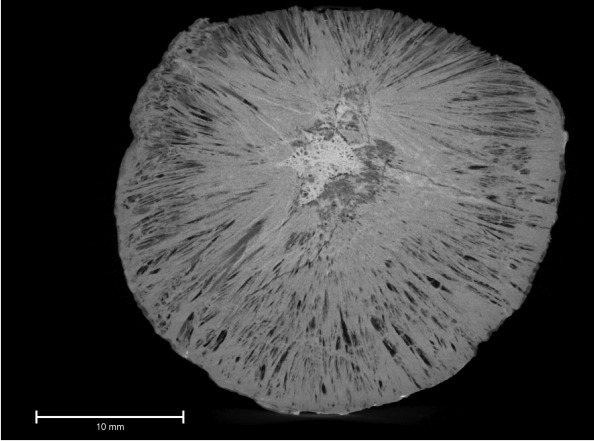
Writing in the academic journal “Scientific Reports”, researchers from Shandong University of Science and Technology (China) in collaboration with the University of Birmingham, took a tiny cross section of bone from the left forelimb of a pterosaur specimen assigned to the genus Sinopterus. Detailed analysis of the bone structure revealed that the fossil came from an immature individual at a late juvenile stage prior to reaching sexual maturity. This is the first time that histological data about the growth stages of Jehol tapejarids has been undertaken and based on this study, the largest skeletally immature tapejarid individuals recorded from the Jiufotang Formation might have reached sexual maturity.

The Jehol tapejarid Sinopterus left wing fossil.

The Jehol tapejarid Sinopterus (specimen number SDUST-V1014). Photograph (a) and line drawing (b) of the wing skeleton as well as enlarged images of the deltopectoral crest (c) and pneumatic foramen on the distal end of the wing metacarpal (d). Arrow points to the thin-section sample position on the first wing phalanx. Note scale bar for a and b = 20 mm. Picture credit: Zhou et al.

Picture credit: Zhou et al

At Least a Year Old

Microscopic analysis of the internal structure of the bone revealed the presence of one line of arrested growth (LAG) suggesting that this specimen was over a year old when it died. Palaeontologists have proposed that pterosaurs had a remarkably fast growth rate in their first three years and the postulated size of the pterosaur based on SDUST-V1014 fits with this hypothesis.

The Jehol biota relating to the Pterosauria is dominated by immature individuals and skeletally mature adults are exceptionally rare. The researchers postulate that this ecosystem was not home to the adults, that they may have lived apart from juveniles and immature animals. Perhaps this part of northern China was on a migratory route for these types of flying reptiles.
The Early Cretaceous Jehol biota with emphasis on mammaliamorphs.
The Early Cretaceous Jehol biota with emphasis on mammaliamorphs. Picture credit: Chuang Zhao.

Picture credit: Chuang Zhao

Improving Our Knowledge of Tapejarid Anatomy

Although crushed, the forelimb bones reveal helpful morphological information clarifying the anatomy of Jehol tapejarids and the researchers suggest that this improved understanding could lead to a revision of the taxa associated with the Jiufotang Formation.

In addition, this histological analysis permits comparison with other pterosaur growth rates and the researchers conclude that the size gap between sexual and skeletal maturity in tapejarids was very similar to that observed in the not very closely related Pteranodon genus (Ornithocheiroidea).

To read a related article published in 2021 that examines the significance of a headless Sinopterus specimen (S. dongi) and its role in helping to define juvenile tapejarids: Headless Pterosaur Helps to Define an Entire Genus.

The scientific paper: “A new wing skeleton of the Jehol tapejarid Sinopterus and its implications for ontogeny and paleoecology of the Tapejaridae” by Chang-Fu Zhou, Dongxiang Yu, Ziheng Zhu and Brian Andres published in scientific reports.

The Everything Dinosaur website: Dinosaur Toys.

19 06, 2022

“Paleontology An Illustrated History” Reviewed

By |2025-01-06T19:48:22+00:00June 19th, 2022|Categories: Adobe CS5, Book Reviews, Dinosaur Fans, Main Page, Photos/Pictures of Fossils|0 Comments

Over the last few weeks, team members at Everything Dinosaur have been enjoying “Palaeontology an Illustrated History” by Dr David Bainbridge. A beautifully illustrated book that examines the art and science of palaeontology from its earliest origins to the modern discipline it is today.

This skilfully crafted publication provides an insight not only into the way that the study of fossils and past life has changed, but looks in detail at how famous fossil discoveries have been interpreted and depicted. The work and illustrations of Mary Anning feature, along with reflections on the influence of such luminaries as Georges Cuvier, Charles Darwin, Jenny Clack and Roy Chapman Andrews.

The front cover of "Paleontology an Illustrated History"

The front cover of “Paleontology an Illustrated History” features a lithograph of an ichthyosaur (Temnodontosaurus platyodon) and below an illustration of “A Paris Fossil” by Cuvier. Picture credit: Everything Dinosaur.

Picture credit: Everything Dinosaur

The Everything Dinosaur website: Dinosaur Models and Toys.

Splendid Sketches, Engravings and Computer-generated Images

Divided into four main chapters, the author takes the reader on a journey through the history of palaeontology and the artwork associated with key fossil discoveries and ground-breaking research. David Bainbridge brings to life the people and the stories behind some of the most significant developments in the Earth sciences. Illustrations of early sketches, engravings as well as state-of-the-art computer-generated images providing a perfect accompaniment demonstrating how our views of the ancient world and the animals contained therein have changed.

An early illustration of pterosaurs.

The book contains hundreds of illustrations depicting how the art associated with the science of palaeontology has changed. This is an early illustration of a pterosaur. Picture credit: Edward Newman.

Picture credit: Edward Newman

Palaeontology and the Artists that Illustrate Scientific Discoveries

The author, a comparative anatomist at the University of Cambridge, explains how our perceptions regarding prehistoric animals have been changed by their depiction on the big screen, perhaps most famously in King Kong (1933) and Jurassic Park, which was premiered some sixty years later. He looks at how palaeoart has developed from the early influencers such as Charles Knight through the work of Neave Parker and how modern-day palaeoartists work with researchers to produce illustrations that accompany scientific papers.

Changmiania liaoningensis fossil material and life reconstruction.

The perfectly preserved holotype fossil of Changmiania liaoningensis with a life reconstruction. Picture credit: Carine Ciselet/RBINS-IRSNB-KBIN.

Picture credit: Carine Ciselet/RBINS-IRSNB-KBIN

A Comprehensive Account

“Paleontology an Illustrated History” is a most enjoyable and comprehensive account demonstrating how art and scientific enquiry combine to help inform, enlighten and educate.

Highly recommended.

Book details:

  • Published by Princeton University Press
  • ISBN: 9780691220925
  • 256 pages
  • 100+ colour illustrations

To purchase this excellent book, visit the Princeton University Press website and search for “David Bainbridge”, the Princeton University Press site is here: Princeton University Press.

Go to Top