All about dinosaurs, fossils and prehistoric animals by Everything Dinosaur team members.

Articles, features and information which have slightly more scientific content with an emphasis on palaeontology, such as updates on academic papers, published papers etc.

16 02, 2023

Yorkshire Dinosaur Makes Its Mark

By |2023-02-15T22:51:42+00:00February 16th, 2023|Categories: Dinosaur and Prehistoric Animal News Stories, Dinosaur Fans, Main Page, Palaeontological articles|0 Comments

A giant, carnivorous dinosaur left an unusual footprint in soft sediment approximately 166 million years ago. Remarkably, the print has been preserved as a fossil, providing palaeontologists with yet more evidence to demonstrate the diverse, dinosaur dominated ecosystem which has been preserved in the rocks that comprise the Yorkshire coast.

Giant Dinosaur Footprint

The trace fossil measures around eighty centimetres in length, and it was probably made by a large theropod dinosaur (Megalosauridae).

Theropod tridactyl print life reconstruction.
The print was probably made by a large, carnivorous dinosaur similar to a Megalosaurus (Theropoda – Megalosauridae). Picture credit: James McKay.

Picture credit: James McKay

The Yorkshire Coast

The Yorkshire coast is renowned for producing some visually and scientifically significant fossils, including thousands of dinosaur footprints and tracks. A popular destination for professional palaeontologists and fossil fans, people come from far and wide to see what they can discover.

The three-toed (tridactyl) print is exceptionally rare and unusual. It appears to record the moment when a meat-eating dinosaur crouched down or rested.

Discovered by a Local Archaeologist

The print was discovered in April 2021 by Marie Woods, a local archaeologist. She was walking along the coast and found this amazing trace fossil by chance. Marie contacted local fossil experts to see if the print had already been recorded, but none of them were aware of the track she described.

Dr Dean Lomax, a vertebrate palaeontologist affiliated with The University of Manchester was contacted and asked to examine the fossil find.

Dr Lomax, a co-author of the study published in the Proceedings of the Yorkshire Geological Society commented:

“I couldn’t believe what I was looking at, I had to do a double take. I have seen a few smaller prints when out with friends, but nothing like this. I can no longer say that ‘archaeologists don’t do dinosaurs’. At the time of the discovery, it generated a lot of public interest and I was overwhelmed with the messages on social media from people around the globe.”

Theropod tridactyl print.
The large tridactyl print, the toes are on the right side of the photograph. The footprint was produced by a large theropod dinosaur and it measures approximately 80 cm in length. Picture credit: Marie Woods.

Picture credit: Marie Woods

An Extremely Significant Fossil Discovery

The footprint is one of only six similar prints to have been recorded in the area, the first of which was identified in 1934. This print is an extremely significant fossil discovery, not only are tridactyl prints rare, but this trace fossil is the largest found in Yorkshire to date.

Local geologist and lead researcher on the paper John Hudson explained:

“This important discovery adds further evidence that meat-eating giants once roamed this area during the Jurassic. The type of footprint, combined with its age, suggests that it was made by a ferocious Megalosaurus-like dinosaur, with a possible hip height between 2.5 and 3 metres.”

Dinosaurs of the British Isles

Megalosaurus (M. bucklandii), was the first dinosaur to be formally described (1824). Around a hundred different dinosaur genera have been described from fossils found in the British Isles. Such is the significance of dinosaur fossils from the UK, that Dr Lomax was inspired to write a book documenting the extensive dinosaur fossil discoveries that have been made on these islands.

To learn more about the work of Dr Dean Lomax and for further information on the books that he has written: British Palaeontologist Dr Dean Lomax.

The lower jaw of Megalosaurus.
The partial dentary for teeth associated with Megalosaurus bucklandii. Picture credit: Everything Dinosaur.
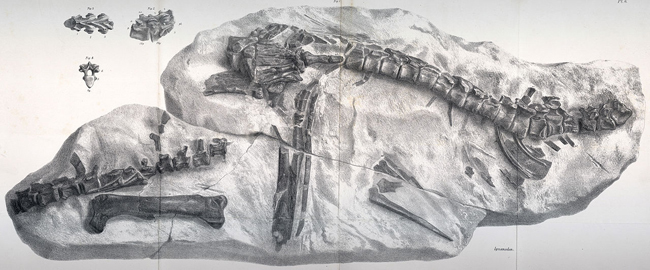
Picture credit: Everything Dinosaur

A Fragile Fossil

Photographs shared between the research team led them to conclude that the specimen was exceptionally fragile and likely to suffer further damage if it remained on the shoreline. Action was taken to rescue the fossil. The dinosaur trace fossil was expertly recovered by experienced fossil collectors Mark, Aaron and Shae Smith of Redcar.

As the rescue mission progressed it came to light that the print had been spotted five months previously, by Bob Taylor a local fossil collector who subsequently helped to write the research paper on the specimen.

Dr Lomax thanked Mark, Aaron and Shae for ensuring the safe recovery of the fossil and he stated:

“We’re incredibly grateful to Mark, Aaron and Shae for rescuing this important specimen and ensuring that it was saved for science. Now that the specimen has been studied, plans are in motion for it to go on public display, to spark the imagination of the next generation of fossil hunters.”

Donated to Scarborough Museum and Galleries

The fossil has been donated to Scarborough Museum and Galleries. Plans are in place to include this remarkable dinosaur in an exhibit, once conservation has been completed.

Dr Mike Romano (University of Sheffield), an expert on dinosaur tracks and other trace fossils, also co-authored the scientific paper. Dr Romano has spent more than two decades researching the dinosaur tracksites associated with the coast of Yorkshire.

He added:

“The east coast of Yorkshire is known as the Dinosaur Coast for very good reasons”

A huge number of dinosaur tracks, ranging in the thousands, have been discovered. As a result, this stretch of coastline is considered one of the best places in the world for dinosaur footprints. Although the first prints were documented in 1907, it was not until the 1980s that finds were being reported on a regular basis (by amateurs as well as professional geologists).

Twenty-Five Different Types of Track Described

Around twenty-five different types of footprints have been identified from the Jurassic strata exposed on the coast of Yorkshire. These prints and tracks demonstrate that during the Middle Jurassic a diverse, dinosaur-dominated ecosystem thrived in an ancient coastal plain environment. The trace fossils also recorded behaviours, palaeontologists have identified trace fossils that indicate walking, running and even swimming dinosaurs.

A Dinosaur Behaviour “Locked in Time”

Dr Lomax outlined how this single print can help scientists to better understand theropod dinosaur behaviour.

He commented:

“This is a wonderful find. Not only does this specimen represent the largest theropod footprint found in Yorkshire, but by studying the angle of the footprint, its shape, and the impressions of the claws, the fossil provides insights into the behaviour of this individual from around 166 million years ago. In fact, features of the footprint may even suggest that this large predator was squatting down before standing up. It’s fun to think this dinosaur might well have been strolling along a muddy coastal plain one lazy Sunday afternoon in the Jurassic.”

This is an example of the behaviour of a long extinct prehistoric animal being preserved in the fossil record, a footprint that provides evidence of the behaviour of a dinosaur that has been dead for 166 million years.

Dean Lomax is also the author of “Locked in Time”, a book which examines animal behaviour preserved in fifty exceptional fossil discoveries.

The book "Locked in Time"
The front cover of the book “Locked in Time – Animal Behaviour Unearthed in 50 Extraordinary Fossils” by Dean Lomax with illustrations by Bob Nicholls. Picture credit: Everything Dinosaur.
Picture credit: Everything Dinosaur

Everything Dinosaur acknowledges the assistance of a media release from the University of Manchester in the compilation of this article.

The scientific paper: “A new giant theropod dinosaur track from the Middle Jurassic of the Cleveland Basin, Yorkshire, UK” by Hudson, J. G., Romano, M., Lomax, D. R., Taylor, R. and Woods, M. published in the Proceedings of the Yorkshire Geological Society.

14 02, 2023

New Spinosaur Research – Modified Skulls but Conservative Brains

By |2024-01-02T14:21:01+00:00February 14th, 2023|Categories: Dinosaur and Prehistoric Animal News Stories, Dinosaur Fans, Main Page, Palaeontological articles|0 Comments

Researchers from the University of Southampton and Ohio University have recreated the brains and the inner ears of two early members of the Spinosauridae in a bid to better understand how these unusual theropods evolved as piscivores.

The spinosaurs Baryonyx walkeri and Ceratosuchops inferodios are the oldest members of the Spinosauridae family for which braincase material is known. When Baryonyx was formally named and described in 1986 (Charig and Milner), it helped revolutionise our understanding of these bizarre and enigmatic carnivorous dinosaurs. Ceratosuchops was scientifically described much more recently (2021). Several of the authors of the paper on Ceratosuchops participated in this study.

To read an article about the discovery of C. inferodios: Two New Spinosaurids from the Isle of Wight.

Having reconstructed the brains of these early spinosaurs, the researchers concluded that Baryonyx and Ceratosuchops brains were reminiscent of the brains of other theropods and lacked the specific adaptations and characteristics of later spinosaurs.

Artist's impression of Ceratosuchops inferodios and the orientation of the endocast
An artist’s impression of Ceratosuchops inferodios and the orientation of the endocast in the skull. Picture credit: Anthony Hutchings.

Spinosaurids – Not Your Usual Theropods

The Spinosauridae are considered unusual members of the theropod clade. Their evolutionary origins and their exact placement within the Theropoda remain uncertain. These dinosaurs are united by having a series of adaptations that indicate a more specialised predatory role within the ecosystem. They seem to have specialised in catching fish, evolving long snouts, nostrils placed further up the skull and crocodile-like jaws that were lined with large numbers of conical teeth. Adaptations that distinguish the Spinosauridae from other theropod dinosaurs such as the allosaurs, abelisaurids and tyrannosaurs, which seem to have been more generalist hypercarnivores.

Scanning the Braincase and Digitally Reconstructing the Brain

To help the researchers better understand the evolution of the spinosaur brain. The braincase fossils of Baryonyx and Ceratosuchops were scanned in high resolution. Sophisticated computer models of the brains, inner ears and related soft tissues of these two dinosaurs were created from these scans.

The digital reconstruction of spinosaur “grey matter” revealed that the olfactory bulbs, which process smells, weren’t particularly developed, and the ear was probably attuned to low frequency sounds. Those parts of the brain involved in keeping the head stable and the gaze fixed on prey were possibly less developed than they were in later, more specialised spinosaurs.

Baryonyx endocast
Three-dimensional reconstruction of the brain cavity and associated nerves and blood vessels within the braincase of the iconic British spinosaurid Baryonyx walkeri. Picture credit: WitmerLab/Chris Barker.

Commenting on the results, lead-author of the study, PhD student Chris Barker (University of Southampton), stated:

“Despite their unusual ecology, it seems the brains and senses of these early spinosaurs retained many aspects in common with other large-bodied theropods – there is no evidence that their semi-aquatic lifestyles are reflected in the way their brains are organised.”

Interpreting the Data

Although the fossil record of early spinosaurids is particularly poor, the researchers suggest that one interpretation of this brain study is that the theropod ancestors of spinosaurs already possessed brains and sensory adaptations that were suited to catching fish. Perhaps, as a way of avoiding direct competition with other large carnivores, the ancestral spinosaurids gradually spent more and more time hunting fish. Fish became an increasingly important part of the diet, a food resource not exploited to the same extent by other theropods. This led to the evolution of piscivorous adaptations such as longer jaws and conical teeth.

Ceratosuchops endocast.
Three-dimensional reconstruction of the brain cavity (purple), cranial nerves (yellow), inner ear (pink) and blood vessels (red and blue) of the British spinosaurid Ceratosuchops inferodios. This predator likely had an unexceptional sense of smell and could hear low frequency sounds. Picture credit: Chris Barker.

British Spinosaurs Contributing to Palaeontology

Co-author of the study, published in the Journal of Anatomy, Dr Darren Naish (University of Southampton) stated:

“Because the skulls of all spinosaurs are so specialised for fish-catching, it’s surprising to see such ‘non-specialised’ brains. But the results are still significant. It’s exciting to get so much information on sensory abilities – on hearing, sense of smell, balance and so on – from British dinosaurs. Using cutting-edged technology, we basically obtained all the brain-related information we possibly could from these fossils.”

Learning More About the Spinosauridae

The non-destructive technique of using sophisticated computerised tomography (CT scans) in palaeontology is helping to change views and perceptions about the Dinosauria. Spinosaurs remain one of the most enigmatic and controversial families within the Theropoda. This new research mapping the brains and inner ears of early members of the Spinosauridae provides a valuable contribution to the on-going discussions about the evolutionary development of spinosaurids and their role as specialist piscivores in Early Cretaceous dinosaur dominated terrestrial communities.

Everything Dinosaur acknowledges the contribution of a press release from the University of Southampton in the compilation of this article.

The scientific paper: “Modified skulls but conservative brains? The palaeoneurology and endocranial anatomy of baryonychine dinosaurs (Theropoda: Spinosauridae)” by Chris Tijani Barker, Darren Naish, Jacob Trend, Lysanne Veerle Michels, Lawrence Witmer, Ryan Ridgley, Katy Rankin, Claire E. Clarkin, Philipp Schneider and Neil J. Gostling published in the Journal of Anatomy.

1 02, 2023

Beautiful Fish Fossil Illuminates Vertebrate Brain Evolution

By |2024-01-02T14:11:08+00:00February 1st, 2023|Categories: Adobe CS5, Dinosaur and Prehistoric Animal News Stories, Main Page, Palaeontological articles, Photos/Pictures of Fossils|0 Comments

A team of international scientists including researchers from the University of Birmingham have published a paper on the brain and cranial nerves of fish that lived approximately 319 million years ago. The team’s findings are shedding light on vertebrate brain evolution.

The Late Carboniferous (early Pennsylvanian subperiod), fish fossil was discovered in a layer of soapstone adjacent to a coal seam at the Mountain Fourfoot coal mine in Lancashire and the specimen was first scientifically described in 1925. The fish, named Coccocephalus wildi, would have measured around 20 cm in length and it lived in what was an ancient estuary. It is only known from this single fossil and only the skull and jaws were recovered.

Coccocephalus wildi fossil skull and jaws
The fossilised skull of Coccocephalus wildi. The fish is facing to the right, with the jaws visible in the lower right portion of the fossil. The eye socket is the circular, bumpy feature above the jaws. Picture credit: Jeremy Marble, University of Michigan News.

Vertebrate Brain Evolution

Coccocephalus was a member of the Class Actinopterygii, also known as the ray-finned fishes. The skull fossil was sent on loan from Manchester Museum to the University of Michigan and subsequent CT scans of the skull revealed the surprising discovery of the intact brain and associated nerves.

Senior author Sam Giles, (University of Birmingham), commented:

“This unexpected find of a three-dimensionally preserved vertebrate brain gives us a startling insight into the neural anatomy of ray-finned fish. It tells us a more complicated pattern of brain evolution than suggested by living species alone, allowing us to better define how and when present day bony fishes evolved.”

CT scans of C. wildi shedding light on vertebrate brain evolution.
University of Michigan palaeontologist Matt Friedman examines CT scan images of an exceptionally preserved, brain of the Late Carboniferous ray-finned fish Coccocephalus wildi. Picture credit: Jeremy Marble, University of Michigan News.

Rapidly Buried

When the fish died, it was probably buried rapidly in sediment containing very little oxygen. The lack of oxygen prevented the soft brain tissue from decaying. Whilst brain cases can reveal the shape and structure of vertebrate brains, this remarkable fossil preserved the brain tissue of a prehistoric fish.

Soft tissues such as the brain normally decay quickly and very rarely fossilise. But when this fish died, the soft tissues of its brain and cranial nerves were replaced during the fossilisation process with a dense mineral that preserved, in astonishing detail, their three-dimensional structure.

This discovery provides palaeontologists with a window into the evolution and development of the brains of ray-finned fishes, a highly successful group of back-boned animals estimated to represent more than fifty percent of all living vertebrate species.

Coccocephalus wildi life reconstruction and close-up view of brain. New study highlights vertebrate brain evolution.
Life reconstruction of the ray-finned fish Coccocephalus wildi showing location and shape of brain and cranial nerves. Picture credit: Márcio L. Castro.

A study of the jaws and teeth of C. wildi suggest that it was carnivorous, likely feeding on small invertebrates. The CT scans revealed that the brain had bilateral symmetry, like the brains of modern ray-finned fishes, but significantly, the brain of Coccocephalus folds inward, unlike in all living ray-finned fishes, in which the brain folds outward.

For figures and replicas of ancient prehistoric fish: Prehistoric Sharks, Dunkleosteus and Other Prehistoric Fish Models (PNSO).

The fossil captures a time before a signature feature of ray-finned fish brains evolved, providing an indication of when this trait evolved.

Co-author of the paper, published in the journal “Nature”, Matt Friedman (University of Michigan) explained:

“An important conclusion is that these kinds of soft parts can be preserved, and they may be preserved in fossils that we’ve had for a long time—this is a fossil that’s been known for over 100 years.”

Everything Dinosaur acknowledges the assistance of a media release from the University of Birmingham in the compilation of this article.

The scientific paper: “Exceptional fossil preservation and evolution of the ray-finned fish brain” by Rodrigo T. Figueroa, Danielle Goodvin, Matthew A. Kolmann, Michael I. Coates, Abigail M. Caron, Matt Friedman and Sam Giles published in Nature.

30 01, 2023

A New Pterosaur Species is Described

By |2023-02-03T09:26:23+00:00January 30th, 2023|Categories: Dinosaur and Prehistoric Animal News Stories, Dinosaur Fans, Main Page, Palaeontological articles, Photos/Pictures of Fossils|0 Comments

A new pterosaur species has been described based on a superbly preserved specimen found in Upper Jurassic limestone deposits in Bavaria (southern Germany). The fully articulated specimen displays a unique dentition that suggests this flying reptile fed like a modern-day flamingo, sieving water through its jaws to trap small invertebrates as it waded or possibly swam in a shallow lagoon.

Balaenognathus Life Reconstruction
A life reconstruction of the newly described pterosaur Balaenognathus maeuseri. Picture credit: Megan Jacobs

Picture credit: Megan Jacobs

Balaenognathus maeuseri

The pterosaur has been classified as a ctenochasmatid, a group of short-tailed pterodactyloids characterised by specialised teeth adapted for filter feeding. Fossils of these relatively small flying reptiles (most with wingspans less than 3 metres), have been found in Europe, America and China, in rocks dating from the Upper Jurassic to the Early Cretaceous. The new pterosaur has been named Balaenognathus maeuseri, the genus name derives from the scientific name for the Bowhead whale (Balaena mysticetus) and the Latin for jaw, as it is thought that these two unrelated species shared a common feeding strategy. The specific epithet honours a co-author of the paper Matthias Mäuser who sadly passed away before publication.

Balaenognathus fossil specimen.
The fossilised bones of Balaenognathus maeuseri found in the slab of limestone (Upper Jurassic laminated limestones at Wattendorf, Bavaria in Southern Germany). Picture credit: PalZ.

Lead author of the study, published in Paläontologische Zeitschrift (PalZ), Professor David Martill from the University of Portsmouth School of the Environment, Geography and Geosciences commented:

“The nearly complete skeleton was found in a very finely layered limestone that preserves fossils beautifully.”

Unique Pterosaur Dentition

The fossil (specimen number NKMB P2011-63), is remarkable for its completeness, unusual dentition and hints of the preservation of soft tissues, including wing membranes. The delicate jaws contain at least 480 fine teeth.”

Professor Martill added:

“The jaws of this pterosaur are really long and lined with small fine, hooked teeth, with tiny spaces between them like a nit comb. The long jaw is curved upwards like an avocet and at the end it flares out like a spoonbill. There are no teeth at the end of its mouth, but there are teeth all the way along both jaws right to the back of its smile.”

Tentative line reconstruction of the skull.
Tentative line reconstruction of the skull. Picture credit: PalZ

Bizarre Hook-like Tooth Crown

The tips of the jaw are devoid of teeth, which would have permitted plankton and invertebrate-rich water to rush into the long jaw. The hundreds of teeth would have acted as a sieve helping to strain out food. Many of the teeth have a hook-like expansion on the tip of the crown, a bizarre and unique tooth morphology.

Explaining the significance of these strange teeth, Professor Martill stated:

“What’s even more remarkable is some of the teeth have a hook on the end, which we’ve never seen before in a pterosaur ever. These small hooks would have been used to catch the tiny shrimp the pterosaur likely fed on – making sure they went down its throat and weren’t squeezed between the teeth.”

Balaenognathus teeth with hook-like crowns.
Fig 7 shows UV images of the teeth (A) teeth close to the tip of the jaw (B) close-up of the crown tips of the teeth of the left jaw showing the hook-like teeth with the hooks highlighted by white arrows. Image (C) the middle teeth. Picture credit: PalZ.

A New Pterosaur

The discovery was made accidentally while scientists were excavating a large block of limestone containing crocodilian fossil remains.

Professor Martill explained:

“This was a rather serendipitous find of a well-preserved skeleton with near perfect articulation, which suggests the carcass must have been at a very early stage of decay with all joints, including their ligaments, still viable. It must have been buried in sediment almost as soon as it had died.”

Most members of the Ctenochasmatidae family seem to have been the pterosaur equivalent of wading shore birds, although some genera were perhaps adapted to habitats further inland and have truly bizarre shaped jaws leaving palaeontologists perplexed as to what they ate.

Only one other known pterosaur had more teeth than Balaenognathus. It is another ctenochasmatid and it is called Pterodaustro guinazui and its fossils are known from the Lower Cretaceous of Argentina. Both Pterodaustro and Balaenognathus were likely filter feeders although the arrangement of their teeth differs. Balaenognathus had teeth in the upper and lower jaw which are the mirror image of each other, whilst P. guinazui had very reduced teeth in the upper jaw and up to a 1,000 densely packed, bristle-like teeth in the lower jaw.

Balaenognathus fossil specimen viewed under UV light.
The Balaenognathus maeuseri specimen viewed under UV (ultra violet) light. Picture credit: PalZ.

New Pterosaur Species – Unique Feeding Mechanism

The teeth of Balaenognathus suggest a feeding strategy that involved the animal either wading through water or swimming, using its spoon-shaped beak to funnel water into its mouth, this water was then strained through its teeth to trap prey. The researchers propose that Balaenognathus fed on shrimps and copepods filling a similar ecological niche as extant ducks, shorebirds and flamingos.

Commenting on the sad passing of Matthias Mäuser, Professor Martill said:

“Matthias was a friendly and warm-hearted colleague of a kind that can be scarcely found. In order to preserve his memory, we named the pterosaur in his honour.”

Everything Dinosaur acknowledges the assistance of a media release from the University of Portsmouth in the compilation of this article.

The scientific paper:

The scientific paper: “A new pterodactyloid pterosaur with a unique filter‑feeding apparatus
from the Late Jurassic of Germany”
by David M. Martill, Eberhard Frey, Helmut Tischlinger, Matthias Mäuser, Héctor E. Rivera‑Sylva and Steven U. Vidovic published in Paläontologische Zeitschrift (PalZ).

16 01, 2023

A New Study – Carboniferous Chimaeras were Suction Feeders

By |2024-01-02T13:59:46+00:00January 16th, 2023|Categories: Adobe CS5, Dinosaur and Prehistoric Animal News Stories, Dinosaur Fans, Main Page, Palaeontological articles, Photos/Pictures of Fossils|0 Comments

Carboniferous chimaeras were suction feeders unlike their modern relatives such as the rat fish which are durophagous (feed on hard-shelled prey such as crabs, snails and molluscs). That is the conclusion of new research published this week in the academic journal The Proceedings of the National Academy of Sciences (PNAS).

An Exceptional Three-dimensional Fossil

The research led by the Muséum national d’histoire naturelle (MNHN) located in Paris, and the University of Birmingham has shown that an ancient relative of chimaeras, jawed vertebrates that are related to cartilaginous fishes (sharks and rays), fed by sucking in prey animals underwater.

An exceptional three-dimensional fossil of an ancient chimaera (Iniopera genus), has revealed new clues about the diversity of these creatures during the Carboniferous period.

Carboniferous chimaeras
The three-dimensional cast of the Carboniferous chimaera fossil (Iniopera) which helped the researchers to determine feeding strategy. Picture credit: University of Birmingham.

Carboniferous Chimaera

The fossil, from a genus called Iniopera, is the only suction feeder to be identified among chimaeras, and quite different from living chimaeras, which generally feed by crushing molluscs and other hard-shelled prey between their teeth.

Chimaeriformes are an ancient order of cartilaginous fish (Chondrichthyes) that are thought to have evolved in the Devonian. Most extant species are found at depths greater than two hundred metres, and some chimaera fish are restricted to extremely deep water (Bathypelagic Zone).

Most fossil and extant chimaeras are quite small, very few specimens exceed one metre in length. However, other prehistoric, cartilaginous fish that were distantly related to Iniopera grew much larger. For example, the Permian genus Helicoprion with its bizarre tooth-whorl jaw, which has been estimated to have grown to around eight metres in length.

Helicoprion scale drawing
As Everything Dinosaur prepares for the arrival of Haylee the Helicoprion model from PNSO a scale drawing of this Permian fish has been commissioned. Picture credit: Everything Dinosaur.
Picture credit: Everything Dinosaur

Although models of prehistoric fish from the Chondrichthyes Class are rare, PNSO have included two prehistoric shark figures (O. megalodon and Cretoxyrhina) and a replica of Helicoprion.

To view the PNSO prehistoric animal model range in stock at Everything Dinosaur: PNSO Age of Dinosaurs Models and Figures.

Identifying a Suction Feeder

Commenting on the significance of this study, lead researcher Dr Richard Dearden (University of Birmingham) stated:

“Being able to identify Iniopera as a suction feeder sheds light on the diverse role of chimaeras in these early ecosystems. In particular, it suggests that in their early evolutionary history, some chimaeras were inhabiting ecological niches that are now monopolised by ray finned fishes – a far cry from their modern life as specialised shell-crushers.”

The cartilage skeleton of these fish are rarely fossilised and the Chondrichthyes tend to be underrepresented in the fossil record. The skeletons that are preserved tend to be crushed flat and distorted so interpreting them is notoriously difficult. However, by studying the tooth shapes and diverse body plans, palaeontologists were already aware that extinct forms were far more varied than their living counterparts.

3-D Imaging Techniques

Using advanced 3-D imaging techniques, the researchers reconstructed the head, shoulder and throat skeleton of the Iniopera fossil. They then estimated the location of major muscles and found the anatomy was poorly suited to durophagous feeding. Instead, the researchers believe the animal was more likely to have used the muscle arrangement to expand the throat to take in water and a forward-pointing mouth to orient towards prey.

Suction feeding is a technique used by many animals that live underwater. It involves generating low pressures in the throat to pull in water and prey. To do this effectively, the animal needs to be able to rapidly expand its throat, and point its mouth forward towards prey items. Numerous different aquatic jawed vertebrates, such as ray-finned fishes and some turtles have evolved specialised anatomies to help them feed in this manner more effectively.

The suction feeding theory is also supported by fossilised Chimaeriformes that have preserved stomach contents. Small arthropods have been found in association with the body cavity of several specimens and their relatively entire state suggests suction feeding as the method of prey capture.

Everything Dinosaur acknowledges the assistance of a media release from the University of Birmingham in the compilation of this article.

5 01, 2023

The Amazing Skin of Diplodocus

By |2024-01-02T14:02:44+00:00January 5th, 2023|Categories: Adobe CS5, Dinosaur and Prehistoric Animal News Stories, Dinosaur Fans, Main Page, Palaeontological articles|0 Comments

The debate over whether theropod dinosaurs were feathered, scaly or perhaps a combination of both continues. In contrast, the integumentary covering of sauropod dinosaurs has largely remained uncertain due to the very limited fossil evidence. However, at one remarkable location in Montana, patches of fossilised Diplodocus skin have been preserved and an analysis indicates that these long-necked dinosaurs were most likely covered in scales, but surprisingly their skin scales were not uniform. A range of scale shapes are indicated, all of them relatively small, but ovoid, rectangular, polygonal, domed scales and irregular (globular) scales have been identified.

The texture on the neck and shoulders of the Schleich Brachiosaurus dinosaur model.
The scales found on a replica of the sauropod Brachiosaurus (Schleich) research suggests that diplodocids were covered in a variety of scales. Globular and domed scales have been identified along with ovoid and more uniform polygonal scales. Picture credit: Everything Dinosaur.
A Research Paper

In a scientific paper published in the on-line, open-access journal PeerJ (April 2021), written by Tess Gallagher (currently a Masters student at Bristol University), in collaboration with colleagues from, what was known at the time as the Bighorn Basin Paleontological Institute, descriptions were provided of some patches of skin associated with juvenile Diplodocus fossils.

The fossil material comes from a single location known as the Mother’s Day Quarry, located in the Bighorn Basin, (Montana). The site was originally discovered in the 1990s and the Upper Jurassic deposits have yielded over two thousand Diplodocus fossil bones. Surprisingly, given the concentration of sauropod material found, very few other fossils have been discovered in this quarry. To date, some theropod teeth (allosaurid) are known plus one potential theropod footprint, preserved in association with the skin and a single invertebrate specimen.

It has been suggested that a herd of young Diplodocus dinosaurs died from lack of water at a dried up watering hole. Their bodies remained on the surface for some time and became desiccated. A flash flood occurred and swept the corpses downstream and these accumulated bodies were rapidly buried.

The dinosaur skin, having been bleached and dried out on the surface, once rapidly buried has an increased chance of becoming fossilised. Recently published research (October 2022), from Drumheller et al suggests that “mummified” skin might be more common in the fossil record than previously thought.

To read Everything Dinosaur’s blog post about this phenomenon: Dinosaur Mummies an Alternative Fossil Pathway.

Fossilised Diplodocus Skin

Although only a small portion of skin has been identified to date and the scientists remain uncertain as to which part of the body the skin patches covered, analysis has revealed a remarkably diverse quantity of scales. The team conclude that considering how diverse the scale shapes are in such a small area of skin, it is possible that these distinct scale shapes may represent a transition on the body from one region to another, perhaps from the abdomen to the dorsal side, or abdomen to the shoulder.

Fossilised Diplodocus skin.
Photograph of specimen number MDS-2019-028 showing patches of diplodocid skin preserved between two rib bones. The black arrow indicates north. Picture credit: Gallagher, Poole and Schein.

At least six different types of Diplodocus scale have been identified, suggesting that the skin of these sauropod dinosaurs was complex. In addition, a further study presented at the recent annual meeting of the Society of Vertebrate Paleontology in Canada, provided a fresh perspective on the specialised skin of these sauropods.

Analysis of the scales using a high-powered microscope revealed that they had unusually large pores. It has been proposed that these large pores helped increase the surface area of this huge dinosaur. The greater the surface area of the skin the more assistance it would have been in helping to keep Diplodocus cool. Elephants have wrinkled skin, this increases the skin’s surface area which helps to minimise the impact of the “square-cube law” in relation to overheating.

“Square-cube” Law

The larger the volume of an animal, the smaller the overall surface area of the skin in contact with the air and this makes dissipating heat difficult for large animals. Just as elephants help to resolve issues with overheating with their wrinkled skin, the large pores associated with the Diplodocus skin had a similar effect.

Fossilised Diplodocus skin (line drawing).
Simplified line drawing showing the distribution of different scale shapes on the specimen number MDS-2019-028. The black arrow shows north. Drawing by T. Gallagher. Picture credit: Gallagher, Poole and Schein.

The scientific paper: “Evidence of integumentary scale diversity in the late Jurassic Sauropod Diplodocus sp. from the Mother’s Day Quarry, Montana” by Tess Gallagher, Jason Poole and Jason P. Schein published in PeerJ.

4 01, 2023

New Study Shows Plant-eating Dinosaurs Ate Plants Differently

By |2024-01-02T14:02:28+00:00January 4th, 2023|Categories: Dinosaur and Prehistoric Animal News Stories, Main Page, Palaeontological articles|0 Comments

Newly published research demonstrates that plant-eating, ornithischian dinosaurs had different ways of tackling the plants that made up their diet. Scans of the skulls of five, herbivorous dinosaurs, all members of the bird-hipped group (Ornithischia), were used to create three-dimensional models of the skull, teeth and jaws. These computer models were then subjected to a series of stress tests measuring the jaw muscles and calculating bite forces to help palaeontologists understand how different feeding strategies evolved in the Dinosauria.

Life-size Psittacosaurus replica.
A model of the dinosaur called Psittacosaurus. A skull model of this Early Cretaceous dinosaur was tested to determine the impact of bite force stresses on the bones. This data provided the scientists with information on different feeding strategies within the Ornithischia. Picture credit: Everything Dinosaur.
Picture credit: Everything Dinosaur

Plant-eating Dinosaurs

It is thought that the very earliest dinosaurs were carnivorous. However, quite early in their evolutionary history, the Dinosauria diversified and new forms with different diets (herbivory and omnivory) evolved.

In a recently published study (December 2022), analysis of dinosaur tooth shape suggested that the ancestors of the huge, herbivorous sauropods were meat-eaters, whilst many groups of plant-eating, ornithischian dinosaurs were ancestrally omnivorous.

To read Everything Dinosaur’s blog post about this research: Tooth Shape Helps Shape Dinosaur Diet.

Earliest Representatives of Major Ornithischian Groups

The skull and jaw muscles of some of the earliest representatives of major families within the Ornithischia were studied namely:

  • Heterodontosaurus – Heterodontosauridae family from the Early Jurassic.
  • Lesothosaurus – A basal ornithischian known from the Early Jurassic, possibly part of the early ornithopod lineage or perhaps an ancestor of armoured dinosaurs (Thyreophora).
  • Scelidosaurus – An early member of the Thyreophora (Early Jurassic).
  • Hypsilophodon – Regarded as a basal ornithopod (Early Cretaceous).
  • Psittacosaurus – A basal member of the Marginocephalia clade (Early Cretaceous) which includes horned dinosaurs (ceratopsids) and the bone-headed dinosaurs (pachycephalosaurs).

Writing in the academic journal “Current Biology”, the research team, which included scientists from the University of Birmingham, the London Natural History Museum and Bristol University, conclude that these herbivorous dinosaurs evolved very different ways of tackling their diet of vegetation.

Plant-eating dinosaurs ate plants differently.
Different feeding strategies in ornithischian dinosaurs. Computerised tomography was used to create models of skulls and these models were subjected to bite force stress tests to assess how these dinosaurs fed. Picture credit: David Button.

Skull Morphology and Jaw Musculature Reveal Different Feeding Strategies

Using computer models and finite element analysis to assess the impact of stress on the skull and bite forces the team discovered that Heterodontosaurus had disproportionately large jaw muscles in relation to the size of its skull. It had a powerful bite. As it was able to generate a higher bite force this would have helped it to consume tough plants. Scelidosaurus had a similar bite force, but relatively smaller jaw muscles compared to the size of its skull. Hypsilophodon, in contrast, had proportionately smaller jaw muscles, it could bite more efficiently but with less force.

Co-author of the study, Dr Stephan Lautenschlager (University of Birmingham), commented:

“We discovered that each dinosaur tackled the problems posed by a plant-based diet by adopting very different eating techniques. Some compensated for low eating performance through their sheer size, whilst others developed bigger jaw muscles, increased jaw system efficiency, or combined these approaches. Although these animals looked very similar, their individual solutions to the same problems illustrates the unpredictable nature of evolution.”

Compared to Birds and Crocodilians

The jaw muscles were reconstructed on the model skulls using extant archosaurs as templates (birds and crocodilians). Finite element analysis was then conducted to determine the potential bite force of each dinosaur. Finite element analysis involved dividing the skull into thousands of individual parts (called elements). The bite force these muscles can generate is calculated based on their size and arrangement.

Heat maps showed the different stress levels generated throughout each skull as the biting motion was simulated. The results revealed that although all of these dinosaurs were eating plants, each type of dinosaur had a different way of doing it.

Professor Paul Barrett (London Natural History Museum), explained that it was essential for palaeontologists to understand how dinosaurs evolved to feed on plants in so many ways. This diversity in feeding strategies helps to explain how these animals came to be the dominant primary consumers in terrestrial food chains for millions of years.

Lead author of the study, Dr David Button (University of Bristol) explained:

“When we compared the functional performance of the skull and teeth of these plant-eating dinosaurs, we found significant differences in the relative sizes of the jaw muscles, bite forces and jaw strength between them. This showed that these dinosaurs, although looking somewhat similar, had evolved very different ways to tackle a diet of plants.”

Scelidosaurus
An illustration of the Early Jurassic armoured dinosaur Scelidosaurus. A study of this dinosaur’s skull morphology and jaw muscles has led to palaeontologists gaining a new perspective on the feeding strategies of early armoured dinosaurs. Picture credit: Everything Dinosaur.
Dr Button went onto add:

“This research helps us understand how animals evolve to occupy new ecological niches. It shows that even similar animals adopting similar diets won’t always evolve the same characteristics. This highlights how innovative and unpredictable evolution can be.”

These differences in feeding strategy identified in this research demonstrates that each of these types of ornithischian dinosaur evolved a distinct solution to feeding on plants.

Everything Dinosaur acknowledges the assistance of a media release from the University of Birmingham in the compilation of this article.

The scientific paper: “Multiple pathways to herbivory underpinned deep divergences in ornithischian evolution” by David J. Button, Laura B. Porro, Stephan Lautenschlager, Marc E. H. Jones and Paul M. Barrett published in Current Biology.

2 01, 2023

Sauropod Dinosaurs Did Not Have Supersonic Tails

By |2023-01-03T07:45:19+00:00January 2nd, 2023|Categories: Adobe CS5, Dinosaur and Prehistoric Animal News Stories, Dinosaur Fans, Main Page, Palaeontological articles|0 Comments

A recent study published in the academic journal “Scientific Reports” refutes the idea that some long-necked herbivores had supersonic sauropod tails. The controversial idea that some dinosaurs could lash their tails like a whip creating a supersonic crack as the tail travelled faster than the speed of sound has been refuted in newly published research. Instead, the researchers suggest that the tail of diplodocids such as Apatosaurus, Brontosaurus and Diplodocus could still play a role in defence, producing a painful blow to deter an attacker. It is also suggested that these long, whip-like tails could have been used in intraspecific combat.

Apatosaurus scale drawing.
Scale drawing of Apatosaurus (A. ajax). Note the long, whip-like tail. New research suggests that these long tails could not be used to create a “crack” as they broke the sound barrier. Picture credit: Everything Dinosaur.
Picture credit: Everything Dinosaur

Supersonic Sauropod Tails

A sauropod clade, the Flagellicaudata are characterised by their extremely long tails. This clade includes the Diplodocidae family and the closely related Dicraeosauridae. Although complete fossil sauropod tails are extremely rare, palaeontologists have a good idea of the anatomy of a typical diplodocid tail. It consisted of approximately eighty caudal vertebrae, that gradually decrease in size and morphological complexity towards the tail tip. There are approximately ten larger posterior vertebrae, followed by forty or so intermediate bones with finally around thirty progressively smaller rod-like caudal vertebrae.

Earlier studies had suggested that the tail could be whipped, and the tip would travel so fast (in excess of 500 metres per second), this action would break the sound barrier and produce a loud sound. This speedy tail would cause a significant injury should it come into contact with another dinosaur.

However, this new study used three-dimensional models and computer analysis to assess the stress on the bones, ligaments and soft tissues. They concluded that the maximum tip velocity generated would be around thirty metres a second, nowhere near the 330 metres per second required to break the sound barrier.

Eofauna Diplodocus scale model
The Eofauna Diplodocus carnegii model measures around 60 cm in length and stands 11 cm tall. It is a 1/40th scale model. Most of the model’s length is made up of the long tail. Diplodocids are members of the Flagellicaudata clade.

The picture (above) shows the recently introduced Eofauna Scientific Research Diplodocus carnegii replica. When shown in lateral view, the extremely long tail can be seen.

To view the range of models and figures in the Eofauna series: Eofauna Scientific Research Models.

An Effective Weapon

Whilst the researchers conclude that the effect of friction on the musculature and aerodynamic drag would prevent the tail tip from reaching a speed capable of breaking the sound barrier, the pressure applied by the terminal section would not be enough to break bones or lacerate dinosaur skin, but it could still deliver a painful blow.

In summary, the scientists suggest that sauropod tail use remains speculative, these tails could have been used in intraspecific combat, or perhaps as a weapon against predators. Similarly, the use of the tail as a tactile element to retain herd cohesion is equally plausible.

The scientific paper: “Multibody analysis and soft tissue strength refute supersonic dinosaur tail” by Simone Conti, Emanuel Tschopp, Octávio Mateus, Andrea Zanoni, Pierangelo Masarati and Giuseppe Sala published in Scientific Reports.

2 01, 2023

The Evolution of the Backbone

By |2022-12-30T14:49:20+00:00January 2nd, 2023|Categories: Adobe CS5, Dinosaur and Prehistoric Animal News Stories, Main Page, Palaeontological articles|0 Comments

The evolutionary development of the vertebral column has been extensively researched. Numerous fossil specimens have been studied as scientists pursue a greater understanding of the evolution of the backbone. Recently, a new scientific paper has been published in “Scientific Reports” that outlines the evolutionary development of ossification patterns in four-legged vertebrates.

Research from the Museum für Naturkunde

The study was undertaken by scientists from the Museum für Naturkunde (Berlin, Germany). Antoine Verrière and his colleagues were able to reconstruct the patterns of how the bones in the vertebral column formed in the ancestor to all land vertebrates based on a large dataset compiled from studies of extant and extinct vertebrates. The dataset also included new information on the spine of Mesosaurus tenuidens, widely regarded as the first reptile to adapt to an aquatic existence, back in the Permian some 300 million years ago.

Evolution of the Backbone.
Understanding the evolution of ossification patterns in the backbones of four-legged vertebrates. Picture credit: Verrière and Fröbisch.

The Evolution of the Backbone

Lead author of the paper, Antoine Verrière explained that M. tenuidens had a long snout and a powerful tail that propelled it through the water. It inhabited an inland sea that once existed in the southern region of the supercontinent Pangaea.

The palaeontologist added:

“On some rare juvenile specimens, we observed that the neural arches, the spines sitting on top of the main part of a vertebra, were closing from head to tail as the animals grew, much like a zipper. We wanted to understand how this pattern would fit in the evolutionary history of land vertebrates, but quickly realised there was surprisingly little information available. So, we decided to investigate this ourselves!”

Four Major Developmental Patterns in Backbones of Amniotes

The research team looked at four of the major developmental patterns in the backbones of amniotes (mammals, reptiles and birds):

  • The ossification of the centrum (the main body of a vertebra).
  • The ossification of paired neural arches.
  • The fusion of the initially forming paired neural arch elements into one spine.
  • The fusion of neural arches with the centrum, also called neurocentral fusion.

Statistical analysis was used to model how these different patterns changed from the Permian through to today, their work roughly covering the evolutionary history of land-living vertebrates excluding amphibians. With this research the team could reconstruct the patterns in the common ancestor to all land vertebrates.

Co-author of the study, Professor Jörg Fröbisch (Museum für Naturkunde) commented:

“What surprised us the most was that these patterns appear to have been relatively stable for the last 300 million years. Modern and extinct vertebrates are enormously diverse in terms of their body shapes and lifestyles and the elements of their vertebral columns are organised in complex units that differ greatly between species. Nevertheless, the ossification patterns were much more conservative than was expected from the great morphological diversity.”

Edmontosaurus skeleton.
Duck-billed dinosaur on display showing the vertebral column. Despite vertebrates having extremely diverse body shapes and complex spines the observed ossification patterns were much more conservative than expected. Picture credit: Everything Dinosaur.
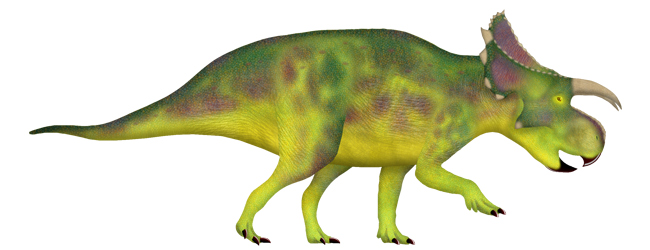
Picture credit: Everything Dinosaur

Some Deviations Identified

Although the patterns studied show relative stability through deep geological time, some deviations were identified. Notably, birds, mammals, and members of the Squamata Order (snakes and lizards) each evolved their own specific modes of vertebral ossification, which differ from the ancestral condition in amniotes. Yet again, within these groups, the patterns were also surprisingly stable.

Fellow co-author Professor Nadia Fröbisch (Museum für Naturkunde) explained:

“Ostriches and seagulls, for instance, have very different anatomies and lifestyles, but their vertebral columns ossify in similar ways. This shows that some changes can be observed between the major lineages of land vertebrates, but within each of the main lineages, spine development remained rather stable again.”

This study demonstrates how studying modern animals alongside their ancient ancestors can provide a much deeper understanding of the evolutionary development of key anatomical structures.

Everything Dinosaur acknowledges the assistance of a media release from the Museum für Naturkunde (Berlin) in the compilation of this article.

The scientific paper: “Regionalization, constraints, and the ancestral ossification patterns in the vertebral column of amniotes” by Antoine Verrière, Nadia B. Fröbisch and Jörg Fröbisch published in Scientific Reports.

29 12, 2022

A New Dwarf Nodosaurid Called Patagopelta

By |2024-02-08T08:38:09+00:00December 29th, 2022|Categories: Dinosaur and Prehistoric Animal News Stories, Dinosaur Fans, Main Page, Palaeontological articles, Photos/Pictures of Fossils|0 Comments

In today’s blog post we look at the dwarf nodosaurid Patagopelta (P. cristata), which was formally named and described earlier this month.

A new, very small, armoured dinosaur has been named and described from fossils found in Argentina. The dinosaur which measured around 2 to 2.3 metres in length (based on the dimensions of the femur), suggests that some members of the Nodosauridae in Gondwana became smaller in the Late Cretaceous, perhaps as armoured dinosaurs in South America were under evolutionary pressure from other ornithischians and titanosaurs.

Dwarf nodosaurid Patagopelta
A life reconstruction of the newly described, dwarf nodosaurid from Argentina (Patagopelta cristata). Picture credit: Gabriel Diaz Yantén.

Dwarf Nodosaurid Patagopelta

Fragmentary remains of Late Cretaceous armoured dinosaurs are known from Chile and Argentina, but little work had been undertaken to assess these specimens and to review their phylogeny and taxonomic relationship with other members of the Ankylosauria clade from North America and elsewhere in the world.

Writing in the ” Journal of Systematic Palaeontology”, the researchers led by Facundo Riguetti, a CONICET doctoral fellow, reassessed the known ankylosaur material in conjunction with some other recently found fossils and, as a result, they were able to establish a new nodosaurid species from bones and a single tooth found in sediments of the Allen Formation (Campanian–Maastrichtian) in Salitral Moreno, Río Negro Province (northern Patagonia).

Patagopelta cristata

The dinosaur’s genus name translates as “Patagonian shield” whilst the trivial name derives from the Latin for crest – a reference to the diagnostic crests on both the anterior surface of the femur and the lateral osteoderms of the cervical rings.

Dr Riguetti commented:

“The importance of the study lies in the fact that Patagopelta is the first species of Ankylosauria described for the continental territory of Argentina, which fills the existing gap for this group and adds a new thyreophoran to the very few incomplete and indeterminate remains known for our country from this type of ornithischian dinosaur.”

Dwarf nodosaurid Patagopelta (views of the femur).
The right femur of Patagopelta (specimen number MPCA-SM-1), in A, anterior, B, posterior, C, lateral, D, medial, E, proximal and F, distal views. As the fragmentary left femur would have been the same size it is thought the femora came from a single animal. Other fossil remains represent several individuals. Abbreviations: fh, femoral head; fn, fibular notch; ft, fourth trochanter; gtr, greater trochanter; it, interwoven texture; lc, lateral condyle; le, lateral epicondyle; li (atr), linea intermuscular (associated to the anterior trochanter); lmca, linea muscularis caudalis; lmcr, linea muscularis cranialis; mc, medial condyle. Scale bar = 10 cm. Picture credit: Riguetti et al.

The Right Femur

The best-preserved fossil element is the right femur, which is complete and shows typical anatomical characteristics associated with the Nodosauridae. This bone along with the distinctive cervical osteoderms led to the erection of this new species. As the femur is only 25 cm in length and bone histology suggests an adult animal, the researchers conclude that Patagopelta was a dwarf form of armoured dinosaur.

Co-author Sebastián Apesteguía, a CONICET researcher, explained:

“For an armoured dinosaur, Patagopelta is extremely small. Due to the size of the femur, only 25 centimetres in length, we estimate that the animal must have been between two and three meters long, while, in general, ankylosaurs are medium-sized or large animals, with an average length of between four and five metres.”

A Faunal Exchange Across the Americas

Although it is thought that the Nodosauridae evolved in the Northern Hemisphere, towards the end of the Cretaceous (Campanian – Maastrichtian), a land bridge existed between North America and South America that permitted a faunal exchange. Titanosaurs migrated north, which explains why fossils of titanosaurs such as Alamosaurus occur in the USA. Ornithischian dinosaurs such as hadrosaurs and nodosaurids moved south.

Alamosaurus scale drawing.
Scale drawing of Alamosaurus. A giant titanosaur known from North America that is probably descended from titanosaurs that roamed South America. Picture credit: Everything Dinosaur.
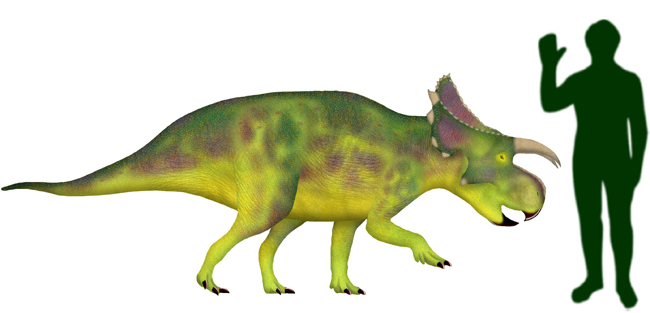
The image above shows a typical Late Cretaceous titanosaur, for models of Late Cretaceous dinosaurs including titanosaurs and armoured dinosaurs: CollectA Prehistoric Life Models.

Sebastián Apesteguía added:

“That is why in South America we only expect to find animals like Patagopelta in rocks from the Late Cretaceous, just before the global extinction of the dinosaurs took place.”

Dwarfism in Late Cretaceous South American Thyreophora

The size of Patagopelta along with the recently described Stegouros (Soto-Acuña et al, 2021)*, from southernmost Chile, suggests that armoured dinosaurs in South America may have gradually become smaller. This trait is not known in members of the Thyreophora described from other parts of the world. Palaeontologists have speculated that perhaps competition from titanosaurs and the migration of hadrosaurs into South America might have led to armoured dinosaurs adapting to different ecological niches to avoid competition. By being smaller these animals needed fewer resources than larger, contemporaneous herbivorous dinosaurs.

It has also been suggested that the geology of Patagonia where the fossils of Patagopelta were found might provide a clue to the dwarfism. Geologists are aware of several Late Cretaceous marine transgressions in the region. This might have led to the establishment of an island archipelago with dinosaurs living on these small islands gradually become smaller due to a scarcity of resources (the “island rule”).

Tracks of Dwarf Ankylosaurs

Members of the Patagopelta research team had previously described tracks of dwarf ankylosaurs, possibly affected by similar circumstances, preserved in Upper Cretaceous deposits in Bolivia.

*To read Everything Dinosaur’s 2021 article about the discovery of Stegouros: New Armoured Dinosaur from Chile.

Everything Dinosaur acknowledges the assistance of a media release from Consejo Nacional de Investigaciones Científicas y Técnicas (CONICET) in the compilation of this article.

The scientific paper: “A new small-bodied ankylosaurian dinosaur from the Upper Cretaceous of North Patagonia (Río Negro Province, Argentina)” by Facundo Riguetti, Xabier Pereda-Suberbiola, Denis Ponce, Leonardo Salgado, Sebastián Apesteguía, Sebastián Rozadilla and Victoria Arbour published in the Journal of Systematic Palaeontology.

Go to Top