All about dinosaurs, fossils and prehistoric animals by Everything Dinosaur team members.
15 11, 2007

Newsletter – Christmas Gift Ideas from Everything Dinosaur

By |2023-02-14T13:43:10+00:00November 15th, 2007|Categories: Everything Dinosaur Newsletters, Main Page|1 Comment

Christmas Gift Ideas from Everything Dinosaur

Dear Newsletter reader, (note from the editor – we do personalise all our newsletter addresses)

With Christmas just 42 days away your thoughts may be turning to what to get the Dinosaur fans in your family.  Here are a couple of suggestions from Everything Dinosaur to inspire young palaeontologists.

Dinosaur Gift Ideas

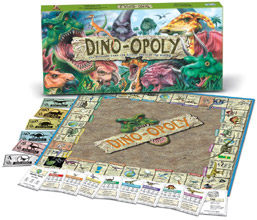
An unusual dinosaur board game, a variation on a family favourite board game.

Dinosaur Crafts

Over the last few years there has been a large increase in dinosaur and prehistoric animal themed toys and games.

With over hundreds of dinosaur themed toys and gifts there is something for everyone at: Everything Dinosaur.

14 11, 2007

Frequently Asked Questions – Providing Helpful Answers

By |2024-04-02T21:32:34+01:00November 14th, 2007|Categories: Everything Dinosaur News and Updates, Main Page|0 Comments

Frequently Asked Questions

The Internet entrepreneur Simon Nixon in an interview recently stated that “in the worldwide web, nothing stands still in this industry, change happens in a heartbeat”.

We are not about to doubt his words as we are constantly bombarded with offers, tips and promotions to do with our websites and in particular our main dinosaur and prehistoric animal website – Everything Dinosaur.

Still, over the last few weeks we have been working on two new initiatives related to our little company.  Firstly, we have added a Frequently Asked Questions section to our website (FAQs).  These pages went live yesterday and they feature a number of questions that have been asked by our customers and visitors.  We have done our best to provide further information, plus of course adding our contact details and the ability to e-mail us if any visitor should require further clarification or assistance.

Our new FAQ pages: Everything Dinosaur FAQ.

On the subject of frequently asked questions, we must write some web log articles on some of the more popular questions that our experts get asked, but this will have to wait for another day.

The second new development is going to be our first ever customer newsletter.  Rather than rely on our IT support  to write this we have decided that some of the less Internet savvy team members should get involved.   After all, it is all part of the customer service at Everything Dinosaur.

There are a couple of reasons behind this thinking:

1).  With e-commerce becoming more popular the rest of us had better brush up our IT skills.

2).  This gives everyone in the company the chance to learn a new skill.

Our first newsletter will be quite basic, but after all our attempts and the hours we have spent we are quite proud of it.  As teachers, parents and dinosaur experts we profess not to have a great deal of hypertext mark-up language experience but with a little tuition we seem to have completed this exercise without too many anxiety attacks.

Naturally, the best measure of our work will be in the responses we get from our newsletter subscribers.  We intend to send out the newsletter today (Wednesday), so we will soon find out.

Now to the next task, finding a way of publishing our first newsletter on this web log…

The industry may be changing rapidly, we tend to be a little less quick in our ability to update technology; we would rather focus on satisfying our customers and packing orders, so I guess we have got our priorities just about right.  However, today should see our first newsletter go out, so we may not be the fastest when it comes to grasping new ideas and technology but rather like the tortoise in the race against the hare; we get there in the end.

13 11, 2007

Is it a New Book or is it a New Board Game? It’s Both!

By |2024-04-02T21:28:31+01:00November 13th, 2007|Categories: Everything Dinosaur Products, Main Page, Press Releases|0 Comments

The Book of Prehistoric Pop-Up Board Games

A novel twist to a conventional book about prehistoric animals, “Prehistoric Pop-Up Board Games”, combines the features of a book about dinosaurs and other animals from the Age of Reptiles with four prehistoric themed board games.

The Book of Prehistoric Board Games

Is it a book or a game – it is both!

Picture Credit: Everything Dinosaur (Tango)

To view the range of dinosaur themed products in stock: Everything Dinosaur.

Beautifully illustrated by the well-known commercial artist Bob Nicholls, the book takes players through four prehistoric adventures from the Jurassic and Cretaceous.  Each game section can be played by four players and individual game counters are provided within the book’s contents for you – although more players can join in, little model dinosaurs make excellent counters too.

In the first game, you become an Allosaurus, a fierce meat-eater from the Late Jurassic and you have to hunt down a Stegosaurus.  Players then move onto the Cretaceous and face the perils of being a baby pterosaur just hatched looking for a tasty fish to eat; before plunging into the sea to confront the mighty Mosasaurus and other marine perils as you attempt to swim to safety, with your counter which could either be an ichthyosaur, plesiosaur or pliosaur.

Of course any children’s book would not be complete with out an appearance by Tyrannosaurus rex.  Your travels send you to very last days of the dinosaurs and choosing your herbivorous dinosaur game counter you face the dangers of the Late Cretaceous of North America and try to avoid becoming a snack for the ever-hungry predator.

We found the book/games fun and suitable for children aged 5+, although it did appeal to a couple of very enthusiastic 4-year olds we know, who took to it with equal relish.

12 11, 2007

Digging for Dinosaurs – Finding New Fossils

By |2024-04-02T21:29:28+01:00November 12th, 2007|Categories: Everything Dinosaur Products, Main Page, Press Releases|0 Comments

Digging for Dinosaurs – Excavate your own Prehistoric Animals

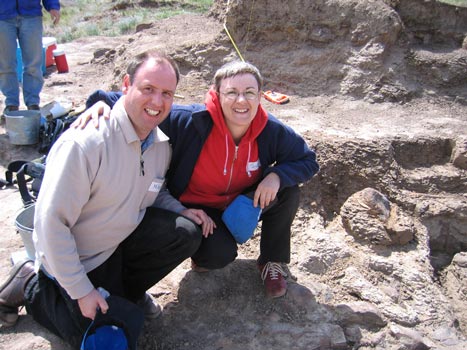
We often get asked by school children “what does it feel like when you find a fossil?”.  No matter how small and insignificant the find we still get a thrill out of finding fossils, especially when you have been working all day at a dig site, or wandering up and down some shoreline with a gale blowing into your face.

Digging For Dinosaurs

I recall one occasion when we were working with a team of palaeontologists excavating an assemblage of hadrosaur remains that had been deposited in an ancient stream bed.  The carcases had accumulated and become heaped up onto each other, there were at least three adult hadrosaurs within the matrix.  Although it was early days and no skull material had yet been found we were confident that they were the remains of  Edmontosaurus.  Before the bones were buried this pile of corpses had attracted a number of scavengers.  We found crocodilian teeth and a single tooth from a troodontid.

Digging for Dinosaurs

Pause for a pic next to a digs station. Rocks, fossils and digging for dinosaurs.  Picture credit: Everything Dinosaur.

Picture credit: Everything Dinosaur

All in all the site yielded a lot of palaeontological evidence, although I do remember one day when I toiled under the hot sun (we were digging in Alberta as part of a Royal Tyrrell museum team); for hours and hours and although stations either side of me were working on impressive fossils (tibia and fibia to be precise), where I had chosen to dig I could find nothing.  I even went back over the sediment I removed and sieved it again in case I had missed some tiny fragment.  After all my labour, late in the afternoon I uncovered my first fossil of the day – a piece of ossified tendon, tiny, but to me I was thrilled!

No matter whether it is the simplest brachiopod, bivalve, belemnites or an articulated brachiosaur, finding something that lived millions of years ago, and exposing it to human eyes for the first time – it still is an enormous thrill.

When we work on designing items for young palaeontologists we try to create products and games that give them a chance to relive the experience of excavating their very own fossils.

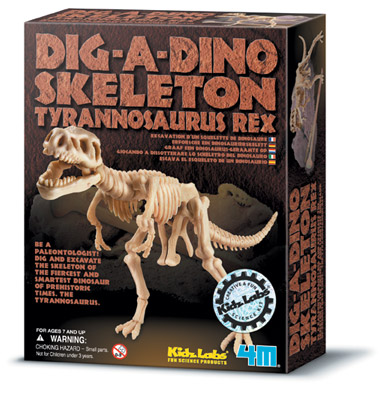
One such product is the “Digging for Dinosaurs” range.  Models of prehistoric animal skeletons are set into a solid block of gypsum and then using the tools provided in the kit, children can have a go at excavating their own prehistoric animal.  If only the real thing was as much fun and came with the guarantee of finding a complete specimen in a single block.

Still, that is not the point, these kits are fun and give a real sense of achievement when all the digging is done.  There are a number of such kits available – the larger ones (house brick size) are called “Dig a Dino” animals in the series include Tyrannosaurus rex, Velociraptor, Triceratops, Stegosaurus and a pterosaur (Pteranodon).

Dinosaur crafts, models and toys: Dinosaur Toys, Models and Gifts.

Dig-a- Dino Range Product Shot

Source: Everything Dinosaur (Kids Labs)

Here are a couple of tips for all the parents of budding palaeontologists:

1).  It is a good idea to put plenty of newspaper down (we use lots of newspaper to wrap specimens in real dig), but in this case it is best to do this as it saves a lot of cleaning up afterwards.

2).  A thump with a mallet is a good way to start the dig (get Dad to do this).

3).  Keep the gypsum bits away from your sink and certainly don’t flush bits away down the plughole, you might lose part of your model skeleton and in extreme cases block the drain.

11 11, 2007

Putting Australian Dinosaurs on the Map

By |2022-11-05T12:57:07+00:00November 11th, 2007|Categories: Dinosaur and Prehistoric Animal News Stories, Geology, Main Page|0 Comments

Joint US and Australian Team excavate Rich Fossil Beds in Queensland

The small town of Winton in the centre of Queensland has become the focus for an international team of palaeontologists as they try to unearth secrets of Australia’s prehistoric past.

Researchers from the University of Queensland and the Carnegie Museum of Natural History in Pittsburgh, USA are hoping that the extremely rich Mesozoic fossil beds will shed new light on the relationship between Australia’s dinosaur fauna and the rest of the world.

Australian Dinosaurs

The team are currently excavating a series of bone beds close to the town of Winton on the Australian route 66.  The town’s only other claim to fame is that the song “Waltzing Matilda” is believed to have originated there.

The joint US and Aussie team headed by Dr Steve Salisbury (University of Queensland)  and Dr Matt Lamanna (Carnegie) are hoping that their work will help palaeontologists understand the evolution of dinosaurs on the southern landmass of Gondwana, of which Australia was part during the Mesozoic.

Australian dinosaur fauna is little known when compared to the evidence amassed about dinosaurs in Europe, the Americas and Asia.  Many scientists see the Australian fauna as an unusual blend of ancient genera long extinct elsewhere in the world and other types of dinosaur more commonly associated with the Northern Hemisphere.

For example, evidence has been uncovered previously that indicated that allosaurs (large bipedal meat-eaters) survived in Australia into the Cretaceous whilst elsewhere in the world this particular family of dinosaurs died out.

What Types of Theropod Dinosaurs Roamed Australia?

Papo Allosaurus new colour scheme (2019).

Did allosaurs once roam Australia?  Palaeontologists hope new theropod dinosaur fossil discoveries will further their research.  Picture credit: Everything Dinosaur.

Finding New Species

As well as finding some new species the scientists are hoping to uncover evidence of animals moving between the landmasses that comprised Gondwana, with the expectation that some of the dinosaur groups associated with South America may also have been present in Australia.

According to Drs Salisbury and Lamanna, the great wealth of fossil material at the Winton site should help them piece together the story of Australia’s prehistoric animals.

Everything Dinosaur stocks a wide range of models and replicas of Australian prehistoric animals, such as those found in the CollectA Prehistoric Life series: CollectA Prehistoric Life Models and Figures.

This joint US and Australian research is funded in part by an Australian Research Council grant, and is being conducted in collaboration with the Isisford Shire Council.

Story sourced from: University of Queensland (09/11/07) – “Digging for Dinosaurs in Outback Australia”.

University of Queensland (2007, November 9). Digging For Dinosaurs In Outback Australia.
10 11, 2007

New Dinosaur Pencil Sharpeners – an Ideal Stocking Filler

By |2024-04-03T06:59:25+01:00November 10th, 2007|Categories: Everything Dinosaur Products, Main Page, Press Releases|0 Comments

Dinosaur Pencil Sharpeners – 8 Dinosaurs to Choose From

Every week the team at Everything Dinosaur gets together to have a meeting, this usually takes place on a Friday or after we have finished work on a Saturday afternoon.  The first item on the agenda is to “put the kettle on” and whilst one of us makes the tea the rest of the team draw up an agenda and make sure all the points, issues and ideas that have arisen over the last few days are recorded so that they can be discussed amongst ourselves.

Dinosaur Pencil Sharpeners

One item raised a couple of weeks ago was to add Dinosaur Pencil sharpeners to our product range, we had looked a this product a while ago and although it had favourable reviews from our testers at the time, we never got round to adding it to our product range.

We reviewed the comments that had been made about these little plastic sharpeners with a model of a dinosaur on top.  Customers liked the quality of the item, it certainly sharpened pencils – which is always a promising start for a pencil sharpener.  They also liked the choice of eight different dinosaurs in the product range we had examined.

With one eye on all the school visits and Christmas Fairs that Everything Dinosaur attends at this time of year we decided to give these sharpeners a go.

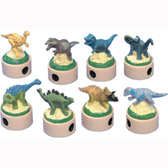
Dinosaur Pencil Sharpeners – Eight to choose from

Picture credit: Everything Dinosaur

To visit the Everything Dinosaur website: Everything Dinosaur.

There are eight different Dinosaur pencil sharpeners to choose from.  I don’t know whether the manufacturers were aware of what they had done but there are are four saurischian (lizard-hipped) Dinosaurs represented by an ornithomimid (ostrich mimic), a sauropod and two theropods plus four ornithischians in the mix.   The ornithischians represented are an ankylosaur, stegosaur, ceratopsian and a pachycephalosaur.

My these manufacturer’s are clever!  They have created a simple product range that just about covers the diversity of the Dinosauria.  Somehow I don’t think this was done as a deliberate attempt to represent the main dinosaurian clades, more likely the different models were chosen because they looked good.  However, this little set illustrates the diversity of the dinosaurs very nicely – and that will do for us.  It is an excellent example of the dinosaur themed school supplies that are available from Everything Dinosaur.

9 11, 2007

Very Ancient Udders! Rare Mesozoic Cow Discovered in India

By |2024-04-03T07:00:16+01:00November 9th, 2007|Categories: Dinosaur and Prehistoric Animal News Stories, Main Page|0 Comments

Evidence of Ancient Cow from India

A team of scientists from Northern India working in the Narmada river valley have unearthed evidence of a prehistoric mammal. They have discovered an ungulate (hoofed mammal) fossil, from the very end of the age of the Dinosauria.  The fossils of a Meozoic cow have been discovered!

Mesozoic Cow

The Narmada valley is a well known geological site with an extensive range of exposed strata dating back to the Late Cretaceous and the Palaeocene.  The scientists discovered a single 2.5 cm long tooth in sediments estimated to be 65 million years old.  Comparing the tooth to living mammals the team has speculated that it could belong to a cow-like mammal.

A Fossil Tooth from a Cow-like Mammal

Teeth are made from enamel, which is the hardest substance in the bodies of vertebrates, and excellent material for preservation and fossilisation.  Mammalian teeth have many distinctive characteristics when compared to reptilian dentition, indeed broad generalisations can be made between placental and monotreme mammals based on the crown shape and structure of single finds such as this one.

The fossil predates any other similar discoveries and it places India as one of the locations where ungulates first evolved. The research has just been published in the American Journal Science.  The authors of the paper on the discovery of this ungulate mammal are Dr G V R Prasad, Omkar Verma, Dr Ashok Sahni, Varun Parmar and Dr Ashu Khosla.

Prehistoric Animal Models and Replicas

To purchase prehistoric animal models and replicas including models of Mesozoic and Cenozoic mammals: CollectA Deluxe Prehistoric Life Figures.

The Narmada valley is notorious for causing palaeontologists problems with dating specimens, particularly early hominid remains. An ancient cranium of modern being H. sapiens, was discovered in the area. It was controversially dated to 700,000 years ago, making it the earliest remains of H. sapiens ever found. However, recent research by notable Indian scientists Rajeev Patnaik and Parth R Chauhan suggest that this isolated hominid fragment is not as old as previously stated.

8 11, 2007

Ideas on Dinosaurs Breathing – A Breath of Fresh Air

By |2023-02-19T10:39:59+00:00November 8th, 2007|Categories: Dinosaur and Prehistoric Animal News Stories, Main Page, Palaeontological articles|2 Comments

Study shows Dinosaurs were Super Efficient Breathers

A recent study carried out by a team of scientists from the Faculty of Life Sciences at the University of Manchester (England) has added further evidence to the theory that dinosaurs and birds are closely related.

One view of dinosaurs is that many of them were active, highly mobile and busy animals rather than the very slow, cumbersome leviathans depicted by earlier scientists and illustrators.  To be able to move quickly animals need efficient lungs to provide enough oxygen to muscles in their bodies.  For the real heavyweights of the dinosaur world – the sauropods, their sheer size led to their own set of anatomical problems.
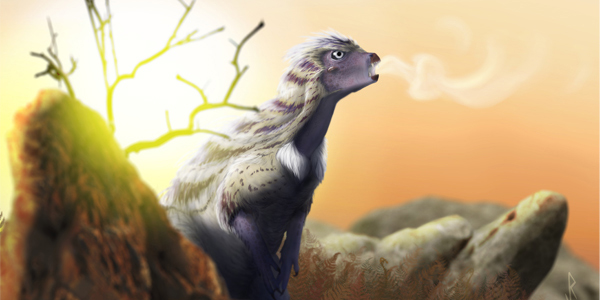
Heterodontosaurus breathing study.

A life reconstruction of the early ornithischian Heterodontosaurus.  Research suggests that dinosaurs were super efficient breathers.

Picture credit: University of Witswatersrand.

The long necks on the likes of Diplodocus, and Brachiosaurus were too long for air to reach their lungs on the first breath, without super efficient lungs to process air and a large and powerful heart to pump blood round their enormous bodies, they would not have been able to function properly.  In the case of a brachiosaurid, having to pump oxygen rich air from the centre of the body 40 feet up into the air to reach its head (and the tiny brain that perched on top of a fifty tonne body), would have been a momentous task without some sort of super efficient breathing system.  If a sauropod did not have a very efficient heart and lungs then its blood pressure would have been very difficult to manage.  If it dropped its head suddenly, the dramatic change in blood pressure could have caused the animal to lose consciousness; had they been burdened by a mammalian type set of lungs.

The good news for dinosaurs, revealed in this new study from the Manchester team, is that it looks like many of them had super efficient breathing systems, much superior to our own lungs and hearts.

Mammalian Breathing – the Downside

I am not one to put a downer onto our own mammalian anatomy, after all, if my lungs and heart did not work I certainly would not be able to finish this article.  However, our breathing processes although perfectly adequate for our needs are not very efficient.  In order for us to be active our blood needs to supply oxygen to our organs and muscles, and then take the waste products away.  When we breathe in, air enters the two sack like objects in our chest (the lungs), through capillaries and other tiny vessels the oxygen seeps through into the blood stream and is carried away to all parts of the body by the blood cells.  Waste products such as carbon dioxide is dumped back into the lungs by the blood stream and this is exhaled.  A strong heart enables more oxygen to be pushed through our bodies.  Although this is something of a very simplified explanation, I am sure you get the idea.

The mammalian system does have a major drawback, the lungs have only one entrance/exit point for the air.  We mix up the exhaled air with new air being breathed in.  We never get rid of all the used air inside us, every time we inhale we just mix fresh air with oxygen extracted air we are going to breathe out.  This is not a very efficient process and as a result this contributes to the physical limitations of our bodies.

Birds, in contrast, are much more efficient breathers.  Instead of just one entrance/exit point in the lungs they have openings at both ends, plus a series of air sacs in front and behind the lungs.  It is these air sacs, not the lungs that inflate and deflate with each breathe.  Acting like bellows they pump the air through the lungs and out a different tube than it went in.  This is a one-way system with old, stale air never mixing with fresh oxygen rich air and as a result, it is a very effective system.  For their size, birds have disproportionately large hearts, these provide the pumps to enable the whole system to function.

The trouble with air sacs is that you have to make room for them inside your body.  Birds allow for the air sacs by having hollow bones which can accommodate these specialised features.  Hollow bones are found in the fossil record in pterosaurs, sauropods and the theropods – as well as certain other groups such as sphenodonts.

Taking the pterosaurs first, although they are not closely related to birds, they may have evolved a similar solution for the need to get lots of oxygen into their bodies as they too were fliers.  You need a super efficient oxygen transport system if you are going to do something as aerobically challenging as fly.

Dinosaurs Breathing

The sauropods and theropods (lizard-hipped dinosaurs – saurischian dinosaurs) show honeycomb like structures linked by tiny passageways in their fossilised bones.  These structures would have helped these animals by keeping their skeletons light to aid mobility and to assist with balance but could they also be indicators of a super efficient air-sac breathing system?

The Manchester University Team, led by Dr Jonathan Codd studied the breathing processes of modern birds and crocodiles (the closest living relatives to dinosaurs).  They then compared these specimens to the fossils of small, bipedal Coelurosauria which are known to have hollow bones and the honey comb arrangement of structures.  A specific group of Coelurosauria was studied – the maniraptorans, animals such as Oviraptor, Velociraptor and Microraptor, believed by many palaeontologists to be the group of dinosaurs that actually gave rise to birds.

Looking Closely at the Ribs

Dr Codd and his colleagues (including palaeontologist Dr Phil Manning), focused on tiny bones associated with ribs called uncinate processes.  These tiny bones stretch between the ribs and are found in modern birds.  Initially it was thought that these bones helped to strengthen the rib cage and enable birds to cope better with the physical stresses of flying.  Now it is thought that they also act as levers helping to inflate the air sacs by pushing the rib cage outwards.  Birds breathe with their beaks closed, air travels along the nasal cavity before filling the lungs and multiple air sacs.  Air can flow in and out efficiently, thanks in part to the squeezing and pumping action of bones such as the uncinate processes.

The dinosaur species studied were found to have tiny L-shaped uncinate processes, could these bones have helped these animals expand their rib cages and sternums to enable the air sacs within their bodies to have been filled?  In proportion to the birds; the dinosaurs have relatively larger uncinate processes, comparable to the scale seen on super efficient bird breathers such as penguins.  As penguins dive for food they need to be able to keep a great deal of oxygenated blood inside their bodies.  This new work, due to be published in the Proceedings of the Royal Society B: Biological Sciences, presents an explanation as to how groups of dinosaurs such as the theropods and sauropods were able cope with the problem of getting a lot of oxygen to their muscles.

So certain types of dinosaurs breathed like birds.  How the ornithischians such as the hadrosaurids and the Thyreophora managed is still open to debate, perhaps their extensive and highly complicated nasal passages seen in the skulls of certain genera may provide a clue.

Everything Dinosaur stocks a huge range of dinosaur and prehistoric animal models including saurischian and ornithischian dinosaurs.  To view this range: Dinosaur and Prehistoric Animal Models.

7 11, 2007

Little boy from Wisconsin Finds Mammoth Tooth

By |2023-02-14T08:14:01+00:00November 7th, 2007|Categories: Dinosaur and Prehistoric Animal News Stories, Main Page|0 Comments

American Boy Finds Mammoth Tooth

Three-year old Kaleb Kidd from La Crosse, Wisconsin found a Woolly Mammoth tooth whilst playing at a family friends property just outside the town of La Crosse.  Mammoth teeth as they are so large and robust are found occasionally in this area.  The enamel in the tooth readily fossilises and is resistant to erosion.  For the Kidd family this find makes it a remarkable double, as grandfather, Gary Kidd had found a mammoth tooth in the Mississippi area several years earlier.

Woolly Mammoth Tooth

The American mid-west has revealed lots and lots of Mammoth fossils, both the Woolly Mammoth (M. primigenius) and the larger Columbian Mammoth (M. columbi) are known to have lived in this area during the Pleistocene epoch.

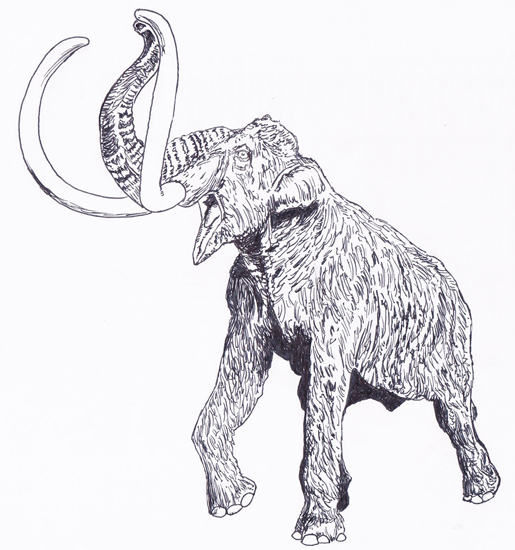
Steppe Mammoth illustration.

An illustration of a Steppe Mammoth (Mammuthus trogontherii) a typical member of the Mammoth family.

Ironically small children make excellent fossil hunters, not only are they usually bubbling over with enthusiasm, but their eyes being younger are better able to distinguish between objects on the ground.  Also because they are physically lower to the ground than adults this makes them better spotters.

Distinctive Ridges on the Tooth

The distinctive ridges of the tooth would have made it stand out from other rocks, now Kaleb and his grandfather need to find the rest of the mammoth!

The tooth has been provisionally dated from between 30,000 and 10,000 years ago.  Mammoths went extinct in the United States after the Ice Ages ended, perhaps their demise was hurried along with the improved hunting techniques of Clovis Man.

We have lots and lots of Mammoth products at Everything Dinosaur.  Woolly Mammoths appear regularly in our top ten prehistoric animal surveys.

A spokesperson from the award-winning, UK-based mail order company commented that the Woolly Mammoth was a perennial entrant in the top ten of our prehistoric animal surveys with prehistoric animal fans of all ages voting for these ancient elephants.

To view the range of prehistoric animal soft toys at Everything Dinosaur: Prehistoric Animal Soft Toys.

6 11, 2007

Game on this Christmas – A New Dinosaur Board Game

By |2024-04-02T21:35:01+01:00November 6th, 2007|Categories: Everything Dinosaur News and Updates, Everything Dinosaur Products, Main Page, Press Releases|0 Comments

Dinosaur Dino-opoly Featured in National Women’s Magazine

The November edition of “Prima” – a women’s magazine with a strong practical content featuring crafts, cookery, fashion and beauty as well as shopping tips and ideas, carried a feature on Dinosaur Dino-opoly.

In an article, which featured on the “Family Notebook” page of the magazine, the top five suggested family games for Christmas were reviewed.

Lovely to see Dino-opoly given the number one spot.

This is what the reviewer said:

“Have hours of fun with Dino-opoly (age 7 and up), a prehistoric version of a classic family board game.  Players can buy their favourite dinosaur, collect bones and trade them in for museum exhibits.”

The Dino-opoly Board Game

Picture Credit: Everything Dinosaur

To view the range of toys and games available at Everything Dinosaur: Dinosaur Toys and Gifts.

It certain is a twist on the traditional family board game, there is even a quick 1 hour whizz round the board version.  The best thing of all is that it provides children with lots and lots of facts and information about dinosaurs, helping them learn.

Go to Top