All about dinosaurs, fossils and prehistoric animals by Everything Dinosaur team members.
4 12, 2010

New Wild Safari Dino Tyrannosaurus rex Model

By |2023-01-14T11:41:04+00:00December 4th, 2010|Categories: Dinosaur Fans, Everything Dinosaur News and Updates, Main Page|0 Comments

New Model of T. rex for 2011 from Safari

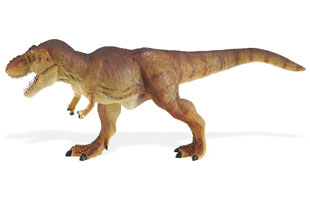
Hot on the trail of the new releases from Safari in the Carnegie Dinosaur Collectibles series of authentic scale model replicas, comes this new interpretation of Tyrannosaurus rex.  Part of the Wild Safari Dinos model range, this is a new model of T. rex, one that we assume will replace the existing model within the current Wild Safari Dinos range.  Safari Ltd have introduced a new Tyrannosaurus rex model.

The New T. rex Model

Picture credit: Everything Dinosaur

Tyrannosaurus rex Model

The model shows this, most famous of all theropod dinosaurs, in a new pose.  It is less upright and the head more in proportion to the rest of the body and to the feet.  Another subtle difference between this model and earlier versions of T. rex are the position of digits one and two on the hands.  In earlier models, the fingers point downwards, in what we call the “bunny position”.  However, in this new model the figures point towards each other, in what we call the “grasping position”.  This reflects some of the latest research into tyrannosaurs and their anatomy.

This model should be available in the spring of 2011.

To view the range of Wild Safari Prehistoric World models and figures available from Everything Dinosaur’s award-winning website: Safari Ltd. Wild Safari Prehistoric World.

3 12, 2010

What is a Nomen nudum? Here is the Answer

By |2024-04-21T09:30:20+01:00December 3rd, 2010|Categories: Educational Activities, Main Page|0 Comments

What is a Nomen nudum?

We were emailed this morning by a reader of our Everything Dinosaur blog with a question.  The emailer had come across the term Nomen nudum whilst reading an article about dinosaurs and asked us to explain what the term means.

Nomen nudum

When organisms are classified, be they animals, plants, or whatever, they are named.  However, to be properly accepted in scientific circles as a name for a specific organism (genus and species name), a formal description has to be made.  To make a formal description a “type” specimen has to be decreed, a sort of “master specimen” to which all other material ascribing to that species is compared.  This is known as the holotype.  In essence, the holotype represents the specimen on which the original scientific description of that organism is based.

Nomen nudum (usually written in italics), is a Latin phrase used to describe any organism whose definition in terms of a formal scientific description has not been completed – it has no holotype material assigned.  The plural of the phrase, indicating more than one type of organism being described in this way is Nomina nuda.  The phrase literally means “naked name”.

Visit Everything Dinosaur’s user-friendly and award-winning website: Everything Dinosaur.

2 12, 2010

Chinese News Agencies Report Discovery of “Almost Complete” Sauropod

By |2023-03-06T12:13:28+00:00December 2nd, 2010|Categories: Dinosaur and Prehistoric Animal News Stories, Main Page|0 Comments

150-Million-Year-Old Sauropod Fossil Found

Chinese news agencies are reporting the discovery of a very well preserved and almost complete skeleton of a sauropod dinosaur (long-necked dinosaur).  The remains of this huge animal, are currently being excavated by Chinese scientists and local volunteers.  The fossil was found in Qijiang County in Chongqing Municipality in south-western China.

Sauropod Dinosaur

An extensive dig site has already been sealed off, to permit the fieldworkers to excavate the area thoroughly.  The fossil was found in strata laid down during the Late Jurassic – approximately 150 million years ago.  The sauropod has yet to be formally identified and named.  Scientists are unsure as to whether these fossil remains represent a new genus.

A Drawing of a Sauropod Dinosaur

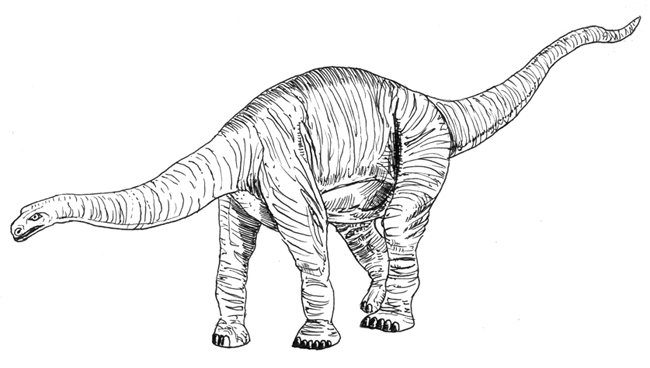
Jurassic dinosaurs.  A typical sauropod dinosaur.

An illustration of a typical sauropod from the Middle Jurassic (Cetiosaurus). Picture credit: Everything Dinosaur.

Picture credit: Everything Dinosaur

To view models and replicas of Jurassic dinosaurs including sauropods: PNSO Museum Quality Dinosaur Models.

1 12, 2010

New Safari Carnegie Collectibles Carnotaurus Model

By |2023-01-14T11:30:11+00:00December 1st, 2010|Categories: Dinosaur Fans, Everything Dinosaur News and Updates, Main Page|0 Comments

New Carnegie Collectibles Carnotaurus Model – Safari Ltd

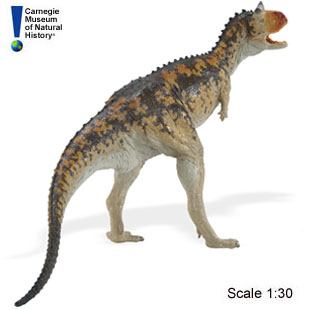
Images of the new Carnotaurus (C. sastrei) have just been made available to us at Everything Dinosaur.  This new sculpt is an addition to the Carnegie Collectibles range of prehistoric animals.  It is in 1:30 scale and is the very latest scientific interpretation of “flesh eating bull” this bizarre theropod from the Late Cretaceous Argentina. A new Carnotaurus dinosaur model from Safari Ltd.

Carnotaurus Dinosaur Model

Safari Carnegie Carnotaurus Model

Picture credit: Everything Dinosaur

We at Everything Dinosaur intend to bring in stocks of this new model in the spring of 2011.

To view Everything Dinosaur’s range of Wild Safari prehistoric animal models: Safari Ltd. Wild Safari Prehistoric World.

30 11, 2010

Ichthyosaurs and their Young – Viviparous Marine Reptiles

By |2023-01-14T11:27:50+00:00November 30th, 2010|Categories: Dinosaur Fans, Educational Activities, Main Page|0 Comments

Ichthyosaurs and their Young – Mesozoic Marine Reptiles

Ichthyosaurs, otherwise known as “fish lizards” are group of marine reptiles, that have their origins in the Triassic Period.  These sea monsters evolved into a variety of forms and adapted to a number of different types of marine habitats and diets.  Although, widely regarded by scientists as being the most highly adapted reptiles in the Mesozoic seas, these creatures began to become rarer and rarer towards the end of the Cretaceous, and it is believed that they died out before the mass extinction event that led to the demise of the dinosaurs and other types of marine reptile.

Ichthyosaurs

Looking like a modern dolphin, ichthyosaurs were powerful swimmers, some of the more streamlined specimens, smaller animals such as Ophthalmosaurus were perhaps capable of swimming at speeds of more than 40 kph.

A Scale Drawing of an Ichthyosaurus
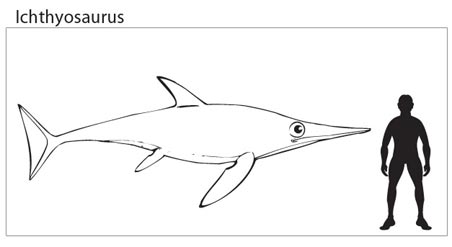
Picture credit: Everything Dinosaur

To read an article about a recent ichthyosaur fossil discovery: Getting Ahead with an Ichthyosaurus.

Many Different Species

Many different species of ichthyosaur are now known.  As a group, they were perhaps the best adapted to a life in the water of all the marine reptiles.  Fossils of Jurassic ichthyosaurs discovered in limestone quarries in Germany (Holzmaden) preserve these animals in exquisite detail.  Some ichthyosaur fossils are so well preserved that the outline of their body shape can still be made out (this is how scientists discovered that ichthyosaurs had a tail fluke).  Fossilised stomach contents that have been analysed indicate that different types of ichthyosaurs ate different types of food, with many of them hunting ammonites and their cephalopod relatives the belemnites.  Fossils of tiny embryos (unborn ichthyosaur young) can be seen inside the bodies of some of the preserved ichthyosaur specimens.  This means that ichthyosaurs did not lay eggs like most other reptiles, but instead gave birth to live young – what scientists refer to as viviparous behaviour.

The ancestors of the ichthyosaurs probably ventured out onto land to lay eggs, just like turtles do today.  However, over many thousands of generations, these creatures became completely adapted to a marine existence and with their highly modified flippers these animals could no longer move around on land.  Most ichthyosaurs would give birth to one or two single babies (often called pups), although one fossil of an ichthyosaur shows eleven embryos preserved inside the body chamber.  It seems that babies were born tail first.

As ichthyosaurs gave birth to fully developed young, there has been much speculation as to how ichthyosaurs behaved.  It has been suggested for example, that, just like modern whales, pregnant ichthyosaurs congregated together in special areas to give birth.  Perhaps, they chose an isolated, sheltered lagoon to give birth.  The calm waters would have helped the youngsters and being close to shore there may have been fewer marine predators and plenty of places for young animals to hide such as reefs and in amongst rocks.

A Scale Drawing of the Viviparous Temnodontosaurus
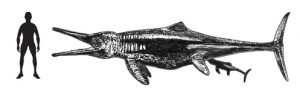
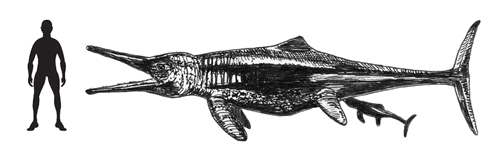
Scale drawing of Temnodontosaurus.

Temnodontosaurus scale drawing. Picture credit: Everything Dinosaur.

Picture credit: Everything Dinosaur

Famous Fossils

Famous fossils from the Late Jurassic strata reveal that these marine reptiles were viviparous.  A female ichthyosaur died in the process of giving birth and her carcase was preserved, becoming one of the most famous fossils of all.  The fossilised remains of young ichthyosaurs can be seen in the body cavity, with another baby preserved as a fossil at the moment of birth.

In some species of ichthyosaur, the young have teeth, whereas the adults have no teeth in their snouts.  This suggests that baby ichthyosaurs may have had a different diet when compared to the adults.  Perhaps the young, agile ichthyosaur babies specialised in catching fish in shallower waters, before migrating to deeper waters to join the adults feeding many on cephalopods and jelly fish.

To view a variety of ichthyosaur and other marine reptile figures: CollectA Age of Dinosaurs Prehistoric Life Models.

29 11, 2010

Winter is Coming – Possible Delays with Parcel Deliveries

By |2023-01-14T11:25:27+00:00November 29th, 2010|Categories: Everything Dinosaur News and Updates, Main Page, Press Releases|0 Comments

Snow, Snow and more Snow

When the UK’s annual snow fall levels are compared to other locations around the world, even ones that share the same latitude as ourselves, we actually get off quite lightly when it comes to the cold, white stuff.  However, as usual, with any heavy snow falls there will be problems including difficulties with delivering parcels via road and rail. Everything Dinosaur team members would like to update customers about parcel deliveries, especially as we approach the festive season.

Visit Everything Dinosaur’s award-winning website for dinosaur toys and games: Everything Dinosaur.

Today, we have just been examining the amount of rock salt that we have in the warehouse, so that we can grit the yard around the warehouse as needs be.  Discussing the onset of bad weather with colleagues and the local courier company it seems that there will be some disruption to courier and other delivery services, including Royal Mail.

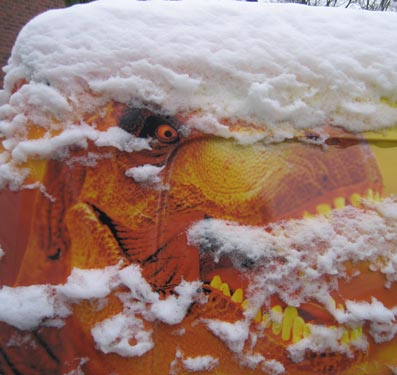
Everything Dinosaur’s Van Covered in Snow

Everything Dinosaur's "dino van" covered in snow.

A dinosaur van covered in snow.  Bad weather could lead to delays with parcel deliveries.  Picture credit: Everything Dinosaur.

Picture credit: Everything Dinosaur

Everything Dinosaur

Naturally, we at Everything Dinosaur will do all we can to turn around orders quickly, to pack them and despatch them to ensure any delays due to adverse weather conditions are minimised.

For information about our deliveries: Everything Dinosaur Delivery Information.

28 11, 2010

A Cool and Extremely Informative Blog – Pterosauria

By |2024-04-12T08:54:14+01:00November 28th, 2010|Categories: Dinosaur and Prehistoric Animal News Stories, Main Page, Palaeontological articles|0 Comments

Recommended Web Log – Pterosauria for all things Related to the “Bird Necks”

Every once in a while team members at Everything Dinosaur get pointed towards a new on-line resource such as a website, forum or blog.  Having spent a little time reviewing some papers on the ancestry of the pterosaurs (flying reptiles), one of our colleagues was pointed in the direction of a really cool web log – dedicated to anything and everything related to Ornithodira, a clade within a larger division of the Order Reptilia – the archosaurs.

The Early Triassic was a critical time in the evolution of back-boned animals.  In the aftermath of the Permian-Triassic extinction event, a mass extinction that led to the demise of something like 70% of all vertebrate genera living on land, the foundations for many of our modern ecosystems were laid down.  The period of time immediately after the mass extinction event sees the origins of a number of today’s successful vertebrates – mammals, turtles and the archosaurs.  Extant members of the Archosauria include the birds and crocodiles.  The ornithodirans, although members of the Archosauria are characterised by their upright stance, ankle bones, and “S-shaped” necks.  The ornithodirans (the name means “bird necks”) are further divided into two related but distinctly different groups:

* Dinosauromorpha – the sub-clade that defines the Dinosaurs

* Pterosauromorpha – pterosaurs (flying reptiles)

Although the exact definition of the Ornithodira has been debated, and the phylogenic relationships between genera and families is in some cases a “grey area” in palaeontology to say the least.  For example, pterosaurs did not seem to possess an upright stance or indeed “S-shaped” necks, but their ancestors did; so they are classified in this way.

A Model of a Member of the Pterosauria

Pterosauria model.

The colourful Schleich Anhanguera pterosaur model. Picture credit: Everything Dinosaur.

Picture credit: Everything Dinosaur

To view the Schleich range of prehistoric animal models: Schleich Prehistoric Animal Figures.

Charting a course through all this is the web log Pterosauria – a blog that provides updates on research, studies and data on this important part of vertebrate evolution.  As the blog owner and writer Taylor Reints states:

“We are a blog that tries to question main dinosaur and pterosaur – ornithodiran – answers or answer ornithodiran questions.”

Either way, if you want to learn more about the ancestry of the Dinosauria and the Pterosauria then this blog is for you.  What’s more the blog contains a lot of brilliant illustrations, bringing these ancient reptiles back to life.

To view models and replicas of pterosaurs and other flying reptiles: Models of Pterosaurs and Flying Reptiles.

27 11, 2010

Bias in the Fossil Record – Preservation Potential

By |2023-01-14T11:13:51+00:00November 27th, 2010|Categories: Educational Activities, Geology, Main Page|0 Comments

A Bias in the Fossil Record

The geological record of life on Earth, that is the fossil record, is not a fair sample of the life that existed in the past.  This is because fossilisation favours certain organisms in certain environments over others.  Fossilisation is more likely to occur if organisms have hard parts to preserve such as shells, teeth, bones and such like.  The habitat and the habits of any organism can also have a dramatic effect on the chances of becoming fossilised. Is there a bias in the fossil record?

Bias in the Fossil Record

Take for instance the following example:

Two species of bivalves (molluscs) are broadly similar and their shells are composed of the same material, one lives by being attached to rocks (mussel), the other lives by burrowing into soft sediment (cockle).  When the mussel dies, it is likely to be displaced from its rocky home and the shell would be most likely broken up against the rocks by wave and tidal action.  The cockle, in contrast when dead would remain buried in the sediment and if not attacked by scavengers it would soon become buried deeper and deeper.  The cockle by nature of its habit and the environment where it lived has a higher preservation potential than the mussel.

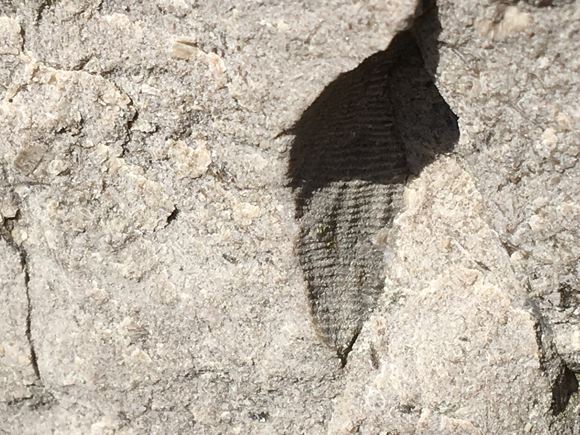
Abundant Hard-shelled Marine Invertebrates Have a Relatively High Fossil Preservation Potential

A view of a lost world, an impression of the shell of a brachiopod preserved in the limestone rock.

A glimpse into a lost world, an impression of the shell of a brachiopod preserved in the limestone. Picture credit: Everything Dinosaur.

Picture credit: Everything Dinosaur

The fossil record shows a bias towards invertebrates with hard shells, that lived in shallow-water, continental-shelf areas and inland lake basins.  Despite the huge size of the oceans compared to the land and the continental shelves and despite the lack of scavengers at the bottom of the deepest parts of the oceans compared to the sunlit areas, very few ocean-floor rocks or fossils are preserved.  Rocks on the ocean floor are prone to subduction back into the mantle as a result of plate tectonics.  In general, the fossil record tends to under represent the ancient life of ocean floors, upland areas on land, forested areas away from water and any organism without hard body parts.

For fossils of iconic invertebrates from the fossil record: Models of Fossil Animals.

Everything Dinosaur team members have put together a teaching guide on preservation potential.  This looks at four specific preservation factors – species abundance, geographical spread, marine versus non-marine and hard body parts versus soft body parts.  This is part of our work on how fossils are formed, explaining the difference between body and trace fossils.

26 11, 2010

Spot the Mistake – All is Revealed

By |2023-01-14T11:03:36+00:00November 26th, 2010|Categories: Dinosaur Fans, Everything Dinosaur News and Updates, Main Page|0 Comments

Spot the Mistake – Here is the Answer

In the previous blog entry we put up a picture of a dinosaur model from the Natural History Museum dinosaur model collection.  This series features a number of famous dinosaurs, creatures like T. rex and Triceratops as well as a couple of the lesser known prehistoric animals such as Megalosaurus and Corythosaurus.

To view this model range and dinosaur toys: Natural History Museum Dinosaur Models.

This model series was developed under the guidance of the Museum’s researcher Dr Paul Barrett, a highly respected palaeontologist.  They are described as “a premier range of ten dinosaurs endorsed by the Natural History Museum (London), developed to a constant 1/40 scale so that the size of the different dinosaurs relevant to each other can be seen.”

Iguanodon Dinosaur Model

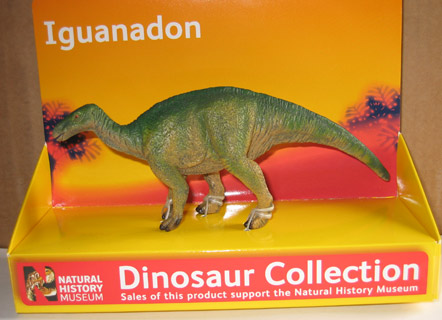
However, we have discovered that our latest batch of Iguanodon models have a significant spelling mistake on their packaging.

Spot the Mistake?

Picture credit: Everything Dinosaur

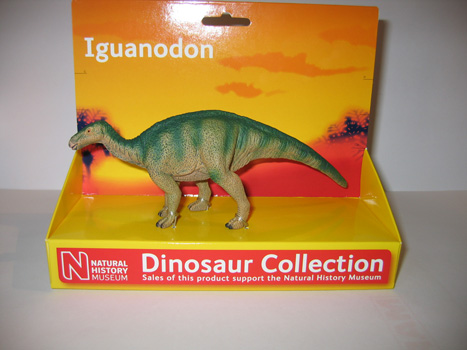
The mistake was noticed by our diligent team members as soon as a new box of these particular models was opened.  The model depicts an Iguanodon, an ornithopod and the second dinosaur to be formally named and described.  Unfortunately, the packaging for the new model has the dinosaur’s name spelt incorrectly.  It states “Iguanadon”, but the correct spelling is Iguanodon – oops!

The Correct Iguanodon Packaging

Whoops!  An Iguanodon dinosaur model with the correct spelling.  Picture credit: Everything Dinosaur.

Picture credit: Everything Dinosaur

Dinosaur Model

We all make mistakes, we at Everything Dinosaur are far from perfect, we make mistakes too, especially with all the long hours that we work, but I would wager that the Natural History Museum in London would be expressing disappointment at the spelling error on the packaging.  After all, it is a product range endorsed by their own scientists.

Have they noticed?

What would Gideon Mantell think?

25 11, 2010

Spot the Mistake – Oops! Helping to Correct Errors on Dinosaur Models

By |2024-04-21T09:20:15+01:00November 25th, 2010|Categories: Everything Dinosaur News and Updates, Main Page, Press Releases|0 Comments

Spot the Mistake

Mistakes happen, that’s why our dinosaur pop-up pencils have erasers on the end of them.  Can you see the mistake in this picture of a dinosaur model, part of the Natural History Museum Dinosaur Collection model range? The Iguanodon dinosaur model has an error can you spot it?

Spot the Mistake?

Picture credit: Everything Dinosaur

Iguanodon Dinosaur Model

It is a lovely model of a dinosaur, part of a series that were designed a few years ago, all approved by the palaeontologists at the Natural History Museum – London, but I wonder if they have noticed anything wrong – we certainly have not been informed about anything being amiss.

Can you spot it?

Next web log entry will reveal all.

In the meantime, for models of Iguanodon, Megalosaurus and Diplodocus (whilst stocks last), visit the Natural History Museum model section of the award-winning Everything Dinosaur website: Natural History Museum Dinosaur Models and Figures.

Go to Top