All about dinosaurs, fossils and prehistoric animals by Everything Dinosaur team members.

Fossil finds, new dinosaur discoveries, news and views from the world of palaeontology and other Earth sciences.

21 05, 2016

Machairoceratops Plugs a Four-Million-Year Gap

By |2023-04-29T08:49:56+01:00May 21st, 2016|Categories: Dinosaur and Prehistoric Animal News Stories, Dinosaur Fans, Main Page, Photos/Pictures of Fossils|0 Comments

Machairoceratops cronusi – “Bent Sword Horned Face”

The discovery of skull bones that have proved to represent a new species of Late Cretaceous horned dinosaur has helped palaeontologists to plug a four-million-year gap in the Ceratopsidae fossil record.  Researchers, writing in the on line, open access journal PLOS One, describe Machairoceratops cronusi, believed to be relatively basal member of the centrosaurine group of horned dinosaurs.  The fossils, from Utah, help to fill an evolutionary gap in the horned dinosaur fauna known from southern Laramidia, with Machairoceratops fitting in between the earlier centrosaurine Diabloceratops and the later centrosaurine Nasutoceratops.

An Illustration of the Bizarre Bent-Horned Centrosaurine Machairoceratops cronusi
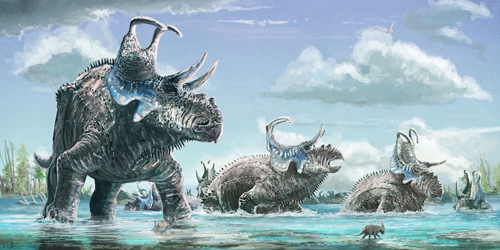
An illustration of a small herd of Machairoceratops dinosaurs by Mark Witton.

An illustration of a small herd of Machairoceratops dinosaurs by Mark Witton.

Picture credit: Mark Witton

Machairoceratops cronusi

A wide variety of North American ceratopsid dinosaurs have been described over the last decade or so.  Last week for example, Everything Dinosaur reported on the discovery of a new species of horned dinosaur from the Judith River Formation of Montana – Spiclypeus shipporum.  To read an article about this dinosaur: New Horned Dinosaur from the Late Cretaceous of Montana.

A field team first unearthed fragments that represented elements of the skull in 2006 at the famous Grand Staircase-Escalante National Monument, in southern Utah.  A further three seasons in the field were required to complete the exploration, sadly no post cranial material could be found.  However, from the configuration of the epiparietals and the horn cores the scientists were soon convinced that they had found a new species.

The Fossils of Machairoceratops cronusi and a Ghost Outline of the Complete Skull

Machairoceratops fossils

A right lateral view of the fossil material associated with Machairoceratops.

Picture credit: Lund et al (PLOS One)

The picture above shows (A) a right lateral view of the fossil material associated with Machairoceratops cronusi mapped against a ghosted outline of the inferred skull.  To the left of the picture the braincase (BC) is shown.  Diagram B shows the skull in dorsal view, whilst diagram C shows a complete reconstruction of the entire skull, note the curvature of the central parietals (p1 left and p1 right), it is these curved elements that gave this dinosaur its name.

Head Spikes More than a Metre Long

Each curved head spike (represented by p1 left and p1 right in diagram A above), would have measured around 1.2 metres in length, that’s slightly longer than a driver in a set of golf clubs used by a professional, male golfer.  However, despite this impressive headgear, the researchers estimate that Machairoceratops was not huge by horned dinosaur standards.  Based on skull comparisons with more complete specimens, palaeontologists have suggested that this dinosaur would have been around six metres in length and would have weighed around two tonnes.

Lead author of the scientific paper, graduate student Eric Lund (Ohio University Heritage College of Osteopathic Medicine), suggests that the head crest ornamentation may have had a role in visual signalling, such as selecting mates and establishing a social position within the herd.

Stratigraphic Assessment of the Position of Machairoceratops in Relation to Other Horned Dinosaur Fossils

A stratigraphic profile of the Wahweap and the Kaiparowits Formation.

A stratigraphic profile of the Wahweap and the Kaiparowits Formation.

Picture credit: Lund et al (PLOS One) with additional notation by Everything Dinosaur

Filling a Four-million-year Gap in the Centrosaurinae

The discovery of M. cronusi in strata that was laid down some 77 million years ago has helped to plug a four-million-year gap in the centrosaurine fossil record from the Grand Staircase-Escalante National Monument.  Fossils of an earlier centrosaurine called Diabloceratops eatoni have been found in rocks that date to around 80 million years ago.  The fossil material related to Machairoceratops fills the gap between Diabloceratops and the later, almost equally bizarrely horned centrosaurine Nasutoceratops titusi, whose fossils are associated with the overlying Kaiparowits Formation and date to around 75-76 million years ago.

Commenting on the naming of this new type of Late Cretaceous herbivorous dinosaur, Eric Lund stated:

“The  finding fills in an important gap in the fossil record of southern Laramidia, an area that included Utah, Colorado, New Mexico, Texas and Mexico during the Late Cretaceous period.  The discovery of Machairoceratops not only increases the known diversity of ceratopsians from southern Laramidia, it also narrows an evolutionary information gap that spans nearly 4 million years between Diabloceratops eatoni from the lower middle Wahweap Formation and Nasutoceratops titusi.”

A Model of a Machairoceratops (PNSO)

Measurements of the PNSO Machairoceratops dinosaur model.

PNSO Machairoceratops measurements.  PNSO introduced a Machairoceratops dinosaur model.

The Chinese model manufacturing company PNSO have introduced a replica of Machairoceratops.

To view this range: PNSO Age of Dinosaurs.

Once again, palaeontologists have gained fresh insight to the amazing diversity and variety of horned dinosaurs from North America.  The genus name is from “ceratops”, meaning horned face and the Greek “machairis” for bent sword, in deference to those curved central parietals.  The species name is from the mythical Greek titan (Cronus, also known as Kronos), whose symbol is a scythe or curved sword.

20 05, 2016

“Spiked Shield” Horned Dinosaur from Montana a New Horned Dinosaur

By |2024-05-06T06:36:43+01:00May 20th, 2016|Categories: Dinosaur and Prehistoric Animal News Stories, Dinosaur Fans, Main Page|1 Comment

Spiclypeus shipporum – Adding to the Judith River Formation Biota

When Dr Bill Shipp, a retired nuclear physicist, invested in a property in Montana, he little thought that he would be making a significant contribution to palaeontology.  However, thanks to the chance discovery of some disarticulated fossil material found on his land, a new species of horned dinosaur has been named and described (Spiclypeus shipporum).

A New Horned Dinosaur

The fossilised bones of a new type of chasmosaurine ceratopsid were found in 2005 and purchased by the Canadian Museum of Nature last year.  The material which includes about fifty percent of the skull, rib fragments, dorsal vertebrae and limb bones was studied by an international team of scientists including our chum Pete Larson (Black Hills Institute of Geological Research), David Evans (Royal Ontario Museum) and lead author of the academic paper published in the open access on line journal PLOS One, Jordan Mallon of the Canadian Museum of Nature.

An Illustration of the Newly Described Horned Dinosaur Spiclypeus shipporum

An illustration of the new species of horned dinosaur from Montana - Spiclypeus.

An illustration of the new species of horned dinosaur from Montana – Spiclypeus shipporum.

Picture credit: Mike Skrepnick

A Spiclypeus dinosaur model is featured in the Beasts of the Mesozoic articulated model series.

To view the Beasts of the Mesozoic models: Beasts of the Mesozoic Dinosaurs.

One Very Tough Dinosaur Indeeed!

The beautiful illustration of S. shipporum above depicts the dinosaur with its left forelimb raised off the ground.  The left humerus showed extensive pathology – acute arthritis and osteomyelitis (bone infection).  This dinosaur would have been in a great deal of pain and it was likely that the left forelimb could not support the animal’s weight.  Dr Edward Iuliano, a radiologist at the Kadlec Regional Medical Centre (Richland, Washington), one of the authors of the scientific paper conducted an in-depth analysis of the pathology.  It is likely that the animal lived for a number of years but was effectively crippled.

Dr Mallon explained:

“If you look near the elbow, you can see great openings that developed to drain an infection.  We don’t know how the bone became infected, but we can be sure that it caused the animal great pain for years and probably made its left forelimb useless for walking.”

Some of the Fossil Bones (Limb bones and partial Ilium) from Spiclypeus shipporum

Limb bones and ilium of Spiclypeus shipporum. The infected end of the humerus can be seen (d).

Limb bones and ilium of Spiclypeus shipporum. The infected end of the humerus can be seen (c and d).

Picture credit PLOS One

Ceratopsian Head Injury

In addition to the severely damaged left forelimb, this dinosaur nicknamed “Judith” after the Judith River Formation, had suffered a head injury.  The left squamosal bone shows two distinct holes.  Although holes in the head shield of chasmosaurine dinosaurs are quite common, they do not normally occur so close to the margins.  The skull of this dinosaur is unique in having multiple squamosal fenestrae and the ones close to the left side of the head shield are probably more evidence of pathology.  Signs of bone infection (osteomyelitis) support this hypothesis.

Although the scientists cannot be certain how the injury occurred, it has been speculated that the wound could have been the result of intra-specific combat, that is, a fight with another Spiclypeus.

Dr Jordan Mallon with a Cast of the Dinosaur Skull (CMN 57081)

The circled area shows the injury to the skull on the dinosaur Spiclypeus shipporum.

The circled area shows the injury to the skull on the dinosaur Spiclypeus shipporum.

Picture credit: The Canadian Museum of Nature with additional notation by Everything Dinosaur

The picture above shows Dr Jordan Mallon next to the cast of the skull, we have ringed the damaged element of the squamosal.  In the excellent illustration by Mike Skrepnick, the wound to the skull is depicted but many media outlets have failed to pick up this detail in the drawing.

A Close up of the Mike Skrepnick Illustration Showing the Wound to the Side of the Head

The ringed area in the picture shows the wound on the head of Spiclypeus.

The ringed area in the picture shows the wound on the head of Spiclypeus.

Picture credit: Mike Skrepnick with additional notation by Everything Dinosaur

Not Much Better for Spiclypeus Post-mortem

Dr Shipp arranged for the fossil material to be professionally collected, the material was scattered across a bedding plane and two tyrannosaurid teeth found nearby and associated bite marks on the bone indicate that the carcase was scavenged before burial.  The crushed and broken nature of the bones suggest that the bones were trampled upon, most probably by other herbivorous dinosaurs.  The dinosaur may have been nicknamed “Judith” after the Judith River Formation from which the fossils come, but it is not possible to determine whether the specimen represents a male or a female.

A special exhibition is being held at the Canadian Museum of Nature that features the fossilised bones of this new species of horned dinosaur.  The exhibition starts on May 24th.

Landowner Dr Shipp Next to a Cast of the Fossil Skull

Dr. Bill Shipp with a cast of the skull of Spiclypeus.

Dr Bill Shipp with a cast of the skull of Spiclypeus.

Picture credit: Canadian Museum of Nature

The Massive Skull of Spiclypeus shipporum

The massive skull measures 254 centimetres in length, stands 116 centimetres high and is 122 centimetres wide at its widest point.  Spiclypeus shipporum is estimated to have been around 4.5 to 5 metres long and to have weighed around 2,000 kilogrammes.  A cross-sectional analysis of the bone structure of the femur indicates that this individual was fully grown when it died and was between seven and ten years of age.

Dr Mallon and his colleagues named the dinosaur Spiclypeus shipporum.  The genus name is a combination of two Latin words meaning “spiked shield”, the trivial name honours Dr Shipp.  The dinosaur’s name is pronounced (spick-lip-ee-us ship-or-rum).

What distinguishes Spiclypeus shipporum from other members of the Chasmosaurinae such as the later Torosaurus and Triceratops is the orientation of the horns over the eyes.  The brow horns stick out sideways from the skull.  In addition, there is also a unique arrangement to the bony epiparietals (the horns and spikes that surround the head crest), some of the medially located epiparietals curl forward while others project outward.

76-Million-year-old Horned Dinosaur

Commenting on the significance of this fossil discovery, Dr Mallon Stated:

“This is a spectacular new addition to the family of horned dinosaurs that roamed western North America between 85 and 66 million years ago.  It provides new evidence of dinosaur diversity during the Late Cretaceous period from an area that is likely to yield even more discoveries.”

As the fossil material were excavated from the Coal Ridge Member of the Upper Cretaceous Judith River Formation, the fossil material is around 76 million years old (Campanian faunal stage).  Phylogenetic assessment suggests that Spiclypeus was closely related to Kosmoceratops and Vagaceratops and its discovery will help scientists to assess the evolution of the head crest and head crest ornamentation within chasmosaurine dinosaurs.

Ceratopsians Associated with the Judith River Formation

Spiclypeus is one of only six valid Ceratopsidae genera described from the Judith River Formation, whereas, the contemporaneous Belly River Group (southern Alberta, Canada) has provided evidence of at least fourteen types of horned dinosaurs.  In comparison, the Ceratopsidae fauna from the Judith River Formation is relatively poorly understood, but the discovery of Spiclypeus does support the hypothesis that there was rapid evolution in this part of North America towards the end of the Cretaceous and that many regions supported their own unique dinosaur fauna.  The unique fauna may have come about as species evolved different dietary specialisations, in biology this is known as a form of niche partitioning.

The other five valid Ceratopsidae species currently recognised from the Judith River Formation are:

  1. Avaceratops (centrosaurine) – named in 1986.
  2. Albertaceratops (centrosaurine) – named in 2007.
  3. Judiceratops (chasmosaurine) – named in 2013.
  4. Medusaceratops (chasmosaurine) – named in 2010, to read an article about the naming of Medusaceratops: New Horned Dinosaur from Montana.
  5. Mercuriceratops (chasmosaurine) – named in 2014, to read an article on the discovery of Mercuriceratops: Mercuriceratops – New Horned Dinosaur from North America.
18 05, 2016

Life “Loomed Large” 1.56 Billion Years Ago

By |2023-04-29T06:47:37+01:00May 18th, 2016|Categories: Dinosaur and Prehistoric Animal News Stories, Main Page, Palaeontological articles, Photos/Pictures of Fossils|0 Comments

Multicellular Eukaryotes from  1.56 billion-year-old Rocks (Gaoyuzhuang Formation)

A team of Chinese and American scientists have confirmed the presence of large (several centimetres long in some cases), communities of eukaryotic cells preserved as impressions within rocks laid down in a shallow marine environment some 1.56 billion years ago.  This suggests that organisms had begun to form such structures during the Mesoproterozoic, some five hundred million years or so after the very first eukaryote cells evolved.

Macro-Fossils Preserved in the Mudstones of the Gaoyuzhuang Formation (Northern China)

Examples of various eukaryotic communities preserved in the mudstones of the Gaoyuzhuang Formation.

Examples of various eukaryotic communities preserved in the mudstones of the Gaoyuzhuang Formation.

Picture credit: Nature Communications/Nanjing Institute of Geology and Palaeontology

Scale bar information for the picture (above) 5 cm (in a,b,g), 20 mm (in c), 40 mm (in d) and 5 mm (in e,f).

Multicellular Eukaryotes

The scientists, which included Professor Andrew Knoll (Harvard University), a co-author of the academic paper published in the journal “Nature Communications”, identified a variety of different shaped fossils, some were linear, others wedge-shaped, whilst some were oblong and yet another group were described as tongue-shaped.  In total, fifty-three fossil communities were identified.  Although it is difficult to assign these structures to a place in standard Linnaean classification, a spokesperson from Everything Dinosaur suggested that these ancient life forms could be linked to the Kingdom Protoctista, a biological kingdom which includes certain large, multicellular eukaryotes, such as red algae and kelp.

What is a Eukaryotic Cell?

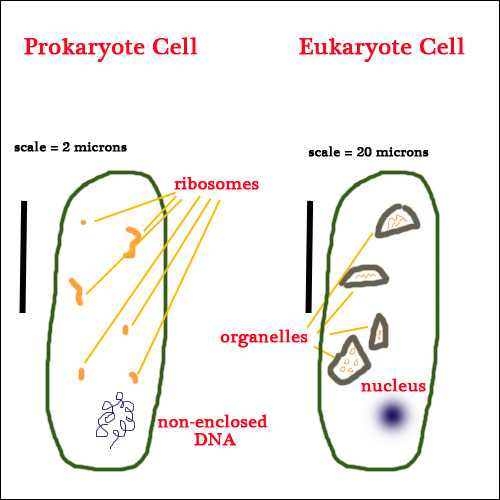
Eukaryotes have their genetic material enclosed within a nucleus, this is a distinct area within the confines of the cell where the genetic instructions and information can be found.  They also have organelles which are specialised structures within the cell that are responsible for specific areas of activity such as mitochondria for energy production or chloroplasts that convert sunlight energy into sugars (photosynthesis).  The first cells to form lacked a nucleus and specialised structures (organelles), these cells are referred to as prokaryotes (from the Greek which means “before the nucleus”), the DNA of prokaryotic cells is held in the cytoplasm of the cell.

Prokaryote Cells Compared to Eukaryote Cells

Simple diagram showing differences in Eukaryote cells and Prokaryote cells.

Simple diagram showing differences in eukaryote cells and prokaryote cells.

Picture credit: Everything Dinosaur

The diagram above shows the basic differences between prokaryotic and eukaryotic cells.  Note the different scales, due to their unstructured form, prokaryotic cells are much smaller than eukaryotic cells.  Fossil evidence for cyanobacteria (prokaryotes) suggest that these cells first formed some 3.5 billion years ago (Archean Eon)*.  The first eukaryotic cells may have formed around 2.1 billion years ago**.

Visit Everything Dinosaur’s website: Everything Dinosaur.

Eukaryote Cells

Eukaryote cells most likely evolved from prokaryote cells at some point in the Paleoproterozoic.  How this came about is a subject of much debate.  One theory proposes predatory prokaryotes engulfed other smaller prokaryote cells.  Instead of these cells being consumed, a symbiotic relationship resulted with the smaller cells becoming the specialised elements of the larger cell.  Another theory suggests that more complex cells came about due to mutations during cellular division.  The presence of DNA strands in mitochondria which are not exactly the same as the DNA found within the host cell nucleus suggests that the mitochondria were once single-celled organisms in their own right.

The Significance of the Gaoyuzhuang Formation

Fossils described as macro-fossils are exceedingly rare in rocks older than the Late Neoproterozoic Era, but uranium – lead (U to Pb) radiometric dating suggests that the biota identified from the mudstones from the Gaoyuzhuang Formation (Yanshan area in the Hebei Province of northern China) are around 1.56 billion years old.  Other geological formations dated to over a billion years old which contain macro-fossils have been identified before, but it is the number and variety of the different types of fossil that marks out this strata as being something special.

Researchers Exploring the Exposed Mudstones Looking for Evidence of Ancient Life

Researchers examine the fine-grained mudstones which form part of the Gaoyuzhuang Formation.

Researchers examine the fine-grained mudstones which form part of the Gaoyuzhuang Formation.

Picture credit: Nature Communications

Exhibiting Multicellular Structures

Some of the fossilised structures measure up to thirty centimetres in length and eight centimetres wide.  The researchers conclude that the specimens may not represent the oldest know eukaryotes but they are the oldest eukaryotes that exhibit multicellular structures.  These organisms lived in a shallow marine environment and they were probably benthic (lived on the sea floor).  Analysis of the cells indicates that they may have been capable of photosynthesis and although large by Precambrian standards these organisms cannot be described as complex life.

Explaining the difference between complex life and these large multicellular structures, Professor Knoll stated that the Chinese fossils were:

“Large but I doubt that they were complicated – it’s an important distinction.”

Eukaryotic cells are capable of becoming specialised with different cells being responsible for different systems, functions and processes, a vital step on the path to complex life forms.  These cells, preserved as carbonaceous impressions in the rock show no signs of fundamental differentiation at the cellular level.

The Best Evidence Yet

These fossils provide the best evidence to date that multicellular eukaryotes of large size (greater than a centimetre in length), with a regular shape existed in marine environments at least a billion years prior to the Cambrian explosion.  They are multicellular but they are not the complex, more specialised and differentiated cells associated with more advanced organisms.

Treated Sections of the Fossils Showing the Cell Structure

Treated sections of the Gaoyuzhuang Formation fossils showing cellular structures.

Treated sections of the Gaoyuzhuang Formation fossils showing cellular structures.

Picture credit: Nature Communications

The picture above shows various views of the cell structure.  Pictures b and d show organic fragments with preserved cellular structure, the scale bar representing 100 μm (microns).  Pictures c and e show polygonal cells forming a multi-layered network (scale bar 20 μm).

The existence of these structures provides further evidence of the diversity of life during the Proterozoic, it also suggests that an increase in oxygen levels in conjunction with the establishment of a protective ozone layer in the Earth’s upper atmosphere may have permitted these multicellular organisms to form.

*/**The dates given for the first fossil evidence of prokaryotes and eukaryotic cells are speculative.

17 05, 2016

Rare Horseshoe Crab Fossil Discovery from Nova Scotia

By |2023-04-29T06:34:34+01:00May 17th, 2016|Categories: Dinosaur and Prehistoric Animal News Stories, Main Page, Palaeontological articles|0 Comments

The Important Role Enthusiastic Amateurs Play in Palaeontology

Last week Everything Dinosaur reported on the concerns being raised over the extensive amount of digging into cliffs on north Norfolk beaches by fossil collectors.  Whilst we frown upon such activities and urge all fossil collectors to follow the fossil collecting code, today, we report on the significant contribution made to palaeontology by a couple of enthusiastic fossil hunters from Nova Scotia.  Their dedication has resulted in a number of important discoveries, the latest being a new species of ancient horseshoe crab, which is known from just two specimens.

To read the article about concerns over coastal Norfolk fossil sites: Experts Fear for Safety of Fossils and Fossil Collectors.

Lower Carboniferous Sandstones and Silts of the Bay of Fundy

The Blue Beach area of the Bay of Fundy (Nova Scotia), is one of the most important Late Palaeozoic fossil locations in the world.  The strata is being constantly eroded by the exceptionally powerful tides (a macro tidal environment) and the eroding cliffs are giving up the fossilised remains of animals and plants that lived in the very Early Carboniferous period (Lower Mississippian Epoch – Tournaisian faunal stage).  The body and trace fossils found here record life in a estuarine environment bordered by dense swamps that existed some 360 million years ago.

Thanks to the efforts of husband and wife team Chris Mansky and Sonja Wood, tens of thousands of fossil specimens have been retrieved from the beach.  The rocks have such significance as they preserve fossils of some of the very first tetrapods – primitive amphibians that were the first terrestrial vertebrates.

Paleolimulus woodae – Horseshoe Crab Fossil

Working in conjunction with scientists from the New Mexico Museum of Natural History and Science, an extremely rare horseshoe crab fossil has been identified and described as a new species.  The species name honours Sonja, the ancient arthropod has been called Paleolimulus woodae (pronounced pay-leo-limb-mew-lus wood-i).

A Natural Goldmine for Fossils

Commenting on the significance of the fossil find, co-author of the scientific paper that has just been published in the academic journal “Neues Jahrbuch für Geologie und Paläontologie”, Chris Mansky stated:

“We’re sitting on an unrealised bonanza or mother-load of information.  It’s a very small scarp that shows probably one of the most important pieces of evolutionary information.”

The CollectA Age of Dinosaurs Horseshoe Crab Model

CollectA Horseshoe Crab model.

CollectA Age of Dinosaurs Popular Size Horseshoe Crab.

CollectA have produced an excellent Horseshoe crab model.

To view the CollectA Age of Dinosaurs model range: CollectA Age of Dinosaurs Model Range.

The powerful tides scour the beach and cliffs twice a day exposing fossil material all year round.  The work of Chris and Sonja is vital, as without their help, many important fossil specimens, such as the ten pence sized horseshoe crab fossil would be lost.  The couple have run the Blue Beach Fossil Museum since 2002, and they have amassed a collection of some 90,000 lbs of rocks containing body fossils of early tetrapods, ancient fish, molluscs, as well as important trace fossils, preserving tracks in the mud made by both back-boned animals and invertebrates.

Romer’s Gap and All That

Horseshoe crabs are marine arthropods, (Order Xiphosurida, Family Limulidae), known as living fossils as they seem little changed since their evolutionary origins some 450 million years ago.  A number of genera exist today, but populations are threatened due to habitat destruction and the removal of eggs for human consumption.

An Illustration of a Extant Horseshoe Crab

An illustration of a Horseshoe Crab (a living fossil).

An illustration of a Horseshoe Crab (a living fossil).

Picture credit: Everything Dinosaur

The Blue Beach location is regarded as one of the most important Lagerstätte (strata with an abundance of fossils), of the Late Palaeozoic.  The Lower Carboniferous rocks are helping to provide scientists with information about vertebrates to fill in “Romer’s Gap”, a discontinuity in the fossil record between the end of the Devonian and the first fifteen million years of the Carboniferous, a time when terrestrial ecosystems were rapidly evolving and the first land animals with back-bones were becoming widespread.  The gap in the geological record is named after the American palaeontologist Alfred Sherwood Romer who first recognised this discontinuity.

Explaining just how rare the horseshoe crab fossils are, Chris Mansky said:

“Out of the tens of thousands of fossils that have been gathered [from the Blue Beach area] only two were horseshoe crab.”

The fossil material including body impressions and tracks made by the horseshoe crabs in the soft mud are helping scientists to piece together more information about this ancient palaeoenvironment.  Today, we pay tribute to Chris and Sonja whose efforts are helping scientists to learn more about a crucial period in the evolution of life on Earth.

Romer’s Gap – An Explanation

The gap in the fossil record that marks the beginning of the Carboniferous geological period.  In sedimentary rocks fractionally older than Romer’s Gap palaeontologists have unearthed evidence of very primitive Devonian tetrapods , fish with fingers, lots of fingers.  Tetrapod fossils found in slightly younger rocks provide evidence of Carboniferous tetrapods that all had five fingers and toes and they are much better adapted to terrestrial habitats.

Visit Everything Dinosaur’s website: Everything Dinosaur.

14 05, 2016

Remarkable Stone Tools and Fossil Bones From Sinkhole Revises American History

By |2024-05-06T06:39:21+01:00May 14th, 2016|Categories: Dinosaur and Prehistoric Animal News Stories, Main Page, Palaeontological articles|0 Comments

The Oldest Floridians

The discovery of ancient mammal remains plus stone tools in association with them is helping a team of scientists to redraw the map of human settlement in the Americas.  Evidence suggests that the north-western part of Florida (United States), was inhabited by humans some 1,500 years earlier than previously thought.  The research paper detailing the discoveries and the dating information has just been published in the open access journal “Science Advances”.

Stone Tools and Fossil Bones

Lead author of the scientific paper, Assistant Professor of Anthropology at Florida State University Jessi Halligan, had to employ her skills as a diver to reach the site, as the evidence of pre-Clovis existence has come from a sinkhole in the middle of the Aucilla River some ten metres below the water surface.  Radiocarbon dating of the artefacts excavated suggests that humans inhabited this part of Florida some 14,550 years ago.

Assistant Professor Halligan with Some of the Fossil Bones

Scientists state that humans occupied the south-eastern United States 1,500 years earlier than previously thought.

Scientists state that humans occupied the south-eastern United States 1,500 years earlier than previously thought.

Picture credit: Bruce Palmer/Florida State University

The picture about shows Jessi Halligan and some of the prehistoric mammal bones recovered from the site.  In the foreground (left) is a vertebra from a Mastodon, in the foreground (right) is the lower jaw (dentary) of a prehistoric Llama.

Prior to this research, it had been widely believed that the first people to live in this part of the Americas were the Clovis people which reached this part of the continent some 13,000 years ago.  The Clovis people are believed to have migrated across the Bering land bridge from Asia as the Last Ice Age ended, they moved through Canada and into the northern parts of the United States and over many generations gradually moved further and further south.

The Clovis Culture

The Clovis culture is believed to represent the first widespread human culture in the New World and it is likely that the Clovis people were the ancestors of the native American Indians.  It is from the Clovis culture that the various native American cultures evolved.  Named from the distinctive stone tools such as finely crafted spear points found at Clovis in New Mexico, many Clovis sites have been excavated and DNA evidence suggests that more than three-quarters of all living native Americans in North and South America are directly related to the Clovis people.

Human Migration Through the Americas is a Complex Picture

As the last Ice Age ended and the ice sheets retreated, so humans migrated across the Bering Strait land bridge (Beringia) and into the New World.  However, mapping the extent of this colonisation and the journey south has proved extremely difficult, with a range of dates given for different sites.  There has been evidence presented before that suggested humans lived in parts of the Americas earlier than 10,000 to 12,000 years ago, but the evidence had been controversial.

However, at the Aucilla River site, some seventy-one items have been radiocarbon dated and they all support the idea that the stone tools and bones, many of which show cut marks made from tools , indicate human habitation as early as 14,550 years ago.

Commenting on the significance of this research, Assistant Professor Halligan stated:

“This is a big deal!  There were people here.  So how did they live?  This has opened up a whole new line of inquiry for us as scientists as we try to understand the settlement of the Americas.”

The Remarkable Page-Ladson Site

The excavations took place at a site on a bend in the Aucilla River some twenty miles east of the Florida State capital Tallahassee.  Animal bones had been found in this region for many years but it was first explored and mapped extensively by diver Buddy Page who found Mastodon remains and brought the site to the attention of archaeologists and palaeontologists.  The site is owned by the Ladson family and as result the sinkhole and subsequent cores that have been taken from the river bed are collectively referred to as the Page-Ladson prehistory site.

The location represents a water hole that was filled in by deposits and these deposits represent Late Pleistocene material at the bottom, leading up through to younger Early Holocene deposits that are exposed on the river bed.

Working up to Ten Metres Underwater to Find Traces of Human Activity

Underwater excavation reveals evidence of the earliest humans from the south-eastern United States.

Underwater excavation reveals evidence of the earliest humans from the south-eastern United States.

Picture credit: Florida State University

Stone Tools and Fossil Animal Bones Preserve Evidence of Human Activity

There are a cluster of sites dotted all over North America that date to around 13,200 years ago, but there are estimated to be only about five in all of the New World that are believed to provide older evidence of human habitation.

Assistant Professor Halligan worked in collaboration with Michael Waters from Texas A&M University and Daniel Fisher (University of Michigan) to excavate the site.  The research team were aware that a number of fossil bones and other finds had already been excavated from the site, but between 2012 and 2014 the Page-Ladson prehistory site was once again opened up and explored.

One of the team’s most significant finds was a biface, a stone tool flaked on both sides to produce a knife-like instrument with two cutting edges.  Daniel Fisher (vertebrate palaeontologist), also took a close look at the Mastodon tusk that had been retrieved in the 1980s and he was able to identify cut marks indicating that the tusk had been removed by people.  The scientists are not certain whether the Mastodon was killed by humans or its carcase was scavenged.

Michael Waters ( Texas A&M’s Centre for the Study of the First Americans) explained:

“The new discoveries at Page-Ladson show that people were living in the Gulf Coast area much earlier than believed.”

Examples of Stone Tools Recovered from the Page-Ladson Prehistory Site

Examples of stone tools excavated from the Page-Ladson site (Florida).

Examples of stone tools excavated from the Page-Ladson site (Florida).

Picture credit: Science Advances with notation by Everything Dinosaur

The picture above show examples of the stone tools recovered from the Page-Ladson location.  The biface stone tool “top” has two flaked cutting blades and would have performed the role of a small knife, similar to the type of tool that created the butchery marks in the animal bones.  The stone tools (middle and bottom) are typical flakes, the middle flake shows signs of wear (use).

Pleistocene Marine Transgression

Florida in the latter stages of the Pleistocene Epoch was much drier than it is today.  Sea levels were over one hundred metres lower.  The Page-Ladson site represents a spring fed waterhole that existed in a ravine.  It may have been the only reliable water source for miles around and as such, it attracted animals and people to it.  With the rise in global temperatures, the great ice sheets that covered much of the Northern Hemisphere began to melt.  This led to a rise in global sea levels resulting in low-lying areas becoming flooded (the Late Pleistocene marine transgression).  The Page-Ladson site was buried with an influx of sediment and left submerged.

This location in north-western Florida is helping anthropologists to understand more about the migration of humans into the New World and also provides further information with regards to the megafauna that shared this Late Pleistocene habitat.

An Illustration of the Page-Ladson Prehistory Site

An Illustration of the Page-Ladson Prehistory Site (Florida 14,500 years ago).

An Illustration of the Page-Ladson Prehistory Site (Florida 14,500 years ago).

Picture credit: Greg Harlin

For replicas and figures of early hominins and prehistoric mammals: Safari Ltd. Wild Safari Prehistoric World Models.

12 05, 2016

New Species of Fossil Dog Identified from Tooth

By |2023-04-27T07:30:18+01:00May 12th, 2016|Categories: Dinosaur and Prehistoric Animal News Stories, Main Page|1 Comment

Tooth Reveals New Dog Species

A PhD student at the University of Pennsylvania has identified a new species of prehistoric dog based on the analysis of a single tooth found by an amateur fossil hunter exploring a beach on the Maryland coast. The tooth provides new evidence to help support the scarce fossil record of carnivores from the Middle Miocene of eastern North America and it extends the fossil record of these types of canids in the United States by several million years.

Fossil Dog

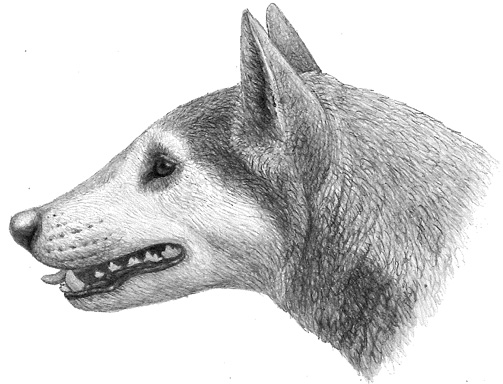
An Illustration of a Prehistoric Dog Similar to the New Species (Cynarctus wangi)

An illustration of the Miocene canid Cynarctus wangi.

An illustration of a typical Middle Miocene canid such as Cynarctus wangi.

Picture credit:  Mauricio Antón from “Dogs, Their Fossil Relatives and Evolutionary History.”

Fossil Tooth from a Prehistoric Dog

The fossil tooth, thought to be second molar from the right side of the upper jaw. comes from a type of prehistoric dog that would have been roughly the same size as an English Springer Spaniel.  It was a member of the extinct subfamily of the Canidae called the Borophaginae.  These dogs are referred to as “bone crushing dogs” as they possessed short, but very strong jaws and they probably could deliver a very powerful bite.  The species name erected honours Xiaoming Wang, the Curator at the Natural History Museum of Los Angeles County and an expert on extinct mammalian carnivores of the northern hemisphere.

Lead author of the scientific paper published in the “Journal of Paleontology”, student Steven Jasinski, explained the shape of the dog’s jaw:

“In this respect they are believed to have behaved in a similar way to hyenas today.”

The Choptank Formation

The fossil tooth was found on a beach which underlies cliffs representing the Choptank Formation, (part of the Chesapeake Group), it was stored at the Smithsonian Institute.  Measuring a little over one centimetre in length it had not been studied in great detail, however, the fine details on the surface of the tooth (the biting surface) enabled the researchers to distinguish this tooth from the fossils of another, older member of the Borophaginae known as Cynarctus marylandica.

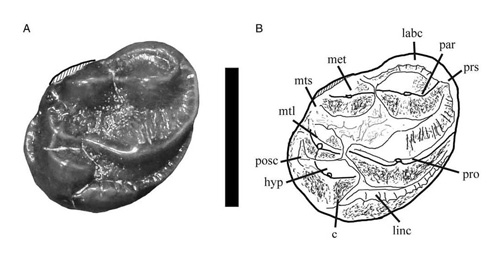
A Picture and Accompanying Line Drawing Showing the Fossil Tooth

A fossil molar from the newly named dog species Cynarctus wangi.

A fossil molar from the newly named dog species Cynarctus wangi.

Picture credit: The University of Pennsylvania/Journal of Paleontology

Working in collaboration with co-author Professor Steven C. Wallace (East Tennessee State University), Jasinski was able to establish that their initial assumption about the tooth being from an already described species of prehistoric dog was incorrect.

Tooth Indicated a New Species

They had presumed that the tooth represented material from another borophagine dog called Cynarctus marylandica, fossil teeth of which had been found in the same area but from much older strata (the Calvert Formation, also part of the Chesapeake Group).  C. marylandica is only known from teeth associated with the lower jaw.  It was when the researchers compared the features on the occlusal surfaces (the biting surfaces) of the teeth, where the top and bottom teeth would have met, they found significant differences, enough to suggest that, in all probability this tooth from the upper jaw was an entirely new species.

Speculating on the importance of their research, Steven Jasinski said:

“It looks like it might be a distant relative descended from the previously known borophagine.”

The Demise of the Borophaginae

Once widespread in North America, the fossil record of the Borophaginae covers a period of approximately twenty-eight million years (Oligocene Epoch to the Late Pliocene).  Once a diverse sub-family of the Canidae, represented by numerous species, it seems that the migration of predatory cats into North America from Asia along with the evolution of modern canids, the ancestors of today’s wolves and domestic dogs may have led to the decline and eventual extinction some 2.5 million years ago.

The shape of the tooth and from what has been inferred from other borophagine fossil material, it is likely that this prehistoric dog was not entirely reliant on meat to sustain itself.

The student stated:

“Based on its teeth, probably only about a third of its diet would have been meat.  It would have supplemented that by eating plants or insects, living more like a mini-bear than like a dog.”

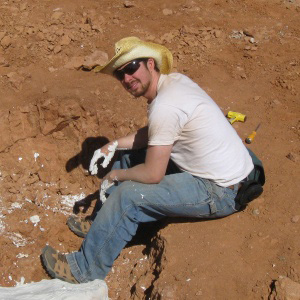
PhD Student Steven E. Jasinski Working on a Fossil Site

Student Steven Jasinski of Pennslyvania University.

Student Steven Jasinski of Pennsylvania University.

Picture credit: The University of Pennsylvania

This new borophagine canid expands the sparse fossil record of this group in north-eastern North America and extends further our knowledge of the fossil record of terrestrial taxa in the eastern part of the United States.  The PhD student explained that most of the vertebrate fossils associated with this strata represent marine animals as they have a higher probability of becoming fossilised than land animals.  He explained that fossil finds such as this tooth, are very rare but they help scientists to understand more about the terrestrial ecosystems that existed during Miocene Epoch.

Ancient dog fossils have not been the sole preoccupation of the student from the Dept. of Earth and Environmental Sciences, last year Everything Dinosaur reported on Steven’s research that led to the identification of a new type of North American predatory dinosaur: Sniffing Out a New Dinosaur Species.

11 05, 2016

Concerns for the Coastal Norfolk Fossil Sites

By |2023-04-26T08:28:14+01:00May 11th, 2016|Categories: Dinosaur and Prehistoric Animal News Stories, Dinosaur Fans, Geology, Main Page, Palaeontological articles|2 Comments

Experts Fear for Fossils and Safety of Fossil Hunters

Scientists at the Norfolk Museums Service along with British palaeontologists and geology societies have expressed concern over the rise in unscrupulous fossil hunting activities being reported from parts of the Norfolk coast.  These famous Pleistocene age deposits have yielded an extensive array of vertebrate fossils including many large mammals such as rhino and elephant.

The West Runton Elephant

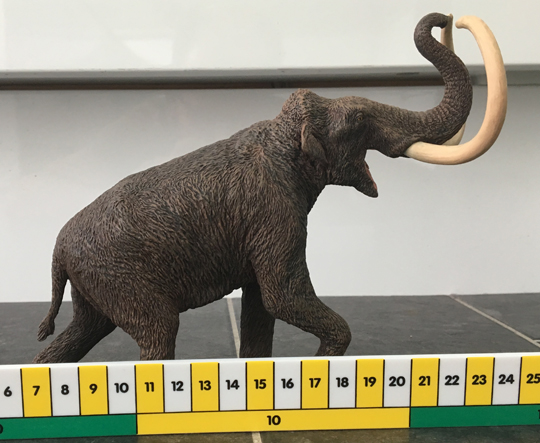
One of England’s most important fossil finds, the spectacular West Runton elephant (more correctly termed a Steppe Mammoth – Mammuthus trogontherii), was found in the cliffs.  The discovery, the first bones were found in 1990, represents the largest and oldest nearly complete fossil mammoth from the UK.  Bones and teeth can still be found on the foreshore but sadly, there has been a rise in reports of fossil hunters digging into the cliffs in a bid to find more specimens.

A Model of a Steppe Mammoth

The size of the Eofauna Steppe Mammoth model.

The beautiful Eofauna Scientific Research Steppe Mammoth model.

Picture credit: Everything Dinosaur

The model (above) is an Eofauna Steppe Mammoth.

To view the Eofauna model range: Eofauna Scientific Research Models.

Concern for Norfolk’s Fossil Sites

A spokesperson for the Norfolk Museums Service advised against such excavation, not only would the digging potentially damage any fossil material but as the cliffs were unstable, working so close to the cliffs was very dangerous.  He expressed grave concern following reports of a rise in the number of fossil hunters “hacking into the cliff tops”

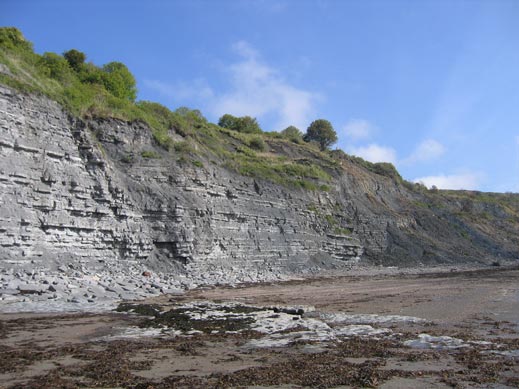
The Foreshore and Cliffs of Many Locations Require Protection

The Church cliffs at Lyme Regis.

Fossil hunting can be fun but beware of the cliffs.

Picture credit: Everything Dinosaur

Important Fossil Sites

The freshwater Pleistocene deposits and associated Cretaceous chalks yield a large number of different types of fossil.  As well as freshwater molluscs and mammal remains from the freshwater beds, the chalk is highly fossiliferous and different types sea urchin and fossil sponges can be found.  The picture above shows a typical UK coastal site with fossils.  As the cliffs are eroded fossils are exposed.

A team member from Everything Dinosaur commented:

“This part of the Norfolk coast is subject to high levels of erosion, we would urge all fossil collectors to stay on the beach and look for fossils at low tide along the foreshore, the rapidly eroding cliffs are delivering lots of fossil material onto the beach area and this is a wonderful location for a family fossil hunt.  However, please don’t dig into the cliffs and we urge all visitors to follow the fossil collecting code.”

For an article on the fossil collecting code and a guide to safe collecting: Everything Dinosaur’s Guide to Fossil Collecting Safely.

Register Fossil Finds with the Norfolk Museums Service

A partial Mammoth tooth was found nearby last month and no doubt other finds will be reported over the summer at this popular tourist attraction.  Palaeontologist Dr. Waterhouse of the Norfolk Museums Service and the leader of the Cromer Forest-bed Fossil Project reminded fossil hunters that it was good practice to report finds to the Norfolk Museum Service, the museum at Cromer just a few miles from West Runton, was a good place to take any fossil finds and team members from the Norfolk Museums Service would be happy to assist with identification.  As Mammoth fossils, especially tusks and teeth are very popular with collectors, it is likely that many of the overzealous fossil hunting activities have been driven by the high prices such fossils make on auction sites.

A Model of a Woolly Mammoth (M. primigenius)

A model of a Woolly Mammoth.

A model of a Woolly Mammoth.

Picture credit: Everything Dinosaur

Dr Waterhouse said:

“Norfolk is the best place in the country and probably Europe to find Mammoth remains because they went through about six sets of teeth in their lifetime, so there is a lot more teeth than there were Mammoths.  Something that I think needs highlighting is poor and even dangerous fossil collecting by people hacking into the cliffs at places like West Runton.  Ethical collecting is high on my agenda, and also recording fossil finds as part of the Cromer Forest-bed Fossil Project, so that important scientific information isn’t lost forever.”

At Everything Dinosaur we echo the views of Dr Waterhouse and we urge fossil hunters to take care and to abide by the fossil collecting code as well as local bye laws and regulations.

Visit Everything Dinosaur’s website: Visit Everything Dinosaur.

7 05, 2016

Atopodentatus Unzipped According to New Research

By |2024-05-06T06:31:21+01:00May 7th, 2016|Categories: Dinosaur and Prehistoric Animal News Stories, Dinosaur Fans, Main Page|0 Comments

Atopodentatus unicus Has a Makeover

In April 2014, Everything Dinosaur reported on the discovery of a bizarre Triassic marine reptile from south-western China called Atopodentatus unicus.  The skull and jaws were described as being highly unusual, with nothing like them having been found in the fossil record of marine vertebrates before.  The upper jaw was thought to resemble a slit with small teeth forming a fine sieve or comb-like structure.  This bizarre creature was assumed to be a specialist carnivore and it was held up as an example of how the marine ecosystems had bounced back and produced strange new animals in the shadow of the End Permian extinction event.

Atopodentatus unicus

It turns out that Atopodentatus may not have been so bizarre after all, however, its existence does help to support the theory that marine food chains did indeed recover remarkably quickly following the mass extinction that marked the end of the Palaeozoic.  In a paper published in “Science Advances”, the skull and jaws of this three-metre-long reptile have been re-examined.  Atopodentatus was certainly a specialist, but most likely a herbivore with a jaw shaped like a hammerhead used to graze on seaweeds and algae.  As such, it is the earliest example of herbivory in marine reptiles, pre-dating the previously earliest known marine animals to have eaten plants by some eight million years.

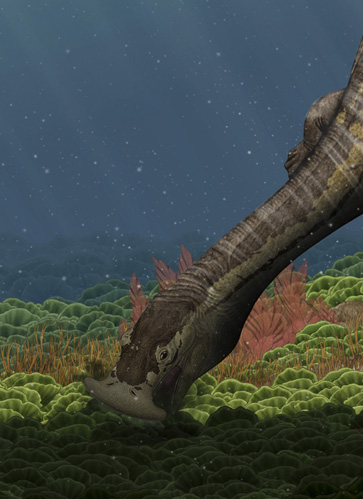
A New Interpretation of Atopodentatus unicus – A Marine Reptile Herbivore

An illustration of Atopodentatus unicus.

An illustration of Atopodentatus unicus.

Picture credit: Y. Chen, Institute of Vertebrate Palaeontology and Palaeoanthropology (IVPP).

“Unzipping” a Marine Reptile

More fossils unearthed in China’s Yunnan Province by scientists from the IVPP allowed researchers to see further examples of the preserved skull and jaws, although flattened and crushed like other fossil material, analysis of the jaw and skull morphology using modelling clay led the scientists to conclude that Atopodentatus did not have “zipper jaws”, but rather a hammerhead structure, which is still a remarkable adaptation.

Close up Images of Fully Prepared Atopodentatus Skull Material

A = Dorsal view of Atopodentatus skull, whilst B = Ventral view of Atopodentatus skull.

A = Dorsal view of Atopodentatus skull, whilst B = Ventral view of Atopodentatus skull.

Picture credit: W. Gao, Institute of Vertebrate Palaeontology and Palaeoanthropology (IVPP)

The photograph shows two views of flattened A. unicus skull material (A) a dorsal view, from the top down and (B) a ventral view, viewed from the bottom.  The scientists, which included Olivier Rieppel (The Field Museum, Chicago) and Nicholas Fraser (National Museums of Scotland, Edinburgh) as well as Li Chun (IVPP) and Cheng Long (Wuhan Centre of China Geological Survey), have deduced that this marine reptile rasped off algae and plants from rocks and then sucked in the suspended plant remains filtering out the food from the seawater using its needle-like teeth.

A Very Strange Animal

Commenting on the research, Dr Rieppel stated:

“It’s a very strange animal!  It’s got a hammerhead, which is unique, it’s the first time we’ve seen a reptile like this.  To figure out how the jaw fitted together and how the animal actually fed, we bought children’s clay, kind of like Play-Doh and rebuilt it with toothpicks to represent the teeth.  We looked at how the upper and lower jaw locked together and that’s how we proceeded to describe it.”

Modelling Clay Helped Map the Morphology of this Middle Triassic Marine Herbivore

Assessing the dentition and jaw morphology of Atopodentatus using modelling clay.

Assessing the dentition and jaw morphology of Atopodentatus using modelling clay.

Picture Credit: Dr Rieppel (Field Museum)

Strange Jaws and Teeth

The hammerhead shaped jaws, also described by Everything Dinosaur team members as an “upside down T shape” had peg-like teeth along their edges.  Further back into the mouth, Atopodentatus had bunches of needle-like teeth.

How Did Atopodentatus Feed on Plant Material?

An illustration Atopodentatus feeding underwater.

An illustration Atopodentatus feeding underwater.

Picture credit: Y. Chen (IVPP)

The scientists describe the feeding mechanism of Atopodentatus thus:

The spatulate, peg-like teeth lining the hammerhead were probably used to scrape off plant material such as seaweed and algae from submerged rocks.  This would result in large amounts of plant matter being suspended in the water.  This was then sucked into the mouth and filtered by the long, thin and closely packed needle-shaped teeth located more posteriorly in the mouth.  Not only did the jaws of Atopodentatus resemble a vacuum cleaner attachment, it sucked like a vacuum cleaner too.

Dr Rieppel observed:

“The jaw structure is clearly that of an herbivore.  It has similarities to other marine animals that ate plants with a filter-feeding system, but Atopodentatus is older than them by about eight million years.”

A Model of the Redefined Skull of Atopodentatus with Fossil Material for Comparison

A model of Atopodentatus shown against the flattened skull fossil.

A model of Atopodentatus shown against the flattened skull fossil.

Picture credit: Nicholas Fraser (National Museums Scotland)

A Recovering Ecosystem

The evolution of such a bizarre-looking marine reptile, not long after the End Permian extinction event, helps to support the hypothesis that vertebrates bounced back relatively quickly following the mass extinction of much of the back-boned fauna of the Late Permian.  However, instead of being placed in food webs representing the eastern Tethys Ocean of the Middle Triassic as carnivore (feeding on zooplankton and crustaceans), the position of Atopodentatus will have to be modified to reflect its diet.

To read the original story describing Atopodentatus: Bizarre New Triassic Marine Reptile Described.

For an article that looks at the food web of the eastern Tethys Ocean during the Triassic: Chinese Sea Dragon Hints at Triassic Marine Fauna Recovery.

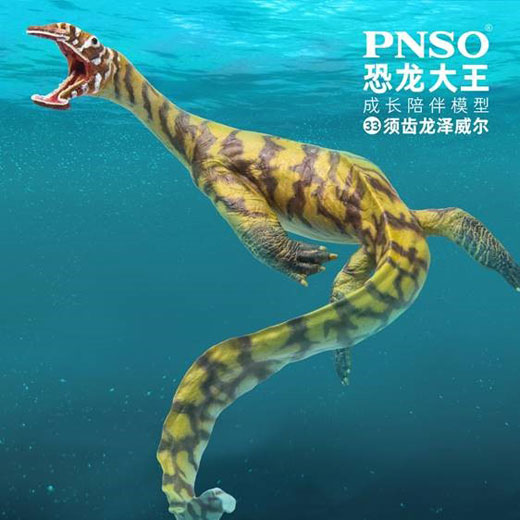
A Replica of an Atopodentatus (PNSO Models and Figures)

PNSO Zewail the Atopodentatus unicus model.

PNSO Zewail the Atopodentatus marine reptile model.

The picture (above), shows Zewail the Atopodentatus figure that forms part of the extensive PNSO Age of Dinosaurs range. To view this range: PNSO Age of Dinosaurs Figures.

Visit Everything Dinosaur’s user-friendly and award-winning website: Everything Dinosaur.

6 05, 2016

Remarkable Antarctic Expedition Provides Window into Late Cretaceous Seacape

By |2024-05-06T06:32:21+01:00May 6th, 2016|Categories: Dinosaur and Prehistoric Animal News Stories, Dinosaur Fans, Geology, Main Page, Palaeontological articles|0 Comments

Fossilised Birds, Ammonites and Giant Marine Reptiles

A team of international scientists including researchers from the University of Queensland and the Carnegie Museum of Natural History, have been showing off their vast collection of fossils after a very successful expedition to Antarctica earlier this year.  The fossils, estimated to weigh over 1,000 lbs, provide evidence of life in a shallow sea close to land some 71 million-years-ago (Late Cretaceous).

Late Cretaceous Fossils

The specimens were collected from James Ross Island, a forty mile long island on the south-eastern side of the Antarctic peninsula, a long finger of land that points towards South America, although the island itself is more than six hundred miles from the Chilean mainland.

Some of the Fossils Found During the Two-Month Long Antarctic Expedition

Spectacular fossils preserved in nodules found in Antarctica.

Spectacular fossils preserved in nodules found in Antarctica.

Picture credit: University of Queensland

Fossils Found in Nodules (Concretions)

The picture above shows a number of split nodules that contain invertebrate fossils of various kinds including a number of ammonite specimens.  The geological hammer, probably the one used to split the nodules provides scale.  Over two hundred different fossils have been collected by the scientists.

An Illustration of a Typical Ammonite

CollectA Pleuroceras ammonite model.

CollectA Age of Dinosaurs Popular Size Pleuroceras ammonite model.

To view replica ammonites and other models of prehistoric creatures: CollectA Age of Dinosaurs Popular Range.

Marine Reptiles and Dinosaurs

One of the main objectives of the research team over the two month period of the expedition (February to March) was to search for vertebrate fossils to provide information on the marine and terrestrial fauna that existed in this part of Gondwana towards the end of the Cretaceous.

Giant shark vertebrae the size of saucers, as well as plesiosaur and mosasaur remains along with bird fossils were discovered, these fossils along with the other specimens are currently being stored in Chile prior to onward transport to the Carnegie Museum of Natural History (Pittsburgh, Pennsylvania) for preparation and study.  It is likely that a number of new species will be identified.

Palaeontologists Working on a Plesiosaur Shoulder Girdle

Palaeontologists carefully excavate the shoulder girdle of a Plesiosaur (James Ross Island).

Palaeontologists carefully excavate the shoulder girdle of a plesiosaur (James Ross Island).

Picture credit: Dr  Matthew Lamanna (Carnegie Museum of Natural History)

The picture above shows graduate student Abby West (American Museum of Natural History) working alongside Dr Steve Salisbury (University of Queensland) and marine technician Julia Carlton as they carefully prepare the shoulder girdle of a plesiosaur for extraction by helicopter.  The location of the fossil sites are so inaccessible that they only way such large specimens could be removed was by helicopter.

The choppers used to support the field team were called “raptors” – very Jurassic Park as one expedition member quipped.

The photograph was taken by Dr Lamanna (Assistant Curator of Vertebrate Palaeontology), an expert on the terrestrial fauna of Gondwana, a few days ago, Everything Dinosaur reported on the naming of a new giant titanosaur from Argentina that had been named based on the extensive study of a beautifully preserved skull and neck elements that had been found some years before (Sarmientosaurus musacchioi).

To read more about this story: Late Cretaceous Titanosaur from Patagonia.

Identifying New Fossil Sites

The scientists are part of an international Antarctic research project – Antarctic Peninsula Paleontology Project (forgive the Americanised spelling), or AP3 for short.  Consisting of specialists in vertebrate palaeontology and geology, the team heralds from universities and museums from the United States, Australia, South Africa, Chile and the UK.

Located a gruelling six mile hike from the team’s base camp, the main fossil bearing beds are located on the steeply sloping south-western flank at Sandwich Bluff on Vega Island, which is located just a few thousand metres to the north-west of James Ross Island.  Much of the strata exposed around James Ross Island dates from the very Late Cretaceous and from the very Early Palaeogene.  A number of new fossil bearing sites have already been located including several plant remains beds and two previously undocumented Cretaceous exposures that were targeted for future field work.

The Late Antarctic Summer – Hiking Looking for Fossils

Isolated and very difficult to reach - fossil hunting in Antarctica.

Isolated and very difficult to reach – fossil hunting in Antarctica.

Picture credit: The Carnegie Museum of Natural History

The Antarctic – A Potential Treasure Trove of Fossils

The James Ross Island basin is one of the few parts of Antarctica where the snow and ice melts sufficiently to expose the rock strata below.  The absence of soil helps with the exploration, although we tip our hard hats to the research team members who braved freezing temperatures, howling gales and sea sickness just to reach the fossil quarries.  The specimens were excavated from the Upper Cretaceous Sandwich Bluff Member of the López de Bertodano Formation.

The beds here represent deposits in a shallow, marine environment with occasional occurrences of terrestrial material (particularly plant remains) that would have been washed into the sea from the nearby land.  Dinosaur fossils were found, although fragmentary, the palaeontologists are confident that these fossils will help to extend our understanding of the Late Cretaceous dinosaur fauna of Antarctica.

Visit Everything Dinosaur’s website for models and replicas of Cretaceous animals: Everything Dinosaur.

Recovering Late Cretaceous Fossils – It’s a Tough Job!

Commenting on the research, Dr Salisbury explained:

“It’s a very hard place to work, but it’s an even harder place to get to.  A lot of the bigger bones will need quite a bit of preparation before we can do much research on them.  Working in Antarctica is tough!”

Fossilised remains of birds were also found, including early ducks dating from the end of the Cretaceous period.

It’s a Tough Job – Searching for Fossils in the James Ross Island Basin

Lying down on the job! Looking for fossils in the Antarctic.

Lying down on the job! Looking for fossils in the Antarctic.

Picture credit: Carnegie Museum of Natural History

Everything Dinosaur Pays Tribute

A spokesperson from Everything Dinosaur paid tribute to the research team and their supporters stating:

“The Antarctic provides vertebrate palaeontologists the opportunity to explore pristine fossil bearing environments without the risk of damage from vandals or illegal fossil hunters.  This treasure trove of fossils, currently in Chile, will provide scientists with a great deal of data regarding the fauna and flora at what was a pivotal moment in the history of life on Earth.”

In the summer of 2015, Everything Dinosaur reported on the discovery of a plesiosaur, but this time from the other end of the world – the Arctic.

To read an article about this amazing fossil find: Elasmosaur Fossil from Alaska.

5 05, 2016

Ancient Multi-cellular Fossils from New Burgess Shale Type Deposit

By |2023-04-19T10:04:14+01:00May 5th, 2016|Categories: Dinosaur and Prehistoric Animal News Stories, Main Page, Photos/Pictures of Fossils|0 Comments

Ancient Seaweed Fossils from Mongolia

Research conducted by a team of international scientists from Mongolia, Japan and the University of Wisconsin-Milwaukee (United States), have identified two new species of ancient multi-cellular marine algae from a newly discovered Burgess Shale Type deposit located in the Zavkhan Basin of Zavkhan Province (western Mongolia).

Fossils of Ediacaran Algae

The fossils are exceptionally rare and date from approximately 555 million years ago (Ediacaran geological period), they are helping researchers to pinpoint the development of complex lifeforms from the Kingdom Plantae, the ancestors of all plants that exist today.   A paper on the research into the thin shale beds (representing the  Zuun-Arts biota), has been published in the online, open access journal “Scientific Reports”.

Lead Author of the Study Associate Professor Stephen Dornbos Holds One of the Fossil Specimens

Ediacaran fossil specimen held by palaeontologist Stephen Dornbos.

Ediacaran fossil specimen held by palaeontologist Stephen Dornbos.

Picture credit: University of Wisconsin-Milwaukee

Exceptionally Rare Fossils

The preservation of soft-bodied organisms such as these remains of algae are exceptionally rare in the fossil record.  One such method of preservation is carbonisation in fine-grained strata.  These deposits of exceptional preservation are referred to as Burgess Shale Type deposits, after the famous Cambrian site in British Columbia.

For fossils and replicas of Burgess Shale animals such as Anomalocaris and trilobites (whilst stocks last): CollectA Age of Dinosaurs Popular Figures.

Burgess Shale Type deposits preserving the remains of organisms that lived before the Burgess Shales themselves were formed, can provide scientists with a tantalising glimpse into marine life prior to the evolution of animals with hard bodies such as exoskeletons and shells, but only a handful of pre-Cambrian (Ediacaran) Burgess Shale Type deposits are known.  The research team were exploring ancient marine rocks in western Mongolia when the thin black shales containing carbonised remnants of the prehistoric seaweeds were discovered.

Chinggiskhaania bifurcata and Zuunartsphyton delicatum

Two species of multi-cellular marine algae have been identified, the most common fossils representing the newly described Chinggiskhaania bifurcata.  The other species, known from just three fossil specimens has been named Zuunartsphyton delicatum.

A Cross Polarised Light Image of C. bifurcata

Chinggiskhaania bifurcata fossil (scale bar = 5mm)

Chinggiskhaania bifurcata fossil (scale bar = 5 mm).

Picture credit:  University of Wisconsin-Milwaukee

Under polarised light the structure of the fine filaments of the ancient seaweed can be clearly seen.

Contrast this picture with the photograph of Stephen Dornbos holding a specimen.  The fossils consist of aluminosilicate clay minerals and some carbon, just like the Burgess Shale fossils, and as such, spotting fossils is a very difficult task.  Natural light has to strike the fossil at the correct angle, otherwise the specimen cannot be distinguished from the surrounding matrix.

Commenting on the discovery of the Zuun-Arts biota, Associate Professor Stephen Dornbos stated:

“This discovery helps tell us more about life in a period that is relatively undocumented.  It can help us correlate the changes in life forms with what we know about the Earth’s ancient environments.  It is a major evolutionary step toward life as we know it today.”

Extremely Hard to Classify

Burgess Shale Type fossils dating from the Proterozoic Eon usually are classified as one of two categories, algae, like seaweed, which is the case of the  Zuun-Arts biota, or the remains of extinct types of organisms so unlike living organisms today, that identifying what they might have been like is very difficult to do.  As a result, interpretation of Ediacaran fossil material is a very controversial area of palaeontology.

Explaining this problem, Stephen Dornbos commented:

“If you find a fossil from this time frame, you really need strong support for your interpretation of what it was.   The further back you go in geologic time, the more contested the fossil interpretations are.”

Visit Everything Dinosaur’s website: Everything Dinosaur.

Go to Top