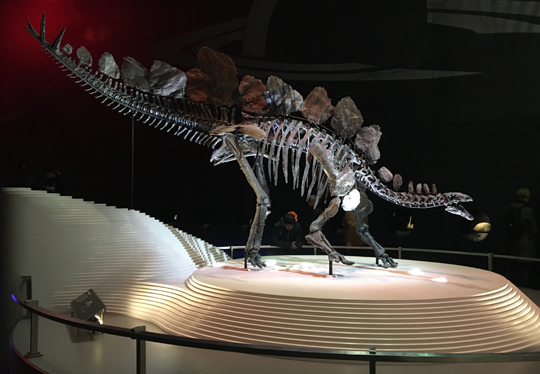
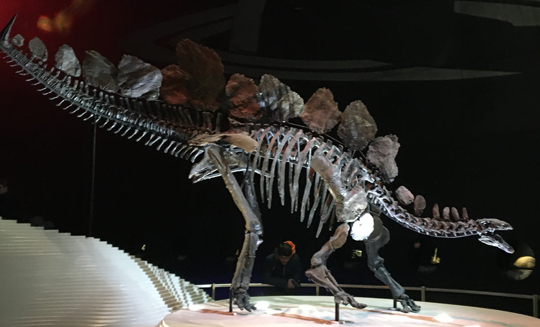
“Sophie” the Stegosaurus has been on display at the London Natural History Museum since late 2014. She stands (although palaeontologists remain uncertain as to whether “Sophie” represents a male or a female), in the Earth Hall close to the Exhibition road entrance. The fossil specimen was discovered in the western United States in 2003 and acquired by the museum thanks to the efforts of private donors including a Hedge Fund manager. This exhibit is the world’s most complete stegosaur specimen, the species is Stegosaurus stenops.
“Sophie” The Stegosaurus (S. stenops) on Display
Right lateral View of “Sophie” the Stegosaurus (London Natural History Museum).Picture credit: Everything Dinosaur.
Picture credit: Everything Dinosaur
Named after the Daughter of the Wealthy Hedge Fund Manager
This exhibit was named after the daughter of the wealthy Hedge Fund manager who helped secure the specimen. A total of sixty-nine private donors contributed to the funding to help bring this fossil, originally from Wyoming to London.
“Sophie” Greeting Visitors to the Museum’s Earth Hall
Sophie the Stegosaurus (S. stenops), a star exhibit at the London Natural History Museum.Picture credit: Everything Dinosaur.
Picture credit: Everything Dinosaur
Not Fully Grown
At around 5.6 metres long and standing a fraction under three metres tall, this 1.6 tonne herbivore is most impressive. However, this dinosaur was not fully when grown when it died and it would have been dwarfed by the largest members of the Stegosauridae, some of which measured more than 9 metres in length.
The Stegosaurus Specimen at the London Natural History Museum
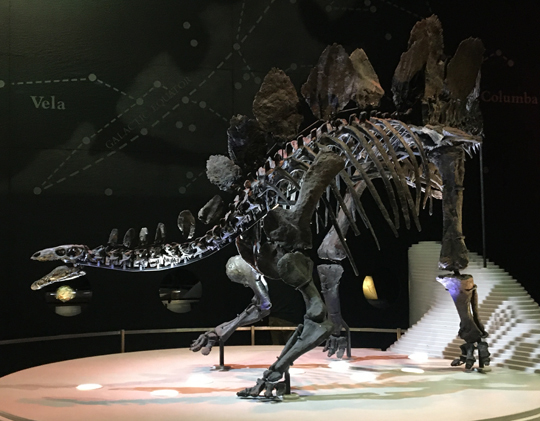
A view of the anterior of “Sophie” the Stegosaurus stenops specimen on display at the London Natural History Museum. Picture credit: Everything Dinosaur.
Picture credit: Everything Dinosaur
“Sophie” might be quite small by stegosaur standards but we think this specimen is beautiful and we congratulate the Natural History Museum for creating such a spectacular exhibit that always thrills us when we visit. We even have to grudgingly acknowledge the support of a Hedge Fund manager for making it possible.
A View of the Posterior Portions of “Sophie” the Stegosaurus
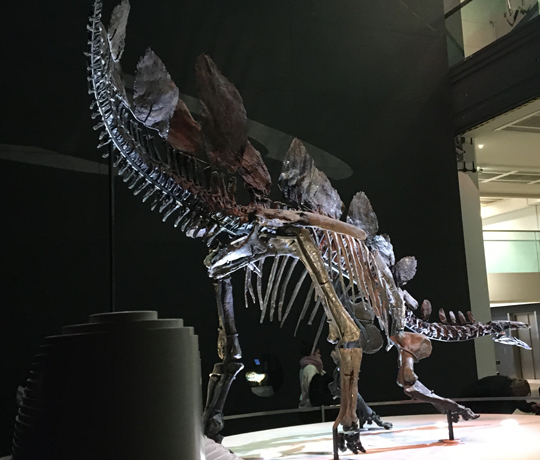
A posterior view of the spectacular “Sophie” the Stegosaurus (S. stenops) exhibit at the London Natural History Museum.Picture credit: Everything Dinosaur.
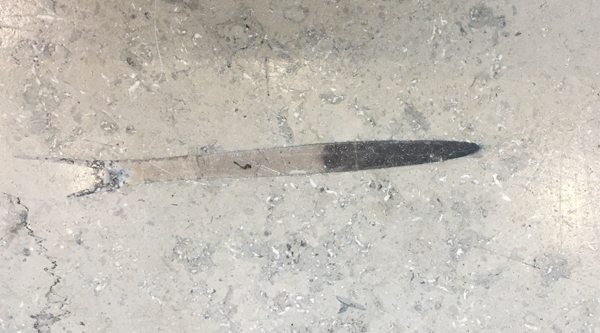
Fossils can be found in unusual places. A few years ago, we reported on an initiative by Liverpool John Lennon Airport to encourage passengers to explore the various fossils that could be found entombed in the stone floor and the pillars of the concourse building. As limestone is used in many construction projects, it is surprising where fossils of ancient life forms can be spotted. For example, whilst in Germany, an Everything Dinosaur team member spotted a beautiful belemnite guard preserved in cross-section in a floor tile.
Belemnite Fossil Found in a Stone Floor Tile
A cross-sectional impression of a belemnite guard preserved in the floor of a building.Picture credit: Everything Dinosaur.
Picture credit: Everything Dinosaur
Spotting a Belemnite
The term “belemnite” is derived from the Greek for “dart”. Looking at the fossil preserved in the stone floor tile, it is easy to see the reason for the name of these Mesozoic cephalopods.
The guard is the internal skeleton of the belemnite, it consists of a solid piece of calcite and these fossils can be found in their hundreds in rocks dating from the Lower and Middle Jurassic. However, they are also abundant in many Cretaceous marine clays. The anterior portion of the guard (seen on the left of the photograph), would contain the phragmocone, the cone-shaped chambered shell that demonstrates that these nektonic animals were related to ammonites. In many instances, the phragmocone is lost, leaving a “U” shaped hollow that can be seen in the picture (above).
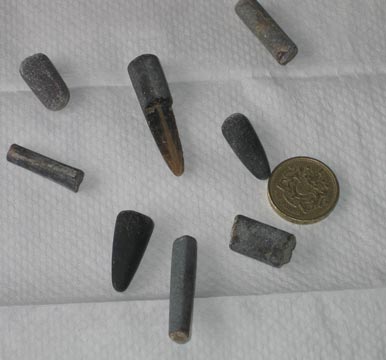
Some Belemnite Fossils Collected from the “Jurassic Coast” (Dorset)
Belemnite guard fossils from the “Jurassic Coast”. The coin on the right of the picture shows scale.Picture credit: Everything Dinosaur.
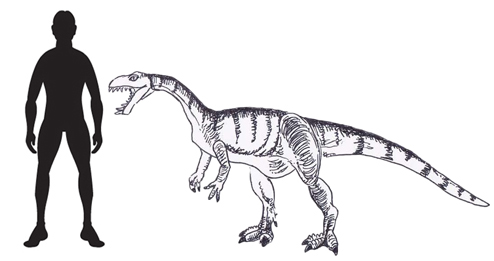
The theropod fossil record for Australia is particularly poor. The majority of the meat-eating dinosaur fossils found down-under come from the Albian-Cenomanian faunal stages of the Cretaceous have been predominantly referred to the Megaraptoridae. However, a single neck bone (cervical vertebra), found in an opal mine near the town of Lightning Ridge (New South Wales), in conjunction with a fragmentary ankle bone from the Gippsland Basin in Victoria have led scientists to conclude that another type of predatory dinosaur roamed Australia – noasaurids.
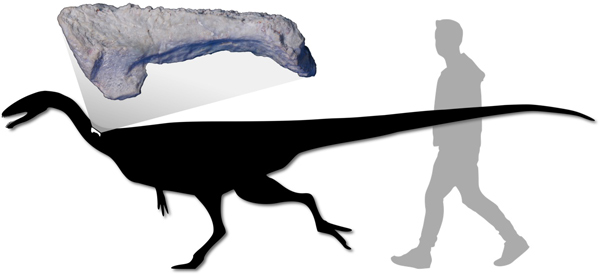
A Silhouette of the Unnamed Noasaurid with a Human Figure for Scale and the Fossil Neck Bone Placed in Life Position
Silhouette showing approximate size of the Australian noasaurid and the fossil material.
Picture credit: Tom Brougham (University of New England, New South Wales)
Classifying the Noasauridae
The Noasauridae are a family of small-bodied, fast-running, largely predatory dinosaurs nested within the Superfamly Abelisauroidea, although their exact taxonomic position and which genera fit within the Noasauridae remains controversial. Essentially, these types of dinosaurs are distantly related to the abelisaurids such as Carnotaurus and Rajasaurus.
Noasaurids demonstrate a wide range of anatomical characteristics. For example, Masiakasaurus (M. knopfleri), known from the Late Cretaceous of Madagascar, had a downturned lower jaw with teeth in both jaws, whereas the adult forms of Limusaurus (L. inextricabilis) known from the Jurassic of China, had no teeth in their jaws and could have been herbivores.
A Scale Drawing of Masiakasaurus (M. knopfleri)
Unusual theropod dinosaur – Masiakasaurus, the downward turned lower jaw and the dentition suggest that this predator could have specialised in catching fish (piscivore).Picture credit: Everything Dinosaur.
Picture credit: Everything Dinosaur
The picture (above) is an illustration of the Masiakasaurus model from the Wild Safari Prehistoric World series.
The Noasauridae are known from the Southern Hemisphere and seem to have been confined to the landmass of Gondwana.
Dr Tom Brougham (University New England, New South Wales), one of the co-authors of the study, published in the journal Scientific Reports stated:
“It was assumed that noasaurids must have lived in Australia because their fossils have been found on other southern continents that, like Australia, were once part of the Gondwanan supercontinent. These recent fossil finds demonstrate for the first time that noasaurids once roamed across Australia. Discoveries of theropods are rare in Australia, so every little find we make reveals important details about our unique dinosaur fauna.”
The partial cervical vertebra from the Wallangulla Sandstone Member of the Griman Formation, collected from an underground opal mine at the “Sheepyard” opal field, southwest of Lightning Ridge was found within a bonebed containing the iguanodontian Fostoria dhimbangunmal. The bone is estimated to be around 100 million years old.
Present in Australia
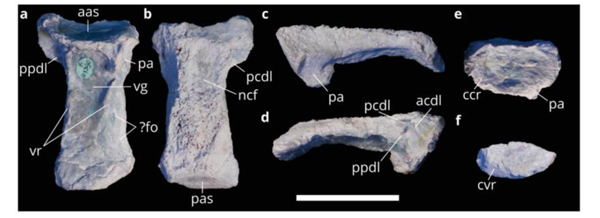
Although, the fossil (specimen number LRF 3050.AR), is badly eroded the researchers discovered that is resembled cervical vertebrae associated with the noasaurids, hence the diagnosis that this fossil indicates the presence of these types of theropod dinosaurs in Australia.
The Neck Bone from the Opal Mine Ascribed to the Noasauridae
The noasaurid cervical vertebra LRF 3050.AR in (a) ventral; (b) dorsal, (c) left lateral, (d) right lateral, (e) anterior and (f) posterior views. Note scale bar = 50 mm.
Picture credit: Brougham et al (Scientific Reports)
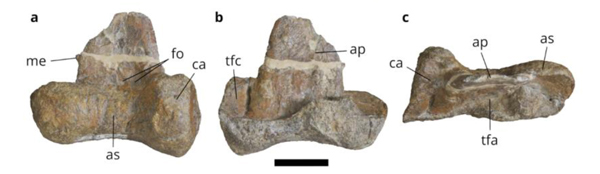
The scientists re-examined a ceratosaurian astragalocalcaneum fossil (NMV P221202) that had been found in 2012 in strata associated with the much older upper Barremian–lower Aptian San Remo Member of the upper Strzelecki group in Victoria. It was concluded that this ankle bone also represented noasaurid fossil material.
The East Gippsland Ankle Bone Now Ascribed to the Noasauridae
The East Gippsland astragalocalcaneum (NMV P221202) in (a) anterior, (b) posterior, and (c) proximal views. Note scale bar = 20 mm. This fossil lends support to the idea that noasaurids were present in Australia.
Picture credit: Brougham et al (Scientific Reports)
Oldest Known Noasaurid
Between them, the Lightning Ridge neck bone and the ankle bone from Victoria represent the first evidence of noasaurid dinosaurs found in Australia. The astragalocalcaneum material comes from deposits that were laid down in the Early Cretaceous and could be 120 million years of age. This would make the ankle bone the earliest known example of a noasaurid in the world described to date. The recognition of Australian noasaurids further indicates a more widespread Gondwanan distribution of the clade outside of South America, Madagascar and India consistent with the timing of the fragmentation of the supercontinent.
The scientific paper: “Noasaurids are a component of the Australian ‘mid’-Cretaceous theropod fauna” by Tom Brougham, Elizabeth T. Smith and Phil R. Bell published in Scientific Reports.
“Big Al” is Not Allosaurus fragilis but Allosaurus jimmadseni
A new species of North American Allosaurus has been described, the new dinosaur has been named Allosaurus jimmadseni, the species name honouring the late James H. Madsen Jr, Utah’s first state palaeontologist, who dedicated his career to excavating, preserving and studying the fossils found at the famous Cleveland-Lloyd Dinosaur Quarry.
In 1976, Madsen published a detailed monograph documenting the Allosaurus specimens found at this location, which is now the Jurassic National Monument complete with visitor centre. The monograph describing and illustrating the Quarry’s Allosaurus fossils is regarded as a seminal piece of work that strongly influenced the direction of research into theropod dinosaurs.
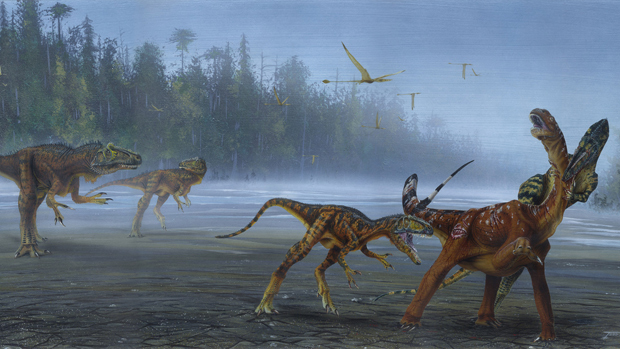
A Pack of Allosaurs (Allosaurus jimmadseni) Attacking a Juvenile Sauropod
A pack of allosaurs (A. jimmadseni) attacking a juvenile sauropod.
Picture credit: Todd Marshall
“The Ballard of Big Al” – Allosaurus jimmadseni
Fans of the documentary “The Ballard of Big Al”, a spin-off programme to the famous “Walking with Dinosaurs” television series, made by the BBC Natural History Unit and Impossible Pictures that first aired over twenty years ago, will remember that this programme told the story of the life of an Allosaurus. The fossil specimen used as the basis for the story line, was found in the Howe Quarry (Wyoming), specimen number MOR 693. This was thought to represent an Allosaurus fragilis, but MOR 693 “Big Al” has now been assigned to this new species.
The Star of the Ballard of Big Al (MOR 693) Now Assigned to A. jimmadseni
The front cover of “The Ballard of Big Al” BBC/Impossible Pictures documentary. Once thought to be an example of Allosaurus fragilis, this fossil specimen (MOR 693), has been reassigned to A. jimmadseni.Picture credit: Everything Dinosaur.
Picture credit: Everything Dinosaur
New Allosaurus Species Based on Two Nearly Complete Fossil Skeletons
Writing in the academic journal PeerJ, the two authors of the scientific paper Mark Loewen, research associate at the Natural History Museum of Utah and associate professor in the Department of Geology and Geophysics at the University of Utah and co-worker Dan Chure, now retired, but formerly based at the Dinosaur National Monument, set out the case for the erection of a new species of Allosaurus. Between them they have studied virtually all the Allosaurus specimens in North American museums, a research project that has taken two decades and is still on-going.
The paper describing Allosaurus jimmadseni, is one of several papers that will be published by the pair. Future scientific papers will address post-cranial morphology and provide a further revision of the Allosaurus genus.
The new species of Allosaurus has been established based on the study of the “Big Al” specimen and specimen number DINO 11541 discovered by Dr George Engelmann (University of Nebraska), in 1990. Excavation continued at the Dinosaur National Monument site for several years, gradually exposing an almost complete articulated skeleton, but missing the skull. In the summer of 1996, University of Utah employee Ray Jones returned to the site and used a gamma X-ray detection device to locate the beautifully preserved cranium.
A Cast of the Specimen DINO 11541 Showing the Articulation and the Approximate position of the Skull
A painted cast of the holotype fossil material DINO 11541 (Allosaurus jimmadseni).
Picture credit: Dan Chure
Three Recognised Allosaurus Species
Since Allosaurus was first erected by the American palaeontologist Othniel Charles Marsh in 1877, numerous species have been named. However, in this research paper only three species are recognised – Allosaurus fragilis and Allosaurus jimmadseni in North America and Allosaurus europaeus from Europe. The researchers identified a number of unique characteristics (autapomorphies), in the specimens MOR 693 and DINO 11541 that led them to propose a new species. For example, the paired nasals of A. jimmadseni possess bilateral, thin, blade-like crests that run from the nostrils up the snout, ending at the apex of the eye socket. This feature is absent in Allosaurus fragilis.
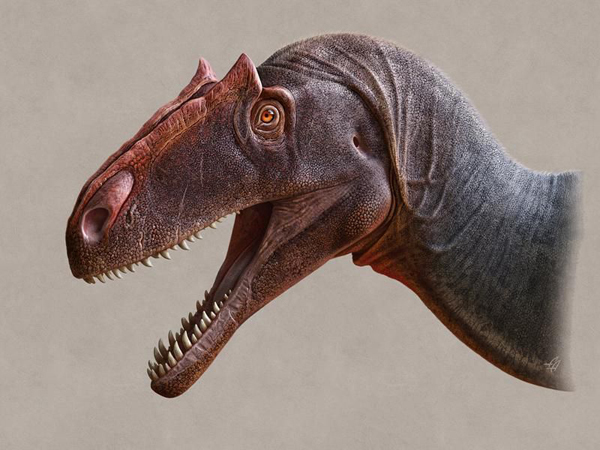
A Life Reconstruction of Allosaurus jimmadseni
A reconstruction of the head of Allosaurus jimmadseni. Note the pair of bilateral nasal crests that run from the nostrils to the eye socket. This feature is absent in Allosaurus fragilis.
Picture credit: Andrey Atuchin
As a result of this new study, a number of other fossil specimens formerly placed within A. fragilis have been reassigned to A. jimmadseni.
Geologically the Oldest Species of Allosaurus
The “Big Al” fossil and specimen number DINO 11541 come from strata associated with the Lower Morrison Formation (Brushy Basin Member and Salt Wash Member respectively), as such, these animals are several million years older than those fossils now ascribed to Allosaurus fragilis.
Commenting on the significance of their extensive research, co-author Mark Loewen stated:
“Previously, palaeontologist thought there was only one species of Allosaurus in Jurassic North America, but this study shows that there were two species. The newly described Allosaurus jimmadseni evolved at least five million years earlier than its younger cousin, Allosaurus fragilis. The skull of Allosaurus jimmadseni is more lightly built than its later relative Allosaurus fragilis, suggesting a different feeding behaviour between the two.”
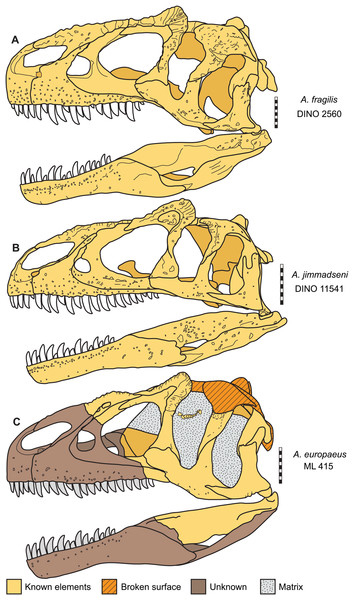
Comparing Allosaurus Skulls (Three Species Compared)
Comparing the skulls of Allosaurus species (left lateral view). (A) Allosaurus fragilis (DINO 2560). (B) Allosaurus jimmadseni (DINO 11541). (C) Allosaurus europaeus (ML 415). Scale bars equal 10 cm.
Picture credit: Chure and Loewen published in PeerJ
An Anagenetic Lineage?
This study suggests that Allosaurus jimmadseni fossils are found in the Salt Wash Member of the Morrison Formation in Utah and the lower part of the Brushy Basin Member of the Morrison Formation in Wyoming and South Dakota. If this is the case, then it raises the question whether the later A. fragilis evolved from the earlier Allosaurus jimmadseni. Did Allosaurus fragilis directly evolve from its older, close relative? If it did, then this is a form of evolution known as anagenesis – whereby one species gradually evolves into a new species over a long period of geological time.
An anagenetic lineage occurs when one population representing a single species, over thousands and thousands of years, gradually accumulates change. These changes eventually become sufficiently distinct from the earlier form that descendants can be labelled a new species.
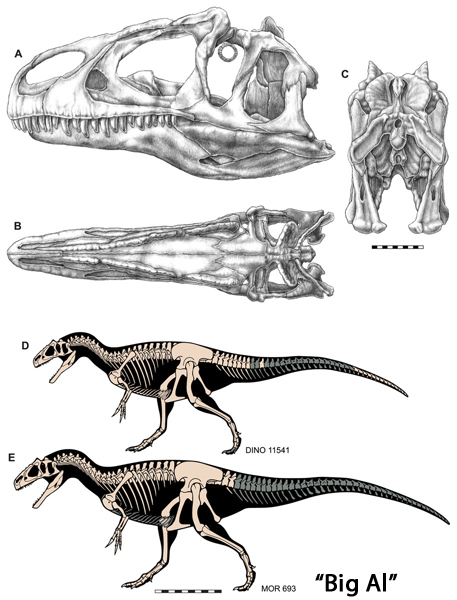
Skull Drawings and Skeletal Reconstructions of Allosaurus jimmadseni
Skull and skeletal reconstructions of Allosaurus jimmadseni.
Picture credit: Chure and Loewen published in PeerJ with additional notation by Everything Dinosaur.
The illustration above shows stylised line drawings of the skull of Allosaurus jimmadseni in lateral, dorsal and posterior views along with skeletal reconstructions of DINO 11541 and “Big Al”. Scale bar (A-C) equals 10 cm and for D-E 1 metre.
Allosaurus, as the most common genus of Late Jurassic theropod in North America has played a significant role in helping palaeontologists to cement the phylogeny of Jurassic meat-eating dinosaurs. A revision of this key genus will probably have important consequences for future studies regarding the taxonomy of the Coelurosauria.
The scientific paper: “Cranial anatomy of Allosaurus jimmadseni, a new species from the lower part of the Morrison Formation (Upper Jurassic) of Western North America” by Daniel J. Chure and Mark A. Loewen published in PeerJ.
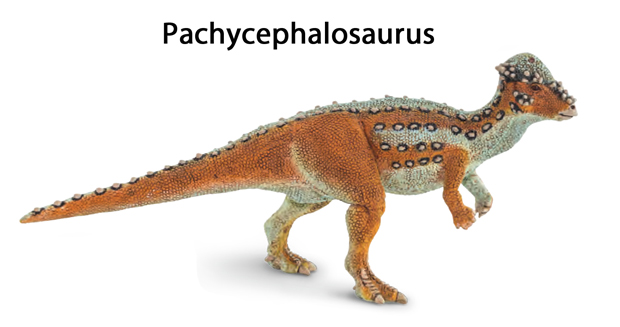
Wild Safari Prehistoric World Pachycephalosaurus “Battle Damage”
Sometimes a model manufacturer goes that little bit further when it comes to adding a degree of authenticity to its figures. A case in point is Safari Ltd and their recently introduced Wild Safari Prehistoric World, Pachycephalosaurus. This beautifully painted replica depicts an injury to the skull of this “bone-headed” dinosaur. There is a small, brown-coloured mark on top of the skull. Eagle-eyed Everything Dinosaur team members noticed this feature when looking at pre-production images, but it had been difficult to spot in some promotional shots.
However, we can confirm this little bit of pachycephalosaur pathology is indeed an integral part of the model.
Showing the “Pachycephalosaur Pathology” – The Wild Safari Prehistoric World Pachycephalosaurus with the Mark on its Head
A close-up view of the top of the head of the Wild Safari Prehistoric World Pachycephalosaurus model with the “battle damage” highlighted. Picture credit: Everything Dinosaur.
A number of theories have been put forward as to why pachycephalosaurs tended to have highly ornate, often very thick skulls. These anatomical features probably did not evolve to protect their brains, the brains of these types of dinosaur are proportionately no bigger than many other types of ornithischians. They probably did not have a defensive role, after all, to a large tyrannosaurid a thick, reinforced skull would have been not much of an obstacle to overcome if it were fortunate to catch a pachycephalosaur.
Many palaeontologists believe these characteristics evolved as these animals competed with each other in combat over hierarchical status in the herd, or the right to mate. This theory was, we believe, first postulated by the distinguished American vertebrate palaeontologist Edwin Colbert in 1954. Since then, a number of studies have been undertaken to verify/refute this idea: Study Sheds New Light on the Intraspecific Combat of Pachycephalosaurs.
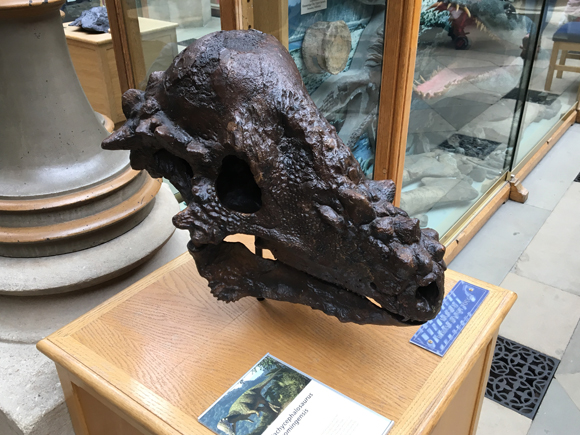
Pachycephalosaurus wyomingensis Replica Skull
Pachycephalosaurus wyomingensis replica skull. In some specimens the skull bone is more than twenty centimetres thick.Picture credit: Everything Dinosaur.
Picture credit: Everything Dinosaur
However these Late Cretaceous dinosaurs used their heavily ornate and robust headgear remains open to speculation, but one thing is for sure, the Wild Safari Prehistoric World Pachycephalosaurus model certainly shows lots of detail.
A Beautiful and Very Detailed Dinosaur Model
The new for 2020 Wild Safari Prehistoric World Pachycephalosaurus model. The “battle damage” to the skull can be seen in this image of the dinosaur.Picture credit: Everything Dinosaur.
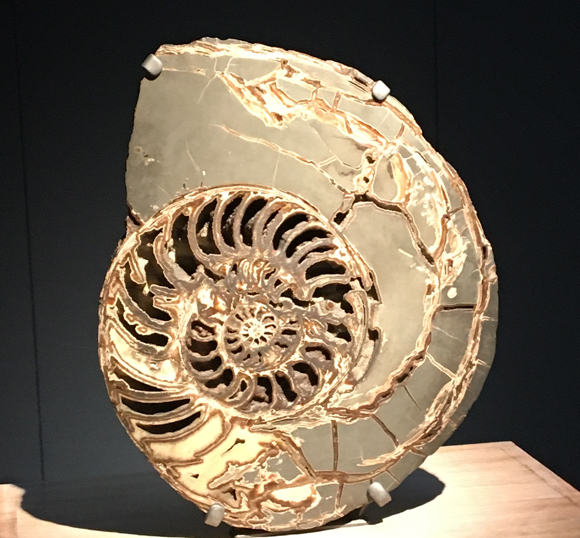
A quick trip to the London Natural History Museum to gain some inspiration for a project that Everything Dinosaur team members have been invited to participate in. Once there and with our mission accomplished, there was just time to take a look at some of the superb fossil exhibits on display adjacent to the Earth Hall and the British Geological Survey display. It was like meeting old friends again with a chance to admire the Megatherium specimen and the amazing marine reptiles within the “Green Zone”. One of our favourite specimens, is this cross-section of a substantial ammonite.
With all those chambers exposed , the fossilised remains of this large marine invertebrate remind us of a piece of modern art.
A Beautiful Ammonite Fossil on Display
A stunning fossil of a Jurassic ammonite on display at the London Natural History Museum.Picture credit: Everything Dinosaur.
Picture credit: Everything Dinosaur
The Ammonite Asteroceras stellare?
We suspect that this is an example of Asteroceras stellare, an ammonite species associated with the Lower Jurassic of Europe from around 195 to 188 million years ago. Some specimens of A. stellare have shells nearly a metre in diameter. Gigantism in cephalopods has arisen on numerous occasions during the long evolutionary history of this Class of the Mollusca. Today, we have the giant squid (Architeuthis), whilst in the Ordovician, one of the world’s first super-predators was a cephalopod, the enigmatic Cameroceros.
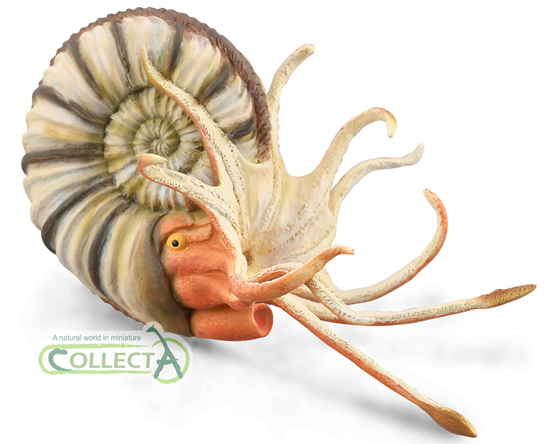
An Ammonite Model – Pleuroceras
CollectA Age of Dinosaurs Popular Size Pleuroceras ammonite model.
The image (above) shows the CollectA Popular Pleuroceras ammonite model.
As for why some types of ammonite grew so large, whilst most could comfortably fit in the palm of your hand, remains a mystery. Scientists are uncertain as to what environmental factors are the driving forces in the evolution of giant forms in some types of animal, however, such large animals could be linked to a bountiful supply of oxygen in the atmosphere and subsequently dissolved in sea water.
The specimen on display at the Natural History Museum, may not be the biggest ammonite fossil, but to us we think it is one of the most beautiful exhibits to be seen in the whole of the Earth Hall.
Earliest Fossil Record of Asclepiadoideae (Dogbane Family) Reported from Asia
Scientists from the Chinese Academy of Sciences, writing in the academic journal “The American Journal of Botany”, have reported the earliest fossil record of the Apocynaceae family of plants from fossils found on the Central Qinghai‐Tibetan Plateau. These flowering plants are often referred to as the “Dogbane” family, as many species have poisonous sap and this was used to keep dogs at bay.
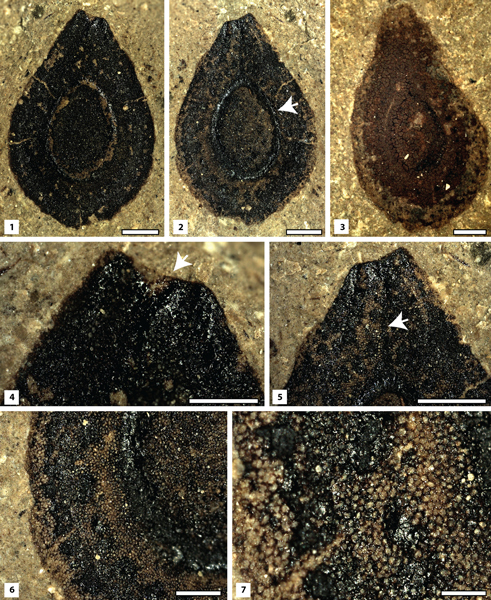
The fossils representing preserved seeds collected from an altitude of around 4,800 metres indicate that during the Early Eocene, this part of Asia had a very much warmer subtropical climate. Based on the seed fossils the researchers discovered, the scientists have been able to erect a new genus (Asclepiadospermum) and place two new species of Early Eocene plants within it (A. marginatum and A. ellipticum)
Fossilised Seeds of One of the Newly Described “Dogbane” Species Asclepiadospermum marginatum
Asclepiadospermum marginatum fossil seeds from a Tibetan plateau.
Picture credit: Cédric Del Rio et al (The American Journal of Botany)
Asclepiadoideae is now geographically widespread, found tropical and subtropical regions around the world with something like 5,000 individual species recorded, ranging in size from trees to small shrubs and climbing vines.
Fossilised remains of these types of plants from the Neogene of Europe and North America are relatively abundant, but fossils from Asia are exceptionally rare. The researchers studied three Apocynaceae seed impressions from the Lower Eocene Niubao Formation, Jianglang village, Bangor County on the central Qinghai‐Tibetan Plateau. The fossilised remains are more than fifty million years old.
A Record of a Subtropical Ecosystem
After comparing with modern seeds and mapping of the seed characters on a phylogeny of the family Apocynaceae, the researchers recognised the fossils as part of the subfamily Asclepiadoideae and erected the new genus with its two species of prehistoric plants. The Jianglang location is now situated at an altitude of approximately 4,800 metres above sea level and hosts cold alpine vegetation dominated by grassland. However, these fossils indicate that the early Eocene climate and biodiversity were profoundly different. Asclepiadoideae is now present in Asia and widespread in tropical to subtropical areas.
Commenting on the significance of the seed fossils, Professor SU Tao ( Laboratory of Tropical Forest Ecology, Chinese Academy of Sciences), corresponding author for the research paper, stated:
“The newly discovered early Eocene Asclepiadospermum from the central Qinghai‐Tibetan Plateau clearly belongs to Asclepiadoideae. Our discoveries thus reconcile the fossil record and molecular estimations and represent the earliest fossil record for the subfamily. Our fossils are important in documenting the floristic connection between Africa and Eurasia during the Eocene. Based on current knowledge, Asclepiadospermum could represent an example of early diversification of Apocynaceae in Asia, with subsequent diversification in the Northern Hemisphere.”
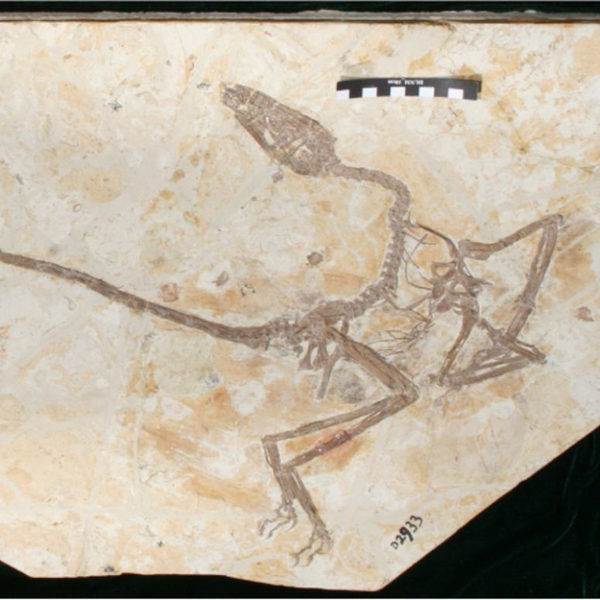
A new feathered dinosaur from Liaoning Province (north-eastern China), has been named and described. The little dinosaur, not much bigger than a crow, but with a long tail, has been named Wulong bohaiensis. The fossilised feathers associated with the beautifully preserved skeleton, include two long tail feathers, the sort of extravagant plumage associated with mature birds which use such adornments to attract a mate. However, when an analysis of the limb bones was undertaken to determine the age of the specimen (histological analysis), the research team discovered that the specimen represented a juvenile.
Either those long, showy feathers served some other function, or dinosaurs that were closely related to birds grew up differently when compared to their living relatives.
The Newly Described Wulong bohaiensis.
The beautifully preserved and almost complete W. bohaiensis fossil specimen.
Picture credit: Ashley W. Poust (University of California)
Wulong bohaiensis – Dancing Dragon
The fossil specimen was found more than ten years ago by a local farmer. It had resided in the vertebrate collection of the Dalian Natural History Museum (Liaoning Province), being eventually described and studied by scientists at the museum in conjunction with student Ashley Poust under the supervision of Dr David Varricchio (Montana State University), her former advisor, prior to Ashley moving to the University of California.
The genus name is Chinese for “dancing dragon”, a reference to the posture of the preserved specimen. A phylogenetic analysis places W. bohaiensis within Microraptorinae, this little dinosaur was therefore closely related to Microraptor. Whether, like Microraptor, Wulong bohaiensis was capable of powered flight can be speculated upon.
Ashley Poust explained the significance of this research stating:
“The specimen has feathers on its limbs and tail that we associate with adult birds, but it had other features that made us think it was a juvenile.”
Studying the Histology of the Fossil Bones
In order to determine the age of the dinosaur when it died, staff at the Dalian Natural History Museum gave permission for the tibia, fibula and humerus bones to be examined histologically. Essentially, cross-sectional slices of these bones were removed from the skeleton, prepared and then examined under a microscope so that the seasonal/annual growth of the animal could be identified. Such a technique is invasive and will cause damage to the fossil specimen, fortunately, the curators at the Dalian Natural History Museum took the decision that in order to benefit science the invasive procedures had to be undertaken.
Ashley commented:
“Thankfully, our co-authors at the Dalian Natural History Museum were really forward thinking and allowed us to apply these techniques, not only to Wulong, but also to another dinosaur, a close relative that looked more adult called Sinornithosaurus.”
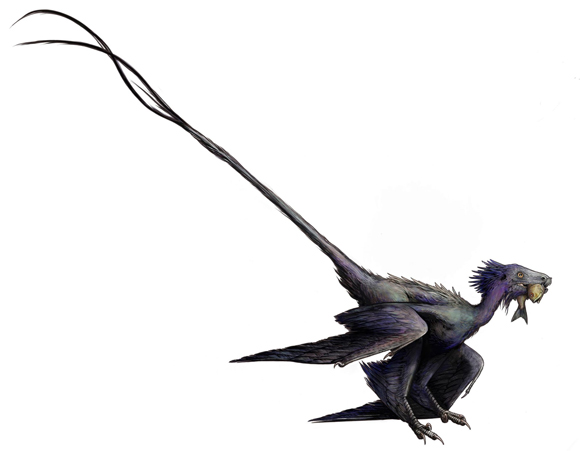
A Life Reconstruction of Wulong bohaiensis
A life reconstruction of Wulong bohaiensis. The sharp, small teeth in the jaw of Wulong suggest that this dinosaur was a piscivore, or perhaps feeding on insects.
Picture credit: Ashley Poust (University of California)
Sinornithosaurus Provides a Surprise
The histology of a specimen of another feathered dinosaur associated with the Early Cretaceous Jehol biota was also examined. The research team wanted to compare their immature, juvenile Wulong to what they thought was a specimen of an adult Sinornithosaurus. However, analysis of the bone structure of the Sinornithosaurus provided a surprise. The histology revealed that both specimens were young and still growing at death, indicating an age for Wulong of about one-year-old.
Commenting on the results of the histological analysis on the Sinornithosaurus specimen, Ashley explained:
“Here was an animal that was large and had adult looking bones. We thought it was going to be mature, but histology proved that idea wrong. It was older than Wulong, but seems to have been still growing. Researchers need to be really careful about determining whether a specimen is adult or not. Until we learn a lot more, histology is really the most dependable way.”
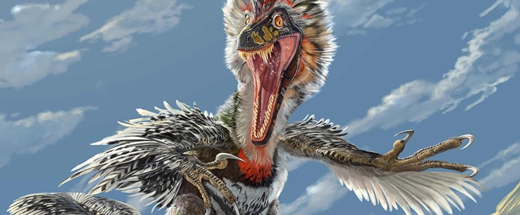
An Illustration of Sinornithosaurus
The fearsome dromaeosaurid Sinornithosaurus, in reality this dinosaur was about 1-1.2 metres in length, although it might have preyed upon the smaller Wulong bohaiensis.
Picture Credit: Zhao Chuang
This new study suggests that either young dinosaurs developed elaborate tail feathers for some other purpose, or that they were growing feathers in a different way from their close living relatives the Aves (birds).
The Paraves Clade
The Paraves is a clade of theropod dinosaurs. It is defined as containing all the dinosaurs which are more closely related to birds than to oviraptorosaurs. As such it includes troodontids, dromaeosaurids and avialians, which encompasses extant birds. Much of what we know about the diversity of this group in the Early Cretaceous comes from fossil specimens found in Liaoning, China. However, many taxa are represented by specimens of unclear ontogenetic age.
With a better understanding of how dinosaurs may have changed in their appearance as they grew up, scientists can be more confident about their phylogeny, their evolutionary relationships and which character traits can be used to infer biology and the dinosaur’s position within the complex Jehol ecosystem.
This scientific paper identified several different types of feather associated with Wulong bohaiensis – pennaceous primary feathers, filamentous feathers and long tail feathers. The team established that such plumage preceded skeletal maturity and full adult size in some dromaeosaurids.
Histological analysis of the Wulong holotype and a Sinornithosaurus specimen revealed that they developed mature feather coverings associated with adult animals after their first year, but before they had become fully grown. This has implications for Paraves research as assumptions made about the adult age of a fossil specimen may not be accurate in the absence of histological analysis.
The scientific paper: “A new microraptorine theropod from the Jehol Biota and growth in early dromaeosaurids” by Ashley W. Poust, Chunling Gao, David J. Varricchio, Jianlin Wu, and Fengjiao Zhang published in The Anatomical Record.
South Australian Fossil Site Purchase Supported by Billionaire
With so much bad news about the environment coming out of Australia due to the devastating bush fires, it is pleasing to report on a conservation success story. A $1 billion (USD), nature fund has been used to buy a vast tract of outback South Australia containing some of the oldest animal fossils on Earth. The acquisition safeguards an extremely important fossil site and helps support the Australian Government’s plans to gain World Heritage Site status for the area.
The Nilpena Fossil Fields (South Australia)
The Nilpena fossil fields preserve examples of Precambrian biota.
Picture credit: Jason Irving
The Unique Ediacara Fossil Site
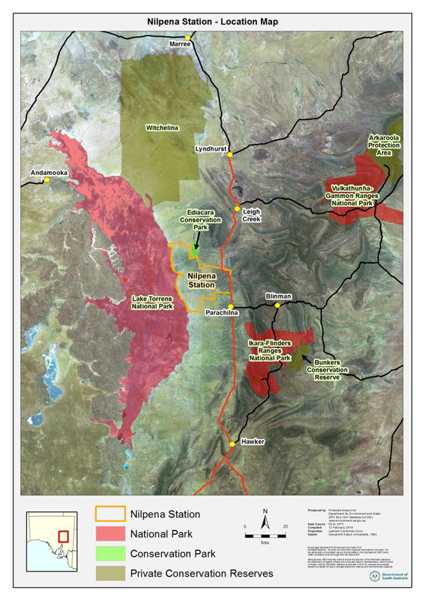
The 60,000-hectare (150,000 acre) Nilpena West property is 370 miles (600 kilometres), north of the South Australian capital Adelaide and was previously part of Nilpena Pastoral Station. The property includes the Ediacara Fossil Site (Nilpena), which is listed on Australia’s National Heritage List and records a remarkable marine biota, documenting some of the earliest, large, multicellular creatures to have evolved on Earth.
Global not-for-profit organisation The Nature Conservancy, sourced funding from an anonymous donor in October 2019 to allow the purchase and protection to go ahead after the South Australian Government announced in March that it had reached an agreement with the land’s owners to purchase the site. The purchased land is adjacent to the Ediacara Conservation Park and increases the size of the protected area ten-fold.
The Importance of the Flinders Range
Strange fossils, preserved in the sandstone of the Ediacaran hills of South Australia provided the first substantial evidence for the existence of complex life in the late Precambrian. In 1946, Australian geologist Reginald Spriggs discovered fossilised impressions in this part of the Flinders Range, his unexpected discovery failed to enthuse the scientific community at first, his paper outlining the discovery was rejected by the academic journal “Nature”. However, the significance of these exquisitely preserved fossils and what they represented – organisms associated with an ancient marine community, was soon realised.
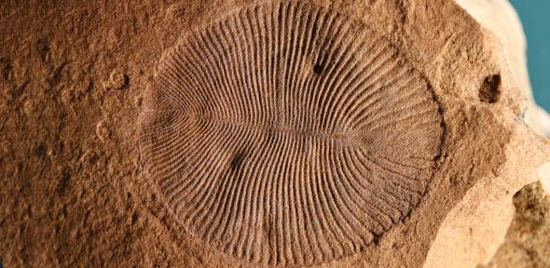
An Example of Dickinsonia – One of the Fossilised Ediacaran Organisms Associated with the Nilpena Fossil Fields
The Ediacaran fossil Dickinsonia costata, specimen P40135 from the collections of the South Australia Museum. The disc-like Dickinsonia is one of the creatures preserved at the Nilpena fossil site.
Picture credit: Dr Alex Liu (Cambridge University)
The sale has now been finalised with The Nature Conservancy announcing this week that funding from the Wyss Campaign for Nature, the once anonymous donor, had helped secure the acquisition. The Wyss Campaign for Nature was founded two years ago, by the wealthy, Swiss-born philanthropist Hansjörg Wyss. The purchased land will be permanently protected and managed by the South Australian Government. It will be formally allocated to the Ediacara Conservation Park later this year.
A Map Showing the Location of the Nilpena Fossil Fields Relative to the Ediacara Conservation Park
Nilpena fossil fields site. The Nilpena Station purchase will greatly increase the protected area for the fossils.
Picture credit: The Government of South Australia
The South Australian property is now permanently protected and managed for conservation by the South Australian Government. It will be added to the Ediacara Conservation Park later this year.
Ediacaran Fossils Represent Scores of Species
Palaeontologists have excavated many hundreds of specimens representing three dozen different species, most of which are more than 550 million years old. The fossils provide the first evidence of locomotion and sexual reproduction. The space agency NASA, has examined the Ediacaran biota in a project to assess how life could evolve on other worlds.
The Nature Conservancy’s Australian Director of Conservation Dr James Fitzsimons explained that this purchase which would permit the formal protection of the 60,000 hectare property was a big win for conservation in South Australia.
He commented:
“The property contains significant biodiversity values including two threatened ecological communities and a number of threatened species. Most critically, the property also covers extremely important sites that contain the oldest fossilised animals on Earth.”
South Australian Environment and Water Minister David Speirs said Nilpena West would soon be added to the South Australian public protected area estate and managed by the Department for Environment and Water.
The minister added:
“Its inclusion in the conservation estate will link the Ediacara Conservation Park to the Lake Torrens National Park and will support our nomination for the listing of areas of the Flinders Ranges as a World Heritage Site.”
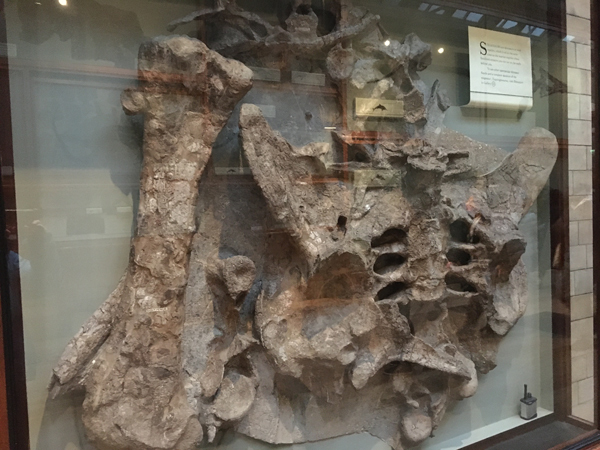
Situated amongst specimens of marine reptiles in the Mary Anning gallery at the London Natural History Museum is a remarkable fossil specimen. Behind its glass case the viewer can make out a block of bones containing various vertebrae, a massive right femur (thigh bone), ribs and a near complete pelvis. At approximately two metres across this is an impressive fossil specimen. It is the holotype material for Dacentrurus armatus (NHMUK OR46013), the first large collection of dinosaur bones associated with a member of the Stegosauridae to be scientifically described and studied.
The Main Bone Block (D. armatus) at the Natural History Museum (London)
The Dacentrurus armatus specimen on display at the Natural History Museum (London).Picture credit: Everything Dinosaur.
The fossils come from a clay quarry close to the town of Swindon in the county of Wiltshire. Richard Owen (later Sir Richard Owen), who was to play a pivotal role in the foundation of the institute that we now know as the London Natural History Museum, studied the fossils and erected the name Omosaurus armatus in 1875. The genus name, Omosaurus had already been used to describe a North American phytosaur (O. perplexus) in 1856. Therefore, the original genus name for this armoured dinosaur was invalidated. In 1902 the eminent American zoologist, Frederick Augustus Lucas erected Dacentrurus.
CollectA have produced a Dacentrurus figure. This model is in their Deluxe model range.
With the recently published paper describing a new specimen of Miragaia longicollum, a “Rosetta Stone” moment in vertebrate palaeontology permitting scientists to better understand the Dacentrurinae subfamily of the Stegosauridae, it is fitting that whilst in London an Everything Dinosaur team member took the opportunity to take a photograph of the main Dacentrurus block. The beautiful fossils are notoriously difficult to photograph, but still, they continue to play a role in helping to decipher Late Jurassic stegosaurs.
On Display in the Wrong Gallery?
One mystery still remains, why is this important dinosaur fossil on display in the marine reptiles gallery? Perhaps, one day, these hugely significant fossils we will placed in the dinosaur gallery, where visitors could be given the opportunity to learn more about the world’s first extensively studied armoured dinosaur specimen.