In celebration of St David’s Day (St David being the patron saint of Wales, a country with a red dragon on its national flag), Everything Dinosaur team members explored their huge weblog database to see how many of our thousands of articles mention the word “dragon”, a term regarded by many as synonymous with the Dinosauria.
To our surprise, we discovered 155 articles that are associated with “dragon”. The number of posts has increased recently with the naming of several new, Chinese dinosaur discoveries which tend to use the word “long” rather than “saurus” in their scientific name. The term “long” means dragon in Chinese, a suffix frequently used to name Chinese dinosaurs whereas the Greek term “saurus” is preferred in the West.
Dragons and the Dinosauria
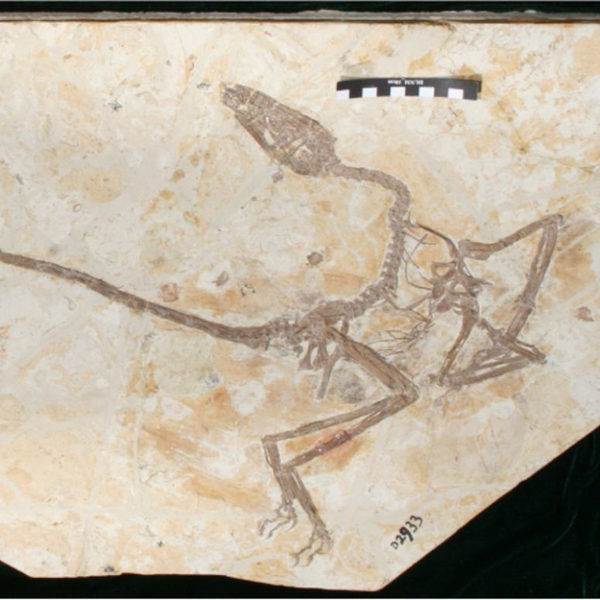
For example, earlier this year we put together a blog post about the newly named microraptorine Wulong bohaiensis, the genus name translates as “dancing dragon”, a reference to the posture of the preserved specimen.
A Little Dragon for St David’s Day
The beautifully preserved and almost complete W. bohaiensis fossil specimen. The genus name translates from the Chinese as “dancing dragon” – a reference to the preserved posture of the fossil specimen. A red dragon is a heraldic symbol used on the national flag of Wales.
Picture credit: Ashley W. Poust (University of California)
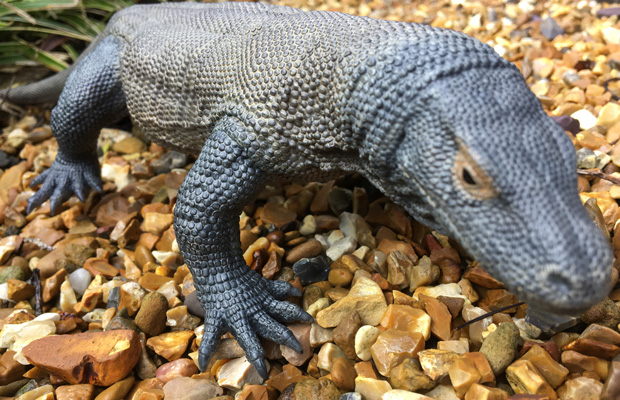
Another reason why the Everything Dinosaur blog may have a lot of references to dragons is that back in the autumn of 2019, the eagerly awaited Rebor GrabNGo 1:6 scale Komodo dragon replica came into stock. This was the first model in the Rebor GrabNGo line and the first commercial model of an extant (not extinct) animal that Rebor had produced. Measuring nearly half a metre in length, this super-sized replica of a super-sized lizard earned rave reviews from model collectors.
Rebor Komodo Dragon (1:6 Scale Replica)
Komodo dragon or Megalania? You decide. Many collectors used the Komodo dragon replica to represent the extinct Australian Megalania.Picture credit: Everything Dinosaur.
This popular Rebor figure not only occupies space on our blog, we get lots of emails about this model too. For instance, an email was received last week from a model maker who wanted to use this figure in a diorama. Everything Dinosaur was contacted after the purchase was made and we were asked for our advice on how best to depict the figure and what sort of prey items were suitable for including in the intended diorama.
To purchase the Rebor Komodo dragon and the rest of the replicas in the Rebor range: Rebor Dinosaurs and Models.
With the very strong possibility of more Chinese dinosaurs being scientifically described in 2020 and with the ever increasing popularity of Rebor models, team members at Everything Dinosaur are likely to be writing about “dragons” for some time to come.
Thanks to a dedicated geologist and the careful conservation of his materials and notes a sixty-six-year-old mystery about dinosaur footprints on a cave ceiling in Queensland (Australia), has been solved. Palaeontologist Dr Anthony Romilio (University of Queensland), was able to decipher and interpret a series of dinosaur trackways preserved in Lower Jurassic strata, now exposed on a cave ceiling with the help of notes, photographs and casts of the prints stored in a cupboard under the stairs of a house in Sydney.
Dinosaur Footprints on the Ceiling
The Dinosaur Tracks from the Cave Ceiling (Insert Shows Estimated Size of Track Makers)
Dinosaur tracks from the Mount Morgan site, with (insert), a line drawing showing the estimated size of the two track makers. The photograph is circa 1954.
Picture credit: Historical Biology
Dr Romilio, of the School of Chemistry and Molecular Sciences (University of Queensland) explained:
“The town of Mount Morgan near Rockhampton has hundreds of fossil footprints and has the highest dinosaur track diversity for the entire eastern half of Australia. Earlier examinations of the ceiling footprints suggested some very curious dinosaur behaviour; that a carnivorous theropod walked on all four legs.”
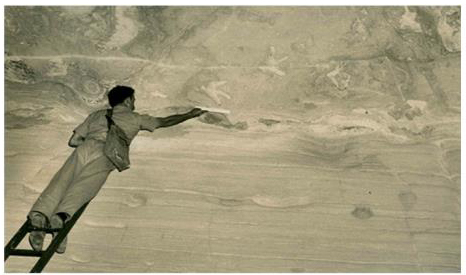
There have been hundreds of dinosaur tracks reported from the so-called “fireclay caverns” in Mount Morgan. Five prints first described by Ross Staines, the geologist who made such careful notes (1954), purportedly represent a theropod dinosaur that had left a handprint (manus), the interpretation was that this theropod had been walking on all fours. Most theropods are characterised by their obligate bipedal stance. Dr Romilio set out to determine whether this particular track did indeed preserve this very untypical theropod dinosaur behaviour. Unfortunately, it was not possible to access the trace fossils “in situ”, the caverns have been closed since 2011 due to concerns about public safety.
A Line Drawing Showing the Five Tracks Studied
A line drawing showing the five tracks in the study.
Picture credit: Historical Biology
Unable to view the fossils in the cave, it would have been difficult to determine what the tracks represented.
A Stroke of Good Fortune
However, Dr Romilio had a chance meeting with local dentist Dr Roslyn Dick, whose geologist father found many dinosaur fossils over the years.
Ms Dick commented:
“I’m sure Anthony didn’t believe me until I mentioned my father’s name – Ross Staines. Our father was a geologist and reported on the Mount Morgan caves containing the dinosaur tracks in 1954. Besides his published account, he had high-resolution photographs and detailed notebooks, and my sisters and I had kept it all. We even have his dinosaur footprint plaster cast stored under my sister’s Harry Potter cupboard in Sydney.”
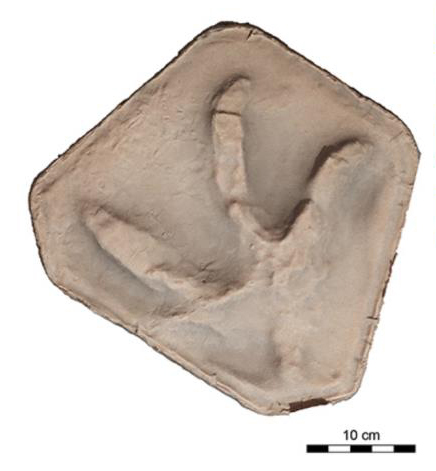
A Digitally Reconstructed Dinosaur Track Created from the Archive Material Compiled by Ross Staines
A digital reconstruction of one of the prints studied by Ross Staines.
Picture Credit: Dr Romilio (University of Queensland)
Extensive Notes and Meticulous Records
The extensive information archived by Ross Staines and carefully stored by Ms Dick and her sisters Heather Skinner and Janice Millar, permitted Dr Romilio to conduct a thorough analysis of the trace fossils. He was able to digitise the original analogue photographs and to make a virtual, computer-generated model of the dinosaur track that had been stored under the stairs. As a result, it was concluded that the five tracks were all foot (pes) impressions and that no handprint was present.
It turns out that these tracks do not represent the prints of a single dinosaur, but actually two dinosaurs produced the five tracks, one slightly smaller than the other, which led to the misinterpretation of one of the footprints as being the preserved impression of a dinosaur hand. The splayed toes and moderately long middle digit of the footprints permitted the researcher to determine that these were probably not the footprints of a theropod, but that the tracks represent the progress of a pair of ornithopods.
Dr Romilio commented:
“Rather than one dinosaur walking on four legs, it seems as though we got two dinosaurs for the price of one – both plant-eaters that walked bipedally along the shore of an ancient lake.”
Dinosaur Footprints Mystery Solved
Thanks to the careful conservation of their father’s work, this is one Australian dinosaur trackway mystery that has been solved. These tracks do not represent a theropod dinosaur walking in an uncharacteristic quadrupedal gait, as Dr Romilio explained:
“You don’t assume T. rex used its arms to walk, and we didn’t expect one of its earlier predatory relatives of 200 million years ago did either.”
The contribution of the ladies has been recognised, they are all cited as co-authors/contributors to the scientific paper. We are sure their father would have been very proud.
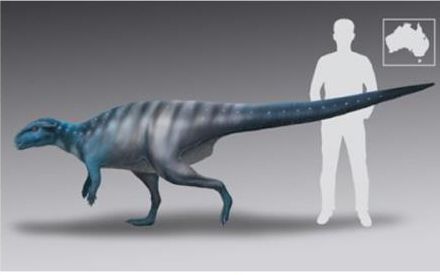
A Life Reconstruction of the Larger of the Two Ornithopod Dinosaurs Believed to Have Made the Tracks
A reconstruction of the Lower Jurassic ornithopod, the type of dinosaur that probably made the tracks.
Picture credit: Dr Anthony Romilio
Dinosaurs Walking on the Ceiling?
How did the trace fossil end up on the ceiling of a cave? The dinosaurs were not defying gravity, the explanation is very straight-forward. The dinosaurs were walking on the soft sediment associated with a lake around 195 million years ago (Sinemurian faunal stage of the Lower Jurassic), the impressions they made in the soft sediments were infilled with sand. Over time, the softer mudstone and shales were eroded away to expose the imprints as natural casts.
A Photograph of Ross Staines Measuring the Dinosaur Tracks
Ross Staines measuring the footprints 4.5 metres above the cave floor (circa 1954).
Picture credit: University of Queensland
Everything Dinosaur acknowledges the assistance of a media release from the University of Queensland in the compilation of this article.
The scientific paper: “Archival data provides insights into the ambiguous track-maker gait from the Lower Jurassic (Sinemurian) Razorback beds, Queensland, Australia: evidence of theropod quadrupedalism?” by Anthony Romilio, Roslyn Dick, Heather Skinner and Janice Millar published in the journal Historical Biology.
This week has seen the publication of a remarkable paper that documents the discovery of tiny one-billion-year-old fossils of green seaweeds that could be the ancestor of the first land plants.
Writing in the academic journal “Nature Ecology and Evolution”, the researchers from Virginia Tech (USA) and the Chinese Academy of Sciences, describe abundant millimetre-sized, multicellular fossils that were preserved in ancient marine sediments close to the city of Dalian in Liaoning Province (northern China).
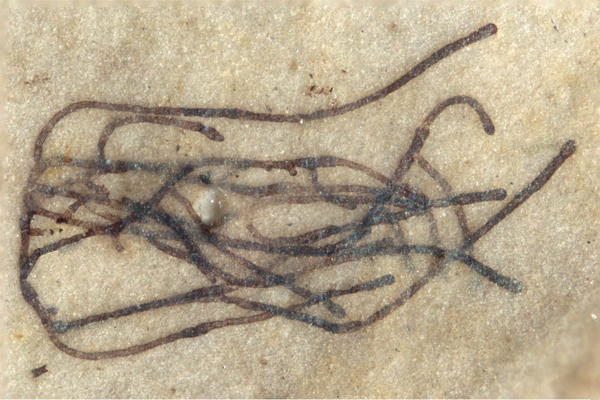
Evidence of Ancient Green Seaweed
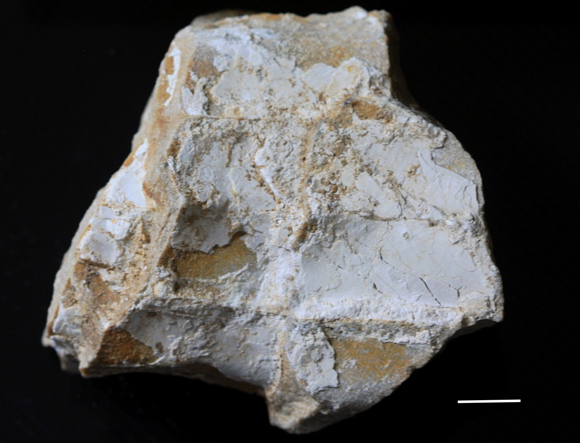
Proterocladus antiquus fossil material. A photograph of a green seaweed fossil preserved in rocks around 1,000 million years old. The dark colour of this fossil was created by adding a drop of mineral oil to the rock in which it’s embedded, to create contrast.
Picture credit: Virginia Tech
Proterocladus antiquus
The microscopic fossils, measuring around two millimetres in length are described as a new species of green algae (Proterocladus antiquus). The fossil material is interpreted as benthic (living on the sea floor) and members of the Chlorophyta Phylum, which means that these ancient marine plants were photosynthesising 1,000 million years ago and that the fossils are the oldest evidence of green seaweeds known to science.
Shuhai Xiao (Geosciences and Global Change Centre at Virginia Tech), one of the co-authors of the scientific paper commented:
“These new fossils suggest that green seaweeds were important players in the ocean long before their land-plant descendants moved and took control of dry land. The entire biosphere is largely dependent on plants and algae for food and oxygen, yet land plants did not evolve until about 450 million years ago. Our study shows that green seaweeds evolved no later than 1 billion years ago, pushing back the record of green seaweeds by about 200 million years. What kind of seaweeds supplied food to the marine ecosystem?”
Land Plants Evolved from Green Seaweeds
One of the theories proposed for the evolution of land plants is that they originated from marine chlorophytes. These plants adapted to a life on dry land, the scientists propose that these Chinese fossils represent the ancestors of modern land plants that we see today.
However, Xiao added that not all geobiologists agree with this hypothesis, the debate as to how land plants originated goes on. For example, some scientists think that green plants first evolved in freshwater environments before adapting to a terrestrial existence.
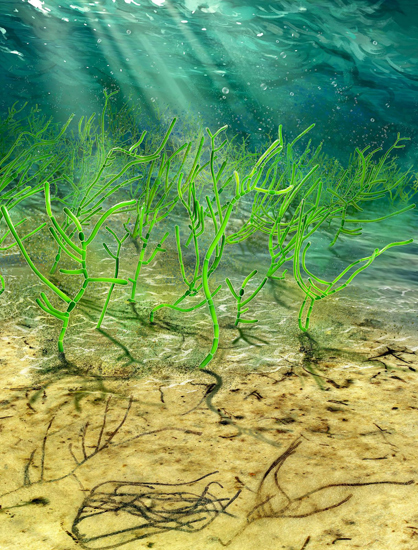
A Life Reconstruction of the Ancient Green Seaweed P. antiquus
A digital reconstruction of the ancient green algae (Proterocladus antiquus).
Picture credit: Dinghua Yang/Virginia Tech
Different Types of Seaweed
Scientists have classified three main kinds of seaweed, commonly referred to by their predominant colour. There is brown (Phaeophyceae), green (Chlorophyta) and red (Rhodophyta). There are thousands of species of each kind. Rhodophyta (red seaweed), have a fossil record that also dates back to more than a billion years ago.
Xiao added:
“There are some modern green seaweeds that look very similar to the fossils that we found. A group of modern green seaweeds, known as siphonocladaleans, are particularly similar in shape and size to the fossils we found.”
Early Plant Fossils
The discovery of such an early photosynthetic plant represents a significant landmark in helping scientists to better understand the evolution and development of planetary ecosystems. Plants that photosynthesise are essential to the ecological balance of our planet. They produce carbon and oxygen through the process of photosynthesis and they are regarded as primary producers and comprise the basic components of most food chains.
It was Qing Tang of Virginia Tech, who discovered the micro-fossils of the ancient seaweeds, electron microscopy was used to spot the tiny specimens. To more easily see the fossils, mineral oil was dripped onto the fossil to create a strong contrast.
Tang commented:
“These seaweeds display multiple branches, upright growths, and specialised cells known as akinetes that are very common in this type of fossil. Taken together, these features strongly suggest that the fossil is a green seaweed with complex multicellularity that is circa 1 billion years old. These likely represent the earliest fossil of green seaweeds. In short, our study tells us that the ubiquitous green plants we see today can be traced back to at least 1 billion years.”
Everything Dinosaur acknowledges the assistance of a press release from Virginia Tech in the compilation of this article.
The scientific paper: “A one-billion-year-old multicellular chlorophyte” by Qing Tang, Ke Pang, Xunlai Yuan and Shuhai Xiao published in Nature Ecology and Evolution.
Tiny Fossil Sheds Light on Reptile Diversification in the Triassic
Scientists writing in the on-line, open access journal “Scientific Reports”, have published details of a remarkable fossil discovery from a limestone quarry located close to the town of Vellberg in Baden-Württemberg (Germany). The tiny fossilised remains of juvenile lizard-like reptile are helping palaeontologists to better understand the evolution of modern-day lizards and snakes as well as their taxonomic relationship with a “living fossil” – the tuatara of New Zealand.
A Tiny, Partially Articulated Fossil
The partially articulated fossil, including a beautifully preserved skull, is approximately 240 million-years-old (Middle Triassic – Ladinian faunal stage). The entire specimen is around ten centimetres long and it has been named Vellbergia bartholomaei and classified as a stem-lepidosauromorph.
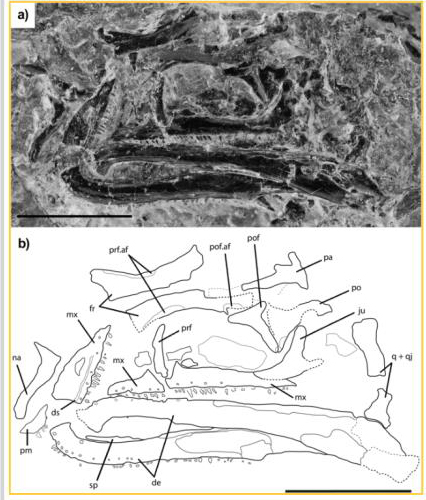
The Tiny Preserved Skull of Vellbergia bartholomaei
Vellbergia bartholomaei – photograph of fossil skull and interpretative line drawing. The holotype material, note scale bar equals 5 mm approximately.
Picture credit: Scientific Reports
A Decisive Contribution to a Better Understanding of the Evolution of the Reptilia
The Middle Triassic represents a period in Earth’s history where tetrapod faunas were recovering from the global devastation caused by the end Permian extinction event. However, the paucity of terrestrial vertebrate fossils has limited how much scientists can learn about how the fauna changed and developed during this time, prior to the emergence and eventual dominance of the Dinosauria.
Researchers from the Natural History Museum Stuttgart in collaboration with a colleague from Harvard University (USA), noted that the skeleton of V. bartholomaei showed anatomical traits that link it to both the Order Squamata (lizards and snakes) and the Rhynchocephalia, ancient lizard-like reptiles that includes only one living species, the tuatara (Sphenodon punctatus).
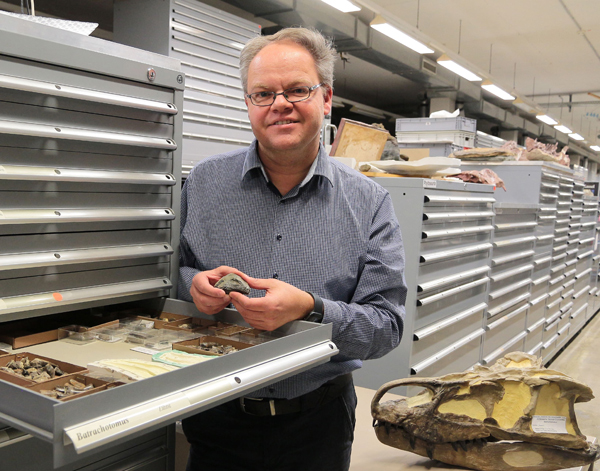
Co-author of the Scientific Paper Dr. Rainer Schoch Holding the Tiny Specimen of Vellbergia bartholomaei
Dr. Rainer Schoch (Staatliches Museum für Naturkunde Stuttgart), holding the tiny V. bartholomaei fossil. The skull of the unrelated but contemporary archosaur Batrachotomus can be seen on the right.
Picture credit: Stuttgart Natural History Museum (Staatliches Museum für Naturkunde Stuttgart)
Vellbergia bartholomaei
Vellbergia is named after the nearby town, whilst the species name honours Alfred Bartholomä of Neuenstein, who was responsible for many of the significant fossil finds associated with rocks of the Middle Triassic age from Germany. The new species described here falls into the smallest size cluster so far collected from the Vellberg location, and likely represents the first juvenile individual from the site. This new taxon depicts a mosaic of features that are generally observed in both early evolving rhynchocephalians and squamates, providing a link between the two and suggesting stem-lepidosauromorphs may have survived up to the Middle Triassic.
The mudstones associated with the limestone quarry have proved to be a particularly successful hunting ground for vertebrate palaeontologists. In 2015, Everything Dinosaur reported upon another discovery made by Dr. Rainer Schoch and his colleagues, the finding of the fossilised remains that provided a fresh insight into the origins of modern turtles (Chelonia).
The scientific paper: “A tiny new Middle Triassic stem-lepidosauromorph from Germany: implications for the early evolution of lepidosauromorphs and the Vellberg fauna” by Gabriela Sobral, Tiago R. Simões and Rainer R. Schoch published in Scientific Reports.
A student from Bristol University has carried out a study into the armour on the tail of an aetosaur. The study, published in the Scottish Journal of Geology, has provided fresh information on how these large, lumbering herbivores kept themselves safe from ancient predators. Emily Keeble, a recent graduate from the palaeobiology programme at Bristol University carried out the study under the supervision of Professor Mike Benton (School of Earth Sciences). CT (computerised tomography), scans were undertaken, the first time this scientific method has been employed to better understand how the armour of an aetosaur functioned.
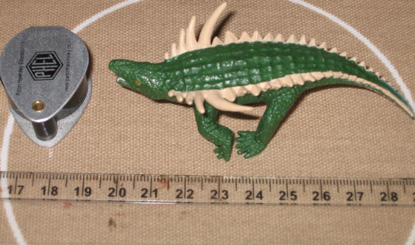
A Model of a Typical Aetosaur.
A model of an aetosaur (ruler provides scale). Although these tetrapods looked formidable with their spikes and their body armour they were herbivores.Picture credit: Everything Dinosaur.
Picture credit: Everything Dinosaur
The picture (above) depicts an aetosaur figure (Desmatosuchus haploceras) from Safari Ltd.
Aetosaurs were heavily armoured, herbivorous archosaurs that were geographically widespread during the Middle and Late Triassic. The term “aetosaur” is from the Greek and it means “eagle lizard”, when scientists first examined the skulls of these animals, their superficial resemblance to the skulls of eagles was remarked upon. The fossil specimens used in this research were collected from a sandstone quarry near the town of Elgin in north-eastern Scotland. They had been donated to the nearby Elgin Museum, where staff members Janet Trythall and Alison Wright were able to identify what they were and arrange for the scanning in Bristol.
Professor Benton explained:
“Aetosaurs were first identified from an Elgin specimen in 1844, but at that time people thought they had found a giant fish. The first specimen showed a number of rectangular scales, arranged in a closely overlapping, regular pattern, and it was called Stagonolepis, meaning drop-shaped scale.”
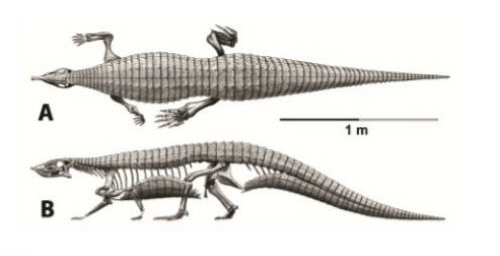
Dorsal and Lateral Views of the Scottish Aetosaur Stagonolepis
The Scottish aetosaur Stagonolepis (A) dorsal and (B) lateral views. Note scale bar = 1 metre.
Picture credit: Bristol University (illustration by Jeffrey Martz after work by Alick Walker)
CT Scans Provide Details on Aetosaur Osteoderm Structure
The fossilised tail bones were subjected to high resolution CT scans, this permitted the researchers to see surface details and the texture of the bones and related armour plates.
Emily Keeble added:
“What had been identified as giant fish scales are actually armour plates, or osteoderms, made of plates of bone and embedded in the skin, just like in modern crocodiles.”
Two specimens were studied, both associated with caudal vertebra and possibly from the same animal, but they do not fit together. Each fossil shows a complete circle of osteoderms around the tail, two above, two on each side, and two below.
Caudal Specimen of Stagonolepis robertsoni Used in the Fossil Study
Stagonolepis robertsoni, ELGNM 2018.6.1 one of the aetosaur caudal vertebra specimens used in the study. Scale bar = 1 cm.
Picture credit: Bristol University
Regular Rows of Osteoderms
The researchers discovered that the rows of osteoderms were very regular and in life covered the entire body from the back of the small head, over the neck, down the back and along the tail. Osteoderms also covered the flanks and underneath. There were even small osteoderms over the fleshy parts of the arms and legs.
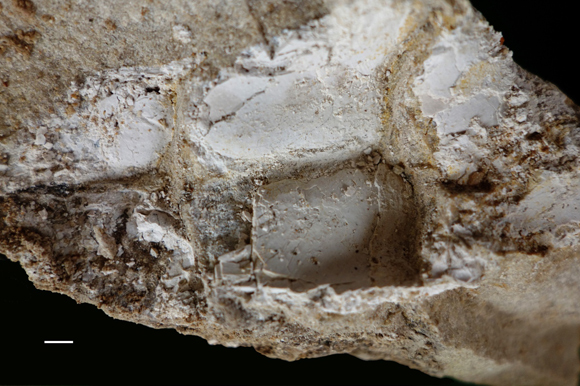
The Second Stagonolepis robertsoni Fossil Specimen Used in the Research
Stagonolepis robertsoni ELGNM 2018.6.2 showing internal impressions of the caudal osteoderms in articulation. Note scale bar = 1 cm.
Picture credit: Bristol University
Aetosaur Armour Makes an Effective Defence Against Predators
This study suggests that the armour of these herbivores wrapped around them completely and would have made an effective defence against predators such as rauisuchians and ornithosuchids.
Emily Keeble added:
“Vertebrae of the tail are preserved inside the ring of osteoderms, and these show the specimens were only slightly squished during the preservation process. We could also see how the osteoderms overlap like roof tiles, the osteoderm in front slightly overlapping the one behind. They were linked with connective tissue so the armour overall was flexible, but tough and could probably protect the animal from the fierce predators of its day.”
A Colourised Image of Aetosaur Osteoderms and a Single Scale Shown in More Detail
Reconstructed segment of the aetosaur tail armour and a single osteoderm in more detail.
Picture credit: Emily Keeble (Bristol University)
Everything Dinosaur acknowledges the assistance of a press release from Bristol University in the compilation of this article.
The scientific paper: “Three-dimensional tomographic study of dermal armour from the tail of the Triassic aetosaur Stagonolepis robertsoni” by E. Keeble and M. Benton published in the Scottish Journal of Geology.
Eggshell Geochemistry Suggests Endothermy Deeply Rooted in the Dinosauria
The puzzle of dinosaur metabolism has been a subject of debate amongst vertebrate palaeontologists for a very long time. Numerous studies have been published, drawing on a variety of research methods and lines of enquiry to determine whether the non-avian dinosaurs were warm-blooded like their avian (bird) relatives, or whether they were cold-blooded like today’s crocodilians. A study published in the journal “Science Advances”, one that looked at the geophysical and chemical properties of dinosaur eggshell, has concluded that non-avian dinosaurs had the ability to metabolically raise their temperatures above their environment – in essence they were endothermic, that is to say “warm-blooded”.
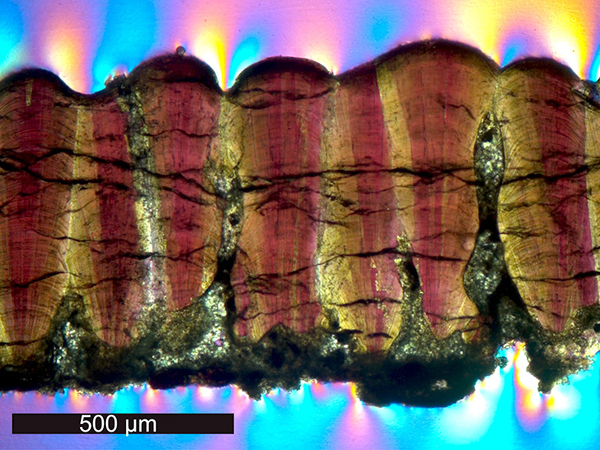
A Thin Cross-section of Fossilised Eggshell Viewed under Cross-polarising Light to Reveal Internal Structure
A dinosaur eggshell fossil in cross-section under a microscope using cross-polarising light. Eggshell analysis has provided compelling evidence to suggest that dinosaurs were endothermic. Note scale is 500 microns.
Picture credit: Robin Dawson/University of Yale
Non-avian Dinosaurs were they Cold-blooded or Warm-blooded?
The terms cold-blooded and warm-blooded are found frequently in articles about dinosaurs. These terms are very misleading and have been disregarded for a long time by most of the scientific community. For example, most lizards, regarded as cold-blooded, actually maintain a surprisingly high body temperature in their normal environment during the daytime. Internal body temperatures around 42 degrees Celsius have been recorded in some species, much higher than the normal 37˚ Celsius associated with our own “warm-blooded” species.
In simple terms, cold-blooded animals (ectotherms), are largely unable to regulate their own body temperature without the assistance of external sources. Lizards bask in the early morning sun to warm up and then during the heat of the day, they seek shade to help them to keep cool. In contrast, “warm-blooded” organisms such as mammals and birds (endotherms), are able to maintain a body temperature that is higher than the temperature of the environment. They can generate their own body heat. This heat comes from the animal’s metabolism, the chemical reactions that take place in the body (although there are other methods of keeping cool and warming up).
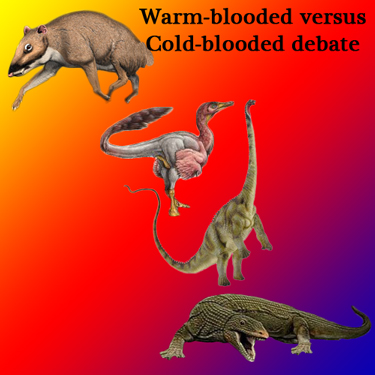
The Debate over Endothermic or Ectothermic Dinosaurs
Where on the spectrum between endothermic and ectothermic are the Dinosauria? Organisms can demonstrate a range of adaptations to assist them in maintaining an optimal body temperature. Picture credit: Everything Dinosaur.
Picture credit: Everything Dinosaur
Understanding the Metabolism – So What?
Understanding the metabolism of a long extinct group of animals such as the non-avian members of the Dinosauria, can provide valuable insight into all sorts of areas, such as energy requirements, food consumption, behavioural traits and activity levels. It can also help scientists to understand how extinct animals adapted to a wide range of environments, such as non-avian dinosaurs being found at high latitudes. Dinosaur fossils being discovered in Antarctica for example.
In this newly published study, the researchers used a technique known as clumped isotope palaeothermometry. It is based on the fact that the ordering of oxygen and carbon atoms in a fossil eggshell are determined by temperature. Once the order of the atoms has been plotted, the scientists can calculate the internal body temperature of the egg-layer.
Based on this analysis, the research team were able to demonstrate that potentially, the three major clades of dinosaurs, Ornithischia, Sauropodomorpha and Theropoda, were characterised by warm body temperatures.
Non-avian Dinosaurs Characterised by Warm Body Temperatures
Commenting on the significance of this study, lead author of the research Robin Dawson, who conducted the research while she was a doctoral student in geology and geophysics at Yale University stated:
“Dinosaurs sit at an evolutionary point between birds, which are warm-blooded, and reptiles, which are cold-blooded. Our results suggest that all major groups of dinosaurs had warmer body temperatures than their environment.”
Eggshell ascribed to a troodontid (theropod) tested at 38˚, 27˚, and 28˚ Celsius (100.4, 80.6, and 82.4 degrees Fahrenheit). Eggshells from the large, duck-billed dinosaur Maiasaura (an ornithischian dinosaur), yielded a temperature of 44˚ Celsius (111.2 degrees Fahrenheit). Both the troodontid and Maiasaura eggshells were collected from Alberta, Canada.
Studying Fossil Eggshells
In addition, the fossilised eggs associated with the oospecies Megaloolithus from the Hateg Formation of Romania tested at 36˚ Celsius (96.8 degrees Fahrenheit). The taxonomy of the Romanian material remains uncertain. The eggshells could represent the dwarf titanosaur Magyarosaurus, the much larger titanosaur Paludititan or indeed, the dwarf hadrosauroid Telmatosaurus. If this fossil material does represent a sauropodomorph, then these results could suggest that metabolically controlled thermoregulation was the ancestral condition for the Dinosauria.
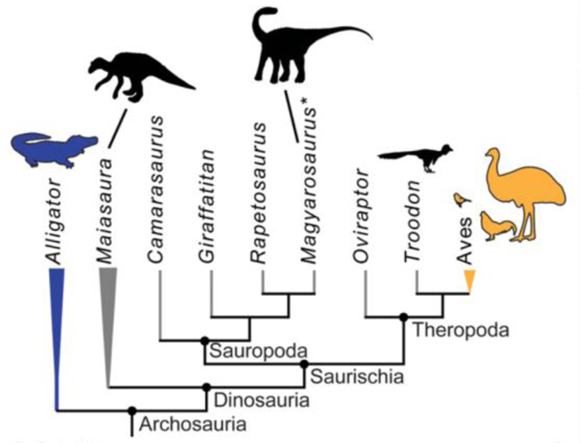
The Taxonomic Relationships of the Taxa Involved in the Study
The phylogeny of the taxa involved in the study.
Picture credit: Science Advances
The picture (above), shows living ectotherms in blue, whilst extant endotherms (birds) are shown in orange. The Maiasaura silhouette represents the major dinosaurian subclade Ornithischia. The asterisk (*) indicates the uncertainty over the taxonomy of the oospecies Megaloolithus, but the fossil eggshells could represent the dwarf sauropod Magyarosaurus. The troodontid material is assigned to the Theropoda.
Fossil Shells Compared with Fossil Eggshells
The researchers conducted the same analysis on cold-blooded invertebrate shell fossils (molluscs) from the same locations as the dinosaur eggshells. This helped the scientists determine the temperature of the local environment — and whether dinosaur body temperatures were higher or lower.
Dawson, now a postdoctoral research associate at the University of Massachusetts-Amherst, explained that the troodontid samples were as much as 10˚ Celsius (50 degrees Fahrenheit), warmer than their environment, the Maiasaura samples were 15˚ Celsius warmer (59 degrees Fahrenheit) and the Megaloolithus samples were 3 to 6˚ Celsius (37.4-42.8 degrees Fahrenheit) warmer.
She added:
“What we found indicates that the ability to metabolically raise their temperatures above the environment was an early, evolved trait for dinosaurs.”
Other Implications
This new research may have other implications as well. For instance, the study shows that a dinosaur’s body size and growth rate may not necessarily be a good indicator of body temperature. The researchers also stated that their findings might add to the ongoing discussion about the role of feathers in early bird evolution. Dense coats of feathers may have evolved to help insulate the bodies of dinosaurs, secondary functions such as for use in visual displays or as part of adaptations towards powered flight occurred later.
Everything Dinosaur acknowledges the assistance of a press release from Yale University in the compilation of this article.
The scientific paper: “Eggshell geochemistry reveals ancestral metabolic thermoregulation in Dinosauria” by Robin R. Dawson, Daniel J. Field, Pincelli M. Hull, Darla K. Zelenitsky, François Therrien and Hagit P. Affek published in the journal Science Advances.
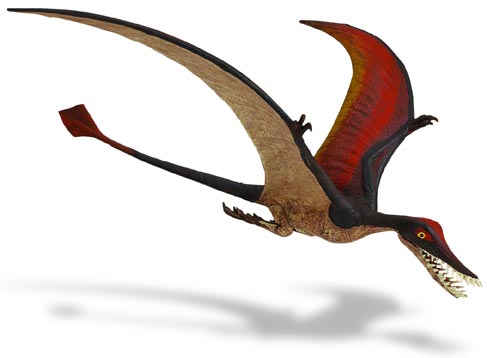
Rhamphorhynchids – “Good Climbers and Rare Walkers”
One of the great mysteries regarding the Pterosauria may have finally be solved. Palaeontologists are one “step” closer to better understanding how these flying reptiles moved about on the ground. Researchers studying six pterosaur trackways preserved in the sandstone that once comprised part of a Late Jurassic beach have been able to examine the locomotive abilities of non-pterodactyloid pterosaurs for the first time.
Fossilised Pterosaur Tracks
This is a big deal, tracks of pterosaurs have been known about for some time, but all the trace fossils suggesting tracks up until now were believed to have been made by pterodactyloid pterosaurs, (Pterodactyloidea), essentially flying reptiles with short tails, relatively long metacarpal bones and a fifth toe that is greatly reduced or absent. Virtually nothing was known about the terrestrial abilities of other types of pterosaur that dominated the skies of the Jurassic, the dimorphodonts, Anurognathidae and the rhamphorhynchids for example.
However, scientists from the remarkable Musée de la Plage aux Ptérosaures, writing in the academic journal “Geobios”, describe six trackways related to three non-pterodactyloid new ichnotaxa and determine that these animals moved quadrupedally and that they were quite at home on the ground.
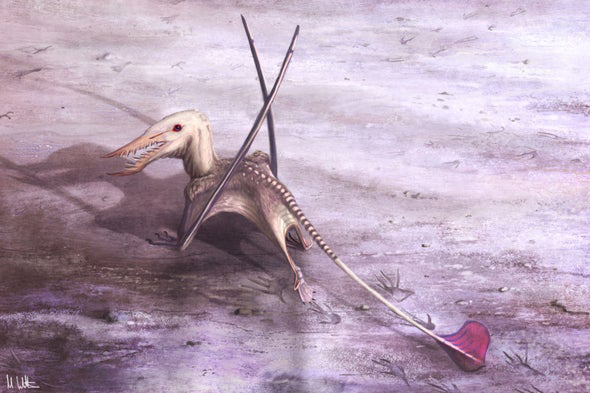
A Life Reconstruction of a Rhamphorhynchid Pterosaur Walking Across a Beach
The long-tailed Rhamphorhynchus leaves a series of five-toed tracks on the Jurassic beach.
Picture credit: Mark Witton
“Good Climbers and Bad Walkers”
Over the last two hundred years or so, a variety of theories have been put forward by palaeontologists regarding the way in which these flying reptiles moved about on the ground. For most of that time, these ideas were based on anatomical analysis of fossil bones. Trackways preserving evidence of a flying reptile moving about on the ground were exceptionally rare. Ironically, when such evidence did come to light, such as the trackway found in Wyoming in 1952 (Sundance Formation), these trace fossils received little scientific scrutiny.
The lack of tracks from non-pterodactyloid pterosaurs preserved in the fossil record, led many palaeontologists to believe that these animals rarely left the trees or the water and moved around on land. When they did, it was thought that they would have been clumsy and slow-moving, very vulnerable to predation.
A Non-pterodactyloid Trackway from the Upper Jurassic (Plage aux Ptérosaures)
Pterosaur trackway (non-pterodactyloid) from south-western France.
Picture credit: Musée de la Plage aux Ptérosaures/Geobios
“The Pterosaur Beach of Crayssac”
The fossil finds come from the remarkable “la Plage aux Ptérosaures” (the pterosaur beach), located close to the village of Crayssac in the Occitanie region of south-western France. The site provides a trace fossil record of activity on a Late Jurassic beach around 150 million years ago (lower Tithonian faunal stage). Both dinosaur and pterosaur trackways are preserved.
The authors of the scientific paper, conclude that the tracks may have been made by rhamphorhynchids and they propose that non-pterodactyloids, at least during the Late Jurassic, were quadrupedal with digitigrade hands and plantigrade to digitigrade feet. Analysis of the tracks indicates that these animals were good walkers, even if their hind legs were hampered by the uropatagium (the membrane of skin that spanned the back legs). The idea that these types of flying reptiles were “good climbers but bad walkers”, seems to have been refuted.
Studying the Pterosaur Tracks
The authors state that based on this new study and contrary to current hypotheses, non-pterodactyloid pterosaurs seem to have been good walkers even though their trackways are very rare or unidentified to date. Each of the trackways is around a metre in length, the individual prints measuring approximately three centimetres long. Jean-Michel Mazin and his co-author Joane Pouech (from the museum at la Plage aux Ptérosaures), were aware of the significance of these trace fossils as pterodactyloids tracks tend to produce four toe marks in the trace fossil, whereas, non-pterodactyloids had five toes, so five toe marks would be expected in the majority of the hind prints.
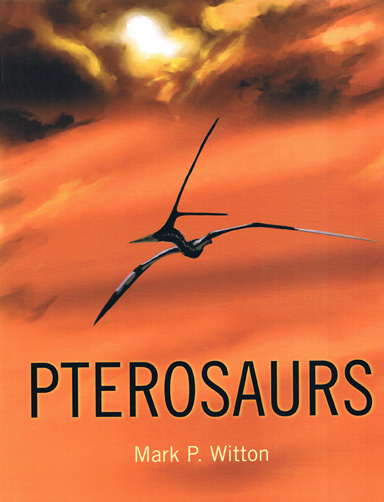
Pterosaur expert Mark Witton provides a well-written and comprehensive overview of pterosaur anatomy and discusses the theories associated with their terrestrial locomotion in his excellent book simply entitled “Pterosaurs”.
The Front Cover of the Comprehensive Book on Pterosaurs by Mark Witton
A very well researched and documented publication from an authority on the Pterosauria.
The scientific paper: “The first non-pterodactyloid pterosaurian trackways and the terrestrial ability of non-pterodactyloid pterosaurs” by Jean-Michel Mazin and Joane Pouech published in Geobios.
Lots of Different Types of Theropod Dinosaur Identified from a German Quarry
During the Late Jurassic, much of the landmass we now know as Europe was covered by shallow, tropical seas. The islands that dotted this seascape were dominated by dinosaurs and a great deal of research has been undertaken to identify and map the ancient terrestrial fauna. A new study published in the journal PeerJ, reveals that there were a wide variety of different types of meat-eating dinosaur present on these islands. Fossils associated with allosauroids, ceratosaurs and megalosauroids have been identified in a single bonebed dominated by the dwarf sauropod Europasaurus.
Views of a Single Claw (Pedal Ungual) and Toe Bones (Pedal Phalanges) Tentatively Ascribed to the Allosauroidea
A fossilised foot claw and fossil toe bones tentatively ascribed to the Allosauroidea.
Picture credit: PeerJ
Dwarfism in the Dinosauria
Scientists from the University of Fribourg (Switzerland) in association with the Martin-Luther-Universität (Germany), examined the fragmentary theropod dinosaur remains associated with the Europasaurus bonebed found at the Langenberg Quarry site in Germany’s Harz Mountains, near the town of Goslar (Lower Saxony). These marine deposits have yielded a variety of vertebrate fossils, representing the corpses of terrestrial fauna washed into the marine depositional environment from a nearby island.
All the meat-eating dinosaur fossils described represent relatively small individuals. It is not known whether these fossils represent juveniles or whether they might be evidence of insular dwarfism. Animals living on islands with limited food resources can evolve into dwarf forms, becoming much smaller in size than their mainland relatives.
The incompleteness of the theropod fossil remains and their rarity when compared to the Europasaurus material had discouraged scientific analysis. This is the first academic paper to describe these types of fossils from the Langenberg Quarry. The fragmentary material can only be classified on higher taxonomic levels, the new occurrences reported add to our understanding of the regional tetrapod fauna and to theropod diversity in Europe in general.
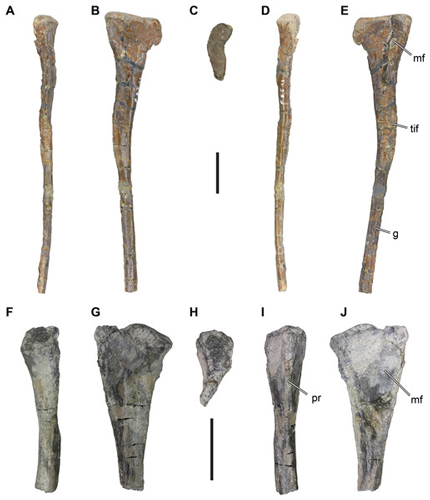
Partial Fibulae (Lower Leg Bones) Ascribed to the Theropoda
Partial left fibula (top) and partial right fibula (below) both assigned to the Theropoda and described as potentially megalosauroid.
Picture credit: PeerJ
Several Different Types of Theropod Dinosaur Present
This research confirms the presence of several different types of theropod dinosaur in the Late Jurassic northern European archipelago and will help palaeontologists to better understand the diversity and evolution of the Theropoda during the Late Jurassic of Europe. The incomplete material can be assigned to ceratosaurian, megalosauroid, and allosauroid theropods.
These identifications agree with previous reports of the presence of these theropod groups in the Late Jurassic of Northern Germany based on fossil teeth. Although the Langenberg theropod fauna is not as rich as some other European localities, such as the Lourinhã Formation of Portugal, these findings confirm a varied dinosaur fauna in central Europe during the Late Jurassic.
The scientific paper: “Late Jurassic theropod dinosaur bones from the Langenberg Quarry (Lower Saxony, Germany) provide evidence for several theropod lineages in the central European archipelago” by Serjoscha W. Evans and Oliver Wings published in the journal PeerJ.
Pterosaur Tooth Discovered in Jurassic Squid Fossil
The pterosaur Rhamphorhynchus, probably fed by grabbing soft-bodied creatures such as squid as it flew close to the surface of the sea. That is the conclusion made by a group of researchers reporting on the remarkable fossil of a squid-like animal with a pterosaur tooth embedded in its body found in Germany. Writing in the academic journal Scientific Reports, the authors of the paper, describe the beautifully preserved remains of the octobrachian (eight-armed) cephalopod Plesioteuthis subovata which has a pterosaur tooth embedded in its left flank.
Reconstruction of the Hunting Behaviour of Rhamphorhynchus muensteri
Reconstruction of the hunting behaviour of Rhamphorhynchus muensteri.
Picture credit: C. Klug and Beat Scheffold
Discovered in 2012
The cephalopod fossil was found in 2012 and it heralds from the world-renowned Solnhofen Lagerstätte in south-eastern Germany. The strata from which the remarkable specimen was gathered has been dated to the Upper Jurassic Altmühltal Formation (lower Tithonian faunal stage – ammonite Hybonoticeras hybonotum biozone). The fossil is kept at the Paläontologisches Institut und Museum, Universität Zürich, Switzerland (PIMUZ 37358).
Views of the Plesioteuthis subovata Specimen Showing the Pterosaur Tooth
Views of the Plesioteuthis subovata specimen in natural and UV light showing the embedded pterosaur tooth.
Picture credit: R. Hoffmann et al (Scientific Reports)
The picture above shows (A), the 28 cm long fossil of the coleoid Plesioteuthis subovata with highlighted areas (B and D). The pterosaur tooth measures 19 mm long and picture (C) shows the tooth viewed under ultraviolet (UV) light. The tip of the tooth is partially covered with phosphatised mantle tissue, thus ruling out the association of the tooth during the fossilisation process. Insert (D), shows the posterior portion of the mantle with faint imprints probably representing a terminal fin. Under UV light analysis no evidence of fin musculature could be identified (E).
Direct Evidence of Hunting/Feeding Behaviour
Such direct evidence of hunting/feeding behaviour is rarely preserved in the fossil record. The authors of the scientific paper, which include a researcher from the University of Leicester (UK), suggest that the adult Plesioteuthis subovata was swimming close to the surface when a pterosaur (suspected of being Rhamphorhynchus muensteri), made a grab for it. It is not known whether the injury sustained to the squid proved fatal, or whether the animal lived for a period of time before finally dying and becoming preserved in the fine-grained sediments associated with the Solnhofen Archipelago.
The tooth most likely came from the front or middle regions of either the upper or lower jaw. As rhamphorhynchid teeth associated with very young or juveniles tend to be much smaller and straighter, the researchers conclude that the tooth came from a mature adult pterosaur with a wingspan of at least one metre.
A Model of Rhamphorhynchus (Wild Safari Prehistoric World)
Wild Safari Prehistoric World Rhamphorhynchus figure.
Picture credit: Everything Dinosaur
The image (above) shows a Rhamphorhynchus model from Safari Ltd.
Pterosaur Tooth Helps to Construct Ancient Food Webs
The coleoid/pterosaur fossil will help scientists to better understand the palaeo-ecosystem associated with the Solnhofen Lagerstätte. Whilst it is true that many different types of predator may have fed upon Plesioteuthis subovata, the size, shape and the lack of longitudinal ridges discounts marine reptiles such as ichthyosaurs, pliosaurs and crocodyliformes. The tooth coming from a type of predatory fish has also been discounted.
The single tooth is most likely from a mature Rhamphorhynchus in a failed hunting attempt. This seems to be the most plausible interpretation of the fossil evidence. Furthermore, several Rhamphorhynchus fossils are known where the pterosaur is entangled within the jaws of the predatory fish Aspidorhynchus. It has been assumed that these types of fish hunted close to the water surface and would have grabbed pterosaurs as they swooped to feed. These fossils indirectly corroborate the suggestion that this pterosaur-cephalopod interaction occurred near the water surface.
Sometimes the Hunter Became the Hunted (Rhamphorhynchus Entangled with the Jaws of Fish)
A fatal encounter between two Jurassic hunters. The Rhamphorhynchus is entangled within the jaws of a predatory fish (Aspidorhynchus acutirostris).
Picture credit: PLOS One
Skim-feeding had been proposed for marine pterosaurs such as Rhamphorhynchus but subsequent studies suggested that this was too energy expensive. It is more likely that Rhamphorhynchus captured prey on the wing just above the water surface or while floating on the water surface.
The scientific paper: “Pterosaurs ate soft-bodied cephalopods (Coleoidea)” by R. Hoffmann, J. Bestwick, G. Berndt, R. Berndt, D. Fuchs and C. Klug published in Scientific Reports.
Dynamosuchus collisensis – Late Triassic Bone Crushing Scavenger
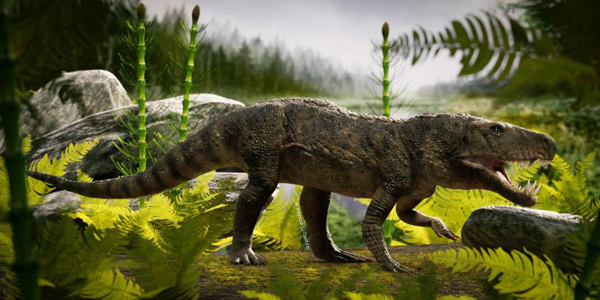
A new species of ancient reptile, a distant relative of modern crocodilians has been named and described. The two-metre-long, terrestrial predator has been named Dynamosuchus collisensis and it is the first member of the Ornithosuchidae family of archosaurs to have been discovered in Brazil. The fossilised remains of the fearsome Dynamosuchus were found in March 2019 in the municipality of Agudo, Rio Grande do Sol in southern Brazil. This is only the fourth ornithosuchid to have been described, the first was found in Scotland (Ornithosuchus) and described in 1894, whilst the other two genera (Riojasuchus and Venaticosuchus), were named and described in 1969 and 1971 respectively, from fossil discoveries made in Argentina.
Dynamosuchus collisensis is the first ornithosuchid to have been found for nearly five decades.
A Life Reconstruction of the Fearsome Dynamosuchus collisensis
Life reconstruction of the fearsome ornithosuchid Dynamosuchus.
Picture credit: Márcio L. Castro
Dynamosuchus collisensis
Writing in the academic journal Acta Palaeontologica Polonica, the researchers from the Universidade Federal de Santa Maria (Brazil), Museo de la Plata (Argentina) and Virginia Tech (USA), estimate that Dynamosuchus roamed Gondwana around 230 million years ago (Carnian faunal stage of the Triassic) and that it may have been a scavenger.
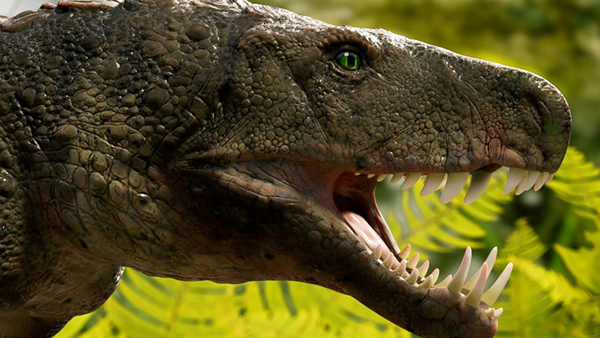
Members of the Ornithosuchidae are characterised by the shape of their snout. The premaxilla tends to project forward and they have two pairs substantial, conical teeth located in the anterior portion of the lower jaw (dentary). Like modern crocodilians these animals were covered in bony armour (osteoderms), but unlike today’s crocodiles, caiman and alligators, they were much more at home on the land than in water.
Like other ornithosuchids, Dynamosuchus probably spent most of its time on all fours, but it may have been capable of adopting a bipedal stance, perhaps when a turn of speed was required to escape from other bipedal predators such as the recently described herrerasaurid Gnathovorax (G.cabreirai).
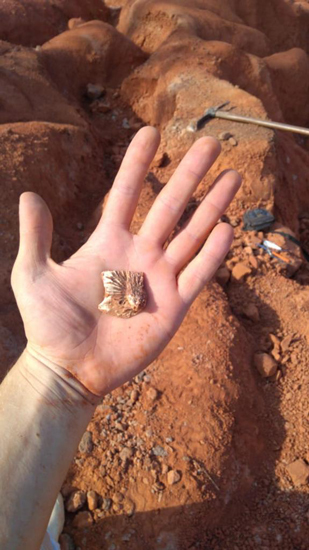
One of the Osteoderms (Bony Scales) Found at the Fossil Quarry
An osteoderm (bony armour) recovered from the excavation site.
Picture credit: Rodrigo Temp Müller (Universidade Federal de Santa Maria)
A Specialised Scavenger
Studies of the skulls of these archosaurs indicate that they had strong jaws, but a relatively slow bite speed and the projecting premaxilla was not well suited to handling struggling prey. As a result, it is has been speculated that ornithosuchids were specialised scavengers, using their powerful jaws and their curved, serrated teeth in the upper jaw to consume carcasses. The genus name is from the Latin meaning “powerful crocodile”, whereas the trivial name is a Latinised form of “morro” a reference to the fossil quarry located at the base of the “Morro Agudo”.
A Close-up View of the Head of Dynamosuchus collisensis
Dynamosuchus collisensis (view of the head).
Picture credit: Márcio L. Castro
The Santa Maria Formation
The fossil material from the Santa Maria Formation adds to the number of fossil vertebrates known from the Late Triassic of Brazil. The terrestrial ecosystem was complex with synapsids, rauischians, rhynchosaurs, aetosaurs and numerous dinosauromorphs as well as some of the earliest types of dinosaur known. Dynamosuchus collisensis represents the first reptile with specialised anatomical adaptations for scavenging (necrophagy), to be discovered in a single fossiliferous site along with fossil remains of dinosaurs. The new ornithosuchid further demonstrates a link between the animals associated with the Argentinean and Brazilian basins during the Carnian stage of the Triassic.
Everything Dinosaur acknowledges the assistance of a media release from the Universidade Federal de Santa Maria in the compilation of this article.
The scientific paper: “The first ornithosuchid from Brazil and its macroevolutionary and phylogenetic implications for Late Triassic faunas in Gondwana” by Rodrigo T. Müller, M. Belén Von Baczko, Julia B. Desojo, and Sterling J. Nesbitt published in Acta Palaeontologica Polonica.