All about dinosaurs, fossils and prehistoric animals by Everything Dinosaur team members.
23 05, 2022

The Remarkable Prehistoric Planet – A New Television Series

By |2024-12-31T09:53:47+00:00May 23rd, 2022|Categories: Adobe CS5, Dinosaur Fans, Main Page, Movie Reviews and Movie News, Photos, Press Releases|0 Comments

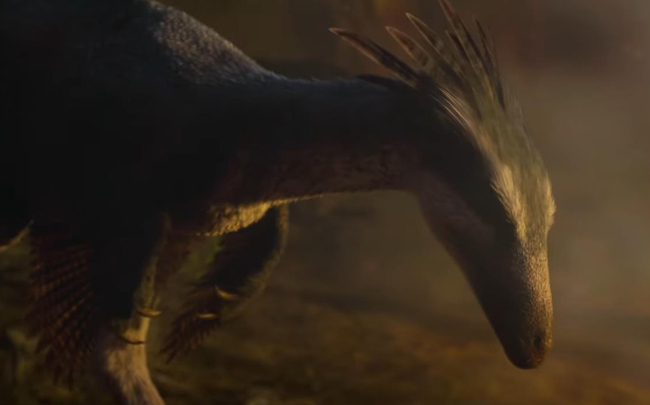
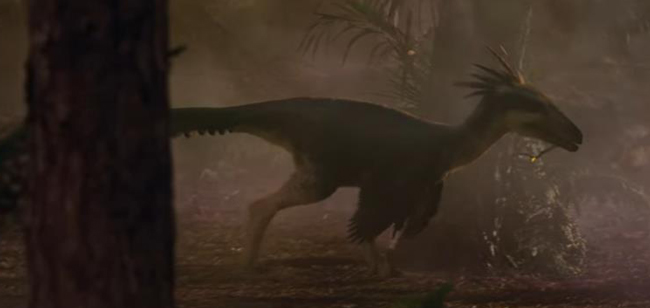
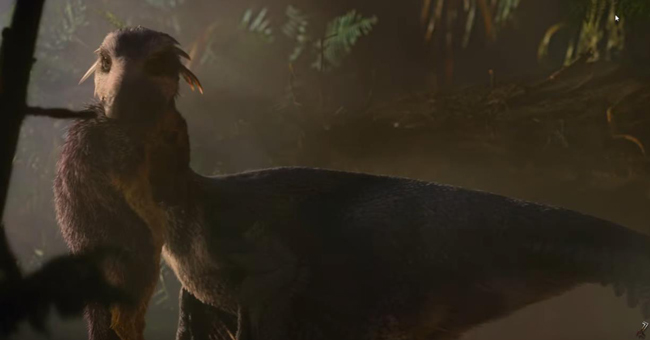
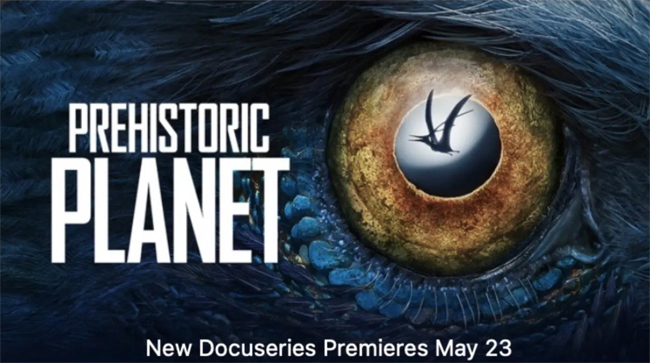
Tonight, sees the first episode of the stunning documentary series “Prehistoric Planet” being aired on Apple TV+. Five programmes will be shown over the next five nights, each one at around forty minutes in length, will focus on a different habitat, starting this evening with “coasts”. Subsequent programmes will look at the prehistoric ecosystems associated with deserts, freshwater, the polar dinosaurs (ice worlds) and the series concludes with an episode entitled “forests”.

Prehistoric Planet television series.

The television series “Prehistoric Planet” starts on May 23rd (2022). The programmes are narrated by Sir David Attenborough. Picture credit: Apple TV.

Picture credit: Apple TV

We at Everything Dinosaur would like to congratulate all those involved in this astonishing series that has been a decade in the making.

Enjoy.

21 05, 2022

New Mary Anning Statue Unveiled at Lyme Regis

By |2024-12-31T09:34:46+00:00May 21st, 2022|Categories: Adobe CS5, Dinosaur and Prehistoric Animal News Stories, Dinosaur Fans, Educational Activities, Famous Figures, Main Page, Photos|1 Comment

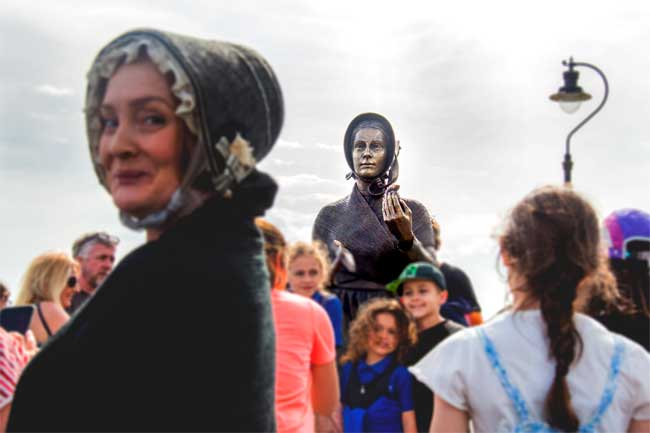
A statue commemorating the life and work of the pioneering palaeontologist Mary Anning has been unveiled in her hometown of Lyme Regis. Mary Anning (1799 – 1847), made some remarkable fossil discoveries along Dorset’s “Jurassic Coast”, although during her lifetime, her contribution to the nascent sciences of geology and palaeontology was not fully recognised.

The statue, created by artist and sculptress Denise Dutton, is placed on the seafront close to the sea defences, permitting Mary a view of Lyme Bay and the cliffs and shoreline that she explored with her brother Joseph as a child. During her lifetime she made several highly significant fossil discoveries in the Lower Jurassic marine beds, including the first ichthyosaur specimens to be scientifically studied, plesiosaurs and the first pterosaur fossil to be found outside Germany.

The unveiling of the Mary Anning statue at Lyme Regis (Dorset)

The statue commemorating the life and work of Mary Anning is unveiled. Picture credit: Mary Anning Rocks.

Picture credit: Mary Anning Rocks

Mary Anning Rocks

Young Evie Swire was the inspiration behind the charity Mary Anning Rocks, when she enquired on returning from a fossil hunting trip at Lyme Regis “why isn’t there a statue to Mary?” A fund-raising campaign was organised and on what would have been Mary’s 223rd birthday, Evie, now a teenager and her fellow campaigners unveiled the beautiful statue commemorating a key figure in the history of the Earth Sciences.

Mary Anning statue unveiled at Lyme Regis

Crowds flocked to see the unveiling of the new statue of Mary Anning unveiled, some people even dressed up like Mary. Picture credit: Mary Anning Rocks.

Picture credit: Mary Anning Rocks

Supporting and Celebrating the Role of Women in the Sciences

Everything Dinosaur was one of the first organisations from outside Lyme Regis to back the campaign and to help raise awareness. Since the charity’s inception, Everything Dinosaur has helped to promote and support the fundraising.

Mary Anning’s discoveries in the 19th Century helped shape scientific understanding of prehistoric life, but her work was never properly credited due to the fact that she was a woman and because of her lowly social status. A large crowd turned out for the unveiling, and team members at Everything Dinosaur are looking forward to one day soon returning to Lyme Regis and paying our respects to Mary Anning and her statue.

A spokesperson from Everything Dinosaur commented:

“We did so want to be there at the unveiling. The statue of Mary is not only a tribute to her, but it also helps to raise awareness of and celebrate the role of women in the sciences.”

Mary Anning Statue Unveiled

A close-view of the Mary Anning statue which was created by leading artist and sculptress Denise Dutton. Mary is holding an ammonite fossil in her left hand. Picture credit: Mary Anning Rocks.

Picture credit: Mary Anning Rocks

Anya Pearson one of the hard-working trustees of the Mary Anning Rocks charity exclaimed:

“It was a monumental day for a monumental Woman – At last!!!”

Our congratulations to all those people who have worked so hard to ensure that Mary Anning can be honoured in this way.

Commemorating the Life and Work of Mary Anning

Mike from Everything Dinosaur commented:

“The statue is wonderful way to commemorate the life and work of Mary Anning.  We congratulate all those people who helped to bring this about.  It will do a lot to boost the profile of Lyme Regis and the Dorset coast. The Mary Anning statue will attract a lot of visitors to the area.”

The Everything Dinosaur website: Prehistoric Animal Figures.

17 05, 2022

A Beautiful Balloon Dinosaur

By |2024-12-30T18:31:03+00:00May 17th, 2022|Categories: Adobe CS5, Dinosaur Fans, Everything Dinosaur News and Updates, Main Page, Photos, Press Releases|0 Comments

What do you give a team member at Everything Dinosaur as a thank you gift for their help and assistance? A balloon dinosaur of course! We received a little thank you gift, a little token of appreciation after we provided assistance. This was a very kind, it was a lovely gesture, but we were just doing our job and trying to help where we could.

Balloon dinosaur given to Everything Dinosaur.

The dinosaur balloon given to an Everything Dinosaur team member, we appreciate the kind gesture and we are grateful to receive a green tyrannosaur in balloon form. Picture credit: Everything Dinosaur.

Picture credit: Everything Dinosaur

Our little green dinosaur is currently keeping us company in the office. The balloon Tyrannosaurus rex is keeping an eye on us as we prepare articles for the Everything Dinosaur blog and get the paperwork completed so that we can pack orders for Everything Dinosaur customers.

Balloon dinosaur.

A close-up of the fearsome looking balloon Tyrannosaurus rex that was given to Everything Dinosaur. Picture credit: Everything Dinosaur.

Picture credit: Everything Dinosaur

The Everything Dinosaur website: Dinosaur Toys.

16 05, 2022

A Knitted Geological Time Scale

By |2024-12-30T15:33:41+00:00May 16th, 2022|Categories: Adobe CS5, Dinosaur Fans, Educational Activities, General Teaching, Geology, Main Page, Photos, Teaching|0 Comments

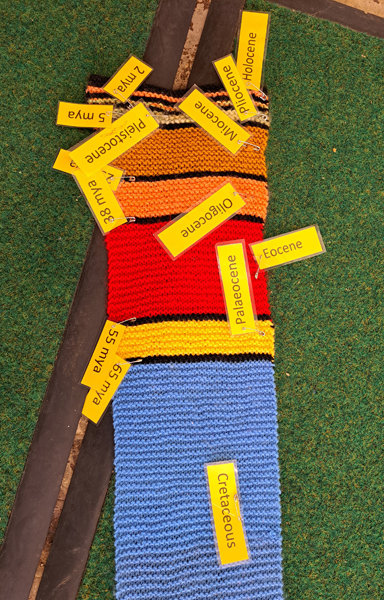
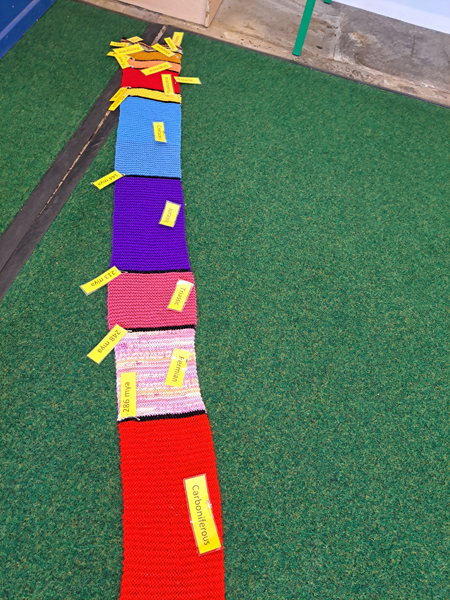
It can be difficult to visualise the immensely long geological time scale and to demonstrate what lifeforms developed along the way, so, why not knit one and use prehistoric animal models to illustrate key moments in the history of life on Earth.

That’s exactly what Sue Mallender, Learning Programmes Science Officer, (Nottingham City Museums) and the Learning and Engagement team did – creating a colourful and striking depiction of the evolution of life on Earth.

Knitted geological time line

The coloured bands represent geological periods and epochs. Picture credit: Sue Mallender.

Picture credit: Sue Mallender

Visualising Geological Time

In order to study the history of life, scientists need to locate important evolutionary events such as the development of animals with exoskeletons and the evolution of vertebrates within the geological time scale. Planet Earth was formed around 4.57 billion years ago. Geologists have divided the history of our planet into time intervals of varying duration. This time scale was devised in the 19th century, (although amendments to it and revisions continue to be made). The boundaries between the time intervals mark notable events such as dramatic changes in the type of fossils found in strata.

This remarkable knitted timescale provides a novel and very innovative way of demonstrating this fundamental aspect of geology.

Knitted geological time scale.

Demonstrating deep geological time in knitted form. The geological time scale knitted. Picture credit: Sue Mallender.

Picture credit: Sue Mallender

This colourful visualisation of the age of our planet was created by dedicated knitter Helen Crowfoot.

The “Slow Burning Fuse” to Complex Life

The long interval of time from the origin of the Earth to the start of the Cambrian is referred to as the Cryptozoic Eon (meaning hidden life). This enormous time interval is also referred to as the Precambrian. Its length in comparison to the Phanerozoic Eon (visible life) – the time interval to the present day, is dramatically demonstrated in the knitted time scale by the burgundy-coloured strip.

Some palaeontologists have described the Cryptozoic Eon as the “slow burning fuse to complex life.”

Demonstrating the Cryptozoic Eon in knitted form.

A novel way of demonstrating the Cryptozoic Eon, informally known as the Precambrian – the immensely long period of time before complex life evolved on Earth. Picture credit: Sue Mallender

Picture credit: Sue Mallender

Cambrian Creatures

A spokesperson from Everything Dinosaur commented that they had been contacted about this innovative project and ask to recommend prehistoric animal models that could be placed along the time scale to depict the sort of creatures that evolved during the main geological periods.

The Everything Dinosaur spokesperson explained:

“We started with the Cambrian, suggesting some figures that could represent some of the first, large complex animals and then worked forwards from there recommending various models that could be used to populate the knitted time scale.”

Cambrian animal models on knitted time line.

The Safari Ltd Cambrian Toob models placed on the knitted time line. Picture credit: Sue Mallender.

Picture credit: Sue Mallender

To view the various toobs (tubes) of prehistoric animal models available from Everything Dinosaur: Wild Safari Prehistoric World Models.

The spokesperson added:

“What a super idea! This is a fantastic way to visualise geological time and we congratulate Sue and the Learning and Engagement team for such an innovative and creative way of demonstrating how life on our planet has changed over millions of years.”

The award-winning Everything Dinosaur website: Dinosaur Toys.

11 05, 2022

Unexpected Patterns of Prehistoric Activity Detected at Stonehenge

By |2023-04-30T17:23:38+01:00May 11th, 2022|Categories: Adobe CS5, Geology, Main Page, Photos|0 Comments

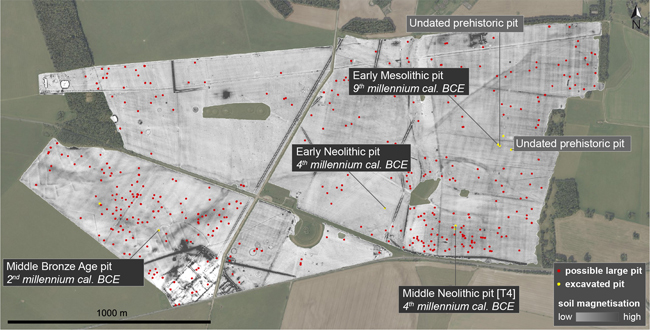
Researchers from the University of Birmingham and Ghent University (Belgium), have identified hundreds of possible large prehistoric pits and thousands of smaller ones at the heart of the ancient Stonehenge landscape. This discovery challenges our understanding of land use through time at this famous UNESCO World Heritage site, the most intensively investigated prehistoric monument in the world.

Detected and excavated map of pits at Stonehenge.
Hundreds of possible prehistoric pits detected in the landscape, indicating those that have been validated and excavated, plotted on a magnetic soil map from Stonehenge. Picture credit: De Smedt et al.

The Oldest Evidence of Land Use at Stonehenge

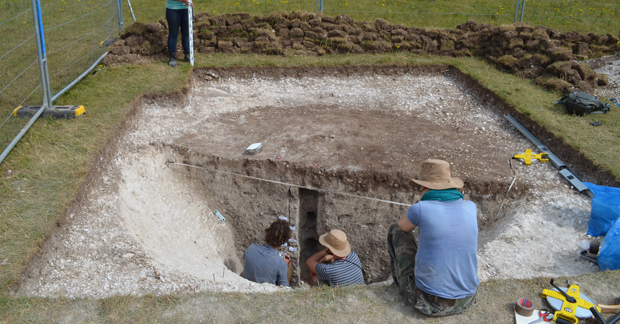
Writing in the academic “Journal of Archaeological Science”, the researchers report the discovery of a substantial pit, more than four metres wide and two metres deep excavated into chalk bedrock. Estimated to have been constructed over 10,000 years ago it stands out as the most ancient trace of land use yet discovered at Stonehenge. This prehistoric pit bears witness to hunter-gatherers roaming the landscape during the early Mesolithic, when Britain was re-inhabited after the last Ice Age. This is only one of many new sites and unexpected patterns of prehistoric activity detected at Stonehenge by the Ghent-Birmingham study team.

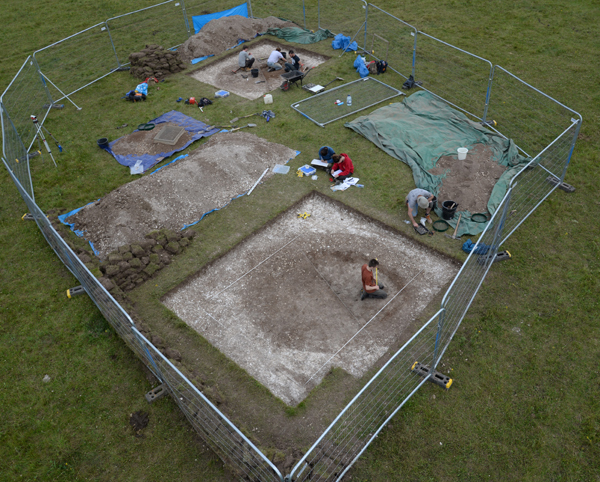
Overview of the excavation work.
An overview of the excavation work. Picture credit: University of Ghent/University of Birmingham.

Unique Research

In a unique piece of research, extensive, electromagnetic induction surveying was combined with borehole analysis and twenty exploratory archaeological excavations. These revealed the extensive sub-surface pits.

Philippe De Smedt, Associate Professor at Ghent University and co-author of the scientific paper commented:

“Geophysical survey allows us to visualise what’s buried below the surface of entire landscapes. The maps we create offer a high-resolution view of subsurface soil variation that can be targeted with unprecedented precision. Using this as a guide to sample the landscape, taking archaeological ‘biopsies’ of subsurface deposits, we were able to add archaeological meaning to the complex variations discovered in the landscape.”

Four Hundred Large Pits

The project team identified over four hundred potential large pits (each over 2.5 metres in diameter), of which six were excavated in the course of the project, ranging in date from the Early Mesolithic (c.8000 BCE) to the Middle Bronze Age (c.1300 BCE).

While each of these sites adds to our knowledge of prehistoric activity in the Stonehenge landscape, the Mesolithic pit stands out as exceptional. The size and shape of the pit suggest it was probably dug as a hunting trap for large game such as aurochs, red deer and wild boar. Dating to 8200-7800 BCE, it is not only one of the earliest of the very few Mesolithic sites near Stonehenge (predating, for instance, the Blick Mead occupation site 1.5 kms away), it is also the largest known Early Mesolithic pit feature in north-western Europe.

Collecting samples in the Mesolithic pit.
Collecting environmental samples in the Mesolithic pit. Picture credit: University of Ghent/University of Birmingham.

Everything Dinosaur acknowledges the assistance of a media release from the University of Birmingham in the compilation of this article.

The scientific paper: “Novel Insights into Prehistoric Land Use at Stonehenge by Combining Electromagnetic and Invasive Methods with a Semi-Automated Interpretation Scheme” by De Smedt, Philippe, Paul Garwood, Henry Chapman, Koen Deforce, Johan De Grave, Daan Hanssens and Dimitri Vandenberghe published in the Journal of Archaeological Science.

Visit Everything Dinosaur’s website: Visit Everything Dinosaur’s Website.

8 05, 2022

Happy Birthday Sir David Attenborough

By |2023-05-15T07:41:15+01:00May 8th, 2022|Categories: Adobe CS5, Dinosaur Fans, Famous Figures, Main Page, Photos, Press Releases|0 Comments

Today, May 8th, is the birthday of Sir David Attenborough. The naturalist, broadcaster and campaigner is ninety-six years of age and his enthusiasm for the natural world continues to shine through in the myriad of projects with which he is currently involved.

Sir David Attenborough
Sir David Attenborough veteran naturalist and broadcaster. Today, May 8th (2022) is his 96th birthday. Many Happy Returns Sir David!

Prehistoric Planet

Sir David’s energy and enthusiasm for the natural world shows no sign of deteriorating despite him being just a few years short of his centenary. For example, he is the narrator of a new five-part, nature documentary television series about dinosaurs that will premiere on Apple TV+ on May 23rd (2022) entitled “Prehistoric Planet”.

Produced by the BBC Studios Natural History Unit with visual effects by Moving Picture Company, the television series will be shown over five consecutive nights examining different dinosaur dominated environments during the Cretaceous.

Prehistoric Planet television series.
The television series “Prehistoric Planet” starts on May 23rd (2022). The programmes are narrated by Sir David Attenborough. Picture credit: Apple TV+.

For replicas of prehistoric animals from the Cretaceous and other extinct creatures:Wild Past Prehistoric Animal Models.

Sir David Attenborough

The veteran broadcaster has become an active campaigner raising awareness about climate change, global warming and the impact of our species on the planet. He remains as busy as ever, but we at Everything Dinosaur hope he takes a little time out of his busy schedule today to enjoy his birthday.

Happy birthday Sir David Attenborough.

Visit the award-winning website of Everything Dinosaur: Everything Dinosaur.

5 05, 2022

Admiring Remarkable Horsetails

By |2024-12-30T14:21:51+00:00May 5th, 2022|Categories: Adobe CS5, Dinosaur Fans, Main Page, Photos, Photos/Pictures of Fossils|0 Comments

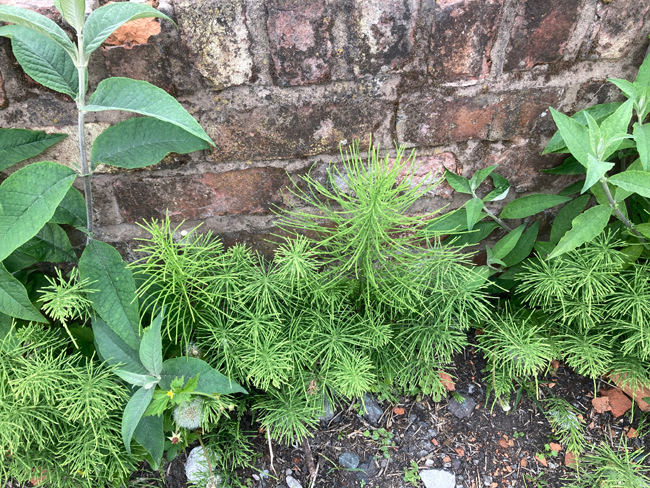
Horsetails (sphenopsids) continue to thrive although their Carboniferous heyday is long behind them. Once a much more extensive group, these vascular plants, believed by many palaeobotanists to be closely related to ancestral ferns, are now represented by about twenty species, all contained in the genus Equisetum.

Admiring Horsetails – One of Natures Great Survivors

Horsetails
Horsetails (Equisetum) continue to thrive as they are able to grow in areas where other plants would find it difficult to get a foothold. Often regarded as weeds, these tough little plants are essentially living fossils, as the earliest examples of the genus Equisetum date from the Early Jurassic of South America.  Picture credit: Everything Dinosaur.

Picture credit: Everything Dinosaur

The Everything Dinosaur website: Dinosaur Toys.

A Living Fossil

When team members at Everything Dinosaur see a clump of horsetails, often growing on waste ground we stop to admire them. These tough little plants deserve respect. After all, they are essentially a living fossil, the oldest fossil remains of modern horsetails (genus Equisetum), date from approximately 190 to 182 million years ago (early Pliensbachian to early Toarcian), represented by Equisetum dimorphum from the Early Jurassic of South America (Chubut Province, Argentina).

Horsetail fossils - Equisetum dimorphum.
Photographs of Equisetum dimorphum sp. nov. from the Lower Jurassic of Chubut Province, Argentina. 1-2. Part and counterpart of a strobilus showing the hexagonal sporangiophores and the long leaves of MPEF-Pb 5894a and MPEF-Pb 5894b; 3. Detailed inner view of 1 showing oblong sporangia of MPEF-Pb 5894a; 4. Isolated external cast of sporangiophore showing central umbo of MPEF-Pb 6477a. Abbreviations: le, leaves; s, sporangia. Scale bars 1-2 = 3mm; 3 = 1 mm; 4 = 0.5 mm. Picture credit: Elgorriaga et al.

Picture credit: Elgorriaga et al

For models and replicas of prehistoric plants and dinosaurs: CollectA Age of Dinosaurs Popular Figures.

29 04, 2022

A Fascinating New Book “Paleontology an Illustrated History”

By |2024-12-30T10:09:20+00:00April 29th, 2022|Categories: Adobe CS5, Book Reviews, Dinosaur Fans, Everything Dinosaur News and Updates, Main Page, Photos, Press Releases|0 Comments

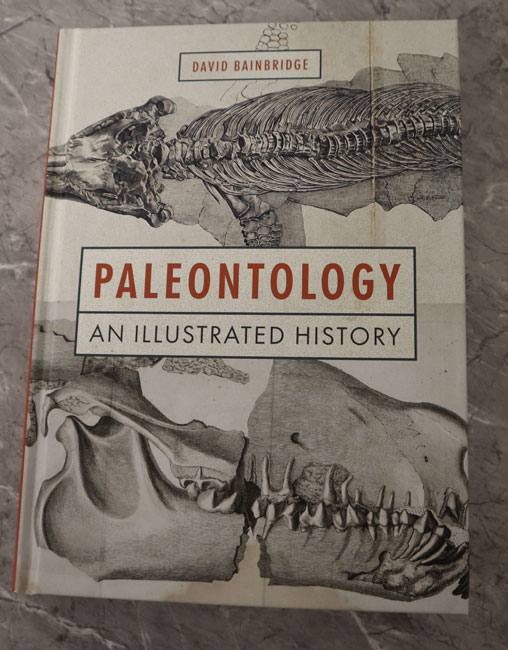
Everything Dinosaur team members are looking forward to reading and then reviewing a new book by renowned author Professor David Bainbridge that charts the development of the science of palaeontology using classical and contemporary scientific illustrations. The book is entitled “Paleontology an Illustrated History”.

"Palaeontology an Illustrated History"

The front cover of “Palaeontology an Illustrated History” by David Bainbridge a comparative anatomist in the Department of Physiology, Development and Neuroscience at the University of Cambridge. Picture credit: Everything Dinosaur.

Picture credit: Everything Dinosaur

Lavishly Illustrated

This lavishly illustrated volume, published by Princeton University Press: Princeton University Press examines how art and illustrators have informed both academia and the general public about fossil discoveries and scientific research. It is lavishly illustrated, the author providing a beautifully crafted examination of the art and science of palaeontology from the ancient Greek civilisation right up to the modern day with its techniques of three-dimensional modelling, computed tomography and scanning electron microscopy.

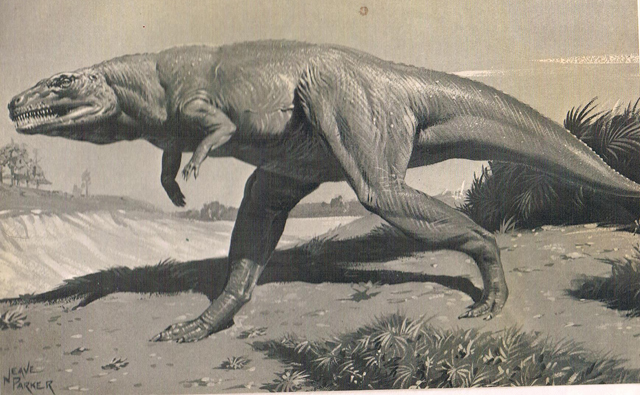
Neave Parker Megalosaurus.

The Neave Parker Megalosaurus illustration (1960) on a postcard available from the London Natural History Museum in the 1970’s.

The book “Paleontology an Illustrated History” highlights the contribution to palaeoart made by figures such as the English artist Neave Parker. Neave Parker created iconic images of dinosaurs in collaboration with the scientists at the British Museum (now the London Natural History Museum). The book looks at the contribution made to scientific illustration by artists such as Burian, Zallinger and Charles Knight.

It also includes full colour plates of stunning fossil discoveries as well as biographies of the palaeontologists who have helped shape our view of ancient lifeforms and ecosystems.

Team members at Everything Dinosaur are looking forward to reading this exciting book and providing a more detailed review.

Visit Everything Dinosaur’s award-winning website: Everything Dinosaur.

25 04, 2022

Beautiful Mesozoic Metal Monsters

By |2024-12-30T09:26:47+00:00April 25th, 2022|Categories: Adobe CS5, Dinosaur and Prehistoric Animal News Stories, Dinosaur Fans, Main Page, Photos, Press Releases|0 Comments

There are so many clever and creative people on the worldwide web. Take for example Joe Dolan a retired welder who spends his time creating metal prehistoric monsters in his workshop. Each hand-crafted sculpture takes dozens of hours to produce, each one is a labour of love, honed by the skills developed over a lifetime as a welder/fabricator.

Joe very kindly contacted Everything Dinosaur and sent us some pictures of his latest creations.

Metallic Tyrannosaurus rex

A completed Tyrannosaurus rex sculpture. Picture credit: Joe Dolan.

Picture credit: Joe Dolan

Making Figures from Metal

With over forty years experience Joe’s skilfully constructed animal figures are a great conversation starter and certainly are statement pieces. All the joints are fully welded, cleaned, deburred and polished. It is great to see Joe still using his engineering and design skills to create such novel, metallic sculptures.

Metal T. rex

An impressive T. rex metal sculpture just out of the workshop. Picture credit: Joe Dolan.

Picture credit: Joe Dolan

The “Detail is Everything”

Joe explains that his hobby has grown into a small business. The figures are made for indoor display as the steel used in the construction would rust if left outside. At first Joe created sculptures for friends and family but soon word of his talent for creating unusual sculptures spread and he began to attract commercial interest from farther afield.

Joe has not restricted himself to dinosaurs, he builds lots of amazing sculptures of other animals too.

He explained how his unusual business started commenting:

“I started some years back, making things for myself and family. Other people started showing interest in my work so I made more, and to me “detail is everything”, plus the figurines are robust and if cared for they will last for years and years.”

A metallic fish model.

A stunning, metallic fish sculpture. Picture credit: Joe Dolan.

Picture credit: Joe Dolan

metal shark figure.

A beautiful, burnished shark figure created by talented engineer Joe Dolan.

Picture credit: Joe Dolan

Traditional Skills Given a New Twist

Traditional skills such as metal working are under threat, the models and figures that Joe has created enable him to keep using the techniques that he has honed over a lifetime, bringing pleasure and delight to others.

Metallic crab sculpture

A cleverly constructed crab – watch out for those metal claws! Picture credit: Joe Dolan.

Picture credit: Joe Dolan

A spokesperson from Everything Dinosaur commented:

“We are always amazed at how creative and clever people can be. Joe has turned his talents to making some amazing metallic monsters including models of dinosaurs like T. rex and Velociraptors. He also has a flair for fish models and we love the eyes on the metallic crab figure.”

The award-winning Everything Dinosaur website: Dinosaur Toys.

A pack of metallic Velociraptors.

A pack or metallic Velociraptors on the prowl. Picture credit: Joe Dolan.

Picture credit: Joe Dolan

For further information about the sculptures and to contact Joe direct, we suggest you check out his Facebook page: Contact Joe Dolan on Facebook.

17 03, 2022

A New Batch of Frogspawn Spotted in the Pond

By |2024-10-28T13:57:12+00:00March 17th, 2022|Categories: Animal News Stories, Main Page, Photos|0 Comments

Yesterday, March 16th (2022), a new batch of frogspawn was spotted in the office pond. This spawning has occurred a fortnight after the first frogspawn was observed. Team members at Everything Dinosaur think it is unusual for there to be such a protracted spawning season for the frogs in our area (Rana temporaria).

A new batch of frogspawn on March 16th 2022.

The newly laid frogspawn has been highlighted with a red circle. It is pleasing to note that such a large amount of frogspawn has been laid, indicating a healthy frog population. Picture credit: Everything Dinosaur.

Picture credit: Everything Dinosaur

2022 Spawning Season

The first frogspawn was observed on the morning of March 2nd, the following day much more frogspawn was laid and team members counted as many as seven frogs in the pond.

The exact amount of frogspawn is difficult to calculate as it tends to congeal into a single mass (making predation and consumption difficult). However, it was estimated on the 3rd March that perhaps seven or eight batches of spawn had been produced. The frog species is the Common frog (Rana temporaria). In 2021, frogs spawned around the 11th of March, in 2020, the spawning occurred around the 22nd of the month. Team members have kept a record of the time of spawning over the last decade or so, for example, in 2018 frogspawn was spotted on the 17th of March, whilst in 2017 spawning occurred six days earlier.

The frogspawn laid on the 16th was produced 14 days later than the first batch. We are not sure why spawning has taken place over two weeks, we have not recorded this protracted spawning previously.

More frogspawn laid in the office pond (16th March 2022).

A closer view of the newly laid frogspawn discovered on Wednesday 16th March. The first frogspawn was spotted on the morning of the 2nd of March, on the 3rd of March several more batches of eggs were laid. Picture credit: Everything Dinosaur.

Picture credit: Everything Dinosaur

It is pleasing to note that such a large amount of frogspawn has been laid. This indicates a healthy frog population in the local area.

The timing of events such as seasonal spawning can be used as an indicator of climate change, it is likely that as our planet continues to warm events such as frogs spawning will occur earlier in the spring.

Visit the Everything Dinosaur website: Dinosaur Toys.

Go to Top