All about dinosaurs, fossils and prehistoric animals by Everything Dinosaur team members.

Dinosaur and prehistoric animal themed articles, features and stories.

29 06, 2019

Exclusive Everything Dinosaur June Newsletter (June 2019)

By |2023-12-25T12:58:26+00:00June 29th, 2019|Categories: Adobe CS5, Dinosaur Fans, Everything Dinosaur News and Updates, Everything Dinosaur Newsletters, Everything Dinosaur Products, Main Page, Photos of Everything Dinosaur Products, Press Releases|0 Comments

Everything Dinosaur Newsletter (June 2019)

Team members at Everything Dinosaur have recently published the first of a string of summer newsletters.  In this email, subscribers are updated on Rebor stocks, informed about new PNSO figures and given the opportunity to purchase the new for 2019 new colour variant Papo Stegosaurus.

Top Billing in the Newsletter for the Recent Arrival the Papo Stegosaurus (New Colour Variant)

The Papo Stegosaurus model features in the latest Everything Dinosaur newsletter.
The new for 2019 Papo Stegosaurus headlines the latest Everything Dinosaur newsletter.  Just arrived, the amazing and beautifully painted Papo Stegosaurus dinosaur model. Picture credit: Everything Dinosaur.

Picture credit: Everything Dinosaur

An Update on Rebor Stocks

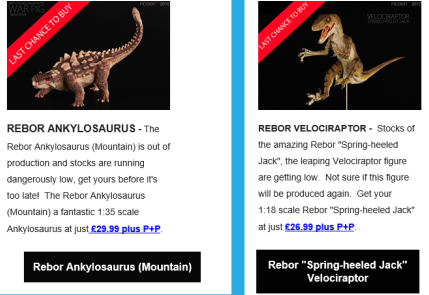
Fans of the Rebor range are aware just how quickly this model portfolio has grown.  Not all the figures in stock are being produced again in the near future.  For example, the Rebor “War Pig” Ankylosaurus model (mountain), is getting low on stock and no future production run for this armoured dinosaur model has been announced.  Stocks of the very popular Rebor “Spring-heeled Jack” Velociraptor figure are similarly under pressure.

Some Stocks of Rebor Figures are Getting Low
Rebor model stocks - an update.
An update on Rebor model stocks.  The Rebor “War Pig” Ankylosaurus model in the mountain colour scheme and the Rebor “Spring-heeled Jack” Velociraptor model have low stock status at Everything Dinosaur and the company is not certain whether more models can be acquired. Picture credit: Everything Dinosaur.

Picture credit: Everything Dinosaur

The Rebor model range: Rebor Prehistoric Animal Models.

PNSO Prehistoric Animals are Imminent

Some exciting news for subscribers, the latest batch of PNSO prehistoric animal figures including the eagerly anticipated Yangchuanosaurus and Chungkingosaurus diorama are coming into stock very soon.  These collectables are expected at the Everything Dinosaur website around the middle of next month (July 2019).  A reserve list for the Yangchuanosaurus/Chungkingosaurus pair has already been opened.

Expected in July (2019) New PNSO Prehistoric Animal Models

PNSO prehistoric animal models at Everything Dinosaur.
PNSO models and figures coming into stock at Everything Dinosaur. Picture credit: Everything Dinosaur.

Picture credit: Everything Dinosaur

PNSO Special Edition Gift Box

Subscribers have also been informed about a special collectors’ edition box set of PNSO models coming into stock.  The gift box contains all forty-eight of the PNSO “Toys that Accompany your Growth” model range.  Each model is within its own packaging, but the entire series is presented in a special edition gift box complete with a handy carry handle.  Only a few of these gift boxes are coming into stock at Everything Dinosaur and newsletter subscribers were the first to hear of this and the first to be given the opportunity to register their interest in this very special item.

First News of Everything Dinosaur Stocking the Special Edition PNSO Gift Box
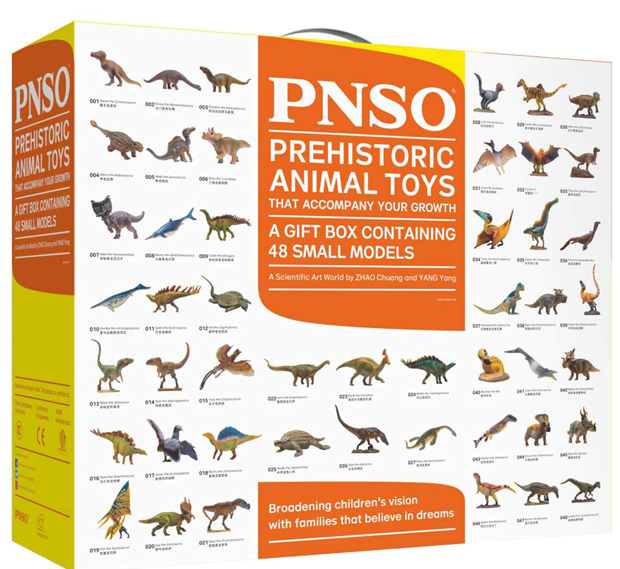
Forty-eight models in the PNSO gift box.
PNSO special edition gift box.

To view the PNSO prehistoric animal model range: PNSO Prehistoric Animal Models.

The Everything Dinosaur Newsletter

These periodic newsletters are a fantastic and very convenient way for customers to keep in touch with new products and other developments at Everything Dinosaur.

A spokesperson for the UK-based company stated:

“We have so many new models coming into stock at Everything Dinosaur, new PNSO, Papo, Rebor figures, CollectA and Beasts of the Mesozoic.  Subscribing to our newsletter is a great way to keep up to date and get the latest news and special offers.”

To request to join the Everything Dinosaur newsletter subscribers list: Simply Email Everything Dinosaur.
28 06, 2019

The First Dinosaur from the Caiuá Group (Brazil)

By |2023-12-25T12:51:14+00:00June 28th, 2019|Categories: Adobe CS5, Dinosaur and Prehistoric Animal News Stories, Dinosaur Fans, Main Page, Palaeontological articles, Photos/Pictures of Fossils|0 Comments

Vespersaurus paranaensis – A Desert Dwelling Dinosaur

Roaming the Late Cretaceous of Brazil some 90 to 85 million years ago, was a little, fast-running, carnivorous dinosaur with a unique way of getting about.  The dinosaur has been named Vespersaurus paranaensis and at an estimated length of just over a metre (maximum length 1.6 metres), this was no giant, but its discovery will help scientists to work out the taxonomic relationships amongst an obscure group of theropods known mainly from Gondwana and provide new insight into theropod locomotion.

Vespersaurus paranaensis

Writing in the academic journal “Scientific Reports”, the researchers suggest that Vespersaurus supported its weight on just one digit (metatarsal III and toe III), it may have been essentially monodactyl i.e. it had one main, central weight-bearing toe.  The other toes associated with support and weight bearing in the Theropoda (digits II and IV), were very much smaller and may even have been held off the ground.

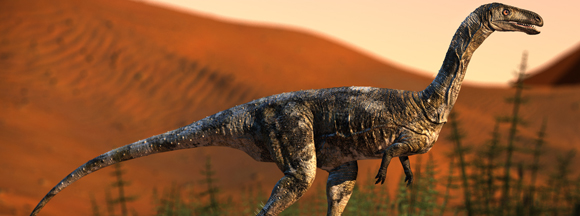
A Life Reconstruction of the Newly Described Brazilian Theropod Vespersaurus paranaensis

Vespersaurus life reconstruction.
A life reconstruction of the Brazilian dinosaur Vespersaurus.

Picture credit: Rodolfo Nogueira

Affinities with the Abelisauroidea

Analysis of the fossil material, which includes vertebrae, elements from the pelvis and limbs along with fragmentary skull bones suggests that this little dinosaur is a member of the Abelisauroidea, specifically the Noasaurinae, an enigmatic subfamily collectively known from sparse fossil material mostly from southern latitudes.  For example, Vespersaurus has the reduced forelimbs which are characteristic of the abelisaurids and it is hoped that these fossils will help palaeontologists to better understand the phylogeny of these Late Cretaceous predators.

Although only about 40% of the skeleton is known, these fossils represent one of the best examples of a member of the Noasauridae family found to date and the most complete dinosaur specimen from the whole of the Bauru Sub-basin.  It is also the first dinosaur to be described from rocks that constitute part of this basin, the Caiuá Group.

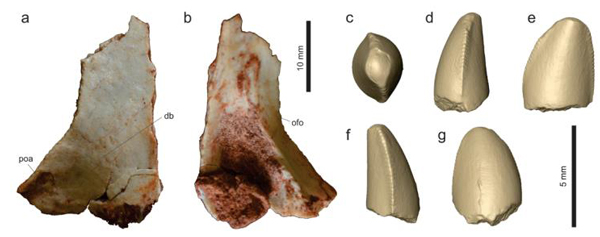
Frontal (Skull Bone) and Views of an Isolated Tooth (Vespersaurus paranaensis)

A skull bone and an isolated tooth (Vespersaurus paranaensis).
Cranial and dental remains of Vespersaurus paranaensis, an isolated frontal and an isolated broken tooth.

Picture credit: Scientific Reports (Langer et al)

A Late Cretaceous Desert Environment

The majority of the strata making up the Caiuá Group represent sandstones that were deposited by the action of wind (aeolian deposits).  During the Late Cretaceous, this region of Gondwana was an extensive desert.  The fossil record is particularly sparse with only a handful of animals recorded from what probably would have been oases.  Arguably, the most famous fossils from this part of the world represent a pterosaur monodominant bonebed (Caiuajara dobruskii).  Other than Caiuajara and this new dinosaur, the only other vertebrate fossils known from this area represent a lizard and a turtle.

Pectoral Elements and Limb Bones (V. paranaensis)

Front limb bones and elements from the pectoral girdle (Vespersaurus paranaensis).
Pectoral girdle and limb elements of Vespersaurus paranaensis.

Picture credit: Scientific Reports (Langer et al)

To read about Caiuajara: New Species of Flying Reptile Identified from Pterosaur Graveyard.

Strange Footprints

Examination of the foot bones and toes suggests that this dinosaur supported its weight on just a single, central digit.  Such an anatomical adaptation (a monodactyl stance), has not been recorded in the Archosauria before, but such a form of locomotion had been inferred by palaeontologists as numerous footprints indicating an enlarged weight-bearing toe in a theropod dinosaur have been found in rocks of the same age as the sediments that yielded the fossils of Vespersaurus.

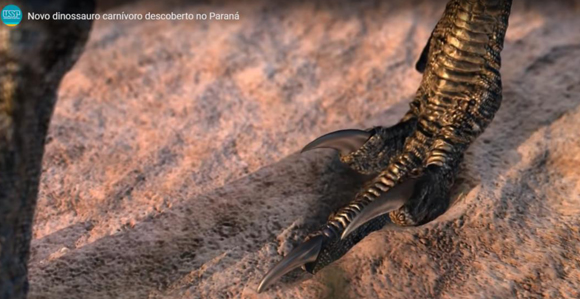
A Close Up of the Foot Showing the Weight-bearing Toe

The foot of Vespersaurus
A close-up view of the foot of Vespersaurus showing the weight-bearing central toe.  Footprints suggesting a monodactyl stance have been found in the same stratigraphic unit that yielded the new dinosaur.

Video image credit: Universidade de Sáo Paulo et al

Helping to Classify the Noasaurinae

The Noasaurinae are a branch of the Abelisauroidea consisting of small, predatory theropods known from Upper Cretaceous strata mostly associated with Gondwana (southern latitudes).  Perhaps the best known noasaurid is Masiakasaurus knopfleri, from the latest Cretaceous (Maastrichtian) of Madagascar, but two other taxa from Argentina described from relatively fragmentary fossil material have been assigned to the Noasaurinae (Noasaurus leali and Velocisaurus unicus).

Other dinosaurs from outside South America have also been tentatively assigned such as an as yet, unnamed specimen from India, Deltadromeus agilis from Morocco and Genusaurus sisteronis from France.  It is hoped that this more complete fossil specimen will permit palaeontologists to better understand taxonomic relationships within the Noasaurinae and their wider placement within the Abelisauroidea.

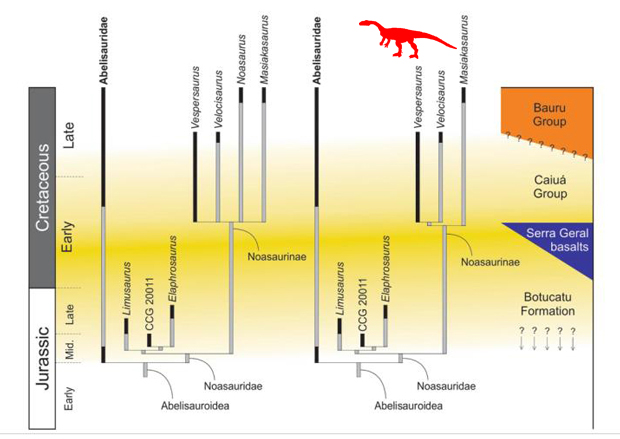
Building a Family Tree of the Abelisauroidea

Classifying Vespersaurus.
Vespersaurus is assigned to the Noasaurinae, a sub-family of the Abelisauroidea clade of theropods.  The suggested position of Vespersaurus is shown by the red dinosaur silhouette.

Picture credit: Scientific Reports (Langer et al)

Etymology of Vespersaurus paranaensis

The generic name derives from the words “vesper” (Latin for evening/west) and “sauros” (Greek for lizard/saurian), in reference to the name of the town Cruzeiro do Oeste (Western Cross), where the fossils were found.  The specific epithet refers to the Paraná state, the authors report that V. paranaensis represents the first non-avian dinosaur from that area of Brazil.

The scientific paper: “A new desert-dwelling dinosaur (Theropoda, Noasaurinae) from the Cretaceous of south Brazil” by Max Cardoso Langer, Neurides de Oliveira Martins, Paulo César Manzig, Gabriel de Souza Ferreira, Júlio César de Almeida Marsola, Edison Fortes, Rosana Lima, Lucas Cesar Frediani Sant’ana, Luciano da Silva Vidal, Rosangela Honório da Silva Lorençato and Martín Daniel Ezcurra published in the journal Scientific Reports.

The Everything Dinosaur website: Everything Dinosaur.
26 06, 2019

New Schleich 2019 Models in Stock

By |2023-12-25T12:20:54+00:00June 26th, 2019|Categories: Adobe CS5, Dinosaur Fans, Everything Dinosaur News and Updates, Everything Dinosaur Products, Main Page, Photos of Everything Dinosaur Products, Press Releases|0 Comments

New Schleich 2019 Prehistoric Animal Models in Stock

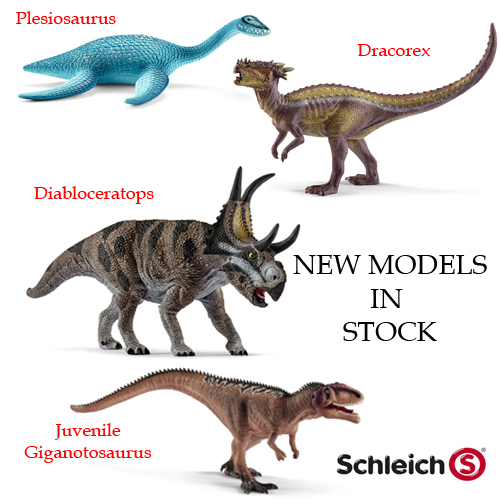
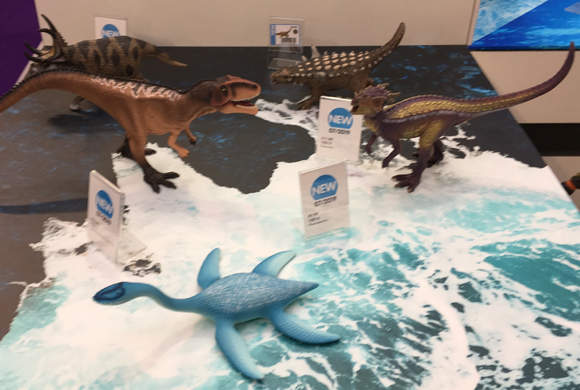
The July releases of Schleich prehistoric animal models are now in stock at Everything Dinosaur.  Now available from the UK-based specialist dinosaur model retailer are the Schleich Diabloceratops, Dracorex, the juvenile Giganotosaurus and the Schleich Plesiosaurus figure.  These are the final set of prehistoric animal figures to be introduced by Schleich this year and what a splendid quartet they make.
Now in Stock at Everything Dinosaur the Latest Schleich Prehistoric Animal Figures

New for 2019 four more Schleich prehistoric animal models.
Schleich 2019 prehistoric animal figures.  Plesiosaurus (top left), Dracorex (top right), Diabloceratops and the juvenile Giganotosaurus model (bottom).  Picture credit: Everything Dinosaur.
Picture credit: Everything Dinosaur

To view the four new Schleich prehistoric animal models and the rest of the Schleich range available from Everything Dinosaur: Schleich Dinosaur and Prehistoric Animal Models.

New Schleich Prehistoric Animal Models

Schleich has moved to a production system whereby new models are released in two main batches.  The first release took place in quarter 1, this second batch of new models was not due to be available until next month, but as Everything Dinosaur knows how eager their customers were to get these models, we were able to receive all four of these new replicas a little earlier.  In total Schleich have released nine new prehistoric animal figures this year.

A Display Showing Some of the New Schleich Models

New from Schleich in 2019.
New models being introduced into the Schleich prehistoric animal model range.  Everything Dinosaur has all these models and more in stock. Picture credit: Everything Dinosaur.

Picture credit: Everything Dinosaur

Schleich Prehistoric Animal Models – Diabloceratops

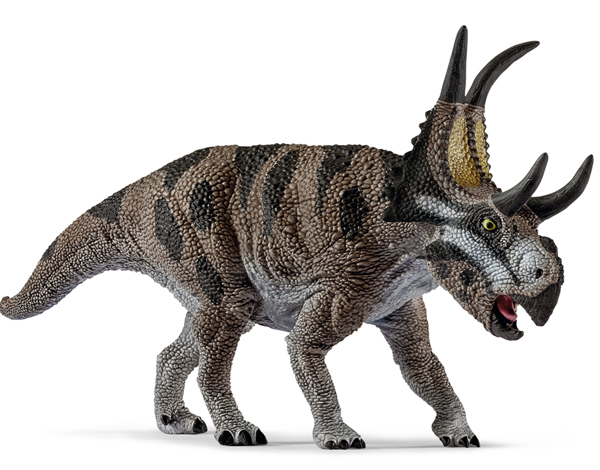
Measuring around sixteen centimetres in length with a height measured from the tip of those impressive horns of eleven centimetres, the Schleich Diabloceratops works well when compared in scale with the Schleich Triceratops figure that was introduced in 2018.  It is a beautifully painted model and it is great to see a manufacturer producing models of some of the more unusual members of the Ceratopsia.

The Schleich Diabloceratops Dinosaur Model

Schleich Diabloceratops.
Schleich Diabloceratops dinosaur model.

Picture credit: Everything Dinosaur

Schleich Dracorex Model

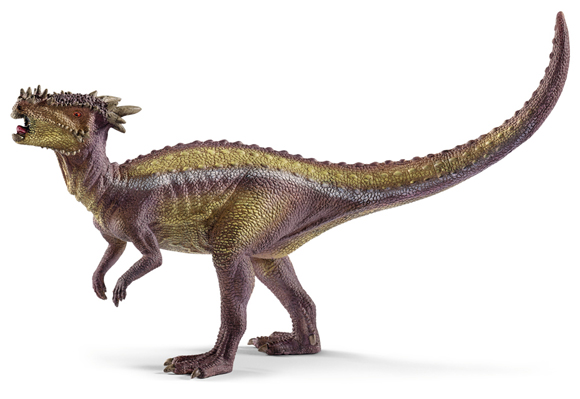
Another slightly obscure dinosaur added to the Schleich range is a representation of the pachycephalosaur Dracorex (D. hogwartsia).  This dinosaur’s name was inspired by children’s fascination with Harry Potter (Hogwarts School), we suspect the Schleich Dracorex is going to be popular with collectors fascinated with Schleich.

The Schleich Dracorex Dinosaur Model

Schleich Dracorex model.
Schleich Dracorex dinosaur model.

Picture credit: Everything Dinosaur

The Schleich Juvenile Giganotosaurus Dinosaur Model

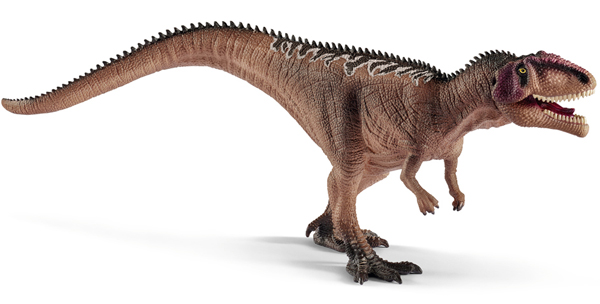
Joining the recently introduced adult Giganotosaurus is this eye-catching replica of a juvenile Giganotosaurus.  Measuring around twenty-six centimetres in length, this is quite a large Schleich model.  Just like the Schleich adult Giganotosaurus figure, the Schleich juvenile Giganotosaurus has an articulated lower jaw.

The Schleich Juvenile Giganotosaurus Dinosaur Model

Schleich juvenile Giganotosaurus model.
Schleich juvenile Giganotosaurus dinosaur model.  This Schleich dinosaur model has an articulated lower jaw.

Schleich Prehistoric Animal Models – The Plesiosaurus

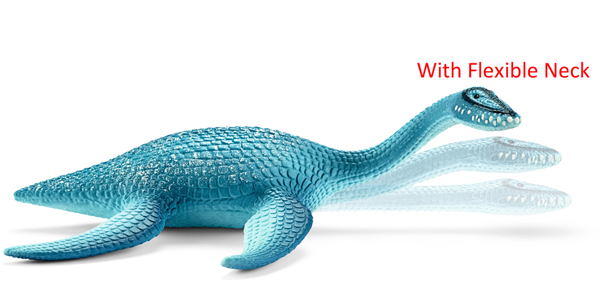
The last of the four models to be introduced is not a dinosaur, but a marine reptile, a Plesiosaurus.  The long-retired Schleich “Saurus” range included a plesiosaur figure, but as far as we can recall it has been many years since this company made a Plesiosaurus.

The Schleich Plesiosaurus Model

Schleich Plesiosaurus model.
Schleich Plesiosaurus.  This marine reptile figure has a flexible, bendy neck.

Picture credit: Everything Dinosaur

See the Everything Dinosaur website: Everything Dinosaur.
25 06, 2019

New Papo Colour Variant Stegosaurus in Stock

By |2023-12-25T09:48:11+00:00June 25th, 2019|Categories: Adobe CS5, Dinosaur Fans, Everything Dinosaur Products, Main Page, Photos of Everything Dinosaur Products, Press Releases|0 Comments

New Papo Colour Variant Stegosaurus in Stock

The new for 2019 Papo Stegosaurus (colour variant) is in stock at Everything Dinosaur.  This repainted figure, is an update on the classical Papo Stegosaurus, (product code 55007), which was one of the very first prehistoric animals to be added to the company’s “Les Dinosaures” model range.
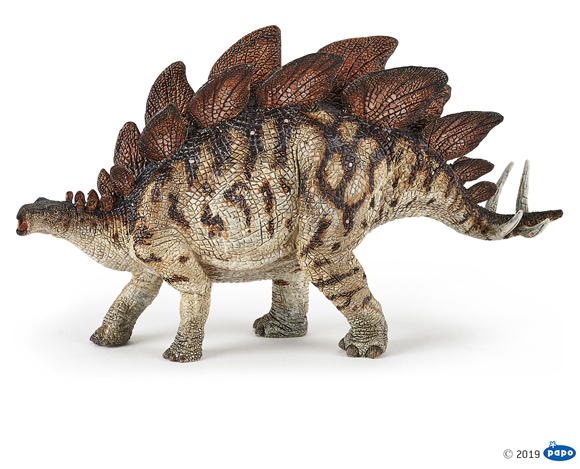
The Stunning Papo Stegosaurus (New Colour Variant)

Papo Stegosaurus (new colour variant).
Papo Stegosaurus (new colour variant) 2019.  This is a picture taken by an Everything Dinosaur team member to highlight the spectacular colour scheme on the new for 2019 Papo Stegosaurus dinosaur model. Picture credit: Everything Dinosaur.
Picture credit: Everything Dinosaur

To purchase the new for 2019 Papo Stegosaurus and the other models and figures in the Papo range: Papo Prehistoric Animal Models.

A Makeover for the Papo Stegosaurus

The sculpt is as per the original Papo Stegosaurus figure but the model has been completely re-painted with the characteristic plates on the back and running down to the tail an almost “blood red” colour. This works well with the countershading highlighted on the figure’s body and the overlying dark stripes that provide a reticulation-like effect.  As collectors would expect from a Papo figure, the painting is excellent and the detailing around the open beak and the eye is particularly remarkable.  Eagle-eyed readers will observe tiny round spots of lighter paint in amongst the darker stripes, a nice touch from the design team at Papo.

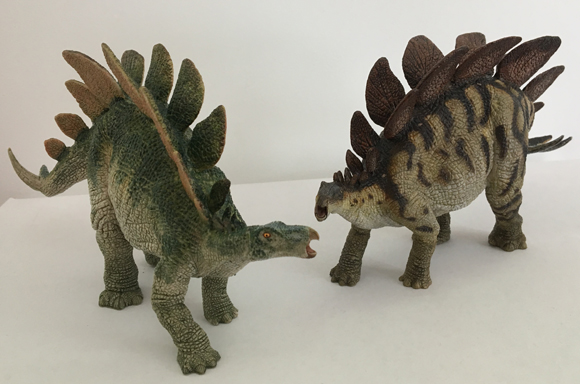
The “Classic” Papo Stegosaurus and the New for 2019 Version

Two Papo Stegosaurus figures.
The “classic” Papo Stegosaurus (left) and the new for 2019 Papo Stegosaurus (right). Picture credit: Everything Dinosaur.
Picture credit: Everything Dinosaur

A spokesperson from Everything Dinosaur commented:

“We are not certain about the future of the original Papo Stegosaurus figure.  It, for the moment is included in the latest 2019 collector’s booklet and the main Papo catalogue.  However, we note that earlier this year, Papo introduced a new colour variant Allosaurus model and this new figure has effectively replaced the original Allosaurus.  The first Allosaurus model to be made by Papo has been withdrawn from catalogues and company promotional materials.  If we receive news about the original Papo Stegosaurus we will make sure we post this information up onto our social media sites to help keep everybody informed.”

A Stunning New Stegosaurus Dinosaur Model from Papo

A new Papo Stegosaurus dinosaur model.
The new for 2019 Papo Stegosaurus dinosaur model.

More Papo Models Coming Soon

The new colour variant Papo Stegosaurus is the third new figure to be introduced this year, it follows the brown running Tyrannosaurus rex and the new version of the Papo Allosaurus that was mentioned earlier.  There are still two figures to come, the eagerly awaited Papo Pentaceratops and the Papo Gorgosaurus, both figures are expected to be in stock at Everything Dinosaur soon.

The Everything Dinosaur website: Everything Dinosaur.

24 06, 2019

A Super Carnotaurus Drawing by Dinosaur Model Fan

By |2023-12-25T09:38:13+00:00June 24th, 2019|Categories: Adobe CS5, Dinosaur and Prehistoric Animal Drawings, Dinosaur Fans, Main Page|0 Comments

Illustrating Carnotaurus

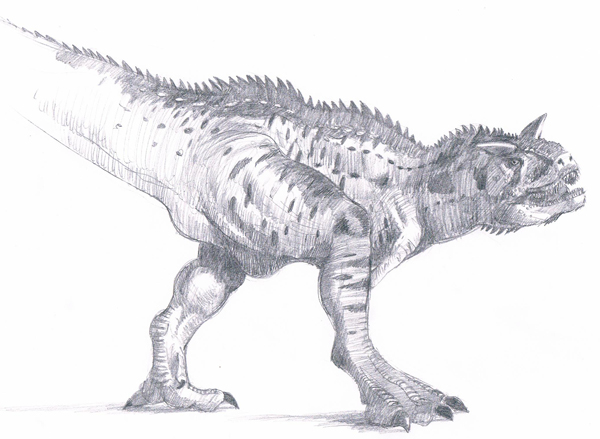
Yesterday, we featured a drawing of a Smilodon which was inspired by the Papo Smilodon (Sabre-toothed cat) model.  Today, we feature another prehistoric animal illustration inspired by a Papo figure, but from a different artist.  Ian very kindly sent into us a pencil sketch of the Papo Carnotaurus dinosaur model and what a splendid illustration it is!  It is a super Carnotaurus drawing.

A Carnotaurus Drawing

Illustrating a Carnotaurus

An illustration of Carnotaurus sastrei.
A beautiful illustration of the abelisaurid dinosaur Carnotaurus.

Picture credit: Ian

Visit the award-winning Everything Dinosaur website for more creative ideas: Everything Dinosaur.
A Late Cretaceous Hunter

Carnotaurus (C. sastrei), was a very bizarre and atypical carnivorous dinosaur.  It is known from a single, well-preserved specimen from Upper Cretaceous strata (Argentina).  Measuring around eight metres in length, this meat-eater was relatively lightly built, with a slender jaw, bull-like horns above its eyes and proportionately long legs. 

At the time of its scientific description by the Argentinian palaeontologist José Bonaparte, very little was known about the enigmatic Abelisauridae, however, something like twenty abelisaurids have been named and described to date.  Although Carnotaurus was one of the first abelisaurids to be named, it is not a very good representative of the group.  The skull is extremely short and blunt and it has very different proportions when compared to the skulls of other abelisaurids.  It has been suggested that Carnotaurus was a very specialised hunter attacking small, fast-running (cursorial) dinosaurs.

Ian’s illustration has been heavily influenced by the Papo Carnotaurus dinosaur model (see below), can you see the resemblance?

The Papo Carnotaurus Dinosaur Model

Papo Carnotaurus
With an articulated lower jaw – Papo Carnotaurus.  Helping to inspire talented artists.

Picture credit: Everything Dinosaur

See the Papo prehistoric animal model range: Papo Dinosaur Models.

Our thanks once again to Ian for sending in such a splendid illustration, of what is one of the most peculiar of all the theropod dinosaurs described to date.

19 06, 2019

A Fantastic Customised CollectA Edaphosaurus

By |2023-12-25T09:11:55+00:00June 19th, 2019|Categories: Adobe CS5, Dinosaur Fans, Everything Dinosaur Products, Main Page, Photos of Everything Dinosaur Products|0 Comments

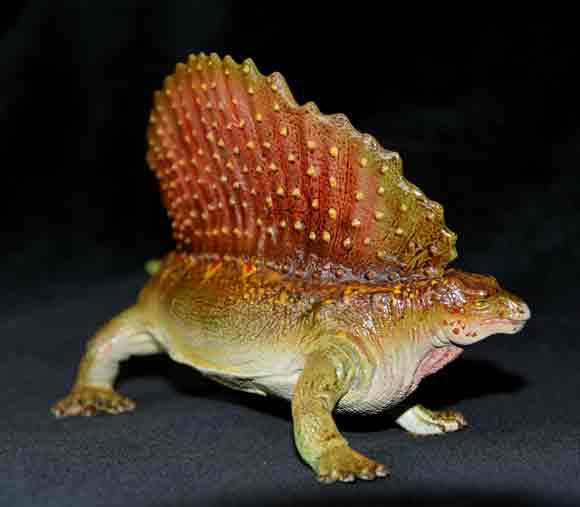
A Customised CollectA Edaphosaurus

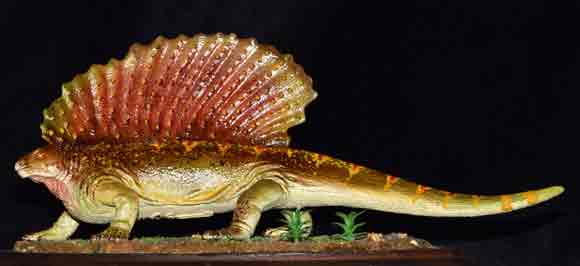
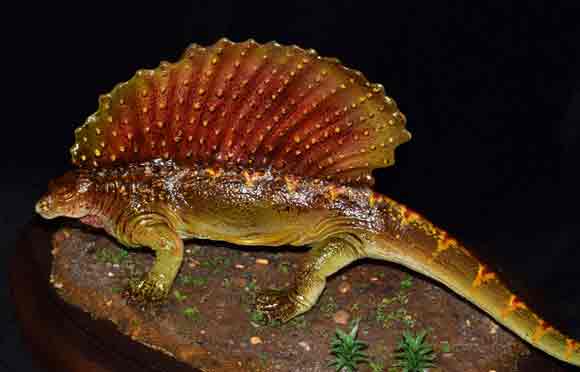
More pictures have been sent into Everything Dinosaur showing how a prehistoric animal model can be made into a truly unique piece.  Our thanks once again to model and figure collector Elizabeth who gave us access to some photographs of her recently customised CollectA Edaphosaurus model.  Having purchased the figure from Everything Dinosaur, the model was dispatched to professional model maker Martin Garratt for a custom makeover.  We think the results are awesome!

The Customised CollectA Edaphosaurus Model

CollectA Edaphosaurus on a custom-made base.
A customised CollectA Edaphosaurus replica.

Picture credit: Elizabeth

Edaphosaurus Model Presented on a Base

As well as carrying out a spectacular paintjob on the figure, Martin has constructed a base complete with representatives of Permian vegetation to help make this herbivorous synapsid feel at home.

Fine Details on the Custom-made Base (CollectA Edaphosaurus)

A customised CollectA Edaphosaurus.
A customised CollectA Edaphosaurus replica.  A clear view of the fine detailing on the base.

Picture credit: Elizabeth

Presenting a prehistoric animal figure on a base allows the model maker to add an extra dimension to the project and provides fine details and finishing touches.

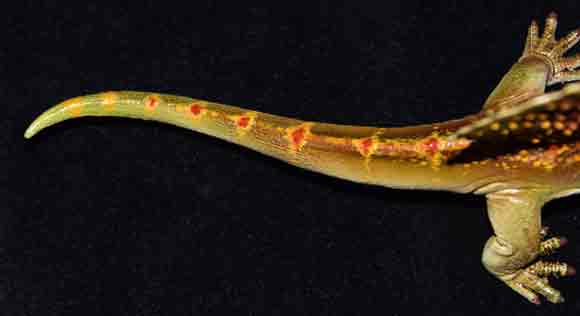
A View of the Skilfully Painted Tail of the Edaphosaurus Model

The tail of the customised CollectA Edaphosaurus.
A customised CollectA Edaphosaurus replica.  A close-up view of the tail.

Picture credit: Elizabeth

Commenting on her figure, collector Elizabeth stated:

“I love the way Martin [Martin Garratt] graded the colour on the tail.”

Painting the Throat of a Pelycosaur

CollectA have stated that they intend to introduce more models of animals that lived during the Palaeozoic into their figure range.  The Edaphosaurus follows on from a beautifully crafted Dimetrodon figure that came out last year.  Thanks to Elizabeth’s photographs we can all appreciate the work that has gone into creating this stunning Edaphosaurus.

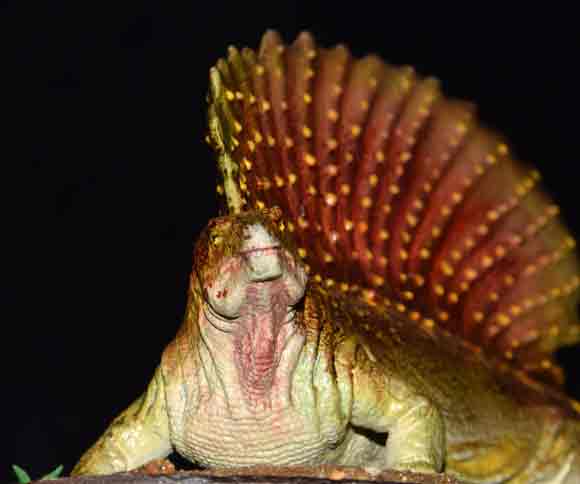
A View of the Carefully Painted Throat of the CollectA Edaphosaurus Model

A beautifully painted throat (CollectA Edaphosaurus).
A customised CollectA Edaphosaurus replica.  A closer view of that beautifully painted throat that really brings out the detailed scales on the CollectA figure.

Picture credit: Elizabeth

Model collector Elizabeth added:

“I tried to get underneath him to show the lovely work on his throat and the spots on his cheek”.

Your efforts are greatly appreciated, these close-up views highlight the excellent brush work as well as showcasing the wonderful scale texture that CollectA have incorporated into their model.

The CollectA Model Viewed from the Side

Detailing on the sail - CollectA Edaphosaurus.
A customised CollectA Edaphosaurus replica.  Note the washes used to highlight the sail and to provide a wet-look to the model.

Picture credit: Elizabeth

The Off-the-Shelf CollectA Edaphosaurus Model

CollectA Edaphosaurus model.
The CollectA 1:20 scale Edaphosaurus model.

Our thanks once again to Elizabeth for sharing her pictures of the customised Edaphosaurus with us.  To view the CollectA Edaphosaurus and other prehistoric animal figure models in this series: CollectA Prehistoric Life Figures and Replicas.

18 06, 2019

The New Limited-edition Papo Spinosaurus – Further Update

By |2023-12-25T07:11:23+00:00June 18th, 2019|Categories: Adobe CS5, Dinosaur Fans, Everything Dinosaur News and Updates, Everything Dinosaur Products, Main Page, Photos of Everything Dinosaur Products, Press Releases|0 Comments

Limited-edition Papo Spinosaurus – Further Update

At Everything Dinosaur, we try our best to keep model collectors and fans of dinosaur figures up to date with developments in the industry.  One of the most eagerly anticipated dinosaur models in years, the limited-edition Papo Spinosaurus, has been subject to further delays and it is not likely to be in stock until October (October 2019).

The Limited-edition Papo Spinosaurus – Expected October 2019

Limited edition Papo Spinosaurus (October 2019).
The limited-edition Papo Spinosaurus is now expected in October 2019. Picture credit: Everything Dinosaur.
Picture credit: Everything Dinosaur

Papo Spinosaurus in Stock October 2019

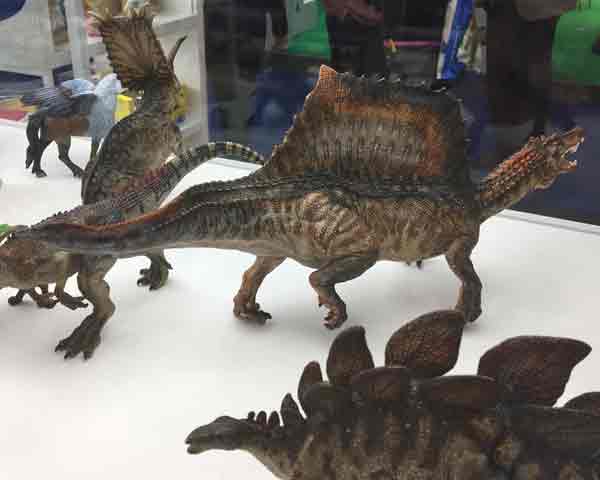
At a recent meeting with senior Papo team members, Everything Dinosaur pressed for an update on the new for 2019 prehistoric animal figures due to be added to the company’s “Les Dinosaures” range.  Prior to this most recent meeting, Everything Dinosaur had been informed that this figure was due to be launched in August/September.  We put out a release about this at the beginning of this month (June 2019), however, according to the latest information, the figure’s production and painting has been subject to further delays and this figure is not due to be released until October.

Papo Spinosaurus – An Eagerly Anticipated Dinosaur Model

Papo Spinosaurus (limited edition dinosaur model).
Papo Spinosaurus spotted at a trade show.  Papo Spinosaurus (limited edition dinosaur model). Picture credit: Everything Dinosaur.
Picture credit: Everything Dinosaur

A spokesperson from Everything Dinosaur commented:

“We are working closely with Papo to ensure that production of these figures runs as smoothly as possible, Papo want to produce a truly spectacular dinosaur model and have been working hard to manage the production process.  As soon as we have further information about this eagerly anticipated prehistoric animal replica we will ensure that this information is posted up onto this blog and our various other social media platforms.”

Production Samples

During a very productive meeting with Papo, a number of important issues were discussed.  It is likely that the first production samples will be available late July, these will come straight from the factory and team members at Everything Dinosaur will be able to examine them and to post up further information and pictures.  At least that is the plan, but with a complicated large figure such as this Spinosaurus (it measures more than forty centimetres in length), some further delays could occur.

We are able to confirm that this figure will be provided in a special presentation box and the model will stand nearly seventeen centimetres tall (measuring the height of the sail).

Tale of the Tape the Papo Spinosaurus

The actual Papo Spinosaurus (S. aegyptiacus) measurements are:

length = 40.3 cm, width 10.5 cm and height (height of sail) 16.5 cm.

The new colour variant Papo Stegosaurus model is expected to arrive at the Everything Dinosaur warehouse very shortly, with the Pentaceratops and the Gorgosaurus models to follow later.

To view the range of Papo figures currently in stock at Everything Dinosaur: Papo Dinosaurs and Prehistoric Animal Models.

The award-winning Everything Dinosaur website: Our Website.

17 06, 2019

Amazing Dinosaur “Fossil Wall” Discovered in South-western China

By |2023-12-25T07:06:06+00:00June 17th, 2019|Categories: Adobe CS5, Dinosaur and Prehistoric Animal News Stories, Dinosaur Fans, Main Page, Photos/Pictures of Fossils|0 Comments

Treasure Trove of Dinosaur Fossils Discovered

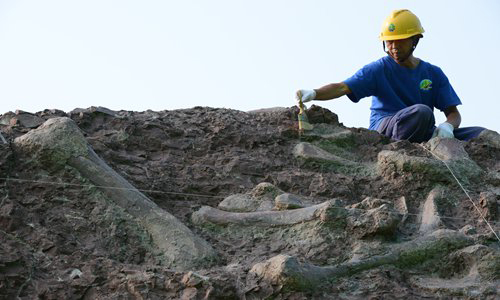
Reports have been circulating from a number of Chinese media outlets concerning the discovery of an extensive fossil bed containing the remains of numerous dinosaurs in southwest China’s Chongqing Municipality.  The fossil site has been known about for several years but there have been a number of reports this week circulating, hinting at the extent of the fossil discovery and indeed, suggesting that it is very likely that as a result of excavation work, new species of dinosaur will be named and described.

An Extensive Dinosaur Bonebed

Mapping and excavating a fossil site.
Excavating an extensive fossil deposit.

Picture credit: VCG

The photograph (above), shows a Chinese field team member working on the “wall of dinosaur fossils”.  The site of the fossil find is described as a location close to Laojun village, Pu’an town, in Yunyang county.

A New Dinosaur Species

The press reports state that scientists have identified different types of dinosaurs including theropods and basal ornithopods.  The disarticulated remains represent a bone accumulation and the strata is reported to be around 174 million years old (Aalenian faunal stage of the Middle Jurassic).  Commentators have described these fossil beds as very significant and likely to lead to the naming of new dinosaur species.

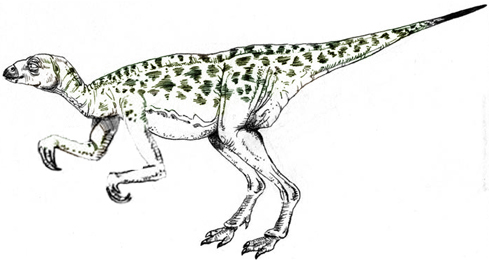
An Illustration of a Typical Basal Ornithopod

A typical ornithopod.
A typical example of a basal ornithopod. Picture credit: Everything Dinosaur.
Picture credit: Everything Dinosaur

Four Thousand Individual Fossil Pieces

The mixed fossil assemblage has already provided researchers with around 4,000 pieces of dinosaur bone to study, since the site was first explored and mapped in 2017.

A spokesperson from Everything Dinosaur commented:

“The site has been described as exceeding 150 metres in length with at least 17 distinct assemblages of fossils within it.  Not much is known about the dinosaur biota from the earliest stages of the Middle Jurassic.  Once all the bones have been removed, prepared and studied it is very likely that several new species of dinosaur will be announced.  These dinosaurs will help palaeontologists to map the radiation and dispersal of several key groups of dinosaurs that were to dominate terrestrial ecosystems for the remainder of the Jurassic.”

The extensive fossil material could become China’s equivalent of America’s Dinosaur Monument in Utah.  The Dinosaur Monument represents a congregation of dinosaur fossils that accumulated in a river deposit.  Whilst similarities can be drawn between the two sites, the Chongqing Municipality deposits are approximately 25 million years older.

Perhaps, this could be China’s second “Great Wall”.

The Everything Dinosaur website: Everything Dinosaur.
16 06, 2019

New Study Describes Biggest Elasmosaur Known to Science

By |2024-05-11T17:09:22+01:00June 16th, 2019|Categories: Dinosaur and Prehistoric Animal News Stories, Dinosaur Fans, Main Page|0 Comments

Giant Elasmosaurs from Antarctica

An scientific paper published in the academic journal “Cretaceous Research” details the remarkable discovery of a huge elasmosaurid plesiosaur from Upper Cretaceous deposits located on Seymour Island in Antarctica.  The specimen, ascribed to the Aristonectes genus is estimated to have measured around 11 metres in length and could have weighed as much as fifteen tonnes.   The strata from which the fossil material was collected is believed to have been laid down towards the end of the Cretaceous, thus this fossil discovery indicates that very large elasmosaurs were around towards the very end of the Mesozoic.

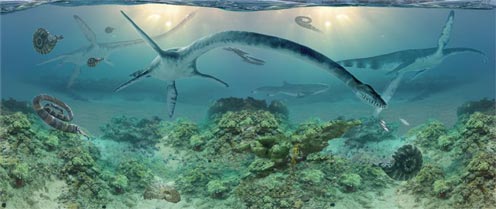
A Life Reconstruction of a Typical Elasmosaurid Marine Reptile

A typical Elasmosaurus model.
Late Cretaceous elasmosaurid from Seymour Island (Antarctica).

The image (above) shows an elasmosaur model from the Safari Ltd range.

To view this range of prehistoric animal figures: Safari Ltd. Wild Safari Prehistoric World.

Seymour Island – Helping to Map Marine Fauna at the Very End of the Cretaceous

The exposed sediments on the inhospitable and remote Seymour Island provide palaeontologists with the opportunity to study life that existed at the very end of the age of dinosaurs and the sequence of exposed rocks covers the transition from the end Cretaceous extinction event into the Palaeogene.  The occurrence of this specimen, located approximately 2.3 metres or less below the Cretaceous-Palaeogene (K/Pg) boundary, suggests the persistence of these types of plesiosaurs (aristonectines), at high latitudes and also it verifies their chronostratigraphical distribution until the end Cretaceous, before the mass extinction the resulted in the loss of all marine reptiles with the exception of marine turtles.

This is not the first giant, marine reptile to be found on Seymour Island…

To read an article from 2016 which describes the discovery of the remains of a giant mosasaur marine reptile in Maastrichtian-aged deposits on Seymour Island: An Apex Marine Predator from the Late Cretaceous of Antarctica.

The fossil material (MLP 89-III-3-1), consisting of disarticulated post-cranial elements most probably representing an individual animal, comes from the uppermost Maastrichtian levels of the López de Bertodano Formation, Seymour Island (sometimes referred to as Marambio Island), Antarctica.  The research team members conclude that this specimen is amongst the largest elasmosaurids known.

A field team found the first evidence of this animal back in 1989, but at the time, the team lacked the resources to excavate the specimen.  Subsequent expeditions to the fossil site in 2005, 2012 and 2017 led to the removal of some 800 kilograms of fossil bones.

Large Elasmosaurids Thrived in High Latitudes at the End of the Cretaceous

Elasmosaur persisted at high latitudes.
Elasmosaurs illustrated.  Large elasmosaurids persisted at high latitudes (Antarctica and within the Arctic Circle).

Picture credit: James Havens

A “Weird Plesiosaur”

Co-author of the scientific paper, José O’Gorman of the National Scientific and Technical Research Council of Argentina, commented that for years the researchers were not sure whether the fossils represented an elasmosaurid or something else, the animal is described as a “weird plesiosaur.”

The large size of this specimen coupled with the giant mosasaur fossils known from this locality suggest that these waters were highly productive and able to support a variety of megafauna.  These conditions are likely to have persisted until the K/Pg mass extinction.  Although, the animal has not been given a formal, binomial scientific name, the researchers conclude that it has affinities with the Aristonectinae, a sub-family within the Elasmosauridae.

The scientific paper: “A giant elasmosaurid (Sauropterygia; Plesiosauria) from Antarctica: New information on elasmosaurid body size diversity and aristonectine evolutionary scenarios” by
J.P. O’Gorman, S. Santillana, R. Otero and M. Reguero published in the journal Cretaceous Research.

The Everything Dinosaur website: The Website of Everything Dinosaur.

15 06, 2019

Don’t Get “Sniffy” About Dinosaur Sense of Smell

By |2023-12-25T06:51:25+00:00June 15th, 2019|Categories: Adobe CS5, Dinosaur and Prehistoric Animal News Stories, Dinosaur Fans, Main Page|0 Comments

Tyrannosaurs Had Their Noses in Front When it Came to Sense of Smell

A team of scientists from University College Dublin have built upon the idea put forward in earlier research indicating that many dinosaurs such as Tyrannosaurus rex had an impressive sense of smell.  In a recently published paper, the scientists examined the sense of smell of a wide range of living and extinct archosaurs and concluded that many different dinosaurs had an excellent olfactory sense but the tyrannosaurs probably had one of the keenest senses of smell amongst the Dinosauria.

New Study Confirms T. rex Had a Powerful Sense of Smell

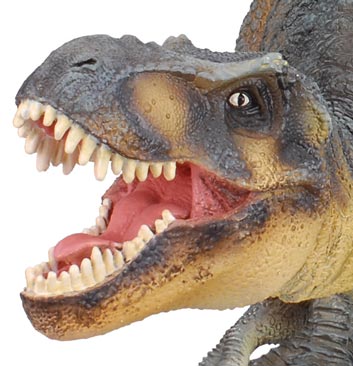
T. rex dinosaur model
Up close to Tyrannosaurus rex.  It could smell you probably before it could see you.

Olfactory Bulb Ratios

The brains of long extinct animals, like most soft tissues, are poor candidates for fossilisation, the size and the shape of an extinct animal’s brain can be inferred by looking at how the skull bones knit together to form the brain case.  It is from this data that the size and the proportion of the brain dedicated to processing sensory data such as the sense of smell can be deduced.

It has been stated in the past that approximately 50% of the brain volume of a T. rex was made up of the olfactory bulb, that part of the brain that processes smells.  Furthermore, in most modern animals, the size of the brain’s olfactory bulb also correlates with how well they can identify odours.  Looking at the ratio between that part of the brain dedicated to processing smells and the size of the entire brain (the olfactory bulb ratio), can also provide evidence as to the ecological niche an animal is likely to have occupied in an ecosystem.

The King of the Tyrant Lizards Top of the Table for Olfactory Abilities Too

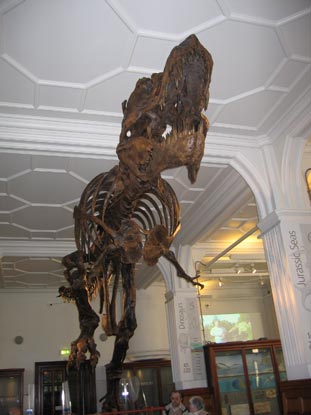
T. rex specimen (cast)
Tyrannosaurs had a highly developed sense of smell. Picture credit: Everything Dinosaur.

Picture credit: Everything Dinosaur

For example, a bird that hunts in low light levels using scent to find food, is likely to have adapted to its environment very differently from that of a kestrel that hunts in daylight and uses its keen eyesight to spot its prey.

Writing in the journal “Proceedings of the Royal Society B”, Dr John Finarelli and his colleague Graham Hughes (University College Dublin), used the olfactory bulb ratio in living archosaurs (crocodiles and birds) to infer the strength of smell amongst dinosaurs.

Studying Tyrannosaurs

Prior research has shown that the size of the olfactory bulb is related to the number of smell receptor genes in the DNA of a given animal and how much diversity they represent.  Taken together, it is called the olfactory repertoire. In this new study, the researchers used the olfactory repertoire of modern birds and an alligator to estimate the olfactory ability of several types of dinosaurs.  Based on this innovative research, the scientists concluded that T. rex probably had between 620 and 645 genes encoding its olfactory receptors, a gene count only slightly smaller than those in today’s chickens and domestic cats. 

Closely related tyrannosaurs such as Albertosaurus, also had substantial olfactory receptor gene counts.  Tyrannosaurs probably had the best sense of smell amongst the Dinosauria, this in turn can lead to inferences about how these theropods lived and behaved.

For example, tyrannosaurs were probably able to “sniff out” prey from far away.  They were  able to track down the carcass of another dinosaur and scavenge the corpse.

A Good Sense of Smell Has Many Other Uses in the Animal Kingdom

The researchers hope that this new study will not get drawn into the “T. rex a hunter or a scavenger debate”, the authors stress that a good sense of smell has many other uses other than finding food.  Many animals use scent to mark and define territory, track down a mate, deter rivals and for intraspecific communication.

The University College Dublin scientists also highlighted a shift in scaling of olfactory bulb ratios to body size along the theropod lineage that led to the evolution of modern birds.  The researchers conclude that by combining morphological and genomic data, it can be demonstrated that, while genetic information for extinct taxa is forever lost, it is potentially feasible to investigate evolutionary trajectories in extinct animals.

Amongst Living Vertebrates, It is the Elephant that Tops the Table for the Most Olfactory Receptor Genes

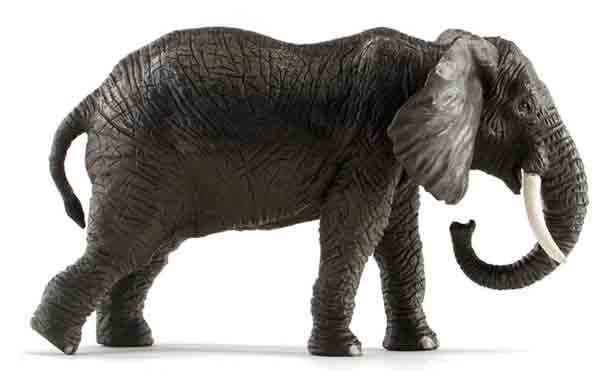
An African elephant model.
An African elephant (Loxodonta).

Amongst all living vertebrates, the record for the most olfactory receptor genes lies with the modern elephant, a herbivore with about 2,500 such genes.  With such an exquisite sense of smell, elephants can “count” quantities of food by odour alone.  The researchers looked at a number of different types of dinosaur in their study, sure enough, some plant-eating dinosaurs showed evidence of a greater reliance on smell than some carnivorous dinosaurs.  For example, the Late Cretaceous herbivore Erlikosaurus (E. andrewsi), a theropod but a member of the Therizinosauridae had a greater number of projected olfactory receptor genes than Velociraptor and other predatory dromaeosaurids.

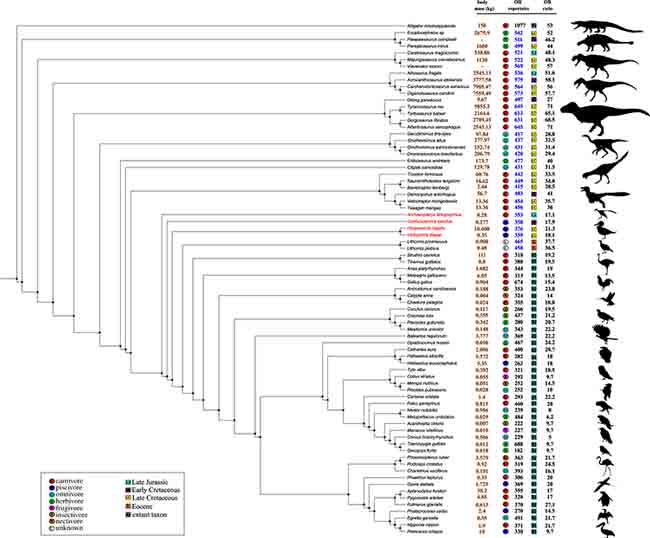
The Research Team Assessed Olfactory Bulb Ratio Compared to Body Mass Amongst Living and Extinct Archosaurs

Olfactory bulb ratios amongst examples of the Archosauria.
Olfactory bulb ratios amongst living and extinct archosaurs.  This new study confirmed earlier research indicating that the tyrannosaurs had a powerful sense of smell.

Picture credit: University College Dublin

The Everything Dinosaur website: Everything Dinosaur.

Go to Top