All about dinosaurs, fossils and prehistoric animals by Everything Dinosaur team members.

About Mike

Mike runs Everything Dinosaur, a UK-based mail order company specialising in the sale of dinosaur and prehistoric animal models, He works alongside Sue, and between them they have become the "go to guys" for museum quality prehistoric animal models and figures. An avid fossil collector and reader of dinosaur books, Mike researchers and writes articles about palaeontology, fossil discoveries, research and of course, dinosaur and prehistoric animal models.
6 03, 2022

“Explorers of Deep Time” Book Review

By |2024-10-27T12:23:15+00:00March 6th, 2022|Categories: Book Reviews, Dinosaur Fans, Main Page, Palaeontological articles|0 Comments

Have you ever wondered what it would be like to be a palaeontologist? Have you ever thought about pursuing a career in the Earth Sciences? Not sure where to begin? A new book written by an eminent American palaeontologist entitled “Explorers of Deep Time” is a great place to start.

Author Roy Plotnick (University of Illinois, Chicago), provides a behind the scenes guide to being a palaeontologist, the trials, triumphs and tribulations and as a self-confessed OWM (old, white male), he champions inclusiveness and diversity amongst the scientific community.
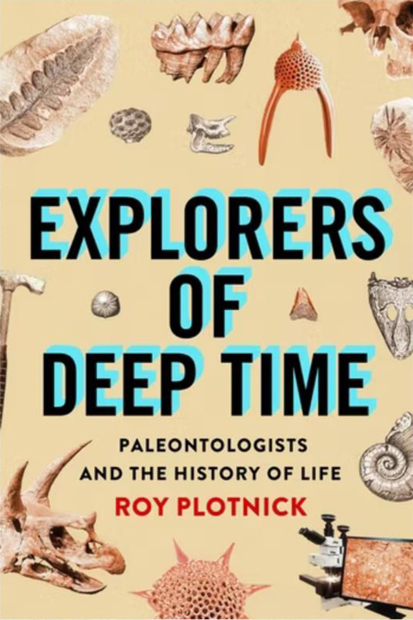
Explorers of Deep Time front cover

The front cover of “Explorers of Deep Time” by eminent American palaeontologist Roy Plotnick. Picture credit: Columbia University Press.

Picture credit: Columbia University Press

Candid and Comprehensive

Roy has spent decades working as a palaeontologist. He is a Fellow of the Geological Society of America (GSA) and a Fellow of the Paleontological Society of America too. As such, he is exceedingly well-qualified to comment on how the study of ancient life has been revolutionised with the development of new research techniques.

The book is divided into four main chapters looking at various aspects of exploring deep, geological time. Starting with an overview in which the author addresses common misconceptions about palaeontologists, for instance, he is not Ross from “Friends” or Indiana Jones. Roy Plotnick guides the reader through the various and diverse routes to a job in the Earth sciences and explains what it is actually like to study palaeontology. If you have ever wondered about toilet facilities at dig sites, or how the increasing number of female scientists’ juggle starting a family with work commitments – then this book provides a practical and uncomplicated explanation.

Although the book has been written with an emphasis on the American education system and American academia, it outlines how palaeontology has developed and changed over the last forty years or so, explores new study techniques and places the science clearly in the context of helping to better understand how our world is changing today.

The author of "Explorers of Deep Time" Roy Plotnick

The author of “Explorers of Deep Time” Roy Plotnick (member of the Geological Society of America and the Paleontological Society of America. Picture credit: Columbia University Press.

Picture credit: Columbia University Press

An “Old White Male” Encourages Diversity

One of the key themes of “Explorers of Deep Time”, is the author’s wish that more women and ethnic minorities are represented in Earth science disciplines. Roy Plotnick examines some of the barriers that existed in his early career leading to a preponderance of “old, white males” within palaeontology. Many of these obstacles restricting participation have been removed, but the author skilfully argues for greater participation and draws on the experience of other scientists to help support his views.

He introduces readers to the diverse group of people of all genders, races, and international backgrounds who make up the twenty-first-century palaeontology community. The book provides a sounding board for their views and a platform for their perspectives, helping readers to obtain a better understanding of career paths and opportunities.

There is even a chapter dedicated to outlining the importance of published research and the struggles scientists can face getting their work into print, or more often than not these days, on-line.

This behind the scenes guide to palaeontology, is not crammed with stunning photographs and illustrations, but it does outline the varied challenges facing this discipline and provides a rare insight on the profession to aspiring scientists of all ages.

Candid and at times frank, this is an excellent guide to the pros and cons of choosing palaeontology as a career.
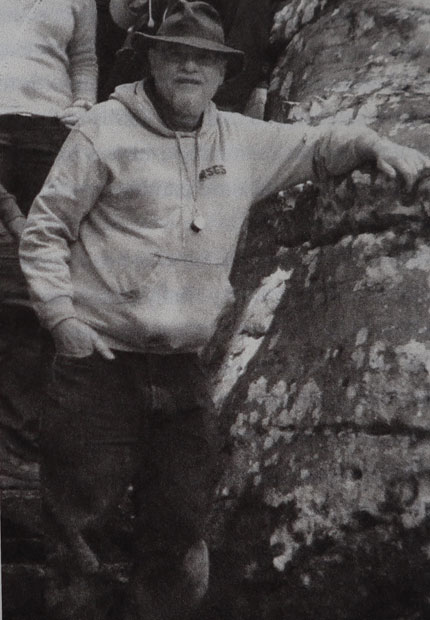
Roy Plotnick and "Old White Male" challenging stereotypes.

The author describing himself as an OWM (old, white male) writes about the need to encourage greater diversity in the Earth Sciences with increased access and appropriate support for women, minorities, the disabled and other groups that may feel excluded. Picture credit: Roy Plotnick (University of Illinois).

Picture credit: Roy Plotnick (University of Illinois)

Palaeontology SWOT Analysis

Not sure if a job in the Earth sciences is for you? Roy Plotnick concludes by providing a SWOT analysis. He outlines the strengths, weaknesses, opportunities and threats associated with working in the palaeontology profession. This analysis acts as a fitting summary to “Explorers of Deep Time”.

Published by Columbia University Press the hardcover book is priced at the time of writing at £28.00 GBP/$35.00 USD with the downloadable E-book priced at £28.00 GBP/$34.99 USD.

To purchase the book visit: Columbia University Press and search on the author surname “Plotnick” to find the web page for “Explorers of Deep Time”.

Highly recommended.

The award-winning Everything Dinosaur website: Dinosaur Toys.
5 03, 2022

New Schleich Models Feature in Newsletter

By |2024-10-27T11:29:18+00:00March 5th, 2022|Categories: Dinosaur Fans, Everything Dinosaur News and Updates, Everything Dinosaur Newsletters, Everything Dinosaur Products, Main Page, Photos of Everything Dinosaur Products, Press Releases|0 Comments

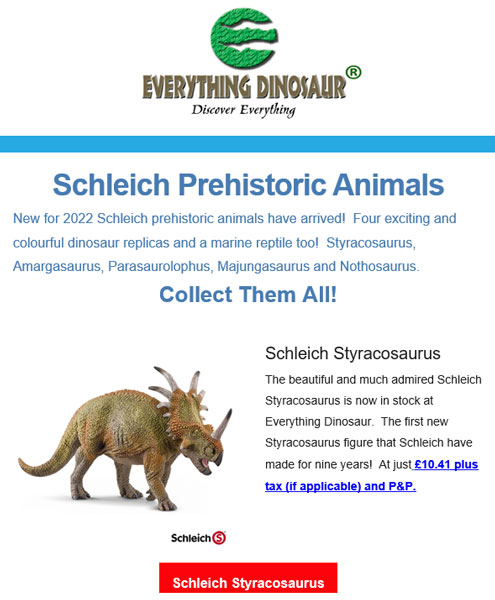
The five recently introduced Schleich prehistoric animal figures are featured in the latest Everything Dinosaur customer newsletter. There are four new dinosaurs – Styracosaurus, Majungasaurus, Amargasaurus and Parasaurolophus, plus Schleich have added a model of the fearsome marine reptile Nothosaurus. All these figures are now in stock, further increasing customer choice when it comes to Everything Dinosaur toys and dinosaur models. Schleich models are extremely popular with young dinosaur fans.

Many factories have had problems with production over the last two years due to the impact of the global pandemic on logistics and manufacturing. It is great news to see five new Schleich prehistoric animals.

Schleich Styracosaurus dinosaur model features in Everything Dinosaur newsletter.

The new for 2022 Schleich Styracosaurus dinosaur model features in the February Everything Dinosaur newsletter. This is the first new Styracosaurus to be introduced by Schleich since 2013.

Picture credit: Everything Dinosaur

Schleich Styracosaurus

The first new figure to feature in the Everything Dinosaur newsletter is the Styracosaurus, an updated replica of the Styracosaurus figure that was introduced by the German manufacturer nine years ago, but then retired in 2016. The hand-painted Schleich Styracosaurus dinosaur model measures a fraction under twenty centimetres in length and it has been praised by many dinosaur fans and model collectors for its attractive colouration and detailed skin texture.

To read an earlier article that looked at the history of Styracosaurus figures made by Schleich: The Evolution of the Schleich Styracosaurus.

Schleich Majungasaurus and Schleich Amargasaurus

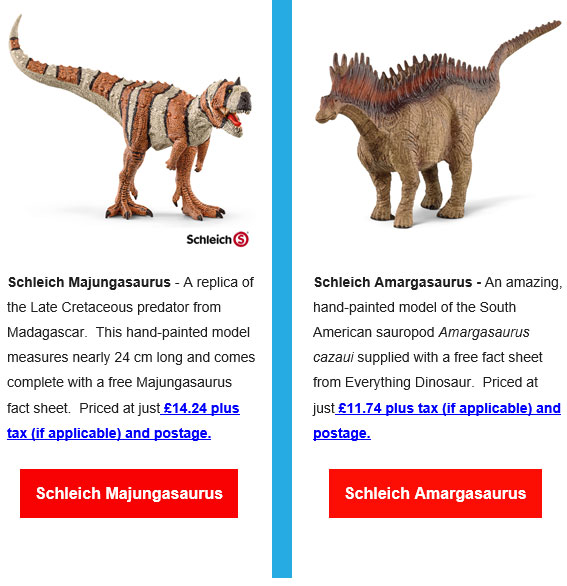
The recently arrived Schleich Majungasaurus and the Schleich Amargasaurus feature in the latest (February 2022) Everything Dinosaur customer newsletter. Picture credit: Everything Dinosaur.

Picture credit: Everything Dinosaur

Schleich Majungasaurus and Schleich Amargasaurus

Schleich may have produced replicas representing Carnotaurus in the past, in addition, they have made many replicas of sauropods too, but this is the first time that an Amargasaurus and a Majungasaurus have been included in the Schleich product portfolio. The Majungasaurus colouration has been commented upon by collectors. It has been suggested that the paint scheme chosen is reminiscent of the artwork for the “Dinosaur King” animated Majungasaurus from the Japanese computer game.

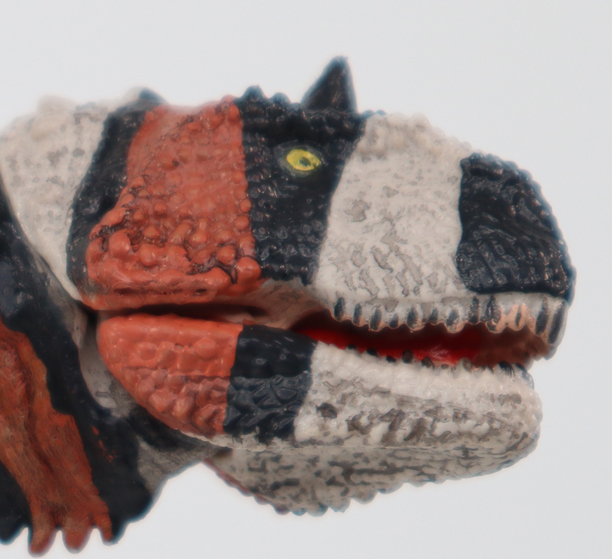
Schleich Majungasaurus model.

A close-up view of the Schleich Majungasaurus. This dinosaur model does have an articulated jaw. Picture credit: Everything Dinosaur.

Picture credit: Everything Dinosaur

Schleich Parasaurolophus and Schleich Nothosaurus

The other two models to feature in Everything Dinosaur’s newsletter are the Schleich Parasaurolophus and the replica of the Triassic marine reptile Nothosaurus. Schleich have made models representing Parasaurolophus in the past, they have also added replicas of marine reptiles such as Mosasaurus and Plesiosaurus to their model range, but this is the first time that a Nothosaurus figure has been introduced.

To view the range of Schleich prehistoric animal figures and models available from Everything Dinosaur: Schleich Dinosaur Models and Figures.

A spokesperson from Everything Dinosaur commented:

“It is wonderful to be able to discuss new figures and models, after all, global manufacturing has been hit hard over the last two years or so. It is pleasing to see Schleich adding five new prehistoric animal models to their range. Our customer newsletter helps to inform model collectors and dinosaur fans about new product introductions. We hope that the information we supply assists them and keeps them up to date with product development.”

The Everything Dinosaur Customer Newsletter

The Everything Dinosaur customer newsletter is sent out periodically to our subscribers. It is a free newsletter containing information on new products, competitions, product updates and so forth. To request to be added to our database, simply send Everything Dinosaur an email: Email Everything Dinosaur.

The award-winning company website: Dinosaur Toys.

4 03, 2022

Sauropods Walked Like Hippos According to New Study

By |2024-10-27T11:02:43+00:00March 4th, 2022|Categories: Adobe CS5, Dinosaur and Prehistoric Animal News Stories, Dinosaur Fans, Main Page, Palaeontological articles, Photos/Pictures of Fossils|0 Comments

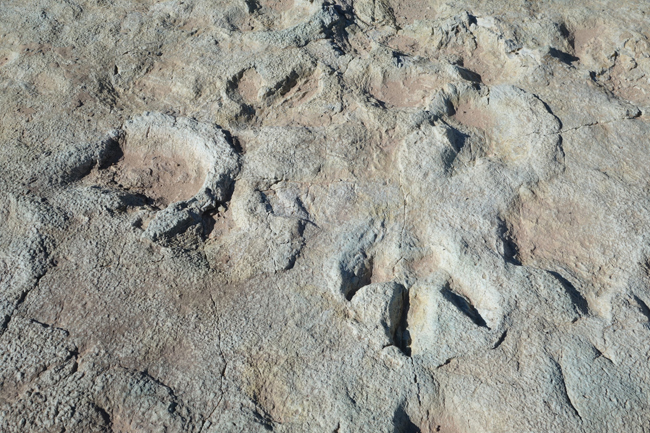
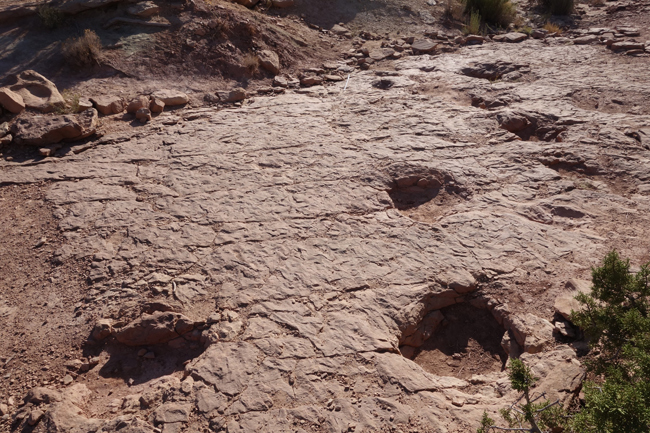
Researchers from Liverpool John Moores University have developed a new and innovative approach to interpreting sauropod trackways enabling them to calculate their gaits (the order in which the animal moved its four limbs to progress). Jens Lallensack and his colleague Peter Falkingham discovered that the placement of tracks relative to each other in a sauropod trackway changes in a consistent way when the animal changes its velocity (either speeding up or slowing down). Using this technique, subsequently verified by analysing the gaits of living animals such as dogs, horses, a camel and an elephant, the scientists have concluded that sauropods walked more like hippos than elephants.

Sauropod Tracks (Brontopodus plagnensis).

A picture of the sauropod trackway (Plagne, France). Picture credit: P. Dumas/Centre National de la Recherche Scientifique.

Picture credit: P. Dumas/Centre National de la Recherche Scientifique.

Quadruped Locomotion

Four-footed animals (quadrupeds), may use different gaits such as trots, walks, and pace gaits. In a trot, one diagonal limb pair (e.g. hind right and front left) moves together, followed by the other limb pair. Many mammals use trots at faster gaits, but reptiles also use trots at slow speeds. In a pace gait, in contrast, the limbs on one side of the body (e.g. hind right and fore right) move together in a similar way as the locomotion of a camel.

In-between these extremes is the single foot gait, in which the time lag between fore and hind feet is equal – a good example of this type of locomotion is the movement of horses.

The movements of living animals can be observed, direct observation of extinct animals such as huge, long-necked, long-tailed sauropod dinosaurs is not possible, but data can be obtained by careful study of their fossilised prints and trackways.

Dinosaur tracks

Trace fossils such as these dinosaur tracks can provide palaeontologists with data on dinosaur locomotion, velocity and gaits. Picture credit: Liverpool John Moores University.

Picture credit: Liverpool John Moores University

Examining Sauropod Tracksites

Liverpool John Moores University researchers Jens Lallensack and Peter Falkingham identified that the placement of an animal’s feet changes in a predictable and consistent way when the animal’s velocity changes. If a trackway is long enough and shows variation in stride length (indicating a change of speed), it is possible to calculate gaits and to gain an insight into how extinct animals moved.

Their predictions were confirmed in an analysis of the gaits of different types of living animal, including elephants, thanks to the help from locomotion expert Professor John Hutchinson (Royal Veterinary College, London), who provided elephant locomotion data. These new analytical methods were used to plot the limb movements along three sauropod trackways from the Lower Cretaceous De Queen Formation (Arkansas, USA). Although it is not possible to identify specific sauropod species (ichnospecies) from the De Queen Formation (Albian fauna stage) tracks, these trace fossils represent large, sauropod trackmakers (median average hind foot length 70-85 cm and maximum stride length 3.42 metres).

Commenting on the outcome of their findings, reported in the journal “Current Biology”, Dr Falkingham stated:

“Many researchers assumed that sauropods walked like elephants, with which they share many similarities, but that doesn’t appear to be the case.”

Dinosaur Trackway

Researchers have found a way to identify the gait of sauropods by studying their tracks. Picture credit: Liverpool John Moores University.

Picture credit: Liverpool John Moores University

Sauropod Dinosaurs Compared to Elephants

As elephants are the largest living terrestrial animals alive today, it had been suggested that their locomotion was an appropriate analogy for the movement of sauropod dinosaurs. Elephants use a gait intermediate between the pace gait and the singlefoot, i.e. the two limbs on the same body side tend to swing together. The gait analysis, in the current study by contrast, revealed that sauropods instead employed a gait intermediate between the singlefoot and a trot: the opposite-side limbs tend to swing together.

Based on this data, sauropod dinosaurs had a similar gait to hippos.

To Sway or Not to Sway

If sauropods moved very differently compared to the largest land animals alive today, this suggests that these two types of animal with large body sizes evolved different solutions to locomotion. Sauropods, even the titanosaurs known for their narrower trackways when compared to other types of sauropod such as diplodocids and dicraeosaurids, have a much broader stance than elephants. Elephants place one foot almost directly in front of another producing surprisingly narrow tracks for such large animals. Sauropod trackways, in contrast, are much broader. Their particular gait allowed sauropods to have at least one foot on the ground on both the left and right sides of the body at all times, preventing swaying from side to side.

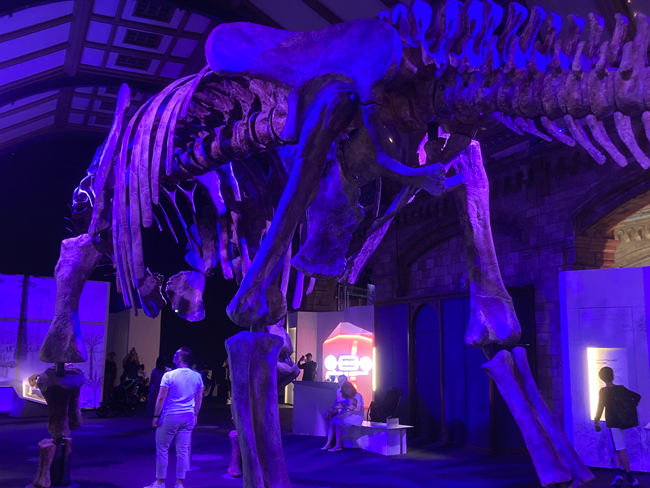
Patagotitan skeleton on display at the London Natural History Museum.

The enormous body of the titanosaur dwarfs visitors. Patagotitan mayorum skeletal reconstruction. Titanosaurs are known for their narrower tracks when compared to other types of sauropod but as many were much bigger than elephants, elephants do not make a good analogy for describing the gaits of titanosaurs or of sauropods generally. Picture credit: Everything Dinosaur.

Picture credit: Everything Dinosaur

Everything Dinosaur acknowledges the assistance of a media release from Liverpool John Moores University in the compilation of this article.

Lead author of the scientific paper Dr Jens Lallensack added:

Sauropods chose a gait that maximised stability but still allowed for efficient walking”.

The scientific paper: “A new method to calculate limb phase from trackways reveals gaits of sauropod dinosaurs” by Jens N. Lallensack, Peter L. Falkingham published in Current Biology.

The Everything Dinosaur website: Dinosaur Toys.
3 03, 2022

Frogspawn in the Office Pond (2022)

By |2024-10-28T13:59:50+00:00March 3rd, 2022|Categories: Animal News Stories, Main Page, Photos|2 Comments

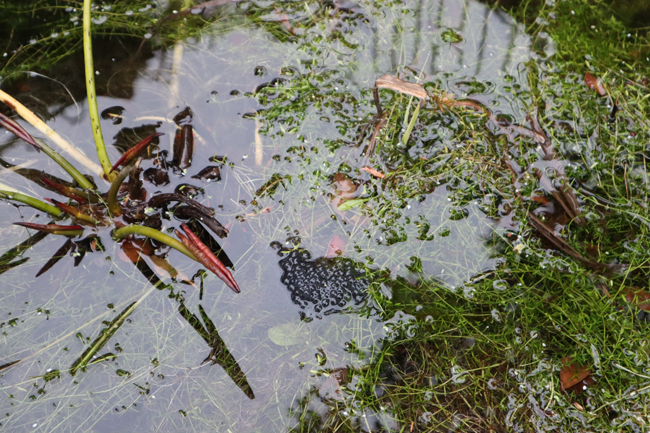
We have frogspawn in the office pond! On the morning of Wednesday March 2nd, a single batch of frogspawn was spotted in the office pond. A frog had been seen in the pond a few days earlier so team members were optimistic that spawning activity was imminent. We suspect that the first batch of spawn was laid in the early morning of the 2nd of March.

The first frogspawn of 2022 (March 2nd 2022)

The first batch of frogspawn was laid early in the morning of the 2nd March 2022.

Picture credit: Everything Dinosaur

Seven or Eight Batches of Frogspawn

The following morning several more batches of frogspawn were spotted. In total, Everything Dinosaur team members counted seven frogs in the pond. The exact number of batches of frogspawn is difficult to calculate as the batches have been concentrated into a single area of the office pond. However, it has been estimated that there are around seven or eight batches of spawn. All the frogs are Common frogs (Rana temporaria). In 2021, frogs spawned in the office pond around the 11th of March, in 2020, it was later still around the 22nd of March.

Frogspawn in the office pond.

Much more frogspawn was laid on the 3rd March. The frogs have spawned a week earlier than in 2021.

Picture credit: Everything Dinosaur

We shall keep watching the office pond to see if any more spawn is laid in the coming days. We look forward to the spawn hatching and observing the progress of the tadpoles.

Visit the award-winning Everything Dinosaur website: Dinosaur Toys and Models.

2 03, 2022

The Artwork in a Scientific Paper

By |2023-07-08T17:02:38+01:00March 2nd, 2022|Categories: Adobe CS5, Dinosaur and Prehistoric Animal Drawings, Dinosaur and Prehistoric Animal News Stories, Dinosaur Fans, Main Page, Palaeontological articles|0 Comments

When a new prehistoric animal is named and described in a scientific paper, often, an illustration featuring the new discovery is commissioned so that readers and viewers of any subsequent media release can get an impression of what the creature might have looked like. These life reconstructions show the animal in context, providing an insight into the palaeoenvironment and sometimes also highlighting contemporaneous species that shared the same habitat.

Illustrating a Scientific Paper

These, frequently stunning illustrations are carefully conceived. Great care is taken to reflect the scientific evidence, however, the artist has some licence when it comes to considering the landscape, the choice of colours and the motif of the artwork.

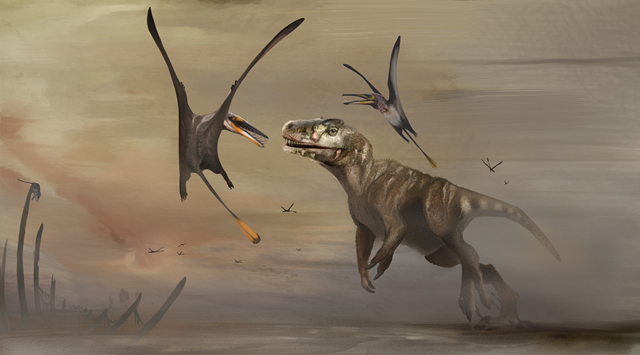
Sometimes the person responsible for the scientific illustration is one of the authors of the study. For example, the artwork supporting the media release on the recently described rhamphorhynchid pterosaur from the Isle of Skye (Dearc sgiathanach), was created by the lead author Natalia Jagielska, a PhD student at the School of GeoSciences, University of Edinburgh.

Isle of Skye pterosaur (Dearc sgiathanach).
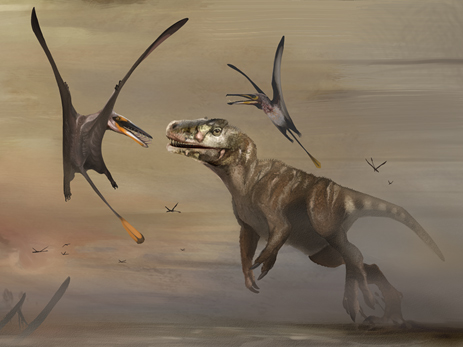
The Isle of Skye 170 million years ago. A theropod dinosaur hopes to catch a Dearc sgiathanach, but this large pterosaur is too quick and avoids capture. The lead author of the scientific paper created the stunning artwork that accompanied the media release. Picture credit: Natalia Jagielska

Everything Dinosaur asked the artist what inspired and influenced her when it came to illustrating the newly described Scottish pterosaur.

Reflecting Scientific Evidence in Palaeoart

Natalia explained that she was inspired by Scottish birds, both those in Edinburgh, where the D. sgiathanach fossil material is stored and also the many seabirds synonymous with the Isle of Skye (where the fossil was found). Gannets are common on the island. They have a similar wingspan to that estimated for Dearc sgiathanach. With their long crania, robust neck and slender wings, these piscivores could be regarded as occupying a similar niche in the marine based ecosystem as the rhamphorhynchids.

“I wanted to form this connection between contemporary local fauna and ancient fauna”, Natalia commented. “I also added a splash of blue hues and yellows on the head in some reconstructions, as a nod to its Scottish origin and the Scottish flag”.

Skye pterosaur artwork
Dominating the skies on the Isle of Skye. Several pterosaurs flying over the coastline (Dearc sgiathanach). Picture credit: Natalia Jagielska.

Setting the Scene for a Jurassic Pterosaur

The background into which the life reconstruction is inserted can also help to convey important information relating to geology and the ancient environment. The rugged cliffs (above), reflect the famous steep cliffs of Skye and link the Jurassic landscape to modern Scotland, as both have been extensive shaped by the Caledonian orogeny, a period of mountain building that occurred during the Palaeozoic.

The waters represent the Hebridean basin and are part of Boreal Seaway, their presence in the artwork helps to reinforce the view that Dearc sgiathanach was associated with coastal and marine habitats.

Adding a Theropod Dinosaur

A theropod dinosaur features in one of the illustrations included with the media release. The presence of theropods in the Middle Jurassic of Skye is indicated by tridactyl prints preserved in the petrified mudflats. The Megalosaurus depicted in the scene sports cranial crests. PhD student Natalia explained that as Megalosaurus does not have a well- preserved skull, she took the opportunity to give her theropod a pair of Allosaurus-inspired head crests.

The dinosaur provides a helpful scale, the viewer is in no doubt that Dearc sgiathanach was a large animal. Indeed, with a wingspan estimated to be around 2.5 metres, the Isle of Skye pterosaur is the biggest flying reptile described to date from Jurassic material.

“Pairing a theropod with the pterosaur is an excellent way of displaying Dearc’s sheer size and making the viewer perceive it’s in the Jurassic”, Natalia stated. “Megalosaurus is excellent too, showcasing basal bauplans of carnivorous dinosaurs associated with the Middle Jurassic”.

The Pterosauria

The Pterosauria continued to evolve throughout the Mesozoic, with some of the Late Cretaceous taxa evolving to become the largest flying animals of all time. Scientific illustrations evolve and change too. In Natalia’s email correspondence with Everything Dinosaur, it was pointed out that the original concept was to depict the pterosaur fighting with the dinosaur over a piece of carrion – a macabre tug-of-war between the two archosaurs. However, the final illustration depicts a different form of interspecific competition, the brash theropod chasing after the pterosaurs much like a dog might chase gulls or oystercatchers on the beach today.

Skye Art megalosaur and pterosaur interaction
The addition of a megalosaurid helps to provide a scale and illustrates a typical theropod from the Middle Jurassic. Picture credit: Natalia Jagielska.

The subtle tones of the sky at sunset add atmosphere and an almost ethereal quality to the artwork. Natalia commented that the background to the illustration featuring the theropod was inspired by J. M. W. Turner’s “The Fighting Temeraire”, she wanted to give her work a grandiose, maritime-look using the light, colours and shading as depicted in the famous Turner painting. The iconic painting “The Fighting Temeraire”, featuring a huge warship making its final journey to a London shipyard so that it could be broken up, was painted in 1839. Ironically, it was during the late 1830s that the remarkable pterosaur fossils including many examples of rhamphorhynchids, from the Solnhofen limestones of southern Germany were being subjected to detailed scientific scrutiny.

Bathonian Mammaliaforms and Sauropods

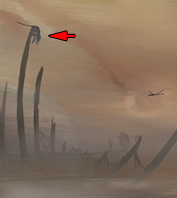
In the bottom left corner of the artwork, large rib bones can be seen and sitting precariously atop one of the bones is a small mammaliaform. The Lealt Shale Formation from which the pterosaur specimen was extracted, has not yielded many body fossils, but mammaliaforms such as Wareolestes (W. rex), are known from the roughly contemporaneous Kilmaluag Formation of the Isle of Skye. Natalia wanted to highlight the significance of Skye for helping to shed light on an important stage in the evolution of many different types of tetrapod, including our own ancestors.

The Isle of Skye is also famous for its extensive sauropod tracks. Admittedly, the pterosaur specimen comes from a bedding plane devoid of such prints although tracks associated with thyreophorans (stegosaurs) have been identified.

Sauropod ribs and a mammaliaform are also illustrated in the pterosaur artwork.
Mammaliaform fossils although exceptionally rare have been found in Middle Jurassic exposures in Scotland. The artwork highlights the presence of such creatures (arrowed) and the huge rib bones are a nod towards the extensive sauropod tracks associated with the Lealt Shale Formation. Picture credit: Natalia Jagielska.

The addition of the sauropod bones permitted the artist to hint at one of the theories put forward to explain the preservation of animal remains over a period of 170 million years or so.

Natalia explained:

“The ribcage in the foreground suggests one of theories suggesting superb preservation, maybe the fossil was buried in mudflats. The location showcases a marginal marine setting, with storm deposit layers and evidence for periodic aerial exposure – truly a perplexing combination”.

Stunning Illustrations in a Scientific Paper

The illustrations are certainly stunning, helping to tell the tale of a pterosaur that soared over Scotland way back in the Middle Jurassic. Our thanks to Natalia Jagielska for sharing her thoughts on the inspiration behind the artwork.

To read Everything Dinosaur’s blog post about the discovery of Dearc sgiathanach: Fantastic Pterosaur Fossil from the Isle of Skye.

Visit the award-winning Everything Dinosaur website: Visit Everything Dinosaur.

1 03, 2022

Are There Three Tyrannosaurus Species? New Research Asks the Question

By |2024-10-27T10:42:02+00:00March 1st, 2022|Categories: Adobe CS5, Dinosaur and Prehistoric Animal News Stories, Dinosaur Fans, Main Page, Palaeontological articles, Photos/Pictures of Fossils|0 Comments

So, the scientific paper is out and theropod feathers are about to be ruffled. The iconic Tyrannosaurus rex might not be just one species, but actually three. That is the conclusion reached by researchers Gregory S. Paul, Scott Persons and Jay Van Raalte – all highly respected scientists, but already other academics have challenged their findings.

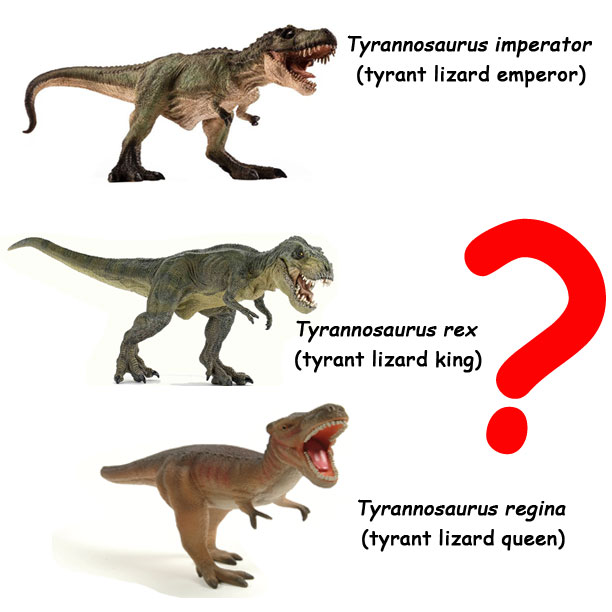
Writing in the academic journal “Evolutionary Biology”, two new Tyrannosaurus species are proposed, a geologically older, robust form newly named Tyrannosaurus imperator that was followed by two further species the already named Tyrannosaurus rex, also a robust tyrannosaur and a contemporaneous gracile form which has been named Tyrannosaurus regina.

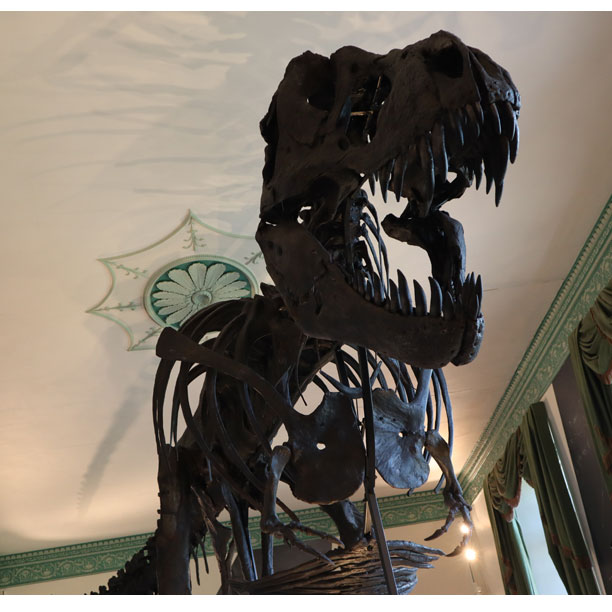
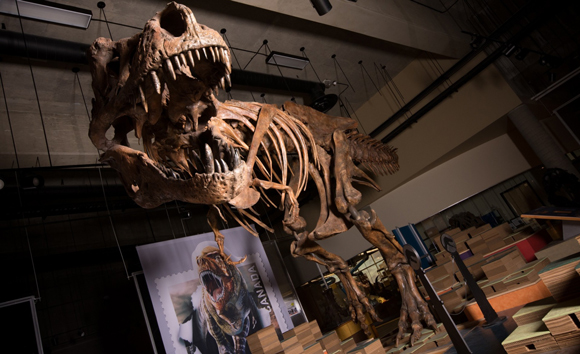
Titus the T.rex exhibit. A T. rex skeleton on display.

The spectacular Titus the T. rex exhibit at Wollaton Hall. PIcture credit: Everything Dinosaur.

Picture credit: Everything Dinosaur

The Tyrannosaurus Controversy

The fearsome, apex predator Tyrannosaurus rex might be synonymous with the famous Hell Creek Formation, but Tyrannosaurus fossils have also been found in many other Upper Cretaceous deposits (Maastrichtian stage). For example, T. rex fossils or at least indeterminate Tyrannosaurus material is associated with nine other North American geological formations.

T. rex fossils have been found in exposures of the Scollard Formation of south-western Alberta the Frenchman Formation of southern Saskatchewan and south-eastern Alberta. This suggests that this large theropod roamed northern areas of Laramidia. Tyrannosaurus fossils from the Laramie Formation exposures in Colorado have been assigned to Tyrannosaurus rex. T. rex fossil material has been reported from much further south, from the Javelina Formation of Texas.

With only one species of Tyrannosaurus (T. rex), the fossil evidence as classified so far indicates that the “tyrant lizard king” had a huge geographical distribution, virtually the entire ancient landmass of Laramidia.

Furthermore, these deposits represent vast amounts of geological time. The Hell Creek Formation is believed to have been formed over two million years and as scientists have now concluded that other iconic taxa such as Triceratops evolved over this time period into new species, then surely T. rex would have been subject to the same evolutionary pressures.

"Scotty" the Tyrannosaurus rex.

A reconstruction of the skeleton of “Scotty” the T. rex. The fossils come from the Frenchman Formation of Saskatchewan (Canada) and one of the authors of the scientific paper published in the journal the Anatomical Record was Scott Persons who is a co-author of the new paper describing three Tyrannosaurus taxa. Picture credit: Amanda Kelley.

Picture credit: Amanda Kelley.

Analysis of Limb Bones (Femora)

A total of thirty-seven fossil specimens were studied by the researchers. Two-thirds of these had femora (thigh bones) associated with them and the scientists found differences in the thickness and robustness of these bones, that were unlikely a result of individual variation within a single species. In the sample studied, Gregory S. Paul and his colleagues found greater variation in femur robustness in the T. rex thigh bone material than in the whole of the other tyrannosaurid femora material known from the preceding ten million years.

The team discounted size variations based on maturity, ontogeny (growth pattern) and the age of the Tyrannosaurus when it died. Robust forms and more gracile forms of T. rex have been known for some years. Some palaeontologists have speculated that the smaller, more slender bones of some T. rex specimens compared to the more robust femora of other specimens might be explained as differences in the sexes.

If robust forms represent females, and gracile forms males, then it would be expected that the fossil record would show roughly even numbers of these bone types. However, the research team point out an uneven ratio of robust bones to gracile bones and as such they discount the differences as sexual variation.

In addition, the team report that gracile bones are only found in higher layers of sediment. These bones are geologically much younger than other more robust T. rex bones associated with lower layers.

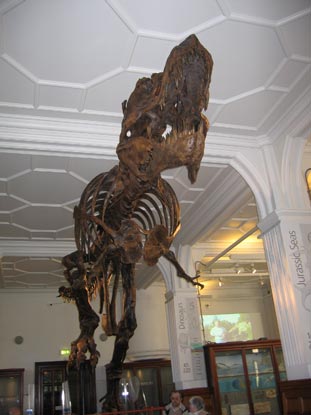
Tyrannosaurus rex cast skeleton on display

Which Tyrannosaurus species? A cast of the T. rex specimen known as “Stan” (BHI 3033), but researchers propose that there were actually three species of Tyrannosaurus present in the Late Cretaceous of North America. Picture credit: Everything Dinosaur.

Picture credit: Everything Dinosaur

Differences in Tooth Count

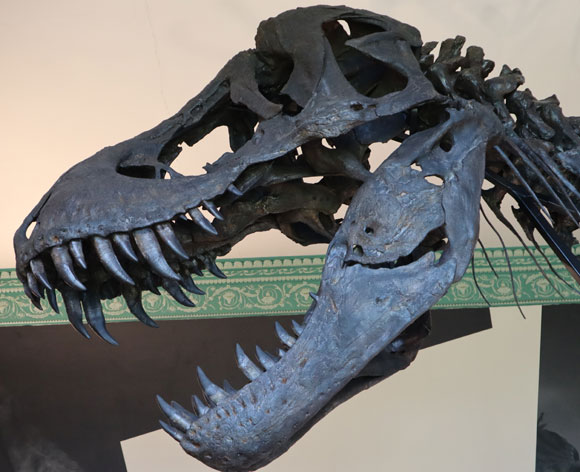
The scientists also commented on differences in tooth counts associated with Tyrannosaurus lower jaws (the dentary). Tyrannosaurus imperator (the earliest Tyrannosaurus species) had two small incisors in each dentary. Whilst the later species (T. regina and T. rex) had only one small incisor in each dentary.

Titus the T. rex Skull and Jaws. Dinosaur extinction.

The research team identified differences in the number of small incisor-like teeth in the lower jaw which they concluded was further evidence of the T. rex fossil material actually representing a trio of Tyrannosaurus species. Picture credit: Everything Dinosaur.

Picture credit: Everything Dinosaur

The researchers concede that they cannot rule out other explanations for their findings. Several palaeontologists have challenged the paper, stating that the variations seen in the fossils could be explained by factors such as individual variation amongst individuals of a single species. Like many dinosaurs, Tyrannosaurus rex changed radically as it grew and matured, this aspect of dinosaur taxonomy is going to be debated for a considerable time to come.

For fans of dinosaur models, does this mean that collectors will have to reassess their Tyrannosaurus rex models?

Three Tyrannosaurus species proposed.

Which Tyrannosaurus species are you? A newly published scientific paper proposes three Tyrannosaurus species. Picture credit: Everything Dinosaur.

Picture credit: Everything Dinosaur

The scientific paper: “The Tyrant Lizard King, Queen and Emperor: Multiple Lines of Morphological and Stratigraphic Evidence Support Subtle Evolution and Probable Speciation Within the North American Genus Tyrannosaurus” by Gregory S. Paul, W. Scott Persons IV and Jay Van Raalte published in Evolutionary Biology.

Visit the award-winning Everything Dinosaur website: Everything Dinosaur.

28 02, 2022

Kelumapusaura: A New Hadrosaur from Patagonia

By |2024-10-26T16:27:29+01:00February 28th, 2022|Categories: Adobe CS5, Dinosaur and Prehistoric Animal News Stories, Dinosaur Fans, Main Page, Palaeontological articles|0 Comments

Researchers from the Museo Argentino de Ciencias Naturales ‘Bernardino Rivadavia’ in Buenos Aires (Argentina), have described a new species of duck-billed dinosaur that roamed north-western Patagonia in the Late Cretaceous. The new dinosaur has been named Kelumapusaura machi and its discovery has helped palaeontologists to validate previously described South American hadrosaurids as distinct species.

The Largest Hadrosaur in the Allen Formation Ecosystem

Numerous fossils have been reported, representing skull and postcranial material from several individuals. Comparison of the fossils suggests that bones from sub-adults as well as bones from more mature, adult animals were found. Based on the largest fossil bones, Kelumapusaura is estimated to have been up to 9 metres in length, perhaps weighing as much as 3 Tonnes.

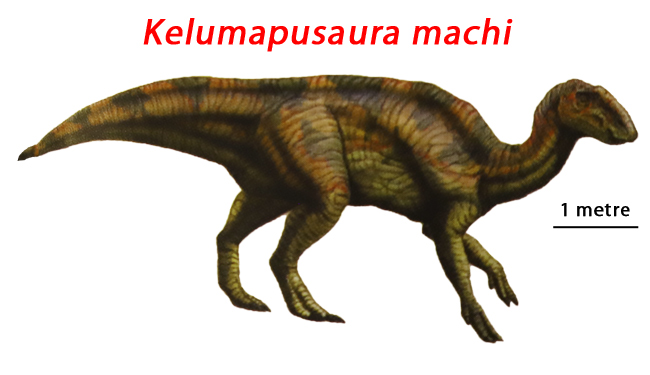
Kelumapusaura machi life reconstruction.

Kelumapusaura machi life reconstruction. Note scale bar = 1 metre.

Getting to Grips with South American Hadrosaurids

The fossil material was collected from exposures associated with the Allen Formation (Upper Cretaceous Campanian–Maastrichtian stage). The research team report that these fossils represent one of the most complete hadrosaurids found to date in South America. Importantly, many of the skull and postcranial bones associated with K. machi overlap with bones associated with other South American hadrosaurids that have been named and described from much more fragmentary remains.

Using the Kelumapusaura fossils the research team confidently assert that previously named South American hadrosaurids – Secernosaurus koerneri, Bonapartesaurus rionegrensis and “Kritosaurus” australis are all valid taxa.

“Kritosaurus” australis was named and described in 1984 by the world-renowned Argentinian palaeontologist José Fernando Bonaparte who sadly passed away in February 2020: José Bonaparte the Father of Palaeontology in Argentina (1928-2020). Thanks to the K. machi study, “Kritosaurus” australis is thought to be sufficiently different to other Kritosaurus species found in North America to warrant its own genus Huallasaurus australis.

A South American Saurolophinae Clade

A phylogenetic analysis of the hadrosaurid fossils included in this study unites Kelumapusaura, the closely related taxon Huallasaurus (H. australis), along with Bonapartesaurus and Secernosaurus into a clade that can be nested within the Kritosaurini tribe as part of the Saurolophinae subfamily of hadrosaurs. The Saurolophinae is comprised of those hadrosaurs that generally tend to lack spectacular head crests, as opposed to the other major subfamily within the Hadrosauridae – the Lambeosaurinae.

According to the researchers, the Kritosaurini tribe now consists of both North American and South American saurolophine hadrosaurs, which means that Kelumapusaura is related to more famous hadrosaurs such as Kritosaurus and Gryposaurus from the United States and Canada.

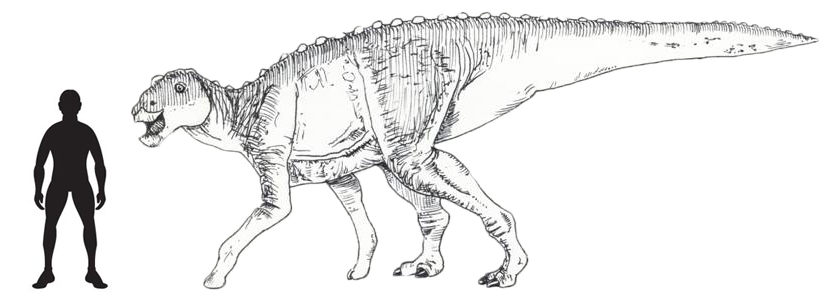
Gryposaurus scale drawing.

A scale drawing of the duck-billed dinosaur Gryposaurus. A scale drawing of the duck-billed dinosaur Gryposaurus. The newly described Kelumapusaura machi is related to Gryposaurus, several species of Gryposaurus have been named including the type species G. notabilis which lived as far north as Alberta (Canada).Picture credit: Everything Dinosaur.

Picture credit: Everything Dinosaur

Significantly, the clade status implies that these hadrosaurids shared a common ancestor, that all these different taxa that are widely distributed came from an ancestral population. The scientists conclude that the evolutionary development of Gondwanan hadrosaurids is not that well understood compared to the duck-billed dinosaurs from northern latitudes. They hope that more fossil discoveries from South America will help to further revise hadrosaur taxonomy.

The scientific paper: “A new hadrosaurid (Dinosauria: Ornithischia) from the Late Cretaceous of northern Patagonia and the radiation of South American hadrosaurids” by Sebastián Rozadilla, Federico Brissón-Egli, Federico Lisandro Agnolín, Alexis Mauro Aranciaga-Rolando and Fernando Emilio Novas published in the Journal of Systematic Palaeontology.

The Everything Dinosaur website: Dinosaur Toys.
27 02, 2022

A New Book is Published – A Time Traveller’s Guide to Fossil Hunting on the West Dorset Coast

By |2024-10-26T16:20:30+01:00February 27th, 2022|Categories: Adobe CS5, Book Reviews, Dinosaur Fans, Geology, Photos/Pictures of Fossils|0 Comments

When visiting Lyme Regis and other parts of the Jurassic Coast we are often aghast at the huge numbers of fossil hunters to be seen on the beach. We tend to avoid the late summer months as this beautiful part of the Dorset coast will have been virtually picked clean of all the fossil material. The tide might continue to wash out the remains of creatures from an Early Jurassic sea, but the enthusiastic holidaymakers and tourists soon make short work of whatever has been deposited on the beach.

Sitting on some large rock, comfortably away from the dangerous cliffs, with a flask of tea and a local pastie to sustain us, we are often approached by beachcombers curious to ask our advice or to receive assistance in identifying their finds. Diligently and politely, we offer what assistance we can, but amongst the hubbub we often think what it would have been like to have explored the foreshore in earlier times, before this stunning coastline became a haven for tourists.

Thanks to a new, delightful book by Steve Snowball and Craig Chivers, we have the opportunity to do so.

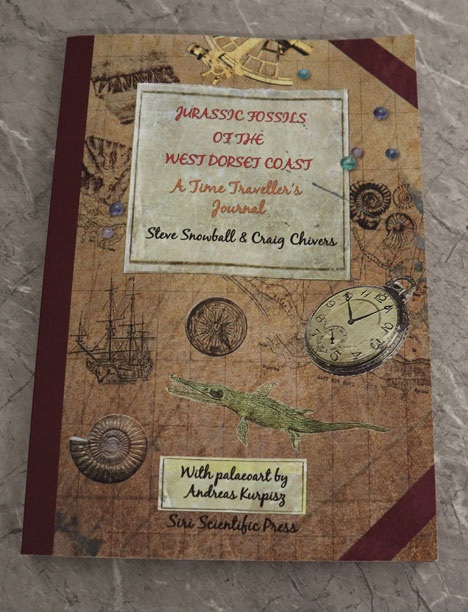
Front cover of "Jurassic Fossils of the West Dorset Coast"

A time traveller’s guide to fossil hunting on the west Dorset coast. A fantastic collector’s guide written in the form of an Edwardian diary with wonderful illustrations and photographs. Written by renowned fossil hunters and preparators Steve Snowball and Craig Chivers and available from Siri Scientific Press. Picture credit: Everything Dinosaur.

Picture credit: Everything Dinosaur

“Jurassic Fossils of the West Dorset Coast – A Time Traveller’s Journal”

The fourth collaboration between devoted fossil hunters Steve Snowball and Craig Chivers takes the form of an Edwardian diary. Imagine finding on the beach at Charmouth an old journal that catalogues the visit of two Edwardian gentlemen to the west Dorset coast at the beginning of the 20th Century. Starting at Seatown and Golden Cap, the two explorers record the geology, the fossil discoveries and the Dorset landscape over a period of eight days, culminating with a trip to Pinhay Bay where the strata records the boundary between the Triassic and the Jurassic.

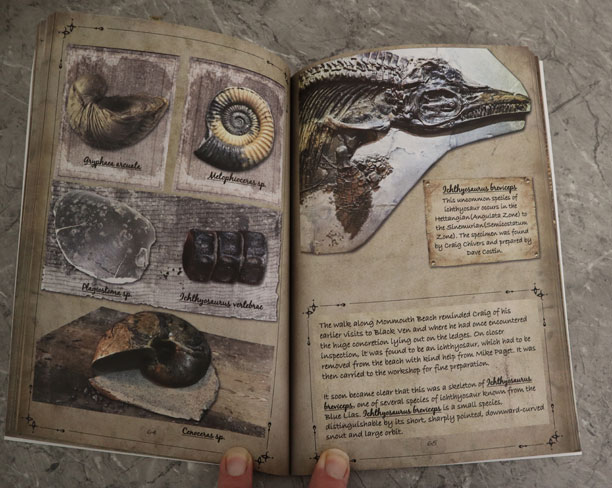
"Jurassic Fossils of the West Dorset Coast" contents

Photographs of fossil finds plus lots of helpful notes – a time traveller’s guide to the west Dorset coast. Picture credit: Everything Dinosaur.

Picture credit: Everything Dinosaur

The Everything Dinosaur website: Everything Dinosaur.

Illustrations by Andreas Kurpisz

Produced by Siri Scientific Press and with illustrations by Berlin-based artist Andreas Kurpisz, this is a novel and quirky guide to fossil hunting on the west Dorset coast. There is a copious amount of helpful information provided on each location, with notes and lots of photographs of fossils associated with the site. Talented artist Andreas Kurpisz provides colourful illustrations depicting prehistoric scenes – there are even one or two dinosaurs featured.

At around 160 pages long, this is a most informative guide, we particularly enjoyed examining the biostratigraphical maps provided and the accompanying images of strata – all helpfully labelled. Priced as we write at £19.99 plus postage and available from the Siri Scientific Press website this is a welcome and imaginative addition to the plethora of fossil hunting guidebooks that address the amazing geology of the Dorset coast.

"Jurassic Fossils of the West Dorset Coast"

Written in the form of an Edwardian gentleman’s journal, the book is packed with helpful information, fossil hunting tips and wonderful photographs of fossil discoveries. Picture credit: Everything Dinosaur.

Picture credit: Everything Dinosaur

Bringing the Past to Life

“Jurassic Fossils of the West Dorset Coast – A Time Traveller’s Journal” helps to bring the past to life and provides an echo of a time when the beaches around Lyme Regis were less busy and undoubtedly more productive. However, armed with this guide your chances of finding an incredibly special fossil are greatly enhanced.

The book concludes with our courageous Edwardian explorers coming across evidence of another visitor to the “Jurassic Coast”, this time from the 21st century. The gentlemen have been left notes on how to prepare ammonites for display from a kind-hearted collector from our own time. This device permits the authors to segue into a section of the book that provides helpful tips and advice on modern tools such as air scribes that will assist collectors with fossil preparation.

Visit Siri Scientific Press and use the search word “Jurassic” to find the books about Dorset written by Steve Snowball and Craig Chivers including the excellent “Jurassic Fossils of the West Dorset Coast – A Time Traveller’s Journal”: Siri Scientific Website.

26 02, 2022

Preparing for the Eofauna Konobelodon Model

By |2024-10-26T16:14:58+01:00February 26th, 2022|Categories: Dinosaur Fans, Everything Dinosaur News and Updates, Everything Dinosaur Products, Main Page, Press Releases|0 Comments

Team members at Everything Dinosaur have been busy preparing for the arrival of the new for 2022, 1/35th scale prehistoric elephant model Konobelodon atticus from Eofauna. The model is expected to be in stock in the next few days and a free fact sheet has been prepared in readiness for the model’s arrival.

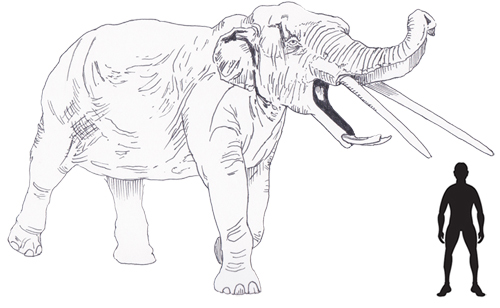
The K. atticus fact sheet will be included with sales of this prehistoric elephant model from Everything Dinosaur’s website. As part of the plans for the fact sheet, a scale drawing of this Miocene proboscidean was commissioned.

Konobelodon atticus scale drawing.

A scale drawing of the late Miocene prehistoric elephant Konobelodon atticus. Picture credit: Everything Dinosaur.

Picture credit: Everything Dinosaur

Konobelodon atticus

A gigantic and derived amebelodontid that represents the final evolutionary stage of the European shovel-tusker clade. Konobelodon is characterised by enormous body size, dorso-ventrally flattened mandibular tusks and very large, straight upper tusks. Its proboscidean lineage is ancestral to the true elephants (Elephantidae), including modern, living elephants and their extinct relatives the mammoths.

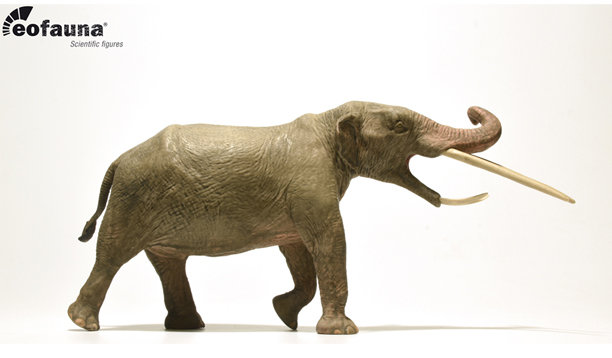
Konobelodon model

Originally named in 1857, Konobelodon atticus has had a long and complicated taxonomic history.

A spokesperson from Everything Dinosaur commented:

“We are looking forward to the arrival of the Eofauna Konobelodon model. We are expecting this prehistoric animal model to arrive shortly along with the Eofauna Diplodocus carnegii replica, which is on the same shipment.”

The Everything Dinosaur website: Prehistoric Animal Models.

Originally Named Mastodon atticus

A large, left maxilla (upper jawbone), that was described by the famous German palaeontologist and zoologist Johann Andreas Wagner led to the erection of the species Mastodon atticus, in 1857. Wagner believed that this prehistoric elephant, fossils of which were found in Greece, was closely related to other European fossil elephants that had been studied by the influential French anatomist Georges Cuvier, who first used the term “Mastodon” to describe fossil elephants in 1806.

Eofauna Scientific Research Konobelodon atticus

The stunning Eofauna Konobelodon model measures 23 cm long and stands approximately 11 cm high.

To view the range of Eofauna Scientific Research models currently in stock at Everything Dinosaur: Eofauna Scientific Research Models.

Everything Dinosaur Update (28th February 2022)

Everything Dinosaur heard from Eofauna this morning (February 28th 2022), unfortunately, there has been a delay and the Konobelodon and new Diplodocus carnegii figures will be coming into stock three to four weeks later than anticipated. Eofauna and Everything Dinosaur apologise for this and we can assure customers who have asked to be alerted as soon as these figures arrive, that we will do all we can to expediate matters and once figures are in stock they will receive a priority email alert.

25 02, 2022

Giant Trilobite was a Cannibal According to New Research

By |2024-10-26T16:09:23+01:00February 25th, 2022|Categories: Adobe CS5, Dinosaur and Prehistoric Animal News Stories, Dinosaur Fans, Main Page, Palaeontological articles, Photos/Pictures of Fossils|0 Comments

Researchers have conducted an extensive review of injured trilobites and disarticulated pieces of trilobite exoskeleton from the Emu Bay Shale Konservat-Lagerstätte on Kangaroo Island (South Australia). They conclude that the injuries caused to Redlichia trilobites were from attacks by other members of this genus. This is the oldest record of cannibalism recorded in the fossil record to date.

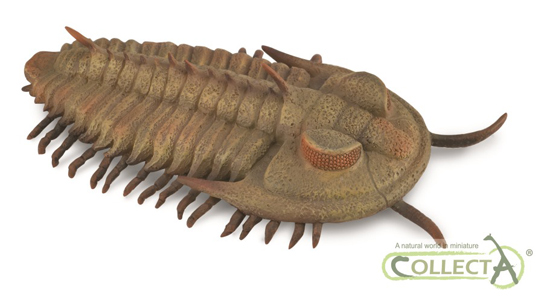
CollectA Redlichia rex trilobite. "First Life"

CollectA Redlichia rex trilobite model.

The picture (above) shows the CollectA Redlichia rex trilobite model.

To view this range of prehistoric animal figures: CollectA Prehistoric Life Models.

A Study of Redlichia Fossils from the Emu Bay Shale

The Cambrian explosion represents the rapid emergence of complex marine ecosystems and a huge burst of evolutionary activity that led to the establishment of virtually all the Animalia phyla recognised today. Whilst many palaeontologists do not like the phrase “explosion” as it implies a sudden event, opting instead to use the term “Cambrian radiation” to describe the emergence in the fossil record of abundant preserved shells and exoskeletons, the reasons for this change in the Earth’s ecosystems remains controversial.

It is thought that one of the main drivers of this evolutionary event was the development of predator/prey interactions. The proliferation of biomineralised exoskeletons and shells was a response to the evolution of the first predators capable of breaking through these defences.

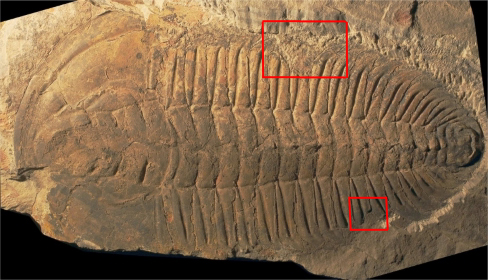
Writing in the academic journal Palaeogeography, Paleoclimatology, Palaeoecology, researchers from the University of New England, (Armidale, New South Wales), Uppsala University (Sweden), the University of Adelaide (South Australia), the South Australian Museum and Cambridge University conducted an analysis of 38 injured specimens representing two large trilobite species from the 515-million-year-old Emu Bay Shale deposits (Redlichia takooensis and Redlichia rex).

Redlichia rex injuries.

Healed but scarred injuries on a fossil specimen of Redlichia rex. The red squares indicate areas of damage possibly caused by an attack by another Redlichia. Picture credit: Bicknell et al (Palaeogeography, Paleoclimatology, Palaeoecology).

Picture credit: Bicknell et al (Palaeogeography, Paleoclimatology, Palaeoecology)

Studying a Giant Trilobite

The team concluded that that the injuries they documented were caused by a durophagous (consuming hard parts of the skeleton) predator.

Specimens of both species show that most injuries are located on the posterior portion of the thorax, indicating that predators most likely attacked from behind or that intended prey presented the posterior portion of their trunk to the attacker when threatened or attempting to flee. Previous studies had indicated that Cambrian trilobites exhibit most injuries to their right side. This study refutes this, arguing there is no evidence for a preference for attacking either the right or left side of intended prey.

The injured specimens typically represent some of the largest individuals known for the Redlichia taxa. This suggests that bigger trilobites were more successful in fighting off an attack and recovering from their injuries. Smaller individuals were probably completely consumed and therefore the likelihood of finding evidence of an attack on a smaller fossil specimen was greatly reduced.

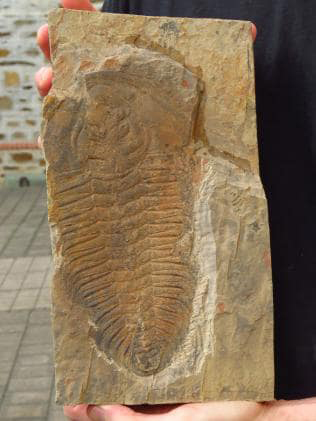
Redlichia rex trilobite fossil.

A near complete specimen of the large Cambrian trilobite Redlichia rex. Picture credit: University of Adelaide.

Picture credit: University of Adelaide

Redlichia rex

To read Everything Dinosaur’s blog post about the discovery of Redlichia rex: “King of the Trilobites” Discovered in South Australia.

The research team concludes that the scarred Emu Bay Shale trilobites represent the oldest record of cannibalism known to science.

The scientific paper: “Cambrian carnage: Trilobite predator-prey interactions in the Emu Bay Shale of South Australia” by Russell D. C. Bicknell, James D. Holmes, Stephen Pates, Diego C. García-Bellido and John R. Paterson published in Palaeogeography, Paleoclimatology, Palaeoecology.

Visit the Everything Dinosaur website: Everything Dinosaur.

Go to Top