All about dinosaurs, fossils and prehistoric animals by Everything Dinosaur team members.
6 01, 2025

Stunning Front Cover Artwork for the New Edition of Prehistoric Times

By |2025-01-09T12:53:13+00:00January 6th, 2025|Categories: Magazine Reviews|0 Comments

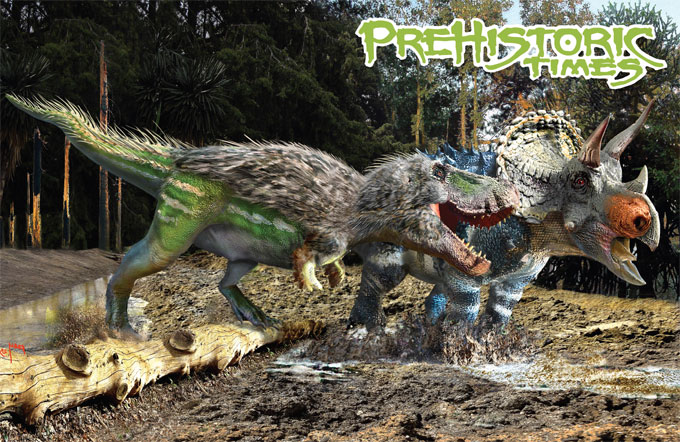
Our thanks to editor Mike Fredericks who sent to Everything Dinosaur some stunning artwork.  The illustration features a Triceratops being ambushed by a T. rex. This dramatic scene was created by talented artist Luis Rey.  This artwork will be used to create the wraparound cover for the next issue of “Prehistoric Times” magazine.  Published four times a year, this magazine captivates fans of prehistoric animals by showcasing stunning artwork of dinosaurs and other extinct creatures.

"Prehistoric Times" front cover artwork issue 152

The stunning wraparound artwork created by Luis Rey for issue 152 (winter) of “Prehistoric Times” magazine. A Triceratops is ambushed by a Tyrannosaurus rex. Picture credit: Luis Rey.

Picture credit: Mike Fredericks (artwork by Luis Rey)

“Prehistoric Times” Magazine

We are looking forward to receiving our copy.  Each quarterly issue features superb articles and features penned by leading experts.  The magazine covers news, fossil discoveries and fascinating insights into the study of dinosaurs.  Readers get the chance to submit their artwork too.

Luis Rey has the third edition of his book series “Extreme Dinosaurs” coming out soon.  Issue 152 includes an interview with him and there is plenty of his amazing artwork featured.  John Navroth wrote a most intriguing article about “King Kong” in an earlier issue.  He returns with an article about the Hammer Films “One Million Years BC”.  This classic movie from 1966, complete with its stop-animation monsters, remains extremely popular today.

The magazine not only entertains but also educates its readers, fostering a deeper appreciation for the ancient life that once roamed our planet.

For more information about “Prehistoric Times” and to subscribe: Subscribe to “Prehistoric Times” magazine.

5 01, 2025

Cetiosaurus on Display at the Wonderful Oxford University Museum of Natural History

By |2025-01-05T20:39:54+00:00January 5th, 2025|Categories: Dinosaur Fans|0 Comments

It was a great start to 2025 for fans of UK fossil sites.  The University of Birmingham sent out a media release about the investigation into extensive dinosaur trackways found in Oxfordshire. Five dinosaur trackways dating back to the Middle Jurassic had been unearthed in an Oxfordshire quarry.  Four of the trackways were made by sauropods.  The research team behind this remarkable research suggested that the footprints could have been made by a dinosaur such as Cetiosaurus (Cetiosaurus oxoniensis).  The research project was co-led by the University of Birmingham and the University of Oxford.

To read Everything Dinosaur’s blog post about the dinosaur tracks: Remarkable “Dinosaur Highway” Found in Oxfordshire.

Mike and Sue from Everything Dinosaur remembered visiting the wonderful Oxford University Museum of Natural History (OUMNH) and viewing the Cetiosaurus (Cetiosaurus oxoniensis) fossil specimens on display.

Cetiosaurus Fossils on Display

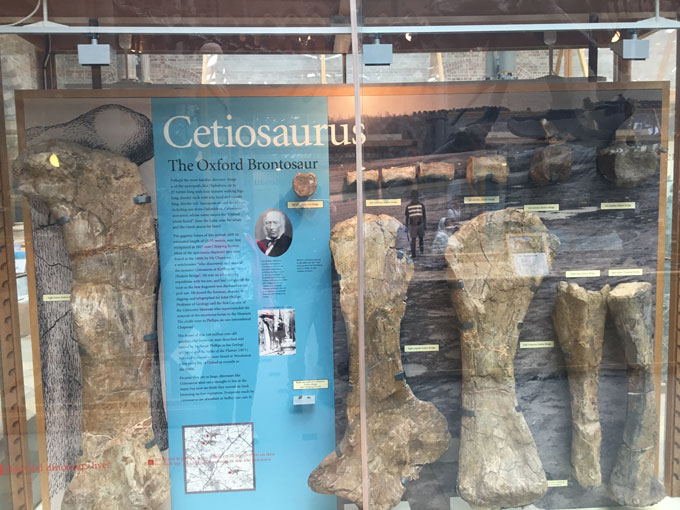
Cetiosaurus fossils on display.

Fossils ascribed to the taxon Cetiosaurus on display at the Oxford University Museum of Natural History (OUMNH). Picture credit: Everything Dinosaur.

Picture credit: Everything Dinosaur

The picture (above) shows several sauropod fossils on display at the Oxford University Museum of Natural History.  A femur is shown on far left. The large bones in the centre are a right scapula and a right humerus. The fossil bones adjacent to them are from the lower portion of the forelimb (right ulna and right radius). Above these limb bones several caudal vertebrae (tail bones) are displayed.  These fossils have been assigned to the taxon Cetiosaurus.  The fossils represent some of the very first sauropod bones to have been extensively studied.

Cetiosaurus was the first sauropod to be named (Owen, 1841).  At the time, Richard Owen thought the bones represented some sort of giant marine crocodile – hence the name which translates as “whale lizard”.

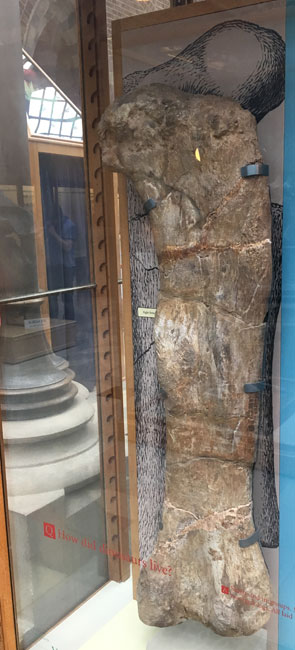
The right femur of a sauropod (Cetiosaurus) on display.

The enormous and robust right femur of a Middle Jurassic sauropod. The femur has been ascribed to the taxon Cetiosaurus. Picture credit: Everything Dinosaur.

Picture credit: Everything Dinosaur

The image (above) shows a close-up view of the huge right femur of a sauropod.  This fossil bone has been assigned to Cetiosaurus.  The text in the exhibit refers to Cetiosaurus as the “Oxford Brontosaur”.  However, the exact taxonomy of Cetiosaurus oxoniensis is disputed although it is quite certain that it was only very distantly related to diplodocids such as Brontosaurus.

Cetiosaurus and Megalosaurus

The theropod trackway has been tentatively assigned to Megalosaurus.  Megalosaurus is another iconic dinosaur that has links to the OUMNH.  Although Megalosaurus has become something of a taxon wastebasket, the only fossil remains ascribed to Megalosaurus with any degree of consensus were found in Oxfordshire.  The track site provides some tantalising evidence of sauropod and theropod interaction.  For example, some of the tracks intersect.  A theropod dinosaur walked over tracks made by a sauropod.  There is no way of knowing how much later the meat-eater walked in the same direction as the herbivorous dinosaur. Perhaps the theropod was stalking the sauropod.

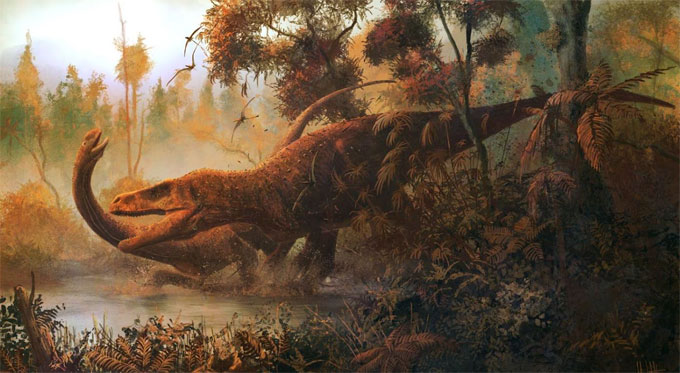
As part of the University of Birmingham media release we received some wonderful artwork from the very talented Mark Witton.  In the illustration, a Megalosaurus attacks a juvenile sauropod.

A Megalosaurus attacks a Cetiosaurus.

A Megalosaurus attacks a Cetiosaurus. Picture credit: Mark Witton.

Picture credit: Mark Witton

The remarkable Oxfordshire track site will feature in a BBC Two documentary.  In addition, the OUMNH will open a special exhibition about the dinosaur tracks shortly.

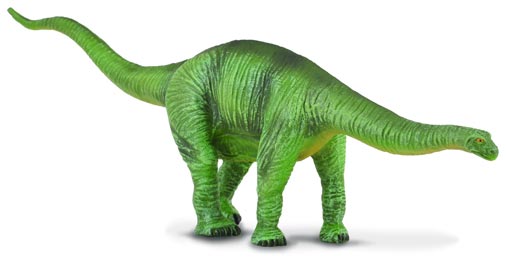
Jurassic dinosaurs. A CollectA Cetiosaurus model.

The CollectA Age of Dinosaurs Popular Cetiosaurus figure.  A model of an early sauropod that lived during the Middle Jurassic.

The picture (above) shows a Cetiosaurus model.  This dinosaur model was introduced into the CollectA Age of Dinosaurs Popular range in 2010.

To view the range of not-to-scale CollectA prehistoric animal figures in stock at Everything Dinosaur: CollectA Prehistoric Life Age of Dinosaurs Popular Figures.

Mike from Everything Dinosaur commented:

“The images we received from Birmingham University reminded us of our visit to the Oxford University Museum of Natural History.  It was wonderful to be able to view the Cetiosaurus oxoniensis fossils.  It is a fabulous museum with some amazing exhibits.”

Visit the award-winning Everything Dinosaur website: Dinosaur Models and Toys.

4 01, 2025

New Book Explores the Fossils of the Beautiful Fleet Lagoon

By |2025-01-05T17:40:00+00:00January 4th, 2025|Categories: Book Reviews|0 Comments

The beautiful Chesil Beach and the Fleet Lagoon attract over 150,000 visitors each year. The site is managed by Natural England, and it is famed for its stunning views and wildlife especially migratory birds.  However, the Fleet Lagoon (England’s largest lagoon at around 480 hectares), is a great place to visit if you are a fossil collector.   Fossils can be found along almost the entire length of the lagoon. There are exposures of the Oxford Clay, Forest Marble, Kimmeridge Clay formations and Corallian limestones.  It would be great if a visitor to this part of the UNESCO “Jurassic Coast” had a guide to help them navigate this remarkable part of the Dorset coastline.

Such a guide is now available, thanks to authors Steve Snowball and Heather Middleton.  The pair have compiled a comprehensive and informative field guide to the safe and responsible collection of fossils from the Fleet Lagoon area.

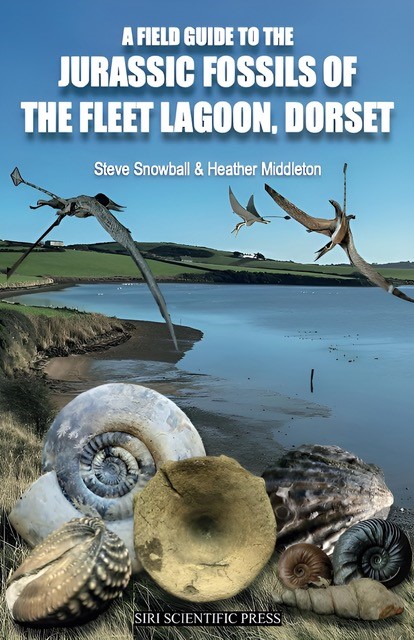
"A Field Guide to the Jurassic Fossils of the the Fleet Lagoon, Dorset"

The front cover of the new book that explores the remarkable fossils of the Fleet Lagoon of Dorset entitled “A Field Guide to the Jurassic Fossils of the Fleet Lagoon, Dorset” written by Steve Snowball and Heather Middleton.

Picture credit: Steve Snowball

Readers of this blog will be familiar with a series of guidebooks, co-authored by Steve Snowball that help fossil collectors explore various parts of the Dorset coast.  Back in 2022, we wrote about a wonderful collaboration between Steve Snowball and Craig Chivers who imagined an Edwardian gentleman visiting this picturesque part of the world.

To read Everything Dinosaur’s review of the excellent: Jurassic Fossils of the West Dorset Coast – A Time Traveller’s Guide.

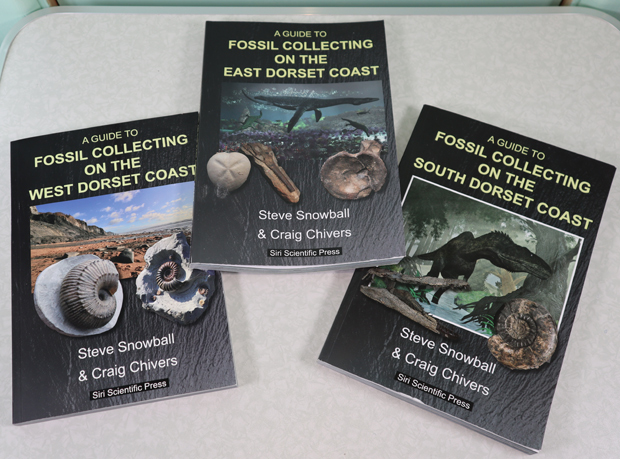
Fossil Collecting on the Dorset Coast

Several excellent guides have been published about fossil hunting on the Dorset coast by Steve Snowball and Craig Chivers. Picture credit: Everything Dinosaur.

Picture credit: Everything Dinosaur

“A Field Guide to the Jurassic Fossils of the Fleet Lagoon, Dorset”

This is a comprehensive and beautifully crafted field guide.  It is illustrated in full colour throughout, and it focuses on the wide variety of fossils associated with the area and its unique geology. If you thought that Tidmoor Point and its Oxford Clay exposures was the only place to collect fossils in this area, it’s time for a rethink.  This is an up-to-date and definitive guide with superb photographs of fossil specimens and wonderful artwork by the talented palaeoartist Andreas Kurpisz.

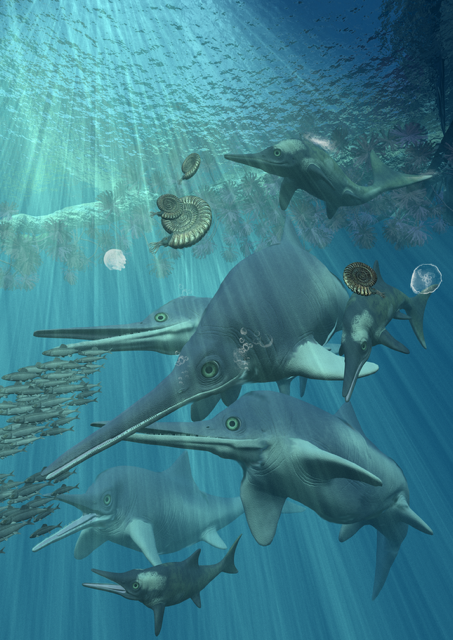
Fleet lagoon ichthyosaurs.

A school of curious ichthyosaurs. Fossils of these marine reptiles have been found in the Fleet Lagoon area. Picture credit: Andreas Kurpisz.

Picture credit: Andreas Kurpisz

Helpful Identification Charts

Readers will be able to explore marine reptile bones and teeth from the Kimmeridge Clay as well as Corallian echinoids and stunning ammonites such as Quenstedioceras as well as Kosmoceras from the Oxford Clay.  The book contains helpful identification charts and plenty of advice on making the most of your fossil hunting adventure. All the localities along the thirteen-kilometre length of this picturesque, tidal body of water, which separates Chesil Beach from the mainland, are fully described.

The vivid artwork of Andreas Kurpisz brings to life the ancient landscapes of southern England and the huge variety of prehistoric creatures that once inhabited them.  It is a wonderful guidebook for either the keen walker, casual visitor to the area or dedicated fossil hunter.

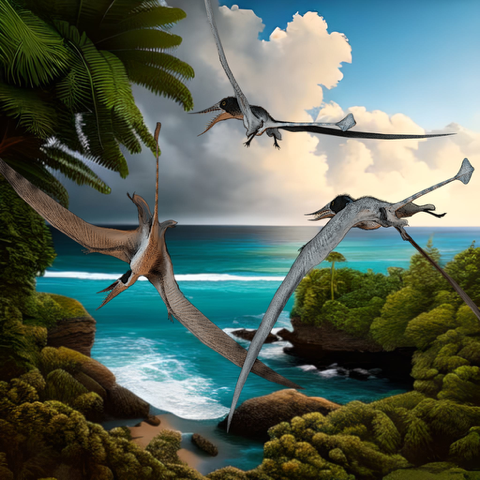
Fleet Lagoon pterosaurs.

A trio of rhamphorhynchid pterosaurs soar over the tropical landscape of the area we now know as Dorset. Picture credit: Andreas Kurpisz.

Picture credit: Andreas Kurpisz

“A Field Guide to the Jurassic Fossils of the Fleet Lagoon, Dorset” has received praise for its informative text and illuminating photographs.  If you intend to visit this part of Dorset, it will prove to be an essential companion on your travels.

Book Details

Here is further information about this new fossil hunting guide:

Title: “A Field Guide to the Jurassic Fossils of the Fleet Lagoon, Dorset”

Authors: Steve Snowball and Heather Middleton

Illustrated by Andreas Kurpisz

ISBN: 978-1-7395570-3-4

Publisher: Siri Scientific Press

It contains 256 pages.

RRP: £24.99 and it is available on Amazon: “A Field Guide to the Jurassic Fossils of the Fleet Lagoon, Dorset”

3 01, 2025

Remarkable “Dinosaur Highway” Uncovered in Oxfordshire

By |2025-01-02T16:33:37+00:00January 3rd, 2025|Categories: Dinosaur and Prehistoric Animal News Stories|0 Comments

A remarkable and extensive series of dinosaur tracks have been uncovered by researchers from the Universities of Oxford and Birmingham.  The location (Dewars Farm Quarry) reveals a series of trackways that date back to the Middle Jurassic (Bathonian faunal stage).  The scientists have uncovered multiple, lengthy trackways that form part of a huge “dinosaur highway”.  The quarry floor is covered by hundreds of dinosaur footprints.

Theropod tracks have been recorded.  These have been tentatively assigned to Megalosaurus.  Some of these three-toed prints indicate the presence of nine-metre-long carnivorous dinosaurs.  Sauropod tracks have also been found.  The sauropod tracks have been tentatively assigned to Cetiosaurus.  Cetiosaurus was the first sauropod dinosaur to be scientifically described (Owen 1841).  Some of the tracks indicate the presence of sauropods around eighteen metres in length.
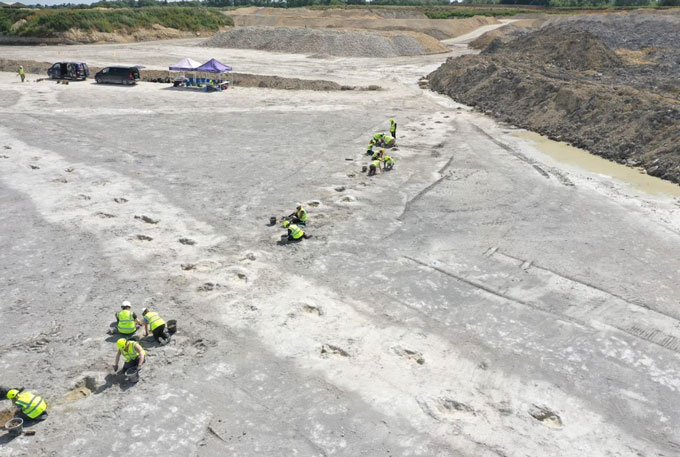
Dewars Farm Quarry excavation work.

The Dewars Farm Quarry excavation work taking place in June 2024. Picture credit: the University of Birmingham.

Picture credit: the University of Birmingham

The Remarkable Dewars Farm Quarry Dinosaur Tracks

This remarkable trace fossil site will be featured in a BBC television programme (Digging for Britain).  It will be broadcast on BBC Two on January the 8th.  A new public exhibition entitled “Breaking Ground” will be opening shortly at the Oxford University Museum of Natural History (OUMNH).  This exhibition will highlight the importance of the research into these dinosaur trackways.
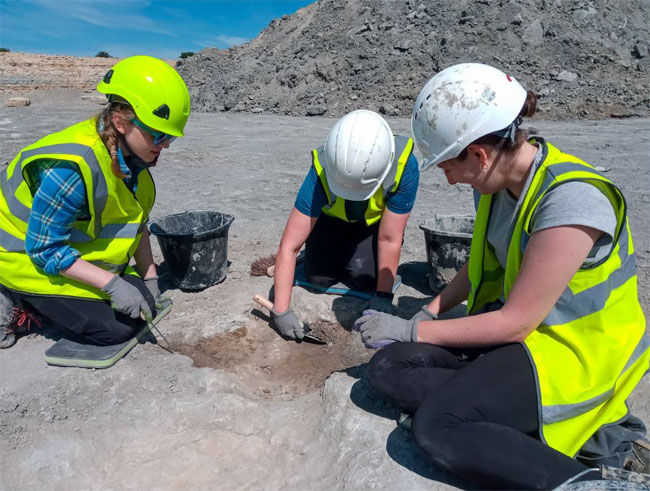
A trio of fieldworkers excavating a dinosaur track.

A trio of fieldworkers excavating a dinosaur track. Picture credit: Caroline Wood (University of Oxford).

Picture credit: Caroline Wood (University of Oxford)

The site records the tracks made by dinosaurs as they crossed a wide lagoon. These extraordinary trace fossils offer a window into the lives of Middle Jurassic dinosaurs.  A snapshot revealing details about their movements, interactions, and the tropical environment that they inhabited.

The excavations were carried out at the Dewars Farm Quarry (Oxfordshire).  Five extensive trackways were uncovered, although there are probably many more prints and tracks in this area.  The longest continuous trackway measures over one hundred and fifty metres in length.  Four of these trackways were made by sauropods.  The fifth set of prints were made by a theropod.
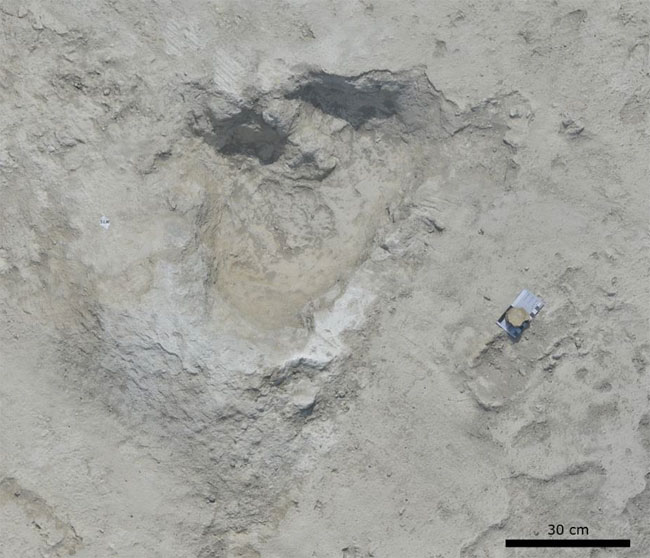
Sauropod track SE38 (Dewars Farm Quarry dinosaur tracks).

Sauropod track SE38 picture credit: Dr Luke Meade University of Birmingham.

Picture credit: Dr Luke Meade University of Birmingham

Theropod and Sauropod Tracks Interacting

One area of the quarry preserves theropod and sauropod tracks crossing over.  This raises intriguing questions about whether and how these two dinosaurs were interacting.
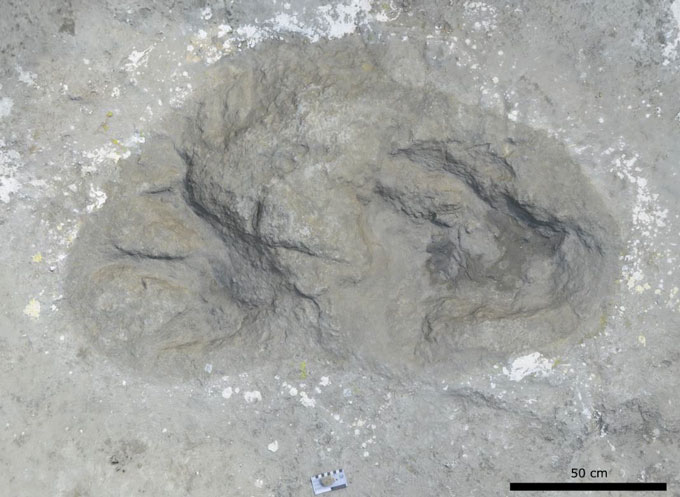
Intersection of theropod and sauropod tracks (Dewars Farm Quarry dinosaur tracks)

Intersection of theropod and sauropod tracks. The theropod track is (left) with the deeper and larger sauropod behind it (right). Picture credit: Dr Luke Meade University of Birmingham.

Picture credit: Dr Luke Meade University of Birmingham

Vertebrate palaeontologist Dr Emma Nicholls (OUMNH), commented:

“Scientists have known about and been studying Megalosaurus for longer than any other dinosaur on Earth, and yet these recent discoveries prove there is still new evidence of these animals out there, waiting to be found.”

The tracks were buried under mud and came to light when quarry worker Gary Johnson felt “unusual bumps” as he was stripping the clay back with an excavator in order to expose the quarry’s limestone floor.  When the significance of the discovery was confirmed, experts were invited to the site to explore and map the trace fossils.  The Universities of Oxford and Birmingham collaborated on this research project.  A team of more than a hundred people worked at the site on a week-long excavation in June 2024.  The scientists thanked the staff at Dewars Farm Quarry and Duns Tew Quarry for their help with this project.
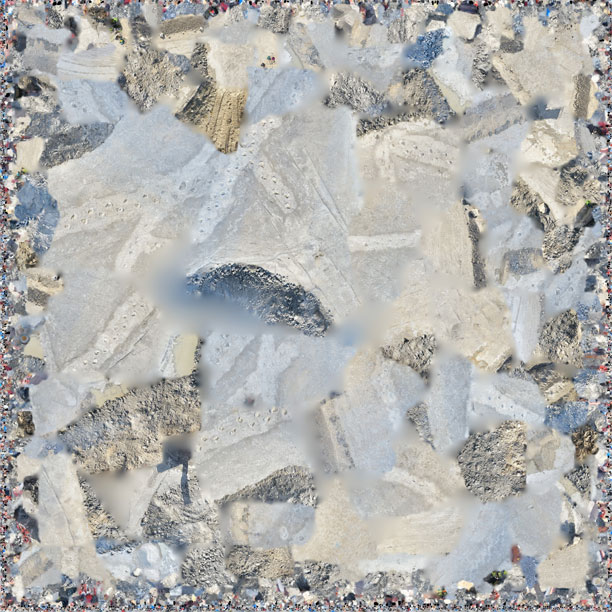
An aerial view of the dinosaur track site

An aerial view of the dinosaur track site taken on the 22nd June 2024. Picture credit: University of Birmingham.

Picture credit: University of Birmingham

Drone Photography and Three-dimensional Footprint Models

The week-long excavation revealed around two hundred dinosaur footprints.  The researchers used aerial drone photography to document the site and map the location of the tracks.  Computer modelling was employed to create sophisticated three-dimensional prints.  In addition, colour depth models of prints were made providing further insight into the tracks and the substrate.
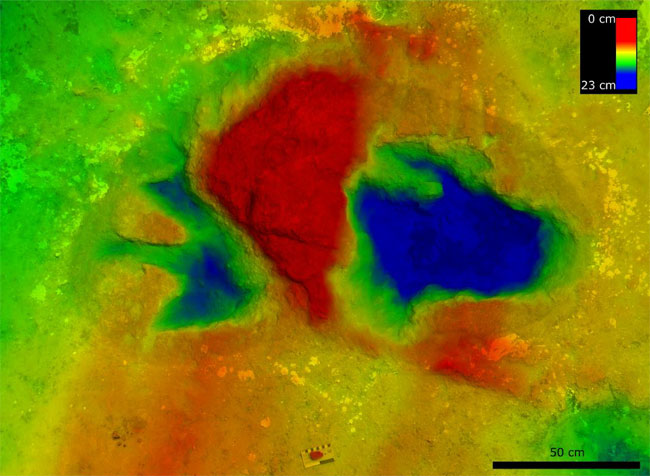
A colour depth computerised image showing a theropod and sauropod track intersecting.

A colour depth computerised image showing a theropod and sauropod track intersecting. Picture credit: Dr Luke Meade University of Birmingham.

Picture credit: Dr Luke Meade University of Birmingham

Professor of Micropalaeontology at the University of Birmingham, Kirsty Edgar explained:

“These footprints offer an extraordinary window into the lives of dinosaurs, revealing details about their movements, interactions, and the tropical environment they inhabited.”

The scientists acknowledged the assistance of Duns Tew Quarry Manager Mark Stanway and his staff.  They were invaluable in providing both local expertise and operating specialist equipment such as excavators and rock saws.

Oxfordshire Dinosaur Tracks

These are not the first dinosaur tracks to have been found in Oxfordshire.  They connect to discoveries made in the area in 1997, where previous limestone quarrying revealed more than forty sets of dinosaur footprints.  Some of these trackways are up to one hundred and eighty metres long.  At the time, these tracks provided new information on the type of dinosaurs living in the area during the Middle Jurassic.
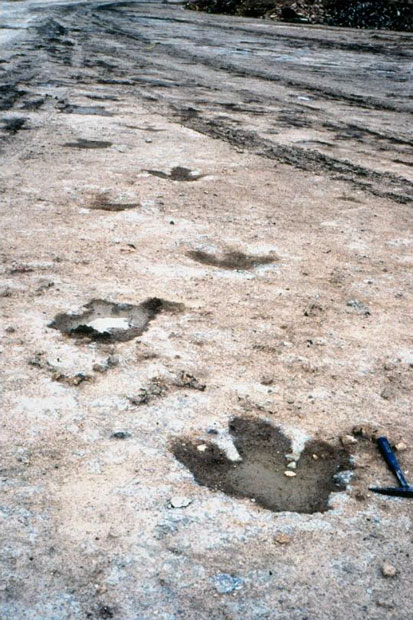
Ardley dinosaur tracks discovered in the 1990s.

The Ardley dinosaur tracks discovered in the 1990s. Picture credit: Professor Paul Barrett.

Picture credit: Professor Paul Barrett

The location was recognised as one of the most scientifically important dinosaur track sites in the world. It was subsequently designated a Site of Special Scientific Interest. However, the original site is largely no longer accessible and, since the findings predated the use of digital cameras and drones, there is limited photographic evidence. The newly discovered dinosaur tracks demonstrate the importance of this location. Even though the discoveries are separated by just thirty years, modern techniques and technology mean the prints can be recorded much more comprehensively than ever before.

Commenting on the importance of this research, Professor Richard Butler (University of Birmingham), stated:

“There is much more that we can learn from this site, which is an important part of our national Earth heritage. Our 3D models will allow researchers to continue to study and make accessible this fascinating piece of our past for generations to come.”

Documenting the Dinosaur Tracks

During the study, more than twenty thousand images of the dinosaur tracks were created. These images will provide a wealth of new data and can help provide answers to questions about dinosaur locomotion, velocity and how they interacted.

Dr Duncan Murdock, Earth Scientist at OUMNH, added:

“The preservation is so detailed that we can see how the mud was deformed as the dinosaur’s feet squelched in and out. Along with other fossils like burrows, shells and plants we can bring to life the muddy lagoon environment the dinosaurs walked through.”
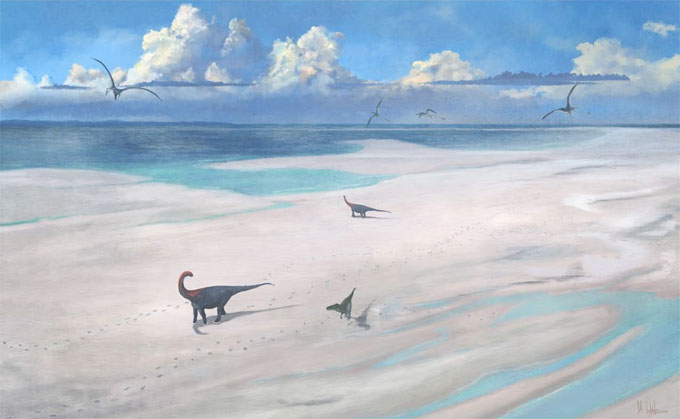
Dewars Farm Quarry in the Middle Jurassic.

An artist’s reconstruction of the Dewars Farm Quarry site 166 million years ago. A Megalosaurus follows an adult Cetiosaurus with a second sauropod in the background whilst pterosaurs soar overhead. Picture credit: Mark Witton.

Picture credit: Mark Witton

The excavation was funded by the Geologists’ Association, School of Geography, Earth and Environmental Sciences at the University of Birmingham, and the University of Birmingham Alumni Fund.
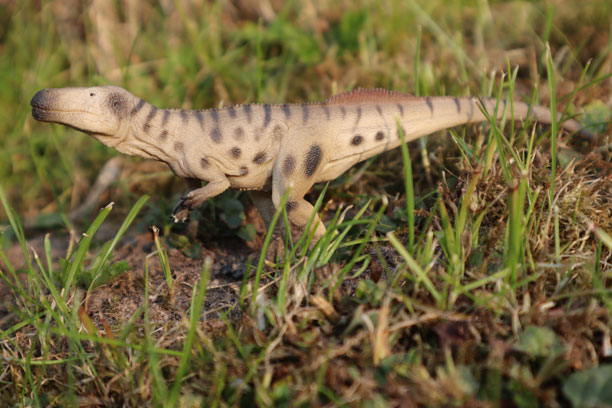
CollectA Age of Dinosaurs Popular Megalosaurus in Ambush

A replica of the first “dinosaur” to be scientifically described, the CollectA Megalosaurus in ambush figure. This dinosaur was named before the term “Dinosauria” had been coined. Picture credit: Everything Dinosaur.

Picture credit: Everything Dinosaur

The picture (above) shows a replica of a Megalosaurus (M. bucklandii).  This is a modern interpretation of this iconic theropod dinosaur.  It was introduced by CollectA in 2021, and the figure is part of the Age of Dinosaurs Popular range.

To view the range of CollectA Age of Dinosaurs Popular models in stock: CollectA Age of Dinosaurs Popular Figures.

Everything Dinosaur acknowledges the assistance of a media release from the University of Birmingham in the compilation of this article.

The award-winning Everything Dinosaur website: Dinosaur Models.

2 01, 2025

A Helpful Summary of the New CollectA Prehistoric Animal Models

By |2024-12-27T15:05:24+00:00January 2nd, 2025|Categories: Dinosaur and Prehistoric Animal Models|0 Comments

During November, Everything Dinosaur in collaboration with our chums at CollectA published details of the new for 2025 CollectA prehistoric animal models.  We had been provided with exclusive images of each figure.  In addition, we received the official CollectA images of the models.  In total, seven new prehistoric animal figures for 2025 were announced.

Here is the list:

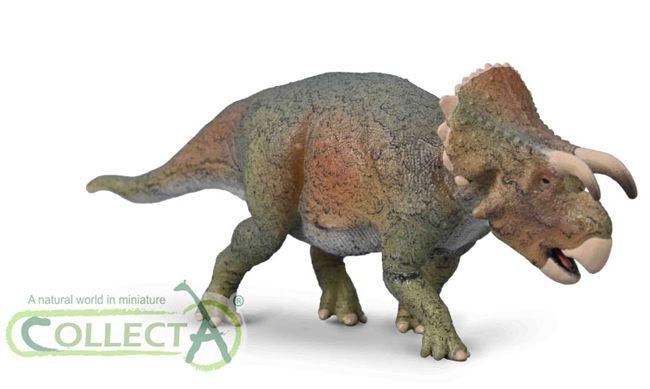
  • CollectA Age of Dinosaurs Popular Furcatoceratops.
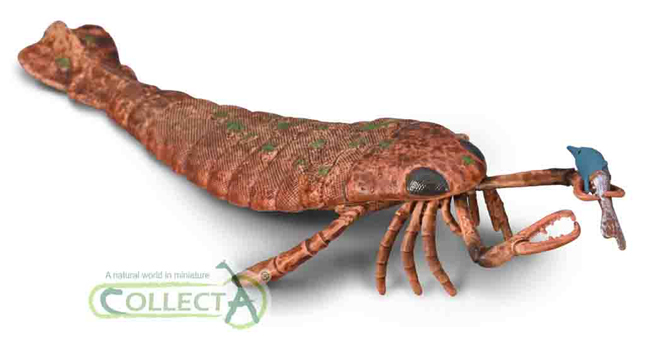
  • A replica of an eurypterid, one of the largest invertebrates that ever lived, a CollectA Deluxe 1:20 scale Jaekelopterus rhenaniae.
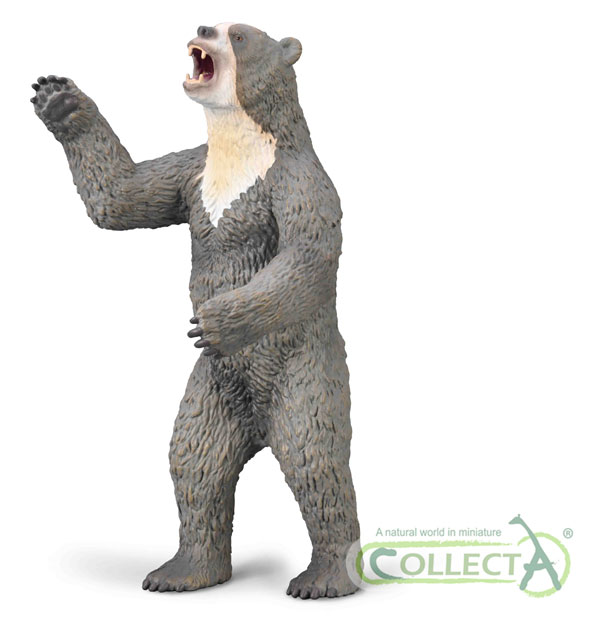
  • A prehistoric mammal model, a CollectA Deluxe 1:20 scale giant short-faced bear (Arctodus simus).
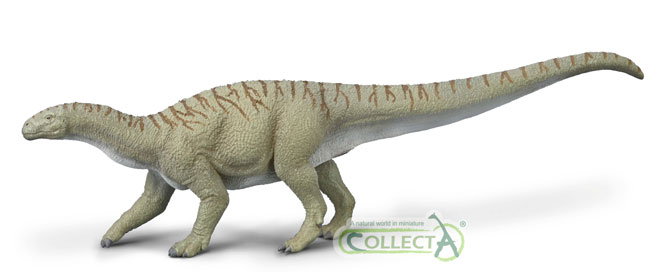
  • CollectA Deluxe 1:40 scale Ingentia prima.
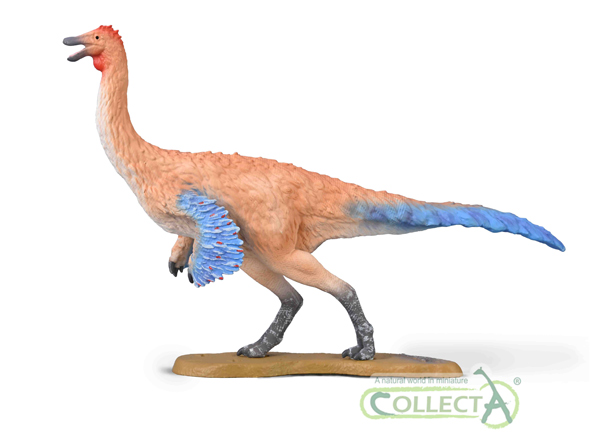
  • An ornithomimid model, a CollectA Deluxe 1:40 scale Gallimimus (G. bullatus).
  • CollectA Deluxe 1:40 scale Maip macrothorax.
  • CollectA Deluxe 1:20 scale Phorusrhacos.
The CollectA Age of Dinosaurs Popular Furcatoceratops model.

The CollectA Age of Dinosaurs Popular Furcatoceratops model.

The Furcatoceratops horned dinosaur figure is the only new introduction into the CollectA Age of Dinosaurs Popular range.

To view this range of CollectA prehistoric animal models: CollectA Age of Dinosaurs Popular Figures.

CollectA Prehistoric Animal Models

So, CollectA will introduce a total of seven prehistoric animal models next year (2025).  They are an eclectic bunch.  There are four dinosaurs, an invertebrate (Jaekelopterus rhenaniae) and a prehistoric mammal.  In addition, we have a “Terror Bird” the ferocious Phorusrhacos.

New for 2025 the CollectA Jaekelopterus model in 1:20 scale.

New for 2025 a scale model of Jaekelopterus rhenaniae.

The Palaeozoic is represented by a 1:20 scale model of the giant “sea scorpion” Jaekelopterus rhenaniae.  It is supplied with a model of a jawless fish.

The CollectA Deluxe giant short-faced bear model.

The CollectA Deluxe giant short-faced bear figure. This model will be in stock at Everything Dinosaur in 2025. This is the official CollectA image included in the media release.

Moving much closer to the present day, CollectA will introduce a replica of a Pleistocene prehistoric mammal.  The model of the giant short-faced bear is likely to be in stock at Everything Dinosaur in the early spring.

The Triassic is represented by the giant non-sauropod sauropodomorph Ingentia prima.  The fossils of Ingentia come from the Quebrada del Barro Formation of north-western Argentina. It lived around 210 million years ago (Late Triassic).  The CollectA model will be a 1:40 scale figure.

CollectA Ingentia prima dinosaur model.

The new for 2025 CollectA Ingentia prima dinosaur model.

Two Feathered Dinosaur Models

The two new CollectA theropods are both feathered.  The 1:20 scale figure of the ornithomimid Gallimimus sports a shaggy coat of feathers and is extremely bird-like.

The official CollectA Deluxe Gallimimus model image.

The official CollectA Deluxe Gallimimus model image. The model is shown in lateral view.

In contrast to the graceful Gallimimus, the second theropod – Maip macrothorax represents one of the apex predators from the Late Cretaceous of South America. Maip macrothorax was formally described in 2022 (Rolando et al). Its fossils come from the Chorrillo Formation of Santa Cruz, Argentina.  This giant, robust predator may have measured in excess of ten metres in length.  The CollectA figure is in 1:40 scale.

The official image of the new for 2025 CollectA Deluxe 1:40 scale Maip macrothorax figure. One of the new CollectA Deluxe models.

The official image of the new for 2025 CollectA Deluxe 1:40 scale Maip macrothorax figure.

Both the Gallimimus and the Maip are scale models.  One is in 1:20 scale, the other in 1:40 scale.  They are new additions to the CollectA Deluxe range of models.

To view the range of CollectA Deluxe figures in stock at Everything Dinosaur: CollectA Deluxe Prehistoric Life Models.

Last but not least, is the new CollectA Deluxe 1:20 scale replica of the South American Miocene terror bird Phorusrhacos.  It too is technically a theropod dinosaur.  However, genetic research into the Aves, suggests that the Phorusrhacidae family are related to extant falcons.

To read more about the phorusrhacid and falcon relationship: The Phorusrhacos “Terror Bird” and Falcons.

One of the new CollectA Deluxe models for 2025. The official image of the CollectA Deluxe 1:20 scale Phorusrhacos model.

The official image of the CollectA Deluxe 1:20 scale Phorusrhacos model.

All these exciting, new CollectA prehistoric animal models will be in stock at Everything Dinosaur in 2025.

To visit the Everything Dinosaur website: Dinosaur Toys.

1 01, 2025

Happy New Year (2025) from Everything Dinosaur

By |2025-01-01T07:12:21+00:00January 1st, 2025|Categories: Main Page|0 Comments

Just time to wish everyone a “Happy New Year”!  There are going to be some exciting new developments at Everything Dinosaur in 2025. As we step into a brand new year (2025), we want to take a moment to express our heartfelt gratitude to all our customers and social media followers. Your passion fuels our creativity and drives us to bring you the best models and collectibles.

In 2025, we are excited to continue our journey together.  We have some amazing plans, but more about them later.  We look forward to continuing our blog.  This year, we will pass the 7,000 article mark, that’s quite an achievement.

Happy New Year from Mike and Sue at Everything Dinosaur

Thank you for being part of our community. Here’s to a roaring New Year filled with adventure, discovery, and countless prehistoric moments!

Happy New Year 2025

Everything Dinosaur wishing all our customers and social media fans and followers a Happy New Year 2025. Picture credit: Everything Dinosaur.

Picture credit: Everything Dinosaur

We wish everyone a “Happy New Year”, a peaceful and prosperous one.  2025 is going to be interesting…

Stay curious and inspired!

Best wishes Mike and Sue.

Visit the award-winning Everything Dinosaur website: Dinosaur Toys and Models.

Go to Top