All about dinosaurs, fossils and prehistoric animals by Everything Dinosaur team members.
25 07, 2011

Potential New Ankylosaurid from Late Cretaceous Montana

By |2023-01-20T12:36:18+00:00July 25th, 2011|Categories: Dinosaur and Prehistoric Animal News Stories, Dinosaur Fans, Main Page|0 Comments

Discovery could be New Genus of Armoured Dinosaur

A dig site near to the town of Jordan (Montana, USA) could provide palaeontologists with a new genus of armoured ankylosaur to study, thanks to the excavations of two brothers from Kansas.  The ankylosaurs were a group of ornithischian dinosaurs, that evolved during the Late Cretaceous, they were descended from earlier armoured dinosaurs that are known collectively as the Thyreophora (shield bearers).  These plant-eating dinosaurs were widespread across the Northern Hemisphere by the end of the Mesozoic.  The proliferation of ankylosaurids across Asia and North America suggests that these herbivores lived in an era that was dominated by big theropod predators (the tyrannosaurs), these animals needed heavy armour and powerful tail clubs to protect themselves from these predators.

An Illustration of a Typical Late Cretaceous Ankylosaur
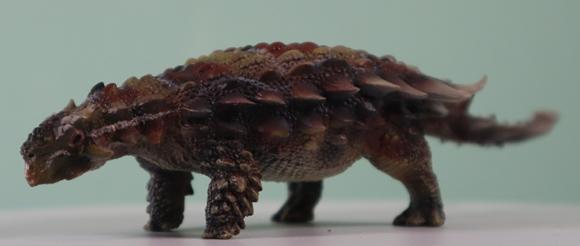
The compact and low-slung armoured dinosaur Pinacosaurus could have been adapted for digging.

A replica of Pinacosaurus (PNSO dinosaur model). Picture credit: Everything Dinosaur.

Picture credit: Everything Dinosaur

The image (above) is of an armoured dinosaur (Pinacosaurus) which can be found in the PNSO range of prehistoric animal figures: PNSO Armoured Dinosaurs and Prehistoric Animal Figures.

Armoured Dinosaur

The two Kansas based brothers, both keen fossil hunters think they have found something new while digging in the fossil rich strata of Montana.  According to Jim Kirkland, a state palaeontologist at the Utah Geological Survey, who has examined photos of the fossil that Robert and Alan Detrich are uncovering it looks like a new type of ankylosaur.

Jim stated:

“This thing is worthy of note.  There is no doubt about it.  In my mind it’s clearly a new one.”

The brothers have been digging for several weeks.  So far they have uncovered the ankylosaur fossil’s skull, part of its leg, ribs, armoured plates and some vertebrae (back bones.  Based on the fossils found so far, scientists are suggesting that this specimen could represent an animal some ten metres in length, making it one of the biggest ankylosaur fossils discovered to date.

Brother Robert commented:

“It’s huge! It’s bigger than any of the specialists have seen so far.  It’s got everybody pretty excited.”

Kirkland and the Detrich brothers hope a person or institution will step forward to buy the fossil for a museum, which would allow for further study to determine if it is indeed unique.  The effort would involve cleaning the fossil and comparing it against related animals from the fossil record to make sure it is not just a variation of a previously discovered dinosaur.  If these fossils do represent a new genus of ankylosaurid, then the brothers as the finders would have the opportunity to name this dinosaur.  Robert Detrich said, if given the opportunity, he would like to call it “Enormasaurus” in memory of his late mother Norma.

Robert added:

“It’s exciting.  It really is.  When he came back and said it’s pretty clearly a new genus, and these guys write papers on ankylosaurs so they know their stuff.”

Robert Detrich, who is from Wichita, and his brother, who lives in Lawrence, plan to return to Kansas in about three weeks.  Besides the ankylosaur fossil, the brothers also have been digging up a Triceratops fossil.  Perhaps the brothers will be able to find the front limbs of their Triceratops, as the forelimbs of these horned dinosaurs are rarely found in association with other elements of the specimen.
24 07, 2011

Piecing Together Ornithocheirus an Amazing Pterosaur Discovery

By |2024-04-22T12:35:25+01:00July 24th, 2011|Categories: Dinosaur and Prehistoric Animal News Stories, Dinosaur Fans, Main Page|0 Comments

The Confusion over Ornithocheirus

The pterosaur known as Ornithocheirus is perhaps more familiar to dinosaur fans than many other types of flying reptile.  It appeared in the ground breaking documentary television series “Walking with Dinosaurs”, in fact it was the star of one of the episodes “Beneath a Giant’s Wings”.  It is regarded my many as one of the largest pterosaurs known to science with many young dinosaur fans often quoting the text from the many BBC publications associated with the original television series that state that Ornithocheirus was “the size of a small plane”.

Ornithocheirus

As with most aspects of palaeontology the known facts are not permitted to get in the way of a good story.  It is true that some exceptionally large pterosaur fossil fragments were found in the Santana Formation of north-eastern Brazil and it was from this evidence that the BBC were able to depict Ornithocheirus as such a huge animal.  However, as far as we know those fossils have yet to be fully researched and although they are associated (for the moment), to the Ornithocheirus genus, claims for a twelve metre long wingspan for a member of this particular genus of the pterosauria are doubted by many palaeontologists.

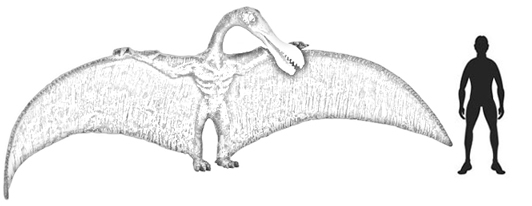
A Drawing of Ornithocheirus

Ornithocheirus “Bird Hand”.

Picture credit: Everything Dinosaur

The trouble with pterosaurs and with Ornithocheirus in particular is the fragmentary and often highly eroded nature of their fossilised bones.  The English palaeontologist Harry Govier Seeley was given the task of trying to classify the many hundreds of pterosaur bones that had been found in the Cambridge Greensand deposits of England, a project that he started in 1869.  He was commissioned to sort out the flying reptile fossils of the Sedgwick Museum in Cambridge on behalf of the museum itself and Cambridge University.  The young, enthusiastic Seeley was beset with problems from the very beginning.  These rocks (Cambridge Greensand) represent marine sediments deposited by encroaching sea water over what was to become England during the Early Cretaceous Period.

The highly fragmentary and eroded nature of the fossils has led a number of scientists to conclude that the pterosaur fossils were eroded out of older strata on the sea shore and redeposited.  From over 1,000 fossils, Seeley attempted to characterise and classify individual species of Ornithocheirus.  His original work has been re-examined by numerous other scientists over the years and something like forty separate species of Ornithocheirus are now listed but most of these are “Nomen dubia” – names given to organisms whose validity is in doubt.

From the fossils discovered to date, Ornithocheirus type pterosaurs were particularly widespread with fossils found in Europe, Australia and Africa, the largest of their kind probably has wingspans of approximately six metres, not the size of a small plane but still large for a pterosaur.

To view models of pterosaurs and other dinosaur toys take a look at “Les Dinosaures” from Papo: Papo Dinosaurs and Pterosaurs.

23 07, 2011

Beautiful Fossils Show South American Origins of Eucalyptus

By |2024-04-22T12:34:50+01:00July 23rd, 2011|Categories: Dinosaur and Prehistoric Animal News Stories, Main Page|0 Comments

Eucalyptus Fossils from Argentina

Eucalyptus trees may be restricted to Australia and its outlying islands these days but new fossil evidence suggests that this ancient type of tree may have flourished in South America.  Fossils of leaves, flowers, fruits and buds found in Patagonia (Argentina) indicate that this type of tree was around in the Palaeogene and they represent the only scientifically validated Eucalyptus fossils (macro-fossils), identified from outside Australasia.

The fossils have been dated to approximately 52 million years ago and represent a sub-genus of Eucalyptus known as Symphyomyrtus, which makes this sub-genus much more ancient than previously thought.

Eucalyptus Fossil

The research team identified a number of structures characteristic of Eucalyptus in the morphology (shape) of imprints of plant material preserved as fossils.  Some key features included, long, thin leaves with smooth edges, dots on the leaves that reveal oil glands and scars on the fruits where petals and sepals fell off

The evolution of the Eucalyptus and its relatives has been poorly documented, due to the lack of fossil evidence.  In the past, a few scientists had claimed to identify Eucalyptus fossils from South America but those records failed to hold up to formal scientific scrutiny using modern research techniques.

Maria A. Gandolfo, a senior researcher in the Dept. of Plant Biology at Cornell University and one of the lead authors on the paper stated:

“The genus Eucalyptus is restricted to Australia and a few surrounding islands, and it is completely extinct in South America which makes this discovery very significant not only for botanists and palaeobotanists but also for [its] biogeographical implications.”

The fossils were found at a site called Laguna del Hunco, north-western Chubut Province in Patagonia.  Although petroleum exploration geologists first discovered fossils at this site in 1932, a team of researchers from the United States and Argentina including Gandolfo and Elizabeth Hermsen, a postdoctoral associate working in Gandolfo’s lab, collected important fossils in 2009 that included fruits, branching structures that support the fruits, three flower buds and a flower.

Elizabeth, who is also a lead author on the scientific paper detailing the research team’s work said:

“The buds provided important information that placed them within the genus Eucalyptus; they really helped clinch the identity of the fossils.”

Depicting the Evolutionary Relatedness in Groups of Organisms

The researchers also used a computer programme and analysis of the morphology to create a phylogeny, a branching diagram that depicts the evolutionary relatedness among groups of organisms (species, populations and so on), of Eucalyptus.  Because the researchers were able to accurately date the fossils and then place them in a phylogenetic context in relation to living plants, the findings may now be used as a reference point to test the results of recent molecular dating studies that have calculated the age of the Eucalypts.

The research was conducted in collaboration with colleagues from Pennsylvania State University, the Denver Museum of Nature and Science, the Universidad de Buenos Aires and Museo Paleontológico E. Feruglio, Argentina.  The work was funded by an American Recovery and Reinvestment Act Grant from the National Science Foundation to Gandolfo.

For models of prehistoric trees and plants as well as prehistoric animals: Models of Prehistoric Plants and Prehistoric Creatures (CollectA).

22 07, 2011

The Wandering Duck-billed Dinosaur a New Clade of within the Hadrosauridae

By |2024-04-22T10:24:24+01:00July 22nd, 2011|Categories: Dinosaur and Prehistoric Animal News Stories, Main Page|0 Comments

Early Duck-billed Dinosaur Discovery Adds to Debate over Evolution of Hadrosauridae Crests

Scientists have a new clade of duck-billed dinosaur to study, and thanks to two almost simultaneous fossil discoveries in the United States; more information on the evolution of Hadrosauridae head crests could emerge as well as a better understanding of the geographical distribution of ornithischian genera in the western United States during the Late Cretaceous.

Duck-billed Dinosaur

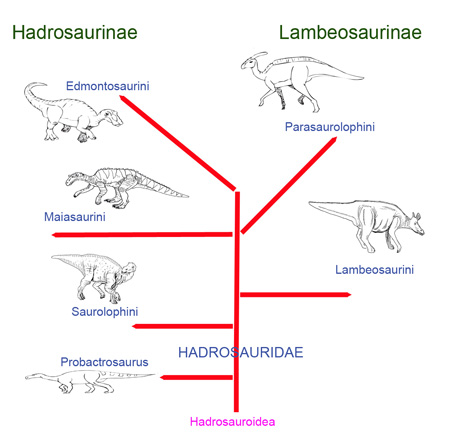
The duck-billed dinosaurs, so called as they had beaks that resembled the broad beaks of a duck, were a very successful group of plant-eating dinosaurs that evolved during the Cretaceous and rapidly diversified into numerous genera.  These types of dinosaur are broadly divided into two main sub-families, the hollow crested Lambeosaurinae and the predominately solid crested or crest absent – Hadrosaurinae.  The discovery of a new genus of duck-billed dinosaur named Acristavus gagslarsoni has led to the establishment of a new clade of hadrosaurs, the Brachylophosaurini and may shed light on the origins of these dinosaurs and how they diversified into two main sub-families.

Acristavus gagslarsoni

The first fossil specimen was found in Montana in 1999 by the Old Trail Museum staff and volunteers, including a group of “junior palaeontologists” from the University of Chicago and was excavated in 2001 and 2002 from the Two Medicine Formation (Montana) by study co-author Rebecca Hanna for the Museum of the Rockies in Bozeman, Montana, where it now resides.  By an extraordinary coincidence, a second specimen of the same dinosaur species was discovered just a a year after the Montana specimen (2000).

This discovery was made in the Grand Staircase Escalante National Monument strata (Wahweap Formation – southern Utah) by an entomologist from Brigham Young University C. Riley Nelson (who has also co-authored the published paper on this new dinosaur with Rebecca).

The strata at these two sites date from the same geological time (Campanian faunal stage) and the two finds have been dated to approximately 79 million years ago.  This makes A. gagslarsoni the oldest known hadrosaur from North America and it is remarkable that two specimens of the same dinosaur species were found within a year of each other, but at locations more than six hundred miles apart.

A Wandering Hadrosaur

Terry Gates, a research associate at the Chicago Field Museum stated:

“To find two specimens six hundred and fifty miles apart that lived at virtually the same time, and were discovered within a year of each other is extremely rare in dinosaur palaeontology”.

With elements of the skull to study including the frontal and postorbital bones along with the dentary (lower jaw) scientists have noted that there is a lack of any cranial ornamentation (no crest),  which is in stark contrast to virtually every other of genus of hadrosaur dinosaur discovered to date.  This discovery, an early type of hadrosaur, what is believed to be a basal North American duck-billed dinosaur lacking any form of head crest or ornamentation adds weight to the theory that the two sub-families of this type of dinosaur, the Lambeosaurinae and the Hadrosaurinae independently evolved head crests and ornamentation.

As for explaining why the fossils were found so far apart a spokesperson for Everything Dinosaur commented:

“There could be a number of reasons why these specimens were found so far apart.  For example, most scientists believe that these dinosaurs lived in herds and they may have made extensive migrations in search of seasonal feeding opportunities or indeed travelling to favoured nesting sites.  Secondly, this type of basal hadrosaur may have had a wide geographical distribution, perhaps it had an inherent advantage over other types of plant eating dinosaur around at the time, which made this particular type or herbivore very successful.”

A Simplified Hadrosaur Family Tree

Tracing the Evolution of Duck-Billed Dinosaurs.

Picture credit: Everything Dinosaur

The Brachylophosaurini consists of three hadrosaur genera, Acristavus plus Maiasaura, whose fossils have also been found in Montana and Brachylophosaurus from which the clade gets its name. This dinosaur was again widely distributed with a known range from Montana in the south to Alberta (Canada), in the north.  These dinosaurs together constitute the earliest clade of North American hadrosaurs.

The Acristavus fossils indicate that this dinosaur had anatomical characteristics seen in both Brachylophosaurus and Maiasaura specimens, but not necessarily shared between them.  This suggests that Acristavus may be ancestral to these other dinosaur genera

To view models and replicas of duck-billed dinosaurs including members of the Hadrosaurinae: Hadrosaurinae Dinosaur Models and Prehistoric Animal Figures.

21 07, 2011

A Deep-Snouted Prehistoric Crocodile that could Gallop like a Horse

By |2023-01-20T12:13:29+00:00July 21st, 2011|Categories: Animal News Stories, Dinosaur and Prehistoric Animal News Stories, Main Page|0 Comments

Seventy-Million-Year-Old Prehistoric Crocodile

Researchers at McGill University (Montreal) and the University of São Paulo (Brazil) have described a new species of terrestrial crocodile that stalked the Late Cretaceous plains of Brazil.  This bizarre, deep-snouted crocodile had fang-like teeth and long legs indicating that this was a crocodile which, unlike its extant cousins was very comfortable out of the water.

To McGill palaeontology professor Hans Larsson, one of his graduate students Felipe Montefeltro and Professor Max Langer of the University of São Paulo, a recently discovered crocodile skull looks a little like the skull of a dog with its deep, broad features and its large teeth.  However, to the casual observer this is one creature that you would not like to come across, after all it could probably run quicker than your average person.

Named Pissarrachampsa sera, the fossil was discovered by a municipal worker in 70-million-year-old Cretaceous sediments in a small town in Minas Gerais, Brazil.  Sent to check it out by the Society of Palaeontology in Brazil, Langer and Montefeltro realised they had something very special.  The three researchers have documented their observations in the July edition of PLoS One (the public library of science).

Pissarrachampsa sera

Familiar with Hans Larsson’s work on crocodiles and dinosaurs, Montefeltro got a study grant from the Brazilian government and brought the fossil to Larsson’s lab at McGill’s Redpath Museum, where they have been studying the head and finding that this remarkable terrestrial crocodile reveals almost as much as it conceals.

Professor Larsson stated:

“Whereas modern-day amphibious crocodiles have low and flat heads, this new find gives us one of the first detailed insights into the head anatomy of this weird group of extinct crocs called Baurusuchia that feature tall, dog-like skulls with enlarged canines, and long-limbed body proportions.”

Their ecology was probably similar to that of wild dogs living today.  Given the number and size of their teeth, the researchers believe these carnivorous crocodilians fed on animals about as big as they were, in the 5 metre plus range.  So dinosaurs and other reptiles would have been on the menu.  Whether these crocs. formed packs like hunting dogs is unknown.  They would have used relatively stereoscopic vision to track prey and, rather than scramble like the crocs we see today, they galloped along on elongated limbs.

A sketch by Larsson imagines how this newly discovered species would have appeared in predatory motion.  Though the body might seem more dinosaur in shape than today’s crocodile, the fossil head carries the definitive characteristics of crocodiles from that era, including a well-developed secondary palate, socketed teeth, advanced cranial air spaces, roughened bone surfaces, plated armour, and massive attachments for jaw closing muscles.

Recent CT scans are offering more fascinating aspects of the fossil, such as its brain size and shape and hearing abilities.  Baurusuchian crocodiles are characterised by a significant number of unique anatomical features such as low tooth counts, tall, thin skulls, forward facing nostrils, and derived jaw-closing muscle attachments.  After comparing the new species to other Baurusuchids and their relatives, the researchers noticed large gaps on either side of the fossil’s morphology.

Montefeltro commented:

“We are dealing with an exceptionally divergent lineage of extinct crocodile diversity.  There are many fossils that still need to be found to link this crocodile to those who came before and after.”

Montefeltro explained that the name of this new member of the croc family pays homage to the location of the fossil’s discovery.  Piçarra is a regional word for sandstone and Champsa is a Latinisation of the Greek word for crocodile. Sera, is Latin for late – which refers to both the circumstances in which the fossil was found, that is, it was almost left behind in a 2008 expedition because of a tight schedule and, the Minas Gerais state flag that quotes Virgil “Libertas Quæ Sera Tamen” meaning “Freedom, Albeit Late.”  One thing that is for sure, if these animals were around today, then a any unwary tourist to its Brazilian homeland could very well end up “late and lamented”

Though their importance for Crocodyliform evolution is widely recognised, there are still a lot of questions about the internal relationships of the group not yet studied, but which all three researchers plan to explore.  A digital reconstruction of the fossil’s brain cavity is a work in progress and will be presented later this fall at the Society of Vertebrate Palaeontology’s annual meeting.

Recently, Safari introduced a model of Late Cretaceous terrestrial crocodile called Kaprosuchus.  To view the Safari model range and dinosaur models: Kaprosuchus and Other Archosaurian Models.

A Model of the Prehistoric Crocodile – Kaprosuchus

Papo Kaprosuchus model.

Papo Kaprosuchus model, the pen provides scale. Picture credit: Everything Dinosaur.

Picture credit: Everything Dinosaur

To view the Papo prehistoric model range: Papo Kaprosuchus and Prehistoric Animal Figures.

Reproduced with kind permission: The McGill Reporter who helped Everything Dinosaur compile this news story about a prehistoric crocodile from Brazil.

20 07, 2011

Yes, There are Cycads Around Today – Amazing Prehistoric Plants

By |2024-04-22T09:53:58+01:00July 20th, 2011|Categories: Educational Activities, Main Page|4 Comments

Cycads Survivors from the Palaeozoic

Cycads, those exotic, tree-like ferns originated sometime in the Palaeozoic probably during the Permian Period, although some scientists have suggested that they date back to the Carboniferous.  The trouble with plants is that they tend not to fossilise very well and as a result the fossil record for plant remains is very sparse.  To add to the problems encountered by palaeobotanists, plants tend not to fossilise as a whole, individual leaves, cones, pollen, roots and trunks are preserved.  As these different parts are found separately in the rock record, and are discovered at different times, each piece tends to get a different scientific name.  The tree-sized clubmoss (Lycopsid) Lepidodrendron has about ten binomial names associated with it.  For example, the fossilised roots are referred to as Stimaria and the base of the trunk is known as Knorria.

Cycads

All very confusing, but as we were reminded yesterday, prehistoric plants are all around us.  Sphenopsids (horsetails) originated perhaps as far back as the Devonian, but the Equiseteum, of which there are about twenty species are still around today.  You can purchase Japanese horsetails at most garden centres and very nice they look to planted close to water.  Cycads, we think a number of genera are still around today.  These palm-like seed plants with massive, thick stems and their crown of fern-like fronds were some of the most common types of plants to be found during the Jurassic and Cretaceous.  Cycads produced by means of seeds, mostly borne on modified fronds grouped together to form a cone.  The only living exception is the most primitive living example, Cycas, where modified fronds bearing seeds are separate from one another.  Modern cycads are relatively squat compared so some of their extinct relatives that could reach twenty metres tall or more.  They are found in frost free regions of the world and a number of genera can be found on several continents indicating a much wider distribution in the past.

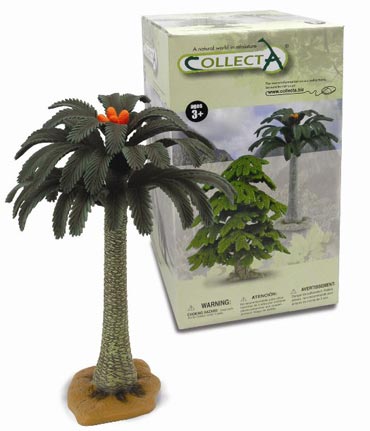
The CollectA Cycad Model

What is a cycad?

A welcome addition to the CollectA model range, a replica of a cycad.

To view replicas of prehistoric plants in the CollectA range: Prehistoric Plant Models and CollectA Figures.

There were even cycads growing at the South Pole in Cretaceous times, although these types of cycads shed their leaves as winter commenced.

Visitors to Kew Gardens can see a giant Eastern Cape cycad, believed to be the world’s oldest pot plant.  This plant was brought to England in 1775.

19 07, 2011

A Review of the New “Prehistoric Times” Issue 98

By |2024-04-22T10:20:23+01:00July 19th, 2011|Categories: Dinosaur and Prehistoric Animal News Stories, Dinosaur Fans, Main Page|0 Comments

“Prehistoric Times” Summer Edition – A Review

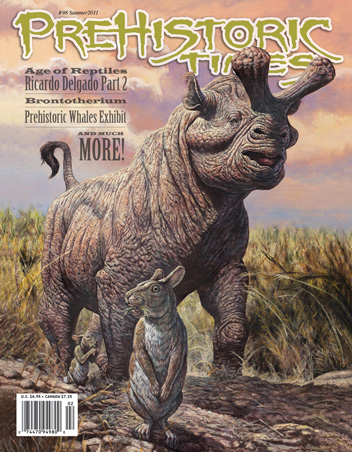
The countdown to issue 100 of the quarterly magazine “Prehistoric Times” is well underway and to whet our appetites somewhat issue 98 (summer 2011) arrived yesterday.  The front cover features superb artwork from Mark Hallett, in an illustration he calls “The Inheritors” he depicts two contrasting types of mammals that roamed Wyoming 33 million years ago – a prehistoric rabbit (Paleolagus haydeni) and the huge Brontops robustus.

Brontotherium in all their bizarre shapes and forms are depicted inside the magazine with an article written by Phil Hore and illustrated by readers artwork.  The featured dinosaur is Tenontosaurus an ornithopod forever associated with the meat-eater Deinonychus, but there is much more to this dinosaur than that and an article “fleshes” out what we know about this highly successful genera.

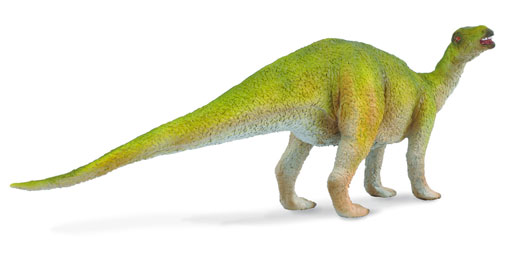
The CollectA Age of Dinosaurs Tenontosaurus Model

CollectA Tenontosaurus model.

The CollectA Age of Dinosaurs Tenontosaurus model.

To see the extensive CollectA Age of Dinosaurs model range available from Everything Dinosaur (whilst stocks last): CollectA Tenontosaurus and Other Dinosaur Models.

The Stance of Sauropods

Tracy Lee Ford’s contribution is a continuation into his assessment of the stance of sauropods.  Were they capable of bipedalism or indeed adopting a tripodal stance?  The evidence and arguments are thoughtfully presented along with helpful and informative anatomical drawings.  Of particular interest was the preamble on the early scientific studies regarding sauropod stance, this helps to put the current theories into their proper context and it is always a pleasure to be reminded of those theories (that persisted until the 1970s) that these long-necked herbivores were mainly aquatic.

The Front Cover Illustration of “Prehistoric Times” (Issue 98)

Picture credit: Mike Fredericks

Paul McFarland reviews Dinosaur theme parks in the Czech Republic and Slovakia and there is the usual update on model releases and new kits plus part two of the interview with palaeo-artist Ricardo Delgado.  All-in-all this issue of “Prehistoric Times” is jam-packed with information, artwork and articles – well worth the subscription.

Prehistoric Times website: Prehistoric Times.

18 07, 2011

Monsters from Manitoba (Important Fossil Site Excavation Work Continues)

By |2024-04-22T12:22:04+01:00July 18th, 2011|Categories: Dinosaur and Prehistoric Animal News Stories, Main Page|0 Comments

Major Fossil Excavation Site Continues in Manitoba

A very significant fossil excavation is continuing in Manitoba province (Canada), with researchers and field workers from the Canadian Fossil Discovery Centre working on strata deposited during the Late Cretaceous.

Fossil Excavation

In 2010, the Centre served notice that a massive Xiphactinus fish and mosasaur skeleton were being unearthed at one of its palaeontological dig sites.  The excavation of these skeletons continues with great success and has lead to a number of other significant fossil discoveries in 2011, providing an intriguing insight into marine environments in the Late Mesozoic.

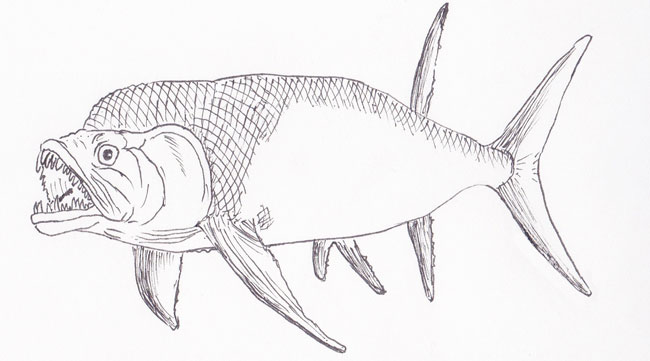
A Drawing of the Fearsome Xiphactinus

Xiphactinus drawing

The Xiphactinus drawing that was commissioned by Everything Dinosaur as the company prepares for the arrival of the CollectA Xiphactinus 1:40 scale replica. Picture credit: Everything Dinosaur.

Picture credit: Everything Dinosaur

Museum curator Anita Janzic explained:

“This dig site continues to be extremely productive, with the appearance of even more fossils than anticipated.  Our excavation of the Xiphactinus and mosasaur skeletons from 2010 has allowed us to find another mosasaur, a squid and some Ichthyornis (bird) fossils.  We are finding layer upon layer of exciting fossil discoveries.  It is amazing how one small dig site is producing such an abundance of diverse fossils.”

The scientific information being generated from this dig site could have far reaching global impact for the palaeontological community.  The dig site is providing a high quality and isolated look into the detailed passage of time during the Late Cretaceous period.

Assistant curator of the Centre, Joseph Hatcher stated:

“This dig site is showcasing the most exciting five inches of rock that I’ve ever witnessed.  This small layer of rocks is suggesting a rapid change in the palaeoecology and environment of prehistoric Manitoba.  There is great science emerging from this dig site that has our team very excited!”

The rock units at this dig site are also of increasing interest to the Manitoba Geological Survey, with the appearance of a previously unseen rock layer for southern Manitoba.

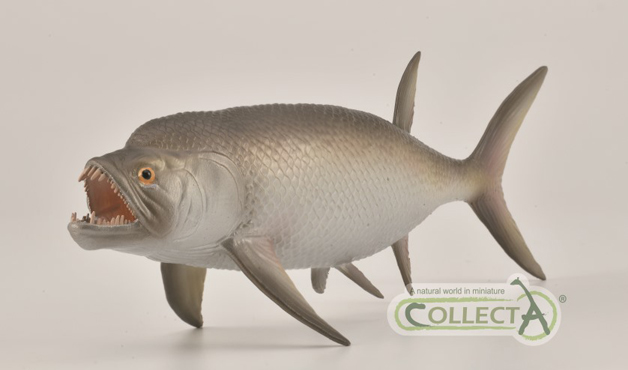
A Model of the Fearsome Prehistoric Fish Xiphactinus

CollectA Deluxe Xiphactinus model.

The CollectA Deluxe 1:40 scale Xiphactinus prehistoric fish model.

Xiphactinus Fish

The ironic element of this dig site is that the most provoking skeleton, the Xiphactinus fish, might be the last set of fossils to be removed from the site.  This excavation continues to unearth other new & exciting fossil discoveries, in the rock layers above the fish skeleton, which must be properly processed first.  Xiphactinus grew to lengths of up to 6 metres and has been nicknamed the “Bulldog fish” due to its ugly appearance.

The new discoveries include another mosasaur, two unidentified fossils, squid fossils and bird fossils.  The two unidentified fossils are of great interest to the palaeontologists on staff at the Centre and we look forward to hearing more about these discoveries in the future.

To view replicas of marine reptiles including mosasaurs and a model of the fearsome prehistoric fish Xiphactinus, check the CollectA Deluxe models section of our our website: Scale Models of Prehistoric Animals (CollectA Deluxe).

17 07, 2011

Countdown to Sea Monster Exhibition

By |2023-01-20T10:08:50+00:00July 17th, 2011|Categories: Dinosaur and Prehistoric Animal News Stories, Dinosaur Fans, Educational Activities, Main Page|0 Comments

Sea Monster Exhibition Opens at the Bournemouth International Centre

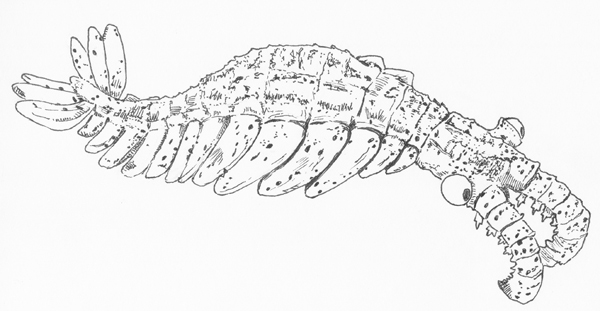
The Purbeck Hall at the Bournemouth International Centre (BIC) is playing host to a whole new cast of prehistoric characters as the countdown to the opening of the BBC Sea Monsters Exhibition continues.  With just under a week to go; the enthusiastic staff are busy settling in their new charges – amazing creatures such as Anomalocaris the world’s first super-predator, giant sharks and fearsome marine reptiles, one time residents of Dorset.

An Illustration of Anomalocaris

Anomalocaris

Anomalocaris drawing. Picture credit: Everything Dinosaur.

Picture credit: Everything Dinosaur

Sea Monster Exhibition

The Sea Monsters Exhibition gives visitors the chance to come face to face with some of the largest predators that hunt the sea today, including the iconic great white shark and giant squid, whilst witnessing some of the strangest creatures and latest scientific discoveries from our most recent explorations of the deep in the fantastic deep sea submarine simulator.

Take a trip through the history of the World’s oceans and learn more about these incredible sea monsters, from the ancestors of all back-boned animals to the one of the largest known pliosaurs – Liopleurodon; who was named and described from just a single, huge tooth found across the channel.  Learn all about what is most likely the biggest fish to have ever lived – Leedsichthys, a fish with a mouth so big it could have served as a car park.  Explore the technology used to make these amazing creatures ‘swim again’ – bringing back leviathans from the deep.

Arthropods of the Palaeozoic

Scientists used to think that creatures like Anomalocaris lived during the Cambrian Period, but a recent discovery of giant fossils in Morocco suggest that this fearsome, distant relative of spiders survived well into the Ordovician Period.

To read more about this discovery: Anomalocaris Discovery.

 In “Sea Monsters : A Walking with Dinosaurs Trilogy”, the BBC used the same production team and technologies behind the highly acclaimed “Walking with Dinosaurs” and “Walking with Beasts” series to bring a number of these marine creatures “back to life”.

A spokes person for Everything Dinosaur commented:

“As far as we know life began in the sea and with three-quarters of our planet covered in water, there is still a lot to learn and discover.  However, animals in a marine environment generally have a better chance of becoming fossils than creatures that live far away from water and the fossil record is full of incredible evidence providing scientists with an insight into some of the bizarre and amazing creatures that once lived in the sea.  The Sea Monsters exhibition at the BIC is a great place to get acquainted with some of them.”

The BBC Sea Monsters exhibition runs from July 23rd until September 11th at the BIC (Bournemouth), for ticket enquiries and other information regarding Sea Monsters check out the Everything Dinosaur blog.

For models of marine reptiles and other ancient sea creatures: CollectA Deluxe Sea Monsters and Marine Reptiles.

16 07, 2011

Palaeontology Meets CSI – Rotten Dinosaur Egg Reveals Ancient Scavengers (New Research Paper)

By |2024-04-22T10:22:16+01:00July 16th, 2011|Categories: Dinosaur and Prehistoric Animal News Stories, Dinosaur Fans, Main Page|0 Comments

Titanosaurid Egg Containing Cocoons of Wasps Discovered

In a scenario not out of place in a television detective series, scientists have carefully examined the fossilised remains of insects preserved inside a seventy-million-year-old dinosaur egg, to try to piece together the story of how this egg was broken and what it can tell them about the role of insects in dinosaur dominated food chains.  The fossil forensics have been conducted upon the egg of a huge, long-necked Cretaceous plant-eater known as a titanosaur.  These creatures were some of the largest land-living animals of all time, but their eggs are surprisingly small given the fact that these animals could grown to upwards of thirty metres in length and weigh perhaps as much as ten elephants.

Titanosaurid Egg

Exceptionally preserved fossils of insect cocoons have allowed researchers in Argentina to describe how wasps played an important role in food webs devoted to consuming rotting dinosaur eggs. The research is published in the scientific journal Palaeontology.

The approximately 70-million-year-old eggs, from gigantic titanosaur sauropod dinosaurs were discovered in 1989 in the Patagonia region of Argentina, well known for yielding fossils of sauropod dinosaur eggs and even embryonic dinosaurs.  Only recently it was discovered that one of the broken eggs contained tiny sausage-shaped structures, 2-3 cm long and 1 cm wide.  The structures closely resembled fossilised insect cocoons, and were most similar in size and shape to the cocoons of some species of modern wasp.

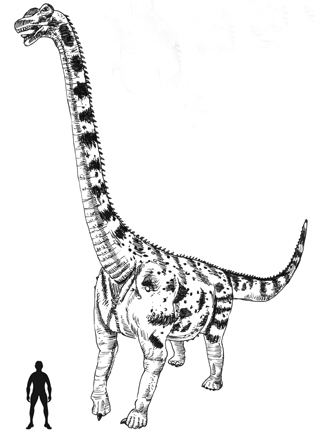
Some Titanosaurs were Huge!

Illustration of a giant titanosaur.

Huge dinosaurs – titanosaurids.  An illustration of a giant titanosaur.  Picture credit: Everything Dinosaur.

Picture credit: Everything Dinosaur

Pictures released show the bottom half of the broken sauropod egg, the cocoons of wasps can be made out and the coin provides scale.  Each wasp cocoon is approximately 2 cm long.

There are many records of fossilised dinosaur eggs, and even several records of fossil cocoons, but, as author Dr Jorge Genise of the Museo Argentino de Ciencias Naturales stated:

“This is the first time that these cocoons are found closely associated with an egg.”

A Rare Insight into the Role of Insects

This fossils provides a rare insight into the role played by insects and how they interacted with the Dinosauria.

Dr Genise went onto state the results of their forensic examination indicate that:

“Wasps probably participated in the food web, mostly composed of scavenging insects, which developed on the rotten egg.”

Such creatures make-up of carrion communities – spiders, beetles and other creatures populating rotting organic matter, today modern forensic police scientists use insect and other scavenger evidence to try to date corpses, as any viewer of the CSI franchise would know.  The work done by the researchers on the dinosaur egg is more familiar to us from the screens of crime scene investigation documentaries.

The numbers and different types of creatures indicate the length of deposition and the time since death.  In this particular CSI, it appears that the dinosaur egg was broken by force, and subsequent fractures in the egg shell allowed scavenging creatures to feed upon the contents.  At egg sizes of around 20 cm, this represents a sizeable amount of yolk!  Other creatures later appeared to feed not upon the egg contents, but on the initial scavengers themselves.  The wasps represent the top of the food web, and could have been feeding on insects or spiders gorging on rotting egg contents.

These scavengers also played an important role in cleaning up nest sites.  Palaeontologists believe that some dinosaurs revisited nest sites year after year to lay new clutches of eggs.  Carrion communities were essential to removing decaying material in advance of new nesting seasons.  This new discovery gives us an insight into the murky world of insect communities that thrived at the feet of gigantic dinosaurs.

For models and replicas of titanosaurids and other dinosaurs: Titanosaurs and Dinosaurs (CollectA Prehistoric Life).

Go to Top