All about dinosaurs, fossils and prehistoric animals by Everything Dinosaur team members.
14 12, 2021

A New Species of Giant Sauropod is Described

By |2024-09-16T21:40:57+01:00December 14th, 2021|Categories: Adobe CS5, Dinosaur and Prehistoric Animal News Stories, Dinosaur Fans, Main Page, Palaeontological articles, Photos/Pictures of Fossils|0 Comments

Scientists have re-examined fossil bones associated with the Chinese mamenchisaurid dinosaur Hudiesaurus sinojapanorum and propose that the robust limb bone associated with this sauropod represents an entirely different genus which they have named Rhomaleopakhus turpanensis.

The forelimb bones are exceptionally stout and strong, particularly the ulna. These fossils represent a giant sauropod. The researchers, who include Professor Paul Barrett of the London Natural History Museum, speculate that strong forelimbs could have helped this dinosaur to “push off” from the ground so that it could rear up onto its back legs to feed. Strong forelimbs would also have helped to resist the deceleration forces as the huge dinosaur lowered itself back onto all fours.
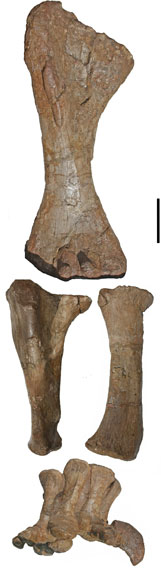
Rhomaleopakhus right forelimb

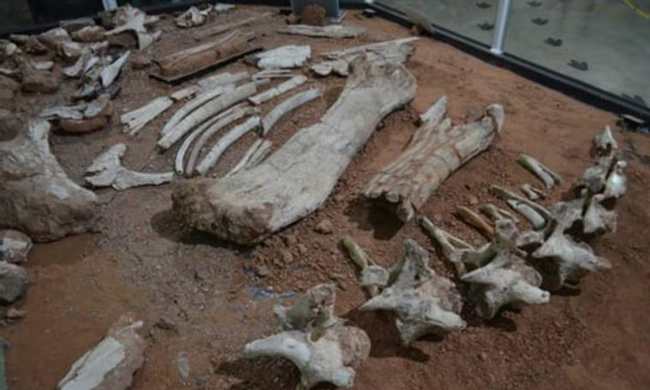
The robust right forelimb of Rhomaleopakhus turpanensis (specimen number IVPP V11121-1) showing the bones in approximate anatomical position (anterior view). The bones had been ascribed to Hudiesaurus sinojapanorum although they were not found at the same location as vertebrate that led to the erection of the Hudiesaurus genus. The forelimb bones demonstrate several autapomorphies that led the research team to propose a new genus R. turpanensis. Picture credit: Upchurch et al.

Picture credit: Upchurch et al.

Note – the scale bar in the picture (above) equals 20 cm. Although, only described from bones from the right forelimb, it is estimated that Rhomaleopakhus (pronounced Row-ma-lee-oh-pack-hus) could have been between 25 and 30 metres long.

Core Mamenchisaurus-like Taxa

In 1993, a joint Chinese/Japanese field team uncovered sauropod fossil material from the Jurassic-aged Kalazha Formation within Shanshan County in the Xinjiang Autonomous Region of north-western China. The fossils consisted of a single, huge vertebra, four teeth and a nearly complete right forelimb. On the basis of these fossils, a new member of the Mamenchisauridae family of long-necked dinosaurs was erected in 1997 – Hudiesaurus sinojapanorum. This dinosaur’s name translates as Chinese/Japanese butterfly lizard, in recognition of the co-operation between China and Japan in field excavations and because the vertebra had a flat butterfly-shaped process on the front base of the vertebral spine.
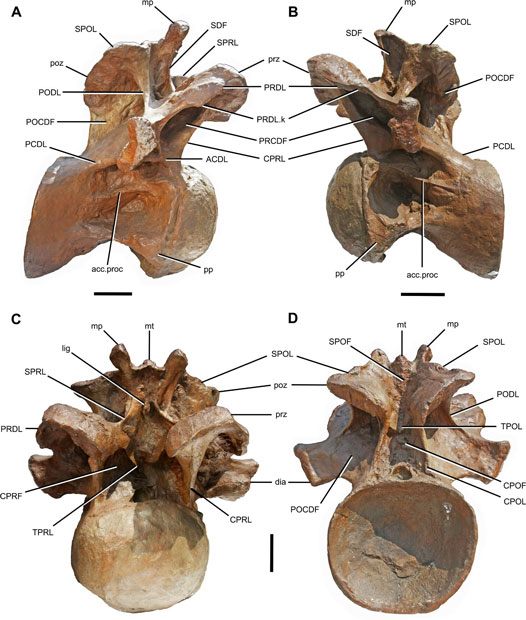
Hudiesaurus vertebra

Posterior cervical vertebra of Hudiesaurus sinojapanorum (IVPP V11120; holotype). A, right lateral view; B, left lateral view; C, anterior view; D, posterior view. Scale bar = 10 cm. Picture credit: Upchurch et al

Picture credit: Upchurch et al

Having reassessed the fossil material ascribed to Hudiesaurus the scientists, writing in the “Journal of Vertebrate Palaeontology”, suggest that the bone from the spine, with its unique anatomical characteristics should remain the holotype material for H. sinojapanorum, but the forelimb which was found 1.1 kilometres from the vertebra and the teeth should not be assigned to Hudiesaurus. Indeed, the researchers propose that the robust forelimb with its own unique anatomical characteristics represents a new taxon. The teeth are too poorly preserved and can only be assigned to “core Mamenchisaurus-like taxa”.

Closely Related Mamenchisaurids

The researchers from the Chinese Academy of Sciences, University College London as well as the London Natural History Museum undertook a phylogenetic assessment of the Hudiesaurus and the newly assigned Rhomaleopakhus fossil material. The analysis indicates that Hudiesaurus is closely related to the “core Mamenchisaurus-like taxon” Xinjiangtitan, although differences between them indicate that they should remain separate genera for the time being. The four, poorly preserved teeth cannot be identified with any certainty, but they too probably represent a mamenchisaurid. Rhomaleopakhus too is very likely a member of the Mamenchisauridae family, albeit closely related to Chuanjiesaurus and Analong from the Middle Jurassic and found in Yunnan Province (south-western China).
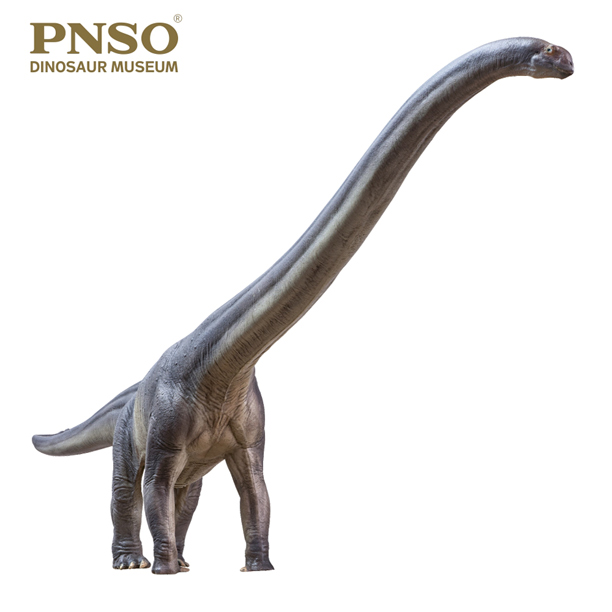
PNSO Er-ma the Mamenchisaurus dinosaur model (2021) in anterior view

A view of the giant PNSO Er-ma the Mamenchisaurus dinosaur model.  A typical mamenchisaurid sauropod, with a very long neck. Mamenchisaurids have many more cervical vertebrae (18+) when compared to most other sauropods. The evolution of an exceptionally long neck could have occurred as a way to exploit other food resources or perhaps through sexual selection.

View the extensive PNSO prehistoric animal model range: PNSO Dinosaur Figures.

The scientific paper: “Re-assessment of the Late Jurassic eusauropod dinosaur Hudiesaurus sinojapanorum Dong, 1997, from the Turpan Basin, China, and the evolution of hyper-robust antebrachia in sauropods” by Paul Upchurch, Philip D. Mannion, Xing Xu and Paul M. Barrett published in the Journal of Vertebrate Palaeontology.

The Everything Dinosaur website: Dinosaur Toys.

13 12, 2021

New Rebor Smilodon Models in Stock

By |2024-09-16T21:32:11+01:00December 13th, 2021|Categories: Adobe CS5, Dinosaur Fans, Everything Dinosaur News and Updates, Everything Dinosaur Products, Main Page, Photos of Everything Dinosaur Products, Press Releases|0 Comments

The Rebor Smilodon models have arrived at Everything Dinosaur. These fabulous 1:11 scale models of an iconic Ice Age predator are now in stock and team members have been very busy contacting all those customers who wanted to purchase one of these beautiful replicas.

Rebor Smilodon models

The Rebor Smilodon models are now in stock at Everything Dinosaur (December 2021). Picture credit: Everything Dinosaur.

Picture credit: Everything Dinosaur

Visit the Everything Dinosaur website: Prehistoric Animal Toys.

Rebor Smilodon

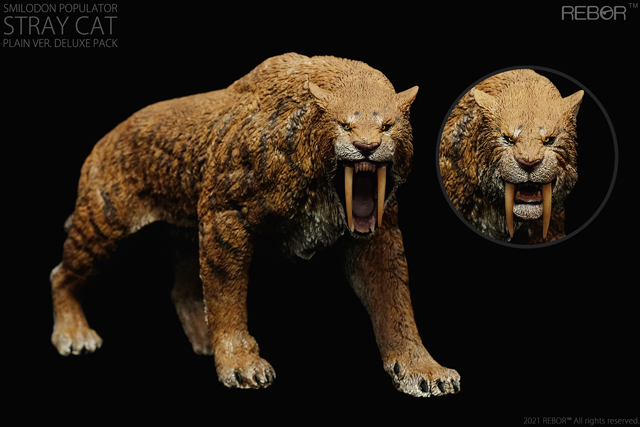
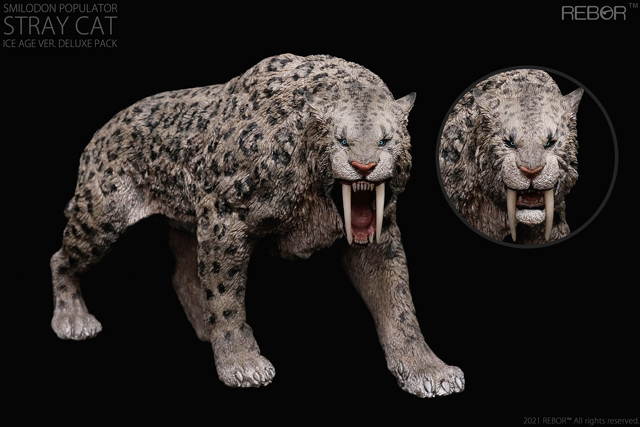
The Rebor Smilodon populator Museum Class Replica Deluxe Pack replicas are supplied with two interchangeable heads so the Smilodon model can be displayed with mouth closed or mouth open. A fabulous 1:11 scale model of a Sabre-toothed Cat. Everything Dinosaur has two colour variants in stock, the “Plain” colour variant and the snow leopard inspired “Ice Age” colour variant.

Rebor Smilodon populator Museum Class Replica Deluxe Pack Stray Cat Plain

The Rebor Smilodon populator Museum Class Replica Deluxe Pack Stray Cat Plain comes with two interchangeable heads so collectors can display this 1:11 scale model with either its mouth open or closed.

A spokesperson from Everything Dinosaur commented:

“There have been several delays with international shipping due to the COVID-19 pandemic, but we are delighted to welcome these two figures into stock. Our aim is to contact customers who wanted these models as quickly as we can so that we can get many of them delivered to customers in time for Christmas.”

Rebor Smilodon populator Stray Cat Ice Age

The Rebor Smilodon populator Museum Class Replica Deluxe Pack (Ice Age) is so called as the model comes with two interchangeable heads. This stunning Smilodon can be displayed with mouth closed or mouth open.

To view the range of dinosaur and prehistoric animal figures in the Rebor range available from Everything Dinosaur: Rebor Prehistoric Animal Models and Figures.

12 12, 2021

New Dinosaur Species Described – Arrudatitan

By |2024-09-16T20:22:26+01:00December 12th, 2021|Categories: Adobe CS5, Dinosaur and Prehistoric Animal News Stories, Dinosaur Fans, Main Page, Palaeontological articles, Photos/Pictures of Fossils|0 Comments

This year (2021), has been another bumper year for dinosaur discoveries with over forty new species of dinosaur described, including several from the British Isles such as Pendraig (P. milnerae) from Wales and four new dinosaurs described from fossil finds on the Isle of Wight (Brighstoneus, Ceratosuchops, Riparovenator and Vectiraptor).

New genera are erected based on new fossil discoveries. In addition, a new dinosaur genus or species can be established based on a revision of existing and previously studied fossil material. A new genus of Late Cretaceous, Brazilian titanosaur was announced this year, based on fragmentary remains that had previously been assigned to a titanosaur that roamed Argentina. Time for Arrudatitan maximus to step out of the shadows.

Arrudatitan maximus fossils

The fragmentary fossil bones previously assigned to the Argentinian titanosaur Aeolosaurus maximus and now defined as new Brazilian titanosaur taxon Arrudatitan maximus. Picture credit: Silva Junior et al.

Picture credit: Silva Junior et al

Aeolosaurus maximus

The Aeolosaurus genus was erected by the Argentinian palaeontologist Jaime Powell in 1987 when the first species was named (A. rionegrinus). It was a widespread genus known from numerous individuals collected from Upper Cretaceous deposits, most notably the Angostura Colorada Formation in Río Negro Province, but dinosaur fossils collected from the Bajo Barreal, Los Alamitos and Allen Formations of Argentina have also been assigned to this genus.

The Brazilian fossil remains that led to the erection of the species Aeolosaurus maximus in 2011, have always been regarded as somewhat of an outlier when compared to Aeolosaurus fossil remains discovered in Argentina. A. maximus was described based on vertebrae, ribs, a left ischium, a fragmentary scapula and elements from the limbs including a left femur discovered in 1997 eroding out of an outcrop of the Adamantina Formation in the state of São Paulo state south-eastern Brazil.

Researchers who included Julian Silva Junior (Universidade de São Paulo), reassessed the fossil material following a cladistic analysis in 2019 that challenged the taxonomic placement. Writing in “Historical Biology”, the scientists have confirmed the assertion expressed previously that the Brazilian fossil material represents a distinct genus and the fossils ascribed to Aeolosaurus maximus have been reassigned to the new dinosaur species Arrudatitan maximus.

Arrudatitan maximus scale drawing.

Although the size of A. maximus remains uncertain, based on the femur length of 1.55 metres, palaeontologists estimate that this titanosaur may have reached a length of around 15 metres.

Commenting on the revision, lead author of the scientific paper, doctoral student Julian Silva Junior stated:

“When analysing the caudal vertebrae, we found that they were different to those assigned to Aeolosaurus and these characteristics served to establish a diagnosis to propose a new genus.”

2021 – A Good Year for Titanosaur Discoveries

Several new titanosaur genera have been erected this year including Menucocelsior (M. arriagadai) and Ninjatitan (N. zapatai), which is the oldest titanosaur known to science.

Everything Dinosaur’s list of new titanosaurs named in 2021

  • Arackar licanantay a titanosaur from the Upper Cretaceous Hornitos Formation of Chile.
  • Arrudatitan maximus from the Upper Cretaceous Adamantina Formation of south-eastern Brazil.
  • Australotitan cooperensis a titanosaur from the Winton Formation of Queensland, Australia.
  • Garrigatitan meridionalis from the Upper Cretaceous Argiles Rutilantes Formation of south-eastern France.
  • Hamititan xinjiangensis from the Lower Cretaceous Shengjinkou Formation of north-western China which was coeval with the euhelopodid sauropod Silutitan (S. sinensis) which was also scientifically described in 2021.
  • Menucocelsior arriagadai from the Upper Cretaceous Allen Formation of Argentina.
  • Ninjatitan zapatai the earliest titanosaur known to date described from fossils found in the Lower Cretaceous Bajada Colorada Formation of Argentina.

To read blog posts about some of these newly described titanosaurs:

A new species of titanosaur from the Atacama Desert of northern Chile (Arackar licanantay): A New Titanosaur from Chile – Arackar licanantay.

Australian dinosaur “Cooper” named: “Cooper” – Australotitan cooperensis.

Our article on Hamititan xinjiangensis and Silutitan sinensis: Two New Sauropods from North-western China.

To read the Everything Dinosaur blog post about the earliest titanosaur known to science: Ninjatitan zapatai the Earliest Titanosaur.

The scientific paper: “Reassessment of Aeolosaurus maximus, a titanosaur dinosaur from the Late Cretaceous of Southeastern Brazil” by Julian C. G. Silva Junior, Agustín G. Martinelli, Fabiano V. Iori, Thiago S. Marinho, E. Martín Hechenleitner and Max C. Langer published in Historical Biology.

Visit the Everything Dinosaur website: Dinosaur Toys.
11 12, 2021

Beasts of the Mesozoic Wendiceratops

By |2024-09-15T20:41:56+01:00December 11th, 2021|Categories: Adobe CS5, Dinosaur Fans, Everything Dinosaur Products, Main Page, Product Reviews|0 Comments

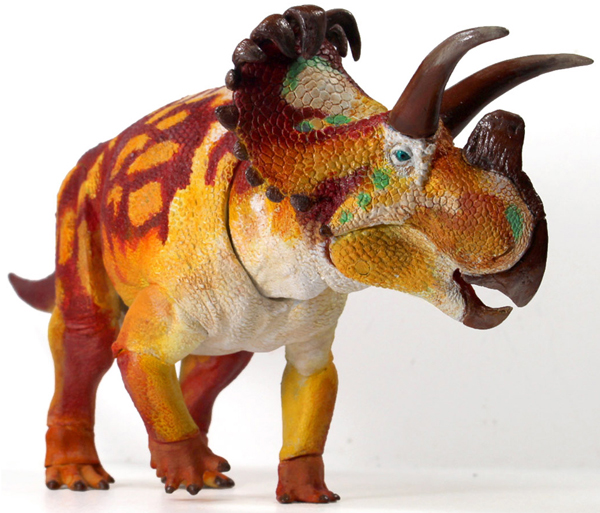
In the Northern Hemisphere it might be cold and dark as we approach the depths of winter, but here are some pictures of the colourful Beasts of the Mesozoic Wendiceratops to brighten your day. The bright and cheery Wendiceratops model (W. pinhornensis), was part of the second wave of horned dinosaurs to be introduced in this series. The Beasts of the Mesozoic ceratopsians are all very colourful, the Wendiceratops, a replica of a Late Cretaceous, Canadian centrosaurine is one of the most spectacular and flamboyant models in the entire range.

Beasts of the Mesozoic Wendiceratops dinosaur model

The colourful Beasts of the Mesozoic Wendiceratops pinhornensis articulated dinosaur model (oblique anterior view).

Colourful Packaging Too

Even the box the figure comes in is beautifully presented with stunning artwork and the packaging incorporates some facts about this large, horned dinosaur that was scientifically described in 2015 (Evans and Ryan).

The Beasts of the Mesozoic Wendiceratops box.

The Beasts of the Mesozoic Wendiceratops pinhornenis product packaging.

Wendiceratops pinhornensis Model Measurements

The Beasts of the Mesozoic Wendiceratops pinhornensis is a fantastic 1:18 scale articulated model. Palaeontologist and author Gregory S. Paul estimates that this centrosaurine measured around 4.5 metres in length and weighed 1,500 kilograms. The Everything Dinosaur fact sheet on this dinosaur, which is sent out with sales of the figure concurs.

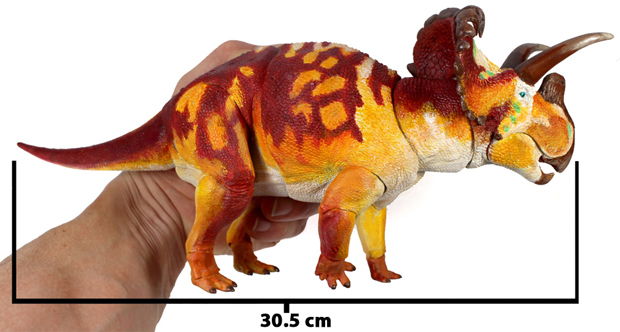
The model itself measures a generous 30.5 cm long, from the end of the tail to the tip of the dinosaur’s broad snout.

Beasts of the Mesozoic Wendiceratops model measurements.

The Beasts of the Mesozoic Wendiceratops model measures 30.5 cm long from nose to tail.

Described as a basal member of the Centrosaurinae subfamily, Wendiceratops roamed Alberta approximately 79 million years ago. Its fossils come from the Oldman Formation and a taxonomic assessment places Wendiceratops as a sister taxon to the geologically younger Sinoceratops (S. zhuchengensis) from the Shandong Province of eastern China.

To read Everything Dinosaur’s article from 2015 about the discovery of Wendiceratops: Wendiceratops from Southern Alberta.

To view the range of Beasts of the Mesozoic dinosaur models available from Everything Dinosaur: Beasts of the Mesozoic Models and Figures.

The award-winning Everything Dinosaur website: Dinosaur Toys.
10 12, 2021

Tarchia tumanovae – New Ankylosaur Species

By |2024-09-15T20:38:09+01:00December 10th, 2021|Categories: Adobe CS5, Dinosaur and Prehistoric Animal News Stories, Dinosaur Fans, Main Page, Palaeontological articles, Photos/Pictures of Fossils|0 Comments

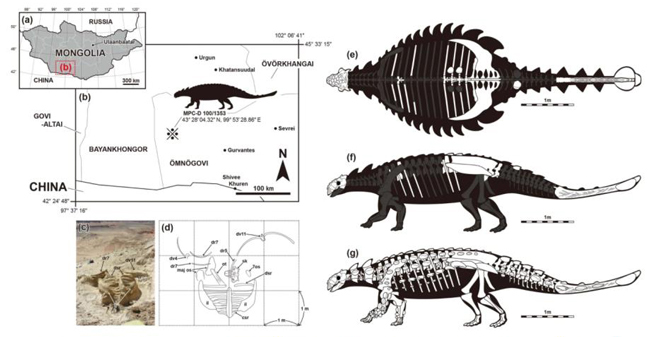
Scientists have named a new species of armoured dinosaur based on cranial and postcranial fossils collected in 2008 from the famous Nemegt Formation of the Gobi Desert, Mongolia. A detailed analysis of the fossil material consisting of a well-preserved skull, vertebrae, ribs, part of the hip and a tail club has been published in the journal “Scientific Reports”. The new ankylosaur has been named Tarchia tumanovae and it is the third species to be assigned to the Tarchia genus.

Tarchia tumanovae fossils and line drawings.

Location map (a) of the fossil discovery in Mongolia with (b) a larger scale map showing the fossil quarry. Photograph (c) shows the specimen (MPC-D 100/1353) partially excavated with (d) a line drawing of the fossils in situ. T. tumanovae illustrations show known fossil bones in white (e) dorsal view, (f) left lateral view and (g) shows a skeletal reconstruction with dermal armour. Picture credit: Park et al.

Picture credit: Park et al

Evidence of Injury and a Damaged Tail Club

A joint Korean/Mongolian expedition discovered the fossil material at Hermiin Tsav in the southern Gobi Desert. The ribs show signs of fracture healing and there are localised injuries on the pelvic bones. The researchers speculate that these injuries were probably caused by intraspecific combat. The pathology is consistent with tail club strikes. Intriguingly, the tail club of the skeleton also shows signs of injury. The tail club is asymmetrical when viewed from above (dorsal view). A badly healed ossified tendon on the tail knob handle is present, a possible injury caused as the tail was used during combat. Whether this injury occurred as a result of intraspecific combat or when deterring an attack from a theropod is unknown.

Noting a Change in the Diet of Late Cretaceous Ankylosaurids

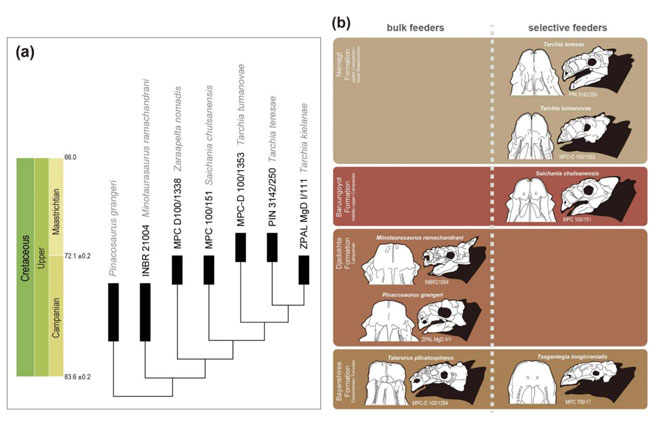
The scientists noted wide muzzles are a character of low-level, bulk feeders, whereas those ankylosaurines with narrower muzzles such as T. tumanovae and the coeval, closely related Tarchia teresae were probably selective feeders. The researchers demonstrate that ankylosaurid diets shifted from one of low-level, relatively unfussy bulk feeders during the early Campanian to more selective diets as characterised by a narrower muzzle by the late Campanian/early Maastrichtian.

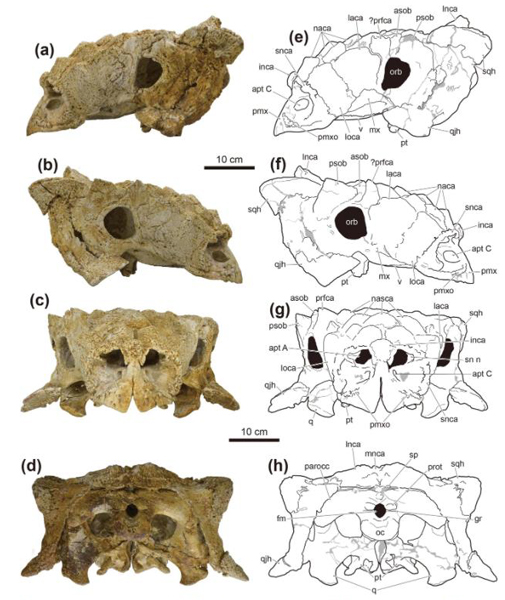
Views of the skull of Tarchia tumanovae with accompanying line drawings.

Photographs (a–d) and line drawings (e–h) of the skull of Tarchia tumanovae sp. nov. (MPC-D 100/1353). Photographs of the skull in (a) left lateral, (b) right lateral, (c) anterior, and (d) occipital views. Line drawings in (e) left lateral, (f) right lateral, (g) anterior, and (h) occipital views.

Picture credit: Park et al

It is not known why ankylosaurids show this trend towards selective feeding, although the researchers speculate that this change could have been a consequence of habitat change as the region gradually became less arid towards the very end of the Cretaceous. The research team also postulate that ankylosaurids evolved more selective browsing habits in response to the presence of bulk-feeding saurolophine hadrosaurids such as Saurolophus angustirostris and Barsboldia sicinskii.

Tarchia was a selective feeder

A diagram showing (a) a phylogenetic analysis of Tarchia tumanovae, placed in the context of geological time. Ankylosaurids from this region seem to have changed feeding strategies, (b), evolving narrower muzzles that indicate a switch from low-level bulk feeding to more selective browsing. Ankylosaurid fossils from the geologically older Bayanshiree and Djadokhta Formations which represent arid habitats had broad muzzles, whilst ankylosaurids from the younger and more humid Nemegt Formation have narrower muzzles. Picture credit: Park et al.

Picture credit: Park et al

Honouring a Famous Researcher

The species name honours Tat’yana A. Tumanova of the Russian Academy of Sciences, in recognition of her contribution to the study of Mongolian armoured dinosaurs.

The scientific paper: “A new ankylosaurid from the Upper Cretaceous Nemegt Formation of Mongolia and implications for paleoecology of armoured dinosaurs” by Jin-Young Park, Yuong-Nam Lee, Yoshitsugu Kobayashi, Louis L. Jacobs, Rinchen Barsbold, Hang-Jae Lee, Namsoo Kim, Kyo-Young Song and Michael J. Polcyn published in “Scientific Reports”.

The Everything Dinosaur website: Dinosaur Models: Dinosaur Models.

9 12, 2021

PNSO To Add a New Triceratops Model

By |2024-09-15T20:07:21+01:00December 9th, 2021|Categories: Adobe CS5, Dinosaur Fans, Everything Dinosaur News and Updates, Everything Dinosaur Products, Main Page, Press Releases|0 Comments

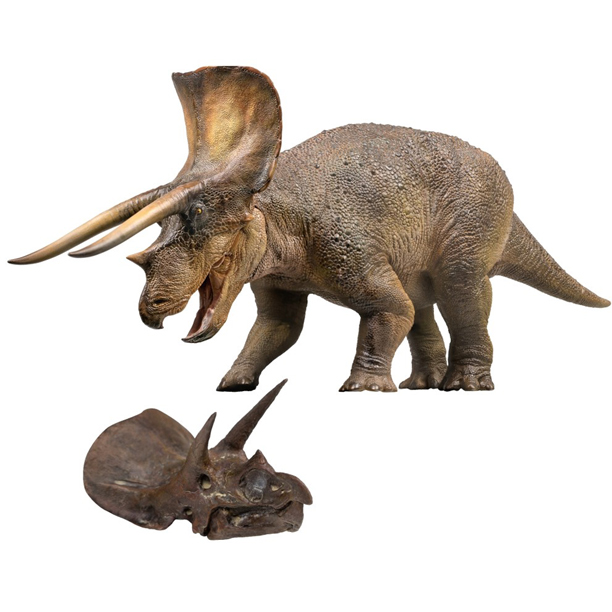
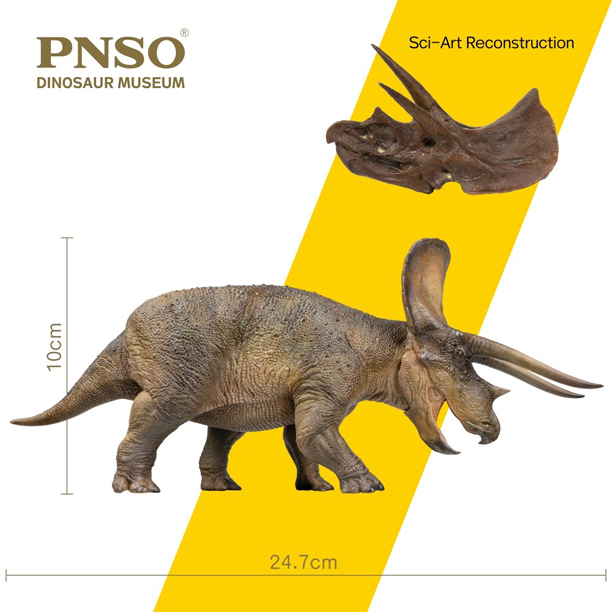
PNSO are to add another version of the popular Doyle the Triceratops model to their scientific art range. The beautifully crafted horned dinosaur figure incorporates some of the very latest research on “three-horned face”. The stunning 1:35 scale dinosaur model will be available from Everything Dinosaur in 2022.

PNSO Doyle the Triceratops (2022)

The new for 2022 PNSO Doyle the Triceratops 1:35 scale model comes complet with a scale model of a Triceratops skull.

Updating Triceratops

One of the most famous of all the dinosaurs, Triceratops is a perennial favourite amongst dinosaur fans and model collectors. Despite having been named and scientifically described more than 130 years ago, (Marsh 1889), there is still a great deal to learn about this ceratopsian. For example, thanks to a superb fossil specimen found in Montana (USA) and now part of the vertebrate fossil collection at Melbourne Museum (Victoria, Australia), palaeontologists have a good idea about tail length and the skin texture.

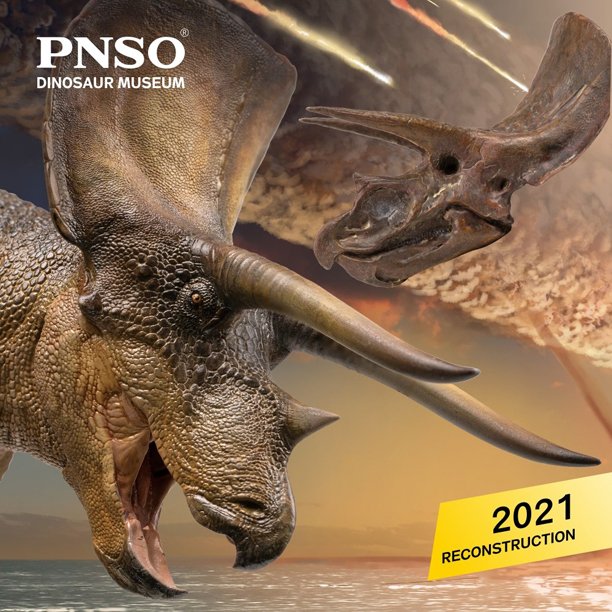
The design team at PNSO pride themselves in trying to create accurate prehistoric animal models and they have incorporated some of this latest research into their 2021 reconstruction of Triceratops.

PNSO Doyle the Triceratops dinosaur model.

A beautiful model of a Late Cretaceous horned dinosaur. PNSO Doyle the Triceratops dinosaur model.

Detailed Skin Texture

Analysis of skin impressions has revealed that Triceratops had a unique arrangement of scales, unlike any other member of the Ornithischia. Preserved skin of a Triceratops specimen on display at the Houston Museum of Natural Science in Texas (USA), indicates that this ceratopsian had substantial hexagonal tubercles (rounded, prominent scales) along with additional substantial (greater than 10 cm in diameter), tubercles with conical projections.

These skin impressions come from a specimen excavated in Wyoming and nick-named “Lane”. A formal scientific description has yet to be published but the photographs that have been made available suggest that Triceratops had skin somewhat reminiscent of a titanosaur like Saltasaurus.

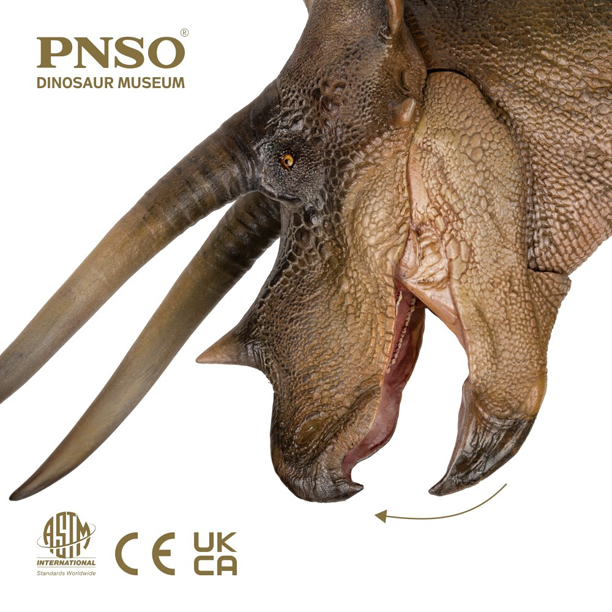
PNSO Doyle the Triceratops model has an articlated lower jaw

The PNSO Doyle the Triceratops model has an articulated jaw.

Model Measurements

This new for 2022 Doyle the Triceratops figure measures 24.7 cm in length and the top of that skilfully sculpted neck shield stands around 10 cm high. The declared scale for this figure is 1:35. Based on this scale, an adult Triceratops would be estimated to be around 8.6 metres in length, which is within the parameters given for both T. horridus and the geologically younger T. prorsus.

PNSO Doyle the Triceratops (model measurements)

PNSO Doyle model measurements.

When the current PNSO Doyle the Triceratops figure is compared with the new for 2022 version, the figures are approximately the same height, but the 2022 version is around 1 cm shorter.

Triceratops Accessories

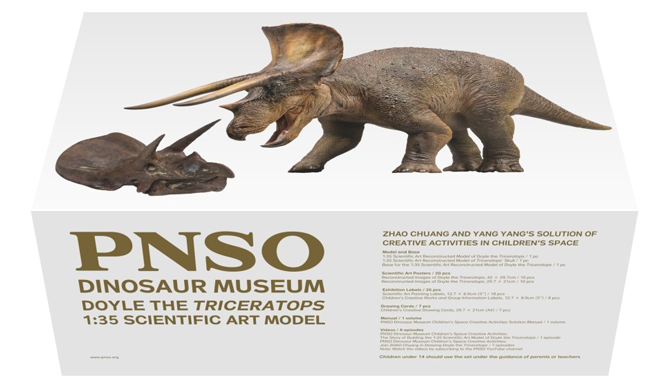
In addition to the superb dinosaur model, the 1:35 scale Triceratops is supplied with a detailed figure of a Triceratops skull, a series of science art posters depicting this iconic dinosaur, a booklet and a QR code which when scanned provides access to a video explaining the story behind the creation of the model.

PNSO Doyle Triceratops product packaging

The new Doyle the Triceratops is supplied with a display base, model skull, posters, art cards and booklet. A QR code can be scanned taking customers to a video that provides details on how the model was created.

A spokesperson from Everything Dinosaur confirmed that the model would be available early next year (2022).

To see the range of PNSO prehistoric animal models in stock at Everything Dinosaur: PNSO Age of Dinosaurs.

The Everything Dinosaur website: Dinosaur Toys.
8 12, 2021

Spring/Summer End to the Reign of the Dinosaurs

By |2024-09-15T20:01:32+01:00December 8th, 2021|Categories: Dinosaur and Prehistoric Animal News Stories, Dinosaur Fans, Main Page, Palaeontological articles|0 Comments

A team of international researchers including scientists from the University of Manchester have published new research on the extinction of the dinosaurs. The study of Hell Creek Formation fossils suggests that the mass extinction event that marked the end of the Mesozoic some 66 million years ago took place in the spring/summer.

To clarify this, the event took place in the spring/summer season of the Northern Hemisphere. This newly published study in “Scientific Reports” supports earlier work that examined the preserved remains of water plants which also concluded a spring/summer time impact of the extra-terrestrial bolide that led to the extinction of about 75% of life on Earth.

Spring might be associated renewal and new life, but this catastrophic event led to the demise of the dinosaurs, the pterosaurs and most of the marine reptiles.

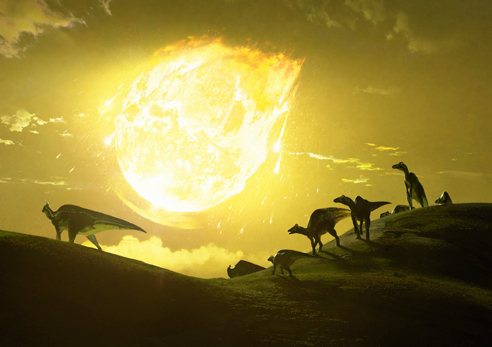
The end of the non-avian dinosaurs.

An artist’s impression of the bolide about to impact with the Gulf of Mexico 66 million years ago. Picture credit: Chase Stone.

Hell Creek Formation Fossils

The team led by University of Manchester PhD student Robert DePalma examined the Tanis research site in North Dakota, (USA). The Tanis site records the tumultuous impact event on a river system, it has preserved evidence of the scale of the catastrophe within the first few hours of the event. It provides a testament to the immense shockwaves that rocketed around the planet. The Tanis site is part of the famous Hell Creek Formation and it is regarded as one of the most highly detailed Cretaceous-Palaeogene (KPg) boundary sites in the world.

To read an earlier post from Everything Dinosaur about documenting the Tanis lagerstätte: Amazing Fossils Depict End Cretaceous Mass Extinction Event.

Commenting on the research, Robert DePalma explained:

“This project has been a huge undertaking but well worth it. For so many years we’ve collected and processed the data, and now we have compelling evidence that changes how we think of the KPg event, but can simultaneously help us better prepare for future ecological and environmental hazards”.

Examining a Global Event and its Impact on One Locality

Extensive research has documented the catastrophic Chicxulub bolide impact that hit the Yucatan Peninsula (Mexico) 66 million years ago: Most Accurate Date for KPg Extinction Event Established. The impact resulted in the most famous extinction event in our planet’s history, dramatically changing life on Earth and allowing the ascent of the mammals and eventually our own species.

DePalma added:

“Extinction can mark the end of a dynasty, but we must not forget that our own species might not have evolved if it weren’t for the impact and the timing of events that saw the end of the dinosaurs”.

The research team used a variety of techniques and lines of enquiry to document some of the finer details of this cataclysmic event, such as when did the impact occur. Multiple lines of evidence were explored including radiometric dating, stratigraphy, fossilised remains of biological marker species, and a distinctive capping layer of iridium-rich clay.

Tanis Deposits

It had already been concluded that the Tanis deposits represented the results of the seismic shockwaves and the resulting densely packed tangle of plants, animals, trees, and impact ejecta has provided an unprecedented opportunity to refine details on the KPg event, the biota that succumbed to it and the environment in which they lived.

However, time of year plays an important role in many biological functions, for example, reproduction, feeding strategies, host-parasite interactions, seasonal dormancy and breeding patterns. It is hence no surprise that the time of year for a global-scale hazard can play a big role in how severely it affects ecosystems. The seasonal timing of the Chicxulub impact has therefore been a critical question for the story of this mass extinction event.

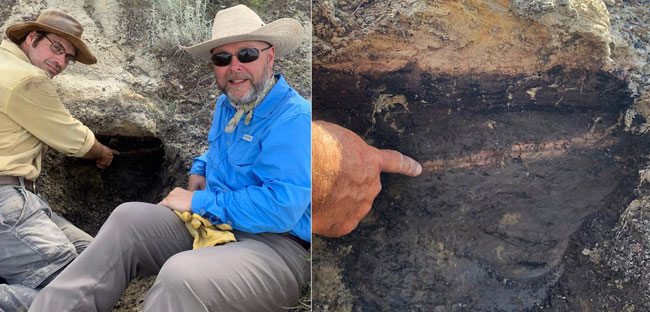
The Iridium Capping Layer at the Tanis Deposit (Hell Creek Formation)

Robert DePalma (L) and Professor Phil Manning (R) at the Iridium-bearing KPg boundary clay layer capping Tanis. Picture credit: University of Manchester.

Growth Lines Examined

Growth lines examined in the exquisitely preserved bones of fossil fish confirm that all the fish died during the spring/summer growth season. This conclusion was also confirmed by isotopic analysis. The researchers used multiple additional lines of evidence to verify the isotopic data.

The examination of juvenile fossil fish, aided in part by cutting-edge Synchrotron-Rapid-Scanning X-Ray Fluorescence (SRS-XRF) carried out at the Stanford Synchrotron Radiation Lightsource (SSRL), provided a novel way of dating the seasonal variation observed in fossils from the deposit. By comparing the sizes of the youngest fish to the growth rates of analogous modern fish, the team predicted how long after hatching they were buried. Comparing this to known modern spawning seasons enabled the team to deduce the seasonal range that was represented by the deposit at the Tanis Lagerstätte. The bolide hit in the spring/summer seasons.

Co-author of the study, Loren Gurche (University of Kansas) commented:

“Animal behaviour can be a pretty powerful tool, so we overlapped even more evidence, this time of seasonal insect behaviour, such as leaf mining and mayfly activity. They all matched up…everything points to the fact that the impact happened during the northern hemisphere equivalent of spring to summer months”.

Hell Creek Fossils and the Remarkable Tanis Location

The researchers hope that their work in combination with other studies of the remarkable Tanis location will provide further insight into the KPg extinction event and facilitate a better understanding of the response of life to catastrophic global events.

Co-author of the paper, Professor Phil Manning (University of Manchester) added:

“The hindsight that the fossil record provides can yield critical data, which can be applied today, so that we might plan for tomorrow.”

Everything Dinosaur acknowledges the assistance of a press release from the University of Manchester in the compilation of this article.

The scientific paper: “Seasonal calibration of the end-cretaceous Chicxulub impact event” by Robert A. DePalma, Anton A. Oleinik, Loren P. Gurche, David A. Burnham, Jeremy J. Klingler, Curtis J. McKinney, Frederick P. Cichocki, Peter L. Larson, Victoria M. Egerton, Roy A. Wogelius, Nicholas P. Edwards, Uwe Bergmann and Phillip L. Manning published in Scientific Reports.

Visit the award-winning Everything Dinosaur website: The Everything Dinosaur Website.

7 12, 2021

Getting to Grips with the Remarkable Beipiaosaurus

By |2024-09-15T19:46:35+01:00December 7th, 2021|Categories: Dinosaur and Prehistoric Animal Drawings, Dinosaur Fans, Everything Dinosaur News and Updates, Main Page, Palaeontological articles|0 Comments

China is famous for its numerous feathered theropod discoveries. Some taxa that have been scientifically described for more than twenty years are still capable of providing palaeontologists with a new perspective on the evolution of feathered dinosaurs. Take for example Beipiaosaurus inexpectus, from the Lower Cretaceous Yixian Formation (Sihetun locality, near Beipiao), Liaoning, north-eastern China. It is a key taxon for understanding the early evolution of therizinosaurians and their close relatives.

However, since its initial scientific description back in 1999, only the cranial elements of this dinosaur have been described in any detail.

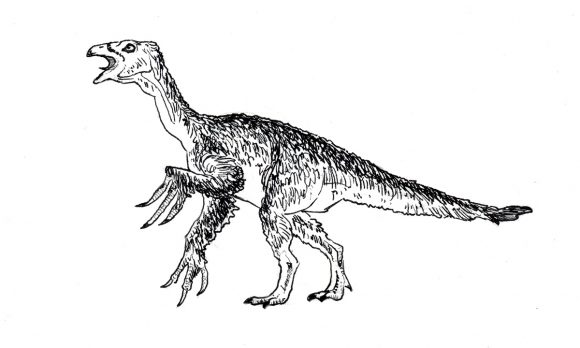
Drawing of a typical Therizinosaurus.

A dinosaur designed by a committee – the term we use to describe therizinosaurs. Picture credit: Everything Dinosaur.

Writing in the peer-reviewed, open access journal “PLOS One”, scientists from the Chinese Academy of Sciences in collaboration with the North Carolina Museum of Natural Sciences (USA), present a detailed description of the postcranial skeletal anatomy of the holotype specimen of B. inexpectus.

Visit the Everything Dinosaur website: Everything Dinosaur.

Beipiaosaurus inexpectus

The study incorporates two never before described dorsal vertebrae from the anterior half of the series. Based on these observations, and comparisons with the postcranial skeleton of therizinosaurian taxa named since this dinosaur was scientifically described, the scientists revise the diagnostic features for B. inexpectus adding three new possible, unique anatomical characteristics. The newly acquired data from the postcranial osteology of the holotype specimen sheds light on our understanding of postcranial skeletal evolution and identification of therizinosaurians.

When the paper came out, “Postcranial osteology of Beipiaosaurus inexpectus (Theropoda: Therizinosauria)” by Liao et al, Everything Dinosaur published a detailed blog post about this new research.

The earlier Everything Dinosaur blog post provides more information: Beipiaosaurus Revisited.

It seems our feathered dinosaur friends have a lot more to teach us and without giving too much away, readers can expect to see more posts about feathered dinosaurs on the Everything Dinosaur blog next year (2022).

To view figures of feathered dinosaurs including therizinosaurs, visit the models section of the Everything Dinosaur website: Feathered Dinosaurs and Prehistoric Animal Models.

6 12, 2021

Some Important Advice about Last Recommended Posting Dates (Christmas 2021)

By |2024-09-15T19:29:47+01:00December 6th, 2021|Categories: Adobe CS5, Dinosaur Fans, Everything Dinosaur News and Updates, Main Page, Press Releases|0 Comments

There is not that long to go now before Christmas Day, if you have not started already, time to start thinking about Christmas shopping, especially if you wish to send something abroad. In a bid to help our customers, Everything Dinosaur will be extending packing hours once again in the run up to Christmas and we will continue to pack and dispatch orders for customers as quickly as we can, even arranging for collections from our warehouse on Saturday and Sunday mornings.  We try to do all we can to ensure items ordered from Everything Dinosaur are despatched as quickly as possible.

The table (below), is a guide published by Royal Mail with regards to the last safe posting dates for Christmas mail sent in the UK and overseas (2021).

Please note these recommended last safe posting dates also apply to our other international services such as tracked, signed and tracked and signed.

Posting dates for Christmas 2021.

The last recommended posting dates for Christmas 2021. Table credit: Royal Mail.

Doing our Best to Help Customers

The last recommended posting dates for some countries such as New Zealand and Australia have already passed.

Everything Dinosaur team members continue to do all they can to help customers. Please remember the dates listed above are guidelines only and they are the last recommended posting dates, as always, the best advice we can give is to post early for Christmas, in this way you are helping to ensure that parcels get there in plenty of time for the festivities.

To view more details about Everything Dinosaur’s postage and shipping: Delivery Policy.

Advice and Tips About Christmas Parcels

1). Remember to include the house number or house name with the delivery address information.

2). Check postcode/zip code details carefully. We do have our own automatic address checking software and we do all we can to check delivery addresses.

3). Before pressing the “submit” button to send an order to Everything Dinosaur, check the delivery address one last time, just to be sure.

4). Remember, with purchases from Everything Dinosaur, customers can write a message to us in the order message box. You can write in confirmation of delivery address or any specific, relevant information required to help ensure a rapid delivery.

5). If you want to specify a different delivery address to your billing address, our website allows you to do this easily and without any fuss or bother.

6). If you want to send an item to your work address, please ensure that you include the company name in the delivery address information. Once again, we will do all we can to check delivery addresses.

7). For deliveries in the UK, Royal mail are once again offering a helpful “deliver to your neighbour” service, if you let us know that the parcel can be left with a neighbour, this information will be added to the front of your parcel as part of our labelling procedures, remember to tell us the house number and we will make sure this information is put on the front of your parcel for you.

If you have a query about Christmas deliveries, or indeed any aspect of Everything Dinosaur’s delivery service please feel free to contact us: Email Everything Dinosaur.

Visit our award-winning website: Dinosaur Toys and Dinosaur Models.

5 12, 2021

Pictures of the Nanmu Studio T. rex

By |2024-09-15T19:26:50+01:00December 5th, 2021|Categories: Adobe CS5, Everything Dinosaur News and Updates, Main Page, Photos, Photos of Everything Dinosaur Products|0 Comments

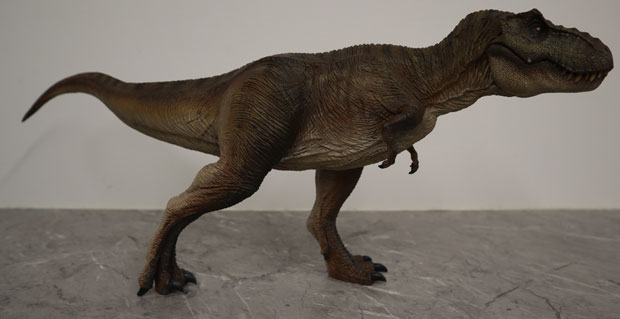
Everything Dinosaur team members were asked by a customer to provide some pictures of the Nanmu Studio T. rex dinosaur model Alpha, the brown colour-variant. The customer was looking for a Tyrannosaurus rex to represent a female “tyrant lizard” for a “Jurassic World” diorama.

Nanmu Studio T. rex dinosaur model (Alpha)

Nanmu Studio T. rex dinosaur model (Alpha) in the brown colouration in lateral view. Picture credit: Everything Dinosaur.

We receive emails from customers asking for photographs and more information about the prehistoric animal models and figures that we stock, we are happy to help where we can.

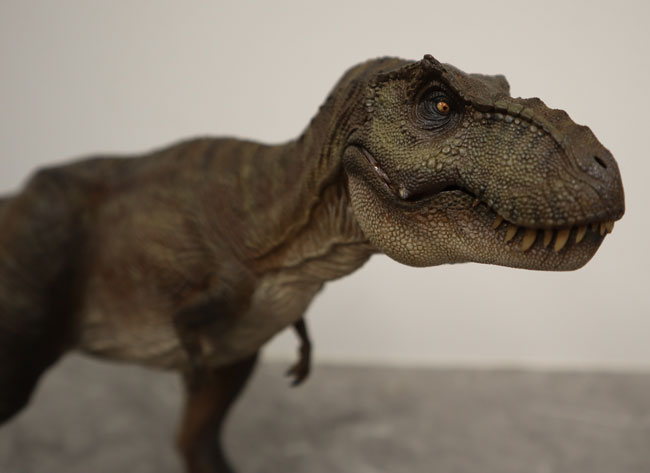
Nanmu Studio T. rex dinosaur model.

A close-up view of the Nanmu Studio Alpha T. rex in the brown colouration. Picture credit: Everything Dinosaur.

Packing Room Photography

Whilst Everything Dinosaur does have a studio in which to take photographs and to shoot YouTube videos, sometimes it is more convenient to bring a figure from our warehouse and take photographs in one of the order packing areas. The lighting might not be as bright, but at least customers can see images of the prehistoric animal model without the harsh glare of the studio lamps.

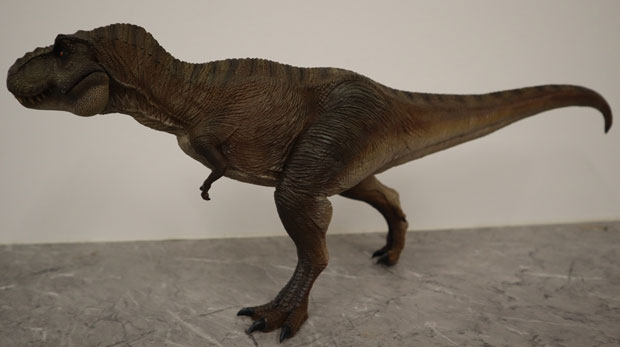
Nanmu Studio T. rex dinosaur model (Alpha) in the brown colouration (lateral view).

The Nanmu Studio T. rex dinosaur model (Alpha) in the brown colouration (lateral view). Picture credit: Everything Dinosaur.

It is usual for team members to take several pictures, showing the figure at various angles. A spokesperson from Everything Dinosaur commented that by taking lots of photographs, the customer could get an overall impression of the model’s quality and its colouration.

Nanmu Studio T. rex dinosaur model.

Providing pictures of the Nanmu Studio T. rex dinosaur model. Picture credit: Everything Dinosaur.

Pictures of the Packaging

As well as sending photographs of the Nanmu Studio T. rex dinosaur model Alpha, a photograph of the model’s packaging was also emailed to the customer. The box the model is supplied in might not influence the arrangement of a diorama, but at least it proves that the figure is the genuine article and new.

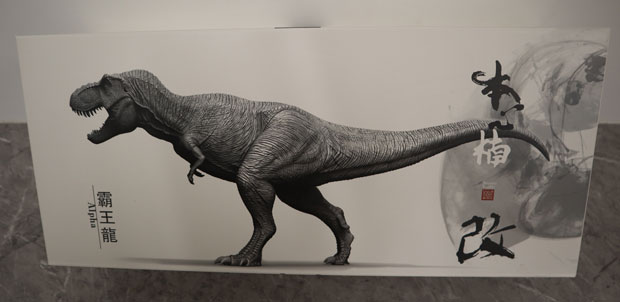
The packaging of the Nanmu Studio Alpha T. rex model (brown colouration).

The packaging of the Nanmu Studio Alpha T. rex model (brown colouration). Picture credit: Everything Dinosaur.

When emailing the images, we wrote that if the customer wanted more information or some more photographs, we would be happy to oblige. Everything Dinosaur team members do all they can to help dinosaur fans and model collectors.

To view the range of Nanmu Studio prehistoric animal models and figures available from Everything Dinosaur: Nanmu Studio Dinosaurs and Prehistoric Animals.

The user friendly Everything Dinosaur website: Dinosaur Models.

Go to Top